

The DOI matches its Crossref record; 42 of the 43 references it cites were found in a registry or an index.
Association of Light Physical Activity Measured by Accelerometry and Incidence of Coronary Heart Disease and Cardiovascular Disease in Older Women
Open accessAbstract
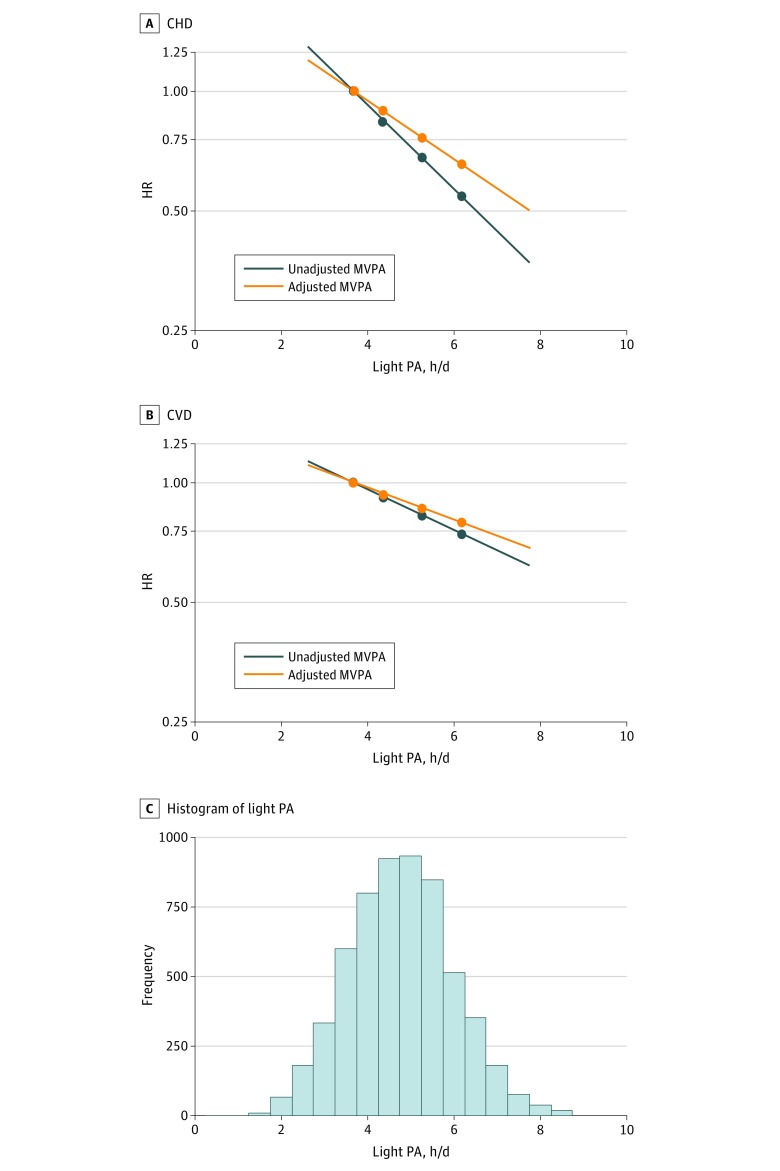
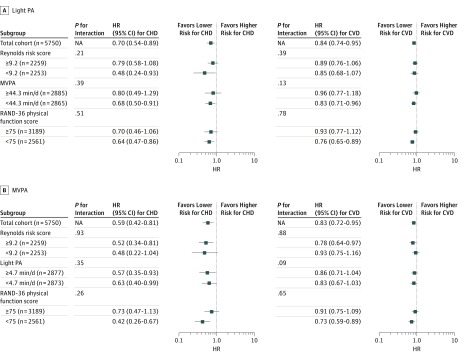
Importance: To our knowledge, no studies have examined light physical activity (PA) measured by accelerometry and heart disease in older women. Objective: To investigate whether higher levels of light PA were associated with reduced risks of coronary heart disease (CHD) or cardiovascular disease (CVD) in older women. Design, Setting, and Participants: Prospective cohort study of older women from baseline (March 2012 to April 2014) through February 28, 2017, for up to 4.91 years. The setting was community-dwelling participants from the Women's Health Initiative. Participants were ambulatory women with no history of myocardial infarction or stroke. Exposures: Data from accelerometers worn for a requested 7 days were used to measure light PA. Main Outcomes and Measures: Cox proportional hazards regression models estimated hazard ratios (HRs) and 95% CIs for physician-adjudicated CHD and CVD events across light PA quartiles adjusting for possible confounders. Light PA was also analyzed as a continuous variable with and without adjustment for moderate to vigorous PA (MVPA). Results: Among 5861 women (mean [SD] age, 78.5 [6.7] years), 143 CHD events and 570 CVD events were observed. The HRs for CHD in the highest vs lowest quartiles of light PA were 0.42 (95% CI, 0.25-0.70; P for trend <.001) adjusted for age and race/ethnicity and 0.58 (95% CI, 0.34-0.99; P for trend = .004) after additional adjustment for education, current smoking, alcohol consumption, physical functioning, comorbidity, and self-rated health. Corresponding HRs for CVD in the highest vs lowest quartiles of light PA were 0.63 (95% CI, 0.49-0.81; P for trend <.001) and 0.78 (95% CI, 0.60-1.00; P for trend = .004). The HRs for a 1-hour/day increment in light PA after additional adjustment for MVPA were 0.86 (95% CI, 0.73-1.00; P for trend = .05) for CHD and 0.92 (95% CI, 0.85-0.99; P for trend = .03) for CVD. Conclusions and Relevance: The present findings support the conclusion that all movement counts for the prevention of CHD and CVD in older women. Large, pragmatic randomized trials are needed to test whether increasing light PA among older women reduces cardiovascular risk.
Overview
The claims and statistics of this paper haven’t been checked yet.
Run the check — free, no account needed. It reads the open-access text and checks the sources it cites.
Integrity signals
Registry
Cites
Statistics
Figures
Verification
Claims the paper makes
The claims and statistics of this paper haven’t been checked yet.
Run the check — free, no account needed. It reads the open-access text and checks the sources it cites.
Claims other papers make about this one
Each is checked against this paper’s own text: does it say what the citing paper says it does?
The source backs part of the claim, not all of it — or backs it for a different population, condition or comparison.
In the citing paper
“The existing evidence regarding associations between LPA and risks for developing cardiovascular events in the general population is conflicting.13, 14, 15, 16”
From Accelerometer-measured physical activity, sedentary behavior, and incidence of macrovascular and microvascular events in individuals with type 2 diabetes mellitus and prediabetes (2025) · cites this paper as [13]
Experimental — accuracy not yet measured
Self-check
Percentages, sums and reported differences re-computed from the paper’s own numbers.
The self-check needs the paper’s full text.
Citations
Cites
mice: Multivariate Imputation by Chained Equations in R
Buuren, S. V., & Groothuis-Oudshoorn, K. (2011) · Journal of Statistical Software · doi:10.18637/jss.v045.i03 · Cited by 13,870
Heart Disease and Stroke Statistics—2017 Update: A Report From the American Heart Association
Benjamin, E. J., Blaha, M. J., Chiuve, S. E., Cushman, M., Das, S. R., Deo, R., de Ferranti, S. D., Floyd, J., Fornage, M., Gillespie, C., et al. (2017) · Circulation · doi:10.1161/cir.0000000000000485 · Cited by 12,591
‘Small Changes' to Diet and Physical Activity Behaviors for Weight Management
Hills, A. P., Byrne, N. M., Lindstrom, R. C., & Hill, J. O. (2013) · Obesity Facts · doi:10.1159/000345030 · Cited by 9,526
Compendium of physical activities: an update of activity codes and MET intensities
AINSWORTH, B. E., HASKELL, W. L., WHITT, M. C., IRWIN, M. L., SWARTZ, A. M., STRATH, S. J., O???BRIEN, W. L., BASSETT, D. R., SCHMITZ, K. H., EMPLAINCOURT, P. O., et al. (2000) · Medicine & Science in Sports & Exercise · doi:10.1097/00005768-200009001-00009 · Cited by 8,497
Physical Activity in the United States Measured by Accelerometer
TROIANO, R. P., BERRIGAN, D., DODD, K. W., MÂSSE, L. C., TILERT, T., & MCDOWELL, M. (2008) · Medicine & Science in Sports & Exercise · doi:10.1249/mss.0b013e31815a51b3 · Cited by 7,638
(2010) · University of Twente Research Information · Cited by 6,037
Proportional hazards tests and diagnostics based on weighted residuals
GRAMBSCH, P. M., & THERNEAU, T. M. (1994) · Biometrika · doi:10.1093/biomet/81.3.515 · Cited by 5,885
The rand 36‐item health survey 1.0
Hays, R. D., Sherbourne, C. D., & Mazel, R. M. (1993) · Health Economics · doi:10.1002/hec.4730020305 · Cited by 2,971
Total energy intake: implications for epidemiologic analyses.
WILLETT, W., & STAMPFER, M. J. (1986) · American Journal of Epidemiology · doi:10.1093/oxfordjournals.aje.a114366 · Cited by 2,751
Flexible regression models with cubic splines
Durrleman, S., & Simon, R. M. (1989) · Statistics in Medicine · doi:10.1002/sim.4780080504 · Cited by 2,722
Research works printed but not linked: 1
- National Center for Health Statistics, Health, United States, 2016: With Chartbook on Long-term Trends in Health
Cited by
Sorted by citations
Heart Disease and Stroke Statistics—2020 Update: A Report From the American Heart Association
Virani, S. S., Alonso, A., Benjamin, E. J., Bittencourt, M. S., Callaway, C. W., Carson, A. P., Chamberlain, A. M., Chang, A. R., Cheng, S., Delling, F. N., et al. (2020) · Circulation · doi:10.1161/cir.0000000000000757 · Cited by 9,175
Heart Disease and Stroke Statistics—2023 Update: A Report From the American Heart Association
Tsao, C. W., Aday, A. W., Almarzooq, Z. I., Anderson, C. A. M., Arora, P., Avery, C. L., Baker-Smith, C. M., Beaton, A. Z., Boehme, A. K., Buxton, A. E., et al. (2023) · Circulation · doi:10.1161/cir.0000000000001123 · Cited by 8,300
Heart Disease and Stroke Statistics—2022 Update: A Report From the American Heart Association
Tsao, C. W., Aday, A. W., Almarzooq, Z. I., Alonso, A., Beaton, A. Z., Bittencourt, M. S., Boehme, A. K., Buxton, A. E., Carson, A. P., Commodore-Mensah, Y., et al. (2022) · Circulation · doi:10.1161/cir.0000000000001052 · Cited by 5,987
Heart Disease and Stroke Statistics—2021 Update: A Report From the American Heart Association
Virani, S. S., Alonso, A., Aparicio, H. J., Benjamin, E. J., Bittencourt, M. S., Callaway, C. W., Carson, A. P., Chamberlain, A. M., Cheng, S., Delling, F. N., et al. (2021) · Circulation · doi:10.1161/cir.0000000000000950 · Cited by 5,784
Martin, S. S., Aday, A. W., Almarzooq, Z. I., Anderson, C. A. M., Arora, P., Avery, C. L., Baker-Smith, C. M., Barone Gibbs, B., Beaton, A. Z., Boehme, A. K., et al. (2024) · Circulation · doi:10.1161/cir.0000000000001209 · Cited by 2,800
Martin, S. S., Aday, A. W., Allen, N. B., Almarzooq, Z., Anderson, C. A. M., Arora, P. K., Avery, C. L., Baker-Smith, C. M., Bansal, N., Beaton, A., et al. (2025) · Circulation · doi:10.1161/cir.0000000000001303 · Cited by 1,284
Active Aging and Public Health: Evidence, Implications, and Opportunities
Dogra, S., Dunstan, D. W., Sugiyama, T., Stathi, A., Gardiner, P. A., & Owen, N. G. (2021) · Annual Review of Public Health · doi:10.1146/annurev-publhealth-052620-091107 · Cited by 389
“…guidelines will be subject to further refinements to identify quantifiable targets across the full movement behavior spectrum, including light-intensity physical activity and sit-to-stand transitions,for which promising evidence of favorable health benefits is beginning to emerge (38, 73, 85).”
BackgroundSit less and move more for cardiovascular health: emerging insights and opportunities
Dunstan, D. W., Dogra, S., Carter, S. E., & Owen, N. (2021) · Nature Reviews Cardiology · doi:10.1038/s41569-021-00547-y · Cited by 333
Cleven, L., Krell‐Roesch, J., Nigg, C. R., & Wöll, A. (2020) · BMC Public Health · doi:10.1186/s12889-020-08715-4 · Cited by 280
Walmsley, R., Chan, S., Smith-Byrne, K., Ramakrishnan, R., Woodward, M., Rahimi, K., Dwyer, T., Bennett, D., & Doherty, A. (2022) · British Journal of Sports Medicine · doi:10.1136/bjsports-2021-104050 · Cited by 238
Xu, L., Shi, H., Shen, M., Ni, Y., Zhang, X., Pang, Y., Yu, T., Lian, X., Yu, T., Yang, X., et al. (2022) · JMIR mHealth and uHealth · doi:10.2196/27794 · Cited by 161
Physical activity volume, intensity, and incident cardiovascular disease
Dempsey, P. C., Rowlands, A. V., Strain, T., Zaccardi, F., Dawkins, N. P., Razieh, C., Davies, M. J., Khunti, K., Edwardson, C. L., Wijndaele, K., et al. (2022) · European Heart Journal · doi:10.1093/eurheartj/ehac613 · Cited by 191
Patel, M. S., Small, D. S., Harrison, J. D., Fortunato, M. P., Oon, A. L., Rareshide, C. A. L., Reh, G., Szwartz, G., Guszcza, J., Steier, D. M., et al. (2019) · JAMA Internal Medicine · doi:10.1001/jamainternmed.2019.3505 · Cited by 179
Dempsey, P. C., Strain, T., Khaw, K., Wareham, N. J., Brage, S., & Wijndaele, K. (2020) · Circulation · doi:10.1161/circulationaha.119.043030 · Cited by 101
Assessment of Physical Activity in Adults Using Wrist Accelerometers
Liu, F., Wanigatunga, A. A., & Schrack, J. A. (2021) · Epidemiologic Reviews · doi:10.1093/epirev/mxab004 · Cited by 110
Giné‐Garriga, M., Sansano-Nadal, O., Tully, M. A., Caserotti, P., Coll‐Planas, L., Rothenbacher, D., Dallmeier, D., Denkinger, M. D., Wilson, J. J., Martín-Borràs, C., et al. (2020) · The Journals of Gerontology Series A · doi:10.1093/gerona/glaa016 · Cited by 96
“As accumulating evidence is suggesting that a higher level of LPA is associated with health benefits (18,19,20), it would appear logical that inactive adults should initially be encouraged to reduce SB and engage in any intensity of PA.”
BackgroundBallin, M., Nordström, P., Niklasson, J., & Nordström, A. (2020) · Sports Medicine · doi:10.1007/s40279-020-01356-y · Cited by 84
Physical activity and fitness in the community: the Framingham Heart Study
Nayor, M., Chernofsky, A., Spartano, N. L., Tanguay, M., Blodgett, J. B., Murthy, V. L., Malhotra, R., Houstis, N. E., Velagaleti, R. S., Murabito, J. M., et al. (2021) · European Heart Journal · doi:10.1093/eurheartj/ehab580 · Cited by 78
Hooker, S. P., Diaz, K. M., Blair, S. N., Colabianchi, N., Hutto, B., McDonnell, M. N., Vena, J. E., & Howard, V. J. (2022) · JAMA Network Open · doi:10.1001/jamanetworkopen.2022.15385 · Cited by 79
Patel, M. S., Small, D. S., Harrison, J. D., Hilbert, V., Fortunato, M. P., Oon, A. L., Rareshide, C. A. L., & Volpp, K. G. M. (2021) · JAMA Network Open · doi:10.1001/jamanetworkopen.2021.10255 · Cited by 76
Association of Habitual Physical Activity With Cardiovascular Disease Risk
Lin, H., Sardana, M., Zhang, Y., Liu, C., Trinquart, L., Benjamin, E. J., Manders, E. S., Fusco, K., Kornej, J., Hammond, M. M., et al. (2020) · Circulation Research · doi:10.1161/circresaha.120.317578 · Cited by 67
Lewey, J., Murphy, S., Zhang, D., Putt, M., Elovitz, M. A., Riis, V. M., Patel, M. S., & Levine, L. D. (2022) · JAMA Cardiology · doi:10.1001/jamacardio.2022.0553 · Cited by 72
Short Physical Performance Battery and Incident Cardiovascular Events Among Older Women
Bellettiere, J., LaMonte, M. J., Unkart, J., Liles, S., Laddu, D., Manson, J. E., Banack, H. R., Seguin‐Fowler, R. A., Chavez, P., Tinker, L. F., et al. (2020) · Journal of the American Heart Association · doi:10.1161/jaha.120.016845 · Cited by 68
Dohrn, I.-M., Welmer, A.-K., & Hagströmer, M. (2019) · International Journal of Behavioral Nutrition and Physical Activity · doi:10.1186/s12966-019-0878-2 · Cited by 57
“[11], we did not find associations between light-intensity PA and risk of being diagnosed with a chronic disease.”
BackgroundYerramalla, M. S., McGregor, D., van Hees, V. T., Fayossé, A., Dugravot, A., Tabák, Á. G., Chen, M., CHASTIN, S. F. M., & Sabia, S. (2021) · International Journal of Behavioral Nutrition and Physical Activity · doi:10.1186/s12966-021-01157-0 · Cited by 63
“Most prospective studies using objective measures have not accounted for this co-dependency and treated SB [19, 20], LIPA [11, 20, 22] and MVPA [3, 20] as independent behaviours.”
BackgroundRoberts, L. M., Jaeger, B. C., Baptista, L. C. P., Harper, S. A., Gardner, A. K., Jackson, E. A., Pekmezi, D., Sandesara, B. D., Manini, T. M., Anton, S. D., et al. (2019) · Clinical Interventions in Aging · doi:10.2147/cia.s222655 · Cited by 56
“Conclusion: The addition of wearable technology intervention appeared to positively influence daily activity patterns and changes in blood pressure – potentially improving risk factors for CVD.”
BackgroundInfluentialVaccarezza, M., Papa, V., Milani, D., Gonelli, A., Secchiero, P., Zauli, G., Gemmati, D., & Tisato, V. (2020) · International Journal of Molecular Sciences · doi:10.3390/ijms21041477 · Cited by 53
Chen, T., Honda, T., Chen, S., Narazaki, K., & Kumagai, S. (2020) · The Journals of Gerontology Series A · doi:10.1093/gerona/glaa046 · Cited by 51
“Recent prospective evidence has linked accelerometer-measured LPA with all-cause mortality (6,34,35) and incidence of cardiovascular diseases (36) in older adults.”
BackgroundPeter‐Marske, K. M., Evenson, K. R., Moore, C. C., Cuthbertson, C. C., Howard, A. G., Shiroma, E. J., Buring, J. E., & Lee, I. (2023) · Journal of the American Heart Association · doi:10.1161/jaha.122.028180 · Cited by 50
“Good 3520 (22) 1318 (33) 943 (24) 698 (17) 561 (14)”
Agarwal, A. K., Waddell, K. J., Small, D. S., Evans, C. N., Harrington, T. O., DJARAHER, R. L., Oon, A. L., & Patel, M. S. (2021) · JAMA Network Open · doi:10.1001/jamanetworkopen.2021.16256 · Cited by 51
Garduno, A. C., LaCroix, A. Z., LaMonte, M. J., Dunstan, D. W., Evenson, K. R., Wang, G., Di, C., Schumacher, B. T., & Bellettiere, J. (2022) · Diabetes Care · doi:10.2337/dc21-1202 · Cited by 48
What is the best diet for cardiovascular wellness? A comparison of different nutritional models
Migliaccio, S., Brasacchio, C., Pivari, F., Salzano, C., Barrea, L., Muscogiuri, G., Savastano, S., Colao, A., & on behalf of Obesity Programs of nutrition, E. (2020) · International Journal of Obesity Supplements · doi:10.1038/s41367-020-0018-0 · Cited by 39
Länsitie, M., Kangas, M., Jokelainen, J. J., Venojärvi, M., Timonen, M., Keinänen-Kiukaanniemi, S., & Korpelainen, R. (2022) · BMC Geriatrics · doi:10.1186/s12877-022-03414-8 · Cited by 44
“More time spent in moderate-to-vigorous physical activity (MVPA) [4, 5] as well as in light [6] and total PA [4, 5] has been associated with lower incidence of cardiovascular disease (CVD) in middle-aged and older adults.”
BackgroundPark, H., Jung, W., Kim, S.-W., & Lim, K. (2021) · Frontiers in Physiology · doi:10.3389/fphys.2021.706259 · Cited by 37
Cardiometabolic disease in the older person: prediction and prevention for the generalist physician
Sinclair, A. J., & Abdelhafiz, A. H. (2020) · Cardiovascular Endocrinology & Metabolism · doi:10.1097/xce.0000000000000193 · Cited by 39
Cardiovascular Aging and Exercise: Implications for Heart Failure Prevention and Management
Subramanian, V., Tucker, W. J., Peters, A. E., Upadhya, B., Kitzman, D. W., & Pandey, A. (2025) · Circulation Research · doi:10.1161/circresaha.125.325531 · Cited by 34
Springfield, S., Qin, F., Hedlin, H., Eaton, C. B., Rosal, M. C., Taylor, H. A., Staudinger, U. M., & Stefanick, M. L. (2020) · Nutrients · doi:10.3390/nu12072107 · Cited by 34
“Using the 2019 American Heart Association’s physical activity recommendation as a guide, we classified whether participants achieved ≥ 150 min of total physical activity per week [40], noting that even light-intensity exercise provides significant health benefits in older women [41,42].”
MethodWshah, A., Selzler, A., Hill, K., Brooks, D., & Goldstein, R. S. (2020) · COPD Journal of Chronic Obstructive Pulmonary Disease · doi:10.1080/15412555.2019.1708883 · Cited by 33
LaMonte, M. J., LaCroix, A. Z., Nguyen, S., Evenson, K. R., Di, C., Stefanick, M. L., Hyde, E. T., Anuskiewicz, B., & Eaton, C. B. (2024) · JAMA Cardiology · doi:10.1001/jamacardio.2023.5692 · Cited by 29
Biswas, R. K., Ahmadi, M. N., Bauman, A. E., Milton, K. E., Koemel, N. A., & Stamatakis, E. (2025) · Nature Communications · doi:10.1038/s41467-025-63475-2 · Cited by 32
“Theprolongedtimesspent in lightintensity activity in this cohort, and the weak dose-response association we observed, are relatively consistentwithpriordevice-basedstudiesandmeta-analysesthathave examined light intensity 15,20,33,34 .”
Walker, R. L., Greenwood-Hickman, M. A., Bellettiere, J., LaCroix, A. Z., Wing, D., Higgins, M., Richmire, K., Larson, E. B., Crane, P. K., & Rosenberg, D. E. (2021) · BMC Geriatrics · doi:10.1186/s12877-021-02163-4 · Cited by 28
“Emphasizing more standing [8] or light intensity physical activity [9] and reduced or broken up sedentary behavior [10] throughout the day could bring benefits of increased activity to a wider portion of the population, even without increases in MVPA [11].”
BackgroundGlass, N., Bellettiere, J., Jain, P., LaMonte, M. J., LaCroix, A. Z., & Initiative, W. H. (2021) · JAMA Network Open · doi:10.1001/jamanetworkopen.2021.0005 · Cited by 28
Examining the Dose–Response Relationship between Physical Activity and Health Outcomes
Wasfy, M. M., & Lee, I.-M. M. (2022) · NEJM Evidence · doi:10.1056/evidra2200190 · Cited by 29
Huffman, J. C., Golden, J., Massey, C. N., Feig, E. H., Chung, W.-J., Millstein, R. A., Brown, L., Gianangelo, T., Healy, B. C., Wexler, D. J., et al. (2021) · General Hospital Psychiatry · doi:10.1016/j.genhosppsych.2020.12.001 · Cited by 26
King, A. C., Campero, M. I., Garcia, D. M., Blanco-Velazquez, I., Banchoff, A., Fierros, F., Escobar, M., Cortes, A. L., Sheats, J. L., Hua, J., et al. (2021) · Contemporary Clinical Trials · doi:10.1016/j.cct.2021.106526 · Cited by 26
Contributions of the Women’s Health Initiative to Cardiovascular Research
LaMonte, M. J., Manson, J. E., Anderson, G. L., Baker, L. D., Bea, J. W., Eaton, C. B., Follis, S., Hayden, K. M., Kooperberg, C. L., LaCroix, A. Z., et al. (2022) · Journal of the American College of Cardiology · doi:10.1016/j.jacc.2022.05.016 · Cited by 29
Data Analytics in Physical Activity Studies With Accelerometers: Scoping Review
Liang, Y., Wang, C. I., & Hsiao, C. K. (2024) · Journal of Medical Internet Research · doi:10.2196/59497 · Cited by 29
Testing the Implementation of Function-focused Care in Assisted Living Settings
Resnick, B. M., Boltz, M. P., Galik, E. M., Fix, S., Holmes, S., Zhu, S., & Barr, E. J. (2020) · Journal of the American Medical Directors Association · doi:10.1016/j.jamda.2020.09.026 · Cited by 24
Liang, Y. Y., He, Y., Huang, P., Feng, H., Li, H., Ai, S., Du, J., Xue, H., Liu, Y., Zhang, J., et al. (2025) · Journal of Sport and Health Science · doi:10.1016/j.jshs.2024.100973 · Cited by 25
“13 (cid:2) 16 Adults with metabolic syndromes are more likely to spend their time in LPA or sedentary behavior (SB) compared to the general population.”
Pope, Z., Gabriel, K. P., Whitaker, K. M., Chen, L. Y., Schreiner, P. J., Jacobs, D. R., Sternfeld, B., Carr, J. J., Lloyd‐Jones, D. M., & Pereira, M. A. (2020) · Medicine & Science in Sports & Exercise · doi:10.1249/mss.0000000000002259 · Cited by 23
Ong, L. Q., Bellettiere, J., Alvarado, C., Chavez, P., & Berardi, V. (2021) · Harm Reduction Journal · doi:10.1186/s12954-021-00496-2 · Cited by 25
Cohort profile: the Women’s Health Accelerometry Collaboration
Evenson, K. R., Bellettiere, J., Cuthbertson, C. C., Di, C., Dushkes, R., Howard, A. G., Parada, H., Schumacher, B. T., Shiroma, E. J., Wang, G., et al. (2021) · BMJ Open · doi:10.1136/bmjopen-2021-052038 · Cited by 23
Mitro, S. D., Peddada, S., Gleason, J. L., HE, D., Whitcomb, B. W., Russo, L. M., Grewal, J., Zhang, C., Yisahak, S. F., Hinkle, S. N., et al. (2022) · Medicine & Science in Sports & Exercise · doi:10.1249/mss.0000000000002947 · Cited by 22
“This may be because exercise interventions can be easily assigned in trials; because of evidence that moderate/vigorous activity has greater cardiovascular benefits than light activity (47); or because activities like commuting, childcare, and walking at work are not thought to affect health (despite evidence of poten…”
BackgroundModeling the cardiometabolic benefits of sleep in older women: exploring the 24-hour day
Full, K. M., Gallo, L. C., Malhotra, A., Bellettiere, J., Kerr, J., Arredondo, E. M., Stone, K. L., Zaslavsky, O., Lewis, C. E., Lin, X., et al. (2019) · SLEEP · doi:10.1093/sleep/zsz205 · Cited by 19
Nguyen, S., Bellettiere, J., Wang, G., Di, C., Natarajan, L., LaMonte, M. J., & LaCroix, A. Z. (2022) · Journal of the American Heart Association · doi:10.1161/jaha.121.023433 · Cited by 20
Reuter, C., Bellettiere, J., Liles, S., Di, C., Sears, D. D., LaMonte, M. J., Stefanick, M. L., LaCroix, A. Z., & Natarajan, L. (2020) · International Journal of Behavioral Nutrition and Physical Activity · doi:10.1186/s12966-020-00992-x · Cited by 20
Physical Activity, Fitness, and Cardiovascular Health
Bradley, S. M., Michos, E. D., & Miedema, M. D. (2019) · JAMA Network Open · doi:10.1001/jamanetworkopen.2019.8343 · Cited by 19
Pratt, M., Sallis, J. F., Cain, K. L., Conway, T. L., Palacios-López, A., Zezza, A., Spoon, C., Geremia, C. M., Gaddis, I., Amankwah, A., et al. (2020) · BMJ Open Sport & Exercise Medicine · doi:10.1136/bmjsem-2020-000812 · Cited by 17
Physical Activity in the Treatment and Prevention of Heart Failure: An Update
LaMonte, M. J., & Eaton, C. B. (2021) · Current Sports Medicine Reports · doi:10.1249/jsr.0000000000000869 · Cited by 18
Chiba, I., Lee, S., Bae, S., Makino, K., Shinkai, Y., Katayama, O., Harada, K., Yamashiro, Y., Takayanagi, N., & Shimada, H. (2022) · Physical Therapy · doi:10.1093/ptj/pzac002 · Cited by 17
Xie, B., Cai, X., Zhu, Y., Sun, Z., Qiu, S., & Wu, T. (2022) · Kardiologia Polska · doi:10.33963/kp.a2022.0120 · Cited by 17
Dooley, E. E., Pompeii, L. A., Palta, P., Martínez-Amezcua, P., Hornikel, B., Evenson, K. R., Schrack, J. A., & Gabriel, K. P. (2022) · Preventive Medicine Reports · doi:10.1016/j.pmedr.2022.101859 · Cited by 17
Niemelä, M., Kiviniemi, A. M., Ikäheimo, T. M., Tulppo, M. P., Korpelainen, R., Jämsä, T. J., & Farrahi, V. (2023) · Scandinavian Journal of Medicine and Science in Sports · doi:10.1111/sms.14315 · Cited by 16
Migueles, J. H., Lee, I.-M. M., Cadenas‐Sánchez, C., Ortega, F. B., Buring, J. E., & Shiroma, E. J. (2021) · International Journal of Behavioral Nutrition and Physical Activity · doi:10.1186/s12966-021-01173-0 · Cited by 17
“Recent studies have shown that LPA and SB are independently associated with health [2, 3].”
BackgroundResultInfluentialPiercy, K. L. (2019) · JAMA Network Open · doi:10.1001/jamanetworkopen.2019.7575 · Cited by 16
Yang, D., Bian, Y., Zeng, Z., Cui, Y., Wang, Y., & Yu, C. (2020) · International Journal of Environmental Research and Public Health · doi:10.3390/ijerph17228628 · Cited by 15
“Several previous studies have supported our results [12,41,42].”
ResultHietbrink, E. A. G., Middelweerd, A., van Empelen, P., Preuhs, K., Konijnendijk, A., Nijeweme-d’Hollosy, W. O., Schrijver, L. K., Laverman, G. D., & Vollenbroek-Hutten, M. M. R. (2023) · JMIR Human Factors · doi:10.2196/40017 · Cited by 16
Wingood, M., Bonnell, L. N., LaCroix, A. Z., Rosenberg, D. E., Walker, R. L., Bellettiere, J., Greenwood-Hickman, M. A., Wing, D., & Gell, N. (2021) · Journal of Aging and Physical Activity · doi:10.1123/japa.2021-0194 · Cited by 14
Walmsley, R., Chan, S., Smith-Byrne, K., Ramakrishnan, R., Woodward, M., Rahimi, K., Dwyer, T., Bennett, D., & Doherty, A. (2020) · doi:10.1101/2020.11.10.20227769 · Cited by 12
Liew, S. J., Petrunoff, N., Neelakantan, N., van Dam, R. M., & Müller‐Riemenschneider, F. (2022) · AJPM Focus · doi:10.1016/j.focus.2022.100054 · Cited by 17
COVID-19: Insights into long-term manifestations and lockdown impacts
Hilbold, E. A., Bär, C., & Thum, T. (2023) · Journal of sport and health science/Journal of Sport and Health Science · doi:10.1016/j.jshs.2023.02.006 · Cited by 17
Wegner, L., Mendoza-Vasconez, A. S., Mackey, S., McGuire, V. M., To, C., White, B., King, A. C., & Stefanick, M. L. (2021) · Translational Behavioral Medicine · doi:10.1093/tbm/ibab122 · Cited by 13
Choudhury, R., Park, J., Thiamwong, L., Xie, R., & Stout, J. R. (2022) · JMIR Aging · doi:10.2196/38172 · Cited by 12
Arigo, D., Brown, M. M., Shank, F., & Young, C. M. (2022) · Annals of Behavioral Medicine · doi:10.1093/abm/kaac031 · Cited by 13
Niemelä, M., Maijala, A., Nauha, L., Jämsä, T. J., Korpelainen, R., & Farrahi, V. (2024) · Scandinavian Journal of Medicine and Science in Sports · doi:10.1111/sms.14710 · Cited by 11
“Previous studies have mainly investigated separate associations between one or few movement behaviors, cardiometabolic health, and disease risk and failed to fully account for time spent in all other behaviors [2, 4, 6, 7, 9].”
Ballin, M., Antonsson, O., Rosenqvist, V., Nordström, P., & Nordström, A. (2021) · BMC Public Health · doi:10.1186/s12889-021-12401-4 · Cited by 15
“Other studies in older adults have observed beneficial associations between LPA and subjective wellbeing [33, 34], metabolic syndrome [26], mobility disability [35], and cardiovascular disease [8, 9].”
BackgroundStefanick, M. L., Kooperberg, C. L., & LaCroix, A. Z. (2022) · SSRN Electronic Journal · doi:10.1016/j.cct.2022.106815 · Cited by 10
Sun, X., Zhao, S., Chen, K., Hua, W., Su, Y., Liu, X., Xu, W., Wang, F., Fan, X., Dai, Y., et al. (2021) · International Journal of Behavioral Nutrition and Physical Activity · doi:10.1186/s12966-021-01200-0 · Cited by 11
Associations Among Physical Activity Level and Skeletal Muscle Antioxidants in Older Adults
Timmerman, K. L., Ballard, K. D., Deal, M. A., Tagariello, L. C., Karrow, J. M., Volk, G. A., Meisler, A. J., Connors, I. D., & Mott, R. E. (2020) · Journal of Physical Activity and Health · doi:10.1123/jpah.2020-0082 · Cited by 10
Reliability and Validity of the Function-Focused Care Checklist for Caregivers
Resnick, B. M., Boltz, M. P., & Galik, E. M. (2020) · Rehabilitation Nursing · doi:10.1097/rnj.0000000000000294 · Cited by 10
“One effective way to increase older adults’ participation in function and physical activity is through implementation of a function-focused philosophy of care (Lee et al., 2019; Resnick et al., 2013).”
BackgroundJi, Y., ATAKAN, M. M., Yan, X., Wu, J., Kuang, J., & Peng, L. (2024) · BMC Public Health · doi:10.1186/s12889-024-19255-6 · Cited by 12
“It is worth noting that for the elderly, engaging in LPA yields comparatively greater advantages when reallocating equivalent time from SB [19, 49], which may result in disparities in findings.”
BackgroundWatanabe, S. (2019) · Biomedical Journal of Scientific & Technical Research · doi:10.26717/bjstr.2019.17.003006 · Cited by 10
“The prevalence of dementia continues to increase worldwide, although incidence in the western world may have declined on account of better management of CVDs and improvement in diet and lifestyle, at least among higher social classes, leading to improvement in neuronal health [70].”
BackgroundInfluentialBaranauskas, M. N., Altherr, C. A., Gruber, A. H., Coggan, A. R., Raglin, J. S., Gupta, S. K., & Carter, S. J. (2020) · Contemporary Clinical Trials Communications · doi:10.1016/j.conctc.2020.100693 · Cited by 8
Full, K. M., Whitaker, K. M., Gabriel, K. P., Lewis, C. E., Sternfeld, B., Sidney, S., Reis, J. P., Jacobs, D. R., Gibbs, B. B., & Schreiner, P. J. (2021) · Preventive Medicine · doi:10.1016/j.ypmed.2021.106626 · Cited by 8
Ren, L., Li, Z., Wu, J. W., Duan, L., & Gao, J. (2024) · Journal of Multidisciplinary Healthcare · doi:10.2147/jmdh.s463043 · Cited by 8
“5–7 Following a CHD diagnosis, the abilities encompass adherence to routine health check-ups, medications (such as statins, antiplatelet agents, and beta-blockers), and participation in cardiac rehabilitation.”
BackgroundMediano, M. F. F., Mok, Y., Ballew, S. H., Gonzalez, F., Sotres‐Alvarez, D., Mossavar‐Rahmani, Y., Kaplan, R. C., Carlson, J., Alver, S., Daviglus, M. L., et al. (2025) · The Lancet Regional Health - Americas · doi:10.1016/j.lana.2025.100996 · Cited by 8
Reported and Device-Based Physical Activity By Race/Ethnic Groups in Young-Old Women
Stewart, A., Sternfeld, B., Lange‐Maia, B. S., Ylitalo, K. R., Colvin, A. B., Karvonen-Gutierrez, C. A., Dugan, S. A., Green, R. R., & Gabriel, K. P. (2020) · Journal for the Measurement of Physical Behaviour · doi:10.1123/jmpb.2019-0062 · Cited by 7
Common Physical Performance Tests for Evaluating Health in Older Adults: Cross-Sectional Study
Banarjee, C., Choudhury, R., Park, J., Xie, R., Fukuda, D. H., Stout, J. R., & Thiamwong, L. (2024) · Interactive Journal of Medical Research · doi:10.2196/53304 · Cited by 6
“Time spent in moderate to vigorous physical activity (MVPA) is a cardioprotective measure associated with a lower incidence of cardiovascular disease and coronary heart disease in older adults [11,12].”
Zhou, T., Yuan, C., Shen, C., Chen, S., Li, J., Huang, K., Yang, X., Liu, X., Cao, J., Yu, L., et al. (2025) · Journal of sport and health science/Journal of Sport and Health Science · doi:10.1016/j.jshs.2025.101031 · Cited by 6
“3,5,13,34,35 Additionally, developing precise intervention strategies tailored for specific groups might help enhance their practical effectiveness.”
Pazdro-Zastawny, K., Kolator, M., Krajewska, J., Basiak-Rasała, A., Górna, S., Paluszkiewicz, P., Zatoński, M., & Zatoński, T. (2020) · International Journal of Pediatric Otorhinolaryngology · doi:10.1016/j.ijporl.2020.109934 · Cited by 6
Reducing sedentary behavior in individuals with COPD: healthcare professionals’ perspectives
Wshah, A., Selzler, A., Ellerton, L., Hill, K., Brooks, D., & Goldstein, R. S. (2021) · Physiotherapy Theory and Practice · doi:10.1080/09593985.2021.1885088 · Cited by 8
Shakibaei, N., Hassannejad, R., Mohammadifard, N., Marateb, H. R., Mansourian, M., Mañanas, M. Á., & Sarrafzadegan, N. (2020) · Lipids in Health and Disease · doi:10.1186/s12944-020-01375-8 · Cited by 6
Harrington, L. B., Cushing‐Haugen, K. L., Nguyen, S., Bellettiere, J., LaMonte, M. J., Eaton, C. B., Allison, M., Wallace, R. B., Manson, J. E., Jensen, M. K., et al. (2025) · Journal of Thrombosis and Haemostasis · doi:10.1016/j.jtha.2025.02.014 · Cited by 5
Han, Y., Rong, J., Chen, J., Lv, Y., & Jing, F. (2025) · Social Science & Medicine · doi:10.1016/j.socscimed.2025.118446 · Cited by 7
Posis, A. I. B., Bellettiere, J., Salem, R. M., LaMonte, M. J., Manson, J. E., Casanova, R., LaCroix, A. Z., & Shadyab, A. H. (2022) · Journal of Aging and Physical Activity · doi:10.1123/japa.2022-0067 · Cited by 5
Tacca, C., Galvez, A. V., Thompson, I. M., Bincalar, A. D., Tremmel, C., Gomer, R., Warner, M. B., Freeman, C. T., & schraefel, M. C. (2025) · Journal of Medical Internet Research · doi:10.2196/75667 · Cited by 6
Regan, C., Hagströmer, M., Bergman, F., Bäck, M., Drake, I., Johansson, H., Rossen, J., & Rosen, P. (2025) · Journal of Physical Activity and Health · doi:10.1123/jpah.2024-0771 · Cited by 4
Aghdam, F. B., Aziz-Zadeh, S., Musavi, S., & Farhangi, M. A. (2022) · BMC Public Health · doi:10.1186/s12889-022-14262-x · Cited by 4
“[52] showed a reverse and significant relationship between physical activity level and BMI.”
BackgroundLin, L.-L., & Liu, C.-C. (2023) · Gerontology and Geriatric Medicine · doi:10.1177/23337214231184127 · Cited by 4
“In addition, there are also multifunctional disabilities such as stroke (C. D. Lee et al., 2003), heart diseases, high blood pressure (LaCroix et al., 2019) and depression (de Oliveira et al., 2019).”
BackgroundHarden, J. E., Tabacu, L. M., & Reynolds, L. J. (2023) · Diabetes Research and Clinical Practice · doi:10.1016/j.diabres.2023.111047 · Cited by 4
Metadata
- Authors
- LaCroix, A. Z., Bellettiere, J., Rillamas-Sun, E., Di, C., Evenson, K. R., Lewis, C. E., Buchner, D. M., Stefanick, M. L., Lee, I.-M., Rosenberg, D. E., LaMonte, M. J., & (WHI), F. T. W. H. I.
- Affiliations
- University of California San Diego (US)
- San Diego State University (US)
- Division of Public Health Sciences, Fred Hutchinson Cancer Research Center, Seattle, Washington
- Fred Hutch Cancer Center (US)
- University of North Carolina at Chapel Hill (US)
- University of Alabama at Birmingham (US)
- University of Illinois at Urbana-Champaign, Champaign
- Stanford Medicine (US)
- Brigham and Women's Hospital (US)
- Kaiser Permanente Washington Health Research Institute (US)
- University at Buffalo, State University of New York (US)
- Corresponding author
- LaCroix, Andrea Z.
- ORCID
- Venue
- JAMA Network Open
- Publisher
- American Medical Association (AMA)
- Published
- 2019-03-15
- Volume
- 2
- Issue
- 3
- Pages
- e190419
- ISSN
- 2574-3805 (ISSN-L)
- PMC
- PMC6484645
- OpenAlex
- W2921167015
- Cited by
- 162
- References
- 43
- Citations by year
- 2026: 10 · 2025: 18 · 2024: 22 · 2023: 15 · 2022: 27 · 2021: 30 · 2020: 28 · 2019: 11
- FWCI
- 16.45
- Type
- journal article
- Language
- en
- Open access
- gold
- doi.org
- Licence
- cc-by
- Locations
- JAMA Network Open (publishedVersion, cc-by)
- Europe PMC (PubMed Central) (publishedVersion, cc-by)
- PubMed Central (publishedVersion, cc-by)
- PubMed (publishedVersion)
- UA Campus Repository (The University of Arizona) (acceptedVersion, cc-by)
- Carolina Digital Repository (University of North Carolina at Chapel Hill) (submittedVersion)
- UNC Libraries
- Funders
- U.S. Department of Health and Human Services
- Women's Health Initiative
- National Institutes of Health
- National Heart, Lung, and Blood Institute (HHSN268201600018C, HHSN268201600004C, HHSN268201600001C, HHSN268201600003C, HHSN268201600002C, R01HL130483, T32HL079891)
- National Institute of Diabetes and Digestive and Kidney Diseases (P30DK079626)
- Topics
- Health Sciences › Medicine › Public Health, Environmental and Occupational Health › Physical Activity and Health
- Health Sciences › Medicine › Cardiology and Cardiovascular Medicine › Cardiovascular Health and Risk Factors
- Health Sciences › Medicine › Physiology (medical) › Cardiovascular and exercise physiology
- Keywords
- light physical activity, accelerometry, coronary artery disease, cardiovascular disease, older women, moderate-to-vigorous physical activity, heart disease risk, Women's Health Initiative, community-dwelling women, physical activity measurement
- MeSH terms
- Aged, Cardiovascular Diseases, Coronary Disease, Female, Humans, Prospective Studies, Risk Factors, United States, Cohort Studies, Exercise, Proportional Hazards Models, Risk Reduction Behavior, Independent Living, Accelerometry
About these checks
Registry, retraction, Cites and statistics results are computed, not judged, with one exception: a printed reference that no index lists is read once by a model before it counts as a citation error. Claims are extracted by a model and kept only when their quote appears verbatim in the text; each cited source is then checked, with a model’s help, for whether it says what the claim relies on. Those verdicts can be wrong — read the claim’s quote and the cited source before relying on one.
Statistics and arithmetic are recomputed, not judged.
Confidence bands are shown only for fields calibrated on our annotated test set. None is calibrated yet, so no band is shown.
What counts as a claim ›How we measure confidence ›How we check this ›
Are you an author, or do you see a problem with this page? Request a review
