

Recent Progress in Electronic Skin
Open accessThe DOI matches its Crossref record; 215 of the 218 references it cites were found in a registry or an index.
Abstract
The skin is the largest organ of the human body and can sense pressure, temperature, and other complex environmental stimuli or conditions. The mimicry of human skin's sensory ability via electronics is a topic of innovative research that could find broad applications in robotics, artificial intelligence, and human–machine interfaces, all of which promote the development of electronic skin (e‐skin). To imitate tactile sensing via e‐skins, flexible and stretchable pressure sensor arrays are constructed based on different transduction mechanisms and structural designs. These arrays can map pressure with high resolution and rapid response beyond that of human perception. Multi‐modal force sensing, temperature, and humidity detection, as well as self‐healing abilities are also exploited for multi‐functional e‐skins. Other recent progress in this field includes the integration with high‐density flexible circuits for signal processing, the combination with wireless technology for convenient sensing and energy/data transfer, and the development of self‐powered e‐skins. Future opportunities lie in the fabrication of highly intelligent e‐skins that can sense and respond to variations in the external environment. The rapidly increasing innovations in this area will be important to the scientific community and to the future of human life.
Overview
The claims and statistics of this paper haven’t been checked yet.
Free: it reads the open-access text and checks the first 5 claims that cite a source we can check. Create a free account to check every claim.
Integrity signals
Registry
Cites
Statistics
Figures


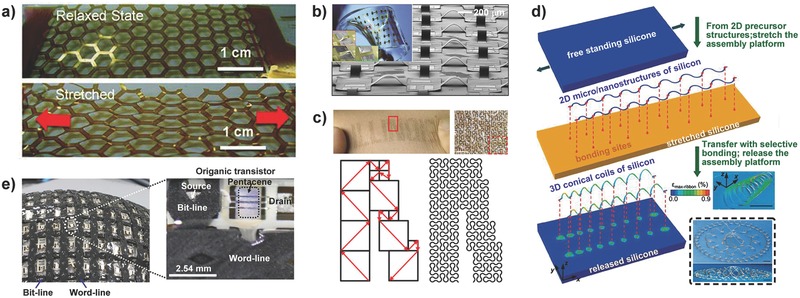
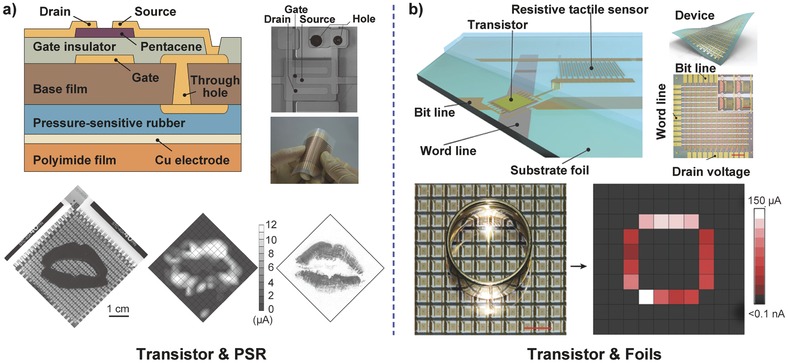

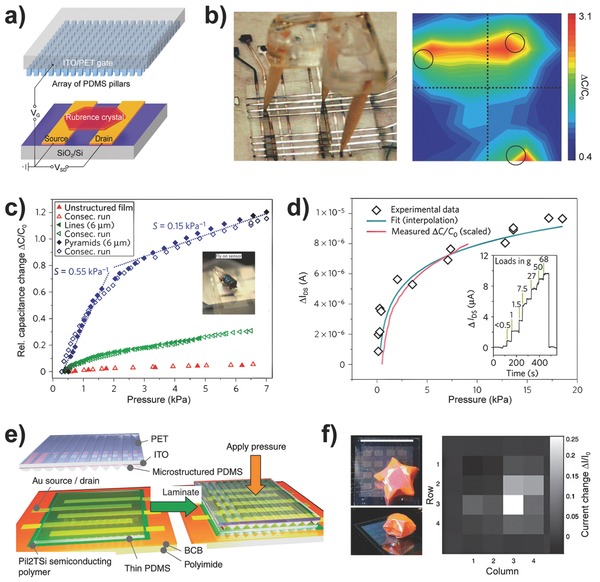


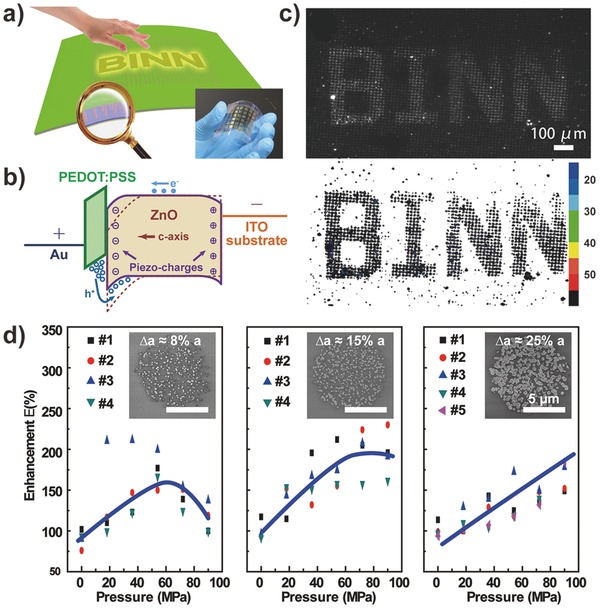




Verification
Claims the paper makes
The claims and statistics of this paper haven’t been checked yet.
Free: it reads the open-access text and checks the first 5 claims that cite a source we can check. Create a free account to check every claim.
Claims other papers make about this one
Each is checked against this paper’s own text: does it say what the citing paper says it does?
The source backs part of the claim, not all of it — or backs it for a different population, condition or comparison.
In the citing paper
“Flexible and wearable vapor sensors can fit directly on human skin or clothing, and endure human movement without mechanical damage, which greatly broaden their application”
From Functionalized Hydrogel-Based Wearable Gas and Humidity Sensors. (2023) · cites this paper as [39]
Experimental — accuracy not yet measured
Self-check
Percentages, sums and reported differences re-computed from the paper’s own numbers.
The self-check needs the paper’s full text.
Citations
Cites
Piezoelectric Nanogenerators Based on Zinc Oxide Nanowire Arrays
Wang, Z. L., & Song, J. (2006) · Science · doi:10.1126/science.1124005 · Cited by 7,922
Self-citationFlexible triboelectric generator
Fan, F.-R., Tian, Z.-Q., & Lin Wang, Z. (2012) · Nano Energy · doi:10.1016/j.nanoen.2012.01.004 · Cited by 6,705
Materials and Mechanics for Stretchable Electronics
Rogers, J. A., Someya, T., & Huang, Y. (2010) · Science · doi:10.1126/science.1182383 · Cited by 5,042
Kim, D.-H., Lu, N., Ma, R., Kim, Y.-S., Kim, R.-H., Wang, S., Wu, J., Won, S. M., Tao, H., Islam, A., et al. (2011) · Science · doi:10.1126/science.1206157 · Cited by 4,836
Autonomic healing of polymer composites
White, S. R., Sottos, N. R., Geubelle, P. H., Moore, J. S., Kessler, M. R., Sriram, S. R., Brown, E. N., & Viswanathan, S. (2001) · Nature · doi:10.1038/35057232 · Cited by 4,575
Highly sensitive flexible pressure sensors with microstructured rubber dielectric layers
Mannsfeld, S. C. B., Tee, B. C.-K., Stoltenberg, R. M., Chen, C. V. H.-H., Barman, S., Muir, B. V. O., Sokolov, A. N., Reese, C., & Bao, Z. (2010) · Nature Materials · doi:10.1038/nmat2834 · Cited by 3,291
A stretchable carbon nanotube strain sensor for human-motion detection
Yamada, T., Hayamizu, Y., Yamamoto, Y., Yomogida, Y., Izadi-Najafabadi, A., Futaba, D. N., & Hata, K. (2011) · Nature Nanotechnology · doi:10.1038/nnano.2011.36 · Cited by 3,247
Skin-like pressure and strain sensors based on transparent elastic films of carbon nanotubes
Lipomi, D. J., Vosgueritchian, M., Tee, B. C.-K., Hellstrom, S. L., Lee, J. A., Fox, C. H., & Bao, Z. (2011) · Nature Nanotechnology · doi:10.1038/nnano.2011.184 · Cited by 3,188
A Thermally Re-mendable Cross-Linked Polymeric Material
Chen, X., Dam, M. A., Ono, K., Mal, A., Shen, H., Nutt, S. R., Sheran, K., & Wudl, F. (2002) · Science · doi:10.1126/science.1065879 · Cited by 2,645
An ultra-lightweight design for imperceptible plastic electronics
Kaltenbrunner, M., Sekitani, T., Reeder, J., Yokota, T., Kuribara, K., Tokuhara, T., Drack, M., Schwödiauer, R., Graz, I., Bauer-Gogonea, S., et al. (2013) · Nature · doi:10.1038/nature12314 · Cited by 2,485
Research works printed but not linked: 2
- Clippinger F. W., 1974, Bull. Prosthetics Res., 247
- Jiang F. K., 1997, Proc. IEEE Tenth Annu. Int. Workshop on Micro. Electro. Mech. Syst, 465
Cited by
Items 201–300 of 988
Soft Magnetic Skin for Continuous Deformation Sensing
Hellebrekers, T., Kroemer, O., & Majidi, C. (2019) · Advanced Intelligent Systems · doi:10.1002/aisy.201900025 · Cited by 152
He, J., Zhou, R., Zhang, Y., Gao, W., Chen, T., Mai, W., & Pan, C. (2021) · Advanced Functional Materials · doi:10.1002/adfm.202107281 · Cited by 149
Self-citationCao, K., Wu, M., Bai, J., Wen, Z., Zhang, J., Wang, T., Peng, M., Liu, T., Jia, Z., Liang, Z., et al. (2022) · Advanced Functional Materials · doi:10.1002/adfm.202202360 · Cited by 142
Recent advances in organic sensors for health self-monitoring systems
Lee, Y. H., Kweon, O. Y., Kim, H., Yoo, J. H., Han, S. G., & Oh, J. H. (2018) · Journal of Materials Chemistry C · doi:10.1039/c8tc02230e · Cited by 135
Electronic Skin for Closed-Loop Systems
Wang, C., Pan, C., & Wang, Z. (2019) · ACS Nano · doi:10.1021/acsnano.9b06576 · Cited by 136
Self-citationLu, L., Yang, B. T., & Liu, J. (2020) · Chemical Engineering Journal · doi:10.1016/j.cej.2020.125928 · Cited by 141
Micro/nanostructured surfaces for self-powered and multifunctional electronic skins
Park, J., Lee, Y., Ha, M., Cho, S., & Ko, H. (2016) · Journal of Materials Chemistry B · doi:10.1039/c5tb02483h · Cited by 141
Zhu, L., Wang, L., Xue, F., Chen, L., Fu, J., Feng, X., Li, T., & Wang, Z. L. (2016) · Advanced Science · doi:10.1002/advs.201600185 · Cited by 135
Self-citationPiezocapacitive Flexible E‐Skin Pressure Sensors Having Magnetically Grown Microstructures
Asghar, W., Li, F., Zhou, Y., Wu, Y., Yu, Z., Li, S., Tang, D., Han, X., Shang, J., Liu, Y., et al. (2020) · Advanced Materials Technologies · doi:10.1002/admt.201900934 · Cited by 133
Inkjet printed 2D-crystal based strain gauges on paper
Casiraghi, C., Macucci, M., Parvez, K., Worsley, R. E., Shin, Y., Bronte, F., Borri, C., Paggi, M., & Fiori, G. (2017) · Carbon · doi:10.1016/j.carbon.2017.12.030 · Cited by 142
“Strain sensor technology is playing a vital role in a wide range of applications, spanning from the detection of subtle and large human motions [1][2], the reproduction of human skin sensory ability in robotics and health monitoring applications [3][4][5][6][7], and screening the”
BackgroundHighly Stretchable and Self-Healing “Solid–Liquid” Elastomer with Strain-Rate Sensing Capability
Wu, Q., Hui, X., Peng, Y., Yang, Y., Kang, J., Huang, G., Ren, X., & Wu, J. (2019) · ACS Applied Materials & Interfaces · doi:10.1021/acsami.9b05230 · Cited by 133
Blending Electronics with the Human Body: A Pathway toward a Cybernetic Future
Mehrali, M., Bagherifard, S., Akbari, M., Thakur, A., Mirani, B., Mehrali, M., Hasany, M., Orive, G., Das, P., Emneus, J., et al. (2018) · Advanced Science · doi:10.1002/advs.201700931 · Cited by 124
Xiao, Y., Duan, Y., Li, N., Wu, L., Meng, B., Tan, F., Lou, Y., Wang, H., Zhang, W., & Peng, Z. (2021) · ACS Sensors · doi:10.1021/acssensors.0c02547 · Cited by 134
Non‐Contact Triboelectric Nanogenerator
Fu, X., Pan, X., Liu, Y., Li, J., Zhang, Z., Liu, H., & Gao, M. (2023) · Advanced Functional Materials · doi:10.1002/adfm.202306749 · Cited by 136
A multifunctional skin-like wearable optical sensor based on an optical micro-/nanofibre
Pan, J., Zhang, Z., Jiang, C., Zhang, L., & Tong, L. (2020) · Nanoscale · doi:10.1039/d0nr03446k · Cited by 130
Gupta, R. K., Shi, Q., Dhakar, L., Wang, T., Heng, C. H., & Lee, C. (2017) · Scientific Reports · doi:10.1038/srep41396 · Cited by 127
He, H., Fu, Y., Zhao, T., Gao, X.-C., Xing, L., Zhang, Y., & Xue, X. (2017) · Nano Energy · doi:10.1016/j.nanoen.2017.07.033 · Cited by 132
Microconformal electrode-dielectric integration for flexible ultrasensitive robotic tactile sensing
Luo, S. J., Zhou, X., Tang, X., Li, J., Wei, D., Tai, G., Chen, Z., Liao, T., Fu, J., Wei, D., et al. (2020) · Nano Energy · doi:10.1016/j.nanoen.2020.105580 · Cited by 134
Li, W., Jin, X., Zheng, Y., Chang, X., Wang, W., Lin, T., Zheng, F., Onyilagha, O., & Zhu, Z. (2020) · Journal of Materials Chemistry C · doi:10.1039/d0tc00443j · Cited by 125
A potentiometric mechanotransduction mechanism for novel electronic skins
Wu, X., Ahmed, M., Khan, Y., Payne, M. E., Zhu, J., Lu, C., Evans, J. W., & Arias, A. C. (2020) · Science Advances · doi:10.1126/sciadv.aba1062 · Cited by 132
Xu, Y., Min, G., Gadegaard, N., Dahiya, R., & Mulvihill, D. M. (2020) · Nano Energy · doi:10.1016/j.nanoen.2020.105067 · Cited by 133
Recent Advances in Flexible Tactile Sensors for Intelligent Systems
Peng, Y., Yang, N., Xu, Q. F., Dai, Y., & Wang, Z. (2021) · Sensors · doi:10.3390/s21165392 · Cited by 134
“The tactile sensing abilities of electronic skin could be summarized as the perception of strain, pressure, shear force, twist deformation, etc. Generally, the common transduction 18 .”
BackgroundSelf-citationHan, L., Cui, S., Yu, H., Song, M., Zhang, H., Grishkewich, N., Huang, C., Kim, D. S., & Tam, K. C. (2019) · ACS Applied Materials & Interfaces · doi:10.1021/acsami.9b17030 · Cited by 128
Self-citationQu, C., Sun, X., Sun, W., Cao, L., Wang, X., & He, Z. (2021) · Small · doi:10.1002/smll.202104482 · Cited by 126
Self-citationFeng, Z., Zhao, Z., Liu, Y., Liu, Y., Cao, X., Yu, D., & Wang, K. (2023) · Advanced Materials Technologies · doi:10.1002/admt.202300021 · Cited by 127
An, T., Zhang, Y., Wen, J., Dong, Z., Du, Q., Liu, L., Wang, Y., Xing, G., & Zhao, X. (2024) · ACS Sensors · doi:10.1021/acssensors.3c02001 · Cited by 129
Yu, G., Hu, J., Tan, J., Gao, Y., Lu, Y., & Xuan, F. (2018) · Nanotechnology · doi:10.1088/1361-6528/aaa855 · Cited by 128
“considered, a cost-effective and scalable method is desired to fabricate the devices for the electronic skins [3].”
BackgroundMethodNanoimprint lithography for the manufacturing of flexible electronics
Shao, J., Chen, X., Li, X., Tian, H., Wang, C., & Lu, B. (2019) · Science China Technological Sciences · doi:10.1007/s11431-018-9386-9 · Cited by 130
Zhao, T., Yuan, L., Li, T., Chen, L., Li, X., & Zhang, J. (2020) · ACS Applied Materials & Interfaces · doi:10.1021/acsami.0c14314 · Cited by 122
Fabrication Techniques for Curved Electronics on Arbitrary Surfaces
Wu, H., Tian, Y., Luo, H., Zhu, H. J., Duan, Y., & Huang, Y. (2020) · Advanced Materials Technologies · doi:10.1002/admt.202000093 · Cited by 122
Xu, X., Cho, E. J., Bekker, L., Talin, A. A., Lee, E., Pascall, A. J., Worsley, M. A., Zhou, J. J., Cook, C. C., Kuntz, J. D., et al. (2022) · Advanced Science · doi:10.1002/advs.202200629 · Cited by 129
Furan Is Superior to Thiophene: A Furan‐Cored AIEgen with Remarkable Chromism and OLED Performance
Zhao, Z., Nie, H., Ge, C., Cai, Y., Xiong, Y., Qi, J., Wu, W., Kwok, R. T. K., Gao, X., Qin, A., et al. (2017) · Advanced Science · doi:10.1002/advs.201700005 · Cited by 120
Li, F., Wang, X., Xia, Z., Pan, C., & Liu, Q. (2017) · Advanced Functional Materials · doi:10.1002/adfm.201700051 · Cited by 120
Self-citationAn, T., Ling, Y., Gong, S. P., Zhu, B., Zhao, Y., Dong, D., Yap, L. W., Wang, Y., & Cheng, W. (2018) · Advanced Materials Technologies · doi:10.1002/admt.201800473 · Cited by 122
Lu, L., Zhou, Y., Pan, J., Chen, T., Hu, Y., Zheng, G., Dai, K., Liu, C., Shen, C., Sun, X., et al. (2019) · ACS Applied Materials & Interfaces · doi:10.1021/acsami.8b17666 · Cited by 121
Facile fabrication of a fully biodegradable and stretchable serpentine-shaped wire supercapacitor
Lee, H.-C., Lee, G., Yun, J., Keum, K., Hong, S. Y., Song, C., Kim, J. W., Lee, J. H., Oh, S. Y., Kim, D., et al. (2019) · Chemical Engineering Journal · doi:10.1016/j.cej.2019.02.076 · Cited by 118
Irregular Microdome Structure‐Based Sensitive Pressure Sensor Using Internal Popping of Microspheres
Jung, Y. J., Choi, J., Lee, W., Ko, J. S., Park, I., & Cho, H. (2022) · Advanced Functional Materials · doi:10.1002/adfm.202201147 · Cited by 121
Hong, S. Y., Oh, J. H., Park, H., Yun, J. Y., Jin, S. W., Sun, L., Zi, G., & Ha, J. S. (2017) · NPG Asia Materials · doi:10.1038/am.2017.194 · Cited by 117
Ultrathin, flexible and multimodal tactile sensors based on organic field-effect transistors
Viola, F. A., Spanu, A., Ricci, P. C., Bonfiglio, A., & Cosseddu, P. (2018) · Scientific Reports · doi:10.1038/s41598-018-26263-1 · Cited by 120
Yang, L., Liu, Y., Filipe, C. D. M., Ljubić, D., Luo, Y., Zhu, H., Yan, J., & Zhu, S. (2019) · ACS Applied Materials & Interfaces · doi:10.1021/acsami.8b17020 · Cited by 118
Huang, L., Chen, J., Xu, Y., Hu, D., Cui, X., Shi, D., & Zhu, Y. (2021) · Applied Surface Science · doi:10.1016/j.apsusc.2021.149268 · Cited by 116
Printing of stretchable silk membranes for strain measurements
Ling, S., Zhang, Q., Kaplan, D. L., Omenetto, F., Buehler, M. J., & Qin, Z. (2016) · Lab on a Chip · doi:10.1039/c6lc00519e · Cited by 113
Optical Micro/Nanofiber-Enabled Compact Tactile Sensor for Hardness Discrimination
Tang, Y., Liu, H., Pan, J., Zhang, Z., Xu, Y., Yao, N., Zhang, L., & Tong, L. (2021) · ACS Applied Materials & Interfaces · doi:10.1021/acsami.0c20392 · Cited by 116
A review on emerging biodegradable polymers for environmentally benign transient electronic skins
Peng, X., Dong, K., Wu, Z., Wang, J., & Wang, Z. L. (2021) · Journal of Materials Science · doi:10.1007/s10853-021-06323-0 · Cited by 117
“[29] Wang X, Dong L, Zhang H, Yu R, Pan C, Wang ZL (2015)”
BackgroundSelf-citationUllah, H., Wahab, M. A., Will, G. D., Karim, M. R., Pan, T., Gao, M., Lai, D., Lin, Y., & Miraz, M. H. (2022) · Biosensors · doi:10.3390/bios12080630 · Cited by 122
Rani, G. M., Ghoreishian, S. M., Umapathi, R., Vivekananthan, V., & Huh, Y. S. (2024) · Nano Energy · doi:10.1016/j.nanoen.2024.109899 · Cited by 115
Transparent wearable three-dimensional touch by self-generated multiscale structure
Kim, K. K., Ha, I., Won, P., Seo, D., Cho, K., & Ko, S. H. (2019) · Nature Communications · doi:10.1038/s41467-019-10736-6 · Cited by 116
Self‐Powered Noncontact Electronic Skin for Motion Sensing
Wu, H., Su, Z., Shi, M., Miao, L., Song, Y., Chen, H., Han, M., & Zhang, H. (2018) · Advanced Functional Materials · doi:10.1002/adfm.201704641 · Cited by 114
Self-citationJung, Y., Lee, W., Jung, K., Park, B., Park, J., Ko, J., & Cho, H. (2020) · Polymers · doi:10.3390/polym12061412 · Cited by 110
“Recently, polymer-based flexible pressure sensors have been attracting attention due to their applications in electronic skin [1,2], flexible touch display [3], health care [4–7], and human–machine interfaces to facilitate human functionalities [8].”
BackgroundMetaverse Wearables for Immersive Digital Healthcare: A Review
Kim, K., Yang, H., Lee, J.-H., & Lee, W. G. (2023) · Advanced Science · doi:10.1002/advs.202303234 · Cited by 123
Transparent ITO mechanical crack-based pressure and strain sensor
Lee, T., Choi, Y. W., Lee, G., Pikhitsa, P. V., Kang, D., Kim, S. M., & Choi, M. (2016) · Journal of Materials Chemistry C · doi:10.1039/c6tc03329f · Cited by 110
Visco‐Poroelastic Electrochemiluminescence Skin with Piezo‐Ionic Effect
Lee, J. I., Choi, H., Kong, S. H., Park, S., Park, D., Kim, J. S., Kwon, S. H., Kim, J., Choi, S. H., Lee, S. G., et al. (2021) · Advanced Materials · doi:10.1002/adma.202100321 · Cited by 110
Advances in Flexible Magnetosensitive Materials and Devices for Wearable Electronics
Yang, H., Li, S., Wu, Y., Bao, X., Xiang, Z., Xie, Y., Pan, L., Chen, J., Liu, Y., & Li, R. (2024) · Advanced Materials · doi:10.1002/adma.202311996 · Cited by 130
Recent Development of Transparent Conducting Oxide‐Free Flexible Thin‐Film Solar Cells
Guo, W., Xu, Z., Zhang, F., Xie, S., Xu, H., & Liu, X. (2016) · Advanced Functional Materials · doi:10.1002/adfm.201603378 · Cited by 115
Guo, R., Wang, X., Yu, W., Tang, J., & Liu, J. (2018) · Science China Technological Sciences · doi:10.1007/s11431-018-9253-9 · Cited by 113
Self-citationChen, S., Liu, H., Liu, S., Wang, P.-P., Zeng, S., Sun, L., & Liu, L. (2018) · ACS Applied Materials & Interfaces · doi:10.1021/acsami.7b17790 · Cited by 109
Pu, J., Zha, X., Tang, L., Bai, L., Bao, R., Liu, Z., Yang, M., & Yang, W. M. (2018) · ACS Applied Materials & Interfaces · doi:10.1021/acsami.8b15809 · Cited by 109
Jeong, Y., Park, J., Lee, J., Kim, K., & Park, I. (2020) · ACS Sensors · doi:10.1021/acssensors.9b02260 · Cited by 108
Wood Derived Composites for High Sensitivity and Wide Linear‐Range Pressure Sensing
Huang, Y., Chen, Y., Fan, X., Luo, N., Zhou, S., Chen, S., Zhao, N., & Wong, C. P. (2018) · Small · doi:10.1002/smll.201801520 · Cited by 106
Emerging Iontronic Sensing: Materials, Mechanisms, and Applications
Xiong, Y., Han, J., Wang, Y., Wang, Z. L., & Sun, Q. (2022) · Research · doi:10.34133/2022/9867378 · Cited by 113
Self-citationSun, Q., Zhuang, J., Venkatesh, S., Zhou, Y., Han, S., Wu, W., Kong, K. W., Li, W. J., Chen, X., Li, R. K. Y., et al. (2018) · ACS Applied Materials & Interfaces · doi:10.1021/acsami.7b16611 · Cited by 105
Recent Progress in Flexible Pressure Sensor Arrays
Duan, Y., He, S., Wu, J., Su, B., & Wang, Y. (2022) · Nanomaterials · doi:10.3390/nano12142495 · Cited by 110
“The development of triboelectric sensor arrays based on single-electrode mode provides an excellent way to solve this problem [89].”
BackgroundYin, Z., Yin, M., Liu, Z., Zhang, Y., Zhang, A. P., & Zheng, Q. (2018) · Advanced Science · doi:10.1002/advs.201701041 · Cited by 102
Flexible Pressure Sensors for Biomedical Applications: From Ex Vivo to In Vivo
Li, L., Zheng, J., Chen, J., Luo, Z., Su, Y., Tang, W., Gao, X., Li, Y., Cao, C., Liu, Q., et al. (2020) · Advanced Materials Interfaces · doi:10.1002/admi.202000743 · Cited by 105
Lead‐Free Halide Perovskites for Direct X‐Ray Detectors
Geng, X., Chen, Y., Li, Y., Ren, J., Dun, G., Qin, K., Zhu, L., Peng, J., Tian, H., Yang, Y., et al. (2023) · Advanced Science · doi:10.1002/advs.202300256 · Cited by 102
Elsayes, A., Sharma, V., Yiannacou, K., Koivikko, A., Rasheed, A., & Sariola, V. (2020) · Advanced Sustainable Systems · doi:10.1002/adsu.202000056 · Cited by 101
Sun, Z., Zhu, M., & Lee, C. (2021) · Nanoenergy Advances · doi:10.3390/nanoenergyadv1010005 · Cited by 105
Lee, S., Byun, S., Kim, C. Y., Cho, S., Park, S., Sim, J. Y., & Jeong, J. (2022) · Advanced Materials · doi:10.1002/adma.202204805 · Cited by 109
Chen, Y., Zhang, Y., Yuan, F., Ding, F., & Schmidt, O. G. (2017) · Advanced Electronic Materials · doi:10.1002/aelm.201600540 · Cited by 102
Stretchable strain sensors with dentate groove structure for enhanced sensing recoverability
Cui, X., Jiang, Y., Xu, Z., Xi, M., Jiang, Y., Song, P., Zhao, Y. J., & Wang, H. (2021) · Composites Part B Engineering · doi:10.1016/j.compositesb.2021.108641 · Cited by 103
Flame-Retardant and Sustainable Silk Ionotronic Skin for Fire Alarm Systems
Liu, Q., Yang, S., Ren, J., & Ling, S. (2020) · ACS Materials Letters · doi:10.1021/acsmaterialslett.0c00062 · Cited by 101
Towards Truly Wearable Systems: Optimizing and Scaling Up Wearable Triboelectric Nanogenerators
Gunawardhana, K. R. S. D., Wanasekara, N. D., & Dharmasena, R. D. I. G. (2020) · iScience · doi:10.1016/j.isci.2020.101360 · Cited by 102
Chen, X., Luo, Y., Chen, Y., Li, S., Deng, S., Wang, B., Zhang, Q., Li, X., Li, X., Wang, C., et al. (2024) · Advanced Science · doi:10.1002/advs.202408082 · Cited by 98
Transparent and Self-Powered Multistage Sensation Matrix for Mechanosensation Application
Zhang, Q., Jiang, T., Ho, D. H., Qin, S., Yang, X., Cho, J. H., Sun, Q., & Wang, Z. L. (2017) · ACS Nano · doi:10.1021/acsnano.7b06126 · Cited by 97
Self-citationShih, C., Lin, Y., Gao, M., Wu, M., Hsieh, H., Wu, N., & Chen, W. (2019) · Journal of Power Sources · doi:10.1016/j.jpowsour.2019.04.030 · Cited by 98
Toward Bioelectronic Medicine—Neuromodulation of Small Peripheral Nerves Using Flexible Neural Clip
Lee, S., Peh, W. Y. X., Wang, J., Yang, F., Ho, J. S., Thakor, N. V., Yen, S., & Lee, C. (2017) · Advanced Science · doi:10.1002/advs.201700149 · Cited by 96
Sharma, A., Ansari, M. Z., & Cho, C. (2022) · Sensors and Actuators A: Physical · doi:10.1016/j.sna.2022.113934 · Cited by 95
Zhang, X., Hu, Z., Sun, Q., Liang, X., Gu, P., Huang, J. D., & Zu, G. (2022) · Angewandte Chemie International Edition · doi:10.1002/anie.202213952 · Cited by 108
Multifunctionality and Mechanical Actuation of 2D Materials for Skin‐Mimicking Capabilities
Chang, T., Li, K., Yang, H., & Chen, P. (2018) · Advanced Materials · doi:10.1002/adma.201802418 · Cited by 94
Yang, Z., Li, H., Li, C., Lai, X., & Zeng, X. (2021) · Chemical Engineering Journal · doi:10.1016/j.cej.2021.133103 · Cited by 94
Field effect transistor‐based tactile sensors: From sensor configurations to advanced applications
Wang, J., Xu, S., Zhang, C., Yin, A., Sun, M., Yang, H., Hu, C., & Liu, H. (2022) · InfoMat · doi:10.1002/inf2.12376 · Cited by 95
Ding, Y., Yang, J., Tolle, C. R., & Zhu, Z. (2016) · RSC Advances · doi:10.1039/c6ra16236c · Cited by 93
Design and Characterization of Tri-Axis Soft Inductive Tactile Sensors
Wang, H., Jones, D. A., de Boer, G., Kow, J., Beccai, L., Alazmani, A., & Culmer, P. (2018) · IEEE Sensors Journal · doi:10.1109/jsen.2018.2845131 · Cited by 99
“Over the last decades, remarkable progress has been made in developing soft/flexible electronic skins [6], [7] for pressure mapping by exploiting a variety of transducer mechanisms (e.”
BackgroundA Self-Healable Bifunctional Electronic Skin
Gao, Z., Lou, Z., Han, W., & Shen, G. (2020) · ACS Applied Materials & Interfaces · doi:10.1021/acsami.0c05119 · Cited by 94
Jia, M., Yi, C., Han, Y., Wang, L., Li, X., Xu, G., He, K., Li, N., Hou, Y., Wang, Z., et al. (2022) · Advanced Science · doi:10.1002/advs.202105738 · Cited by 98
Self-citationUltra-stretchable, bio-inspired ionic skins that work stably in various harsh environments
Xie, W., Duan, J., Wang, H., Li, J., Liu, R., Yu, B., Liu, S., & Zhou, J. (2018) · Journal of Materials Chemistry A · doi:10.1039/c8ta09206k · Cited by 92
Luo, Z., Hu, X., Tian, X., Luo, C., Xu, H., Li, Q., Li, Q., Zhang, J., Qiao, F., Wu, X. Y., et al. (2019) · Sensors · doi:10.3390/s19051250 · Cited by 96
“Schematic illustrations of the transduction methods: (a) resistive, (b) capacitive, and (c) piezoelectric [79,96,105,106].”
BackgroundMethodBiomimetics for high-performance flexible tactile sensors and advanced artificial sensory systems
Amoli, V., Kim, S. Y., Kim, J. S., Choi, H., Koo, J., & Kim, D. H. (2019) · Journal of Materials Chemistry C · doi:10.1039/c9tc05392a · Cited by 94
F4‐TCNQ as an Additive to Impart Stretchable Semiconductors with High Mobility and Stability
Mun, J., Kang, J., Zheng, Y., Luo, S., Wu, Y., Gong, H., Lai, J., Wu, H., Xue, G., Tok, J. B. ‐., et al. (2020) · Advanced Electronic Materials · doi:10.1002/aelm.202000251 · Cited by 93
MXene wearables: properties, fabrication strategies, sensing mechanism and applications
Kedambaimoole, V., Harsh, K., Rajanna, K., Sen, P., Nayak, M. M., & Kumar, S. (2022) · Materials Advances · doi:10.1039/d1ma01170g · Cited by 94
Bijender, & Kumar, A. (2022) · Sensors and Actuators A Physical · doi:10.1016/j.sna.2022.113770 · Cited by 98
A multi-point heart rate monitoring using a soft wearable system based on fiber optic technology
Presti, D. L., Santucci, F., Massaroni, C., Formica, D., Setola, R., & Schena, E. (2021) · Scientific Reports · doi:10.1038/s41598-021-00574-2 · Cited by 93
Recent progress on Schottky sensors based on two-dimensional transition metal dichalcogenides
Li, Q., Meng, J., & Li, Z. (2022) · Journal of Materials Chemistry A · doi:10.1039/d2ta00075j · Cited by 93
Fast-Response Flexible Temperature Sensors with Atomically Thin Molybdenum Disulfide
Daus, A., Jaikissoon, M., Khan, A. I., Kumar, A., Grady, R. W., Saraswat, K. C., & Pop, E. (2022) · Nano Letters · doi:10.1021/acs.nanolett.2c01344 · Cited by 93
Wearable strain sensors: state-of-the-art and future applications
Yadav, A. K., Yadav, N., Wu, Y., Ramakrishna, S., & Zheng, H. Y. (2023) · Materials Advances · doi:10.1039/d2ma00818a · Cited by 94
Yuan, T., Yin, R., Li, C., Wang, C., Fan, Z., & Pan, L. (2023) · Chemical Engineering Journal · doi:10.1016/j.cej.2023.145475 · Cited by 91
A Skin‐Inspired Integrated Sensor for Synchronous Monitoring of Multiparameter Signals
Gui, Q., He, Y., Gao, N., Tao, X., & Wang, Y. (2017) · Advanced Functional Materials · doi:10.1002/adfm.201702050 · Cited by 89
Yue, O., Wang, X., Hou, M., Zheng, M., Bai, Z., Cui, B., Cha, S., & Liu, X. (2021) · Nano Energy · doi:10.1016/j.nanoen.2021.106682 · Cited by 89
Self-citationOrigami Paper-Based Stretchable Humidity Sensor for Textile-Attachable Wearable Electronics
Chen, X., Li, Y., Wang, X., & Yu, H. (2022) · ACS Applied Materials & Interfaces · doi:10.1021/acsami.2c08245 · Cited by 89
Self-citation3D Printed Integrated Sensors: From Fabrication to Applications—A Review
Hassan, M. S., Zaman, S., Dantzler, J. Z. R., Leyva, D. H., Mahmud, M. S., Ramirez, J. E. M., Gomez, S. G., & Lin, Y. (2023) · Nanomaterials · doi:10.3390/nano13243148 · Cited by 89
Metadata
- Authors
- Wang, X., Dong, L., Zhang, H., Yu, R., Pan, C., & Wang, Z. L.
- Affiliations
- Chinese Academy of Sciences (CN)
- Georgia Institute of Technology (US)
- Corresponding author
- Pan, Caofeng
- Venue
- Advanced Science
- Publisher
- Wiley
- Published
- 2015-07-14
- Volume
- 2
- Issue
- 10
- Pages
- 1500169-1500169
- ISSN
- 2198-3844 (ISSN-L)
- PMC
- PMC5115318
- OpenAlex
- W1772021317
- Cited by
- 976
- References
- 218
- Citations by year
- 2026: 34 · 2025: 64 · 2024: 83 · 2023: 107 · 2022: 103 · 2021: 124 · 2020: 130 · 2019: 131 · 2018: 97 · 2017: 73 · 2016: 26 · 2015: 4
- FWCI
- 33.12
- Type
- journal article
- Language
- en
- Open access
- gold
- doi.org
- Licence
- Locations
- Advanced Science (publishedVersion, cc-by)
- Europe PMC (PubMed Central) (publishedVersion, cc-by)
- PubMed Central (publishedVersion, cc-by)
- PubMed (publishedVersion)
- Funders
- Chinese Academy of Sciences
- National Natural Science Foundation of China (51272238, 21321062, 51432005, 61405040)
- Topics
- Physical Sciences › Engineering › Biomedical Engineering › Advanced Sensor and Energy Harvesting Materials
- Physical Sciences › Engineering › Electrical and Electronic Engineering › Nanomaterials and Printing Technologies
- Life Sciences › Neuroscience › Cognitive Neuroscience › Tactile and Sensory Interactions
- Keywords
- electronic skin, tactile sensing, pressure sensors, self-healing materials, multimodal sensing, temperature and humidity monitoring, flexible circuits, wireless sensing, human-machine interaction, robotics
About these checks
Registry, retraction, Cites and statistics results are computed, not judged, with one exception: a printed reference that no index lists is read once by a model before it counts as a citation error. Claims are extracted by a model and kept only when their quote appears verbatim in the text; each cited source is then checked, with a model’s help, for whether it says what the claim relies on. Those verdicts can be wrong — read the claim’s quote and the cited source before relying on one.
Statistics and arithmetic are recomputed, not judged.
Confidence bands are shown only for fields calibrated on our annotated test set. None is calibrated yet, so no band is shown.
What counts as a claim ›How we measure confidence ›How we check this ›
Are you an author, or do you see a problem with this page? Request a review
Data sources
Bibliographic data: Semantic Scholar, OpenAlex, Crossref.
Contains information from the Semantic Scholar Academic Graph Datasets, made available under the ODC Attribution License (ODC-BY 1.0).
Semantic Scholar’s data is described in: Kinney, R., et al. (2023). The Semantic Scholar Open Data Platform. arXiv:2301.10140.
