

Recent Progress in Electronic Skin
Open accessThe DOI matches its Crossref record; 215 of the 218 references it cites were found in a registry or an index.
Abstract
The skin is the largest organ of the human body and can sense pressure, temperature, and other complex environmental stimuli or conditions. The mimicry of human skin's sensory ability via electronics is a topic of innovative research that could find broad applications in robotics, artificial intelligence, and human–machine interfaces, all of which promote the development of electronic skin (e‐skin). To imitate tactile sensing via e‐skins, flexible and stretchable pressure sensor arrays are constructed based on different transduction mechanisms and structural designs. These arrays can map pressure with high resolution and rapid response beyond that of human perception. Multi‐modal force sensing, temperature, and humidity detection, as well as self‐healing abilities are also exploited for multi‐functional e‐skins. Other recent progress in this field includes the integration with high‐density flexible circuits for signal processing, the combination with wireless technology for convenient sensing and energy/data transfer, and the development of self‐powered e‐skins. Future opportunities lie in the fabrication of highly intelligent e‐skins that can sense and respond to variations in the external environment. The rapidly increasing innovations in this area will be important to the scientific community and to the future of human life.
Overview
The claims and statistics of this paper haven’t been checked yet.
Free: it reads the open-access text and checks the first 5 claims that cite a source we can check. Create a free account to check every claim.
Integrity signals
Registry
Cites
Statistics
Figures


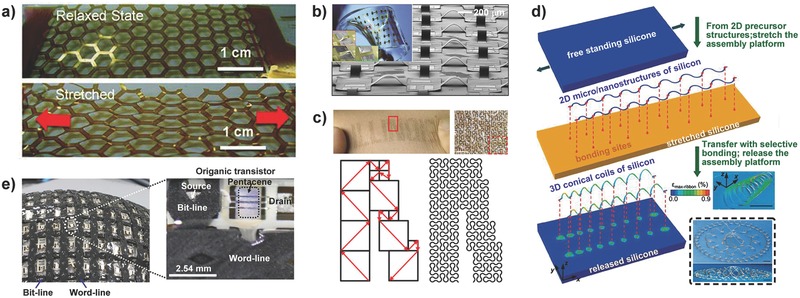
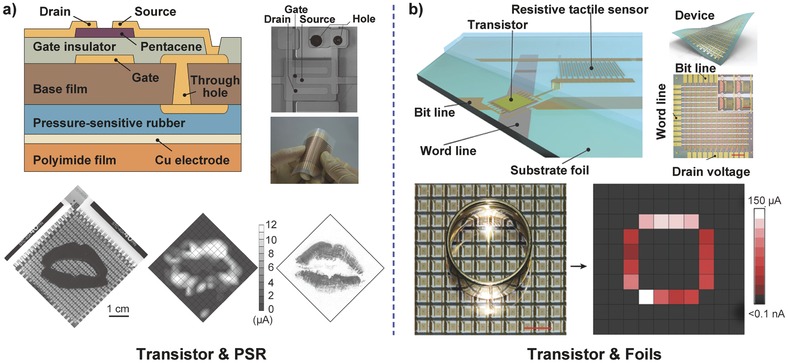

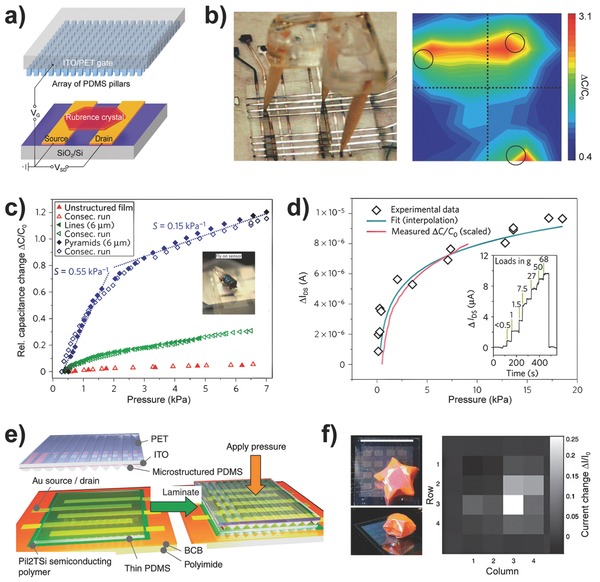


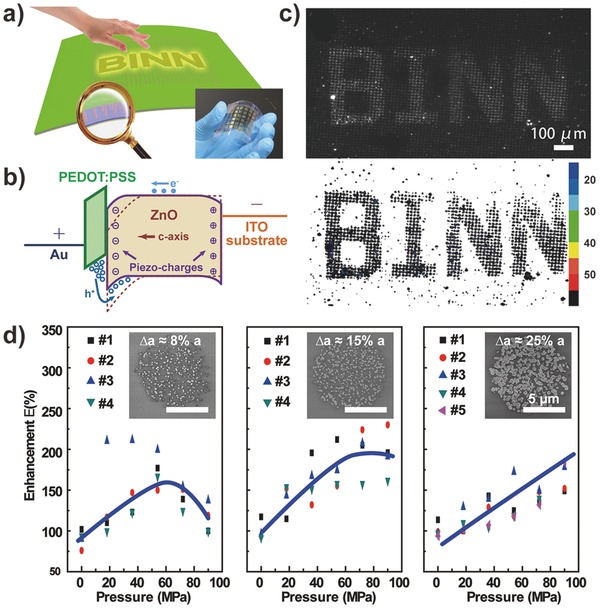




Verification
Claims the paper makes
The claims and statistics of this paper haven’t been checked yet.
Free: it reads the open-access text and checks the first 5 claims that cite a source we can check. Create a free account to check every claim.
Claims other papers make about this one
Each is checked against this paper’s own text: does it say what the citing paper says it does?
The source backs part of the claim, not all of it — or backs it for a different population, condition or comparison.
In the citing paper
“Flexible and wearable vapor sensors can fit directly on human skin or clothing, and endure human movement without mechanical damage, which greatly broaden their application”
From Functionalized Hydrogel-Based Wearable Gas and Humidity Sensors. (2023) · cites this paper as [39]
Experimental — accuracy not yet measured
Self-check
Percentages, sums and reported differences re-computed from the paper’s own numbers.
The self-check needs the paper’s full text.
Citations
Cites
Piezoelectric Nanogenerators Based on Zinc Oxide Nanowire Arrays
Wang, Z. L., & Song, J. (2006) · Science · doi:10.1126/science.1124005 · Cited by 7,922
Self-citationFlexible triboelectric generator
Fan, F.-R., Tian, Z.-Q., & Lin Wang, Z. (2012) · Nano Energy · doi:10.1016/j.nanoen.2012.01.004 · Cited by 6,705
Materials and Mechanics for Stretchable Electronics
Rogers, J. A., Someya, T., & Huang, Y. (2010) · Science · doi:10.1126/science.1182383 · Cited by 5,042
Kim, D.-H., Lu, N., Ma, R., Kim, Y.-S., Kim, R.-H., Wang, S., Wu, J., Won, S. M., Tao, H., Islam, A., et al. (2011) · Science · doi:10.1126/science.1206157 · Cited by 4,836
Autonomic healing of polymer composites
White, S. R., Sottos, N. R., Geubelle, P. H., Moore, J. S., Kessler, M. R., Sriram, S. R., Brown, E. N., & Viswanathan, S. (2001) · Nature · doi:10.1038/35057232 · Cited by 4,575
Highly sensitive flexible pressure sensors with microstructured rubber dielectric layers
Mannsfeld, S. C. B., Tee, B. C.-K., Stoltenberg, R. M., Chen, C. V. H.-H., Barman, S., Muir, B. V. O., Sokolov, A. N., Reese, C., & Bao, Z. (2010) · Nature Materials · doi:10.1038/nmat2834 · Cited by 3,291
A stretchable carbon nanotube strain sensor for human-motion detection
Yamada, T., Hayamizu, Y., Yamamoto, Y., Yomogida, Y., Izadi-Najafabadi, A., Futaba, D. N., & Hata, K. (2011) · Nature Nanotechnology · doi:10.1038/nnano.2011.36 · Cited by 3,247
Skin-like pressure and strain sensors based on transparent elastic films of carbon nanotubes
Lipomi, D. J., Vosgueritchian, M., Tee, B. C.-K., Hellstrom, S. L., Lee, J. A., Fox, C. H., & Bao, Z. (2011) · Nature Nanotechnology · doi:10.1038/nnano.2011.184 · Cited by 3,188
A Thermally Re-mendable Cross-Linked Polymeric Material
Chen, X., Dam, M. A., Ono, K., Mal, A., Shen, H., Nutt, S. R., Sheran, K., & Wudl, F. (2002) · Science · doi:10.1126/science.1065879 · Cited by 2,645
An ultra-lightweight design for imperceptible plastic electronics
Kaltenbrunner, M., Sekitani, T., Reeder, J., Yokota, T., Kuribara, K., Tokuhara, T., Drack, M., Schwödiauer, R., Graz, I., Bauer-Gogonea, S., et al. (2013) · Nature · doi:10.1038/nature12314 · Cited by 2,485
Research works printed but not linked: 2
- Clippinger F. W., 1974, Bull. Prosthetics Res., 247
- Jiang F. K., 1997, Proc. IEEE Tenth Annu. Int. Workshop on Micro. Electro. Mech. Syst, 465
Cited by
Items 501–600 of 988
Xie, Y., Gao, S., Jian, J., Shi, X., Lai, C., Wang, C., Xu, F., Chu, F., & Zhang, D. (2022) · International Journal of Biological Macromolecules · doi:10.1016/j.ijbiomac.2022.12.079 · Cited by 39
Hasan, S., Jung, Y., Kim, S., Jung, C., Oh, S., Kim, J., & Lim, H. (2016) · Sensors · doi:10.3390/s16010093 · Cited by 39
“Based on the transduction mechanism, tactile sensing units can be broadly categorized as capacitive [4–11], piezoelectric [12–17], piezoresistive [18–24] and triboelectric types [25,26], and each transduction type has its own advantages and disadvantages.”
BackgroundGu, W., Yuan, W., Zhong, T., Wu, X., Zhou, C., Lin, J., & Cui, Z. (2018) · RSC Advances · doi:10.1039/c8ra04468f · Cited by 39
Cramer, T., Travaglini, L., Lai, S., Patruno, L., de Miranda, S., Bonfiglio, A., Cosseddu, P., & Fraboni, B. (2016) · Scientific Reports · doi:10.1038/srep38203 · Cited by 38
Achari, A. M., Vanishree, P., Swati, G., & Khare, A. (2023) · ACS Omega · doi:10.1021/acsomega.3c05222 · Cited by 37
Bio-inspired electronic sensors for healthcare applications
Pal, S., Kumar, D., Ulucan‐Karnak, F., Narang, J., & Shukla, S. K. (2024) · Chemical Engineering Journal · doi:10.1016/j.cej.2024.155894 · Cited by 37
Yu, Y., Chen, C., Chueh, C.-C., Chiang, C.-Y., Hsieh, J. H., Chen, W., & Chen, W. (2017) · ACS Applied Materials & Interfaces · doi:10.1021/acsami.7b06963 · Cited by 37
Ding, H., Wen, Z., Qin, E., Yang, Y., Zhang, W., Yan, B., Wu, D., Shi, Z., Tian, Y., & Li, X. (2019) · Materials Research Express · doi:10.1088/2053-1591/ab091a · Cited by 37
Recent Advances in Skin Chemical Sensors
Piro, B., Mattana, G., & Noël, V. (2019) · Sensors · doi:10.3390/s19204376 · Cited by 39
A Flexible Integrated Bending Strain and Pressure Sensor System for Motion Monitoring
Feng, R., Mu, Y., Zeng, X., Jia, W., Liu, Y., Jiang, X., Gong, Q., & Hu, Y. (2021) · Sensors · doi:10.3390/s21123969 · Cited by 37
Nie, F., An, C., Cao, D., Liu, J., Zhou, Y., Lu, Y., Ma, Z., Pan, L., & Li, Y. (2021) · Advanced Functional Materials · doi:10.1002/adfm.202110616 · Cited by 37
Liu, J., Wang, P., Li, G., Yang, L., Yu, W., Meng, C., & Guo, S. (2022) · Nanoscale · doi:10.1039/d2nr03277e · Cited by 38
A highly stretchable and sensitive strain sensor for lip-reading extraction and speech recognition
Cheng, L., Ruan, D., He, Y., Yang, J., Qian, W., Zhu, L., Zhu, P., Wu, H., & Liu, A. (2023) · Journal of Materials Chemistry C · doi:10.1039/d3tc01136d · Cited by 37
Structural Insights into Conjugated Polymers for Stretchable Organic Transistors
Chung, S., Kim, S. H., Ok, E., Kim, B. J., Kang, B., & Cho, K. (2023) · Chemistry of Materials · doi:10.1021/acs.chemmater.3c02394 · Cited by 36
Chong, Y. S., Yeoh, K. H., Leow, P. L., & Chee, P. S. (2018) · Sensor Review · doi:10.1108/sr-11-2017-0238 · Cited by 36
Huang, Y., Zhang, J., Pu, J., Guo, X., Qiu, J., Ma, Y., Zhang, Y., & Yang, X. (2018) · Materials Research Express · doi:10.1088/2053-1591/aac8c0 · Cited by 37
Laser-microengineered flexible electrodes with enhanced sensitivity for wearable pressure sensors
Lu, C., Gao, Y., Yu, G., Xu, M., Tan, J., & Xuan, F. (2018) · Sensors and Actuators A Physical · doi:10.1016/j.sna.2018.08.046 · Cited by 36
Shi, G., Liu, T., Kopecki, Z., Cowin, A. J., Lee, I., Pai, J., Lowe, S. E., & Zhong, Y. L. (2019) · C – Journal of Carbon Research · doi:10.3390/c5020017 · Cited by 41
“Electronic skin (E-skin) has attracted growing attention due to its unique capability to detect subtle pressure changes for wearable health monitoring, sensitive tactile information acquisition, invasive surgery and prosthetics [48].”
BackgroundHumidity Stable Thermoelectric Hybrid Materials Toward a Self‐Powered Triple Sensing System
Tu, S., Tian, T., Xiao, T., Yao, X., Shen, S., Wu, Y., Liu, Y., Bing, Z., Huang, K., Knoll, A., et al. (2024) · Advanced Functional Materials · doi:10.1002/adfm.202316088 · Cited by 38
RETRACTED: Embedded Sensors with 3D Printing Technology: Review
Bas, J., Dutta, T., Llamas‐Garro, I., Velázquez-González, J. S., Dubey, R., & Mishra, S. K. (2024) · Sensors · doi:10.3390/s24061955 · Cited by 36
RetractedDing, L., Pei, L., Xuan, S., Fan, X., Cao, X., Wang, Y., & Gong, X. (2019) · Advanced Electronic Materials · doi:10.1002/aelm.201900653 · Cited by 36
Lu, W., Ong, W. L., Pan, X., Li, Z., Tian, G., & Ho, G. W. (2025) · Advanced Materials · doi:10.1002/adma.202510270 · Cited by 36
Du, C., Hu, W., & Wang, Z. L. (2017) · Advanced Engineering Materials · doi:10.1002/adem.201700760 · Cited by 35
Self-citationFlexible Liquid‐Filled Fiber Adapter Enabled Wearable Optical Sensors
Pan, J., Jiang, C., Zhang, Z., Zhang, L., Wang, X., & Tong, L. (2020) · Advanced Materials Technologies · doi:10.1002/admt.202000079 · Cited by 35
Self-citationEffects of Defect and Temperature on the Mechanical Performance of WS2: A Multiscale Analysis
Tang, H., Hu, D., Cui, Z., Ye, H., & Zhang, G. (2021) · The Journal of Physical Chemistry C · doi:10.1021/acs.jpcc.0c09897 · Cited by 35
System‐Engineered Miniaturized Robots: From Structure to Intelligence
Bandari, V. K., & Schmidt, O. G. (2021) · Advanced Intelligent Systems · doi:10.1002/aisy.202000284 · Cited by 39
Li, X., Koh, K. H., Xue, J., So, C. H., Xiao, N., Tin, C., Wai, K., & Lai, K. W. C. (2022) · Nano Research · doi:10.1007/s12274-022-4413-4 · Cited by 35
Jin, S., Kim, Y., Son, D., & Shin, M. (2022) · Gels · doi:10.3390/gels8060336 · Cited by 35
“Flexible and soft electronics, such as wearable monitoring devices [1–3], sensors [4–7], electronic skin [8,9], and human–machine interfaces [10], have recently attracted attention in the biomedical field [11–13].”
BackgroundFlexible Pressure Sensor With Wide Linear Sensing Range for Human–Machine Interaction
Gao, L., Zhao, N., Xu, H., Hu, X., Xu, D., Zheng, W., & Wang, W. (2022) · IEEE Transactions on Electron Devices · doi:10.1109/ted.2022.3173916 · Cited by 35
Electronic Skin: Opportunities and Challenges in Convergence with Machine Learning
Koo, J. H., Lee, Y. J., Kim, H. J., Matusik, W., Kim, D., & Jeong, H. (2024) · Annual Review of Biomedical Engineering · doi:10.1146/annurev-bioeng-103122-032652 · Cited by 35
Revolutionizing human healthcare with wearable sensors for monitoring human strain
Malode, S. J., Alshehri, M. A., & Shetti, N. P. (2024) · Colloids and Surfaces B Biointerfaces · doi:10.1016/j.colsurfb.2024.114384 · Cited by 36
Elastomers for Soft Electronics: A Review from the Material's Perspective
Chakraborti, S., Banerjee, P. S., Basu, D., Wießner, S., Heinrich, G., Das, A., & Banerjee, S. S. (2025) · Advanced Engineering Materials · doi:10.1002/adem.202402458 · Cited by 34
Mi, H., Jing, X., Wang, Y., Shi, X., Li, H., Liu, C., Shen, C., Turng, L., & Gong, S. (2020) · ACS Applied Polymer Materials · doi:10.1021/acsapm.0c00363 · Cited by 35
All-polymer free-standing electrodes for flexible electrochemical sensors
Gao, F., Song, J., Xu, Z., Xu, L. H., Guo, Y., Miao, L., & Luo, X. (2021) · Sensors and Actuators B Chemical · doi:10.1016/j.snb.2021.129675 · Cited by 34
Potential applications of human artificial skin and electronic skin (e-skin): a review
Dolbashid, A. S., Mokhtar, M. S., Muhamad, F., & Ibrahim, F. (2017) · Bioinspired Biomimetic and Nanobiomaterials · doi:10.1680/jbibn.17.00002 · Cited by 35
Xia, Y., Zhang, Q., Wu, X., Kirk, T. V., & Chen, X. D. (2019) · Sensors · doi:10.3390/s19204553 · Cited by 33
Adamatzky, A., Gandía, A., & Chiolerio, A. (2021) · Fungal Biology and Biotechnology · doi:10.1186/s40694-021-00113-8 · Cited by 33
Cheng, G., Xu, H., Gao, N., Zhang, M., Gao, H., Sun, B., Gu, M., Yu, L., Lin, Y., Liu, X., et al. (2023) · Carbon · doi:10.1016/j.carbon.2022.12.090 · Cited by 33
Luo, Y., Chen, X., Li, X., Tian, H., Wang, L., & Shao, J. (2023) · Nano Research · doi:10.1007/s12274-022-5309-z · Cited by 33
Chen, C., Chiang, C.-Y., Yu, Y., Hsiao, Y., & Chen, W. (2017) · Solar Energy Materials and Solar Cells · doi:10.1016/j.solmat.2017.02.035 · Cited by 33
Xu, M., Li, F., Zhang, Z., Shen, T., Zhang, Q., & Qi, J. (2018) · Science China Materials · doi:10.1007/s40843-018-9348-8 · Cited by 34
Self-healable electrochromic ion gels for low power and robust displays
Ko, J., Surendran, A., Febriansyah, B., & Leong, W. L. (2019) · Organic Electronics · doi:10.1016/j.orgel.2019.05.022 · Cited by 33
Gao, Z., Jiang, K., Lou, Z., Han, W., & Shen, G. (2019) · Journal of Materials Chemistry C · doi:10.1039/c9tc02832c · Cited by 33
Next-Generation Smart Carbon–Polymer Nanocomposites: Advances in Sensing and Actuation Technologies
Mubasshira, Rahman, M. M., Uddin, M. N., Rhaman, M., Roy, S., & Sarker, M. S. (2025) · Processes · doi:10.3390/pr13092991 · Cited by 35
Skin‐Inspired Electronics and Its Applications in Advanced Intelligent Systems
Li, J., Ma, Z., Wang, H., Gao, X., Zhou, Z., Tao, R., Pan, L., & Shi, Y. (2019) · Advanced Intelligent Systems · doi:10.1002/aisy.201900063 · Cited by 34
Ghosh, G., Bag, A., Hanif, A., Meeseepong, M., Lee, Y. R., & Lee, N. (2022) · Advanced Functional Materials · doi:10.1002/adfm.202209277 · Cited by 32
Simple and Reliable Lift-Off Patterning Approach for Graphene and Graphene–Ag Nanowire Hybrid Films
Trung, T. N., Kim, D.-O., Lee, J., Dao, V., Choi, H., & Kim, E. (2017) · ACS Applied Materials & Interfaces · doi:10.1021/acsami.7b05790 · Cited by 32
Tailored CO2-philic Gas Separation Membranes via One-Pot Thiol–ene Chemistry
Hong, T., Cao, P., Zhao, S., Li, B., Smith, C., Lehmann, M. L., Erwin, A. J., Mahurin, S. M., Venna, S. R., Sokolov, A. P., et al. (2019) · Macromolecules · doi:10.1021/acs.macromol.9b00497 · Cited by 33
Ryu, J., Gao, Y., Cho, J. H., & Choi, S. (2020) · Journal of Power Sources · doi:10.1016/j.jpowsour.2020.229271 · Cited by 32
Wang, X., Li, Y., Wang, Y., Huang, W., Zhao, X., Chen, K., Luo, F., & Qin, Y. (2024) · Chemical Engineering Journal · doi:10.1016/j.cej.2024.153957 · Cited by 31
Self-citationFlexible ultrathin all‐solid‐state supercapacitors
Wang, R., Wang, Q., Yao, M., Chen, K., Wang, X., Liu, L., Niu, Z., & Chen, J. (2018) · Rare Metals · doi:10.1007/s12598-018-1034-x · Cited by 31
Self-citationOnojima, N., Akiyama, N., Mori, Y., Sugai, T., & Obata, S. (2019) · Organic Electronics · doi:10.1016/j.orgel.2019.105597 · Cited by 31
Nano energy for miniaturized systems
Zhu, M., Zhu, F., & Schmidt, O. G. (2020) · Nano Materials Science · doi:10.1016/j.nanoms.2020.10.001 · Cited by 31
Park, J., Kim, D., & Kim, Y. T. (2021) · Nanotechnology · doi:10.1088/1361-6528/ac0c3f · Cited by 31
“A sensor must have excellent sensitivity, mechanical fl exibility, durability, and response time to be capable of implementing such a system [ 1 – 4 ] .”
Organic electrochemical transistors toward synaptic electronics
Zhou, B., Liu, W., Xu, Y., Jin, C., Yang, J., & Sun, J. (2022) · Journal of Physics D Applied Physics · doi:10.1088/1361-6463/ac67b9 · Cited by 34
“However, recently wearable devices [131] and e-skin devices [132, 133] are being adopted.”
Jang, J., Kim, D. W., Lee, J. H., Choi, C., Go, M., Kim, J. K., & Jeong, U. (2022) · Nano Energy · doi:10.1016/j.nanoen.2022.107320 · Cited by 31
Responsive molecular liquid materials
Tateyama, A., & Nakanishi, T. (2023) · Responsive materials · doi:10.1002/rpm.20230001 · Cited by 31
Advances in Wearable Multifunctional Devices Based on Human‐Body Energy Harvesting
Chu, H., Xue, J., Luo, D., Zheng, H., & Li, Z. (2024) · Advanced Materials Technologies · doi:10.1002/admt.202302068 · Cited by 30
Zhang, L., Hang, Z., & Hu, H. (2025) · Microsystems & Nanoengineering · doi:10.1038/s41378-025-00895-6 · Cited by 30
“Electronic skin replicates these sensory functions by integrating advanced sensors, holding promise for applications in robotics, arti fi cial intelligence, and human-machine interfaces 215 .”
Flexible and Wearable Tactile Sensors for Intelligent Interfaces
Cui, X., Zhang, W. Y., Lv, M., Huang, T., Xi, J., & Yuan, Z. (2025) · Materials · doi:10.3390/ma18174010 · Cited by 33
Taguchi, R., Akamatsu, N., Kuwahara, K., Tokumitsu, K., Kobayashi, Y., Kishino, M., Yaegashi, K., Takeya, J., & Shishido, A. (2021) · Advanced Materials Interfaces · doi:10.1002/admi.202001662 · Cited by 30
A novel MXene-based high-performance flexible pressure sensor for detection of human motion
Zhang, Z., Zhang, Q., Zhang, H., Li, B., Zang, J., Zhao, X., Zhao, X., & Xue, C. (2023) · Smart Materials and Structures · doi:10.1088/1361-665x/accee9 · Cited by 30
Self-citationStructural stability and optoelectronic properties of tetragonal MAPbI 3 under strain
Guo, L., Xu, G., Tang, G., Fang, D., & Hong, J. (2020) · Nanotechnology · doi:10.1088/1361-6528/ab7679 · Cited by 30
“It is especially noteworthy that OHIPs possess good flexibility and are very suitable to serve as energy storage devices for flexible screens, software robots and wearable devices.[6-8] In practical applications, OIHPs are inevitably affected by external loads such as tension, bending and torsion, etc, which makes the…”
BackgroundCarluccio, V., Fachechi, L., Mastronardi, V., Natta, L., Algieri, L., de Marzo, G., Rizzi, F., & Vittorio, M. D. (2023) · IEEE Sensors Journal · doi:10.1109/jsen.2023.3265871 · Cited by 30
“from stress and strain, and perceive touch and heat [7], [8].”
BackgroundLai, J., Wang, X., Zhao, Q., Zhang, C., Gong, T., He, L., Wang, Z., & Xia, H. (2024) · ACS Applied Materials & Interfaces · doi:10.1021/acsami.4c01568 · Cited by 29
Self-citationSoft Optical Fibers for Biomedical and Wearable Technologies: Current Trends and Future Prospects
Wang, Y., Zhou, Y., Qi, L., & Zhang, Y. (2025) · Advanced Functional Materials · doi:10.1002/adfm.202507712 · Cited by 30
Yadav, N., Zhang, Q., Qi, D., Yadav, A., & Zheng, H. Y. (2025) · Nanoscale Advances · doi:10.1039/d5na00574d · Cited by 32
Strategy of Fabricating Flexible Strain Sensor via Layer-by-Layer Assembly of Conductive Hydrogels
Chen, Y., Fu, X., Kang, S., Wang, L., & Lu, W. (2021) · ACS Applied Electronic Materials · doi:10.1021/acsaelm.1c00484 · Cited by 29
Laser Erasing and Rewriting of Flexible Copper Circuits
Zhou, X., Guo, W., & Peng, P. (2021) · Nano-Micro Letters · doi:10.1007/s40820-021-00714-3 · Cited by 29
Highly Stretchable Strain Sensor With Spiral Fiber for Curvature Sensing of a Soft Pneumatic Gripper
Liu, R., Wang, S., Yang, H., & Shi, C. (2021) · IEEE Sensors Journal · doi:10.1109/jsen.2021.3116427 · Cited by 29
Jiang, X., Dong, Z., Miao, X., Wang, K., Yao, F., Gao, Z., Mi, B., Yi, Y., Yang, G., & Qian, Y. (2022) · Advanced Functional Materials · doi:10.1002/adfm.202205697 · Cited by 29
Wang, H., Chen, X., Li, J., Li, M., Liu, K., Yang, D., Peng, S. S., Zhao, T., Zhao, B., Li, Y., et al. (2023) · ACS Applied Materials & Interfaces · doi:10.1021/acsami.3c04093 · Cited by 29
A Janus gold nanowire electrode for stretchable micro-supercapacitors with distinct capacitances
An, T., Zhu, B., Ling, Y., Gong, S. P., & Cheng, W. (2019) · Journal of Materials Chemistry A · doi:10.1039/c9ta03664d · Cited by 29
Bai, R., Gao, Y., Lu, C., Tan, J., & Xuan, F. (2020) · Measurement · doi:10.1016/j.measurement.2020.108348 · Cited by 29
Su, Y., Zhang, W., Chen, S., Yao, D., Zhang, X., Chen, H., & Xu, H. (2021) · IEEE Transactions on Electron Devices · doi:10.1109/ted.2020.3045962 · Cited by 30
Effect of glycerol on the mechanical and temperature-sensing properties of pectin films
Costanza, V., Bonanomi, L., Moscato, G., Wang, L., Choi, Y. S., & Daraio, C. (2019) · Applied Physics Letters · doi:10.1063/1.5121710 · Cited by 28
Wang, H., Liu, J., Cui, H., Liu, Y., Zhu, J., Wang, H., Song, G., Li, Z., & Chen, D. (2021) · ACS Applied Electronic Materials · doi:10.1021/acsaelm.1c00044 · Cited by 28
PET/ZnO@MXene-Based Flexible Fabrics with Dual Piezoelectric Functions of Compression and Tension
Chen, Y., Pu, X., Xu, X., Shi, M., Li, H., & Wang, D. (2022) · Sensors · doi:10.3390/s23010091 · Cited by 28
Han, N., Yao, X., Wang, Y., Huang, W., Niu, M., Zhu, P., & Mao, Y. (2023) · Biosensors · doi:10.3390/bios13030393 · Cited by 31
Development and application of nanogenerators in humanoid robotics
Qu, X., Yang, Z. P., Cheng, J., Li, Z., & Ji, L. (2023) · Nano Trends · doi:10.1016/j.nwnano.2023.100013 · Cited by 29
Noninvasive Blood Pressure Monitoring via a Flexible and Wearable Piezoresistive Sensor
Bijender, Kumar, S., Soni, A., Yadav, R., Singh, S. P., & Kumar, A. (2024) · ACS Omega · doi:10.1021/acsomega.3c04786 · Cited by 28
Fang, Q., Li, Y., Wang, Y., Yao, F., Wang, S., Qian, Y., Yang, G., & Huang, W. (2018) · Journal of Materials Chemistry C · doi:10.1039/c8tc02591f · Cited by 28
Organic Optoelectronic Diodes as Tactile Sensors for Soft-Touch Applications
Kielar, M., Hamid, T., Wu, L., Windels, F., Sah, P., & Pandey, A. K. (2019) · ACS Applied Materials & Interfaces · doi:10.1021/acsami.9b04671 · Cited by 29
M$^{3}$Tac: A Multispectral Multimodal Visuotactile Sensor With Beyond-Human Sensory Capabilities
Li, S., Yu, H., Pan, G., Tang, H., Zhang, J., Ye, L., Zhang, X.-P., & Ding, W. (2024) · IEEE Transactions on Robotics · doi:10.1109/tro.2024.3462931 · Cited by 33
“However, due to constraints of e-skin solutions [4] in the manufacturing process and costs, designing a tactile sensor with the desired attributes of high resolution, broad coverage, and multifunctionality still remains a formidable challenge.”
BackgroundLi, D., Yip, S., Li, F., Zhang, H., Meng, Y., Bu, X., Kang, X., Lan, C., Liu, C., & Ho, J. C. Y. (2020) · Advanced Optical Materials · doi:10.1002/adom.202001201 · Cited by 27
Self-citationParasitic Capacitance-Free Flexible Tactile Sensor with a Real-Contact Trigger
Kim, S., Jung, Y., Oh, S., Moon, H., & Lim, H. (2021) · Soft Robotics · doi:10.1089/soro.2020.0051 · Cited by 27
Park, B., Jung, Y. J., Ko, J. S., Park, J., & Cho, H. (2021) · Polymers · doi:10.3390/polym13050824 · Cited by 27
Biodegradable, Flexible and Transparent Tactile Pressure Sensor Based on Rubber Leaf Skeletons
Koivikko, A., Lampinen, V., Yiannacou, K., Sharma, V., & Sariola, V. (2021) · IEEE Sensors Journal · doi:10.1109/jsen.2021.3078807 · Cited by 27
Curved display based on programming origami tessellations
Deng, Y., Liu, W., Cheung, Y. K., Li, Y., Hong, W., & Yu, H. (2021) · Microsystems & Nanoengineering · doi:10.1038/s41378-021-00319-1 · Cited by 27
A Flexible and Highly Sensitive Pressure Sensor Based on AgNWs/NRLF for Hand Motion Monitoring
Sun, Y. Z., & Du, Z. (2019) · Nanomaterials · doi:10.3390/nano9070945 · Cited by 26
Wearable gas/strain sensors based on reduced graphene oxide/linen fabrics
He, X., Liu, Q., Wang, J., & Chen, H. (2019) · Frontiers of Materials Science · doi:10.1007/s11706-019-0472-1 · Cited by 27
Chen, W., Wang, B., Zhu, Q., & Yan, X. (2019) · Sensors · doi:10.3390/s19235194 · Cited by 26
A tutorial of characterization methods on flexible pressure sensors: fundamental and applications
Wan, Y., Qiu, Z., Yuan, J., Yang, J., Li, J., & Guo, C. F. (2023) · Journal of Physics D Applied Physics · doi:10.1088/1361-6463/ad0e95 · Cited by 26
“…the advancements of flexible pressure sensors, focusing on the sensing mechanisms, the design of materials and device structures, and the applications [12, 25, 38, 41–45], a systematic tutorial guideline about experimental characterization strategies for flexible pressure sensors remains scarce.”
Embedding Pinhole Vertical Gold Nanowire Electronic Skins for Braille Recognition
Ling, Y., Gong, S. P., Zhai, Q., Wang, Y., Zhao, Y., Yang, M., & Cheng, W. (2019) · Small · doi:10.1002/smll.201804853 · Cited by 27
Progress in piezo-phototronic effect modulated photovoltaics
Que, M., Zhou, R., Wang, X., Yuan, Z., Hu, G., & Pan, C. (2016) · Journal of Physics Condensed Matter · doi:10.1088/0953-8984/28/43/433001 · Cited by 26
“Micro/nano electronic systems, composed of micro/nano transistors, supercapacitors, photoelectric switches, and light emitting diodes (LED), etc, play an essential role in advanc ing the internet of things [1–3], smart city building [4, 5] and robot technology [6, 7].”
BackgroundSelf-citationStrain-ultrasensitive surface wrinkles for visual optical sensors
Ma, T., Chen, S., Li, J., Yin, J., & Jiang, X. (2022) · Materials Horizons · doi:10.1039/d2mh00603k · Cited by 26
Huang, Y., Wang, Z., Zhou, H., Guo, X., Zhang, Y., Wang, Y., Liu, P., Liu, C., Ma, Y., & Zhang, Y. (2020) · Journal of Applied Polymer Science · doi:10.1002/app.48973 · Cited by 27
Self-citationMa, Y., Li, H., Chen, S., Liu, Y., Meng, Y., Cheng, J., & Feng, X. (2020) · Advanced Intelligent Systems · doi:10.1002/aisy.202000108 · Cited by 28
Buchberger, G., Baumgartner, R., Kogler, A., Fritz, T., Bauer, S., & Baumgärtner, W. (2018) · Sensors and Actuators A Physical · doi:10.1016/j.sna.2018.09.070 · Cited by 24
Wang, M., Liu, W., Shi, X., Pan, J., Zhou, B., Wang, J., Sun, T., & Tang, Y. (2020) · New Journal of Chemistry · doi:10.1039/d0nj05134a · Cited by 24
Metadata
- Authors
- Wang, X., Dong, L., Zhang, H., Yu, R., Pan, C., & Wang, Z. L.
- Affiliations
- Chinese Academy of Sciences (CN)
- Georgia Institute of Technology (US)
- Corresponding author
- Pan, Caofeng
- Venue
- Advanced Science
- Publisher
- Wiley
- Published
- 2015-07-14
- Volume
- 2
- Issue
- 10
- Pages
- 1500169-1500169
- ISSN
- 2198-3844 (ISSN-L)
- PMC
- PMC5115318
- OpenAlex
- W1772021317
- Cited by
- 976
- References
- 218
- Citations by year
- 2026: 34 · 2025: 64 · 2024: 83 · 2023: 107 · 2022: 103 · 2021: 124 · 2020: 130 · 2019: 131 · 2018: 97 · 2017: 73 · 2016: 26 · 2015: 4
- FWCI
- 33.12
- Type
- journal article
- Language
- en
- Open access
- gold
- doi.org
- Licence
- Locations
- Advanced Science (publishedVersion, cc-by)
- Europe PMC (PubMed Central) (publishedVersion, cc-by)
- PubMed Central (publishedVersion, cc-by)
- PubMed (publishedVersion)
- Funders
- Chinese Academy of Sciences
- National Natural Science Foundation of China (51272238, 21321062, 51432005, 61405040)
- Topics
- Physical Sciences › Engineering › Biomedical Engineering › Advanced Sensor and Energy Harvesting Materials
- Physical Sciences › Engineering › Electrical and Electronic Engineering › Nanomaterials and Printing Technologies
- Life Sciences › Neuroscience › Cognitive Neuroscience › Tactile and Sensory Interactions
- Keywords
- electronic skin, tactile sensing, pressure sensors, self-healing materials, multimodal sensing, temperature and humidity monitoring, flexible circuits, wireless sensing, human-machine interaction, robotics
About these checks
Registry, retraction, Cites and statistics results are computed, not judged, with one exception: a printed reference that no index lists is read once by a model before it counts as a citation error. Claims are extracted by a model and kept only when their quote appears verbatim in the text; each cited source is then checked, with a model’s help, for whether it says what the claim relies on. Those verdicts can be wrong — read the claim’s quote and the cited source before relying on one.
Statistics and arithmetic are recomputed, not judged.
Confidence bands are shown only for fields calibrated on our annotated test set. None is calibrated yet, so no band is shown.
What counts as a claim ›How we measure confidence ›How we check this ›
Are you an author, or do you see a problem with this page? Request a review
Data sources
Bibliographic data: Semantic Scholar, OpenAlex, Crossref.
Contains information from the Semantic Scholar Academic Graph Datasets, made available under the ODC Attribution License (ODC-BY 1.0).
Semantic Scholar’s data is described in: Kinney, R., et al. (2023). The Semantic Scholar Open Data Platform. arXiv:2301.10140.
