

Recent Progress in Electronic Skin
Open accessThe DOI matches its Crossref record; 215 of the 218 references it cites were found in a registry or an index.
Abstract
The skin is the largest organ of the human body and can sense pressure, temperature, and other complex environmental stimuli or conditions. The mimicry of human skin's sensory ability via electronics is a topic of innovative research that could find broad applications in robotics, artificial intelligence, and human–machine interfaces, all of which promote the development of electronic skin (e‐skin). To imitate tactile sensing via e‐skins, flexible and stretchable pressure sensor arrays are constructed based on different transduction mechanisms and structural designs. These arrays can map pressure with high resolution and rapid response beyond that of human perception. Multi‐modal force sensing, temperature, and humidity detection, as well as self‐healing abilities are also exploited for multi‐functional e‐skins. Other recent progress in this field includes the integration with high‐density flexible circuits for signal processing, the combination with wireless technology for convenient sensing and energy/data transfer, and the development of self‐powered e‐skins. Future opportunities lie in the fabrication of highly intelligent e‐skins that can sense and respond to variations in the external environment. The rapidly increasing innovations in this area will be important to the scientific community and to the future of human life.
Overview
The claims and statistics of this paper haven’t been checked yet.
Free: it reads the open-access text and checks the first 5 claims that cite a source we can check. Create a free account to check every claim.
Integrity signals
Registry
Cites
Statistics
Figures


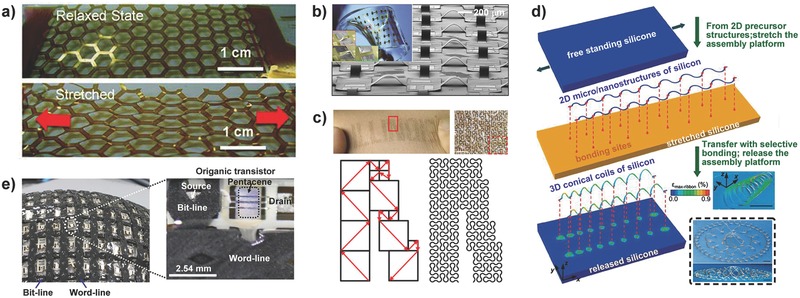
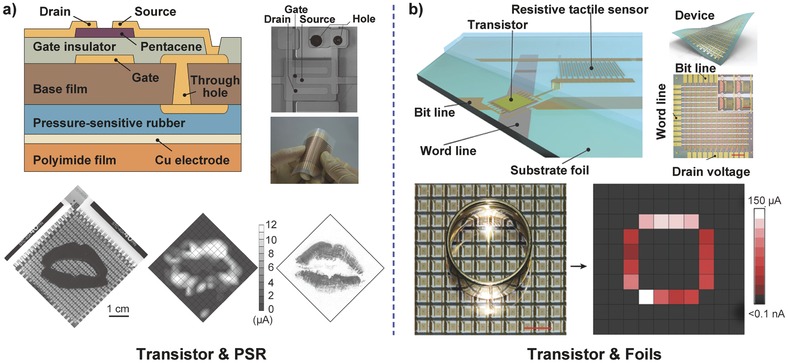

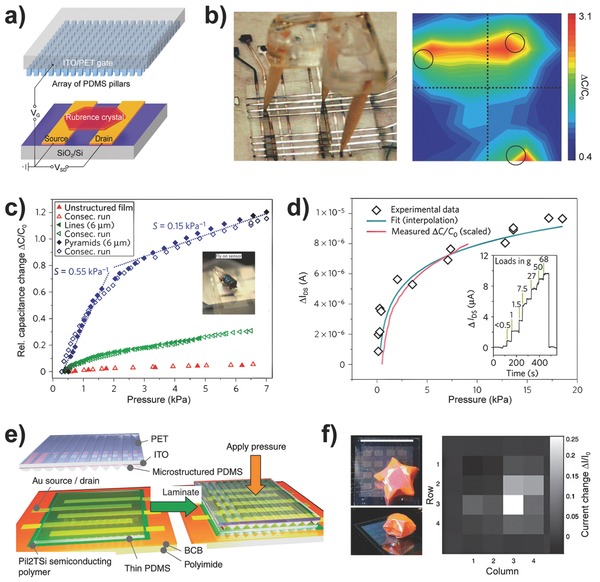


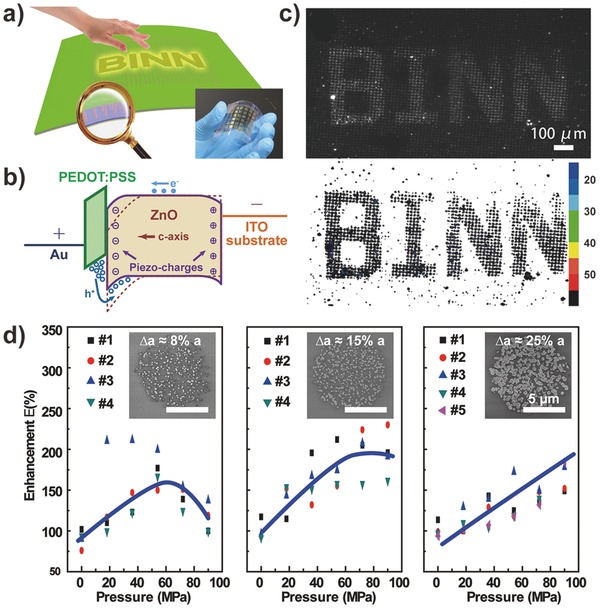




Verification
Claims the paper makes
The claims and statistics of this paper haven’t been checked yet.
Free: it reads the open-access text and checks the first 5 claims that cite a source we can check. Create a free account to check every claim.
Claims other papers make about this one
Each is checked against this paper’s own text: does it say what the citing paper says it does?
The source backs part of the claim, not all of it — or backs it for a different population, condition or comparison.
In the citing paper
“Flexible and wearable vapor sensors can fit directly on human skin or clothing, and endure human movement without mechanical damage, which greatly broaden their application”
From Functionalized Hydrogel-Based Wearable Gas and Humidity Sensors. (2023) · cites this paper as [39]
Experimental — accuracy not yet measured
Self-check
Percentages, sums and reported differences re-computed from the paper’s own numbers.
The self-check needs the paper’s full text.
Citations
Cites
Piezoelectric Nanogenerators Based on Zinc Oxide Nanowire Arrays
Wang, Z. L., & Song, J. (2006) · Science · doi:10.1126/science.1124005 · Cited by 7,922
Self-citationFlexible triboelectric generator
Fan, F.-R., Tian, Z.-Q., & Lin Wang, Z. (2012) · Nano Energy · doi:10.1016/j.nanoen.2012.01.004 · Cited by 6,705
Materials and Mechanics for Stretchable Electronics
Rogers, J. A., Someya, T., & Huang, Y. (2010) · Science · doi:10.1126/science.1182383 · Cited by 5,042
Kim, D.-H., Lu, N., Ma, R., Kim, Y.-S., Kim, R.-H., Wang, S., Wu, J., Won, S. M., Tao, H., Islam, A., et al. (2011) · Science · doi:10.1126/science.1206157 · Cited by 4,836
Autonomic healing of polymer composites
White, S. R., Sottos, N. R., Geubelle, P. H., Moore, J. S., Kessler, M. R., Sriram, S. R., Brown, E. N., & Viswanathan, S. (2001) · Nature · doi:10.1038/35057232 · Cited by 4,575
Highly sensitive flexible pressure sensors with microstructured rubber dielectric layers
Mannsfeld, S. C. B., Tee, B. C.-K., Stoltenberg, R. M., Chen, C. V. H.-H., Barman, S., Muir, B. V. O., Sokolov, A. N., Reese, C., & Bao, Z. (2010) · Nature Materials · doi:10.1038/nmat2834 · Cited by 3,291
A stretchable carbon nanotube strain sensor for human-motion detection
Yamada, T., Hayamizu, Y., Yamamoto, Y., Yomogida, Y., Izadi-Najafabadi, A., Futaba, D. N., & Hata, K. (2011) · Nature Nanotechnology · doi:10.1038/nnano.2011.36 · Cited by 3,247
Skin-like pressure and strain sensors based on transparent elastic films of carbon nanotubes
Lipomi, D. J., Vosgueritchian, M., Tee, B. C.-K., Hellstrom, S. L., Lee, J. A., Fox, C. H., & Bao, Z. (2011) · Nature Nanotechnology · doi:10.1038/nnano.2011.184 · Cited by 3,188
A Thermally Re-mendable Cross-Linked Polymeric Material
Chen, X., Dam, M. A., Ono, K., Mal, A., Shen, H., Nutt, S. R., Sheran, K., & Wudl, F. (2002) · Science · doi:10.1126/science.1065879 · Cited by 2,645
An ultra-lightweight design for imperceptible plastic electronics
Kaltenbrunner, M., Sekitani, T., Reeder, J., Yokota, T., Kuribara, K., Tokuhara, T., Drack, M., Schwödiauer, R., Graz, I., Bauer-Gogonea, S., et al. (2013) · Nature · doi:10.1038/nature12314 · Cited by 2,485
Research works printed but not linked: 2
- Clippinger F. W., 1974, Bull. Prosthetics Res., 247
- Jiang F. K., 1997, Proc. IEEE Tenth Annu. Int. Workshop on Micro. Electro. Mech. Syst, 465
Cited by
Items 301–400 of 988
High strength and flexible aramid nanofiber conductive hydrogels for wearable strain sensors
Wang, J., Lin, Y., Mohamed, A., Ji, Q., & Jia, H. (2020) · Journal of Materials Chemistry C · doi:10.1039/d0tc02983a · Cited by 88
Xu, T., Ding, Y., Wang, Z., Zhao, Y. S., Wu, W., Fong, H., & Zhu, Z. (2017) · Journal of Materials Chemistry C · doi:10.1039/c7tc03456c · Cited by 88
Self-citationPiezoresistive E‐Skin Sensors Produced with Laser Engraved Molds
dos Santos, A., Pinela, N., Alves, P. U., Santos, R., Fortunato, E. M. C., Martins, R., Águas, H., & Igreja, R. (2018) · Advanced Electronic Materials · doi:10.1002/aelm.201800182 · Cited by 124
Tao, K., Yi, H., Yang, Y., Tang, L., Yang, Z., Wu, J., Chang, H., & Yuan, W. (2020) · Microsystems & Nanoengineering · doi:10.1038/s41378-020-0163-1 · Cited by 92
Recent Advances in Flexible Organic Synaptic Transistors
Xu, Y., Liu, W., Huang, Y., Jin, C., Zhou, B., Sun, J., & Yang, J. (2021) · Advanced Electronic Materials · doi:10.1002/aelm.202100336 · Cited by 87
Dai, Y., Fu, Y., Zeng, H. J., Xing, L., Zhang, Y., Zhan, Y., & Xue, X. (2018) · Advanced Functional Materials · doi:10.1002/adfm.201800275 · Cited by 86
Xu, K., Wang, Y., Zhang, B., Zhang, C., & Liu, T. X. (2021) · Composites Communications · doi:10.1016/j.coco.2021.100677 · Cited by 86
“Due to the water-rich nature and three-dimensional network structure, a myriad of hydrogels possess good biocompatibility and stretchability [17,18], showing great prospects in the fields of wearable devices [19–21], artificial intelligence [22] and soft robotics [23,24].”
BackgroundTriboelectric single-electrode-output control interface using patterned grid electrode
Shi, Q., Qiu, C., He, T., Wu, F., Zhu, M., Dziuban, J. A., Walczak, R., Yuce, M. R., & Lee, C. (2019) · Nano Energy · doi:10.1016/j.nanoen.2019.03.090 · Cited by 82
Chen, M., Pan, C., Zhang, T., Li, X., Liang, R., & Wang, Z. L. (2016) · ACS Nano · doi:10.1021/acsnano.6b01666 · Cited by 84
Self-citationSoft human–machine interfaces: design, sensing and stimulation
Dong, W., Wang, Y., Zhou, Y., Bai, Y., Ju, Z., Guo, J., Gu, G., Bai, K., Ouyang, G., Chen, S., et al. (2018) · International Journal of Intelligent Robotics and Applications · doi:10.1007/s41315-018-0060-z · Cited by 87
“reviewed the recent process of E-skin with multi-mode force sensing, temperature, and humidity detection, as well as self-healing abilities (Wang et al. 2015).”
BackgroundSharma, S., Chhetry, A., Maharjan, P., Zhang, S., Shrestha, K., Sharifuzzaman, M., Bhatta, T., Shin, Y., Kim, D., Lee, S., et al. (2022) · Nano Energy · doi:10.1016/j.nanoen.2022.106970 · Cited by 83
Tang, W., Fu, C., Xia, L., Lyu, P., Li, L., Fu, Z., Pan, H., Zhang, C., & Xu, W. (2022) · Chemical Engineering Journal · doi:10.1016/j.cej.2022.135600 · Cited by 84
Ultrafast response of self-powered humidity sensor of flexible graphene oxide film
Zeng, S., Pan, Q., Huang, Z., Gu, C., Wang, T., Xu, J., Yan, Z., Zhao, F., Li, P., Tu, Y., et al. (2023) · Materials & Design · doi:10.1016/j.matdes.2023.111683 · Cited by 84
“All-in-one” hydrolyzed keratin protein-modified polyacrylamide composite hydrogel transducer
Gao, Y., Gu, S. T., Jia, F., Wang, Q., & Gao, G. (2020) · Chemical Engineering Journal · doi:10.1016/j.cej.2020.125555 · Cited by 83
Zhuo, F., Ding, Z., Yang, X., Chu, F., Liu, Y., Gao, Z., Jin, H., Dong, S., Wang, X., & Luo, J. (2025) · Advanced Science · doi:10.1002/advs.202413141 · Cited by 86
Self-citationZhang, W., Zhang, Y., Yang, G., Hao, X., Lv, X., Wu, F., Liu, J., & Zhang, Y. (2021) · Nano Energy · doi:10.1016/j.nanoen.2021.105769 · Cited by 81
A Stretchable, Flexible Triboelectric Nanogenerator for Self‐Powered Real‐Time Motion Monitoring
Lu, C., Chen, J., Jiang, T., Gu, G., Tang, W., & Wang, Z. L. (2018) · Advanced Materials Technologies · doi:10.1002/admt.201800021 · Cited by 80
Self-citationStretchable Transparent Conductors: from Micro/Macromechanics to Applications
Chen, Z. H., Fang, R., Li, W., & Guan, J. (2019) · Advanced Materials · doi:10.1002/adma.201900756 · Cited by 82
Ionic Elastomers for Electric Actuators and Sensors
Feng, C., Rajapaksha, C. P., & Jákli, A. I. (2021) · Engineering · doi:10.1016/j.eng.2021.02.014 · Cited by 89
Self‐Healing Elastic Electronics: Materials Design, Mechanisms, and Applications
Wan, Y., Li, X., Yuan, H., Liu, D. Y., & Lai, W. (2024) · Advanced Functional Materials · doi:10.1002/adfm.202316550 · Cited by 80
Wu, S., Wang, G., Xue, Z., Ge, F., Zhang, G., Lu, H. B., & Qiu, L. (2017) · ACS Applied Materials & Interfaces · doi:10.1021/acsami.7b01865 · Cited by 79
Liang, C., Jing-Qi, S. U. N., Liu, Z., Tian, G., Liu, Y., Zhao, Q., Yang, D., Chen, J., Zhong, B., Zhu, M. J., et al. (2023) · ACS Applied Materials & Interfaces · doi:10.1021/acsami.2c21241 · Cited by 79
Li, J., Wang, H., Luo, Y., Zhou, Z., Zhang, H., Chen, H., Tao, K., Liu, C., Zeng, L., Huo, F., et al. (2024) · Nano-Micro Letters · doi:10.1007/s40820-024-01466-6 · Cited by 81
“The skin is the largest organ of the human body and a powerful natural multisensory system that can sense various environmental stimuli such as pressure, temperature, and humidity [9, 10].”
BackgroundSelf-citationHetero-contact microstructure to program discerning tactile interactions for virtual reality
Liao, X., Song, W., Zhang, X., Zhan, H., Liu, Y., Wang, Y., & Zheng, Y. (2019) · Nano Energy · doi:10.1016/j.nanoen.2019.03.048 · Cited by 78
Lee, W. S., & Choi, J. (2019) · ACS Applied Materials & Interfaces · doi:10.1021/acsami.9b03296 · Cited by 78
Flexible microstructured pressure sensors: design, fabrication and applications
Gao, Y., Xiao, T., Li, Q., Chen, Y., Qiu, X., Liu, J., Bian, Y., & Xuan, F. (2022) · Nanotechnology · doi:10.1088/1361-6528/ac6812 · Cited by 79
“Piezoresistive pressure sensors convert external stimuli into resistance change of the active materials, and the working mechanism is that the applied pressure induces the change of the contact resistance or the conductive pathways between the active materials [ 50 ] , as shown in fi gure 2 ( a ) .”
Flexible Magnetic Field Nanosensors for Wearable Electronics: A Review
Mostufa, S., Yari, P., Rezaei, B., Xu, K., & Wu, K. (2023) · ACS Applied Nano Materials · doi:10.1021/acsanm.3c01936 · Cited by 80
Using Artificial Skin Devices as Skin Replacements: Insights into Superficial Treatment
Low, Z. W. K., Li, Z., Owh, C., Chee, P. L., Ye, E., Kai, D., Yang, D., & Loh, X. J. (2019) · Small · doi:10.1002/smll.201805453 · Cited by 77
Bioinspired Prosthetic Interfaces
Li, P., Ali, H. P. A., Cheng, W. M., Yang, J., & Tee, B. C. K. (2020) · Advanced Materials Technologies · doi:10.1002/admt.201900856 · Cited by 78
Direct observation of shear piezoelectricity in poly- l -lactic acid nanowires
Smith, M., Calahorra, Y., Jing, Q., & Kar‐Narayan, S. (2017) · APL Materials · doi:10.1063/1.4979547 · Cited by 79
Han, X., Du, W., Chen, M., Wang, X., Zhang, X., Li, X., Li, J., Peng, Z., Pan, C., & Wang, Z. L. (2017) · Advanced Materials · doi:10.1002/adma.201701253 · Cited by 76
Self-citationAn, R., Zhang, X., Han, L., Wang, X., Zhang, Y., Shi, L., & Ran, R. (2020) · Materials Science and Engineering: C · doi:10.1016/j.msec.2019.110310 · Cited by 74
Self-citationBiopower-on-Skin: Electricity generation from sweat-eating bacteria for self-powered E-Skins
Mohammadifar, M., Tahernia, M., Yang, J. H., Koh, A., & Choi, S. (2020) · Nano Energy · doi:10.1016/j.nanoen.2020.104994 · Cited by 78
Yuan, T., Yin, R., Li, C., Fan, Z., & Pan, L. (2024) · Chemical Engineering Journal · doi:10.1016/j.cej.2024.150396 · Cited by 75
Yoon, J. I., Choi, K. S., & Chang, S. P. (2017) · Microelectronic Engineering · doi:10.1016/j.mee.2017.04.028 · Cited by 77
Dynamically Modulated GaN Whispering Gallery Lasing Mode for Strain Sensor
Peng, Y., Lu, J., Peng, D., Ma, W., Li, F., Chen, Q., Wang, X., Sun, J., Liu, H., & Pan, C. (2019) · Advanced Functional Materials · doi:10.1002/adfm.201905051 · Cited by 74
Self-citationBaşarír, F., Madani, Z., & Vapaavuori, J. (2022) · Advanced Materials Interfaces · doi:10.1002/admi.202200866 · Cited by 76
Bai, Z., Wang, X., Huang, M.-C., Feng, Y., Sun, S., Zheng, M., Zou, X., Xie, L., Wang, X., Hao, D., et al. (2023) · Nano Energy · doi:10.1016/j.nanoen.2023.108989 · Cited by 76
Self-citationBao, R., Wang, C., Peng, Z., Ma, C., Dong, L. R., & Pan, C. (2017) · ACS Photonics · doi:10.1021/acsphotonics.7b00386 · Cited by 74
Self-citationYi, H., Zhang, Y., Mensah, A., Liao, S., Lv, P., & Weı, Q. (2023) · Nano Energy · doi:10.1016/j.nanoen.2023.108291 · Cited by 74
Xiong, P., Peng, M., Cao, J., & Li, X. (2019) · Journal of the American Ceramic Society · doi:10.1111/jace.16444 · Cited by 71
Zhang, C., Li, S., He, Y., Chen, C., Jiang, S., Yang, X., Wang, X., Pan, L., & Wan, Q. C. (2020) · IEEE Electron Device Letters · doi:10.1109/led.2020.2972038 · Cited by 71
“Up to now, considerable progress has been made in both sensing [5]–[10] and neuromorphic computing [11]–[14].”
BackgroundSelf-citationMicro/nanofiber-based noninvasive devices for health monitoring diagnosis and rehabilitation
Ghosh, R., Pin, K. Y., Reddy, V. S., Jayathilaka, W. A. D. M., Ji, D., Garcia, W. S., Bhargava, S. K., Ramakrishna, S., & Chinnappan, A. (2020) · Applied Physics Reviews · doi:10.1063/5.0010766 · Cited by 73
Stretchable hybrid response pressure sensors
Ha, K., Li, Z., Kim, S., Huh, H., Wang, Z., Shi, H., Block, C., Bhattacharya, S., & Lu, N. (2024) · Matter · doi:10.1016/j.matt.2024.04.009 · Cited by 73
Self-citationSkin-Mountable Biosensors and Therapeutics: A Review
Lee, E. K., Kim, M. K., & Lee, C. H. (2019) · Annual Review of Biomedical Engineering · doi:10.1146/annurev-bioeng-060418-052315 · Cited by 75
Self-Powered Multifunctional Electronic Skin for a Smart Anti-Counterfeiting Signature System
Guo, H., Wan, J., Wu, H., Wang, H., Miao, L., Song, Y., Chen, H., Han, M., & Zhang, H. (2020) · ACS Applied Materials & Interfaces · doi:10.1021/acsami.0c03510 · Cited by 70
Self-citationMalleable and Recyclable Conductive MWCNT-Vitrimer Composite for Flexible Electronics
Zhang, J., Lei, Z., Luo, S., Jin, Y., Qiu, L., & Zhang, W. (2020) · ACS Applied Nano Materials · doi:10.1021/acsanm.0c00902 · Cited by 72
MXenes for Wearable Physical Sensors toward Smart Healthcare
Yang, Y., Yang, S., Xia, X., Hui, S., Wang, B., Zou, B., Zhang, Y., Sun, J., & Xin, J. H. (2024) · ACS Nano · doi:10.1021/acsnano.4c08258 · Cited by 71
Datta, D., Colaco, V., Bandi, S. P., Dhas, N. L., Janardhanam, L. S. L., Singh, S. K., & Vora, L. K. (2025) · ACS Biomaterials Science & Engineering · doi:10.1021/acsbiomaterials.4c02264 · Cited by 70
Wide Detection Range Flexible Pressure Sensors Based on 3D Interlocking Structure TPU/ZnO NWs
He, J., Wang, S., Han, R., Liu, Y., Gao, W., Bao, R., & Pan, C. (2024) · Advanced Functional Materials · doi:10.1002/adfm.202418791 · Cited by 74
Self-citationApproaches to Stretchable Polymer Active Channels for Deformable Transistors
Lee, Y., Shin, M., Thiyagarajan, K., & Jeong, U. (2015) · Macromolecules · doi:10.1021/acs.macromol.5b02268 · Cited by 69
Directly printed wearable electronic sensing textiles towards human–machine interfaces
Liao, X., Song, W., Zhang, X., Huang, H., Wang, Y., & Zheng, Y. (2018) · Journal of Materials Chemistry C · doi:10.1039/c8tc02655f · Cited by 69
Zeng, S., Sun, H., Park, C., Zhang, M., Zhu, M., Yan, M., Chov, N., Li, E., Smith, A. T., Xu, G., et al. (2020) · Materials Horizons · doi:10.1039/c9mh00851a · Cited by 68
Xu, Q., Chang, X., Zhu, Z., Xu, L., Chen, X., Luo, L., Liu, X., & Qin, J. (2021) · RSC Advances · doi:10.1039/d0ra10929k · Cited by 69
Jeong, S. M., Song, S., & Kim, H. (2016) · Nano Energy · doi:10.1016/j.nanoen.2016.01.012 · Cited by 67
Flexible tactile sensors for dynamic triaxial force measurement based on piezoelectric elastomer
Cheng, X., Gong, Y., Liu, Y., Wu, Z., & Hu, X. (2020) · Smart Materials and Structures · doi:10.1088/1361-665x/ab8748 · Cited by 66
Printed Strain Sensors for On‐Skin Electronics
Li, Y., Liu, Y., Bhuiyan, S. R. A., Zhu, Y., & Yao, S. (2021) · Small Structures · doi:10.1002/sstr.202100131 · Cited by 65
Huang, S., Gao, Y., Hu, Y., Shen, F., Jin, Z., & Cho, Y. (2023) · RSC Advances · doi:10.1039/d3ra05932d · Cited by 69
Active electronic skin: an interface towards ambient haptic feedback on physical surfaces
Guo, Y. C., Wang, Y., Tong, Q., Shan, B., He, L., Zhang, Y., & Wang, D. (2024) · npj Flexible Electronics · doi:10.1038/s41528-024-00311-5 · Cited by 74
Zhao, S., & Zhu, R. (2017) · Advanced Materials Technologies · doi:10.1002/admt.201700183 · Cited by 66
Highly Sensitive, Flexible MEMS Based Pressure Sensor with Photoresist Insulation Layer
Liang, B., Chen, W., He, Z., Yang, R., Lin, Z., Du, H., Shang, Y., Cao, A., Tang, Z., & Gui, X. (2017) · Small · doi:10.1002/smll.201702422 · Cited by 65
Yang, W., Han, W., Gao, H., Zhang, L., Wang, S., Xing, L., Zhang, Y., & Xue, X. (2018) · Nanoscale · doi:10.1039/c7nr08516h · Cited by 67
Mexican-Hat-Like Response in a Flexible Tactile Sensor Using a Magnetorheological Elastomer
Kawasetsu, T., Horii, T., Ishihara, H., & Asada, M. (2018) · Sensors · doi:10.3390/s18020587 · Cited by 65
Multilayered Ag NP–PEDOT–Paper Composite Device for Human–Machine Interfacing
Tsai, Y.-J., Wang, C., Chang, T.-S., Sutradhar, S., Chang, C., Chen, C., Hsieh, C., & Liao, W. (2019) · ACS Applied Materials & Interfaces · doi:10.1021/acsami.8b21390 · Cited by 65
Highly sensitive and fast response strain sensor based on evanescently coupled micro/nanofibers
Yu, W. P., Yao, N., Pan, J., Fang, W., Li, X., Tong, L., & Zhang, L. (2022) · Opto-Electronic Advances · doi:10.29026/oea.2022.210101 · Cited by 67
Liu, H., Zhao, H., Li, S., Hu, J., Zheng, X., Li, R., Chen, Y., & Su, Y. (2018) · Advanced Materials Technologies · doi:10.1002/admt.201800327 · Cited by 64
Kim, S. G., Jun, J., Lee, J. S., & Jang, J. (2019) · Journal of Materials Chemistry A · doi:10.1039/c9ta00198k · Cited by 65
Cellular Graphene: Fabrication, Mechanical Properties, and Strain-Sensing Applications
Luo, S., Samad, Y. A., Chan, V., & Liao, K. (2019) · Matter · doi:10.1016/j.matt.2019.10.001 · Cited by 64
Yeh, C.-M., Lin, C.-H., Han, T.-Y., Yu-ting, X., Chen, Y., & Chou, H. (2020) · Journal of Materials Chemistry A · doi:10.1039/d0ta10135d · Cited by 64
Flexible ferroelectric wearable devices for medical applications
Tsikriteas, Z. M., Roscow, J. I., Bowen, C., & Khanbareh, H. (2020) · iScience · doi:10.1016/j.isci.2020.101987 · Cited by 65
“More specifically, interconnections must be flexible to ensure constant electron mobility, while the piezoelectric active sensing materials must be able tomeasure stimulus from specific parts of the body and convert them into signals (Wang et al., 2015).”
BackgroundGhosh, G., Meeseepong, M., Bag, A., Hanif, A., Chinnamani, M. V., Beigtan, M., Kim, Y., & Lee, N. (2022) · Materials Today · doi:10.1016/j.mattod.2022.05.019 · Cited by 64
Peng, W., Pan, X.-R., Liu, X., Gao, Y., Lu, T., Li, J., Xu, M. H., & Pan, L. (2022) · Journal of Colloid and Interface Science · doi:10.1016/j.jcis.2022.12.101 · Cited by 63
Valorizing renewable cellulose from lignocellulosic biomass toward functional products
He, Z., Chen, K., Liu, Z., Li, B., & Yuan, Y. (2023) · Journal of Cleaner Production · doi:10.1016/j.jclepro.2023.137708 · Cited by 63
Flexible bioelectronics for physiological signals sensing and disease treatment
Yao, G., Yin, C., Wang, Q., Zhang, T., Chen, S., Lu, C., Zhao, K., Xu, W., Pan, T., Gao, M., et al. (2019) · Journal of Materiomics · doi:10.1016/j.jmat.2019.12.005 · Cited by 71
Highly stretchable, healable, sensitive double-network conductive hydrogel for wearable sensor
Zheng, W., Li, Y., Xu, L., Huang, Y., Jiang, Z., & Li, B. (2020) · Polymer · doi:10.1016/j.polymer.2020.123095 · Cited by 63
Lai, Y., Ginnaram, S., Lin, S., Hsu, F., Lu, T., & Lu, M. (2023) · Advanced Functional Materials · doi:10.1002/adfm.202312443 · Cited by 63
Vertical serpentine interconnect-enabled stretchable and curved electronics
Jiao, R., Wang, R., Wang, Y., Cheung, Y. K., Chen, X., Wang, X., Deng, Y., & Yu, H. (2023) · Microsystems & Nanoengineering · doi:10.1038/s41378-023-00625-w · Cited by 62
“Based on these unique advantages, curved electronic technologies have great potential for electronic devices in various application scenarios, including wearable devices 1 – 3 , smart contact lenses 4 – 6 , soft robotics 7 – 9 , smart skins 10 , fl exible displays 11 , and energy harvesting 12 – 14 .”
BackgroundSelf-citationLiao, X., Wang, W., Zhong, L., Lai, X., & Zheng, Y. (2019) · Nano Energy · doi:10.1016/j.nanoen.2019.05.054 · Cited by 62
Flexible pressure sensors with microstructures
Tang, R., Lu, F., Liu, L., Yan, Y., Du, Q., Zhang, B., Zhou, T., & Fu, H. (2021) · Nano Select · doi:10.1002/nano.202100003 · Cited by 63
Recent advances in ultrathin materials and their applications in e‐skin
Gao, W., Huang, J., He, J., Zhou, R., Li, Z., Chen, Z., Zhang, Y., & Pan, C. (2023) · InfoMat · doi:10.1002/inf2.12426 · Cited by 61
Self-citationOxygen-assisted preparation of mechanoluminescent ZnS:Mn for dynamic pressure mapping
Wang, X., Ling, R., Zhang, Y., Que, M., Peng, Y., & Pan, C. (2017) · Nano Research · doi:10.1007/s12274-017-1813-y · Cited by 61
Self-citationKim, J. S., Lee, S. C., Hwang, J., Lee, E., Cho, K., Kim, S., Kim, D. H., & Lee, W. H. (2020) · Advanced Functional Materials · doi:10.1002/adfm.201908993 · Cited by 66
Yang, R., Yao, Y., Duan, Z., Yuan, Z., Tai, H., Jiang, Y., Zheng, Y., & Wang, D. (2020) · Langmuir · doi:10.1021/acs.langmuir.0c00221 · Cited by 62
dos Santos, A., Fortunato, E. M. C., Martins, R., Águas, H., & Igreja, R. (2020) · Sensors · doi:10.3390/s20164407 · Cited by 65
“able to transmit information through wireless technology [5].”
BackgroundFu, Y., Yi, F., Liu, J.-R., Li, Y., Wang, Z., Yang, G., Huang, P., Hu, N., & Fu, S. (2019) · Composites Science and Technology · doi:10.1016/j.compscitech.2019.107910 · Cited by 60
Self-citationA graphite nanoplatelet-based highly sensitive flexible strain sensor
Xu, J., Wang, H., Ma, T., Wu, Y., Xue, R., Cui, H., Wu, X., Wang, Y., Huang, X., & Wang, Y. (2020) · Carbon · doi:10.1016/j.carbon.2020.05.042 · Cited by 60
Ippili, S., Jella, V., Thomas, A. M., & Yoon, S. (2021) · Nanoenergy Advances · doi:10.3390/nanoenergyadv1010002 · Cited by 64
Kang, M. S., Qu, R., Sun, X., Yan, Y., Ma, Z., Wang, H., Yan, K., Zhang, W., & Deng, Y. (2023) · Advanced Materials · doi:10.1002/adma.202309629 · Cited by 59
Chirality engineering for carbon nanotube electronics
Tang, D., Cretu, O., Ishihara, S., Zheng, Y., Otsuka, K., Xiang, R., Maruyama, S., Cheng, H., Liu, C., & Golberg, D. V. (2024) · Nature Reviews Electrical Engineering · doi:10.1038/s44287-023-00011-8 · Cited by 62
“For a soft robot, an important goal is to mimic the skin’s sensory functions 139,140 .”
Chortos, A., Zhu, C., Oh, J. Y., Yan, X., Pochorovski, I., To, J. W. F., Liu, N., Kraft, U., Murmann, B., & Bao, Z. (2017) · ACS Nano · doi:10.1021/acsnano.7b02458 · Cited by 59
Sandpaper-molded wearable pressure sensor for electronic skins
Gao, Y., Yu, G., Tan, J., & Xuan, F. (2018) · Sensors and Actuators A Physical · doi:10.1016/j.sna.2018.07.048 · Cited by 60
Charaya, H., La, T., Rieger, J., & Chung, H. (2019) · Advanced Materials Technologies · doi:10.1002/admt.201900327 · Cited by 59
Liu, Z., Zheng, Q., Shi, Y., Xu, L., Zou, Y., Jiang, D., Shi, B., Qu, X., Li, H., Ouyang, H., et al. (2020) · Journal of Materials Chemistry B · doi:10.1039/c9tb02466b · Cited by 59
Li, J., Bao, R., Tao, J., Dong, M., Zhang, Y., Fu, S., Peng, D., & Pan, C. (2020) · Applied Physics Reviews · doi:10.1063/1.5129468 · Cited by 66
Self-citationMaddipatla, D., Zhang, X., Bose, A. K., Masihi, S., Narakathu, B. B., Bazuin, B. J., Williams, J. D., Mitchell, M. F., & Atashbar, M. Z. (2020) · IEEE Access · doi:10.1109/access.2020.3037703 · Cited by 60
Recent Advances in Large‐Scale Tactile Sensor Arrays Based on a Transistor Matrix
Huo, Z., Peng, Y., Zhang, Y., Gao, G., Wan, B., Wu, W., Yang, Z., Wang, X., & Pan, C. (2018) · Advanced Materials Interfaces · doi:10.1002/admi.201801061 · Cited by 58
Self-citationSelf-powered digital-analog hybrid electronic skin for noncontact displacement sensing
Guo, H., Wu, H., Song, Y., Miao, L., Chen, X., Chen, H., Su, Z., Han, M., & Zhang, H. (2019) · Nano Energy · doi:10.1016/j.nanoen.2019.01.020 · Cited by 57
Self-citationSun, H., Liu, X., Liu, S., Yu, B., Ning, N., Tian, M., & Zhang, L. (2020) · Journal of Materials Chemistry A · doi:10.1039/d0ta06577c · Cited by 57
Kong, W.-W., Zhou, C.-G., Dai, K., Jia, L., Yan, D., & Li, Z. (2021) · Composites Part B Engineering · doi:10.1016/j.compositesb.2021.109275 · Cited by 59
Wang, H., Xiang, J., Xiao, W., Du, X., Wang, Y., Du, Z., Cheng, X., & Wang, S. (2022) · Composites Part A Applied Science and Manufacturing · doi:10.1016/j.compositesa.2022.106835 · Cited by 57
Metadata
- Authors
- Wang, X., Dong, L., Zhang, H., Yu, R., Pan, C., & Wang, Z. L.
- Affiliations
- Chinese Academy of Sciences (CN)
- Georgia Institute of Technology (US)
- Corresponding author
- Pan, Caofeng
- Venue
- Advanced Science
- Publisher
- Wiley
- Published
- 2015-07-14
- Volume
- 2
- Issue
- 10
- Pages
- 1500169-1500169
- ISSN
- 2198-3844 (ISSN-L)
- PMC
- PMC5115318
- OpenAlex
- W1772021317
- Cited by
- 976
- References
- 218
- Citations by year
- 2026: 34 · 2025: 64 · 2024: 83 · 2023: 107 · 2022: 103 · 2021: 124 · 2020: 130 · 2019: 131 · 2018: 97 · 2017: 73 · 2016: 26 · 2015: 4
- FWCI
- 33.12
- Type
- journal article
- Language
- en
- Open access
- gold
- doi.org
- Licence
- Locations
- Advanced Science (publishedVersion, cc-by)
- Europe PMC (PubMed Central) (publishedVersion, cc-by)
- PubMed Central (publishedVersion, cc-by)
- PubMed (publishedVersion)
- Funders
- Chinese Academy of Sciences
- National Natural Science Foundation of China (51272238, 21321062, 51432005, 61405040)
- Topics
- Physical Sciences › Engineering › Biomedical Engineering › Advanced Sensor and Energy Harvesting Materials
- Physical Sciences › Engineering › Electrical and Electronic Engineering › Nanomaterials and Printing Technologies
- Life Sciences › Neuroscience › Cognitive Neuroscience › Tactile and Sensory Interactions
- Keywords
- electronic skin, tactile sensing, pressure sensors, self-healing materials, multimodal sensing, temperature and humidity monitoring, flexible circuits, wireless sensing, human-machine interaction, robotics
About these checks
Registry, retraction, Cites and statistics results are computed, not judged, with one exception: a printed reference that no index lists is read once by a model before it counts as a citation error. Claims are extracted by a model and kept only when their quote appears verbatim in the text; each cited source is then checked, with a model’s help, for whether it says what the claim relies on. Those verdicts can be wrong — read the claim’s quote and the cited source before relying on one.
Statistics and arithmetic are recomputed, not judged.
Confidence bands are shown only for fields calibrated on our annotated test set. None is calibrated yet, so no band is shown.
What counts as a claim ›How we measure confidence ›How we check this ›
Are you an author, or do you see a problem with this page? Request a review
Data sources
Bibliographic data: Semantic Scholar, OpenAlex, Crossref.
Contains information from the Semantic Scholar Academic Graph Datasets, made available under the ODC Attribution License (ODC-BY 1.0).
Semantic Scholar’s data is described in: Kinney, R., et al. (2023). The Semantic Scholar Open Data Platform. arXiv:2301.10140.
