

Recent Progress in Electronic Skin
Open accessThe DOI matches its Crossref record; 215 of the 218 references it cites were found in a registry or an index.
Abstract
The skin is the largest organ of the human body and can sense pressure, temperature, and other complex environmental stimuli or conditions. The mimicry of human skin's sensory ability via electronics is a topic of innovative research that could find broad applications in robotics, artificial intelligence, and human–machine interfaces, all of which promote the development of electronic skin (e‐skin). To imitate tactile sensing via e‐skins, flexible and stretchable pressure sensor arrays are constructed based on different transduction mechanisms and structural designs. These arrays can map pressure with high resolution and rapid response beyond that of human perception. Multi‐modal force sensing, temperature, and humidity detection, as well as self‐healing abilities are also exploited for multi‐functional e‐skins. Other recent progress in this field includes the integration with high‐density flexible circuits for signal processing, the combination with wireless technology for convenient sensing and energy/data transfer, and the development of self‐powered e‐skins. Future opportunities lie in the fabrication of highly intelligent e‐skins that can sense and respond to variations in the external environment. The rapidly increasing innovations in this area will be important to the scientific community and to the future of human life.
Overview
The claims and statistics of this paper haven’t been checked yet.
Free: it reads the open-access text and checks the first 5 claims that cite a source we can check. Create a free account to check every claim.
Integrity signals
Registry
Cites
Statistics
Figures


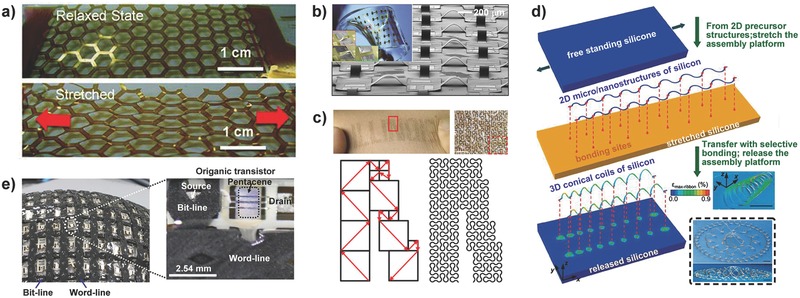
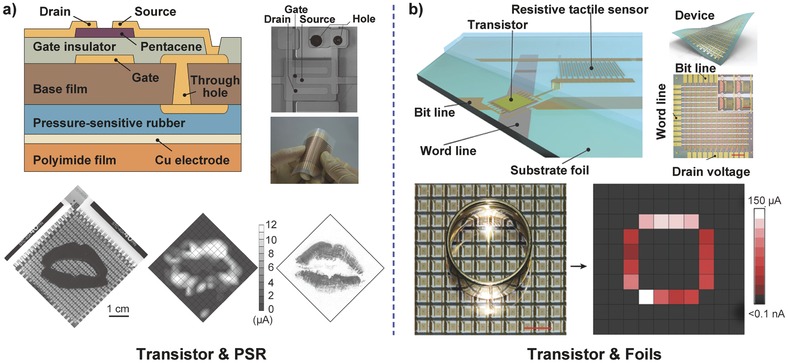

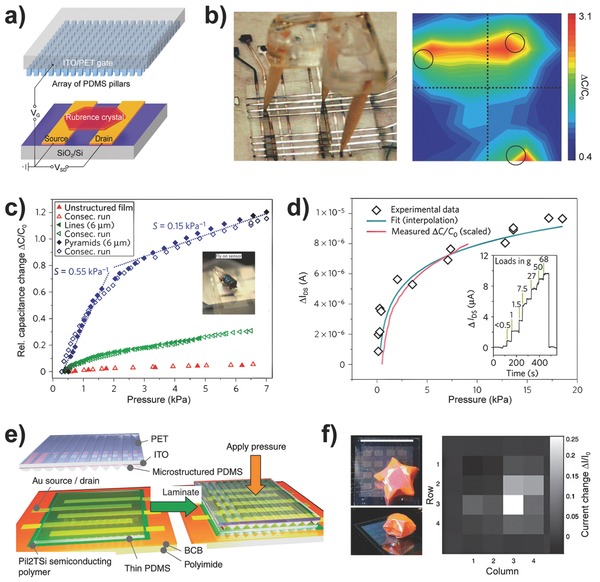


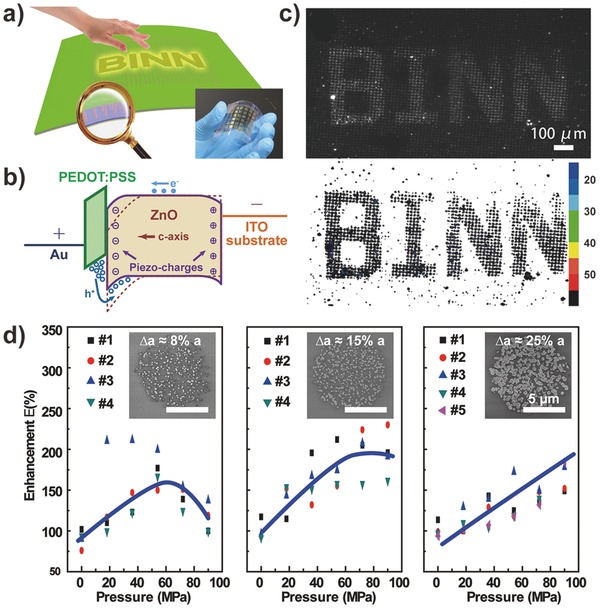




Verification
Claims the paper makes
The claims and statistics of this paper haven’t been checked yet.
Free: it reads the open-access text and checks the first 5 claims that cite a source we can check. Create a free account to check every claim.
Claims other papers make about this one
Each is checked against this paper’s own text: does it say what the citing paper says it does?
The source backs part of the claim, not all of it — or backs it for a different population, condition or comparison.
In the citing paper
“Flexible and wearable vapor sensors can fit directly on human skin or clothing, and endure human movement without mechanical damage, which greatly broaden their application”
From Functionalized Hydrogel-Based Wearable Gas and Humidity Sensors. (2023) · cites this paper as [39]
Experimental — accuracy not yet measured
Self-check
Percentages, sums and reported differences re-computed from the paper’s own numbers.
The self-check needs the paper’s full text.
Citations
Cites
Piezoelectric Nanogenerators Based on Zinc Oxide Nanowire Arrays
Wang, Z. L., & Song, J. (2006) · Science · doi:10.1126/science.1124005 · Cited by 7,922
Self-citationFlexible triboelectric generator
Fan, F.-R., Tian, Z.-Q., & Lin Wang, Z. (2012) · Nano Energy · doi:10.1016/j.nanoen.2012.01.004 · Cited by 6,705
Materials and Mechanics for Stretchable Electronics
Rogers, J. A., Someya, T., & Huang, Y. (2010) · Science · doi:10.1126/science.1182383 · Cited by 5,042
Kim, D.-H., Lu, N., Ma, R., Kim, Y.-S., Kim, R.-H., Wang, S., Wu, J., Won, S. M., Tao, H., Islam, A., et al. (2011) · Science · doi:10.1126/science.1206157 · Cited by 4,836
Autonomic healing of polymer composites
White, S. R., Sottos, N. R., Geubelle, P. H., Moore, J. S., Kessler, M. R., Sriram, S. R., Brown, E. N., & Viswanathan, S. (2001) · Nature · doi:10.1038/35057232 · Cited by 4,575
Highly sensitive flexible pressure sensors with microstructured rubber dielectric layers
Mannsfeld, S. C. B., Tee, B. C.-K., Stoltenberg, R. M., Chen, C. V. H.-H., Barman, S., Muir, B. V. O., Sokolov, A. N., Reese, C., & Bao, Z. (2010) · Nature Materials · doi:10.1038/nmat2834 · Cited by 3,291
A stretchable carbon nanotube strain sensor for human-motion detection
Yamada, T., Hayamizu, Y., Yamamoto, Y., Yomogida, Y., Izadi-Najafabadi, A., Futaba, D. N., & Hata, K. (2011) · Nature Nanotechnology · doi:10.1038/nnano.2011.36 · Cited by 3,247
Skin-like pressure and strain sensors based on transparent elastic films of carbon nanotubes
Lipomi, D. J., Vosgueritchian, M., Tee, B. C.-K., Hellstrom, S. L., Lee, J. A., Fox, C. H., & Bao, Z. (2011) · Nature Nanotechnology · doi:10.1038/nnano.2011.184 · Cited by 3,188
A Thermally Re-mendable Cross-Linked Polymeric Material
Chen, X., Dam, M. A., Ono, K., Mal, A., Shen, H., Nutt, S. R., Sheran, K., & Wudl, F. (2002) · Science · doi:10.1126/science.1065879 · Cited by 2,645
An ultra-lightweight design for imperceptible plastic electronics
Kaltenbrunner, M., Sekitani, T., Reeder, J., Yokota, T., Kuribara, K., Tokuhara, T., Drack, M., Schwödiauer, R., Graz, I., Bauer-Gogonea, S., et al. (2013) · Nature · doi:10.1038/nature12314 · Cited by 2,485
Research works printed but not linked: 2
- Clippinger F. W., 1974, Bull. Prosthetics Res., 247
- Jiang F. K., 1997, Proc. IEEE Tenth Annu. Int. Workshop on Micro. Electro. Mech. Syst, 465
Cited by
Items 401–500 of 988
Conductive Bicomponent Fibers Containing Polyaniline Produced via Side-by-Side Electrospinning
Liu, W., Zhang, J., & Liu, H. (2019) · Polymers · doi:10.3390/polym11060954 · Cited by 57
“These properties are critical for applications, such as wearable sensors, artificial electronic skins and energy storage [3,65,67,68].”
BackgroundZhong, Y., Wang, J., Han, L., Dai, S., Zhu, H., Hua, J., Cheng, G., & Ding, J. (2022) · Sensors and Actuators A Physical · doi:10.1016/j.sna.2022.114013 · Cited by 56
Advanced Interfacial Design for Electronic Skins with Customizable Functionalities and Wearability
Tan, D., & Xu, B. (2023) · Advanced Functional Materials · doi:10.1002/adfm.202306793 · Cited by 58
Dong, W., Cheng, X. L., Xiong, T., & Wang, X. (2019) · Biomedical Microdevices · doi:10.1007/s10544-018-0353-x · Cited by 57
Self-citationNature inspired emerging sensing technology: Recent progress and perspectives
Tripathy, A., Nine, M. J., Lošić, D., & Silva, F. S. (2021) · Materials Science and Engineering R Reports · doi:10.1016/j.mser.2021.100647 · Cited by 58
Sun, X., Liu, T., Zhou, J., Yao, L., Liang, S., Zhao, M., Liu, C., & Xue, N. (2021) · IEEE Sensors Journal · doi:10.1109/jsen.2021.3061677 · Cited by 56
“Inspired by human skin, continuously increasing the density of sensing units in bionic skin devices is an essential long-term development goal [33].”
BackgroundJung, Y. J., Lee, T.-H., Oh, J., Park, B., Ko, J. S., Kim, H., Yun, J. P., & Cho, H. (2021) · ACS Applied Materials & Interfaces · doi:10.1021/acsami.1c07640 · Cited by 55
Preparation and application of cellulose gel in flexible supercapacitors
Bai, Y., Zhao, W., Bi, S., Liu, S., Huang, W., & Zhao, Q. (2021) · Journal of Energy Storage · doi:10.1016/j.est.2021.103058 · Cited by 55
object, E. L. P. C. D. D. T. C. O. T. C. R. B. T. T. S. A. T. T., Specifically, W. C. H. B. M. B. V. A. A. S., unit, I. T. O. I. E. H. O. I. S. I. L. T. A. S., properties., T. L. P. C. B. S. E. T. G., texture, I. T. C. U. E. A. A. R. S. T. D. E. P. I. S., stiffness, conductivity, T., & substance., A. T. A. C. (2023) · Soft Science · doi:10.20517/ss.2022.34 · Cited by 82
Flexible Tactile Sensors for 3D Force Detection
Han, C., Cao, Z. M., Hu, Y., Zhang, Z., Li, C., Wang, Z. L., & Wu, Z. (2024) · Nano Letters · doi:10.1021/acs.nanolett.4c00894 · Cited by 56
Self-citationA Conductive Self‐Healing Double Network Hydrogel with Toughness and Force Sensitivity
Liu, S., Li, K., Hussain, I., Oderinde, O., Yao, F., Zhang, J., & Fu, G. (2018) · Chemistry - A European Journal · doi:10.1002/chem.201800259 · Cited by 56
Flexible Ultralow-Power Sensor Interfaces for E-Skin
Jiang, C. H., Cheng, X., & Nathan, A. (2019) · Proceedings of the IEEE · doi:10.1109/jproc.2019.2936105 · Cited by 55
“Kunugi, “2,7-diphenyl[1] benzothieno[3,2-b]benzothiophene, a new”
BackgroundMethodInfluentialWang, C., Hou, X., Cui, M., Yu, J., Fan, X., Qian, J., He, J., Geng, W., Mu, J., & Chou, X. (2019) · Science China Materials · doi:10.1007/s40843-019-1173-3 · Cited by 55
Luo, Y., Chen, X., Tian, H., Li, X., Lu, Y., Liu, Y., & Shao, J. (2022) · Research · doi:10.34133/2022/9852138 · Cited by 54
Ultraprecise 3D Printed Graphene Aerogel Microlattices on Tape for Micro Sensors and E‐Skin
Chen, Q., Shen, J., Estévez, D., Chen, Y., Zhu, Z., Yin, J., & Qin, F. (2023) · Advanced Functional Materials · doi:10.1002/adfm.202302545 · Cited by 57
Jung, Y. J., Jung, K., Park, B., Choi, J.-H., Kim, D., Park, J., Ko, J. S., & Cho, H. (2019) · Micro and Nano Systems Letters · doi:10.1186/s40486-019-0097-2 · Cited by 54
Song, W., Kong, M., Cho, S. H., Lee, S., Kwon, J., Son, H. B., Song, J. H., Lee, D., Song, G., Lee, S., et al. (2020) · Advanced Functional Materials · doi:10.1002/adfm.202003608 · Cited by 57
Wen, Z., Yang, J., Ding, H., Zhang, W., Wu, D., Xu, J., Shi, Z., Xu, T., Tian, Y., & Li, X. (2018) · Journal of Materials Science Materials in Electronics · doi:10.1007/s10854-018-0242-3 · Cited by 55
Transparent Body-Attachable Multifunctional Pressure, Thermal, and Proximity Sensor and Heater
Jo, H. S., An, S., Kwon, H.-J., Yarin, A. L., & Yoon, S. S. (2020) · Scientific Reports · doi:10.1038/s41598-020-59450-0 · Cited by 54
Wang, L., Luo, M., Zhang, Z., Ji, D., Chang, X., & Zhu, Y. (2024) · Chemical Engineering Journal · doi:10.1016/j.cej.2024.156800 · Cited by 69
A Brief Review on E-skin and its Multifunctional Sensing Applications
Almansoori, M. T., Li, X., & Zheng, L. (2019) · Current Smart Materials · doi:10.2174/2405465804666190313154903 · Cited by 54
Jung, Y. J., Jung, K. K., Kim, D., Kwak, D. H., & Ko, J. S. (2020) · Polymers · doi:10.3390/polym12071499 · Cited by 53
Frequency-Enabled Decouplable Dual-Modal Flexible Pressure and Temperature Sensor
Ma, Z., Zhang, J., Li, J., Shi, Y., & Pan, L. (2020) · IEEE Electron Device Letters · doi:10.1109/led.2020.3020937 · Cited by 52
Magnetic flexible tactile sensor via direct ink writing
Zhang, X., Hu, H., Tang, D., Zhang, C., Fu, J., & Zhao, P. (2021) · Sensors and Actuators A Physical · doi:10.1016/j.sna.2021.112753 · Cited by 51
DeformWear: Deformation Input on Tiny Wearable Devices
Weigel, M., & Steimle, J. (2017) · Proceedings of the ACM on Interactive Mobile Wearable and Ubiquitous Technologies · doi:10.1145/3090093 · Cited by 51
“Advances in sensors make it very likely that in the future, wearable force sensors can be realized in a very thin and fully flat form factor [37, 51].”
BackgroundNanofibrillated Cellulose‐Based Electrolyte and Electrode for Paper‐Based Supercapacitors
Jiao, F., Edberg, J., Zhao, D., Puzinas, S., Khan, Z. U., Mäkie, P., Naderi, A., Lindström, T., Odén, M., Engquist, I., et al. (2017) · Advanced Sustainable Systems · doi:10.1002/adsu.201700121 · Cited by 51
Pulse sensor based on single-electrode triboelectric nanogenerator
Cui, X., Zhang, C., Liu, W., Zhang, Y., Zhang, J., Li, X., Geng, L., & Wang, X. (2018) · Sensors and Actuators A Physical · doi:10.1016/j.sna.2018.07.051 · Cited by 51
Self-citationAll-Polymeric Pressure Sensors Based on PEDOT:PSS-Modified Polyurethane Foam
Beccatelli, M., Villani, M., Gentile, F., Bruno, L., Seletti, D., Nikolaidou, D. M., Culiolo, M., Zappettini, A., & Coppedé, N. (2021) · ACS Applied Polymer Materials · doi:10.1021/acsapm.0c01389 · Cited by 51
Research progress of smart response composite hydrogels based on nanocellulose
Hu, S., Zhi, Y., Shan, S., & Ni, Y. (2021) · Carbohydrate Polymers · doi:10.1016/j.carbpol.2021.118741 · Cited by 51
High-yield, one-pot upcycling of polyethylene and polypropylene waste into blue-emissive carbon dots
Abdelhameed, M., Elbeh, M., Baban, N. S., Pereira, L., Matula, J., Song, Y., & Ramadi, K. B. (2023) · Green Chemistry · doi:10.1039/d2gc04177d · Cited by 50
Mishra, S., & Saha, B. (2024) · Current Opinion in Solid State and Materials Science · doi:10.1016/j.cossms.2024.101174 · Cited by 52
Nanomaterial advanced smart coatings: Emerging trends shaping the future
Pillai, V. V., Ramasubramanian, B., Sequerth, O., Pilla, S., Wang, T., Mohanty, A. K., Govindaraj, P., Alhassan, S. M., Salim, N. V., Kingshott, P., et al. (2024) · Applied Materials Today · doi:10.1016/j.apmt.2024.102574 · Cited by 65
Flexible and Stretchable Oxide Electronics
Sharma, B. K., & Ahn, J. (2016) · Advanced Electronic Materials · doi:10.1002/aelm.201600105 · Cited by 51
Electronic drug delivery systems: An overview
Vadlapatla, R., Wong, E., & Gayakwad, S. (2017) · Journal of Drug Delivery Science and Technology · doi:10.1016/j.jddst.2017.08.008 · Cited by 54
Patternable and Widely Colour-Tunable Elastomer-Based Electroluminescent Devices
Song, S., Shim, H., Lim, S. K., & Jeong, S. M. (2018) · Scientific Reports · doi:10.1038/s41598-018-21726-x · Cited by 50
Motion Detection Using Tactile Sensors Based on Pressure-Sensitive Transistor Arrays
Jang, J., Jun, Y. S., Seo, H., Kim, M., & Park, J. (2020) · Sensors · doi:10.3390/s20133624 · Cited by 51
Tran, M. T., Tùng, T. T., Sachan, A., Lošić, D., Castro, M., & Feller, J. (2020) · Carbon · doi:10.1016/j.carbon.2020.05.086 · Cited by 50
Self-healing flexible strain sensors based on dynamically cross-linked conductive nanocomposites
Dai, X., Huang, L., Du, Y., Han, J., & Kong, J. (2021) · Composites Communications · doi:10.1016/j.coco.2021.100654 · Cited by 50
Jung, Y. J., Jung, K. K., Kim, D., Kwak, D. H., Ahn, S., Han, J. S., & Ko, J. S. (2021) · Sensors and Actuators A Physical · doi:10.1016/j.sna.2021.113034 · Cited by 53
Ma, Y., Shi, L., Chen, M., Li, Z., & Wu, L. (2022) · Chemical Engineering Journal · doi:10.1016/j.cej.2022.136028 · Cited by 51
Yin, P., Geng, Y., Zhao, L., Meng, Q., Xin, Z., Luo, L., Wang, B., Mao, Z., Sui, X., Wu, W., et al. (2023) · Chemical Engineering Journal · doi:10.1016/j.cej.2023.141274 · Cited by 49
Mandal, S. K., Mandal, A., Jana, G., Mallik, S., Roy, S., Ghosh, A., Chattaraj, P. K., & Goswami, D. K. (2020) · ACS Applied Materials & Interfaces · doi:10.1021/acsami.0c01499 · Cited by 49
Zhang, X., Chen, X., Ye, Z., Liu, W., Liu, X., & Wang, X. S. (2023) · Journal of Materials Chemistry C · doi:10.1039/d3tc01821k · Cited by 48
Self-citationGoharshadi, E. K., Saghir, S. V., Niazi, Z., Shafaee, M., Sajjadizadeh, H., Karimi‐Nazarabad, M., Peighambari-kalat, S., Goharshadi, K., Nejati, M., Asarnia, M., et al. (2024) · Renewable and Sustainable Energy Reviews · doi:10.1016/j.rser.2024.115093 · Cited by 49
Liao, X., Wang, W., Lin, M., Li, M., Wu, H., & Zheng, Y. (2018) · Materials Horizons · doi:10.1039/c8mh00680f · Cited by 49
Hussain, I., Ma, X., Luo, Y., & Luo, Z. (2020) · Polymer · doi:10.1016/j.polymer.2020.122961 · Cited by 48
Guo, H., Bai, M., Wen, C., Liu, M., Tian, S., Xu, S., Liu, X., Ma, Y., Chen, P., Li, Q., et al. (2021) · Journal of Colloid and Interface Science · doi:10.1016/j.jcis.2021.05.012 · Cited by 48
Tang, Z., Xue, S.-S., Li, Y., Zhu, Z., Huang, P., & Fu, S. (2021) · ACS Applied Materials & Interfaces · doi:10.1021/acsami.1c12241 · Cited by 48
Applications of Carbon Nanotubes in the Internet of Things Era
Pang, J., Bachmatiuk, A., Yang, F. L., Liu, H., Zhou, W., Rümmeli, M. H., & Cuniberti, G. (2021) · Nano-Micro Letters · doi:10.1007/s40820-021-00721-4 · Cited by 50
“Fifth, the tactile sensors lead to the development of electronic skins [64–66].”
BackgroundMechanoluminescent optical fiber sensors for human–computer interaction
Ren, B., Chen, B., Zhang, X., Wu, H., Fu, Y., & Peng, D. (2023) · 中国科学通报:英文版 · doi:10.1016/j.scib.2023.02.030 · Cited by 47
E-skin – Based advanced wearable technology for Health Management
Chugh, V., Basu, A., Kaushik, A. K., & Basu, A. K. (2023) · Current Research in Biotechnology · doi:10.1016/j.crbiot.2023.100129 · Cited by 47
Zhang, L., Hu, F., Zhu, S., Lin, Y., Meng, Z., Yu, R., & Liu, X. (2020) · Small · doi:10.1002/smll.202000128 · Cited by 51
Self-citationUzabakiriho, P. C., Wang, M., Ma, C., & Zhao, G. (2022) · Nanoscale · doi:10.1039/d2nr00444e · Cited by 47
Anti‐Crosstalk Materials and Structural Decoupling Strategies for Multimodal Flexible Sensors
Wu, W. H. (2025) · Advanced Functional Materials · doi:10.1002/adfm.202524222 · Cited by 46
Biomimic Hairy Skin Tactile Sensor Based on Ferromagnetic Microwires
Zhang, J., Hao, L., Yang, F., Jiao, W., Liu, W., Li, Y., Wang, R., & He, X. (2016) · ACS Applied Materials & Interfaces · doi:10.1021/acsami.6b14236 · Cited by 46
Hanif, A., Trung, T. Q., Siddiqui, S., Toi, P. T., & Lee, N. (2018) · ACS Applied Materials & Interfaces · doi:10.1021/acsami.8b08283 · Cited by 46
Recent progress of self-powered wearable monitoring systems integrated with microsupercapacitors
Lü, Y., Lou, Z., Jiang, K., Chen, D., & Shen, G. (2019) · Materials Today Nano · doi:10.1016/j.mtnano.2019.100050 · Cited by 50
Ultrasensitive Wearable Strain Sensors of 3D Printing Tough and Conductive Hydrogels
Wang, J., Liu, Y., Su, S., Wei, J., Rahman, S. E., Ning, F., Christopher, G. F., Cong, W., & Qiu, J. (2019) · Polymers · doi:10.3390/polym11111873 · Cited by 47
Lee, D.-H., Chuang, C., Shaikh, M. O., Dai, Y.-S., Wang, S., Wen, Z., Yen, C.-K., Liao, C.-F., & Pan, C.-T. (2021) · Micromachines · doi:10.3390/mi12040452 · Cited by 46
“Organic solvents that promote dispersion of MWCNT include toluene, THF, chloroform, and dimethylformamide (DMF) [2,3].”
BackgroundSelf-citationLiu, C., Li, F., Li, G., Li, P., Hu, A., Cui, Z., Cong, Z., & Niu, J. (2022) · ACS Applied Materials & Interfaces · doi:10.1021/acsami.1c23810 · Cited by 47
Han, S., Zou, M., Pu, X., Lu, Y., Tian, Y., Li, H., Liu, Y., Wu, F., Huang, N., Shen, M., et al. (2023) · Open Research (University of Surrey) · doi:10.1002/viw.20230005 · Cited by 45
Binary polymer composite dielectrics for flexible low-voltage organic field-effect transistors
Liu, Z., Yin, Z., Chen, S., Dai, S., Huang, J. D., & Zheng, Q. (2017) · Organic Electronics · doi:10.1016/j.orgel.2017.11.039 · Cited by 45
Li, M., Wang, Y., Zhang, Y., Zhou, H., Huang, Z., & Li, D. (2018) · Journal of Materials Chemistry C · doi:10.1039/c8tc01331d · Cited by 46
Xu, M., Li, F., Zhang, Z., Shen, T., & Qi, J. (2018) · Advanced Electronic Materials · doi:10.1002/aelm.201800461 · Cited by 45
Cao, Y., Figueroa, J., Li, W., Chen, Z., Wang, Z. L., & Sepúlveda, N. (2019) · Nano Energy · doi:10.1016/j.nanoen.2019.06.048 · Cited by 45
Self-citationZhang, Y., Han, F., Hu, Y., Xiong, Y., Gu, H., Zhang, G., Zhu, P., Sun, R., & Wong, C. (2020) · Macromolecular Chemistry and Physics · doi:10.1002/macp.202000073 · Cited by 46
Highly aligned carbon nanotubes and their sensor applications
Akhtar, I., & Chang, S. (2020) · Nanoscale · doi:10.1039/d0nr05951j · Cited by 46
Skin-Inspired Hydrogel-Elastomer Hybrid Forms a Seamless Interface by Autonomous Hetero-Self-Healing
Shin, S., Kim, S., Jeon, H., Hwang, S. Y., Oh, D. X., & Park, J. (2020) · ACS Applied Polymer Materials · doi:10.1021/acsapm.0c00925 · Cited by 47
Wearable Pressure Sensors with Capacitive Response over a Wide Dynamic Range
Chen, Q., Yang, J., Chen, B., Feng, J., Xiao, S., Yue, Q., Zhang, X., & Wang, T. (2022) · ACS Applied Materials & Interfaces · doi:10.1021/acsami.2c10555 · Cited by 46
Effect of Finger Sliding Direction on Tactile Perception, Friction and Dynamics
Zhou, X. F., Mo, J., Li, Y. Y., Xiang, Z. Y., Yang, D., Masen, M. A., & Jin, Z. M. (2020) · Tribology Letters · doi:10.1007/s11249-020-01325-6 · Cited by 44
Dai, Y., Chen, J., Tian, W., Xu, L., & Gao, S. (2020) · IEEE Sensors Journal · doi:10.1109/jsen.2020.2974096 · Cited by 44
“Due to the structure of one-layer interdigital electrodes, the force responsivity and energy harvesting efficiency of the presented architecture is lower compared with the sensors in [78], [79], and the piezoelectric-based energy har-vesters summarized in Table I.”
BackgroundFlexible Electronics and Healthcare Applications
Wang, Z., Sun, L., Ni, Y., Liu, L., & Xu, W. (2021) · Frontiers in Nanotechnology · doi:10.3389/fnano.2021.625989 · Cited by 44
Self-citationXiang, X., He, Q. B., Xia, S., Deng, Z., Zhang, H., & Li, H. (2022) · European Polymer Journal · doi:10.1016/j.eurpolymj.2022.111200 · Cited by 44
Self-citationOscillatory mechanoluminescence of Mn2+-doped SrZnOS in dynamic response to rapid compression
Wang, H., Zhao, T., Li, M., Li, J., Liu, K., Peng, S., Liu, X., Zhao, B., Chen, Y., An, J., et al. (2025) · Nature Communications · doi:10.1038/s41467-025-55922-x · Cited by 43
“It is considered brie fl y by Wang et al. as a two-way coupling between the piezo-electricity and photoexcitation processes 22,23,29 .”
Microbial Nanocellulose Printed Circuit Boards for Medical Sensing
Yuen, J. D., Shriver‐Lake, L. C., Walper, S. A., Zabetakis, D., Breger, J. C., & Stenger, D. A. (2020) · Sensors · doi:10.3390/s20072047 · Cited by 44
Photoswitchable Covalent Adaptive Networks Based on Thiol–Ene Elastomers
Cheng, K., Chortos, A., Lewis, J. A., & Clarke, D. R. (2022) · ACS Applied Materials & Interfaces · doi:10.1021/acsami.1c22287 · Cited by 43
Sharma, S., Pradhan, G. B., Chhetry, A., Shrestha, K., Bhatta, T., Zhang, S., Kim, D., Jeong, S., Shin, Y., Zahed, M. A., et al. (2022) · Nano Today · doi:10.1016/j.nantod.2022.101698 · Cited by 42
A Triple-Mode Flexible E-Skin Sensor Interface for Multi-Purpose Wearable Applications
Kim, S., Lee, Y., Park, J., Kim, S., Chae, H., Ko, H., & Kim, J. J. (2017) · Sensors · doi:10.3390/s18010078 · Cited by 43
“Signals detected from these body parts are electrically processed through single triple-mode reconfigurable ROIC, and then they can be wirelessly monitored in real time by including a Bluetooth module (HC-06), a microprocessor (MCU; ARM Coretex-M0), and a battery onto a flexible printed circuit board…”
MethodRobust and Elastic Polymer Membranes with Tunable Properties for Gas Separation
Cao, P., Li, B., Hong, T., Xing, K., Voylov, D. N., Cheng, S., Yin, P., Kisliuk, A. M., Mahurin, S. M., Sokolov, A. P., et al. (2017) · ACS Applied Materials & Interfaces · doi:10.1021/acsami.7b09017 · Cited by 42
Energy Scavenging and Powering E-Skin Functional Devices
Dharmasena, R. D. I. G., Jayawardena, K. D. G. I., Saadi, Z., Yao, X., Bandara, R. M. I., Zhao, Y., & Silva, S. R. P. (2019) · Proceedings of the IEEE · doi:10.1109/jproc.2019.2929286 · Cited by 44
“Imitating the critical functions of the skin using artificial material systems through the design of e-skins holds the key in constructing intelligent robotics and machinery, which can sense the surroundings and react [1]–[4].”
BackgroundInfluentialJeon, G.-J., Yeom, H., Jin, T., Kim, J., Yang, J., & Park, S. K. (2020) · Journal of Materials Chemistry C · doi:10.1039/d0tc00054j · Cited by 42
Zou, Q., Lei, Z., Xue, T., Li, S., Ma, Z., & Su, Q. (2020) · Sensors and Actuators A Physical · doi:10.1016/j.sna.2020.112218 · Cited by 42
Structural Electronic Skin for Conformal Tactile Sensing
Li, S., Huang, J., Wang, M., Ka, D., Guo, C., Li, B., Cheng, Y., Sun, H., Ye, H., Pan, T., et al. (2023) · Advanced Science · doi:10.1002/advs.202304106 · Cited by 48
Emerging MEMS sensors for ocean physics: Principles, materials, and applications
Yang, Y., Dai, Z., Chen, Y., Yuan, Y., Yalikun, Y., & Shang, C. (2024) · Applied Physics Reviews · doi:10.1063/5.0194194 · Cited by 44
Wang, Y., Luo, W., Wen, Y., Zhao, J., Chen, C., Chen, Z., & Zhang, X. (2025) · Materials Today Physics · doi:10.1016/j.mtphys.2025.101681 · Cited by 48
Li, Q., Wang, K., Gao, Y., Tan, J., Wu, R., & Xuan, F. (2018) · Applied Physics Letters · doi:10.1063/1.5029391 · Cited by 41
Piezoelectric Materials for Medical Applications
Chen-Glasser, M., Li, P., Ryu, J., & Hong, S. (2018) · InTech eBooks · doi:10.5772/intechopen.76963 · Cited by 79
“This can lead to an ill-defined contact region, which can be fixed using the installation of transistors or through triangulation of the signal [53, 68].”
Modeling and Fabrication of Scalable Tactile Sensor Arrays for Flexible Robot Skins
Saadatzi, M. N., Baptist, J. R., Zhong, Y., & Popa, D. O. (2019) · IEEE Sensors Journal · doi:10.1109/jsen.2019.2915362 · Cited by 41
“, strain gauges) incorporated on a flexible substrate, enabling measurement of contact location and load [14].”
BackgroundZhao, X., Kuang, S., Wang, Z. L., & Zhu, G. (2020) · Nano Energy · doi:10.1016/j.nanoen.2020.104823 · Cited by 41
Self-citationEco-friendly biogenic hydrogel for wearable skin-like iontronics
Liu, H., Xu, D., Hu, B., Jiang, J., Li, M., Zhao, D., & Zhai, W. (2021) · Journal of Materials Chemistry A · doi:10.1039/d0ta12345e · Cited by 41
Jung, Y. J., Gu, J., Yeo, J., Lee, W., Han, H., Choi, J., Ha, J., Ahn, J., Cho, H., Ryu, S., et al. (2023) · Small · doi:10.1002/smll.202303981 · Cited by 41
Theoretical study and structural optimization of a flexible piezoelectret-based pressure sensor
Wu, N., Chen, S., Lin, S., Li, W., Xu, Z., Yuan, F., Huang, L., Hu, B., & Zhou, J. (2018) · Journal of Materials Chemistry A · doi:10.1039/c8ta00688a · Cited by 42
High sensitivity knitted fabric bi-directional pressure sensor based on conductive blended yarn
Xie, J., Jia, Y., & Miao, M. (2019) · Smart Materials and Structures · doi:10.1088/1361-665x/aafe89 · Cited by 40
Zhao, X., Zhou, K., Zhong, Y., Liu, P., Li, Z., Pan, J., Long, Y., Huang, M., Brakat, A., & Zhu, H. (2020) · Nano Research · doi:10.1007/s12274-020-3172-3 · Cited by 41
Qiu, W., Zhang, C., Chen, G., Zhu, H., Zhang, Q., & Zhu, S. (2021) · ACS Applied Materials & Interfaces · doi:10.1021/acsami.1c04911 · Cited by 42
Liu, Z., Liang, T., Xin, Y., Huang, J., Liang, J., He, X. M., Zhang, C., Yang, W., & He, X. H. (2021) · RSC Advances · doi:10.1039/d1ra03207k · Cited by 41
Superstretchable Liquid-Metal Electrodes for Dielectric Elastomer Transducers and Flexible Circuits
Zang, W., Wang, Y., Wu, W., Yao, J., Hao, X., Yu, B., Wu, D., Cao, P., Jiang, Y., Ning, N., et al. (2023) · ACS Nano · doi:10.1021/acsnano.3c12210 · Cited by 40
Liang, Y., Xiao, P., Wang, S., Shi, J., He, J., Zhang, J., Huang, Y., & Chen, T. (2018) · Journal of Materials Chemistry C · doi:10.1039/c8tc00711j · Cited by 39
Visual and flexible temperature sensor based on a pectin-xanthan gum blend film
Li, H., Ding, J., Yuan, N., Xu, J., Zhou, X., Dai, S., & Chen, B. (2018) · Organic Electronics · doi:10.1016/j.orgel.2018.05.019 · Cited by 39
Adamatzky, A., Ayres, P., Beasley, A. E., Chiolerio, A., Dehshibi, M. M., Gandía, A., Albergati, E., Mayne, R., Nikolaidou, A. E., Roberts, N., et al. (2021) · Biosystems · doi:10.1016/j.biosystems.2021.104588 · Cited by 39
Metadata
- Authors
- Wang, X., Dong, L., Zhang, H., Yu, R., Pan, C., & Wang, Z. L.
- Affiliations
- Chinese Academy of Sciences (CN)
- Georgia Institute of Technology (US)
- Corresponding author
- Pan, Caofeng
- Venue
- Advanced Science
- Publisher
- Wiley
- Published
- 2015-07-14
- Volume
- 2
- Issue
- 10
- Pages
- 1500169-1500169
- ISSN
- 2198-3844 (ISSN-L)
- PMC
- PMC5115318
- OpenAlex
- W1772021317
- Cited by
- 976
- References
- 218
- Citations by year
- 2026: 34 · 2025: 64 · 2024: 83 · 2023: 107 · 2022: 103 · 2021: 124 · 2020: 130 · 2019: 131 · 2018: 97 · 2017: 73 · 2016: 26 · 2015: 4
- FWCI
- 33.12
- Type
- journal article
- Language
- en
- Open access
- gold
- doi.org
- Licence
- Locations
- Advanced Science (publishedVersion, cc-by)
- Europe PMC (PubMed Central) (publishedVersion, cc-by)
- PubMed Central (publishedVersion, cc-by)
- PubMed (publishedVersion)
- Funders
- Chinese Academy of Sciences
- National Natural Science Foundation of China (51272238, 21321062, 51432005, 61405040)
- Topics
- Physical Sciences › Engineering › Biomedical Engineering › Advanced Sensor and Energy Harvesting Materials
- Physical Sciences › Engineering › Electrical and Electronic Engineering › Nanomaterials and Printing Technologies
- Life Sciences › Neuroscience › Cognitive Neuroscience › Tactile and Sensory Interactions
- Keywords
- electronic skin, tactile sensing, pressure sensors, self-healing materials, multimodal sensing, temperature and humidity monitoring, flexible circuits, wireless sensing, human-machine interaction, robotics
About these checks
Registry, retraction, Cites and statistics results are computed, not judged, with one exception: a printed reference that no index lists is read once by a model before it counts as a citation error. Claims are extracted by a model and kept only when their quote appears verbatim in the text; each cited source is then checked, with a model’s help, for whether it says what the claim relies on. Those verdicts can be wrong — read the claim’s quote and the cited source before relying on one.
Statistics and arithmetic are recomputed, not judged.
Confidence bands are shown only for fields calibrated on our annotated test set. None is calibrated yet, so no band is shown.
What counts as a claim ›How we measure confidence ›How we check this ›
Are you an author, or do you see a problem with this page? Request a review
Data sources
Bibliographic data: Semantic Scholar, OpenAlex, Crossref.
Contains information from the Semantic Scholar Academic Graph Datasets, made available under the ODC Attribution License (ODC-BY 1.0).
Semantic Scholar’s data is described in: Kinney, R., et al. (2023). The Semantic Scholar Open Data Platform. arXiv:2301.10140.
