

The DOI matches its Crossref record; 162 of the 174 references it cites were found in a registry or an index.
Beyond Mechanical Recycling: Giving New Life to Plastic Waste
Open accessAbstract
Increasing the stream of recycled plastic necessitates an approach beyond the traditional recycling via melting and re‐extrusion. Various chemical recycling processes have great potential to enhance recycling rates. In this Review, a summary of the various chemical recycling routes and assessment via life‐cycle analysis is complemented by an extensive list of processes developed by companies active in chemical recycling. We show that each of the currently available processes is applicable for specific plastic waste streams. Thus, only a combination of different technologies can address the plastic waste problem. Research should focus on more realistic, more contaminated and mixed waste streams, while collection and sorting infrastructure will need to be improved, that is, by stricter regulation. This Review aims to inspire both science and innovation for the production of higher value and quality products from plastic recycling suitable for reuse or valorization to create the necessary economic and environmental push for a circular economy.
Overview
The claims and statistics of this paper haven’t been checked yet.
Run the check — free, no account needed. It reads the open-access text and checks the sources it cites.
Integrity signals
Registry
Cites
Statistics
Figures
Verification
Claims the paper makes
The claims and statistics of this paper haven’t been checked yet.
Run the check — free, no account needed. It reads the open-access text and checks the sources it cites.
Claims other papers make about this one
Each is checked against this paper’s own text: does it say what the citing paper says it does?
The cited source says what the claim attributes to it.
In the citing paper
“desirable re-utilisation of post-consumer sorted polymers ('mechanical recycling') is hampered by deterioration of materials performance.”
From Closed-loop recycling of polyethylene-like materials (2021) · cites this paper as [1]
In the citing paper
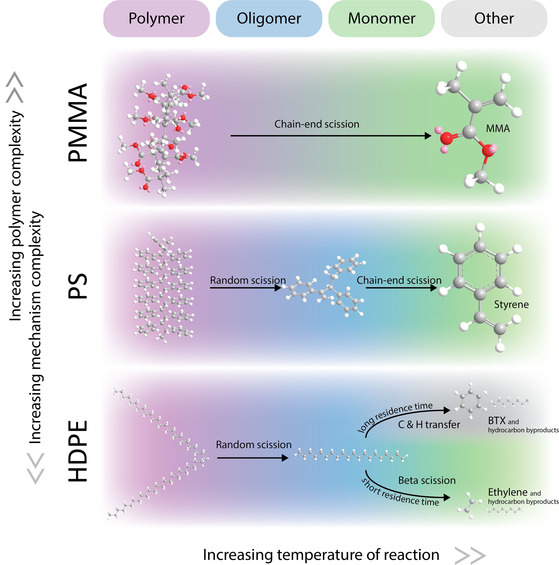
“During the carbonization process, polypropylene undergoes random cleavage of C-C bonds to form oligomers, which then undergoes β-Cracking to further decomposes into small molecules such as hydrogen, methane, and propylene, which are then catalyzed and carbonized to form carbon nanotubes, graphene, and carbon spheres (Vollmer et al. 2020).”
From Conversion of waste plastics into value-added carbon materials (2023) · cites this paper as Vollmer et al. 2020
Self-check
Percentages, sums and reported differences re-computed from the paper’s own numbers.
The self-check needs the paper’s full text.
Citations
Cites
The ecoinvent database version 3 (part I): overview and methodology
Wernet, G., Bauer, C., Steubing, B., Reinhard, J., Moreno-Ruiz, E., & Weidema, B. (2016) · The International Journal of Life Cycle Assessment · doi:10.1007/s11367-016-1087-8 · Cited by 5,564
A bacterium that degrades and assimilates poly(ethylene terephthalate)
Yoshida, S., Hiraga, K., Takehana, T., Taniguchi, I., Yamaji, H., Maeda, Y., Toyohara, K., Miyamoto, K., Kimura, Y., & Oda, K. (2016) · Science · doi:10.1126/science.aad6359 · Cited by 3,367
Mechanical and chemical recycling of solid plastic waste
Ragaert, K., Delva, L., & Van Geem, K. (2017) · Waste Management · doi:10.1016/j.wasman.2017.07.044 · Cited by 3,276
Room temperature ionic liquids as novel media for ‘clean’ liquid–liquid extraction
Huddleston, J. G., Willauer, H. D., Swatloski, R. P., Visser, A. E., & Rogers, R. D. (1998) · Chemical Communications · doi:10.1039/a803999b · Cited by 2,169
Chemical recycling of waste plastics for new materials production
Rahimi, A., & Garcı́a, J. M. (2017) · Nature Reviews Chemistry · doi:10.1038/s41570-017-0046 · Cited by 2,148
A review on pyrolysis of plastic wastes
Anuar Sharuddin, S. D., Abnisa, F., Wan Daud, W. M. A., & Aroua, M. K. (2016) · Energy Conversion and Management · doi:10.1016/j.enconman.2016.02.037 · Cited by 2,126
Current opinion: What is a nanoplastic?
Gigault, J., Halle, A. T., Baudrimont, M., Pascal, P.-Y., Gauffre, F., Phi, T.-L., El Hadri, H., Grassl, B., & Reynaud, S. (2018) · Environmental Pollution · doi:10.1016/j.envpol.2018.01.024 · Cited by 2,010
Mechanochemistry: A Force of Synthesis
Do, J., & Friščić, T. (2016) · ACS Central Science · doi:10.1021/acscentsci.6b00277 · Cited by 1,500
Lei, Z., Chen, B., Koo, Y.-M., & MacFarlane, D. R. (2017) · Chemical Reviews · doi:10.1021/acs.chemrev.7b00246 · Cited by 1,492
Mechanically-Induced Chemical Changes in Polymeric Materials
Caruso, M. M., Davis, D. A., Shen, Q., Odom, S. A., Sottos, N. R., White, S. R., & Moore, J. S. (2009) · Chemical Reviews · doi:10.1021/cr9001353 · Cited by 1,387
Research works printed but not linked: 14
- “BP′s new technology to enable circularity for unrecyclable PET plastic waste ” can be found underhttps://www.bp.com/en/global/corporate/news-and-insights/press-releases/bp-new-technology-to-enable-circularity-for-unrecyclable-pet-plastic-waste.html 2019.
- M. Schlummer F. Wolff A. Maurer in2016 Electron. Goes Green 2016+ EGG 2016 IEEE 2017 pp. 1–6. · DOI
- Maase M., 2005, Ion. Liq. IIIB Fundam. Progress, Challenges, Oppor., 126
- Maase M., 2008, Ion. Liq. Synth.
- Kolbert A. C., 1997, Am. Chem. Soc. Polym. Prepr. Div. Polym. Chem., 38, 819
- 10.1007/s10924-008-0106-7 · DOI
- Behrendt G., 2009, J. Univ. Chem. Technol. Metall., 44, 3
- Bartolome L., 2012, Mater. Recycl. Trends Perspect./ Monogr., 406
- Mohsin M. A., 2017, Int. J. Chem. Eng.
- Gutiérrez C., 2012, J. Mater. Cycles Waste Manage., 14, 308
- Prawisudha P., 2011, J. Environ. Sci. Eng., 5, 432
- Kaminsky W., 2016, Macromol. Symp., 10
- Prasad N., 2018, IEEE J. Sel. Top. Quantum Electron., 25, 363
- Akah A., 2015, Chem. Eng. Trans., 43, 2395
Cited by
Sorted by citations
Items 501–600 of 1,001
Selective conversion of polyethylene wastes to methylated aromatics through cascade catalysis
Duan, J., Wang, H., Li, H., Liu, L., Fan, K., Meng, X., Zhang, Z., Wang, L., & Xiao, F. (2023) · EES Catalysis · doi:10.1039/d3ey00011g · Cited by 38
Chemical recycling of polyolefins via ring-closing metathesis depolymerization
Ibrahim, T., Ritacco, A., Nalley, D., Emon, O. F., Liang, Y., & Sun, H. R. (2024) · Chemical Communications · doi:10.1039/d3cc05612k · Cited by 37
Plasma‐Enabled Process with Single‐Atom Catalysts for Sustainable Plastic Waste Transformation
Yu, X., Rao, Z., Chen, G., Yang, Y., Yoon, S., Liu, L., Huang, Z., Widenmeyer, M., Guo, H., Homm, G., et al. (2024) · Angewandte Chemie International Edition · doi:10.1002/anie.202404196 · Cited by 37
Influence of ball milling parameters on the mechano-chemical conversion of polyolefins
Hergesell, A. H., Seitzinger, C. L., Burg, J., Baarslag, R. J., & Vollmer, I. (2024) · RSC Mechanochemistry · doi:10.1039/d4mr00098f · Cited by 38
Self-citationWei, X., Qiu, J., Wang, H., Zheng, W., Sun, W., & Zhao, L. (2025) · Chemical Engineering Journal · doi:10.1016/j.cej.2025.161115 · Cited by 37
Romero‐Araya, P., Pino, V., Nenen, A., Cárdenas, V., Pavicic, F., Ehrenfeld, P., Sérandour, G., Lisoni, J. G., Moreno‐Villoslada, I., & Flores, M. E. (2021) · Polymers · doi:10.3390/polym13213806 · Cited by 37
Zhou, X., He, P., Peng, W., Lü, F., Shao, L., & Zhang, H. (2021) · Journal of Analytical and Applied Pyrolysis · doi:10.1016/j.jaap.2021.105421 · Cited by 37
Cai, N., Xia, S., Xiao, H., Chen, Y., Chen, W., Yang, H., Wu, C., & Chen, H. (2022) · Proceedings of the Combustion Institute · doi:10.1016/j.proci.2022.06.008 · Cited by 37
Zou, S., Xiao, L., Li, X., Yin, W.-Z., & Sun, R. (2023) · iScience · doi:10.1016/j.isci.2023.106187 · Cited by 40
Force ahead: Emerging Applications and Opportunities of Polymer Mechanochemistry
Klok, H., Herrmann, A., & Göstl, R. (2022) · ACS Polymers Au · doi:10.1021/acspolymersau.2c00029 · Cited by 37
Burkart, L., Eith, A., Hoffmann, A., & Herres‐Pawlis, S. (2022) · Chemistry - An Asian Journal · doi:10.1002/asia.202201195 · Cited by 36
Liang, H., Dong, H., Zhang, C., Geng, Y., Liu, X., Liu, G., & Chen, Z. (2023) · iScience · doi:10.1016/j.isci.2023.107701 · Cited by 36
Rotilio, L., Bayer, T., Meinert, H., Teixeira, L. M. C., Johansen, M. B., Sommerfeldt, A., Petersen, A. R., Sandahl, A. F., Keller, M. B., Holck, J., et al. (2024) · Angewandte Chemie International Edition · doi:10.1002/anie.202419535 · Cited by 36
Kumar, S., Sajwan, D., Sharma, D., & Krishnan, V. (2025) · Advanced Sustainable Systems · doi:10.1002/adsu.202500003 · Cited by 36
Synergistic Catalysis for Recycling and Upcycling of Plastics
Ran, H., Sun, X., Zheng, M., & Jing, Y. (2025) · ACS Catalysis · doi:10.1021/acscatal.5c00984 · Cited by 36
PAH and POP Presence in Plastic Waste and Recyclates: State of the Art
Conesa, J. A., Núñez, S. S., Ortuño, N., & Moltó, J. (2021) · Energies · doi:10.3390/en14123451 · Cited by 37
A review of current challenges and legal advances in the global management of plastic waste
Seay, J. R., & Ternes, M. E. (2022) · Clean Technologies and Environmental Policy · doi:10.1007/s10098-022-02289-y · Cited by 37
Separation and Solvent Based Material Recycling of Polycarbonate from Electronic Waste
Yu, E., Jan, K., & Chen, W. (2023) · ACS Sustainable Chemistry & Engineering · doi:10.1021/acssuschemeng.3c03152 · Cited by 35
Kang, S., Guo, X., Xing, D., Yuan, W., Shang, J., Nicolosi, V., Zhang, N., & Qiu, B. (2024) · Small · doi:10.1002/smll.202406068 · Cited by 35
Electroediting of Soft Polymer Backbones
Fried, A. D., Wilson, B. J., Galan, N. J., & Brantley, J. N. (2022) · Journal of the American Chemical Society · doi:10.1021/jacs.2c02098 · Cited by 35
Li, W., Zhan, Q., & Yang, P. (2023) · ACS Sustainable Chemistry & Engineering · doi:10.1021/acssuschemeng.2c06787 · Cited by 36
Photoinduced Force Microscopy as an Efficient Method Towards the Detection of Nanoplastics
C. ten Have, I., Duijndam, A. J. A., Oord, R., van Berlo‐van den Broek, H. J. M., Vollmer, I., Weckhuysen, B. M., & Meirer, F. (2021) · Chemistry–Methods · doi:10.1002/cmtd.202100017 · Cited by 34
Self-citationBeech, J. L., Clare, R., Kincannon, W. M., Erickson, E., McGeehan, J. E., Beckham, G. T., & DuBois, J. L. (2022) · RSC Advances · doi:10.1039/d2ra00612j · Cited by 34
Fang, D., Chen, M., Zeng, F., Guo, S., He, L., Liu, B., Huang, S., Zhao, H., & Wang, Y. (2024) · Materials Horizons · doi:10.1039/d4mh00039k · Cited by 34
Impact of bioplastic contamination on the mechanical recycling of conventional plastics
Staplevan, M. J., Ansari, A. J., Ahmed, A., & Hai, F. I. (2024) · Waste Management · doi:10.1016/j.wasman.2024.05.028 · Cited by 35
Closed‐Loop Recycling of Mixed Plastics of Polyester and CO2‐Based Polycarbonate to a Single Monomer
Shi, C., Diment, W. T., & Chen, E. Y. ‐. (2024) · Angewandte Chemie International Edition · doi:10.1002/anie.202405083 · Cited by 36
Poisoning effect of polyvinyl chloride on the catalytic pyrolysis of mixed plastics over zeolites
Yuan, J., Wang, W., Sun, W., Yang, Z., Cao, Y., Chen, W., Ge, X., Qian, G., Feng, X., Duan, X., et al. (2024) · Science China Chemistry · doi:10.1007/s11426-024-2111-5 · Cited by 34
Son, S., Haider, Z., Lee, D.-Y., Kim, S., Thai, N. V., & Kim, H. (2024) · Applied Catalysis B: Environmental · doi:10.1016/j.apcatb.2024.124847 · Cited by 34
Recovery of chemicals and energy through thermo-chemical processing of plastic waste
Lee, T., Kwon, D., Lee, S., Kim, Y., Kim, J. Y., Song, H., Jung, S., Lee, J., Tsang, Y. F., Kim, K., et al. (2025) · Progress in Energy and Combustion Science · doi:10.1016/j.pecs.2025.101219 · Cited by 37
Bossers, K. W., Valadian, R., Garrevoet, J., Malderen, S. V., Chan, R., Friederichs, N., Severn, J. R., Wilbers, A., Zanoni, S., Jongkind, M. K., et al. (2021) · JACS Au · doi:10.1021/jacsau.1c00130 · Cited by 34
Self-citationChemical recycling of polyhydroxybutyrate and polylactic acid over supported Ru catalysts
Lehnertz, M. S., Mensah, J. B., & Palkovits, R. (2022) · Green Chemistry · doi:10.1039/d2gc00216g · Cited by 34
Jiang, Y., Xu, R., Zeng, C., Wang, K., Han, L., & Zhang, X. (2022) · Applied Catalysis B: Environmental · doi:10.1016/j.apcatb.2022.121735 · Cited by 35
Recycling and Upgrading Utilization of Polymer Plastics †
Hu, H., Chen, Y., You, F. X., Yao, J., Yang, H., Jiang, X., & Xia, B. Y. (2022) · Chinese Journal of Chemistry · doi:10.1002/cjoc.202200527 · Cited by 35
Manar, K. K., Cheng, J., Yang, Y., Yang, X., & Ren, P. (2023) · ChemCatChem · doi:10.1002/cctc.202300004 · Cited by 35
Jerdy, A. C., Trevisi, L. M., Monwar, M., González-Borja, M. Á., Abbott, R., Lobban, L. L., & Crossley, S. P. (2023) · Applied Catalysis B: Environmental · doi:10.1016/j.apcatb.2023.122986 · Cited by 34
He, H., Du, K.-M., Yu, H., Zhu, Y., Su, H., Yang, F., Ma, M., Shi, Y., Zhang, X., Chen, S., et al. (2023) · Green Chemistry · doi:10.1039/d3gc01244a · Cited by 33
Shang, J., Li, Y., Hu, Y., Zhang, T., Wang, T., Zhang, J., Yan, H., Liu, Y., Chen, X., Feng, X., et al. (2024) · Journal of Catalysis · doi:10.1016/j.jcat.2024.115302 · Cited by 33
Upgrading waste plastics to value-added aromatics
Li, S., Li, Z., Zhang, F., & Chen, J. (2024) · Chem Catalysis · doi:10.1016/j.checat.2024.100928 · Cited by 33
Selectivity descriptors of the catalytic n -hexane cracking process over 10-membered ring zeolites
Ma, P., Zhou, H., Li, Y., Wang, M., Nastase, S. A. F., Zhu, M., Cui, J., Cavallo, L., Cheng, K., & Chowdhury, A. D. (2024) · Chemical Science · doi:10.1039/d4sc00603h · Cited by 33
Solar fuels and feedstocks: the quest for renewable black gold
Sayre, H. J., Tian, L., Son, M., Hart, S. M., Liu, X., Arias‐Rotondo, D. M., Rand, B. P., Schlau‐Cohen, G. S., & Scholes, G. D. (2021) · Energy & Environmental Science · doi:10.1039/d0ee03300f · Cited by 34
Chemical Structures, Properties, and Applications of Selected Crude Oil-Based and Bio-Based Polymers
Koczoń, P., Bartyzel, B. J., Iuliano, A., Klensporf‐Pawlik, D., Kowalska, D., Majewska, E., Tarnowska, K., Zieniuk, B., & Gruczyńska–Sękowska, E. (2022) · Polymers · doi:10.3390/polym14245551 · Cited by 36
Modeling Mechanochemical Depolymerization of PET in Ball-Mill Reactors Using DEM Simulations
Anglou, E., Chang, Y. A., Bradley, W., Sievers, C., & Boukouvala, F. (2024) · ACS Sustainable Chemistry & Engineering · doi:10.1021/acssuschemeng.3c06081 · Cited by 32
Solvent-Free One-Pot Recycling of Polylactide to Usable Polymers and Their Closed-Loop Recyclability
Luo, Z., Tian, G., Chen, S., Wu, G., & Wang, Y. (2024) · Macromolecules · doi:10.1021/acs.macromol.4c01104 · Cited by 32
Ibrahim, I., Ashour, A. G., Zeiada, W., Salem, N., & Abdallah, M. (2024) · Sustainability · doi:10.3390/su16188247 · Cited by 36
Microwave‐Powered Liquid Metal Degradation of Polyolefins
Gao, J., Zhao, J., Xing, Z., Guo, M., Xie, H., Ma, W., & Liu, J. (2024) · Advanced Materials · doi:10.1002/adma.202412539 · Cited by 32
A general esterolysis strategy for upcycling waste polyesters into high-value esters
Zhang, M., Yu, Y., Han, B., & Mei, Q. (2025) · Nature Communications · doi:10.1038/s41467-025-62916-2 · Cited by 32
Briš, A., Margetić, D., & Štrukil, V. (2025) · Green Chemistry · doi:10.1039/d5gc03507d · Cited by 32
Pfaff, L., Breite, D., Badenhorst, C. P. S., Bornscheuer, U. T., & Wei, R. (2021) · Methods in enzymology on CD-ROM/Methods in enzymology · doi:10.1016/bs.mie.2020.11.003 · Cited by 32
Nature‐Inspired Circular‐Economy Recycling for Proteins: Proof of Concept
Giaveri, S., Schmitt, A. M., Julià, L. R., Scamarcio, V., Murello, A., Cheng, S., Menin, L., Ortiz, D., Patiny, L., Bolisetty, S., et al. (2021) · Advanced Materials · doi:10.1002/adma.202104581 · Cited by 32
Celia, D., Fages, E., Gonga, E., Sanoguera, D. G., Balart, R., & Quiles‐Carrillo, L. (2021) · Polymers · doi:10.3390/polym14010138 · Cited by 32
A High‐Throughput Approach to Repurposing Olefin Polymerization Catalysts for Polymer Upcycling
Cannavacciuolo, F. D., Yadav, R., Esper, A. M., Vittoria, A., Antinucci, G., Zaccaria, F., Cipullo, R., Budzelaar, P. H. M., Busico, V., Goryunov, G. P., et al. (2022) · Angewandte Chemie International Edition · doi:10.1002/anie.202202258 · Cited by 32
Xu, R., Yin, C., You, J., Zhang, J., Mi, Q., Wu, J. L., & Zhang, J. P. (2022) · Green Energy & Environment · doi:10.1016/j.gee.2022.10.009 · Cited by 34
Ligand-Aided Glycolysis of PET Using Functionalized Silica-Supported Fe 2 O 3 Nanoparticles
Casey, É., Breen, R., Gómez, J. S., Kentgens, A. P. M., Pareras, G., Rimola, A., Holmes, J. D., & Collins, G. (2023) · ACS Sustainable Chemistry & Engineering · doi:10.1021/acssuschemeng.3c03585 · Cited by 32
Waste plastic management: Recycling and the environmental health nexus
Nafiu, S. A., Azeez, M. O., AlAqad, K. M., Olarewaju, T. A., Yerima, E. A., & Tanimu, A. (2025) · Cleaner Materials · doi:10.1016/j.clema.2024.100291 · Cited by 31
Marotta, A., Causa, A., de Luna, M. S., Ambrogi, V., & Filippone, G. (2022) · Polymers · doi:10.3390/polym14245390 · Cited by 31
Zhou, L., Jiang, Y., Zhang, G., Zhang, X., Zhang, X., & Zhang, X. (2023) · Journal of Analytical and Applied Pyrolysis · doi:10.1016/j.jaap.2023.106157 · Cited by 31
Recent advances in the biological depolymerization and upcycling of polyethylene terephthalate
Amalia, L., Chang, C.-Y., Wang, S. S.-S., Yeh, Y.-C., & Tsai, S. (2023) · Current Opinion in Biotechnology · doi:10.1016/j.copbio.2023.103053 · Cited by 31
Wang, Y., & Wang, C. (2025) · Applied Catalysis B: Environmental · doi:10.1016/j.apcatb.2025.125340 · Cited by 31
Ru-Catalyzed Polyethylene Hydrogenolysis under Quasi-Supercritical Conditions
Kim, S., Yang, B., Gutiérrez, O. Y., Zhang, W., Lizandara‐Pueyo, C., Ingale, P., Jevtovikj, I., Grauke, R., Szanyi, J., Wang, H., et al. (2025) · JACS Au · doi:10.1021/jacsau.5c00006 · Cited by 31
Repurposing polyethylene terephthalate plastic waste to capture carbon dioxide
Poderyte, M., Lima, R. J. S., Golbækdal, P. I., Juhl, D. W., Olesen, K. L. L., Nielsen, N. C., Lanza, A., & Lee, J. (2025) · Science Advances · doi:10.1126/sciadv.adv5906 · Cited by 32
Recycling and Upcycling of Polyurethane Thermosets: The Second Life of Polymers
Liu, D., Huyan, C., Li, H., Ge, J., Chen, F., & Zhang, L. (2026) · Advanced Materials · doi:10.1002/adma.202515809 · Cited by 31
Chemical upcycling of polymers
Stadler, B. M., & de Vries, J. G. (2021) · Philosophical Transactions of the Royal Society A Mathematical Physical and Engineering Sciences · doi:10.1098/rsta.2020.0341 · Cited by 32
Feng, B., Jing, Y., Guo, Y. Q., Liu, X., & Wang, Y. (2021) · Green Chemistry · doi:10.1039/d1gc02767k · Cited by 31
Synthesis of eugenol‐based monomers for sustainable epoxy thermoplastic polymers
Kouznetsov, V. V., & Méndez, L. Y. V. (2022) · Journal of Applied Polymer Science · doi:10.1002/app.52237 · Cited by 31
Wu, Y., Wang, X., Kirlikovali, K. O., Gong, X., Atilgan, A., Ma, K., Schweitzer, N. M., Gianneschi, N. C., Li, Z., Zhang, X., et al. (2022) · Angewandte Chemie · doi:10.1002/ange.202117528 · Cited by 31
Examining Knowledge Diffusion in the Circular Economy Domain: a Main Path Analysis
Rejeb, A., Rejeb, K., Zailani, S. H. M., Kayıkçı, Y., & Keogh, J. G. (2022) · Circular Economy and Sustainability · doi:10.1007/s43615-022-00189-3 · Cited by 31
Al-Gunaid, T. A., Sobolčiak, P., Chriaa, I., Karkri, M., Mrlík, M., Ilčíková, M., Sedláček, T., Popelka, A., & Krupa, I. (2023) · Journal of Energy Storage · doi:10.1016/j.est.2023.107173 · Cited by 31
Zhang, Y.-R., Gu, S., Wang, Y., & Chen, L. (2024) · Sustainable materials and technologies · doi:10.1016/j.susmat.2024.e00883 · Cited by 31
Carbon deposition behavior on biochar during chemical vapor deposition process
Wang, Y., Wen, Y., Su, W., Fu, W., & Wang, C.-H. (2024) · Chemical Engineering Journal · doi:10.1016/j.cej.2024.149726 · Cited by 30
Capetillo, A. A., Bauer, F., & Chamináde, C. (2022) · Circular Economy and Sustainability · doi:10.1007/s43615-022-00209-2 · Cited by 31
Poly(methyl methacrylate): Market trends and recycling
Sponchioni, M., & Altinok, S. (2022) · Advances in chemical engineering · doi:10.1016/bs.ache.2022.09.004 · Cited by 30
Chen, Z., Erwin, B. J., & Che, L. (2023) · Journal of Cleaner Production · doi:10.1016/j.jclepro.2023.138861 · Cited by 30
Wu, X., Lee, W., Turnell‐Ritson, R. C., Delannoi, P. C. L., Lin, K., & Dyson, P. J. (2023) · Nature Communications · doi:10.1038/s41467-023-42246-x · Cited by 30
Catalytic Strategies for the Upcycling of Polyolefin Plastic Waste
Xu, S., Tang, J., & Fu, L. (2024) · Langmuir · doi:10.1021/acs.langmuir.3c03195 · Cited by 30
Chloride and Hydride Transfer as Keys to Catalytic Upcycling of Polyethylene into Liquid Alkanes
Zhang, W., Yao, H., Khare, R., Zhang, P., Yang, B., Hu, W., Ray, D., Hu, J. Z., Camaioni, D. M., Wang, H., et al. (2024) · Angewandte Chemie International Edition · doi:10.1002/anie.202319580 · Cited by 31
Paths to circularity for plastics in the United States
Hendrickson, T. P., Bose, B., Vora, N., Huntington, T. T., Nordahl, S. L., Helms, B. A., & Scown, C. D. (2024) · One Earth · doi:10.1016/j.oneear.2024.02.005 · Cited by 31
Lee, J., Kwon, T., Kang, K. H., Won, W., & Ro, I. (2025) · Angewandte Chemie International Edition · doi:10.1002/anie.202420748 · Cited by 31
Biocatalytic recycling of plastics: facts and fiction
Zimmermann, W. (2025) · Chemical Science · doi:10.1039/d5sc00083a · Cited by 32
Li, J., Nina, M. R. H., Zhang, X., & Bai, Y. (2022) · ACS Synthetic Biology · doi:10.1021/acssynbio.1c00275 · Cited by 30
Upcycling Mask Waste to Carbon Capture Sorbents: A Combined Experimental and Computational Study
Robertson, M. A., Obando, A. G., Nunez, B., Chen, H., & Qiang, Z. (2022) · ACS Applied Engineering Materials · doi:10.1021/acsaenm.2c00030 · Cited by 30
Zhou, X., He, P., Peng, W., Lü, F., Shao, L., & Zhang, H. (2023) · Journal of Environmental Chemical Engineering · doi:10.1016/j.jece.2023.109327 · Cited by 29
Ye, M., Li, Y., Yang, Z., Yao, C., Sun, W., Zhang, X., Chen, W., Qian, G., Duan, X., Cao, Y., et al. (2023) · Angewandte Chemie · doi:10.1002/ange.202301024 · Cited by 29
Yuan, Y., Xie, Z., Turaczy, K. K., Hwang, S., Zhou, J., & Chen, J. G. (2024) · Chem & Bio Engineering · doi:10.1021/cbe.3c00007 · Cited by 29
Valsange, N. G., Warlin, N., Mankar, S. V., Rehnberg, N., Zhang, B., & Jannasch, P. (2024) · Green Chemistry · doi:10.1039/d3gc03099g · Cited by 30
Catalytic chemical recycling and upcycling of polyolefin plastics
Tan, Y., Cheng, Y., Xu, J., & Wang, H. (2024) · Giant · doi:10.1016/j.giant.2024.100307 · Cited by 30
Porous carbon composites as clean energy materials with extraordinary methane storage capacity
Alali, I., Shehu, A. U., & Mokaya, R. (2024) · Energy & Environmental Science · doi:10.1039/d4ee00749b · Cited by 29
Tran, X. T., Kim, E. S., Mun, D. H., Jung, T., Shin, J., Kang, N. Y., Park, Y.-K., & Kim, D. K. (2024) · ACS Sustainable Chemistry & Engineering · doi:10.1021/acssuschemeng.4c03763 · Cited by 29
Tabish, M., Khan, S. A. R., Yu, Z., & Tanveer, M. (2024) · Environmental Science and Pollution Research · doi:10.1007/s11356-024-35329-9 · Cited by 30
Membrives, C. Z., Tamarit, P., Fernández, A. I., & Barreneche, C. (2024) · Polymers · doi:10.3390/polym16213023 · Cited by 29
Han, W., Lin, L., Cen, Z., Ke, Y., Xu, Q., Zhu, J., Mei, X., Xia, Z., Zheng, X., Wang, Y., et al. (2024) · Angewandte Chemie International Edition · doi:10.1002/anie.202417923 · Cited by 30
Oldfrey, B. M., Barbareschi, G., Morjaria, P., Giltsoff, T., Massie, J., Miodownik, M. A., & Holloway, C. (2021) · Sustainability · doi:10.3390/su131910867 · Cited by 29
From waste to wealth: upcycling of plastic and lignocellulosic wastes to PHAs
Abu-Thabit, N. Y., Pérez‐Rivero, C., Uwaezuoke, O. J., & Ngwuluka, N. C. (2021) · Journal of Chemical Technology & Biotechnology · doi:10.1002/jctb.6966 · Cited by 30
Kar, G. P., Lin, X., & Terentjev, E. M. (2022) · ACS Applied Polymer Materials · doi:10.1021/acsapm.2c00340 · Cited by 30
Effect of Chain Stereoconfiguration on Poly(3-hydroxybutyrate) Crystallization Kinetics
Caputo, M. R., Tang, X., Westlie, A. H., Sardón, H., Chen, E. Y. ‐., & Müller, A. J. (2022) · Biomacromolecules · doi:10.1021/acs.biomac.2c00682 · Cited by 29
Lignin modified PBAT composites with enhanced strength based on interfacial dynamic bonds
Li, W., Huang, J., Liu, W., Qiu, X., Lou, H., & Zheng, L. (2022) · Journal of Applied Polymer Science · doi:10.1002/app.52476 · Cited by 29
Helmes, R., Goglio, P., Salomoni, S., van Es, D. S., Gürsel, I. V., & Aramyan, L. H. (2022) · Sustainability · doi:10.3390/su141811550 · Cited by 29
Zhou, X., He, P., Peng, W., Zhou, J., Jiang, M., Zhang, H., & Dong, W. (2023) · Resources Conservation and Recycling · doi:10.1016/j.resconrec.2023.106988 · Cited by 29
Mitigating persistent organic pollutants from marine plastics through enhanced recycling: A review
Ibrahim, I. A., Rawindran, H., Alam, M. M., Leong, W. H., Sahrin, N. T., Ng, H. S., Chan, Y. J., Abdelfattah, E. A., Lim, J. W., Aliyu, U. S., et al. (2023) · Environmental Research · doi:10.1016/j.envres.2023.117533 · Cited by 31
Li, X., Fu, T., Li, Z., Li, Y., Wang, X., & Wang, Y. (2022) · Green Chemistry · doi:10.1039/d2gc02792e · Cited by 28
Zeng, Y., Xue, Y., Gong, X., Gao, X., Jiaqiang, E., Chen, J., & Leng, E. (2023) · Journal of Analytical and Applied Pyrolysis · doi:10.1016/j.jaap.2023.106255 · Cited by 28
Metadata
- Authors
- Vollmer, I., Jenks, M. J. F., Roelands, M. C. P., White, R. J., van Harmelen, T., de Wild, P., van der Laan, G. P., Meirer, F., Keurentjes, J. T. F., & Weckhuysen, B. M.
- Affiliations
- Utrecht University (NL)
- Netherlands Organisation for Applied Scientific Research (NL)
- The Netherlands Organisation for Applied Scientific Research (TNO) Climate, Air & Sustainability Department Utrecht The Netherlands
- Energieonderzoek Centrum Nederland (ECN)- part of TNO, Biomass & Energy Efficiency Petten The Netherlands
- University of Twente (NL)
- Corresponding author
- Weckhuysen, Bert M.
- ORCID
- Venue
- Angewandte Chemie International Edition
- Publisher
- Wiley
- Published
- 2020-06-25
- Volume
- 59
- Issue
- 36
- Pages
- 15402-15423
- ISSN
- 1433-7851 (ISSN-L)
- 1521-3773
- PMC
- PMC7497176
- OpenAlex
- W3012481340
- Cited by
- 1,905
- References
- 174
- Citations by year
- 2026: 346 · 2025: 394 · 2024: 398 · 2023: 327 · 2022: 267 · 2021: 149 · 2020: 24
- FWCI
- 11.86
- Type
- journal article
- Language
- en
- Open access
- hybrid
- doi.org
- Licence
- Locations
- Angewandte Chemie International Edition (publishedVersion, cc-by)
- PubMed Central (publishedVersion, cc-by)
- PubMed (publishedVersion)
- University of Twente Research Information (publishedVersion, cc-by)
- Utrecht University Repository (Utrecht University) (submittedVersion, other-oa)
- TNO Repository (submittedVersion)
- TU/e Research Portal (submittedVersion, other-oa)
- Repository hosted by TU Delft Library (TU Delft) (submittedVersion)
- Data Archiving and Networked Services (DANS) (submittedVersion)
- University of Twente Research Information (submittedVersion, cc-by)
- Funders
- Nederlandse Organisatie voor Wetenschappelijk Onderzoek (MCEC, Zwaartekracht Programma, ARC CBBC Consortium)
- Topics
- Physical Sciences › Materials Science › Polymers and Plastics › Polymer crystallization and properties
- Physical Sciences › Environmental Science › Waste Management and Disposal › Waste Management and Recycling
- Physical Sciences › Environmental Science › Waste Management and Disposal › Recycling and Waste Management Techniques
- Keywords
- chemical recycling, plastic waste, plastic recycling, life cycle assessment, mechanical recycling, mixed waste streams, circular economy, plastic valorization, recycling technology
About these checks
Registry, retraction, Cites and statistics results are computed, not judged, with one exception: a printed reference that no index lists is read once by a model before it counts as a citation error. Claims are extracted by a model and kept only when their quote appears verbatim in the text; each cited source is then checked, with a model’s help, for whether it says what the claim relies on. Those verdicts can be wrong — read the claim’s quote and the cited source before relying on one.
Statistics and arithmetic are recomputed, not judged.
Confidence bands are shown only for fields calibrated on our annotated test set. None is calibrated yet, so no band is shown.
What counts as a claim ›How we measure confidence ›How we check this ›
Are you an author, or do you see a problem with this page? Request a review
