

Self-regulation of the inflammatory response by peroxisome proliferator-activated receptors
Open accessThe DOI matches its Crossref record; 232 of the 233 references it cites were found in a registry or an index.
Abstract
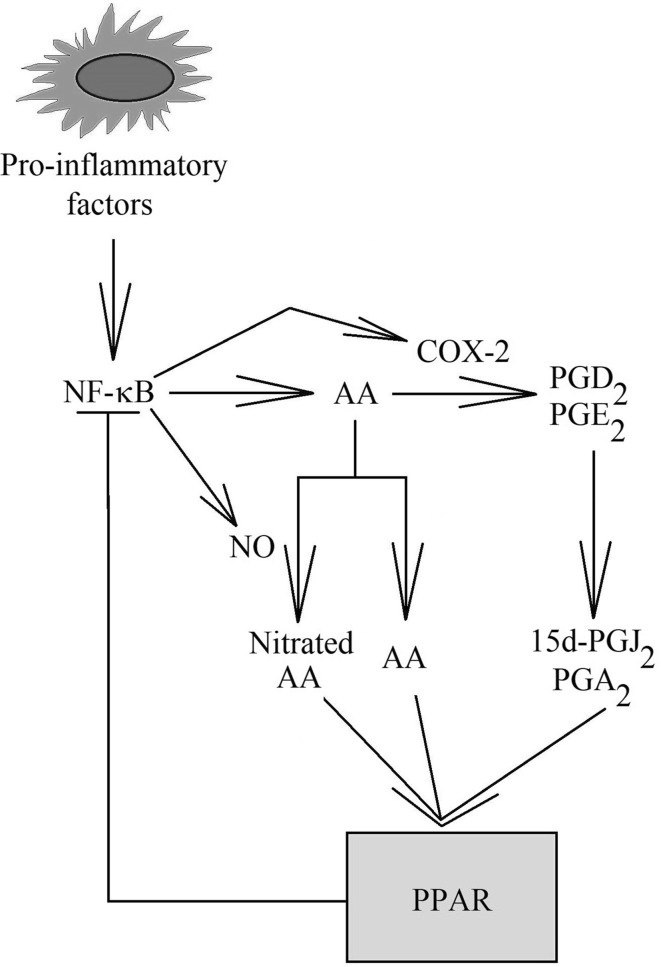
The peroxisome proliferator-activated receptor (PPAR) family includes three transcription factors: PPARα, PPARβ/δ, and PPARγ. PPAR are nuclear receptors activated by oxidised and nitrated fatty acid derivatives as well as by cyclopentenone prostaglandins (PGA 2 and 15d-PGJ 2 ) during the inflammatory response. This results in the modulation of the pro-inflammatory response, preventing it from being excessively activated. Other activators of these receptors are nonsteroidal anti-inflammatory drug (NSAID) and fatty acids, especially polyunsaturated fatty acid (PUFA) (arachidonic acid, ALA, EPA, and DHA). The main function of PPAR during the inflammatory reaction is to promote the inactivation of NF-κB. Possible mechanisms of inactivation include direct binding and thus inactivation of p65 NF-κB or ubiquitination leading to proteolytic degradation of p65 NF-κB. PPAR also exert indirect effects on NF-κB. They promote the expression of antioxidant enzymes, such as catalase, superoxide dismutase, or heme oxygenase-1, resulting in a reduction in the concentration of reactive oxygen species (ROS), i.e., secondary transmitters in inflammatory reactions. PPAR also cause an increase in the expression of IκBα, SIRT1, and PTEN, which interferes with the activation and function of NF-κB in inflammatory reactions.
Overview
The claims and statistics of this paper haven’t been checked yet.
Free: it reads the open-access text and checks the first 5 claims that cite a source we can check. Create a free account to check every claim.
Integrity signals
Registry
Cites
Statistics
Figures
Verification
Claims the paper makes
The claims and statistics of this paper haven’t been checked yet.
Free: it reads the open-access text and checks the first 5 claims that cite a source we can check. Create a free account to check every claim.
Claims other papers make about this one
Each is checked against this paper’s own text: does it say what the citing paper says it does?
In the citing paper
“PPAR-α directly binds to inflammatory transcription factors in hepatocytes such as p65 & c-Jun (NF-κB components), AP-1, STAT and thereby suppresses their transcriptional activity.[110]”
From Nuclear receptors in liver fibrosis (2021) · cites this paper as [110]
Self-check
Percentages, sums and reported differences re-computed from the paper’s own numbers.
The self-check needs the paper’s full text.
Citations
Cites
2 retracted
Subbaramaiah, K., Lin, D. T., Hart, J. C., & Dannenberg, A. J. (2001) · Journal of Biological Chemistry · doi:10.1074/jbc.m007237200 · Cited by 275
RetractedSodhi, K., Puri, N., Kim, D.-H., Hinds, T. D., Stechschulte, L. A., Favero, G., Rodella, L. F., Shapiro, J. I., Jude, D., & Abraham, N. G. (2013) · International Journal of Obesity · doi:10.1038/ijo.2013.116 · Cited by 28
RetractedModulation of NF‐κB‐dependent transcription and cell survival by the SIRT1 deacetylase
Yeung, F., Hoberg, J. E., Ramsey, C. S., Keller, M. D., Jones, D. R., Frye, R. A., & Mayo, M. W. (2004) · The EMBO Journal · doi:10.1038/sj.emboj.7600244 · Cited by 2,750
Kliewer, S. A., Sundseth, S. S., Jones, S. A., Brown, P. J., Wisely, G. B., Koble, C. S., Devchand, P., Wahli, W., Willson, T. M., Lenhard, J. M., et al. (1997) · Proceedings of the National Academy of Sciences · doi:10.1073/pnas.94.9.4318 · Cited by 2,164
Forman, B. M., Chen, J., & Evans, R. M. (1997) · Proceedings of the National Academy of Sciences · doi:10.1073/pnas.94.9.4312 · Cited by 2,116
Ros and ros-mediated cellular signaling
Zhang, J., Wang, X., Vikash, V., Ye, Q., Wu, D., Liu, Y., & Dong, W. (2016) · Oxidative Medicine and Cellular Longevity · doi:10.1155/2016/4350965 · Cited by 1,980
Sirt1 promotes fat mobilization in white adipocytes by repressing PPAR-γ
Picard, F., Kurtev, M., Chung, N., Topark-Ngarm, A., Senawong, T., Machado de Oliveira, R., Leid, M., McBurney, M. W., & Guarente, L. (2004) · Nature · doi:10.1038/nature02583 · Cited by 1,952
Rubbo, H., Radi, R., Trujillo, M., Telleri, R., Kalyanaraman, B., Barnes, S., Kirk, M., & Freeman, B. A. (1994) · Journal of Biological Chemistry · doi:10.1016/s0021-9258(18)47160-8 · Cited by 1,359 · cited 1×
“Both compounds, NO and ONOO−, lead to nitration of double bonds in unsaturated fatty acids [42, 61].”
BackgroundA SUMOylation-dependent pathway mediates transrepression of inflammatory response genes by PPAR-γ
Pascual, G., Fong, A. L., Ogawa, S., Gamliel, A., Li, A. C., Perissi, V., Rose, D. W., Willson, T. M., Rosenfeld, M. G., & Glass, C. K. (2005) · Nature · doi:10.1038/nature03988 · Cited by 1,254
Krey, G. D., Braissant, O., L’Horset, F., Kalkhoven, E., Perroud, M., Parker, M. G., & Wahli, W. (1997) · Molecular Endocrinology · doi:10.1210/me.11.6.779 · Cited by 1,221
Greenhough, A., Smartt, H. J. M., Moore, A. E., Roberts, H. R., Williams, A. C., Paraskeva, C., & Kaidi, A. (2009) · Carcinogenesis · doi:10.1093/carcin/bgp014 · Cited by 1,220
Dennis, E. A., Cao, J., Hsu, Y.-H., Magrioti, V., & Kokotos, G. (2011) · Chemical Reviews · doi:10.1021/cr200085w · Cited by 1,203
Molecular recognition of fatty acids by peroxisome proliferator-activated receptors
Xu, H. E., Lambert, M. H., Montana, V. G., Parks, D. J., Blanchard, S. G., Brown, P. J., Sternbach, D. D., Lehmann, J. M., Wisely, G. B., Willson, T. M., et al. (1999) · Molecular Cell · doi:10.1016/s1097-2765(00)80467-0 · Cited by 1,169
Activation of human aortic smooth-muscle cells is inhibited by PPARα but not by PPARγ activators
Staels, B., Koenig, W., Habib, A., Merval, R., Lebret, M., Torra, I. P., Delerive, P., Fadel, A., Chinetti, G., Fruchart, J.-C., et al. (1998) · Nature · doi:10.1038/31701 · Cited by 1,134
Delerive, P., De Bosscher, K., Besnard, S., Vanden Berghe, W., Peters, J. M., Gonzalez, F. J., Fruchart, J.-C., Tedgui, A., Haegeman, G., & Staels, B. (1999) · Journal of Biological Chemistry · doi:10.1074/jbc.274.45.32048 · Cited by 1,089
15-Deoxy-Δ 12,14 -prostaglandin J 2 inhibits multiple steps in the NF-κB signaling pathway
Straus, D. S., Pascual, G., Li, M., Welch, J. S., Ricote, M., Hsiang, C.-H., Sengchanthalangsy, L. L., Ghosh, G., & Glass, C. K. (2000) · Proceedings of the National Academy of Sciences · doi:10.1073/pnas.97.9.4844 · Cited by 1,004
Madrid, L. V., Mayo, M. W., Reuther, J. Y., & Baldwin, A. S. (2001) · Journal of Biological Chemistry · doi:10.1074/jbc.m101103200 · Cited by 777
Differential Activation of Peroxisome Proliferator-activated Receptors by Eicosanoids
Yu, K., Bayona, W., Kallen, C. B., Harding, H. P., Ravera, C. P., McMahon, G., Brown, M., & Lazar, M. A. (1995) · Journal of Biological Chemistry · doi:10.1074/jbc.270.41.23975 · Cited by 711
Molecular determinants of crosstalk between nuclear receptors and toll-like receptors
Ogawa, S., Lozach, J., Benner, C., Pascual, G., Tangirala, R. K., Westin, S., Hoffmann, A., Subramaniam, S., David, M., Rosenfeld, M. G., et al. (2005) · Cell · doi:10.1016/j.cell.2005.06.029 · Cited by 647
Cyclopentenone prostaglandins: New insights on biological activities and cellular targets
Straus, D. S., & Glass, C. K. (2001) · Medicinal Research Reviews · doi:10.1002/med.1006 · Cited by 576
Poynter, M. E., & Daynes, R. A. (1998) · Journal of Biological Chemistry · doi:10.1074/jbc.273.49.32833 · Cited by 550
Adams, M., Reginato, M. J., Shao, D., Lazar, M. A., & Chatterjee, V. K. (1997) · Journal of Biological Chemistry · doi:10.1074/jbc.272.8.5128 · Cited by 549
Cyclopentenone prostaglandins: New insights on biological activities and cellular targets
Straus, D. S., & Glass, C. K. (2001) · Medicinal Research Reviews · doi:10.1002/med.1006.abs · Cited by 520
Structural basis for the activation of PPARγ by oxidized fatty acids
Itoh, T., Fairall, L., Amin, K., Inaba, Y., Szanto, A., Balint, B. L., Nagy, L., Yamamoto, K., & Schwabe, J. W. R. (2008) · Nature Structural & Molecular Biology · doi:10.1038/nsmb.1474 · Cited by 457
Gervois, P., Fruchart, J.-C., Delerive, P., & Staels, B. (2000) · Journal of Biological Chemistry · doi:10.1074/jbc.m004045200 · Cited by 456
Camp, H. S., & Tafuri, S. R. (1997) · Journal of Biological Chemistry · doi:10.1074/jbc.272.16.10811 · Cited by 446
Nitrolinoleic acid. An endogenous peroxisome proliferator-activated receptor γ ligand
Schopfer, F. J., Lin, Y., Baker, P. R. S., Cui, T., Garcia-Barrio, M., Zhang, J., Chen, K., Chen, Y. E., & Freeman, B. A. (2005) · Proceedings of the National Academy of Sciences · doi:10.1073/pnas.0408384102 · Cited by 428
Yang, Z., Kahn, B. B., Shi, H., & Xue, B.-Z. (2010) · Journal of Biological Chemistry · doi:10.1074/jbc.m110.123620 · Cited by 410
Neuroinflammatory processes in Parkinson's disease
Hunot, S., & Hirsch, E. C. (2003) · Annals of Neurology · doi:10.1002/ana.10481 · Cited by 398
Evidence for Involvement of NF-κB in the Transcriptional Control of COX-2 Gene Expression by IL-1β
Newton, R., Kuitert, L. M. E., Bergmann, M., Adcock, I. M., & Barnes, P. J. (1997) · Biochemical and Biophysical Research Communications · doi:10.1006/bbrc.1997.7064 · Cited by 389
15-deoxy Δ^ -PGJ2 inhibits multiple steps in the NF-kappaB signaling pathway
Straus, D. S. (2000) · Medical Entomology and Zoology · Cited by 371
Hauser, S., Adelmant, G., Sarraf, P., Wright, H. M., Mueller, E., & Spiegelman, B. M. (2000) · Journal of Biological Chemistry · doi:10.1074/jbc.m001297200 · Cited by 367
Patel, L., Pass, I., Coxon, P., Downes, C. P., Smith, S. A., & Macphee, C. H. (2001) · Current Biology · doi:10.1016/s0960-9822(01)00225-1 · Cited by 365
Fatty Acid Transduction of Nitric Oxide Signaling
Baker, P. R. S., Lin, Y., Schopfer, F. J., Woodcock, S. R., Groeger, A. L., Batthyany, C., Sweeney, S., Long, M. H., Iles, K. E., Baker, L. M. S., et al. (2005) · Journal of Biological Chemistry · doi:10.1074/jbc.m504212200 · Cited by 358
Nakahira, K., Kim, H. P., Geng, X. H., Nakao, A., Wang, X., Murase, N., Drain, P. F., Wang, X., Sasidhar, M., Nabel, E. G., et al. (2006) · The Journal of Experimental Medicine · doi:10.1084/jem.20060845 · Cited by 358
Peroxisome Proliferator-Activated Receptor Targets for the Treatment of Metabolic Diseases
Monsalve, F. A., Pyarasani, R. D., Delgado-Lopez, F., & Moore-Carrasco, R. (2013) · Mediators of Inflammation · doi:10.1155/2013/549627 · Cited by 354
Nitrated Fatty Acids: Endogenous Anti-inflammatory Signaling Mediators
Cui, T., Schopfer, F. J., Zhang, J., Chen, K., Ichikawa, T., Baker Paul, R. S., Batthyany, C., Chacko, B. K., Feng, X., Patel, R. P., et al. (2006) · Journal of Biological Chemistry · doi:10.1074/jbc.m603357200 · Cited by 351
Chung, S. W., Kang, B. Y., Kim, S. H., Pak, Y. K., Cho, D., Trinchieri, G., & Kim, T. S. (2000) · Journal of Biological Chemistry · doi:10.1074/jbc.m002577200 · Cited by 338
PPARγ is an E3 ligase that induces the degradation of NFκB/p65
Hou, Y., Moreau, F., & Chadee, K. (2012) · Nature Communications · doi:10.1038/ncomms2270 · Cited by 325
PPARs: transcriptional effectors of fatty acids and their derivatives
Hihi, A. K., Michalik, L., & Wahli, W. (2002) · Cellular and Molecular Life Sciences · doi:10.1007/s00018-002-8467-x · Cited by 311
Regulation of intracellular cyclooxygenase levels by gene transcription and protein degradation
Kang, Y.-J., Mbonye, U. R., DeLong, C. J., Wada, M., & Smith, W. L. (2007) · Progress in Lipid Research · doi:10.1016/j.plipres.2007.01.001 · Cited by 299
Neuroinflammatory processes in Parkinson's disease
Hirsch, E. C., Hunot, S., & Hartmann, A. (2005) · Parkinsonism & Related Disorders · doi:10.1016/j.parkreldis.2004.10.013 · Cited by 296
Peroxisome Proliferators Enhance Cyclooxygenase-2 Expression in Epithelial Cells
Meade, E. A., McIntyre, T. M., Zimmerman, G. A., & Prescott, S. M. (1999) · Journal of Biological Chemistry · doi:10.1074/jbc.274.12.8328 · Cited by 293
Reversible Post-translational Modification of Proteins by Nitrated Fatty Acids in Vivo
Batthyany, C., Schopfer, F. J., Baker, P. R. S., Durán, R., Baker, L. M. S., Huang, Y., Cerveñansky, C., Branchaud, B. P., & Freeman, B. A. (2006) · Journal of Biological Chemistry · doi:10.1074/jbc.m602814200 · Cited by 285
Inoue, I., Goto, S.-I., Matsunaga, T., Nakajima, T., Awata, T., Hokari, S., Komoda, T., & Katayama, S. (2001) · Metabolism · doi:10.1053/meta.2001.19415 · Cited by 283
Feedback control of cyclooxygenase-2 expression through PPARγ
Inoue, H., Tanabe, T., & Umesono, K. (2000) · Journal of Biological Chemistry · doi:10.1074/jbc.m001387200 · Cited by 276 · cited 5×
“Activation of inflammatory responses by LPS or other pro-inflammatory particles causes an increase in the expression of PPARα and a decrease in the expression of PPARγ [26–29].”
BackgroundInfluentialp38 Mitogen-activated Protein Kinase Activates Peroxisome Proliferator-activated Receptor α
Barger, P. M., Browning, A. C., Garner, A. N., & Kelly, D. P. (2001) · Journal of Biological Chemistry · doi:10.1074/jbc.m105945200 · Cited by 260
Girnun, G. D., Domann, F. E., Moore, S. A., & Robbins, M. E. C. (2002) · Molecular Endocrinology · doi:10.1210/me.2002-0020 · Cited by 259
NF‐κB: A Multifaceted Transcription Factor Regulated at Several Levels
Schmitz, M. L., Mattioli, I., Buss, H., & Kracht, M. (2004) · ChemBioChem · doi:10.1002/cbic.200400144 · Cited by 245
Barry, O. P., Kazanietz, M. G., Praticò, D., & FitzGerald, G. A. (1999) · Journal of Biological Chemistry · doi:10.1074/jbc.274.11.7545 · Cited by 242
Colville-Nash, P. R., Qureshi, S. S., Willis, D., & Willoughby, D. A. (1998) · The Journal of Immunology · doi:10.4049/jimmunol.161.2.978 · Cited by 241 · cited 1×
“As a consequence, the inflammatory response is reduced by transformed products of the responses [3, 58].”
BackgroundYu, C., Markan, K., Temple, K. A., Deplewski, D., Brady, M. J., & Cohen, R. N. (2005) · Journal of Biological Chemistry · doi:10.1074/jbc.m409468200 · Cited by 238
PPAR-α as a Key Nutritional and Environmental Sensor for Metabolic Adaptation
Contreras, A. V., Torres, N., & Tovar, A. R. (2013) · Advances in Nutrition · doi:10.3945/an.113.003798 · Cited by 236
Krönke, G., Kadl, A., Ikonomu, E., Blüml, S., Fürnkranz, A., Sarembock, I. J., Bochkov, V. N., Exner, M., Binder, B. R., & Leitinger, N. (2007) · Arteriosclerosis, Thrombosis, and Vascular Biology · doi:10.1161/atvbaha.107.142638 · Cited by 232
Camp, H. S., Tafuri, S. R., & Leff, T. (1999) · Endocrinology · doi:10.1210/endo.140.1.6457 · Cited by 230
hPPARgamma Ligand binding domain in complex with 4-HDHA: 2vv1
Itoh, T., Fairall, L., & Schwabe, J. W. R. (2008) · Worldwide Protein Data Bank · doi:10.2210/pdb2vv1/pdb · Cited by 223
Lazennec, G. (2000) · Molecular Endocrinology · doi:10.1210/me.14.12.1962 · Cited by 220
SIRT1 is regulated by a PPARγ–SIRT1 negative feedback loop associated with senescence
Han, L., Zhou, R., Niu, J., McNutt, M. A., Wang, P., & Tong, T. (2010) · Nucleic Acids Research · doi:10.1093/nar/gkq609 · Cited by 219
Direct Antioxidant Properties of Bilirubin and Biliverdin. Is there a Role for Biliverdin Reductase?
Jansen, T., & Daiber, A. (2012) · Frontiers in Pharmacology · doi:10.3389/fphar.2012.00030 · Cited by 210
Redox Regulation of Inflammation: Old Elements, a New Story
Lei, Y., Wang, K., Deng, L., Chen, Y., Nice, E. C., & Huang, C. (2015) · Medicinal Research Reviews · doi:10.1002/med.21330 · Cited by 209
Zúñiga, J., Cancino, M., Medina, F., Varela, P., Vargas, R., Tapia, G., Videla, L. A., & Fernández, V. (2011) · PLoS ONE · doi:10.1371/journal.pone.0028502 · Cited by 206
Cowart, L. A., Wei, S., Hsu, M.-H., Johnson, E. F., Krishna, M. U., Falck, J. R., & Capdevila, J. H. (2002) · Journal of Biological Chemistry · doi:10.1074/jbc.m201575200 · Cited by 195
Prostacyclin among prostanoids.
Gryglewski, R. J. (2008) · PubMed · Cited by 193
Nuclear factor kB is activated by arachidonic acid but not by eicosapentaenoic acid
Camandola, S., Leonarduzzi, G., Musso, T., Varesio, L., Carini, R., Scavazza, A., Chiarpotto, E., Baeuerle, P. A., & Poli, G. (1996) · Biochemical and Biophysical Research Communications · doi:10.1006/bbrc.1996.1857 · Cited by 188
Targeting inflammation in diabetes: Newer therapeutic options
Agrawal, N. K. (2014) · World Journal of Diabetes · doi:10.4239/wjd.v5.i5.697 · Cited by 186
PPARγ inhibits NF-κB-dependent transcriptional activation in skeletal muscle
Remels, A. H. V., Langen, R. C. J., Gosker, H. R., Russell, A. P., Spaapen, F., Voncken, J. W., Schrauwen, P., & Schols, A. M. W. J. (2009) · American Journal of Physiology-Endocrinology and Metabolism · doi:10.1152/ajpendo.90632.2008 · Cited by 184
Xue, B., Yang, Z., Wang, X., & Shi, H. (2012) · PLoS ONE · doi:10.1371/journal.pone.0045990 · Cited by 179
Juge-Aubry, C. E., Hammar, E., Siegrist-Kaiser, C., Pernin, A., Takeshita, A., Chin, W. W., Burger, A. G., & Meier, C. A. (1999) · Journal of Biological Chemistry · doi:10.1074/jbc.274.15.10505 · Cited by 179
Structural Insight into PPARγ Activation Through Covalent Modification with Endogenous Fatty Acids
Waku, T., Shiraki, T., Oyama, T., Fujimoto, Y., Maebara, K., Kamiya, N., Jingami, H., & Morikawa, K. (2008) · Journal of Molecular Biology · doi:10.1016/j.jmb.2008.10.039 · Cited by 178
Cui, X.-L., & Douglas, J. G. (1997) · Proceedings of the National Academy of Sciences · doi:10.1073/pnas.94.8.3771 · Cited by 174
Khandoudi, N., Delerive, P., Berrebi-Bertrand, I., Buckingham, R. E., Staels, B., & Bril, A. (2002) · Diabetes · doi:10.2337/diabetes.51.5.1507 · Cited by 174
Rival, Y., Benéteau, N., Taillandier, T., Pezet, M., Dupont-Passelaigue, E., Patoiseau, J.-F., Junquéro, D., Colpaert, F. C., & Delhon, A. (2002) · European Journal of Pharmacology · doi:10.1016/s0014-2999(01)01589-8 · Cited by 173
PPARα ligands activate antioxidant enzymes and suppress hepatic fibrosis in rats
Toyama, T., Nakamura, H., Harano, Y., Yamauchi, N., Morita, A., Kirishima, T., Minami, M., Itoh, Y., & Okanoue, T. (2004) · Biochemical and Biophysical Research Communications · doi:10.1016/j.bbrc.2004.09.110 · Cited by 172
Molecular recognition of nitrated fatty acids by PPARγ
Li, Y., Zhang, J., Schopfer, F. J., Martynowski, D., Garcia-Barrio, M. T., Kovach, A., Suino-Powell, K., Baker, P. R. S., Freeman, B. A., Chen, Y. E., et al. (2008) · Nature Structural & Molecular Biology · doi:10.1038/nsmb.1447 · Cited by 168
Ramanan, S., Kooshki, M., Zhao, W., Hsu, F.-C., & Robbins, M. E. (2008) · Free Radical Biology and Medicine · doi:10.1016/j.freeradbiomed.2008.09.002 · Cited by 159
Yang, Y., Lii, C., Wei, Y., Li, C., Lu, C., Liu, K., & Chen, H. (2012) · The Journal of Nutritional Biochemistry · doi:10.1016/j.jnutbio.2012.05.003 · Cited by 159
DING, G., FU, M., QIN, Q., LEWIS, W., KIM, H., FUKAI, T., BACANAMWO, M., CHEN, Y., SCHNEIDER, M., & MANGELSDORF, D. (2007) · Cardiovascular Research · doi:10.1016/j.cardiores.2007.06.027 · Cited by 157
Mazière, C., Conte, M.-A., Degonville, J., Ali, D., & Mazière, J. (1999) · Biochemical and Biophysical Research Communications · doi:10.1006/bbrc.1999.1644 · Cited by 155
Scirpo, R., Fiorotto, R., Villani, A., Amenduni, M., Spirli, C., & Strazzabosco, M. (2015) · Hepatology · doi:10.1002/hep.28000 · Cited by 151
Chen, F., Wang, M., O'Connor, J. P., He, M., Tripathi, T., & Harrison, L. E. (2003) · Journal of Cellular Biochemistry · doi:10.1002/jcb.10668 · Cited by 151
Blanquart, C., Barbier, O., Fruchart, J.-C., Staels, B., & Glineur, C. (2002) · Journal of Biological Chemistry · doi:10.1074/jbc.m110598200 · Cited by 150
Lipid Mediators in Life Science
MURAKAMI, M. (2011) · Experimental Animals · doi:10.1538/expanim.60.7 · Cited by 147
PPARα ligands activate antioxidant enzymes and suppress hepatic fibrosis in rats
外山, 哲. (2005) · Medical Entomology and Zoology · Cited by 142
Akundi, R. S., Candelario‐Jalil, E., Hess, S., Hüll, M., Lieb, K., Gebicke‐Haerter, P. J., & Fiebich, B. L. (2005) · Glia · doi:10.1002/glia.20198 · Cited by 141
Necela, B. M., Su, W., & Thompson, E. A. (2008) · Immunology · doi:10.1111/j.1365-2567.2008.02849.x · Cited by 140
Dowell, P., Ishmael, J. E., Avram, D., Peterson, V. J., Nevrivy, D. J., & Leid, M. (1999) · Journal of Biological Chemistry · doi:10.1074/jbc.274.22.15901 · Cited by 136
Subbaramaiah, K., & Dannenberg, A. J. (2007) · Cancer Research · doi:10.1158/0008-5472.can-06-4273 · Cited by 129
Cytochrome P450-derived eicosanoids and heart function
Jamieson, K. L., Endo, T. H., Darwesh, A. M., Samokhvalov, V., & Seubert, J. M. (2017) · Pharmacology & Therapeutics · doi:10.1016/j.pharmthera.2017.05.005 · Cited by 128
Nitrated fatty acids: Mechanisms of formation, chemical characterization, and biological properties
Trostchansky, A., & Rubbo, H. (2008) · Free Radical Biology and Medicine · doi:10.1016/j.freeradbiomed.2008.03.006 · Cited by 126
Narala, V. R., Adapala, R. K., Suresh, M. V., Brock, T. G., Peters-Golden, M., & Reddy, R. C. (2010) · Journal of Biological Chemistry · doi:10.1074/jbc.m109.085118 · Cited by 126
Oxidative metabolism of linoleic acid modulates PPAR-beta/delta suppression of PPAR-gamma activity
Zuo, X., Wu, Y., Morris, J. S., Stimmel, J. B., Leesnitzer, L. M., Fischer, S. M., Lippman, S. M., & Shureiqi, I. (2005) · Oncogene · doi:10.1038/sj.onc.1209160 · Cited by 124
Yang, P., Chan, D., Felix, E. A., Cartwright, C., Menter, D. G., Madden, T. L., Klein, R. D., Fischer, S. M., & Newman, R. A. (2004) · Journal of Lipid Research · doi:10.1194/jlr.m300455-jlr200 · Cited by 123
Increased PTEN expression due to transcriptional activation of PPARγ by Lovastatin and Rosiglitazone
Teresi, R. E., Shaiu, C., Chen, C., Chatterjee, K., Waite, K. A., & Eng, C. (2006) · International Journal of Cancer · doi:10.1002/ijc.21799 · Cited by 120
Hughes-Fulford, M., Li, C.-F., Boonyaratanakornkit, J., & Sayyah, S. (2006) · Cancer Research · doi:10.1158/0008-5472.can-05-0914 · Cited by 118
Function of COX-2 and Prostaglandins in Neurological Disease
Liang, X., Wu, L., Wang, Q., Hand, T. A., Bilak, M. M., McCullough, L. B., & Andreasson, K. I. (2007) · Journal of Molecular Neuroscience · doi:10.1007/s12031-007-0058-8 · Cited by 118
Paik, J. H., Ju, J. H., Lee, J. Y., Boudreau, M. D., & Hwang, D. H. (2000) · Journal of Biological Chemistry · doi:10.1074/jbc.m002329200 · Cited by 115
DNA Binding-Independent Induction of I B Gene Transcription by PPAR
Delerive, P. (2002) · Molecular Endocrinology · doi:10.1210/me.16.5.1029 · Cited by 114
Transcriptional Control by NF-κB: Elongation in Focus
Diamant, G., & Dikstein, R. (2013) · Biochimica et Biophysica Acta (BBA) - Gene Regulatory Mechanisms · doi:10.1016/j.bbagrm.2013.04.007 · Cited by 113
Hostetler, H. A., Kier, A. B., & Schroeder, F. (2006) · Biochemistry · doi:10.1021/bi060198l · Cited by 112
OKUNO, Y., MATSUDA, M., MIYATA, Y., FUKUHARA, A., KOMURO, R., SHIMABUKURO, M., & SHIMOMURA, I. (2010) · Endocrine Journal · doi:10.1507/endocrj.k09e-113 · Cited by 112
Thommesen, L., Sjursen, W., Gåsvik, K., Hanssen, W., Brekke, O., Skattebøl, L., Holmeide, A. K., Espevik, T., Johansen, B., & Lægreid, A. (1998) · PubMed · Cited by 112
Jennewein, C., Kuhn, A.-M., Schmidt, M. V., Meilladec-Jullig, V., von Knethen, A., Gonzalez, F. J., & Brüne, B. (2008) · The Journal of Immunology · doi:10.4049/jimmunol.181.8.5646 · Cited by 110
Díaz-Muñoz, M. D., Osma-García, I. C., Fresno, M., & Iñiguez, M. A. (2012) · Biochemical Journal · doi:10.1042/bj20111052 · Cited by 110
Kim, J.-H., Park, K. W., Lee, E.-W., Jang, W.-S., Seo, J. H., Shin, S., Hwang, K.-A., & Song, J. (2013) · Cell Death and Differentiation · doi:10.1038/cdd.2013.181 · Cited by 109
Pontsler, A. V., St. Hilaire, A., Marathe, G. K., Zimmerman, G. A., & McIntyre, T. M. (2002) · Journal of Biological Chemistry · doi:10.1074/jbc.m109546200 · Cited by 105
Puhl, A. C., Milton, F. A., Čvoro, A., Sieglaff, D. H., Campos, J. C. L. D. O., Bernardes, A., Filgueira, C. S., Lindemann, J. A. L., Deng, T., Neves, F. D. A. R., et al. (2015) · Nuclear Receptor Signaling · doi:10.1621/nrs.13004 · Cited by 103
Yu, J. H., Kim, K. H., & Kim, H. (2007) · The International Journal of Biochemistry & Cell Biology · doi:10.1016/j.biocel.2007.10.007 · Cited by 101
Inoue, I., Noji, S., Awata, T., Takahashi, K., Nakajima, T., Sonoda, M., Komoda, T., & Katayama, S. (1998) · Life Sciences · doi:10.1016/s0024-3205(98)00249-5 · Cited by 100
Naruhn, S., Meißner, W., Adhikary, T., Kaddatz, K., Klein, T., Watzer, B., Müller‐Brüsselbach, S., & Müller, R. (2009) · Molecular Pharmacology · doi:10.1124/mol.109.060541 · Cited by 97
Schnegg, C. I., Kooshki, M., Hsu, F.-C., Sui, G., & Robbins, M. E. (2012) · Free Radical Biology and Medicine · doi:10.1016/j.freeradbiomed.2012.02.032 · Cited by 96
Cyclopentenone Isoprostanes Inhibit the Inflammatory Response in Macrophages
Musiek, E. S., Gao, L., Milne, G. L., Han, W., Everhart, M. B., Wang, D., Backlund, M. G., DuBois, R. N., Zanoni, G., Vidari, G., et al. (2005) · Journal of Biological Chemistry · doi:10.1074/jbc.m504785200 · Cited by 96
Zhang, J., Zhang, Y., Xiao, F., Liu, Y., Wang, J., Gao, H., Rong, S., Yao, Y., Li, J., & Xu, G. (2015) · Biochemical Pharmacology · doi:10.1016/j.bcp.2015.11.027 · Cited by 96
Grau, R., Punzón, C., Fresno, M., & Iñiguez, M. A. (2006) · Biochemical Journal · doi:10.1042/bj20050964 · Cited by 94
Zhang, N., Chu, E. S. H., Zhang, J., Li, X., Liang, Q., Chen, J., Chen, M., Teoh, N., Farrell, G., Sung, J. J. Y., et al. (2014) · Oncotarget · doi:10.18632/oncotarget.2212 · Cited by 93
Zingarelli, B., Piraino, G., Hake, P. W., O’Connor, M. P., Denenberg, A. G., Fan, H., & Cook, J. A. (2010) · American Journal Of Pathology · doi:10.2353/ajpath.2010.091010 · Cited by 93
Okayasu, T., Tomizawa, A., Suzuki, K., Manaka, K., & Hattori, Y. (2008) · Life Sciences · doi:10.1016/j.lfs.2008.02.002 · Cited by 93
Pourcet, B., Pineda-Torra, I., Derudas, B., Staels, B., & Glineur, C. (2010) · Journal of Biological Chemistry · doi:10.1074/jbc.m109.078311 · Cited by 93
Korbecki, J., Baranowska‐Bosiacka, I., Gutowska, I., & Chlubek, D. (2014) · Acta Biochimica Polonica · doi:10.18388/abp.2014_1825 · Cited by 93
Self-citationThommesen, L., Sjursen, W., Gåsvik, K., Hanssen, W., Brekke, O.-L., Skattebøl, L., Holmeide, A. K., Espevik, T., Johansen, B., & Lægreid, A. (1998) · The Journal of Immunology · doi:10.4049/jimmunol.161.7.3421 · Cited by 93 · cited 1×
“There are numerous regulatory mechanisms in this pathway which cause both an increase and decrease in synthesis and in activity of particular eicosanoids [14, 15].”
BackgroundPPAR-α Agonist WY-14643 Inhibits LPS-Induced Inflammation in Synovial Fibroblasts via NF-kB Pathway
Huang, D., Zhao, Q., Liu, H., Guo, Y., & Xu, H. (2016) · Journal of Molecular Neuroscience · doi:10.1007/s12031-016-0775-y · Cited by 90
Kitamura, Y., Kakimura, J., Matsuoka, Y., Nomura, Y., Gebicke‐Haerter, P. J., & Taniguchi, T. (1999) · Neuroscience Letters · doi:10.1016/s0304-3940(99)00055-5 · Cited by 86
Stuhlmeier, K. M., Kao, J. J., & Bach, F. H. (1997) · Journal of Biological Chemistry · doi:10.1074/jbc.272.39.24679 · Cited by 82
Pang, L., Nie, M., Corbett, L., & Knox, A. J. (2003) · The Journal of Immunology · doi:10.4049/jimmunol.170.2.1043 · Cited by 81
Peroxisome Proliferator–Activated Receptor β/δ Expression and Activation in Lung Cancer
Pedchenko, T. V., Gonzalez, A. L., Wang, D., DuBois, R. N., & Massion, P. P. (2008) · American Journal of Respiratory Cell and Molecular Biology · doi:10.1165/rcmb.2007-0426oc · Cited by 80
García‐Alonso, V., López‐Vicario, C., Titos, E., Morán‐Salvador, E., González‐Périz, A., Rius, B., Párrizas, M., Werz, O., Arroyo, V., & Clària, J. (2013) · Journal of Biological Chemistry · doi:10.1074/jbc.m113.468603 · Cited by 80
Bradbury, D. A., Newton, R. C., Zhu, Y. M., El-Haroun, H., Corbett, L. M., & Knox, A. J. (2003) · Journal of Biological Chemistry · doi:10.1074/jbc.m307964200 · Cited by 75
The current role of thiazolidinediones in diabetes management
Rizos, C. V., Kei, A. A., & Elisaf, M. (2016) · Archives of Toxicology · doi:10.1007/s00204-016-1737-4 · Cited by 75
Chandran, K., Goswami, S., & Sharma-Walia, N. (2015) · Oncotarget · doi:10.18632/oncotarget.6402 · Cited by 74
Watanabe, M., Takahashi, H., Saeki, Y., Ozaki, T. J., Itoh, S., Suzuki, M., Mizushima, W., Tanaka, K., & Hatakeyama, S. (2015) · eLife · doi:10.7554/elife.05615 · Cited by 73
Barroso, E., Eyre, E., Palomer, X., & Vázquez‐Carrera, M. (2010) · Biochemical Pharmacology · doi:10.1016/j.bcp.2010.12.004 · Cited by 72
Adipose expression of catalase is regulated via a novel remote PPARγ-responsive region
Okuno, Y., Matsuda, M., Kobayashi, H., Morita, K., Suzuki, E., Fukuhara, A., Komuro, R., Shimabukuro, M., & Shimomura, I. (2007) · Biochemical and Biophysical Research Communications · doi:10.1016/j.bbrc.2007.12.001 · Cited by 72
Lee, C., Lin, C., Lee, I., Lee, H., & Yang, C. (2011) · Journal of Cellular Physiology · doi:10.1002/jcp.22537 · Cited by 72
Aleshin, S. E., Grabeklis, S. A., Hanck, T., Sergeeva, M. G., & Reiser, G. (2009) · Molecular Pharmacology · doi:10.1124/mol.109.056010 · Cited by 72
The Ubiquitin Ligase Siah2 Regulates PPARγ Activity in Adipocytes
Kilroy, G., Kirk-Ballard, H., Carter, L. E., & Floyd, Z. E. (2012) · Endocrinology · doi:10.1210/en.2011-1725 · Cited by 68
Khoo, N. K. H., Hebbar, S., Zhao, W., Moore, S. A., Domann, F. E., & Robbins, M. E. C. (2013) · Redox Biology · doi:10.1016/j.redox.2012.12.006 · Cited by 67
He, X., Liu, W., Shi, M., Yang, Z., Zhang, X., & Gong, P. (2017) · Research in Veterinary Science · doi:10.1016/j.rvsc.2016.12.011 · Cited by 67
Bren‐Mattison, Y., Meyer, A. M., Putten, V. V., Li, H. Y., Kuhn, K., Stearman, R. S., Weiser‐Evans, M. C. M., Winn, R. A., Heasley, L. E., & Nemenoff, R. A. (2007) · Molecular Pharmacology · doi:10.1124/mol.107.042002 · Cited by 65
Popeijus, H. E., van Otterdijk, S. D., van der Krieken, S. E., Konings, M. C. J. M., Serbonij, K., Plat, J., & Mensink, R. P. (2014) · Molecular Nutrition & Food Research · doi:10.1002/mnfr.201400314 · Cited by 65
Ibarra-Lara, L., Hong, E., Soria‐Castro, E., Torres-Narváez, J. C., Pérez‐Severiano, F., del Valle‐Mondragón, L., Cervantes-Pérez, L. G., Ramírez-Ortega, M. D. C., Pastelín-Hernández, G. S., & Sánchez-Mendoza, A. (2012) · Journal of Cardiovascular Pharmacology · doi:10.1097/fjc.0b013e31826216ed · Cited by 63
Jang, B.-C., Paik, J.-H., Kim, S.-P., Shin, D.-H., Song, D.-K., Park, J.-G., Suh, M.-H., Park, J.-W., & Suh, S.-I. (2005) · Cellular Signalling · doi:10.1016/j.cellsig.2004.10.001 · Cited by 62
Fluoride Induces Neuroinflammation and Alters Wnt Signaling Pathway in BV2 Microglial Cells
Chen, R., Zhao, L.-D., Liu, H., Li, H.-H., Ren, C., Zhang, P., Guo, K., Zhang, H.-X., Geng, D., & Zhang, C.-Y. (2017) · Inflammation · doi:10.1007/s10753-017-0556-y · Cited by 60
Chêne, G., Dubourdeau, M., Balard, P., Escoubet‐Lozach, L., Orfila, C., Berry, A., Bernad, J., Ariès, M.-F., Charvéron, M., & Pipy, B. (2007) · Biochimica et Biophysica Acta (BBA) - Molecular and Cell Biology of Lipids · doi:10.1016/j.bbalip.2007.02.014 · Cited by 58
Trostchansky, A., Bonilla, L., Thomas, C. P., O'Donnell, V. B., Marnett, L. J., Radi, R., & Rubbo, H. (2011) · Journal of Biological Chemistry · doi:10.1074/jbc.m110.154518 · Cited by 58
Shipley, J. M., & Waxman, D. (2003) · Molecular Pharmacology · doi:10.1124/mol.64.2.355 · Cited by 57
Muralikumar, S., Vetrivel, U., Narayanasamy, A., & N. Das, U. (2017) · Lipids in Health and Disease · doi:10.1186/s12944-016-0404-3 · Cited by 56
Simultaneous, bidirectional inhibitory crosstalk between PPAR and STAT5b
Shipley, J. M., & Waxman, D. J. (2004) · Toxicology and Applied Pharmacology · doi:10.1016/j.taap.2003.12.020 · Cited by 54
Ubiquitin Ligase NEDD4 Regulates PPARγ Stability and Adipocyte Differentiation in 3T3-L1 Cells
Li, J.-J., Wang, R., Lama, R., Wang, X.-J., Floyd, Z., Park, E., & Liao, F. (2016) · Scientific Reports · doi:10.1038/srep38550 · Cited by 54
Han, S., Inoue, H., Flowers, L., & Sidell, N. (2003) · PubMed · Cited by 52
PPARα attenuates the proinflammatory response in activated mesangial cells
Kono, K., Kamijo, Y., Hora, K., Takahashi, K., Higuchi, M., Kiyosawa, K., Shigematsu, H., Gonzalez, F. J., & Aoyama, T. (2009) · American Journal of Physiology-Renal Physiology · doi:10.1152/ajprenal.00484.2007 · Cited by 52
Yang, Y., Li, X., Zhang, L., Liu, L., Jing, G.-X., & Cai, H. (2015) · PubMed · Cited by 52
Rösch, S., Ramer, R., Brune, K., & Hinz, B. (2005) · Biochemical and Biophysical Research Communications · doi:10.1016/j.bbrc.2005.10.051 · Cited by 51
PPARγ E3 ubiquitin ligase regulates MUC1-C oncoprotein stability
Hou, Y., GAO, J. W. F., Hua-xi, X., Xu, Y., Zhang, Z., Xu, Q., & Zhang, C. (2013) · Oncogene · doi:10.1038/onc.2013.504 · Cited by 51
Wang, W., Lin, Q., Lin, R., Zhang, J., Ren, F., Zhang, J., Ji, M., & Li, Y. (2013) · Experimental Cell Research · doi:10.1016/j.yexcr.2013.04.007 · Cited by 51
Rodríguez, J. E., Liao, J.-Y., He, J., Schisler, J. C., Newgard, C. B., Drujan, D., Glass, D. J., Frederick, C. B., Yoder, B. C., Lalush, D. S., et al. (2015) · Molecular and Cellular Endocrinology · doi:10.1016/j.mce.2015.06.008 · Cited by 50
PPAR‐γ AF‐2 Domain Functions as a Component of a Ubiquitin‐dependent Degradation Signal
Kilroy, G. E., Zhang, X., & Floyd, Z. E. (2009) · Obesity · doi:10.1038/oby.2008.616 · Cited by 50
Chen, W., Yang, S., Wei, P., Fu, X., Xu, Q., & Wang, J. (2015) · Cellular Physiology and Biochemistry · doi:10.1159/000374011 · Cited by 49
Diezko, R., & Suske, G. (2013) · PLoS ONE · doi:10.1371/journal.pone.0066947 · Cited by 49
He, J., Quintana, M. T., Sullivan, J., Parry, T. L., Grevengoed, T. J., Schisler, J. C., Hill, J. A., Yates, C. C., Mapanga, R. F., Essop, M. F., et al. (2015) · Cardiovascular Diabetology · doi:10.1186/s12933-015-0252-x · Cited by 48
Effect of arachidonic and eicosapentaenoic acid metabolism on RAW 264.7 macrophage proliferation
Nieves, D., & Moreno, J. J. (2006) · Journal of Cellular Physiology · doi:10.1002/jcp.20678 · Cited by 48
Kapoor, M., Kojima, F., Qian, M., Yang, L., & Crofford, L. J. (2007) · Journal of Biological Chemistry · doi:10.1074/jbc.m610153200 · Cited by 48
Peroxisome Proliferator-Activated Receptor-α Activation Inhibits Langerhans Cell Function
Dubrac, S., Stoitzner, P., Pirkebner, D., Elentner, A., Schoonjans, K., Auwerx, J., Saeland, S., Hengster, P., Fritsch, P., Romani, N., et al. (2007) · The Journal of Immunology · doi:10.4049/jimmunol.178.7.4362 · Cited by 47
Fang, X., Dillon, J. S., Hu, S., Harmon, S. D., Yao, J., Anjaiah, S., Falck, J. R., & Spector, A. A. (2006) · Prostaglandins & Other Lipid Mediators · doi:10.1016/j.prostaglandins.2006.05.002 · Cited by 47
Kim, J., Lee, Y., Chang, Y.-U., & Yi, H. (2016) · Journal of Physiology and Biochemistry · doi:10.1007/s13105-016-0523-3 · Cited by 47
González-Perilli, L., Álvarez, M. N., Prolo, C., Radí, R., Rubbo, H., & Trostchansky, A. (2013) · Free Radical Biology and Medicine · doi:10.1016/j.freeradbiomed.2012.12.020 · Cited by 45
Chi, P., Liu, C.-J., Lee, I., Chen, Y.-W., Hsiao, L., & Yang, C. (2014) · Mediators of Inflammation · doi:10.1155/2014/279171 · Cited by 45
Lee, J., Kang, U., Seo, E. K., & Kim, Y. S. (2016) · International Immunopharmacology · doi:10.1016/j.intimp.2016.02.026 · Cited by 44
Block of Nuclear Receptor Ubiquitination
Genini, D., & Catapano, C. V. (2007) · Journal of Biological Chemistry · doi:10.1074/jbc.m609149200 · Cited by 43
Xu, Y., Kume, S., Tanaka, Y., Isshiki, K., Araki, S., Chin‒Kanasaki, M., Sugimoto, T., Koya, D., Haneda, M., Sugaya, T., et al. (2011) · PLoS ONE · doi:10.1371/journal.pone.0025271 · Cited by 43
Shin, M. H., Lee, S.-R., Kim, M.-K., Shin, C.-Y., Lee, D. H., & Chung, J. H. (2016) · PLOS ONE · doi:10.1371/journal.pone.0162628 · Cited by 43
Cross Regulation of Sirtuin 1, AMPK, and PPARγ in Conjugated Linoleic Acid Treated Adipocytes
Jiang, S., Wang, W., Miner, J., & Fromm, M. (2012) · PLoS ONE · doi:10.1371/journal.pone.0048874 · Cited by 42
Xiao, Y.-B., Cai, S., Liu, L.-L., Yang, X., & Yun, J. (2018) · Cancer Management and Research · doi:10.2147/cmar.s166971 · Cited by 42
Sheldrick, E. L. R., Derecka, K., Marshall, E., Chin, E. C., Hodges, L., Wathes, D. C., Abayasekara, D. R. E., & Flint, A. P. F. (2007) · Biochemical Journal · doi:10.1042/bj20070089 · Cited by 41
Song, E. A. C., Lim, J. W., & Kim, H. (2017) · The International Journal of Biochemistry & Cell Biology · doi:10.1016/j.biocel.2017.05.011 · Cited by 41
Wang, W., Bai, L., Hu, Q., Li, Y., Yang, L., Zhang, J., Lin, R., Ren, F., Zhang, J., & Ji, M. (2013) · Inflammation · doi:10.1007/s10753-013-9728-6 · Cited by 40
Kalajdzic, T., Faour, W. H., He, Q. W., Fahmi, H., Martel‐Pelletier, J., Pelletier, J., & Battista, J. A. D. (2002) · Arthritis & Rheumatism · doi:10.1002/art.10055 · Cited by 39
Arachidonic Acid Induces ARE/Nrf2-Dependent Heme Oxygenase-1 Transcription in Rat Brain Astrocytes
Lin, C., Yang, C.-C., Chen, Y., Hsiao, L., & Yang, C. (2017) · Molecular Neurobiology · doi:10.1007/s12035-017-0590-7 · Cited by 39
The I κ B α gene is a peroxisome proliferator‐activated receptor cardiac target gene
Buroker, N. E., Barboza, J., & Huang, J. (2009) · The FEBS Journal · doi:10.1111/j.1742-4658.2009.07039.x · Cited by 38
Yang, Y.-C., Huang, Y., Hsieh, C., Yang, P., & Wung, B. (2014) · PLoS ONE · doi:10.1371/journal.pone.0100677 · Cited by 36
Riquelme, S. A., Bueno, S. M., & Kalergis, A. M. (2014) · Immunology · doi:10.1111/imm.12375 · Cited by 36
PPARγ, PTEN, and the Fight against Cancer
Teresi, R. E., & Waite, K. A. (2008) · PPAR Research · doi:10.1155/2008/932632 · Cited by 36
PHOSPHOLIPASE A2INHIBITORS AND LEUKOTRIENE SYNTHESIS INHIBITORS BLOCK TNF-INDUCED NF-κB ACTIVATION
van Puijenbroek, A. A. F. L., Wissink, S., van der Saag, P. T., & Peppelenbosch, M. P. (1999) · Cytokine · doi:10.1006/cyto.1998.0404 · Cited by 36
F-box only protein 9 is an E3 ubiquitin ligase of PPARγ
Lee, K. W., Kwak, S. H., Koo, Y. D., Cho, Y.-K., Lee, H. M., Jung, H. S., Cho, Y. M., Park, Y. J., Chung, S. S., & Park, K. S. (2016) · Experimental & Molecular Medicine · doi:10.1038/emm.2016.31 · Cited by 36
Yeh, P.-Y., Li, C., Hsieh, C., Yang, Y.-C., Yang, P., & Wung, B. (2014) · Free Radical Biology and Medicine · doi:10.1016/j.freeradbiomed.2014.01.042 · Cited by 35
PPAR-alpha activators suppress STAT1 inflammatory signaling in lipopolysaccharide-activated rat glia
Hoon Lee, J., Joe, E.-H., & Jou, I. (2005) · NeuroReport · doi:10.1097/00001756-200505310-00010 · Cited by 35
Zhong, W.-B., Tsai, Y.-C., Chin, L.-H., Tseng, J.-H., Tang, L.-W., Horng, S., Fan, Y.-C., & Hsu, S. (2018) · International Journal of Molecular Sciences · doi:10.3390/ijms19071834 · Cited by 35
Jové, M., Laguna, J. C., & Vázquez‐Carrera, M. (2005) · Biochimica et Biophysica Acta (BBA) - Molecular and Cell Biology of Lipids · doi:10.1016/j.bbalip.2005.02.002 · Cited by 32
Guo, C. H., Li, Y., Gow, C., Wong, M., Zha, J., Yan, C., Liu, H., Wang, Y., Burris, T. P., & Zhang, J. (2014) · Journal of Biological Chemistry · doi:10.1074/jbc.m114.598797 · Cited by 32
He, P., Borland, M. G., Zhu, B., Sharma, A. K., Amin, S., El‐Bayoumy, K., Gonzalez, F. J., & Peters, J. M. (2008) · Toxicology · doi:10.1016/j.tox.2008.09.023 · Cited by 32
Ji, H., Piao, J., Kim, S., Kim, D., Lee, H., Na, H., & Surh, Y. (2016) · Molecular Nutrition & Food Research · doi:10.1002/mnfr.201600009 · Cited by 32
Induction of cyclooxygenase-2 in macrophages by catalase: role of NF-κB and PI3K signaling pathways
Jang, B., Kim, D.-H., Park, J., Kwon, T. K., Kim, S.-P., Song, D., Park, J.-G., Bae, J., Mun, K., Baek, W., et al. (2004) · Biochemical and Biophysical Research Communications · doi:10.1016/j.bbrc.2004.02.060 · Cited by 31
Evaluation of eicosanoids and NSAIDs as PPARγ ligands in colorectal carcinoma cells
Nixon, J. B., Kamitani, H., Baek, S. J., & Eling, T. E. (2003) · Prostaglandins Leukotrienes and Essential Fatty Acids · doi:10.1016/s0952-3278(03)00023-1 · Cited by 31
Tao, T., Zhao, F., Xuan, Q., Shen, Z., Xiao, J., & Shen, Q. (2018) · Biochemical and Biophysical Research Communications · doi:10.1016/j.bbrc.2018.08.024 · Cited by 31
Fish Oil Augments Macrophage Cyclooxygenase II (COX-2) Gene Expression Induced by Endotoxin
Lo, C.-J., Chiu, K. C., Fu, M., Lo, R., & Helton, S. W. (1999) · Journal of Surgical Research · doi:10.1006/jsre.1999.5684 · Cited by 30
Ham, S. A., Hwang, J. S., Yoo, T., Lee, H., Kang, E. S., Park, C., Oh, J.-W., Lee, H. T., Min, G., Kim, J., et al. (2012) · Biochemical Journal · doi:10.1042/bj20111832 · Cited by 30
Kim, K. Y., Ahn, J. H., & Cheon, H. G. (2011) · Molecular and Cellular Biochemistry · doi:10.1007/s11010-011-0989-9 · Cited by 30
Higuchi, T., Takeuchi, A., Munesue, S., Yamamoto, N., Hayashi, K., Kimura, H., Miwa, S., Inatani, H., Shimozaki, S., Kato, T., et al. (2018) · Cancer Medicine · doi:10.1002/cam4.1438 · Cited by 30
Gutowska, I., Baranowska‐Bosiacka, I., Goschorska, M., Kolasa, A., Łukomska, A., Jakubczyk, K., Dec, K., & Chlubek, D. (2015) · Toxicology in Vitro · doi:10.1016/j.tiv.2015.06.024 · Cited by 29
Chang, W., Chang, C.-C., Wang, Y., Wang, Y., Weng, W.-T., Yoshioka, T., & Juo, S. H. (2010) · Toxicology · doi:10.1016/j.tox.2010.09.004 · Cited by 29
Olszowski, T., Gutowska, I., Baranowska‐Bosiacka, I., Piotrowska, K., Korbecki, J., Kurzawski, M., & Chlubek, D. (2015) · Biological Trace Element Research · doi:10.1007/s12011-015-0234-6 · Cited by 29
Self-citationLu, Y., Zhou, Q., Shi, Y., Liu, J., Zhong, F., Xu, H., Li, C., Chen, N., & Wang, W. (2013) · PLoS ONE · doi:10.1371/journal.pone.0079815 · Cited by 29
Cited by
Consideration of pathways for immunotoxicity of per-and polyfluoroalkyl substances (PFAS)
Ehrlich, V., Bil, W., Vandebriel, R., Granum, B., Luijten, M., Lindeman, B., Grandjean, P., Kaiser, A.-M., Hauzenberger, I., Hartmann, C., et al. (2023) · Environmental Health · doi:10.1186/s12940-022-00958-5 · Cited by 318
Update on Anti-Inflammatory Molecular Mechanisms Induced by Oleic Acid
Santa-María, C., López-Enríquez, S., Montserrat-de la Paz, S., Geniz, I., Reyes-Quiroz, M. E., Moreno, M., Palomares, F., Sobrino, F., & Alba, G. (2023) · Nutrients · doi:10.3390/nu15010224 · Cited by 300
Functional states of myeloid cells in cancer
van Vlerken-Ysla, L., Tyurina, Y. Y., Kagan, V. E., & Gabrilovich, D. I. (2023) · Cancer Cell · doi:10.1016/j.ccell.2023.02.009 · Cited by 261
Endothelial Dysfunction in Diabetic Retinopathy
Gui, F., You, Z., Fu, S., Wu, H., & Zhang, Y. (2020) · Frontiers in Endocrinology · doi:10.3389/fendo.2020.00591 · Cited by 207
Pharmacological Effects of Astragaloside IV: A Review
Liang, Y., Chen, B., Liang, D., Quan, X., Gu, R., Meng, Z., Gan, H., Wu, Z., Sun, Y., Liu, S., et al. (2023) · Molecules · doi:10.3390/molecules28166118 · Cited by 200
“PPARγ influences NF-κB signaling, signal transcription, and protein-1-mediated signaling pathway activation [29,30].”
Background
Metadata
- Authors
- Korbecki, J., Bobiński, R., & Dutka, M.
- Affiliations
- Medical University of Silesia (PL)
- University of Bielsko-Biała (PL)
- Corresponding author
- Korbecki, Jan
- Venue
- Inflammation Research
- Published
- 2019-03-29
- Volume
- 68
- Issue
- 6
- Pages
- 443-458
- ISSN
- 1023-3830 (ISSN-L)
- 1420-908X
- PMC
- PMC6517359
- OpenAlex
- W2930592277
- Cited by
- 415
- References
- 233
- Citations by year
- 2026: 44 · 2025: 49 · 2024: 88 · 2023: 62 · 2022: 75 · 2021: 61 · 2020: 26 · 2019: 9
- FWCI
- 4.07
- Type
- journal article
- Language
- en
- Open access
- hybrid
- doi.org
- Licence
- cc-by
- creativecommons.org/licenses/by/4.0 (tdm)
- Locations
- Inflammation Research (publishedVersion, cc-by)
- Europe PMC (PubMed Central) (publishedVersion, cc-by)
- PubMed Central (publishedVersion, cc-by)
- PubMed (publishedVersion)
- Topics
- Life Sciences › Biochemistry, Genetics and Molecular Biology › Molecular Biology › Peroxisome Proliferator-Activated Receptors
- Health Sciences › Nursing › Nutrition and Dietetics › Fatty Acid Research and Health
- Life Sciences › Biochemistry, Genetics and Molecular Biology › Cancer Research › NF-κB Signaling Pathways
- Keywords
- peroxisome proliferator-activated receptors, PPARα, PPARδ, PPARγ, inflammation, NF-κB inactivation, cyclopentenone prostaglandins, oxidized fatty acids, nonsteroidal anti-inflammatory drugs, polyunsaturated fatty acids, reactive oxygen species, antioxidant enzymes, heme oxygenase-1, SIRT1, PTEN, IκBα, transcriptional regulation
- MeSH terms
- Animals, Humans, Inflammation, Ligands, NF-kappa B, Peroxisome Proliferator-Activated Receptors, Cyclooxygenase 2
About these checks
Registry, retraction, Cites and statistics results are computed, not judged, with one exception: a printed reference that no index lists is read once by a model before it counts as a citation error. Claims are extracted by a model and kept only when their quote appears verbatim in the text; each cited source is then checked, with a model’s help, for whether it says what the claim relies on. Those verdicts can be wrong — read the claim’s quote and the cited source before relying on one.
Statistics and arithmetic are recomputed, not judged.
Confidence bands are shown only for fields calibrated on our annotated test set. None is calibrated yet, so no band is shown.
What counts as a claim ›How we measure confidence ›How we check this ›
Are you an author, or do you see a problem with this page? Request a review
Data sources
Bibliographic data: Semantic Scholar, OpenAlex, Crossref.
Contains information from the Semantic Scholar Academic Graph Datasets, made available under the ODC Attribution License (ODC-BY 1.0).
Semantic Scholar’s data is described in: Kinney, R., et al. (2023). The Semantic Scholar Open Data Platform. arXiv:2301.10140.
