

Stress, glucocorticoid receptors, and adult neurogenesis: a balance between excitation and inhibition?
Open accessThe DOI matches its Crossref record; 206 of the 206 references it cites were found in a registry or an index.
Abstract
Adult neurogenesis, the birth of new neurons in the mature brain, has attracted considerable attention in the last decade. One of the earliest identified and most profound factors that affect adult neurogenesis both positively and negatively is stress. Here, we review the complex interplay between stress and adult neurogenesis. In particular, we review the role of the glucocorticoid receptor, the main mediator of the stress response in the proliferation, differentiation, migration, and functional integration of newborn neurons in the hippocampus. We review a multitude of mechanisms regulating glucocorticoid receptor activity in relationship to adult neurogenesis. We postulate a novel concept in which the level of glucocorticoid receptor expression directly regulates the excitation-inhibition balance, which is key for proper neurogenesis. We furthermore argue that an excitation-inhibition dis-balance may underlie aberrant functional integration of newborn neurons that is associated with psychiatric and paroxysmal brain disorders.
Overview
The claims and statistics of this paper haven’t been checked yet.
Free: it reads the open-access text and checks the first 5 claims that cite a source we can check. Create a free account to check every claim.
Integrity signals
Registry
Cites
Statistics
Figures
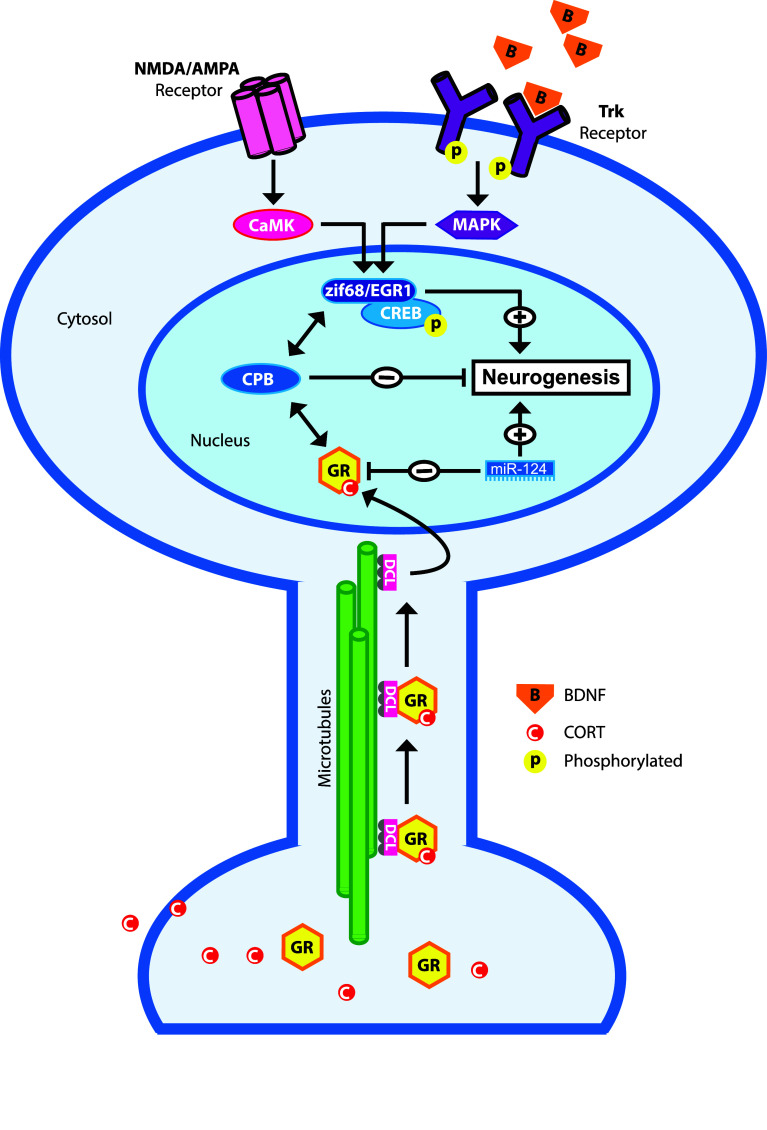
Verification
Claims the paper makes
The claims and statistics of this paper haven’t been checked yet.
Free: it reads the open-access text and checks the first 5 claims that cite a source we can check. Create a free account to check every claim.
Claims other papers make about this one
Each is checked against this paper’s own text: does it say what the citing paper says it does?
In the citing paper
“Animal models have established that prolonged stress can lead to HPA axis hyperreactivity and depressive behaviors along with hippocampal and mPFC abnormalities (68,69).”
From The Impact of Stress and Major Depressive Disorder on Hippocampal and Medial Prefrontal Cortex Morphology (2019) · cites this paper as [69]
In the citing paper
“excessively high as well as blunted glucocorticoid receptor expression has been linked to reduced neurogenesis within the dentate gyrus (69).”
From The Impact of Stress and Major Depressive Disorder on Hippocampal and Medial Prefrontal Cortex Morphology (2019) · cites this paper as [69]
Self-check
Percentages, sums and reported differences re-computed from the paper’s own numbers.
The self-check needs the paper’s full text.
Citations
Cites
Neurogenesis in the adult human hippocampus
Eriksson, P. S., Perfilieva, E., Björk-Eriksson, T., Alborn, A.-M., Nordborg, C., Peterson, D. A., & Gage, F. H. (1998) · Nature Medicine · doi:10.1038/3305 · Cited by 6,369 · cited 1×
“Adult neurogenesis has been shown in the brain of different species of rodents [14, 15], primates [16], and even humans [17, 18].”
BackgroundEpigenetic programming by maternal behavior
Weaver, I. C. G., Cervoni, N., Champagne, F. A., D'Alessio, A. C., Sharma, S., Seckl, J. R., Dymov, S., Szyf, M., & Meaney, M. J. (2004) · Nature Neuroscience · doi:10.1038/nn1276 · Cited by 6,177
Stress and the brain: from adaptation to disease
de Kloet, E. R., Joëls, M., & Holsboer, F. (2005) · Nature Reviews Neuroscience · doi:10.1038/nrn1683 · Cited by 4,621 · cited 4×
“eases [27, 33].”
BackgroundInfluentialReynolds, B. A., & Weiss, S. (1992) · Science · doi:10.1126/science.1553558 · Cited by 4,482 · cited 1×
“able to differentiate into neurons and astrocytes [6].”
BackgroundVale, W., Spiess, J., Rivier, C., & Rivier, J. (1981) · Science · doi:10.1126/science.6267699 · Cited by 3,965
VALE, W., SPIESS, J., RIVIER, C., & RIVIER, J. (1982) · Obstetrical & Gynecological Survey · doi:10.1097/00006254-198205000-00013 · Cited by 3,904 · cited 1×
“Firstly, neurohormones, in particular corticotropin-releasing hormone (CRH), are released in the hypothalamus that subsequently project to the pituitary [52].”
BackgroundRunning increases cell proliferation and neurogenesis in the adult mouse dentate gyrus
van Praag, H., Kempermann, G., & Gage, F. H. (1999) · Nature Neuroscience · doi:10.1038/6368 · Cited by 3,880 · cited 3×
“Similarly, an enriched environment stimulates neuronal differentiation and survival of newborn cells [66, 70, 71], yet it simultaneously increases glucocorticoid levels [72].”
BackgroundAutoradiographic and histological evidence of postnatal hippocampal neurogenesis in rats
Altman, J., & Das, G. D. (1965) · Journal of Comparative Neurology · doi:10.1002/cne.901240303 · Cited by 3,592 · cited 1×
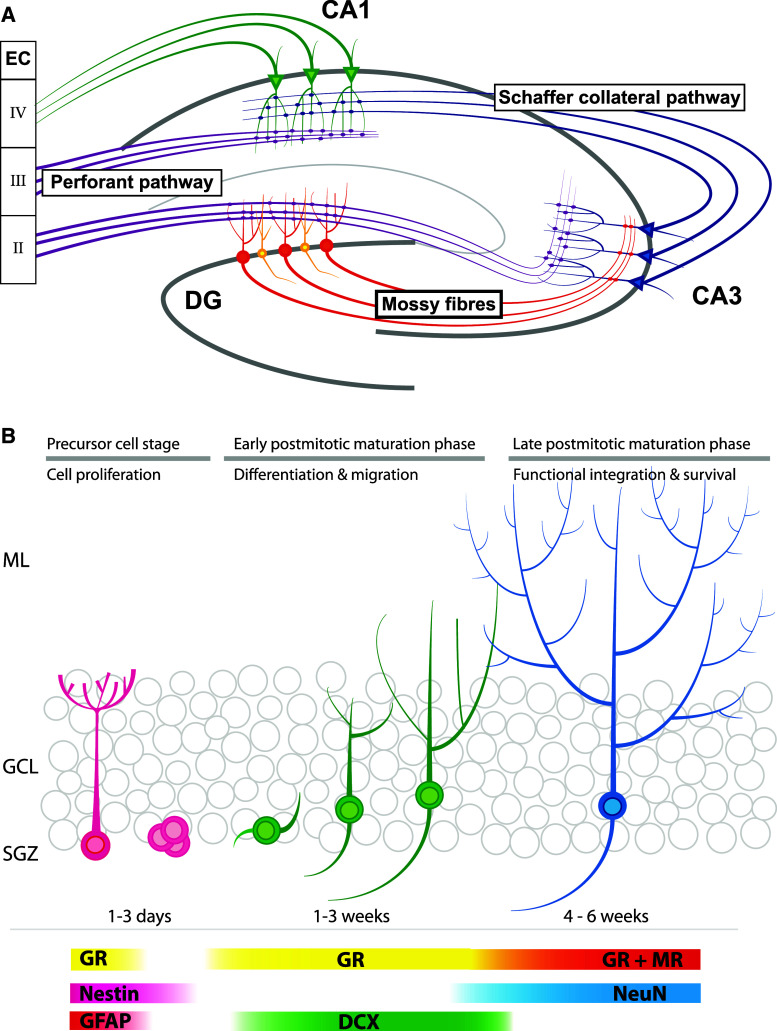
“The GCL is densely packed and consists of a stack of roughly six granule cell bodies [2, 3, 37].”
BackgroundLiu, D., Diorio, J., Tannenbaum, B., Caldji, C., Francis, D., Freedman, A., Sharma, S., Pearson, D., Plotsky, P. M., & Meaney, M. J. (1997) · Science · doi:10.1126/science.277.5332.1659 · Cited by 3,170
Kuhn, H., Dickinson-Anson, H., & Gage, F. (1996) · The Journal of Neuroscience · doi:10.1523/jneurosci.16-06-02027.1996 · Cited by 3,139 · cited 1×
“Aging NA ↓ [92, 146, 147] ↑ [185, 186] ↓ [143] ↓ [145, 187]”
Cited by
Items 101–126 of 126
Granato, V., Congiu, L., Jakovčevski, I., KLEENE, R. B., Schwindenhammer, B., Fernandes, L., Freitag, S., Schachner, M., & Loers, G. (2024) · Biomolecules · doi:10.3390/biom14040468 · Cited by 2
Snippe-Strauss, M., Zamir, A. T., Benhos, A., & Richter‐Levin, G. (2024) · Current Opinion in Behavioral Sciences · doi:10.1016/j.cobeha.2024.101403 · Cited by 3
Benítez‐Burraco, A., Uriagereka, J., & Nataf, S. (2023) · Development Genes and Evolution · doi:10.1007/s00427-023-00709-7 · Cited by 5
“…roles performed by some of our core TFs, particularly, NR3C1 and NR3C2, as glucocorticoid activity is key for regulating basic aspects of brain development and function, including dendritic spine activity (Maggi et al. 2013; Saaltink and Vreugdenhil 2014; Uchoa et al. 2014; Koning et al. 2019).”
BackgroundCirculating Neuronal Exosome Cargo as Biomarkers of Neuroplasticity in Cushing’s Syndrome
Pagliarini, M., Guidi, L., Ciacci, C., Saltarelli, R., Orciani, M., Martino, M., Albertini, M. C., Arnaldi, G., & Ambrogini, P. (2025) · Molecular Neurobiology · doi:10.1007/s12035-025-05069-z · Cited by 1
Hippocampal Neurogenesis via Light-Intensity Running and Its Mechanism
Inoue, K., & Soya, H. (2025) · Advances in neurobiology · doi:10.1007/978-981-95-0066-6_3 · Cited by 1
Morales, J. P., Macchiavello, F., & Rojas‐Thomas, F. (2025) · Neuroscience · doi:10.1016/j.neuroscience.2025.12.034 · Cited by 2
Toma, V. A., Dume, B. R., Tranca, R., Sevastre, B., Barbu–Tudoran, L., Filip, G. A., Roman, I., & Sevastre-Berghian, A. (2022) · Applied Sciences · doi:10.3390/app12178680 · Cited by 2
Stańczykiewicz, B., Bogudzińska, B., Kowalski, K., & Misiak, B. (2023) · Psychoneuroendocrinology · doi:10.1016/j.psyneuen.2023.106924 · Cited by 1
“These imply that proliferation and neuronal differentiation of neuronal progenitor cells require reduced glucocorticoid receptor activation (Saaltink and Vreugdenhil, 2014).”
BackgroundAdetunji, O. A., Adegunle, A. O., Adeoye, B. O., Nwobi, J. C., Fabiyi, O. S., Akano, O. P., Ogunsanya, S. T., Oyewumi, S. O., Nwobi, N. L., Adeoye, A. D., et al. (2024) · Babcock University Medical Journal · doi:10.38029/babcockuniv.med.j..v7i1.423 · Cited by 1
“The glucocorticoid receptors (GRs) on the hippocampus become over-activated with ongoing stress, which prevents nerve cell excitation (8).”
BackgroundPinhasov, A., Michaelevski, I., Koman, I. E., & Nesher, E. (2016) · Current topics in neurotoxicity · doi:10.1007/978-3-319-35135-3_43 · Cited by 1
Stress effects on astrocyte communication and regulation of adult hippocampal neural stem cells
Covarrubias, D. (2015) · eScholarship (California Digital Library)
Cognitive dysfunction in mice lacking proper glucocorticoid receptor dimerization
Looveren, K. V., Boxelaere, M. V., Callaerts‐Vegh, Z., & Libert, C. (2020) · Yearbook of pediatric endocrinology · doi:10.1530/ey.17.8.2
Stress and Its Main Target System: Role of the HPA Axis
Begni, V., Reemst, K., & Kőrösi, A. (2021) · Elsevier eBooks · doi:10.1016/b978-0-12-819641-0.00100-6 · Cited by 1
Aged-Related Physiological Changes: CNS Function
Miot, S., Chancel, R., & Blain, H. (2022) · Lessons from the ICU · doi:10.1007/978-3-030-94133-8_3
Genetics, Epigenetics, and Mental Health at Work
Bakusic, J., Lavreysen, O., & Godderis, L. (2023) · Handbook series in occupational health sciences · doi:10.1007/978-3-030-94023-2_27-1 · Cited by 2
Lawrence, K. (2023) · Carleton University's Institutional Repository (MacOdrum Library, Carleton University) · doi:10.22215/etd/2023-15514
Can Exercise Make Us Smarter, Happier, and Have More Neurons? A Hormetic Perspective
Ardian, R. (2023) · International Journal of Social Service and Research · doi:10.46799/ijssr.v3i11.586
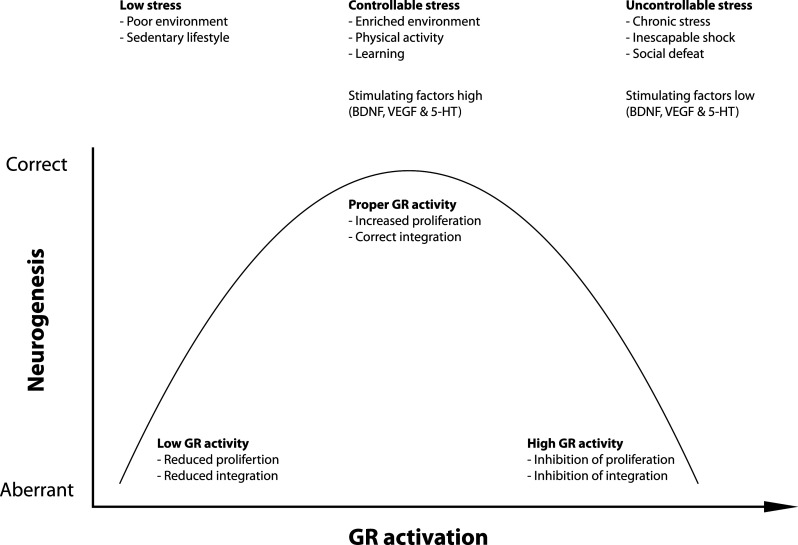
“This situation creates a response pattern shaped like an upside-down U (Saaltink & Vreugdenhil, 2014) .”
BackgroundEnvironmental determinates of psychopathology and brain structure/function
Jeong, H. J., & Kaczkurkin, A. N. (2024) · Elsevier eBooks · doi:10.1016/b978-0-12-820480-1.00164-9
Cui, M. (2024) · Theoretical and Natural Science · doi:10.54254/2753-8818/44/20240459
Cellular factors controlling human L1 retrotransposition
Galantonu, R. N. (2017) · theses.fr (ABES) · doi:10.70675/f24810a8z4f50z444fz84f0z11863b900b95
Mahmoudi, N. E. (2022) · theses.fr (ABES) · doi:10.70675/68e2ad9bzd00bz4539z8b49z2a120516daca
Ku, B. S., Arrant, E. J., Yuan, Q. E., Aberizk, K., Addington, J., Bearden, C. E., Cadenhead, K. S., Cannon, T. D., Carrión, R. E., Keshavan, M. S., et al. (2026) · Schizophrenia Research · doi:10.1016/j.schres.2026.03.024
Naghizadeh, F., Niknazar, S., Dadseresht, A., Seidkhani, E., Alizadeh, R., & Arezo, N. (2026) · Research Square · doi:10.21203/rs.3.rs-11106755/v1
Metadata
- Authors
- Saaltink, D.-J., & Vreugdenhil, E.
- Affiliations
- Leiden University Medical Center (NL)
- Corresponding author
- Vreugdenhil, Erno
- ORCID
- Vreugdenhil, Erno
- Venue
- Cellular and Molecular Life Sciences
- Published
- 2014-02-13
- Volume
- 71
- Issue
- 13
- Pages
- 2499-2515
- ISSN
- 1420-682X (ISSN-L)
- 1420-9071
- PMC
- PMC4055840
- OpenAlex
- W1973722262
- Semantic Scholar
- a180d79b68abbd4eaa66cb8a90996d526f6ab90e
- Cited by
- 127
- References
- 205
- Citations by year
- 2026: 2 · 2025: 9 · 2024: 12 · 2023: 14 · 2022: 9 · 2021: 12 · 2020: 12 · 2019: 10 · 2018: 4 · 2017: 12 · 2016: 16 · 2015: 10 · 2014: 5
- FWCI
- 1.49
- Type
- journal article
- Language
- en
- Open access
- hybrid
- doi.org
- Locations
- Cellular and Molecular Life Sciences (publishedVersion, cc-by)
- PubMed Central (publishedVersion, cc-by)
- PubMed (publishedVersion)
- Data Archiving and Networked Services (DANS) (submittedVersion)
- Leiden Repository (Leiden University) (submittedVersion)
- Funders
- Ministerie van Economische Zaken
- Topics
- Life Sciences › Neuroscience › Developmental Neuroscience › Neurogenesis and neuroplasticity mechanisms
- Life Sciences › Neuroscience › Behavioral Neuroscience › Stress Responses and Cortisol
- Life Sciences › Neuroscience › Cellular and Molecular Neuroscience › Neuroscience and Neuropharmacology Research
- Keywords
- adult neurogenesis, stress, glucocorticoid receptor, excitation-inhibition balance, hippocampus, neuronal migration, stress response, mental illness
- MeSH terms
- Mental Disorders, Cell Differentiation, Glucocorticoids, Hippocampus, Neurons, Stress, Physiological, Signal Transduction, Neurogenesis
About these checks
Registry, retraction, Cites and statistics results are computed, not judged, with one exception: a printed reference that no index lists is read once by a model before it counts as a citation error. Claims are extracted by a model and kept only when their quote appears verbatim in the text; each cited source is then checked, with a model’s help, for whether it says what the claim relies on. Those verdicts can be wrong — read the claim’s quote and the cited source before relying on one.
Statistics and arithmetic are recomputed, not judged.
Confidence bands are shown only for fields calibrated on our annotated test set. None is calibrated yet, so no band is shown.
What counts as a claim ›How we measure confidence ›How we check this ›
Are you an author, or do you see a problem with this page? Request a review
Data sources
Bibliographic data: Semantic Scholar, OpenAlex, Crossref.
Contains information from the Semantic Scholar Academic Graph Datasets, made available under the ODC Attribution License (ODC-BY 1.0).
Semantic Scholar’s data is described in: Kinney, R., et al. (2023). The Semantic Scholar Open Data Platform. arXiv:2301.10140.
