

Stress, glucocorticoid receptors, and adult neurogenesis: a balance between excitation and inhibition?
Open accessThe DOI matches its Crossref record; 206 of the 206 references it cites were found in a registry or an index.
Abstract
Adult neurogenesis, the birth of new neurons in the mature brain, has attracted considerable attention in the last decade. One of the earliest identified and most profound factors that affect adult neurogenesis both positively and negatively is stress. Here, we review the complex interplay between stress and adult neurogenesis. In particular, we review the role of the glucocorticoid receptor, the main mediator of the stress response in the proliferation, differentiation, migration, and functional integration of newborn neurons in the hippocampus. We review a multitude of mechanisms regulating glucocorticoid receptor activity in relationship to adult neurogenesis. We postulate a novel concept in which the level of glucocorticoid receptor expression directly regulates the excitation-inhibition balance, which is key for proper neurogenesis. We furthermore argue that an excitation-inhibition dis-balance may underlie aberrant functional integration of newborn neurons that is associated with psychiatric and paroxysmal brain disorders.
Overview
The claims and statistics of this paper haven’t been checked yet.
Free: it reads the open-access text and checks the first 5 claims that cite a source we can check. Create a free account to check every claim.
Integrity signals
Registry
Cites
Statistics
Figures
Verification
Claims the paper makes
The claims and statistics of this paper haven’t been checked yet.
Free: it reads the open-access text and checks the first 5 claims that cite a source we can check. Create a free account to check every claim.
Claims other papers make about this one
Each is checked against this paper’s own text: does it say what the citing paper says it does?
In the citing paper
“Animal models have established that prolonged stress can lead to HPA axis hyperreactivity and depressive behaviors along with hippocampal and mPFC abnormalities (68,69).”
From The Impact of Stress and Major Depressive Disorder on Hippocampal and Medial Prefrontal Cortex Morphology (2019) · cites this paper as [69]
In the citing paper
“excessively high as well as blunted glucocorticoid receptor expression has been linked to reduced neurogenesis within the dentate gyrus (69).”
From The Impact of Stress and Major Depressive Disorder on Hippocampal and Medial Prefrontal Cortex Morphology (2019) · cites this paper as [69]
Self-check
Percentages, sums and reported differences re-computed from the paper’s own numbers.
The self-check needs the paper’s full text.
Citations
Cites
Neurogenesis in the adult human hippocampus
Eriksson, P. S., Perfilieva, E., Björk-Eriksson, T., Alborn, A.-M., Nordborg, C., Peterson, D. A., & Gage, F. H. (1998) · Nature Medicine · doi:10.1038/3305 · Cited by 6,369 · cited 1×
“Adult neurogenesis has been shown in the brain of different species of rodents [14, 15], primates [16], and even humans [17, 18].”
BackgroundEpigenetic programming by maternal behavior
Weaver, I. C. G., Cervoni, N., Champagne, F. A., D'Alessio, A. C., Sharma, S., Seckl, J. R., Dymov, S., Szyf, M., & Meaney, M. J. (2004) · Nature Neuroscience · doi:10.1038/nn1276 · Cited by 6,177
Stress and the brain: from adaptation to disease
de Kloet, E. R., Joëls, M., & Holsboer, F. (2005) · Nature Reviews Neuroscience · doi:10.1038/nrn1683 · Cited by 4,621 · cited 4×
“eases [27, 33].”
BackgroundInfluentialReynolds, B. A., & Weiss, S. (1992) · Science · doi:10.1126/science.1553558 · Cited by 4,482 · cited 1×
“able to differentiate into neurons and astrocytes [6].”
BackgroundVale, W., Spiess, J., Rivier, C., & Rivier, J. (1981) · Science · doi:10.1126/science.6267699 · Cited by 3,965
VALE, W., SPIESS, J., RIVIER, C., & RIVIER, J. (1982) · Obstetrical & Gynecological Survey · doi:10.1097/00006254-198205000-00013 · Cited by 3,904 · cited 1×
“Firstly, neurohormones, in particular corticotropin-releasing hormone (CRH), are released in the hypothalamus that subsequently project to the pituitary [52].”
BackgroundRunning increases cell proliferation and neurogenesis in the adult mouse dentate gyrus
van Praag, H., Kempermann, G., & Gage, F. H. (1999) · Nature Neuroscience · doi:10.1038/6368 · Cited by 3,880 · cited 3×
“Similarly, an enriched environment stimulates neuronal differentiation and survival of newborn cells [66, 70, 71], yet it simultaneously increases glucocorticoid levels [72].”
BackgroundAutoradiographic and histological evidence of postnatal hippocampal neurogenesis in rats
Altman, J., & Das, G. D. (1965) · Journal of Comparative Neurology · doi:10.1002/cne.901240303 · Cited by 3,592 · cited 1×
“The GCL is densely packed and consists of a stack of roughly six granule cell bodies [2, 3, 37].”
BackgroundLiu, D., Diorio, J., Tannenbaum, B., Caldji, C., Francis, D., Freedman, A., Sharma, S., Pearson, D., Plotsky, P. M., & Meaney, M. J. (1997) · Science · doi:10.1126/science.277.5332.1659 · Cited by 3,170
Kuhn, H., Dickinson-Anson, H., & Gage, F. (1996) · The Journal of Neuroscience · doi:10.1523/jneurosci.16-06-02027.1996 · Cited by 3,139 · cited 1×
“Aging NA ↓ [92, 146, 147] ↑ [185, 186] ↓ [143] ↓ [145, 187]”
Degeneration and Regeneration of the Nervous System.
(1929) · JAMA: The Journal of the American Medical Association · doi:10.1001/jama.1929.02710220063037 · Cited by 2,908
Functional neurogenesis in the adult hippocampus
van Praag, H., Schinder, A. F., Christie, B. R., Toni, N., Palmer, T. D., & Gage, F. H. (2002) · Nature · doi:10.1038/4151030a · Cited by 2,853 · cited 1×
“and promotes neuronal differentiation [45, 66, 67].”
Brain corticosteroid receptor balance in health and disease
de Kloet, E. R., Vreugdenhil, E., Oitzl, M. S., & Joëls, M. (1998) · Endocrine Reviews · doi:10.1210/edrv.19.3.0331 · Cited by 2,614 · cited 2×
“The MR and the GR are the main intracellular mediators of the stress response (for review, see [31–33]).”
BackgroundSelf-citationBrain corticosteroid receptor balance in health and disease
de Kloet, E. R. (1998) · Endocrine Reviews · doi:10.1210/er.19.3.269 · Cited by 2,614
Two receptor systems for corticosterone in rat brain: Microdistribution and differential occupation
REUL, J. M. H. M., & KLOET, E. R. D. (1985) · Endocrinology · doi:10.1210/endo-117-6-2505 · Cited by 2,580
The Corticosteroid Receptor Hypothesis of Depression
Holsboer, F. (2000) · Neuropsychopharmacology · doi:10.1016/s0893-133x(00)00159-7 · Cited by 2,181 · cited 1×
“Therefore, the question emerges: are these receptors suitable therapeutic targets for restoring excitation-inhibition balances in not only psychiatric diseases [53] but also in paroxysmal disorders like epilepsy [169]? with availability of numerous potent GR and MR antagonists and agonists, which have been developed b…”
BackgroundNew neurons and new memories: how does adult hippocampal neurogenesis affect learning and memory?
Deng, W., Aimone, J. B., & Gage, F. H. (2010) · Nature reviews. Neuroscience · doi:10.1038/nrn2822 · Cited by 2,120 · cited 1×
“Contextual fear conditioning, a task that is often used to monitor functional consequences of altered adult neurogenesis [110, 111], showed impairment of contextual but not of cued freezing behavior in mice with reduced GR expression in newborn, 5-week-old granule cells [108].”
BackgroundArriza, J. L., Weinberger, C., Cerelli, G., Glaser, T. M., Handelin, B. L., Housman, D. E., & Evans, R. M. (1987) · Science · doi:10.1126/science.3037703 · Cited by 1,946 · cited 1×
“At the neuronal level, CORT controls the stress response through binding to two types of steroid receptors in the cytosol: the mineralocorticoid receptor (MR or NR3C2; [54]) and the glucocorticoid receptor (GR or NR3C1; [55–57]).”
BackgroundParent, J. M., Yu, T. W., Leibowitz, R. T., Geschwind, D. H., Sloviter, R. S., & Lowenstein, D. H. (1997) · The Journal of Neuroscience · doi:10.1523/jneurosci.17-10-03727.1997 · Cited by 1,871 · cited 1×
“Neuronal diseases, characterized by extensive glutamate release, such as epilepsy and stroke, are associated with massive neurogenesis [112, 113], dendritic abnormalities, and ectopic positioning of newborn cells [114].”
BackgroundPrimary structure and expression of a functional human glucocorticoid receptor cDNA
Hollenberg, S. M., Weinberger, C., Ong, E. S., Cerelli, G., Oro, A., Lebo, R., Brad Thompson, E., Rosenfeld, M. G., & Evans, R. M. (1985) · Nature · doi:10.1038/318635a0 · Cited by 1,869 · cited 1×
“At the neuronal level, CORT controls the stress response through binding to two types of steroid receptors in the cytosol: the mineralocorticoid receptor (MR or NR3C2; [54]) and the glucocorticoid receptor (GR or NR3C1; [55–57]).”
BackgroundADULT NEUROGENESIS IN THE MAMMALIAN CENTRAL NERVOUS SYSTEM
Ming, G.-L., & Song, H. (2005) · Annual Review of Neuroscience · doi:10.1146/annurev.neuro.28.051804.101459 · Cited by 1,839 · cited 3×
“cades [13, 21], cognition and memory formation [22–24],”
BackgroundJoëls, M., & Baram, T. Z. (2009) · Nature Reviews Neuroscience · doi:10.1038/nrn2632 · Cited by 1,521 · cited 3×
“Despite the abundant expression of the GR within the DG, high concentrations of corticosterone do not suppress LTP in the long run but, in contrast to the CA1 and CA3, enhance LTP [91].”
BackgroundInfluentialTransient expression of doublecortin during adult neurogenesis
Brown, J. P., Couillard‐Després, S., Cooper‐Kuhn, C. M., Winkler, J., Aigner, L., & Kuhn, H. G. (2003) · Journal of Comparative Neurology · doi:10.1002/cne.10874 · Cited by 1,496 · cited 1×
“1 3 mature neurons the specific adult neuronal marker of nuclei NeuN is mostly used [10–12].”
MethodGould, E., McEwen, B. S., Tanapat, P., Galea, L. A. M., & Fuchs, E. (1997) · The Journal of Neuroscience · doi:10.1523/jneurosci.17-07-02492.1997 · Cited by 1,496 · cited 3×
“Social interaction NA NA Social housing ↑ [188] Isolation ↓ [69] Defeat ↑ [189] Social housing ↑ [188] Isolation ↓ [69, 190] Defeat ↓ [61–63, 191] Defeat ↓ [192] Defeat ↓ [192] Social avoidance ↑ [63] Communal nesting ↑ [193]”
BackgroundNeurogenesis in the Adult Rat: Electron Microscopic Analysis of Light Radioautographs
Kaplan, M. S., & Hinds, J. W. (1977) · Science · doi:10.1126/science.887941 · Cited by 1,475
Adult hippocampal neurogenesis buffers stress responses and depressive behaviour
Snyder, J. S., Soumier, A., Brewer, M., Pickel, J., & Cameron, H. A. (2011) · Nature · doi:10.1038/nature10287 · Cited by 1,473 · cited 1×
“Reversely, hippocampal neurogenesis may also facilitate normalization of glucocorticoid levels after stress [76], suggesting a bi-directional relationship between adult hippocampal neurogenesis and regulation of the HPA axis.”
BackgroundMilestones of neuronal development in the adult hippocampus
Kempermann, G., Jessberger, S., Steiner, B., & Kronenberg, G. (2004) · Trends in Neurosciences · doi:10.1016/j.tins.2004.05.013 · Cited by 1,423 · cited 1×
“During the last decades, it also became clear that developing neurons express distinct markers during their maturation process [8].”
BackgroundGould, E., Tanapat, P., McEwen, B. S., Flügge, G., & Fuchs, E. (1998) · Proceedings of the National Academy of Sciences · doi:10.1073/pnas.95.6.3168 · Cited by 1,395 · cited 2×
“Social interaction NA NA Social housing ↑ [188] Isolation ↓ [69] Defeat ↑ [189] Social housing ↑ [188] Isolation ↓ [69, 190] Defeat ↓ [61–63, 191] Defeat ↓ [192] Defeat ↓ [192] Social avoidance ↑ [63] Communal nesting ↑ [193]”
GABA regulates synaptic integration of newly generated neurons in the adult brain
Ge, S., Goh, E. L. K., Sailor, K. A., Kitabatake, Y., Ming, G.-L., & Song, H. (2006) · Nature · doi:10.1038/nature04404 · Cited by 1,264 · cited 5×
“As outlined before, in early stages this is excitatory GABA [41] and later this is glutamate that act on AMPA receptors and NMDA receptors [158, 159].”
BackgroundInfluentialDistinct morphological stages of dentate granule neuron maturation in the adult mouse hippocampus
Zhao, C., Teng, E. M., Summers, R. G., Ming, G.-L., & Gage, F. H. (2006) · The Journal of Neuroscience · doi:10.1523/jneurosci.3648-05.2006 · Cited by 1,257 · cited 1×
“The third stage is called the late postmitotic maturation stage, wherein surviving cells integrate into the local DG network and further mature into genuine granule cells [40, 44–46].”
BackgroundAdrenal steroid receptors and actions in the nervous system
McEwen, B. S., De Kloet, E. R., & Rostene, W. (1986) · Physiological Reviews · doi:10.1152/physrev.1986.66.4.1121 · Cited by 1,232
Differentiation of newly born neurons and glia in the dentate gyrus of the adult rat
Cameron, H. A., Woolley, C. S., McEwen, B. S., & Gould, E. (1993) · Neuroscience · doi:10.1016/0306-4522(93)90335-d · Cited by 1,215
Lemaire, V., Koehl, M., Le Moal, M., & Abrous, D. N. (2000) · Proceedings of the National Academy of Sciences · doi:10.1073/pnas.97.20.11032 · Cited by 1,044 · cited 1×
“early life Maternal care ↑ [180] NA Prenatal stress ↑ [181–183] Maternal care ↑ [180] Prenatal stress ↓ [181, 183] Maternal care = [184] Maternal deprivation ↓ [141] Maternal deprivation ↓ [141] Prenatal stress ↓ [182]& = [181] Maternal care ↑ [184] Maternal deprivation = [141]”
BackgroundmiR-124 regulates adult neurogenesis in the subventricular zone stem cell niche
Cheng, L.-C., Pastrana, E., Tavazoie, M., & Doetsch, F. (2009) · Nature Neuroscience · doi:10.1038/nn.2294 · Cited by 1,001 · cited 3×
“miRNA miR-124 ↓ [103, 173] ↓ miR-124 ↓ [103, 173] miR-124 ↑ [105] miR-124 ↑ Nd”
BackgroundFrancis, F., Koulakoff, A., Boucher, D., Chafey, P., Schaar, B., Vinet, M.-C., Friocourt, G., McDonnell, N., Reiner, O., Kahn, A., et al. (1999) · Neuron · doi:10.1016/s0896-6273(00)80777-1 · Cited by 999 · cited 1×
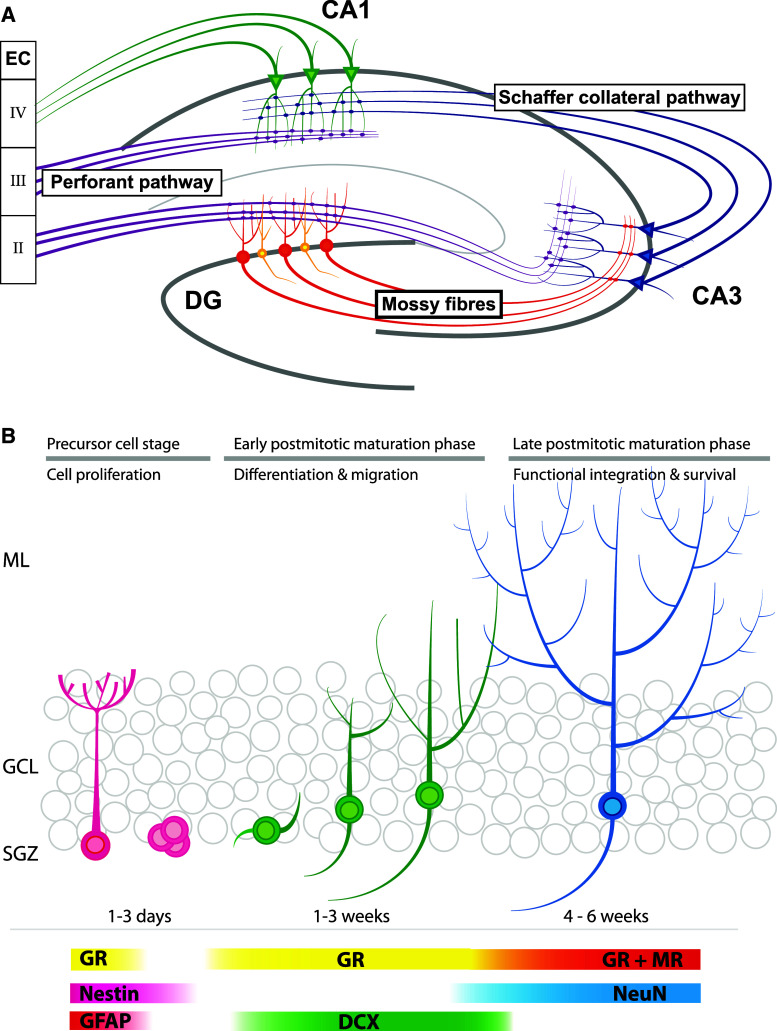
“Doublecortin, a gene that is causally involved in migration of neuronal precursor cells and neuroblasts [42], is a major marker in this process (see Fig.”
BackgroundAdult neurogenesis is regulated by adrenal steroids in the dentate gyrus
Cameron, H. A., & Gould, E. (1994) · Neuroscience · doi:10.1016/0306-4522(94)90224-0 · Cited by 998 · cited 2×
“CORT NA NA CORT injection ↑ [64, 178, 179] Adrenal ectomy ↓ [14, 64] CORT injection ↓ [178] Adrenal ectomy ↑ [14] CORT injection ↓ [179] CORT injection ↓ [64] Adrenal ectomy ↑ [64]”
BackgroundMicroRNA-mediated conversion of human fibroblasts to neurons
Yoo, A. S., Sun, A. X., Li, L., Shcheglovitov, A., Portmann, T., Li, Y., Lee-Messer, C., Dolmetsch, R. E., Tsien, R. W., & Crabtree, G. R. (2011) · Nature · doi:10.1038/nature10323 · Cited by 989 · cited 1×
“into a neuronal phenotype [104, 105].”
Kempermann, G., Gast, D., Kronenberg, G., Yamaguchi, M., & Gage, F. H. (2003) · Development · doi:10.1242/dev.00203 · Cited by 983 · cited 2×
“The GCL is densely packed and consists of a stack of roughly six granule cell bodies [2, 3, 37].”
BackgroundDoublecortin expression levels in adult brain reflect neurogenesis
Couillard‐Despres, S., Winner, B., Schaubeck, S., Aigner, R., Vroemen, M., Weidner, N., Bogdahn, U., Winkler, J., Kuhn, H., & Aigner, L. (2005) · European Journal of Neuroscience · doi:10.1111/j.1460-9568.2004.03813.x · Cited by 975 · cited 1×
“1 3 mature neurons the specific adult neuronal marker of nuclei NeuN is mostly used [10–12].”
MethodA Critical Period for Enhanced Synaptic Plasticity in Newly Generated Neurons of the Adult Brain
Ge, S., Yang, C.-H., Hsu, K.-S., Ming, G.-L., & Song, H. (2007) · Neuron · doi:10.1016/j.neuron.2007.05.002 · Cited by 927 · cited 1×
“As outlined before, in early stages this is excitatory GABA [41] and later this is glutamate that act on AMPA receptors and NMDA receptors [158, 159].”
BackgroundA Syndrome Produced by Diverse Nocuous Agents
Selye, H. (1998) · The Journal of Neuropsychiatry and Clinical Neurosciences · doi:10.1176/jnp.10.2.230a · Cited by 924 · cited 1×
“whatever the nature of the stressor, the body reacts in a stereotypical way [51].”
BackgroundMolecular Determinants of Glucocorticoid Receptor Function and Tissue Sensitivity to Glucocorticoids
BAMBERGER, C. M., SCHULTE, H. M., & CHROUSOS, G. P. (1996) · Endocrine Reviews · doi:10.1210/edrv-17-3-245 · Cited by 889 · cited 1×
“Upon binding CORT, GR and MR translocate to the nucleus where they affect expression of specific sets of genes in two ways: (1) by binding to specific so-called glucocorticoid-response element DNA motifs located in promoter regions of target genes; a process called transactivation and (2) by protein–protein interactio…”
BackgroundThe dentate gyrus: fundamental neuroanatomical organization (dentate gyrus for dummies)
Amaral, D. G., Scharfman, H. E., & Lavenex, P. (2007) · Progress in brain research · doi:10.1016/s0079-6123(07)63001-5 · Cited by 888 · cited 1×
“in the hilus [2, 3, 38].”
Magariños, A. M., McEwen, B. S., Flügge, G., & Fuchs, E. (1996) · The Journal of Neuroscience · doi:10.1523/jneurosci.16-10-03534.1996 · Cited by 864
Hippocampal neurogenesis in adult Old World primates
Gould, E., Reeves, A. J., Fallah, M., Tanapat, P., Gross, C. G., & Fuchs, E. (1999) · Proceedings of the National Academy of Sciences · doi:10.1073/pnas.96.9.5263 · Cited by 815 · cited 1×
“Adult neurogenesis has been shown in the brain of different species of rodents [14, 15], primates [16], and even humans [17, 18].”
BackgroundNeurogenesis in the adult brain: death of a dogma
Gross, C. G. (2000) · Nature Reviews Neuroscience · doi:10.1038/35036235 · Cited by 814 · cited 1×
“The discovery of environmental factors regulating adult neurogenesis in a bi-directional manner has been of key importance for the acceptance of the concept [19].”
BackgroundStress and hippocampal neurogenesis
Gould, E., & Tanapat, P. (1999) · Biological Psychiatry · doi:10.1016/s0006-3223(99)00247-4 · Cited by 805 · cited 1×
“both GR levels and adult neurogenesis [61, 148–150].”
BackgroundMao, Y., Ge, X., Frank, C. L., Madison, J. M., Koehler, A. N., Doud, M. K., Tassa, C., Berry, E. M., Soda, T., Singh, K. K., et al. (2009) · Cell · doi:10.1016/j.cell.2008.12.044 · Cited by 774 · cited 1×
“DISC1 knockdown in NPCs exhibit accelerated neuronal differentiation, functional integration at ectopic locations and impairment in hippocampus-dependent memory consolidation [118, 119].”
BackgroundNeurons born in the adult dentate gyrus form functional synapses with target cells
Toni, N., Laplagne, D. A., Zhao, C., Lombardi, G., Ribak, C. E., Gage, F. H., & Schinder, A. F. (2008) · Nature Neuroscience · doi:10.1038/nn.2156 · Cited by 741 · cited 1×
“Although boutons actively connect to synapses already 17 days after cell division, the connections are fully mature 2 months post-cell division [47, 50].”
BackgroundCameron, H., McEwen, B., & Gould, E. (1995) · The Journal of Neuroscience · doi:10.1523/jneurosci.15-06-04687.1995 · Cited by 741 · cited 1×
“Activation of NMDA receptors inhibits and NMDAR blockade promotes cell proliferation in the dentate gyrus [95–97].”
BackgroundReciprocal actions of REST and a microRNA promote neuronal identity
Conaco, C., Otto, S., Han, J.-J., & Mandel, G. (2006) · Proceedings of the National Academy of Sciences · doi:10.1073/pnas.0511041103 · Cited by 736 · cited 2×
“teins such as ReST [106] and Sox9 [105] that are known”
BackgroundRestoring production of hippocampal neurons in old age
Cameron, H. A., & McKay, R. D. G. (1999) · Nature Neuroscience · doi:10.1038/13197 · Cited by 710 · cited 1×
“Aging NA ↓ [92, 146, 147] ↑ [185, 186] ↓ [143] ↓ [145, 187]”
Mirescu, C., & Gould, E. (2006) · Hippocampus · doi:10.1002/hipo.20155 · Cited by 701
Neuronal differentiation in the adult hippocampus recapitulates embryonic development
Espósito, M. S., Piatti, V. C., Laplagne, D. A., Morgenstern, N. A., Ferrari, C. C., Pitossi, F. J., & Schinder, A. F. (2005) · The Journal of Neuroscience · doi:10.1523/jneurosci.3114-05.2005 · Cited by 679 · cited 1×
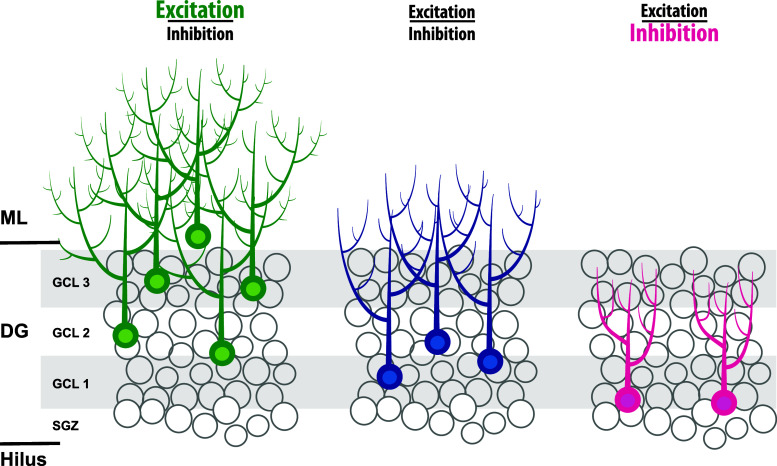
“The majority of newborn cells end up in the inner third layer of the DG, while 10–20 % reach the mid third layer and only a few cells ends up in the outer third layer [37, 40].”
BackgroundChiba, S., Numakawa, T., Ninomiya, M., Richards, M. C., Wakabayashi, C., & Kunugi, H. (2012) · Progress in Neuro-Psychopharmacology and Biological Psychiatry · doi:10.1016/j.pnpbp.2012.05.018 · Cited by 673 · cited 5×
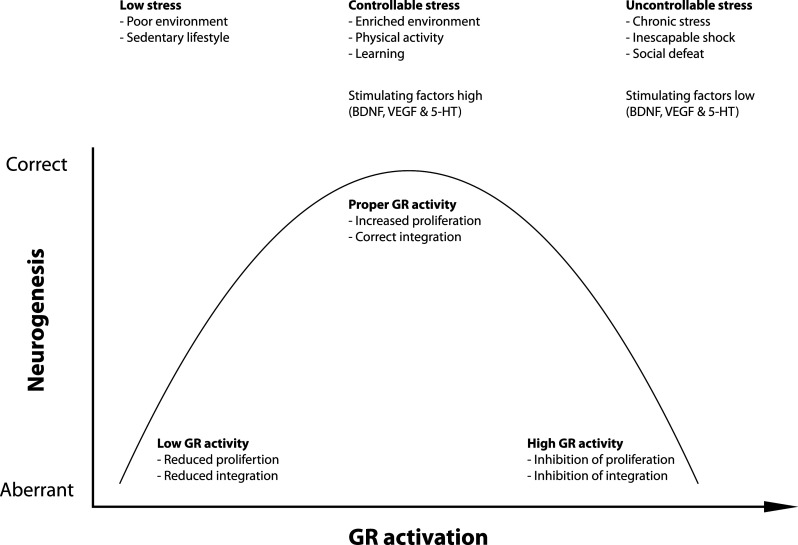
“Neurogenesis-controlling molecular factors, like BDNF, veGF, and 5-HT signaling, are regulated by low–high GR activity in opposite directions 1 3 Besides serotonergic signaling, controllable versus noncontrollable stress and acute versus chronic stress may also affect other transmitter systems.”
BackgroundInfluentialEpigenetic mechanisms of perinatal programming of hypothalamic-pituitary-adrenal function and health
Meaney, M. J., Szyf, M., & Seckl, J. R. (2007) · Trends in Molecular Medicine · doi:10.1016/j.molmed.2007.05.003 · Cited by 668 · cited 2×
“Remarkably, in the case of status epilepticus-induced changes in neurogenesis, newly Molecular factors DNA Methylation ↓ [137, 138, 140, 170] GR-KO ↓ [171] NA NA NA GR-KO ↓ [172] miRNA miR-124 ↓ [103, 173] ↓ miR-124 ↓ [103, 173] miR-124 ↑ [105] miR-124 ↑ Nd GR Co-regulators NA NA DCL ↑ [136] Ube3a ↑ [134] SMO ↑ [174]…”
Aimone, J. B., Deng, W., & Gage, F. H. (2011) · Neuron · doi:10.1016/j.neuron.2011.05.010 · Cited by 663 · cited 2×
“mally [22–24, 41].”
Pham, K., Nacher, J., Hof, P. R., & McEwen, B. S. (2003) · European Journal of Neuroscience · doi:10.1046/j.1460-9568.2003.02513.x · Cited by 657 · cited 5×
“Chronic stress is another factor negatively affecting both GR levels and adult neurogenesis [61, 148–150].”
InfluentialRao, M. S., & Shetty, A. K. (2004) · European Journal of Neuroscience · doi:10.1111/j.0953-816x.2003.03123.x · Cited by 656 · cited 1×
“1 3 mature neurons the specific adult neuronal marker of nuclei NeuN is mostly used [10–12].”
MethodAdrenal hormones suppress cell division in the adult rat dentate gyrus
Gould, E., Cameron, H., Daniels, D., Woolley, C., & McEwen, B. (1992) · The Journal of Neuroscience · doi:10.1523/jneurosci.12-09-03642.1992 · Cited by 653 · cited 4×
“In particular, the finding that stress and adrenal steroid hormones down-regulate adult neurogenesis [14, 20] contributed significantly.”
BackgroundInfluentialTrkB Regulates Hippocampal Neurogenesis and Governs Sensitivity to Antidepressive Treatment
Li, Y., Luikart, B. W., Birnbaum, S., Chen, J., Kwon, C.-H., Kernie, S. G., Bassel-Duby, R., & Parada, L. F. (2008) · Neuron · doi:10.1016/j.neuron.2008.06.023 · Cited by 634
Early life experience alters response of adult neurogenesis to stress
Mirescu, C., Peters, J. D., & Gould, E. (2004) · Nature Neuroscience · doi:10.1038/nn1290 · Cited by 625
Autoradiographic investigation of cell proliferation in the brains of rats and cats
Altman, J. (1963) · The Anatomical Record · doi:10.1002/ar.1091450409 · Cited by 619 · cited 1×
“The GCL is densely packed and consists of a stack of roughly six granule cell bodies [2, 3, 37].”
BackgroundNMDA-receptor-mediated, cell-specific integration of new neurons in adult dentate gyrus
Tashiro, A., Sandler, V. M., Toni, N., Zhao, C., & Gage, F. H. (2006) · Nature · doi:10.1038/nature05028 · Cited by 618
Disrupted-In-Schizophrenia 1 Regulates Integration of Newly Generated Neurons in the Adult Brain
Duan, X., Chang, J. H., Ge, S., Faulkner, R. L., Kim, J. Y., Kitabatake, Y., Liu, X.-B., Yang, C.-H., Jordan, J. D., Ma, D. K., et al. (2007) · Cell · doi:10.1016/j.cell.2007.07.010 · Cited by 611 · cited 1×
“DISC1 knockdown in NPCs exhibit accelerated neuronal differentiation, functional integration at ectopic locations and impairment in hippocampus-dependent memory consolidation [118, 119].”
BackgroundSynapse formation on neurons born in the adult hippocampus
Toni, N., Teng, E. M., Bushong, E. A., Aimone, J. B., Zhao, C., Consiglio, A., van Praag, H., Martone, M. E., Ellisman, M. H., & Gage, F. H. (2007) · Nature Neuroscience · doi:10.1038/nn1908 · Cited by 579 · cited 1×
“Spines from newborns’ GCs compete at entorhinal boutons with old synapses from mature GCs and—possibly due to local glutamate spillover at the synapse—will replace the old synaptic connection [47–49].”
BackgroundBanasr, M., Hery, M., Printemps, R., & Daszuta, A. (2004) · Neuropsychopharmacology · doi:10.1038/sj.npp.1300320 · Cited by 539 · cited 1×
“The precise neurochemical mechanisms that are differentially activated by controllable and uncontrollable stress are presently unknown but may involve desensitized serotonergic signaling via the dorsal raphe nucleus [78] as serotonin stimulates adult neurogenesis through 5HT1A receptors [79].”
BackgroundIs there a link between adult neurogenesis and learning?
Leuner, B., Gould, E., & Shors, T. J. (2006) · Hippocampus · doi:10.1002/hipo.20153 · Cited by 530
Depression and Hippocampal Neurogenesis: A Road to Remission?
Eisch, A. J., & Petrik, D. (2012) · Science · doi:10.1126/science.1222941 · Cited by 516 · cited 1×
“evolution [25], olfaction [26] psychiatric diseases [27],”
Pattern separation: a common function for new neurons in hippocampus and olfactory bulb
Sahay, A., Wilson, D. A., & Hen, R. (2011) · Neuron · doi:10.1016/j.neuron.2011.05.012 · Cited by 514 · cited 2×
“cades [13, 21], cognition and memory formation [22–24],”
Neurogenesis and generalization: a new approach to stratify and treat anxiety disorders
Kheirbek, M. A., Klemenhagen, K. C., Sahay, A., & Hen, R. (2012) · Nature Neuroscience · doi:10.1038/nn.3262 · Cited by 508
Post-Natal Origin of Microneurones in the Rat Brain
ALTMAN, J., & DAS, G. D. (1965) · Nature · doi:10.1038/207953a0 · Cited by 481 · cited 1×
“rogenesis in the brain of rodents [2–4].”
Prenatal stress diminishes neurogenesis in the dentate gyrus of juvenile rhesus monkeys
Coe, C. L., Kramer, M., Czéh, B., Gould, E., Reeves, A. J., Kirschbaum, C., & Fuchs, E. (2003) · Biological Psychiatry · doi:10.1016/s0006-3223(03)00698-x · Cited by 477
Social isolation delays the positive effects of running on adult neurogenesis
Stranahan, A. M., Khalil, D., & Gould, E. (2006) · Nature Neuroscience · doi:10.1038/nn1668 · Cited by 467
Lu, N. Z., & Cidlowski, J. A. (2005) · Molecular Cell · doi:10.1016/j.molcel.2005.03.025 · Cited by 455 · cited 1×
“each of these GR isoforms is expressed in a cell-specific way and control the expression of a unique set of genes [127, 128].”
BackgroundAntidepressants increase human hippocampal neurogenesis by activating the glucocorticoid receptor
Anacker, C., Zunszain, P. A., Cattaneo, A., Carvalho, L. A., Garabedian, M. J., Thuret, S., Price, J., & Pariante, C. M. (2011) · Molecular Psychiatry · doi:10.1038/mp.2011.26 · Cited by 435 · cited 1×
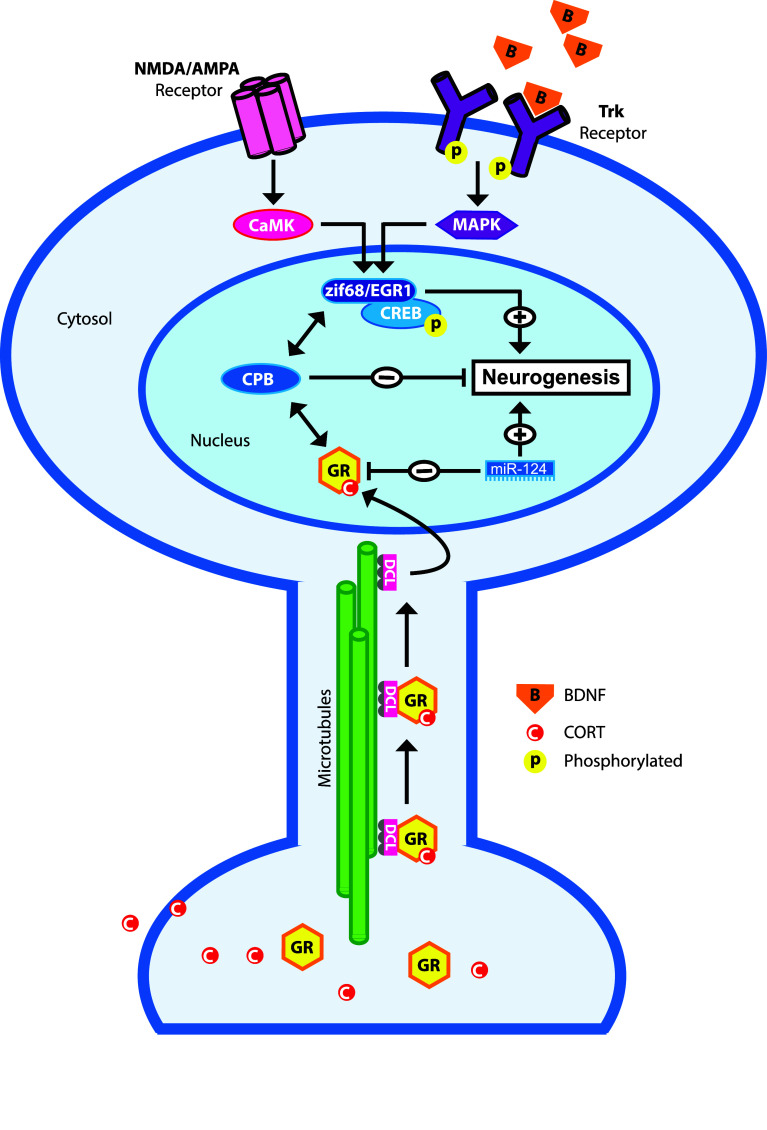
“However, recent in vitro studies indicate involvement of a GR-mediated transactivation effect in the pro-neurogenic action of antidepressants [157], which suggest that the GR function in neuronal progenitor cells Fig.”
BackgroundStress, stress hormones, and adult neurogenesis
Schoenfeld, T. J., & Gould, E. (2012) · Experimental Neurology · doi:10.1016/j.expneurol.2011.01.008 · Cited by 428
Webster, M. J., Knable, M. B., O'Grady, J., Orthmann, J., & Weickert, C. S. (2002) · Molecular Psychiatry · doi:10.1038/sj.mp.4001139 · Cited by 420 · cited 1×
“As the GR has been implicated in epilepsy and schizophrenia [120–126], aberrant GR signaling might be part of the mechanisms underlying aberrant integration of newborn cells in these diseases.”
BackgroundNeurodegenerative disease and adult neurogenesis
Winner, B., Kohl, Z., & Gage, F. H. (2011) · European Journal of Neuroscience · doi:10.1111/j.1460-9568.2011.07613.x · Cited by 405
Age-related production of new granule cells in the adult dentate gyrus
Seki, T., & Arai, Y. (1995) · NeuroReport · doi:10.1097/00001756-199512150-00010 · Cited by 385 · cited 1×
“Aging NA ↓ [92, 146, 147] ↑ [185, 186] ↓ [143] ↓ [145, 187]”
Ridder, S., Chourbaji, S., Hellweg, R., Urani, A., Zacher, C., Schmid, W., Zink, M., Hörtnagl, H., Flor, H., Henn, F. A., et al. (2005) · The Journal of Neuroscience · doi:10.1523/jneurosci.0736-05.2005 · Cited by 382 · cited 2×
“Remarkably, in the case of status epilepticus-induced changes in neurogenesis, newly Molecular factors DNA Methylation ↓ [137, 138, 140, 170] GR-KO ↓ [171] NA NA NA GR-KO ↓ [172] miRNA miR-124 ↓ [103, 173] ↓ miR-124 ↓ [103, 173] miR-124 ↑ [105] miR-124 ↑ Nd GR Co-regulators NA NA DCL ↑ [136] Ube3a ↑ [134] SMO ↑ [174]…”
Cameron, H. A., Tanapat, P., & Gould, E. (1997) · Neuroscience · doi:10.1016/s0306-4522(97)00303-5 · Cited by 381 · cited 3×
“Remarkably, in the case of status epilepticus-induced changes in neurogenesis, newly Molecular factors DNA Methylation ↓ [137, 138, 140, 170] GR-KO ↓ [171] NA NA NA GR-KO ↓ [172] miRNA miR-124 ↓ [103, 173] ↓ miR-124 ↓ [103, 173] miR-124 ↑ [105] miR-124 ↑ Nd GR Co-regulators NA NA DCL ↑ [136] Ube3a ↑ [134] SMO ↑ [174]…”
BackgroundTanapat, P., Hastings, N. B., Rydel, T. A., Galea, L. A. M., & Gould, E. (2001) · Journal of Comparative Neurology · doi:10.1002/cne.1297 · Cited by 377 · cited 2×
“Remarkably, in the case of status epilepticus-induced changes in neurogenesis, newly Molecular factors DNA Methylation ↓ [137, 138, 140, 170] GR-KO ↓ [171] NA NA NA GR-KO ↓ [172] miRNA miR-124 ↓ [103, 173] ↓ miR-124 ↓ [103, 173] miR-124 ↑ [105] miR-124 ↑ Nd GR Co-regulators NA NA DCL ↑ [136] Ube3a ↑ [134] SMO ↑ [174]…”
Oakley, R. H., & Cidlowski, J. A. (2011) · Journal of Biological Chemistry · doi:10.1074/jbc.r110.179325 · Cited by 373 · cited 1×
“each of these GR isoforms is expressed in a cell-specific way and control the expression of a unique set of genes [127, 128].”
BackgroundFunctional Convergence of Neurons Generated in the Developing and Adult Hippocampus
Laplagne, D. A., Espósito, M. S., Piatti, V. C., Morgenstern, N. A., Zhao, C., van Praag, H., Gage, F. H., & Schinder, A. F. (2006) · PLoS Biology · doi:10.1371/journal.pbio.0040409 · Cited by 358 · cited 1×
“1 3 maturity is reached around 60 days after cell birth [44].”
BackgroundEpigenetic Modulation of Seizure-Induced Neurogenesis and Cognitive Decline
Jessberger, S., Nakashima, K., Clemenson, G. D., Mejia, E., Mathews, E., Ure, K., Ogawa, S., Sinton, C. M., Gage, F. H., & Hsieh, J. (2007) · The Journal of Neuroscience · doi:10.1523/jneurosci.0110-07.2007 · Cited by 353
Maternal programming of steroid receptor expression and phenotype through DNA methylation in the rat
Szyf, M., Weaver, I. C. G., Champagne, F. A., Diorio, J., & Meaney, M. J. (2005) · Frontiers in Neuroendocrinology · doi:10.1016/j.yfrne.2005.10.002 · Cited by 348
Zhang, T. Y., Labonté, B., Wen, X. L., Turecki, G., & Meaney, M. J. (2013) · Neuropsychopharmacology · doi:10.1038/npp.2012.149 · Cited by 347 · cited 2×
“Remarkably, in the case of status epilepticus-induced changes in neurogenesis, newly Molecular factors DNA Methylation ↓ [137, 138, 140, 170] GR-KO ↓ [171] NA NA NA GR-KO ↓ [172] miRNA miR-124 ↓ [103, 173] ↓ miR-124 ↓ [103, 173] miR-124 ↑ [105] miR-124 ↑ Nd GR Co-regulators NA NA DCL ↑ [136] Ube3a ↑ [134] SMO ↑ [174]…”
Dong, H., Goico, B., Martin, M., Csernansky, C. A., Bertchume, A., & Csernansky, J. G. (2004) · Neuroscience · doi:10.1016/j.neuroscience.2004.05.040 · Cited by 342 · cited 2×
“Remarkably, in the case of status epilepticus-induced changes in neurogenesis, newly Molecular factors DNA Methylation ↓ [137, 138, 140, 170] GR-KO ↓ [171] NA NA NA GR-KO ↓ [172] miRNA miR-124 ↓ [103, 173] ↓ miR-124 ↓ [103, 173] miR-124 ↑ [105] miR-124 ↑ Nd GR Co-regulators NA NA DCL ↑ [136] Ube3a ↑ [134] SMO ↑ [174]…”
Jagasia, R., Steib, K., Englberger, E., Herold, S., Faus-Kessler, T., Saxe, M., Gage, F. H., Song, H., & Lie, D. C. (2009) · Journal of Neuroscience · doi:10.1523/jneurosci.1054-09.2009 · Cited by 333
Signaling mechanisms regulating adult neural stem cells and neurogenesis
Faigle, R., & Song, H. (2013) · Biochimica et Biophysica Acta (BBA) - General Subjects · doi:10.1016/j.bbagen.2012.09.002 · Cited by 333
Murray, F., Smith, D. W., & Hutson, P. H. (2008) · European Journal of Pharmacology · doi:10.1016/j.ejphar.2008.01.014 · Cited by 332 · cited 1×
“CORT NA NA CORT injection ↑ [64, 178, 179] Adrenal ectomy ↓ [14, 64] CORT injection ↓ [178] Adrenal ectomy ↑ [14] CORT injection ↓ [179] CORT injection ↓ [64] Adrenal ectomy ↑ [64]”
Stress inhibits the proliferation of granule cell precursors in the developing dentate gyrus
Tanapat, P., Galea, L. A. M., & Gould, E. (1998) · International Journal of Developmental Neuroscience · doi:10.1016/s0736-5748(98)00029-x · Cited by 330 · cited 1×
“both GR levels and adult neurogenesis [61, 148–150].”
BackgroundEffects of long-term voluntary exercise on the mouse hypothalamic–pituitary–adrenocortical axis
Droste, S. K., Gesing, A., Ulbricht, S., Müller, M. B., Linthorst, A. C. E., & Reul, J. M. H. M. (2003) · Endocrinology · doi:10.1210/en.2003-0097 · Cited by 324
Anacker, C., Cattaneo, A., Musaelyan, K., Zunszain, P. A., Horowitz, M., Molteni, R., Luoni, A., Calabrese, F., Tansey, K., Gennarelli, M., et al. (2013) · Proceedings of the National Academy of Sciences · doi:10.1073/pnas.1300886110 · Cited by 319 · cited 6×
“DCL belongs to the DCX gene family [102] and is a microtubule-associated protein regulating retrograde transport of activated GR proteins to the nucleus, indicating that progenitor cells possess specialized mechanisms to quickly translocate activated GRs.”
BackgroundInfluentialModulation of Glucocorticoid Receptor Function via Phosphorylation
ISMAILI, N., & GARABEDIAN, M. J. (2004) · Annals of the New York Academy of Sciences · doi:10.1196/annals.1321.007 · Cited by 318 · cited 1×
“ity can also be modulated by GR phosphorylation [129].”
BackgroundHeine, V. M., Maslam, S., Zareno, J., Joëls, M., & Lucassen, P. J. (2004) · European Journal of Neuroscience · doi:10.1046/j.1460-9568.2003.03100.x · Cited by 317 · cited 1×
“Stress NA NA Acute ↑ [99] Chronic ↑ [196] Acute ↓ [99, 197, 198] Chronic ↓ [199–201] Acute ↓ [197, 198] Chronic ↓ [200] Chronic = [199] Chronic ↓ [200]”
Adult hippocampal neurogenesis is functionally important for stress-induced social avoidance
Lagace, D. C., Donovan, M. H., DeCarolis, N. A., Farnbauch, L. A., Malhotra, S., Berton, O., Nestler, E. J., Krishnan, V., & Eisch, A. J. (2010) · Proceedings of the National Academy of Sciences · doi:10.1073/pnas.0910072107 · Cited by 314
Adult neurogenesis: integrating theories and separating functions
Aimone, J. B., Deng, W., & Gage, F. H. (2010) · Trends in Cognitive Sciences · doi:10.1016/j.tics.2010.04.003 · Cited by 303 · cited 2×
“cades [13, 21], cognition and memory formation [22–24],”
Groeneweg, F. L., Karst, H., de Kloet, E. R., & Joëls, M. (2012) · Molecular and Cellular Endocrinology · doi:10.1016/j.mce.2011.06.020 · Cited by 289 · cited 1×
“In addition, CORT evokes fast non-genomic neuronal responses by binding to membrane-bound GR and MR [59].”
BackgroundLeuner, B., Mendolia-Loffredo, S., Kozorovitskiy, Y., Samburg, D., Gould, E., & Shors, T. J. (2004) · The Journal of Neuroscience · doi:10.1523/jneurosci.0204-04.2004 · Cited by 289 · cited 1×
“Also, several learning paradigms not only stimulate survival of newborn neurons but also increase HPA axis activity and glucocorticoid levels [73, 74].”
BackgroundIs adult neurogenesis essential for olfaction?
Lazarini, F., & Lledo, P.-M. (2011) · Trends in Neurosciences · doi:10.1016/j.tins.2010.09.006 · Cited by 287 · cited 1×
“evolution [25], olfaction [26] psychiatric diseases [27],”
Corticosterone effects on BDNF expression in the hippocampus. Implications for memory formation
Schaaf, M. J. M., De Kloet, E. R., & Vreugdenhil, E. (2000) · Stress · doi:10.3109/10253890009001124 · Cited by 270
Self-citationVreugdenhil, E., Verissimo, C. S. L., Mariman, R., Kamphorst, J. T., Barbosa, J. S., Zweers, T., Champagne, D. L., Schouten, T., Meijer, O. C., Ron de Kloet, E., et al. (2009) · Endocrinology · doi:10.1210/en.2008-1335 · Cited by 259
Self-citationGould, E., Woolley, C. S., & McEwen, B. S. (1991) · Journal of Comparative Neurology · doi:10.1002/cne.903130308 · Cited by 254 · cited 1×
“In particular, the finding that stress and adrenal steroid hormones down-regulate adult neurogenesis [14, 20] contributed significantly.”
BackgroundMigraine: a disorder of brain excitatory–inhibitory balance?
Vecchia, D., & Pietrobon, D. (2012) · Trends in Neurosciences · doi:10.1016/j.tins.2012.04.007 · Cited by 247 · cited 1×
“Other paroxysmal disorders like migraine are often also explained by a disturbed excitation-inhibition balance [167] with high levels of cortical glutamate release, which may reach limbic structures during cortical spreading depression [168] and increases proliferative activity in the dentate gyrus [112].”
BackgroundIbi, D., Takuma, K., Koike, H., Mizoguchi, H., Tsuritani, K., Kuwahara, Y., Kamei, H., Nagai, T., Yoneda, Y., Nabeshima, T., et al. (2008) · Journal of Neurochemistry · doi:10.1111/j.1471-4159.2007.05207.x · Cited by 245
Petrik, D., Lagace, D. C., & Eisch, A. J. (2012) · Neuropharmacology · doi:10.1016/j.neuropharm.2011.09.003 · Cited by 241
Kirby, E. D., Muroy, S. E., Sun, W. G., Covarrubias, D., Leong, M. J., Barchas, L. A., & Kaufer, D. (2013) · eLife · doi:10.7554/elife.00362 · Cited by 240
New neurons for 'survival of the fittest'
Kempermann, G. (2012) · Nature Reviews Neuroscience · doi:10.1038/nrn3319 · Cited by 236 · cited 1×
“evolution [25], olfaction [26] psychiatric diseases [27],”
The early life environment and the epigenome
Szyf, M. (2009) · Biochimica et Biophysica Acta (BBA) - General Subjects · doi:10.1016/j.bbagen.2009.01.009 · Cited by 234 · cited 2×
“Remarkably, in the case of status epilepticus-induced changes in neurogenesis, newly Molecular factors DNA Methylation ↓ [137, 138, 140, 170] GR-KO ↓ [171] NA NA NA GR-KO ↓ [172] miRNA miR-124 ↓ [103, 173] ↓ miR-124 ↓ [103, 173] miR-124 ↑ [105] miR-124 ↑ Nd GR Co-regulators NA NA DCL ↑ [136] Ube3a ↑ [134] SMO ↑ [174]…”
Diminished adult neurogenesis in the marmoset brain precedes old age
Leuner, B., Kozorovitskiy, Y., Gross, C. G., & Gould, E. (2007) · Proceedings of the National Academy of Sciences · doi:10.1073/pnas.0708228104 · Cited by 234
Oomen, C. A., Mayer, J. L., De Kloet, E. R., Joëls, M., & Lucassen, P. J. (2007) · European Journal of Neuroscience · doi:10.1111/j.1460-9568.2007.05972.x · Cited by 232 · cited 5×
“Chronic stress is another factor negatively affecting both GR levels and adult neurogenesis [61, 148–150].”
InfluentialStress, the hippocampus, and epilepsy
Joëls, M. (2009) · Epilepsia · doi:10.1111/j.1528-1167.2008.01902.x · Cited by 224
Signaling in adult neurogenesis
Mu, Y., Lee, S. W., & Gage, F. H. (2010) · Current Opinion in Neurobiology · doi:10.1016/j.conb.2010.04.010 · Cited by 215 · cited 1×
“circuits (for review, see [161]).”
Microglial Activation – Tuning and Pruning Adult Neurogenesis
Ekdahl, C. T. (2012) · Frontiers in Pharmacology · doi:10.3389/fphar.2012.00041 · Cited by 212
Garcia, A., Steiner, B., Kronenberg, G., Bick‐Sander, A., & Kempermann, G. (2004) · Aging Cell · doi:10.1111/j.1474-9728.2004.00130.x · Cited by 211
Development of hippocampal mossy fiber synaptic outputs by new neurons in the adult brain
Faulkner, R. L., Jang, M.-H., Liu, X.-B., Duan, X., Sailor, K. A., Kim, J. Y., Ge, S., Jones, E. G., Ming, G.-L., Song, H., et al. (2008) · Proceedings of the National Academy of Sciences · doi:10.1073/pnas.0806658105 · Cited by 208 · cited 1×
“Although boutons actively connect to synapses already 17 days after cell division, the connections are fully mature 2 months post-cell division [47, 50].”
BackgroundMaternal care influences neuronal survival in the hippocampus of the rat
Bredy, T. W., Grant, R. J., Champagne, D. L., & Meaney, M. J. (2003) · European Journal of Neuroscience · doi:10.1111/j.1460-9568.2003.02965.x · Cited by 207 · cited 1×
“early life Maternal care ↑ [180] NA Prenatal stress ↑ [181–183] Maternal care ↑ [180] Prenatal stress ↓ [181, 183] Maternal care = [184] Maternal deprivation ↓ [141] Maternal deprivation ↓ [141] Prenatal stress ↓ [182]& = [181] Maternal care ↑ [184] Maternal deprivation = [141]”
BackgroundLifelong corticosterone level determines age-related decline in neurogenesis and memory
Montaron, M. F., Drapeau, E., Dupret, D., Kitchener, P., Aurousseau, C., Le Moal, M., Piazza, P. V., & Abrous, D. N. (2006) · Neurobiology of Aging · doi:10.1016/j.neurobiolaging.2005.02.014 · Cited by 204 · cited 1×
“pal neurogenesis [143–145], impaired negative feedback of”
Meijer, O. C., & de Kloet, E. R. (1998) · Critical Reviews™ in Neurobiology · doi:10.1615/critrevneurobiol.v12.i1-2.10 · Cited by 203
Falconer, E. M., & Galea, L. A. M. (2003) · Brain Research · doi:10.1016/s0006-8993(03)02542-3 · Cited by 192 · cited 1×
“Stress NA NA Acute ↑ [99] Chronic ↑ [196] Acute ↓ [99, 197, 198] Chronic ↓ [199–201] Acute ↓ [197, 198] Chronic ↓ [200] Chronic = [199] Chronic ↓ [200]”
From Bird Song to Neurogenesis
Nottebohm, F. (1989) · Scientific American · doi:10.1038/scientificamerican0289-74 · Cited by 192 · cited 1×
“These molecules label and incorporate into DNA of dividing cells and can be visualized with electron and confocal microscopy [7].”
BackgroundThe effects of exercise and stress on the survival and maturation of adult‐generated granule cells
Snyder, J. S., Glover, L. R., Sanzone, K. M., Kamhi, J. F., & Cameron, H. A. (2009) · Hippocampus · doi:10.1002/hipo.20552 · Cited by 181 · cited 1×
“and promotes neuronal differentiation [45, 66, 67].”
Identifying and Quantitating Neural Stem and Progenitor Cells in the Adult Brain
Encinas, J. M., & Enikolopov, G. (2008) · Methods in Cell Biology · doi:10.1016/s0091-679x(08)85011-x · Cited by 178 · cited 2×
“(RG)-like astrocyte called the type 1 cell [9, 36].”
BackgroundAdult neurogenesis in the intact and epileptic dentate gyrus
Parent, J. M. (2007) · Progress in Brain Research · doi:10.1016/s0079-6123(07)63028-3 · Cited by 178 · cited 1×
“Collectively, these studies suggest that integration of newborn granule cells at ectopic locations may contribute to the pathogenesis of both neurological and psychiatric diseases and possibly are part of mechanisms underlying chronification of paroxysmal disorders such as stroke, epilepsy, and schizophrenia [117].”
BackgroundCorticosterone suppresses the expression of 5-HT1A receptor mRNA in rat dentate gyrus
Meijer, O. C., & de Kloet, E. R. (1994) · European Journal of Pharmacology: Molecular Pharmacology · doi:10.1016/0922-4106(94)90134-1 · Cited by 175
Veena, J., Srikumar, B. N., Raju, T. R., & Rao, B. S. S. (2009) · Neuroscience Letters · doi:10.1016/j.neulet.2009.03.059 · Cited by 175 · cited 1×
“Similarly, an enriched environment stimulates neuronal differentiation and survival of newborn cells [66, 70, 71], yet it simultaneously increases glucocorticoid levels [72].”
BackgroundBernabeu, R., & Sharp, F. R. (2000) · Journal of Cerebral Blood Flow & Metabolism · doi:10.1097/00004647-200012000-00006 · Cited by 171 · cited 1×
“Activation of NMDA receptors inhibits and NMDAR blockade promotes cell proliferation in the dentate gyrus [95–97].”
BackgroundGlucocorticoids Orchestrate Divergent Effects on Mood through Adult Neurogenesis
Lehmann, M. L., Brachman, R. A., Martinowich, K., Schloesser, R. J., & Herkenham, M. (2013) · The Journal of Neuroscience · doi:10.1523/jneurosci.3878-12.2013 · Cited by 168 · cited 2×
“Similarly, an enriched environment stimulates neuronal differentiation and survival of newborn cells [66, 70, 71], yet it simultaneously increases glucocorticoid levels [72].”
BackgroundFitzsimons, C. P., van Hooijdonk, L. W. A., Schouten, M., Zalachoras, I., Brinks, V., Zheng, T., Schouten, T. G., Saaltink, D., Dijkmans, T. F., Steindler, D. A., et al. (2012) · Molecular Psychiatry · doi:10.1038/mp.2012.123 · Cited by 168 · cited 3×
“GR siRNA GR ↓ [108] NA GR = [108] GR ↑ [108] GR ↑ [108]”
BackgroundSelf-citationCREB in adult neurogenesis – master and partner in the development of adult‐born neurons?
Merz, K., Herold, S., & Lie, D. C. (2011) · European Journal of Neuroscience · doi:10.1111/j.1460-9568.2011.07606.x · Cited by 167
de Kloet, E. R., Fitzsimons, C. P., Datson, N. A., Meijer, O. C., & Vreugdenhil, E. (2009) · Brain Research · doi:10.1016/j.brainres.2009.03.039 · Cited by 165 · cited 2×
“The MR and the GR are the main intracellular mediators of the stress response (for review, see [31–33]).”
BackgroundSelf-citationThe ever‐changing brain: Cellular and molecular mechanisms for the effects of stressful experiences
McEwen, B. S. (2012) · Developmental Neurobiology · doi:10.1002/dneu.20968 · Cited by 165
Differential effects of prenatal stress on the morphological maturation of hippocampal neurons
Fujioka, A., Fujioka, T., Ishida, Y., Maekawa, T., & Nakamura, S. (2006) · Neuroscience · doi:10.1016/j.neuroscience.2006.04.046 · Cited by 165 · cited 1×
“early life Maternal care ↑ [180] NA Prenatal stress ↑ [181–183] Maternal care ↑ [180] Prenatal stress ↓ [181, 183] Maternal care = [184] Maternal deprivation ↓ [141] Maternal deprivation ↓ [141] Prenatal stress ↓ [182]& = [181] Maternal care ↑ [184] Maternal deprivation = [141]”
BackgroundPerlman, W. R., Webster, M. J., Kleinman, J. E., & Weickert, C. S. (2004) · Biological Psychiatry · doi:10.1016/j.biopsych.2004.09.006 · Cited by 163 · cited 1×
“As the GR has been implicated in epilepsy and schizophrenia [120–126], aberrant GR signaling might be part of the mechanisms underlying aberrant integration of newborn cells in these diseases.”
BackgroundCentral corticosteroid actions: Search for gene targets
Datson, N. A., Morsink, M. C., Meijer, O. C., & de Kloet, E. R. (2008) · European Journal of Pharmacology · doi:10.1016/j.ejphar.2007.11.070 · Cited by 161
Rasmuson, S., Olsson, T., Henriksson, B. G., Kelly, P. A. T., Holmes, M. C., Seckl, J. R., & Mohammed, A. H. S. (1998) · Molecular Brain Research · doi:10.1016/s0169-328x(97)00317-3 · Cited by 160 · cited 1×
“Chronic stress has been associated with decreased expression of 5-HT1A receptor expression [80] and thus likely impaired serotonergic signaling in dentate gyrus region of the rodent hippocampus [81, for review see 82] while an enriched environment stimulates 5HT1A expression [83].”
BackgroundRosenbrock, H., Koroś, E., Bloching, A., Podhorná, J., & Borsini, F. (2005) · Brain Research · doi:10.1016/j.brainres.2005.01.065 · Cited by 160
Morsink, M. C., Steenbergen, P. J., Vos, J. B., Karst, H., Joëls, M., De Kloet, E. R., & Datson, N. A. (2006) · Journal of Neuroendocrinology · doi:10.1111/j.1365-2826.2006.01413.x · Cited by 160 · cited 1×
“Studies aiming at the identification of GRresponsive genes in the hippocampus showed that 1 h after corticosterone exposure all responsive genes are downregulated, suggesting a GR-mediated transrepression effect of fast glucocorticoid action [156].”
BackgroundYu, J., de Belle, I., Liang, H., & Adamson, E. D. (2004) · Molecular Cell · doi:10.1016/j.molcel.2004.06.030 · Cited by 158
Wong, E. Y. H., & Herbert, J. (2005) · European Journal of Neuroscience · doi:10.1111/j.1460-9568.2005.04277.x · Cited by 155 · cited 1×
“Indeed, pharmacological blockade of the GR prevents the negative effect of exogenous CORT administration on the proliferation of neuronal progenitor cells [94].”
BackgroundBarrientos, R. M., Frank, M. G., Crysdale, N. Y., Chapman, T. R., Ahrendsen, J. T., Day, H. E. W., Campeau, S., Watkins, L. R., Patterson, S. L., & Maier, S. F. (2011) · The Journal of Neuroscience · doi:10.1523/jneurosci.2266-11.2011 · Cited by 148 · cited 1×
“, [86]) but also by an enriched environment, chronic stress, and by learning, and may be differentially regulated by controllable versus noncontrollable stress [87].”
BackgroundActivity‐dependent Extrinsic Regulation of Adult Olfactory Bulb and Hippocampal Neurogenesis
Ma, D. K., Kim, W. R., Ming, G., & Song, H. (2009) · Annals of the New York Academy of Sciences · doi:10.1111/j.1749-6632.2009.04373.x · Cited by 147
Stressor Controllability, Anxiety, and Serotonin
Maier, S. F., & Watkins, L. R. (1998) · Cognitive Therapy and Research · doi:10.1023/a:1018794104325 · Cited by 147 · cited 1×
“The precise neurochemical mechanisms that are differentially activated by controllable and uncontrollable stress are presently unknown but may involve desensitized serotonergic signaling via the dorsal raphe nucleus [78] as serotonin stimulates adult neurogenesis through 5HT1A receptors [79].”
BackgroundCellular Interactions in the Stem Cell Niche
Wurmser, A. E., Palmer, T. D., & Gage, F. H. (2004) · Science · doi:10.1126/science.1099344 · Cited by 145
Enhanced Subcortical Spreading Depression in Familial Hemiplegic Migraine Type 1 Mutant Mice
Eikermann-Haerter, K., Yuzawa, I., Qin, T., Wang, Y., Baek, K., Kim, Y. R., Hoffmann, U., Dilekoz, E., Waeber, C., Ferrari, M. D., et al. (2011) · The Journal of Neuroscience · doi:10.1523/jneurosci.5346-10.2011 · Cited by 140 · cited 1×
“Other paroxysmal disorders like migraine are often also explained by a disturbed excitation-inhibition balance [167] with high levels of cortical glutamate release, which may reach limbic structures during cortical spreading depression [168] and increases proliferative activity in the dentate gyrus [112].”
BackgroundAvishai‐Eliner, S., Gilles, E. E., Eghbal‐Ahmadi, M., Bar‐El, Y., & Baram, T. Z. (2001) · Journal of Neuroendocrinology · doi:10.1046/j.1365-2826.2001.00698.x · Cited by 139
Bland, S. T., Beckley, J. T., Young, S., Tsang, V., Watkins, L. R., Maier, S. F., & Bilbo, S. D. (2010) · Brain, Behavior, and Immunity · doi:10.1016/j.bbi.2009.09.012 · Cited by 135 · cited 1×
“coli-treated pups [84].”
Corticosterone Alters AMPAR Mobility and Facilitates Bidirectional Synaptic Plasticity
Martin, S., Henley, J. M., Holman, D., Zhou, M., Wiegert, O., van Spronsen, M., Joëls, M., Hoogenraad, C. C., & Krugers, H. J. (2009) · PLoS ONE · doi:10.1371/journal.pone.0004714 · Cited by 133
Stress in early life inhibits neurogenesis in adulthood
Karten, Y. J. G., Olariu, A., & Cameron, H. A. (2005) · Trends in Neurosciences · doi:10.1016/j.tins.2005.01.009 · Cited by 131 · cited 1×
“extensively [31–35].”
Adrenal steroid receptor immunoreactivity in cells born in the adult rat dentate gyrus
Cameron, H. A., Woolley, C. S., & Gould, E. (1993) · Brain Research · doi:10.1016/0006-8993(93)90524-q · Cited by 131 · cited 1×
“In neuronal precursor cells, MR expression is below detection levels and the GR is expressed in about 50 % of neuronal precursor cells, both in vivo [65, 92] as well as in primary neuronal precursor cell cultures [93].”
BackgroundAging attenuates glucocorticoid negative feedback in rat brain
Mizoguchi, K., Ikeda, R., Shoji, H., Tanaka, Y., Maruyama, W., & Tabira, T. (2008) · Neuroscience · doi:10.1016/j.neuroscience.2008.12.020 · Cited by 128 · cited 1×
“Aging NA ↓ [92, 146, 147] ↑ [185, 186] ↓ [143] ↓ [145, 187]”
Branchi, I., D'Andrea, I., Sietzema, J., Fiore, M., Di Fausto, V., Aloe, L., & Alleva, E. (2006) · Journal of Neuroscience Research · doi:10.1002/jnr.20789 · Cited by 123 · cited 1×
“Social interaction NA NA Social housing ↑ [188] Isolation ↓ [69] Defeat ↑ [189] Social housing ↑ [188] Isolation ↓ [69, 190] Defeat ↓ [61–63, 191] Defeat ↓ [192] Defeat ↓ [192] Social avoidance ↑ [63] Communal nesting ↑ [193]”
Sutcliffe, J. S., Jiang, Y.-H., Galjaard, R.-J., Matsuura, T., Fang, P., Kubota, T., Christian, S. L., Bressler, J., Cattanach, B., Ledbetter, D. H., et al. (1997) · Genome Research · doi:10.1101/gr.7.4.368 · Cited by 120 · cited 1×
“crucially involved in the Angelman syndrome [132].”
Age-dependent susceptibility of adult hippocampal cell proliferation to chronic psychosocial stress
Simon, M., Czéh, B., & Fuchs, E. (2005) · Brain Research · doi:10.1016/j.brainres.2005.05.006 · Cited by 112
Is More Neurogenesis Always Better?
Scharfman, H. E., & Hen, R. (2007) · Science · doi:10.1126/science.1138711 · Cited by 110
Ferragud, A., Haro, A., Sylvain, A. S., Velázquez-Sánchez, C., Hernández‐Rabaza, V., & Canales, J. J. (2010) · Behavioural Brain Research · doi:10.1016/j.bbr.2010.02.013 · Cited by 110
Repeated brief social defeat episodes in mice: Effects on cell proliferation in the dentate gyrus
Yap, J. J., Takase, L. F., Kochman, L. J., Fornal, C. A., Miczek, K. A., & Jacobs, B. L. (2006) · Behavioural Brain Research · doi:10.1016/j.bbr.2006.05.027 · Cited by 110 · cited 1×
“Social interaction NA NA Social housing ↑ [188] Isolation ↓ [69] Defeat ↑ [189] Social housing ↑ [188] Isolation ↓ [69, 190] Defeat ↓ [61–63, 191] Defeat ↓ [192] Defeat ↓ [192] Social avoidance ↑ [63] Communal nesting ↑ [193]”
Detrimental effects of glucocorticoids on neuronal migration during brain development
Fukumoto, K., Morita, T., Mayanagi, T., Tanokashira, D., Yoshida, T., Sakai, A., & Sobue, K. (2009) · Molecular Psychiatry · doi:10.1038/mp.2009.60 · Cited by 109 · cited 4×
“Remarkably, in the case of status epilepticus-induced changes in neurogenesis, newly Molecular factors DNA Methylation ↓ [137, 138, 140, 170] GR-KO ↓ [171] NA NA NA GR-KO ↓ [172] miRNA miR-124 ↓ [103, 173] ↓ miR-124 ↓ [103, 173] miR-124 ↑ [105] miR-124 ↑ Nd GR Co-regulators NA NA DCL ↑ [136] Ube3a ↑ [134] SMO ↑ [174]…”
BackgroundInfluentialHerold, S., Jagasia, R., Merz, K., Wassmer, K., & Lie, D. C. (2010) · Molecular and Cellular Neuroscience · doi:10.1016/j.mcn.2010.08.008 · Cited by 105
Differential Effects of Stress and Glucocorticoids on Adult Neurogenesis
Schoenfeld, T. J., & Gould, E. (2013) · Current topics in behavioral neurosciences · doi:10.1007/7854_2012_233 · Cited by 103 · cited 2×
“4) [27, 34, 89].”
Synapse formation on adult‐born hippocampal neurons
Toni, N., & Sultan, S. (2011) · European Journal of Neuroscience · doi:10.1111/j.1460-9568.2011.07604.x · Cited by 102 · cited 1×
“Spines from newborns’ GCs compete at entorhinal boutons with old synapses from mature GCs and—possibly due to local glutamate spillover at the synapse—will replace the old synaptic connection [47–49].”
BackgroundVeyrac, A., Gros, A., Bruel-Jungerman, E., Rochefort, C., Kleine Borgmann, F. B., Jessberger, S., & Laroche, S. (2013) · Proceedings of the National Academy of Sciences · doi:10.1073/pnas.1220558110 · Cited by 99 · cited 2×
“scription factors are Zif68/egr1 [162] and CReB [163–”
BackgroundKumar, G., Couper, A., O'Brien, T. J., Salzberg, M. R., Jones, N. C., Rees, S. M., & Morris, M. J. (2007) · Psychoneuroendocrinology · doi:10.1016/j.psyneuen.2007.05.011 · Cited by 99 · cited 1×
“As the GR has been implicated in epilepsy and schizophrenia [120–126], aberrant GR signaling might be part of the mechanisms underlying aberrant integration of newborn cells in these diseases.”
BackgroundBoku, S., Nakagawa, S., Masuda, T., Nishikawa, H., Kato, A., Kitaichi, Y., Inoue, T., & Koyama, T. (2008) · Neuropsychopharmacology · doi:10.1038/npp.2008.198 · Cited by 98
Neonatally born granule cells numerically dominate adult mice dentate gyrus
Muramatsu, R., Ikegaya, Y., Matsuki, N., & Koyama, R. (2007) · Neuroscience · doi:10.1016/j.neuroscience.2007.06.040 · Cited by 97 · cited 1×
“This non-proportional distribution may be explained by the fact that the majority of GCs, which inhabit the middle and outer third layers, are born during early postnatal development while the inner third layer is generated later during development [43].”
Background5HT1A-receptors and behaviour under chronic stress: selective counteraction by testosterone
Flugge, G., Kramer, M., Rensing, S., & Fuchs, E. (1998) · European Journal of Neuroscience · doi:10.1046/j.1460-9568.1998.t01-1-00280.x · Cited by 97
Postnatal neurogenesis as a therapeutic target in temporal lobe epilepsy
Scharfman, H. E., & McCloskey, D. P. (2009) · Epilepsy Research · doi:10.1016/j.eplepsyres.2009.03.006 · Cited by 92
Aberrant Neurogenesis After Stroke: A Retroviral Cell Labeling Study
Niv, F., Keiner, S., Krishna, K., Witte, O. W., Lie, D. C., & Redecker, C. (2012) · Stroke · doi:10.1161/strokeaha.112.660977 · Cited by 90 · cited 1×
“Neuronal diseases, characterized by extensive glutamate release, such as epilepsy and stroke, are associated with massive neurogenesis [112, 113], dendritic abnormalities, and ectopic positioning of newborn cells [114].”
BackgroundKirby, E. D., Friedman, A. R., Covarrubias, D., Ying, C., Sun, W. G., Goosens, K. A., Sapolsky, R. M., & Kaufer, D. (2012) · Molecular Psychiatry · doi:10.1038/mp.2011.71 · Cited by 88 · cited 1×
“Contextual fear conditioning, a task that is often used to monitor functional consequences of altered adult neurogenesis [110, 111], showed impairment of contextual but not of cued freezing behavior in mice with reduced GR expression in newborn, 5-week-old granule cells [108].”
BackgroundMurphy, E. K. (2002) · Endocrinology · doi:10.1210/en.143.4.1362 · Cited by 87
Curtis, M. A., Kam, M., & Faull, R. L. M. (2011) · European Journal of Neuroscience · doi:10.1111/j.1460-9568.2011.07616.x · Cited by 84
The Doublecortin Gene Family and Disorders of Neuronal Structure
Dijkmans, T. F., van Hooijdonk, L. A., Fitzsimons, C. P., & Vreugdenhil, E. (2010) · Central Nervous System Agents in Medicinal Chemistry · doi:10.2174/187152410790780118 · Cited by 84
Self-citationVreugdenhil, E., Kolk, S. M., Boekhoorn, K., Fitzsimons, C. P., Schaaf, M., Schouten, T., Sarabdjitsingh, A., Sibug, R., & Lucassen, P. J. (2007) · European Journal of Neuroscience · doi:10.1111/j.1460-9568.2007.05318.x · Cited by 84 · cited 1×
“[100] and that is co-expressed with DCX in progenitor cells”
BackgroundSelf-citationSaaltink, D., Håvik, B., Verissimo, C. S., Lucassen, P. J., & Vreugdenhil, E. (2012) · Journal of Comparative Neurology · doi:10.1002/cne.23144 · Cited by 73 · cited 1×
“in the adult hippocampus [101].”
Self-citationPituitary and Adrenal Function in Epileptic Patients
Gallagher, B. B., Murvin, A., Flanigin, H. F., King, D. W., & Luney, D. (1984) · Epilepsia · doi:10.1111/j.1528-1157.1984.tb03477.x · Cited by 72 · cited 1×
“As the GR has been implicated in epilepsy and schizophrenia [120–126], aberrant GR signaling might be part of the mechanisms underlying aberrant integration of newborn cells in these diseases.”
BackgroundSinclair, D., Fullerton, J. M., Webster, M. J., & Shannon Weickert, C. (2012) · PLoS ONE · doi:10.1371/journal.pone.0031720 · Cited by 71 · cited 1×
“As the GR has been implicated in epilepsy and schizophrenia [120–126], aberrant GR signaling might be part of the mechanisms underlying aberrant integration of newborn cells in these diseases.”
BackgroundSinclair, D., Tsai, S.-Y., Woon, H. G., & Weickert, C. S. (2011) · Neuropsychopharmacology · doi:10.1038/npp.2011.160 · Cited by 70 · cited 1×
“As the GR has been implicated in epilepsy and schizophrenia [120–126], aberrant GR signaling might be part of the mechanisms underlying aberrant integration of newborn cells in these diseases.”
BackgroundExpression profile of 30,000 genes in rat hippocampus using SAGE
Datson, N. A., van der Perk, J., de Kloet, E. R., & Vreugdenhil, E. (2001) · Hippocampus · doi:10.1002/hipo.1058 · Cited by 69
Self-citationSinclair, D., Webster, M. J., Wong, J., & Weickert, C. S. (2011) · Molecular Psychiatry · doi:10.1038/mp.2010.28 · Cited by 66 · cited 1×
“As the GR has been implicated in epilepsy and schizophrenia [120–126], aberrant GR signaling might be part of the mechanisms underlying aberrant integration of newborn cells in these diseases.”
BackgroundGodavarthi, S. K., Dey, P., Maheshwari, M., & Ranjan Jana, N. (2012) · Human Molecular Genetics · doi:10.1093/hmg/ddr614 · Cited by 66 · cited 5×
“Lack of Ube3a expression not only leads to impaired cognition and decreased numbers of NeuN/BrdU-positive cells [133] but may also result in impaired GR signaling [134].”
BackgroundInfluentialMoors, M., Bose, R., Johansson-Haque, K., Edoff, K., Okret, S., & Ceccatelli, S. (2012) · Toxicological Sciences · doi:10.1093/toxsci/kfr304 · Cited by 66 · cited 2×
“Remarkably, in the case of status epilepticus-induced changes in neurogenesis, newly Molecular factors DNA Methylation ↓ [137, 138, 140, 170] GR-KO ↓ [171] NA NA NA GR-KO ↓ [172] miRNA miR-124 ↓ [103, 173] ↓ miR-124 ↓ [103, 173] miR-124 ↑ [105] miR-124 ↑ Nd GR Co-regulators NA NA DCL ↑ [136] Ube3a ↑ [134] SMO ↑ [174]…”
Conway-Campbell, B. L., George, C. L., Pooley, J. R., Knight, D. M., Norman, M. R., Hager, G. L., & Lightman, S. L. (2011) · Molecular Endocrinology · doi:10.1210/me.2010-0073 · Cited by 65 · cited 4×
“CBP is another important cofactor and integration point, bridging CReB or zif68/egr1 activity with GR signaling [131, 135].”
BackgroundInfluentialReduced hippocampal neurogenesis in the GR+/− genetic mouse model of depression
Kronenberg, G., Kirste, I., Inta, D., Chourbaji, S., Heuser, I., Endres, M., & Gass, P. (2009) · European Archives of Psychiatry and Clinical Neuroscience · doi:10.1007/s00406-009-0036-y · Cited by 60 · cited 1×
“DNA Methylation ↓ [137, 138, 140, 170] GR-KO ↓ [171] NA NA NA GR-KO ↓ [172]”
Corticosterone Peak is Responsible for Stress-Induced Elevation of Glutamate in the Hippocampus
Ábrahám, I., Juhász, G., Kékesi, K. A., & Kovács, K. J. (1998) · Stress · doi:10.3109/10253899809167281 · Cited by 59 · cited 1×
“In addition, stress and CORT are known to stimulate glutamate release [85, 98].”
BackgroundMardirossian, S., Rampon, C., Salvert, D., Fort, P., & Sarda, N. (2009) · Experimental Neurology · doi:10.1016/j.expneurol.2009.08.035 · Cited by 54 · cited 5×
“Lack of Ube3a expression not only leads to impaired cognition and decreased numbers of NeuN/BrdU-positive cells [133] but may also result in impaired GR signaling [134].”
BackgroundInfluentialFitzsimons, C. P., Ahmed, S., Wittevrongel, C. F. W., Schouten, T. G., Dijkmans, T. F., Scheenen, W. J. J. M., Schaaf, M. J. M., Ronald de Kloet, E., & Vreugdenhil, E. (2008) · Molecular Endocrinology · doi:10.1210/me.2007-0233 · Cited by 52 · cited 5×
“DCL belongs to the DCX gene family [102] and is a microtubule-associated protein regulating retrograde transport of activated GR proteins to the nucleus, indicating that progenitor cells possess specialized mechanisms to quickly translocate activated GRs.”
BackgroundInfluentialSelf-citationvan Hooijdonk, L. W. A., Ichwan, M., Dijkmans, T. F., Schouten, T. G., de Backer, M. W. A., Adan, R. A. H., Verbeek, F. J., Vreugdenhil, E., & Fitzsimons, C. P. (2009) · BMC Neuroscience · doi:10.1186/1471-2202-10-2 · Cited by 50 · cited 2×
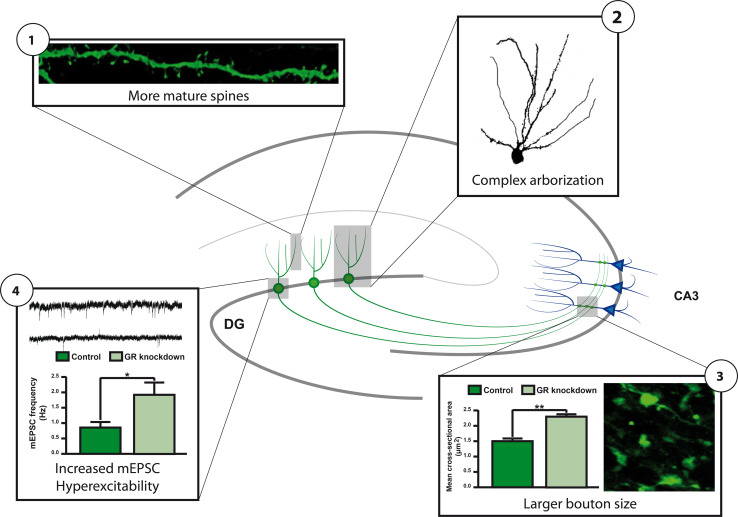
“Indeed, downregulation of GR proteins by retroviral and lentiviral delivery of GR-targeting small interference (si)RNA molecules specifically in neuronal progenitor cells in the mouse DG [107] accelerates their neuronal differentiation.”
BackgroundSelf-citationUnderstanding stress-effects in the brain via transcriptional signal transduction pathways
Zalachoras, I., Houtman, R., & Meijer, O. C. (2013) · Neuroscience · doi:10.1016/j.neuroscience.2013.03.038 · Cited by 48 · cited 2×
“CBP is another important cofactor and integration point, bridging CReB or zif68/egr1 activity with GR signaling [131, 135].”
BackgroundKannangara, T. S., Webber, A., Gil‐Mohapel, J., & Christie, B. R. (2009) · Hippocampus · doi:10.1002/hipo.20514 · Cited by 46 · cited 1×
“Physical activity NA NA Running ↑ [69] Running = [66, 194] Running ↑ [69] Stressed = [194] Running ↑ [69] Running ↑ [195]”
BackgroundRizzi, S., Bianchi, P., Guidi, S., Ciani, E., & Bartesaghi, R. (2011) · Brain Research · doi:10.1016/j.brainres.2011.08.007 · Cited by 44 · cited 1×
“Similarly, an enriched environment stimulates neuronal differentiation and survival of newborn cells [66, 70, 71], yet it simultaneously increases glucocorticoid levels [72].”
BackgroundNácher, J., Gómez‐Climent, M. Á., & McEwen, B. S. (2004) · Neuroscience Letters · doi:10.1016/j.neulet.2004.07.062 · Cited by 42 · cited 1×
“CORT NA NA CORT injection ↑ [64, 178, 179] Adrenal ectomy ↓ [14, 64] CORT injection ↓ [178] Adrenal ectomy ↑ [14] CORT injection ↓ [179] CORT injection ↓ [64] Adrenal ectomy ↑ [64]”
Fine-tuning the brain: MicroRNAs
Vreugdenhil, E., & Berezikov, E. (2009) · Frontiers in Neuroendocrinology · doi:10.1016/j.yfrne.2009.08.001 · Cited by 40
Self-citationOkuyama, N., Takagi, N., Kawai, T., Miyake‐Takagi, K., & Takeo, S. (2004) · Journal of Neurochemistry · doi:10.1046/j.1471-4159.2003.02215.x · Cited by 39
Furukawa‐Hibi, Y., Yun, J., Nagai, T., & Yamada, K. (2012) · Journal of Neurochemistry · doi:10.1111/jnc.12034 · Cited by 39 · cited 2×
“Remarkably, in the case of status epilepticus-induced changes in neurogenesis, newly Molecular factors DNA Methylation ↓ [137, 138, 140, 170] GR-KO ↓ [171] NA NA NA GR-KO ↓ [172] miRNA miR-124 ↓ [103, 173] ↓ miR-124 ↓ [103, 173] miR-124 ↑ [105] miR-124 ↑ Nd GR Co-regulators NA NA DCL ↑ [136] Ube3a ↑ [134] SMO ↑ [174]…”
Induction of Neurogenesis in the Adult Dentate Gyrus by Cortical Spreading Depression
Urbach, A., Redecker, C., & Witte, O. W. (2008) · Stroke · doi:10.1161/strokeaha.108.518076 · Cited by 39 · cited 2×
“Other paroxysmal disorders like migraine are often also explained by a disturbed excitation-inhibition balance [167] with high levels of cortical glutamate release, which may reach limbic structures during cortical spreading depression [168] and increases proliferative activity in the dentate gyrus [112].”
BackgroundBednarczyk, M. R., Hacker, L. C., Fortin‐Nunez, S., Aumont, A., Bergeron, R., & Fernandes, K. J. L. (2011) · Hippocampus · doi:10.1002/hipo.20831 · Cited by 37
Stressing new neurons into depression?
Lucassen, P. J., Fitzsimons, C. P., Kőrösi, A., Joëls, M., Belzung, C., & Abrous, D. N. (2012) · Molecular Psychiatry · doi:10.1038/mp.2012.39 · Cited by 32
Dunlap, K. D., Chung, M., & Castellano, J. F. (2013) · Journal of Experimental Biology · doi:10.1242/jeb.082875 · Cited by 29
Cited by
Belleau, E. L., Treadway, M. T., & Pizzagalli, D. A. (2019) · Biological Psychiatry · doi:10.1016/j.biopsych.2018.09.031 · Cited by 550
“Specifically, excessively high, as well as blunted, glucocorticoid receptor expression has been linked to reduced neurogenesis within the dentate gyrus (69).”
Anxiety and hippocampal neuronal activity: Relationship and potential mechanisms
Ghasemi, M., Navidhamidi, M., Rezaei, F., Azizikia, A., & Mehranfard, N. (2021) · Cognitive Affective & Behavioral Neuroscience · doi:10.3758/s13415-021-00973-y · Cited by 193
“Stress hormone receptors are absent in neuronal progenitor cells (Saaltink & Vreugdenhil, 2014), but both mineralocorticoid receptor (MR) and glucocorticoid receptor (GR) are present on new neurons (Wong & Herbert, 2005) and may act in concert to indirectly mediate effects of stress on the…”
BackgroundInfluentialmiR-17-92 Cluster Regulates Adult Hippocampal Neurogenesis, Anxiety, and Depression
Jin, J., Kim, S.-N., Liu, X., Zhang, H., Zhang, C., Seo, J.-S., Kim, Y., & Sun, T. (2016) · Cell Reports · doi:10.1016/j.celrep.2016.06.101 · Cited by 114
Liu, R. T. (2015) · Journal of Abnormal Psychology · doi:10.1037/abn0000043 · Cited by 113
Proteomic Profiling Reveals Microbiota-Driven Sensing Mechanisms of Gut-Brain Axis in Depression
Liu, Y., Luo, Y., Zeng, B., Gui, S., Zheng, P., Zheng, P., Pu, J., Wang, H., Wu, Y., Zhou, C., et al. (2018) · Translational Psychiatry · doi:10.1038/s41398-021-01689-w · Cited by 120
“Many studies have reported that depression is highly correlated with the activity of inflammatory signals [3, 4], alterations in neurotrophic signals [5], deficits in brain reward processing [6, 7], abnormal activity of the hypothalamic–pituitary–adrenal axis [8], changes in DNA methylation [9], and DNA damage [10].”
Background
Metadata
- Authors
- Saaltink, D.-J., & Vreugdenhil, E.
- Affiliations
- Leiden University Medical Center (NL)
- Corresponding author
- Vreugdenhil, Erno
- ORCID
- Vreugdenhil, Erno
- Venue
- Cellular and Molecular Life Sciences
- Published
- 2014-02-13
- Volume
- 71
- Issue
- 13
- Pages
- 2499-2515
- ISSN
- 1420-682X (ISSN-L)
- 1420-9071
- PMC
- PMC4055840
- OpenAlex
- W1973722262
- Cited by
- 127
- References
- 205
- Citations by year
- 2026: 2 · 2025: 9 · 2024: 12 · 2023: 14 · 2022: 9 · 2021: 12 · 2020: 12 · 2019: 10 · 2018: 4 · 2017: 12 · 2016: 16 · 2015: 10 · 2014: 5
- FWCI
- 1.49
- Type
- journal article
- Language
- en
- Open access
- hybrid
- doi.org
- Locations
- Cellular and Molecular Life Sciences (publishedVersion, cc-by)
- PubMed Central (publishedVersion, cc-by)
- PubMed (publishedVersion)
- Data Archiving and Networked Services (DANS) (submittedVersion)
- Leiden Repository (Leiden University) (submittedVersion)
- Funders
- Ministerie van Economische Zaken
- Topics
- Life Sciences › Neuroscience › Developmental Neuroscience › Neurogenesis and neuroplasticity mechanisms
- Life Sciences › Neuroscience › Behavioral Neuroscience › Stress Responses and Cortisol
- Life Sciences › Neuroscience › Cellular and Molecular Neuroscience › Neuroscience and Neuropharmacology Research
- Keywords
- adult neurogenesis, stress, glucocorticoid receptor, excitation-inhibition balance, hippocampus, neuronal migration, stress response, mental illness
- MeSH terms
- Mental Disorders, Cell Differentiation, Glucocorticoids, Hippocampus, Neurons, Stress, Physiological, Signal Transduction, Neurogenesis
About these checks
Registry, retraction, Cites and statistics results are computed, not judged, with one exception: a printed reference that no index lists is read once by a model before it counts as a citation error. Claims are extracted by a model and kept only when their quote appears verbatim in the text; each cited source is then checked, with a model’s help, for whether it says what the claim relies on. Those verdicts can be wrong — read the claim’s quote and the cited source before relying on one.
Statistics and arithmetic are recomputed, not judged.
Confidence bands are shown only for fields calibrated on our annotated test set. None is calibrated yet, so no band is shown.
What counts as a claim ›How we measure confidence ›How we check this ›
Are you an author, or do you see a problem with this page? Request a review
Data sources
Bibliographic data: Semantic Scholar, OpenAlex, Crossref.
Contains information from the Semantic Scholar Academic Graph Datasets, made available under the ODC Attribution License (ODC-BY 1.0).
Semantic Scholar’s data is described in: Kinney, R., et al. (2023). The Semantic Scholar Open Data Platform. arXiv:2301.10140.
