

TSC1 and TSC2 regulate cilia length and canonical Hedgehog signaling via different mechanisms
Open accessThe DOI matches its Crossref record; 82 of the 82 references it cites were found in a registry or an index.
Abstract
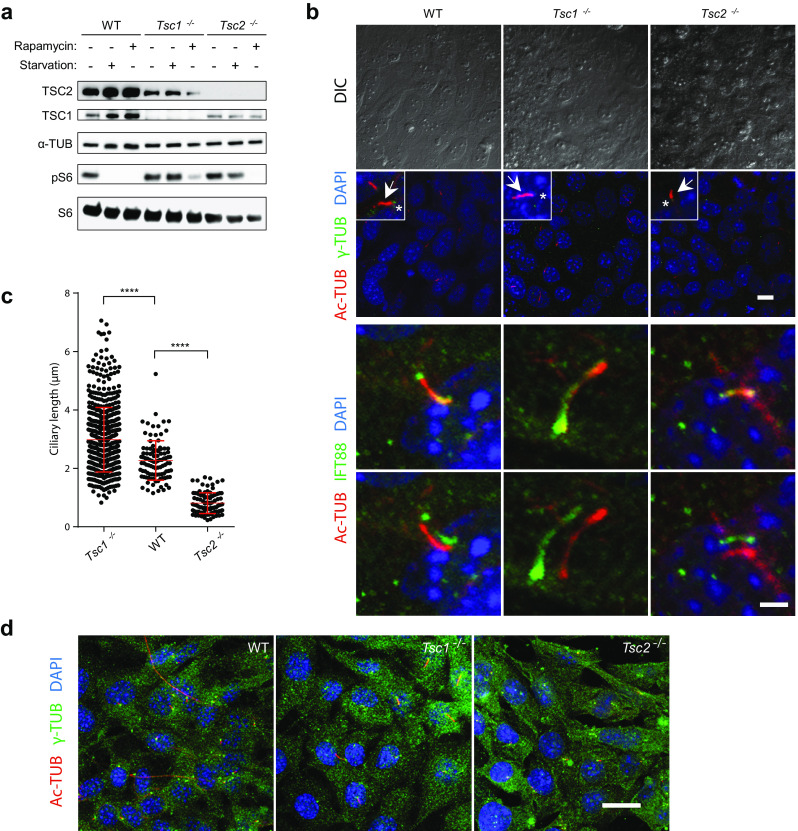
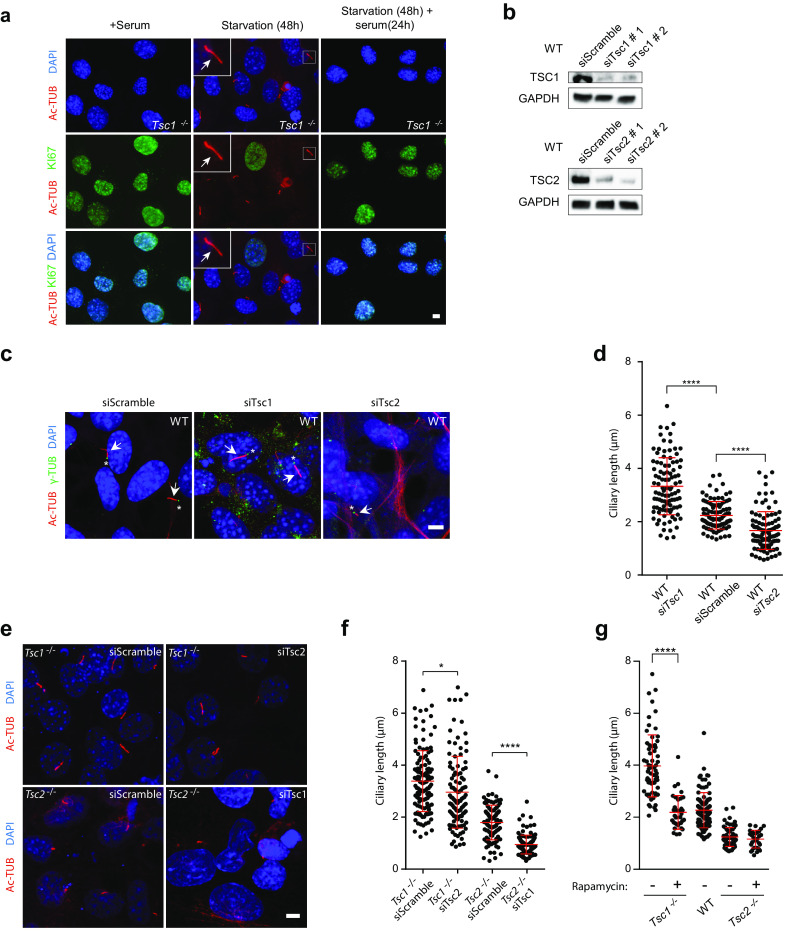
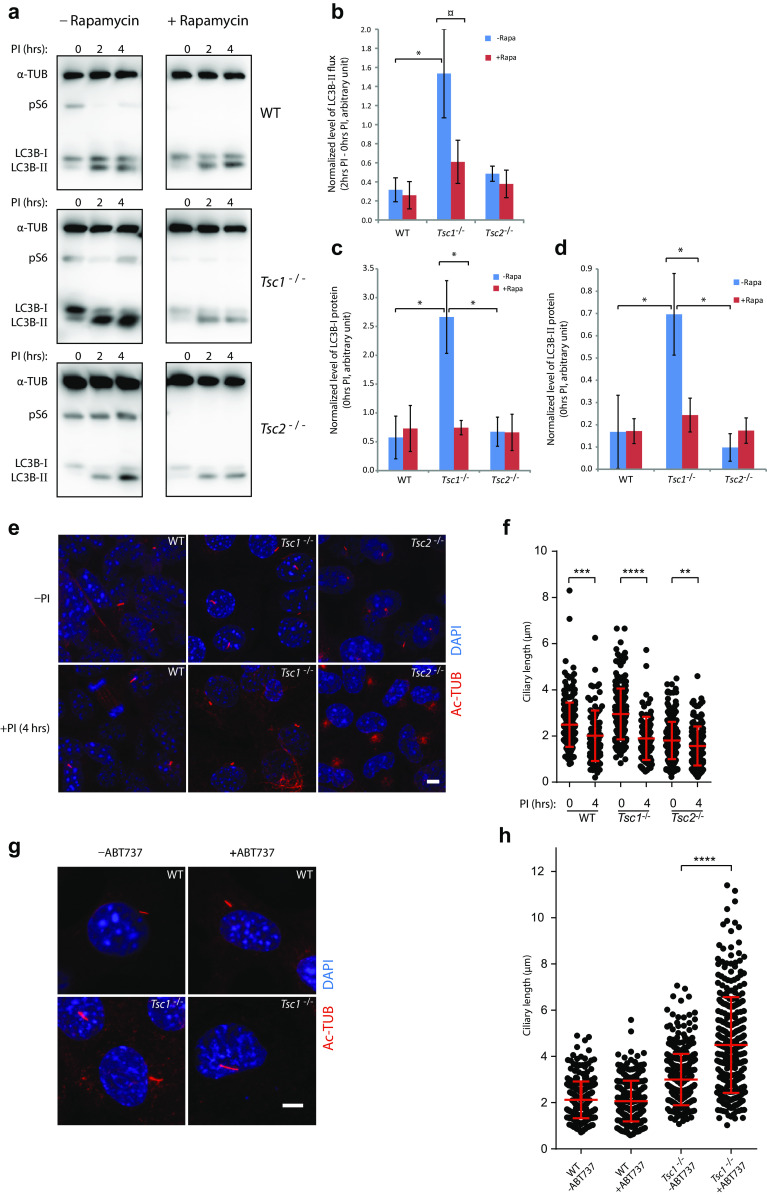
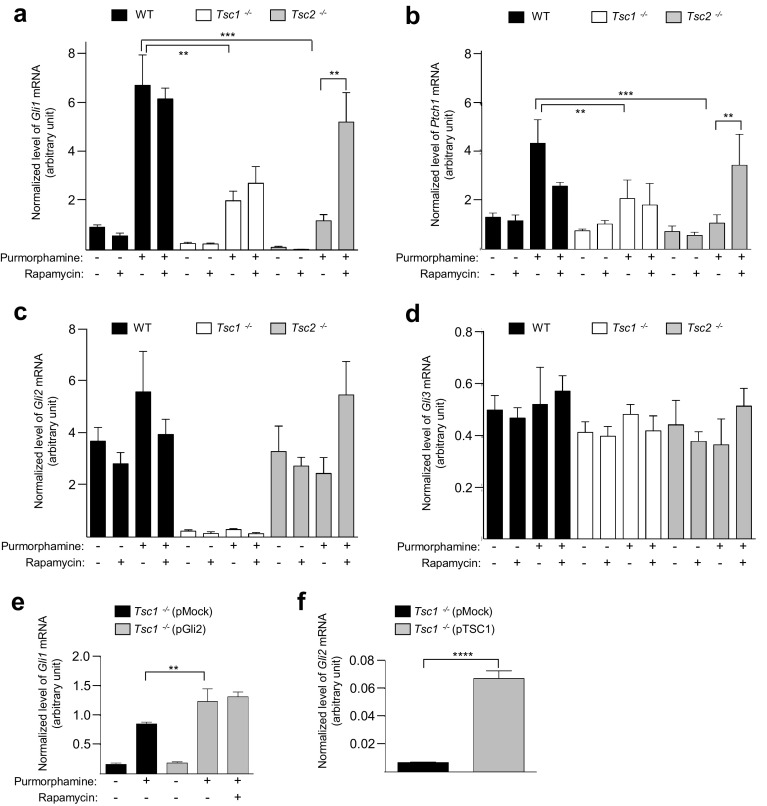
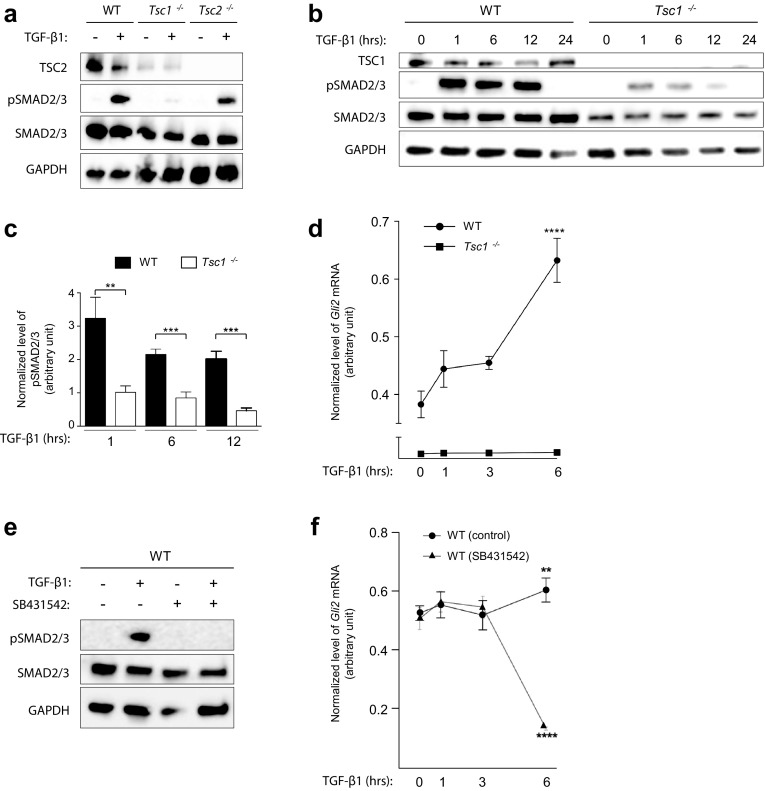
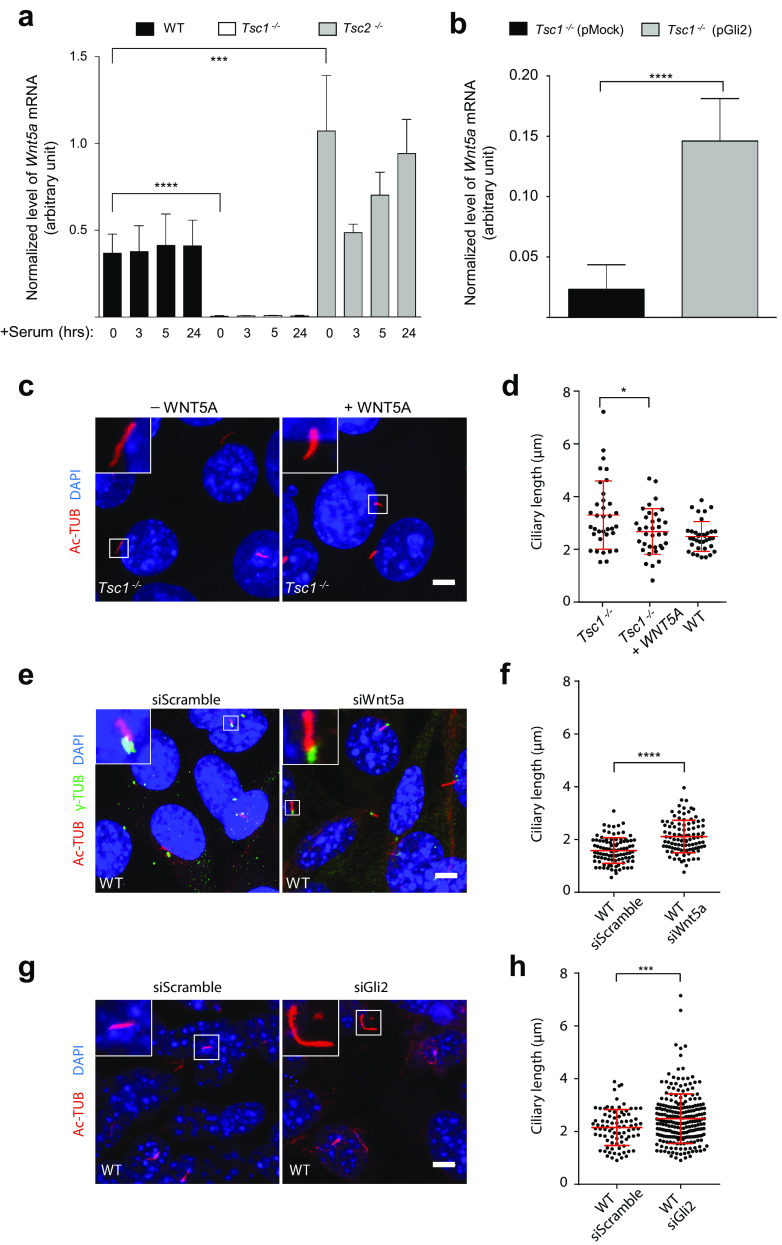
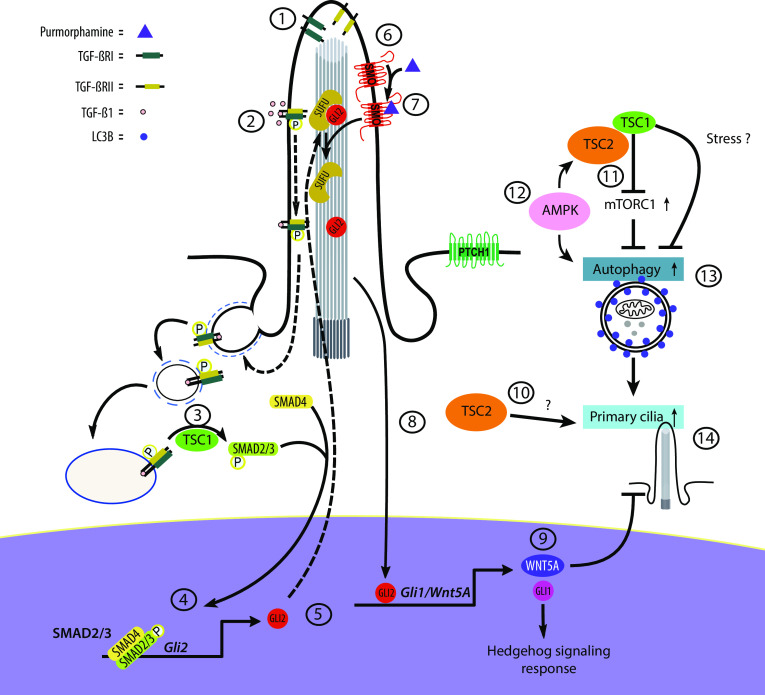
Primary cilia are sensory organelles that coordinate multiple cellular signaling pathways, including Hedgehog (HH), Wingless/Int (WNT) and Transforming Growth Factor-β (TGF-β) signaling. Similarly, primary cilia have been implicated in regulation of mTOR signaling, in which Tuberous Sclerosis Complex proteins 1 and 2 (TSC1/2) negatively regulate protein synthesis by inactivating the mTOR complex 1 (mTORC1) at energy limiting states. Here we report that TSC1 and TSC2 regulate Smoothened (SMO)-dependent HH signaling in mouse embryonic fibroblasts (MEFs). Reduced SMO-dependent expression of Gli1 was demonstrated in both Tsc1 −/− and Tsc2 −/− cells, and we found that Tsc1 is required for TGF-β induced phosphorylation of SMAD2/3 and subsequent expression of the HH signaling effector and transcription factor GLI2. Hedgehog signaling was restored in Tsc1 −/− cells after exogenous expression of Gli2 , whereas rapamycin restored HH signaling in Tsc 2 −/− cells. Furthermore, we observed that Tsc1 − / − MEFs display significantly elongated cilia, whereas cilia in Tsc2 − / − MEFs were shorter than normal. The elongated cilium phenotype of Tsc1 −/− MEFs is likely due to increased mTORC1-dependent autophagic flux observed in these cells, as both the autophagic flux and the cilia length phenotype was restored by rapamycin. In addition, ciliary length control in Tsc1 −/− MEFs was also influenced by reduced expression of Gli2, which compromised expression of Wnt5a that normally promotes cilia disassembly. In summary, our results support distinct functions of Tsc1 and Tsc2 in cellular signaling as the two genes affect ciliary length control and HH signaling via different mechanisms.
Overview
The claims and statistics of this paper haven’t been checked yet.
Free: it reads the open-access text and checks the first 5 claims that cite a source we can check. Create a free account to check every claim.
Integrity signals
Registry
Cites
Statistics
Figures
Verification
Claims the paper makes
The claims and statistics of this paper haven’t been checked yet.
Free: it reads the open-access text and checks the first 5 claims that cite a source we can check. Create a free account to check every claim.
Claims other papers make about this one
Each is checked against this paper’s own text: does it say what the citing paper says it does?
The check wasn’t confident either way, so it gives no verdict — never disputed.
In the citing paper
“Conversely, feedback inhibitors of TGFβ/BMP signalling, including SMAD7 and SMURF1 265, 288, localize to the ciliary base 268, 273 and restrain excessive signalling from the primary cilium.”
From Cellular signalling by primary cilia in development, organ function and disease (2019) · cites this paper as [288]
Experimental — accuracy not yet measured
Self-check
Percentages, sums and reported differences re-computed from the paper’s own numbers.
The self-check needs the paper’s full text.
Citations
Cites
Analysis of Relative Gene Expression Data Using Real-Time Quantitative PCR and the 2−ΔΔCT Method
Livak, K. J., & Schmittgen, T. D. (2001) · Methods · doi:10.1006/meth.2001.1262 · Cited by 180,860
Repertoires of Autophagy in the Pathogenesis of Ocular Diseases
Li, Y.-J., Jiang, Q., Cao, G.-F., Yao, J., & Yan, B. (2015) · Cellular Physiology and Biochemistry · doi:10.1159/000373980 · Cited by 16,304
mTOR Signaling in Growth Control and Disease
Laplante, M., & Sabatini, D. M. (2012) · Cell · doi:10.1016/j.cell.2012.03.017 · Cited by 8,509
AMPK and mTOR regulate autophagy through direct phosphorylation of Ulk1
Kim, J., Kundu, M., Viollet, B., & Guan, K.-L. (2011) · Nature Cell Biology · doi:10.1038/ncb2152 · Cited by 7,227 · cited 2×
“During starvation AMPK promotes autophagy by activating ULK1 via phosphorylation at Ser317, Ser555, and Ser777, whereas in the presence of nutrients mTORC1 suppresses autophagy by hampering interaction between AMPK and ULK1 through phosphorylation of ULK1 at Ser757 [7].”
BackgroundMutation of the mouse klotho gene leads to a syndrome resembling ageing
Kuro-o, M., Matsumura, Y., Aizawa, H., Kawaguchi, H., Suga, T., Utsugi, T., Ohyama, Y., Kurabayashi, M., Kaname, T., Kume, E., et al. (1997) · Nature · doi:10.1038/36285 · Cited by 3,837
Molecular mechanisms of mTOR-mediated translational control
Ma, X. M., & Blenis, J. (2009) · Nature Reviews Molecular Cell Biology · doi:10.1038/nrm2672 · Cited by 2,558
Mammalian TOR complex 2 controls the actin cytoskeleton and is rapamycin insensitive
Jacinto, E., Loewith, R., Schmidt, A., Lin, S., Rüegg, M. A., Hall, A., & Hall, M. N. (2004) · Nature Cell Biology · doi:10.1038/ncb1183 · Cited by 2,114
Inman, G. J., Nicolás, F. J., Callahan, J. F., Harling, J. D., Gaster, L. M., Reith, A. D., Laping, N. J., & Hill, C. S. (2002) · Molecular Pharmacology · doi:10.1124/mol.62.1.65 · Cited by 1,634
Hedgehog signalling in the mouse requires intraflagellar transport proteins
Huangfu, D., Liu, A., Rakeman, A. S., Murcia, N. S., Niswander, L., & Anderson, K. V. (2003) · Nature · doi:10.1038/nature02061 · Cited by 1,425
Hildebrandt, F., Benzing, T., & Katsanis, N. (2011) · New England Journal of Medicine · doi:10.1056/nejmra1010172 · Cited by 1,331
Cited by
Cellular signalling by primary cilia in development, organ function and disease
Anvarian, Z., Mykytyn, K., Mukhopadhyay, S., Pedersen, L. B., & Christensen, S. T. (2019) · Nature Reviews Nephrology · doi:10.1038/s41581-019-0116-9 · Cited by 845
Self-citationRoles of Primary Cilia in the Developing Brain
Park, S. M., Jang, H. J., & Lee, J. H. (2019) · Frontiers in Cellular Neuroscience · doi:10.3389/fncel.2019.00218 · Cited by 128
Primary Cilia as Signaling Hubs in Health and Disease
Nishimura, Y., Kasahara, K., Shiromizu, T., Watanabe, M., & Inagaki, M. (2019) · Advanced Science · doi:10.1002/advs.201801138 · Cited by 100
Margaria, J. P., Campa, C. C., Santis, M. C. D., Hirsch, E., & Franco, I. (2019) · Cellular Signalling · doi:10.1016/j.cellsig.2019.109468 · Cited by 90
Regulation of the length of neuronal primary cilia and its potential effects on signalling
Macarelli, V., Leventea, E., & Merkle, F. T. (2023) · Trends in Cell Biology · doi:10.1016/j.tcb.2023.05.005 · Cited by 89
Crosstalk of Hedgehog and mTORC1 Pathways
Larsen, L. J., & Møller, L. B. (2020) · Cells · doi:10.3390/cells9102316 · Cited by 70
Self-citationPIP2 determines length and stability of primary cilia by balancing membrane turnovers
Stilling, S., Καλλιακούδας, Θ., Benninghoven-Frey, H. L., Inoue, T., & Falkenburger, B. H. (2022) · Communications Biology · doi:10.1038/s42003-022-03028-1 · Cited by 51
Regulation of ciliary membrane protein trafficking and signalling by kinesin motor proteins
Morthorst, S. K., Christensen, S. T., & Pedersen, L. B. (2018) · The FEBS Journal · doi:10.1111/febs.14583 · Cited by 49
Self-citationRole of TSC1 in physiology and diseases
Mallela, K., & Kumar, A. (2021) · Molecular and Cellular Biochemistry · doi:10.1007/s11010-021-04088-3 · Cited by 48
The primary cilium: Its role as a tumor suppressor organelle
Peixoto, E., Richard, S., Pant, K., Biswas, A. S., & Gradilone, S. A. (2020) · Biochemical Pharmacology · doi:10.1016/j.bcp.2020.113906 · Cited by 45
Primary Cilia Dysfunction in Neurodevelopmental Disorders beyond Ciliopathies
Karalis, V., Donovan, K. E., & Şahin, M. (2022) · Journal of Developmental Biology · doi:10.3390/jdb10040054 · Cited by 41
Garg, C., Khan, H., Kaur, A., Singh, T. G., Sharma, V., & Singh, S. K. (2022) · Pharmacological Research · doi:10.1016/j.phrs.2022.106194 · Cited by 40
Crosstalk between cilia and autophagy: implication for human diseases
Morleo, M., Vieira, H. L. A., Pennekamp, P., Palma, A., Bento‐Lopes, L., Omran, H., Lopes, S. S., Barral, D. C., & Franco, B. (2022) · Autophagy · doi:10.1080/15548627.2022.2067383 · Cited by 36
Reciprocal Regulation between Primary Cilia and mTORC1
Lai, Y., & Jiang, Y. (2020) · Genes · doi:10.3390/genes11060711 · Cited by 33
Nardo, A. D., Lenoël, I., Winden, K. D., Rühmkorf, A., Modi, M. E., Barrett, L. B., Ercan-Herbst, E., Venugopal, P., Behne, R., Lopes, C. A. M., et al. (2020) · Cell Reports · doi:10.1016/j.celrep.2020.107780 · Cited by 28
Daggubati, V., Hochstelter, J., Bommireddy, A., Choudhury, A., Krup, A. L., Kaur, P., Tong, P., Li, A., Xu, L., Reiter, J. F., et al. (2021) · Journal of Clinical Investigation · doi:10.1172/jci141171 · Cited by 27
Li, K., Liu, J., Song, L., Lv, W., Tian, X., Li, Z., & Shi, S. (2020) · Neural Plasticity · doi:10.1155/2020/5474608 · Cited by 27
Wnt5a is a transcriptional target of Gli3 and Trps1 at the onset of chondrocyte hypertrophy
Wuelling, M., Schneider, S., Schröther, V. A., Waterkamp, C., Hoffmann, D. E., & Vortkamp, A. (2019) · Developmental Biology · doi:10.1016/j.ydbio.2019.09.012 · Cited by 26
Ciliary biology intersects autism and congenital heart disease
Teerikorpi, N., McCluskey, K. E., Bader, E., Lasser, M. C., Wang, S., Nguyen, C. H., Schmidt, J. D., Kostyanovskaya, E., Sun, N., Dea, J., et al. (2025) · Development · doi:10.1242/dev.204295 · Cited by 23
Zhu, P., Qiu, Q., Harris, P. C., Xu, X., & Lin, X. (2021) · Journal of the American Society of Nephrology · doi:10.1681/asn.2020070991 · Cited by 23
Hey, C. A. B., Larsen, L. J., Tümer, Z., Brøndum‐Nielsen, K., Grønskov, K., Hjortshøj, T. D., & Møller, L. B. (2021) · International Journal of Molecular Sciences · doi:10.3390/ijms22031345 · Cited by 21
Self-citationPrimary cilia in skeletal development and disease
Quadri, N., & Upadhyai, P. (2023) · Experimental Cell Research · doi:10.1016/j.yexcr.2023.113751 · Cited by 21
Primary cilia influence progenitor function during cortical development
Zaidi, D., Chinnappa, K., & Francis, F. (2022) · Cells · doi:10.3390/cells11182895 · Cited by 19
Papaspyropoulos, A., Hazapis, O. G., Altulea, A., Polyzou, A., Verginis, P., Evangelou, K., Fousteri, M. I., Papantonis, A., Demaria, M., & Gorgoulis, V. G. (2023) · Aging Cell · doi:10.1111/acel.13893 · Cited by 18
Cilia and Extracellular Vesicles in Brain Development and Disease
Ma, R., Chen, L., Hu, N., Caplan, S., & Hu, G. (2023) · Biological Psychiatry · doi:10.1016/j.biopsych.2023.11.004 · Cited by 18
Crosstalk between the mTOR pathway and primary cilia in human diseases
Prosseda, P. P., Prosseda, S. D., Tran, M., Liton, P. B., & Sun, Y. (2023) · Current topics in developmental biology/Current Topics in Developmental Biology · doi:10.1016/bs.ctdb.2023.09.004 · Cited by 13
Karam, A., Delvallée, C., Estrada‐Cuzcano, A., Geoffroy, V., Lamouche, J.-B., Leuvrey, A., Nourisson, E., Tarabeux, J., Stoetzel, C., Scheidecker, S., et al. (2023) · International Journal of Molecular Sciences · doi:10.3390/ijms24108729 · Cited by 12
Kitami, M., Kaku, M., Thant, L., & Maeda, T. (2024) · GeroScience · doi:10.1007/s11357-024-01143-x · Cited by 12
Li, X., Ran, J., Zhou, H., He, J., Qiu, Z., Wang, S., Wu, M., Zhu, S., An, Y.-P., Ma, A., et al. (2021) · Acta Pharmacologica Sinica · doi:10.1038/s41401-022-00937-z · Cited by 9
Molecular targets of primary cilia defects in cancer (Review)
Yin, F., Wei, Z., Chen, F., Xin, C., & Chen, Q. (2022) · International Journal of Oncology · doi:10.3892/ijo.2022.5388 · Cited by 9
Islet cilia and glucose homeostasis
Melena, I., & Hughes, J. W. (2022) · Frontiers in Cell and Developmental Biology · doi:10.3389/fcell.2022.1082193 · Cited by 7
Valls, A., Ruiz‐Roldán, C., Immanuel, J., Alonso‐Martín, S., Gallardo, E., Fernández‐Torrón, R., Bonilla, M., Lersundi, A., Hernández‐Laín, A., Domínguez‐González, C., et al. (2025) · Cells · doi:10.3390/cells14060446 · Cited by 5
Belenska-Todorova, L., Zamfirov, M., Todorov, T., Atemin, S., Sleptsova, M., Pavlova, Z., Kadiyska, T., Maver, A., Peterlin, B., & Todorova, A. (2025) · Cells · doi:10.3390/cells14120915 · Cited by 5
A CRISPR activation screen reveals a cilia disassembly pathway mutated in focal cortical dysplasia
Elliott, S. D., Ready, P. J., Wrinn, C. M., Ma, Q., Edward, M., Niescier, R. F., Escobar, I., Sun, J., Ganga, A. K., McAtee, C. K., et al. (2025) · Science Advances · doi:10.1126/sciadv.aeb7238 · Cited by 4
Yuan, Z., Zhu, X., Xie, X., Wang, C., Gu, H., Yang, J., Fan, L., Xiang, R., Yang, Y., & Tan, Z. (2024) · Frontiers of Medicine · doi:10.1007/s11684-023-1042-6 · Cited by 4
Gain-of-function mutation in Gli3 causes ventricular septal defectsPreprint
Wiegering, A., Adibi, P., Rüther, U., & Gerhardt, C. (2020) · bioRxiv (Cold Spring Harbor Laboratory) · doi:10.1101/2020.02.10.942144 · Cited by 3
mTORC1 hampers Hedgehog signaling in Tsc2 deficient cells
Larsen, L. J., Østergaard, E., & Møller, L. B. (2024) · Life Science Alliance · doi:10.26508/lsa.202302419 · Cited by 3
Self-citationShin, J., Tighanimine, K., Cormerais, Y., Rosenthal, D. M., Niroula, P., Lapp, S. C., Kalafut, K. C., Cissé, M. Y., Schrötter, S., & Manning, B. D. (2025) · iScience · doi:10.1016/j.isci.2025.114204 · Cited by 3
Murillo-Pineda, M., Martínez-Miralles, J., Medina-Calzada, Z., Varela, R. M., Macías, F. A., Chinchilla, N., Soto, Á. J., Santpere, G., & Reales, E. (2025) · International Journal of Molecular Sciences · doi:10.3390/ijms262311754 · Cited by 2
A novel protein truncating mutation of TTC8 causes Bardet-Biedl Syndrome (BBS) in a Pakistani family
Fatima, S., Sun, D., Han, J., Qiu, M., Ahmad, S., Zubair, M., Ali, M. Z., Abbas, S., Shafiq, M., Muzammal, M., et al. (2026) · Genetics and Molecular Biology · doi:10.1590/1678-4685-gmb-2025-0020 · Cited by 1
Gilliam, L., Willoughby, J. J., Annan, W. E., White, D., & Jensen, A. M. (2023) · bioRxiv (Cold Spring Harbor Laboratory) · doi:10.1101/2023.09.08.556898 · Cited by 1
NEK8 stabilization via USP51-mediated deubiquitination promotes colorectal cancer progression
Wang, Y., Lin, M., & Zeng, M. (2025) · Pathology - Research and Practice · doi:10.1016/j.prp.2025.156346 · Cited by 1
Primary cilia and neural computation
Teoh, A., Arinjay, M., Giri, D., & Phua, S. C. (2026) · Journal of Biomedical Science · doi:10.1186/s12929-026-01264-9
Taha, I., Abusamra, L., Shalabi, S., Huraibat, K., Al-Labadi, L., Beshtawi, K. R., Abujaber, F., Khalaf, M., & Obar, R. (2026) · Case Reports in Ophthalmological Medicine · doi:10.1155/crop/7604431
Research Progress of Autophagy in Esophageal Squamous Cell Carcinoma
张, 云. (2020) · Advances in Clinical Medicine · doi:10.12677/acm.2020.1010350
Metadata
- Authors
- Rosengren, T., Larsen, L. J., Pedersen, L. B., Christensen, S. T., & Møller, L. B.
- Affiliations
- Copenhagen University Hospital (DK)
- University of Copenhagen (DK)
- Corresponding author
- Møller, Lisbeth Birk
- Venue
- Cellular and Molecular Life Sciences
- Published
- 2018-02-02
- Volume
- 75
- Issue
- 14
- Pages
- 2663-2680
- ISSN
- 1420-682X (ISSN-L)
- 1420-9071
- PMC
- PMC6003990
- OpenAlex
- W2786514633
- Semantic Scholar
- c72b362b29989dd0f181bfbdc6bc134794278f27
- Cited by
- 45
- References
- 81
- Citations by year
- 2026: 3 · 2025: 6 · 2024: 3 · 2023: 7 · 2022: 8 · 2021: 5 · 2020: 7 · 2019: 4 · 2018: 2
- FWCI
- 2.76
- Type
- journal article
- Language
- en
- Open access
- hybrid
- doi.org
- Licence
- cc-by
- creativecommons.org/licenses/by/4.0 (tdm)
- Locations
- Cellular and Molecular Life Sciences (publishedVersion, cc-by)
- Europe PMC (PubMed Central) (publishedVersion, cc-by)
- PubMed Central (publishedVersion, cc-by)
- PubMed (publishedVersion)
- Research at the University of Copenhagen (University of Copenhagen) (publishedVersion, cc-by)
- Funders
- Sundhed og Sygdom, Det Frie Forskningsråd (12-127196)
- Topics
- Life Sciences › Biochemistry, Genetics and Molecular Biology › Genetics › Genetic and Kidney Cyst Diseases
- Health Sciences › Medicine › Genetics (clinical) › Tuberous Sclerosis Complex Research
- Life Sciences › Biochemistry, Genetics and Molecular Biology › Molecular Biology › Hedgehog Signaling Pathway Studies
- Keywords
- TSC1, TSC2, tuberous sclerosis complex, primary cilia, Smoothened, GLI2, Gli1, mTORC1, autophagy, Wnt5a, TGF-beta signaling, Smad2/3 phosphorylation, rapamycin
- MeSH terms
- Smoothened Receptor, Zinc Finger Protein Gli2, Tuberous Sclerosis Complex 1 Protein, Tuberous Sclerosis Complex 2 Protein, Animals, Cells, Cultured, Cilia, Embryo, Mammalian, Fibroblasts, Gene Expression Regulation, Signal Transduction, Mice, Knockout, Tumor Suppressor Proteins, RNA Interference, Hedgehog Proteins
About these checks
Registry, retraction, Cites and statistics results are computed, not judged, with one exception: a printed reference that no index lists is read once by a model before it counts as a citation error. Claims are extracted by a model and kept only when their quote appears verbatim in the text; each cited source is then checked, with a model’s help, for whether it says what the claim relies on. Those verdicts can be wrong — read the claim’s quote and the cited source before relying on one.
Statistics and arithmetic are recomputed, not judged.
Confidence bands are shown only for fields calibrated on our annotated test set. None is calibrated yet, so no band is shown.
What counts as a claim ›How we measure confidence ›How we check this ›
Are you an author, or do you see a problem with this page? Request a review
Data sources
Bibliographic data: Semantic Scholar, OpenAlex, Crossref.
Contains information from the Semantic Scholar Academic Graph Datasets, made available under the ODC Attribution License (ODC-BY 1.0).
Semantic Scholar’s data is described in: Kinney, R., et al. (2023). The Semantic Scholar Open Data Platform. arXiv:2301.10140.
