

TSC1 and TSC2 regulate cilia length and canonical Hedgehog signaling via different mechanisms
Open accessThe DOI matches its Crossref record; 82 of the 82 references it cites were found in a registry or an index.
Abstract
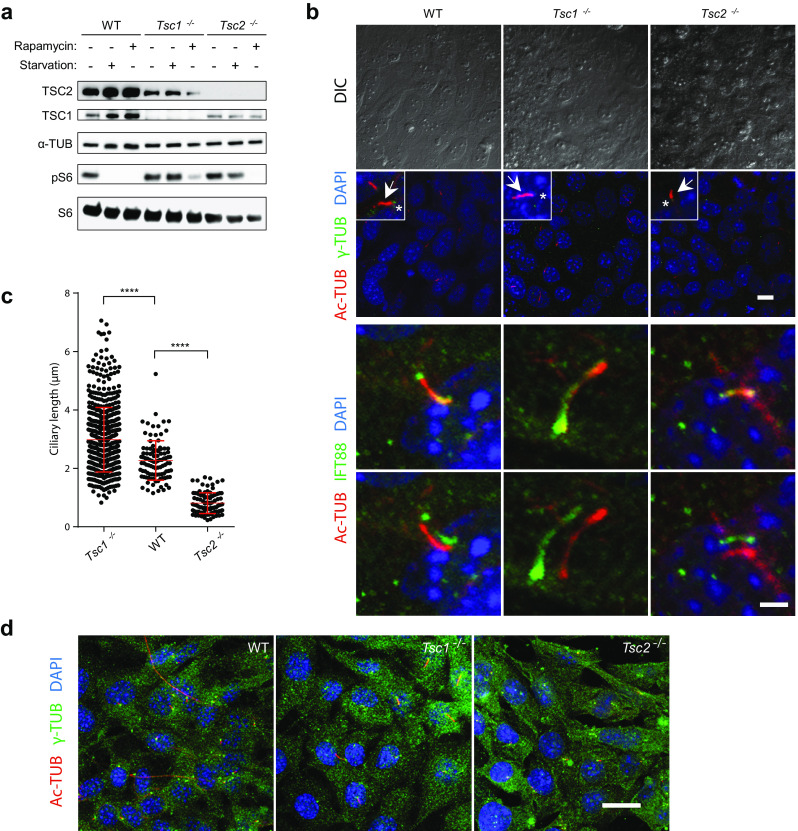
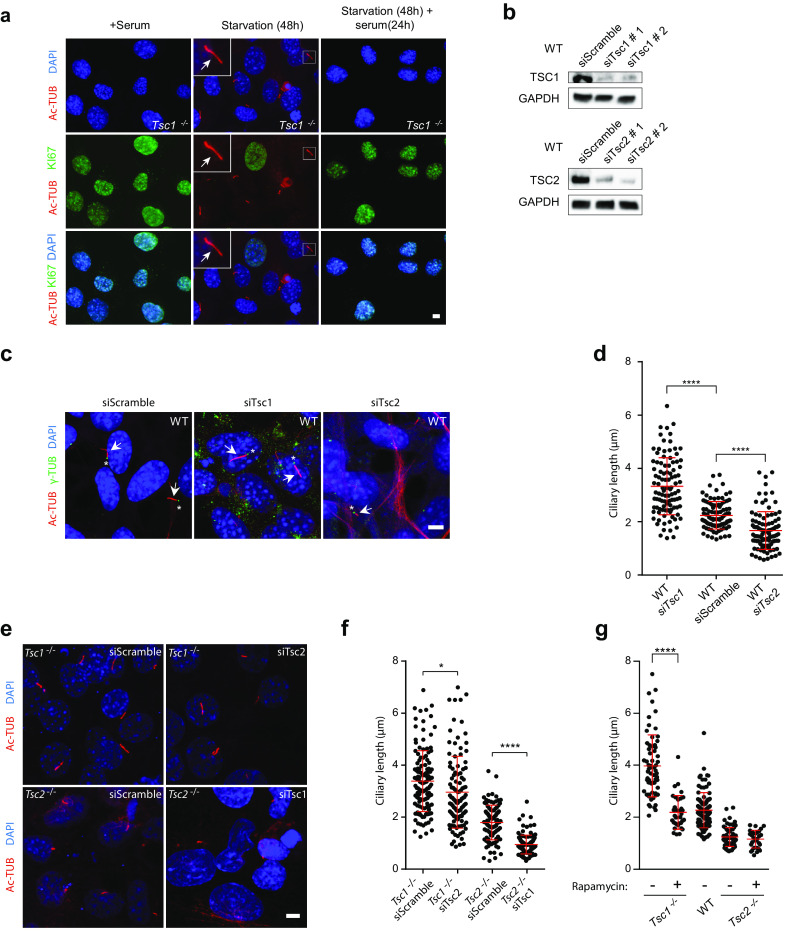
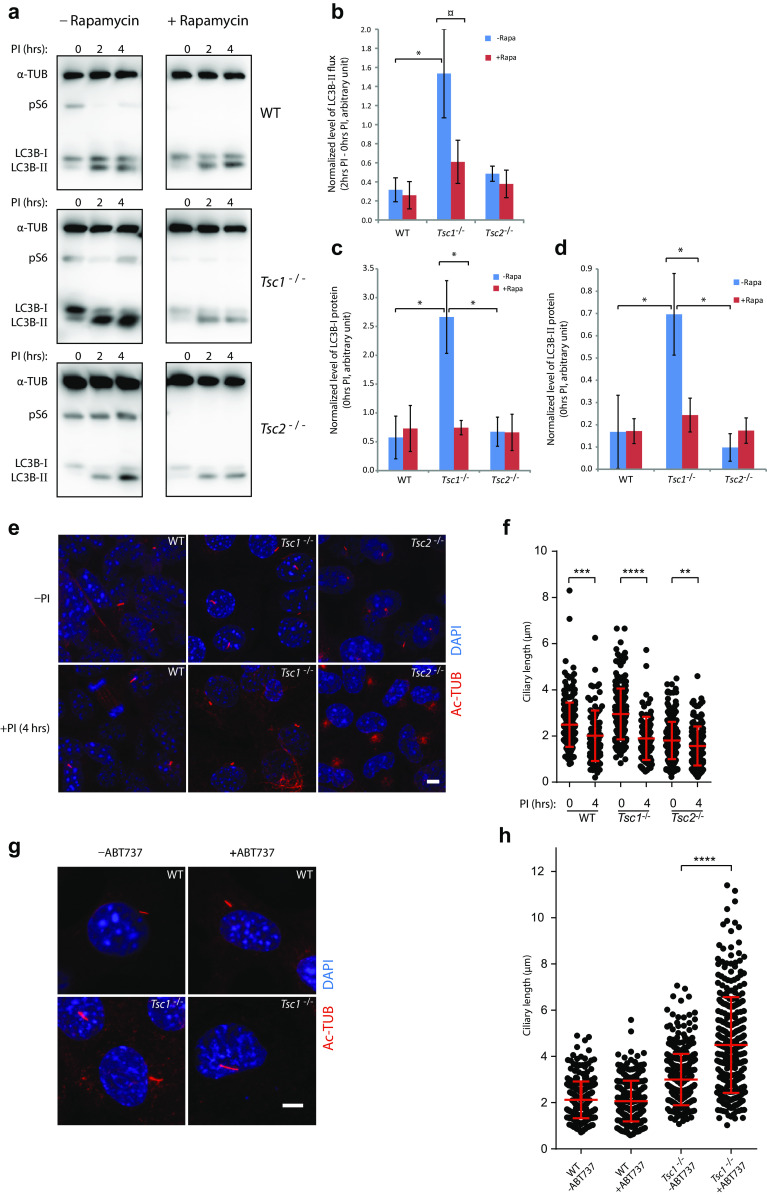
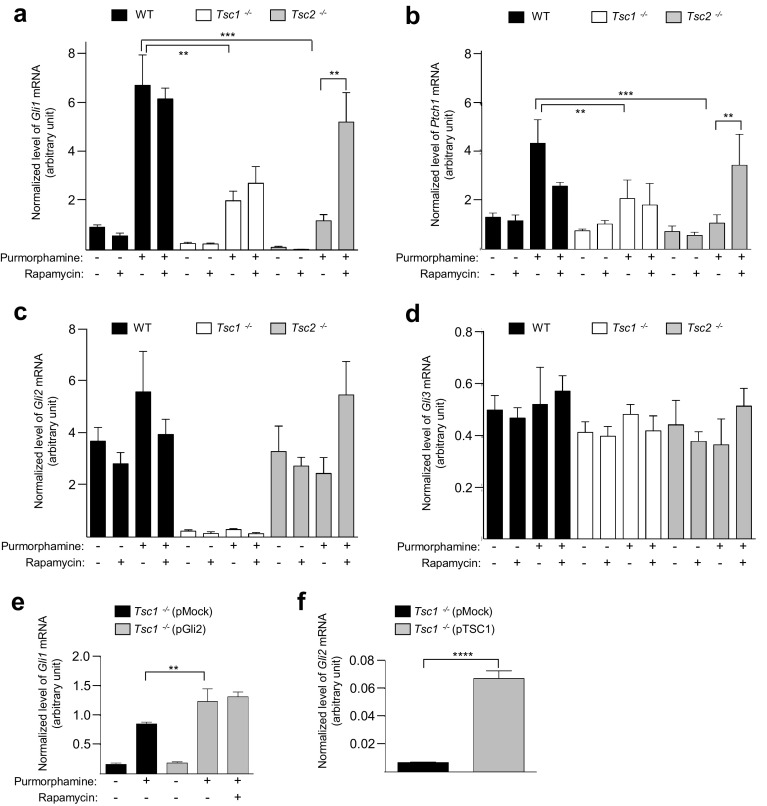
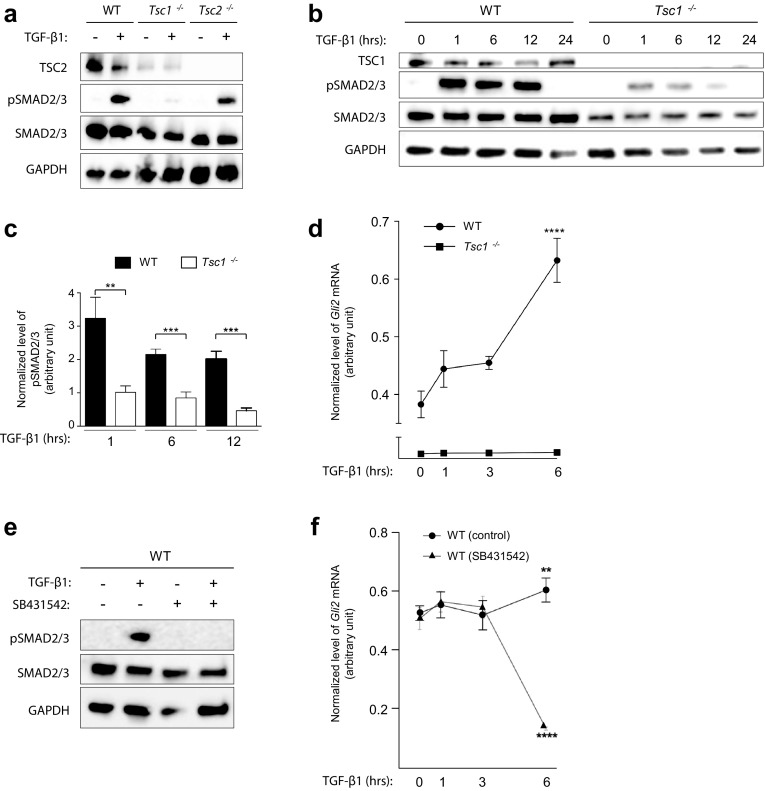
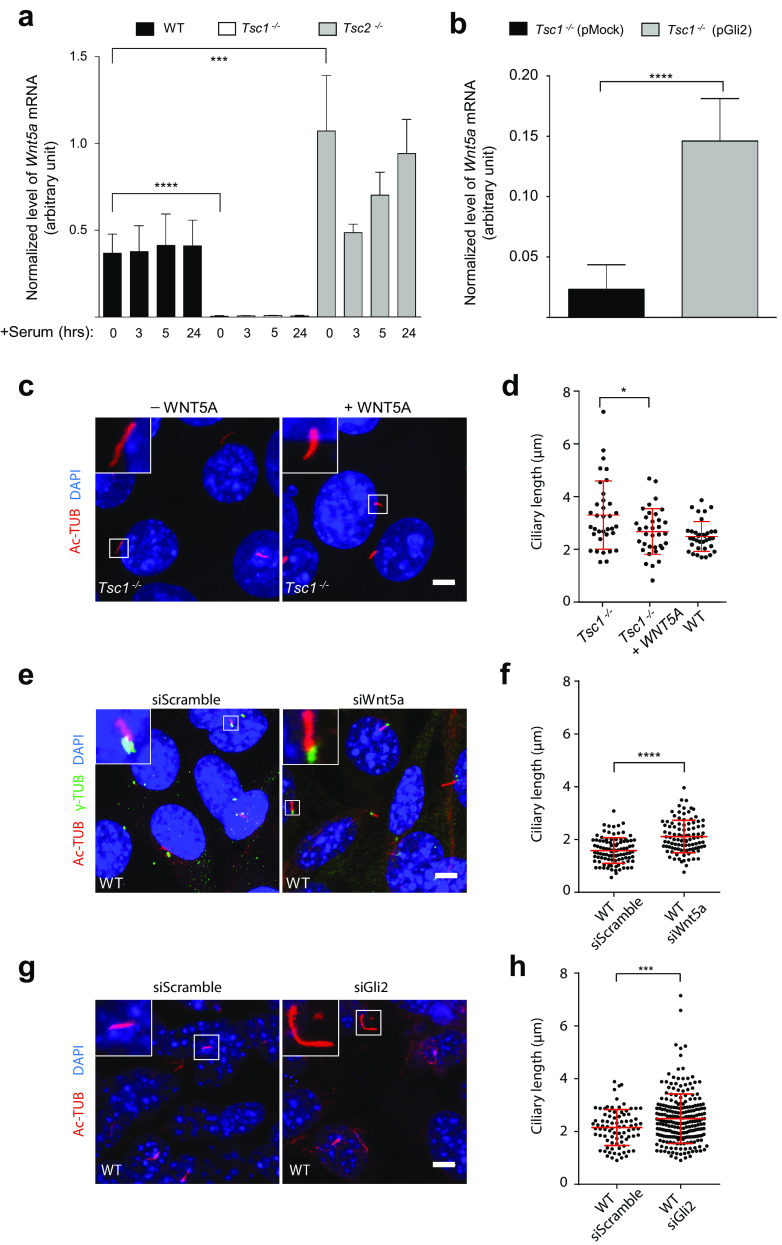
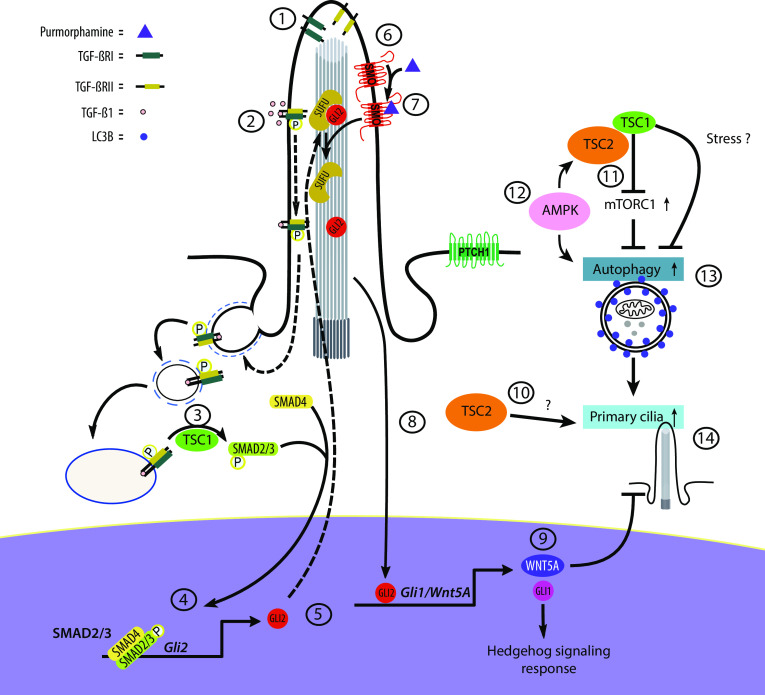
Primary cilia are sensory organelles that coordinate multiple cellular signaling pathways, including Hedgehog (HH), Wingless/Int (WNT) and Transforming Growth Factor-β (TGF-β) signaling. Similarly, primary cilia have been implicated in regulation of mTOR signaling, in which Tuberous Sclerosis Complex proteins 1 and 2 (TSC1/2) negatively regulate protein synthesis by inactivating the mTOR complex 1 (mTORC1) at energy limiting states. Here we report that TSC1 and TSC2 regulate Smoothened (SMO)-dependent HH signaling in mouse embryonic fibroblasts (MEFs). Reduced SMO-dependent expression of Gli1 was demonstrated in both Tsc1 −/− and Tsc2 −/− cells, and we found that Tsc1 is required for TGF-β induced phosphorylation of SMAD2/3 and subsequent expression of the HH signaling effector and transcription factor GLI2. Hedgehog signaling was restored in Tsc1 −/− cells after exogenous expression of Gli2 , whereas rapamycin restored HH signaling in Tsc 2 −/− cells. Furthermore, we observed that Tsc1 − / − MEFs display significantly elongated cilia, whereas cilia in Tsc2 − / − MEFs were shorter than normal. The elongated cilium phenotype of Tsc1 −/− MEFs is likely due to increased mTORC1-dependent autophagic flux observed in these cells, as both the autophagic flux and the cilia length phenotype was restored by rapamycin. In addition, ciliary length control in Tsc1 −/− MEFs was also influenced by reduced expression of Gli2, which compromised expression of Wnt5a that normally promotes cilia disassembly. In summary, our results support distinct functions of Tsc1 and Tsc2 in cellular signaling as the two genes affect ciliary length control and HH signaling via different mechanisms.
Overview
The claims and statistics of this paper haven’t been checked yet.
Free: it reads the open-access text and checks the first 5 claims that cite a source we can check. Create a free account to check every claim.
Integrity signals
Registry
Cites
Statistics
Figures
Verification
Claims the paper makes
The claims and statistics of this paper haven’t been checked yet.
Free: it reads the open-access text and checks the first 5 claims that cite a source we can check. Create a free account to check every claim.
Claims other papers make about this one
Each is checked against this paper’s own text: does it say what the citing paper says it does?
The check wasn’t confident either way, so it gives no verdict — never disputed.
In the citing paper
“Conversely, feedback inhibitors of TGFβ/BMP signalling, including SMAD7 and SMURF1 265, 288, localize to the ciliary base 268, 273 and restrain excessive signalling from the primary cilium.”
From Cellular signalling by primary cilia in development, organ function and disease (2019) · cites this paper as [288]
Experimental — accuracy not yet measured
Self-check
Percentages, sums and reported differences re-computed from the paper’s own numbers.
The self-check needs the paper’s full text.
Citations
Cites
Analysis of Relative Gene Expression Data Using Real-Time Quantitative PCR and the 2−ΔΔCT Method
Livak, K. J., & Schmittgen, T. D. (2001) · Methods · doi:10.1006/meth.2001.1262 · Cited by 180,860
Repertoires of Autophagy in the Pathogenesis of Ocular Diseases
Li, Y.-J., Jiang, Q., Cao, G.-F., Yao, J., & Yan, B. (2015) · Cellular Physiology and Biochemistry · doi:10.1159/000373980 · Cited by 16,304
mTOR Signaling in Growth Control and Disease
Laplante, M., & Sabatini, D. M. (2012) · Cell · doi:10.1016/j.cell.2012.03.017 · Cited by 8,509
AMPK and mTOR regulate autophagy through direct phosphorylation of Ulk1
Kim, J., Kundu, M., Viollet, B., & Guan, K.-L. (2011) · Nature Cell Biology · doi:10.1038/ncb2152 · Cited by 7,227 · cited 2×
“During starvation AMPK promotes autophagy by activating ULK1 via phosphorylation at Ser317, Ser555, and Ser777, whereas in the presence of nutrients mTORC1 suppresses autophagy by hampering interaction between AMPK and ULK1 through phosphorylation of ULK1 at Ser757 [7].”
BackgroundMutation of the mouse klotho gene leads to a syndrome resembling ageing
Kuro-o, M., Matsumura, Y., Aizawa, H., Kawaguchi, H., Suga, T., Utsugi, T., Ohyama, Y., Kurabayashi, M., Kaname, T., Kume, E., et al. (1997) · Nature · doi:10.1038/36285 · Cited by 3,837
Molecular mechanisms of mTOR-mediated translational control
Ma, X. M., & Blenis, J. (2009) · Nature Reviews Molecular Cell Biology · doi:10.1038/nrm2672 · Cited by 2,558
Mammalian TOR complex 2 controls the actin cytoskeleton and is rapamycin insensitive
Jacinto, E., Loewith, R., Schmidt, A., Lin, S., Rüegg, M. A., Hall, A., & Hall, M. N. (2004) · Nature Cell Biology · doi:10.1038/ncb1183 · Cited by 2,114
Inman, G. J., Nicolás, F. J., Callahan, J. F., Harling, J. D., Gaster, L. M., Reith, A. D., Laping, N. J., & Hill, C. S. (2002) · Molecular Pharmacology · doi:10.1124/mol.62.1.65 · Cited by 1,634
Hedgehog signalling in the mouse requires intraflagellar transport proteins
Huangfu, D., Liu, A., Rakeman, A. S., Murcia, N. S., Niswander, L., & Anderson, K. V. (2003) · Nature · doi:10.1038/nature02061 · Cited by 1,425
Hildebrandt, F., Benzing, T., & Katsanis, N. (2011) · New England Journal of Medicine · doi:10.1056/nejmra1010172 · Cited by 1,331
Purified Wnt5a Protein Activates or Inhibits β-Catenin–TCF Signaling Depending on Receptor Context
Mikels, A. J., & Nusse, R. (2006) · PLoS Biology · doi:10.1371/journal.pbio.0040115 · Cited by 1,252
Overview of Structure and Function of Mammalian Cilia
Satir, P., & Christensen, S. T. (2007) · Annual Review of Physiology · doi:10.1146/annurev.physiol.69.040705.141236 · Cited by 1,142 · cited 1×
“Primary cilia are microtubule-based sensory organelles that emanate from the centrosomal mother centriole/basal body at the surface of many quiescent vertebrate cell types [12].”
BackgroundSelf-citationCuratolo, P., Bombardieri, R., & Jozwiak, S. (2008) · The Lancet · doi:10.1016/s0140-6736(08)61279-9 · Cited by 1,088
Rheb Binds and Regulates the mTOR Kinase
Long, X., Lin, Y., Ortiz-Vega, S., Yonezawa, K., & Avruch, J. (2005) · Current Biology · doi:10.1016/j.cub.2005.02.053 · Cited by 1,005 · cited 1×
“The heterodimeric TSC complex negatively regulates mTORC1 activity via the GTPase activity of TSC2, towards the small G-protein RHEB (Ras homologue enriched in brain) [5].”
BackgroundCilia and Hedgehog responsiveness in the mouse
Huangfu, D., & Anderson, K. V. (2005) · Proceedings of the National Academy of Sciences · doi:10.1073/pnas.0505328102 · Cited by 820 · cited 1×
“The cellular signaling systems that are operated by primary cilia include HH [20, 21], Wingless/Int (WNT) [22–24], platelet-derived growth factor receptor alpha (PDGFR-α) [25–27], TGF-β [28, 29], Notch [30], Hippo [31], and mTOR signaling [32, 33].”
BackgroundGli2, but not Gli1, is required for initial Shh signaling and ectopic activation of the Shh pathway
Bai, C. B., Auerbach, W., Lee, J. S., Stephen, D., & Joyner, A. L. (2002) · Development · doi:10.1242/dev.129.20.4753 · Cited by 692
Kwiatkowski, D. J. (2002) · Human Molecular Genetics · doi:10.1093/hmg/11.5.525 · Cited by 667
TBC1D7 Is a Third Subunit of the TSC1-TSC2 Complex Upstream of mTORC1
Dibble, C. C., Elis, W., Menon, S., Qin, W., Klekota, J., Asara, J. M., Finan, P. M., Kwiatkowski, D. J., Murphy, L. O., & Manning, B. D. (2012) · Molecular Cell · doi:10.1016/j.molcel.2012.06.009 · Cited by 612 · cited 1×
“Although evidence supports the interdependence of TSC1 and TSC2 in the regulation of mTORC1 [45], more than 50 proteins have been reported to interact with TSC1 and/or TSC2 [46], suggesting that both proteins function in other cellular contexts independent of each other.”
BackgroundPDGFRαα Signaling Is Regulated through the Primary Cilium in Fibroblasts
Schneider, L., Clement, C. A., Teilmann, S. C., Pazour, G. J., Hoffmann, E. K., Satir, P., & Christensen, S. T. (2005) · Current Biology · doi:10.1016/j.cub.2005.09.012 · Cited by 592
Self-citationAkt Maintains Cell Size and Survival by Increasing mTOR-dependent Nutrient Uptake
Edinger, A. L., & Thompson, C. B. (2002) · Molecular Biology of the Cell · doi:10.1091/mbc.01-12-0584 · Cited by 589
Loss of Tsc1/Tsc2 activates mTOR and disrupts PI3K-Akt signaling through downregulation of PDGFR
Zhang, H., Cicchetti, G., Onda, H., Koon, H. B., Asrican, K., Bajraszewski, N., Vazquez, F., Carpenter, C. L., & Kwiatkowski, D. J. (2003) · Journal of Clinical Investigation · doi:10.1172/jci17222 · Cited by 538
The TSC1-TSC2 Complex Is Required for Proper Activation of mTOR Complex 2
Huang, J., Dibble, C. C., Matsuzaki, M., & Manning, B. D. (2008) · Molecular and Cellular Biology · doi:10.1128/mcb.00289-08 · Cited by 511
Regulation of In Situ to Invasive Breast Carcinoma Transition
Hu, M., Yao, J., Carroll, D. K., Weremowicz, S., Chen, H., Carrasco, D., Richardson, A., Violette, S., Nikolskaya, T., Nikolsky, Y., et al. (2008) · Cancer Cell · doi:10.1016/j.ccr.2008.03.007 · Cited by 502
Mukhopadhyay, S., Wen, X., Ratti, N., Loktev, A., Rangell, L., Scales, S. J., & Jackson, P. K. (2013) · Cell · doi:10.1016/j.cell.2012.12.026 · Cited by 486
Loss of Tsc1/Tsc2 activates mTOR and disrupts PI3K-Akt signaling through downregulation of PDGFR
Zhang, H., Cicchetti, G., Onda, H., et al. (2003) · Journal of Clinical Investigation · doi:10.1172/jci200317222 · Cited by 482
Berbari, N. F., Lewis, J. S., Bishop, G. A., Askwith, C. C., & Mykytyn, K. (2008) · Proceedings of the National Academy of Sciences · doi:10.1073/pnas.0711027105 · Cited by 474
Functional interaction between autophagy and ciliogenesis
Pampliega, O., Orhon, I., Patel, B., Sridhar, S., Díaz-Carretero, A., Beau, I., Codogno, P., Satir, B. H., Satir, P., & Cuervo, A. M. (2013) · Nature · doi:10.1038/nature12639 · Cited by 424 · cited 4×
“Furthermore, the effect of Atg5, a gene essential for autophagy, was investigated in three other studies, with different outcomes [34, 35, 54].”
BackgroundResultInfluentialAutophagy promotes primary ciliogenesis by removing OFD1 from centriolar satellites
Tang, Z., Lin, M. G., Stowe, T. R., Chen, S., Zhu, M., Stearns, T., Franco, B., & Zhong, Q. (2013) · Nature · doi:10.1038/nature12606 · Cited by 414
Gerdes, J. M., Liu, Y., Zaghloul, N. A., Leitch, C. C., Lawson, S. S., Kato, M., Beachy, P. A., Beales, P. L., DeMartino, G. N., Fisher, S., et al. (2007) · Nature Genetics · doi:10.1038/ng.2007.12 · Cited by 399
Primary cilia regulate mTORC1 activity and cell size through Lkb1
Boehlke, C., Kotsis, F., Patel, V., Braeg, S., Voelker, H., Bredt, S., Beyer, T., Janusch, H., Hamann, C., Gödel, M., et al. (2010) · Nature Cell Biology · doi:10.1038/ncb2117 · Cited by 388
Purmorphamine activates the Hedgehog pathway by targeting Smoothened
Sinha, S., & Chen, J. K. (2006) · Nature Chemical Biology · doi:10.1038/nchembio753 · Cited by 370
GLI transcription factors: Mediators of oncogenic Hedgehog signalling
Kasper, M., Regl, G., Frischauf, A.-M., & Aberger, F. (2006) · European Journal of Cancer · doi:10.1016/j.ejca.2005.08.039 · Cited by 369
The Crosstalk of mTOR/S6K1 and Hedgehog Pathways
Wang, Y., Ding, Q., Yen, C.-J., Xia, W., Izzo, J. G., Lang, J.-Y., Li, C.-W., Hsu, J. L., Miller, S. A., Wang, X., et al. (2012) · Cancer Cell · doi:10.1016/j.ccr.2011.12.028 · Cited by 346
Dennler, S., André, J., Alexaki, I., Li, A., Magnaldo, T., ten Dijke, P., Wang, X.-J., Verrecchia, F., & Mauviel, A. (2007) · Cancer Research · doi:10.1158/0008-5472.can-07-0491 · Cited by 342
Ezratty, E. J., Stokes, N., Chai, S., Shah, A. S., Williams, S. E., & Fuchs, E. (2011) · Cell · doi:10.1016/j.cell.2011.05.030 · Cited by 317
TGF-β Signaling Is Associated with Endocytosis at the Pocket Region of the Primary Cilium
Clement, C. A., Ajbro, K. D., Koefoed, K., Vestergaard, M. L., Veland, I. R., Henriques de Jesus, M. P. R., Pedersen, L. B., Benmerah, A., Andersen, C. Y., Larsen, L. A., et al. (2013) · Cell Reports · doi:10.1016/j.celrep.2013.05.020 · Cited by 316
Self-citationHistone deacetylase 6–mediated selective autophagy regulates COPD-associated cilia dysfunction
Lam, H. C., Cloonan, S. M., Bhashyam, A. R., Haspel, J. A., Singh, A., Sathirapongsasuti, J. F., Cervo, M., Yao, H., Chung, A. L., Mizumura, K., et al. (2013) · Journal of Clinical Investigation · doi:10.1172/jci69636 · Cited by 307 · cited 2×
“However, whereas cigarette smoke and silibinin treatments was associated with shortening of cilia in mouse lung tissue and embryonic preadipocytes [52, 55], cilia were elongated as an effect of mefloquine treatment in RPE cells [53].”
BackgroundThe Hedgehog signalling pathway in bone formation
Yang, J., Andre, P., Ye, L., & Yang, Y.-Z. (2015) · International Journal of Oral Science · doi:10.1038/ijos.2015.14 · Cited by 262
Benvenuto, G., Li, S., Brown, S. J., Braverman, R., Vass, W. C., Cheadle, J. P., Halley, D. J., Sampson, J. R., Wienecke, R., & DeClue, J. E. (2000) · Oncogene · doi:10.1038/sj.onc.1204009 · Cited by 252
Schneider, L., Cammer, M., Lehman, J., Nielsen, S., Guerra, C., Veland, I., Stock, C., Hoffmann, E., Yoder, B., Schwab, A., et al. (2010) · Cellular Physiology and Biochemistry · doi:10.1159/000276562 · Cited by 250
Self-citationEyes Absent, a key repressor of polar cell fate during Drosophila oogenesis
Bai, J., & Montell, D. (2002) · Development · doi:10.1242/dev.00115 · Cited by 221
Ins and outs of GPCR signaling in primary cilia
Schou, K. B., Pedersen, L. B., & Christensen, S. T. (2015) · The EMBO Reports · doi:10.15252/embr.201540530 · Cited by 221 · cited 1×
“These cilia play critical roles in the coordination of multiple cellular signaling pathways, which are regulated by diverse chemical, physical, and morphogenetic cues during development and in tissue homeostasis [13, 14].”
BackgroundSelf-citationThe left-right determinant Inversin is a component of node monocilia and other 9+0 cilia
Watanabe, D., Saijoh, Y., Nonaka, S., Sasaki, G., Ikawa, Y., Yokoyama, T., & Hamada, H. (2003) · Development · doi:10.1242/dev.00407 · Cited by 193
Ikram, M. S., Neill, G. W., Regl, G., Eichberger, T., Frischauf, A.-M., Aberger, F., Quinn, A., & Philpott, M. (2004) · Journal of Investigative Dermatology · doi:10.1111/j.0022-202x.2004.22612.x · Cited by 171
Identification of a novel Wnt5a–CK1ε–Dvl2–Plk1‐mediated primary cilia disassembly pathway
Lee, K. H., Johmura, Y., Yu, L., Park, J., Gao, Y., Bang, J. K., Zhou, M., Veenstra, T. D., Yeon Kim, B., & Lee, K. S. (2012) · The EMBO Journal · doi:10.1038/emboj.2012.144 · Cited by 162
NPHP4, a cilia-associated protein, negatively regulates the Hippo pathway
Habbig, S., Bartram, M. P., Müller, R. U., Schwarz, R., Andriopoulos, N., Chen, S., Sägmüller, J. G., Hoehne, M., Burst, V., Liebau, M. C., et al. (2011) · Journal of Cell Biology · doi:10.1083/jcb.201009069 · Cited by 162
Wnt signals are targets and mediators of Gli function
Mullor, J. L., Dahmane, N., Sun, T., & i Altaba, A. R. (2001) · Current Biology · doi:10.1016/s0960-9822(01)00229-9 · Cited by 161
Rosner, M., Hanneder, M., Siegel, N., Valli, A., & Hengstschläger, M. (2008) · Mutation Research/Reviews in Mutation Research · doi:10.1016/j.mrrev.2008.01.001 · Cited by 154
G-protein-coupled receptors, Hedgehog signaling and primary cilia
Mukhopadhyay, S., & Rohatgi, R. (2014) · Seminars in Cell & Developmental Biology · doi:10.1016/j.semcdb.2014.05.002 · Cited by 142
Reciprocal regulation of cilia and autophagy via the MTOR and proteasome pathways
Wang, S., Livingston, M. J., Su, Y., & Dong, Z. (2015) · Autophagy · doi:10.1080/15548627.2015.1023983 · Cited by 140
Hereditary neuroendocrine tumors of the gastroenteropancreatic system
Anlauf, M., Garbrecht, N., Bauersfeld, J., Schmitt, A. M., Henopp, T., Komminoth, P., Heitz, P. U., Perren, A. A., & Klöppel, G. (2007) · Archiv für Pathologische Anatomie und Physiologie und für Klinische Medicin · doi:10.1007/s00428-007-0450-3 · Cited by 134
Hartman, T. R., Liu, D., Zilfou, J. T., Robb, V., Morrison, T., Watnick, T., & Henske, E. P. (2009) · Human Molecular Genetics · doi:10.1093/hmg/ddn325 · Cited by 133
Christensen, S. T., Morthorst, S. K., Mogensen, J. B., & Pedersen, L. B. (2017) · Cold Spring Harbor Perspectives in Biology · doi:10.1101/cshperspect.a028167 · Cited by 125 · cited 1×
“These cilia play critical roles in the coordination of multiple cellular signaling pathways, which are regulated by diverse chemical, physical, and morphogenetic cues during development and in tissue homeostasis [13, 14].”
BackgroundSelf-citationOverlapping and distinct transcriptional regulator properties of the GLI1 and GLI2 oncogenes
Eichberger, T., Sander, V., Schnidar, H., Regl, G., Kasper, M., Schmid, C., Laner‐Plamberger, S., Kaser-Eichberger, A., Aberger, F., & Frischauf, A. (2006) · Genomics · doi:10.1016/j.ygeno.2005.12.003 · Cited by 104
Sonic hedgehog patterning during cerebellar development
Luca, A. D., Cerrato, V., Fucà, E., Parmigiani, E., Buffo, A., & Leto, K. (2015) · Cellular and Molecular Life Sciences · doi:10.1007/s00018-015-2065-1 · Cited by 103
Yuan, S., Li, J., Diener, D. R., Choma, M. A., Rosenbaum, J. L., & Sun, Z. (2012) · Proceedings of the National Academy of Sciences · doi:10.1073/pnas.1112834109 · Cited by 101
Leptin resistance is a secondary consequence of the obesity in ciliopathy mutant mice
Berbari, N. F., Pasek, R. C., Malarkey, E. B., Yazdi, S. M. Z., McNair, A. D., Lewis, W. R., Nagy, T. R., Kesterson, R. A., & Yoder, B. K. (2013) · Proceedings of the National Academy of Sciences · doi:10.1073/pnas.1210192110 · Cited by 98
Clement, D. L., Mally, S., Stock, C., Lethan, M., Satir, P., Schwab, A., Pedersen, S. F., & Christensen, S. T. (2012) · Journal of Cell Science · doi:10.1242/jcs.116426 · Cited by 94
Self-citationRahimi, R. A., Andrianifahanana, M., Wilkes, M. C., Edens, M., Kottom, T. J., Blenis, J., & Leof, E. B. (2009) · Cancer Research · doi:10.1158/0008-5472.can-08-2146 · Cited by 91
Hamartin and tuberin: Working together for tumour suppression
Jozwiak, J. (2006) · International Journal of Cancer · doi:10.1002/ijc.21542 · Cited by 86
TSC1 Activates TGF-β-Smad2/3 Signaling in Growth Arrest and Epithelial-to-Mesenchymal Transition
Thien, A., Prentzell, M. T., Holzwarth, B., Kläsener, K., Kuper, I., Boehlke, C. S., Sonntag, A., Ruf, S., Maerz, L. D., Nitschke, R., et al. (2015) · Developmental Cell · doi:10.1016/j.devcel.2015.01.026 · Cited by 84
Zebrafish Tsc1 reveals functional interactions between the cilium and the TOR pathway
DiBella, L. M., Park, A., & Sun, Z. (2009) · Human Molecular Genetics · doi:10.1093/hmg/ddn384 · Cited by 83
Vizán, P., Miller, D. S. J., Gori, I., Das, D., Schmierer, B., & Hill, C. S. (2013) · Science Signaling · doi:10.1126/scisignal.2004416 · Cited by 78
Inversin/Nephrocystin-2 Is Required for Fibroblast Polarity and Directional Cell Migration
Veland, I. R., Montjean, R., Eley, L., Pedersen, L. B., Schwab, A., Goodship, J., Kristiansen, K., Pedersen, S. F., Saunier, S., & Christensen, S. T. (2013) · PLoS ONE · doi:10.1371/journal.pone.0060193 · Cited by 67
Self-citationLabour, M.-N., Riffault, M., Christensen, S. T., & Hoey, D. A. (2016) · Scientific Reports · doi:10.1038/srep35542 · Cited by 67
Self-citationSantos, N., & Reiter, J. F. (2014) · Journal of Cell Science · doi:10.1242/jcs.139253 · Cited by 52
Hedgehog Signaling during Appendage Development and Regeneration
Singh, B. N., Koyano‐Nakagawa, N., Donaldson, A. J., Weaver, C. V., Garry, M. G., & Garry, D. J. (2015) · Genes · doi:10.3390/genes6020417 · Cited by 46
Kumawat, K., Menzen, M. H., Slegtenhorst, R. M., Halayko, A. J., Schmidt, M., & Gosens, R. (2014) · PLoS ONE · doi:10.1371/journal.pone.0094801 · Cited by 46
Zaid‐Kaylani, S., Xu, J., Srivastava, R. K., Kopelovich, L., Pressey, J. G., & Athar, M. (2013) · Biochemical and Biophysical Research Communications · doi:10.1016/j.bbrc.2013.05.001 · Cited by 38
Cystogenesis and elongated primary cilia in Tsc1-deficient distal convoluted tubules
Armour, E. A., Carson, R. P., & Ess, K. C. (2012) · American Journal of Physiology-Renal Physiology · doi:10.1152/ajprenal.00141.2012 · Cited by 37
Cortés, C. R., McInerney-Leo, A. M., Vogel, I., Rondón Galeano, M. C., Leo, P. J., Harris, J. E., Anderson, L. K., Keith, P. A., Brown, M. A., Ramsing, M., et al. (2016) · Scientific Reports · doi:10.1038/srep24083 · Cited by 34
Karim, M. R., Kawanago, H., & Kadowaki, M. (2014) · Analytical Biochemistry · doi:10.1016/j.ab.2014.07.007 · Cited by 31
Pan, H., Zhong, X.-P., & Lee, S. (2016) · BMC Biochemistry · doi:10.1186/s12858-016-0069-6 · Cited by 27
Analysis of TSC1 truncations defines regions involved in TSC1 stability, aggregation and interaction
Hoogeveen-Westerveld, M., Exalto, C., Maat-Kievit, A., van den Ouweland, A., Halley, D., & Nellist, M. (2010) · Biochimica et Biophysica Acta (BBA) - Molecular Basis of Disease · doi:10.1016/j.bbadis.2010.06.004 · Cited by 25
Autophagy Regulates Formation of Primary Cilia in Mefloquine-Treated Cells
Shin, J. H., Bae, D., Kim, E. S., Kim, H. B., Park, S. J., Jo, Y. K., Jo, D. S., Jo, D., Kim, S., & Cho, D. (2015) · Biomolecules & Therapeutics · doi:10.4062/biomolther.2015.025 · Cited by 20
The role of Shh transcription activator Gli2 in chick cloacal development
Liu, G., Moro, A., Zhang, J. J. R., Cheng, W., Qiu, W., & Kim, P. C. W. (2006) · Developmental Biology · doi:10.1016/j.ydbio.2006.10.051 · Cited by 18
Double trouble: When Sonic hedgehog signaling meets TSC inactivation
Bhatia, B., Nahle, Z. A., & Kenney, A. M. (2010) · Cell Cycle · doi:10.4161/cc.9.3.10532 · Cited by 17
Yao, X., Li, X., Zhang, D., Xie, Y., Sun, B., Li, H., Sun, L., & Zhang, X. (2017) · Tumor Biology · doi:10.1177/1010428317695965 · Cited by 16
Lee, C., Hong, C., Yu, S., Chen, G., & Yang, K. (2010) · British Journal of Dermatology · doi:10.1111/j.1365-2133.2010.09971.x · Cited by 15
Measuring Expression Levels of Endogenous Gli Genes by Immunoblotting and Real-Time PCR
Niewiadomski, P., & Rohatgi, R. (2015) · Methods in molecular biology · doi:10.1007/978-1-4939-2772-2_8 · Cited by 14
Xu, Q., Liu, W., Liu, X., Liu, W., Wang, H., Yao, G., Zang, L., Hayashi, T., Tashiro, S., Onodera, S., et al. (2016) · Molecular and Cellular Biochemistry · doi:10.1007/s11010-016-2766-2 · Cited by 12
Ciliopathy variant burden and developmental delay in children with hypoplastic left heart syndrome
Geddes, G. C., Stamm, K., Mitchell, M. E., Mussatto, K. A., & Tomita‐Mitchell, A. (2016) · Genetics in Medicine · doi:10.1038/gim.2016.167 · Cited by 10
Cited by
Cellular signalling by primary cilia in development, organ function and disease
Anvarian, Z., Mykytyn, K., Mukhopadhyay, S., Pedersen, L. B., & Christensen, S. T. (2019) · Nature Reviews Nephrology · doi:10.1038/s41581-019-0116-9 · Cited by 845
Self-citationRoles of Primary Cilia in the Developing Brain
Park, S. M., Jang, H. J., & Lee, J. H. (2019) · Frontiers in Cellular Neuroscience · doi:10.3389/fncel.2019.00218 · Cited by 128
Primary Cilia as Signaling Hubs in Health and Disease
Nishimura, Y., Kasahara, K., Shiromizu, T., Watanabe, M., & Inagaki, M. (2019) · Advanced Science · doi:10.1002/advs.201801138 · Cited by 100
Margaria, J. P., Campa, C. C., Santis, M. C. D., Hirsch, E., & Franco, I. (2019) · Cellular Signalling · doi:10.1016/j.cellsig.2019.109468 · Cited by 90
Regulation of the length of neuronal primary cilia and its potential effects on signalling
Macarelli, V., Leventea, E., & Merkle, F. T. (2023) · Trends in Cell Biology · doi:10.1016/j.tcb.2023.05.005 · Cited by 89
Metadata
- Authors
- Rosengren, T., Larsen, L. J., Pedersen, L. B., Christensen, S. T., & Møller, L. B.
- Affiliations
- Copenhagen University Hospital (DK)
- University of Copenhagen (DK)
- Corresponding author
- Møller, Lisbeth Birk
- Venue
- Cellular and Molecular Life Sciences
- Published
- 2018-02-02
- Volume
- 75
- Issue
- 14
- Pages
- 2663-2680
- ISSN
- 1420-682X (ISSN-L)
- 1420-9071
- PMC
- PMC6003990
- OpenAlex
- W2786514633
- Cited by
- 45
- References
- 81
- Citations by year
- 2026: 3 · 2025: 6 · 2024: 3 · 2023: 7 · 2022: 8 · 2021: 5 · 2020: 7 · 2019: 4 · 2018: 2
- FWCI
- 2.76
- Type
- journal article
- Language
- en
- Open access
- hybrid
- doi.org
- Licence
- cc-by
- creativecommons.org/licenses/by/4.0 (tdm)
- Locations
- Cellular and Molecular Life Sciences (publishedVersion, cc-by)
- Europe PMC (PubMed Central) (publishedVersion, cc-by)
- PubMed Central (publishedVersion, cc-by)
- PubMed (publishedVersion)
- Research at the University of Copenhagen (University of Copenhagen) (publishedVersion, cc-by)
- Funders
- Sundhed og Sygdom, Det Frie Forskningsråd (12-127196)
- Topics
- Life Sciences › Biochemistry, Genetics and Molecular Biology › Genetics › Genetic and Kidney Cyst Diseases
- Health Sciences › Medicine › Genetics (clinical) › Tuberous Sclerosis Complex Research
- Life Sciences › Biochemistry, Genetics and Molecular Biology › Molecular Biology › Hedgehog Signaling Pathway Studies
- Keywords
- TSC1, TSC2, tuberous sclerosis complex, primary cilia, Smoothened, GLI2, Gli1, mTORC1, autophagy, Wnt5a, TGF-beta signaling, Smad2/3 phosphorylation, rapamycin
- MeSH terms
- Smoothened Receptor, Zinc Finger Protein Gli2, Tuberous Sclerosis Complex 1 Protein, Tuberous Sclerosis Complex 2 Protein, Animals, Cells, Cultured, Cilia, Embryo, Mammalian, Fibroblasts, Gene Expression Regulation, Signal Transduction, Mice, Knockout, Tumor Suppressor Proteins, RNA Interference, Hedgehog Proteins
About these checks
Registry, retraction, Cites and statistics results are computed, not judged, with one exception: a printed reference that no index lists is read once by a model before it counts as a citation error. Claims are extracted by a model and kept only when their quote appears verbatim in the text; each cited source is then checked, with a model’s help, for whether it says what the claim relies on. Those verdicts can be wrong — read the claim’s quote and the cited source before relying on one.
Statistics and arithmetic are recomputed, not judged.
Confidence bands are shown only for fields calibrated on our annotated test set. None is calibrated yet, so no band is shown.
What counts as a claim ›How we measure confidence ›How we check this ›
Are you an author, or do you see a problem with this page? Request a review
Data sources
Bibliographic data: Semantic Scholar, OpenAlex, Crossref.
Contains information from the Semantic Scholar Academic Graph Datasets, made available under the ODC Attribution License (ODC-BY 1.0).
Semantic Scholar’s data is described in: Kinney, R., et al. (2023). The Semantic Scholar Open Data Platform. arXiv:2301.10140.
