

Adaptive changes in pancreatic beta cell fractional area and beta cell turnover in human pregnancy
Open accessThe DOI matches its Crossref record; 39 of the 39 references it cites were found in a registry or an index.
Abstract
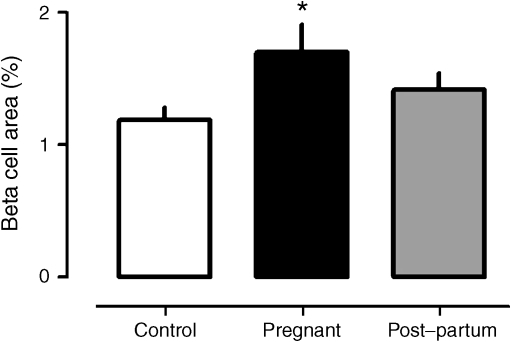
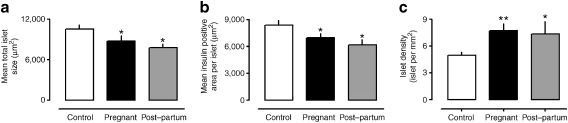
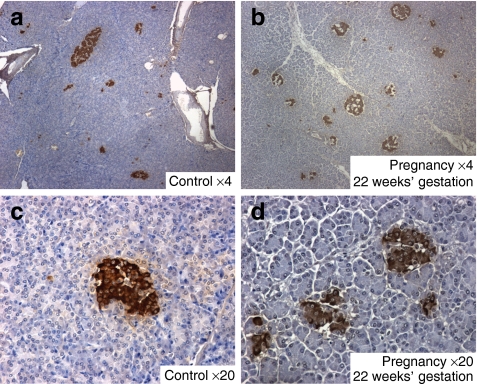
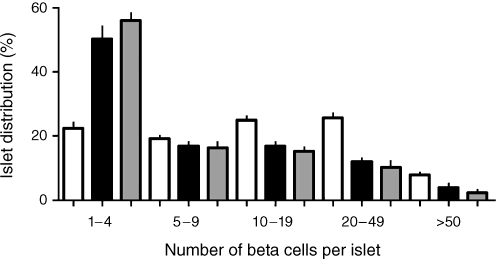
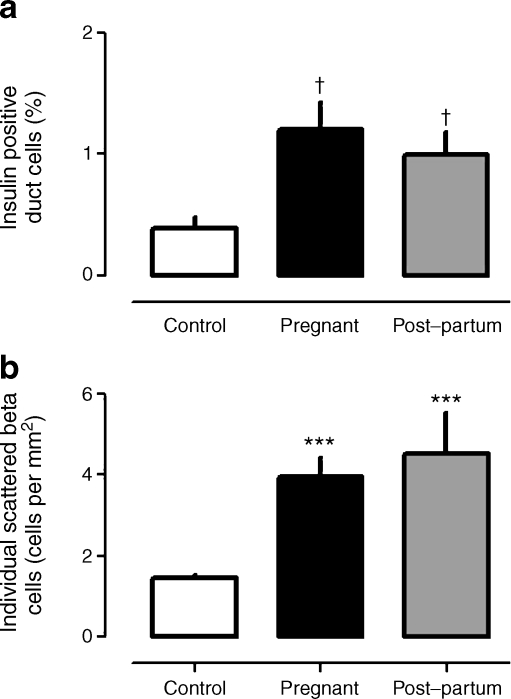
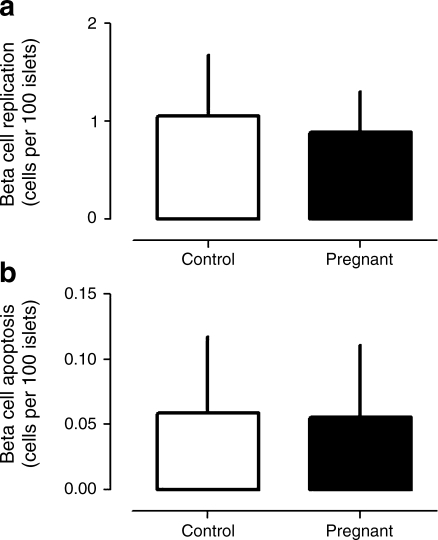
AIMS/HYPOTHESIS: We sought to establish the extent and basis for adaptive changes in beta cell numbers in human pregnancy. METHODS: Pancreas was obtained at autopsy from women who had died while pregnant (n = 18), post-partum (n = 6) or were not pregnant at or shortly before death (controls; n = 20). Pancreases were evaluated for fractional pancreatic beta cell area, islet size and islet fraction of beta cells, beta cell replication (Ki67) and apoptosis (TUNEL), and indirect markers of beta cell neogenesis (insulin-positive cells in ducts and scattered beta cells in pancreas). RESULTS: The pancreatic fractional beta cell area was increased by approximately 1.4-fold in human pregnancy, with no change in mean beta cell size. In pregnancy there were more small islets rather than an increase in islet size or beta cells per islet. No increase in beta cell replication or change in beta cell apoptosis was detected, but duct cells positive for insulin and scattered beta cells were increased with pregnancy. CONCLUSIONS/INTERPRETATION: The adaptive increase in beta cell numbers in human pregnancy is not as great as in most reports in rodents. This increase in humans is achieved by increased numbers of beta cells in apparently new small islets, rather than duplication of beta cells in existing islets, which is characteristic of pregnancy in rodents.
Overview
The claims and statistics of this paper haven’t been checked yet.
Free: it reads the open-access text and checks the first 5 claims that cite a source we can check. Create a free account to check every claim.
Integrity signals
Registry
Cites
Statistics
Figures
Verification
Claims the paper makes
The claims and statistics of this paper haven’t been checked yet.
Free: it reads the open-access text and checks the first 5 claims that cite a source we can check. Create a free account to check every claim.
Claims other papers make about this one
Each is checked against this paper’s own text: does it say what the citing paper says it does?
In the citing paper
“Although the mechanisms underlying pancreatic β-cell expansion in physiological settings may differ between species36,37, age-dependent restriction of β-cell proliferation is a conserved feature in mice and humans9,10.”
From PDGF signalling controls age-dependent proliferation in pancreatic β-cells (2011) · cites this paper as [36]
Self-check
Percentages, sums and reported differences re-computed from the paper’s own numbers.
The self-check needs the paper’s full text.
Citations
Cites
β-Cell Deficit and Increased β-Cell Apoptosis in Humans With Type 2 Diabetes
Butler, A. E., Janson, J., Bonner-Weir, S., Ritzel, R., Rizza, R. A., & Butler, P. C. (2003) · Diabetes · doi:10.2337/diabetes.52.1.102 · Cited by 4,011 · cited 4×
“In the former, a near complete loss of beta cell mass occurs [1], while in the latter, the deficit in beta cell mass is partial [2].”
BackgroundMethodInfluentialSelf-citationAdult pancreatic β-cells are formed by self-duplication rather than stem-cell differentiation
Dor, Y., Brown, J., Martinez, O. I., & Melton, D. A. (2004) · Nature · doi:10.1038/nature02520 · Cited by 2,219 · cited 1×
“Lineage studies in rodents have been interpreted as showing that replication of existing beta cells is the only potential source of new beta cells [20].”
BackgroundPathologic anatomy of the pancreas in juvenile diabetes mellitus
Gepts, W. (1965) · Diabetes · doi:10.2337/diab.14.10.619 · Cited by 1,345 · cited 1×
“In the former, a near complete loss of beta cell mass occurs [1], while in the latter, the deficit in beta cell mass is partial [2].”
BackgroundBuchanan, T. A., Xiang, A. H., Peters, R. K., Kjos, S. L., Marroquin, A., Goico, J., Ochoa, C., Tan, S., Berkowitz, K., Hodis, H. N., et al. (2002) · Diabetes · doi:10.2337/diabetes.51.9.2796 · Cited by 1,339
β Cells Can Be Generated from Endogenous Progenitors in Injured Adult Mouse Pancreas
Xu, X., D'Hoker, J., Stangé, G., Bonné, S., De Leu, N., Xiao, X., Van De Casteele, M., Mellitzer, G., Ling, Z., Pipeleers, D., et al. (2008) · Cell · doi:10.1016/j.cell.2007.12.015 · Cited by 988 · cited 1×
“Recent lineage tracing approaches have also been used to support the concept of beta cell neogenesis in rodents, but these obviously cannot be applied in humans [26, 27].”
BackgroundEndoplasmic reticulum stress contributes to beta cell apoptosis in type 2 diabetes
Laybutt, D. R., Preston, A. M., Åkerfeldt, M. C., Kench, J. G., Busch, A. K., Biankin, A. V., & Biden, T. J. (2007) · Diabetologia · doi:10.1007/s00125-006-0590-z · Cited by 830 · cited 1×
“Since beta cell failure in type 2 diabetes is best predicted by beta cell work load [29] and is characterised by endoplasmic stress [30, 31], it is not surprising that gestational diabetes occurs in those genetically predisposed to type 2 diabetes.”
BackgroundPancreatic β‐cell mass in European subjects with type 2 diabetes
Rahier, J., Guiot, Y., Goebbels, R. M., Sempoux, C., & Henquin, J. C. (2008) · Diabetes, Obesity and Metabolism · doi:10.1111/j.1463-1326.2008.00969.x · Cited by 756 · cited 1×
“Since obesity is associated with an increase in beta cell mass in humans [37], the failure of pancreatic fractional beta cell area to return to pre-pregnant levels in our post-partum women may have been due to the insulin resistance/ inflammation associated with the obesity.”
BackgroundLongitudinal changes in insulin release and insulin resistance in nonobese pregnant women
Catalano, P. M., Tyzbir, E. D., Roman, N. M., Amini, S. B., & Sims, E. A. H. (1991) · American Journal of Obstetrics and Gynecology · doi:10.1016/0002-9378(91)90012-g · Cited by 709 · cited 4×
“These findings are intriguing since it has previously been shown that the increment in first- and second-phase insulin release in response to glucose during pregnancy is present early in pregnancy (first trimester), while the insulin resistance that develops in pregnancy occurs later (third trimester) [7].”
BackgroundInfluentialMeier, J. J., Butler, A. E., Saisho, Y., Monchamp, T., Galasso, R., Bhushan, A., Rizza, R. A., & Butler, P. C. (2008) · Diabetes · doi:10.2337/db07-1369 · Cited by 683 · cited 1×
“By the same approach, moreover, we were readily able to detect beta cell replication in infants [15].”
Self-citationDynamics of β-cell Mass in the Growing Rat Pancreas: Estimation With a Simple Mathematical Model
Finegood, D. T., Scaglia, L., & Bonner-Weir, S. (1995) · Diabetes · doi:10.2337/diab.44.3.249 · Cited by 603
Research works printed but not linked: 2
- Wicksell SD (1926) The corpuscle problem II. Biometrika 18:151–172
- Bach G (1959) Uber die Grossenverteilung von Kugelschnitten in durchsichtigen Schnitten endlicher Dicke. Z Wiss Mikroskopie 64:265–270 (Article in German)
Cited by
Items 101–200 of 447
The Pancreatic β Cells in Human Type 2 Diabetes
Marchetti, P., Bugliani, M., Boggi, U., Masini, M., & Marselli, L. (2012) · Advances in experimental medicine and biology · doi:10.1007/978-1-4614-5441-0_22 · Cited by 69
Levetan, C. S., & Pierce, S. M. (2012) · Endocrine Practice · doi:10.4158/ep12138.ra · Cited by 60
Anzi, S., Stolovich-Rain, M., Klochendler, A., Fridlich, O., Helman, A., Paz, A., Avni‐Magen, N., Kaufman, E. A., Ginzberg, M. B., Snider, D., et al. (2018) · Developmental Cell · doi:10.1016/j.devcel.2018.05.024 · Cited by 70
Making β Cells from Adult Cells Within the Pancreas
Lysy, P. A., Weir, G. C., & Bonner‐Weir, S. (2013) · Current Diabetes Reports · doi:10.1007/s11892-013-0400-1 · Cited by 61
“In the latter, β-cell compensation is believed to result partly from replication, increased insulin secretion, and neogenesis [25, 26].”
BackgroundPennington, K. A., van der Walt, N., Pollock, K. E., Talton, O. O., & Schulz, L. C. (2017) · Biology of Reproduction · doi:10.1095/biolreprod.116.144543 · Cited by 55
French, E. K., Kleinberger, J. W., Salim, F. G., Cox, A. E., Takane, K. K., Scott, D. K., & Stewart, A. F. (2011) · Molecular Endocrinology · doi:10.1210/me.2011-1074 · Cited by 59
(Re)generating Human Beta Cells: Status, Pitfalls, and Perspectives
Baeyens, L., Lemper, M., Staels, W., Groef, S. D., Leu, N. D., Heremans, Y., German, M. S., & Heimberg, H. (2018) · Physiological Reviews · doi:10.1152/physrev.00034.2016 · Cited by 62
Pancreas-on-a-Chip Technology for Transplantation Applications
Abadpour, S., Aizenshtadt, A., Olsen, P. A., Shoji, K., Wilson, S. R., Krauss, S. J. K., & Scholz, H. (2020) · Current Diabetes Reports · doi:10.1007/s11892-020-01357-1 · Cited by 53
Li, H., Chen, X., & Li, M. (2013) · Europe PMC (PubMed Central) · Cited by 65
Histone chaperone ASF1B promotes humanβ-cell proliferation via recruitment of histone H3.3
Paul, P. K., Rabaglia, M. E., Wang, C., Stapleton, D. S., Leng, N., Kendziorski, C. M., Lewis, P. W., Keller, M. P., & Attie, A. (2016) · Cell Cycle · doi:10.1080/15384101.2016.1241914 · Cited by 55
Spears, E., Serafimidis, I., Powers, A. C., & Gavalas, A. (2021) · Frontiers in Endocrinology · doi:10.3389/fendo.2021.722250 · Cited by 53
“Autopsy studies revealed little increase in proliferation marker Ki67, in the pancreas of pregnant women (21).”
BackgroundBiomarkers of β-Cell Stress and Death in Type 1 Diabetes
Mirmira, R. G., Sims, E. K., Syed, F., & Evans‐Molina, C. (2016) · Current Diabetes Reports · doi:10.1007/s11892-016-0783-x · Cited by 52
Stress‐induced adaptive islet cell identity changes
Cigliola, V., Thorel, F., Chera, S., & Herrera, P. L. (2016) · Diabetes Obesity and Metabolism · doi:10.1111/dom.12726 · Cited by 53
“Although these were just snapshots of a dynamic process, these observations suggest that (1) there is adaptive β-cell mass increase during human pregnancy and (2) this could be achieved by differentiation of unidentified progenitors, rather than by duplication of pre-existing β-cells.(21)”
Sex Differences in Maturation of Human Embryonic Stem Cell–Derived β Cells in Mice
Saber, N., Bruin, J. E., O’Dwyer, S., Schuster, H., Rezania, A., & Kieffer, T. J. (2018) · Endocrinology · doi:10.1210/en.2018-00048 · Cited by 50
“The authors hypothesized that the increase in human b-cell mass during pregnancy was due to b-cell neogenesis, rather than the replication of existing b cells, which is thought to be the main mechanism in rodents (19).”
BackgroundResultNon-Coding RNA in Pancreas and β-Cell Development
Wong, W. K. M., Sørensen, A. E., Joglekar, M. V., Hardikar, A., & Dalgaard, L. T. (2018) · Non-Coding RNA · doi:10.3390/ncrna4040041 · Cited by 66
Sullivan, B. A., Hollister-Lock, J., Bonner-Weir, S., & Weir, G. C. (2015) · Diabetes · doi:10.2337/db14-1675 · Cited by 47
“Others point out the increase in b-cells as singlets or in small clumps that can be seen with pregnancy (19) or insulin resistance (17), but it is possible that these resulted from replication.”
BackgroundOrganoids from the Human Fetal and Adult Pancreas
Balak, J. R. A., Juksar, J., Carlotti, F., Nigro, A. L., & de Koning, E. J. P. (2019) · Current Diabetes Reports · doi:10.1007/s11892-019-1261-z · Cited by 53
Adult Pancreatic Alpha-Cells: A New Source of Cells for Beta-Cell Regeneration
Chung, C.-H., & Levine, F. (2010) · The Review of Diabetic Studies · doi:10.1900/rds.2010.7.124 · Cited by 53
“in obesity, type 2 diabetes (T2D) [13], pregnancy [14], and partial pancreatectomy [15].”
BackgroundDifferentiation of human pluripotent stem cells into β-cells: Potential and challenges
Quiskamp, N., Bruin, J. E., & Kieffer, T. J. (2015) · Best Practice & Research Clinical Endocrinology & Metabolism · doi:10.1016/j.beem.2015.10.011 · Cited by 54
Topologically Heterogeneous Beta Cell Adaptation in Response to High-Fat Diet in Mice
Ellenbroek, J. H., Töns, H. A., de Graaf, N., Loomans, C. J., Engelse, M. A., Vrolijk, H., Voshol, P. J., Rabelink, T. J., Carlotti, F., & de Koning, E. J. (2013) · PLoS ONE · doi:10.1371/journal.pone.0056922 · Cited by 46
“Furthermore, histological studies of beta cell adaptation in the human pancreas are often based on tissue samples from the splenic region only [3,25], whereas this may not be representative for the entire organ.”
BackgroundFetomaternal Expression of Glucose Transporters (GLUTs)—Biochemical, Cellular and Clinical Aspects
Sibiak, R., Ożegowska, K., Wender-Ożegowska, E., Gutaj, P., Mozdziak, P. E., & Kempisty, B. (2022) · Nutrients · doi:10.3390/nu14102025 · Cited by 61
First-phase insulin secretion: can its evaluation direct therapeutic approaches?
Di Giuseppe, G., Ciccarelli, G., Soldovieri, L., Capece, U., Cefalo, C. M. A., Moffa, S., Nista, E. C., Brunetti, M., Cinti, F., Gasbarrini, A., et al. (2023) · Trends in Endocrinology & Metabolism · doi:10.1016/j.tem.2023.02.001 · Cited by 46
The Role of Adiponectin during Pregnancy and Gestational Diabetes
Gruber, B. L. M., & Dolinsky, V. W. (2023) · Life · doi:10.3390/life13020301 · Cited by 55
“However, human islets isolated during pregnancy are scarce, and samples were heterogenous in origin (from pregnancies of varying gestational length, maternal ages, ethnicities and causes of death), complicating the interpretation [12].”
BackgroundInfluentialMaturation of Stem Cell-Derived Beta-cells Guided by the Expression of Urocortin 3
van der Meulen, T., & Huising, M. O. (2014) · The Review of Diabetic Studies · doi:10.1900/rds.2014.11.115 · Cited by 46
“Human pancreatic beta-cell replication peters out after the neonatal expansion of beta-cell mass [4, 5], and unlike in mice, does not increase under obese or pregnant conditions [6, 7].”
BackgroundHill, D. J. (2018) · Placenta · doi:10.1016/j.placenta.2018.01.002 · Cited by 44
A role for placental kisspeptin in β cell adaptation to pregnancy
Bowe, J. E., Hill, T. G., Hunt, K. F., Smith, L. I. F., Simpson, S., Amiel, S. A., & Jones, P. M. (2019) · JCI Insight · doi:10.1172/jci.insight.124540 · Cited by 50
Micro-fabricated scaffolds lead to efficient remission of diabetes in mice
Buitinga, M., Assen, F. P., Hanegraaf, M. A. J., Wieringa, P. A., Hilderink, J., Moroni, L., Truckenmüller, R. K., van Blitterswijk, C., Römer, G. R. B. E., Carlotti, F., et al. (2017) · Biomaterials · doi:10.1016/j.biomaterials.2017.03.031 · Cited by 49
“The unique aspect of microthermoforming is that it enables the reproducible creation of microwell structures with a designed shape, size, and distribution that not only limit islet aggregation, but also recreate the islet density found in human pancreatic tissue [39,40].”
Simpson, S., Smith, L., & Bowe, J. (2018) · Current Opinion in Pharmacology · doi:10.1016/j.coph.2018.08.004 · Cited by 45
“The limited data suggests b-cell proliferation does not increase in human pregnancy, as assessed by Ki67 staining, and neogenesis is more important in humans [67].”
BackgroundElksnis, A., Martinell, M., Eriksson, O., & Espes, D. (2019) · Frontiers in Physiology · doi:10.3389/fphys.2019.00107 · Cited by 48
Prediction of insulin treatment in women with gestational diabetes mellitus
Eleftheriades, M. I., Chatzakis, C., Papachatzopoulou, E., Papadopoulos, V. G., Lambrinoudaki, I. V., Dinas, K. D., Chrousos, G. P., & Sotiriadis, A. (2021) · Nutrition and Diabetes · doi:10.1038/s41387-021-00173-0 · Cited by 51
“In pregnancy, compensatory increases in β-cell mass are achieved through a combination of hypertrophic expansion, proliferation, and potentially, neogenesis from precursor cells accompanied by a temporary decrease in apoptosis [24].”
BackgroundHow, When, and Where Do Human β-Cells Regenerate?
Basile, G., Kulkarni, R. N., & Morgan, N. G. (2019) · Current Diabetes Reports · doi:10.1007/s11892-019-1176-8 · Cited by 50
A direct look at the dysfunction and pathology of the β cells in human type 2 diabetes
Marchetti, P., Suleiman, M., Luca, C. D., Baronti, W., Bosi, E., Tesi, M., & Marselli, L. (2020) · Seminars in Cell and Developmental Biology · doi:10.1016/j.semcdb.2020.04.005 · Cited by 46
Abnormal infant islet morphology precedes insulin resistance in PCOS-like monkeys
Nicol, L. E., O’Brien, T. D., Dumesic, D. A., Grogan, T., Tarantal, A. F., & Abbott, D. H. (2014) · PLoS ONE · doi:10.1371/journal.pone.0106527 · Cited by 41
“Components of beta cell neogenesis, hypertrophy, and increased replication have been studied in several animal models and recently assessed during human pregnancy; these studies have shown a state of normal, but relative, insulin resistance [20,21,22,23].”
BackgroundCourty, É., Besseiche, A., Do, T. T. H., Liboz, A., Aguid, F. M., Quilichini, E., Buscato, M., Gourdy, P., Gautier, J., Riveline, J., et al. (2018) · Diabetes · doi:10.2337/db17-1314 · Cited by 43
“However, recent studies have suggested that b-cell neogenesis also may contribute to the b-cell mass increase observed during pregnancy in mice (20) and humans (21).”
BackgroundDiscordance between GLP-1R gene and protein expression in mouse pancreatic islet cells
Gray, S. M., Xin, Y., Ross, E. C., Chazotte, B. M., Capozzi, M. E., El, K., Svendsen, B., Ravn, P., Sloop, K. W., Tong, J., et al. (2020) · Journal of Biological Chemistry · doi:10.1074/jbc.ra120.014368 · Cited by 38
“and, to a lesser extent, humans (42, 43), pregnancy induces transcriptional changes often associated with increased b-cell mass (44, 45), which return to prepregnancy levels shortly after parturition (46, 47).”
BackgroundPiecing together the puzzle of pancreatic islet adaptation in pregnancy
Banerjee, R. R. (2018) · Annals of the New York Academy of Sciences · doi:10.1111/nyas.13552 · Cited by 44
Heterogeneity of SOX9 and HNF1β in Pancreatic Ducts Is Dynamic
Rezanejad, H., Ouziel-Yahalom, L., Velde‐Keyzer, C. A. T., Sullivan, B. A., Hollister‐Lock, J., Li, W., Guo, L., Deng, S., Lei, J., Markmann, J. F., et al. (2018) · Stem Cell Reports · doi:10.1016/j.stemcr.2018.01.028 · Cited by 41
“In compensatory growth of b cells, replication has been shown to be dominant in adult mice (Teta et al., 2005, 2007), while neogenesis in adult humans appears to make an important contribution (Butler et al., 2010; Mezza et al., 2014; Yoneda et al., 2013).”
BackgroundBeamish, C. A., Zhang, L., Szlapinski, S. K., Strutt, B. J., & Hill, D. J. (2017) · PLoS ONE · doi:10.1371/journal.pone.0182256 · Cited by 44
EGFR Signaling Promotes β-Cell Proliferation and Survivin Expression during Pregnancy
Hakonen, E., Ustinov, J., Palgi, J., Miettinen, P. J., & Otonkoski, T. (2014) · PLoS ONE · doi:10.1371/journal.pone.0093651 · Cited by 37
“Furthermore, autopsy studies of human maternal pancreata during pregnancy have shown an increase in the number of small islets rather than increased b-cell proliferation [16].”
Krentz, N. A. J., Shea, L. D., Huising, M. O., & Shaw, J. (2021) · The Lancet Diabetes & Endocrinology · doi:10.1016/s2213-8587(21)00170-4 · Cited by 42
A Simple Matter of Life and Death—The Trials of Postnatal Beta-Cell Mass Regulation
Tarabra, E., Pelengaris, S., & Khan, M. (2012) · International Journal of Endocrinology · doi:10.1155/2012/516718 · Cited by 40
“In contrast to rodents, beta-cell mass expansion in humans was achieved by the formation of new islets or islet neogenesis [258].”
ResultZhou, J., Du, X., Zhang, Z., & Gui-sheng, Q. (2017) · Pharmacology · doi:10.1159/000479088 · Cited by 38
Xu, Y., Wang, X., Gao, L., Zhu, J., Zhang, H., Shi, H., Woo, M., & Wu, X. (2015) · Diabetologia · doi:10.1007/s00125-015-3670-0 · Cited by 41
“[1–4].”
mRNA expression analysis of cell cycle genes in islets of pregnant mice
Schraenen, A., de Faudeur, G., Thorrez, L., Lemaire, K., Wichelen, G. V., Granvik, M., Lommel, L. V., Veld, P. I. '., & Schuit, F. C. (2010) · Diabetologia · doi:10.1007/s00125-010-1912-8 · Cited by 38
“Conversely, Butler and colleagues recently reported [50] a more modest 1.”
BackgroundIslet Number Rather Than Islet Size Is a Major Determinant of β- and α-Cell Mass in Humans
Kou, K., Saisho, Y., Sato, S., Yamada, T., & Itoh, H. (2014) · The Journal of Clinical Endocrinology & Metabolism · doi:10.1210/jc.2013-3731 · Cited by 41
Long Non-Coding RNAs as Key Modulators of Pancreatic β-Cell Mass and Function
López–Noriega, L., & Rutter, G. A. (2021) · Frontiers in Endocrinology · doi:10.3389/fendo.2020.610213 · Cited by 41
“For a number of years, it was believed that b-cell apoptosis played a major role in the pathogenesis of T2D (6, 66).”
BackgroundHorn, S., Kirkegaard, J. S., Hoelper, S., Seymour, P. A., Rescan, C., Nielsen, J. H., Madsen, O. D., Jensen, J. N., Krüger, M., Grønborg, M., et al. (2015) · Molecular Endocrinology · doi:10.1210/me.2015-1208 · Cited by 38
Moon, J. H., Lee, J., Kim, K. H., Kim, H. J., Kim, H., Cha, H.-N., Park, J., Lee, H. F., Park, S.-Y., Jang, H. C., et al. (2023) · Experimental & Molecular Medicine · doi:10.1038/s12276-023-01100-2 · Cited by 39
“At mid-gestation, the β cell mass expands by up to 3 – 4-fold in rodents and 1.4-fold in humans 5,6 .”
BackgroundInfluentialHill, D. J., & Hill, T. G. (2024) · Frontiers in Endocrinology · doi:10.3389/fendo.2024.1456629 · Cited by 47
Grapensparr, L., Vasylovska, S., Li, Z., Olerud, J., Jansson, L. E., Kozlova, E. N., & Carlsson, P. (2015) · The Journal of Clinical Endocrinology & Metabolism · doi:10.1210/jc.2014-4070 · Cited by 35
Filardi, T., Catanzaro, G., Grieco, G. E., Splendiani, E., Trocchianesi, S., Santangelo, C., Brunelli, R., Guarino, E., Sebastiani, G., Dotta, F., et al. (2022) · International Journal of Molecular Sciences · doi:10.3390/ijms23084276 · Cited by 39
Diedisheim, M., Mallone, R., Boîtard, C., & Larger, É. (2016) · The Journal of Clinical Endocrinology & Metabolism · doi:10.1210/jc.2015-3756 · Cited by 42
Nkx6.1‐mediated insulin secretion and β‐cell proliferation is dependent on upregulation of c‐Fos
Ray, J. D., Kener, K. B., Bitner, B. F., Wright, B. J., Ballard, M., Barrett, E., Hill, J. T., Moss, L. G., & Tessem, J. S. (2016) · FEBS Letters · doi:10.1002/1873-3468.12208 · Cited by 37
Miao, Z., Wu, H., Ren, L., Bu, N., Jiang, L., Yang, H., Zhang, J., & Guo, X. (2020) · International Journal of Endocrinology · doi:10.1155/2020/7417356 · Cited by 35
“To remain euglycemic, β-cell function should be increased to compensate insulin resistance [9, 16].”
BackgroundContribution of a Non-β-Cell Source to β-Cell Mass during Pregnancy
Toselli, C., Hyslop, C. M., Hughes, M. L., Natale, D. R. C., Santamaría, P., & Huang, C. (2014) · PLoS ONE · doi:10.1371/journal.pone.0100398 · Cited by 39
“to the increase in b-cell mass during pregnancy [13,14].”
BackgroundResultExendin-4 Promotes Beta Cell Proliferation via PI3k/Akt Signalling Pathway
Wang, C., Chen, X., Ding, X., He, Y., Gu, C., & Zhou, L. (2015) · Cellular Physiology and Biochemistry · doi:10.1159/000374027 · Cited by 34
Serotonin competence of mouse beta cells during pregnancy
Goyvaerts, L., Schraenen, A., & Schuit, F. C. (2016) · Diabetologia · doi:10.1007/s00125-016-3951-2 · Cited by 36
“islets during pregnancy is that in humans there is little or no beta cell proliferation [49].”
BackgroundMathematical models of pancreatic islet size distributions
Jo, J., Hara, M., Ahlgren, U., Sorenson, R. L., & Periwal, V. (2012) · Islets · doi:10.4161/isl.18660 · Cited by 35
Increased Proliferation of the Pancreatic Duct Gland Compartment in Type 1 Diabetes
Moin, A. S. M., Butler, P. C., & Butler, A. E. (2016) · The Journal of Clinical Endocrinology & Metabolism · doi:10.1210/jc.2016-3001 · Cited by 35
“Although new b-cells can form in adult humans, for example during pregnancy (27), the source of these new Figure 3.”
BackgroundSelf-citationEffects of metformin on compensatory pancreatic β-cell hyperplasia in mice fed a high-fat diet
Tajima, K., Shirakawa, J., Okuyama, T., Kyohara, M., Yamazaki, S., Togashi, Y., & Terauchi, Y. (2017) · American Journal of Physiology-Endocrinology and Metabolism · doi:10.1152/ajpendo.00447.2016 · Cited by 32
“Because human -cell replication is very low in basal, insulin resistance and type 2 diabetic conditions (5, 6), the inhibitory effects of metformin on -cell proliferation could be disregarded.”
BackgroundSánchez-Muniz, F. J., Gesteiro, E., Rodilla, M. E., Bernal, B. R., & Bastida, S. (2013) · PubMed · doi:10.3305/nh.2013.28.2.6307 · Cited by 55
Quesada‐Candela, C., Tudurí, E., Marroquí, L., Alonso‐Magdalena, P., Quesada, I., & Nadal, Á. (2019) · Metabolism · doi:10.1016/j.metabol.2019.153963 · Cited by 34
Adiponectin Promotes Maternal β-Cell Expansion Through Placental Lactogen Expression
Admin, A., Qiao, L., Saget, S., Lu, C., Hay, W. W., Karsenty, G., & Shao, J. (2020) · Diabetes · doi:10.2337/db20-0471 · Cited by 33
“Among these metabolic adaptations, the reduction in insulin sensitivity in metabolically active tissues and an increase in b-cell mass and blood insulin concentrations have been well-documented in pregnant women and many animal models, particularly rodents (6,7).”
BackgroundLoss of Foxd3 Results in Decreased β-Cell Proliferation and Glucose Intolerance During Pregnancy
Plank, J. L., Frist, A. Y., LeGrone, A. W., Magnuson, M. A., & Labosky, P. A. (2011) · Endocrinology · doi:10.1210/en.2010-1462 · Cited by 30
Beta cell adaptation in pregnancy: a major difference between humans and rodents?
Genevay, M., Pontes, H., & Meda, P. (2010) · Diabetologia · doi:10.1007/s00125-010-1848-z · Cited by 39
“With this caveat in mind, the new study [ 18 ] nevertheless suggests that rodent and human beta cells may adapt differently to pregnancy.”
BackgroundMethodResultInfluentialVakili, H., Jin, Y., Menticoglou, S. M., & Cattini, P. A. (2013) · Journal of Biological Chemistry · doi:10.1074/jbc.m113.474999 · Cited by 32
“To compensate, there are increases in insulin secretion per pancreatic -cell and in -cell proliferation such that -cell mass increases 50% in pregnancy (5, 6).”
BackgroundStem cells to restore insulin production and cure diabetes
Sordi, V., Pellegrini, S., Krampera, M., Marchetti, P., Pessina, A., Ciardelli, G., Fadini, G. P., Pintus, C., Pantè, G., & Piemonti, L. (2017) · Nutrition Metabolism and Cardiovascular Diseases · doi:10.1016/j.numecd.2017.02.004 · Cited by 31
“observed the presence of more new small islets rather than an increase in b cell replication, islet size or change in apoptosis [21] (Butler et al.”
BackgroundResultKapur, A., McIntyre, D. H., & Hod, M. (2019) · Endocrinology and Metabolism Clinics of North America · doi:10.1016/j.ecl.2019.05.009 · Cited by 37
Gaetano, A. D., & Hardy, T. A. (2019) · PLoS ONE · doi:10.1371/journal.pone.0222833 · Cited by 31
“While otherwise plausible, this behavior might seem inconsistent with the very rapid expansion of β-cell mass in pregnancy [82], and with its fast decline after delivery: different mechanisms than those here considered may be at play during pregnancy.”
BackgroundHoyeck, M. P., Merhi, R. C., Blair, H. L., Spencer, C. D., Payant, M. A., Alfonso, D. I. M., Zhang, M., Matteo, G., Chee, M. J. S., & Bruin, J. E. (2020) · Molecular Metabolism · doi:10.1016/j.molmet.2020.101104 · Cited by 30
Aurora Kinase A is critical for the Nkx6.1 mediated β-cell proliferation pathway
Hobson, A., Draney, C., Stratford, A., Becker, T. C., Lu, D., Arlotto, M. E., & Tessem, J. S. (2015) · Islets · doi:10.1080/19382014.2015.1027854 · Cited by 36
Arumugam, R., Fleenor, D. E., Lu, D., & Freemark, M. (2011) · Endocrinology · doi:10.1210/en.2010-1258 · Cited by 30
Machine learning based model for the early detection of Gestational Diabetes Mellitus
Zaky, H., Fthenou, E., Srour, L., Farrell, T. J., Bashir, M., Hajj, N. E., & Alam, T. (2025) · BMC Medical Informatics and Decision Making · doi:10.1186/s12911-025-02947-3 · Cited by 34
“Therefore, pancreatic ß cells increase insulin production to oppose the desensitizing effects of placental hormones and retain blood sugar levels within the normal range [5].”
Epigenetic Links between Microbiota and Gestational Diabetes
Mora-Janiszewska, O., Faryniak-Zuzak, A., & Darmochwał-Kolarz, D. (2022) · International Journal of Molecular Sciences · doi:10.3390/ijms23031831 · Cited by 28
“During physiological pregnancy, enhanced production and secretion of insulin, which is possible due to the hypertrophy and proliferation of pancreatic beta cells [19,20], is accompanied by an alteration in the sensitivity of tissues to insulin.”
BackgroundRassie, K. L., Giri, R., Joham, A. E., Mousa, A., & Teede, H. J. (2022) · Frontiers in Endocrinology · doi:10.3389/fendo.2022.1069625 · Cited by 29
“autopsy studies confirm increased beta-cell mass in pregnant women (56) and in vitro evidence shows that PRL (and hPL)”
BackgroundMittendorfer, B., Patterson, B. W., Haire-Joshu, D. L., Cahill, A. G., Cade, W. T., Stein, R. I., & Klein, S. (2023) · Diabetes Care · doi:10.2337/dc22-1894 · Cited by 29
HDAC1 overexpression enhances β-cell proliferation by down-regulating Cdkn1b/p27
Draney, C., Austin, M. C., Leifer, A. H., Smith, C. J., Kener, K. B., Aitken, T. J., Hess, K. H., Haines, A., Lett, E., Hernandez, A. M., et al. (2018) · Biochemical Journal · doi:10.1042/bcj20180465 · Cited by 31
King, R., Hill, J. L., Saha, B., Tong, Y., Strutt, B. J., Russell, M. A., Morgan, N. G., Richardson, S. J., & Hill, D. J. (2019) · Nutrients · doi:10.3390/nu11030605 · Cited by 31
Pancreatic β cell regeneration induced by clinical and preclinical agents
Wang, K., Tao, M., Wei, T., & Wei, R. (2021) · World Journal of Stem Cells · doi:10.4252/wjsc.v13.i1.64 · Cited by 30
Caballero, F., Siniakowicz, K., Hollister‐Lock, J., Duran, L., Katsuta, H., Yamada, T., Lei, J., Deng, S., Westermark, G. T., Markmann, J. F., et al. (2014) · Cell Transplantation · doi:10.3727/096368912x659916 · Cited by 35
“In humans, b-cell replication in most adult pancreas appears to be negligible (4,6,8,17), and there is evidence for some neogenesis (1,3).”
Insulin Resistance Compensation: Not Just a Matter of β-Cells?
Montanya, E. (2014) · Diabetes · doi:10.2337/db13-1843 · Cited by 30
“In humans, b-cell mass expansion has been shown in normal physiological growth (4) and in insulinresistant conditions such as pregnancy (5) and obesity (6–10).”
BackgroundGrotz, A. K., Abaitua, F., Navarro‐Guerrero, E., Hastoy, B., Ebner, D. V., & Gloyn, A. L. (2019) · Wellcome Open Research · doi:10.12688/wellcomeopenres.15447.2 · Cited by 27
Chemical Methods to Induce Beta-Cell Proliferation
Vetere, A., & Wagner, B. K. (2012) · International Journal of Endocrinology · doi:10.1155/2012/925143 · Cited by 29
Pregnancy-induced Cardiovascular Pathologies: Importance of Structural Components and Lipids
Aleksenko, L., & Quaye, I. K. (2020) · The American Journal of the Medical Sciences · doi:10.1016/j.amjms.2020.05.014 · Cited by 28
Arumugam, R., Fleenor, D., & Freemark, M. (2013) · Endocrine · doi:10.1007/s12020-013-0073-1 · Cited by 27
“Beta cell mass and insulin production increase dramatically during two stages of the normal lifespan: the perinatal/early postnatal period and pregnancy [1–4].”
BackgroundNguyen‐Tu, M., Xavier, G. D. S., Leclerc, I., & Rutter, G. A. (2018) · Journal of Biological Chemistry · doi:10.1074/jbc.ra118.003613 · Cited by 28
“(31,32), pregnancy (33,34) or insulin resistance ("compensation") prior to the onset of type 2 diabetes (35,36).”
BackgroundCastillo‐Castrejón, M., Jansson, T., & Powell, T. L. (2019) · American Journal of Physiology-Endocrinology and Metabolism · doi:10.1152/ajpendo.00196.2019 · Cited by 27
“In healthy pregnancies, normoglycemia is maintained by adaptive pancreatic -cell hyperplasia, resulting in maternal hyperinsulinema (8).”
BackgroundHarnessing beta cell regeneration biology for diabetes therapy
Bourgeois, S., Coenen, S., Degroote, L., Willems, L., Mulders, A. V., Pierreux, J., Heremans, Y., Leu, N. D., & Staels, W. (2024) · Trends in Endocrinology and Metabolism · doi:10.1016/j.tem.2024.03.006 · Cited by 30
“In humans, the observation of insulin-positive cells near the ductal lining of adult healthy [142,143], pregnant [144], and insulin-resistant and diabetic pancreas [145] suggested the existence of a duct-resident endocrine progenitor.”
BackgroundRegulated and Reversible Induction of Adult Human β-Cell Replication
Takane, K. K., Kleinberger, J. W., Salim, F. G., Fiaschi‐Taesch, N., & Stewart, A. F. (2011) · Diabetes · doi:10.2337/db11-0580 · Cited by 28
Mishra, A., Ruano, S. H., Saha, P. K., & Pennington, K. A. (2022) · PLoS ONE · doi:10.1371/journal.pone.0279041 · Cited by 28
“Women with GDM have suboptimal beta cell expansion in response to the natural state of insulin resistance during pregnancy [2, 9, 12].”
BackgroundMerrill, A. K., Sobolewski, M., & Susiarjo, M. (2023) · Molecular and Cellular Endocrinology · doi:10.1016/j.mce.2023.112031 · Cited by 24
Lee, S., Hao, E., Levine, F., & Itkin‐Ansari, P. (2011) · Islets · doi:10.4161/isl.3.6.17923 · Cited by 28
Treatment options for diabetes: Potential role of stem cells
Stanekzai, J., Isenović, E. R., & Mousa, S. A. (2012) · Diabetes Research and Clinical Practice · doi:10.1016/j.diabres.2012.09.010 · Cited by 29
“[90] Butler AE, Cao-Minh L, Galasso R, Rizza RA, Corradin A, Cobelli C, et al.”
BackgroundAllegretti, P. A., Horton, T. M., Abdolazimi, Y., Moeller, H. P., Yeh, B. T., Caffet, M., Michel, G., Smith, M. A., & Annes, J. P. (2019) · Bioorganic & Medicinal Chemistry · doi:10.1016/j.bmc.2019.115193 · Cited by 27
Connexin Implication in the Control of the Murine Beta-Cell Mass
Klee, P., Lamprianou, S., Charollais, A., Caille, D., Sarro, R., Cederroth, M., Haefliger, J., & Meda, P. (2011) · Pediatric Research · doi:10.1203/pdr.0b013e318220f106 · Cited by 26
“However, the effect of each of these factors is quantitatively modest and may not necessarily occur in humans (23,24).”
BackgroundRole of the Mammalian Target of Rapamycin (mTOR) Complexes in Pancreatic β-Cell Mass Regulation
Bartolomé, A., & Guillén, C. (2014) · Vitamins and hormones · doi:10.1016/b978-0-12-800174-5.00017-x · Cited by 27
“In humans and rodents, b-cell mass can increase up to 150% during pregnancy (Brelje et al., 1993; Butler et al., 2010).”
The required beta cell research for improving treatment of type 2 diabetes
Thorens, B. (2013) · Journal of Internal Medicine · doi:10.1111/joim.12096 · Cited by 26
Adiponectin and β-Cell Adaptation in Pregnancy
Retnakaran, R. R. (2017) · Diabetes · doi:10.2337/dbi17-0001 · Cited by 25
“For example, the human response appears to involve a smaller overall increase in the number of b-cells, with a greater contribution of islet neogenesis (18).”
BackgroundGao, R., Fu, Q., Jiang, H., Shen, M., Zhao, R., Yu, Q., He, Y., Xu, K., Xu, X., Chen, H., et al. (2021) · iScience · doi:10.1016/j.isci.2021.102265 · Cited by 23
Maternal Diabetes and Postnatal High-Fat Diet on Pregnant Offspring
Sinzato, Y. K., Paula, V. G., Gallego, F. Q., Moraes-Souza, R. Q., Corrente, J. E., Volpato, G. T., & Damasceno, D. C. (2022) · Frontiers in Cell and Developmental Biology · doi:10.3389/fcell.2022.818621 · Cited by 22
“The increased β-cell mass depends on a combination of the proliferation of existing β-cells, hypertrophic expansion, differentiation of resident progenitor β-cells, or islet cell transdifferentiation accompanied by a temporary decrease in apoptosis (Butler et al., 2010; Ernst et al., 2011; Bonner-Weir et al., 2012; Mo…”
Background
Metadata
- Authors
- Butler, A. E., Cao-Minh, L., Galasso, R., Rizza, R. A., Corradin, A., Cobelli, C., & Butler, P. C.
- Affiliations
- University of California, Los Angeles (US)
- Mayo Clinic (US)
- University of Padua (IT)
- Corresponding author
- Butler, P. C.
- Venue
- Diabetologia
- Published
- 2010-06-05
- Volume
- 53
- Issue
- 10
- Pages
- 2167-2176
- ISSN
- 0012-186X (ISSN-L)
- 1432-0428
- PMC
- PMC2931643
- OpenAlex
- W2036800308
- Cited by
- 435
- References
- 36
- Citations by year
- 2026: 14 · 2025: 17 · 2024: 24 · 2023: 24 · 2022: 31 · 2021: 39 · 2020: 30 · 2019: 34 · 2018: 26 · 2017: 26 · 2016: 27 · 2015: 24 · 2014: 31 · 2013: 31 · 2012: 28
- FWCI
- 29.34
- Type
- journal article
- Language
- en
- Open access
- hybrid
- doi.org
- Licence
- cc-by-nc
- Locations
- Diabetologia (publishedVersion, cc-by-nc)
- PubMed Central (publishedVersion, cc-by-nc)
- PubMed (publishedVersion)
- eScholarship (California Digital Library) (submittedVersion)
- Padua Research Archive (University of Padova) (submittedVersion, cc-by-nc)
- Funders
- Larry L. Hillblom Foundation
- National Institute of Diabetes and Digestive and Kidney Diseases (DK-061539, R01DK061539, DK059579, #DK077967, R01DK077967, R01DK059579)
- Topics
- Health Sciences › Medicine › Endocrinology, Diabetes and Metabolism › Pancreatic function and diabetes
- Health Sciences › Medicine › Obstetrics and Gynecology › Gestational Diabetes Research and Management
- Life Sciences › Biochemistry, Genetics and Molecular Biology › Genetics › Diabetes and associated disorders
- Keywords
- pancreatic beta cells, beta-cell turnover, human pregnancy, beta-cell neogenesis, beta-cell proliferation, Ki-67, TUNEL, islet size
- MeSH terms
- Adolescent, Adult, Cell Count, Female, Humans, Immunohistochemistry, Insulin, Pregnancy, Apoptosis, Cell Size, Cell Proliferation, Insulin-Secreting Cells
About these checks
Registry, retraction, Cites and statistics results are computed, not judged, with one exception: a printed reference that no index lists is read once by a model before it counts as a citation error. Claims are extracted by a model and kept only when their quote appears verbatim in the text; each cited source is then checked, with a model’s help, for whether it says what the claim relies on. Those verdicts can be wrong — read the claim’s quote and the cited source before relying on one.
Statistics and arithmetic are recomputed, not judged.
Confidence bands are shown only for fields calibrated on our annotated test set. None is calibrated yet, so no band is shown.
What counts as a claim ›How we measure confidence ›How we check this ›
Are you an author, or do you see a problem with this page? Request a review
Data sources
Bibliographic data: Semantic Scholar, OpenAlex, Crossref.
Contains information from the Semantic Scholar Academic Graph Datasets, made available under the ODC Attribution License (ODC-BY 1.0).
Semantic Scholar’s data is described in: Kinney, R., et al. (2023). The Semantic Scholar Open Data Platform. arXiv:2301.10140.
