

Adaptive changes in pancreatic beta cell fractional area and beta cell turnover in human pregnancy
Open accessThe DOI matches its Crossref record; 39 of the 39 references it cites were found in a registry or an index.
Abstract
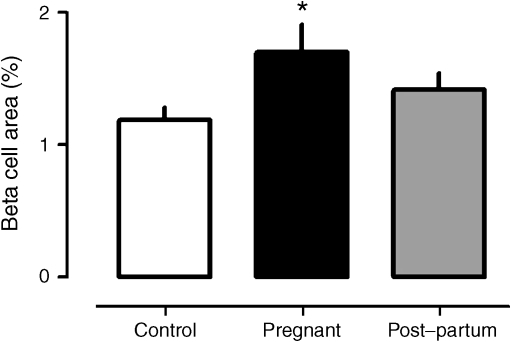
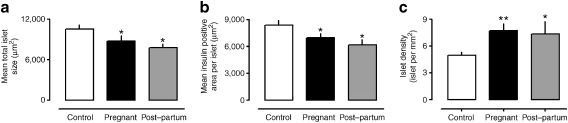
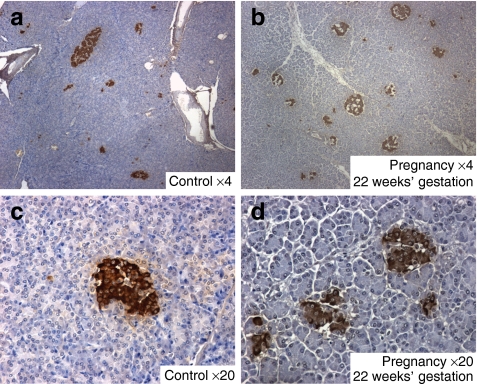
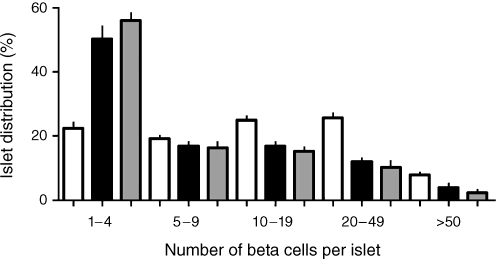
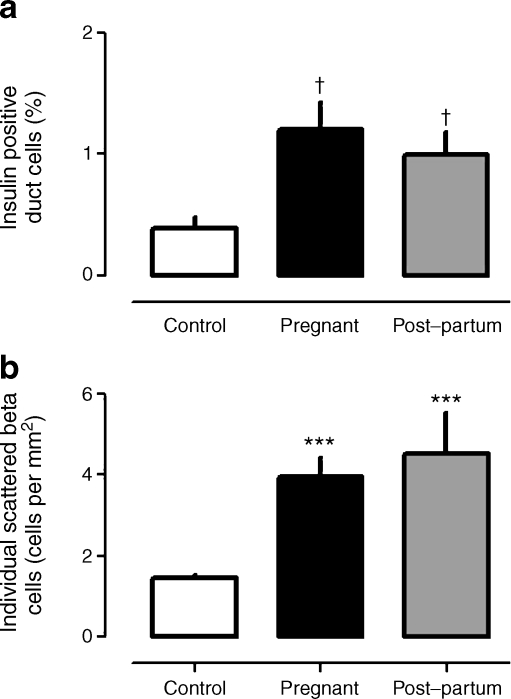
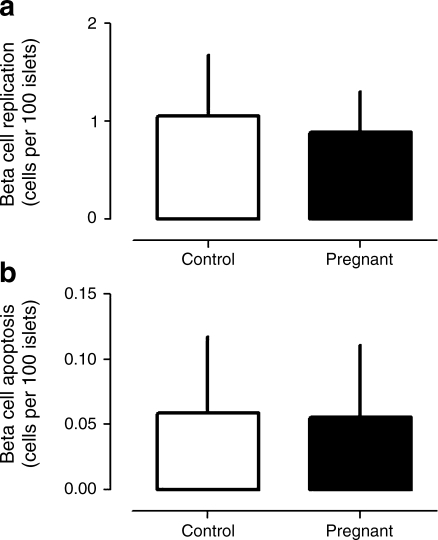
AIMS/HYPOTHESIS: We sought to establish the extent and basis for adaptive changes in beta cell numbers in human pregnancy. METHODS: Pancreas was obtained at autopsy from women who had died while pregnant (n = 18), post-partum (n = 6) or were not pregnant at or shortly before death (controls; n = 20). Pancreases were evaluated for fractional pancreatic beta cell area, islet size and islet fraction of beta cells, beta cell replication (Ki67) and apoptosis (TUNEL), and indirect markers of beta cell neogenesis (insulin-positive cells in ducts and scattered beta cells in pancreas). RESULTS: The pancreatic fractional beta cell area was increased by approximately 1.4-fold in human pregnancy, with no change in mean beta cell size. In pregnancy there were more small islets rather than an increase in islet size or beta cells per islet. No increase in beta cell replication or change in beta cell apoptosis was detected, but duct cells positive for insulin and scattered beta cells were increased with pregnancy. CONCLUSIONS/INTERPRETATION: The adaptive increase in beta cell numbers in human pregnancy is not as great as in most reports in rodents. This increase in humans is achieved by increased numbers of beta cells in apparently new small islets, rather than duplication of beta cells in existing islets, which is characteristic of pregnancy in rodents.
Overview
The claims and statistics of this paper haven’t been checked yet.
Free: it reads the open-access text and checks the first 5 claims that cite a source we can check. Create a free account to check every claim.
Integrity signals
Registry
Cites
Statistics
Figures
Verification
Claims the paper makes
The claims and statistics of this paper haven’t been checked yet.
Free: it reads the open-access text and checks the first 5 claims that cite a source we can check. Create a free account to check every claim.
Claims other papers make about this one
Each is checked against this paper’s own text: does it say what the citing paper says it does?
In the citing paper
“Although the mechanisms underlying pancreatic β-cell expansion in physiological settings may differ between species36,37, age-dependent restriction of β-cell proliferation is a conserved feature in mice and humans9,10.”
From PDGF signalling controls age-dependent proliferation in pancreatic β-cells (2011) · cites this paper as [36]
Self-check
Percentages, sums and reported differences re-computed from the paper’s own numbers.
The self-check needs the paper’s full text.
Citations
Cites
β-Cell Deficit and Increased β-Cell Apoptosis in Humans With Type 2 Diabetes
Butler, A. E., Janson, J., Bonner-Weir, S., Ritzel, R., Rizza, R. A., & Butler, P. C. (2003) · Diabetes · doi:10.2337/diabetes.52.1.102 · Cited by 4,011 · cited 4×
“In the former, a near complete loss of beta cell mass occurs [1], while in the latter, the deficit in beta cell mass is partial [2].”
BackgroundMethodInfluentialSelf-citationAdult pancreatic β-cells are formed by self-duplication rather than stem-cell differentiation
Dor, Y., Brown, J., Martinez, O. I., & Melton, D. A. (2004) · Nature · doi:10.1038/nature02520 · Cited by 2,219 · cited 1×
“Lineage studies in rodents have been interpreted as showing that replication of existing beta cells is the only potential source of new beta cells [20].”
BackgroundPathologic anatomy of the pancreas in juvenile diabetes mellitus
Gepts, W. (1965) · Diabetes · doi:10.2337/diab.14.10.619 · Cited by 1,345 · cited 1×
“In the former, a near complete loss of beta cell mass occurs [1], while in the latter, the deficit in beta cell mass is partial [2].”
BackgroundBuchanan, T. A., Xiang, A. H., Peters, R. K., Kjos, S. L., Marroquin, A., Goico, J., Ochoa, C., Tan, S., Berkowitz, K., Hodis, H. N., et al. (2002) · Diabetes · doi:10.2337/diabetes.51.9.2796 · Cited by 1,339
β Cells Can Be Generated from Endogenous Progenitors in Injured Adult Mouse Pancreas
Xu, X., D'Hoker, J., Stangé, G., Bonné, S., De Leu, N., Xiao, X., Van De Casteele, M., Mellitzer, G., Ling, Z., Pipeleers, D., et al. (2008) · Cell · doi:10.1016/j.cell.2007.12.015 · Cited by 988 · cited 1×
“Recent lineage tracing approaches have also been used to support the concept of beta cell neogenesis in rodents, but these obviously cannot be applied in humans [26, 27].”
BackgroundEndoplasmic reticulum stress contributes to beta cell apoptosis in type 2 diabetes
Laybutt, D. R., Preston, A. M., Åkerfeldt, M. C., Kench, J. G., Busch, A. K., Biankin, A. V., & Biden, T. J. (2007) · Diabetologia · doi:10.1007/s00125-006-0590-z · Cited by 830 · cited 1×
“Since beta cell failure in type 2 diabetes is best predicted by beta cell work load [29] and is characterised by endoplasmic stress [30, 31], it is not surprising that gestational diabetes occurs in those genetically predisposed to type 2 diabetes.”
BackgroundPancreatic β‐cell mass in European subjects with type 2 diabetes
Rahier, J., Guiot, Y., Goebbels, R. M., Sempoux, C., & Henquin, J. C. (2008) · Diabetes, Obesity and Metabolism · doi:10.1111/j.1463-1326.2008.00969.x · Cited by 756 · cited 1×
“Since obesity is associated with an increase in beta cell mass in humans [37], the failure of pancreatic fractional beta cell area to return to pre-pregnant levels in our post-partum women may have been due to the insulin resistance/ inflammation associated with the obesity.”
BackgroundLongitudinal changes in insulin release and insulin resistance in nonobese pregnant women
Catalano, P. M., Tyzbir, E. D., Roman, N. M., Amini, S. B., & Sims, E. A. H. (1991) · American Journal of Obstetrics and Gynecology · doi:10.1016/0002-9378(91)90012-g · Cited by 709 · cited 4×
“These findings are intriguing since it has previously been shown that the increment in first- and second-phase insulin release in response to glucose during pregnancy is present early in pregnancy (first trimester), while the insulin resistance that develops in pregnancy occurs later (third trimester) [7].”
BackgroundInfluentialMeier, J. J., Butler, A. E., Saisho, Y., Monchamp, T., Galasso, R., Bhushan, A., Rizza, R. A., & Butler, P. C. (2008) · Diabetes · doi:10.2337/db07-1369 · Cited by 683 · cited 1×
“By the same approach, moreover, we were readily able to detect beta cell replication in infants [15].”
Self-citationDynamics of β-cell Mass in the Growing Rat Pancreas: Estimation With a Simple Mathematical Model
Finegood, D. T., Scaglia, L., & Bonner-Weir, S. (1995) · Diabetes · doi:10.2337/diab.44.3.249 · Cited by 603
Research works printed but not linked: 2
- Wicksell SD (1926) The corpuscle problem II. Biometrika 18:151–172
- Bach G (1959) Uber die Grossenverteilung von Kugelschnitten in durchsichtigen Schnitten endlicher Dicke. Z Wiss Mikroskopie 64:265–270 (Article in German)
Cited by
Items 301–400 of 447
Oakie, A., & Nostro, M. C. (2021) · Frontiers in Endocrinology · doi:10.3389/fendo.2021.636182 · Cited by 8
Nunes, C. B., Borges, M. C., Freathy, R. M., Lawlor, D. A., Qvigstad, E., Evans, D. M., & Moen, G.-H. (2024) · Metabolites · doi:10.3390/metabo14090508 · Cited by 9
Velmurugan, S., Pandey, V. K., Verma, N., Kotiya, D., Despa, F., & Despa, S. I. (2025) · Diabetologia · doi:10.1007/s00125-025-06421-7 · Cited by 7
“To maintain systemic glucose homeostasis, there is a compensatory increase in beta cell mass [20, 21].”
Zhuang, M., Wang, B., Shi, Y., & Zhou, Z. (2025) · Journal of Nutrition · doi:10.1016/j.tjnut.2025.04.008 · Cited by 11
Extra-islet cells expressing insulin or glucagon in the pancreas of young organ donors
Granlund, L., Korsgren, O., Skog, O., & Lundberg, M. (2024) · Acta Diabetologica · doi:10.1007/s00592-024-02295-0 · Cited by 7
“For example, in human pregnancy, the beta-cell fraction of the pancreatic area is increased by approximately 40%, derived mainly from an increased number of small islets [5].”
β‐Cell mass and function in human type 2 diabetes
Marchetti, P., & Ferrannini, E. (2015) · Wiley eBooks · doi:10.1002/9781118387658.ch24 · Cited by 13
Altered pancreas remodeling following glucose intolerance in pregnancy in mice
Szlapinski, S. K., Botros, A., Donegan, S., King, R., Retta, G., Strutt, B. J., & Hill, D. J. (2020) · Journal of Endocrinology · doi:10.1530/joe-20-0012 · Cited by 8
Small-molecule discovery in the pancreatic beta cell
Wagner, B. K. (2022) · Current Opinion in Chemical Biology · doi:10.1016/j.cbpa.2022.102150 · Cited by 7
Interventions to improve β-cell mass and function
Mondal, P., Prasad, A., & Girdhar, K. (2017) · Annales d Endocrinologie · doi:10.1016/j.ando.2016.11.002 · Cited by 8
Seferovic, M. D., Beamish, C. A., Mosser, R. E., Townsend, S. E., Pappan, K. L., Poitout, V., Aagaard, K. M., & GANNON, M. A. (2018) · American Journal of Physiology-Endocrinology and Metabolism · doi:10.1152/ajpendo.00001.2018 · Cited by 11
“Evidence for proliferation in human -cells in response to pregnancy or altered nutrition in vivo has been equivocal (9, 34) and cells from human cadaver donor islets ex vivo often show inconsistent responsiveness to the same factors effective in mice (79).”
BackgroundPancreatic β‐cell turnover in health and disease
Alcibahy, Y., Darwish, R., Butler, A. E., & Moin, A. S. M. (2025) · Diabetes Obesity and Metabolism · doi:10.1111/dom.70191 · Cited by 7
“79 Although emerging evidence points to the possibility of β -cell regeneration in rodents, findings remain inconsistent.”
InfluentialSelf-citationHarnessing beta-cell replication: advancing molecular insights to regenerative therapies in diabetes
Vasavada, R. C., & Dhawan, S. (2025) · Frontiers in Endocrinology · doi:10.3389/fendo.2025.1612576 · Cited by 7
The Role of Fatty Acid Signaling in Islet Beta-Cell Adaptation to Normal Pregnancy
Kim, J.-H., Delghingaro‐Augusto, V., Chan, J. Y., Laybutt, D. R., Proietto, J., & Nolan, C. J. (2022) · Frontiers in Endocrinology · doi:10.3389/fendo.2021.799081 · Cited by 7
Pregnancy induces pancreatic insulin secretion in women with long-standing type 1 diabetes
Espes, D., Magnusson, L., Caballero-Corbalán, J., Schwarcz, E., Casas, R., & Carlsson, P. (2022) · BMJ Open Diabetes Research & Care · doi:10.1136/bmjdrc-2022-002948 · Cited by 6
Chikodili, I., Chioma, I., Chinwendu, N., & IfedibaluChukwu, E. (2022) · Sciences of Phytochemistry · doi:10.58920/sciphy01010013 · Cited by 9
Pax4 Expression does not Transduce Pancreatic Alpha Cells to Beta Cells
Chen, L., Zhang, J., Zhang, Z., Chu, Y., Song, B., & Cai, W. (2015) · Cellular Physiology and Biochemistry · doi:10.1159/000430146 · Cited by 6
Markoska, A., Valaiyapathi, R., Thorn, C., & Dornhorst, A. (2017) · BMJ Open Diabetes Research & Care · doi:10.1136/bmjdrc-2016-000313 · Cited by 6
“The β-cell adaptation due to neogenesis from other pancreatic cell types, forming new small islets rather than hyperplasia, has been proposed to occur in human pregnancy.(1) Pregnancy-related factors capable of neogenesis of the human β-cells could have therapeutic implications for the future treatment of type 1”
BackgroundPossible mechanisms involved in improved beta cell function in pregnant women with type 1 diabetes
Nalla, A., Ringholm, L., Sørensen, S. N., Damm, P., Mathiesen, E. R., & Nielsen, J. H. (2020) · Heliyon · doi:10.1016/j.heliyon.2020.e04569 · Cited by 7
Liu, B., Ruz‐Maldonado, I., & Persaud, S. J. (2024) · Diabetes Obesity and Metabolism · doi:10.1111/dom.15816 · Cited by 5
“43,44 We observed significant increases in islet area, number of β -cells per islet and β -cell proliferation in response to HFD-induced insulin resistance in WT mice, whereas this effect was diminished in GPR55 (cid:1) / (cid:1) mice, and islet cells from HFD-fed GPR55 (cid:1) / (cid:1) mice also…”
Seedat, F., Kandžija, N., Ellis, M. J., Jiang, S., Sarbalina, A., Bancroft, J. M., Drydale, E., Hester, S., Fischer, R., Wade, A. N., et al. (2024) · Clinical Science · doi:10.1042/cs20241782 · Cited by 8
“In humans, β cell mass is increased 1.4–2.4-fold during pregnancy [13,14].”
InfluentialBasu, J., Mukherjee, R., Sahu, P., Datta, C., Chowdhury, S., Mandal, D., & Ghosh, A. (2023) · Nucleosides Nucleotides & Nucleic Acids · doi:10.1080/15257770.2023.2248201 · Cited by 5
“[11] In pregnancy, insulin synthesis and secretion by pancreatic β-cell is enhanced to meet increased insulin requirement, [35] and modulation of these processes under the genetic influence may have contributed to GDM pathogenesis.”
BackgroundWei, G., Zhu, J., Shen, F., Xie, R.-R., Zhang, C., Wang, Y., Shi, T., Cao, X., Ding, X., & Yang, J. (2024) · Journal of Molecular Endocrinology · doi:10.1530/jme-24-0012 · Cited by 6
Sirtuins and Their Implications in the Physiopathology of Gestational Diabetes Mellitus
Zgutka, K., Tkacz, M., Grabowska, M., Mikołajek-Bedner, W., & Tarnowski, M. (2025) · Pharmaceuticals · doi:10.3390/ph18010041 · Cited by 5
“…of gestation, a history of GDM, advanced maternal age (AMA), a family history of IR and diabetes, obesity (pre-pregnancy body mass index [BMI] ≥ 30 kg/m 2 ), pre-pregnancy polycystic ovary syndrome, prior delivery of a newborn more than 4000 g in weight, multi-parity, and ethnicity [1,2,4,9,11,12].”
Investigation of Pancreatic-beta Cells Role in the Biological Process of Ageing
Chaudhary, R., Khanna, J., Rohilla, M., Gupta, S., & Bansal, S. (2023) · Endocrine Metabolic & Immune Disorders - Drug Targets · doi:10.2174/1871530323666230822095932 · Cited by 6
Breuer, T. G. K., Borker, L., Quast, D. R., Tannapfel, A., Schmidt, W. E., Uhl, W. H., & Meier, J. J. (2016) · European Journal of Endocrinology · doi:10.1530/eje-16-0320 · Cited by 5
Szlapinski, S. K., Strutt, B. J., Deane, M., Arany, E. J., Bennett, J., & Hill, D. J. (2021) · International Journal of Molecular Sciences · doi:10.3390/ijms222312914 · Cited by 5
“Although evidence exists to support the expansion of BCM in pregnant humans, the mechanisms involved remain unclear [10,15].”
BackgroundMaternal adaptations of the pancreas and glucose homeostasis in lactation and after lactation
Burgos-Gamez, X., Morales-Castillo, P., & Fernández‐Mejía, C. (2022) · Molecular and Cellular Endocrinology · doi:10.1016/j.mce.2022.111778 · Cited by 6
Regeneration of β-cells of the islet apparatus of the pancreas. Literature review
Pylaev, T. E., Smyshlyaeva, I. V., & Popyhova, E. B. (2022) · Diabetes Mellitus · doi:10.14341/dm12872 · Cited by 6
Glucose Homeostasis in Pre-diabetic NOD and Lymphocyte-Deficient NOD/SCID Mice During Gestation
Coulaud, J., Durant, S., & Homo‐Delarche, F. (2010) · The Review of Diabetic Studies · doi:10.1900/rds.2010.7.36 · Cited by 6
“Islet size and islet morphology at D1PP in NOD versus C57BL/6 mice was studied, because gestation modifies islet characteristics [12, 13].”
BackgroundHill, D. J. (2017) · Wiley eBooks · doi:10.1002/9781119043805.ch29 · Cited by 5
Diagnosis of gestational diabetes: Evidence and pitfalls
Wong, T., Immanuel, J., Wong, V. W., Barnes, R., & Simmons, D. (2025) · Best Practice & Research Clinical Endocrinology & Metabolism · doi:10.1016/j.beem.2025.102069 · Cited by 7
Kisspeptin upregulates β-cell serotonin production during pregnancy
Hill, T. G., Smith, L. I. F., Ruz‐Maldonado, I., Jones, P. M., & Bowe, J. E. (2023) · Journal of Endocrinology · doi:10.1530/joe-23-0218 · Cited by 5
“However, during pregnancy, rodent and human β-cells undergo an increase in β-cell mass highlighting their adaptive plasticity in response to metabolic stress (Van Assche et al. 1978, Butler et al. 2010, Rieck & Kaestner 2010, Baeyens et al. 2016).”
BackgroundNunes, C. B., Rukins, V., Cissé, A. H., White, F., McBride, N., Kuang, A., Allard, C., Ronkainen, J., Hughes, A. E., Elliott, A., et al. (2026) · Nature Communications · doi:10.1038/s41467-026-73509-y · Cited by 5
“These masking effects were detected in both EUR and EAS analyses, reinforcing the notion that polygenic architecture and LD complexity contribute to the genetic basis of GDM and related traits.”
Szlapinski, S. K., & Hill, D. J. (2024) · Journal of Endocrinology · doi:10.1530/joe-23-0317 · Cited by 6
β-Cell Regeneration Is Driven by Pancreatic Plasticity
Holguín-Horcajo, A., Sancho, R., & Rovira, M. (2024) · Advances in anatomy, embryology and cell biology · doi:10.1007/978-3-031-62232-8_4 · Cited by 4
Mediterranean Diet and Pregnancy
Gesteiro, E., Sánchez-Muniz, F. J., Rodilla, M. E., Bernal, B. R., & Bastida, S. (2014) · Elsevier eBooks · doi:10.1016/b978-0-12-407849-9.00044-0 · Cited by 6
Generation of Transplantable Beta Cells for Patient-Specific Cell Therapy
Wang, X., Metzger, D. L., Meloche, M. R., Hao, J., Ao, Z., & Warnock, G. L. (2012) · International Journal of Endocrinology · doi:10.1155/2012/414812 · Cited by 4
Insulin resistance and adaptation of pancreatic beta cells during pregnancy
Zielińska-Maciulewska, A., Kretowski, A. J., & Szelachowska, M. (2018) · Clinical Diabetology · doi:10.5603/dk.2018.0022 · Cited by 4
“Komórki beta u ludzi mają inny potencjał proliferacyjny i prawdopodobnie nowe komórki beta powstają z komórek macierzystych, a nie z proliferacji istniejących komórek beta, jak u myszy [92].”
BackgroundInfluentialGreenbaum, C. J. (2012) · Diabetes Care · doi:10.2337/dc11-2441 · Cited by 4
Serum from pregnant donors induces human beta cell proliferation
Sylvester‐Armstrong, K. R., Reeder, C. F., Powell, A., Becker, M. W., Hagan, D. W., Chen, J., Mathews, C. E., Wasserfall, C. H., Atkinson, M. A., Egerman, R. S., et al. (2024) · Islets · doi:10.1080/19382014.2024.2334044 · Cited by 4
“…to the fetus and prevent maternal hyperglycemia, pregnancy is also associated with an increase in beta cell mass. 1,2 Increased beta cell mass during human pregnancy has been investigated by two autopsy series, 3,4 but has not yet been under intensive investigation in live human adult beta cells.”
BackgroundNollevaux, M., Rahier, J., Marchandise, J., Thurion, P., Godecharles, S., Steen, G. V. D., Jamart, J., Sempoux, C. L., Jacquemin, P., & Guiot, Y. (2013) · American Journal of Physiology-Endocrinology and Metabolism · doi:10.1152/ajpendo.00304.2012 · Cited by 5
“In humans, there is also an adaptative increase of -cell number during pregnancy although not as large as in rodents (5); moreover, in a morphometric analysis conducted on human pancreas obtained at autopsies from women who died while pregnant, Butler and colleagues concluded that neogenesis was the major source of in…”
BackgroundIslet Volume and Indexes of β-Cell Function in Humans
Nano, R., Melzi, R., Mercalli, A., Balzano, G., Scavini, M., Bonadonna, R. C., & Piemonti, L. (2016) · Cell Transplantation · doi:10.3727/096368915x688498 · Cited by 4
Ethnic Differences and β-Cell Changes
Arakaki, R. F. (2013) · The Journal of Clinical Endocrinology & Metabolism · doi:10.1210/jc.2013-2935 · Cited by 4
Mora-Janiszewska, O., Bialic, K., Faryniak-Zuzak, A., & Darmochwał-Kolarz, D. (2025) · Medical Science Monitor · doi:10.12659/msm.948897 · Cited by 5
“As a result of pancreatic b -cell ad-aptation-hypertrophy and proliferation, together with altered insulin sensitivity of tissues, insulin production and secretion increase [11,12].”
Morland, F., Malcolm, M., Wilkinson, L. K., Neyt, C., Grattan, D. R., Brandon, A. E., Simpson, S. J., Senior, A. M., Solon‐Biet, S. M., Perry, T., et al. (2026) · Proceedings of the National Academy of Sciences · doi:10.1073/pnas.2513044123 · Cited by 5
“Previous research in mice and humans has shown that maternal beta - cells in the pancreas expand in size and number during pregnancy (35 , 36 ), which contributes to increased insulin secretion.”
Barajas, M. A. (2011) · Avances en Diabetología · doi:10.1016/j.avdiab.2011.08.004 · Cited by 4
Assessment of β-Cell Replication in Isolated Rat Islets of Langerhans
Dalgaard, L. T. (2019) · Methods in molecular biology · doi:10.1007/978-1-4939-9631-5_3 · Cited by 4
Chromogranin A‐positive hormone‐negative endocrine cells in pancreas in human pregnancy
Moin, A. S. M., Zeng, K., Rizza, R. A., Dhawan, S., & Butler, A. E. (2021) · Endocrinology Diabetes & Metabolism · doi:10.1002/edm2.223 · Cited by 3
Self-citationThe small molecule kobusone can stimulate islet β-cell replication in vivo
Choi, J. W., Joo, J.-D., In, J. H., Kim, D., Kim, Y., Choi, S. T., Kim, J. H., & Jung, H. S. (2021) · Journal of International Medical Research · doi:10.1177/03000605211032849 · Cited by 4
Nambiar, S. M., Lee, J., Yanum, J. A., Garcia, V., Jiang, H., & Dai, G. (2022) · American Journal of Physiology-Gastrointestinal and Liver Physiology · doi:10.1152/ajpgi.00197.2022 · Cited by 3
Beta-cell Death and/or Stress Biomarkers in Diabetes Mellitus Type 1
Khudhair, H. A. A., & Khudhair, H. A. A. (2019) · Al-Kufa University Journal for Biology · doi:10.36320/ajb/v11.i1.8030 · Cited by 4
Dubey, V., Tanday, N., Irwin, N., Tarasov, A. I., Flatt, P. R., & Moffett, R. C. (2024) · Diabetic Medicine · doi:10.1111/dme.15434 · Cited by 3
Pancreatic GABA and Serotonin Actions in the Pancreas and Fetal Programming of Metabolism
Hill, D. J. (2017) · Springer eBooks · doi:10.1007/978-3-319-60289-9_38 · Cited by 3
Characterization of Non-hormone Expressing Endocrine Cells in Fetal and Infant Human Pancreas
Moin, A. S. M., Montemurro, C., Zeng, K., Cory, M., Nguyen, M., Kulkarni, S., Fritsch, H., Meier, J. J., Dhawan, S., Rizza, R. A., et al. (2019) · Frontiers in Endocrinology · doi:10.3389/fendo.2018.00791 · Cited by 3
“These small foci of endocrine cells are reminiscent of the pancreatic phenotype in pregnant humans where the increased beta-cell mass is coincident with an increase in scattered foci of beta-cells not derived by replication (24).”
BackgroundSelf-citationRepercussões do diabetes mellitus no feto: alterações obstétricas e malformações estruturais
Rios, W. L. F., Melo, N. C. E., de Moraes, C. L., Mendonça, C. R., & do Amaral, W. N. (2019) · Femina · doi:10.61622/0100-7254475201907 · Cited by 19
Adaptations métaboliques au cours de la grossesse
Jacovetti, C., & Regazzi, R. (2012) · Médecine des Maladies Métaboliques · doi:10.1016/s1957-2557(12)70415-7 · Cited by 15
Pancreas Development and Regeneration
Riley, K. G., & GANNON, M. A. (2014) · Elsevier eBooks · doi:10.1016/b978-0-12-405945-0.00031-4 · Cited by 2
Vial-Dahmer, D. D. S., da Rosa-Santos, C. A., Silva, L. R., Arantes, V. C., Reis, M. A. D. B., Milanski, M., de Moura, E. G., Lisboa, P. C., Carneiro, E. M., Damazo, A. S., et al. (2020) · British Journal Of Nutrition · doi:10.1017/s0007114520003554 · Cited by 3
Mediterranean diet and pregnancy
Gesteiro, E., Sánchez-Muniz, F. J., & Bastida, S. (2020) · Elsevier eBooks · doi:10.1016/b978-0-12-818649-7.00037-0 · Cited by 2
Impact of Ghrelin on Islet Size in Nonpregnant and Pregnant Female Mice
Gupta, D., Burstein, A. W., Shankar, K., Varshney, S., Singh, O., Osborne-Lawrence, S. L., Richard, C. P., & Zigman, J. M. (2024) · Endocrinology · doi:10.1210/endocr/bqae048 · Cited by 2
β-Cell Heterogeneity and Plasticity
Yong, H. J., & Wang, Y. J. (2024) · Advances in anatomy, embryology and cell biology · doi:10.1007/978-3-031-62232-8_3 · Cited by 2
Juksar, J., Mijdam, R., Bosman, S., van Oudenaarden, A., Carlotti, F., & de Koning, E. J. P. (2025) · Transplant International · doi:10.3389/ti.2025.13422 · Cited by 2
“The regenerative capacity of the human pancreas was observed through beta cell mass regulation happening at different stages of life, including early postnatal life, pregnancy, and obesity [10, 11].”
Type 2 diabetes, bariatric surgery and the risk of subsequent gestational diabetes
Steven, S., Woodcock, S., Small, P. K., & Taylor, R. (2011) · Obstetric Medicine · doi:10.1258/om.2011.110020 · Cited by 2
Pancreatic morphology in normal and diabetic states
Hull, R. L., & Kahn, S. E. (2015) · Wiley eBooks · doi:10.1002/9781118387658.ch5 · Cited by 6
Gesteiro, E., Sánchez-Muniz, F. J., & Bastida, S. (2017) · InTech eBooks · doi:10.5772/64946 · Cited by 4
Gestational Glucose Metabolism: Focus on the Role and Mechanisms of Insulin Resistance
Khan, M. W., & Layden, B. T. (2019) · Elsevier eBooks · doi:10.1016/b978-0-12-814823-5.00006-4 · Cited by 4
Insulin resistance-driven beta-cell adaptation in mice: Mechanistic characterization and 3D analysisPreprint
Liboz, A., Beaupère, C., Roblot, N., Tinévez, J.-Y., Guilmeau, S., Burnol, A., Gueddouri, D., Prieur, X., Fève, B., Guillemain, G., et al. (2023) · bioRxiv (Cold Spring Harbor Laboratory) · doi:10.1101/2023.01.09.523222 · Cited by 2
“In Humans, beta cells neogenesis was suggested by the group of Butler that demonstrated an increase in beta-cell mass to respond to a physiological insulin resistance induced by pregnancy through an increase in the number of islets per pancreas, without proliferation of pre-existing beta cells (15).”
BackgroundRaghavan, P. R. (2025) · Medical Research Archives · doi:10.18103/mra.v14i1.7160 · Cited by 2
Gruber, B. L. M., Fonseca, M. A., Trivedi, K., Doucette, C. A., & Dolinsky, V. W. (2026) · Journal of Pharmacology and Experimental Therapeutics · doi:10.1016/j.jpet.2026.103838 · Cited by 1
Pancreas Size and Fat Content Increase during Pregnancy and Correlate with Glycemic Control
Widen, E. M., Dube, S., Harris, I., van Heukelum, M., Do, J., Dulaney, A., Janumala, I., Luci, J. J., Harper, L. M., Cahill, A. G., et al. (2026) · American Journal of Perinatology · doi:10.1055/a-2831-5762 · Cited by 1
Pszczolkowski, V. L., Youn, Y.-J., Her, T. K., & Alejandro, E. U. (2026) · Journal of Animal Science · doi:10.1093/jas/skag212 · Cited by 1
“…from multiple studies indicates that beta-cell mass and function begin to increase prior to the onset of marked systemic insulin resistance (Figure 1) (Bowes et al. 1996; Kirwan et al. 2004; Butler et al. 2010; Mazaki-Tovi et al. 2011; Powe et al. 2019; Cattini et al. 2020; Seedat et al. 2025).”
InfluentialLoss of function of ALDH3B2 transdifferentiates human pancreatic duct cells into β-like cells
Li, J., Bode, K., Lee, Y., Morrow, N., Ma, A., He, M., Wei, S., Pereira, J. D. S., Stewart, T., Lee-Papastavros, A., et al. (2026) · Science Translational Medicine · doi:10.1126/scitranslmed.ady2234 · Cited by 1
Architecture and Morphology of Human Pancreatic Islets
Powers, A. C. (2014) · Elsevier eBooks · doi:10.1016/b978-0-12-408134-5.00016-0 · Cited by 2
Pancreatic Regeneration in the Face of Diabetes
Ahmad, Z. (2012) · Humana Press eBooks · doi:10.1007/978-1-62703-098-4_9 · Cited by 1
Periostin Conditions the Matrix to Generate a Niche for Islet Regeneration
Hess, D. A. (2015) · Endocrinology · doi:10.1210/en.2015-1020 · Cited by 1
The Role of Irisin in Gestational Diabetes Mellitus: A Review
Ramin, C. (2014) · Endocrinology & Metabolic Syndrome · doi:10.4172/2161-1017.1000138 · Cited by 3
“In humans, it appears that enhanced function of existing beta cells accounts for the majority of the increase in insulin secretion, rather than hyperplasia [9,10].”
BackgroundSaisho, Y., Butler, A. E., Manesso, E., Elashoff, D. A., Rizza, R. A., & Butler, P. C. (2012) · Cited by 1
Self-citationModels of Regeneration of Beta Cells in Vivo
Ilie, I. R. P., & Ilie, R. (2013) · Cited by 1
Diet as a therapeutic approach to diabetes management and pancreas regeneration
Villani, V., & Perin, L. (2019) · Elsevier eBooks · doi:10.1016/b978-0-12-814831-0.00015-4 · Cited by 2
Strategies to promote beta-cell replication and regeneration
Xiao, X. (2019) · Elsevier eBooks · doi:10.1016/b978-0-12-814831-0.00014-2 · Cited by 1
Gestasyonel Diyabet ile IL8/CXCL8 rs4073 Gen Polimorfizmi Arasındaki İlişkinin Araştırılması
Genç, G. Ç., Çelik, S., HAZALOĞLU, M., Harma, M., & Dursun, A. (2023) · Turkish Journal of Diabetes and Obesity · doi:10.25048/tudod.1198053 · Cited by 1
Emerging Role of Pancreatic β-Cells during Insulin Resistance
Mukhuty, A., Fouzder, C., Das, S., & Chattopadhyay, D. (2019) · IntechOpen eBooks · doi:10.5772/intechopen.83350 · Cited by 2
Búsqueda de dianas terapeúticas en la célula Beta-Pancreática para el tratamiento de la diabetes
Acosta, J. F. L. (2013) · UVaDOC UVaDOC University of Valladolid Documentary Repository (University of Valladolid) · doi:10.35376/10324/4374 · Cited by 2
The reversibility of type 2 diabetes
Steven, S. (2016) · Cited by 1
Hoyeck, M. P., Merhi, R. C., Blair, H. L., Spencer, C. D., Payant, M. A., Alfonso, D. I. M., Zhang, M., Matteo, G., Chee, M. J. S., & Bruin, J. E. (2020) · bioRxiv (Cold Spring Harbor Laboratory) · doi:10.1101/2020.07.09.195552 · Cited by 1
Baumel-Alterzon, S., Tse, I., Heidery, F., García-Ocaña, A., & Scott, D. K. (2023) · bioRxiv (Cold Spring Harbor Laboratory) · doi:10.1101/2023.08.28.555207 · Cited by 1
Hoyeck, M. P. (2023) · Carleton University's Institutional Repository (MacOdrum Library, Carleton University) · doi:10.22215/etd/2023-15835 · Cited by 1
Liboz, A., Beaupère, C., Roblot, N., Tinévez, J.-Y., Guilmeau, S., Burnol, A., Ghueddouri, D., Prieur, X., Fève, B., Guillemain, G., et al. (2024) · SSRN Electronic Journal · doi:10.2139/ssrn.4789208 · Cited by 1
Comstock, S. M. (2000) · doi:10.15760/etd.551
“Within the healthy adult, islet mass is usually homeostatically maintained due to a balance between neogenesis and apoptosis (Butler et al., 2010; Hanley et al., 2010; Reers et al., 2009); however, some factors can induce islet loss or expansion.”
BackgroundFinding NECA: zebrafish screen identifies key signalling pathway in β-cell regeneration
Seth, A. (2012) · Disease Models & Mechanisms · doi:10.1242/dmm.010876
“The genesis of pancreatic b-cells in humans has been documented in a number of physiological processes, such as pregnancy (Butler et al., 2010), injury (Berrocal et al.”
BackgroundProlactin as an Adjunct to Anti-CD3 Type I Diabetes Therapy
Hyslop, C. M. (2014) · Libraries and Cultural Resources (University of Calgary) · doi:10.11575/prism/27455
Taylor, R. (2013) · Cited by 1
PROINSULIN LEVEL IN WOMEN WITH GESTATIONAL DIABETES ACCORDING TO BODY MASS INDEX
Pascu, M., Marin, J., Guja, C., Ionescu-Tirgoviste, C., Paulescu, N., & Davila, C. (2011) · Cited by 2
Stress-inducible Mig6 promotes pancreatic beta cell destruction in the pathogenesis of diabetes
Chen, Y. (2014) · Purdue University Indianapolis (Indiana University) · doi:10.7912/c2/2003
MicroRNA and Diabetes Mellitus
Salö, S., Geiger, J., Sørensen, A. E., & Dalgaard, L. T. (2016) · Elsevier eBooks · doi:10.1016/b978-0-12-801585-8.00021-x
The Elusive Pancreatic Stem Cell
Braitsch, C. M., & Cleaver, O. B. (2015) · Stem cell biology and regenerative medicine · doi:10.1007/978-3-319-21705-5_6
4. New Insights of Islet Biology and the Pathophysiology of Type 2 Diabetes
Powers, A. C., & Stein, R. W. (2011) · Translational endocrinology & metabolism · doi:10.1210/team.9781879225824.ch4 · Cited by 2
ЗАМЕЩЕНИЕ β-КЛЕТОК ПОДЖЕЛУДОЧНОЙ ЖЕЛЕЗЫ ПРИ САХАРНОМ ДИАБЕТЕ
Pellegrini, S., Sordi, V., & Пьемонти, Л. (2013) · Сахарный диабет · Cited by 1
Association of osteocalcin, insulin resistance and oxidative stress during noncomplicated pregnancy
Pijanović, M., Stefanović, A., Miljković, M., Marić-Krejović, S., & Spasić, S. (2016) · Journal of Laboratory Medicine · doi:10.1515/labmed-2016-0024
“Cellular mechanisms of these changes could be explained by an adaptive increase in the number of islets of Langerhans [24].”
BackgroundEl Rol de la Célula Beta en Torno a la Diabetes Mellitus Gestacional.Mini-Review
Cabrera, A. O., & Arias, A. M. (2014) · Revista Médica HJCA · doi:10.14410/2014.6.1.002
Metadata
- Authors
- Butler, A. E., Cao-Minh, L., Galasso, R., Rizza, R. A., Corradin, A., Cobelli, C., & Butler, P. C.
- Affiliations
- University of California, Los Angeles (US)
- Mayo Clinic (US)
- University of Padua (IT)
- Corresponding author
- Butler, P. C.
- Venue
- Diabetologia
- Published
- 2010-06-05
- Volume
- 53
- Issue
- 10
- Pages
- 2167-2176
- ISSN
- 0012-186X (ISSN-L)
- 1432-0428
- PMC
- PMC2931643
- OpenAlex
- W2036800308
- Cited by
- 435
- References
- 36
- Citations by year
- 2026: 14 · 2025: 17 · 2024: 24 · 2023: 24 · 2022: 31 · 2021: 39 · 2020: 30 · 2019: 34 · 2018: 26 · 2017: 26 · 2016: 27 · 2015: 24 · 2014: 31 · 2013: 31 · 2012: 28
- FWCI
- 29.34
- Type
- journal article
- Language
- en
- Open access
- hybrid
- doi.org
- Licence
- cc-by-nc
- Locations
- Diabetologia (publishedVersion, cc-by-nc)
- PubMed Central (publishedVersion, cc-by-nc)
- PubMed (publishedVersion)
- eScholarship (California Digital Library) (submittedVersion)
- Padua Research Archive (University of Padova) (submittedVersion, cc-by-nc)
- Funders
- Larry L. Hillblom Foundation
- National Institute of Diabetes and Digestive and Kidney Diseases (DK-061539, R01DK061539, DK059579, #DK077967, R01DK077967, R01DK059579)
- Topics
- Health Sciences › Medicine › Endocrinology, Diabetes and Metabolism › Pancreatic function and diabetes
- Health Sciences › Medicine › Obstetrics and Gynecology › Gestational Diabetes Research and Management
- Life Sciences › Biochemistry, Genetics and Molecular Biology › Genetics › Diabetes and associated disorders
- Keywords
- pancreatic beta cells, beta-cell turnover, human pregnancy, beta-cell neogenesis, beta-cell proliferation, Ki-67, TUNEL, islet size
- MeSH terms
- Adolescent, Adult, Cell Count, Female, Humans, Immunohistochemistry, Insulin, Pregnancy, Apoptosis, Cell Size, Cell Proliferation, Insulin-Secreting Cells
About these checks
Registry, retraction, Cites and statistics results are computed, not judged, with one exception: a printed reference that no index lists is read once by a model before it counts as a citation error. Claims are extracted by a model and kept only when their quote appears verbatim in the text; each cited source is then checked, with a model’s help, for whether it says what the claim relies on. Those verdicts can be wrong — read the claim’s quote and the cited source before relying on one.
Statistics and arithmetic are recomputed, not judged.
Confidence bands are shown only for fields calibrated on our annotated test set. None is calibrated yet, so no band is shown.
What counts as a claim ›How we measure confidence ›How we check this ›
Are you an author, or do you see a problem with this page? Request a review
Data sources
Bibliographic data: Semantic Scholar, OpenAlex, Crossref.
Contains information from the Semantic Scholar Academic Graph Datasets, made available under the ODC Attribution License (ODC-BY 1.0).
Semantic Scholar’s data is described in: Kinney, R., et al. (2023). The Semantic Scholar Open Data Platform. arXiv:2301.10140.
