

The mechanisms of action of metformin
Open accessThe DOI matches its Crossref record; 63 of the 64 references it cites were found in a registry or an index.
Abstract
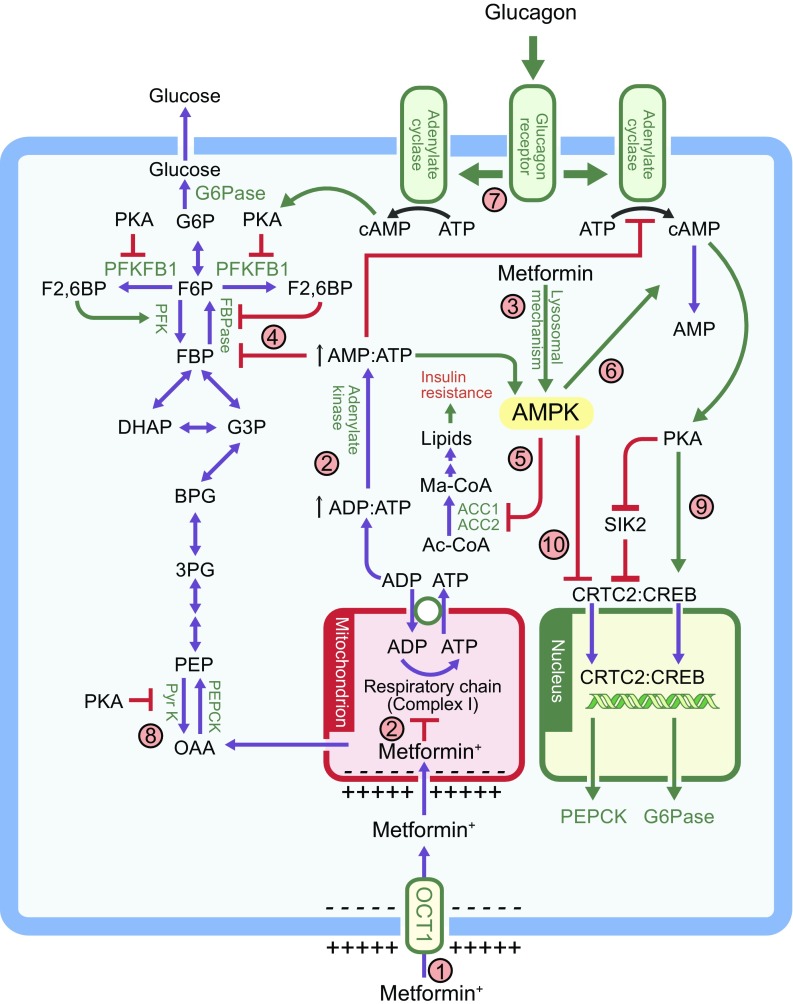
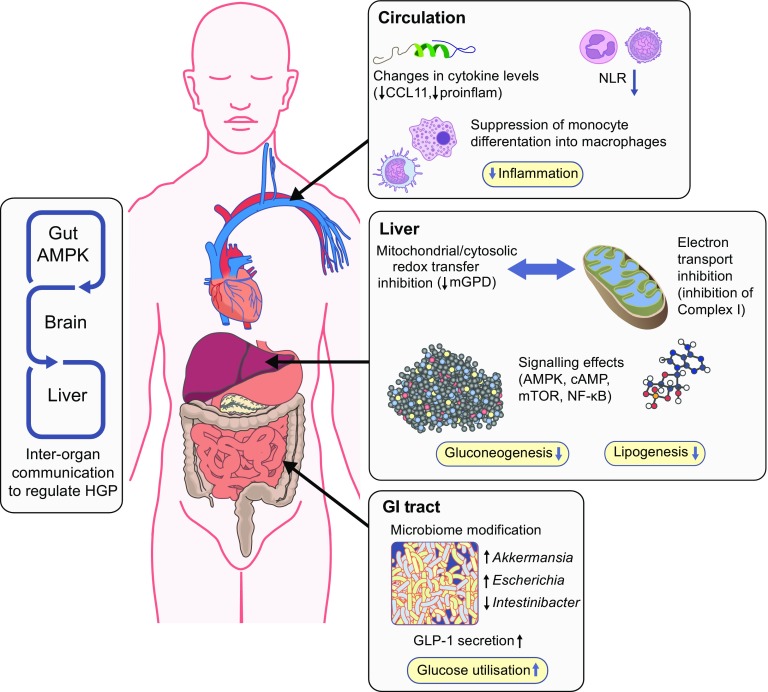
Metformin is a widely-used drug that results in clear benefits in relation to glucose metabolism and diabetes-related complications. The mechanisms underlying these benefits are complex and still not fully understood. Physiologically, metformin has been shown to reduce hepatic glucose production, yet not all of its effects can be explained by this mechanism and there is increasing evidence of a key role for the gut. At the molecular level the findings vary depending on the doses of metformin used and duration of treatment, with clear differences between acute and chronic administration. Metformin has been shown to act via both AMP-activated protein kinase (AMPK)-dependent and AMPK-independent mechanisms; by inhibition of mitochondrial respiration but also perhaps by inhibition of mitochondrial glycerophosphate dehydrogenase, and a mechanism involving the lysosome. In the last 10 years, we have moved from a simple picture, that metformin improves glycaemia by acting on the liver via AMPK activation, to a much more complex picture reflecting its multiple modes of action. More work is required to truly understand how this drug works in its target population: individuals with type 2 diabetes.
Overview
The claims and statistics of this paper haven’t been checked yet.
Free: it reads the open-access text and checks the first 5 claims that cite a source we can check. Create a free account to check every claim.
Integrity signals
Registry
Cites
Statistics
Figures
Verification
Claims the paper makes
The claims and statistics of this paper haven’t been checked yet.
Free: it reads the open-access text and checks the first 5 claims that cite a source we can check. Create a free account to check every claim.
Claims other papers make about this one
Each is checked against this paper’s own text: does it say what the citing paper says it does?
The source backs part of the claim, not all of it — or backs it for a different population, condition or comparison.
In the citing paper
“Metformin primarily reduces hepatic glucose production, while GLP-1RAs enhance insulin secretion in response to meals20–22.”
From Efficacy and safety of GLP-1 receptor agonists on weight management and metabolic parameters in PCOS women: a meta-analysis of randomized controlled trials (2025) · cites this paper as [20]
Experimental — accuracy not yet measuredThe source backs part of the claim, not all of it — or backs it for a different population, condition or comparison.
In the citing paper
“From a mechanistic perspective, metformin is known to increase insulin sensitivity by inhibiting the production of hepatic glucose, as well as inhibiting gluconeogenesis and lipogenesis, resulting in a decrease in circulating insulin and glucose.54”
From The impact of metformin with or without lifestyle modification versus placebo on polycystic ovary syndrome: a systematic review and meta-analysis of randomized controlled trials (2023) · cites this paper as [54]
Experimental — accuracy not yet measured
Self-check
Percentages, sums and reported differences re-computed from the paper’s own numbers.
The self-check needs the paper’s full text.
Citations
Cites
Role of AMP-Activated Protein Kinase in Mechanism of Metformin Action
Zhou, G., Myers, R., Li, Y., Chen, Y., Shen, X., Fenyk-Melody, J., Wu, M., Ventre, J., Doebber, T., Fujii, N., et al. (2001) · Journal of Clinical Investigation · doi:10.1172/jci13505 · Cited by 5,652 · cited 1×
“Since it causes a switch from synthesis of cellular nutrient stores to their breakdown, the idea that AMPK might be involved in metformin action was attractive and, in 2001, metformin was reported to activate AMPK in rat hepatocytes and rat liver in vivo [26].”
BackgroundAMPK: a nutrient and energy sensor that maintains energy homeostasis
Hardie, D. G., Ross, F. A., & Hawley, S. A. (2012) · Nature Reviews Molecular Cell Biology · doi:10.1038/nrm3311 · Cited by 4,602
Self-citationWatterson, K. R., Bestow, D., Gallagher, J., Hamilton, D. L., Ashford, F. B., Meakin, P. J., & Ashford, M. L. J. (2013) · Neurosignals · doi:10.1159/000334144 · Cited by 3,389
OWEN, M. R., DORAN, E., & HALESTRAP, A. P. (2000) · Biochemical Journal · doi:10.1042/bj3480607 · Cited by 2,157 · cited 3×
“The most intensively studied mitochondrial action of metformin is the inhibition of Complex I of the respiratory chain [14, 16], which suppresses ATP production.”
BackgroundDisentangling type 2 diabetes and metformin treatment signatures in the human gut microbiota
MetaHIT consortium, Forslund, K., Hildebrand, F., Nielsen, T., Falony, G., Le Chatelier, E., Sunagawa, S., Prifti, E., Vieira-Silva, S., Gudmundsdottir, V., et al. (2015) · Nature · doi:10.1038/nature15766 · Cited by 2,116
Shin, N.-R., Lee, J.-C., Lee, H.-Y., Kim, M.-S., Whon, T. W., Lee, M.-S., & Bae, J.-W. (2014) · Gut · doi:10.1136/gutjnl-2012-303839 · Cited by 1,550
Metformin improves healthspan and lifespan in mice
Martin-Montalvo, A., Mercken, E. M., Mitchell, S. J., Palacios, H. H., Mote, P. L., Scheibye-Knudsen, M., Gomes, A. P., Ward, T. M., Minor, R. K., Blouin, M.-J., et al. (2013) · Nature Communications · doi:10.1038/ncomms3192 · Cited by 1,445
El-Mir, M.-Y., Nogueira, V., Fontaine, E., Avéret, N., Rigoulet, M., & Leverve, X. (2000) · Journal of Biological Chemistry · doi:10.1074/jbc.275.1.223 · Cited by 1,399 · cited 2×
“The most intensively studied mitochondrial action of metformin is the inhibition of Complex I of the respiratory chain [14, 16], which suppresses ATP production.”
BackgroundClinical pharmacokinetics of metformin
Graham, G. G., Punt, J., Arora, M., Day, R. O., Doogue, M. P., Duong, J. K., Furlong, T. J., Greenfield, J. R., Greenup, L. C., Kirkpatrick, C. M., et al. (2011) · Clinical Pharmacokinetics · doi:10.2165/11534750-000000000-00000 · Cited by 1,318 · cited 1×
“small intestine with the remainder passing into the colon before being excreted in faeces [4].”
BackgroundMetformin suppresses gluconeogenesis by inhibiting mitochondrial glycerophosphate dehydrogenase
Madiraju, A. K., Erion, D. M., Rahimi, Y., Zhang, X.-M., Braddock, D. T., Albright, R. A., Prigaro, B. J., Wood, J. L., Bhanot, S., MacDonald, M. J., et al. (2014) · Nature · doi:10.1038/nature13270 · Cited by 1,284 · cited 3×
“Note that the possible effect of metformin on mitochondrial glycerophosphate dehydrogenase [7] has not been included.”
BackgroundInfluential
Research works printed but not linked: 2
- Howlett HCS, Bailey CJ (2007) Galegine and antidiabetic plants. In: Bailey CJ, Campbell IW, Chan JCN, Davidson JA, Howlett HCS, Ritz P (eds) Metformin—the gold standard. Wiley, Chichester, pp 3–9
- Howlett HCS, Bailey CJ (2007) Discovery of metformin. In: Bailey CJ, Campbell IW, Chan JCN, Davidson JA, Howlett HCS, Ritz P (eds) Metformin—the gold standard. Wiley, Chichester, pp 11–16
Cited by
Items 401–500 of 1,002
Metformin a Potential Pharmacological Strategy in Late Onset Alzheimer’s Disease Treatment
Poor, S. R., Ettcheto, M., Cano, A. C., Sánchez‐López, E., Manzine, P. R., Olloquequi, J., Camins, A., & Javan, M. (2021) · Pharmaceuticals · doi:10.3390/ph14090890 · Cited by 44
Amin, S. V., Khanna, S., Parvar, S. P., Shaw, L. T., Dao, D., Hariprasad, S. M., & Skondra, D. (2022) · Experimental Biology and Medicine · doi:10.1177/15353702211069986 · Cited by 44
Capsaicin, its clinical significance in patients with painful diabetic neuropathy
Dludla, P. V., Nkambule, B. B., Cirilli, I., Marcheggiani, F., Mabhida, S. E., Ziqubu, K., Ntamo, Y., Jack, B. U., Nyambuya, T. M., Hanser, S., et al. (2022) · Biomedicine & Pharmacotherapy · doi:10.1016/j.biopha.2022.113439 · Cited by 44
Sutthasupha, P., Promsan, S., Thongnak, L., Pengrattanachot, N., Phengpol, N., Jaruan, O., Jaikumkao, K., Muanprasat, C., Pichyangkura, R., Chatsudthipong, V., et al. (2022) · Carbohydrate Polymers · doi:10.1016/j.carbpol.2022.119405 · Cited by 38
Metformin beyond type 2 diabetes: Emerging and potential new indications
Petrie, J. R. (2024) · Diabetes Obesity and Metabolism · doi:10.1111/dom.15756 · Cited by 61
Diabetes: Is There a Future for Pharmacogenomics Guided Treatment?
Pearson, E. R. (2019) · Clinical Pharmacology & Therapeutics · doi:10.1002/cpt.1484 · Cited by 42
Self-citationUngurianu, A., Șeremet, O. C., Gagniuc, E., Olaru, O. T., Guțu, C. M., Grădinaru, D., Ionescu-Tirgoviste, C., Margina, D. M., & Dănciulescu-Miulescu, R. (2019) · Pharmacological Research · doi:10.1016/j.phrs.2019.104522 · Cited by 42
Adeniji, A. A., Knoll, K. E., & Loots, D. T. (2020) · Applied Microbiology and Biotechnology · doi:10.1007/s00253-020-10606-y · Cited by 41
Interferon-inducer antivirals: Potential candidates to combat COVID-19
Bagheri, A., Moezzi, S. M. I., Mosaddeghi, P., Parashkouhi, S. N., Hoseini, S. M. F., Badakhshan, F., & Negahdaripour, M. (2020) · International Immunopharmacology · doi:10.1016/j.intimp.2020.107245 · Cited by 41
Zamani‐Garmsiri, F., Ghasempour, G., Aliabadi, M., Hashemnia, S. M. R., Emamgholipour, S., & Meshkani, R. (2020) · IUBMB Life · doi:10.1002/iub.2424 · Cited by 44
Nurcahyanti, A. D. R., Jap, A., Lady, J., Prismawan, D., Sharopov, F. S., Daoud, R., Wink, M., & Sobeh, M. (2021) · Biomedicine & Pharmacotherapy · doi:10.1016/j.biopha.2021.112138 · Cited by 44
Peng, Y., Zeng, Q., Wan, L., Ma, E., Li, H., Yang, X., Zhang, Y., Huang, L., Lin, H., Feng, J., et al. (2021) · Nature Communications · doi:10.1038/s41467-021-27309-1 · Cited by 44
The role of HMGB1 in COVID‐19‐induced cytokine storm and its potential therapeutic targets: A review
Wulandari, S., Hartono, H., & Wibawa, T. (2023) · Immunology · doi:10.1111/imm.13623 · Cited by 41
Syafika, N., Azis, S. B. A., Enggi, C. K., Qonita, H. A., Mahmud, T. R. A., Abizart, A., Asri, R. M., & Permana, A. D. (2023) · Molecular Pharmaceutics · doi:10.1021/acs.molpharmaceut.2c00936 · Cited by 39
Miguel, V., Rey, C., Tituaña, J., Sirera, B., Alcalde‐Estévez, E., Herrero, J. I., Ranz, I., Fernández, L., Castillo, C., Sevilla, L. F. V., et al. (2023) · Redox Biology · doi:10.1016/j.redox.2023.102957 · Cited by 40
Repurposing metabolic regulators: antidiabetic drugs as anticancer agents
Dhas, Y., Biswas, N., Divyalakshmi, M. R., Jones, L., & Ashili, S. (2024) · Molecular Biomedicine · doi:10.1186/s43556-024-00204-z · Cited by 47
Hambling, C. E., Khunti, K., Cos, X., Wens, J., Martinez, L., Topsever, P., Prato, S. D., Sinclair, A. J., Schernthaner, G., Rutten, G. E. H. M., et al. (2019) · Primary care diabetes · doi:10.1016/j.pcd.2018.12.005 · Cited by 41
Seaweed-derived bioactives as potential energy regulators in obesity and type 2 diabetes
Bermano, G., Stoyanova, T. N., Hennequart, F., & Wainwright, C. L. (2019) · Advances in pharmacology · doi:10.1016/bs.apha.2019.10.002 · Cited by 40
Han, Y., Li, C.-W., Hsu, J.-M., Hsu, J. L., Chan, L.-C., Tan, X., & He, G. (2019) · PubMed · Cited by 49
Oboh, G., Ogunbadejo, M. D., Ogunsuyi, O. B., & Oyeleye, S. I. (2020) · Archives of Physiology and Biochemistry · doi:10.1080/13813455.2020.1716014 · Cited by 44
Gut Microbiota in Bone Health and Diabetes
Knudsen, J. K., Leutscher, P., & Sørensen, S. (2021) · Current Osteoporosis Reports · doi:10.1007/s11914-020-00629-9 · Cited by 42
Hufnagel, A., Fernandez‐Twinn, D. S., Blackmore, H. L., Ashmore, T. J., Heaton, R. A., Jenkins, B., Koulman, A., Hargreaves, I. P., Aiken, C., & Ozanne, S. E. (2021) · The Journal of Physiology · doi:10.1113/jp281902 · Cited by 71
Roessler, J., Leistner, D. M., Landmesser, U., & Haghikia, A. (2022) · Atherosclerosis · doi:10.1016/j.atherosclerosis.2022.08.018 · Cited by 40
AMPK inhibits liver gluconeogenesis: fact or fiction?
Johanns, M., Hue, L., & Rider, M. H. (2023) · Biochemical Journal · doi:10.1042/bcj20220582 · Cited by 52
Singh, A. K., Singh, A. K., Singh, A., & Misra, A. (2023) · Diabetes & Metabolic Syndrome Clinical Research & Reviews · doi:10.1016/j.dsx.2023.102710 · Cited by 44
Obesity and Leukemia: Biological Mechanisms, Perspectives, and Challenges
Tsilingiris, D., Vallianou, N. G., Spyrou, N., Kounatidis, D. C., Christodoulatos, G. S., Karampela, Ι., & Dalamaga, Μ. (2023) · Current Obesity Reports · doi:10.1007/s13679-023-00542-z · Cited by 50
Abrosimov, R., Baeken, M. W., Hauf, S., Wittig, I., Hajieva, P., Perrone, C. E., & Moosmann, B. (2024) · GeroScience · doi:10.1007/s11357-023-01059-y · Cited by 40
Impact of Gut Microbiota and SCFAs in the Pathogenesis of PCOS and the Effect of Metformin Therapy
Kukaev, E., Дмитриевна, К. Е., Tokareva, A., Rimskaya, E. N., Starodubtseva, N. L., Евгеньевна, Ч. Г., Priputnevich, T. V., Евгеньевич, Ф. В., & Sukhikh, G. T. (2024) · International Journal of Molecular Sciences · doi:10.3390/ijms251910636 · Cited by 49
Pharmacological Interventions to Attenuate Alzheimer’s Disease Progression: The Story So Far
Bazzari, F. H., Abdallah, D. M., & El-Abhar, H. S. (2019) · Current Alzheimer Research · doi:10.2174/1567205016666190301111120 · Cited by 42
Yang, A. J. T., Frendo‐Cumbo, S., & MacPherson, R. E. K. (2019) · Journal of Alzheimer s Disease · doi:10.3233/jad-190123 · Cited by 39
Ji, S., Wang, L., & Li, L. (2019) · Frontiers in Endocrinology · doi:10.3389/fendo.2019.00704 · Cited by 39
Metabolic adaptations of cells at the vascular-immune interface during atherosclerosis
Bonacina, F., Dalt, L. D., Catapano, A. L., & Norata, G. D. (2020) · Molecular Aspects of Medicine · doi:10.1016/j.mam.2020.100918 · Cited by 38
Meyer, M. J., Tuerkova, A., Römer, S., Wenzel, C., Seitz, T., Gaedcke, J., Oswald, S., Brockmöller, J., Zdrazil, B., & Tzvetkov, M. V. (2020) · Drug Metabolism and Disposition · doi:10.1124/dmd.120.000170 · Cited by 38
Targeting ageing and preventing organ degeneration with metformin
Sunjaya, A. P., & Sunjaya, A. F. (2020) · Diabetes & Metabolism · doi:10.1016/j.diabet.2020.09.009 · Cited by 37
Kopel, J. J., Bhutia, Y. D., Sivaprakasam, S., & Ganapathy, V. (2021) · Biochemical Journal · doi:10.1042/bcj20200877 · Cited by 38
Ubiquitin pathways regulate the pathogenesis of chronic liver disease
Park, J.-S., Ma, H., & Roh, Y. (2021) · Biochemical Pharmacology · doi:10.1016/j.bcp.2021.114764 · Cited by 43
Singh, A. K., Singh, R., Saboo, B., & Misra, A. (2020) · Diabetes & Metabolic Syndrome Clinical Research & Reviews · doi:10.1016/j.dsx.2020.12.026 · Cited by 38
The potential effect of metformin on fibroblast growth factor 21 in type 2 diabetes mellitus (T2DM)
Al-Kuraishy, H. M., Al-Gareeb, A. I., Saad, H. M., & Batiha, G. E. (2023) · Inflammopharmacology · doi:10.1007/s10787-023-01255-4 · Cited by 40
Metformin and the Liver: Unlocking the Full Therapeutic Potential
Perazza, F., Leoni, L., Colosimo, S., Musio, A., Bocedi, G., D’Avino, M., Agnelli, G., Nicastri, A., Rossetti, C., Sacilotto, F., et al. (2024) · Metabolites · doi:10.3390/metabo14040186 · Cited by 43
Ko, M., Kim, J., Lazim, R., Lee, J. Y., Kim, J. Y., Gosu, V., Lee, Y., Choi, S., & Kwon, H. J. (2024) · Experimental & Molecular Medicine · doi:10.1038/s12276-024-01357-1 · Cited by 43
Ullah, A., & Shen, B. (2025) · European Journal of Medicinal Chemistry · doi:10.1016/j.ejmech.2025.118065 · Cited by 48
Taheri, A., Emami, M., Asadipour, E., Kasirzadeh, S., Rouini, M. R., Najafi, A., Heshmat, R., Abdollahi, M. R., & Mojtahedzadeh, M. (2019) · Journal of Neurology · doi:10.1007/s00415-019-09366-1 · Cited by 43
Li, J., Mińczuk, K., Massey, J. C., Howell, N. L., Roy, R., Paul, S., Patrie, J. T., Kramer, C. M., Epstein, F. H., Carey, R. M., et al. (2020) · Journal of the American Heart Association · doi:10.1161/jaha.119.015154 · Cited by 36
Cai, L., Jin, X., Zhang, J., Li, L., & Zhao, J. (2020) · Aging · doi:10.18632/aging.103777 · Cited by 40
Treatment Strategies Against Diabetic Foot Ulcer: Success so Far and the Road Ahead
Awasthi, A., Singh, S. K., Kumar, B., Gulati, M., Kumar, R., Wadhwa, S., Khursheed, R., Corrie, L., Ramanunny, A. K., Kumar, R., et al. (2020) · Current Diabetes Reviews · doi:10.2174/1573399816999201102125537 · Cited by 40
Meng, X., Zhang, X., Lei, Y., Cao, D., & Wang, Z. (2021) · Journal of Materials Chemistry B · doi:10.1039/d0tb02476g · Cited by 37
Metformin Inhibits the Urea Cycle and Reduces Putrescine Generation in Colorectal Cancer Cell Lines
Zhang, T., Hu, L., Tang, J., Xu, H., Tian, K., Wu, M., Huang, S., Du, Y.-M., Zhou, P., Lu, R.-J., et al. (2021) · Molecules · doi:10.3390/molecules26071990 · Cited by 40
Wei, Z., Wei, Y., Li, H., Shi, D., Yang, D., Yin, J., Zhou, S., Chen, T., Lǐ, J., & Jin, M. (2022) · Journal of Hazardous Materials · doi:10.1016/j.jhazmat.2022.128474 · Cited by 42
Zhang, Y., Zhang, T., Li, Y., Yu, C., Liu, B., Tian, Y., Wu, P., & Shi, H. (2022) · Experimental Neurology · doi:10.1016/j.expneurol.2022.114055 · Cited by 36
Mbara, K. C., Mato, P. E. M., Driver, C., Nzuza, S., Mkhombo, N. T., Gcwensa, S. K., Mcobothi, E. N., & Owira, P. M. O. (2021) · European Journal of Pharmacology · doi:10.1016/j.ejphar.2021.173934 · Cited by 36
Metabolic Reprogramming: A Friend or Foe to Cancer Therapy?
McCann, C. K., & Kerr, E. M. (2021) · Cancers · doi:10.3390/cancers13133351 · Cited by 37
Current and emerging drug treatment strategies for polycystic ovary syndrome
Helvaci, N., & Yildiz, B. O. (2023) · Expert Opinion on Pharmacotherapy · doi:10.1080/14656566.2022.2108702 · Cited by 35
Yao, B., Pan, B., Tian, T., Su, X., Zhang, S., Li, H., Li, W., Wang, Y., Lv, S., & Zhang, Z. (2022) · Frontiers in Cellular and Infection Microbiology · doi:10.3389/fcimb.2022.1051962 · Cited by 41
Zhao, T., Yang, Q., Feuerbacher, J. F., Yu, B., Brinkmann, C. K., Cheng, S., Bloch, W., & Schumann, M. (2024) · British Journal of Sports Medicine · doi:10.1136/bjsports-2024-108127 · Cited by 45
Angelidi, A. M., Stambolliu, E., Adamopoulou, K., & Kousoulis, A. A. (2018) · International Journal of Endocrinology · doi:10.1155/2018/8380192 · Cited by 44
Metformin protects from oxaliplatin induced peripheral neuropathy in rats
Martínez, N. W., Sánchez, A., Díaz, P., Broekhuizen, R., Godoy, J. A., Mondaca, S., Catenaccio, A., Macanas-Pirard, P., Nervi, B., Calvo, M., et al. (2020) · Neurobiology of Pain · doi:10.1016/j.ynpai.2020.100048 · Cited by 36
Targeting Energy Expenditure—Drugs for Obesity Treatment
Jimenez-Munoz, C. M., López, M., Albericio, F., & Makowski, K. (2021) · Pharmaceuticals · doi:10.3390/ph14050435 · Cited by 35
A Metabolic Pattern in Healthy Subjects Given a Single Dose of Metformin: A Metabolomics Approach
Dahabiyeh, L. A., Mujammami, M. H., Arafat, T., Benabdelkamel, H., Alfadda, A. A., & Rahman, A. M. A. (2021) · Frontiers in Pharmacology · doi:10.3389/fphar.2021.705932 · Cited by 44
Recent Pharmacological Options in Type 2 Diabetes and Synergic Mechanism in Cardiovascular Disease
Andreadi, A., Muscoli, S., Tajmir, R., Meloni, M., Muscoli, C., Ilari, S., Mollace, V., Della‐Morte, D., Bellia, A., Daniele, N. D., et al. (2023) · International Journal of Molecular Sciences · doi:10.3390/ijms24021646 · Cited by 39
Protic, D., Aydin, E. Y., Tassone, F., Tan, M. M., Hagerman, R. J., & Schneider, A. (2019) · Molecular Genetics & Genomic Medicine · doi:10.1002/mgg3.745 · Cited by 34
Significant impact of time-of-day variation on metformin pharmacokinetics
Türk, D., Scherer, N., Selzer, D., Dings, C., Hanke, N., Dallmann, R., Schwab, M. G., Timmins, P., Nock, V., & Lehr, T. (2023) · Diabetologia · doi:10.1007/s00125-023-05898-4 · Cited by 37
B cell metabolism in autoimmune diseases: signaling pathways and interventions
Li, J., Zhao, M., Luo, W., Huang, J., Zhao, B., & Zhou, Z. (2023) · Frontiers in Immunology · doi:10.3389/fimmu.2023.1232820 · Cited by 45
Alternative mRNA Splicing in the Pathogenesis of Obesity
Wong, C., Xu, L., & Yau, M. Y. C. (2018) · International Journal of Molecular Sciences · doi:10.3390/ijms19020632 · Cited by 34
Metformin Exerts Antidepressant Effects by Regulated DNA Hydroxymethylation
Wang, Y., Liu, B., Yong, Y., Wang, Y., Zhao, Z., Miao, Z., & Zhu, J. (2019) · Epigenomics · doi:10.2217/epi-2018-0187 · Cited by 36
Barbieri, F., Verduci, I., Carlini, V., Zona, G., Pagano, A., Mazzanti, M., & Florio, T. (2019) · Frontiers in Oncology · doi:10.3389/fonc.2019.00135 · Cited by 35
Moonira, T., Chachra, S. S., Ford, B. E., Marín, S., Alshawi, A., Adam-Primus, N. S., Arden, C., Al‐Oanzi, Z. H., Foretz, M., Viollet, B., et al. (2020) · Journal of Biological Chemistry · doi:10.1074/jbc.ra120.012533 · Cited by 35
Longitudinal plasma protein profiling of newly diagnosed type 2 diabetes
Gummesson, A., Björnson, E., Fagerberg, L., Zhong, W., Tebani, A., Edfors, F., Schmidt, C., Lundqvist, A., Adiels, M., Bäckhed, F., et al. (2020) · EBioMedicine · doi:10.1016/j.ebiom.2020.103147 · Cited by 37
Attimarad, M., Nair, A. B., Sreeharsha, N., Al‐Dhubiab, B. E., Venugopala, K. N., & Shinu, P. (2021) · International Journal of Environmental Research and Public Health · doi:10.3390/ijerph18020448 · Cited by 38
Hansel, C., Barr, S., Schemann, A. V., Lauber, K., Hess, J., Unger, K., Zitzelsberger, H., Jendrossek, V., & Klein, D. (2021) · International Journal of Molecular Sciences · doi:10.3390/ijms22137064 · Cited by 33
“Food and Drug Administration (Silver Spring, MD, USA) approved drug for adults with type 2 diabetes, usually medicated to decrease hepatic glucose production and glucose absorption by the gastrointestinal tract as well as to increase insulin sensitivity [17,18].”
BackgroundZheng, M., Zhu, Y., Wei, K., Pu, H., Peng, R., Xiao, J., Liu, C., & Sun, X. (2023) · International Journal of Molecular Sciences · doi:10.3390/ijms24065355 · Cited by 39
Kukułowicz, J., Pietrzak-Lichwa, K. J., Klimończyk, K., Idlin, N., & Bajda, M. (2023) · Pharmacological Reviews · doi:10.1124/pharmrev.123.000886 · Cited by 37
Isop, L. M., Neculau, A. E., Necula, R. D., Kakucs, C., Moga, M., & Dima, L. (2023) · Pharmaceuticals · doi:10.3390/ph16121714 · Cited by 41
Metformin in Antiviral Therapy: Evidence and Perspectives
Halabitska, I., Petakh, P., Lushchak, O. V., Kamyshna, I. I., Oksenych, V., & Kamyshnyi, O. (2024) · Viruses · doi:10.3390/v16121938 · Cited by 40
Yen, F., Chen, W., Wei, J. C., Hsu, C., & Hwu, C. (2018) · PLoS ONE · doi:10.1371/journal.pone.0204859 · Cited by 35
Wolff, C. A., Reid, J. J., Musci, R. V., Bruns, D. R., Linden, M. A., Konopka, A. R., Peelor, F. F., Miller, B. F., & Hamilton, K. L. (2019) · The Journals of Gerontology Series A · doi:10.1093/gerona/glz058 · Cited by 37
MCCREIGHT, L. J., Mari, A., Coppin, L., Jackson, N., Umpleby, A. M., & Pearson, E. R. (2019) · Diabetologia · doi:10.1007/s00125-019-05042-1 · Cited by 34
Self-citationParadoxical activation of AMPK by glucose drives selective EP300 activity in colorectal cancer
Gutiérrez-Salmerón, M., García-Martínez, J. M., Martínez‐Useros, J., Fernández‐Aceñero, M. J., Viollet, B., Olivier, S., Chauhan, J. S., Lucena, S. R., la Vieja, A. D., Goding, C. R., et al. (2020) · PLoS Biology · doi:10.1371/journal.pbio.3000732 · Cited by 30
Mobasher, M. A., El-Tantawi, H. G., & El-Said, K. S. (2020) · Reports of Biochemistry and Molecular Biology · doi:10.29252/rbmb.9.1.115 · Cited by 44
Nahar, N., Mohamed, S., Mustapha, N. M., Lau, S., Ishak, N. I. M., & Umran, N. S. S. (2020) · Naunyn-Schmiedeberg s Archives of Pharmacology · doi:10.1007/s00210-020-01989-w · Cited by 33
Nyambuya, T. M., Nkambule, B. B., Mazibuko-Mbeje, S. E., Mxinwa, V., Mokgalaboni, K., Orlando, P., Silvestri, S., Louw, J., Tiano, L., & Dludla, P. V. (2020) · Molecules · doi:10.3390/molecules25235645 · Cited by 36
Obesity Connected Metabolic Changes in Type 2 Diabetic Patients Treated With Metformin
Aleidi, S. M., Dahabiyeh, L. A., Gu, X., Dubayee, M. A., Alshahrani, A. S., Benabdelkamel, H., Mujammami, M. H., Li, L., Aljada, A., & Rahman, A. M. A. (2021) · Frontiers in Pharmacology · doi:10.3389/fphar.2020.616157 · Cited by 40
Papadopoulos, P., Tsigalou, C., Valsamaki, P. N., Konstantinidis, T. G., Voidarou, C. C., & Bezirtzoglou, E. (2022) · Biomedicines · doi:10.3390/biomedicines10050948 · Cited by 43
Claro, C., Jiménez‐Altayó, F., Zagmutt, S., & Rodríguez‐Rodríguez, R. (2022) · Nutrients · doi:10.3390/nu14081606 · Cited by 38
Kanie, T., Mizuno, A., Yoneoka, D., Tam, W., Morze, J., Rynkiewicz, A., Xin, Y., Wu, O., & Kwong, J. S. (2020) · Cochrane Database of Systematic Reviews · doi:10.1002/14651858.cd013650 · Cited by 34
Hypoglycemic natural products with in vivo activities and their mechanisms: a review
Ma, W., Xiao, L., Liu, H., & Hao, X. (2022) · Food Science and Human Wellness · doi:10.1016/j.fshw.2022.04.001 · Cited by 38
Exploring the Mechanism of Adjuvant Treatment of Glioblastoma Using Temozolomide and Metformin
Feng, S.-W., Chang, P.-C., Chen, H., Hueng, D., Li, Y., & Huang, S. (2022) · International Journal of Molecular Sciences · doi:10.3390/ijms23158171 · Cited by 38
Metformin, Microbiome and Protection Against Colorectal Cancer
Jones, G. R. D., & Molloy, M. P. (2020) · Digestive Diseases and Sciences · doi:10.1007/s10620-020-06390-4 · Cited by 37
Ngo, A. T. P., & Gollomp, K. L. (2022) · Research and Practice in Thrombosis and Haemostasis · doi:10.1002/rth2.12808 · Cited by 37
Diabetic Cardiomyopathy—From Basics through Diagnosis to Treatment
Radzioch, E., Dąbek, B., Balcerczyk-Lis, M., Frąk, W., Fularski, P., Młynarska, E., Rysz, J., & Franczyk, B. (2024) · Biomedicines · doi:10.3390/biomedicines12040765 · Cited by 45
The Role of Gut Microbiota in the Etiopathogenesis of Multiple Chronic Diseases
Pires, L., Gonzaléz‐Paramás, A. M., Heleno, S. A., & Calhelha, R. C. (2024) · Antibiotics · doi:10.3390/antibiotics13050392 · Cited by 37
Mitochondrial regulation in the tumor microenvironment: targeting mitochondria for immunotherapy
Ahn, M., Ali, A., & Seo, J. H. (2024) · Frontiers in Immunology · doi:10.3389/fimmu.2024.1453886 · Cited by 39
Management of diabetes mellitus in patients undergoing liver transplantation
Grancini, V., Resi, V., Palmieri, E., Pugliese, G., & Orsi, E. (2019) · Pharmacological Research · doi:10.1016/j.phrs.2019.01.042 · Cited by 37
Tan, M. K. X., Heng, T. Y. J., & Mak, A. (2019) · Cells · doi:10.3390/cells8040323 · Cited by 32
Hyperglycemia and 18F-FDG PET/CT, issues and problem solving: a literature review
Finessi, M., Bisi, G., & Deandreis, D. (2019) · Acta Diabetologica · doi:10.1007/s00592-019-01385-8 · Cited by 33
Ghanim, H., Dhindsa, S., Batra, M., Green, K., Abuaysheh, S., Kuhadiya, N. D., Makdissi, A., Chaudhuri, A., Sandhu, S., & Dandona, P. (2019) · The Journal of Clinical Endocrinology & Metabolism · doi:10.1210/clinem/dgz288 · Cited by 32
Targeting T-cell oxidative metabolism to improve influenza survival in a mouse model of obesity
Alwarawrah, Y., Nichols, A., Green, W. D., Eisner, W., Kiernan, K., Warren, J. L., Hale, L. P., Beck, M. A., & MacIver, N. J. (2020) · International Journal of Obesity · doi:10.1038/s41366-020-00692-3 · Cited by 38
Glucose Metabolism in Burns—What Happens?
Bădoiu, S. C., Miricescu, D., Stănescu-Spînu, I.-I., Totan, A., Badoiu, S. E., Costagliola, M., & Greabu, M. (2021) · International Journal of Molecular Sciences · doi:10.3390/ijms22105159 · Cited by 38
Ward, A. V., Anderson, S. M., & Sartorius, C. A. (2021) · Journal of Mammary Gland Biology and Neoplasia · doi:10.1007/s10911-021-09505-3 · Cited by 39
An update on mode of action of metformin in modulation of meta-inflammation and inflammaging
Khodadadi, M., Jafari-Gharabaghlou, D., & Zarghami, N. (2022) · Pharmacological Reports · doi:10.1007/s43440-021-00334-z · Cited by 38
The Function of Metformin in Aging-Related Musculoskeletal Disorders
Song, Y., Wu, Z., & Zhao, P. (2022) · Frontiers in Pharmacology · doi:10.3389/fphar.2022.865524 · Cited by 38
Metadata
- Authors
- Rena, G., Hardie, D. G., & Pearson, E. R.
- Affiliations
- University of Dundee (GB)
- Corresponding author
- Hardie, D. Grahame
- Pearson, Ewan R.
- Venue
- Diabetologia
- Published
- 2017-08-03
- Volume
- 60
- Issue
- 9
- Pages
- 1577-1585
- ISSN
- 0012-186X (ISSN-L)
- 1432-0428
- PMC
- PMC5552828
- OpenAlex
- W2743010525
- Cited by
- 2,287
- References
- 64
- Citations by year
- 2026: 227 · 2025: 264 · 2024: 271 · 2023: 288 · 2022: 326 · 2021: 312 · 2020: 302 · 2019: 158 · 2018: 120 · 2017: 13
- FWCI
- 15.16
- Type
- journal article
- Language
- en
- Open access
- hybrid
- doi.org
- Locations
- Diabetologia (publishedVersion, cc-by)
- PubMed Central (publishedVersion, cc-by)
- PubMed (publishedVersion)
- Discovery Research Portal (University of Dundee) (submittedVersion, cc-by)
- Funders
- University of Dundee
- Topics
- Life Sciences › Biochemistry, Genetics and Molecular Biology › Molecular Biology › Metabolism, Diabetes, and Cancer
- Health Sciences › Medicine › Endocrinology, Diabetes and Metabolism › Diabetes Treatment and Management
- Health Sciences › Medicine › Endocrinology, Diabetes and Metabolism › Natural Antidiabetic Agents Studies
- Keywords
- metformin, mechanism of action, type 2 diabetes, glucose metabolism, hepatic glucose production, AMPK, AMPK-independent mechanism, mitochondrial respiration, lysosomes, intestine, dose-dependent effects
- MeSH terms
- Animals, Biguanides, Diabetes Mellitus, Type 2, Humans, Hypoglycemic Agents, Metformin, AMP-Activated Protein Kinases
About these checks
Registry, retraction, Cites and statistics results are computed, not judged, with one exception: a printed reference that no index lists is read once by a model before it counts as a citation error. Claims are extracted by a model and kept only when their quote appears verbatim in the text; each cited source is then checked, with a model’s help, for whether it says what the claim relies on. Those verdicts can be wrong — read the claim’s quote and the cited source before relying on one.
Statistics and arithmetic are recomputed, not judged.
Confidence bands are shown only for fields calibrated on our annotated test set. None is calibrated yet, so no band is shown.
What counts as a claim ›How we measure confidence ›How we check this ›
Are you an author, or do you see a problem with this page? Request a review
Data sources
Bibliographic data: Semantic Scholar, OpenAlex, Crossref.
Contains information from the Semantic Scholar Academic Graph Datasets, made available under the ODC Attribution License (ODC-BY 1.0).
Semantic Scholar’s data is described in: Kinney, R., et al. (2023). The Semantic Scholar Open Data Platform. arXiv:2301.10140.
