

The mechanisms of action of metformin
Open accessThe DOI matches its Crossref record; 63 of the 64 references it cites were found in a registry or an index.
Abstract
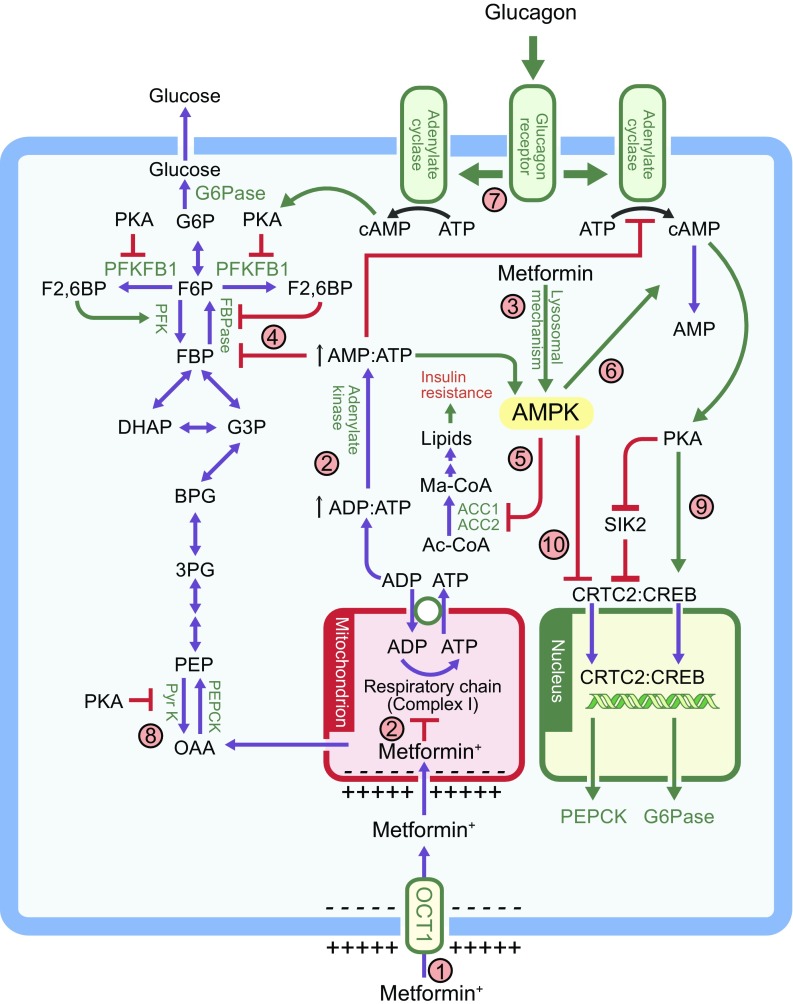
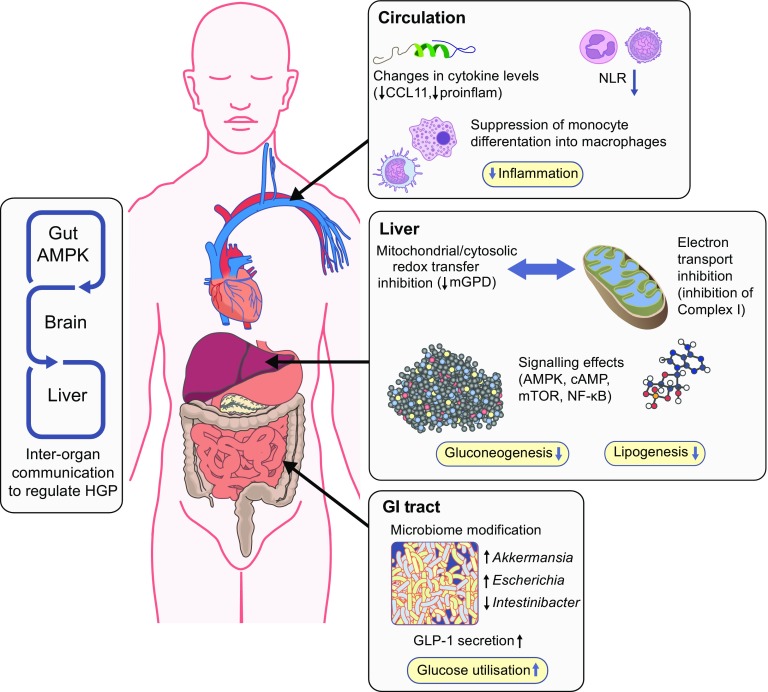
Metformin is a widely-used drug that results in clear benefits in relation to glucose metabolism and diabetes-related complications. The mechanisms underlying these benefits are complex and still not fully understood. Physiologically, metformin has been shown to reduce hepatic glucose production, yet not all of its effects can be explained by this mechanism and there is increasing evidence of a key role for the gut. At the molecular level the findings vary depending on the doses of metformin used and duration of treatment, with clear differences between acute and chronic administration. Metformin has been shown to act via both AMP-activated protein kinase (AMPK)-dependent and AMPK-independent mechanisms; by inhibition of mitochondrial respiration but also perhaps by inhibition of mitochondrial glycerophosphate dehydrogenase, and a mechanism involving the lysosome. In the last 10 years, we have moved from a simple picture, that metformin improves glycaemia by acting on the liver via AMPK activation, to a much more complex picture reflecting its multiple modes of action. More work is required to truly understand how this drug works in its target population: individuals with type 2 diabetes.
Overview
The claims and statistics of this paper haven’t been checked yet.
Free: it reads the open-access text and checks the first 5 claims that cite a source we can check. Create a free account to check every claim.
Integrity signals
Registry
Cites
Statistics
Figures
Verification
Claims the paper makes
The claims and statistics of this paper haven’t been checked yet.
Free: it reads the open-access text and checks the first 5 claims that cite a source we can check. Create a free account to check every claim.
Claims other papers make about this one
Each is checked against this paper’s own text: does it say what the citing paper says it does?
The source backs part of the claim, not all of it — or backs it for a different population, condition or comparison.
In the citing paper
“Metformin primarily reduces hepatic glucose production, while GLP-1RAs enhance insulin secretion in response to meals20–22.”
From Efficacy and safety of GLP-1 receptor agonists on weight management and metabolic parameters in PCOS women: a meta-analysis of randomized controlled trials (2025) · cites this paper as [20]
Experimental — accuracy not yet measuredThe source backs part of the claim, not all of it — or backs it for a different population, condition or comparison.
In the citing paper
“From a mechanistic perspective, metformin is known to increase insulin sensitivity by inhibiting the production of hepatic glucose, as well as inhibiting gluconeogenesis and lipogenesis, resulting in a decrease in circulating insulin and glucose.54”
From The impact of metformin with or without lifestyle modification versus placebo on polycystic ovary syndrome: a systematic review and meta-analysis of randomized controlled trials (2023) · cites this paper as [54]
Experimental — accuracy not yet measured
Self-check
Percentages, sums and reported differences re-computed from the paper’s own numbers.
The self-check needs the paper’s full text.
Citations
Cites
Role of AMP-Activated Protein Kinase in Mechanism of Metformin Action
Zhou, G., Myers, R., Li, Y., Chen, Y., Shen, X., Fenyk-Melody, J., Wu, M., Ventre, J., Doebber, T., Fujii, N., et al. (2001) · Journal of Clinical Investigation · doi:10.1172/jci13505 · Cited by 5,652 · cited 1×
“Since it causes a switch from synthesis of cellular nutrient stores to their breakdown, the idea that AMPK might be involved in metformin action was attractive and, in 2001, metformin was reported to activate AMPK in rat hepatocytes and rat liver in vivo [26].”
BackgroundAMPK: a nutrient and energy sensor that maintains energy homeostasis
Hardie, D. G., Ross, F. A., & Hawley, S. A. (2012) · Nature Reviews Molecular Cell Biology · doi:10.1038/nrm3311 · Cited by 4,602
Self-citationWatterson, K. R., Bestow, D., Gallagher, J., Hamilton, D. L., Ashford, F. B., Meakin, P. J., & Ashford, M. L. J. (2013) · Neurosignals · doi:10.1159/000334144 · Cited by 3,389
OWEN, M. R., DORAN, E., & HALESTRAP, A. P. (2000) · Biochemical Journal · doi:10.1042/bj3480607 · Cited by 2,157 · cited 3×
“The most intensively studied mitochondrial action of metformin is the inhibition of Complex I of the respiratory chain [14, 16], which suppresses ATP production.”
BackgroundDisentangling type 2 diabetes and metformin treatment signatures in the human gut microbiota
MetaHIT consortium, Forslund, K., Hildebrand, F., Nielsen, T., Falony, G., Le Chatelier, E., Sunagawa, S., Prifti, E., Vieira-Silva, S., Gudmundsdottir, V., et al. (2015) · Nature · doi:10.1038/nature15766 · Cited by 2,116
Shin, N.-R., Lee, J.-C., Lee, H.-Y., Kim, M.-S., Whon, T. W., Lee, M.-S., & Bae, J.-W. (2014) · Gut · doi:10.1136/gutjnl-2012-303839 · Cited by 1,550
Metformin improves healthspan and lifespan in mice
Martin-Montalvo, A., Mercken, E. M., Mitchell, S. J., Palacios, H. H., Mote, P. L., Scheibye-Knudsen, M., Gomes, A. P., Ward, T. M., Minor, R. K., Blouin, M.-J., et al. (2013) · Nature Communications · doi:10.1038/ncomms3192 · Cited by 1,445
El-Mir, M.-Y., Nogueira, V., Fontaine, E., Avéret, N., Rigoulet, M., & Leverve, X. (2000) · Journal of Biological Chemistry · doi:10.1074/jbc.275.1.223 · Cited by 1,399 · cited 2×
“The most intensively studied mitochondrial action of metformin is the inhibition of Complex I of the respiratory chain [14, 16], which suppresses ATP production.”
BackgroundClinical pharmacokinetics of metformin
Graham, G. G., Punt, J., Arora, M., Day, R. O., Doogue, M. P., Duong, J. K., Furlong, T. J., Greenfield, J. R., Greenup, L. C., Kirkpatrick, C. M., et al. (2011) · Clinical Pharmacokinetics · doi:10.2165/11534750-000000000-00000 · Cited by 1,318 · cited 1×
“small intestine with the remainder passing into the colon before being excreted in faeces [4].”
BackgroundMetformin suppresses gluconeogenesis by inhibiting mitochondrial glycerophosphate dehydrogenase
Madiraju, A. K., Erion, D. M., Rahimi, Y., Zhang, X.-M., Braddock, D. T., Albright, R. A., Prigaro, B. J., Wood, J. L., Bhanot, S., MacDonald, M. J., et al. (2014) · Nature · doi:10.1038/nature13270 · Cited by 1,284 · cited 3×
“Note that the possible effect of metformin on mitochondrial glycerophosphate dehydrogenase [7] has not been included.”
BackgroundInfluential
Research works printed but not linked: 2
- Howlett HCS, Bailey CJ (2007) Galegine and antidiabetic plants. In: Bailey CJ, Campbell IW, Chan JCN, Davidson JA, Howlett HCS, Ritz P (eds) Metformin—the gold standard. Wiley, Chichester, pp 3–9
- Howlett HCS, Bailey CJ (2007) Discovery of metformin. In: Bailey CJ, Campbell IW, Chan JCN, Davidson JA, Howlett HCS, Ritz P (eds) Metformin—the gold standard. Wiley, Chichester, pp 11–16
Cited by
Items 501–600 of 1,002
Xiao, N., Wang, J., Wang, T., Xiong, X., Zhou, J., Su, X. W., Peng, J., Yang, C., Li, X., Lin, G., et al. (2022) · eLife · doi:10.7554/elife.74713 · Cited by 34
Augusto, P. S. D. A., Braga, A. V., Rodrigues, F. F., Morais, M. Í., Dutra, M. M. G. B., Batista, C. R. Á., Melo, I. S. F., Costa, S. O. A. M., Goulart, F. A., Coelho, M. M., et al. (2019) · European Journal of Pharmacology · doi:10.1016/j.ejphar.2019.172497 · Cited by 32
Adenosine-Related Mechanisms in Non-Adenosine Receptor Drugs
Jacobson, K. A., & Reitman, M. L. (2020) · Cells · doi:10.3390/cells9040956 · Cited by 35
Current Perspectives on Management of Type 2 Diabetes in Youth
Singhal, S., & Kumar, S. (2021) · Children · doi:10.3390/children8010037 · Cited by 36
AMPK integrates metabolite and kinase-based immunometabolic control in macrophages
Phair, I. R., Nisr, R. B., Howden, A. J. M., Sovakova, M., Alqurashi, N., Foretz, M., Lamont, D., Viollet, B., & Rena, G. (2022) · Molecular Metabolism · doi:10.1016/j.molmet.2022.101661 · Cited by 34
Self-citationLo, C. H., O’Connor, L. M., Loi, G. W. Z., Saipuljumri, E. N., Indajang, J., Lopes, K. M., Shirihai, O. S., Grinstaff, M. W., & Zeng, J. (2024) · ACS Nano · doi:10.1021/acsnano.3c09206 · Cited by 37
Type 2 diabetes mellitus and neurodegenerative disorders: The mitochondrial connection
Baduini, I. R., Castro-Vildosola, J., Kavehmoghaddam, S., Kiliç, F., Nadeem, S. A., Nizama, J. J., Rowand, M. A., Annapureddy, D., Bryan, C.-A., Do, L. H., et al. (2024) · Pharmacological Research · doi:10.1016/j.phrs.2024.107439 · Cited by 34
Saikia, L., Talukdar, N. C., & Dutta, P. P. (2025) · Phytotherapy Research · doi:10.1002/ptr.8428 · Cited by 38
Gao, F., Lv, X., Mo, Z., Ma, J., Zhang, Q., Yang, G., Liu, W., Li, Q., Zhou, J., Bao, Y., et al. (2020) · Diabetes Obesity and Metabolism · doi:10.1111/dom.14163 · Cited by 37
Salcedo‐Arellano, M. J., Cabal-Herrera, A. M., Punatar, R., Clark, C. J., Romney, C. A., & Hagerman, R. J. (2020) · Neurotherapeutics · doi:10.1007/s13311-020-00968-6 · Cited by 35
PD-1 immunobiology in glomerulonephritis and renal cell carcinoma
Curran, C. S., & Kopp, J. B. (2021) · BMC Nephrology · doi:10.1186/s12882-021-02257-6 · Cited by 33
Bhosale, R. R., Osmani, R. A. M., Lila, A. S. A., Khafagy, E., Arab, H. H., Gowda, D. V., Rahamathulla, M., Hani, U., Adnan, M., & Gangadharappa, H. V. (2021) · RSC Advances · doi:10.1039/d1ra01536b · Cited by 33
Qiang, Q., Manalo, J. M., Sun, H. J., Zhang, Y., Song, A., Wen, A. Q., Wen, Y. E., Chen, C., Liu, H., Cui, Y. J., et al. (2021) · PLoS Biology · doi:10.1371/journal.pbio.3001239 · Cited by 31
The titin N2B and N2A regions: biomechanical and metabolic signaling hubs in cross-striated muscles
van der Pijl, R. J., Domenighetti, A. A., Sheikh, F., Ehler, E., Ottenheijm, C. A. C., & Lange, S. (2021) · Biophysical Reviews · doi:10.1007/s12551-021-00836-3 · Cited by 30
Microbial Flavonoid Metabolism: A Cardiometabolic Disease Perspective
Osborn, L. J., Claesen, J., & Brown, J. M. (2021) · Annual Review of Nutrition · doi:10.1146/annurev-nutr-120420-030424 · Cited by 37
Salau, V. F., Erukainure, O. L., Ijomone, O. M., & Islam, M. S. (2022) · Journal of Pharmacy and Pharmacology · doi:10.1093/jpp/rgac021 · Cited by 36
Cao, Y. L., Liu, C., Li, G., Gao, W., Tang, H. J., Fan, S., Tang, X., Zhao, L., Wang, H., Peng, A., et al. (2022) · Translational Stroke Research · doi:10.1007/s12975-022-01026-3 · Cited by 31
Metformin Plus Caloric Restriction Show Anti-epileptic Effects Mediated by mTOR Pathway Inhibition
Rubio, C., Ramírez, V. C., Gámez, D. C., Paz, C., Carvajal, K., & Phillips-Farfán, B. V. (2018) · Cellular and Molecular Neurobiology · doi:10.1007/s10571-018-0611-8 · Cited by 33
for the GDS Group, Rathmann, W., Straßburger, K., Bongaerts, B. W. C., Kuß, O., Müssig, K., Burkart, V., Szendroedi, J., Kotzka, J., Knebel, B., et al. (2018) · Diabetologia · doi:10.1007/s00125-018-4759-z · Cited by 32
Lin, S., Deng, Y., Huang, J., Li, M., Sooranna, S. R., Qin, M., & Tan, B. (2025) · Scientific Reports · doi:10.1038/s41598-025-99622-4 · Cited by 35
“Metformin primarily reduces hepatic glucose production, while GLP-1RAs enhance insulin secretion in response to meals 20–22 .”
Chhunchha, B., Kubo, E., & Singh, D. P. (2022) · Cells · doi:10.3390/cells11193021 · Cited by 33
The Potential Therapeutic Role of Metformin in Diabetic and Non-Diabetic Bone Impairment
Mu, W., Liang, G., Feng, Y., Jiang, Y., & Qu, F. (2022) · Pharmaceuticals · doi:10.3390/ph15101274 · Cited by 36
Dagorn, P. G., Buchholz, B., Kraus, A., Batchuluun, B., Bange, H., Blockken, L., Steinberg, G. R., Moller, D. E., & Hallakou‐Bozec, S. (2023) · Kidney International · doi:10.1016/j.kint.2023.01.026 · Cited by 32
Yin, L., Qi, S., & Zhu, Z. (2023) · Frontiers in Endocrinology · doi:10.3389/fendo.2023.1267170 · Cited by 37
Giannakogeorgou, A., & Roden, M. (2024) · Alimentary Pharmacology & Therapeutics · doi:10.1111/apt.17848 · Cited by 30
Impact of the Gut Microbiota on Atorvastatin Mediated Effects on Blood Lipids
Zimmermann, F., Roessler, J., Schmidt, D., Jasina, A., Schumann, P., Gast, M., Poller, W. C., Leistner, D. M., Giral, H., Kränkel, N., et al. (2020) · Journal of Clinical Medicine · doi:10.3390/jcm9051596 · Cited by 36
The Hepatic Plasma Membrane Citrate Transporter NaCT (SLC13A5) as a Molecular Target for Metformin
Kopel, J. J., Higuchi, K., Ristić, B., Sato, T., Ramachandran, S., & Ganapathy, V. (2020) · Scientific Reports · doi:10.1038/s41598-020-65621-w · Cited by 31
Selenium‐binding protein 1 alters energy metabolism in prostate cancer cells
Elhodaky, M., Hong, L. K., Kadkol, S., & Diamond, A. M. (2020) · The Prostate · doi:10.1002/pros.24028 · Cited by 32
Is There an Association Between Metformin Exposure and Frailty?
Baskaran, D., Aparicio‐Ugarriza, R., Ferri‐Guerra, J., Milyani, R. G., Florez, H. J., & Ruiz, J. G. (2020) · Gerontology and Geriatric Medicine · doi:10.1177/2333721420924956 · Cited by 31
He, X., Jin, S., Fan, W., & Fan, B. (2022) · Microorganisms · doi:10.3390/microorganisms10010124 · Cited by 33
Gómez, H., Rio‐Pertuz, G. D., Priyanka, P., Manrique-Caballero, C. L., Chang, C.-C. H., Wang, S., Liu, Q., Zuckerbraun, B. S., Murugan, R., Angus, D. C., et al. (2022) · Critical Care Medicine · doi:10.1097/ccm.0000000000005468 · Cited by 34
Han, B., Zhang, L., Hou, Y., Zhong, J., Hettinga, K. A., & Zhou, P. (2022) · Food Research International · doi:10.1016/j.foodres.2022.111254 · Cited by 30
Chow, E., Yang, A., Chung, C. H. L., & Chan, J. C. N. (2022) · Pharmaceuticals · doi:10.3390/ph15040442 · Cited by 35
AMPK and the Challenge of Treating Hypoxic Pulmonary Hypertension
Flores, K., Siqués, P., Brito, J., & Arribas, S. M. (2022) · International Journal of Molecular Sciences · doi:10.3390/ijms23116205 · Cited by 32
A roadmap to achieve pharmacological precision medicine in diabetes
Florez, J. C., & Pearson, E. R. (2022) · Diabetologia · doi:10.1007/s00125-022-05732-3 · Cited by 30
“independent mechanisms [1] and has been shown to be safe, cheap and effective.”
BackgroundSelf-citationRAGE pathway activation and function in chronic kidney disease and COVID-19
Curran, C. S., & Kopp, J. B. (2022) · Frontiers in Medicine · doi:10.3389/fmed.2022.970423 · Cited by 33
Ebrahimi, H., Nezhad, S. K., Farmoudeh, A., Babaei, A., Ebrahimnejad, P., Akbari, E., & Siahposht-Khachaki, A. (2022) · European Journal of Pharmaceutics and Biopharmaceutics · doi:10.1016/j.ejpb.2022.10.018 · Cited by 35
Use of Antihyperglycemic Drugs and Risk of Cancer in Patients with Diabetes
Søndergaard, C. S., Esquivel, P. N., Dalamaga, Μ., & Magkos, F. (2022) · Current Oncology Reports · doi:10.1007/s11912-022-01344-7 · Cited by 33
Šalovská, B., Gao, E., Müller‐Dott, S., Li, W., Cordon, C. C., Wang, S., Dugourd, A. J. F., Rosenberger, G., Sáez-Rodríguez, J., & Liu, Y. (2023) · Clinical and Translational Medicine · doi:10.1002/ctm2.1179 · Cited by 32
Papadakos, S. P., Ferraro, D., Carbone, G., Frampton, A. E., Vennarecci, G., Kykalos, S., Schizas, D., Theocharis, S. E., & Machairas, N. (2023) · Cancers · doi:10.3390/cancers15123161 · Cited by 32
The Effectiveness of Metformin in Diabetes Prevention: A Systematic Review and Meta-Analysis
Patel, D., Ayesha, I. E., Monson, N. R., Klair, N., Patel, U., Saxena, A., & Hamid, P. (2023) · Cureus · doi:10.7759/cureus.46108 · Cited by 29
“Furthermore, a study by Rena et al. explored the mechanisms of action of metformin and its role in preventing diabetes [37].”
BackgroundA Glimpse into Milestones of Insulin Resistance and an Updated Review of Its Management
Aedh, A. I., Alshahrani, M. S., Huneif, M. A., Pryme, I. F., & Oruch, R. (2023) · Nutrients · doi:10.3390/nu15040921 · Cited by 38
Manta, A., Georganta, A., Roumpou, A., Zoumpourlis, V., Spandidos, D. A., Rizos, E. N., & Peppa, Μ. (2025) · Molecular Medicine Reports · doi:10.3892/mmr.2025.13479 · Cited by 49
The clinical application of metformin in children and adolescents: A short update.
Soliman, A., Sanctis, V. D., Alaaraj, N., & Hamed, N. (2020) · Acta bio-medica dell'Ateneo parmense/Acta biomedica · doi:10.23750/abm.v91i3.10127 · Cited by 35
Treatment of Metabolic Syndrome in Children
Tagi, V. M., Samvelyan, S., & Chiarelli, F. (2020) · Hormone Research in Paediatrics · doi:10.1159/000510941 · Cited by 37
Xie, L., Zhang, Z., Wang, Q., Chen, Y., Lu, D., & Wu, W. (2021) · Frontiers in Endocrinology · doi:10.3389/fendo.2021.772865 · Cited by 34
Ahsan, M., Garneau, L., & Aguer, C. (2022) · Frontiers in Physiology · doi:10.3389/fphys.2022.1040809 · Cited by 35
Салухов, В. В., Khalimov, Y. S., Борисович, Ш. С., & Kadin, D. V. (2018) · Diabetes Mellitus · doi:10.14341/dm9570 · Cited by 36
Li, Q., Chen, Y., Liu, H., Tian, Y., Yin, G., & Xie, Q. (2023) · Inflammation Research · doi:10.1007/s00011-023-01807-y · Cited by 32
Inyang, K. E., Burton, M. D., Szabo-Pardi, T. A., Winchester, E. W., McDougal, T. A., Ramirez, E. D., Pradhan, G., Dussor, G. O., & Price, T. J. (2019) · Journal of Pharmacology and Experimental Therapeutics · doi:10.1124/jpet.119.258400 · Cited by 28
Figueiredo, I. D., Lima, T. F. O., Inácio, M. D., Costa, M. C., Assis, R. P., Brunetti, I. L., & Baviera, A. M. (2020) · Diabetes Metabolic Syndrome and Obesity · doi:10.2147/dmso.s265944 · Cited by 31
Jiménez‐Vacas, J. M., Herrero‐Aguayo, V., Montero‐Hidalgo, A. J., Sáez-Martínez, P., Gómez‐Gómez, E., León‐González, A. J., Fuentes-Fayos, A. C., Yubero‐Serrano, E. M., Requena-Tapia, M. J., López, M., et al. (2020) · The Journal of Clinical Endocrinology & Metabolism · doi:10.1210/clinem/dgaa877 · Cited by 28
Mdkhana, B., Zaher, D. M., Abdin, S. M., & Omar, H. A. (2021) · Phytomedicine · doi:10.1016/j.phymed.2021.153470 · Cited by 31
Eton, E. A., Wubben, T. J., Besirli, C. G., Hua, P., McGeehan, B., & VanderBeek, B. L. (2021) · European Journal of Ophthalmology · doi:10.1177/1120672121997288 · Cited by 30
Franzin, R., Stasi, A., Fiorentino, M., Simone, S., Oberbauer, R. W., Castellano, G., & Gesualdo, L. (2021) · Frontiers in Immunology · doi:10.3389/fimmu.2021.673562 · Cited by 32
Combining repurposed drugs to treat colorectal cancer
Duarte, D., & Vale, N. (2021) · Drug Discovery Today · doi:10.1016/j.drudis.2021.09.012 · Cited by 32
Drug repurposing: An emerging strategy in alleviating skin cancer
Kumbhar, P., Kole, K., Yadav, T., Bhavar, A., Waghmare, P., Bhokare, R., Manjappa, A., Jha, N. K., Chellappan, D. K., Shinde, S., et al. (2022) · European Journal of Pharmacology · doi:10.1016/j.ejphar.2022.175031 · Cited by 28
The spike of SARS-CoV-2 promotes metabolic rewiring in hepatocytes
Mercado-Gómez, M., Prieto‐Fernández, E., Goikoetxea‐Usandizaga, N., Vila-Vecilla, L., Azkargorta, M., Bravo, M., Serrano‐Maciá, M., Egia‐Mendikute, L., Agudo, R. R., Lachiondo‐Ortega, S., et al. (2022) · Communications Biology · doi:10.1038/s42003-022-03789-9 · Cited by 30
Fiore, G., Pascuzzi, M. C., Profio, E. D., Corsello, A., Agostinelli, M., Mendola, A. L., Milanta, C., Campoy, C., Calcaterra, V., Zuccotti, G., et al. (2022) · Pharmacological Research · doi:10.1016/j.phrs.2022.106599 · Cited by 33
Zsóri, G., Illés, D., Ivány, E., Kosár, K., Holzinger, G., Tajti, M., Pálinkás, E. D., Szabovik, G., Nagy, A. C., Palkó, A., et al. (2019) · Metabolic Syndrome and Related Disorders · doi:10.1089/met.2018.0086 · Cited by 30
El Massry, M., Alaeddine, L. M., Ali, L., Saad, C., & Eid, A. A. (2021) · Current Medicinal Chemistry · doi:10.2174/0929867327666200908114902 · Cited by 27
Hambly, R., Kearney, N., Hughes, R., Fletcher, J. M., & Kirby, B. (2023) · International Journal of Molecular Sciences · doi:10.3390/ijms24086969 · Cited by 32
Zhang, Y.-M., Zong, H.-C., Qi, Y.-B., Chang, L.-L., Gao, Y.-N., Zhou, T., Yin, T., Liu, M., Pan, K.-J., Chen, W.-G., et al. (2023) · Molecular Psychiatry · doi:10.1038/s41380-023-02283-w · Cited by 27
Nabrdalik, K., Hendel, M., Irlik, K., Kwiendacz, H., Łoniewski, I., Bucci, T., Alam, U., Lip, G. Y. H., Gumprecht, J., & Skonieczna‐Żydecka, K. (2024) · BMC Endocrine Disorders · doi:10.1186/s12902-024-01727-w · Cited by 44
Cordero‐Herrera, I., Guimarães, D. D., Moretti, C. H., Zhuge, Z., Han, H., Haworth, S. M., Gonzalez, A. E. U., Andersson, D. C., Weitzberg, E., Lundberg, J. O., et al. (2020) · Nitric Oxide · doi:10.1016/j.niox.2020.01.013 · Cited by 30
Metformin: Sentinel of the Epigenetic Landscapes That Underlie Cell Fate and Identity
Menéndez, J. A. (2020) · Biomolecules · doi:10.3390/biom10050780 · Cited by 34
Anwar, A., Soomaroo, A., Anwar, A., Siddiqui, R., & Khan, N. A. (2020) · Experimental Parasitology · doi:10.1016/j.exppara.2020.107915 · Cited by 29
Mojadami, S., Ahangarpour, A., Mard, S. A., & Khorsandi, L. (2021) · Archives of Physiology and Biochemistry · doi:10.1080/13813455.2020.1857775 · Cited by 31
Is carbonyl/AGE/RAGE stress a hallmark of the brain aging?
Semchyshyn, H. M. (2021) · Pflügers Archiv - European Journal of Physiology · doi:10.1007/s00424-021-02529-y · Cited by 28
Dare, A., Channa, M. L., & Nadar, A. (2021) · Canadian Journal of Physiology and Pharmacology · doi:10.1139/cjpp-2021-0247 · Cited by 32
Haddad, M. E., Eid, S., Harb, F., Massry, M. E., Azar, S. T., Sauleau, E., & Eid, A. A. (2022) · Journal of Pain · doi:10.1016/j.jpain.2022.02.011 · Cited by 30
Le, T. H., Kim, J.-H., & Park, S. (2022) · Nanomaterials · doi:10.3390/nano12081297 · Cited by 27
Udono, H., & Nishida, M. (2022) · Biochimica et Biophysica Acta (BBA) - General Subjects · doi:10.1016/j.bbagen.2022.130171 · Cited by 30
The Role of Forkhead Box O in Pathogenesis and Therapy of Diabetes Mellitus
Marchelek‐Myśliwiec, M., Nalewajska, M., Turoń-Skrzypińska, A., Kotrych, K., Dziedziejko, V., Sulikowski, T., & Pawlik, A. (2022) · International Journal of Molecular Sciences · doi:10.3390/ijms231911611 · Cited by 30
Xiong, F., Dai, Q., Zhang, S.-H., Bent, S., Tahir, P., Blarigan, E. L. V., Kenfield, S. A., Chan, J. M., Schmajuk, G., & Graff, R. E. (2023) · Diabetes/Metabolism Research and Reviews · doi:10.1002/dmrr.3709 · Cited by 30
Combined Modulation of Tumor Metabolism by Metformin and Diclofenac in Glioma
Gerthofer, V., Kreutz, M. P., Renner, K., Jachnik, B., Dettmer, K., Oefner, P. J., Riemenschneider, M. J., Proescholdt, M. A., Vollmann‐Zwerenz, A., Hau, P., et al. (2018) · International Journal of Molecular Sciences · doi:10.3390/ijms19092586 · Cited by 29
Haghbin, H., Gangwani, M. K., Ravi, S. J. K., Perisetti, A., Aziz, M., Goyal, H., Nawras, A., & Sodeman, T. (2020) · Annals of Gastroenterology · doi:10.20524/aog.2020.0550 · Cited by 35
Meephat, S., Prasatthong, P., Rattanakanokchai, S., Bunbupha, S., Maneesai, P., & Pakdeechote, P. (2021) · Food & Function · doi:10.1039/d0fo02744h · Cited by 31
Repurposing nucleoside reverse transcriptase inhibitors (NRTIs) to slow aging
Brochard, T., McIntyre, R. L., Houtkooper, R. H., Seluanov, A., Gorbunova, V. A., & Janssens, G. E. (2023) · Ageing Research Reviews · doi:10.1016/j.arr.2023.102132 · Cited by 28
Prevention and Treatment of Type 2 Diabetes: A Pathophysiological-Based Approach
Samocha‐Bonet, D., Debs, S. R., & Greenfield, J. R. (2018) · Trends in Endocrinology and Metabolism · doi:10.1016/j.tem.2018.03.014 · Cited by 29
Kang, Y.-J., Jeong, H. C., Kim, T., & Shin, K. (2020) · Molecules · doi:10.3390/molecules25204625 · Cited by 26
Gęgotek, A., Atalay, S., Rogowska-Wrzesińska, A., & Skrzydlewska, E. (2021) · International Journal of Molecular Sciences · doi:10.3390/ijms22031501 · Cited by 27
Metformin ameliorates bladder dysfunction in a rat model of partial bladder outlet obstruction
Chen, L., Lv, L., Zhang, L., Gao, Z., Liu, Y., Wang, S., Zhou, N., Xia, Y., Cui, J., Jiang, X., et al. (2021) · American Journal of Physiology-Renal Physiology · doi:10.1152/ajprenal.00625.2020 · Cited by 30
The Hormetic Effect of Metformin: “Less Is More”?
Panfoli, I., Puddu, A., Bertola, N., Ravera, S., & Maggi, D. C. (2021) · International Journal of Molecular Sciences · doi:10.3390/ijms22126297 · Cited by 31
New Aspects of Diabetes Research and Therapeutic Development
Satin, L. S., Soleimanpour, S. A., & Walker, E. M. (2021) · Pharmacological Reviews · doi:10.1124/pharmrev.120.000160 · Cited by 34
Recent Metabolic Advances for Preventing and Treating Acute and Chronic Graft Versus Host Disease
Mohamed, F. A., Thangavelu, G., Rhee, S. Y., Sage, P. T., O’Connor, R. S., Rathmell, J. C., & Blazar, B. R. (2021) · Frontiers in Immunology · doi:10.3389/fimmu.2021.757836 · Cited by 29
Almatrafi, S. B., Bakr, E.-S. H., Almatrafi, A. A., & Altayeb, M. M. (2022) · Human Nutrition & Metabolism · doi:10.1016/j.hnm.2022.200138 · Cited by 40
Metformin Ameliorates Hepatic Steatosis induced by olanzapine through inhibiting LXRα/PCSK9 pathway
Zhu, W., Ding, C., Huang, P., Ran, J., Lian, P., Tang, Y., Dai, W., & Huang, X. (2022) · Scientific Reports · doi:10.1038/s41598-022-09610-1 · Cited by 30
Metformin increases the radiosensitivity of non-small cell lung cancer cells by destabilizing NRF2
Sun, X., Dong, M., Gao, Y., Wang, Y., Du, L., Liu, Y., Wang, Q., Ji, K., He, N., Wang, J., et al. (2022) · Biochemical Pharmacology · doi:10.1016/j.bcp.2022.114981 · Cited by 29
Impact of Metformin Treatment on Human Placental Energy Production and Oxidative Stress
Tarry‐Adkins, J. L., Robinson, I. G., Reynolds, R. M., Aye, I. L. M. H., Charnock‐Jones, D. S., Jenkins, B., Koulmann, A., Ozanne, S. E., & Aiken, C. (2022) · Frontiers in Cell and Developmental Biology · doi:10.3389/fcell.2022.935403 · Cited by 37
Shaikh, S. R., MacIver, N. J., & Beck, M. A. (2022) · Annual Review of Nutrition · doi:10.1146/annurev-nutr-062320-115937 · Cited by 29
Association of metformin and depression in patients with type 2 diabetes
Yu, H., Yang, R., Wu, J., Wang, S., Qin, X., Wu, T., Hu, Y., & Wu, Y. (2022) · Journal of Affective Disorders · doi:10.1016/j.jad.2022.09.015 · Cited by 29
An update of the consensus statement on insulin resistance in children 2010
Tagi, V. M., Samvelyan, S., & Chiarelli, F. (2022) · Frontiers in Endocrinology · doi:10.3389/fendo.2022.1061524 · Cited by 35
Wright, L. A.-C., & Hirsch, I. B. (2019) · Diabetic Medicine · doi:10.1111/dme.13941 · Cited by 30
Cardiovascular Risks and Benefits of Medications Used for Weight Loss
Bramante, C. T., Raatz, S. J., Bomberg, E. M., Bensignor, M. O., & Ryder, J. R. (2020) · Frontiers in Endocrinology · doi:10.3389/fendo.2019.00883 · Cited by 27
Cuadrado, A., Cazalla, E., Bach, A., Bathish, B., Naidu, S. D., DeNicola, G. M., Dinkova-Kostova, A. T., Fernández-Ginés, R., Grochot-Przeczek, A., Hayes, J. D., et al. (2025) · Redox Biology · doi:10.1016/j.redox.2025.103569 · Cited by 28
Giordo, R., Posadino, A. M., Mangoni, A. A., & Pintus, G. (2023) · Biochemical Pharmacology · doi:10.1016/j.bcp.2023.115732 · Cited by 32
Vitamin B12 deficiency in diabetic patients treated with metformin: A narrative review
Zoubi, M. S. A., Kreasha, R. A., Aqel, S., Saeed, A., Al-Qudimat, A. R., & Al‐Zoubi, R. M. (2024) · Irish Journal of Medical Science (1971 -) · doi:10.1007/s11845-024-03634-4 · Cited by 43
Saraiva, I. E. B., Hamahata, N. T., Huang, D. T., Kane‐Gill, S. L., Rivosecchi, R. M., Shiva, S., Nolin, T. D., Chen, X., Minturn, J. S., Chang, C. H., et al. (2024) · BMJ Open · doi:10.1136/bmjopen-2023-081120 · Cited by 28
Low-Dose Metformin and Profibrotic Signature in Central Centrifugal Cicatricial Alopecia
Bao, A., Qadri, A., Gadre, A., Will, E., Collins, D., Ahima, R. S., Bordone, L. A., & Aguh, C. (2024) · JAMA Dermatology · doi:10.1001/jamadermatol.2024.3062 · Cited by 26
Metadata
- Authors
- Rena, G., Hardie, D. G., & Pearson, E. R.
- Affiliations
- University of Dundee (GB)
- Corresponding author
- Hardie, D. Grahame
- Pearson, Ewan R.
- Venue
- Diabetologia
- Published
- 2017-08-03
- Volume
- 60
- Issue
- 9
- Pages
- 1577-1585
- ISSN
- 0012-186X (ISSN-L)
- 1432-0428
- PMC
- PMC5552828
- OpenAlex
- W2743010525
- Cited by
- 2,287
- References
- 64
- Citations by year
- 2026: 227 · 2025: 264 · 2024: 271 · 2023: 288 · 2022: 326 · 2021: 312 · 2020: 302 · 2019: 158 · 2018: 120 · 2017: 13
- FWCI
- 15.16
- Type
- journal article
- Language
- en
- Open access
- hybrid
- doi.org
- Locations
- Diabetologia (publishedVersion, cc-by)
- PubMed Central (publishedVersion, cc-by)
- PubMed (publishedVersion)
- Discovery Research Portal (University of Dundee) (submittedVersion, cc-by)
- Funders
- University of Dundee
- Topics
- Life Sciences › Biochemistry, Genetics and Molecular Biology › Molecular Biology › Metabolism, Diabetes, and Cancer
- Health Sciences › Medicine › Endocrinology, Diabetes and Metabolism › Diabetes Treatment and Management
- Health Sciences › Medicine › Endocrinology, Diabetes and Metabolism › Natural Antidiabetic Agents Studies
- Keywords
- metformin, mechanism of action, type 2 diabetes, glucose metabolism, hepatic glucose production, AMPK, AMPK-independent mechanism, mitochondrial respiration, lysosomes, intestine, dose-dependent effects
- MeSH terms
- Animals, Biguanides, Diabetes Mellitus, Type 2, Humans, Hypoglycemic Agents, Metformin, AMP-Activated Protein Kinases
About these checks
Registry, retraction, Cites and statistics results are computed, not judged, with one exception: a printed reference that no index lists is read once by a model before it counts as a citation error. Claims are extracted by a model and kept only when their quote appears verbatim in the text; each cited source is then checked, with a model’s help, for whether it says what the claim relies on. Those verdicts can be wrong — read the claim’s quote and the cited source before relying on one.
Statistics and arithmetic are recomputed, not judged.
Confidence bands are shown only for fields calibrated on our annotated test set. None is calibrated yet, so no band is shown.
What counts as a claim ›How we measure confidence ›How we check this ›
Are you an author, or do you see a problem with this page? Request a review
Data sources
Bibliographic data: Semantic Scholar, OpenAlex, Crossref.
Contains information from the Semantic Scholar Academic Graph Datasets, made available under the ODC Attribution License (ODC-BY 1.0).
Semantic Scholar’s data is described in: Kinney, R., et al. (2023). The Semantic Scholar Open Data Platform. arXiv:2301.10140.
