

Cellular senescence: at the nexus between ageing and diabetes
Open accessThe DOI matches its Crossref record; 54 of the 54 references it cites were found in a registry or an index; 13 of the 34 sources its claims cite were checked for support.
Abstract
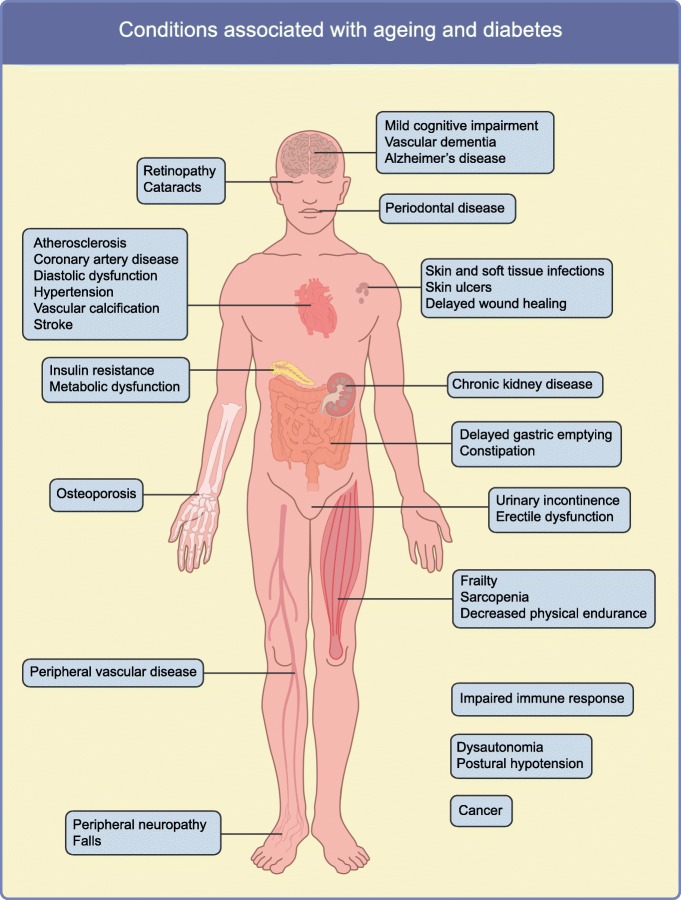
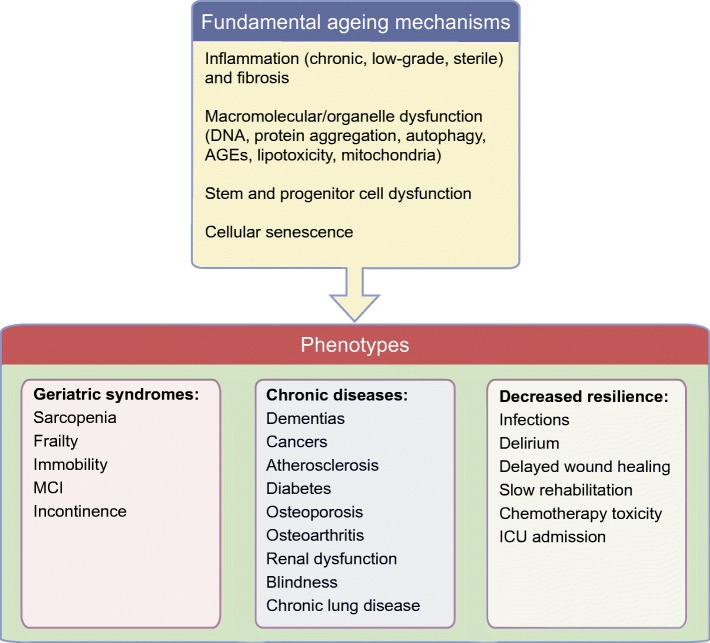
Ageing and diabetes lead to similar organ dysfunction that is driven by parallel molecular mechanisms, one of which is cellular senescence. The abundance of senescent cells in various tissues increases with age, obesity and diabetes. Senescent cells have been directly implicated in the generation of insulin resistance. Recently, drugs that preferentially target senescent cells, known as senolytics, have been described and recently entered clinical trials. In this review, we explore the biological links between ageing and diabetes, specifically focusing on cellular senescence. We summarise the current data on cellular senescence in key target tissues associated with the development and clinical phenotypes of type 2 diabetes and discuss the therapeutic potential of targeting cellular senescence in diabetes.
Overview
CoChat Summary
TL;DR
Cellular senescence is a fundamental ageing mechanism that is increased with age, obesity and diabetes and is directly implicated in insulin resistance and diabetic complications. Senolytic drugs that selectively clear senescent cells improve metabolic and organ dysfunction in animal models and have entered early human trials, making senescence a promising therapeutic target in diabetes.
Key findings
- Senescent cell abundance increases with ageing, obesity and diabetes, and polymorphisms in senescence markers such as CDKN2A are associated with increased risk of type 2 diabetes and cardiovascular disease.
- In adipose tissue, senescent progenitor cells inhibit adipogenesis and secrete SASP factors such as activin A, IL-6 and TNF-α, directly contributing to insulin resistance; p53 activation in adipose tissue also blunts insulin-induced glucose transport and increases lipolysis.
- In mice, reducing senescent cell burden genetically or with senolytics (e.g. dasatinib plus quercetin, D+Q) improves glucose tolerance, insulin sensitivity, microalbuminuria and diastolic heart dysfunction; senolytic treatment also alleviated proteinuria in obese insulin-resistant mice and steatosis in fatty liver models.
- The first clinical trial of senolytics reported improved physical function in patients with idiopathic pulmonary fibrosis after 3 weeks of intermittent D+Q treatment, though larger randomised controlled trials are needed.
Methods
- Narrative review exploring biological links between ageing and diabetes, with a focus on cellular senescence.
- Synthesises evidence from human studies and genetically modified, diet-induced and ageing animal models across tissues including adipose tissue, beta cells, liver, cardiovascular system, kidney and brain.
- No systematic search strategy, inclusion criteria or meta-analysis is described; the paper is a conceptual and literature-based synthesis.
Limitations
- The paper states gaps in knowledge for clinical translation: need to determine trial length, identify reliable or universal senescence biomarkers, elucidate kinetics of senescent cell formation and reappearance under ongoing insults such as nutrient excess, and assess senolytic efficacy in early vs late disease.
- Evident from the text: many mechanistic findings come from animal models, and the authors note that the role of cellular senescence in diabetic microvascular complications involving eyes, nerves and kidneys is not well defined.
- Evident from the text: as a narrative review, it does not report a systematic evidence appraisal or quantitative synthesis.
Model-written summary. Check it against the paper before relying on it.
Integrity signals
Registry
Cites
Statistics
Figures
Verification
Claims the paper makes
10 Valid · 0 Not valid · 11 Not checked · 9 Own results and interpretations
The cited sources support only part of this claim — read each source’s verdict below.
In the paper
“In addition, senescent cells can directly cause insulin resistance through secretion of SASP factors such as activin A, IL-6 and TNF-α [35, 36].”
§ Cellular senescence: at the nexus between ageing and diabetes > Fundamental ageing mechanisms contribute to diabetes pathogenesis > Cellular senescence
What the sources say
- Partly supportedcites [35] Xu M Palmer AK Ding H Targeting senescent cells enhances adipogenesis and metabolic function in old age Elife 2015 4 e12997 26687007 PMC4758946 sourceExperimental — accuracy not yet measured
Our copy supports only part of what is attributed: senescent fat progenitors secrete SASP factors including activin A, IL-6 and TNF-alpha (Introduction; Results, 'Inhibition of activin A rescues impaired adipogenesis due to senescent CM'), and reducing SASP (JAK inhibition) or clearing senescent cells improved adipose function and insulin sensitivity in aged mice (Results, 'JAK inhibition enhances metabolic function in old mice'; Discussion summary). However, the paper does NOT state that senescent cells 'directly cause' insulin resistance: the Discussion ties insulin resistance to impaired adipogenesis and ectopic lipid/lipotoxicity ('consistent with the speculation'), and the Results say improved fat tissue function 'possibly contributed to enhanced insulin sensitivity'. The causal SASP factor the paper establishes is activin A acting on adipogenesis, not IL-6 or TNF-alpha acting on insulin action; the Introduction explicitly states 'causal links between these paracrine factors [IL6, TNFalpha, IFNgamma] and impaired adipogenesis related to cellular senescence have not been demonstrated', and the Discussion only says these 'may also contribute'. The supporting evidence is also in aged mice and human/rodent adipose progenitor cells in vitro, not the general population-level causal statement the citing sentence makes. (LLM, conf=0.80)
- Could not verifycites [36] Zaragosi LE Wdziekonski B Villageois P Activin a plays a critical role in proliferation and differentiation of human adipose progenitors Diabetes 2010 59 10 2513 2521 20530742 PMC3279533 sourceExperimental — accuracy not yet measured
Our copy of Zaragosi et al. (2010) contains no mention of cellular senescence or of a senescence-associated secretory phenotype; searched 'senescence/senescent/SASP', 'IL-6/insulin sensitivity/glucose uptake' and 'obesity-related insulin resistance'. The paper's activin A story is upstream of, and different from, the claim: the Discussion (p. n/a) states that human macrophage-secreted factors upregulate activin A in human adipose progenitors and that activin A promotes proliferation and inhibits adipocyte differentiation via C/EBPβ-LAP and Smad2 — no insulin-resistance measurement appears anywhere. The only insulin-related sentence (Discussion) reports other authors' proposal that INHBB may play a role in 'the insulin insensitivity associated with obesity', crediting references 25–27, not this paper's own finding. Thus nothing in our copy supports or contradicts the attributed SASP-driven, senescence-origin insulin-resistance mechanism. (LLM, conf=0.72)
plainstates a cause- Asserted: passes — The authors put it forward as true.
- Checkable: passes — It can be checked against evidence.
- Load-bearing: passes — The paper’s conclusions depend on it.
- Based: passes — The paper gives a reason why it holds.
- Partly supported
The cited sources support only part of this claim — read each source’s verdict below.
In the paper
“Senescent cells have been directly implicated in the generation of insulin resistance.”
- Also stated in: § Cellular senescence · plain
“senescent cells can directly cause insulin resistance through secretion of SASP factors such as activin A, IL-6 and TNF-α [35, 36].”
§ Cellular senescence: at the nexus between ageing and diabetes > Abstract
What the sources say
- Partly supportedcites [35] Xu M Palmer AK Ding H Targeting senescent cells enhances adipogenesis and metabolic function in old age Elife 2015 4 e12997 26687007 PMC4758946 sourceExperimental — accuracy not yet measured
The paper does implicate senescent cells in age-related insulin resistance, but with qualifiers the citing sentence drops: the Results section 'JAK inhibition enhances metabolic function in old mice' shows improved glucose homeostasis and insulin sensitivity in 22-month-old mice given the JAK1/2 inhibitor ruxolitinib (i.e., SASP inhibition in wild-type aged mice, not senescent-cell clearance), and the Discussion frames the route to insulin resistance as 'consistent with the speculation that impaired adipogenesis leads to ectopic lipid accumulation and insulin resistance', with the senescent-cell role stated as 'a likely causal role ... in age-related fat dysfunction'. The word 'directly' in the source attaches to senescent cells inhibiting adipogenesis of non-senescent progenitors (via activin A), not to the generation of insulin resistance, and the whole metabolic finding is bounded to naturally aged mice. So the source supports senescent cells being implicated in age-related insulin resistance but states it at lower confidence and in a narrower population than the unqualified citing sentence implies. (LLM, conf=0.75)
- Could not verifycites [36] Zaragosi LE Wdziekonski B Villageois P Activin a plays a critical role in proliferation and differentiation of human adipose progenitors Diabetes 2010 59 10 2513 2521 20530742 PMC3279533 sourceExperimental — accuracy not yet measured
Our copy of Zaragosi et al. (2010) contains no passage on cellular senescence: searches for 'senescent cells / senescence-associated secretory phenotype / replicative senescence' returned only passages on macrophage infiltration, chronic low-grade inflammation, and activin A control of human adipose progenitor proliferation and differentiation (Abstract/Introduction, p. 1; Discussion, p. 8-9). The only insulin-resistance content is background crediting others — the reference list entry for Xu et al. 2003 ('Chronic inflammation in fat plays a crucial role in the development of obesity-related insulin resistance', References, ref. 7) and a Discussion remark that INHBB 'may play an autocrine/paracrine role in energy balance or the insulin insensitivity associated with obesity' (refs 25-27). Nothing in our copy addresses senescent cells generating insulin resistance, so the attribution can be neither confirmed nor contradicted; our copy is not truncated, and no senescence work is named in it that would establish a different actual source. (LLM, conf=0.70)
plainstates a cause- Asserted: passes — The authors put it forward as true.
- Checkable: passes — It can be checked against evidence.
- Load-bearing: passes — The paper’s conclusions depend on it.
- Based: passes — The paper gives a reason why it holds.
- Also stated in: § Cellular senescence · plain
Every source the paper cites for this claim was checked and supports it.
In the paper
“a surprising finding was that, rather than being reduced, insulin secretion was actually increased in p16Ink4a-induced senescent cells [38].”
§ Cellular senescence: at the nexus between ageing and diabetes > Senescent cell burden is increased in diabetes > Beta cells
What the sources say
- Supportedcites [38] Helman A Klochendler A Azazmeh N p16(Ink4a)-induced senescence of pancreatic beta cells enhances insulin secretion Nat Med 2016 22 4 412 420 26950362 PMC5546206 source
The Results section, “p16 increases glucose-stimulated insulin secretion” (page unavailable), reports that p16-expressing mouse islets secreted about 2.5 times more insulin than controls after glucose stimulation. The Discussion also links p16-induced senescence in beta cells to enhanced insulin secretion rather than dysfunction. (LLM, conf=0.94)
plainstates a cause- Asserted: passes — The authors put it forward as true.
- Checkable: passes — It can be checked against evidence.
- Load-bearing: unclear — It is unclear whether the paper’s conclusions depend on it.
- Based: passes — The paper gives a reason why it holds.
- Supported
Every source the paper cites for this claim was checked and supports it.
In the paper
“In diet-induced and genetically-induced obese mice, treatment strategies that reduce senescent cell burden, either via genetic targeting or by administration of senolytic drugs, improve diabetic phenotypes, including glucose tolerance and insulin sensitivity [24].”
§ Cellular senescence: at the nexus between ageing and diabetes > Ageing and cellular senescence as therapeutic targets in diabetes
What the sources say
- Supportedcites [24] Palmer AK Xu M Zhu Y Targeting senescent cells alleviates obesity-induced metabolic dysfunction Aging Cell 2019 18 3 e12950 30907060 PMC6516193 source
Split into 2 atoms — 2 confirmed, 0 partially supported, 0 disputed, 0 misattributed, 0 unverifiable. Expand the claim to see per-atom verdicts.
plainstates a cause- Asserted: passes — The authors put it forward as true.
- Checkable: passes — It can be checked against evidence.
- Load-bearing: passes — The paper’s conclusions depend on it.
- Based: passes — The paper gives a reason why it holds.
- Supported
Every source the paper cites for this claim was checked and supports it.
In the paper
“the first clinical trial of senolytics was published recently and reported that physical function was improved in patients with idiopathic pulmonary fibrosis after 3 weeks of intermittent D+Q treatment [53].”
§ Cellular senescence: at the nexus between ageing and diabetes > Ageing and cellular senescence as therapeutic targets in diabetes
What the sources say
- Supportedcites [53] Justice JN Nambiar AM Tchkonia T Senolytics in idiopathic pulmonary fibrosis: results from a first-in-human, open-label, pilot study EBioMedicine 2019 40 554 563 30616998 PMC6412088 source
The Discussion describes this as a first-in-human pilot study and reports clinically meaningful, statistically significant improvements in physical function after three weeks of intermittent DQ treatment in participants with IPF. It characterizes the improvements as associated with treatment, consistent with the citing sentence’s wording. (LLM, conf=0.94)
plainstates a cause- Asserted: passes — The authors put it forward as true.
- Checkable: passes — It can be checked against evidence.
- Load-bearing: passes — The paper’s conclusions depend on it.
- Based: passes — The paper gives a reason why it holds.
- Supported
8 more claims · 3 with their cited sources checked
Create a free account to see all 30 claims and to verify the 21 references still open.
- It may state two separate claims as one. 15
- Probably not a substantial claim. 3
Claims other papers make about this one
Each is checked against this paper’s own text: does it say what the citing paper says it does?
The cited source says what the claim attributes to it.
In the citing paper
“Sncs contribute to chemoattraction of immune cells to visceral adipose tissue in obesity, further contributing to insulin resistance and risk of diabetes (41).”
From Senolytic Drugs: Reducing Senescent Cell Viability to Extend Health Span (2021) · cites this paper as [41]
Citations
Cites
Wild, S., Roglic, G., Green, A., Sicree, R., & King, H. (2004) · Diabetes Care · doi:10.2337/diacare.27.5.1047 · Cited by 15,297
López-Otín, C., Blasco, M. A., Partridge, L., Serrano, M., & Kroemer, G. (2013) · Cell · doi:10.1016/j.cell.2013.05.039 · Cited by 14,982
Increased oxidative stress in obesity and its impact on metabolic syndrome
Furukawa, S., Fujita, T., Shimabukuro, M., Iwaki, M., Yamada, Y., Nakajima, Y., Nakayama, O., Makishima, M., Matsuda, M., & Shimomura, I. (2004) · Journal of Clinical Investigation · doi:10.1172/jci21625 · Cited by 5,508
Chronic Inflammation (Inflammaging) and Its Potential Contribution to Age-Associated Diseases
Franceschi, C., & Campisi, J. (2014) · The Journals of Gerontology Series A: Biological Sciences and Medical Sciences · doi:10.1093/gerona/glu057 · Cited by 3,891
Geroscience: Linking Aging to Chronic Disease
Kennedy, B. K., Berger, S. L., Brunet, A., Campisi, J., Cuervo, A. M., Epel, E. S., Franceschi, C., Lithgow, G. J., Morimoto, R. I., Pessin, J. E., et al. (2014) · Cell · doi:10.1016/j.cell.2014.10.039 · Cited by 2,764
The Achilles' heel of senescent cells: from transcriptome to senolytic drugs
Zhu, Y., Tchkonia, T., Pirtskhalava, T., Gower, A. C., Ding, H., Giorgadze, N., Palmer, A. K., Ikeno, Y., Hubbard, G. B., Lenburg, M., et al. (2015) · Aging Cell · doi:10.1111/acel.12344 · Cited by 2,584
Self-citationPathophysiology of human visceral obesity: an update
Tchernof, A., & Després, J.-P. (2013) · Physiological Reviews · doi:10.1152/physrev.00033.2011 · Cited by 2,583
Senolytics improve physical function and increase lifespan in old age
Xu, M., Pirtskhalava, T., Farr, J. N., Weigand, B. M., Palmer, A. K., Weivoda, M. M., Inman, C. L., Ogrodnik, M. B., Hachfeld, C. M., Fraser, D. G., et al. (2018) · Nature Medicine · doi:10.1038/s41591-018-0092-9 · Cited by 2,287
Self-citationCellular senescence and the senescent secretory phenotype: therapeutic opportunities
Tchkonia, T., Zhu, Y., van Deursen, J., Campisi, J., & Kirkland, J. L. (2013) · Journal of Clinical Investigation · doi:10.1172/jci64098 · Cited by 1,774
Self-citationObesity, cigarette smoking, and telomere length in women
Valdes, A., Andrew, T., Gardner, J., Kimura, M., Oelsner, E., Cherkas, L., Aviv, A., & Spector, T. (2005) · The Lancet · doi:10.1016/s0140-6736(05)66630-5 · Cited by 1,363
Cited by
Items 301–339 of 339
Nuclear Fetuin-A Drives Adipocyte Senescence via HIF-1α During ObesityPreprint
Patra, D., Vashisth, A., Roy, S., Ramprasad, P., Sharma, S., Mishra, S., Prusty, B. M., Manna, D., Singh, S., Tikoo, K., et al. (2025) · bioRxiv (Cold Spring Harbor Laboratory) · doi:10.1101/2025.08.18.670856
“The FetA gene is mapped to the 3q27 region of human genome, a well-established T2D and metabolic syndrome susceptibility locus(Mathews et al , 2002a) and the ablation of FetA gene in mice confers resistant to weight gain on a high-fat diet along with the improvement of insulin sensitivity(Mathews et al , 2002b).”
InfluentialYang, J., Liu, H., Huang, X., Fu, Z., Zhou, J. N., Liu, T., & Zhao, W. (2025) · PLoS ONE · doi:10.1371/journal.pone.0333472 · Cited by 1
Association between blood-derived biological aging and bone mineral density among US adults
Wu, L., Wang, J., Liu, X., Wang, X., & Yue, X. (2025) · BMC Musculoskeletal Disorders · doi:10.1186/s12891-025-09213-7 · Cited by 1
Liu, H., Yang, J., Zhao, W., & Liu, T. (2025) · Irish Journal of Medical Science (1971 -) · doi:10.1007/s11845-025-04145-6
Bedewi, M. A., Awad, E. M., Kotb, M. A., Kamal, S. M., Alfawaz, S. M., Alrudian, N. A., Soliman, S. B., Almalki, D. M., AlAseeri, A. A., Alhariqi, B. A., et al. (2025) · BMC Geriatrics · doi:10.1186/s12877-025-06765-0
“…manifests with multi-organ dysfunction, mirroring what can occur in normal chronical ageing however, occurring in diabetes at younger age and suggesting that both entities could share parallel molecular mechanisms and that changes occurring with diabetes could be part of a pro-ageing state [27].”
Wang, L., Wang, H.-H., Chen, Q., Luo, S.-L., Fang, S., Ling, Z.-H., Tang, W.-B., Wu, Y.-Y., Ma, F.-Y., Liu, M.-R., et al. (2026) · Free Radical Biology and Medicine · doi:10.1016/j.freeradbiomed.2026.05.297
Xue, W.-J., He, C.-F., Zhou, R.-Y., Xu, X.-D., Xiang, L., Wang, J.-T., Wang, X.-R., Zhou, H.-G., & Guo, J.-C. (2022) · Figshare · doi:10.6084/m9.figshare.20336875
Zahedi, M., Kazemian, E., Ramezani-Tehrani, F., Tohidi, M., Azizi, F., Khalili, D., Rahmati, M., & Amouzegar, A. (2020) · Figshare · doi:10.6084/m9.figshare.13031215
Xue, W.-J., He, C.-F., Zhou, R.-Y., Xu, X.-D., Xiang, L., Wang, J.-T., Wang, X.-R., Zhou, H.-G., & 郭景春 (2022) · Figshare · doi:10.6084/m9.figshare.20336872
RISK FACTORS ASSOCIATED WITH DIABETES AND HYPERTENSION IN ELDERLY INDIVIDUALS: AN INTEGRATIVE REVIEW
Guimarães, T. M. R., Silva, R. D. A., Tomaz, D. D. C., Henrique, J. D. S., Almeida, É. R. D. M., & Carneiro, M. G. (2025) · Seven Editora eBooks · doi:10.56238/edimpacto2025.060-019
Wang, W., Shi, H., Zhang, M., Mi, J., Lu, L., Jin, B., Zhang, L., Rehman, A., Liu, C. P., Yan, Y., et al. (2026) · Food Bioscience · doi:10.1016/j.fbio.2026.108280
The mediating role of insulin resistance in depression driving phenotypic age acceleration
Zhang, L., Yang, Q., Yu, J., & Hu, Y. (2026) · Annals of General Psychiatry · doi:10.1186/s12991-026-00629-6 · Cited by 1
“Thirdly, diabetic individuals exhibit various aging-related features, such as increased insulin resistance, low-grade chronic inflammation, oxidative stress, accumulation of advanced glycation end products, and mitochondrial dysfunction [61].”
Mi, Y., Wei, D., Du, B., Wang, J., Qi, J., Zhang, R., Du, L., Ren, J., Li, B., & Wu, X. (2026) · International Immunopharmacology · doi:10.1016/j.intimp.2026.116340 · Cited by 1
Immune-targeted therapies: Management of diabetes and fostering healthy aging
Nainu, F., Ophinni, Y., Mamada, S. S., & Latada, N. P. (2026) · Elsevier eBooks · doi:10.1016/b978-0-443-44665-8.00024-9
The cellular and molecular pathophysiology of diabetes in aging
Namrata, N., Mundlia, P., Attri, D., Sharma, I., Sharma, A., & Giri, A. (2026) · Elsevier eBooks · doi:10.1016/b978-0-443-44665-8.00008-0
Endocrinological and pathophysiological perspectives of diabetes in aging
Wani, Z., Sharma, A. K., Lone, Y., Bashir, S. M., Raina, S., & Malik, S. (2026) · Elsevier eBooks · doi:10.1016/b978-0-443-44665-8.00010-9
Insulin-stimulated glucose uptake is impaired in senescent human adipocytes
Alexandersson, I., Palmgren, H., Uhrbom, M., Oscarsson, J., & Boucher, J. (2026) · Frontiers in Endocrinology · doi:10.3389/fendo.2026.1795654
Rôle des récepteurs purinergiques P2 dans la plasticité fonctionnelle du pancréas endocrine
Mesto, N. (2022) · theses.fr (ABES) · doi:10.70675/6d88bb6dz7c74z4c62za55czd1c1c3de5085
Hansen, N. W., Caci, A., Wölfel, E. M., Sabaratnam, R., da Fonseca, M. P., Palmfeldt, J., Højlund, K., Blagoev, B., Kassem, M. S., Rauch, A., et al. (2026) · European Journal of Endocrinology · doi:10.1093/ejendo/lvag063
Hardika, M., Kurniawan, F., Laksmi, P. W., Wafa, S., Marliau, R. M., Barinda, A. J., Harbuwono, D. S., & Tahapary, D. L. (2026) · Journal of the ASEAN Federation of Endocrine Societies · doi:10.15605/jafes.041.01.5071
“4,5 The relationship between shortened relative leukocyte telomere length (rLTL) and T2DM has been reported in previous studies.”
Ren, H., & Lai, H. (2026) · Frontiers in Clinical Diabetes and Healthcare · doi:10.3389/fcdhc.2026.1823872
Contribution of cellular senescence to kidney disease pathogenesis
Bakhsheliyeva, N. L., Nagiyev, R. N., Hashimova, U. F., Sholan, R., & Safikhanova, K. (2025) · Azerbaijan Journal of Physiology · doi:10.59883/ajp.110
Liu, B.-X., Zhou, H., Ge, X., Zhang, Z., Jiang, W., Liu, W. T., Yu, P., Liu, J., Li, Y., Wu, Q., et al. (2026) · Research Square · doi:10.21203/rs.3.rs-9884549/v1
Decoding exercise-induced delayed aging from a single-cell perspective
Zhao, Y., Zhou, X., & Ni, T. (2026) · Advanced Exercise and Health Science · doi:10.1016/j.aehs.2026.05.001
Mao, J., Wu, Y., Xia, Y., Shen, J., Huang, X. Y., Ma, S., Yang, X. Y., & Lan, Y. (2026) · Journal Of Clinical Periodontology · doi:10.1111/jcpe.70158
Gu, L., Yang, J., Shen, J., Zhen, Q., Hou, Y., Shen, T., Zhu, Y., Peng, Y., 李灵俊, Wang, B., et al. (2026) · Diabetes Research and Clinical Practice · doi:10.1016/j.diabres.2026.113424
Zhong, H., Jing, F., Guo, Y., Xu, X., Liu, L., Gao, T., & Xu, Z. (2026) · European Journal of Geriatrics and Gerontology · doi:10.4274/ejgg.galenos.2025.2025-8-4
The Role of NLRP3 Inflammasome in Aging and Age-Related Diseases
Başaran, A. (2026) · Uluslararası Sağlık Bilimlerinde Disiplinler Arası Etkileşim Dergisi · doi:10.65349/mnhi7944
Endothelial RANK signaling triggers bone marrow inflammaging through IL-1β expressionPreprint
Kobayashi, Y., Iwamoto, R., Takahashi, T., Ishida, M., He, Z., Murakami, K., Hara, T., Ganbaatar, B., Yamagami, H., Endo, I., et al. (2026) · Research Square · doi:10.21203/rs.3.rs-10899322/v1
Endothelial RANK signaling triggers bone marrow inflammagingPreprint
Kobayashi, Y., Iwamoto, R., Takahashi, T., Ishida, M., He, Z., Murakami, K., Hara, T., Ganbaatar, B., Yamagami, H., Endo, I., et al. (2026) · Research Square · doi:10.21203/rs.3.rs-10285332/v1
Peng, S., Xie, J., & He, X. (2026) · Frontiers in Cell and Developmental Biology · doi:10.3389/fcell.2026.1939452
Liu, F., Zhong, A., Li, J., Sun, Q., Fan, X., Fan, W., Tong, X., Liang, Y., Wang, X., Huang, D., et al. (2026) · Journal of Pineal Research · doi:10.1111/jpi.70185
“Under pathological conditions such as diabetes, senescent cells accumulate in multiple organs, contributing to tissue dysfunction and pathological manifestations [48, 49].”
Mandlik, D. S., & Mandlik, S. K. (2026) · Ageing Research Reviews · doi:10.1016/j.arr.2026.103384
Bello‐Chavolla, O. Y., & Fermín‐Martínez, C. A. (2026) · Advances in biogerontology · doi:10.1016/bs.abger.2026.08.002
Liu, H., Sun, A., Deng, Y., Li, Y., Hu, J., & Liu, Z. (2026) · PLoS ONE · doi:10.1371/journal.pone.0360683
“In older adults, the clinical manifestation of T2DM is often complicated by the presence of multiple comorbidities, polypharmacy, and geriatric syndromes, thereby elevating the risk of adverse events, including hypoglycemia and falls [5,6].”
Wang, W., Xiong, W., & Zhang, Z. (2026) · Biomolecules · doi:10.3390/biom16111569
Rebrova, Y., Saienko, Y. A., Midlovets, K. K., Korcheva, V., & Mankovsky, B. (2026) · Diabetology · doi:10.3390/diabetology7110214
Yang, X., & Zhao, D. (2026) · Frontiers in Endocrinology · doi:10.3389/fendo.2026.1997338
MKP ‐2 Genetic Depletion Modulates Adipose Lipid Composition, Cellular Senescence, and Aging in Mice
Welch, M., Ghimire, N., Smith, S., Secunda, C., Fink, A., Sleiman, A., Chambliss, L., Pinckard, C., Reyes, C., Katta, P., et al. (2026) · Aging Cell · doi:10.1111/acel.70794
Metadata
- Authors
- Palmer, A. K., Gustafson, B., Kirkland, J. L., & Smith, U.
- Affiliations
- Mayo Clinic (US)
- Sahlgrenska University Hospital (SE)
- Corresponding author
- Kirkland, James L.
- Smith, Ulf
- Venue
- Diabetologia
- Published
- 2019-08-27
- Volume
- 62
- Issue
- 10
- Pages
- 1835-1841
- ISSN
- 0012-186X (ISSN-L)
- 1432-0428
- PMC
- PMC6731336
- OpenAlex
- W2971121994
- Cited by
- 337
- References
- 54
- Citations by year
- 2026: 43 · 2025: 59 · 2024: 66 · 2023: 49 · 2022: 49 · 2021: 37 · 2020: 32 · 2019: 2
- FWCI
- 3.52
- Type
- journal article
- Language
- en
- Open access
- hybrid
- doi.org
- Licence
- cc-by
- creativecommons.org/licenses/by/4.0 (tdm)
- creativecommons.org/licenses/by/4.0 (vor)
- Locations
- Diabetologia (publishedVersion, cc-by)
- Europe PMC (PubMed Central) (publishedVersion, cc-by)
- PubMed Central (publishedVersion, cc-by)
- PubMed (publishedVersion)
- Funders
- University of Gothenburg
- Topics
- Life Sciences › Biochemistry, Genetics and Molecular Biology › Cell Biology › Telomeres, Telomerase, and Senescence
- Life Sciences › Biochemistry, Genetics and Molecular Biology › Aging › Genetics, Aging, and Longevity in Model Organisms
- Health Sciences › Medicine › Geriatrics and Gerontology › Sirtuins and Resveratrol in Medicine
- Keywords
- cellular senescence, aging, type 2 diabetes, insulin resistance, senolytics, obesity, senescent cells, organ dysfunction
- MeSH terms
- Aging, Animals, Diabetes Mellitus, Type 2, Humans, Cellular Senescence
About these checks
Registry, retraction, Cites and statistics results are computed, not judged, with one exception: a printed reference that no index lists is read once by a model before it counts as a citation error. Claims are extracted by a model and kept only when their quote appears verbatim in the text; each cited source is then checked, with a model’s help, for whether it says what the claim relies on. Those verdicts can be wrong — read the claim’s quote and the cited source before relying on one.
The claim verdicts this report counts are experimental: their accuracy is not yet measured.
A language model drew the claims from the paper on 2026-10-04, under version 3 of the claim definition (model deepseek-v4.1-flash, prompt extract-v3).
A second model labelled each claim on 2026-10-04 (model jev-1.13-20260917, definition revision gold-guideline-v0.2).
Cited sources are checked with a language model’s help (qwen3.8-omni-flash and gpt-6-sol).
Statistics and arithmetic are recomputed, not judged.
Confidence bands are shown only for fields calibrated on our annotated test set. None is calibrated yet, so no band is shown.
What counts as a claim ›How we measure confidence ›How we check this ›
Are you an author, or do you see a problem with this page? Request a review
Data sources
Bibliographic data: Semantic Scholar, OpenAlex, Crossref.
Contains information from the Semantic Scholar Academic Graph Datasets, made available under the ODC Attribution License (ODC-BY 1.0).
Semantic Scholar’s data is described in: Kinney, R., et al. (2023). The Semantic Scholar Open Data Platform. arXiv:2301.10140.
