

Management of type 2 diabetes with the dual GIP/GLP-1 receptor agonist tirzepatide: a systematic review and meta-analysis
Open accessThe DOI matches its Crossref record; 32 of the 32 references it cites were found in a registry or an index.
Abstract
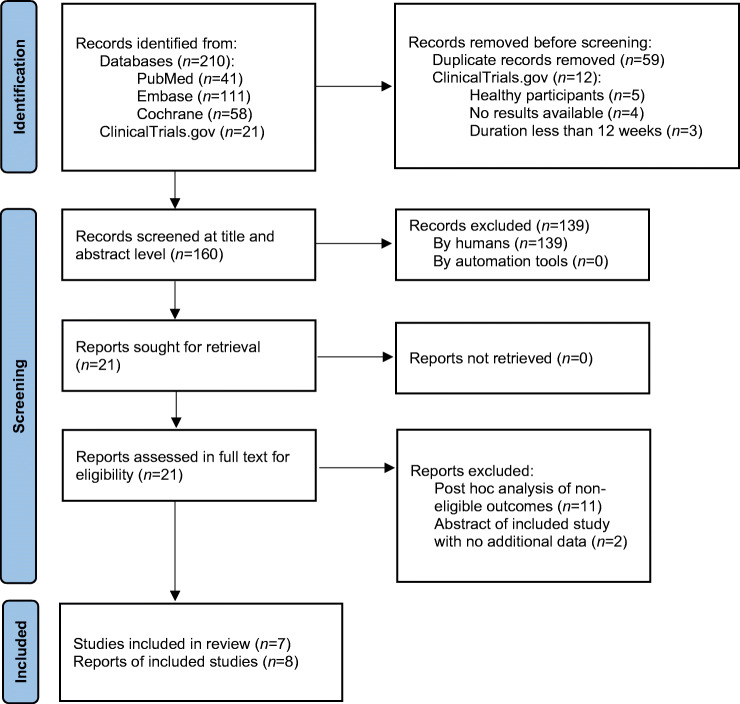
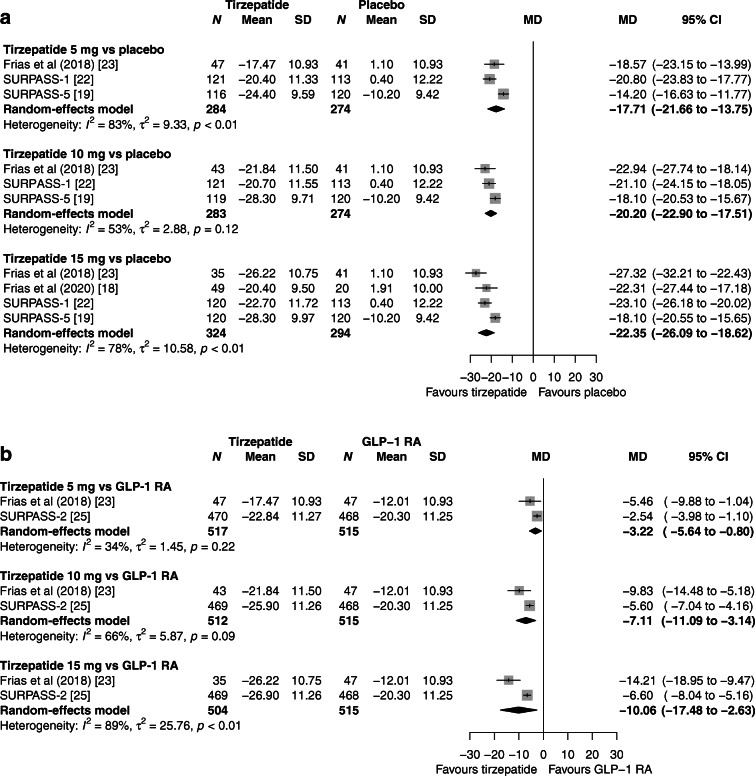
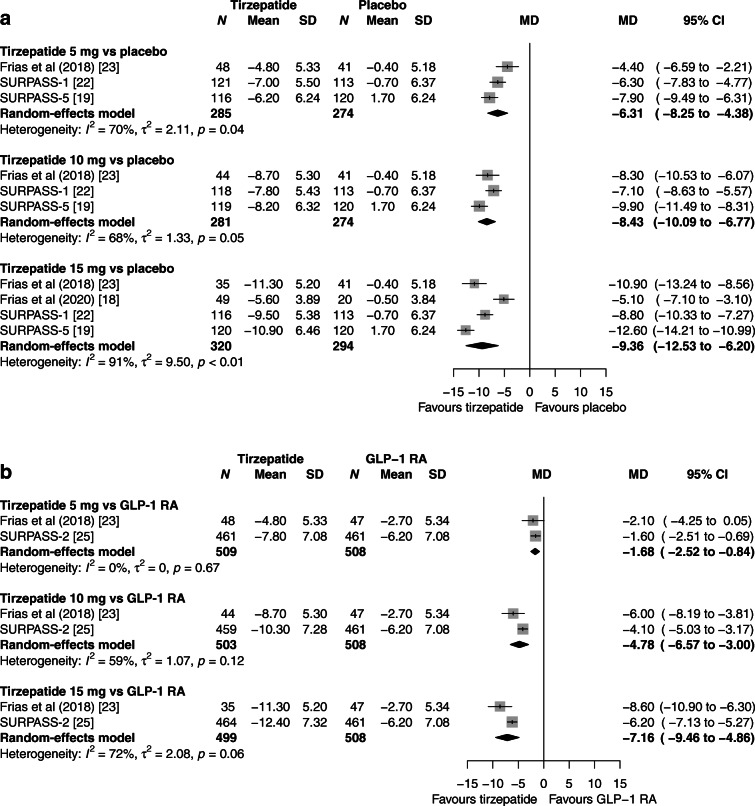
Aims/hypothesis: Tirzepatide is a novel dual glucose-dependent insulinotropic peptide (GIP) and glucagon-like peptide-1 receptor agonist (GLP-1 RA) currently under review for marketing approval. Individual trials have assessed the clinical profile of tirzepatide vs different comparators. We conducted a systematic review and meta-analysis to assess the efficacy and safety of tirzepatide for type 2 diabetes. Methods: We searched PubMed, Embase, Cochrane and ClinicalTrials.gov up until 27 October 2021 for randomised controlled trials with a duration of at least 12 weeks that compared once-weekly tirzepatide 5, 10 or 15 mg with placebo or other glucose-lowering drugs in adults with type 2 diabetes irrespective of their background glucose-lowering treatment. The primary outcome was change in HbA 1c from baseline. Secondary efficacy outcomes included change in body weight, proportion of individuals reaching the HbA 1c target of <53 mmol/mol (<7.0%), ≤48 mmol/mol (≤6.5%) or <39 mmol/mol (<5.7%), and proportion of individuals with body weight loss of at least 5%, 10% or 15%. Safety outcomes included hypoglycaemia, gastrointestinal adverse events, treatment discontinuation due to adverse events, serious adverse events, and mortality. We used version 2 of the Cochrane risk-of-bias tool for randomised trials to assess risk of bias for the primary outcome. Results: Seven trials (6609 participants) were included. A dose-dependent superiority in lowering HbA 1c was evident with all three tirzepatide doses vs all comparators, with mean differences ranging from −17.71 mmol/mol (−1.62%) to −22.35 mmol/mol (−2.06%) vs placebo, −3.22 mmol/mol (−0.29%) to −10.06 mmol/mol (−0.92%) vs GLP-1 RAs, and −7.66 mmol/mol (−0.70%) to −12.02 mmol/mol (−1.09%) vs basal insulin regimens. Tirzepatide was more efficacious in reducing body weight; reductions vs GLP-1 RAs ranged from 1.68 kg with tirzepatide 5 mg to 7.16 kg with tirzepatide 15 mg. Incidence of hypoglycaemia with tirzepatide was similar vs placebo and lower vs basal insulin. Nausea was more frequent with tirzepatide vs placebo, especially with tirzepatide 15 mg (OR 5.60 [95% CI 3.12, 10.06]), associated with higher incidence of vomiting (OR 5.50 [95% CI 2.40, 12.59]) and diarrhoea (OR 3.31 [95% CI 1.40, 7.85]). Odds of gastrointestinal events were similar between tirzepatide and GLP-1 RAs, except for diarrhoea with tirzepatide 10 mg (OR 1.51 [95% CI 1.07, 2.15]). Tirzepatide 15 mg led to higher discontinuation rate of study medication due to adverse events regardless of comparator, while all tirzepatide doses were safe in terms of serious adverse events and mortality. Conclusions/interpretation: A dose-dependent superiority on glycaemic efficacy and body weight reduction was evident with tirzepatide vs placebo, GLP-1 RAs and basal insulin. Tirzepatide did not increase the odds of hypoglycaemia but was associated with increased incidence of gastrointestinal adverse events. Study limitations include presence of statistical heterogeneity in the meta-analyses for change in HbA 1c and body weight, assessment of risk of bias solely for the primary outcome, and generalisation of findings mainly to individuals who are overweight or obese and already on metformin-based background therapy. PROSPERO registration no. CRD42021283449. Graphical abstract:
Overview
The claims and statistics of this paper haven’t been checked yet.
Free: it reads the open-access text and checks the first 5 claims that cite a source we can check. Create a free account to check every claim.
Integrity signals
Registry
Cites
Statistics
Figures
Verification
Claims the paper makes
The claims and statistics of this paper haven’t been checked yet.
Free: it reads the open-access text and checks the first 5 claims that cite a source we can check. Create a free account to check every claim.
Claims other papers make about this one
Each is checked against this paper’s own text: does it say what the citing paper says it does?
The source backs part of the claim, not all of it — or backs it for a different population, condition or comparison.
In the citing paper
“Based on meta-analysis fi ndings, tirzepatide was superior to its comparators, including other long-acting GLP-1 RA, in reducing glucose and body weight, but was associated with increased odds for gastrointestinal adverse events, in particular nausea (189).”
From Management of Hyperglycemia in Type 2 Diabetes, 2022. A Consensus Report by the American Diabetes Association (ADA) and the European Association for the Study of Diabetes (EASD) (2022) · cites this paper as [189]
Experimental — accuracy not yet measuredThe cited source says what the claim attributes to it.
In the citing paper
“The occurrence of such gastrointestinal side effects increases with the dose used. 86 , 87”
From Real‐world evidence on the utilization, clinical and comparative effectiveness, and adverse effects of newer GLP ‐ 1RA ‐based weight‐loss therapies (2025) · cites this paper as [86]
The cited source says what the claim attributes to it.
In the citing paper
“Some studies have demonstrated that tirzepatide achieves greater weight loss compared to existing GLP-1 RAs [20,21,22].”
From The Efficacy and Safety of Tirzepatide in Patients with Diabetes and/or Obesity: Systematic Review and Meta-Analysis of Randomized Clinical Trials (2025) · cites this paper as [20]
The cited source says what the claim attributes to it.
In the citing paper
“Data from RCTs have consistently shown the efficacy of tirzepatide in reducing HbA1c and body weight in people with type 2 diabetes [3].”
In the citing paper
“Karagiannis et al. found that tezepatide had a significant dose-dependent advantage in weight loss compared with placebo, GLP-1R agonists, and basal insulin (130).”
From GLP−1 receptor agonists for the treatment of obesity: Role as a promising approach (2023) · cites this paper as [130]
Self-check
Percentages, sums and reported differences re-computed from the paper’s own numbers.
The self-check needs the paper’s full text.
Citations
Cites
The PRISMA 2020 statement: An updated guideline for reporting systematic reviews
Page, M. J., McKenzie, J. E., Bossuyt, P. M., Boutron, I., Hoffmann, T. C., Mulrow, C. D., Shamseer, L., Tetzlaff, J. M., Akl, E. A., Brennan, S. E., et al. (2021) · BMJ · doi:10.1136/bmj.n71 · Cited by 108,283
RoB 2: a revised tool for assessing risk of bias in randomised trials
Sterne, J. A. C., Savović, J., Page, M. J., Elbers, R. G., Blencowe, N. S., Boutron, I., Cates, C. J., Cheng, H.-Y., Corbett, M. S., Eldridge, S. M., et al. (2019) · BMJ · doi:10.1136/bmj.l4898 · Cited by 34,787 · cited 2×
“As such, we did not consider open-label status as a source of bias, given that measurement of HbA1c is an objective outcome and thus is not affected by blinding status [15].”
BackgroundMethodThe PRISMA 2020 statement: an updated guideline for reporting systematic reviews
Page, M. J., McKenzie, J., Bossuyt, P., Boutron, I., Hoffmann, T., mulrow, C., Shamseer, L., Tetzlaff, J., Akl, E., Brennan, S. E., et al. (2020) · doi:10.31222/osf.io/v7gm2_v1 · Cited by 8,090
The PRISMA 2020 statement: an updated guideline for reporting systematic reviews
Page, M. J., McKenzie, J., Bossuyt, P., Boutron, I., Hoffmann, T., mulrow, C., Shamseer, L., Tetzlaff, J., Akl, E., Brennan, S. E., et al. (2020) · doi:10.31222/osf.io/v7gm2 · Cited by 5,177
Biology of Incretins: GLP-1 and GIP
Baggio, L. L., & Drucker, D. J. (2007) · Gastroenterology · doi:10.1053/j.gastro.2007.03.054 · Cited by 3,639 · cited 1×
“GLP-1 is released from L cells in the distal ileum and colon, while GIP is secreted from K cells in the duodenum and jejunum and is responsible for most of the insulinotropic incretin effect [2].”
BackgroundGerstein, H. C., Colhoun, H. M., Dagenais, G. R., Diaz, R., Lakshmanan, M., Pais, P., Probstfield, J., Riesmeyer, J. S., Riddle, M. C., Rydén, L., et al. (2019) · The Lancet · doi:10.1016/s0140-6736(19)31149-3 · Cited by 3,163 · cited 1×
“NCT04255433) is expected to provide definitive answers on the impact of tirzepatide on cardiovascular disease compared with dulaglutide, a long-acting GLP-1 RA that has been shown to be cardioprotective in individuals with type 2 diabetes at increased cardiovascular risk [31].”
BackgroundTirzepatide versus Semaglutide Once Weekly in Patients with Type 2 Diabetes
Frías, J. P., Davies, M. J., Rosenstock, J., Pérez Manghi, F. C., Fernández Landó, L., Bergman, B. K., Liu, B., Cui, X., & Brown, K. (2021) · New England Journal of Medicine · doi:10.1056/nejmoa2107519 · Cited by 2,096 · cited 7×
“06 Frias et al (2018) [23] SURPASS-2 [25]”
BackgroundMethodInfluentialMethods to estimate the between‐study variance and its uncertainty in meta‐analysis
Veroniki, A. A., Jackson, D., Viechtbauer, W., Bender, R., Bowden, J., Knapp, G., Kuss, O., Higgins, J. P., Langan, D., & Salanti, G. (2016) · Research Synthesis Methods · doi:10.1002/jrsm.1164 · Cited by 1,685 · cited 1×
“In all analyses, we used the Paule–Mandel method to estimate between-study variance [17], and the I(2) statistic to assess statistical heterogeneity.”
MethodReduced incretin effect in Type 2 (non-insulin dependent) diabetes
Nauck, M., Stöckmann, F., Ebert, R., & Creutzfeldt, W. (1986) · Diabetologia · doi:10.1007/bf02427280 · Cited by 1,307 · cited 1×
“In people with type 2 diabetes the incretin effect is considerably diminished [3].”
BackgroundRosenstock, J., Wysham, C., Frías, J. P., Kaneko, S., Lee, C. J., Fernández Landó, L., Mao, H., Cui, X., Karanikas, C. A., & Thieu, V. T. (2021) · The Lancet · doi:10.1016/s0140-6736(21)01324-6 · Cited by 1,080 · cited 8×
“01 Frias et al (2018) [23] SURPASS-1 [22] SURPASS-5 [19]”
BackgroundMethodResultInfluential
Cited by
Items 101–200 of 292
What is the evidence regarding the safety of new obesity pharmacotherapies
Vidal, J., Flores, L., Jiménez, A., Pané, A., & de Hollanda, A. (2025) · International Journal of Obesity · doi:10.1038/s41366-024-01488-5 · Cited by 15
Li, J., Xie, J., Han, Y., Zhang, W., Wang, Y., & Jiang, Z. (2024) · Endocrine Journal · doi:10.1507/endocrj.ej24-0286 · Cited by 19
Forst, T. M., Block, C. E. M. D., Prato, S. D., Frías, J. P., Lautenbach, A., Ludvik, B. H., Marinez, M., Mathieu, C., Müller, T. D., & Schnell, O. (2025) · Diabetes Obesity and Metabolism · doi:10.1111/dom.16247 · Cited by 15
McGuire, D. K., D’Alessio, D., Nicholls, S. J., Nissen, S. E., Riesmeyer, J. S., Pavo, I., Sethuraman, S., Heilmann, C. R., Kaiser, J. J., & Weerakkody, G. J. (2022) · Cardiovascular Diabetology · doi:10.1186/s12933-022-01601-w · Cited by 14
“Tirzepatide is a novel, once-weekly, injectable, dual glucose-dependent insulinotropic polypeptide (GIP) and GLP-1 RA, is being developed for the treatment of type 2 diabetes (T2D) and obesity [26] with CV safety demonstrated in the late phase clinical program [27, 28].”
BackgroundReal-World Safety Concerns of Tirzepatide: A Retrospective Analysis of FAERS Data (2022–2025)
Almansour, H. A., Thaibah, H. A., Alfarhan, M., Al-Qahtani, S. A., Khardali, A., & Alshammari, T. M. (2025) · Healthcare · doi:10.3390/healthcare13182259 · Cited by 18
“Injection-site reactions, such as erythema, pruritus, and swelling, were reported at a low and consistent frequency across the tirzepatide SURPASS clinical trials, occurring in approximately ≤ 1–2% of participants [34].”
Concepción‐Zavaleta, M. J., Fuentes‐Mendoza, J. M., Yovera, J. G. G., Ruvalcaba-Barbosa, G. Y., Cura-Rodríguez, L. D., González-Rodríguez, J. S., Urteaga, L. A. C., Pérez-Reyes, A. I., Aldave, J. E. Q., & Paz‐Ibarra, J. (2025) · World Journal of Gastroenterology · doi:10.3748/wjg.v31.i37.111435 · Cited by 18
“%) and body weight (> 15%)[79,80].”
Podder, D., Stala, O., Miah, A., Agyapong, A., Moore, M. E., Hirani, R., Diegisser, D., Garcia, V. G., & Etienne, M. (2026) · Diabetology · doi:10.3390/diabetology7030046 · Cited by 20
Theofilis, P., Vordoni, A., & Kalaitzidis, R. (2022) · Life · doi:10.3390/life12101663 · Cited by 15
Naseralallah, L. M. A., & Aboujabal, B. (2023) · Expert Opinion on Pharmacotherapy · doi:10.1080/14656566.2023.2181074 · Cited by 19
Razzaki, T. S., Weiner, A., & Shukla, A. P. (2022) · Therapeutics and Clinical Risk Management · doi:10.2147/tcrm.s328056 · Cited by 16
“30”
Maagensen, H., Helsted, M. M., Gasbjerg, L. S., Vilsbøll, T., & Knop, F. K. (2022) · Current Osteoporosis Reports · doi:10.1007/s11914-022-00767-2 · Cited by 16
Incretin Therapies for Patients with Type 2 Diabetes and Chronic Kidney Disease
Alicic, R. Z., & Neumiller, J. J. (2023) · Journal of Clinical Medicine · doi:10.3390/jcm13010201 · Cited by 16
“…in lowering HbA1C ( − 1.62% to − 2.06% vs. placebo, − 0.29% to − 0.92% vs. GLP-1 receptor agonists, and − 0.70% to − 1.09% vs. basal insulin), and reducing body weight (reductions vs. GLP-1 receptor agonists ranged from 1.68 kg with 5 mg tirzepatide to 7.16 kg with 15 mg tirzepatide) [92].”
BackgroundInfluentialBradley, C. L., McMillin, S. M., Hwang, A. Y., & Sherrill, C. H. (2023) · Annals of Pharmacotherapy · doi:10.1177/10600280221134127 · Cited by 13
Khawaji, A., A. Jaly, A., A. Bakri, H., Ravi, R., Hattan, A., Khawaji, A., & Najmi, W. (2025) · Journal of Obesity · doi:10.1155/jobe/3442754 · Cited by 13
“In a meta-analysis by Karagiannis et al., the three doses of tirzepatide lowered HbA1c more efectively than other compotators with average MD of − 17.71 to − 22.35 mmol/mol vs. placebo, − 3.22 to − 10.06 mmol/mol vs. GLP-1 RAs and − 7.66 to − 12.02 mmol/mol vs. basal insulin regimens [26].”
InfluentialMusso, G., Pinach, S., Saba, F., Michieli, F. D., Cassader, M., & Gambino, R. (2024) · Med · doi:10.1016/j.medj.2024.03.014 · Cited by 13
From Current Therapeutics to Multitarget Ligands: A Review of Diabetes Pharmacological Treatments
Cabré, F., Centelles, J. J., & Cascante, M. (2025) · Pharmaceutics · doi:10.3390/pharmaceutics17091125 · Cited by 16
“However, its use was linked to a higher frequency of gastrointestinal side effects, particularly nausea [116].”
Bumps and humps in the success of Tirzepatide as the first GLP1 and GIP receptor agonist
Ali, R., Virendra, S. A., & Chawla, P. A. (2022) · Health Sciences Review · doi:10.1016/j.hsr.2022.100032 · Cited by 17
Yang, Y., He, L., Liu, P., Wang, J., Yang, N., Li, Z., Ping, F., Xu, L., Li, W., Zhang, H., et al. (2024) · Diabetes, Obesity and Metabolism · doi:10.1111/dom.15342 · Cited by 12
“…2 to 4 bpm. 19 Although previous studies had revealed a dose-response relationship of TZP in its effect on glucose control and weight loss, 20 – 22 a summary of the heart rate data from different studies, with specific effect and confidence intervals (CIs) and data on a possible dose-response…”
BackgroundHuang, X., Wu, M., Huang, B., & Zhang, Y. (2025) · Frontiers in Medicine · doi:10.3389/fmed.2025.1509947 · Cited by 12
The role of sclerostin in lipid and glucose metabolism disorders
Jiang, H., Li, D., Han, Y., Li, N., Tao, X., Liu, J., Zhang, Z., Yu, Y., Wang, L., Yu, S., et al. (2023) · Biochemical Pharmacology · doi:10.1016/j.bcp.2023.115694 · Cited by 13
Treatment adherence and the contemporary approach to treating type 2 diabetes mellitus
Kolarš, B., Minaković, I., Grabovac, B., Živanović, D., & Mijatović, V. (2024) · Biomedical Papers · doi:10.5507/bp.2024.009 · Cited by 14
Mortality in relation to diabetes remission in Swedish Obese Subjects – a prospective cohort study
Carlsson, L. M. S., Carlsson, B., Jacobson, P., Karlsson, C., Andersson‐Assarsson, J. C., Kristensson, F. M., Ahlin, S., Svensson, P., Taube, M., Näslund, I., et al. (2024) · International Journal of Surgery · doi:10.1097/js9.0000000000001807 · Cited by 12
Hydrophobic Tag-Assisted Liquid-Phase Synthesis of Tirzepatide
Pang, Z.-J., Mao, C.-Y., Feng, T., & Dong, L. (2025) · Organic Letters · doi:10.1021/acs.orglett.5c03314 · Cited by 12
Incretin-based therapy: a new horizon in diabetes management
Zarei, M., Vaighan, N. S., Farjoo, M. H., Talebi, S., & Zarei, M. (2024) · Journal of Diabetes & Metabolic Disorders · doi:10.1007/s40200-024-01479-3 · Cited by 13
“In this regard dual agonists affecting on GLP-1/GIP (tirzepa - tide) have shown encouraging impacts on weight loss [73 , 74 ].”
Tirzepatide and glucagon-like peptide-1 receptor agonists: safety always comes first!
Patoulias, D., Caprio, M., Stoian, A. P., & Rizzo, M. (2023) · Expert Opinion on Drug Safety · doi:10.1080/14740338.2023.2247984 · Cited by 12
“Of note, the use of tirzepatide in subjects with T2DM did not significantly impact the incidence of any serious adverse event compared with placebo, basal insulin or GLP-1 receptor agonists; moreover, only the highest dose of tirzepatide at 15 mg was associated with a significant increase in the odds of treatment disc…”
BackgroundInfluentialMartins, A. C., de la Torre, B. G., & Alberício, F. (2024) · Exploration of Drug Science · doi:10.37349/eds.2024.00039 · Cited by 11
Alqifari, S. F., Komi, O. A., Esmail, A., Alkhawami, K., Yousri, S., Muqresh, M. A., Alharbi, N., Khojah, A. A. A., Aljabri, A. M., Allahham, A., et al. (2024) · World Journal of Diabetes · doi:10.4239/wjd.v15.i3.331 · Cited by 11
Dinkov, B., & Pendicheva-Duhlenska, D. (2026) · Biomedicines · doi:10.3390/biomedicines14040806 · Cited by 13
Management of type 2 diabetes in the new era
Liakos, A., Karagiannis, T., Avgerinos, I., Malandris, K., Τσάπας, Α., & Bekiari, E. (2023) · HORMONES · doi:10.1007/s42000-023-00488-w · Cited by 13
Self-citationSafety profile of tirzepatide: A real-world pharmacovigilance analysis of EudraVigilance database
Khurana, A., Rabbani, S. A., El‐Tanani, M., Arora, M. K., Sharma, S., Dubey, H., Aljabali, A. A. A., & Tambuwala, M. M. (2024) · Clinical Epidemiology and Global Health · doi:10.1016/j.cegh.2024.101805 · Cited by 13
Yan, R., Liu, L., Tzoulaki, I., Fan, J.-G., Targher, G., Yuan, Z., & Zhao, J. (2024) · Liver International · doi:10.1111/liv.16150 · Cited by 11
“Treatment with tirzepatide, a dual GLP-1 and GIP receptor co-agonist, has proven effective in glycemic control and body weight reduction [7, 42].”
Glucokinase activators and imeglimin: new weaponry in the armamentarium against type 2 diabetes
Sjöholm, Å. (2024) · BMJ Open Diabetes Research & Care · doi:10.1136/bmjdrc-2024-004291 · Cited by 10
Recomendaciones preventivas vasculares. Actualización PAPPS 2024
Orozco‐Beltrán, D., Brotons-Cuixart, C., Banegas, J. R., Gil-Guillén, V. F., Cuenca, A. M. C., Martín-Rioboó, E., Jordá-Baldó, A., Vicuña, J., & Navarro-Pérez, J. (2024) · Atención Primaria · doi:10.1016/j.aprim.2024.103123 · Cited by 13
Xue, M., Shen, P., Tang, J., Deng, X., & Dai, Z. (2024) · Frontiers in Endocrinology · doi:10.3389/fendo.2024.1459127 · Cited by 9
Roman, J., Yuan, Y., Xu, Y., Zhu, Q., Wu, S., Zhao, F., Zhou, X., Meng, S., Han, D., Sharp, K. A., et al. (2025) · Diabetes · doi:10.2337/db25-0066 · Cited by 9
Pharmacologic Therapies for Type 2 Diabetes
Kuo, B., & Li, J. H. (2025) · NEJM Evidence · doi:10.1056/evidra2400265 · Cited by 9
“The differences in MACE and cardiovascular death in these trials may have been due to the inclusion of a large number of patients without established ASCVD in the DECLARE-TIMI 58 trial.”
InfluentialPetsas, E., Kiouri, D. P., Georgiou, N., Siasos, G., Mavromoustakos, T., & Chasapis, C. T. (2025) · Molecules · doi:10.3390/molecules30214240 · Cited by 9
“Clinical trials, particularly the SURPASS program, demonstrate tirzepatide’s dose-dependent superiority in lowering HbA1c and body weight [182,183].”
Preoperative considerations for patients with diabetes
Kirk, J. K., & Gonzales, C. (2023) · Expert Review of Endocrinology & Metabolism · doi:10.1080/17446651.2023.2272865 · Cited by 11
Cui, Y., Yao, J., Qiu, X., Guo, C., Kong, D., Dong, J., & Liao, L. (2024) · Diabetes Therapy · doi:10.1007/s13300-024-01540-7 · Cited by 9
“Phase III clinical trials have provided evidence that treatment with tirzepatide leads to improved glycemic control and offers additional advantages [11], making it a promising therapeutic approach for the management of T2DM in the future [12, 13].”
BackgroundNew Drug: Tirzepatide (Mounjaro™)
Gettman, L. (2023) · The Senior Care Pharmacist · doi:10.4140/tcp.n.2023.50 · Cited by 12
Kamrul-Hasan, A. B. M., Pappachan, J. M., Dutta, D., Nagendra, L., Kuchay, M. S., & Kapoor, N. (2025) · World Journal of Diabetes · doi:10.4239/wjd.v16.i4.101731 · Cited by 8
Alluri, A. A., Guntupalli, Y., Suvarna, S. S., Prystupa, Y., Khetan, S. P., Vejandla, B., & Swathi, N. L. (2025) · Journal of Basic and Clinical Physiology and Pharmacology · doi:10.1515/jbcpp-2025-0031 · Cited by 12
Arai, T., Atsukawa, M., Nagao, C., Yamada, Z., Rokugo, T., Suzuki, K. M., Kitamura, M., Higashi, T., Koyano, K., Hasegawa, Y., et al. (2025) · Hepatology Research · doi:10.1111/hepr.14241 · Cited by 8
Kaore, S. N., Bhavya, B., Khasbage, S. U., & Atal, S. (2024) · Cureus · doi:10.7759/cureus.56939 · Cited by 12
“Karagiannis et al. [10] conducted independent analyses for different outcomes based on the kind of comparator (placebo, GLP-1 RAs, basal insulin) in order to generate meta-analysis estimates that are more meaningful and therapeutically relevant.”
BackgroundMethodResultInfluentialTian, X., Wang, W., Zhang, L., Wang, L., Zhang, K., Ge, X., Luo, Z., Zhao, Y., Zhai, X., & Li, C. (2024) · Diabetes Metabolic Syndrome and Obesity · doi:10.2147/dmso.s492626 · Cited by 9
Is Tirzepatide the New Game Changer in Type 2 Diabetes?
Lisco, G., Disoteo, O., Geronimo, V. D., Tullio, A. D., Giagulli, V. A., Guastamacchia, E., Pergola, G. D., Jirillo, E., & Triggiani, V. (2024) · Endocrines · doi:10.3390/endocrines5010005 · Cited by 8
“The mean change in HbA1c ranged from − 1.6% to − 2.06% over placebo, from − 0.29% to − 0.92% over each GLP-1 receptor agonist (GLP-1RA), and from − 0.7% to − 1.09% over basal insulins [14].”
BackgroundInfluentialOtsuka, E., Kitamura, M., Funakoshi, S., Mukae, H., & Nishino, T. (2024) · Frontiers in Pharmacology · doi:10.3389/fphar.2024.1362242 · Cited by 8
Tirzepatide: unveiling a new dawn in dual-targeted diabetes and obesity management
Rabbani, S. A., El‐Tanani, M., Matalka, I. I., Rangraze, I. R., Aljabali, A. A. A., Khan, M. A., & Tambuwala, M. M. (2024) · Expert Review of Endocrinology & Metabolism · doi:10.1080/17446651.2024.2395540 · Cited by 9
“These findings align with systematic reviews [89,90], indicating that TZP’s efficacy remains consistent and unri-valed in treating both T2D and obesity.”
Lim, B. S. Y., Chen, M., Li, H., & Li, L. (2025) · Diabetes Obesity and Metabolism · doi:10.1111/dom.16442 · Cited by 9
“59 However, its considerably higher cost — estimated at $59 000 per quality-adjusted life year (QALY) gained 60 – currently limits its widespread adoption.”
Zhang, C., Dong, G., Wu, X. Q., Chen, J., Wang, Y., Gong, L., Yang, X., Shi, Y., Gu, Z., Gao, X., et al. (2025) · Journal of Medicinal Chemistry · doi:10.1021/acs.jmedchem.5c00147 · Cited by 7
Zhang, Z., Li, A., Zheng, J., Liang, Y., Ma, L., & Su, L. (2025) · Endocrine Connections · doi:10.1530/ec-25-0205 · Cited by 8
“A study by Karagiannis et al. found that tirzepatide was associated with a higher incidence of gastrointestinal adverse events (such as nausea, vomiting, and diarrhea) compared to placebo or basal insulin, particularly with the 10 and 15 mg doses showing increased odds of vomiting and diarrhea; however, the odds of ga…”
Brodosi, L., Petroni, M. L., & Marchesini, G. (2023) · Expert Opinion on Pharmacotherapy · doi:10.1080/14656566.2023.2208746 · Cited by 7
“At standard weekly doses, tirzepatide was extremely effective and superior to any other comparator in inducing an optimum control of blood glucose concentrations [14], without inducing hypoglycemia, as well as a massive weight loss (on average from 15% to 20%) [15] and a favorable impact on quality of life [16], which…”
BackgroundRangraze, I. R., Patoulias, D., Karakasis, P., El‐Tanani, M., & Rizzo, M. (2024) · Expert Review of Clinical Pharmacology · doi:10.1080/17512433.2024.2408753 · Cited by 9
“The SURPASS Clinical Trials Program, enrolling adults with type 2 diabetes (T2D), highlighted tirze-patide’s superiority in effectively reducing glycemia and inducing significant, outstanding weight loss compared to traditional therapies [6].”
Schumacher, L. M., Bass, S. B., Ard, J. D., Rubin, D. J., Herring, S. J., Rao, A. D., Jones, R. M., & Sarwer, D. B. (2025) · Diabetes Care · doi:10.2337/dci25-0094 · Cited by 7
Spanakis, M., Fournaraki, A., Nimee, F., Kontogiorgis, C. A., & Symvoulakis, E. K. (2026) · Pharmaceuticals · doi:10.3390/ph19020271 · Cited by 7
“Meta-analyses show all doses seem to be superior to comparators (basal insulin, GLP-1 RAs), with weight loss ranging from 5.4 to 11.7 kg for doses of 5–15 mg [40,67,69,71,72,76,77].”
InfluentialHo, M. J., Liew, C. F., Tan, N. A. M. R., Morita, A., & Oon, H. H. B. (2026) · Expert Review of Clinical Immunology · doi:10.1080/1744666x.2026.2665732 · Cited by 8
“Tirzepatide is a once-weekly dual GIP/GLP-1RA approved for adjunctive treatment for type 2 diabetes (2.5 to 15 mg) on 13 May 2022 and obesity management (2.5 to 15 mg) on 8 November 2023, representing the first agent in a new class of incretin-based multi-agonists [96].”
InfluentialMa, J., Chen, T., Xue, H., Zhang, M., Li, Z., Li, X., Wang, Y., Kang, N., Wang, F., & Tang, X. (2023) · Heliyon · doi:10.1016/j.heliyon.2023.e17444 · Cited by 6
Type 2 diabetes, heart failure and the treatment of their comorbidity
Wang, S., & Li, S. (2024) · Minerva Medica · doi:10.23736/s0026-4806.24.09264-4 · Cited by 6
Lv, L., Wang, Y., Xie, L., Noone, J. M., Alvarez, S., Zhang, Y., Song, Y., & Rotroff, D. M. (2025) · Value in Health · doi:10.1016/j.jval.2025.01.018 · Cited by 6
Tirzepatide and kidney function: an intriguing and promising observation
Solini, A. (2022) · The Lancet Diabetes & Endocrinology · doi:10.1016/s2213-8587(22)00258-3 · Cited by 6
Bassyouni, M., Mysara, M., Wohlers, I., Busch, H. S., Saber-Ayad, M. M., & El-Hadidi, M. S. (2023) · Scientific Reports · doi:10.1038/s41598-023-46844-z · Cited by 8
Avgerinos, I., Kakotrichi, P., Karagiannis, T., Bekiari, E., & Τσάπας, Α. (2024) · Expert Opinion on Drug Discovery · doi:10.1080/17460441.2024.2324918 · Cited by 7
“However, treatment with tirzepatide was associated with higher discontinuation rate due to adverse events irrespective of comparator [51].”
BackgroundSelf-citationPatoulias, D., Karakasis, P., El‐Tanani, M., & Rizzo, M. (2024) · Journal of Diabetes and its Complications · doi:10.1016/j.jdiacomp.2024.108812 · Cited by 6
Tratamiento farmacológico de la diabetes mellitus tipo 2
Soidán, F. J. G., & Villanueva, J. R. (2024) · Atención Primaria · doi:10.1016/j.aprim.2024.103143 · Cited by 6
Fragozo-Ramos, M. C., Schenker, G., Hepprich, M., Gallo‐Villegas, J., Züger, T., & Garcia‐Tirado, J. (2025) · PLoS ONE · doi:10.1371/journal.pone.0335060 · Cited by 6
Rahman, E., Michon, A., Rao, P., Ahmed, M., Joseph, J. H., Wu, W. T. L., CARRUTHERS, J. D. A., & Webb, W. R. (2025) · Toxicon · doi:10.1016/j.toxicon.2025.108638 · Cited by 7
Alavi, S. E., Boshrouyeh, R., Raza, A., & Shahmabadi, H. E. (2026) · European Journal of Medicinal Chemistry · doi:10.1016/j.ejmech.2026.118587 · Cited by 6
Jiang, H., Tao, X., Yu, S., Ye, Z., Ma, Y., Li, N., Wang, S., Zhang, N., Yang, X., Ding, S., et al. (2026) · Nature Communications · doi:10.1038/s41467-026-68526-w · Cited by 5
“The mice were euthanized before treatmentasHFD-Baselinegroup,andtheremainingmiceweretreated with Vehicle (HFD+ Vehicle), Apc001OA (HFD+Apc001OA), and semaglutide (HFD +Semaglutide) for 8 weeks, respectively (Semaglu-tide, a fi rst-line drug for T2DM 25 – 27 , was used as a positive control) (Fig.”
Landgraf, R., Aberle, J., Birkenfeld, A. L., Gallwitz, B., Kellerer, M., Klein, H. H., Müller‐Wieland, D., Nauck, M. A., Wiesner, T., & Siegel, E. G. (2024) · Experimental and Clinical Endocrinology & Diabetes · doi:10.1055/a-2166-6755 · Cited by 7
“A review discusses the potential advantages - SURPASS studies - of this combined peptide over dulaglutide [200].”
Palacios, P. C. G., Moscona-Nissan, A., Saucedo, R., & Ferreira‐Hermosillo, A. (2025) · Metabolites · doi:10.3390/metabo15040260 · Cited by 5
“As with GLP1-RAs, its use is contraindicated in pregnancy, as well as ongoing acute pancreatitis, type 1 diabetes, gastroparesis, inflammatory bowel disease, medullary thyroid cancer, multiple endocrine neoplasia (MEN), and hypersensitivity reactions [73].”
Vyas, K. S., Gopinath, S., Dacso, M. M., Green, J. B., & Wyles, S. P. (2026) · Dermatologic Surgery · doi:10.1097/dss.0000000000005187 · Cited by 4
Research Progress on Peptide Drugs for Type 2 Diabetes and the Possibility of Oral Administration
Yang, X., Lin, R., Feng, C., Kang, Q., Yu, P., Deng, Y., & Jin, Y. (2024) · Pharmaceutics · doi:10.3390/pharmaceutics16111353 · Cited by 6
The mechanistic role of tirzepatide in atherosclerosis: A review
Al-Kuraishy, H. M., Sulaiman, G. M., Mohammed, H. A., Saad, H. M., Waheed, H. J., Jabir, M. S., Al-Gareeb, A. I., & Albuhadily, A. K. (2025) · International Journal of Biological Macromolecules · doi:10.1016/j.ijbiomac.2025.147734 · Cited by 5
Aktaş, G. (2025) · Advances in Clinical Pharmacology and Therapeutics · doi:10.63623/8cv4gh26 · Cited by 5
Swandiny, G. F., Primahana, G., Prastya, M. E., Ariani, N., Darnis, D. S., Hanafi, M., & Abdillah, S. (2023) · Pharmacia · doi:10.3897/pharmacia.70.e104437 · Cited by 5
“Several drugs with different mechanisms are available on the market and antidiabetic drugs targeting the incretin pathway are preferable to treat T2DM (Karagiannis et al. 2022).”
BackgroundThe effect of incretin-based drugs on the riks of acute pancreatitis: a review
Czaplicka, A., & Kaleta, B. (2024) · Journal of Diabetes & Metabolic Disorders · doi:10.1007/s40200-024-01430-6 · Cited by 4
“It was observed that tirzepatide significantly reduced glycated haemoglobin and body weight compared to placebo, GLP1RAs and basal insulin [57 ].”
Tizerpatida: a nova promessa contra a obesidade
de Carvalho, G. M. L., & Barros, L. A. S. (2024) · Brazilian Journal of Health Review · doi:10.34119/bjhrv7n3-100 · Cited by 8
Fernández, M. G. M., Chamik, E. R. T., Rivera, V. M. L., Delgado, M. C. R., Feijoó, A. C. S., & Aguinsaca, K. F. P. (2023) · Ciencia Latina Revista Científica Multidisciplinar · doi:10.37811/cl_rcm.v7i1.4596 · Cited by 9
Tirzepatide for the Treatment of Heart Failure in Type 2 Diabetes Mellitus: (SUR)PASS, or Not?
Patoulias, D., Dimosiari, A., & Fragakis, N. (2023) · Future Cardiology · doi:10.2217/fca-2022-0112 · Cited by 4
Varra, F., Varras, M. N., Varra, V., & Theodosis‐Nobelos, P. (2025) · Current Clinical Pharmacology · doi:10.2174/0127724328392698250818071803 · Cited by 3
He, Y., Zeng, C., Zhang, Y., Wu, Q., Xiao-yu, Z., Yan, P., Xu, Y., Guo, M., & Teng, F. (2025) · Diabetes/Metabolism Research and Reviews · doi:10.1002/dmrr.70097 · Cited by 3
“Tirzepatide, a GLP‐1/GIP dual receptor agonist, has significant advantages over other glucose‐lowering drugs because it achieves dual regulation of blood glucose and weight [7].”
Kurnia, D., Dharsono, H. D. A., Takaya, A., Padilah, R., & Apriyanti, E. (2025) · Drug Design Development and Therapy · doi:10.2147/dddt.s554704 · Cited by 3
New approach to optimize therapy in type 2 diabetes mellitus: the importance of subclassification
Reyes-Medina, M. J., Cantón-Habas, V., Sánchez-Jiménez, F. J., Molina-Hurtado, E., & Carrera-González, M. P. (2025) · Frontiers in Endocrinology · doi:10.3389/fendo.2025.1710511 · Cited by 5
Coca, A., Sanchez, R., SALAZAR, D. I. M. D., Peñaherrera, E., Alcocer, L., Barbosa, E., Grassi, G. M., López-Jaramillo, P. A., Lurbe, E., Parra-Carrillo, J. Z., et al. (2026) · Journal of Hypertension · doi:10.1097/hjh.0000000000004290 · Cited by 5
Winberg, D., Xuan, D., Tang, T., & Shi, L. (2025) · Pharmacoeconomics and Policy · doi:10.1016/j.pharp.2025.03.003 · Cited by 4
Scobie, I. N., & Hopkins, D. L. (2023) · CRC Press eBooks · doi:10.1201/9781003342700 · Cited by 4
Saleh, M. M. A., Alshammary, Z. M., Asiri, A. M., Humeyed, M. A., Mater, M. A. A., masodi, M. S. A., Shamakhi, F. Q., Alshehri, S. M., Alshehri, N., & Zayed, K. A. (2023) · World Family Medicine Journal/Middle East Journal of Family Medicine · doi:10.5742/mewfm.2023.95256163 · Cited by 3
Glucagon‐like peptide‐1 receptor agonists in the perioperative period: to cease or not to cease?
Martis, W. R., Sachithanandan, N., Chiang, C. Y., & Riedel, B. (2023) · ANZ Journal of Surgery · doi:10.1111/ans.18804 · Cited by 3
Tirzepatide protects against hepatic oxidative stress in high-fat induced obesity in male rats
Alathary, A. J., & Al-Isawi, Z. J. K. (2024) · Maaen Journal for Medical Sciences · doi:10.55810/2789-9136.1053 · Cited by 4
TERAPIAS FARMACOLÓGICAS PARA TRATAR OBESIDADE: ANÁLISE DE EFEITO E EFICÁCIA
Freitas, T. M., Mota, F. L. D. O., & Pinheiro, A. P. (2024) · Revista Foco · doi:10.54751/revistafoco.v17n10-082 · Cited by 7
Evaluating the Impact of Tirzepatide on Clinical Outcomes in Patients With Heart Failure
Malik, M. H. B. A., Khan, N. N., Chowdhari, M. J., Rafiq, M. K., Ali, M., Sadia, L. N. U., Ramzan, H. S., Ahmed, M. M., & Khatoon, F. (2025) · Cureus · doi:10.7759/cureus.82118 · Cited by 6
“A meta-analysis of seven clinical trials, including the five SURPASS trials (n = 6609), reported that tirzepatide reduced HbA1c by 1.62% at a 5 mg dose and up to 2.06% at a 15 mg dose, in addition to inducing weight loss ranging from 1.68 to 7.16 kg [8].”
InfluentialLópez, A. A. P., Chávez-Negrete, A., Rodríguez-Lozano, A. L., Gómez-Alarcón, Á. J., Montaño-Velázquez, B. B., Hinojosa, C. A., Sánchez-Hernández, C., Pimentel-Hernández, C., Dehesa-López, E., Romero-Moreno, F., et al. (2026) · Revista Mexicana de Endocrinología Metabolismo y Nutrición · doi:10.24875/rme.m23000030 · Cited by 9
Acute Duodenal Ulcer Perforation Following Tirzepatide Treatment: A Case Report
Hayashi, M., Hayashi, K., Tsujigiwa, Y., Uwafuji, S., Sato, M., & Kobayashi, Y. (2025) · Cureus · doi:10.7759/cureus.80671 · Cited by 2
Jhinjharia, D., Juneja, P., Srivastava, G., Lokhande, K. B., Sharma, A., Rathore, J. S., Kaur, S., & Sahi, S. (2025) · Expert Opinion on Drug Discovery · doi:10.1080/17460441.2025.2522896 · Cited by 2
The GLP ‐1– miRNA network: Epigenetic control of obesity and metabolic disorders
Zhao, S., Qin, P., Wang, X. F., & You, Q. (2026) · Diabetes Obesity and Metabolism · doi:10.1111/dom.70551 · Cited by 2
“103,104 Real-world evidence (RWE) is beginning to reflect the trial-based promise but also reveals pragmatic challenges.”
A review of survodutide: a new dual acting agonist
Yathindra, M. R., BHATTACHARJEE, A., PUNDIR, N., PATEL, P., Jacob, N. E., Jossy, P. E., & Seetharaman, R. (2026) · Minerva Endocrinology · doi:10.23736/s2724-6507.26.04406-4 · Cited by 2
Xiao-yu, Z., Wu, Q., Lu, H.-L., Xie, J.-J., Zhang, Y., Xu, Y., Guo, M., & Teng, F. (2026) · Diabetology & Metabolic Syndrome · doi:10.1186/s13098-026-02163-7 · Cited by 2
“However, direct comparative evidence between semaglutide and tirzepatide remains limited, and prior reviews have not fully synthesized the available cardiovascular outcome evidence for these two agents within a single framework [61, 63–65].”
GIP und GLP-1-Rezeptoragonismus in der Therapie des Typ 2 Diabetes mit Fokus auf Tirzepatid
Nauck, M. A., Blüher, M., Meyhöfer, S. M., Heitmann, E., & Görgens, S. W. (2023) · Diabetologie und Stoffwechsel · doi:10.1055/a-2102-2436 · Cited by 3
“1007/BF00401145 [95] Karagiannis T, Avgerinos I, Liakos A et al.”
BackgroundKukova, L., Munir, K. M., Sayeed, A., & Davis, S. N. (2024) · Expert Opinion on Drug Metabolism & Toxicology · doi:10.1080/17425255.2024.2401589 · Cited by 4
“When it came to adverse events, odds for GI symptoms were similar between tirzepatide and GLP-1RAs except for diarrhea with tirzepatide 10 mg [OR 1.51 [95% CI 1.07, 2.15]] [7].”
InfluentialGLP-1 receptor agonists for weight loss, benefits and risks: A systematic review of the literature
de Moraes, D. S. P., & Estrín, M. A. (2024) · Salud Ciencia y Tecnología - Serie de Conferencias · doi:10.56294/sctconf2024.719 · Cited by 2
Metadata
- Authors
- Karagiannis, T., Avgerinos, I., Liakos, A., Del Prato, S., Matthews, D. R., Tsapas, A., & Bekiari, E.
- Affiliations
- Aristotle University of Thessaloniki (GR)
- Churchill Hospital (GB)
- Corresponding author
- Karagiannis, Thomas
- ORCID
- Venue
- Diabetologia
- Published
- 2022-05-17
- Volume
- 65
- Issue
- 8
- Pages
- 1251-1261
- ISSN
- 0012-186X (ISSN-L)
- 1432-0428
- PMC
- PMC9112245
- OpenAlex
- W4280579438
- Cited by
- 272
- References
- 30
- Citations by year
- 2026: 32 · 2025: 66 · 2024: 81 · 2023: 72 · 2022: 21
- FWCI
- 8.54
- Type
- journal article
- Language
- en
- Open access
- hybrid
- doi.org
- Licence
- cc-by
- creativecommons.org/licenses/by/4.0 (tdm)
- creativecommons.org/licenses/by/4.0 (vor)
- Locations
- Diabetologia (publishedVersion, cc-by)
- PubMed Central (publishedVersion, cc-by)
- PubMed (publishedVersion)
- Topics
- Health Sciences › Medicine › Endocrinology, Diabetes and Metabolism › Diabetes Treatment and Management
- Health Sciences › Medicine › Endocrinology, Diabetes and Metabolism › Diabetes Management and Research
- Health Sciences › Medicine › Pharmacology (medical) › Pharmacology and Obesity Treatment
- Keywords
- type 2 diabetes, GIP/GLP-1 receptor agonist, glucose-dependent insulinotropic polypeptide, GLP-1 receptor agonists, HbA1c, HbA1c reduction, weight loss, hypoglycemia, gastrointestinal adverse effects, drug safety, dose-response relationship, basal insulin, antidiabetic drugs
- MeSH terms
- Glucagon-Like Peptide-1 Receptor, Glucagon-Like Peptide-1 Receptor Agonists, Tirzepatide, Blood Glucose, Body Weight, Diabetes Mellitus, Type 2, Diarrhea, Gastric Inhibitory Polypeptide, Glycated Hemoglobin, Humans, Hypoglycemia, Hypoglycemic Agents, Treatment Outcome, Glucagon-Like Peptide 1, Insulins
About these checks
Registry, retraction, Cites and statistics results are computed, not judged, with one exception: a printed reference that no index lists is read once by a model before it counts as a citation error. Claims are extracted by a model and kept only when their quote appears verbatim in the text; each cited source is then checked, with a model’s help, for whether it says what the claim relies on. Those verdicts can be wrong — read the claim’s quote and the cited source before relying on one.
Statistics and arithmetic are recomputed, not judged.
Confidence bands are shown only for fields calibrated on our annotated test set. None is calibrated yet, so no band is shown.
What counts as a claim ›How we measure confidence ›How we check this ›
Are you an author, or do you see a problem with this page? Request a review
Data sources
Bibliographic data: Semantic Scholar, OpenAlex, Crossref.
Contains information from the Semantic Scholar Academic Graph Datasets, made available under the ODC Attribution License (ODC-BY 1.0).
Semantic Scholar’s data is described in: Kinney, R., et al. (2023). The Semantic Scholar Open Data Platform. arXiv:2301.10140.
