

Management of type 2 diabetes with the dual GIP/GLP-1 receptor agonist tirzepatide: a systematic review and meta-analysis
Open accessThe DOI matches its Crossref record; 32 of the 32 references it cites were found in a registry or an index.
Abstract
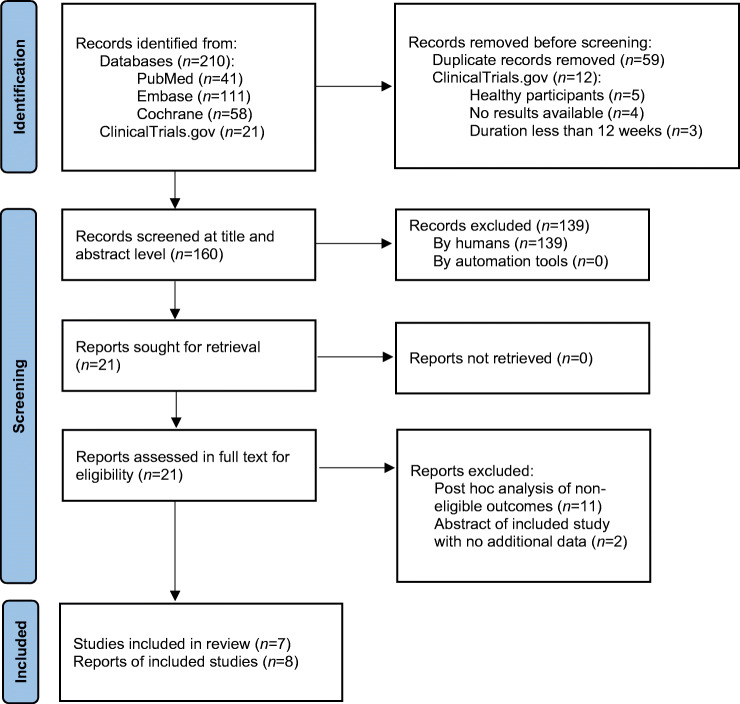
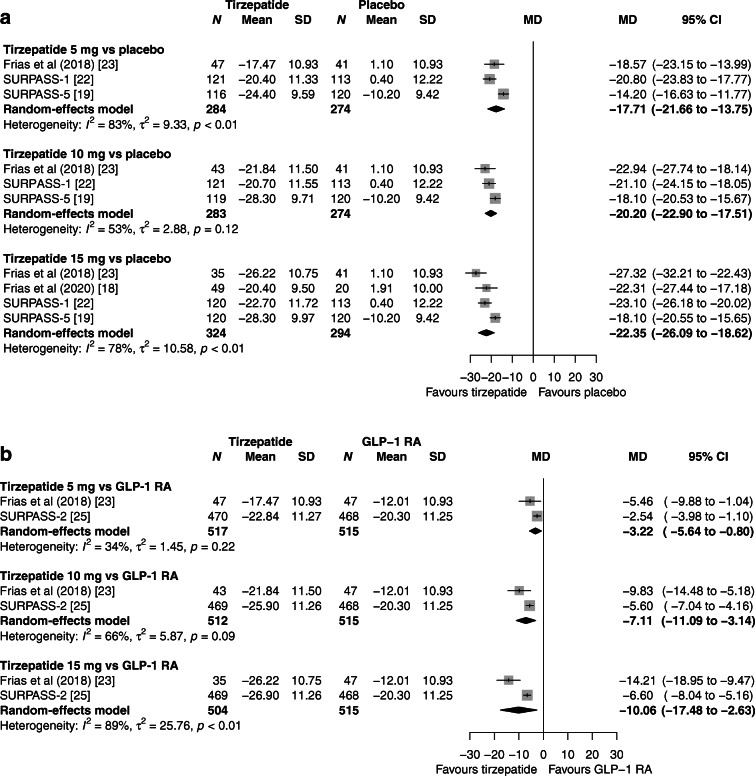
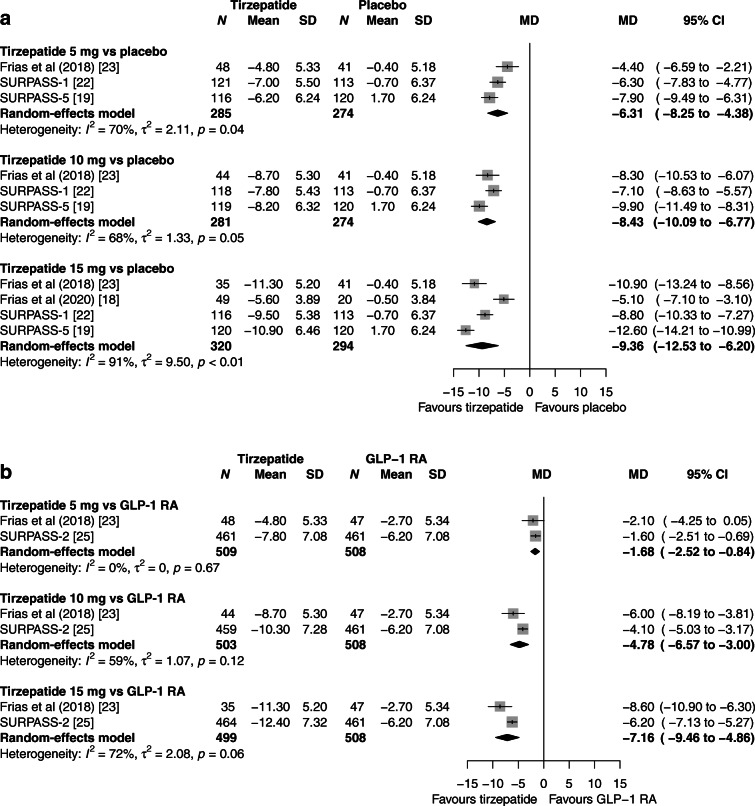
Aims/hypothesis: Tirzepatide is a novel dual glucose-dependent insulinotropic peptide (GIP) and glucagon-like peptide-1 receptor agonist (GLP-1 RA) currently under review for marketing approval. Individual trials have assessed the clinical profile of tirzepatide vs different comparators. We conducted a systematic review and meta-analysis to assess the efficacy and safety of tirzepatide for type 2 diabetes. Methods: We searched PubMed, Embase, Cochrane and ClinicalTrials.gov up until 27 October 2021 for randomised controlled trials with a duration of at least 12 weeks that compared once-weekly tirzepatide 5, 10 or 15 mg with placebo or other glucose-lowering drugs in adults with type 2 diabetes irrespective of their background glucose-lowering treatment. The primary outcome was change in HbA 1c from baseline. Secondary efficacy outcomes included change in body weight, proportion of individuals reaching the HbA 1c target of <53 mmol/mol (<7.0%), ≤48 mmol/mol (≤6.5%) or <39 mmol/mol (<5.7%), and proportion of individuals with body weight loss of at least 5%, 10% or 15%. Safety outcomes included hypoglycaemia, gastrointestinal adverse events, treatment discontinuation due to adverse events, serious adverse events, and mortality. We used version 2 of the Cochrane risk-of-bias tool for randomised trials to assess risk of bias for the primary outcome. Results: Seven trials (6609 participants) were included. A dose-dependent superiority in lowering HbA 1c was evident with all three tirzepatide doses vs all comparators, with mean differences ranging from −17.71 mmol/mol (−1.62%) to −22.35 mmol/mol (−2.06%) vs placebo, −3.22 mmol/mol (−0.29%) to −10.06 mmol/mol (−0.92%) vs GLP-1 RAs, and −7.66 mmol/mol (−0.70%) to −12.02 mmol/mol (−1.09%) vs basal insulin regimens. Tirzepatide was more efficacious in reducing body weight; reductions vs GLP-1 RAs ranged from 1.68 kg with tirzepatide 5 mg to 7.16 kg with tirzepatide 15 mg. Incidence of hypoglycaemia with tirzepatide was similar vs placebo and lower vs basal insulin. Nausea was more frequent with tirzepatide vs placebo, especially with tirzepatide 15 mg (OR 5.60 [95% CI 3.12, 10.06]), associated with higher incidence of vomiting (OR 5.50 [95% CI 2.40, 12.59]) and diarrhoea (OR 3.31 [95% CI 1.40, 7.85]). Odds of gastrointestinal events were similar between tirzepatide and GLP-1 RAs, except for diarrhoea with tirzepatide 10 mg (OR 1.51 [95% CI 1.07, 2.15]). Tirzepatide 15 mg led to higher discontinuation rate of study medication due to adverse events regardless of comparator, while all tirzepatide doses were safe in terms of serious adverse events and mortality. Conclusions/interpretation: A dose-dependent superiority on glycaemic efficacy and body weight reduction was evident with tirzepatide vs placebo, GLP-1 RAs and basal insulin. Tirzepatide did not increase the odds of hypoglycaemia but was associated with increased incidence of gastrointestinal adverse events. Study limitations include presence of statistical heterogeneity in the meta-analyses for change in HbA 1c and body weight, assessment of risk of bias solely for the primary outcome, and generalisation of findings mainly to individuals who are overweight or obese and already on metformin-based background therapy. PROSPERO registration no. CRD42021283449. Graphical abstract:
Overview
The claims and statistics of this paper haven’t been checked yet.
Free: it reads the open-access text and checks the first 5 claims that cite a source we can check. Create a free account to check every claim.
Integrity signals
Registry
Cites
Statistics
Figures
Verification
Claims the paper makes
The claims and statistics of this paper haven’t been checked yet.
Free: it reads the open-access text and checks the first 5 claims that cite a source we can check. Create a free account to check every claim.
Claims other papers make about this one
Each is checked against this paper’s own text: does it say what the citing paper says it does?
The source backs part of the claim, not all of it — or backs it for a different population, condition or comparison.
In the citing paper
“Based on meta-analysis fi ndings, tirzepatide was superior to its comparators, including other long-acting GLP-1 RA, in reducing glucose and body weight, but was associated with increased odds for gastrointestinal adverse events, in particular nausea (189).”
From Management of Hyperglycemia in Type 2 Diabetes, 2022. A Consensus Report by the American Diabetes Association (ADA) and the European Association for the Study of Diabetes (EASD) (2022) · cites this paper as [189]
Experimental — accuracy not yet measuredThe cited source says what the claim attributes to it.
In the citing paper
“The occurrence of such gastrointestinal side effects increases with the dose used. 86 , 87”
From Real‐world evidence on the utilization, clinical and comparative effectiveness, and adverse effects of newer GLP ‐ 1RA ‐based weight‐loss therapies (2025) · cites this paper as [86]
The cited source says what the claim attributes to it.
In the citing paper
“Some studies have demonstrated that tirzepatide achieves greater weight loss compared to existing GLP-1 RAs [20,21,22].”
From The Efficacy and Safety of Tirzepatide in Patients with Diabetes and/or Obesity: Systematic Review and Meta-Analysis of Randomized Clinical Trials (2025) · cites this paper as [20]
The cited source says what the claim attributes to it.
In the citing paper
“Data from RCTs have consistently shown the efficacy of tirzepatide in reducing HbA1c and body weight in people with type 2 diabetes [3].”
In the citing paper
“Karagiannis et al. found that tezepatide had a significant dose-dependent advantage in weight loss compared with placebo, GLP-1R agonists, and basal insulin (130).”
From GLP−1 receptor agonists for the treatment of obesity: Role as a promising approach (2023) · cites this paper as [130]
Self-check
Percentages, sums and reported differences re-computed from the paper’s own numbers.
The self-check needs the paper’s full text.
Citations
Cites
The PRISMA 2020 statement: An updated guideline for reporting systematic reviews
Page, M. J., McKenzie, J. E., Bossuyt, P. M., Boutron, I., Hoffmann, T. C., Mulrow, C. D., Shamseer, L., Tetzlaff, J. M., Akl, E. A., Brennan, S. E., et al. (2021) · BMJ · doi:10.1136/bmj.n71 · Cited by 108,283
RoB 2: a revised tool for assessing risk of bias in randomised trials
Sterne, J. A. C., Savović, J., Page, M. J., Elbers, R. G., Blencowe, N. S., Boutron, I., Cates, C. J., Cheng, H.-Y., Corbett, M. S., Eldridge, S. M., et al. (2019) · BMJ · doi:10.1136/bmj.l4898 · Cited by 34,787 · cited 2×
“As such, we did not consider open-label status as a source of bias, given that measurement of HbA1c is an objective outcome and thus is not affected by blinding status [15].”
BackgroundMethodThe PRISMA 2020 statement: an updated guideline for reporting systematic reviews
Page, M. J., McKenzie, J., Bossuyt, P., Boutron, I., Hoffmann, T., mulrow, C., Shamseer, L., Tetzlaff, J., Akl, E., Brennan, S. E., et al. (2020) · doi:10.31222/osf.io/v7gm2_v1 · Cited by 8,090
The PRISMA 2020 statement: an updated guideline for reporting systematic reviews
Page, M. J., McKenzie, J., Bossuyt, P., Boutron, I., Hoffmann, T., mulrow, C., Shamseer, L., Tetzlaff, J., Akl, E., Brennan, S. E., et al. (2020) · doi:10.31222/osf.io/v7gm2 · Cited by 5,177
Biology of Incretins: GLP-1 and GIP
Baggio, L. L., & Drucker, D. J. (2007) · Gastroenterology · doi:10.1053/j.gastro.2007.03.054 · Cited by 3,639 · cited 1×
“GLP-1 is released from L cells in the distal ileum and colon, while GIP is secreted from K cells in the duodenum and jejunum and is responsible for most of the insulinotropic incretin effect [2].”
BackgroundGerstein, H. C., Colhoun, H. M., Dagenais, G. R., Diaz, R., Lakshmanan, M., Pais, P., Probstfield, J., Riesmeyer, J. S., Riddle, M. C., Rydén, L., et al. (2019) · The Lancet · doi:10.1016/s0140-6736(19)31149-3 · Cited by 3,163 · cited 1×
“NCT04255433) is expected to provide definitive answers on the impact of tirzepatide on cardiovascular disease compared with dulaglutide, a long-acting GLP-1 RA that has been shown to be cardioprotective in individuals with type 2 diabetes at increased cardiovascular risk [31].”
BackgroundTirzepatide versus Semaglutide Once Weekly in Patients with Type 2 Diabetes
Frías, J. P., Davies, M. J., Rosenstock, J., Pérez Manghi, F. C., Fernández Landó, L., Bergman, B. K., Liu, B., Cui, X., & Brown, K. (2021) · New England Journal of Medicine · doi:10.1056/nejmoa2107519 · Cited by 2,096 · cited 7×
“06 Frias et al (2018) [23] SURPASS-2 [25]”
BackgroundMethodInfluentialMethods to estimate the between‐study variance and its uncertainty in meta‐analysis
Veroniki, A. A., Jackson, D., Viechtbauer, W., Bender, R., Bowden, J., Knapp, G., Kuss, O., Higgins, J. P., Langan, D., & Salanti, G. (2016) · Research Synthesis Methods · doi:10.1002/jrsm.1164 · Cited by 1,685 · cited 1×
“In all analyses, we used the Paule–Mandel method to estimate between-study variance [17], and the I(2) statistic to assess statistical heterogeneity.”
MethodReduced incretin effect in Type 2 (non-insulin dependent) diabetes
Nauck, M., Stöckmann, F., Ebert, R., & Creutzfeldt, W. (1986) · Diabetologia · doi:10.1007/bf02427280 · Cited by 1,307 · cited 1×
“In people with type 2 diabetes the incretin effect is considerably diminished [3].”
BackgroundRosenstock, J., Wysham, C., Frías, J. P., Kaneko, S., Lee, C. J., Fernández Landó, L., Mao, H., Cui, X., Karanikas, C. A., & Thieu, V. T. (2021) · The Lancet · doi:10.1016/s0140-6736(21)01324-6 · Cited by 1,080 · cited 8×
“01 Frias et al (2018) [23] SURPASS-1 [22] SURPASS-5 [19]”
BackgroundMethodResultInfluential
Cited by
Davies, M. J., Aroda, V. R., Collins, B. S., Gabbay, R. A., Green, J., Maruthur, N. M., Rosas, S. E., Del Prato, S., Mathieu, C., Mingrone, G., et al. (2022) · Diabetes Care · doi:10.2337/dci22-0034 · Cited by 2,104
“Based on meta-analysis findings, tirzepatide was superior to its comparators, including other long-acting GLP-1 RA, in reducing glucose and body weight, but was associated with increased odds for gastrointestinal adverse events, in particular nausea (189).”
BackgroundDavies, M. J., Aroda, V. R., Collins, B. S., Gabbay, R. A., Green, J., Maruthur, N. M., Rosas, S. E., Del Prato, S., Mathieu, C., Mingrone, G., et al. (2022) · Diabetologia · doi:10.1007/s00125-022-05787-2 · Cited by 1,048
“Based on meta-analysis findings, tirzepatide was superior to its comparators, including other long-acting GLP-1 RA, in reducing glucose and body weight, but was associated with increased odds for gastrointestinal adverse events, in particular nausea [189].”
Glucagon-like peptide-1 receptor: mechanisms and advances in therapy
Zheng, Z., Zong, Y., Ma, Y., Tian, Y., Pang, Y., Zhang, C., & Gao, J. (2024) · Signal Transduction and Targeted Therapy · doi:10.1038/s41392-024-01931-z · Cited by 1,036
“124,129 A common combination is GLP-1 with GIP or insulin-like growth factor.”
BackgroundObesity and type 2 diabetes mellitus: connections in epidemiology, pathogenesis, and treatments
Ruze, R., Liu, T., Zou, X., Song, J., Chen, Y., Xu, R., Yin, X., & Xu, Q. (2023) · Frontiers in Endocrinology · doi:10.3389/fendo.2023.1161521 · Cited by 799
Blonde, L., Umpierrez, G. E., Reddy, S. S., McGill, J. B., Berga, S. L., Bush, M., Chandrasekaran, S., DeFronzo, R. A., Einhorn, D., Galindo, R. J., et al. (2022) · Endocrine Practice · doi:10.1016/j.eprac.2022.08.002 · Cited by 507
GLP−1 receptor agonists for the treatment of obesity: Role as a promising approach
Wang, J.-Y., Wang, Q.-W., Yang, X.-Y., Yang, W., Li, D.-R., Jin, J.-Y., Zhang, H.-C., & Zhang, X.-F. (2023) · Frontiers in Endocrinology · doi:10.3389/fendo.2023.1085799 · Cited by 248
Tirzepatide, a new era of dual-targeted treatment for diabetes and obesity: A mini-review
Chavda, V. P., Ajabiya, J., Teli, D., Bojarska, J., & Apostolopoulos, V. (2022) · Molecules · doi:10.3390/molecules27134315 · Cited by 208
“Moreover, it is the first effective drug to have demonstrated notable body weight loss in a phase 3 study in patients with T2D [38–40].”
Thomsen, R. W., Mailhac, A., Løhde, J. B., & Pottegård, A. (2025) · Diabetes Obesity and Metabolism · doi:10.1111/dom.16364 · Cited by 207
Boutari, C., DeMarsilis, A., & Mantzoros, C. S. (2023) · Diabetes Research and Clinical Practice · doi:10.1016/j.diabres.2023.110773 · Cited by 161
Type 2 diabetes mellitus – conventional therapies and future perspectives in innovative treatment
Gieroba, B., Kryska, A., & Sroka‐Bartnicka, A. (2025) · Biochemistry and Biophysics Reports · doi:10.1016/j.bbrep.2025.102037 · Cited by 212
“It is administered via a once-weekly subcutaneous injection and has recently received approval from the European Medicines Agency [110].”
Diagnosis and Treatment of Type 2 Diabetes in Adults: A Review
Kalyani, R. R., Neumiller, J. J., Maruthur, N. M., & Wexler, D. J. (2025) · JAMA · doi:10.1001/jama.2025.5956 · Cited by 204
Alkhezi, O. S., Alahmed, A. A., Alfayez, O. M., Alzuman, O. A., Almutairi, A. R., & Almohammed, O. A. (2023) · Obesity Reviews · doi:10.1111/obr.13543 · Cited by 139
Clinical Outcomes of Tirzepatide or GLP-1 Receptor Agonists in Individuals With Type 2 Diabetes
Chuang, M.-H., Chen, J.-Y., Wang, H.-Y., Jiang, Z.-H., & Wu, V.-C. (2024) · JAMA Network Open · doi:10.1001/jamanetworkopen.2024.27258 · Cited by 133
Diet, exercise, and pharmacotherapy for sarcopenia in people with diabetes
Hashimoto, Y., Takahashi, F., Okamura, T., Hamaguchi, M., & Fukui, M. (2023) · Metabolism · doi:10.1016/j.metabol.2023.155585 · Cited by 132
Targher, G., Mantovani, A., & Byrne, C. D. (2023) · The Lancet Gastroenterology & Hepatology · doi:10.1016/s2468-1253(22)00338-7 · Cited by 121
Tirzepatide: A Systematic Update
Forzano, I., Varzideh, F., Avvisato, R., Jankauskas, S. S., Mone, P., & Santulli, G. (2022) · International Journal of Molecular Sciences · doi:10.3390/ijms232314631 · Cited by 118
“The presence of statistical heterogeneity in the meta-analyses for changes in HbA1c and body weight, the assessment of the risk of bias solely for the primary outcome, and the generalization of findings mainly to individuals with overweight or obesity and already on metformin-based background therapy were acknowledged…”
BackgroundMethodAdvances in Research on Type 2 Diabetes Mellitus Targets and Therapeutic Agents
Su, J., Luo, Y., Hu, S., Tang, L., & Ouyang, S. (2023) · International Journal of Molecular Sciences · doi:10.3390/ijms241713381 · Cited by 130
“Both GLP-1 and GIP are members of the incretin family; GLP-1 is released by L cells in the distal ileum and colon, while GIP is released via K cells in the duodenum and jejunum [6].”
BackgroundInfluentialAdverse Events Related to Tirzepatide
Mishra, R., Raj, R., Elshimy, G., Zapata, I., Kannan, L., Majety, P., Edem, D., & Correa, R. (2023) · Journal of the Endocrine Society · doi:10.1210/jendso/bvad016 · Cited by 110
“In a study by Karagiannis et al [28], the authors found 2-fold higher odds of study drug discontinuation at the highest dose of tirzepatide.”
BackgroundResultKaragiannis, T., Malandris, K., Avgerinos, I., Stamati, A., Kakotrichi, P., Liakos, A., Vasilakou, D., Kakaletsis, N., Tsapas, A., & Bekiari, E. (2024) · Diabetologia · doi:10.1007/s00125-024-06144-1 · Cited by 102
Self-citationTan, B., Pan, X.-H., Chew, H. S. J., Goh, R. S. J., Lin, C., Anand, V. V., Lee, E. C. Z., Chan, K. E., Kong, G., Ong, C. E. Y., et al. (2023) · International Journal of Obesity · doi:10.1038/s41366-023-01321-5 · Cited by 83
“Tirzepatide is a novel dual GIP and GLP-1 agonist and has been effective in treating T2DM, with concurrent superiority in body weight reduction as compared to other glucose-lowering medications [14, 15].”
BackgroundResultInfluentialGallwitz, B. (2022) · Frontiers in Endocrinology · doi:10.3389/fendo.2022.1004044 · Cited by 81
Pan, X., Tan, B., Chin, Y. H., Lee, E. C. Z., Kong, G., Chong, B., Kueh, M., Khoo, C. M., Mehta, A., Majety, P., et al. (2024) · Obesity · doi:10.1002/oby.24002 · Cited by 71
Weight loss efficiency and safety of tirzepatide: A Systematic review
Lin, F., Yu, B., Ling, B., Lv, G., Shang, H., Zhao, X., Jie, X., Chen, J., & Li, Y. (2023) · PLOS ONE · doi:10.1371/journal.pone.0285197 · Cited by 60
“that incidence of serious adverse events did not differ between any of the tirzepatide doses and any comparator [35].”
BackgroundResultKarakasis, P., Patoulias, D., Fragakis, N., Klisic, A., & Rizzo, M. (2024) · Diabetes, Obesity and Metabolism · doi:10.1111/dom.15410 · Cited by 65
“14 Besides that, tirzepatide has shown that it is cardiovascular safe, based upon initial data retrieved from the SURPASS trials, 15 whereas its cardiovascular efficacy will be determined in a dedicated, highly anticipated cardiovascular outcome trial.”
BackgroundTaktaz, F., Fontanella, R. A., Scisciola, L., Pesapane, A., Basilicata, M. G., Ghosh, P., Franzese, M., Tortorella, G., Puocci, A., Vietri, M. T., et al. (2024) · Cardiovascular Diabetology · doi:10.1186/s12933-024-02319-7 · Cited by 74
“Interestingly, there was no correlation between the positive effect on glycemic control and an increased risk of hypoglycemia [73].”
BackgroundRevised definition of obesity in Asian Indians living in India
Misra, A., Vikram, N. K., Ghosh, A., Ranjan, P., & Gulati, S. (2025) · Diabetes & Metabolic Syndrome Clinical Research & Reviews · doi:10.1016/j.dsx.2024.102989 · Cited by 79
Dual GIP/GLP-1 receptor agonists: new advances for treating type-2 diabetes
Scheen, A. J. (2023) · Annales d'Endocrinologie · doi:10.1016/j.ando.2022.12.423 · Cited by 63
Thomas, M. C., Coughlan, M. T., & Cooper, M. E. (2023) · Cell Metabolism · doi:10.1016/j.cmet.2023.01.004 · Cited by 56
Hu, W., Gong, W., Yang, F., Cheng, R., Zhang, G., Gan, L., Zhu, Y., Qin, W., Gao, Y., Li, X., et al. (2025) · International Immunopharmacology · doi:10.1016/j.intimp.2024.113937 · Cited by 66
Motta, B. M., Masarone, M., Torre, P., & Persico, M. (2023) · Cancers · doi:10.3390/cancers15225458 · Cited by 66
“This new class of drugs is composed by a GLP-1 agonist associated with a Glucagon-receptor agonist and has been initially proposed (and, for Tirzepatide only, approved) for the treatment of obesity and/or type 2 diabetes mellitus [116–119].”
BackgroundMailhac, A., Pedersen, L., Pottegård, A., Søndergaard, J., Mogensen, T., Sørensen, H., & Thomsen, R. (2024) · Clinical Epidemiology · doi:10.2147/clep.s456170 · Cited by 60
“Tirzepatide, a dual GIP/GLP-1 receptor agonist with even greater effectiveness on glycemia and weight loss than semaglutide, 23,24 received marketing authorization for diabetes treatment (Mounjaro ® ) in the European Union in 2022, 25 but is not yet available on the Danish market; the introduction…”
BackgroundCaruso, I., Di Gioia, L., Di Molfetta, S., Cignarelli, A., Palmer, S. C., Natale, P., Strippoli, G. F. M., Perrini, S., Natalicchio, A., Laviola, L., et al. (2023) · eClinicalMedicine · doi:10.1016/j.eclinm.2023.102181 · Cited by 54
de Mesquita, Y. L. L., Pera Calvi, I., Reis Marques, I., Almeida Cruz, S., Padrao, E. M. H., Carvalho, P. E. D. P., da Silva, C. H. A., Cardoso, R., Moura, F. A., & Rafalskiy, V. V. (2023) · International Journal of Obesity · doi:10.1038/s41366-023-01337-x · Cited by 59
Macrophage Signaling Pathways in Health and Disease: From Bench to Bedside Applications
Chi, Y., Jiang, H., Yin, Y., Zhou, X., Shao, Y., Li, Y., & Rao, J. (2025) · MedComm · doi:10.1002/mco2.70256 · Cited by 62
Effect of tirzepatide on blood pressure and lipids: a meta-analysis of randomized controlled trials
Kanbay, M., Copur, S., Siriopol, D., Yildiz, A. B., Gaipov, A., van Raalte, D. H., & Tuttle, K. R. (2023) · Diabetes, Obesity and Metabolism · doi:10.1111/dom.15272 · Cited by 56
Zhou, Q., Lei, X., Fu, S., Liu, P., Long, C., Wang, Y., Li, Z., Xie, Q., & Chen, Q. (2023) · Diabetology & Metabolic Syndrome · doi:10.1186/s13098-023-01198-4 · Cited by 55
“In the meta-analysis of Thomas Karagiannis and colleagues [29], no analysis was performed on the efficacy of blood glucose and blood lipid.”
BackgroundMethodLuca, M. D., Zese, M., Bandini, G., Chiappetta, S., Iossa, A., Merola, G., Piatto, G., Tolone, S., Vitiello, A., Silverii, G. A., et al. (2023) · Diabetes Obesity and Metabolism · doi:10.1111/dom.15117 · Cited by 60
Pharmacological Support for the Treatment of Obesity—Present and Future
Kosmalski, M., Deska, K., Bąk, B., Różycka-Kosmalska, M., & Pietras, T. (2023) · Healthcare · doi:10.3390/healthcare11030433 · Cited by 68
Lisco, G., Tullio, A. D., Iovino, M., Disoteo, O., Guastamacchia, E., Giagulli, V. A., & Triggiani, V. (2023) · Biomedicines · doi:10.3390/biomedicines11112993 · Cited by 55
Tirzepatide: A Review in Type 2 Diabetes
France, N. L., & Syed, Y. Y. (2024) · Drugs · doi:10.1007/s40265-023-01992-4 · Cited by 51
Oral peptide therapeutics for diabetes treatment: State-of-the-art and future perspectives
Ding, B., Zhu, Z., Guo, C., Li, J., Gan, Y., & Yu, M. (2024) · Acta Pharmaceutica Sinica B · doi:10.1016/j.apsb.2024.02.019 · Cited by 46
Glucagon, from past to present: a century of intensive research and controversies
Scheen, A. J., & Lefèbvre, P. J. (2023) · The Lancet Diabetes & Endocrinology · doi:10.1016/s2213-8587(22)00349-7 · Cited by 44
Stenberg, E., & Näslund, E. (2023) · International Journal of Obesity · doi:10.1038/s41366-023-01254-z · Cited by 39
“Recently the dual agonist of GLP-1RA/glucose-dependent insulinotropic polypeptide (GIP) (Tirzepatide) has been found to improve glycaemic control and reduce weight in patients with T2D and severe obesity [12] and in patients with severe obesity to reduce weight by up to 20% after a 72 week study period [13].”
BackgroundPapaetis, G. S. (2023) · Archives of Medical Science - Atherosclerotic Diseases · doi:10.5114/amsad/161170 · Cited by 42
Beyond Weight Loss: Added Benefits Could Guide the Choice of Anti-Obesity Medications
Guglielmi, V., Bettini, S., Sbraccia, P., Busetto, L., Pellegrini, M., Yumuk, V., Colao, A. M. L., Ghoch, M. E., & Muscogiuri, G. (2023) · Current Obesity Reports · doi:10.1007/s13679-023-00502-7 · Cited by 44
Lipidization as a tool toward peptide therapeutics
Myšková, A., Sýkora, D., Kuneš, J., & Maletínská, L. (2023) · Drug Delivery · doi:10.1080/10717544.2023.2284685 · Cited by 41
“…for nonalcoholic steatohepatitis. tirzepatide is a dual GlP-1/GiP agonist acting on both the respective endogenous receptors (Syed, 2022; Karagiannis et al., 2022). this lipopeptide was tested in several studies, and at a dose 5 mg it proved superior to semaglutide at a dose of 1 mg…”
BackgroundLiu, L., Shi, H., Xie, M., Sun, Y., & Nahata, M. C. (2024) · International Journal of Clinical Pharmacy · doi:10.1007/s11096-024-01779-x · Cited by 43
Diabetic Cardiomyopathy—From Basics through Diagnosis to Treatment
Radzioch, E., Dąbek, B., Balcerczyk-Lis, M., Frąk, W., Fularski, P., Młynarska, E., Rysz, J., & Franczyk, B. (2024) · Biomedicines · doi:10.3390/biomedicines12040765 · Cited by 45
Progress in the treatment of diabetic cardiomyopathy, a systematic review
Shou, Y., Li, X. M., Fang, Q., Xie, A., Zhang, Y., Fu, X., Wang, M., Gong, W., Zhang, X., & Yang, D. (2024) · Pharmacology Research & Perspectives · doi:10.1002/prp2.1177 · Cited by 37
“54,55 Abnormal expression of type I and III collagen deposition and matrix metalloproteinases (MMPs) are important factors contributing to myocardial fibrosis and diastolic dysfunction.”
BackgroundYang, Y., Wang, Y., Zhou, Y., Deng, J., & Wu, L. (2025) · Molecular and Cellular Biochemistry · doi:10.1007/s11010-024-05066-1 · Cited by 35
Meng, Z., Yang, M., Wen, H., Zhou, S., Chuan, X., & Wang, Y. (2023) · Frontiers in Endocrinology · doi:10.3389/fendo.2023.1121387 · Cited by 38
Tirzepatida: Un Avance Revolucionario en el Tratamiento de la Diabetes Mellitus Tipo 2 y la Obesidad
Chávez, M. (2023) · Revista Veritas de Difusão Cientifica. · doi:10.61616/rvdc.v4i1.39 · Cited by 38
Alkhouri, N., Charlton, M., Gray, M. E., & Noureddin, M. (2025) · Expert Opinion on Investigational Drugs · doi:10.1080/13543784.2025.2473062 · Cited by 34
“Meta-analyses of T2D RCTs demonstrated superiority of tirzepatide versus comparators in reducing HbA 1c and body weight, without inducing hypoglycemia and no increase in the risk of MACE [163–165].”
Incretins and cardiovascular disease: to the heart of type 2 diabetes?
Solini, A., Tricò, D., & Del Prato, S. (2023) · Diabetologia · doi:10.1007/s00125-023-05973-w · Cited by 32
Liu, Z., Yu, S., Jin, X., Sheng, L., Rouzi, M. R. Y., Gao, J., Lü, J., & Lei, T. (2025) · Drug Design Development and Therapy · doi:10.2147/dddt.s559919 · Cited by 35
The Anti-Inflammatory Effect of Novel Antidiabetic Agents
Theofilis, P., Sagris, Μ., Oikonomou, E. K., Antonopoulos, A. S., Siasos, G., Tsioufis, K., & Tousoulis, D. (2022) · Life · doi:10.3390/life12111829 · Cited by 35
Unlocking the multifaceted roles of GLP-1: Physiological functions and therapeutic potential
AL-Noshokaty, T. M., Abdelhamid, R., Abdelmaksoud, N. M., Khaled, A., Hossam, M., Ahmed, R., Saber, T., Khaled, S., Elshaer, S. S., & Abulsoud, A. I. (2025) · Toxicology Reports · doi:10.1016/j.toxrep.2025.101895 · Cited by 30
“Karagiannis et al. [299] found that Tirzepatide reduced weight better than basal insulin, placebo, and GLP-1RAs, with dosage enhancing the effect.”
Real world use of tirzepatide in the treatment of type 2 diabetes in an Arab population
Buckley, A., Suliman, S., Allum, M., Mohammed, N., Lessan, N., le Roux, C. W., & Suliman, M. (2024) · Diabetes, Obesity and Metabolism · doi:10.1111/dom.15680 · Cited by 29
Mahar, M. U., Mahmud, O., Ahmed, S., Qureshi, S. A., Kakar, W. G., & Fatima, S. S. (2024) · Journal of Obesity & Metabolic Syndrome · doi:10.7570/jomes24008 · Cited by 31
“31,32 Our meta-analysis is the first to pool all currently available randomized data.”
Goldenberg, R. M., Gilbert, J. D., Manjoo, P., Pedersen, S. D., Woo, V. C., & Lovshin, J. A. (2024) · Obesity Reviews · doi:10.1111/obr.13663 · Cited by 27
Chrysavgis, L., Kazanas, S., Bafa, K., Rozani, S., Koloutsou, M. E., & Cholongitas, Ε. (2024) · International Journal of Molecular Sciences · doi:10.3390/ijms25073832 · Cited by 27
“…meta-analysis highlighted that tirzepatide, a dual GLP-1 and GIP receptor agonist (RA), provoked significant dose-dependent amelioration in glycemic control and body weight lowering in comparison to both placebo and GLP-1Ras, such as semaglutide or dulaglutide, or basal insulin regimens [21].”
BackgroundGupta, A., Jamal, A., Jamil, D. A., & Al-Aubaidy, H. A. (2023) · Diabetes & Metabolic Syndrome Clinical Research & Reviews · doi:10.1016/j.dsx.2023.102884 · Cited by 27
Glucagon-like Peptide-1 Receptor Agonists for the Treatment of Type 2 Diabetes in Youth
Berman, C., Vidmar, A. P., & Chao, L. C. (2023) · touchREVIEWS in Endocrinology · doi:10.17925/ee.2023.19.1.38 · Cited by 28
A Phase 1 Multiple Dose Study of Tirzepatide in Chinese Patients with Type 2 Diabetes
Feng, P., Sheng, X., Ji, Y., Urva, S., Wang, F., Miller, S., Qian, C., An, Z., & Cui, Y. (2023) · Advances in Therapy · doi:10.1007/s12325-023-02536-8 · Cited by 27
Tirzepatide-Induced Gastrointestinal Manifestations: A Systematic Review and Meta-Analysis
Karrar, H. R., Nouh, M. I., Nouh, Y. I., Nooh, M. I., Alhindi, A. S. K., Hemeq, Y. H., Aljameeli, A. M. S., Aljuaid, J. A., Alzahrani, S. J., Alsatami, A. A., et al. (2023) · Cureus · doi:10.7759/cureus.46091 · Cited by 32
“Tirzepatide's efficiency in improving weight reduction, which is a major issue for many patients with type 2 diabetes and a risk factor for diabetes-related problems, is one of its main benefits [13].”
BackgroundWang, S., Wang, S., Wang, Y., & Luan, J. (2024) · Diabetes Therapy · doi:10.1007/s13300-023-01520-3 · Cited by 27
“However, multiple MAs of the SURPASS trial program have shown that tirzepatide, in a dose-dependent manner, demonstrates superior glycemic effi-cacy and noticeable reductions in body weight compared to other GLP-1 RAs, while maintaining a satisfactory safety profile [58–60].”
BackgroundGLP-1 receptor agonists: A review of glycemic benefits and beyond
Clark, L. (2024) · JAAPA · doi:10.1097/01.jaa.0001007388.97793.41 · Cited by 28
Guan, R., Yang, Q., Yang, X., Du, W., Li, X., & Ma, G. (2022) · Frontiers in Pharmacology · doi:10.3389/fphar.2022.998816 · Cited by 27
“5 mg) or received recommendations of authority (semaglutide 2 mg) (Karagiannis et al., 2022).”
BackgroundLiu, X., Shi, T., Gao, D., Ma, C.-Y., Lin, H., Yan, D., & Deng, K. (2023) · Journal of Chemical Information and Modeling · doi:10.1021/acs.jcim.3c00564 · Cited by 25
Tamilwanan, S., Aziz, Z., Rong, L. Y., Bitar, A. N., Zarzour, R. A., & Alshehade, S. A. (2025) · BMC Gastroenterology · doi:10.1186/s12876-025-04358-0 · Cited by 26
“The findings demonstrate significant therapeutic benefits across various hepatic and metabolic parameters, particularly highlighting the superior efficacy of dual GLP-1/GIP receptor agonists compared to mono GLP-1 receptor agonists [52, 53].”
Jędrysik, M., Wyszomirski, K., Różańska-Walędziak, A. M., Grosicka-Maciąg, E., Walędziak, M. S., & Chełstowska, B. (2024) · Biomedicines · doi:10.3390/biomedicines12010159 · Cited by 24
Tian, Y., Tian, R., He, J., Guo, Y., Yan, P., Cheng, Y., Li, R., & Wang, B. (2024) · International Immunopharmacology · doi:10.1016/j.intimp.2024.113877 · Cited by 27
Mather, K. J., Mari, A., Weerakkody, G. J., Heise, T., DeVries, J. H., Urva, S., Coşkun, T., Miličević, Z., Haupt, A., & Thomas, M. K. (2025) · Diabetes Obesity and Metabolism · doi:10.1111/dom.16159 · Cited by 24
Smits, M. M., & Holst, J. J. (2023) · Diabetes/Metabolism Research and Reviews · doi:10.1002/dmrr.3699 · Cited by 26
“35 Interestingly, compared to native GLP ‐ 1, tir-zepatide has 5 ‐ fold less affinity to the GLP ‐ 1r and 13 ‐ fold weaker activating potency, allowing the suggestion that the GIP ‐ component is of greater interest.”
BackgroundReal‐world evaluation of the effects of tirzepatide in patients with type 2 diabetes mellitus
Kelly, M. S., Scopelliti, E. M., Goodson, K. E., Lo, C. M. A., Nguyen, H. X., & Simon, B. (2024) · Diabetes, Obesity and Metabolism · doi:10.1111/dom.15934 · Cited by 21
Tian, Q., Song, Y., Deng, Y., & Lin, S. (2025) · Frontiers in Endocrinology · doi:10.3389/fendo.2025.1593134 · Cited by 26
The role of incretin receptor agonists in the treatment of obesity
Forst, T. M., Block, C. E. M. D., Prato, S. D., Armani, S., Frías, J. P., Lautenbach, A., Ludvik, B. H., Marinez, M., Mathieu, C., Müller, T. D., et al. (2024) · Diabetes Obesity and Metabolism · doi:10.1111/dom.15796 · Cited by 22
Liu, L., Shi, H., Xie, M., Sun, Y., & Nahata, M. C. (2025) · Pharmaceuticals · doi:10.3390/ph18050668 · Cited by 19
“Some studies have demonstrated that tirzepatide achieves greater weight loss compared to existing GLP-1 RAs [20–22].”
Ceron, E. L., Reddy, S. D., Kattamuri, L. P. V., Muvva, D. M., Chozet, L. E., & Bright, T. M. (2025) · Journal of Brown Hospital Medicine · doi:10.56305/001c.132255 · Cited by 20
Zhang, C., Yang, X., Meng, X., Wu, L., Liu, X., Gao, J., Liu, S., Wu, J., Huang, D., Wang, Z., et al. (2023) · Journal of Medicinal Chemistry · doi:10.1021/acs.jmedchem.2c02003 · Cited by 20
New insights into nanomedicines for oral delivery of glucagon‐like peptide‐1 analogs
Pinto, S., Santos, H. A., & Sarmento, B. F. C. C. (2024) · Wiley Interdisciplinary Reviews Nanomedicine and Nanobiotechnology · doi:10.1002/wnan.1952 · Cited by 20
Overweight and Obesity in Adults with Type 1 Diabetes: A Growing Challenge
Majanović, S. K., Detel, D., Igrec, M., Bergoč, A., Rahelić, V., & Rahelić, D. (2024) · Diabetology · doi:10.3390/diabetology5030018 · Cited by 23
“According to the results of clinical trials in obese people with and without diabetes, tirzepatide was indicated for the treatment of type 2 diabetes and obesity [68–70].”
ResultMoreira, R. O., Valério, C. M., Hohl, A., Moulin, C., Moura, F., Trujilho, F. R., Gerchman, F., Corrêa, L. L., Mancini, M. C., de Melo, M. E., et al. (2024) · Archives of Endocrinology and Metabolism · doi:10.20945/2359-4292-2024-0422 · Cited by 29
Rohani, P., Malekpour Alamdari, N., Bagheri, S. E., Hekmatdoost, A., & Sohouli, M. H. (2023) · Frontiers in Endocrinology · doi:10.3389/fendo.2023.1230206 · Cited by 18
A novel therapeutic prospect: a dual-acting tirzepatide for Alzheimer's disease
Alshehri, G. H., Al-Kuraishy, H. M., Al-Gareeb, A. I., Fawzy, M. N., Waheed, H. J., Papadakis, M., Alexiou, A. T., & Batiha, G. E. (2025) · European Journal of Pharmacology · doi:10.1016/j.ejphar.2025.177979 · Cited by 20
Yu, Y., Hu, G., Yin, S., Yang, X., Zhou, M., & Jian, W. (2022) · Frontiers in Cardiovascular Medicine · doi:10.3389/fcvm.2022.990182 · Cited by 17
The current landscape for diabetes treatment: Preventing diabetes-associated CV risk
Dardano, A., Bianchi, C., Garofolo, M., & Prato, S. D. (2024) · Atherosclerosis · doi:10.1016/j.atherosclerosis.2024.117560 · Cited by 18
Odah, T., Vattikonda, A., Stark, M. E., Brahmbhatt, B. S., Lukens, F., Badurdeen, D., Hashash, J. G., & Farraye, F. A. (2024) · Gastrointestinal Endoscopy · doi:10.1016/j.gie.2024.07.014 · Cited by 18
Patoulias, D., Koufakis, T., Ruža, I., El‐Tanani, M., & Rizzo, M. (2024) · Pragmatic and Observational Research · doi:10.2147/por.s471476 · Cited by 19
Shah, M. U., Roebuck, A., Srinivasan, B., Ward, J. K., Squires, P. E., Hills, C. E., & Lee, K. (2025) · Frontiers in Endocrinology · doi:10.3389/fendo.2024.1499681 · Cited by 24
Luca, M. D., Belluzzi, A., Angrisani, L., Bandini, G., Becattini, B., Bueter, M., Carrano, F. M., Chiappetta, S., COHEN, R. V., Copăescu, C., et al. (2025) · Diabetes Obesity and Metabolism · doi:10.1111/dom.16352 · Cited by 18
“The results obtained in the present analysis highlight the potential of adding specific lifestyle interventions to MBS.”
InfluentialEffects of Tirzepatide on Skeletal Muscle Mass in Adults: A Systematic Review
Ramos, R. A. H., Hong, I., Ortiz, M., Secades, D., Krieger, S. D., & Stanziola, L. R. (2025) · Cureus · doi:10.7759/cureus.89020 · Cited by 17
Ajabnoor, G., Hashim, K. T., Alzahrani, M. M., Alsuheili, A. Z., Alharbi, A. F., Alhozali, A. M., Enani, S. M., Eldakhakhny, B. M., & Elsamanoudy, A. Z. (2023) · Diseases · doi:10.3390/diseases11010050 · Cited by 20
Fatima, H., Rangwala, H. S., Mustafa, M. S., Shafique, M. A., Abbas, S. R., Rizwan, A., Ahmad, T. K. F., & Arshad, A. (2023) · Diabetes Metabolic Syndrome and Obesity · doi:10.2147/dmso.s439587 · Cited by 17
“6 Its administration has also demonstrated a substantial reduction in major cardiac events, independent of its impact on elevated blood glucose levels.”
BackgroundFu, T., Sun, Y., Lu, S., Zhao, J., Dan, L., Shi, W., Chen, J., Chen, Y., & Li, X. (2024) · Diabetes Care · doi:10.2337/dc23-0978 · Cited by 19
GLP1-GIP receptor co-agonists: a promising evolution in the treatment of type 2 diabetes
Ciardullo, S., Morieri, M. L., DANIELE, G., Fiorentino, T. V., Mezza, T., Tricò, D., Consoli, A., Prato, S. D., Giorgino, F., Piro, S., et al. (2024) · Acta Diabetologica · doi:10.1007/s00592-024-02300-6 · Cited by 19
Tong, K., Yin, S., Yu, Y., Yang, X., Hu, G., Zhang, F., & Liu, Z. (2023) · Medicine · doi:10.1097/md.0000000000035488 · Cited by 18
“[18] In fact, mild to moderate GI AEs are the major treatment related AEs of TZP, including nausea, vomiting, diarrhea and loss of appetite.”
BackgroundIncretin mimetics and acute pancreatitis: enemy or innocent bystander?
Pratley, R. E., Saeed, Z. I., & Casu, A. (2024) · Current Opinion in Gastroenterology · doi:10.1097/mog.0000000000001057 · Cited by 16
Li, X., Zhou, X., Huang, T., Jiang, Y., Wan, H., Zhang, D., Ling, J., Wu, Y., Liu, X., Yang, P., et al. (2024) · Ageing Research Reviews · doi:10.1016/j.arr.2024.102473 · Cited by 17
Liarakos, A. L., & Koliaki, C. C. (2023) · Biomedicines · doi:10.3390/biomedicines11071875 · Cited by 18
“Nevertheless, the authors acknowledged a series of study limitations, which mainly comprise the presence of statistical heterogeneity in the meta-analyses for change in HbA1c and body weight, the assessment of the risk of bias solely for the primary outcome (defined as change in HbA1c from baseline) and the limited ge…”
Background
Metadata
- Authors
- Karagiannis, T., Avgerinos, I., Liakos, A., Del Prato, S., Matthews, D. R., Tsapas, A., & Bekiari, E.
- Affiliations
- Aristotle University of Thessaloniki (GR)
- Churchill Hospital (GB)
- Corresponding author
- Karagiannis, Thomas
- ORCID
- Venue
- Diabetologia
- Published
- 2022-05-17
- Volume
- 65
- Issue
- 8
- Pages
- 1251-1261
- ISSN
- 0012-186X (ISSN-L)
- 1432-0428
- PMC
- PMC9112245
- OpenAlex
- W4280579438
- Cited by
- 272
- References
- 30
- Citations by year
- 2026: 32 · 2025: 66 · 2024: 81 · 2023: 72 · 2022: 21
- FWCI
- 8.54
- Type
- journal article
- Language
- en
- Open access
- hybrid
- doi.org
- Licence
- cc-by
- creativecommons.org/licenses/by/4.0 (tdm)
- creativecommons.org/licenses/by/4.0 (vor)
- Locations
- Diabetologia (publishedVersion, cc-by)
- PubMed Central (publishedVersion, cc-by)
- PubMed (publishedVersion)
- Topics
- Health Sciences › Medicine › Endocrinology, Diabetes and Metabolism › Diabetes Treatment and Management
- Health Sciences › Medicine › Endocrinology, Diabetes and Metabolism › Diabetes Management and Research
- Health Sciences › Medicine › Pharmacology (medical) › Pharmacology and Obesity Treatment
- Keywords
- type 2 diabetes, GIP/GLP-1 receptor agonist, glucose-dependent insulinotropic polypeptide, GLP-1 receptor agonists, HbA1c, HbA1c reduction, weight loss, hypoglycemia, gastrointestinal adverse effects, drug safety, dose-response relationship, basal insulin, antidiabetic drugs
- MeSH terms
- Glucagon-Like Peptide-1 Receptor, Glucagon-Like Peptide-1 Receptor Agonists, Tirzepatide, Blood Glucose, Body Weight, Diabetes Mellitus, Type 2, Diarrhea, Gastric Inhibitory Polypeptide, Glycated Hemoglobin, Humans, Hypoglycemia, Hypoglycemic Agents, Treatment Outcome, Glucagon-Like Peptide 1, Insulins
About these checks
Registry, retraction, Cites and statistics results are computed, not judged, with one exception: a printed reference that no index lists is read once by a model before it counts as a citation error. Claims are extracted by a model and kept only when their quote appears verbatim in the text; each cited source is then checked, with a model’s help, for whether it says what the claim relies on. Those verdicts can be wrong — read the claim’s quote and the cited source before relying on one.
Statistics and arithmetic are recomputed, not judged.
Confidence bands are shown only for fields calibrated on our annotated test set. None is calibrated yet, so no band is shown.
What counts as a claim ›How we measure confidence ›How we check this ›
Are you an author, or do you see a problem with this page? Request a review
Data sources
Bibliographic data: Semantic Scholar, OpenAlex, Crossref.
Contains information from the Semantic Scholar Academic Graph Datasets, made available under the ODC Attribution License (ODC-BY 1.0).
Semantic Scholar’s data is described in: Kinney, R., et al. (2023). The Semantic Scholar Open Data Platform. arXiv:2301.10140.
