

A life less lonely: the state of the art in interventions to reduce loneliness in people with mental health problems
Open accessThe DOI matches its Crossref record; 91 of the 93 references it cites were found in a registry or an index.
Abstract
PURPOSE: There is growing evidence of significant harmful effects of loneliness. Relatively little work has focused on how best to reduce loneliness in people with mental health problems. We aim to present an overview of the current state of the art in loneliness interventions in people with mental health problems, identify relevant challenges, and highlight priorities for future research and implementation. METHODS: A scoping review of the published and grey literature was conducted, as well as discussions with relevant experts, to propose a broad classification system for types of interventions targeting loneliness. RESULTS: We categorised interventions as 'direct', targeting loneliness and related concepts in social relationships, and 'indirect' broader approaches to well-being that may impact on loneliness. We describe four broad groups of direct interventions: changing cognitions; social skills training and psychoeducation; supported socialisation or having a 'socially-focused supporter'; and 'wider community approaches'. The most promising emerging evidence appears to be in 'changing cognitions', but, as yet, no approaches have a robust evidence base. Challenges include who is best placed to offer the intervention, how to test such complex interventions, and the stigma surrounding loneliness. CONCLUSIONS: Development of clearly defined loneliness interventions, high-quality trials of effectiveness, and identifying which approaches work best for whom is required. Promising future approaches may include wider community initiatives and social prescribing. It is important to place loneliness and social relationships high on the wider public mental health and research agenda.
Overview
The claims and statistics of this paper haven’t been checked yet.
Free: it reads the open-access text and checks the first 5 claims that cite a source we can check. Create a free account to check every claim.
Integrity signals
Registry
Cites
Statistics
Figures
Verification
Claims the paper makes
The claims and statistics of this paper haven’t been checked yet.
Free: it reads the open-access text and checks the first 5 claims that cite a source we can check. Create a free account to check every claim.
Claims other papers make about this one
Each is checked against this paper’s own text: does it say what the citing paper says it does?
The source backs part of the claim, not all of it — or backs it for a different population, condition or comparison.
In the citing paper
“Effective cognitive behavioural techniques to decrease loneliness include addressing maladaptive cognitive beliefs (e.g., negative evaluations of others, lack of interpersonal trust), training in social skills, encouraging socialization and community involvement (e.g., volunteering), and increasing opportunities for socialization (Mann et al., 2017).”
From Pathways of association between disordered eating in adolescence and mental health outcomes in young adulthood during the COVID-19 pandemic (2023) · cites this paper as Mann et al., 2017
Experimental — accuracy not yet measuredIn the citing paper
“In the UK, a variety of approaches to social relationships and social participation are being developed primarily in the charitable sector and in primary care [74].”
From Associations between loneliness and perceived social support and outcomes of mental health problems: a systematic review (2018) · cites this paper as [74]
Self-check
Percentages, sums and reported differences re-computed from the paper’s own numbers.
The self-check needs the paper’s full text.
Citations
Cites
Bowling alone: the collapse and revival of American community
(2000) · Choice Reviews Online · doi:10.5860/choice.38-2454 · Cited by 28,789
The Ecology of Human Development: Experiments by Nature and Design
Bronfenbrenner, U. (1979) · Harvard University Press eBooks · doi:10.4159/9780674028845 · Cited by 26,084
Social Capital: Its Origins and Applications in Modern Sociology
Portes, A. (1998) · Annual Review of Sociology · doi:10.1146/annurev.soc.24.1.1 · Cited by 12,037
Social Relationships and Mortality Risk: A Meta-analytic Review
Holt-Lunstad, J., Smith, T. B., & Layton, J. B. (2010) · PLoS Medicine · doi:10.1371/journal.pmed.1000316 · Cited by 7,272
Loneliness and Social Isolation as Risk Factors for Mortality: A Meta-Analytic Review
Holt-Lunstad, J., Smith, T. B., Baker, M., Harris, T., & Stephenson, D. (2015) · Perspectives on Psychological Science · doi:10.1177/1745691614568352 · Cited by 6,043
UCLA loneliness scale (version 3): reliability, validity, and factor structure
Russell, D. W. (1996) · Journal of Personality Assessment · doi:10.1207/s15327752jpa6601_2 · Cited by 5,800 · cited 1×
“The two most commonly used loneliness scales are the UCLA Loneliness Scale [81] and the de Jong Gierveld loneliness scale [82].”
MethodLoneliness matters: a theoretical and empirical review of consequences and mechanisms
Hawkley, L. C., & Cacioppo, J. T. (2010) · Annals of Behavioral Medicine · doi:10.1007/s12160-010-9210-8 · Cited by 4,782 · cited 1×
“Loneliness can lead to negative evaluations of other people, for example, and a lack of interpersonal trust [5].”
BackgroundSocial isolation, loneliness, and all-cause mortality in older men and women
Steptoe, A., Shankar, A., Demakakos, P., & Wardle, J. (2013) · Proceedings of the National Academy of Sciences · doi:10.1073/pnas.1219686110 · Cited by 2,503 · cited 1×
“It has been argued that social isolation is of greater relevance in predicting poor physical health [89], while others have argued that loneliness is a stronger predictor [8].”
BackgroundPerceived social isolation and cognition
Cacioppo, J. T., & Hawkley, L. C. (2009) · Trends in Cognitive Sciences · doi:10.1016/j.tics.2009.06.005 · Cited by 2,144 · cited 1×
“This sits well alongside evidence of cognitive changes in people who feel lonely [32], but the small effect sizes and few studies of people with mental health problems included limit generalisation of these findings.”
BackgroundLoneliness: A Source Book of Current Theory, Research and Therapy
Blazer, D. (1983) · Journal of Gerontology · doi:10.1093/geronj/38.4.492 · Cited by 2,120
Research works printed but not linked: 3
- Thomas J Insights in loneliness, older people and well-being 2015 United Kingdom Office for National Statistics
- Pinfold V Sweet D Porter I Quinn C Byng R Griffiths C Improving community health networks for people with severe mental illness: a case study investigation 2015 Southampton Health Services and Delivery Research 25741571
- Centers for Disease Control and Prevention Identifying vulnerable older adults and legal options for increasing their protection during all-hazards emergencies: A cross-sector guide for states and communities 2012 Atlanta, U.S. Department of Health and Human Services
Cited by
Items 101–200 of 345
In-person interventions to reduce social isolation and loneliness: An evidence and gap map
Welch, V. A., Ghogomu, E. T., Dowling, S., Barbeau, V. I., Al‐Zubaidi, A. A. A., Beveridge, E., Bondok, M., Desai, P., Doyle, R., Huang, J. X., et al. (2024) · Campbell Systematic Reviews · doi:10.1002/cl2.1408 · Cited by 38
Loneliness in Elderly Inpatients
Just, S. A., Seethaler, M., Sarpeah, R., Waßmuth, N., Bermpohl, F., & Brandl, E. J. (2022) · Psychiatric Quarterly · doi:10.1007/s11126-022-10006-7 · Cited by 31
“An overview of different interventions to reduce loneliness in people with mental health issues lists interventions such as changing negative cognitive biases, improving social skills, activities, and groups [71].”
BackgroundNooraie, R. Y., Warren, K. L., Juckett, L., Cao, Q., Bunger, A. C., & Patak‐Pietrafesa, M. (2021) · PLoS ONE · doi:10.1371/journal.pone.0253734 · Cited by 28
Zheng, T., Zheng, X., Xue, B., Xiao, S., & Zhang, C. (2025) · Journal of Affective Disorders · doi:10.1016/j.jad.2025.04.122 · Cited by 23
Stefanidou, T., Wang, J., Morant, N. J., Lloyd‐Evans, B., & Johnson, S. (2021) · BMC Psychiatry · doi:10.1186/s12888-021-03138-w · Cited by 29
Self-citationThe Long-Term Public Health Impact of Social Distancing on Brain Health: Topical Review
Kumar, A., & Salinas, J. (2021) · International Journal of Environmental Research and Public Health · doi:10.3390/ijerph18147307 · Cited by 25
“Successful interventions that reduce levels of loneliness are centered around promoting a sense of belonging and social connectedness [91], which tend to use methods tailored to address the precise barriers that underly an individual’s or a group’s social isolation or loneliness.”
BackgroundRodriguez, M., Osborn, T. L., Gan, J. Y., Weisz, J. R., & Bellet, B. W. (2022) · Transcultural Psychiatry · doi:10.1177/13634615221099143 · Cited by 24
“…states and wellbeing outcomes (Froh et al., 2009), and has led to the development of mental health interventions that attempt to increase gratitude in order to reduce depressive/anxiety symptoms (Mann et al., 2017), some of which have been trialed with Kenyan youths (Osborn et al., 2020a, 2020b).”
BackgroundFan, K., Seah, B., Lu, Z., Wang, T., & Zhou, Y. (2024) · Aging & Mental Health · doi:10.1080/13607863.2024.2358079 · Cited by 22
“…could include the improvement of social skills, promotion of social support, creating opportunities for social interaction, supporting socialization, psychoeducation, identifying and managing abnormal social cognition, and psychological therapies that target negative cognitions (Mann et al., 2017).”
PROTOCOL: In-person interventions to reduce social isolation and loneliness: An evidence and gap map
Welch, V. A., Ghogomu, E. T., Dowling, S., Barbeau, V. I., Al-Zubaidi, A. A., Beveridge, E., Bondok, M., Desai, P., Doyle, R., Huang, J., et al. (2023) · Campbell Systematic Reviews · doi:10.1002/cl2.1340 · Cited by 30
“, 2011), the framework for the Campaign to End Loneliness by Jopling (Jopling, 2020), the framework by Mann (Mann et al., 2017), and the socio‐ecological framework adapted by the World Health Organization for strategies to reduce social isolation and loneliness (WHO, 2021), the framework for evidence‐based interventio…”
BackgroundMethodInfluentialFang, H., Duan, Y., Hou, Y., Chang, H., Hu, S., & Huang, R. (2024) · Frontiers in Public Health · doi:10.3389/fpubh.2024.1441006 · Cited by 25
Cruwys, T., Haslam, C., Walter, Z. C., Rathbone, J., & Williams, E. (2019) · BMC Public Health · doi:10.1186/s12889-019-7011-y · Cited by 17
Experiences of friendships of young people with first-episode psychosis: A qualitative study
Huckle, C., Lemmel, F. K., & Johnson, S. (2021) · PLoS ONE · doi:10.1371/journal.pone.0255469 · Cited by 21
“There is growing interest in developing interventions to combat loneliness and social isolation among people recovering from mental health problems but substantial evidence is limited [22, 23].”
BackgroundSelf-citationThe pandemic of loneliness: designing smart tourism for combating loneliness
Stankov, U., Gretzel, U., Vujičić, M. D., Pavluković, V., Jovanović, T. S., Solarević, M., & Cimbaljević, M. (2022) · Information Technology & Tourism · doi:10.1007/s40558-022-00234-9 · Cited by 23
“Many individuals actively look for strategies to cope with loneliness (Mann et al. 2017).”
BackgroundFrerichs, J., Billings, J., Barber, N., Chhapia, A., Chipp, B., Shah, P., Shorten, A., Stefanidou, T., Johnson, S., Lloyd‐Evans, B., et al. (2020) · BMC Psychiatry · doi:10.1186/s12888-020-02961-x · Cited by 19
Self-citationMilicev, J., Qualter, P., Goodfellow, C., Inchley, J., Simpson, S. A., Leyland, A. H., Kharicha, K., & Long, E. (2022) · Journal of Public Health · doi:10.1007/s10389-022-01719-x · Cited by 23
“Changing these thoughts alleviates the underlying anxieties, facilitating positive changes in social behaviours and resulting in reduction in loneliness over time (Qualter et al. 2015; Mann et al. 2017).”
BackgroundWelch, V. A., Ghogomu, E. T., Barbeau, V. I., Boulton, E., Boutin, S., Haitas, N., Kneale, D., Salzwedel, D. M., Simard, R., Herbert, P., et al. (2022) · Campbell Systematic Reviews · doi:10.1002/cl2.1260 · Cited by 20
Ng, T. K. S., Beck, T. L., Dennis, K. R., Desai, P., Krueger, K. R., Dhana, K., Wilson, R. S., Evans, D. A., & Rajan, K. B. (2025) · The Journal of Prevention of Alzheimer s Disease · doi:10.1016/j.tjpad.2024.100046 · Cited by 19
Tay, J. R. H., Nascimento, G. G., Chan, A. W.-M., Malhotra, R., Tonetti, M. S., & Peres, M. A. (2025) · Innovation in Aging · doi:10.1093/geroni/igaf100 · Cited by 17
Littlewood, E., McMillan, D., Chew-Graham, C. A., Bailey, D., Gascoyne, S., Sloan, C., Burke, L., Coventry, P. A., Crosland, S., Fairhurst, C. M., et al. (2022) · Evidence-Based Mental Health · doi:10.1136/ebmental-2022-300530 · Cited by 16
Lloyd‐Evans, B., Bone, J. K., Pinfold, V., Lewis, G., Billings, J., Frerichs, J., Fullarton, K., Jones, R., & Johnson, S. (2017) · Trials · doi:10.1186/s13063-017-2226-7 · Cited by 20
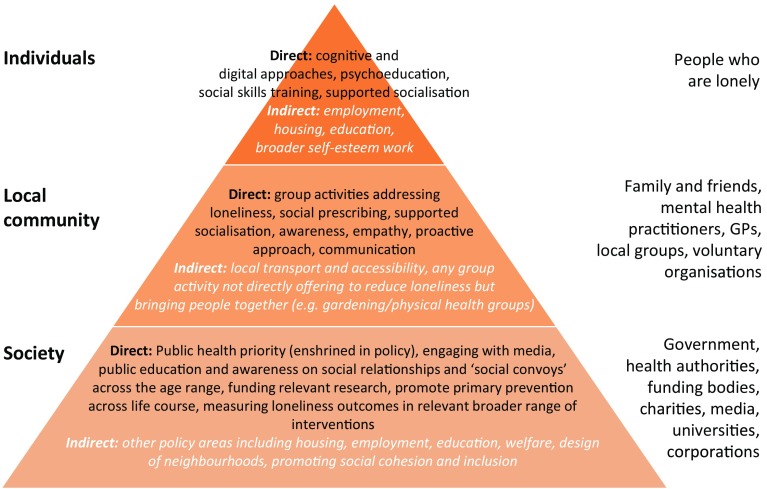
“There are several types of direct intervention which aim to reduce loneliness including: changing people’s cognitions about social relationships; social skills training and psychoeducation about the value of social connections; supported socialisation; and wider community approaches to reducing loneliness [19].”
BackgroundInfluentialSelf-citationŚwitaj, P., Grygiel, P., Chrostek, A., Wciórka, J., & Anczewska, M. (2017) · Social Psychiatry and Psychiatric Epidemiology · doi:10.1007/s00127-017-1470-1 · Cited by 20
“The emerging evidence suggests that the most promising strategy is reducing maladaptive cognitions [50, 51]; however, in practice the selection of appropriate interventions should be made after careful Fig.”
BackgroundNear Term Suicide Risk Assessment: A Commentary on the Clinical Relevance of Protective Factors
Berman, A. L., & Silverman, M. M. (2019) · Archives of Suicide Research · doi:10.1080/13811118.2019.1612804 · Cited by 18
Martin, E., Schoeler, T., Pingault, J., & Barkhuizen, W. (2023) · Psychiatry Research · doi:10.1016/j.psychres.2023.115218 · Cited by 17
“A scoping review of literature addressing interventions targeting loneliness found that the most promising interventions were indeed those that targeted cognitive processing (Mann et al., 2017).”
BackgroundChen, Y., Xue, H., Ai, S., Liu, Y., Nie, Y., Ai, Q. Y. H., Zhang, J., & Liang, Y. Y. (2024) · Diabetes & Metabolism · doi:10.1016/j.diabet.2024.101526 · Cited by 16
Lee, Y. A., Guo, Y., Li, G., & Chen, F. S. (2024) · Journal of Happiness Studies · doi:10.1007/s10902-024-00742-x · Cited by 20
“…increasing opportunities for socialization or social support (e.g., befriending programs), providing social skills training, or addressing cognitive processes (e.g., reframing negative interpersonal thoughts and mindfulness skills; Hickin et al., 2021; Mann et al., 2017; Masi et al., 2011) .”
Wright, T., Solmi, F., Ajnakina, O., Ingram, E., Kandola, A. A., Lee, S., Iob, E., Steptoe, A., Thomas, B., & Lewis, G. (2024) · Journal of Affective Disorders · doi:10.1016/j.jad.2024.04.001 · Cited by 16
“Loneliness, in turn, may increase the risk of depression through social, psychological and biological pathways (Mann et al., 2017).”
BackgroundSeewer, N., Skoko, A., Käll, A., Andersson, G., Luhmann, M., Berger, T., & Krieger, T. (2022) · JMIR Research Protocols · doi:10.2196/36358 · Cited by 14
“A more recent systematic review [11] corroborated these findings by concluding that the most promising individual interventions”
BackgroundShi, Y., Fong, M. W. M., Metts, C. L., LaVela, S. L., Bombardier, C. H., Hu, L., & Wong, A. (2024) · Archives of Physical Medicine and Rehabilitation · doi:10.1016/j.apmr.2024.02.733 · Cited by 18
Loneliness is associated with more trust but worse trustworthiness expectations
Bellucci, G., & Park, S. Q. (2024) · British Journal of Psychology · doi:10.1111/bjop.12713 · Cited by 22
Reinhard, M. A., Zentz, K., Nenov-Matt, T., Barton, B. B., Rek, S. V., Goerigk, S. A., Brakemeier, E., Musil, R., Jobst, A., & Padberg, F. (2021) · Journal of Affective Disorders Reports · doi:10.1016/j.jadr.2021.100171 · Cited by 17
Greiner, C., Besch, V., Bouchard-Boivin, M., Hénaff, C. L., Pree, C. V. R.-D., Perroud, N. A., Prada, P., & Debbané, M. (2025) · PLoS ONE · doi:10.1371/journal.pone.0303918 · Cited by 23
Maitland, D. W. M., & Neilson, E. C. (2023) · Journal of Sex & Marital Therapy · doi:10.1080/0092623x.2023.2193182 · Cited by 16
“Given the lack of efficacy of loneliness interventions (Mann et al., 2017) and that fear of intimacy may function as a precursor to loneliness (Maitland, 2020) it is our suggestion that fear of intimacy be targeted.”
BackgroundHong, J. H., Nakamura, J. S., Sahakari, S. S., Chopik, W. J., Shiba, K., VanderWeele, T. J., & Kim, E. S. (2024) · Psychological Medicine · doi:10.1017/s0033291723002581 · Cited by 18
“Interventions should use both psychological (e.g. cognitive-therapy) and objective intervention methods (e.g. increasing social engagement through improved transportation, access to technology) to meet the specific needs of individuals (Mann et al., 2017).”
BackgroundFan, Z., Shi, X., Leng, J., Cui, D., & Li, D. (2025) · Psychology Research and Behavior Management · doi:10.2147/prbm.s494430 · Cited by 17
Pollet, T. V., Thompson, A., Malcolm, C., McCarty, K., Saxton, T. K., & Roberts, S. G. B. (2022) · PLoS ONE · doi:10.1371/journal.pone.0266167 · Cited by 14
“As many interventions use the UCLA Loneliness Scale as an outcome measure [14, 15], if treated as a unitary scale this may miss these more subtle changes in different aspects of loneliness as a result of the intervention.”
BackgroundMethodA paradigm shift—Loneliness as a root cause of symptom distress among older adults
Kotwal, A., & Meier, D. E. (2022) · Journal of the American Geriatrics Society · doi:10.1111/jgs.17880 · Cited by 14
Ren, L., Mo, B., Li, D., Liu, J., Bullock, A., & Yuan, M. (2021) · Current Psychology · doi:10.1007/s12144-021-02048-0 · Cited by 14
Distinct aspects of human connection associated with subjective well-being
Ruppel, E. H., Child, S. T., Fischer, C. S., & Botchway, M. (2022) · SSM - Mental Health · doi:10.1016/j.ssmmh.2022.100143 · Cited by 17
“(2020) about the overlap between loneliness and social isolation and analyzing these variables as predictors of SWB builds on the conceptualization of these variables’ relationship to SWB in prior work (Hombrados-Mendieta et al., 2013; Mann et al., 2017).”
MethodBhattacharjee, A., Sultana, S., Amin, M. R., Iqbal, Y., & Ahmed, S. I. (2023) · ACM Journal on Computing and Sustainable Societies · doi:10.1145/3616381 · Cited by 14
“Since then, this model has gained signiicant attention as a low-cost way to support individuals struggling with loneliness and lack of peer support [81, 98].”
BackgroundPutnick, D. L., Uddin, M. K., Rohner, R. P., Singha, B., & Shahnaz, I. (2019) · International Journal of Psychology · doi:10.1002/ijop.12609 · Cited by 12
Papagavriel, K., Jones, R., Sheehan, R., Hassiotis, A., & Ali, A. (2020) · Journal of Affective Disorders · doi:10.1016/j.jad.2020.09.005 · Cited by 14
Disability and loneliness in nine countries of the former Soviet Union
Stickley, A., Kondo, N., Richardson, E., Leinsalu, M., Waldman, K. E., Oh, H. Y., Inoue, Y., Shakespeare, T., & McKee, M. (2021) · Disability and health journal · doi:10.1016/j.dhjo.2021.101123 · Cited by 13
The Impact of Cycling Specialization on Successful Aging and the Mediating Role of Loneliness
Tian, H., Zhou, W., Qiu, Y., & Shang, Y. (2021) · International Journal of Environmental Research and Public Health · doi:10.3390/ijerph19010019 · Cited by 12
“However, the effectiveness of the interventions has not been robust, and further studies are required to deal with the challenges of how to offer and test such complex interventions [8,10].”
BackgroundThe nuances of “the social cure” for people who experience psychosis
Hogg, L. I., Smith, L. G. E., Morrison, A. P., Prosser, A. M. B., & Kurz, T. (2022) · European Journal of Social Psychology · doi:10.1002/ejsp.2848 · Cited by 16
Development of a graphic medicine-enabled social media-based intervention for youth social anxiety
Rice, S., O’Bree, B., Wilson, M., McEnery, C., Lim, M. H., Hamilton, M. P., Gleeson, J., Bendall, S., D’Alfonso, S., Russon, P., et al. (2021) · Clinical Psychologist · doi:10.1080/13284207.2021.1923128 · Cited by 17
de Feijter, M., Kocevska, D., Blanken, T. F., van der Velpen, I. F., Ikram, M. A., & Luik, A. I. (2022) · Social Psychiatry and Psychiatric Epidemiology · doi:10.1007/s00127-022-02308-9 · Cited by 10
“These findings are partly in line with previous literature reporting depression and anxiety both to be associated with loneliness, social connectedness, and worry [8, 9, 31].”
BackgroundResultMigliorini, C., Fossey, E. M., & Harvey, C. A. (2022) · Frontiers in Psychiatry · doi:10.3389/fpsyt.2022.1013919 · Cited by 12
Sarhaddi, F., Azimi, I., Niela‐Vilén, H., Axelin, A., Liljeberg, P., & Rahmani, A. M. (2023) · JMIR Formative Research · doi:10.2196/47950 · Cited by 23
“Loneliness is a subjective, unpleasant feeling of mismatch between desired and perceived meaningful social relationships [1].”
BackgroundEllis, J., Kinsella, K., James, E., Cheetham‐Blake, T. J., Lambrou, M., Ciccognani, A., Rogers, A. E., & Band, R. J. (2022) · Health & Social Care in the Community · doi:10.1111/hsc.13808 · Cited by 10
“These environments provide opportunities for supported sociality (Mann et al., 2017), building new connections (Kennedy et al., 2016a) and community capital (Marmot et al., 2020), and have an important role to play in tackling loneliness and social isolation.”
BackgroundCorcoran, E., Bird, M., Batchelor, R., Ahmed, N., Nowland, R. A., & Pitman, A. (2024) · BMC Public Health · doi:10.1186/s12889-024-18528-4 · Cited by 10
Loneliness and depression in older adults: living well in older age
Bandyopadhyay, S. (2024) · Medicine · doi:10.1016/j.mpmed.2024.08.009 · Cited by 13
Świtaj, P., Grygiel, P., Leciak, J., Stefaniak, I., Opozda-Suder, S., & Anczewska, M. (2025) · Scientific Reports · doi:10.1038/s41598-025-87559-7 · Cited by 12
collective, B. T., Burke, L., Littlewood, E., Gascoyne, S., McMillan, D., Chew-Graham, C. A., Bailey, D., Sloan, C., Fairhurst, C. M., Baird, K., et al. (2022) · PLoS ONE · doi:10.1371/journal.pone.0263856 · Cited by 10
Neurocomputational mechanisms of biased impression formation in lonely individuals
Bellucci, G., & Park, S. Q. (2023) · Communications Biology · doi:10.1038/s42003-023-05429-2 · Cited by 12
“The fMRI scans consisted of approximately 900 contiguous volumes per run (axial slices, 56; slice thickness, 3 mm; no interslice gap; TR, 1000 ms; TE, 30 ms; acceleration factor, 4; fl ip angle, 60°; voxel size, 3.0 × 3.0 × 3.0 mm 3 ; FOV, 204 × 204 mm 2 ).”
InfluentialSagan, O. (2020) · Mental Health and Social Inclusion · doi:10.1108/mhsi-05-2020-0031 · Cited by 12
Hare-Duke, L., Dening, T., Oliveira, D., Dewa, R., & Slade, M. (2021) · Journal of Mental Health · doi:10.1080/09638237.2021.1875409 · Cited by 13
“This suggests that social connectedness interventions are one potential means of reducing the high prevalence of loneliness in clinical populations (Hare-Duke et al., 2019; Mann et al., 2017).”
BackgroundThe experience of loneliness among people with psychosis: Qualitative meta-synthesis
Lee, C. Y., Ahmed, N., Ikhtabi, S., Duffett, P., Alhilow, Y., Richardson, L. J. H., Pitman, A., Lloyd‐Evans, B., & Johnson, S. (2024) · PLoS ONE · doi:10.1371/journal.pone.0315763 · Cited by 12
Self-citationDolz-del-Castellar, B., de la Torre‐Luque, A., Castelletti, C., Francia, L., Rodríguez-Prada, C., Miret, M., Domènech‐Abella, J., Gabarrell‐Pascuet, A., Olaya, B., Haro, J. M., et al. (2025) · Journal of Affective Disorders · doi:10.1016/j.jad.2025.02.084 · Cited by 11
Badcock, A. C., Carrington‐Jones, P., Stritzke, W. G. K., & Page, A. C. (2022) · Suicide and Life-Threatening Behavior · doi:10.1111/sltb.12854 · Cited by 9
“The most promising psychological approach for reducing loneliness involves changing maladaptive cognitions, such as negative attention and interpretive biases (Cacioppo et al., 2015; Mann et al., 2017).”
BackgroundSoziales Eingebundensein und Gesundheit
Riedel-Heller, S. G. (2022) · Psychiatrische Praxis · doi:10.1055/a-1736-4190 · Cited by 10
Aroonsrimorakot, S., Laiphrakpam, M., Metadilogkul, O., & Sharma, A. R. S. (2022) · Journal of Public Health and Development · doi:10.55131/jphd/2022/200214 · Cited by 10
Cardiovascular disease risk in people with severe mental disorders: an update and call for action
Rødevand, L. N., Tesli, M., & Andreassen, O. A. (2022) · Current Opinion in Psychiatry · doi:10.1097/yco.0000000000000797 · Cited by 13
“To obtain sustainable effects on loneliness, cognitive approaches should be integrated with broader societal efforts that facilitate social inclusion, education and employment [52,69].”
BackgroundMächler, R., Frick, E., Sturm, N., Stolz, R., Valentini, J., & Straßner, C. (2022) · Patient Education and Counseling · doi:10.1016/j.pec.2022.11.013 · Cited by 8
Internetbasierte Selbsthilfe bei Einsamkeit – Eine systematische Übersicht
Imwinkelried, M., Seewer, N., Berger, T., & Krieger, T. (2024) · Bundesgesundheitsblatt - Gesundheitsforschung - Gesundheitsschutz · doi:10.1007/s00103-024-03934-1 · Cited by 7
Liao, T., Tian, X., Huang, T., Wu, Y., Yu, X., & Song, S. (2024) · BMC Psychology · doi:10.1186/s40359-024-01954-9 · Cited by 13
“…studies have confirmed that many interventions targeting potentially maladaptive social cognitions can reduce individuals’ feelings of isolation [38, 39]; This result supports the theory of thriving through relationships [22], and the model suggests that self-disclosure is one of the important…”
ResultBurke, L., Christiansen, J., Lasgaard, M., Demkowicz, O., Verity, L., Lau, J. Y. F., & Qualter, P. (2026) · Journal of Affective Disorders · doi:10.1016/j.jad.2026.121445 · Cited by 13
Liu, S., Haucke, M. N., Wegner, L., Gates, J., Bärnighausen, T., & Adam, M. (2024) · npj Digital Medicine · doi:10.1038/s41746-024-01096-7 · Cited by 8
“These include social skills training, building social support and social contact, and providing psychoeducation and cognitive behavioural training 10,11 .”
Drama and Theatre for Health and Well-Being
Wall, T., Fries, J., Rowe, N., Malone, N., & Österlind, E. (2018) · Encyclopedia of the UN sustainable development goals · doi:10.1007/978-3-319-69627-0_14-1 · Cited by 10
Limarutti, A., & Mir, E. K. T. (2020) · PRO CARE · doi:10.1007/s00735-020-1188-2 · Cited by 10
Bainbridge, L., & Lunt, N. T. (2021) · The British Journal of Social Work · doi:10.1093/bjsw/bcab041 · Cited by 10
Lotfalinezhad, E., Nadrian, H., Kousha, A., Andersen‐Ranberg, K., Jafarabadi, M. A., Sohrabi, A., Hashemiparast, M., Honarvar, M. R., & Freeman, S. (2022) · PLoS ONE · doi:10.1371/journal.pone.0273924 · Cited by 6
Why Loneliness Matters in Clinical Practice: A Primer for Clinical- and Neuro-Psychologists.
Badcock, J. C., Preece, D. A., & Badcock, A. C. (2023) · Journal of Emotion and Psychopathology · doi:10.55913/joep.v1i1.21 · Cited by 12
Greiner, C., Besch, V., Bouchard-Boivin, M., Hénaff, C. L., Pree, C. V. R.-D., Perroud, N. A., Prada, P., & Debbané, M. (2024) · medRxiv · doi:10.1101/2024.05.06.24306924 · Cited by 7
Loose, T., Geoffroy, M. C., Orri, M., Chadi, N., Scardera, S., Booij, L., Breton, E., Tremblay, R., Boivin, M., & Coté, S. (2023) · Canadian Journal of Public Health · doi:10.17269/s41997-022-00715-8 · Cited by 7
“…loneliness include addressing maladaptive cognitive beliefs (e.g., negative evaluations of others, lack of interpersonal trust), training in social skills, encouraging socialization and community involvement (e.g., volunteering), and increasing opportunities for socialization (Mann et al., 2017).”
BackgroundHe, J., LaVela, S. L., Bombardier, C. H., Fong, M. W. M., Lee, S. I., Metts, C. L., Shi, Y., Tsang, H. W. H., & Wong, A. (2025) · Current Physical Medicine and Rehabilitation Reports · doi:10.1007/s40141-025-00477-7 · Cited by 7
“To date, several systematic reviews have summarized interventions aimed at reducing social isolation and enhancing coping with loneliness among older adults and individuals with mental health issues [20, 85–87].”
Does mentoring improve the health of people in the community? A realist evaluation
Suurmond, J., Kruithof, K., & Harting, J. (2023) · Journal of Social Work · doi:10.1177/14680173221144411 · Cited by 7
“…evaluation studies of mentoring have predominantly focused on people with severe mental health problems (Anderson et al., 2015; DuBois et al., 2011; Mann et al., 2017; Webber & Fendt-Newlin, 2017) and showed that mentoring has a moderate effect on physical health and a modest effect on depressive…”
BackgroundLiu, S., Wegner, L., Haucke, M. N., Gates, J., Adam, M., & Bärnighausen, T. (2023) · JMIR Formative Research · doi:10.2196/43036 · Cited by 6
“…often focus on 4 key aspects: changing cognitions (the strategy supported by the most convincing body of evidence), training social skills and participating in psychoeducation, supporting socialization or having a “socially focused supporter,” and engaging with the “wider community” [20,21].”
Salomon-Gimmon, M., Orkibi, H., & Elefant, C. (2022) · Journal of Humanistic Psychology · doi:10.1177/00221678221105719 · Cited by 11
“There is evidence that a safe social environment for meaningful interpersonal interactions and opportunities for active participation and engagement promote well-being and mitigate the loneliness of people with MHC (Lim et al., 2018; Mann et al., 2017; Stensæth, 2018; Wang et al., 2018).”
Mahon, D. (2023) · Mental Health and Social Inclusion · doi:10.1108/mhsi-11-2023-0129 · Cited by 7
Eddy, E., Heron, P., McMillan, D., Dawson, S., Ekers, D., Hickin, N., Littlewood, E., Shafran, R., Meader, N., & Gilbody, S. M. (2020) · Cochrane Database of Systematic Reviews · doi:10.1002/14651858.cd013791 · Cited by 8
Machielse, A. (2020) · Ageing and Society · doi:10.1017/s0144686x20001725 · Cited by 10
“Hence a prerequisite for effective interventions is that the assessment of individual needs should be conducted during the early phases of intervention, with subsequent tailoring of programmes to meet the needs of the person involved (Mann et al., 2017).”
BackgroundPredicting maternal social loneliness by passive sensing with wearable devicesPreprint
Sarhaddi, F., Azimi, I., Niela‐Vilén, H., Axelin, A., Liljeberg, P., & Rahmani, A. M. (2022) · medRxiv · doi:10.1101/2022.10.10.22280910 · Cited by 7
Hogg, L. I., Smith, L. G. E., Haslam, C., Coxhill, L., Kurz, T., Hobden, G., & Morrison, A. P. (2025) · Psychology and Psychotherapy Theory Research and Practice · doi:10.1111/papt.12574 · Cited by 8
“empathy, G4H, identity integration, internalised stigma, loneliness, psychosis, social identity, wellbeing loneliness (Hickin et al., 2021; Mann et al., 2017; Masi et al., 2011).”
Birken, M., Ikhtabi, S., Steare, T., Johnson, S., Benedetto, G., Lin, F., Scott, H. R., Harju‐Seppänen, J., McCloud, T. L., Shafran, R., et al. (2025) · BMC Psychology · doi:10.1186/s40359-025-03639-3 · Cited by 5
“The literature summarised in our review, as with other reviews, illustrates the increasing investment over the last few decades in RCTs of interventions addressing loneliness, as delivered to older adults [34, 35], young people [27, 36] and adults [24, 25].”
InfluentialSelf-citationLasgaard, M., Bo, A., Nielsen, L. A., Swane, C. E., Qualter, P., & Christiansen, J. (2023) · Health Promotion International · doi:10.1093/heapro/daad105 · Cited by 6
Oe, M., Nakai, H., & Nagayama, Y. (2024) · Nursing Reports · doi:10.3390/nursrep14020076 · Cited by 5
Châtel, B. D. L., Janssen, J. H. M., Peeters, G. M. E. E., Corten, R., Tieben, R., Deen, M., Hendriks, E. J. M., & Rikkert, M. G. M. O. (2024) · JMIR Serious Games · doi:10.2196/52640 · Cited by 12
“There are 2 reasons for limited robust evidence for loneliness interventions: a lack of randomized, blinded trials [8-14] and the difficulty with recruitment.”
BackgroundMedical clowning’s contribution to the well-being of older adults in a residential home
Babis, D., Korin, O., Ben‐Shalom, U., & Gruber, A. A. (2022) · Educational Gerontology · doi:10.1080/03601277.2022.2043663 · Cited by 7
Vanderhasselt, M.-A., Vergauwe, R., Baeken, C., Pulopulos, M. M., & Raedt, R. D. (2025) · Clinical Psychology Review · doi:10.1016/j.cpr.2025.102611 · Cited by 6
Rokach, A. (2019) · Elsevier eBooks · doi:10.1016/b978-0-12-815618-6.00011-4 · Cited by 5
Rodriguez, M., Osborn, T. L., Gan, J. Y., Weisz, J. R., & Bellet, B. W. (2021) · PsyArXiv (OSF Preprints) · doi:10.31234/osf.io/bmh7q · Cited by 6
Wang, J., Zhang, W., Song, P., Wang, T., Yao, Y., Chen, Y., Lin, H., Yang, X., Chen, X., & Fu, C. (2024) · Psychology Research and Behavior Management · doi:10.2147/prbm.s484113 · Cited by 6
“91 Together, these approaches may help lessen adolescent loneliness and possibly decrease their risk of internalizing and externalizing problems.”
Self-citationLopatovska, I., Turpin, O., Yoon, J. H., Brown, D., Vroom, L., Nielsen, C., Hayes, K., Roslund, K., Dickson, M., & Anger, D. (2022) · Proceedings of the Association for Information Science and Technology · doi:10.1002/pra2.639 · Cited by 5
“Because it is not always possible to satisfy adolescents’ need for strong or satisfactory relationships, transient loneliness offers a “healthy adaptive behavioral strategy” (Mann, 2017) of coping with unsatisfactory peer relationships and evaluation (De Goede et al., 2009).”
BackgroundDesai, P., Krueger, K. R., de Leon, C. F. M., Wilson, R. S., Evans, D. A., & Rajan, K. B. (2023) · Psychosomatic Medicine · doi:10.1097/psy.0000000000001168 · Cited by 4
“There is a possibility that loneliness may be underreported, given feelings of stigma (51).”
BackgroundLaVela, S. L., Motl, R. W., Berryman, K., Wirth, M., Bartle, B., Aguina, K., Solanki, P. A., & Bombardier, C. H. (2024) · Rehabilitation Psychology · doi:10.1037/rep0000540 · Cited by 5
Benassi, F., & Iglesias‐Pascual, R. (2025) · Annals of Operations Research · doi:10.1007/s10479-025-06595-8 · Cited by 4
“…analyzing the importance of loneliness and social isolation in the EU (Casabianca & Nurminen, 2024) considerthatactiontopreventtheconsequencesoflivingalone,socialisolationandloneliness shouldbeaimedatincreasingsocialcontactandsociability(e.g.,Gardineretal.,2018;Mann etal.,2017;Masietal.,2011).”
Isolation, Loneliness and Mental Health
Ingram, I., & Kelly, P. J. (2022) · Springer eBooks · doi:10.1007/978-3-031-06932-1_7 · Cited by 5
Graham, Y., Plouviez, A., Clelland, A., Fox, A., Fowler, G., SARGENT, J. R., & Hayes, C. (2022) · Journal of Participatory Research Methods · doi:10.35844/001c.37612 · Cited by 8
Development of a graphic medicine‐enabled social media‐based intervention for youth social anxiety
Rice, S., O’Bree, B., Wilson, M., McEnery, C., Lim, M. H., Hamilton, M. P., Gleeson, J., Bendall, S., D’Alfonso, S., Russon, P., et al. (2020) · Clinical Psychologist · doi:10.1111/cp.12222 · Cited by 4
Rogers, E. S., Millner, U. C., Ludlow, L. H., Lord, E. M., & Russinova, Z. L. (2021) · Psychiatric Rehabilitation Journal · doi:10.1037/prj0000450 · Cited by 6
Metadata
- Authors
- Mann, F., Bone, J. K., Lloyd-Evans, B., Frerichs, J., Pinfold, V., Ma, R., Wang, J., & Johnson, S.
- Affiliations
- University College London (GB)
- McPin Foundation (GB)
- St Pancras Hospital (GB)
- Corresponding author
- Mann, Farhana
- Venue
- Social Psychiatry and Psychiatric Epidemiology
- Published
- 2017-05-20
- Volume
- 52
- Issue
- 6
- Pages
- 627-638
- ISSN
- 0933-7954 (ISSN-L)
- 1433-9285
- PMC
- PMC5487590
- OpenAlex
- W2615658301
- Cited by
- 346
- References
- 93
- Citations by year
- 2026: 25 · 2025: 51 · 2024: 44 · 2023: 48 · 2022: 67 · 2021: 44 · 2020: 36 · 2019: 16 · 2018: 9 · 2017: 6
- FWCI
- 3.16
- Type
- journal article
- Language
- en
- Open access
- hybrid
- doi.org
- Locations
- Social Psychiatry and Psychiatric Epidemiology (publishedVersion, cc-by)
- Europe PMC (PubMed Central) (publishedVersion, cc-by)
- PubMed Central (publishedVersion, cc-by)
- PubMed (publishedVersion)
- UCL Discovery (University College London) (submittedVersion)
- Funders
- Wellcome Trust (203618/Z/16/Z)
- Topics
- Social Sciences › Health › Health disparities and outcomes
- Social Sciences › Psychology › Experimental and Cognitive Psychology › Anxiety, Depression, Psychometrics, Treatment, Cognitive Processes
- Health Sciences › Medicine › Psychiatry and Mental health › Mental Health Treatment and Access
- Keywords
- loneliness, loneliness interventions, mental illness, interpersonal relationships, social skills training, psychoeducation, social prescribing, community-based approach, public mental health
- MeSH terms
- Mental Disorders, Humans, Loneliness, Social Support, Socialization
About these checks
Registry, retraction, Cites and statistics results are computed, not judged, with one exception: a printed reference that no index lists is read once by a model before it counts as a citation error. Claims are extracted by a model and kept only when their quote appears verbatim in the text; each cited source is then checked, with a model’s help, for whether it says what the claim relies on. Those verdicts can be wrong — read the claim’s quote and the cited source before relying on one.
Statistics and arithmetic are recomputed, not judged.
Confidence bands are shown only for fields calibrated on our annotated test set. None is calibrated yet, so no band is shown.
What counts as a claim ›How we measure confidence ›How we check this ›
Are you an author, or do you see a problem with this page? Request a review
Data sources
Bibliographic data: Semantic Scholar, OpenAlex, Crossref.
Contains information from the Semantic Scholar Academic Graph Datasets, made available under the ODC Attribution License (ODC-BY 1.0).
Semantic Scholar’s data is described in: Kinney, R., et al. (2023). The Semantic Scholar Open Data Platform. arXiv:2301.10140.
