

A life less lonely: the state of the art in interventions to reduce loneliness in people with mental health problems
Open accessThe DOI matches its Crossref record; 93 of the 93 references it cites were found in a registry or an index.
Abstract
PURPOSE: There is growing evidence of significant harmful effects of loneliness. Relatively little work has focused on how best to reduce loneliness in people with mental health problems. We aim to present an overview of the current state of the art in loneliness interventions in people with mental health problems, identify relevant challenges, and highlight priorities for future research and implementation. METHODS: A scoping review of the published and grey literature was conducted, as well as discussions with relevant experts, to propose a broad classification system for types of interventions targeting loneliness. RESULTS: We categorised interventions as 'direct', targeting loneliness and related concepts in social relationships, and 'indirect' broader approaches to well-being that may impact on loneliness. We describe four broad groups of direct interventions: changing cognitions; social skills training and psychoeducation; supported socialisation or having a 'socially-focused supporter'; and 'wider community approaches'. The most promising emerging evidence appears to be in 'changing cognitions', but, as yet, no approaches have a robust evidence base. Challenges include who is best placed to offer the intervention, how to test such complex interventions, and the stigma surrounding loneliness. CONCLUSIONS: Development of clearly defined loneliness interventions, high-quality trials of effectiveness, and identifying which approaches work best for whom is required. Promising future approaches may include wider community initiatives and social prescribing. It is important to place loneliness and social relationships high on the wider public mental health and research agenda.
Overview
The claims and statistics of this paper haven’t been checked yet.
Free: it reads the open-access text and checks the first 5 claims that cite a source we can check. Create a free account to check every claim.
Integrity signals
Registry
Cites
Statistics
Figures
Verification
Claims the paper makes
The claims and statistics of this paper haven’t been checked yet.
Free: it reads the open-access text and checks the first 5 claims that cite a source we can check. Create a free account to check every claim.
Claims other papers make about this one
Each is checked against this paper’s own text: does it say what the citing paper says it does?
The source backs part of the claim, not all of it — or backs it for a different population, condition or comparison.
In the citing paper
“Effective cognitive behavioural techniques to decrease loneliness include addressing maladaptive cognitive beliefs (e.g., negative evaluations of others, lack of interpersonal trust), training in social skills, encouraging socialization and community involvement (e.g., volunteering), and increasing opportunities for socialization (Mann et al., 2017).”
From Pathways of association between disordered eating in adolescence and mental health outcomes in young adulthood during the COVID-19 pandemic (2023) · cites this paper as Mann et al., 2017
Experimental — accuracy not yet measuredIn the citing paper
“In the UK, a variety of approaches to social relationships and social participation are being developed primarily in the charitable sector and in primary care [74].”
From Associations between loneliness and perceived social support and outcomes of mental health problems: a systematic review (2018) · cites this paper as [74]
Self-check
Percentages, sums and reported differences re-computed from the paper’s own numbers.
The self-check needs the paper’s full text.
Citations
Cites
Bowling alone: the collapse and revival of American community
(2000) · Choice Reviews Online · doi:10.5860/choice.38-2454 · Cited by 28,789
The Ecology of Human Development: Experiments by Nature and Design
Bronfenbrenner, U. (1979) · Harvard University Press eBooks · doi:10.4159/9780674028845 · Cited by 26,084
Social Capital: Its Origins and Applications in Modern Sociology
Portes, A. (1998) · Annual Review of Sociology · doi:10.1146/annurev.soc.24.1.1 · Cited by 12,037
Social Relationships and Mortality Risk: A Meta-analytic Review
Holt-Lunstad, J., Smith, T. B., & Layton, J. B. (2010) · PLoS Medicine · doi:10.1371/journal.pmed.1000316 · Cited by 7,272
Loneliness and Social Isolation as Risk Factors for Mortality: A Meta-Analytic Review
Holt-Lunstad, J., Smith, T. B., Baker, M., Harris, T., & Stephenson, D. (2015) · Perspectives on Psychological Science · doi:10.1177/1745691614568352 · Cited by 6,043
UCLA loneliness scale (version 3): reliability, validity, and factor structure
Russell, D. W. (1996) · Journal of Personality Assessment · doi:10.1207/s15327752jpa6601_2 · Cited by 5,800 · cited 1×
“The two most commonly used loneliness scales are the UCLA Loneliness Scale [81] and the de Jong Gierveld loneliness scale [82].”
MethodLoneliness matters: a theoretical and empirical review of consequences and mechanisms
Hawkley, L. C., & Cacioppo, J. T. (2010) · Annals of Behavioral Medicine · doi:10.1007/s12160-010-9210-8 · Cited by 4,782 · cited 1×
“Loneliness can lead to negative evaluations of other people, for example, and a lack of interpersonal trust [5].”
BackgroundSocial isolation, loneliness, and all-cause mortality in older men and women
Steptoe, A., Shankar, A., Demakakos, P., & Wardle, J. (2013) · Proceedings of the National Academy of Sciences · doi:10.1073/pnas.1219686110 · Cited by 2,503 · cited 1×
“It has been argued that social isolation is of greater relevance in predicting poor physical health [89], while others have argued that loneliness is a stronger predictor [8].”
BackgroundPerceived social isolation and cognition
Cacioppo, J. T., & Hawkley, L. C. (2009) · Trends in Cognitive Sciences · doi:10.1016/j.tics.2009.06.005 · Cited by 2,144 · cited 1×
“This sits well alongside evidence of cognitive changes in people who feel lonely [32], but the small effect sizes and few studies of people with mental health problems included limit generalisation of these findings.”
BackgroundLoneliness: A Source Book of Current Theory, Research and Therapy
Blazer, D. (1983) · Journal of Gerontology · doi:10.1093/geronj/38.4.492 · Cited by 2,120
Research works printed but not linked: 3
- Thomas J Insights in loneliness, older people and well-being 2015 United Kingdom Office for National Statistics
- Pinfold V Sweet D Porter I Quinn C Byng R Griffiths C Improving community health networks for people with severe mental illness: a case study investigation 2015 Southampton Health Services and Delivery Research 25741571
- Centers for Disease Control and Prevention Identifying vulnerable older adults and legal options for increasing their protection during all-hazards emergencies: A cross-sector guide for states and communities 2012 Atlanta, U.S. Department of Health and Human Services
Cited by
Wang, J., Mann, F., Lloyd-Evans, B., Ma, R., & Johnson, S. (2018) · BMC Psychiatry · doi:10.1186/s12888-018-1736-5 · Cited by 1,494
“In the UK, a variety of approaches to social relationships and social participation are being developed primarily in the charitable sector and in primary care [74].”
BackgroundSelf-citationLoneliness and social isolation interventions for older adults: a scoping review of reviews
Fakoya, O. A., McCorry, N. K., & Donnelly, M. (2020) · BMC Public Health · doi:10.1186/s12889-020-8251-6 · Cited by 842
“There is no one-size-fits-all approach to loneliness interventions [25, 70], and it is recommended that the assessment of individual needs should be conducted during the early phases of intervention, with subsequent tailoring of programmes to meet the needs of individuals [77], specific groups or the degree and determ…”
BackgroundGroarke, J. M., Berry, E., Graham-Wisener, L., McKenna-Plumley, P. E., McGlinchey, E., & Armour, C. (2020) · PLOS ONE · doi:10.1371/journal.pone.0239698 · Cited by 727
Donovan, N. J., & Blazer, D. (2020) · The American Journal of Geriatric Psychiatry · doi:10.1016/j.jagp.2020.08.005 · Cited by 739
“Mann et al.95 reviewed 10 published randomized controlled trials examining cognitive approaches to improving loneliness and other aspects of social connection in nongeriatric samples who were affected by a range of mental health conditions.”
Lee, S. L., Pearce, E., Ajnakina, O., Johnson, S., Lewis, G., Mann, F., Pitman, A., Solmi, F., Sommerlad, A., Steptoe, A., et al. (2021) · The Lancet Psychiatry · doi:10.1016/s2215-0366(20)30383-7 · Cited by 531
Self-citationBu, F., Steptoe, A., & Fancourt, D. (2020) · Social Science & Medicine · doi:10.1016/j.socscimed.2020.113521 · Cited by 462
“Furthermore, addressing loneliness may be an important target in reducing the symptoms of anxiety and depression in individuals with mental illness (Mann et al., 2017).”
BackgroundLim, M. H., Eres, R., & Vasan, S. (2020) · Social Psychiatry and Psychiatric Epidemiology · doi:10.1007/s00127-020-01889-7 · Cited by 438
The effects of social isolation stress and discrimination on mental health
Brandt, L., Liu, S., Heim, C., & Heinz, A. (2022) · Translational Psychiatry · doi:10.1038/s41398-022-02178-4 · Cited by 418
Loneliness and the onset of new mental health problems in the general population
Mann, F., Wang, J., Pearce, E., Ma, R., Schlief, M., Lloyd-Evans, B., Ikhtabi, S., & Johnson, S. (2022) · Social Psychiatry and Psychiatric Epidemiology · doi:10.1007/s00127-022-02261-7 · Cited by 387
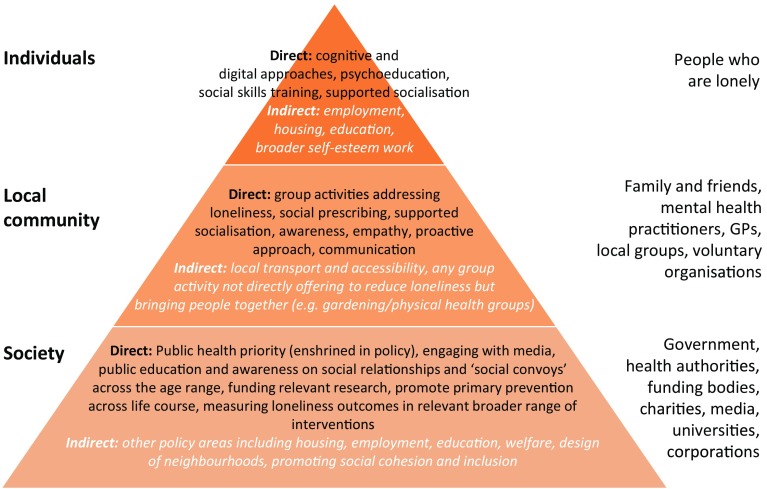
“, individual, local community, and wider society [74].”
BackgroundSelf-citationLabrague, L. J., De los Santos, J. A. A., & Falguera, C. C. (2021) · Perspectives in Psychiatric Care · doi:10.1111/ppc.12721 · Cited by 276
Hickin, N., Käll, A., Shafran, R., Sutcliffe, S., Manzotti, G., & Langan, D. (2021) · Clinical Psychology Review · doi:10.1016/j.cpr.2021.102066 · Cited by 271
Achterbergh, L., Pitman, A., Birken, M., Pearce, E., Sno, H., & Johnson, S. (2020) · BMC Psychiatry · doi:10.1186/s12888-020-02818-3 · Cited by 254
Self-citationHaslam, C., Cruwys, T., Chang, M. X. L., Bentley, S. V., Haslam, S. A., Dingle, G. A., & Jetten, J. (2019) · Journal of Consulting and Clinical Psychology · doi:10.1037/ccp0000427 · Cited by 207
“To this end, a range of interventions have been developed to reduce loneliness (see Mann et al., 2017; Masi, Chen, Hawkley, & Cacioppo, 2011).”
BackgroundLoneliness and Social Isolation as Risk Factors: The Power of Social Connection in Prevention
Holt-Lunstad, J. (2021) · American Journal of Lifestyle Medicine · doi:10.1177/15598276211009454 · Cited by 207
Loneliness among people with substance use problems: A narrative systematic review
Ingram, I., Kelly, P. J., Deane, F. P., Baker, A. L., Goh, M. C. W., Raftery, D. K., & Dingle, G. A. (2020) · Drug and Alcohol Review · doi:10.1111/dar.13064 · Cited by 206
Ma, R., Mann, F., Wang, J., Lloyd-Evans, B., Terhune, J., Al-Shihabi, A., & Johnson, S. (2020) · Social Psychiatry and Psychiatric Epidemiology · doi:10.1007/s00127-019-01800-z · Cited by 195
Self-citationMarx, W., Manger, S. H., Blencowe, M., Murray, G., Ho, F. Y.-Y., Lawn, S., Blumenthal, J. A., Schuch, F., Stubbs, B., Ruusunen, A., et al. (2023) · The World Journal of Biological Psychiatry · doi:10.1080/15622975.2022.2112074 · Cited by 179
“A detailed review of current formal interventions for addressing loneliness and provides a list of UK-based social prescribing programs (Mann et al. 2017).”
BackgroundInfluentialThe economic costs of loneliness: a review of cost-of-illness and economic evaluation studies
Mihalopoulos, C., Le, L. K., Chatterton, M. L., Bucholc, J., Holt‐Lunstad, J., Lim, M. H., & Engel, L. (2019) · Social Psychiatry and Psychiatric Epidemiology · doi:10.1007/s00127-019-01733-7 · Cited by 159
Bauer, A., Stevens, M., Purtscheller, D., Knapp, M. R. J., Fonagy, P., Evans-Lacko, S. E., & Paul, J. L. (2021) · PLoS ONE · doi:10.1371/journal.pone.0251750 · Cited by 161
Risk of depression in family caregivers: unintended consequence of COVID-19
Gallagher, S. M., & Wetherell, M. A. (2020) · BJPsych Open · doi:10.1192/bjo.2020.99 · Cited by 147
“21,22 Attempts to reduce the burden of caregiving has clear implications for the psychological and physical health of the carer, the well-being of the care recipient, and potential societal and financial costs.”
Quan, N. G., Lohman, M. C., Resciniti, N. V., & Friedman, D. B. (2020) · Aging & Mental Health · doi:10.1080/13607863.2019.1673311 · Cited by 115
“Despite shortcomings, these findings indicate that a variety of intervention strategies may be effective in LTC, and so greater utilization of loneliness interventions in these facilities, in general, is warranted (Mann et al., 2017).”
BackgroundReview: Interventions addressing loneliness amongst university students: a systematic review
Ellard, O. B., Dennison, C., & Tuomainen, H. (2022) · Child and Adolescent Mental Health · doi:10.1111/camh.12614 · Cited by 159
Welch, V., Ghogomu, E. T., Barbeau, V. I., Dowling, S., Doyle, R., Beveridge, E., Boulton, E., Desai, P., Huang, J., Elmestekawy, N., et al. (2023) · Campbell Systematic Reviews · doi:10.1002/cl2.1369 · Cited by 100
Nuyen, J., Tuithof, M., de Graaf, R., van Dorsselaer, S., Kleinjan, M., & ten Have, M. (2019) · Social Psychiatry and Psychiatric Epidemiology · doi:10.1007/s00127-019-01778-8 · Cited by 126
Salgado, T. A., Monteiro, G. M. C., Marcon, G., Roza, T. H., Zimerman, A., Hoffmann, M. S., Cao, B., Hauck, S., Brunoni, A. R., & Passos, I. C. (2021) · Journal of Affective Disorders · doi:10.1016/j.jad.2021.04.044 · Cited by 114
Jarvis, M. A., Padmanabhanunni, A., & Chipps, J. (2019) · International Journal of Environmental Research and Public Health · doi:10.3390/ijerph16071305 · Cited by 91
“maladaptive or negative social cognitions have been reported to be most effective in reducing loneliness by changing social behavior and thereby improving social connections [8,9].”
BackgroundInfluentialHare-Duke, L., Dening, T., de Oliveira, D., Milner, K., & Slade, M. (2019) · Journal of Affective Disorders · doi:10.1016/j.jad.2018.10.359 · Cited by 89
Why Loneliness Interventions Are Unsuccessful: A Call for Precision Health
Akhter‐Khan, S. C., & Au, R. (2020) · Advances in Geriatric Medicine and Research · doi:10.20900/agmr20200016 · Cited by 104
“, [44,45]), the original model of “one-size-fits-all” research on loneliness interventions has not altered [14].”
BackgroundInfluentialInterventions to improve social connections: a systematic review and meta-analysis
Zagic, D., Wuthrich, V. M., Rapee, R. M., & Wolters, N. E. (2021) · Social Psychiatry and Psychiatric Epidemiology · doi:10.1007/s00127-021-02191-w · Cited by 105
“These labels were adapted from pre-existing reviews [30, 39].”
BackgroundHealth-Related Quality of Life in People Across the Spectrum of CKD
Krishnan, A., Teixeira-Pinto, A. M., Lim, W. H., Howard, K., Chapman, J. R., Castells, A., Roger, S. D., Bourke, M. J., Macaskill, P., Williams, G., et al. (2020) · Kidney International Reports · doi:10.1016/j.ekir.2020.09.028 · Cited by 106
The prevalence of chronic and episodic loneliness and social isolation from a longitudinal survey
Lim, M. H., Manera, K., Owen, K., Phongsavan, P., & Smith, B. J. (2023) · Scientific Reports · doi:10.1038/s41598-023-39289-x · Cited by 91
Käll, A., Shafran, R., Lindegaard, T., Bennett, S., Cooper, Z., Coughtrey, A., & Andersson, G. (2020) · Journal of Consulting and Clinical Psychology · doi:10.1037/ccp0000454 · Cited by 78
Gilbody, S. M., Littlewood, E., McMillan, D., Chew-Graham, C. A., Bailey, D., Gascoyne, S., Sloan, C., Burke, L., Coventry, P. A., Crosland, S., et al. (2021) · PLoS Medicine · doi:10.1371/journal.pmed.1003779 · Cited by 96
Loneliness in psychosis: A practical review and critique for clinicians.
Badcock, J. C., Adery, L. H., & Park, S. (2020) · Clinical Psychology: Science and Practice · doi:10.1111/cpsp.12345 · Cited by 72
Soler-González, J., San-Martín, M., Bolton, R. C. D., & Vivanco, L. (2017) · Frontiers in Psychology · doi:10.3389/fpsyg.2017.01475 · Cited by 86
“In patients with chronic disease, the progressive lack of positive human connections increases their vulnerability to suffering from loneliness and social isolation, with negative effects on their health conditions (Steptoe et al., 2013; Neufeld et al., 2015; Mann et al., 2017).”
Background“I Can’t Give Up When I Have Them to Care for”: People’s Experiences of Pets and Their Mental Health
Hawkins, R. D., Hawkins, E. L., & Tip, L. (2021) · Anthrozoös · doi:10.1080/08927936.2021.1914434 · Cited by 94
“…impact of loneliness and isolation on both mental and physical health outcomes including increased suicide and general mortality risk (Henriksen et al., 2019; Mann et al., 2017; Wiktorsson et al., 2010), with prolonged loneliness being a public health issue (Gerst-Emerson & Jayawardhana, 2015).”
BackgroundFields, J., Cemballi, A. G., Michalec, C., Uchida, D., Griffiths, K., Cardes, H., Cuellar, J., Chodos, A. H., & Lyles, C. R. (2021) · Journal of Applied Gerontology · doi:10.1177/0733464820910028 · Cited by 69
“Furthermore, when considering the broader literature on interventions to address both the digital divide and loneliness, there is a clear need for more evidence—especially for studies like Tech Allies that combine communitybased approaches which have the potential to be sustained over time (Mann et al., 2017).”
BackgroundLiebmann, M., Pitman, A., Hsueh, Y.-C., Bertotti, M., & Pearce, E. (2022) · BMC Health Services Research · doi:10.1186/s12913-022-08656-1 · Cited by 88
“Other authors have adopted a range of psychologically-based conceptual frameworks to analyse the interaction between service users and link workers, including self-determination theory [66], social cognitive theory [67], transtheoretical model of behaviour change [67], and social identity theory [68].”
BackgroundAdvancing our understanding of loneliness and mental health problems in young people
Pitman, A., Mann, F., & Johnson, S. (2018) · The Lancet Psychiatry · doi:10.1016/s2215-0366(18)30436-x · Cited by 68
Self-citationSocial isolation and psychosis: an investigation of social interactions and paranoia in daily life
Fett, A.-K. J., Hanssen, E., Eemers, M., Peters, E., & Shergill, S. S. (2022) · European Archives of Psychiatry and Clinical Neuroscience · doi:10.1007/s00406-021-01278-4 · Cited by 66
Changes in Social Network Size Are Associated With Cognitive Changes in the Oldest-Old
Röhr, S., Löbner, M., Gühne, U., Heser, K., Kleineidam, L., Pentzek, M., Fuchs, Â., Eisele, M., Kaduszkiewicz, H., König, H., et al. (2020) · Frontiers in Psychiatry · doi:10.3389/fpsyt.2020.00330 · Cited by 81
Lloyd‐Evans, B., Frerichs, J., Stefanidou, T., Bone, J. K., Pinfold, V., Lewis, G., Billings, J., Barber, N., Chhapia, A., Chipp, B., et al. (2020) · PLoS ONE · doi:10.1371/journal.pone.0233535 · Cited by 67
“In the current absence of interventions with established evidence of effectiveness for reducing loneliness in this clinical group [10, 11], the Community Navigator programme offers a preliminarily-tested programme for reducing loneliness for people with complex depression or anxiety, with a programme manual and traini…”
BackgroundMethodSelf-citationOsborn, T. G., Weatherburn, P., & French, R. (2021) · Journal of Adolescence · doi:10.1016/j.adolescence.2021.09.007 · Cited by 79
Rødevand, L. N., Bahrami, S., Frei, O., Lin, A., Gani, O., Shadrin, A. A., Smeland, O. B., Connell, K. S. O., Elvsåshagen, T., Winterton, A., et al. (2021) · Translational Psychiatry · doi:10.1038/s41398-020-01142-4 · Cited by 79
Jefferson, R., Barreto, M., Jones, F., Conway, J., Chohan, A., Madsen, K. R., Verity, L., Petersen, K. J., & Qualter, P. (2023) · British Journal of Educational Psychology · doi:10.1111/bjep.12616 · Cited by 86
Pearce, E., Myles-Hooton, P., Johnson, S., Hards, E., Olsen, S., Clisu, D., Pais, S. M. A., Chesters, H. A., Shah, S., Jerwood, G., et al. (2021) · Translational Psychiatry · doi:10.1038/s41398-021-01740-w · Cited by 53
“The framework builds on previous taxonomies of interventions for loneliness [21, 22], which only incorporate a classification of the ‘Content’ of strategies to address loneliness.”
BackgroundMethodInfluentialSelf-citationWang, J., Lloyd-Evans, B., Marston, L., Mann, F., Ma, R., & Johnson, S. (2020) · BMC Psychiatry · doi:10.1186/s12888-020-02665-2 · Cited by 57
Self-citationHansen, T., Nes, R. B., Hynek, K. A., Nilsen, T. S., Reneflot, A., Stene‐Larsen, K., Tornes, R. A., & Bidonde, J. (2024) · BMC Public Health · doi:10.1186/s12889-024-19396-8 · Cited by 63
“Six SRs with meta-analysis addressed loneliness, of which two focused on populations of all ages based on 10 [10] and 22 [40] RCTs, one on younger people (4 RCTs) [32], and three on older adults (3–5 RCTs) [53, 56, 64].”
BackgroundBarnett, P., Steare, T., Dedat, Z., Pilling, S., McCrone, P., Knapp, M. R. J., Cooke, E., Lamirel, D., Dawson, S., Goldblatt, P., et al. (2022) · BMC Psychiatry · doi:10.1186/s12888-022-03864-9 · Cited by 56
Self-citationBirken, M., Chipp, B., Shah, P., Olive, R. R., Nyikavaranda, P., Hardy, J., Chhapia, A., Barber, N., Lee, S., Pearce, E., et al. (2023) · PLoS ONE · doi:10.1371/journal.pone.0280946 · Cited by 50
“Whilst the evidence linking loneliness to mental ill health, as well as its inherently distressing nature, make loneliness a potentially promising focus for developing strategies to improve quality of life and outcomes among people living with mental health problems [15], few evidence-based and implementation-ready in…”
BackgroundSelf-citationDobbins, S. K., Hubbard, E. M., Flentje, A., Dawson-Rose, C. S., & Leutwyler, H. C. (2018) · Aging & Mental Health · doi:10.1080/13607863.2018.1544218 · Cited by 48
Zeng, M., Chen, S., Zhou, X., Zhang, J., Chen, X., & Sun, J. (2022) · Frontiers in Psychology · doi:10.3389/fpsyg.2022.1000109 · Cited by 53
“There is evidence that individuals with high loneliness indulge in negative evaluations, stimulate negative cognitive attributions, and lack interpersonal trust (Mann et al., 2017).”
BackgroundSampogna, G., Giallonardo, V., Del Vecchio, V., Luciano, M., Albert, U., Carmassi, C., Carrà, G., Cirulli, F., Dell'Osso, B., Menculini, G., et al. (2021) · Frontiers in Psychiatry · doi:10.3389/fpsyt.2021.788139 · Cited by 40
Pitman, A., King, M., Marston, L., & Osborn, D. (2020) · Social Psychiatry and Psychiatric Epidemiology · doi:10.1007/s00127-020-01921-w · Cited by 45
Laham, S., Bertuzzi, L. D., Deguen, S., Hecker, I., Melchior, M., Patanè, M., Pinucci, I., Sijbrandij, M., & van der Waerden, J. E. B. (2021) · International Journal of Environmental Research and Public Health · doi:10.3390/ijerph182312677 · Cited by 52
“Interventions can be integrated at the societal and individual levels: First, at the societal level, raising awareness on the risks of loneliness and the importance of social relationships and putting in place policies including everyone at risk, for example, ensuring the continuous screening and early detection of lo…”
BackgroundSmith, R., Wuthrich, V., Johnco, C., & Belcher, J. (2021) · Clinical Gerontologist · doi:10.1080/07317115.2020.1836105 · Cited by 39
“…interventions that target changing social cognitions to improve loneliness, and highlight the need for more rigorous research in this area (S. Cacioppo, Grippo, London, Goossens, & Cacioppo, 2015; Mann et al., 2017) CBT targets cognitive biases as well as behaviors that maintain emotional distress.”
BackgroundSocial isolation and loneliness: Undervalued risk factors for disease states and mortality
Kanbay, M., Tanrıöver, C., Çöpür, S., Peltek, İ. B., Mutlu, A., Mallamaci, F., & Zoccali, C. (2023) · European Journal of Clinical Investigation · doi:10.1111/eci.14032 · Cited by 56
The Psychological Structure of Loneliness
Seemann, A. (2022) · International Journal of Environmental Research and Public Health · doi:10.3390/ijerph19031061 · Cited by 64
“It does not offer a framework that could be classified along the lines of Perlman and Peplau’s [12] conceptual or Mann, Bone, and Lloyd-Evans’s [5] practical typologies of loneliness.”
BackgroundFancourt, D. E., Baxter, L., & Lorencatto, F. (2020) · BMC Public Health · doi:10.1186/s12889-020-8337-1 · Cited by 46
O’Day, E. B., Butler, R. M., Morrison, A. S., Goldin, P. R., Gross, J. J., & Heimberg, R. G. (2021) · Journal of Anxiety Disorders · doi:10.1016/j.janxdis.2021.102362 · Cited by 39
“Furthermore, this study explores the efficacy of interventions on loneliness among individuals with mental disorders; because most studies to date have examined loneliness interventions among typical older adult populations (Mann et al., 2017), this study broadens our understanding of how to intervene to address lonel…”
BackgroundThe experience of loneliness: The role of fears of compassion and social safeness
Best, T., Herring, L., Clarke, C., Kirby, J. N., & Gilbert, P. (2021) · Personality and Individual Differences · doi:10.1016/j.paid.2021.111161 · Cited by 40
Confidant Network and Interpersonal Communication Associations with Depression in Older Adulthood
Hall, E. D., Meng, J., & Reynolds, R. M. (2019) · Health Communication · doi:10.1080/10410236.2019.1598616 · Cited by 38
“Some existing interventions to reduce depression in older adults have used strategies such as social skills training to reduce isolation (Gardiner, Geldenhuys, & Gott, 2018; Mann et al., 2017), and online social networking for more social interactions (Myhre, Mehl, & Glisky, 2017).”
BackgroundAydın, M., & Kutlu, Y. (2021) · Florence Nightingale Journal of Nursing · doi:10.5152/fnjn.2021.20224 · Cited by 76
“Art therapy, which is a supportive method suitable for a biopsychosocial approach, is recommended to cope with feelings of loneliness and hopelessness (Mann et al., 2017).”
MethodNeneh, B. N. (2022) · Entrepreneurship Research Journal · doi:10.1515/erj-2021-0501 · Cited by 49
Posttraumatic stress disorder, complex PTSD and subtypes of loneliness among older adults
Fox, R. J., Hyland, P., Coogan, A. N., Cloître, M., & Power, J. M. (2021) · Journal of Clinical Psychology · doi:10.1002/jclp.23225 · Cited by 38
Alasmawi, K., Mann, F., Lewis, G., White, S. J., Mezey, G., & Lloyd‐Evans, B. (2020) · International Journal of Mental Health Nursing · doi:10.1111/inm.12727 · Cited by 39
“Social isolation was not related to loneliness in our final model and has been found to be only moderately correlated with and loneliness in previous studies, and thus, interventions that aim to increase social contacts alone may not be as effective (Mann et al., 2017).”
Self-citationJamalishahni, T., Turrell, G., Foster, S. A., Davern, M. T., & Villanueva, K. (2023) · BMC Public Health · doi:10.1186/s12889-023-15433-0 · Cited by 34
“Alternatively, direct questions on loneliness used by [59] might be rated differently from the experiences of loneliness measured by [122].”
BackgroundMuhammad, T., Pai, M., Afsal, K., Saravanakumar, P., & Irshad, C. V. (2023) · BMC Geriatrics · doi:10.1186/s12877-023-04017-7 · Cited by 53
Ikhtabi, S., Pitman, A., Toh, G., Birken, M., Pearce, E., & Johnson, S. (2022) · BMC Psychiatry · doi:10.1186/s12888-022-03767-9 · Cited by 40
“Other potential approaches to reducing loneliness in people with mental health problems are more directly focused on supporting people in trying to form and sustain meaningful connections [43].”
BackgroundSelf-citationIngram, I., Kelly, P. J., Deane, F. P., Baker, A., & Raftery, D. (2018) · Journal of Dual Diagnosis · doi:10.1080/15504263.2018.1498565 · Cited by 40
“The loneliness literature has called for more subjective examinations of the construct (Heinrich & Gullone, 2006; Mann et al., 2017).”
BackgroundMa, R., Wang, J., Lloyd-Evans, B., Marston, L., & Johnson, S. (2021) · BMC Psychiatry · doi:10.1186/s12888-021-03430-9 · Cited by 30
Self-citationvan der Velden, P. G., Pijnappel, B., & van der Meulen, E. (2017) · Social Psychiatry and Psychiatric Epidemiology · doi:10.1007/s00127-017-1476-8 · Cited by 38
“[61] on interventions to reduce loneliness demonstrated that, although ‘changing cognitions’ had the most promising emerging evidence according to the authors, no interventions had robust evidence.”
BackgroundMatthews, T., Fisher, H. L., Bryan, B. T., Danese, A., Moffitt, T. E., Qualter, P., Verity, L., & Arseneault, L. (2022) · International Journal of Behavioral Development · doi:10.1177/0165025420979357 · Cited by 30
Magid, K., Henson, S. J. S., Castro, C. M., Smith, B. J., Chamberlain, C. E. W., & Levens, S. M. (2023) · International Journal of Behavioral Medicine · doi:10.1007/s12529-023-10204-y · Cited by 38
“…at work and in their community, increased their positive feelings about their personal relationships, or help them balance daily activities (e.g., sleeping or working too much or too little) that impede one’s mental health and their ability to have meaningful social interactions [65, 66].”
BackgroundFioranelli, M., Roccia, M. G., & Garo, M. L. (2023) · Frontiers in Psychology · doi:10.3389/fpsyg.2023.1232357 · Cited by 38
“, 2006; Kim, 2013; Schneider, 2018), and reducing depression and anxiety (Mann et al., 2017).”
BackgroundBefriending Services for Culturally Diverse Older People
Wiles, J. L., Morgan, T., Moeke‐Maxwell, T., Black, S., Park, H., Dewes, O., Williams, L., & Gott, M. (2019) · Journal of Gerontological Social Work · doi:10.1080/01634372.2019.1640333 · Cited by 36
“…increased interest internationally as a low-cost way to increase older people’s social networks (Moriarty & Manthorpe, 2017) and alleviate social isolation and loneliness which are costly to both individuals and society (Mann et al., 2017; World Health Organisation, 2015; Poscia et al., 2018).”
BackgroundInfluentialReducing loneliness among people with substance use disorders: Feasibility of ‘Groups for Belonging’
Ingram, I., Kelly, P. J., Haslam, C., O'Neil, O. J., Deane, F. P., Baker, A., & Dingle, G. A. (2020) · Drug and Alcohol Review · doi:10.1111/dar.13121 · Cited by 31
Zhang, L., Shooshtari, S., John, P. S., & Menec, V. H. (2022) · PLoS ONE · doi:10.1371/journal.pone.0276279 · Cited by 35
“Also, behavioral therapists can help to increase older individuals’ social support through teaching of skills directed at gaining support when needed [87, 88].”
BackgroundLoneliness and mood disorders: consequence, cause and/or unholy alliance?
Giacco, D. (2022) · Current Opinion in Psychiatry · doi:10.1097/yco.0000000000000832 · Cited by 36
“These indirect interventions would focus on reducing inequalities, poverty and improving education and housing [59].”
BackgroundThe importance of social ties in mental health
Hare-Duke, L. (2017) · Mental Health and Social Inclusion · doi:10.1108/mhsi-07-2017-0029 · Cited by 35
Rapo, E., Johansson, E., Jönsson, F., Hörnsten, Å., Lundgren, A. S., & Nilsson, I. (2023) · Scandinavian Journal of Primary Health Care · doi:10.1080/02813432.2023.2237078 · Cited by 32
Social Identities Mediate the Relationship Between Isolation, Life Transitions, and Loneliness
Evans, O., Cruwys, T., Cárdenas, D., Wu, B. H. T., & Cognian, A. V. (2022) · Behaviour Change · doi:10.1017/bec.2022.15 · Cited by 33
“Social isolation is characterised by an objective lack of social contacts and having few regular social interactions (Mann et al., 2017).”
BackgroundPrell, T., Schönenberg, A., & Heimrich, K. G. (2023) · Frontiers in Medicine · doi:10.3389/fmed.2023.1183289 · Cited by 30
“, social prescribing) (63, 64) or indirect approaches such as treating depression, are more advantageous (65).”
BackgroundFancourt, D. E., & Baxter, L. (2020) · Social Science & Medicine · doi:10.1016/j.socscimed.2020.113221 · Cited by 29
Macalli, M., Kinouani, S., Texier, N., Schück, S., & Tzourio, C. (2022) · Scientific Reports · doi:10.1038/s41598-022-21288-z · Cited by 29
Misery loves company: Predictors of treatment response to a loneliness intervention
Cruwys, T., Haslam, C., Haslam, S. A., & Dingle, G. A. (2022) · Psychotherapy Research · doi:10.1080/10503307.2022.2143300 · Cited by 28
“Most explorations have focused on the difference between intervention types (e.g., between group vs. individual delivery; Cattan et al., 2005; Mann et al., 2017; Masi et al., 2011), rather than on the characteristics of participants that enhance or undermine treatment response.”
BackgroundBarton, S., Zovko, A., Müller, C., Krabichler, Q., Schulze, J., Wagner, S., Grinevich, V., Shamay‐Tsoory, S., & Hurlemann, R. (2024) · Neuroscience & Biobehavioral Reviews · doi:10.1016/j.neubiorev.2024.105734 · Cited by 32
“Participation in supported socialization and community-based group activities may help affected persons to feel less lonely (Dingle et al., 2022; Mann et al., 2017).”
Wolska, K., & Creaven, A. (2022) · British Journal of Clinical Psychology · doi:10.1111/bjc.12397 · Cited by 39
Bone, J. K., Fancourt, D. E., Fluharty, M., Paul, E., Sonke, J. K., & Bu, F. (2022) · Social Psychiatry and Psychiatric Epidemiology · doi:10.1007/s00127-022-02379-8 · Cited by 33
“Arts activities may provide opportunities for safe social interactions and addressing maladaptive cognitions, which are the most effective elements of interventions targeting loneliness [14, 15].”
BackgroundSelf-citationYang, S., Yang, C., Lee, Y., Hsieh, P., & Lin, Y. (2022) · Geriatrics and gerontology international/Geriatrics & gerontology international · doi:10.1111/ggi.14526 · Cited by 29
Fortuna, K. L., Brusilovskiy, E., Snethen, G., Brooks, J., Townley, G., & Salzer, M. S. (2020) · Social Work in Mental Health · doi:10.1080/15332985.2020.1810197 · Cited by 27
Maitland, D. W. M. (2020) · Journal of Contextual Behavioral Science · doi:10.1016/j.jcbs.2020.10.002 · Cited by 29
The effect of mental health on social capital: An instrumental variable analysis
Lebenbaum, M., Laporte, A., & de Oliveira, C. (2021) · Social Science & Medicine · doi:10.1016/j.socscimed.2021.113693 · Cited by 32
Perceived social support, loneliness, and later life telomere length following wartime captivity.
Stein, J. Y., Levin, Y., Lahav, Y., Uziel, O., Abumock, H., & Solomon, Z. (2018) · Health Psychology · doi:10.1037/hea0000669 · Cited by 28
“The present findings suggest that interventions that alleviate loneliness (Mann et al., 2017; Masi, Chen, Hawkley, & Cacioppo, 2011) and foster social resilience (e.g., J. T. Cacioppo, Reis, & Zautra, 2011) may be vital in this respect because they may potentially of facilitate TL maintenance.”
BackgroundHenderson, C., Kotera, Y., Lloyd‐Evans, B., Jordan, G., Gorner, M., Salla, A., Kalha, J., Coventry, P. A., Bojke, L., Hinde, S., et al. (2026) · World Psychiatry · doi:10.1002/wps.70031 · Cited by 39
Self-citationPerceptions of loneliness among people accessing treatment for substance use disorders
Ingram, I., Kelly, P. J., Deane, F. P., Baker, A., & Dingle, G. A. (2020) · Drug and Alcohol Review · doi:10.1111/dar.13120 · Cited by 30
Parmar, M., Ma, R., Attygalle, S., Mueller, C., Stubbs, B., Stewart, R. J., & Perera, G. (2021) · Social Psychiatry and Psychiatric Epidemiology · doi:10.1007/s00127-021-02079-9 · Cited by 27
“The UCLA loneliness scale [43] and the de Jong Gierveld loneliness scale [44] have received criticism for attempting to quantify a relatively nuanced concept [82], and clearly there may be limitations in the extent to which they can be applied routinely in clinical settings amidst all the other constructs that might b…”
BackgroundSelf-citationMcDaniels, B. W., & Subramanian, I. (2022) · International review of neurobiology · doi:10.1016/bs.irn.2022.03.003 · Cited by 28
“…interventions are effective for reducing anx- iety and depression, involving mental processes which can overlap with the cognitive changes associated with loneliness, and it is believed that positively affecting a person’s mental processes may result in decreased loneliness (Mann et al., 2017).”
BackgroundLi, J., Zhou, X., & Wang, Q. (2022) · Applied Psychology Health and Well-Being · doi:10.1111/aphw.12375 · Cited by 28
Loneliness and its association with health service utilization in people with a psychotic disorder
Badcock, J. C., Prinzio, P. D., Waterreus, A. J., Neil, A. L., & Morgan, V. A. (2020) · Schizophrenia Research · doi:10.1016/j.schres.2020.05.059 · Cited by 26
Metadata
- Authors
- Mann, F., Bone, J. K., Lloyd-Evans, B., Frerichs, J., Pinfold, V., Ma, R., Wang, J., & Johnson, S.
- Affiliations
- University College London (GB)
- McPin Foundation (GB)
- St Pancras Hospital (GB)
- Corresponding author
- Mann, Farhana
- Venue
- Social Psychiatry and Psychiatric Epidemiology
- Published
- 2017-05-20
- Volume
- 52
- Issue
- 6
- Pages
- 627-638
- ISSN
- 0933-7954 (ISSN-L)
- 1433-9285
- PMC
- PMC5487590
- OpenAlex
- W2615658301
- Cited by
- 346
- References
- 93
- Citations by year
- 2026: 25 · 2025: 51 · 2024: 44 · 2023: 48 · 2022: 67 · 2021: 44 · 2020: 36 · 2019: 16 · 2018: 9 · 2017: 6
- FWCI
- 3.16
- Type
- journal article
- Language
- en
- Open access
- hybrid
- doi.org
- Locations
- Social Psychiatry and Psychiatric Epidemiology (publishedVersion, cc-by)
- Europe PMC (PubMed Central) (publishedVersion, cc-by)
- PubMed Central (publishedVersion, cc-by)
- PubMed (publishedVersion)
- UCL Discovery (University College London) (submittedVersion)
- Funders
- Wellcome Trust (203618/Z/16/Z)
- Topics
- Social Sciences › Health › Health disparities and outcomes
- Social Sciences › Psychology › Experimental and Cognitive Psychology › Anxiety, Depression, Psychometrics, Treatment, Cognitive Processes
- Health Sciences › Medicine › Psychiatry and Mental health › Mental Health Treatment and Access
- Keywords
- loneliness, loneliness interventions, mental illness, interpersonal relationships, social skills training, psychoeducation, social prescribing, community-based approach, public mental health
- MeSH terms
- Mental Disorders, Humans, Loneliness, Social Support, Socialization
About these checks
Registry, retraction, Cites and statistics results are computed, not judged, with one exception: a printed reference that no index lists is read once by a model before it counts as a citation error. Claims are extracted by a model and kept only when their quote appears verbatim in the text; each cited source is then checked, with a model’s help, for whether it says what the claim relies on. Those verdicts can be wrong — read the claim’s quote and the cited source before relying on one.
Statistics and arithmetic are recomputed, not judged.
Confidence bands are shown only for fields calibrated on our annotated test set. None is calibrated yet, so no band is shown.
What counts as a claim ›How we measure confidence ›How we check this ›
Are you an author, or do you see a problem with this page? Request a review
Data sources
Bibliographic data: Semantic Scholar, OpenAlex, Crossref.
Contains information from the Semantic Scholar Academic Graph Datasets, made available under the ODC Attribution License (ODC-BY 1.0).
Semantic Scholar’s data is described in: Kinney, R., et al. (2023). The Semantic Scholar Open Data Platform. arXiv:2301.10140.
