

The role of 5-HT2C receptors in touchscreen visual reversal learning in the rat: a cross-site study
Open accessThe DOI matches its Crossref record; 80 of the 80 references it cites were found in a registry or an index.
Abstract
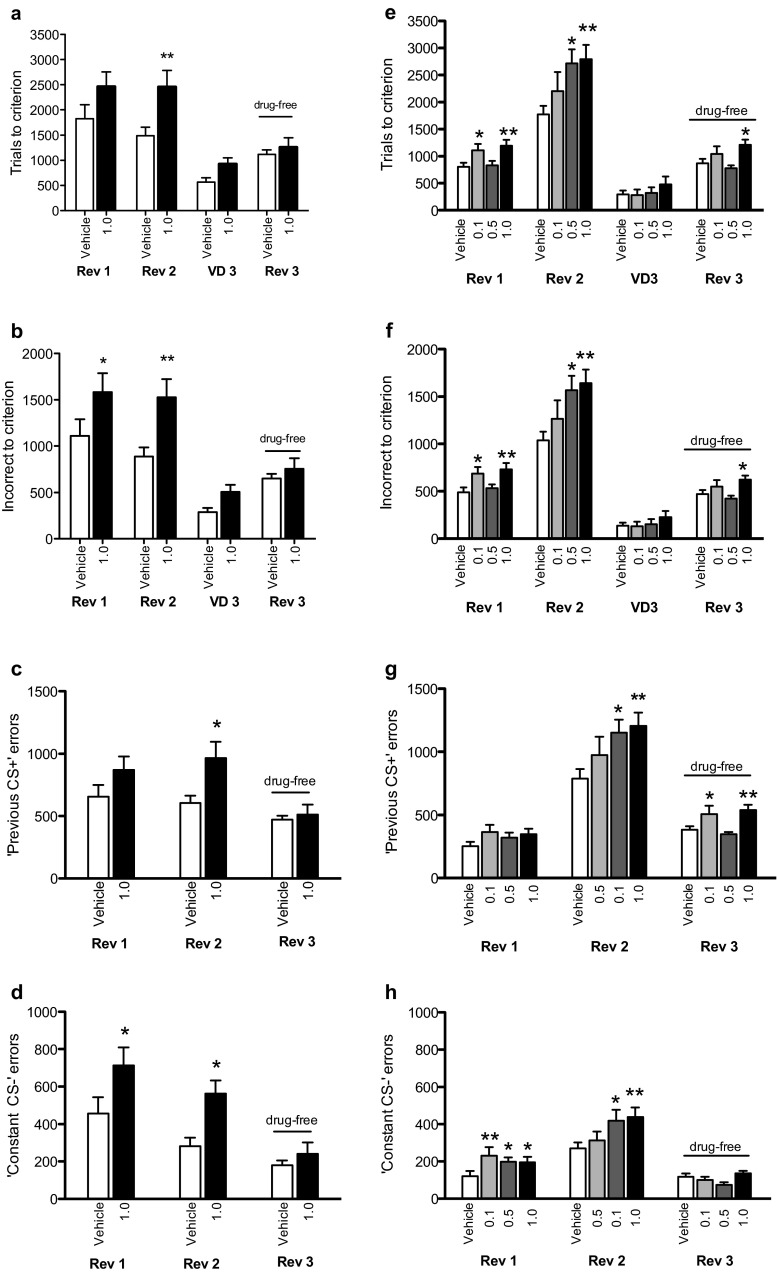
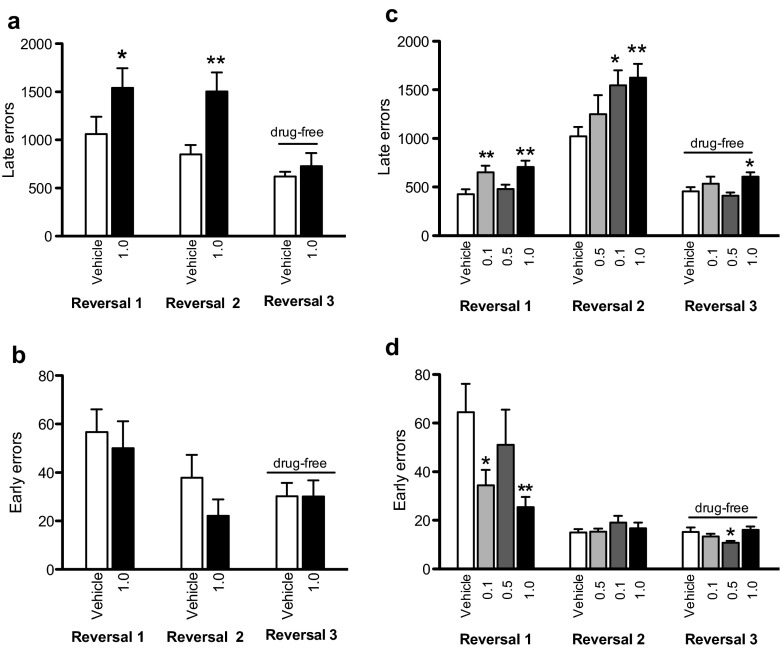
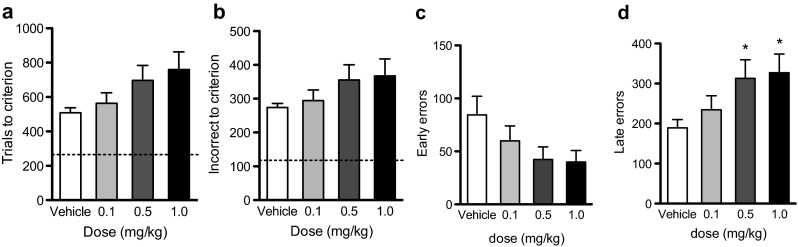
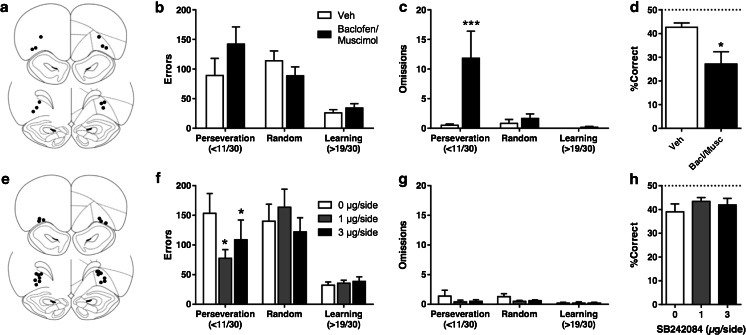
RATIONALE: Reversal learning requires associative learning and executive functioning to suppress non-adaptive responding. Reversal-learning deficits are observed in e.g. schizophrenia and obsessive-compulsive disorder and implicate neural circuitry including the orbitofrontal cortex (OFC). Serotonergic function has been strongly linked to visual reversal learning in humans and experimental animals but less is known about which receptor subtypes are involved. OBJECTIVES: The objectives of the study were to test the effects of systemic and intra-OFC 5-HT2C-receptor antagonism on visual reversal learning in rats and assess the psychological mechanisms underlying these effects within novel touchscreen paradigms. METHODS: In experiments 1-2, we used a novel 3-stimulus task to investigate the effects of 5-HT2C-receptor antagonism through SB 242084 (0.1, 0.5 and 1.0 mg/kg i.p.) cross-site. Experiment 3 assessed the effects of SB 242084 in 2-choice reversal learning. In experiment 4, we validated a novel touchscreen serial visual reversal task suitable for neuropharmacological microinfusions by baclofen-/muscimol-induced OFC inactivation. In experiment 5, we tested the effect of intra-OFC SB 242084 (1.0 or 3.0 μg/side) on performance in this task. RESULTS: In experiments 1-3, SB 242084 reduced early errors but increased late errors to criterion. In experiment 5, intra-OFC SB 242084 reduced early errors without increasing late errors in a reversal paradigm validated as OFC dependent (experiment 4). CONCLUSION: Intra-OFC 5-HT2C-receptor antagonism decreases perseveration in novel touchscreen reversal-learning paradigms for the rat. Systemic 5-HT2C-receptor antagonism additionally impairs late learning-a robust effect observed cross-site and potentially linked to impulsivity. These conclusions are discussed in terms of neural mechanisms underlying reversal learning and their relevance to psychiatric disorders.
Overview
The claims and statistics of this paper haven’t been checked yet.
Free: it reads the open-access text and checks the first 5 claims that cite a source we can check. Create a free account to check every claim.
Integrity signals
Registry
Cites
Statistics
Figures
Verification
Claims the paper makes
The claims and statistics of this paper haven’t been checked yet.
Free: it reads the open-access text and checks the first 5 claims that cite a source we can check. Create a free account to check every claim.
Claims other papers make about this one
Each is checked against this paper’s own text: does it say what the citing paper says it does?
In the citing paper
“the 5-HT2C receptor antagonist SB 242084 improved reversal learning in naïve rats (Alsio et al 2015, Boulougouris et al 2008, Boulougouris & Robbins 2010)”
From Prefrontal cortex executive processes affected by stress in health and disease (2018) · cites this paper as Alsio et al 2015
Self-check
Percentages, sums and reported differences re-computed from the paper’s own numbers.
The self-check needs the paper’s full text.
Citations
Cites
The Rat Brain in Stereotaxic Coordinates
(1982) · Elsevier eBooks · doi:10.1016/c2009-0-63235-9 · Cited by 51,963 · cited 1×
“Coronal sections (60 μm) were stained with cresyl violet and used to verify injector-tip placement inside the lateral OFC according to a standard rat brain atlas (Paxinos and Watson 1998).”
AChE-stained horizontal sections of the rat brain in stereotaxic coordinates
Paxinos, G., Watson, C. R. R., & Emson, P. C. (1980) · Journal of Neuroscience Methods · doi:10.1016/0165-0270(80)90021-7 · Cited by 4,497
Abstract reward and punishment representations in the human orbitofrontal cortex
O'Doherty, J., Kringelbach, M. L., Rolls, E. T., Hornak, J., & Andrews, C. (2001) · Nature Neuroscience · doi:10.1038/82959 · Cited by 2,003 · cited 1×
“Increased OFC activity has previously been linked with improved reversal learning (O'Doherty et al. 2001), and thus, the observed improved reversal performance may result from SB 242084 potentiating such activity in this area.”
BackgroundGenetics of Mouse Behavior: Interactions with Laboratory Environment
Crabbe, J. C., Wahlsten, D., & Dudek, B. C. (1999) · Science · doi:10.1126/science.284.5420.1670 · Cited by 1,666 · cited 2×
“There is an urgent need for replication of behavioural findings following either genetic (Crabbe and Wahlsten 1999) or pharmacological (Insel et al.”
BackgroundDissociation in prefrontal cortex of affective and attentional shifts
Dias, R., Robbins, T. W., & Roberts, A. C. (1996) · Nature · doi:10.1038/380069a0 · Cited by 1,527
Self-citationRobbins, T. W., James, M., Owen, A. M., Sahakian, B. J., McInnes, L., & Rabbitt, P. (1994) · Dementia and Geriatric Cognitive Disorders · doi:10.1159/000106735 · Cited by 1,078 · cited 1×
“We have addressed this objective by introducing rodents (Bussey et al. 2012), which via the intermediaries of computer-controlled touchscreen tasks have translational relevance to human tests such as the CANTAB battery (Robbins et al. 1994; Robbins et al. 1998).”
BackgroundSelf-citationCognitive Inflexibility After Prefrontal Serotonin Depletion
Clarke, H. F., Dalley, J. W., Crofts, H. S., Robbins, T. W., & Roberts, A. C. (2004) · Science · doi:10.1126/science.1094987 · Cited by 632 · cited 2×
“OFCselective 5-HT depletion retards serial visual reversal learning in the marmoset (Clarke et al. 2004; Clarke et al. 2005; Clarke et al. 2007) while OFC 5-HT markers have been found to correlate with reversal performance in the rat (Masaki et al.”
BackgroundSelf-citationOrbital prefrontal cortex mediates reversal learning and not attentional set shifting in the rat
McAlonan, K., & Brown, V. J. (2003) · Behavioural Brain Research · doi:10.1016/j.bbr.2003.09.019 · Cited by 618 · cited 1×
“…also repeatedly been found to impair simple or serial reversal learning in rodents (Bussey et al. 1997; Schoenbaum et al. 2002; Chudasama and Robbins 2003; McAlonan and Brown 2003; Kim and Ragozzino 2005; Ghods-Sharifi et al. 2008; Bissonette et al. 2008; Burke et al. 2009; Graybeal et al. 2011).”
BackgroundROBBINS, T. W., JAMES, M., OWEN, A. M., SAHAKIAN, B. J., LAWRENCE, A. D., MCINNES, L., & RABBITT, P. M. A. (1998) · Journal of the International Neuropsychological Society · doi:10.1017/s1355617798455073 · Cited by 611 · cited 1×
“We have addressed this objective by introducing rodents (Bussey et al. 2012), which via the intermediaries of computer-controlled touchscreen tasks have translational relevance to human tests such as the CANTAB battery (Robbins et al. 1994; Robbins et al. 1998).”
BackgroundSelf-citationWeinberger, D. R. (1988) · Archives of General Psychiatry · doi:10.1001/archpsyc.1988.01800310013001 · Cited by 603 · cited 1×
“…patients have been shown to correlate with cortical atrophy (Van Kammen et al. 1985), severity of cognitive impairment (Powchik et al. 1998), hypofrontality during tests of cognitive flexibility (Weinberger et al. 1988) and poor long-term clinical outcome (Wieselgren and Lindström 1998).”
Background
Cited by
The neural basis of reversal learning: An updated perspective
Izquierdo, A., Brigman, J. L., Radke, A. K., Rudebeck, P. H., & Holmes, A. (2017) · Neuroscience · doi:10.1016/j.neuroscience.2016.03.021 · Cited by 670
“…reversal performance, while 5-HT2C antagonism (with SB 242084) facilitates performance (Boulougouris et al., 2008; Boulougouris and Robbins, 2010; Nilsson et al., 2012; Furr et al., 2012b), though there is also a report of an overall impairment after this same treatment (Alsio et al., 2015).”
BackgroundSerotonin in Animal Cognition and Behavior
Bacqué-Cazenave, J., Bharatiya, R., Barrière, G., Delbecque, J.-P., Bouguiyoud, N., Di Giovanni, G., Cattaert, D., & De Deurwaerdère, P. (2020) · International Journal of Molecular Sciences · doi:10.3390/ijms21051649 · Cited by 340
Prefrontal cortex executive processes affected by stress in health and disease
Girotti, M., Adler, S. M., Bulin, S. E., Fucich, E. A., Paredes, D., & Morilak, D. A. (2018) · Progress in Neuro-Psychopharmacology and Biological Psychiatry · doi:10.1016/j.pnpbp.2017.07.004 · Cited by 176
“Administration of stimulants to unmedicated schizophrenic patients can enhance positive symptoms (Angrist et al 1980, van Kammen et al 1982), which is likely due to subcortical D2 receptor activation.”
BackgroundThe neural underpinnings of cognitive flexibility and their disruption in psychotic illness
Waltz, J. A. (2017) · Neuroscience · doi:10.1016/j.neuroscience.2016.06.005 · Cited by 122
“Importantly, Alsiö et al. (2015) have shown that the 5-HT2C antagonist, SB 242084, improved early performance on a 3-stimulus reversal task, ostensibly through reducing the tendency to perseverate, but failed to improved overall performance, due to a detrimental effect on new learning later in…”
BackgroundHervig, M. E., Fiddian, L., Piilgaard, L., Božič, T., Blanco-Pozo, M., Knudsen, C., Olesen, S. F., Alsiö, J., & Robbins, T. W. (2020) · Cerebral Cortex · doi:10.1093/cercor/bhz144 · Cited by 65
“0 mM as in (Zeeb et al. 2010; Alsiö et al. 2015) for infusions in prefrontal cortex (PFC) subregions.”
BackgroundMethodResultSelf-citationRoberts, C., Sahakian, B. J., & Robbins, T. W. (2020) · Neuroscience & Biobehavioral Reviews · doi:10.1016/j.neubiorev.2020.09.001 · Cited by 66
Self-citationThe NEWMEDS rodent touchscreen test battery for cognition relevant to schizophrenia
Hvoslef‐Eide, M., Mar, A. C., Nilsson, S. R. O., Alsiö, J., Heath, C. J., Saksida, L. M., Robbins, T. W., & Bussey, T. J. (2015) · Psychopharmacology · doi:10.1007/s00213-015-4007-x · Cited by 65
“To exploit this, the serial visual reversal task requires each rat to complete a number of reversals, allowing for measures of stable performance across serial reversals (Alsiö et al. 2015).”
Self-citation5HT2A receptor blockade in dorsomedial striatum reduces repetitive behaviors in BTBR mice
Amodeo, D. A., Rivera, E., Cook, E. H., Sweeney, J. A., & Ragozzino, M. E. (2016) · Genes Brain & Behavior · doi:10.1111/gbb.12343 · Cited by 60
“The results following 5HT2A receptor blockade in the orbitofrontal cortex on reversal learning contrasts those observed with a 5HT2C receptor antagonist when infused into the orbitofrontal cortex or injected systemically (Alsiö et al. 2015).”
MethodSala‐Bayo, J., Fiddian, L., Nilsson, S. R. O., Hervig, M. E.-S., McKenzie, C., Mareschi, A., Boulos, M., Zhukovsky, P., Nicholson, J. R., Dalley, J. W., et al. (2020) · Neuropsychopharmacology · doi:10.1038/s41386-020-0612-4 · Cited by 56
“Touching the square ‘startbox’ triggered the simultaneous presentation of two stimuli (vertical and horizontal bars), determined pseudo-randomly on either left or right side of the screen [30].”
BackgroundMethodInfluentialSelf-citation5-HT2C Agonists Modulate Schizophrenia-Like Behaviors in Mice
Pogorelov, V. M., Rodriguiz, R. M., Cheng, J., Huang, M., Schmerberg, C. M., Meltzer, H. Y., Roth, B. L., Kozikowski, A. P., & Wetsel, W. C. (2017) · Neuropsychopharmacology · doi:10.1038/npp.2017.52 · Cited by 55
Voon, V., & Dalley, J. W. (2015) · Current topics in behavioral neurosciences · doi:10.1007/7854_2015_5013 · Cited by 54
“Moreover, intra-OFC 5-HT2C antagonism has been shown to improve both spatial and visual reversal learning in rats (Boulougouris and Robbins 2010; Alsio et al. 2015).”
BackgroundCognitive Translation Using the Rodent Touchscreen Testing Approach
Hvoslef‐Eide, M., Nilsson, S. R. O., Saksida, L. M., & Bussey, T. J. (2015) · Current topics in behavioral neurosciences · doi:10.1007/7854_2015_5007 · Cited by 47
Self-citationOpinion on monoaminergic contributions to traits and temperament
Robbins, T. W. (2018) · Philosophical Transactions of the Royal Society B Biological Sciences · doi:10.1098/rstb.2017.0153 · Cited by 38
Self-citationCognitive impairment and gene expression alterations in a rodent model of binge eating disorder
Chawla, A., Cordner, Z. A., Boersma, G. J., & Moran, T. H. (2017) · Physiology & Behavior · doi:10.1016/j.physbeh.2017.08.004 · Cited by 43
Impact of specific serotonin receptor modulation on behavioral flexibility
Alvarez, B. D., Morales, C. A., & Amodeo, D. A. (2021) · Pharmacology Biochemistry and Behavior · doi:10.1016/j.pbb.2021.173243 · Cited by 39
Phillips, B. U., Dewan, S., Nilsson, S. R. O., Robbins, T. W., Heath, C. J., Saksida, L. M., Bussey, T. J., & Alsiö, J. (2018) · Psychopharmacology · doi:10.1007/s00213-018-4907-7 · Cited by 36
Self-citationRajagopal, L., Massey, B. W., Michael, E., & Meltzer, H. Y. (2015) · Psychopharmacology · doi:10.1007/s00213-015-4137-1 · Cited by 30
Alsiö, J., Phillips, B. U., Sala‐Bayo, J., Nilsson, S. R. O., Calafat, T., Rizwand, A., Plumbridge, J. M., López‐Cruz, L., Dalley, J. W., Cardinal, R. N., et al. (2019) · Psychopharmacology · doi:10.1007/s00213-019-05296-y · Cited by 36
“Note that SCH39166 was chosen for D1R antagonism to avoid off-target effects at the serotonin 5-HT2C receptor, since activity at this receptor affects visual reversal learning (Alsiö et al. 2015).”
BackgroundMethodInfluentialSelf-citationTricklebank, M. D., Robbins, T. W., Simmons, C., & Wong, E. H. F. (2021) · Psychopharmacology · doi:10.1007/s00213-021-05787-x · Cited by 35
Self-citationAlsiö, J., Lehmann, O., McKenzie, C., Theobald, D. E. H., Searle, L. R., Xia, J., Dalley, J. W., & Robbins, T. W. (2020) · Cerebral Cortex · doi:10.1093/cercor/bhaa277 · Cited by 31
“For instance, intraOFC, but not intra-mPFC, 5-HT2C receptor antagonism improves spatial reversal learning in rats (Boulougouris and Robbins 2010) and local lateral OFC 5-HT2C receptor antagonism also improves performance on a touchscreen visual reversal-learning task (Alsiö et al. 2015).”
BackgroundInfluentialSelf-citationKreiss, D. S., & Deurwaerdère, P. D. (2017) · Journal of Neuroscience Methods · doi:10.1016/j.jneumeth.2017.05.007 · Cited by 27
Chagraoui, A., Whitestone, S., Baassiri, L., Manem, J., Giovanni, G. D., & Deurwaerdère, P. D. (2019) · Neurochemistry International · doi:10.1016/j.neuint.2019.01.019 · Cited by 30
Mora, S., Merchán, A., Vilchez, O., Aznar, S., Klein, A. B., Ultved, L., Campa, L., Sunol, C. E., Flores, P., & Moreno, M. (2018) · Neuropharmacology · doi:10.1016/j.neuropharm.2018.09.004 · Cited by 31
“5 μl/site) did not induce any significant effects on SIP; and also on previous studies (Alsiö et al., 2015; Boulougouris and Robbins, 2010; Wischhof et al., 2011).”
Dexter, T. D., Roberts, B. Z., Ayoub, S. M., Noback, M. N., Barnes, S. A., & Young, J. W. (2024) · Journal of Neurochemistry · doi:10.1111/jnc.16243 · Cited by 22
“Reversal learning was facilitated by intra-OFC infusions of a 5-HT 2C - receptor antagonist (Alsio et al., 2015; Boulougouris & Robbins, 2010).”
Behavioral effects of chronic WIN 55,212-2 administration during adolescence and adulthood in mice.
Johnson, K. R., Boomhower, S. R., & Newland, M. C. (2019) · Experimental and Clinical Psychopharmacology · doi:10.1037/pha0000271 · Cited by 20
Serotonin 2C receptor antagonist improves fear discrimination and subsequent safety signal recall
Foilb, A. R., & Christianson, J. P. (2015) · Progress in Neuro-Psychopharmacology and Biological Psychiatry · doi:10.1016/j.pnpbp.2015.08.017 · Cited by 21
Nebuka, M., Ohmura, Y., Izawa, S., Bouchekioua, Y., Nishitani, N., Yoshida, T., & Yoshioka, M. (2020) · Behavioural Brain Research · doi:10.1016/j.bbr.2019.112394 · Cited by 18
The Neurobiology of Impulsive Decision-Making and Reinforcement Learning in Nonhuman Animals
Groman, S. M. (2020) · Current topics in behavioral neurosciences · doi:10.1007/7854_2020_127 · Cited by 17
Whitestone, S., Deurwaerdère, P. D., Baassiri, L., Manem, J., Anouar, Y., Giovanni, G. D., Bharatiya, R., & Chagraoui, A. (2019) · International Journal of Molecular Sciences · doi:10.3390/ijms20122925 · Cited by 18
Giovanni, G. D., Bharatiya, R., Puginier, E., Ramos, M., Deurwaerdère, S. D., Chagraoui, A., & Deurwaerdère, P. D. (2020) · Frontiers in Pharmacology · doi:10.3389/fphar.2020.00962 · Cited by 16
Hathaway, B. A., Schumacher, J. D., Hrelja, K. M., & Winstanley, C. A. (2021) · eNeuro · doi:10.1523/eneuro.0341-21.2021 · Cited by 20
“Serotonergic activity within the OFC, and the 2C receptor, have been implicated in cognitive flexibility by multiple previous studies (Boulougouris and Robbins, 2010; Alsiö et al., 2015, 2021; Barlow et al., 2015).”
Clueless about cues: the impact of reward-paired cues on decision making under uncertainty
Winstanley, C. A., & Hynes, T. J. (2021) · Current Opinion in Behavioral Sciences · doi:10.1016/j.cobeha.2021.07.001 · Cited by 16
Robinson, S., Winer, J. L., Kitase, Y., Brigman, J. L., & Jantzie, L. L. (2021) · Journal of Neuroscience Research · doi:10.1002/jnr.24815 · Cited by 11
Translational tests involving non-reward: methodological considerations
Phillips, B. U., López‐Cruz, L., Saksida, L. M., & Bussey, T. J. (2018) · Psychopharmacology · doi:10.1007/s00213-018-5062-x · Cited by 12
Hervig, M. E.-S., Piilgaard, L., Božič, T., Alsiö, J., & Robbins, T. W. (2020) · Psychology & Neuroscience · doi:10.1037/pne0000221 · Cited by 11
“Since blocking the 5-HT2CR has opposite effects on reversal learning (Alsiö et al., 2015), this could in theory mask/counteract potential M100907 effects.”
BackgroundMethodResultInfluentialSelf-citationIhalainen, J. A., Savolainen, K., Tanila, H., & Forsberg, M. (2016) · Behavioural Brain Research · doi:10.1016/j.bbr.2016.02.032 · Cited by 11
Sequential reversal learning: a new touchscreen schedule for assessing cognitive flexibility in mice
Odland, A. U., Sandahl, R., & Andreasen, J. T. (2020) · Psychopharmacology · doi:10.1007/s00213-020-05687-6 · Cited by 12
Ayabe, T., Ohya, R., & Ano, Y. (2019) · Frontiers in Behavioral Neuroscience · doi:10.3389/fnbeh.2019.00067 · Cited by 11
“The touch panel operant systems have been used to evaluate the VD and reversal learning impairment in rodent schizophrenia models as well as to investigate the molecular mechanisms underlying the onset of this disease (Alsio et al., 2015; Gould et al., 2015; Zeleznikow-Johnston et al., 2018).”
MethodChow, P. K. Y., Leaver, L. A., Wang, M., & Lea, S. E. G. (2017) · Animal Cognition · doi:10.1007/s10071-017-1072-z · Cited by 15
“Keywords Reversal learning Inhibition Attention Squirrels Flexibility”
MethodRusu, S. I., Bos, J. J., Marchesi, P., Lankelma, J. V., Pica, I. F., Gentet, L. J., Joëls, M., & Pennartz, C. M. A. (2024) · iScience · doi:10.1016/j.isci.2024.109205 · Cited by 7
Muthukumar, S., Mehrotra, K., Fouda, M., Hamimi, S. A., Jantzie, L. L., & Robinson, S. (2022) · Experimental Neurology · doi:10.1016/j.expneurol.2022.114104 · Cited by 8
Hervig, M. E.-S., Zühlsdorff, K., Olesen, S. F., Phillips, B. U., Božič, T., Dalley, J. W., Cardinal, R. N., Alsiö, J., & Robbins, T. W. (2024) · Psychopharmacology · doi:10.1007/s00213-024-06586-w · Cited by 7
“…agent can improve serial reversal performance in the initial perseverative phases due to reduced perseveration but that there is an overall decre - mental effect on performance, possibly due to impaired (re-) learning of associations after perseveration has been over - come (Alsiö et al. 2015 ).”
BackgroundSelf-citationPrados-Pardo, Á., Martín-González, E., Mora, S., Martín, C., Olmedo-Córdoba, M., Pérez-Fernández, C., Sánchez-Santed, F., & Moreno, M. (2023) · Molecular Neurobiology · doi:10.1007/s12035-023-03506-5 · Cited by 7
“Preclinical studies with rats have found that the administration of the 5-HT2C receptor antagonist SB242084 improved learning performance [51, 63].”
BackgroundSerotonin and cognitive flexibility
Nilsson, S. R. O., Phillips, B. U., Axelsson, S. F. A., & Alsiö, J. (2019) · Elsevier eBooks · doi:10.1016/b978-0-12-813323-1.00008-6 · Cited by 7
Self-citationPhillips, B. U., & Robbins, T. W. (2020) · Handbook of behavioral neuroscience · doi:10.1016/b978-0-444-64125-0.00031-1 · Cited by 6
Self-citationAbsence of sex differences in serotonergic control of orbitofrontal cortex neuronal activity
Mooney, K., Hoffman, A. F., & Lupica, C. R. (2025) · Scientific Reports · doi:10.1038/s41598-025-11208-2 · Cited by 4
“Several studies suggest that both 5HT 2A and 5-HT 2C receptors can regulate OFC-dependent behavior 13,60,61 , and cortical PV interneurons have been shown to express both subtypes of the 5-HT 2 receptor 59,62,63 .”
Kosted, R., Doss, M. K., Donegan, J. J., Cisler, J. M., & Fonzo, G. A. (2026) · Neuroscience & Biobehavioral Reviews · doi:10.1016/j.neubiorev.2026.106788 · Cited by 3
Feeding behaviour, risk-sensitivity and response control: effects of 5-HT 2C receptor manipulations
Humby, T., PATEL, Y. S., Carter, J., Stokes, L.-J. G., Rogers, R. D., & Wilkinson, L. S. (2018) · Philosophical Transactions of the Royal Society B Biological Sciences · doi:10.1098/rstb.2018.0144 · Cited by 3
Gregersen, A. T., Whelan, T. P., Golden, C. T., Blackmore, T., & Palner, M. (2026) · Psychedelic Medicine · doi:10.1177/28314425251386879 · Cited by 3
Assessing cognitive flexibility in mice using a custom-built touchscreen chamber
Pais, R. C., Goldani, A., Hutchison, J., Mazrouei, A., Khavaninzadeh, M., Molina, L. A., Sutherland, R. J., & Mohajerani, M. H. (2025) · Frontiers in Behavioral Neuroscience · doi:10.3389/fnbeh.2025.1536458 · Cited by 4
Touchscreen Assessment of Motivation and Reinforcement-Related Choice Behaviour in Mice
Phillips, B. U. (2018) · Apollo (University of Cambridge) · doi:10.17863/cam.24393 · Cited by 1
Faculty Opinions recommendation of The neural basis of reversal learning: An updated perspective.
Hayden, B. Y. (2019) · Faculty Opinions – Post-Publication Peer Review of the Biomedical Literature · doi:10.3410/f.726221441.793565477
Highgate, Q. (2022) · Open Access Victoria University of Wellington | Te Herenga Waka (Figshare) · doi:10.26686/wgtn.21607191
Metadata
- Authors
- Alsiö, J., Nilsson, S. R. O., Gastambide, F., Wang, R. A. H., Dam, S. A., Mar, A. C., Tricklebank, M., & Robbins, T. W.
- Affiliations
- Uppsala University (SE)
- University of Cambridge (GB)
- Eli Lilly (United Kingdom) (GB)
- Corresponding author
- Alsiö, J.
- Venue
- Psychopharmacology
- Published
- 2015-05-26
- Volume
- 232
- Issue
- 21-22
- Pages
- 4017-4031
- ISSN
- 0033-3158 (ISSN-L)
- 1432-2072
- PMC
- PMC4600472
- OpenAlex
- W1847422610
- Cited by
- 53
- References
- 80
- Citations by year
- 2026: 2 · 2025: 2 · 2024: 3 · 2023: 1 · 2022: 2 · 2021: 5 · 2020: 9 · 2019: 9 · 2018: 5 · 2017: 6 · 2016: 4 · 2015: 5
- FWCI
- 3.11
- Type
- journal article
- Language
- en
- Open access
- hybrid
- doi.org
- Locations
- Psychopharmacology (publishedVersion, cc-by)
- PubMed Central (publishedVersion, cc-by)
- PubMed (publishedVersion)
- Bristol Research (University of Bristol) (submittedVersion)
- Apollo (University of Cambridge) (submittedVersion, cc-by)
- Funders
- Eli Lilly and Company
- Wellcome Trust (FP7/2007–2013, 089589/Z/09/Z, 104631/Z/14/Z, 089589, 104631, 093875)
- European Federation of Pharmaceutical Industries and Associations (FP7/20072013)
- European Commission (2007–2013, FP7 2007-2013, FP7/2007, 115008)
- Vetenskapsrådet (FP7/2007-2013)
- Medical Research Council (FP7/20072013, MR/J012084/1)
- Biotechnology and Biological Sciences Research Council (BB/F529054/1)
- Topics
- Life Sciences › Neuroscience › Cellular and Molecular Neuroscience › Neurotransmitter Receptor Influence on Behavior
- Life Sciences › Neuroscience › Cognitive Neuroscience › Neural and Behavioral Psychology Studies
- Health Sciences › Medicine › Psychiatry and Mental health › Schizophrenia research and treatment
- Keywords
- 5-HT2C receptor, serotonin, orbitofrontal cortex, SB242084, perseveration, impulsivity, executive function, touchscreen task, microinfusion, schizophrenia, obsessive-compulsive disorder
- MeSH terms
- Aminopyridines, Animals, Association Learning, Baclofen, Choice Behavior, Indoles, Male, Muscimol, Reversal Learning, Prefrontal Cortex, Receptor, Serotonin, 5-HT2C, Rats, Serotonin 5-HT2 Receptor Antagonists
About these checks
Registry, retraction, Cites and statistics results are computed, not judged, with one exception: a printed reference that no index lists is read once by a model before it counts as a citation error. Claims are extracted by a model and kept only when their quote appears verbatim in the text; each cited source is then checked, with a model’s help, for whether it says what the claim relies on. Those verdicts can be wrong — read the claim’s quote and the cited source before relying on one.
Statistics and arithmetic are recomputed, not judged.
Confidence bands are shown only for fields calibrated on our annotated test set. None is calibrated yet, so no band is shown.
What counts as a claim ›How we measure confidence ›How we check this ›
Are you an author, or do you see a problem with this page? Request a review
Data sources
Bibliographic data: Semantic Scholar, OpenAlex, Crossref.
Contains information from the Semantic Scholar Academic Graph Datasets, made available under the ODC Attribution License (ODC-BY 1.0).
Semantic Scholar’s data is described in: Kinney, R., et al. (2023). The Semantic Scholar Open Data Platform. arXiv:2301.10140.
