

The role of 5-HT2C receptors in touchscreen visual reversal learning in the rat: a cross-site study
Open accessThe DOI matches its Crossref record; 80 of the 80 references it cites were found in a registry or an index.
Abstract
RATIONALE: Reversal learning requires associative learning and executive functioning to suppress non-adaptive responding. Reversal-learning deficits are observed in e.g. schizophrenia and obsessive-compulsive disorder and implicate neural circuitry including the orbitofrontal cortex (OFC). Serotonergic function has been strongly linked to visual reversal learning in humans and experimental animals but less is known about which receptor subtypes are involved. OBJECTIVES: The objectives of the study were to test the effects of systemic and intra-OFC 5-HT2C-receptor antagonism on visual reversal learning in rats and assess the psychological mechanisms underlying these effects within novel touchscreen paradigms. METHODS: In experiments 1-2, we used a novel 3-stimulus task to investigate the effects of 5-HT2C-receptor antagonism through SB 242084 (0.1, 0.5 and 1.0 mg/kg i.p.) cross-site. Experiment 3 assessed the effects of SB 242084 in 2-choice reversal learning. In experiment 4, we validated a novel touchscreen serial visual reversal task suitable for neuropharmacological microinfusions by baclofen-/muscimol-induced OFC inactivation. In experiment 5, we tested the effect of intra-OFC SB 242084 (1.0 or 3.0 μg/side) on performance in this task. RESULTS: In experiments 1-3, SB 242084 reduced early errors but increased late errors to criterion. In experiment 5, intra-OFC SB 242084 reduced early errors without increasing late errors in a reversal paradigm validated as OFC dependent (experiment 4). CONCLUSION: Intra-OFC 5-HT2C-receptor antagonism decreases perseveration in novel touchscreen reversal-learning paradigms for the rat. Systemic 5-HT2C-receptor antagonism additionally impairs late learning-a robust effect observed cross-site and potentially linked to impulsivity. These conclusions are discussed in terms of neural mechanisms underlying reversal learning and their relevance to psychiatric disorders.
Overview
The claims and statistics of this paper haven’t been checked yet.
Free: it reads the open-access text and checks the first 5 claims that cite a source we can check. Create a free account to check every claim.
Integrity signals
Registry
Cites
Statistics
Figures
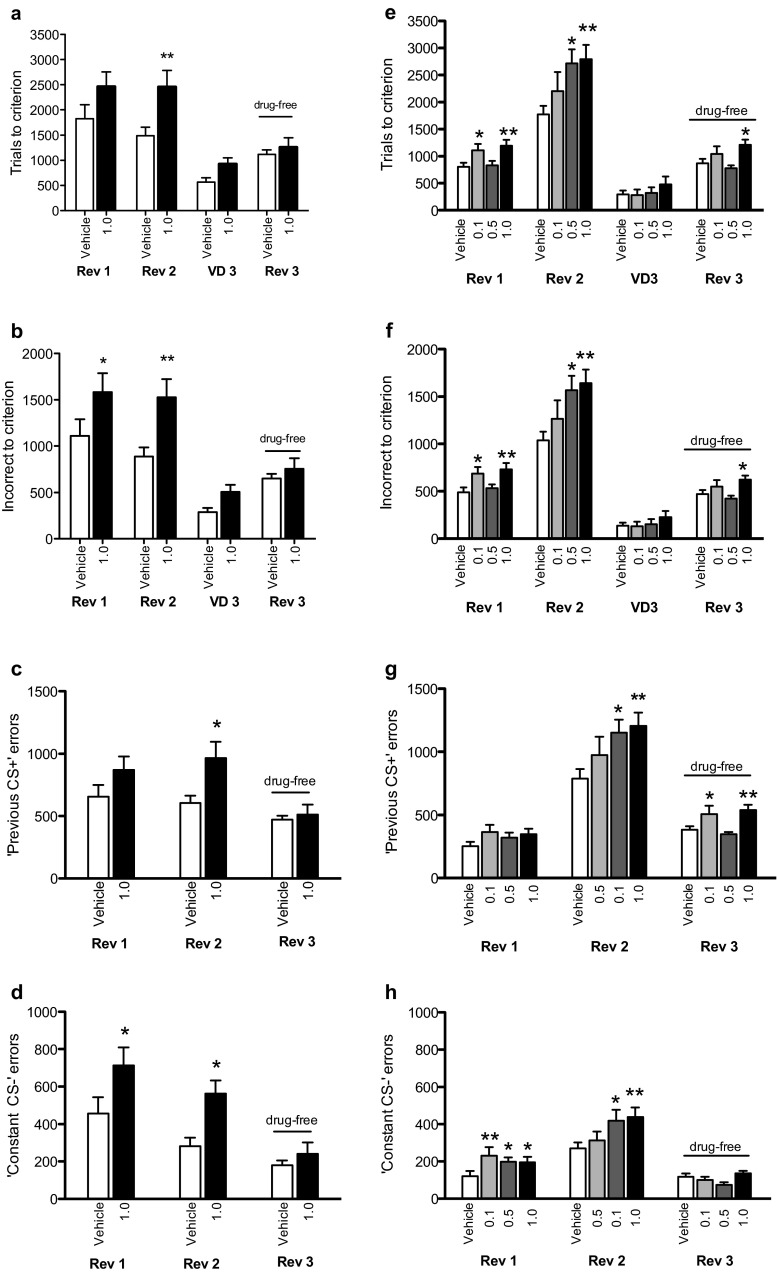
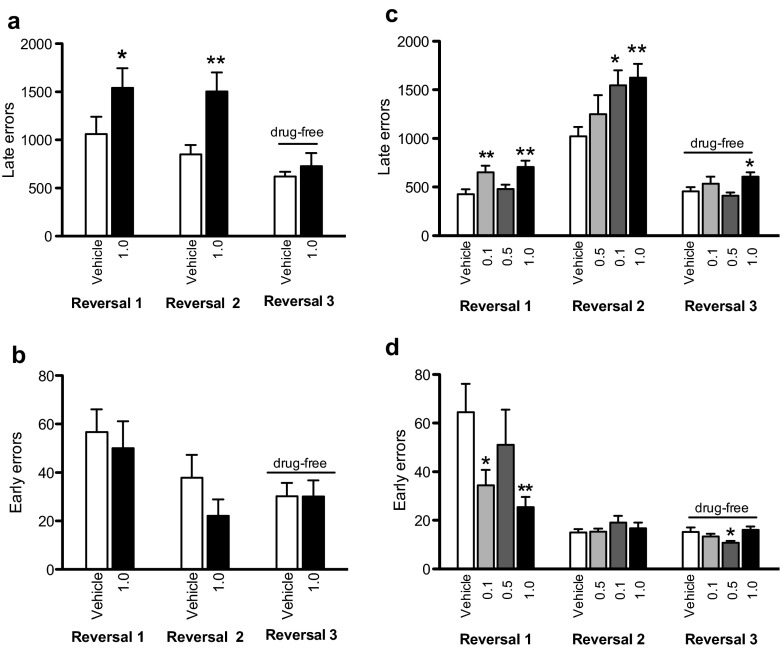
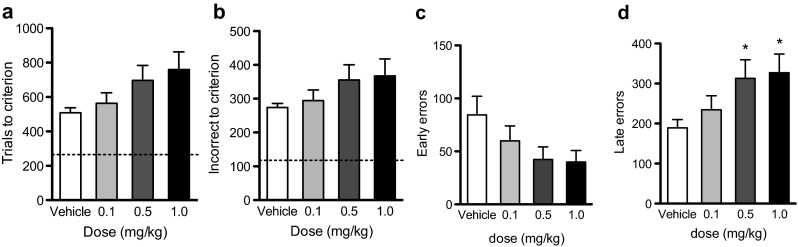
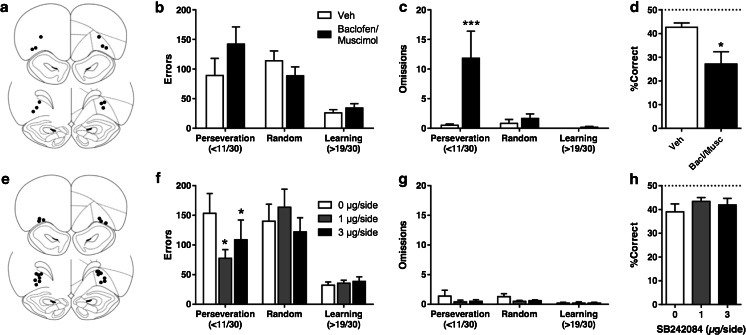
Verification
Claims the paper makes
The claims and statistics of this paper haven’t been checked yet.
Free: it reads the open-access text and checks the first 5 claims that cite a source we can check. Create a free account to check every claim.
Claims other papers make about this one
Each is checked against this paper’s own text: does it say what the citing paper says it does?
In the citing paper
“the 5-HT2C receptor antagonist SB 242084 improved reversal learning in naïve rats (Alsio et al 2015, Boulougouris et al 2008, Boulougouris & Robbins 2010)”
From Prefrontal cortex executive processes affected by stress in health and disease (2018) · cites this paper as Alsio et al 2015
Self-check
Percentages, sums and reported differences re-computed from the paper’s own numbers.
The self-check needs the paper’s full text.
Citations
Cites
The Rat Brain in Stereotaxic Coordinates
(1982) · Elsevier eBooks · doi:10.1016/c2009-0-63235-9 · Cited by 51,963 · cited 1×
“Coronal sections (60 μm) were stained with cresyl violet and used to verify injector-tip placement inside the lateral OFC according to a standard rat brain atlas (Paxinos and Watson 1998).”
AChE-stained horizontal sections of the rat brain in stereotaxic coordinates
Paxinos, G., Watson, C. R. R., & Emson, P. C. (1980) · Journal of Neuroscience Methods · doi:10.1016/0165-0270(80)90021-7 · Cited by 4,497
Abstract reward and punishment representations in the human orbitofrontal cortex
O'Doherty, J., Kringelbach, M. L., Rolls, E. T., Hornak, J., & Andrews, C. (2001) · Nature Neuroscience · doi:10.1038/82959 · Cited by 2,003 · cited 1×
“Increased OFC activity has previously been linked with improved reversal learning (O'Doherty et al. 2001), and thus, the observed improved reversal performance may result from SB 242084 potentiating such activity in this area.”
BackgroundGenetics of Mouse Behavior: Interactions with Laboratory Environment
Crabbe, J. C., Wahlsten, D., & Dudek, B. C. (1999) · Science · doi:10.1126/science.284.5420.1670 · Cited by 1,666 · cited 2×
“There is an urgent need for replication of behavioural findings following either genetic (Crabbe and Wahlsten 1999) or pharmacological (Insel et al.”
BackgroundDissociation in prefrontal cortex of affective and attentional shifts
Dias, R., Robbins, T. W., & Roberts, A. C. (1996) · Nature · doi:10.1038/380069a0 · Cited by 1,527
Self-citationRobbins, T. W., James, M., Owen, A. M., Sahakian, B. J., McInnes, L., & Rabbitt, P. (1994) · Dementia and Geriatric Cognitive Disorders · doi:10.1159/000106735 · Cited by 1,078 · cited 1×
“We have addressed this objective by introducing rodents (Bussey et al. 2012), which via the intermediaries of computer-controlled touchscreen tasks have translational relevance to human tests such as the CANTAB battery (Robbins et al. 1994; Robbins et al. 1998).”
BackgroundSelf-citationCognitive Inflexibility After Prefrontal Serotonin Depletion
Clarke, H. F., Dalley, J. W., Crofts, H. S., Robbins, T. W., & Roberts, A. C. (2004) · Science · doi:10.1126/science.1094987 · Cited by 632 · cited 2×
“OFCselective 5-HT depletion retards serial visual reversal learning in the marmoset (Clarke et al. 2004; Clarke et al. 2005; Clarke et al. 2007) while OFC 5-HT markers have been found to correlate with reversal performance in the rat (Masaki et al.”
BackgroundSelf-citationOrbital prefrontal cortex mediates reversal learning and not attentional set shifting in the rat
McAlonan, K., & Brown, V. J. (2003) · Behavioural Brain Research · doi:10.1016/j.bbr.2003.09.019 · Cited by 618 · cited 1×
“…also repeatedly been found to impair simple or serial reversal learning in rodents (Bussey et al. 1997; Schoenbaum et al. 2002; Chudasama and Robbins 2003; McAlonan and Brown 2003; Kim and Ragozzino 2005; Ghods-Sharifi et al. 2008; Bissonette et al. 2008; Burke et al. 2009; Graybeal et al. 2011).”
BackgroundROBBINS, T. W., JAMES, M., OWEN, A. M., SAHAKIAN, B. J., LAWRENCE, A. D., MCINNES, L., & RABBITT, P. M. A. (1998) · Journal of the International Neuropsychological Society · doi:10.1017/s1355617798455073 · Cited by 611 · cited 1×
“We have addressed this objective by introducing rodents (Bussey et al. 2012), which via the intermediaries of computer-controlled touchscreen tasks have translational relevance to human tests such as the CANTAB battery (Robbins et al. 1994; Robbins et al. 1998).”
BackgroundSelf-citationWeinberger, D. R. (1988) · Archives of General Psychiatry · doi:10.1001/archpsyc.1988.01800310013001 · Cited by 603 · cited 1×
“…patients have been shown to correlate with cortical atrophy (Van Kammen et al. 1985), severity of cognitive impairment (Powchik et al. 1998), hypofrontality during tests of cognitive flexibility (Weinberger et al. 1988) and poor long-term clinical outcome (Wieselgren and Lindström 1998).”
BackgroundChamberlain, S. R., Menzies, L., Hampshire, A., Suckling, J., Fineberg, N. A., del Campo, N., Aitken, M., Craig, K., Owen, A. M., Bullmore, E. T., et al. (2008) · Science · doi:10.1126/science.1154433 · Cited by 550 · cited 4×
“Chudasama and Robbins (2003) found that there were at least two influences on the overall attainment of successful reversal performance, an inhibitory action on perseverative responding mediated by the rodent lateral OFC and a separate effect on new associative learning mediated by the medial PFC.”
BackgroundMethodInfluentialSelf-citationChudasama, Y., & Robbins, T. W. (2003) · The Journal of Neuroscience · doi:10.1523/jneurosci.23-25-08771.2003 · Cited by 543 · cited 1×
“Much evidence implicates circuitry including the orbitofrontal cortex (OFC), ventral (NAc) and dorsal striatum (DStr) and the amygdala in reversal learning (Clark et al. 2004).”
BackgroundSelf-citationSB 242084, a Selective and Brain Penetrant 5-HT 2C Receptor Antagonist
KENNETT, G. A., WOOD, M. D., BRIGHT, F., TRAIL, B., RILEY, G., HOLLAND, V., AVENELL, K. Y., STEAN, T., UPTON, N., BROMIDGE, S., et al. (1997) · Neuropharmacology · doi:10.1016/s0028-3908(97)00038-5 · Cited by 523 · cited 1×
“…that full receptor occupancy is reached already at the 1 μg/side dose or even that off-target effects counteract the main effect on 5-HT2CR in the OFC at the 3 μg/side dose, although the affinity of SB 242084 is more than 100-fold higher for 5-HT2CR than for other receptors (Kennett et al. 1997).”
BackgroundThe neuropsychology of ventral prefrontal cortex: Decision-making and reversal learning
Clark, L., Cools, R., & Robbins, T. W. (2004) · Brain and Cognition · doi:10.1016/s0278-2626(03)00284-7 · Cited by 439 · cited 1×
“Much evidence implicates circuitry including the orbitofrontal cortex (OFC), ventral (NAc) and dorsal striatum (DStr) and the amygdala in reversal learning (Clark et al. 2004).”
BackgroundSelf-citationBerman, K. F. (1988) · Archives of General Psychiatry · doi:10.1001/archpsyc.1988.01800310020002 · Cited by 372
Prefrontal Serotonin Depletion Affects Reversal Learning But Not Attentional Set Shifting
Clarke, H. F., Walker, S. C., Crofts, H. S., Dalley, J. W., Robbins, T. W., & Roberts, A. C. (2005) · The Journal of Neuroscience · doi:10.1523/jneurosci.3690-04.2005 · Cited by 358 · cited 2×
“OFCselective 5-HT depletion retards serial visual reversal learning in the marmoset (Clarke et al. 2004; Clarke et al. 2005; Clarke et al. 2007) while OFC 5-HT markers have been found to correlate with reversal performance in the rat (Masaki et al.”
BackgroundSelf-citationBissonette, G. B., Martins, G. J., Franz, T. M., Harper, E. S., Schoenbaum, G., & Powell, E. M. (2008) · The Journal of Neuroscience · doi:10.1523/jneurosci.2820-08.2008 · Cited by 353
Clarke, H., Walker, S., Dalley, J., Robbins, T., & Roberts, A. (2006) · Cerebral Cortex · doi:10.1093/cercor/bhj120 · Cited by 351
Self-citationFractionating Attentional Control Using Event-Related fMRI
Hampshire, A., & Owen, A. M. (2005) · Cerebral Cortex · doi:10.1093/cercor/bhj116 · Cited by 329 · cited 1×
“In humans, the OFC has been shown to be activated in fMRI studies of reversal learning (Hampshire and Owen 2006; Chamberlain et al. 2008).”
BackgroundBari, A., Theobald, D. E., Caprioli, D., Mar, A. C., Aidoo-Micah, A., Dalley, J. W., & Robbins, T. W. (2010) · Neuropsychopharmacology · doi:10.1038/npp.2009.233 · Cited by 325 · cited 1×
“Furthermore, prefrontal cortical aberrations in 5-HT2CR pre-mRNA editing (Sodhi et al. 2001), 5-HT2CR mRNA levels (Castensson et al. 2005) and 5-HT2R binding (Arora and Meltzer 1991; Powchik et al. 1998) have been reported in schizophrenic patients.”
BackgroundSelf-citationWinstanley, C. A., Theobald, D. E. H., Dalley, J. W., Glennon, J. C., & Robbins, T. W. (2004) · Psychopharmacology · doi:10.1007/s00213-004-1884-9 · Cited by 324 · cited 1×
“SB 242084 has previously been shown to exacerbate premature, ‘impulsive’ responding, for example in the 5-choice serial reaction time task (5-CSRT T; Fletcher et al. 2007) even after profound 5-HT depletion (Winstanley et al. 2004).”
BackgroundSelf-citationOrbitofrontal lesions in rats impair reversal but not acquisition of go, no-go odor discriminations
Schoenbaum, G., Nugent, S. L., Saddoris, M. P., & Setlow, B. (2002) · Neuroreport · doi:10.1097/00001756-200205070-00030 · Cited by 319 · cited 1×
“OFC lesion or inactivation has also repeatedly been found to impair simple or serial reversal learning in rodents (Bussey et al. 1997; Schoenbaum et al. 2002; Chudasama and Robbins 2003; McAlonan and Brown 2003; Kim and Ragozzino 2005; Ghods-Sharifi et al. 2008; Bissonette et al. 2008; Burke et al.…”
BackgroundTryptophan depletion in normal volunteers produces selective impairments in learning and memory
Park, S. B., Coull, J. T., McShane, R. H., Young, A. H., Sahakian, B. J., Robbins, T. W., & Cowen, P. J. (1994) · Neuropharmacology · doi:10.1016/0028-3908(94)90089-2 · Cited by 310 · cited 1×
“It is impaired following acute tryptophan depletion in healthy human volunteers (Park et al. 1994), and central 5-HT depletion in experimental animals retards go/no-go reversal (Masaki et al. 2006), bowldigging reversal (Lapiz-Bluhm et al. 2009) and probabilistic reversal learning in the rat (Bari…”
BackgroundInfluentialSelf-citationBussey, T. J., Holmes, A., Lyon, L., Mar, A. C., McAllister, K. A. L., Nithianantharajah, J., Oomen, C. A., & Saksida, L. M. (2012) · Neuropharmacology · doi:10.1016/j.neuropharm.2011.04.011 · Cited by 299 · cited 1×
“Furthermore, prefrontal cortical aberrations in 5-HT2CR pre-mRNA editing (Sodhi et al. 2001), 5-HT2CR mRNA levels (Castensson et al. 2005) and 5-HT2R binding (Arora and Meltzer 1991; Powchik et al. 1998) have been reported in schizophrenic patients.”
BackgroundSelf-citationMillan, M. J., Dekeyne, A., & Gobert, A. (1998) · Neuropharmacology · doi:10.1016/s0028-3908(98)00078-1 · Cited by 283 · cited 6×
“In further support of this view, 5- HT2CR antagonism elevates DA-dialysate levels in the PFC (Millan et al. 1998; Gobert and Millan 1999; Gobert et al. 2000) and loss of 5-HT2CR function can cause glutamatergic supersensitivity at OFC AMPA receptors (Rueter et al. 2000).”
BackgroundInfluentialJentsch, J. (2002) · Neuropsychopharmacology · doi:10.1016/s0893-133x(01)00355-4 · Cited by 278 · cited 7×
“The addition of a third stimulus to the discrimination task stems from previous work in vervet monkeys (Jentsch et al. 2002) and allows the separate investigation of stimulusperseveration errors towards the previous CS+ and errors of an explorative or general nature towards the unchanged,…”
BackgroundMethodInfluentialThe touchscreen operant platform for assessing executive function in rats and mice
Mar, A. C., Horner, A. E., Nilsson, S. R. O., Alsiö, J., Kent, B. A., Kim, C. H., Holmes, A., Saksida, L. M., & Bussey, T. J. (2013) · Nature Protocols · doi:10.1038/nprot.2013.123 · Cited by 259 · cited 3×
“crimination protocols, rodents require a large number of sessions to reach criterion on visual reversal learning in the touchscreen setting (Mar et al. 2013), making local infusions”
BackgroundInfluentialSelf-citationThe touchscreen cognitive testing method for rodents: How to get the best out of your rat
Bussey, T. J., Padain, T. L., Skillings, E. A., Winters, B. D., Morton, A. J., & Saksida, L. M. (2008) · Learning & Memory · doi:10.1101/lm.987808 · Cited by 255 · cited 2×
“The stimuli used in experiment 1 were based on previous reports showing that animals have minimal spontaneous visual biases for this stimulus pair (Bussey et al. 2008).”
MethodSynaptic scaffold evolution generated components of vertebrate cognitive complexity
Nithianantharajah, J., Komiyama, N. H., McKechanie, A., Johnstone, M., Blackwood, D. H., Clair, D. S., Emes, R. D., van de Lagemaat, L. N., Saksida, L. M., Bussey, T. J., et al. (2013) · Nature Neuroscience · doi:10.1038/nn.3276 · Cited by 251 · cited 1×
“…paradigms have been developed for cognitive testing that have been shown to be sensitive to OFClesioning in both rats and mice (Bussey et al. 1997; Chudasama and Robbins 2003; Graybeal et al. 2011) and genetic manipulations in the mouse (Brigman et al. 2010; Nithianantharajah et al. 2012).”
BackgroundReward-Dependent Modulation of Neuronal Activity in the Primate Dorsal Raphe Nucleus
Nakamura, K., Matsumoto, M., & Hikosaka, O. (2008) · The Journal of Neuroscience · doi:10.1523/jneurosci.0021-08.2008 · Cited by 245 · cited 1×
“Smaller OFC volume has also been observed in schizophrenic patients (Nakamura et al. 2008).”
ResultBoulougouris, V., Glennon, J. C., & Robbins, T. W. (2008) · Neuropsychopharmacology · doi:10.1038/sj.npp.1301584 · Cited by 219 · cited 6×
“An obvious interpretation of the reduction in early errors by SB 242084 is that it reduces perseverative responding (Boulougouris et al. 2008).”
BackgroundMethodResultInfluentialSelf-citationLeeson, V. C., Robbins, T. W., Matheson, E., Hutton, S. B., Ron, M. A., Barnes, T. R. E., & Joyce, E. M. (2009) · Biological Psychiatry · doi:10.1016/j.biopsych.2009.05.016 · Cited by 219 · cited 4×
“reversal-learning deficits stand out as a core feature of firstepisode psychosis (Leeson et al. 2009).”
BackgroundInfluentialSelf-citationFletcher, P. J., Tampakeras, M., Sinyard, J., & Higgins, G. A. (2007) · Psychopharmacology · doi:10.1007/s00213-007-0891-z · Cited by 211 · cited 1×
“SB 242084 has previously been shown to exacerbate premature, ‘impulsive’ responding, for example in the 5-choice serial reaction time task (5-CSRT T; Fletcher et al. 2007) even after profound 5-HT depletion (Winstanley et al. 2004).”
BackgroundBussey, T. J., Everitt, B. J., & Robbins, T. W. (1997) · Behavioral Neuroscience · doi:10.1037//0735-7044.111.5.908 · Cited by 203 · cited 2×
“…reversal-learning paradigms have been developed for cognitive testing that have been shown to be sensitive to OFClesioning in both rats and mice (Bussey et al. 1997; Chudasama and Robbins 2003; Graybeal et al. 2011) and genetic manipulations in the mouse (Brigman et al. 2010; Nithianantharajah…”
BackgroundSelf-citationCentral Serotonin and Melanocortin Pathways Regulating Energy Homeostasis
HEISLER, L. K., COWLEY, M. A., KISHI, T., TECOTT, L. H., FAN, W., LOW, M. J., SMART, J. L., RUBINSTEIN, M., TATRO, J. B., ZIGMAN, J. M., et al. (2003) · Annals of the New York Academy of Sciences · doi:10.1111/j.1749-6632.2003.tb03177.x · Cited by 187 · cited 2×
“indicating possible impulsivity, these additional behavioural effects might reflect motivational influences, for example, on feeding at the level of the hypothalamus (Heisler et al. 2003).”
BackgroundPostmortem Studies in Schizophrenia
Powchik, P., Davidson, M., Haroutunian, V., Gabriel, S. M., Purohit, D. P., Perl, D. P., Harvey, P. D., & Davis, K. L. (1998) · Schizophrenia Bulletin · doi:10.1093/oxfordjournals.schbul.a033330 · Cited by 187
The involvement of the orbitofrontal cortex in learning under changing task contingencies
KIM, J., & RAGOZZINO, M. (2005) · Neurobiology of Learning and Memory · doi:10.1016/j.nlm.2004.10.003 · Cited by 186
Brigman, J. L., Mathur, P., Harvey-White, J., Izquierdo, A., Saksida, L. M., Bussey, T. J., Fox, S., Deneris, E., Murphy, D. L., & Holmes, A. (2010) · Cerebral Cortex · doi:10.1093/cercor/bhp266 · Cited by 184 · cited 2×
“Increasing 5-HT levels through pharmacological or genetic inactivation of the 5-HT transporter, in contrast, improves performance in visual reversal (Brigman et al. 2010) and serial spatial reversal learning (Barlow et al. 2015).”
BackgroundGhods-Sharifi, S., Haluk, D. M., & Floresco, S. B. (2008) · Neurobiology of Learning and Memory · doi:10.1016/j.nlm.2007.10.007 · Cited by 178 · cited 1×
“SB 242084 has previously been shown to exacerbate premature, ‘impulsive’ responding, for example in the 5-choice serial reaction time task (5-CSRT T; Fletcher et al. 2007) even after profound 5-HT depletion (Winstanley et al. 2004).”
BackgroundZeeb, F. D., Floresco, S. B., & Winstanley, C. A. (2010) · Psychopharmacology · doi:10.1007/s00213-010-1871-2 · Cited by 177 · cited 2×
“OFC-lesioned marmosets show selective reversal deficits in an intra-dimensional/extra-dimensional set-shifting task (Dias et al. 1996).”
BackgroundMethodInfluentialBlack, M. D. (2005) · Psychopharmacology · doi:10.1007/s00213-004-2065-6 · Cited by 174 · cited 2×
“Potentiation of AMPA-receptor transmission can have procognitive effects, including PFC-specific enhancements of LTP-formation (Black 2005), improved reversal learning in the bowl-digging procedure (Woolley et al. 2009) and attenuation of the attentional set-shifting deficits produced by subchronic PCP (Broberg et al.…”
BackgroundGobert, A., & Millan, M. J. (1999) · Neuropharmacology · doi:10.1016/s0028-3908(98)00188-9 · Cited by 171 · cited 1×
“In further support of this view, 5- HT2CR antagonism elevates DA-dialysate levels in the PFC (Millan et al. 1998; Gobert and Millan 1999; Gobert et al. 2000) and loss of 5-HT2CR function can cause glutamatergic supersensitivity at OFC AMPA receptors (Rueter et al. 2000).”
BackgroundLiu, S., Bubar, M. J., Lanfranco, M. F., Hillman, G. R., & Cunningham, K. A. (2007) · Neuroscience · doi:10.1016/j.neuroscience.2007.02.064 · Cited by 170 · cited 1×
“The 5-HT2CR appears to have an inhibitory function on neuronal activity within the prefrontal cortex; these receptors are present on GABAergic, primarily parvalbumin-containing, interneurons (Liu et al. 2007).”
BackgroundRNA editing of the 5-HT2C receptor is reduced in schizophrenia
Sodhi, M. S., Burnet, P. W. J., Makoff, A. J., Kerwin, R. W., & Harrison, P. J. (2001) · Molecular Psychiatry · doi:10.1038/sj.mp.4000920 · Cited by 168 · cited 1×
“Furthermore, prefrontal cortical aberrations in 5-HT2CR pre-mRNA editing (Sodhi et al. 2001), 5-HT2CR mRNA levels (Castensson et al. 2005) and 5-HT2R binding (Arora and Meltzer 1991; Powchik et al. 1998) have been reported in schizophrenic patients.”
BackgroundParadoxical reversal learning enhancement by stress or prefrontal cortical damage: rescue with BDNF
Graybeal, C., Feyder, M., Schulman, E., Saksida, L. M., Bussey, T. J., Brigman, J. L., & Holmes, A. (2011) · Nature Neuroscience · doi:10.1038/nn.2954 · Cited by 166 · cited 1×
“In further support of this view, 5- HT2CR antagonism elevates DA-dialysate levels in the PFC (Millan et al. 1998; Gobert and Millan 1999; Gobert et al. 2000) and loss of 5-HT2CR function can cause glutamatergic supersensitivity at OFC AMPA receptors (Rueter et al. 2000).”
BackgroundGluN2B in corticostriatal circuits governs choice learning and choice shifting
Brigman, J. L., Daut, R. A., Wright, T., Gunduz-Cinar, O., Graybeal, C., Davis, M. I., Jiang, Z., Saksida, L. M., Jinde, S., Pease, M., et al. (2013) · Nature Neuroscience · doi:10.1038/nn.3457 · Cited by 165 · cited 1×
“This obstacle to neuropharmacological investigations was previously addressed by micro-infusions on a subset of sessions, i.e. during early, intermediate and late stages (Brigman et al. 2013).”
BackgroundLapiz-Bluhm, M. D. S., Soto-Piña, A. E., Hensler, J. G., & Morilak, D. A. (2009) · Psychopharmacology · doi:10.1007/s00213-008-1224-6 · Cited by 163
Reinforcement and Reversal Learning in First-Episode Psychosis
Murray, G. K., Cheng, F., Clark, L., Barnett, J. H., Blackwell, A. D., Fletcher, P. C., Robbins, T. W., Bullmore, E. T., & Jones, P. B. (2008) · Schizophrenia Bulletin · doi:10.1093/schbul/sbn078 · Cited by 160 · cited 1×
“In humans, impaired cognitive flexibility has been observed across tasks in schizophrenic patients (Tyson et al. 2004; Jazbec et al. 2007; Murray et al. 2008; Ceaser et al. 2008; Pantelis et al. 2009), but Electronic supplementary material The online version of this article…”
BackgroundSelf-citationSerotonin2 (5-HT2) receptor binding in the frontal cortex of schizophrenic patients
Arora, R. C., & Meltzer, H. Y. (1991) · Journal of Neural Transmission · doi:10.1007/bf01244654 · Cited by 154 · cited 1×
“Furthermore, prefrontal cortical aberrations in 5-HT2CR pre-mRNA editing (Sodhi et al. 2001), 5-HT2CR mRNA levels (Castensson et al. 2005) and 5-HT2R binding (Arora and Meltzer 1991; Powchik et al. 1998) have been reported in schizophrenic patients.”
BackgroundLee, B., Groman, S., London, E. D., & Jentsch, J. D. (2007) · Neuropsychopharmacology · doi:10.1038/sj.npp.1301337 · Cited by 148 · cited 1×
“In experiments 1 and 2, we developed a 3- stimulus reversal paradigm for the rat previously used to test object reversal learning in primates (Jentsch et al. 2002; Lee et al. 2007) to assess the dose-dependent effects of SB 242084.”
MethodRygula, R., Walker, S. C., Clarke, H. F., Robbins, T. W., & Roberts, A. C. (2010) · The Journal of Neuroscience · doi:10.1523/jneurosci.2631-10.2010 · Cited by 136 · cited 1×
“In further support of this view, 5- HT2CR antagonism elevates DA-dialysate levels in the PFC (Millan et al. 1998; Gobert and Millan 1999; Gobert et al. 2000) and loss of 5-HT2CR function can cause glutamatergic supersensitivity at OFC AMPA receptors (Rueter et al. 2000).”
BackgroundSelf-citationEnhancement of Spatial Reversal Learning by 5-HT2CReceptor Antagonism Is Neuroanatomically Specific
Boulougouris, V., & Robbins, T. W. (2010) · The Journal of Neuroscience · doi:10.1523/jneurosci.4312-09.2010 · Cited by 136 · cited 6×
“Furthermore, systemic (Boulougouris et al. 2008; Nilsson et al. 2012) or OFC-specific (Boulougouris and Robbins 2010) antagonism of the 5-HT2C receptor (5-HT2CR) through SB 242084 can improve spatial reversal-learning performance in rodents, whereas blockade of the 5-HT2A receptor, in contrast,…”
BackgroundMethodResultInfluentialSelf-citationIntra-dimensional/extra-dimensional set-shifting performance in schizophrenia: Impact of distractors
Jazbec, S., Pantelis, C., Robbins, T. W., Weickert, T. W., Weinberger, D. R., & Goldberg, T. E. (2006) · Schizophrenia Research · doi:10.1016/j.schres.2006.08.014 · Cited by 132 · cited 1×
“In humans, impaired cognitive flexibility has been observed across tasks in schizophrenic patients (Tyson et al. 2004; Jazbec et al. 2007; Murray et al. 2008; Ceaser et al. 2008; Pantelis et al. 2009), but Electronic supplementary material The online version of this article…”
BackgroundSelf-citationInnovative solutions to novel drug development in mental health
Insel, T. R., Voon, V., Nye, J. S., Brown, V. J., Altevogt, B. M., Bullmore, E. T., Goodwin, G. M., Howard, R. J., Kupfer, D. J., Malloch, G., et al. (2013) · Neuroscience & Biobehavioral Reviews · doi:10.1016/j.neubiorev.2013.03.022 · Cited by 124
Self-citationSet-Shifting Ability and Schizophrenia: A Marker of Clinical Illness or an Intermediate Phenotype?
Ceaser, A. E., Goldberg, T. E., Egan, M. F., McMahon, R. P., Weinberger, D. R., & Gold, J. M. (2008) · Biological Psychiatry · doi:10.1016/j.biopsych.2008.05.009 · Cited by 100 · cited 1×
“In humans, the OFC has been shown to be activated in fMRI studies of reversal learning (Hampshire and Owen 2006; Chamberlain et al. 2008).”
BackgroundCambridge Neuropsychological Test Automated Battery
Sharma, A. (2021) · Springer eBooks · doi:10.1007/978-3-319-91280-6_869 · Cited by 91
Stability of set-shifting and planning abilities in patients with schizophrenia
Tyson, P. J., Laws, K. R., Roberts, K., & Mortimer, A. M. (2004) · Psychiatry Research · doi:10.1016/j.psychres.2004.09.007 · Cited by 89 · cited 2×
“In humans, impaired cognitive flexibility has been observed across tasks in schizophrenic patients (Tyson et al. 2004; Jazbec et al. 2007; Murray et al. 2008; Ceaser et al. 2008; Pantelis et al. 2009), but Electronic supplementary material The online version of this article…”
BackgroundPantelis, C., Wood, S. J., Proffitt, T., Testa, R., Mahony, K. E., Brewer, W. J., Buchanan, J., Velakoulis, D., & McGorry, P. D. (2009) · Schizophrenia Research · doi:10.1016/j.schres.2009.03.039 · Cited by 87 · cited 2×
“…flexibility has been observed across tasks in schizophrenic patients (Tyson et al. 2004; Jazbec et al. 2007; Murray et al. 2008; Ceaser et al. 2008; Pantelis et al. 2009), but Electronic supplementary material The online version of this article (doi:10.1007/s00213-015-3963-5) contains…”
BackgroundInfluentialBarlow, R. L., Alsiö, J., Jupp, B., Rabinovich, R., Shrestha, S., Roberts, A. C., Robbins, T. W., & Dalley, J. W. (2015) · Neuropsychopharmacology · doi:10.1038/npp.2014.335 · Cited by 77 · cited 3×
“…OFC 5-HT2CR antagonism is in contrasts with the impaired reversal learning associated with decreased 5-HT action as a whole through OFC 5-HTdepletion in marmoset monkeys (Clarke et al. 2007) or as a function of interindividual variations in OFC 5-HT markers in the rat (Barlow et al. 2015).”
BackgroundSelf-citationBurke, K. A., Takahashi, Y. K., Correll, J., Leon Brown, P., & Schoenbaum, G. (2009) · European Journal of Neuroscience · doi:10.1111/j.1460-9568.2009.06992.x · Cited by 76 · cited 1×
“…also repeatedly been found to impair simple or serial reversal learning in rodents (Bussey et al. 1997; Schoenbaum et al. 2002; Chudasama and Robbins 2003; McAlonan and Brown 2003; Kim and Ragozzino 2005; Ghods-Sharifi et al. 2008; Bissonette et al. 2008; Burke et al. 2009; Graybeal et al. 2011).”
BackgroundRole of 5-HT receptor mechanisms in sub-chronic PCP-induced reversal learning deficits in the rat
McLean, S. L., Woolley, M. L., Thomas, D. W., & Neill, J. C. (2009) · Psychopharmacology · doi:10.1007/s00213-009-1618-0 · Cited by 74 · cited 2×
“Thus, using a spatial, left-right serial reversal paradigm in an operant chamber, systemic 5- HT2CR antagonism also decreased early errors (Boulougouris et al. 2008) and attenuated subchronic PCP-induced reversallearning impairments in rats (McLean et al. 2009).”
BackgroundMethodMasaki, D., Yokoyama, C., Kinoshita, S., Tsuchida, H., Nakatomi, Y., Yoshimoto, K., & Fukui, K. (2006) · Psychopharmacology · doi:10.1007/s00213-006-0559-0 · Cited by 73 · cited 4×
“2007) while OFC 5-HT markers have been found to correlate with reversal performance in the rat (Masaki et al. 2006; Barlow et al. 2015).”
BackgroundInfluentialMoore, H., Geyer, M. A., Carter, C. S., & Barch, D. M. (2013) · Neuroscience & Biobehavioral Reviews · doi:10.1016/j.neubiorev.2013.09.011 · Cited by 71 · cited 1×
“Despite a growing literature on such impairment, the study of cognitive function in the evaluation and development of novel antipsychotic treatments has only recently received due focus (Moore et al. 2013).”
BackgroundReward Stability Determines the Contribution of Orbitofrontal Cortex to Adaptive Behavior
Riceberg, J. S., & Shapiro, M. L. (2012) · The Journal of Neuroscience · doi:10.1523/jneurosci.0776-12.2012 · Cited by 71 · cited 1×
“…using various modalities have yielded inconsistent results, with lesions producing impaired performance (Rygula et al. 2010), no effect (Boulougouris and Robbins 2009) or either improved or impaired performance depending on the length of training between reversals (Riceberg and Shapiro 2012).”
BackgroundBergqvist, P. B. F., Dong, J., & Blier, P. (1999) · Psychopharmacology · doi:10.1007/s002130050923 · Cited by 61 · cited 1×
“Furthermore, micro-iontophoretic application of nonselective 5-HT2CR agonists suppresses firing rates in the OFC or mPFC (El Mansari and Blier 1997; Bergqvist et al. 1999; Zghoul and Blier 2003).”
BackgroundBroberg, B. V., Glenthoj, B. Y., Dias, R., Larsen, D. B., & Olsen, C. K. (2009) · Psychopharmacology · doi:10.1007/s00213-009-1540-5 · Cited by 59 · cited 3×
“Potentiation of AMPA-receptor transmission can have procognitive effects, including PFC-specific enhancements of LTP-formation (Black 2005), improved reversal learning in the bowl-digging procedure (Woolley et al. 2009) and attenuation of the attentional set-shifting deficits produced by subchronic PCP (Broberg et al.…”
BackgroundWoolley, M. L., Waters, K. A., Gartlon, J. E., Lacroix, L. P., Jennings, C. A., Shaughnessy, F., Ong, A. B., Pemberton, D. J., Harries, M. H., Southam, E., et al. (2008) · Psychopharmacology · doi:10.1007/s00213-008-1325-2 · Cited by 51 · cited 1×
“…transmission can have procognitive effects, including PFC-specific enhancements of LTP-formation (Black 2005), improved reversal learning in the bowl-digging procedure (Woolley et al. 2009) and attenuation of the attentional set-shifting deficits produced by subchronic PCP (Broberg et al. 2009).”
BackgroundMansari, M. E., & Blier, P. (1997) · Neuropharmacology · doi:10.1016/s0028-3908(97)00035-x · Cited by 51
Eastwood, S. L., Burnet, P. W. J., & Harrison, P. J. (2000) · Synapse · doi:10.1002/(sici)1098-2396(20000601)36:3<167::aid-syn2>3.0.co;2-d · Cited by 48
Wieselgren, I., & Lindström, L. (1998) · Psychiatry Research · doi:10.1016/s0165-1781(98)00090-0 · Cited by 44 · cited 1×
“…patients have been shown to correlate with cortical atrophy (Van Kammen et al. 1985), severity of cognitive impairment (Powchik et al. 1998), hypofrontality during tests of cognitive flexibility (Weinberger et al. 1988) and poor long-term clinical outcome (Wieselgren and Lindström 1998).”
BackgroundRobbins, T. W., & Crockett, M. J. (2010) · Handbook of behavioral neuroscience · doi:10.1016/s1569-7339(10)70093-x · Cited by 42 · cited 2×
“However, tests of reversal learning in human patients use visual cues whereas preclinical testing in rodents generally employs olfactory or spatial learning.”
BackgroundSelf-citationIn vivo electrophysiological examination of 5-HT 2 responses in 5-HT 2C receptor mutant mice
Rueter, L. E., Tecott, L. H., & Blier, P. (2000) · Naunyn-Schmiedeberg s Archives of Pharmacology · doi:10.1007/s002109900181 · Cited by 42 · cited 1×
“In further support of this view, 5- HT2CR antagonism elevates DA-dialysate levels in the PFC (Millan et al. 1998; Gobert and Millan 1999; Gobert et al. 2000) and loss of 5-HT2CR function can cause glutamatergic supersensitivity at OFC AMPA receptors (Rueter et al. 2000).”
BackgroundImpact of Serotonin (5-HT)2C Receptors On Executive Control Processes
Pennanen, L., van der Hart, M., Yu, L., & Tecott, L. H. (2012) · Neuropsychopharmacology · doi:10.1038/npp.2012.258 · Cited by 37
Castensson, A., Åberg, K., McCarthy, S., Saetre, P., Andersson, B., & Jazin, E. (2005) · American Journal of Medical Genetics Part B: Neuropsychiatric Genetics · doi:10.1002/ajmg.b.30151 · Cited by 36 · cited 1×
“…impaired cognitive flexibility has been observed across tasks in schizophrenic patients (Tyson et al. 2004; Jazbec et al. 2007; Murray et al. 2008; Ceaser et al. 2008; Pantelis et al. 2009), but Electronic supplementary material The online version of this article (doi:10.1007/s00213-015-3963-5)…”
BackgroundInfluentialNilsson, S. R. O., Ripley, T. L., Somerville, E. M., & Clifton, P. G. (2012) · Psychopharmacology · doi:10.1007/s00213-012-2746-5 · Cited by 32 · cited 7×
“Furthermore, systemic (Boulougouris et al. 2008; Nilsson et al. 2012) or OFC-specific (Boulougouris and Robbins 2010) antagonism of the 5-HT2C receptor (5-HT2CR) through SB 242084 can improve spatial reversal-learning performance in rodents, whereas blockade of the 5-HT2A receptor, in contrast,…”
BackgroundMethodResultInfluentialSelf-citationPre-surgical training ameliorates orbitofrontal-mediated impairments in spatial reversal learning
Boulougouris, V., & Robbins, T. W. (2008) · Behavioural Brain Research · doi:10.1016/j.bbr.2008.10.005 · Cited by 25
Self-citationNilsson, S. R. O., Somerville, E. M., & Clifton, P. G. (2013) · PLoS ONE · doi:10.1371/journal.pone.0077762 · Cited by 13
Self-citationZghoul, T., & Blier, P. (2003) · The International Journal of Neuropsychopharmacology · doi:10.1017/s1461145702003218 · Cited by 12 · cited 1×
“Furthermore, micro-iontophoretic application of nonselective 5-HT2CR agonists suppresses firing rates in the OFC or mPFC (El Mansari and Blier 1997; Bergqvist et al. 1999; Zghoul and Blier 2003).”
Backgroundvan Kammen, D. P., Mann, L. S., Scheinin, M., Ninan, P. T., van Kammen, W. B., & Linnoila, M. (1985) · Springer eBooks · doi:10.1007/978-3-642-69743-2_10 · Cited by 6 · cited 1×
“…associated with schizophrenia (Leeson et al. 2009): 5-HT levels in schizophrenic patients have been shown to correlate with cortical atrophy (Van Kammen et al. 1985), severity of cognitive impairment (Powchik et al. 1998), hypofrontality during tests of cognitive flexibility (Weinberger et…”
BackgroundAssessment of Behavioural Flexibility and Executive Function Using Novel Touch Screen Paradigms
Mar, A. C., Alsiö, J., Haddenhorst, A., Trecker, A., & Saksida, L. M. (2012) · Cited by 3
Self-citation
Cited by
The neural basis of reversal learning: An updated perspective
Izquierdo, A., Brigman, J. L., Radke, A. K., Rudebeck, P. H., & Holmes, A. (2017) · Neuroscience · doi:10.1016/j.neuroscience.2016.03.021 · Cited by 670
“…reversal performance, while 5-HT2C antagonism (with SB 242084) facilitates performance (Boulougouris et al., 2008; Boulougouris and Robbins, 2010; Nilsson et al., 2012; Furr et al., 2012b), though there is also a report of an overall impairment after this same treatment (Alsio et al., 2015).”
BackgroundSerotonin in Animal Cognition and Behavior
Bacqué-Cazenave, J., Bharatiya, R., Barrière, G., Delbecque, J.-P., Bouguiyoud, N., Di Giovanni, G., Cattaert, D., & De Deurwaerdère, P. (2020) · International Journal of Molecular Sciences · doi:10.3390/ijms21051649 · Cited by 340
Prefrontal cortex executive processes affected by stress in health and disease
Girotti, M., Adler, S. M., Bulin, S. E., Fucich, E. A., Paredes, D., & Morilak, D. A. (2018) · Progress in Neuro-Psychopharmacology and Biological Psychiatry · doi:10.1016/j.pnpbp.2017.07.004 · Cited by 176
“Administration of stimulants to unmedicated schizophrenic patients can enhance positive symptoms (Angrist et al 1980, van Kammen et al 1982), which is likely due to subcortical D2 receptor activation.”
BackgroundThe neural underpinnings of cognitive flexibility and their disruption in psychotic illness
Waltz, J. A. (2017) · Neuroscience · doi:10.1016/j.neuroscience.2016.06.005 · Cited by 122
“Importantly, Alsiö et al. (2015) have shown that the 5-HT2C antagonist, SB 242084, improved early performance on a 3-stimulus reversal task, ostensibly through reducing the tendency to perseverate, but failed to improved overall performance, due to a detrimental effect on new learning later in…”
BackgroundHervig, M. E., Fiddian, L., Piilgaard, L., Božič, T., Blanco-Pozo, M., Knudsen, C., Olesen, S. F., Alsiö, J., & Robbins, T. W. (2020) · Cerebral Cortex · doi:10.1093/cercor/bhz144 · Cited by 65
“0 mM as in (Zeeb et al. 2010; Alsiö et al. 2015) for infusions in prefrontal cortex (PFC) subregions.”
BackgroundMethodResultSelf-citation
Metadata
- Authors
- Alsiö, J., Nilsson, S. R. O., Gastambide, F., Wang, R. A. H., Dam, S. A., Mar, A. C., Tricklebank, M., & Robbins, T. W.
- Affiliations
- Uppsala University (SE)
- University of Cambridge (GB)
- Eli Lilly (United Kingdom) (GB)
- Corresponding author
- Alsiö, J.
- Venue
- Psychopharmacology
- Published
- 2015-05-26
- Volume
- 232
- Issue
- 21-22
- Pages
- 4017-4031
- ISSN
- 0033-3158 (ISSN-L)
- 1432-2072
- PMC
- PMC4600472
- OpenAlex
- W1847422610
- Cited by
- 53
- References
- 80
- Citations by year
- 2026: 2 · 2025: 2 · 2024: 3 · 2023: 1 · 2022: 2 · 2021: 5 · 2020: 9 · 2019: 9 · 2018: 5 · 2017: 6 · 2016: 4 · 2015: 5
- FWCI
- 3.11
- Type
- journal article
- Language
- en
- Open access
- hybrid
- doi.org
- Locations
- Psychopharmacology (publishedVersion, cc-by)
- PubMed Central (publishedVersion, cc-by)
- PubMed (publishedVersion)
- Bristol Research (University of Bristol) (submittedVersion)
- Apollo (University of Cambridge) (submittedVersion, cc-by)
- Funders
- Eli Lilly and Company
- Wellcome Trust (FP7/2007–2013, 089589/Z/09/Z, 104631/Z/14/Z, 089589, 104631, 093875)
- European Federation of Pharmaceutical Industries and Associations (FP7/20072013)
- European Commission (2007–2013, FP7 2007-2013, FP7/2007, 115008)
- Vetenskapsrådet (FP7/2007-2013)
- Medical Research Council (FP7/20072013, MR/J012084/1)
- Biotechnology and Biological Sciences Research Council (BB/F529054/1)
- Topics
- Life Sciences › Neuroscience › Cellular and Molecular Neuroscience › Neurotransmitter Receptor Influence on Behavior
- Life Sciences › Neuroscience › Cognitive Neuroscience › Neural and Behavioral Psychology Studies
- Health Sciences › Medicine › Psychiatry and Mental health › Schizophrenia research and treatment
- Keywords
- 5-HT2C receptor, serotonin, orbitofrontal cortex, SB242084, perseveration, impulsivity, executive function, touchscreen task, microinfusion, schizophrenia, obsessive-compulsive disorder
- MeSH terms
- Aminopyridines, Animals, Association Learning, Baclofen, Choice Behavior, Indoles, Male, Muscimol, Reversal Learning, Prefrontal Cortex, Receptor, Serotonin, 5-HT2C, Rats, Serotonin 5-HT2 Receptor Antagonists
About these checks
Registry, retraction, Cites and statistics results are computed, not judged, with one exception: a printed reference that no index lists is read once by a model before it counts as a citation error. Claims are extracted by a model and kept only when their quote appears verbatim in the text; each cited source is then checked, with a model’s help, for whether it says what the claim relies on. Those verdicts can be wrong — read the claim’s quote and the cited source before relying on one.
Statistics and arithmetic are recomputed, not judged.
Confidence bands are shown only for fields calibrated on our annotated test set. None is calibrated yet, so no band is shown.
What counts as a claim ›How we measure confidence ›How we check this ›
Are you an author, or do you see a problem with this page? Request a review
Data sources
Bibliographic data: Semantic Scholar, OpenAlex, Crossref.
Contains information from the Semantic Scholar Academic Graph Datasets, made available under the ODC Attribution License (ODC-BY 1.0).
Semantic Scholar’s data is described in: Kinney, R., et al. (2023). The Semantic Scholar Open Data Platform. arXiv:2301.10140.
