

Prebiotics, Bone and Mineral Metabolism
Open accessThe DOI matches its Crossref record; 130 of the 131 references it cites were found in a registry or an index.
Abstract
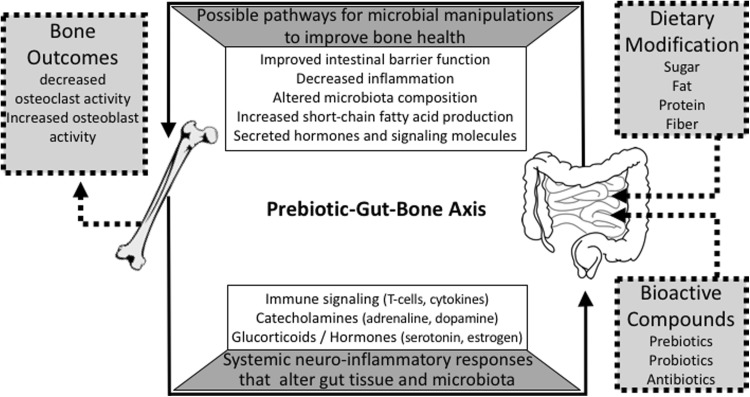
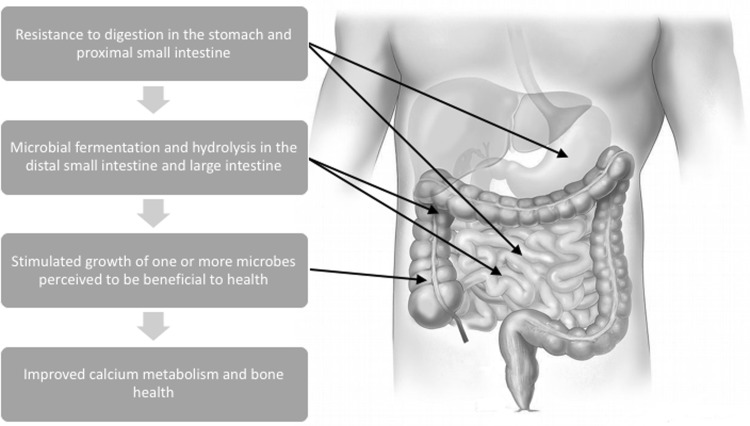
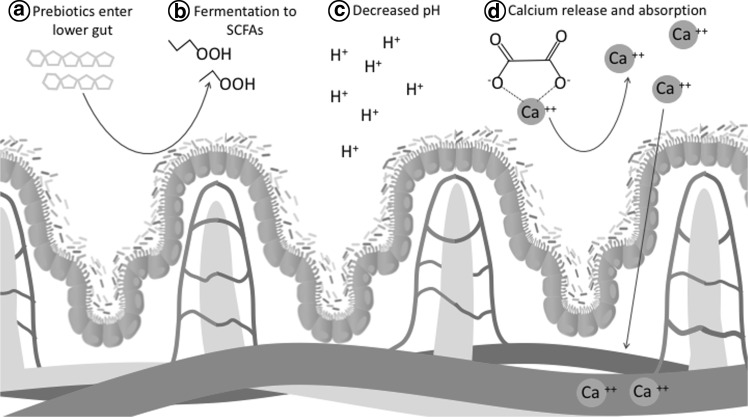
Increasing interest in functional foods has driven discovery in the area of bioactive compounds. Prebiotics are non-digestible carbohydrate compounds that, when consumed, elicit health benefits and aid in the prevention and treatment of chronic diseases. While prebiotics have been shown to improve a number of chronic, inflammatory conditions, growing evidence exists for prebiotic effects on calcium metabolism and bone health. These novel dietary fibers have been shown to increase calcium absorption in the lower intestines of both preclinical and human models. Rodent models have also been imperative for understanding prebiotic effects on bone mineral density and measures of skeletal strength. Although fewer data are available for humans, bone-related prebiotic effects exist across the lifecycle, suggesting benefits for attainment of peak bone mass during adolescence and minimized bone resorption among postmenopausal women. These effects are thought to occur through prebiotic-microbe interactions in the large intestine. Current prebiotic mechanisms for improved mineral absorption and skeletal health include alterations in gut microbiota composition, production of short-chain fatty acids, altered intestinal pH, biomarker modification, and immune system regulation. While the majority of available data support improved mineral bioavailability, emerging evidence suggests alternate microbial roles and the presence of an intricate gut-bone signaling axis. Overall, the current scientific literature supports prebiotic consumption as a cost-effective and sustainable approach for improved skeletal health and/or fracture prevention. The goal of this review is to discuss both foundational and recent research in the area of prebiotics, mineral metabolism, and bone health.
Overview
The claims and statistics of this paper haven’t been checked yet.
Free: it reads the open-access text and checks the first 5 claims that cite a source we can check. Create a free account to check every claim.
Integrity signals
Registry
Cites
Statistics
Figures
Verification
Claims the paper makes
The claims and statistics of this paper haven’t been checked yet.
Free: it reads the open-access text and checks the first 5 claims that cite a source we can check. Create a free account to check every claim.
Claims other papers make about this one
Each is checked against this paper’s own text: does it say what the citing paper says it does?
The source backs part of the claim, not all of it — or backs it for a different population, condition or comparison.
In the citing paper
“Several studies have reported an association of dysbiosis with chronic inflammation, which may in turn result in an association with bone diseases [129,132,215,216].”
From Bone diseases in patients with chronic liver disease (2019) · cites this paper as [132]
Experimental — accuracy not yet measured
Self-check
Percentages, sums and reported differences re-computed from the paper’s own numbers.
The self-check needs the paper’s full text.
Citations
Cites
A human gut microbial gene catalogue established by metagenomic sequencing
MetaHIT Consortium, Qin, J., Li, R., Raes, J., Arumugam, M., Burgdorf, K. S., Manichanh, C., Nielsen, T., Pons, N., Levenez, F., et al. (2010) · Nature · doi:10.1038/nature08821 · Cited by 11,624 · cited 1×
“Intestinal microbiota represent an immensely rich community of bacteria, fungi, viruses, and archaea that collectively contribute more than 3 million unique genes [70], the activities of which are farreaching as evidenced by the excretion of more than 200 microbially produced metabolites in urine [71].”
BackgroundDietary Modulation of the Human Colonic Microbiota: Introducing the Concept of Prebiotics
Gibson, G. R., & Roberfroid, M. B. (1995) · The Journal of Nutrition · doi:10.1093/jn/125.6.1401 · Cited by 7,667 · cited 1×
“Although prebiotics are classified under the umbrella of dietary fiber, the scientific concept of this more functional classification did not emerge until 1995 [10].”
BackgroundFiber and prebiotics: Mechanisms and health benefits
Slavin, J. (2013) · Nutrients · doi:10.3390/nu5041417 · Cited by 2,340 · cited 2×
“Beyond the compounds mentioned above, other functional fibers and prebiotics have been identified for their positive health effects [9, 14].”
BackgroundPrebiotic effects: metabolic and health benefits
Roberfroid, M., Gibson, G. R., Hoyles, L., McCartney, A. L., Rastall, R., Rowland, I., Wolvers, D., Watzl, B., Szajewska, H., Stahl, B., et al. (2010) · British Journal of Nutrition · doi:10.1017/s0007114510003363 · Cited by 2,085 · cited 4×
“Their effects on calcium absorption and bone mineral density have been reviewed [14, 15].”
BackgroundInfluentialThe microbiome and butyrate regulate energy metabolism and autophagy in the mammalian colon
Donohoe, D. R., Garge, N., Zhang, X., Sun, W., O'Connell, T. M., Bunger, M. K., & Bultman, S. J. (2011) · Cell Metabolism · doi:10.1016/j.cmet.2011.02.018 · Cited by 2,003 · cited 1×
“A possible reason for these morphological changes is greater SCFA production, as butyrate is the preferred energy source for colonocytes [82].”
BackgroundInteractions between commensal intestinal bacteria and the immune system
Macpherson, A. J., & Harris, N. L. (2004) · Nature Reviews Immunology · doi:10.1038/nri1373 · Cited by 1,610 · cited 1×
“Gut microbiota are believed to interact with the immune system as evidenced by germ-free mice presenting with reduced mucosal immune function and signaling [74, 86].”
BackgroundProbiotics, prebiotics and synbiotics- a review
Pandey, K. R., Naik, S. R., & Vakil, B. V. (2015) · Journal of Food Science and Technology · doi:10.1007/s13197-015-1921-1 · Cited by 1,291 · cited 1×
“Traditionally, the term ‘‘synbiotic’’ has been used to refer to the combination of prebiotics and probiotics which improve the viability of probiotics being consumed [45].”
BackgroundTowards a more comprehensive concept for prebiotics
Bindels, L. B., Delzenne, N. M., Cani, P. D., & Walter, J. (2015) · Nature Reviews Gastroenterology & Hepatology · doi:10.1038/nrgastro.2015.47 · Cited by 914 · cited 2×
“With rapid growth in the area of diet–gut microbiome interactions, a new definition has recently been proposed which challenges the idea that prebiotic effects must be selective or specific [8].”
BackgroundInulin-Type Fructans: Functional Food Ingredients
Roberfroid, M. B. (2007) · The Journal of Nutrition · doi:10.1093/jn/137.11.2493s · Cited by 878 · cited 1×
“Their effects on calcium absorption and bone mineral density have been reviewed [14, 15].”
BackgroundOn the presence of Inulin and Oligofructose as natural ingredients in the western diet
Van Loo, J., Coussement, P., De Leenheer, L., Hoebregs, H., & Smits, G. (1995) · Critical Reviews in Food Science and Nutrition · doi:10.1080/10408399509527714 · Cited by 836 · cited 1×
“Current prebiotic consumption in Western industrialized countries is quite low in comparison with estimated daily consumption ranging from 1 to 4 g in Americans and 3–11 g in Western Europeans [12].”
Background
Research works printed but not linked: 1
- Lugani Y Sooch S Xylitol, an emerging prebiotic: a review Int J Appl Pharm Biol Res 2017 2 67 73
Cited by
Items 201–300 of 306
Zhao, X., Gökgöz, N. B., Xie, Z., Jakobsen, L. M. A., Nielsen, D. S., & Bertram, H. C. (2025) · Food & Function · doi:10.1039/d4fo06365a · Cited by 4
Unraveling the Nutritional Perspectives of Probiotics and Prebiotics in Female Healthcare
Kumari, N., Pal, Y., Tailor, C. S., Negi, D., Syan, J., Badhani, A., & Pal, R. S. (2025) · Recent Advances in Food Nutrition & Agriculture · doi:10.2174/012772574x374047250325183211 · Cited by 3
Diet, Microbiota, and Bone Health
Rizzoli, R. (2018) · Springer eBooks · doi:10.1007/978-3-319-98464-3_12 · Cited by 3
Probiotics and Prebiotics in Healthy Ageing
Kadam, A., Kadam, D., Tungare, K., & Shah, H. S. (2021) · Healthy ageing and longevity · doi:10.1007/978-3-030-83017-5_5 · Cited by 4
Altaf, A., Alkefai, N. H. A., Panda, B. P., Usmani, Z., Amin, S., & Mir, S. R. (2022) · Fermentation · doi:10.3390/fermentation8040182 · Cited by 3
Topolska, K., Bieńko, M., Ptaszek, P., Florkiewicz, A., Radzki, R. P., & Filipiak‐Florkiewicz, A. (2022) · Animals · doi:10.3390/ani12091134 · Cited by 3
“After the achievement of PBM, the strategy should be focused on reducing bone mass loss [6].”
BackgroundMethodObtención de Fructooligosacáridos de Agave y su Potencial Biológico: Un Artículo de Revisión
Alejandra, R. A. M., & Elizabeth, C. G. A. (2023) · Ciencia Latina Revista Científica Multidisciplinar · doi:10.37811/cl_rcm.v7i2.7526 · Cited by 3
Sorting Dietary Advice for Bone Health
Weaver, C. M., Wallace, T. C., & Cao, S. (2024) · Nutrition Today · doi:10.1097/nt.0000000000000691 · Cited by 3
Probiotics and Prebiotics: Health Benefits and Applications in Dietary Supplements
Sarsan, S., Pandiyan, A., Vanisree, C. R., Gauthami, G. S. D., & Sayyed, R. Z. (2024) · Springer eBooks · doi:10.1007/978-3-031-72000-0_9 · Cited by 3
Langsetmo, L., Shikany, J. M., & Rogers-Soeder, T. S. (2020) · Elsevier eBooks · doi:10.1016/b978-0-12-813073-5.00021-6 · Cited by 3
Oligosacáridos y polisacáridos no digeribles: una fuente de salud para los adultos mayores
Vera, C., Ubilla, C., Guerrero, C., López, J. J. S., Flórez-Méndez, J., & Bustos, R. O. (2020) · Revista chilena de nutrición · doi:10.4067/s0717-75182020000500848 · Cited by 3
Gaspar, R. C., Otto Zea, M., & Vílchez‐Perales, C. (2023) · Revista de Investigaciones Veterinarias del Perú · doi:10.15381/rivep.v34i6.26961 · Cited by 2
Prebiotics: Categories, Applications, and Insights on the Potential of Herbal Sources as Prebiotics
Bhagwat, P., Soni, H., Tandon, S., Singh, G., Lale, S. K., Kumar, V., Narasimhaji, C. V., Mathapati, S., Srikanth, N., & Acharya, R. (2025) · Current Probiotics · doi:10.2174/0126666499361588250121170836 · Cited by 2
Birkeland, E., Bamigbetan, W. A., Molven, K. D., Thorsby, P. M., Gulseth, H. L., Aas, A., & Dahl, C. (2025) · Archives of Osteoporosis · doi:10.1007/s11657-025-01556-x · Cited by 2
“Several animal studies report beneficial effects of dietary fibres with prebiotic quality on general bone health and intestinal absorption of calcium and magnesium [11, 15, 16].”
Associations between dietary index for gut microbiota and bone health outcomes
Hidayat, K., Hong, W., Wang, L.-L., Rizzoli, R., Du, H., Li, D., Li, Z., & Qin, L. (2025) · Osteoporosis International · doi:10.1007/s00198-025-07772-y · Cited by 2
“Microbial fermentation of these substrates increases SCFA production, which may enhance skeletal health by lowering colonic pH (improving calcium solubility) and modulating bone remodeling through suppression of osteo-clastogenesis and stimulation of osteoblast differentiation [12, 19].”
Abuljadayel, D. A. (2025) · Journal of Applied Hematology · doi:10.4103/joah.joah_80_25 · Cited by 2
Kruk, B., Skonieczna‐Żydecka, K., Czarnecka, W., Tuczyńska, N., Podkówka, A., Szredzki, P., Pasternak, G., Kokot, K., Biernawska, J., & Zacha, S. (2026) · Journal of Orthopaedic Surgery and Research · doi:10.1186/s13018-026-06837-w · Cited by 2
Links between bone fractures and the gut microbiota
Ohlsson, C., Lawenius, L., Grahnemo, L., & Sjögren, K. (2026) · Nature Reviews Endocrinology · doi:10.1038/s41574-026-01286-1 · Cited by 3
Effect of the Diets Supplemented with Artichoke and Shrimp by-Products on Obese Rats
Elnaga, N. I. E. A., Massoud, M., El-Razek, A. M. A., Nasser, M. E. A., & Elgazzar, A. R. (2021) · Alexandria Science Exchange Journal · doi:10.21608/asejaiqjsae.2021.169609 · Cited by 2
The Gut-Bone Axis: Role of Gut Microbiota in Osteoporosis
Ilesanmi-Oyelere, B. L. (2021) · Elsevier eBooks · doi:10.1016/b978-0-12-819265-8.00071-1 · Cited by 2
Relationship between Gut Microbiota and Bone Health
Lü, H., You, K., Yang, L., Shen, J., Liu, B., Guo, Y., Chen, T., & Li, G. (2022) · Mini-Reviews in Medicinal Chemistry · doi:10.2174/1389557522666220304230920 · Cited by 2
Physiologic Effects of Isolated or Synthetic Dietary Fiber in Children: A Scoping Review
Chen, L., Avendano, E. E., Valderrama, A. V., Lan, J. J., Tye, D., Morin, R. A., Livingston, K. A., McKeown, N. M., & Nirmala, N. (2024) · Current Developments in Nutrition · doi:10.1016/j.cdnut.2023.102074 · Cited by 3
“Growing evidence suggests that prebiotics may play a role in mineral absorption [69] and immune function [70] through its in fl uence on the gut microbiota.”
BackgroundEmerging Era of “Biotics”: Prebiotics, Probiotics, and Synbiotics
Nair, R., Paul, P., Mahajan, S., Maji, I., Gupta, U., Aalhate, M., Singh, S. K., & Singh, P. K. (2024) · Springer eBooks · doi:10.1007/978-981-99-5575-6_15 · Cited by 2
Bhatnagar, A., Bhadouriya, K., Haider, T., Akram, W., Pathan, H. K., & Mishra, N. (2025) · Springer eBooks · doi:10.1007/978-981-97-9056-2_1 · Cited by 2
Joung, J. Y., Shin, S., & Kim, S. H. (2025) · Food Bioscience · doi:10.1016/j.fbio.2025.107422 · Cited by 2
Maternal nutrition, epigenetic programming and metabolic syndrome
Lee, H. (2019) · Elsevier eBooks · doi:10.1016/b978-0-12-816843-1.00010-2 · Cited by 2
Ordaz, J. J., Contreras‐López, E., Godínez, J. R., Ovando, A. C., & González-Olivares, L. G. (2021) · Biomass Conversion and Biorefinery · doi:10.1007/s13399-021-01395-z · Cited by 2
Contribution of the Microbiota to Healthy Aging
Forssten, S. D., & Ouwehand, A. C. (2021) · Elsevier eBooks · doi:10.1016/b978-0-12-819265-8.00059-0 · Cited by 2
Киселева, М. А., Киселева, Т. Л., & Хлебников, Е. В. (2024) · Традиционная медицина · doi:10.54296/18186173_2024_3_17 · Cited by 2
Karley, D., Nayak, K. K., & Kolla, V. (2024) · CRC Press eBooks · doi:10.1201/9781003160663-17 · Cited by 1
The Impact of Probiotic Supplementation on Sports Achievement - Literature Review
Basiak, A., Suława, A., Fedorowicz, S. A., Targoński, O., Targońska, M., Furgalska, J., Ptasiński, A., Niekurzak, R., & Buczek, A. (2024) · Quality in Sport · doi:10.12775/qs.2024.35.56233 · Cited by 1
Yang, X., Liao, R., Yan, C., & Wang, J. (2025) · BMC Oral Health · doi:10.1186/s12903-025-07348-6 · Cited by 1
“…of skeletal maturity evaluation, previous studies have demonstrated that Firmicutes ( e.g. Lactobacillus ) in the gut produce short-chain fatty acids, which improve intestinal calcium absorption and inhibit inflammation, thereby indirectly supporting bone mineralisation and bone density [22, 23].”
Nadiyah, N., Sari, I. P., Dewanti, L. P., Azra, J. M., & Ronitawati, P. (2025) · Jurnal Gizi Indonesia (The Indonesian Journal of Nutrition) · doi:10.14710/jgi.14.1.51-58 · Cited by 1
Chaudhary, R., Bansal, N., Lal, R., Kaur, A., Bishnoi, M., Kondepudi, K. K., Chopra, K., & Bansal, S. (2026) · Food & Function · doi:10.1039/d5fo03823e · Cited by 1
Tetens, I., Kisi, S. B., Parlesak, A., Rasmussen, S. I. I., Cramon, M. Ø., Petersen, C. F., Lemay, D. G., Nielsen, D. S., Bertram, H. C., Andersen, H. H., et al. (2026) · American Journal of Clinical Nutrition · doi:10.1016/j.ajcnut.2026.101339 · Cited by 2
Hu, Z., Yan, J., Wang, X., & Liu, Z. (2026) · Antonie van Leeuwenhoek · doi:10.1007/s10482-026-02353-3 · Cited by 1
“These sub-stances help regulate gut microbiota and improve bone health (Whisner and Weaver 2017; Whisner and Castillo 2018).”
Gut microbiota and gut-derived metabolites in defining multiple sclerosis phenotypic continuum
Montini, F., Mangalam, A. K., Zeydan, B., Murray, J., & Kantarci, O. H. (2026) · Frontiers in Immunology · doi:10.3389/fimmu.2026.1858047 · Cited by 2
“They can enhance SCFA production (141), improve mineral absorption (142, 143), and exert systemic effects relevant to MS. Observational data link higher fi ber intake to lower disability scores and reduced in fl ammatory markers in MS cohorts (144, 145).”
Nutritional aspects of bone health: Not only a matter of vitamin D
Tinti, M. G., Cata, A. D., & Carnevale, V. (2019) · Beyond Rheumatology · doi:10.4081/br.2019.2 · Cited by 2
Role of Probiotic Bacteria on Bioavailability of Functional Ingredients Under Fermentation Process
Mousavi, Z. E., & Mousavi, S. M. A. (2021) · Microorganisms for sustainability · doi:10.1007/978-981-16-0223-8_10 · Cited by 1
He, W., Jakobsen, L. M. A., Zachariassen, L. F., Hansen, A. K., Andersen, H. J., & Bertram, H. C. (2021) · Magnetic Resonance in Chemistry · doi:10.1002/mrc.5244 · Cited by 1
Wang, H., Bu, X., Chen, F., Wang, Y., & Chen, Y. (2022) · PubMed · doi:10.14670/hh-18-492 · Cited by 1
“419 Previous reports suggest that SCFAs can influence bone homeostasis, thereby 420 providing a mechanistic link between the gut microbiota and bone homeostasis 421 HI ST OL OG Y AN D HI ST OP AT HO LO GY (no n-e dit ed m an us cri pt) 18 (Whisner & Castillo 2018; Weaver, 2015; Hernandez, 2017).”
BackgroundSoumyakrishnan, S., & SREEPRIYA, M. (2022) · International Journal of Life Science and Pharma Research · doi:10.22376/ijpbs/lpr.2022.12.4.p61-74 · Cited by 1
Prebiotics for people with cystic fibrosis
Williams, N. C., Jayaratnasingam, J., Prayle, A., Nevitt, S. J., & Smyth, A. R. (2022) · Cochrane Database of Systematic Reviews · doi:10.1002/14651858.cd015236 · Cited by 1
Prebiotik dan Dermatitis Atopik pada Anak
Fauziyyah, & Ikhssani, A. (2022) · NUTRIENT · doi:10.36911/nutrient.v2i1.1304 · Cited by 1
Gut Microbiota and Its Role in Human Metabolic Disorders
Yadav, A., Mohite, S. V., Behl, A., Shinde, P. B., & Sharma, K. K. (2023) · Springer eBooks · doi:10.1007/978-981-99-3126-2_14 · Cited by 1
Kodentsova, V. M., Kosheleva, O. V., Vrzhesinskaya, O. A., Guseva, G. V., Zotov, V. A., Николаевна, Л. С., & Zhilinskaya, N. V. (2024) · Voprosy Pitaniya · doi:10.33029/0042-8833-2024-93-1-72-79 · Cited by 1
Micronutrients and the gut microbiome: a bidirectional interaction
Kodentsova, V. M., & Risnik, D. V. (2024) · Medical alphabet · doi:10.33667/2078-5631-2024-16-40-46 · Cited by 1
Gamal, H., Nabil, A., Gaber, Y., EL-Gendy, A. O., & Hussein, R. M. (2025) · Journal of Biological Research - Bollettino della Società Italiana di Biologia Sperimentale · doi:10.4081/jbr.2025.13586 · Cited by 1
Hypercalcemia: Other Causes than Primary Hyperparathyroidism
Rizzoli, R. (2018) · Elsevier eBooks · doi:10.1016/b978-0-12-801238-3.64344-1 · Cited by 1
Evaluation of the synbiotic strategy as prevention and treatment of swine digestive pathologies
Rodríguez-Sorrento, A., & Aliments, U. A. D. B. D. D. C. A. I. D. (2019) · Tesis Doctorals en Xarxa (Consorci de Serveis Universitaris de Catalunya) · Cited by 2
Livesey, G. (2021) · Journal of the American College of Nutrition · doi:10.1080/07315724.2020.1858367 · Cited by 1
“Second, such a poorly fermented fiber would also exclude an improved calcium absorption via short-chain fatty acid production and acidification of the colonic environment, which is the most accepted mechanism for this effect with other fibers by the FDA and others (13,25), yet there are several published papers claimi…”
BackgroundCaracterización genética y funcional de la bacteria probiótica pediococcus parvulus 2.6
Pérez, A. (2019) · LA Referencia (Red Federada de Repositorios Institucionales de Publicaciones Científicas)
Control of Bone Remodeling During Pregnancy
Trivedi, R., Rai, D., Sinha, S., & Mishra, P. R. (2020) · Elsevier eBooks · doi:10.1016/b978-0-12-801238-3.11230-9
Pacifici, R., Lawenius, L., Sjögren, K., & Ohlsson, C. (2020) · Elsevier eBooks · doi:10.1016/b978-0-12-813073-5.00039-3 · Cited by 1
Potential efficacy of gut microbiome dysbiosis on alleviation the progress of osteoarthritis in micePreprint
Guan, Z., Jia, J., Zhang, C., Sun, T., Zhang, W., Leng, H., & Song, C. (2020) · Research Square · doi:10.21203/rs.3.rs-28047/v1
Diet and Microbiota in the Elderly
Alvarado-Jasso, G. M., Arboleya, S., González, S., Reyes‐Gavilán, C. G. D. L., Salazar, N., & Gueimonde, M. (2021) · Elsevier eBooks · doi:10.1016/b978-0-12-819265-8.00088-7
Preventive Effects of Dietaryraisins on Steroid - Induced Bone Changes in Rats
Al-Qtaitat, A., Said, A.-D., Albtoosh, A., & Karawya, F. S. (2021) · Biosciences Biotechnology Research Asia · doi:10.13005/bbra/2886
Abd-Elmone, A. A., Koheil, N. A., Kamel, M. A. E.-N., & Yacout, G. A. (2022) · Asian Journal of Scientific Research · doi:10.3923/ajsr.2022.7.21
Arp, C. G., Correa, M. J., & Ferrero, C. (2022) · Springer eBooks · doi:10.1007/978-3-030-81404-5_34-1
Peña‐Cearra, A., Fullaondo, A., & Abecia, L. (2022) · EKAIA Euskal Herriko Unibertsitateko Zientzi eta Teknologi Aldizkaria · doi:10.1387/ekaia.23519 · Cited by 1
“Kaltzioaren eta beste mineral batzuen xurgapena esti-mulatzen dute, eta, hala, hezurren mineralizazioa areagotu eta hesteetako funtzioa hobetu [74].”
BackgroundHou, W., Xiao, F., Tian, J., He, X., lu, S., Lin, K., Wei, T., He, M., & Wei, Q. (2023) · Research Square · doi:10.21203/rs.3.rs-3469687/v1
Regalado-Rentería, E., Juárez-Flores, B. I., García-López, J. C., Godínez-Hernández, C. I., Ruiz‐Cabrera, M. A., & Aguirre‐Rivera, J. R. (2023) · Agrociencia · doi:10.47163/agrociencia.v57i8.2716
Prebiotik dan Dermatitis Atopik pada Anak
Azizah, F. N. A. (2022) · Svasta Harena · doi:10.33860/shjig.v2i2.852
Gut Microbiome: A Key Factor in Ageing and an Aim for Anti-senescence Intervention
Abbas, H. R., Zaky, M. Y., & Abdul‐Hamid, M. (2024) · Springer eBooks · doi:10.1007/978-981-99-8803-7_16
Exploring Lactobacilli - Biology, Roles and Potential Applications in Food Industry and Human Health
Laranjo, M. (2024) · IntechOpen eBooks · doi:10.5772/intechopen.111282
Hypercalcemia: Other causes than primary hyperparathyroidism
Rizzoli, R. (2024) · Elsevier eBooks · doi:10.1016/b978-0-443-13825-6.00063-7
Long, K., Zheng, T., Gong, A., Ying, Z., & Zhang, L. (2024) · Frontiers in Nutrition · doi:10.3389/fnut.2024.1389896
Probiotic Therapies for Skeleton and Bone Health
Singh, B., Mal, G., Kalra, R. S., & Marotta, F. (2024) · Springer eBooks · doi:10.1007/978-3-031-65459-6_9
Probiotics as Anti-aging Interventions
Singh, B., Mal, G., Kalra, R. S., & Marotta, F. (2024) · Springer eBooks · doi:10.1007/978-3-031-65459-6_12 · Cited by 1
Zhang, Z., Hu, Y., & Li, J. (2025) · IntechOpen eBooks · doi:10.5772/intechopen.115173
Multifaceted Role of Synbiotic Products with Nutraceutical Impact
Egea, M. B., Filho, J. G. D. O., & Lemes, A. C. (2025) · Wiley eBooks · doi:10.1002/9781394241538.ch12
Seijo, M., Schwartz, F. K., Coronel, M. Z., Bryk, G., Bonanno, M. S., Aceval, L., Vénica, C. I., Bozzini, C., de Portela, M. L. P. M., Perotti, M. C., et al. (2025) · ReDSal · doi:10.54789/rs.v4i1.58
Microbial Production of Fructooligosaccharides
de la Rosa, O., Martínez-Pérez, A., Wong‐Paz, J. E., Márquez, D. B. M., Flores‐Gallegos, A. C., & Aguilar, C. N. (2025) · Springer eBooks · doi:10.1007/978-3-031-90974-0_5
Vera, C., Illanes, A., & Guerrero, C. (2025) · Elsevier eBooks · doi:10.1016/b978-0-443-23730-0.00006-5
Agave spp.: Sap by-products and health benefits
Neftiti, C. C.-A., Nery‐Flores, S. D., Campos‐Múzquiz, L. G., Palomo‐Ligas, L., Govea‐Salas, M., Silva‐Belmares, S. Y., Flores‐Gallegos, A. C., & Rodríguez-Herrera, R. (2025) · Plant Science Today · doi:10.14719/pst.8532
Searching for Novel Thermostable β-galactosidases
De Castro de Antonio, M. E. (2021) · RUC (Universidade Da Coruña)
Staff Education to Promote Probiotic Breastfeeding Therapy
Diaz, J. (2023) · ScholarWorks (Walden University) · Cited by 1
Comparative health benefits of inulin and other soluble dietary fibers
Gam, S., Deka, K., Kashyap, B., Ahmed, R., Deka, G., Hazarika, D., Uniyal, P., Pandey, J., Lamichhane, S., & Dutta, K. N. (2025) · Elsevier eBooks · doi:10.1016/b978-0-443-36617-8.00019-8
Microbial fiber and prebiotics: nourishing the gut microbiome
Pereira, V. L., Magalhães, I. S., de Souza, D. A., & Júnior, B. R. D. C. L. (2025) · Elsevier eBooks · doi:10.1016/b978-0-443-33345-3.00021-3
Revalorización del grano de centeno cultivado en la provincia de Buenos Aires
Gómez Castro, M. L. (2024) · Repositorio Digital Institucional de la Universidad de Buenos Aires (Universidad de Buenos Aires)
Role of Nutraceuticals in the Treatment of Degenerative Osteoporosis or Disc Disease
Ashok, P., Manasa Deepa, R., Patil, U. A., Arali, B., Dev, A., Madhu, A., & Paul, P. (2026) · BENTHAM SCIENCE PUBLISHERS eBooks · doi:10.2174/9798898813369126010010
Lv, P., Bai, J., Li, L., Zhang, C. X., Wei, S., & Chang, J. (2026) · Science Progress · doi:10.1177/00368504261426436
Kaur, L. (2026) · Wiley eBooks · doi:10.1002/9781394269082.ch9
Zikán, V., Kvasničková, I., & Týblová, M. (2018) · Clinical Osteology · doi:10.36290/clo.2018.020
Raveschot, C. (2018) · theses.fr (ABES) · doi:10.70675/291faa77z86dez473ez9917z89ac5cc0ccfe
Bedu-Ferrari, C. (2022) · theses.fr (ABES) · doi:10.70675/17cf5e69z9e36z4daczb0b6z93f0767b79db · Cited by 2
Basak, S., Hridayanka, K. S. N., & Duttaroy, A. K. (2026) · Frontiers in Endocrinology · doi:10.3389/fendo.2026.1774824
“Both preclinical and human models show the potential of probiotics to promote intestinal mineral absorption, increase mineral bioavailability, enhance bone mineralization, and minimize bone resorption (245 – 247).”
Verma, A. K. (2026) · Malque Health · doi:10.31893/health.2026010
Maternal nutrition, epigenetic programming, and metabolic diseases
Lee, H. (2026) · Elsevier eBooks · doi:10.1016/b978-0-443-15572-7.00010-3
Ritonga, M. Z., & Hidanah, S. (2026) · Research Square · doi:10.21203/rs.3.rs-10199161/v1
Lin, Y., Zheng, J., 胡东泉, Ying, Y., Zhu, Y., & Chen, Z. (2026) · Frontiers in Immunology · doi:10.3389/fimmu.2026.1814866
“…grounded in the “ gut-bone axis ” hypothesis, which posits that the gut microbiota can systemically in fl uence bone metabolism through several key mechanisms, including immune modulation, the production of metabolic products (such as short-chain fatty acids), and endocrine pathways (2, 3).”
Mirkowska, O., Leciej, Z., Lubkowski, M., Afrykańska, G., Fryszer, G., Orzeł, K., Pomykała, B., Skwarna, H., Krzysztofik, K. A., & Banasik, A. (2026) · Quality in Sport · doi:10.12775/qs.2026.61.73040
Wagner, A., Kuljukka, A., Kumstát, M., & Ihalainen, J. K. (2026) · Frontiers in Nutrition · doi:10.3389/fnut.2026.1901299
“Prebiotic oligosaccharides, including inulin-type fructans, fruc-tooligosaccharides and galactooligosaccharides, are relevant because they can increase fermentable substrate availability, SCFA production and calcium absorption (82).”
Impact of microbiome alterations on fracture healing and nonunion: a narrative review
Barbaroux, T. A., Khattak, A. R., Thamer, R., Alqanaie, M., Patel, H., Kambere, A. J. K., Alobaid, R., AlShaheen, S. T., Kazmi, S., Alelaimi, A., et al. (2026) · European Journal of Orthopaedic Surgery & Traumatology · doi:10.1007/s00590-026-04886-9
“A plethora of constraints exist when it comes to the already limited number of human studies, such as varying methodologies, same sample sizes and heterogeneity in patient populations, anatomical sites and microbiome assessment techniques [7, 29, 30].”
Mechanistic Insights into Milk Minerals Driving Bone Development and Mineralization in Growing Rats
Peng, Y., Zhou, Y., Riis, S. B., Yin, J., Han, M., Wen, Z., Ye, W., Liu, X., Shi, W., Wang, X., et al. (2026) · Nutrients · doi:10.3390/nu18152569
“Meanwhile, previous literature has reported that microbiota-derived SCFAs may improve intestinal calcium uptake and modulate hepatic IGF-I release, which collectively could contribute to enhanced bone anabolism and mineralization [25,27].”
Comparison of yogurt and ultra-high-temperature milk on serum osteocalcin and calcium levels in rats
Junilla, R., Primadhi, R. A., & Budi, M. N. S. (2026) · Journal of Advanced Pharmaceutical Technology amp Research · doi:10.4103/japtr.japtr_56_26
“[11,12] Despite growing evidence regarding the relationship between dairy intake and bone health, direct comparative studies evaluating fermented and nonfermented dairy products on circulating bone formation biomarkers remain limited.”
SÜZER, B., Arıcan, İ., Yumuşak, E., Akkoç, A., & Yalçın, M. (2026) · Ankara Üniversitesi Veteriner Fakültesi Dergisi · doi:10.33988/auvfd.1910833
日本人女性アスリートにおける疲労骨折の栄養学的リスク因子と予防戦略の検討
Ishizu, T., & 石津, 達. (2021) · Institutional Repositories DataBase (IRDB)
El-Shazly, A. I., & FARID, M. A. (2026) · Food Production Processing and Nutrition · doi:10.1186/s43014-026-00419-3
“They promote short-chain fatty acid production and potentially influence bone health and metabolic function (Aryana & Olson, 2017; Whisner & Castillo, 2018; Zhang et al., 2021).”
Metadata
- Authors
- Whisner, C. M., & Castillo, L. F.
- Affiliations
- Arizona State University (US)
- Corresponding author
- Whisner, Corrie M.
- Venue
- Calcified Tissue International
- Published
- 2017-10-27
- Volume
- 102
- Issue
- 4
- Pages
- 443-479
- ISSN
- 0171-967X (ISSN-L)
- 1432-0827
- PMC
- PMC5851694
- OpenAlex
- W2767047143
- Cited by
- 292
- References
- 131
- Citations by year
- 2026: 27 · 2025: 43 · 2024: 33 · 2023: 34 · 2022: 37 · 2021: 45 · 2020: 42 · 2019: 16 · 2018: 14
- FWCI
- 2.03
- Type
- journal article
- Language
- en
- Open access
- hybrid
- doi.org
- Locations
- Calcified Tissue International (publishedVersion, cc-by)
- PubMed Central (publishedVersion, cc-by)
- PubMed (publishedVersion)
- Funders
- National Institute of General Medical Sciences (UL1GM118970, TL4GM118971, RL5GM118969)
- Topics
- Health Sciences › Nursing › Nutrition and Dietetics › Microbial Metabolites in Food Biotechnology
- Health Sciences › Medicine › Orthopedics and Sports Medicine › Bone health and osteoporosis research
- Life Sciences › Biochemistry, Genetics and Molecular Biology › Molecular Biology › Gut microbiota and health
- Keywords
- prebiotics, bone health, mineral metabolism, calcium absorption, bone mineral density, gut microbiota, short-chain fatty acids, intestinal pH, peak bone mass, fracture prevention, gut-bone axis, dietary fiber, functional foods
- MeSH terms
- Gastrointestinal Microbiome, Animals, Bone and Bones, Dietary Fiber, Humans, Minerals, Bone Density, Prebiotics
About these checks
Registry, retraction, Cites and statistics results are computed, not judged, with one exception: a printed reference that no index lists is read once by a model before it counts as a citation error. Claims are extracted by a model and kept only when their quote appears verbatim in the text; each cited source is then checked, with a model’s help, for whether it says what the claim relies on. Those verdicts can be wrong — read the claim’s quote and the cited source before relying on one.
Statistics and arithmetic are recomputed, not judged.
Confidence bands are shown only for fields calibrated on our annotated test set. None is calibrated yet, so no band is shown.
What counts as a claim ›How we measure confidence ›How we check this ›
Are you an author, or do you see a problem with this page? Request a review
Data sources
Bibliographic data: Semantic Scholar, OpenAlex, Crossref.
Contains information from the Semantic Scholar Academic Graph Datasets, made available under the ODC Attribution License (ODC-BY 1.0).
Semantic Scholar’s data is described in: Kinney, R., et al. (2023). The Semantic Scholar Open Data Platform. arXiv:2301.10140.
