

The DOI matches its Crossref record; 96 of the 98 references it cites were found in a registry or an index.
Adhesion mechanisms mediated by probiotics and prebiotics and their potential impact on human health
Open accessAbstract
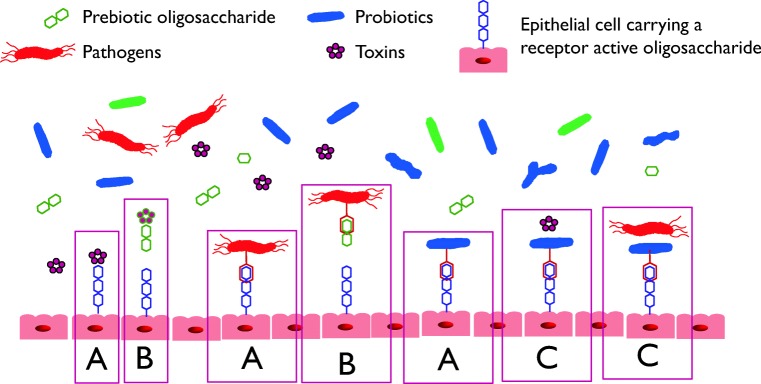
Adhesion ability to the host is a classical selection criterion for potential probiotic bacteria that could result in a transient colonisation that would help to promote immunomodulatory effects, as well as stimulate gut barrier and metabolic functions. In addition, probiotic bacteria have a potential protective role against enteropathogens through different mechanisms including production of antimicrobial compounds, reduction of pathogenic bacterial adhesion and competition for host cell binding sites. The competitive exclusion by probiotic bacteria has a beneficial effect not only on the gut but also in the urogenital tract and oral cavity. On the other hand, prebiotics may also act as barriers to pathogens and toxins by preventing their adhesion to epithelial receptors. In vitro studies with different intestinal cell lines have been widely used along the last decades to assess the adherence ability of probiotic bacteria and pathogen antagonism. However, extrapolation of these results to in vivo conditions still remains unclear, leading to the need of optimisation of more complex in vitro approaches that include interaction with the resident microbiota to address the current limitations. The aim of this mini review is to provide a comprehensive overview on the potential effect of the adhesive properties of probiotics and prebiotics on the host by focusing on the most recent findings related with adhesion and immunomodulatory and antipathogenic effect on human health.
Overview
The claims and statistics of this paper haven’t been checked yet.
Run the check — free, no account needed. It reads the open-access text and checks the sources it cites.
Integrity signals
Registry
Cites
Statistics
Figures
Verification
Claims the paper makes
The claims and statistics of this paper haven’t been checked yet.
Run the check — free, no account needed. It reads the open-access text and checks the sources it cites.
Claims other papers make about this one
Each is checked against this paper’s own text: does it say what the citing paper says it does?
The source backs part of the claim, not all of it — or backs it for a different population, condition or comparison.
In the citing paper
“Probiotics may be active in preventing gastrointestinal infections by making it more difficult for pathogens to colonize the gastrointestinal tract, either by competing for nutrients or by competing for receptors. In this case, probiotics compete for a limited number of receptors on the surface of the intestinal epithelium [224,225].”
From Lactic Acid Bacteria in Raw-Milk Cheeses: From Starter Cultures to Probiotic Functions (2022) · cites this paper as [224]
Experimental — accuracy not yet measured
Self-check
Percentages, sums and reported differences re-computed from the paper’s own numbers.
The self-check needs the paper’s full text.
Citations
Cites
1 retracted
Lenoir, M., del Carmen, S., Cortes-Perez, N. G., Lozano-Ojalvo, D., Muñoz-Provencio, D., Chain, F., Langella, P., de Moreno de LeBlanc, A., LeBlanc, J. G., & Bermúdez-Humarán, L. G. (2016) · Journal of Gastroenterology · doi:10.1007/s00535-015-1158-9 · Cited by 155
RetractedHill (2014) · doi:10.1038/nrgastro.2014.66 · Cited by 9,592
Self-citationGibson, G. R., Hutkins, R., Sanders, M. E., Prescott, S. L., Reimer, R. A., Salminen, S. J., Scott, K., Stanton, C., Swanson, K. S., Cani, P. D., et al. (2017) · Nature Reviews Gastroenterology & Hepatology · doi:10.1038/nrgastro.2017.75 · Cited by 5,634
Self-citationEffects of probiotics, prebiotics, and synbiotics on human health
Markowiak, P., & Śliżewska, K. (2017) · Nutrients · doi:10.3390/nu9091021 · Cited by 2,401
Zmora, N., Zilberman-Schapira, G., Suez, J., Mor, U., Dori-Bachash, M., Bashiardes, S., Kotler, E., Zur, M., Regev-Lehavi, D., Brik, R. B.-Z., et al. (2018) · Cell · doi:10.1016/j.cell.2018.08.041 · Cited by 1,695 · cited 1×
“In a human study conducted by Zmora et al. (2018) with healthy volunteers, a multistrain probiotic preparation was administered bi-daily for 4 weeks.”
BackgroundTh17 cell induction by adhesion of microbes to intestinal epithelial cells
Atarashi, K., Tanoue, T., Ando, M., Kamada, N., Nagano, Y., Narushima, S., Suda, W., Imaoka, A., Setoyama, H., Nagamori, T., et al. (2015) · Cell · doi:10.1016/j.cell.2015.08.058 · Cited by 1,071
Host interactions of probiotic bacterial surface molecules: comparison with commensals and pathogens
Lebeer, S., Vanderleyden, J., & De Keersmaecker, S. C. J. (2010) · Nature Reviews Microbiology · doi:10.1038/nrmicro2297 · Cited by 1,062
A complex human gut microbiome cultured in an anaerobic intestine-on-a-chip
Jalili-Firoozinezhad, S., Gazzaniga, F. S., Calamari, E. L., Camacho, D. M., Fadel, C. W., Bein, A., Swenor, B., Nestor, B., Cronce, M. J., Tovaglieri, A., et al. (2019) · Nature Biomedical Engineering · doi:10.1038/s41551-019-0397-0 · Cited by 855
Emerging molecular insights into the interaction between probiotics and the host intestinal mucosa
Bron, P. A., van Baarlen, P., & Kleerebezem, M. (2012) · Nature Reviews Microbiology · doi:10.1038/nrmicro2690 · Cited by 690
Adhesion and aggregation properties of probiotic and pathogen strains
Collado, M. C., Meriluoto, J., & Salminen, S. (2008) · European Food Research and Technology · doi:10.1007/s00217-007-0632-x · Cited by 603
Research works printed but not linked: 2
- Hymes JP, Johnson BR, Barrangou R, Klaenhammer TR (2016) Functional analysis of an S-layer-associated fibronectin-binding protein in Lactobacillus acidophilus NCFM. Appl Environ Microbiol 82:2676–2685. https://doi.org/10.1128/AEM.00024-16 · DOI
- Meyer DP, Tungland BC, Causey JL, Slavin JL (2000) The immune effects of inulin in vitro and in vivo. Agro Food Ind HiTech 11:18–20
Cited by
Sorted by citations
Items 701–746 of 746
Role of Probiotics and Prebiotics in the Dysbiosis of Gut Microbiota
Shad, E., Väkeväinen, K., & Gómez-Gallego, C. (2025) · Springer handbooks · doi:10.1007/978-3-032-01636-2_36
Gut Microbiota: A Potential Role in Modulating Carcinogenesis and Response to Anti‐Cancer Therapies
Yehualashet, A. S., Fersha, E. T., Yikna, B. B., & Ayenew, K. D. (2026) · Cancer Reports · doi:10.1002/cnr2.70585
The selection of matching donors for patients in fecal microbiota transplantation
Qian, X., Yao, W., Wang, W., Shao, H., & Xu, Z. (2026) · Frontiers in Microbiology · doi:10.3389/fmicb.2026.1859411
Prebiotics / Probiotics as Therapeutic Agents in the Healthcare System
Paramaswaran, Y., Ramesh, M., Paramakrishnan, N., & Muthuraman, A. (2026) · BENTHAM SCIENCE PUBLISHERS eBooks · doi:10.2174/9798898813994126010011
Gomes, E., Silva, A. R., Figueiredo, R. J., Rosca, A. S., Cools, P., Mira, N. P., Araújo, D., Oliveira, R., Almeida, C., & Castro, J. (2026) · Microbial Pathogenesis · doi:10.1016/j.micpath.2026.108646
Das, R., & Tamang, B. (2026) · Probiotics and Antimicrobial Proteins · doi:10.1007/s12602-026-11116-5
Harnessing mushroom β-glucans towards enhancing probiotics viability and their bioactivities
Ogidi, C. O. (2026) · Journal of Food Bioactives · doi:10.26599/jfb.2026.95034445
Jamgochian, H. H., Котлярова, М. С., Shumkov, M. S., & Гончаренко, А. В. (2026) · Applied Biochemistry and Microbiology · doi:10.1134/s0003683825603877
Gouveia, L., Serpa, J., & Mendes, C. (2026) · Advances in experimental medicine and biology · doi:10.1007/978-3-032-12166-0_3
Ararem, A., Staniszewski, A., Houicher, A., & Kordowska‐Wiater, M. (2026) · Molecules · doi:10.3390/molecules31142440
Xu, H., Wang, D., Wang, H., Xu, X., Ding, Y., Zhuang, Y., Cao, Y., Zhang, L., Zhang, F., Wang, H., et al. (2026) · Israeli Journal of Aquaculture - Bamidgeh · doi:10.46989/001c.164445
Human colostrum as a probiotic reservoir: a genomic insights into potential probiotic traits
Raval, K., Nimbalkar, S., Hanumanthraju, A., Shekh, S., Kunjadiya, A. P., Dalwadi, P., Pujara, R. K., Patel, D., & Joshi, C. G. (2026) · Brazilian Journal of Microbiology · doi:10.1007/s42770-026-02016-5
Kim, Y. H., Kim, H., Haque, M. A., Razzak, M. A., Jang, M. J., Song, S., Chang, Y. H., & Ku, S. (2026) · Trends in Food Science & Technology · doi:10.1016/j.tifs.2026.105950
Exploring the Adhesion Potential of Bifidobacterium bifidum Strains Isolated from Infant Feces
Wu, Y., Xiao, L., Ding, S., He, M., Shao, H., Zhao, T., Zhang, L., & Zhang, S. (2026) · Foods · doi:10.3390/foods15152659
Tang, J., Zhang, H.-N., Yan, D., Li, T., Li, Z., Zhao, Y., Wang, Y., An, F., Guo, J., Zheng, K., et al. (2026) · Probiotics and Antimicrobial Proteins · doi:10.1007/s12602-026-11165-w
Udo, T., Mummaleti, G., Chen, J., Singh, R. K., Jiao, Y., & Kong, F. (2026) · Food Bioscience · doi:10.1016/j.fbio.2026.109751
Saha, S., Dutta, M., & Bosu, A. (2026) · Journal of Ophthalmology · doi:10.1155/joph/5690407
Drzymała, S., Blask‐Osipa, A., Szczepańska-Álvarez, A., Dobrzyńska, M., Markowska, H., Drzymała-Czyż, S., & Walkowiak, J. (2026) · Metabolites · doi:10.3390/metabo16080594
Progress in interventions for vaginal microecology
Li, J., Liu, Y., Gao, T., Ding, H., Hu, R., Wang, Y., & Wu, B. (2026) · Frontiers in Cellular and Infection Microbiology · doi:10.3389/fcimb.2026.1888581
Li, L., Tan, R., Zhang, E., Xiong, D., Huang, Y., Wang, D., Yuan, T., Song, G., & Gong, J. (2026) · SSRN Electronic Journal · doi:10.2139/ssrn.7333868
Kurtuluş, Ş. Ö., Bursalıoğlu, E. O., Aliusta, R., Şallı, B. T., Özkan, B. C., Köşebent, D., Kurt, A. A., Bülbül, A. R., Hacimustafaoğlu, F., Çakıcı, B., et al. (2026) · Nutrients · doi:10.3390/nu18172796
Probiotics in Animal Nutrition
Nazir, S., Hamza, A., Abdullah, M., Farooq, M., Khan, A. U., & Ahsan, U. (2026) · Springer eBooks · doi:10.1007/978-981-92-0309-3_11
Keshri, J., Ramírez, G., Le, H., Ramirez, R., Berrang, M. E., Meinersmann, R. J., Cox, N. A., & Oakley, B. B. (2026) · Heliyon · doi:10.1016/j.heliyon.2026.e45281
Glieca, S., Tambassi, M., Schianchi, C., Quarta, E., Bottari, B., Bancalari, E., Bianchera, A., Mazzera, L., Scaltriti, E., Ecenarro, S., et al. (2026) · Expert Opinion on Drug Delivery · doi:10.1080/17425247.2026.2727113
El-Shazly, A. I., & FARID, M. A. (2026) · Food Production Processing and Nutrition · doi:10.1186/s43014-026-00419-3
Pinyosnit, N., Tanasupawat, S., Sitdhipol, J., Chaiyawan, N., Pengpa, W., Phongsopitanun, W., Guan, L. L., Nuanualsuwan, S., Angkanaporn, K., & Nuengjamnong, C. (2026) · Journal of Agriculture and Food Research · doi:10.1016/j.jafr.2026.103306
Vitamin D and gut microbiota in thyroid diseases: mechanisms and therapeutic potential
Jiao, M., Zhai, X., Jia, Z., Gong, B., Shen, R., Liu, Y., Zhang, D., Shan, Z., & Wang, C. (2026) · Frontiers in Immunology · doi:10.3389/fimmu.2026.1878820
Newme, N. G. I. A., Chase, T., & Mandal, M. (2026) · Journal of Food Composition and Analysis · doi:10.1016/j.jfca.2026.109532
Oral probiotics and prebiotics: general definitions and concepts
Khairy, S. A. E. A., & Fouad, M. A. (2026) · Elsevier eBooks · doi:10.1016/b978-0-443-29835-6.00010-1
Sedghi, S., Keshtmand, Z., & Hosseini, S. (2026) · Veterinary Medicine and Science · doi:10.1002/vms3.71258
Advancements in resveratrol formulations for enhanced probiotic potential and high-yield productions
Sharma, S., Kaur, G., Sodhi, G. K., Kaur, R., Rath, S. K., Singh, J., George, N., & Dwibedi, V. (2026) · Critical Reviews in Biotechnology · doi:10.1080/07388551.2026.2698072
Jing, H., Zhu, Y., Qiu, B., Zhang, S., Li, X., Dong, X., Zhang, X., Song, Z., Huang, W., & Mingfei, Y. (2026) · Carbohydrate Polymers · doi:10.1016/j.carbpol.2026.125924
Xie, Z., Omer, A. M., Ouyang, X., & Wang, N. (2026) · ACS Applied Nano Materials · doi:10.1021/acsanm.6c03666
Interconnected microporous organogel as biointerfaces for probiotic colonization
Gomes, A. G., RAMOS, G., PAYRE, B., Pérez, E., Garrait, G., & Franceschi, S. (2026) · Colloids and Surfaces A Physicochemical and Engineering Aspects · doi:10.1016/j.colsurfa.2026.141961
Nezhadhossein, F., Mirzaei, H., Nami, Y., Khandaghi, J., & Afshin, J. (2026) · Current Research in Biotechnology · doi:10.1016/j.crbiot.2026.100424
Омарова, А. Б., Serikbayeva, A., Ikombayev, T. D., Kassenova, G., Sharipova, S., & Daribayev, B. (2026) · Brazilian Journal of Biology · doi:10.1590/1519-6984.311627
Malik, A. F., Nawaz, M., Ghafoor, A., & Sohaib, M. (2026) · Probiotics and Antimicrobial Proteins · doi:10.1007/s12602-026-11252-y
Shidhaye, S. S., Chaudhary, A. A., Gautam, Y., Chafle, V., Patil, H., Umekar, M. J., Rudayni, H. A., & Trivedi, R. (2026) · Future Microbiology · doi:10.1080/17460913.2026.2749225
Kingkaew, E., Ratthanachot, N., Chaimongkol, A., Buahom, T., Maneeruttanarungroj, C., Mhuantong, W., Tansawat, R., Dejtisakdi, W., Woraprayote, W., Niwasabutra, K., et al. (2026) · Journal of Agriculture and Food Research · doi:10.1016/j.jafr.2026.103389
Liu, Y., Cheng, X., Wang, Q., Huang, Q., Xue, C., & Wei, Z. (2026) · Trends in Food Science & Technology · doi:10.1016/j.tifs.2026.106164
Guo, T., Cao, W., Sun, M., Hou, F., Zhao, D., Pan, T., Yu, S., Liu, M., Guan, J., Wang, N., et al. (2026) · Probiotics and Antimicrobial Proteins · doi:10.1007/s12602-026-11270-w
Metabolomics of probiotics: Impact on host metabolism
Nagarajan, S., Kingston, J. J., & Sharma, R. K. (2026) · Elsevier eBooks · doi:10.1016/b978-0-443-45154-6.00025-8
From genus to function: Scientific insights into the role of probiotics in human nutrition
Shanmugam, P. (2026) · Elsevier eBooks · doi:10.1016/b978-0-443-45154-6.00027-1
Probiotics and the human immune system: Mechanisms and applications
Kumar, S., Thakur, M., Das, P., Kaur, T., & Sobti, R. C. (2026) · Elsevier eBooks · doi:10.1016/b978-0-443-45154-6.00020-9
Николаевич, Г. С., Bachurin, S. S., Kirichenko, E. Y., Nabiullina, R., & Rodkin, S. (2026) · Life · doi:10.3390/life16111849
Metadata
- Authors
- Monteagudo-Mera, A., Rastall, R. A., Gibson, G. R., Charalampopoulos, D., & Chatzifragkou, A.
- Affiliations
- University of Reading (GB)
- Corresponding author
- Monteagudo-Mera, Andrea
- Chatzifragkou, Afroditi
- Venue
- Applied Microbiology and Biotechnology
- Published
- 2019-07-02
- Volume
- 103
- Issue
- 16
- Pages
- 6463-6472
- ISSN
- 0175-7598 (ISSN-L)
- 1432-0614
- PMC
- PMC6667406
- OpenAlex
- W2954311903
- Cited by
- 743
- References
- 98
- Citations by year
- 2026: 84 · 2025: 141 · 2024: 122 · 2023: 104 · 2022: 95 · 2021: 124 · 2020: 69 · 2019: 3
- FWCI
- 6.54
- Type
- journal article
- Language
- en
- Open access
- hybrid
- doi.org
- Locations
- Applied Microbiology and Biotechnology (publishedVersion, cc-by)
- Europe PMC (PubMed Central) (publishedVersion, cc-by)
- PubMed Central (publishedVersion, cc-by)
- PubMed (publishedVersion)
- CentAUR (University of Reading) (submittedVersion, cc-by)
- Funders
- University of Reading
- Topics
- Life Sciences › Agricultural and Biological Sciences › Food Science › Probiotics and Fermented Foods
- Life Sciences › Biochemistry, Genetics and Molecular Biology › Molecular Biology › Gut microbiota and health
- Health Sciences › Nursing › Nutrition and Dietetics › Microbial Metabolites in Food Biotechnology
- Keywords
- probiotics, prebiotics, bacterial adhesion, competitive exclusion, immunomodulation, intestinal barrier, antimicrobial agents, urogenital tract, oral cavity, resident microbiota, human health
- MeSH terms
- Antibiosis, Bacterial Adhesion, Epithelial Cells, Humans, Immunologic Factors, Probiotics, Prebiotics
About these checks
Registry, retraction, Cites and statistics results are computed, not judged, with one exception: a printed reference that no index lists is read once by a model before it counts as a citation error. Claims are extracted by a model and kept only when their quote appears verbatim in the text; each cited source is then checked, with a model’s help, for whether it says what the claim relies on. Those verdicts can be wrong — read the claim’s quote and the cited source before relying on one.
Statistics and arithmetic are recomputed, not judged.
Confidence bands are shown only for fields calibrated on our annotated test set. None is calibrated yet, so no band is shown.
What counts as a claim ›How we measure confidence ›How we check this ›
Are you an author, or do you see a problem with this page? Request a review
