

The DOI matches its Crossref record; 176 of the 177 references it cites were found in a registry or an index.
DNA glycosylases: in DNA repair and beyond
Open accessAbstract
The base excision repair machinery protects DNA in cells from the damaging effects of oxidation, alkylation, and deamination; it is specialized to fix single-base damage in the form of small chemical modifications. Base modifications can be mutagenic and/or cytotoxic, depending on how they interfere with the template function of the DNA during replication and transcription. DNA glycosylases play a key role in the elimination of such DNA lesions; they recognize and excise damaged bases, thereby initiating a repair process that restores the regular DNA structure with high accuracy. All glycosylases share a common mode of action for damage recognition; they flip bases out of the DNA helix into a selective active site pocket, the architecture of which permits a sensitive detection of even minor base irregularities. Within the past few years, it has become clear that nature has exploited this ability to read the chemical structure of DNA bases for purposes other than canonical DNA repair. DNA glycosylases have been brought into context with molecular processes relating to innate and adaptive immunity as well as to the control of DNA methylation and epigenetic stability. Here, we summarize the key structural and mechanistic features of DNA glycosylases with a special focus on the mammalian enzymes, and then review the evidence for the newly emerging biological functions beyond the protection of genome integrity.
Overview
The claims and statistics of this paper haven’t been checked yet.
Run the check — free, no account needed. It reads the open-access text and checks the sources it cites.
Integrity signals
Registry
Cites
Statistics
Figures
Verification
Claims the paper makes
The claims and statistics of this paper haven’t been checked yet.
Run the check — free, no account needed. It reads the open-access text and checks the sources it cites.
Claims other papers make about this one
Each is checked against this paper’s own text: does it say what the citing paper says it does?
In the citing paper
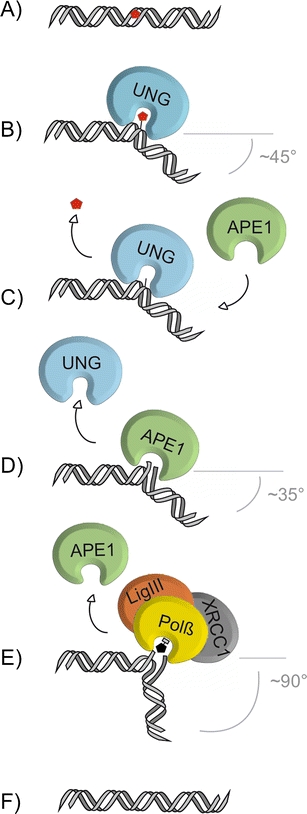
“The ligation process is carried by DNA ligase III working together with its cofactor X-ray repair cross-complementing protein 1(XRCC1) [111,112,113].”
From Focus on UV-Induced DNA Damage and Repair—Disease Relevance and Protective Strategies (2020) · cites this paper as [112]
Self-check
Percentages, sums and reported differences re-computed from the paper’s own numbers.
The self-check needs the paper’s full text.
Citations
Cites
1 retracted
DNA demethylation in hormone-induced transcriptional derepression
Kim, M. S., Kondo, T., Takada, I., Youn, M., Yamamoto, Y., Takahashi, S., Μatsumoto, T., Fujiyama, S., Shirode, Y., Yamaoka, I., et al. (2009) · Nature · doi:10.1038/nature08456 · Cited by 242
RetractedConversion of 5-Methylcytosine to 5-Hydroxymethylcytosine in Mammalian DNA by MLL Partner TET1
Tahiliani, M., Koh, K. P., Shen, Y., Pastor, W. A., Bandukwala, H., Brudno, Y., Agarwal, S., Iyer, L. M., Liu, D. R., Aravind, L., et al. (2009) · Science · doi:10.1126/science.1170116 · Cited by 5,836
Friedberg, E. C., Walker, G. C., Siede, W., Wood, R. D., Schultz, R. A., & Ellenberger, T. (2005) · doi:10.1128/9781555816704 · Cited by 5,683
Muramatsu, M., Kinoshita, K., Fagarasan, S., Yamada, S., Shinkai, Y., & Honjo, T. (2000) · Cell · doi:10.1016/s0092-8674(00)00078-7 · Cited by 3,475
Tet proteins can convert 5-methylcytosine to 5-formylcytosine and 5-carboxylcytosine
Ito, S., Shen, L., Dai, Q., Wu, S. C., Collins, L. B., Swenberg, J. A., He, C., & Zhang, Y. (2011) · Science · doi:10.1126/science.1210597 · Cited by 3,451
Tet-Mediated Formation of 5-Carboxylcytosine and Its Excision by TDG in Mammalian DNA
He, Y., Li, B.-Z., Li, Z., Liu, P., Wang, Y., Tang, Q., Ding, J., Jia, Y., Chen, Z., Li, L., et al. (2011) · Science · doi:10.1126/science.1210944 · Cited by 2,776
Ito, S., D’Alessio, A. C., Taranova, O., Hong, K., Sowers, L. C., & Zhang, Y. (2010) · Nature · doi:10.1038/nature09303 · Cited by 2,628
Highly Integrated Single-Base Resolution Maps of the Epigenome in Arabidopsis
Lister, R., O’Malley, R. C., Tonti‐Filippini, J., Gregory, B. D., Berry, C. C., Millar, A. H., & Ecker, J. R. (2008) · Cell · doi:10.1016/j.cell.2008.03.029 · Cited by 2,424
Lindahl, T. L., & Wood, R. D. (1999) · Science · doi:10.1126/science.286.5446.1897 · Cited by 1,521
Inherited variants of MYH associated with somatic G:C→T:A mutations in colorectal tumors
Tassan, N. A. A., Chmiel, N. H., Maynard, J. H., Fleming, N. I., Livingston, A. L., Williams, G. T., Hodges, A., Davies, D. R., David, S. S., Sampson, J. R., et al. (2002) · Nature Genetics · doi:10.1038/ng828 · Cited by 1,408
Cited by
Sorted by citations
Items 101–200 of 410
Acetylation and Deacetylation of DNA Repair Proteins in Cancers
Li, S., Shi, B., Liu, X., & An, H. (2020) · Frontiers in Oncology · doi:10.3389/fonc.2020.573502 · Cited by 38
HMCES protects immunoglobulin genes specifically from deletions during somatic hypermutationPreprint
Wu, L., Shukla, V., Yadavalli, A. D., Dinesh, R. K., Xu, D., Rao, A., & Schatz, D. G. (2022) · Genes & Development · doi:10.1101/gad.349438.122 · Cited by 38
van Loon, B., & Samson, L. D. (2013) · DNA repair · doi:10.1016/j.dnarep.2012.11.009 · Cited by 38
DNA: Damage and Repair Mechanisms in Humans
Ambekar, S. S. (2017) · Global Journal of Pharmacy & Pharmaceutical Sciences · doi:10.19080/gjpps.2017.03.555613 · Cited by 39
The impact of DNA methylation in Alphaproteobacteria
Mouammine, A., & Collier, J. (2018) · Molecular Microbiology · doi:10.1111/mmi.14079 · Cited by 37
DNA alkylation lesion repair: outcomes and implications in cancer chemotherapy
Peng, Y., & Pei, H. (2021) · Journal of Zhejiang University SCIENCE B · doi:10.1631/jzus.b2000344 · Cited by 41
Quiñones, J. L., Thapar, U., Wilson, S. H., Ramsden, D. A., & Demple, B. (2020) · DNA repair · doi:10.1016/j.dnarep.2019.102773 · Cited by 37
Edmonds, M. J., Carter, R. J., Nickson, C. M., Williams, S. C., & Parsons, J. L. (2016) · Nucleic Acids Research · doi:10.1093/nar/gkw959 · Cited by 37
Deoxyuracil in DNA and disease: Genomic signal or managed situation?
Chon, J., Field, M. S., & Stover, P. J. (2019) · DNA repair · doi:10.1016/j.dnarep.2019.02.014 · Cited by 33
HMCES safeguards replication from oxidative stress and ensures error‐free repair
Srivastava, M., Su, D., Zhang, H., Chen, Z., Tang, M., Nie, L., & Chen, J. (2020) · EMBO Reports · doi:10.15252/embr.201949123 · Cited by 35
Cellular response to endogenous DNA damage: DNA base modifications in gene expression regulation
Bordin, D. L., Lirussi, L., & Nilsen, H. L. (2021) · DNA repair · doi:10.1016/j.dnarep.2021.103051 · Cited by 37
Klattenhoff, A. W., Thakur, M. A., Chu, C. S., Ray, D., Habib, S. L., & Kidane, D. (2017) · Oncotarget · doi:10.18632/oncotarget.22896 · Cited by 35
DNA–protein crosslinks from environmental exposure: Mechanisms of formation and repair
Kojima, Y., & Machida, Y. (2020) · Environmental and Molecular Mutagenesis · doi:10.1002/em.22381 · Cited by 33
DNA repair gene expression in biological tissues exposed to low-intensity infrared laser
da Fonseca, A. D. S., Mencalha, A. L., Campos, V. M. A., Ferreira-Machado, S. C., Peregrino, A. A. D. F., Geller, M., & de Paoli, F. (2012) · Lasers in Medical Science · doi:10.1007/s10103-012-1191-3 · Cited by 33
Mahapatra, K., Banerjee, S., De, S., Mitra, M., Roy, P., & Roy, S. (2021) · Frontiers in Cell and Developmental Biology · doi:10.3389/fcell.2021.671698 · Cited by 32
Oxidative DNA Damage and Repair: Mechanisms, Mutations, and Relation to Diseases
Roginskaya, M., & Razskazovskiy, Y. (2023) · Antioxidants · doi:10.3390/antiox12081623 · Cited by 32
Ramakrishnan, N., Weaver, T., Aubuchon, L. N., Woldegerima, A., Just, T., Song, K., Vindigni, A., Freudenthal, B., & Verma, P. (2024) · Nature Communications · doi:10.1038/s41467-024-50673-7 · Cited by 33
Skarpengland, T., Holm, S., Scheffler, K., Gregersen, I., Dahl, T. B., Suganthan, R., Segers, F. M., Østlie, I., Otten, J. J. T., Luna, L., et al. (2016) · Scientific Reports · doi:10.1038/srep28337 · Cited by 32
Expanding molecular roles of UV-DDB: Shining light on genome stability and cancer
Beecher, M. L., Kumar, N., Jang, S., Rapić-Otrin, V., & Houten, B. V. (2020) · DNA repair · doi:10.1016/j.dnarep.2020.102860 · Cited by 31
Cecchini, N. M., Torres, J. R., Lescano, I., Cobo, S., Nota, F., & Álvarez, M. E. (2022) · The Plant Journal · doi:10.1111/tpj.15675 · Cited by 31
Bidirectional transcription of trinucleotide repeats: Roles for excision repair
Budworth, H., & McMurray, C. T. (2013) · DNA repair · doi:10.1016/j.dnarep.2013.04.019 · Cited by 34
Dumitrache, L. C., Shimada, M., Downing, S. M., Kwak, Y. D., Li, Y., Illuzzi, J. L., Russell, H. R., Wilson, D. M., & McKinnon, P. J. (2018) · Proceedings of the National Academy of Sciences · doi:10.1073/pnas.1809682115 · Cited by 31
Liu, Y., Duong, W., Krawczyk, C., Bretschneider, N., Borbély, G., Varshney, M., Zinser, C., Schär, P., & Rüegg, J. (2016) · Epigenetics & Chromatin · doi:10.1186/s13072-016-0055-7 · Cited by 30
Self-citationTran, O., Tadesse, S., Chu, C. S., & Kidane, D. (2020) · Tumor Biology · doi:10.1177/1010428320918404 · Cited by 30
Wang, F., Zahid, O. K., Swain, B. E., Parsonage, D., Hollis, T., Harvey, S. E., Perrino, F. W., Kohli, R. M., Taylor, E. W., & Hall, A. R. (2017) · Nano Letters · doi:10.1021/acs.nanolett.7b03911 · Cited by 32
Single-stranded DNA damage: Protecting the single-stranded DNA from chemical attack
Anindya, R. (2020) · DNA repair · doi:10.1016/j.dnarep.2020.102804 · Cited by 34
Activated or Impaired: An Overview of DNA Repair in Neurodegenerative Diseases
Qin, N., Geng, A., & Xue, R. (2022) · Aging and Disease · doi:10.14336/ad.2021.1212 · Cited by 31
Rai, P., & Sobol, R. W. (2019) · DNA repair · doi:10.1016/j.dnarep.2019.03.001 · Cited by 28
Weirath, N. A., Hurben, A. K., Chao, C., Pujari, S. S., Cheng, T., Liu, S., & Tretyakova, N. Y. (2022) · ACS Medicinal Chemistry Letters · doi:10.1021/acsmedchemlett.1c00677 · Cited by 28
Singh, S., Singh, M. K., & Das, P. (2017) · Sensors and Actuators B Chemical · doi:10.1016/j.snb.2017.08.100 · Cited by 28
Targeting the DNA damage response in cancer
Guffanti, F., Chiappa, M., & Damia, G. L. M. (2024) · MedComm · doi:10.1002/mco2.788 · Cited by 30
Versatile Recombinant SUMOylation System for the Production of SUMO-Modified Protein
Weber, A. R., Schuermann, D., & Schär, P. (2014) · PLoS ONE · doi:10.1371/journal.pone.0102157 · Cited by 27
Self-citationBase Excision Repair in Physiology and Pathology of the Central Nervous System
Bosshard, M., Markkanen, E., & van Loon, B. (2012) · International Journal of Molecular Sciences · doi:10.3390/ijms131216172 · Cited by 30
Enzymology of mitochondrial DNA repair
Alencar, R. R., Batalha, C. M. P. F., Freire, T. S., & de Souza-Pinto, N. C. (2019) · The Enzymes · doi:10.1016/bs.enz.2019.06.002 · Cited by 31
Hughes, J. R., & Parsons, J. L. (2020) · Frontiers in Cell and Developmental Biology · doi:10.3389/fcell.2020.607060 · Cited by 27
Activation of DNA damage response signaling in mammalian cells by ionizing radiation
Ghosh, S., & Ghosh, A. (2021) · Free Radical Research · doi:10.1080/10715762.2021.1876853 · Cited by 28
DNA Tile Self‐Assembly Guided by Base Excision Repair Enzymes
Farag, N., Ercolani, G., Grosso, E. D., & Ricci, F. (2022) · Angewandte Chemie International Edition · doi:10.1002/anie.202208367 · Cited by 27
MutY-glycosylase: An overview on mutagenesis and activities beyond the GO system
de Oliveira, A. H. S., da Silva, A. E., de Oliveira, I. M., Henriques, J. A. P., & Agnez‐Lima, L. F. (2014) · Mutation research. Fundamental and molecular mechanisms of mutagenesis · doi:10.1016/j.mrfmmm.2014.08.002 · Cited by 28
Lewis, L. C., Lo, P. C. K., Foster, J. M., Dai, N., Junior, I. R. C., Durczak, P. M., Duncan, G., Ramsawhook, A., Aithal, G. P., Denning, C. N., et al. (2017) · Epigenetics · doi:10.1080/15592294.2017.1292189 · Cited by 26
Breaking bad: The mutagenic effect of DNA repair
Chen, J., & Furano, A. V. (2015) · DNA repair · doi:10.1016/j.dnarep.2015.04.012 · Cited by 27
Maher, R. L., Marsden, C. G., Averill, A. M., Wallace, S. S., Sweasy, J. B., & Pederson, D. S. (2017) · DNA repair · doi:10.1016/j.dnarep.2017.06.029 · Cited by 25
Lenz, S. A. P., Kellie, J. L., & Wetmore, S. D. (2015) · The Journal of Physical Chemistry B · doi:10.1021/acs.jpcb.5b10337 · Cited by 24
Hanna, B., Michel, M., Helleday, T., & Mortusewicz, O. (2021) · International Journal of Molecular Sciences · doi:10.3390/ijms22094542 · Cited by 30
Puri, R. V., Singh, N., Gupta, R. K., & Tyagi, A. K. (2013) · PLoS ONE · doi:10.1371/journal.pone.0071535 · Cited by 24
Sequencing 5‐Hydroxymethyluracil at Single‐Base Resolution
Kawasaki, F., Cuesta, S. M., Beraldi, D., Mahtey, A., Hardisty, R. E., Carrington, M., & Balasubramanian, S. (2018) · Angewandte Chemie International Edition · doi:10.1002/anie.201804046 · Cited by 23
Nota, F., Cambiagno, D. A., Ribone, P. A., & Álvarez, M. E. (2015) · Plant Science · doi:10.1016/j.plantsci.2015.03.011 · Cited by 23
Regulation of base excision repair proteins by ubiquitylation
Edmonds, M. J., & Parsons, J. L. (2014) · Experimental Cell Research · doi:10.1016/j.yexcr.2014.07.031 · Cited by 22
Huang, S.-P., Ho, T.-M., Yang, C.-W., Chang, Y. M., Chen, J., Shaw, N.-S., Horng, J., Hsu, S., Liao, M., Wu, L.-C., et al. (2017) · Nutrients · doi:10.3390/nu9090948 · Cited by 21
Williams, S. C., & Parsons, J. L. (2018) · Molecular and Cellular Biology · doi:10.1128/mcb.00616-17 · Cited by 21
Hans, F., Senarisoy, M., Naidu, C. B., & Timmins, J. (2020) · International Journal of Molecular Sciences · doi:10.3390/ijms21239226 · Cited by 26
Blythe, M. J., Kocer, A., Rubio-Roldán, A., Giles, T. C. B., Abakir, A., Ialy-Radio, C., Wheldon, L. M., Bereshchenko, O., Bruscoli, S., Kondrashov, A., et al. (2021) · Communications Biology · doi:10.1038/s42003-021-02217-8 · Cited by 7
3CAPS – a structural AP–site analogue as a tool to investigate DNA base excision repair
Schuermann, D., Scheidegger, S. P., Weber, A. R., Bjørås, M., Leumann, C. J., & Schär, P. (2016) · Nucleic Acids Research · doi:10.1093/nar/gkv1520 · Cited by 21
Self-citationPromises and pitfalls of synthetic chromosomes in plants
Birchler, J. A. (2015) · Trends in biotechnology · doi:10.1016/j.tibtech.2014.12.010 · Cited by 21
Research progress of base editing and prime editing tools based on the CRISPR/Cas system
Gao, H., Gao, S., Kan, G., Valentovich, L. N., & An, Y. (2025) · Molecular Therapy — Nucleic Acids · doi:10.1016/j.omtn.2025.102771 · Cited by 26
Maintenance of genome integrity by the late-acting cytoplasmic iron-sulfur assembly (CIA) complex
Petronek, M. S., & Allen, B. G. (2023) · Frontiers in Genetics · doi:10.3389/fgene.2023.1152398 · Cited by 23
Uncovering universal rules governing the selectivity of the archetypal DNA glycosylase TDG
Dodd, T., Yan, C., Kossmann, B. R., Martin, K., & Ivanov, I. N. (2018) · Proceedings of the National Academy of Sciences · doi:10.1073/pnas.1803323115 · Cited by 22
Monitoring regulation of DNA repair activities of cultured cells in-gel using the comet assay
Nickson, C. M., & Parsons, J. L. (2014) · Frontiers in Genetics · doi:10.3389/fgene.2014.00232 · Cited by 20
Karwowski, B. T. (2019) · Cells · doi:10.3390/cells8111303 · Cited by 19
DNA Glycosylases Define the Outcome of Endogenous Base Modifications
Lirussi, L., & Nilsen, H. L. (2023) · International Journal of Molecular Sciences · doi:10.3390/ijms241210307 · Cited by 21
Influence of Oxidized Purine Processing on Strand Directionality of Mismatch Repair
Repmann, S., Harris, M. O., & Jiricny, J. (2015) · Journal of Biological Chemistry · doi:10.1074/jbc.m114.629907 · Cited by 19
Bailis, J. M., Weidmann, A. G., Mariano, N. F., & Barton, J. K. (2017) · Proceedings of the National Academy of Sciences · doi:10.1073/pnas.1706665114 · Cited by 19
Berra, C. M., Torrezan, G. T., de Paula, C. A., Hsieh, R., Lourenço, S. V., & Carraro, D. M. (2019) · Applied cancer research/Applied Cancer Research · doi:10.1186/s41241-019-0075-2 · Cited by 23
Characterization of FFPE-induced bacterial DNA damage and development of a repair method
Bueso, Y. F., Walker, S. P., & Tangney, M. (2020) · Biology Methods and Protocols · doi:10.1093/biomethods/bpaa015 · Cited by 18
Development and Characterization of a Modular CRISPR and RNA Aptamer Mediated Base Editing System
Collantes, J. C., Tan, V. M., Xu, H., Ruiz-Urigüen, M., Alasadi, A., Guo, J., Tao, H., Su, C., Tyc, K. M., Selmi, T., et al. (2021) · The CRISPR Journal · doi:10.1089/crispr.2020.0035 · Cited by 18
Gene editing with ‘pencil’ rather than ‘scissors’ in human pluripotent stem cells
Park, J.-C., Park, M. J., Lee, S.-Y., Kim, D., Kim, K.-T., Jang, H., & Cha, H. (2023) · Stem Cell Research & Therapy · doi:10.1186/s13287-023-03394-5 · Cited by 17
Alruwaili, M., Zonneville, J., Naranjo, M. N., Serio, H., Melendy, T., Straubinger, R. M., Gillard, B. M., Foster, B. A., Rajan, P., Attwood, K. M., et al. (2024) · Cell Reports Medicine · doi:10.1016/j.xcrm.2024.101434 · Cited by 18
Kaur, R., Nikkel, D. J., & Wetmore, S. D. (2020) · Wiley Interdisciplinary Reviews Computational Molecular Science · doi:10.1002/wcms.1471 · Cited by 18
Bagacean, C., Tempescul, A., Dantec, C. L., Bordron, A., Mohr, A., Saad, H., Olivier, V., Zdrenghea, M., Cristea, V., Cartron, P., et al. (2017) · Oncotarget · doi:10.18632/oncotarget.20081 · Cited by 17
An Excimer Clamp for Measuring Damaged‐Base Excision by the DNA Repair Enzyme NTH1
Jun, Y. W., Wilson, D. L., Kietrys, A. M., Lotsof, E. R., Conlon, S. G., David, S. S., & Kool, E. T. (2020) · Angewandte Chemie International Edition · doi:10.1002/anie.202001516 · Cited by 17
Waters, K. L., & Spratt, D. E. (2024) · International Journal of Molecular Sciences · doi:10.3390/ijms25031676 · Cited by 17
Destabilization of the PCNA trimer mediated by its interaction with the NEIL1 DNA glycosylase
Prakash, A., Moharana, K., Wallace, S. S., & Doublié, S. (2016) · Nucleic Acids Research · doi:10.1093/nar/gkw1282 · Cited by 17
DNA repair and erasure of 5‐methylcytosine in vertebrates
Schomacher, L., & Niehrs, C. (2017) · BioEssays · doi:10.1002/bies.201600218 · Cited by 18
Do, H., Molania, R., Mitchell, P. L., Vaiškunaite, R., Murdoch, J. D., & Dobrovic, A. (2017) · Clinical Chemistry · doi:10.1373/clinchem.2017.271932 · Cited by 17
BRCA1: Beyond double-strand break repair
Alli, E., & Ford, J. M. (2015) · DNA repair · doi:10.1016/j.dnarep.2015.04.028 · Cited by 16
Mourrain, L., & Boissonneault, G. (2021) · International Journal of Molecular Sciences · doi:10.3390/ijms222212418 · Cited by 17
Kushwah, A. S., Srivastava, K., & Banerjee, M. (2023) · Gene · doi:10.1016/j.gene.2023.147389 · Cited by 16
Advances in base editing: A focus on base transversions
Wang, D., Zhang, Y., Zhang, J., & Zhao, J. (2024) · Mutation Research/Reviews in Mutation Research · doi:10.1016/j.mrrev.2024.108515 · Cited by 16
Additional functions of selected proteins involved in DNA repair
Koliadenko, V., & Wilanowski, T. (2019) · Free Radical Biology and Medicine · doi:10.1016/j.freeradbiomed.2019.10.010 · Cited by 18
Impact of Oxidative DNA Damage and the Role of DNA Glycosylases in Neurological Dysfunction
de Sousa, M. M. L., Ye, J., Luna, L., Hildrestrand, G. A., Bjørås, K. Ø., Scheffler, K., & Bjørås, M. (2021) · International Journal of Molecular Sciences · doi:10.3390/ijms222312924 · Cited by 17
The theory of RNA-mediated gene evolution
Morris, K. V. (2015) · Epigenetics · doi:10.1080/15592294.2014.995536 · Cited by 14
Lukina, M. V., Koval, V. V., Lomzov, A. A., Zharkov, D. O., & Fedorova, O. S. (2017) · Molecular BioSystems · doi:10.1039/c7mb00343a · Cited by 13
Wang, L., Xi, K., Zhu, L., & Da, L. (2022) · Journal of Chemical Information and Modeling · doi:10.1021/acs.jcim.2c00091 · Cited by 14
Circ-Udg Derived from Cyprinid Herpesvirus 2 Promotes Viral Replication
Zhu, M., Dai, Y., Tong, X., Zhang, Y., Zhou, Y., Cheng, J., Jiang, Y., Yang, R., Wang, X., Cao, G., et al. (2022) · Microbiology Spectrum · doi:10.1128/spectrum.00943-22 · Cited by 14
Alonso, A., Castex, C. B., Ferrante, A. A., Pinto, M., Castañeira, C., Trasorras, V. L., Gambarotta, M. C., Losinno, L., & Miragaya, M. H. (2014) · Andrologia · doi:10.1111/and.12273 · Cited by 14
Global deformation facilitates flipping of damaged 8-oxo-guanine and guanine in DNA
Rosa, G. L., & Zacharias, M. (2016) · Nucleic Acids Research · doi:10.1093/nar/gkw827 · Cited by 15
Involvement of Iron-Containing Proteins in Genome Integrity in Arabidopsis Thaliana
Zhang, C. (2015) · Genome Integrity · doi:10.4103/2041-9414.155953 · Cited by 14
Genomic Instability Evolutionary Footprints on Human Health: Driving Forces or Side Effects?
Veschetti, L., Treccani, M., Tomi, E. D., & Malerba, G. (2023) · International Journal of Molecular Sciences · doi:10.3390/ijms241411437 · Cited by 16
From rest to repair: Safeguarding genomic integrity in quiescent cells
Leung, C. W. B., Wall, J., & Esashi, F. (2024) · DNA repair · doi:10.1016/j.dnarep.2024.103752 · Cited by 17
Wolna, A. H., Fleming, A. M., An, N., He, L., White, H. S., & Burrows, C. J. (2013) · Israel Journal of Chemistry · doi:10.1002/ijch.201300022 · Cited by 13
Kavec, M., Urbanova, M., Makovický, P., Opattová, A., Tomášová, K., Kroupa, M., Kostovcikova, K., Siskova, A., Navvabi, N., Schneiderová, M., et al. (2022) · International Journal of Molecular Sciences · doi:10.3390/ijms23105704 · Cited by 13
Approaching Sites of Action of Temozolomide for Pharmacological and Clinical Studies in Glioblastoma
Fresnais, M., Turcan, Ş., Theile, D., Ungermann, J., Zeed, Y. A., Lindner, J. R., Breitkopf, M., Burhenne, J., Haefeli, W. E., & Longuespée, R. (2021) · Biomedicines · doi:10.3390/biomedicines10010001 · Cited by 13
DNA damage mediated by UV radiation and relative repair mechanisms in mammals
Wang, Y., Deng, X., & Zhou, M. (2022) · Genome Instability & Disease · doi:10.1007/s42764-022-00090-1 · Cited by 13
Kaur, N., Sarkar, B., Mittal, S., Dhiman, M., Taglialatela, G., Perez‐Polo, R. J., & Mantha, A. K. (2014) · Springer eBooks · doi:10.1007/978-81-322-2035-0_13 · Cited by 12
Identification of UHRF1/2 as new N-methylpurine DNA glycosylase-interacting proteins
Liang, C., Zhang, X., Song, S., Tian, C., Yin, Y., Xing, G., He, F., & Zhang, L. (2013) · Biochemical and Biophysical Research Communications · doi:10.1016/j.bbrc.2013.02.126 · Cited by 12
Meng, H., Chen, G., Gao, H., Song, X., Shi, Y. S., & Cao, L. (2014) · International Journal of Molecular Sciences · doi:10.3390/ijms151222604 · Cited by 12
Role of the DNA repair glycosylase OGG1 in the activation of murine splenocytes
Seifermann, M., Ulges, A., Bopp, T., Melcea, S., Schäfer, A., Oka, S., Nakabeppu, Y., Klungland, A., Niehrs, C., & Epe, B. (2017) · DNA repair · doi:10.1016/j.dnarep.2017.08.005 · Cited by 14
Selective therapeutic strategy for p53-deficient cancer by targeting dysregulation in DNA repair
Zonneville, J., Wang, M., Alruwaili, M., Smith, B. E., Melnick, M., Eng, K. H., Melendy, T., Park, B. H., Iyer, R. V., Fountzilas, C. K., et al. (2021) · Communications Biology · doi:10.1038/s42003-021-02370-0 · Cited by 13
Cibichakravarthy, B., Osés-Prieto, J. A., Ben‐Yosef, M., Burlingame, A. L., Karr, T. L., & Gottlieb, Y. (2022) · Microbiology Spectrum · doi:10.1128/spectrum.01673-21 · Cited by 12
Physiology of the read–write genome
Shapiro, J. A. (2014) · The Journal of Physiology · doi:10.1113/jphysiol.2014.271130 · Cited by 12
Shiraishi, M., Ishino, S., Heffernan, M., Cann, I., & Ishino, Y. (2018) · Scientific Reports · doi:10.1038/s41598-018-34000-x · Cited by 11
Metadata
- Authors
- Jacobs, A. L., & Schär, P.
- Affiliations
- University of Basel (CH)
- Corresponding author
- Schär, Primo
- ORCID
- Schär, Primo
- Venue
- Chromosoma
- Published
- 2011-11-03
- Volume
- 121
- Issue
- 1
- Pages
- 1-20
- ISSN
- 0009-5915 (ISSN-L)
- 1432-0886
- PMC
- PMC3260424
- OpenAlex
- W2052679982
- Cited by
- 407
- References
- 177
- Citations by year
- 2026: 24 · 2025: 30 · 2024: 32 · 2023: 28 · 2022: 35 · 2021: 34 · 2020: 35 · 2019: 28 · 2018: 33 · 2017: 29 · 2016: 29 · 2015: 18 · 2014: 22 · 2013: 14 · 2012: 16
- FWCI
- 1.51
- Type
- journal article
- Language
- en
- Open access
- hybrid
- doi.org
- Licence
- cc-by-nc
- Locations
- Chromosoma (publishedVersion, cc-by-nc)
- PubMed Central (publishedVersion, cc-by-nc)
- PubMed (publishedVersion)
- reroDoc Digital Library (submittedVersion)
- Funders
- National Science Foundation
- Schweizerischer Nationalfonds zur Förderung der Wissenschaftlichen Forschung (122574, 31003A)
- Topics
- Life Sciences › Biochemistry, Genetics and Molecular Biology › Molecular Biology › DNA Repair Mechanisms
- Life Sciences › Biochemistry, Genetics and Molecular Biology › Molecular Biology › DNA and Nucleic Acid Chemistry
- Life Sciences › Biochemistry, Genetics and Molecular Biology › Molecular Biology › Epigenetics and DNA Methylation
- Keywords
- DNA glycosylase, base excision repair, DNA damage recognition, base flipping, DNA oxidation, alkylation, deamination, mutagenesis, innate immunity, adaptive immunity, DNA methylation, epigenetic stability, genome stability
- MeSH terms
- Animals, Base Sequence, DNA Repair, Humans, Models, Biological, Models, Molecular, Molecular Sequence Data, Structure-Activity Relationship, Genomic Instability, DNA Glycosylases
About these checks
Registry, retraction, Cites and statistics results are computed, not judged, with one exception: a printed reference that no index lists is read once by a model before it counts as a citation error. Claims are extracted by a model and kept only when their quote appears verbatim in the text; each cited source is then checked, with a model’s help, for whether it says what the claim relies on. Those verdicts can be wrong — read the claim’s quote and the cited source before relying on one.
Statistics and arithmetic are recomputed, not judged.
Confidence bands are shown only for fields calibrated on our annotated test set. None is calibrated yet, so no band is shown.
What counts as a claim ›How we measure confidence ›How we check this ›
Are you an author, or do you see a problem with this page? Request a review
