

The DOI matches its Crossref record; 176 of the 177 references it cites were found in a registry or an index.
DNA glycosylases: in DNA repair and beyond
Open accessAbstract
The base excision repair machinery protects DNA in cells from the damaging effects of oxidation, alkylation, and deamination; it is specialized to fix single-base damage in the form of small chemical modifications. Base modifications can be mutagenic and/or cytotoxic, depending on how they interfere with the template function of the DNA during replication and transcription. DNA glycosylases play a key role in the elimination of such DNA lesions; they recognize and excise damaged bases, thereby initiating a repair process that restores the regular DNA structure with high accuracy. All glycosylases share a common mode of action for damage recognition; they flip bases out of the DNA helix into a selective active site pocket, the architecture of which permits a sensitive detection of even minor base irregularities. Within the past few years, it has become clear that nature has exploited this ability to read the chemical structure of DNA bases for purposes other than canonical DNA repair. DNA glycosylases have been brought into context with molecular processes relating to innate and adaptive immunity as well as to the control of DNA methylation and epigenetic stability. Here, we summarize the key structural and mechanistic features of DNA glycosylases with a special focus on the mammalian enzymes, and then review the evidence for the newly emerging biological functions beyond the protection of genome integrity.
Overview
The claims and statistics of this paper haven’t been checked yet.
Run the check — free, no account needed. It reads the open-access text and checks the sources it cites.
Integrity signals
Registry
Cites
Statistics
Figures
Verification
Claims the paper makes
The claims and statistics of this paper haven’t been checked yet.
Run the check — free, no account needed. It reads the open-access text and checks the sources it cites.
Claims other papers make about this one
Each is checked against this paper’s own text: does it say what the citing paper says it does?
In the citing paper
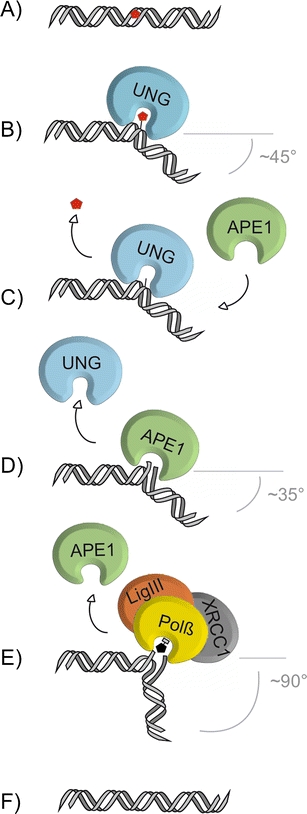
“The ligation process is carried by DNA ligase III working together with its cofactor X-ray repair cross-complementing protein 1(XRCC1) [111,112,113].”
From Focus on UV-Induced DNA Damage and Repair—Disease Relevance and Protective Strategies (2020) · cites this paper as [112]
Self-check
Percentages, sums and reported differences re-computed from the paper’s own numbers.
The self-check needs the paper’s full text.
Citations
Cites
1 retracted
DNA demethylation in hormone-induced transcriptional derepression
Kim, M. S., Kondo, T., Takada, I., Youn, M., Yamamoto, Y., Takahashi, S., Μatsumoto, T., Fujiyama, S., Shirode, Y., Yamaoka, I., et al. (2009) · Nature · doi:10.1038/nature08456 · Cited by 242
RetractedConversion of 5-Methylcytosine to 5-Hydroxymethylcytosine in Mammalian DNA by MLL Partner TET1
Tahiliani, M., Koh, K. P., Shen, Y., Pastor, W. A., Bandukwala, H., Brudno, Y., Agarwal, S., Iyer, L. M., Liu, D. R., Aravind, L., et al. (2009) · Science · doi:10.1126/science.1170116 · Cited by 5,836
Friedberg, E. C., Walker, G. C., Siede, W., Wood, R. D., Schultz, R. A., & Ellenberger, T. (2005) · doi:10.1128/9781555816704 · Cited by 5,683
Muramatsu, M., Kinoshita, K., Fagarasan, S., Yamada, S., Shinkai, Y., & Honjo, T. (2000) · Cell · doi:10.1016/s0092-8674(00)00078-7 · Cited by 3,475
Tet proteins can convert 5-methylcytosine to 5-formylcytosine and 5-carboxylcytosine
Ito, S., Shen, L., Dai, Q., Wu, S. C., Collins, L. B., Swenberg, J. A., He, C., & Zhang, Y. (2011) · Science · doi:10.1126/science.1210597 · Cited by 3,451
Tet-Mediated Formation of 5-Carboxylcytosine and Its Excision by TDG in Mammalian DNA
He, Y., Li, B.-Z., Li, Z., Liu, P., Wang, Y., Tang, Q., Ding, J., Jia, Y., Chen, Z., Li, L., et al. (2011) · Science · doi:10.1126/science.1210944 · Cited by 2,776
Ito, S., D’Alessio, A. C., Taranova, O., Hong, K., Sowers, L. C., & Zhang, Y. (2010) · Nature · doi:10.1038/nature09303 · Cited by 2,628
Highly Integrated Single-Base Resolution Maps of the Epigenome in Arabidopsis
Lister, R., O’Malley, R. C., Tonti‐Filippini, J., Gregory, B. D., Berry, C. C., Millar, A. H., & Ecker, J. R. (2008) · Cell · doi:10.1016/j.cell.2008.03.029 · Cited by 2,424
Lindahl, T. L., & Wood, R. D. (1999) · Science · doi:10.1126/science.286.5446.1897 · Cited by 1,521
Inherited variants of MYH associated with somatic G:C→T:A mutations in colorectal tumors
Tassan, N. A. A., Chmiel, N. H., Maynard, J. H., Fleming, N. I., Livingston, A. L., Williams, G. T., Hodges, A., Davies, D. R., David, S. S., Sampson, J. R., et al. (2002) · Nature Genetics · doi:10.1038/ng828 · Cited by 1,408
Cited by
Sorted by citations
Items 201–300 of 410
A rapid, safe, and quantitative in vitro assay for measurement of uracil-DNA glycosylase activity
Squillaro, T., Finicelli, M., Alessio, N., Gaudio, S. D., Bernardo, G. D., Melone, M. A. B., Peluso, G., & Galderisi, U. (2019) · Journal of Molecular Medicine · doi:10.1007/s00109-019-01788-8 · Cited by 11
Karwowski, B. T. (2020) · Molecules · doi:10.3390/molecules25143126 · Cited by 11
Epigenetic Reprogramming in Cancer
Lindroth, A. M., Park, Y. J., & Plass, C. (2014) · Epigenetics and human health · doi:10.1007/978-3-642-31974-7_9 · Cited by 12
Zhao, H., Liu, T., & Yang, F. (2023) · Talanta · doi:10.1016/j.talanta.2023.124694 · Cited by 10
Guardians of the Genome: Iron–Sulfur Proteins in the Nucleus
Novoa‐Aponte, L., León-Torres, A., & Philpott, C. C. (2024) · Inorganics · doi:10.3390/inorganics12120316 · Cited by 9
Cancer prognosis using base excision repair genes
Kim, J., Kang, S.-J., Jo, N., Kim, S.-J., & Jang, S. (2025) · Molecules and Cells · doi:10.1016/j.mocell.2025.100186 · Cited by 10
Fan, Z., Song, H., Qi, M., Wang, M., Bai, Y., Sun, Y., & Yu, H. (2025) · International Journal of Molecular Sciences · doi:10.3390/ijms26031283 · Cited by 11
Kunrath‐Lima, M., Repolês, B. M., Alves, C. L., Furtado, C., Rajão, M. A., Macedo, A. M., Franco, G. R., Pena, S. D. J., Valenzuela-Pérez, L., Wisnovsky, S., et al. (2017) · Infection Genetics and Evolution · doi:10.1016/j.meegid.2017.09.030 · Cited by 10
Rognlien, A. G. W., Wollen, E. J., Atneosen‐Åsegg, M., Suganthan, R., Bjørås, M., & Saugstad, O. D. (2018) · Journal of Perinatal Medicine · doi:10.1515/jpm-2018-0172 · Cited by 10
Catalytic mechanism of the mismatch-specific DNA glycosylase methyl-CpG-binding domain 4
Ouzon‐Shubeita, H., Jung, H., Lee, M. H., Koag, M., & Lee, S. (2020) · Biochemical Journal · doi:10.1042/bcj20200125 · Cited by 11
The Role of DNA Repair in Genomic Instability of Multiple Myeloma
Ali, J. Y. H., Fitieh, A. M., & Ismail, I. H. (2022) · International Journal of Molecular Sciences · doi:10.3390/ijms23105688 · Cited by 11
Szalkai, B., Scheer, I., Nagy, K., Vértessy, B. G., & Grolmusz, V. I. (2014) · PLoS ONE · doi:10.1371/journal.pone.0101605 · Cited by 10
The Multifunction of TRIM26: From Immune Regulation to Oncology
Zou, J., Niu, K., Lü, T., Kan, J., Cheng, H., & Xu, L. (2024) · Protein and Peptide Letters · doi:10.2174/0109298665311516240621114519 · Cited by 9
Decoding mitochondrial DNA damage and repair associated with H. pylori infection
Shahi, A., & Kidane, D. (2025) · Frontiers in Cellular and Infection Microbiology · doi:10.3389/fcimb.2024.1529441 · Cited by 10
Hasan, A., Rizvi, S. F., Parveen, S., & Mir, S. S. (2022) · Life Sciences · doi:10.1016/j.lfs.2022.120852 · Cited by 11
Spatial mapping of the DNA adducts in cancer
Krieger, K. L., Mann, E. K., Lee, K. J., Bolterstein, E. A., Jebakumar, D., Ittmann, M., Zotto, V. L. D., Shaban, M., Sreekumar, A., & Gassman, N. R. (2023) · DNA repair · doi:10.1016/j.dnarep.2023.103529 · Cited by 9
MutS‐Homolog2 silencing generates tetraploid meiocytes in tomato ( Solanum lycopersicum )
Sarma, S., Pandey, A. K., Sharma, K., Ravi, M., Sreelakshmi, Y., & Sharma, R. P. (2018) · Plant Direct · doi:10.1002/pld3.17 · Cited by 9
Multifaceted nucleic acid probing with a rationally upgraded molecular rotor
Kha, T., Shi, Q., Pandya, N., & Zhu, R. (2024) · Chemical Science · doi:10.1039/d4sc00141a · Cited by 8
Advances in DNA damage detection: Current progress, challenges, and future directions
Kang, H., Park, H. J., Kang, J., Hwang, Y., Lee, Y., Park, S.-U., Kim, J., Lee, K. H., & Jang, S. (2025) · TrAC Trends in Analytical Chemistry · doi:10.1016/j.trac.2025.118246 · Cited by 9
Chemical Switching: A Concept Inspired by Strategies from Biocatalysis and Organocatalysis
Visnes, T., Zhou, K., Kemas, A. M., Campopiano, D. J., Lauschke, V. M., & Michel, M. (2025) · ChemBioChem · doi:10.1002/cbic.202500220 · Cited by 10
Base excision repair in human cancer: Emerging diagnostic and therapeutic target
Zhou, W., Jing, X., Hang, R., Liu, Z., Cao, L., & Li, M. (2025) · DNA repair · doi:10.1016/j.dnarep.2025.103879 · Cited by 10
Base excision repair in chromatin: A tug-of-war for DNA damage
Vito, A. F., Boesch, D. J., Hammons, A. M., Freudenthal, B., & Weaver, T. (2025) · DNA repair · doi:10.1016/j.dnarep.2025.103908 · Cited by 8
Kim, M., Jang, H., Baek, S.-Y., Choi, K.-J., Han, D.-H., & Sung, J. (2023) · Scientific Reports · doi:10.1038/s41598-023-43737-z · Cited by 7
Emerging links between iron-sulfur clusters and 5-methylcytosine base excision repair in plants
Buzas, D. M. (2016) · Genes & Genetic Systems · doi:10.1266/ggs.16-00015 · Cited by 8
Deoxyribonucleic acid glycosylase assays: Progress and prospects
Ng, H. Z., Ng, M., Eng, C. M., & Gao, Z. (2016) · TrAC Trends in Analytical Chemistry · doi:10.1016/j.trac.2016.08.005 · Cited by 8
Kinetics and thermodynamics of BI-BII interconversion altered by T:G mismatches in DNA
Westwood, M. N., Johnson, C. C., Oyler, N. A., & Meints, G. A. (2022) · Biophysical Journal · doi:10.1016/j.bpj.2022.03.031 · Cited by 8
Rancourt, A., Sato, S., & Satoh, M. S. (2022) · eLife · doi:10.7554/elife.72498 · Cited by 7
Karwowski, B. T. (2023) · Molecules · doi:10.3390/molecules28052180 · Cited by 8
Binding of undamaged double stranded DNA to vaccinia virus uracil-DNA Glycosylase
Schormann, N., Banerjee, S., Ricciardi, R. P., & Chattopadhyay, D. (2015) · BMC Structural Biology · doi:10.1186/s12900-015-0037-1 · Cited by 8
Repair of programmed DNA lesions in antibody class switch recombination: common and unique features
Shang, Y., & Meng, F. (2021) · Genome Instability & Disease · doi:10.1007/s42764-021-00035-0 · Cited by 8
Erasing Methylation Marks on DNA by Plant-Specific DEMETER Family DNA Glycosylases
Rai, P., Kumari, P., & Gaur, V. (2024) · Journal of Plant Growth Regulation · doi:10.1007/s00344-024-11533-2 · Cited by 7
Cell Senescence and the DNA Single-Strand Break Damage Repair Pathway
Sarma, P. A. P., Abbadie, C., de Launoit, Y., & Cleri, F. (2024) · DNA · doi:10.3390/dna4040036 · Cited by 8
Merlin, J. P. J., Rajan, S. S., & Abrahamse, H. (2025) · Cancer Medicine · doi:10.1002/cam4.71032 · Cited by 7
Konis, S. M. R., Hughes, J. R., & Parsons, J. L. (2022) · International Journal of Molecular Sciences · doi:10.3390/ijms231911613 · Cited by 7
Backbone Conformational Equilibrium in Mismatched DNA Correlates with Enzyme Activity
Westwood, M., Pilarski, A., Johnson, C., Mamoud, S., & Meints, G. (2023) · Biochemistry · doi:10.1021/acs.biochem.3c00230 · Cited by 7
Is Uracil-DNA Glycosylase UNG2 a New Cellular Weapon Against HIV-1?
Kara, H., Chazal, N., & Bouaziz, S. (2019) · Current HIV Research · doi:10.2174/1570162x17666190821154331 · Cited by 8
Кузнецова, А. А., Senchurova, S. I., Ishchenko, A. A., Saparbaev, M. K., Fedorova, O. S., & Kuznetsov, N. A. (2021) · International Journal of Molecular Sciences · doi:10.3390/ijms22168874 · Cited by 7
The mechanism of damage recognition by apurinic/apyrimidinic endonuclease Nfo from Escherichia coli
Senchurova, S. I., Syryamina, V. N., Кузнецова, А. А., Новопашина, Д. С., Ishchenko, A. A., Saparbaev, M. K., Dzuba, S. A., Fedorova, O. S., & Kuznetsov, N. A. (2022) · Biochimica et Biophysica Acta (BBA) - General Subjects · doi:10.1016/j.bbagen.2022.130216 · Cited by 7
Das, D., Duncton, M. A. J., Georgiadis, T. M., Pellicena, P., Clark, J., Sobol, R. W., Georgiadis, M. M., King-Underwood, J., Jobes, D. V., Chang, C., et al. (2023) · International Journal of Molecular Sciences · doi:10.3390/ijms242316637 · Cited by 7
Liu, C., Ren, Y., Gao, X., Du, X., & Yang, Z. (2022) · Journal of Computational Chemistry · doi:10.1002/jcc.27008 · Cited by 7
The Base Excision Repair Pathway
Parsons, J. L., & Edmonds, M. J. (2015) · Elsevier eBooks · doi:10.1016/b978-0-12-394447-4.10046-x · Cited by 7
Pittman, M. N., Nelsen, M. B., Thompson, M. K., & Prakash, A. (2026) · Genes · doi:10.3390/genes17010082 · Cited by 6
Chen, Y., Kuo, Y., You, Y., Lin, Y., & Chen, P. (2023) · Journal of Neurochemistry · doi:10.1111/jnc.15794 · Cited by 7
Fu, J., Yang, D.-H., Chen, Z., Yang, F.-R., Zhao, Y.-J., & Chen, Y. (2024) · Sensors and Actuators B Chemical · doi:10.1016/j.snb.2024.136701 · Cited by 6
Popazova, O., Belenichev, I. F., Bukhtiyarova, N. V., Ryzhenko, V. P., Gorchakova, N., Oksenych, V., & Kamyshnyi, O. (2025) · Antioxidants · doi:10.3390/antiox14060743 · Cited by 13
Novel mutations found in Mycobacterium leprae DNA repair gene nth from central India
Sharma, M., Dwivedi, P., Joshi, V., & Singh, P. (2023) · Journal of Infection and Chemotherapy · doi:10.1016/j.jiac.2023.12.011 · Cited by 6
Shpilman, Z., & Kidane, D. (2024) · Therapeutic Advances in Medical Oncology · doi:10.1177/17588359241248330 · Cited by 6
Exposure to Ethylating Agents: Where Do the Thresholds for Mutagenic/Clastogenic Effects Arise?
Gocke, E., Tang, L., & Singer, T. (2012) · Genes and Environment · doi:10.3123/jemsge.34.171 · Cited by 6
Filho, A. V. D. A., dos Santos, V. E., Calixto, M. D. S., Santos, N., Heimer, M. V., & Rosenblatt, A. (2018) · Clinical Oral Investigations · doi:10.1007/s00784-018-2352-y · Cited by 6
An Excimer Clamp for Measuring Damaged‐Base Excision by the DNA Repair Enzyme NTH1
Jun, Y. W., Wilson, D. L., Kietrys, A. M., Lotsof, E. R., Conlon, S. G., David, S. S., & Kool, E. T. (2020) · Angewandte Chemie · doi:10.1002/ange.202001516 · Cited by 6
Characterization of the Search Complex and Recognition Mechanism of the AlkD–DNA Glycosylase
Votaw, K. A., & McCullagh, M. (2018) · The Journal of Physical Chemistry B · doi:10.1021/acs.jpcb.8b09555 · Cited by 6
Kiss, D. J., Oláh, J., Tóth, G., Menyhárd, D. K., & Ferenczy, G. G. (2018) · Theoretical Chemistry Accounts · doi:10.1007/s00214-018-2361-6 · Cited by 6
Reporter Assays for BER Pathway
Piekna‐Przybylska, D. (2019) · Methods in molecular biology · doi:10.1007/978-1-4939-9500-4_8 · Cited by 5
Sugiyama, T., & Sanyal, M. R. (2023) · DNA repair · doi:10.1016/j.dnarep.2023.103617 · Cited by 5
Signon, L., & Simon, M. N. (2014) · Mutation research. Fundamental and molecular mechanisms of mutagenesis · doi:10.1016/j.mrfmmm.2014.07.008 · Cited by 5
Heacock, M. L., Poltoratsky, V. P., Prasad, R., & Wilson, S. H. (2012) · PLoS ONE · doi:10.1371/journal.pone.0047945 · Cited by 5
Petri net–based model of the human DNA base excision repair pathway
Radom, M., Machnicka, M. A., Krwawicz, J., Bujnicki, J. M., & Formanowicz, P. (2019) · PLoS ONE · doi:10.1371/journal.pone.0217913 · Cited by 5
Inducible TDG knockout models to study epigenetic regulation
Schwarz, S. D., Grundbacher, E., Hrovat, A. M., Xu, J., Kuśnierczyk, A., Vågbø, C. B., Schär, P., & Schuermann, D. (2020) · F1000Research · doi:10.12688/f1000research.25637.2 · Cited by 5
Self-citationJordano-Raya, M., Beltrán-Melero, C., Moreno-Recio, M. D., Martínez-Macías, M. I., Ariza, R. R., Roldán‐Arjona, T., & Córdoba‐Cañero, D. (2021) · International Journal of Molecular Sciences · doi:10.3390/ijms22168763 · Cited by 5
Bending of DNA duplexes with mutation motifs
Růžička, M., Souček, P., Kulhánek, P., Radová, L., Fajkusová, L., & Réblová, K. (2019) · DNA Research · doi:10.1093/dnares/dsz013 · Cited by 5
Hrabina, O., Brabec, V., & Nováková, O. (2019) · International Journal of Molecular Sciences · doi:10.3390/ijms20205012 · Cited by 5
Base Excision Repair in Chromatin and the Requirement for Chromatin Remodelling
Madders, E. C. E. T., & Parsons, J. L. (2020) · Advances in experimental medicine and biology · doi:10.1007/978-3-030-41283-8_5 · Cited by 5
The Link Between Human Alkyladenine DNA Glycosylase and Cancer Development
Kladova, O. A., & Кузнецова, А. А. (2025) · International Journal of Molecular Sciences · doi:10.3390/ijms26157647 · Cited by 5
APE1 active site residue Asn174 stabilizes the AP site and is essential for catalysis
DeHart, K. M., Hoitsma, N. M., Thompson, S. H., Borin, V. A., Agarwal, P. K., & Freudenthal, B. (2025) · Journal of Biological Chemistry · doi:10.1016/j.jbc.2025.110655 · Cited by 4
Yuen, P. K., Green, S. A., Ashby, J., Lay, K. T., Santra, A., Chen, X., Horvath, M. P., & David, S. S. (2018) · ACS Chemical Biology · doi:10.1021/acschembio.8b00771 · Cited by 4
DNA Damage, Repair Mechanisms, and Chromosomal Aberrations
Gerelchuluun, A. (2020) · Springer eBooks · doi:10.1007/978-981-13-7454-8_15 · Cited by 3
Peña-Gómez, M. J., Suárez-Pizarro, M., & Rosado, I. V. (2022) · International Journal of Molecular Sciences · doi:10.3390/ijms23020893 · Cited by 4
PA1 cells containing a truncated DNA polymerase β protein are more sensitive to gamma radiation
Patra, A., Nag, A., Chakraborty, A., & Bhattacharyya, N. (2022) · Radiation Oncology Journal · doi:10.3857/roj.2021.00689 · Cited by 3
Xu, H., Huang, W. S., He, Q., Zhao, Z., Zhang, F., Wang, R., Kang, J., & Tang, G. (2012) · Angewandte Chemie · doi:10.1002/ange.201204109 · Cited by 4
Structural and biochemical insights into NEIL2’s preference for abasic sites
Eckenroth, B. E., Bumgarner, J. D., Matsumoto-Elliott, O., David, S. S., & Doublié, S. (2023) · Nucleic Acids Research · doi:10.1093/nar/gkad1075 · Cited by 4
Meur, R. A. L., Pecen, T. J., Meur, K. V. L., Nagel, Z. D., & Chazin, W. (2024) · Journal of Biological Chemistry · doi:10.1016/j.jbc.2024.107579 · Cited by 4
Çağlayan, M. (2025) · DNA repair · doi:10.1016/j.dnarep.2025.103826 · Cited by 5
Sahay, O., Barik, G. K., Sharma, T., Pillai, A. D., Rapole, S., & Santra, M. K. (2021) · DNA repair · doi:10.1016/j.dnarep.2021.103261 · Cited by 4
The difference of intestinal microbiota composition between Lantang and Landrace newborn piglets
Li, L., Li, S., Luo, J., Chen, T., Xi, Q., Zhang, Y., & Sun, J. (2023) · BMC Veterinary Research · doi:10.1186/s12917-023-03642-z · Cited by 4
Alotaibi, F., Alshammari, K. M., Alotaibi, B. A., & Alsaab, H. O. (2024) · Frontiers in Pharmacology · doi:10.3389/fphar.2023.1280591 · Cited by 6
Młotkowska, P., Misztal, T., Kowalczyk, P., & Marciniak, E. (2024) · Scientific Reports · doi:10.1038/s41598-024-66094-x · Cited by 4
Recent Advances in Therapeutic Application of DNA Damage Response Inhibitors against Cancer
Fernandes, S. G., Shah, P., & Khattar, E. (2021) · Anti-Cancer Agents in Medicinal Chemistry · doi:10.2174/1871520621666210608105735 · Cited by 4
Inducible TDG knockout models to study epigenetic regulation
Schwarz, S. D., Grundbacher, E., Hrovat, A. M., Xu, J., Kuśnierczyk, A., Vågbø, C. B., Schär, P., & Schuermann, D. (2020) · F1000Research · doi:10.12688/f1000research.25637.1 · Cited by 4
Self-citationAn interstrand DNA crosslink glycosylase aids Acinetobacter baumannii pathogenesis
Kunkle, D. E., Cai, Y., Eichman, B. F., & Skaar, E. P. (2024) · Proceedings of the National Academy of Sciences · doi:10.1073/pnas.2402422121 · Cited by 5
Mechanisms of DNA Damage Recognition by UDG and PARP1 in the Nucleosome
Ghediri, S., Sarma, P. A. P., Saravanan, V., Abbadie, C., Blossey, R., & Cleri, F. (2025) · Biomolecules · doi:10.3390/biom15050649 · Cited by 6
Genome instability: Does genetic diversity amplification drive tumorigenesis?
Lane, A. B., & Clarke, D. J. (2012) · BioEssays · doi:10.1002/bies.201200082 · Cited by 3
Enhanced Sampling for Conformational Changes and Molecular Mechanisms of Human NTHL1
Odstrcil, R. E., Dutta, P., & Liu, J. (2024) · The Journal of Physical Chemistry Letters · doi:10.1021/acs.jpclett.4c00161 · Cited by 3
Alkylated DNA repair by a novel HhH-GPD family protein from Crenarchaea
Zhang, L., Gao, T., Zheng, L., Chen, C., Jiang, D., Yin, Y., Zheng, Y., Cao, P., Gong, Y., & Yang, Z. (2025) · Nucleic Acids Research · doi:10.1093/nar/gkaf012 · Cited by 2
Nikkel, D. J., & Wetmore, S. D. (2025) · Pure and Applied Chemistry · doi:10.1515/pac-2025-0507 · Cited by 3
Modular affinity-labeling of the cytosine demethylation base elements in DNA
Wang, F., Zahid, O. K., Ghanty, U., Kohli, R. M., & Hall, A. R. (2020) · Scientific Reports · doi:10.1038/s41598-020-76544-x · Cited by 3
Sequencing 5‐Hydroxymethyluracil at Single‐Base Resolution
Kawasaki, F., Cuesta, S. M., Beraldi, D., Mahtey, A., Hardisty, R. E., Carrington, M., & Balasubramanian, S. (2018) · Angewandte Chemie · doi:10.1002/ange.201804046 · Cited by 3
Abdel-Samad, M. R. K., Taher, F. A. E.-R., Shehata, M., Shama, N. M. A., Mostafa, A., Ali, M. A., & Ibrahim, I. H. (2022) · Journal of Applied Pharmaceutical Science · doi:10.7324/japs.2022.120713 · Cited by 3
Kuznetsov, N. A. (2023) · Photonics · doi:10.3390/photonics10091033 · Cited by 3
Selby, K., Douillard, F. P., & Lindström, M. (2024) · International Journal of Food Microbiology · doi:10.1016/j.ijfoodmicro.2024.110927 · Cited by 3
Antiviral defence is a conserved function of diverse DNA glycosylasesPreprint
Getz, L. J., Qian, A. L., Liu, Y., Fairburn, S. R., Butt, M. S., Lee, Y., Weigele, P., & Maxwell, K. L. (2025) · bioRxiv (Cold Spring Harbor Laboratory) · doi:10.1101/2025.10.29.685425 · Cited by 3
Guo, W., Wang, D., Chen, W., Rao, C., Tang, Y., & Li, W. (2024) · Protein Expression and Purification · doi:10.1016/j.pep.2024.106621 · Cited by 2
Jones, K., Dye, E., Gilkes, N., Xia, D., Jiang, S., & Li, W. (2025) · Journal of Environmental Science and Health Part C · doi:10.1080/26896583.2025.2545086 · Cited by 2
Moncadas, L. S., Shakurova, A., Hofer, C., & Andrei, A. (2026) · Nature Communications · doi:10.1038/s41467-026-71228-y · Cited by 2
Liao, Y., Lin, S.-J., Ko, T., Liu, C., Hsu, K., & Wang, H. (2020) · International Journal of Biological Macromolecules · doi:10.1016/j.ijbiomac.2020.05.267 · Cited by 2
A direct synthesis of 5-azidomethyl pyrimidine nucleosides via dehydroxyazidation
Wang, X., Liu, L., & Cheng, L. (2024) · Tetrahedron Letters · doi:10.1016/j.tetlet.2024.155097 · Cited by 2
Samaila, A., Basir, R., Lawal, M. G., Abas, R., Abdullah, M. A., Majid, R. A., Nordin, N., Hussain, M. K., Razak, N. I. A., Yong, Y. K., et al. (2024) · Immunopharmacology and Immunotoxicology · doi:10.1080/08923973.2024.2391471 · Cited by 2
Chemical Versus Enzymatic Nucleic Acid Modifications and Genomic Stability
Cortez, J., & Migaud, M. E. (2025) · DNA · doi:10.3390/dna5020019 · Cited by 2
Role of Repair Enzymes - Damage Control of DNA From Ageing pans
Singh, S., & Purohit, M. (2016) · Pharmaceutical and Biosciences Journal · doi:10.20510/ukjpb/4/i3/107832 · Cited by 2
Miyazono, K., Wang, D., Ito, T., & Tanokura, M. (2021) · Scientific Reports · doi:10.1038/s41598-020-79537-y · Cited by 2
Alekseeva, I. V., Bakman, A. S., Iakovlev, D. A., Kuznetsov, N. A., & Fedorova, O. S. (2021) · Molecular Biology · doi:10.1134/s0026893321020035 · Cited by 2
Metadata
- Authors
- Jacobs, A. L., & Schär, P.
- Affiliations
- University of Basel (CH)
- Corresponding author
- Schär, Primo
- ORCID
- Schär, Primo
- Venue
- Chromosoma
- Published
- 2011-11-03
- Volume
- 121
- Issue
- 1
- Pages
- 1-20
- ISSN
- 0009-5915 (ISSN-L)
- 1432-0886
- PMC
- PMC3260424
- OpenAlex
- W2052679982
- Cited by
- 407
- References
- 177
- Citations by year
- 2026: 24 · 2025: 30 · 2024: 32 · 2023: 28 · 2022: 35 · 2021: 34 · 2020: 35 · 2019: 28 · 2018: 33 · 2017: 29 · 2016: 29 · 2015: 18 · 2014: 22 · 2013: 14 · 2012: 16
- FWCI
- 1.51
- Type
- journal article
- Language
- en
- Open access
- hybrid
- doi.org
- Licence
- cc-by-nc
- Locations
- Chromosoma (publishedVersion, cc-by-nc)
- PubMed Central (publishedVersion, cc-by-nc)
- PubMed (publishedVersion)
- reroDoc Digital Library (submittedVersion)
- Funders
- National Science Foundation
- Schweizerischer Nationalfonds zur Förderung der Wissenschaftlichen Forschung (122574, 31003A)
- Topics
- Life Sciences › Biochemistry, Genetics and Molecular Biology › Molecular Biology › DNA Repair Mechanisms
- Life Sciences › Biochemistry, Genetics and Molecular Biology › Molecular Biology › DNA and Nucleic Acid Chemistry
- Life Sciences › Biochemistry, Genetics and Molecular Biology › Molecular Biology › Epigenetics and DNA Methylation
- Keywords
- DNA glycosylase, base excision repair, DNA damage recognition, base flipping, DNA oxidation, alkylation, deamination, mutagenesis, innate immunity, adaptive immunity, DNA methylation, epigenetic stability, genome stability
- MeSH terms
- Animals, Base Sequence, DNA Repair, Humans, Models, Biological, Models, Molecular, Molecular Sequence Data, Structure-Activity Relationship, Genomic Instability, DNA Glycosylases
About these checks
Registry, retraction, Cites and statistics results are computed, not judged, with one exception: a printed reference that no index lists is read once by a model before it counts as a citation error. Claims are extracted by a model and kept only when their quote appears verbatim in the text; each cited source is then checked, with a model’s help, for whether it says what the claim relies on. Those verdicts can be wrong — read the claim’s quote and the cited source before relying on one.
Statistics and arithmetic are recomputed, not judged.
Confidence bands are shown only for fields calibrated on our annotated test set. None is calibrated yet, so no band is shown.
What counts as a claim ›How we measure confidence ›How we check this ›
Are you an author, or do you see a problem with this page? Request a review
