

The DOI matches its Crossref record; 176 of the 177 references it cites were found in a registry or an index.
DNA glycosylases: in DNA repair and beyond
Open accessAbstract
The base excision repair machinery protects DNA in cells from the damaging effects of oxidation, alkylation, and deamination; it is specialized to fix single-base damage in the form of small chemical modifications. Base modifications can be mutagenic and/or cytotoxic, depending on how they interfere with the template function of the DNA during replication and transcription. DNA glycosylases play a key role in the elimination of such DNA lesions; they recognize and excise damaged bases, thereby initiating a repair process that restores the regular DNA structure with high accuracy. All glycosylases share a common mode of action for damage recognition; they flip bases out of the DNA helix into a selective active site pocket, the architecture of which permits a sensitive detection of even minor base irregularities. Within the past few years, it has become clear that nature has exploited this ability to read the chemical structure of DNA bases for purposes other than canonical DNA repair. DNA glycosylases have been brought into context with molecular processes relating to innate and adaptive immunity as well as to the control of DNA methylation and epigenetic stability. Here, we summarize the key structural and mechanistic features of DNA glycosylases with a special focus on the mammalian enzymes, and then review the evidence for the newly emerging biological functions beyond the protection of genome integrity.
Overview
The claims and statistics of this paper haven’t been checked yet.
Run the check — free, no account needed. It reads the open-access text and checks the sources it cites.
Integrity signals
Registry
Cites
Statistics
Figures
Verification
Claims the paper makes
The claims and statistics of this paper haven’t been checked yet.
Run the check — free, no account needed. It reads the open-access text and checks the sources it cites.
Claims other papers make about this one
Each is checked against this paper’s own text: does it say what the citing paper says it does?
In the citing paper
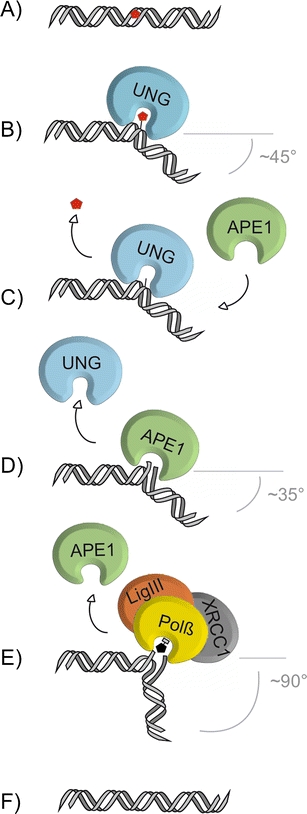
“The ligation process is carried by DNA ligase III working together with its cofactor X-ray repair cross-complementing protein 1(XRCC1) [111,112,113].”
From Focus on UV-Induced DNA Damage and Repair—Disease Relevance and Protective Strategies (2020) · cites this paper as [112]
Self-check
Percentages, sums and reported differences re-computed from the paper’s own numbers.
The self-check needs the paper’s full text.
Citations
Cites
1 retracted
DNA demethylation in hormone-induced transcriptional derepression
Kim, M. S., Kondo, T., Takada, I., Youn, M., Yamamoto, Y., Takahashi, S., Μatsumoto, T., Fujiyama, S., Shirode, Y., Yamaoka, I., et al. (2009) · Nature · doi:10.1038/nature08456 · Cited by 242
RetractedConversion of 5-Methylcytosine to 5-Hydroxymethylcytosine in Mammalian DNA by MLL Partner TET1
Tahiliani, M., Koh, K. P., Shen, Y., Pastor, W. A., Bandukwala, H., Brudno, Y., Agarwal, S., Iyer, L. M., Liu, D. R., Aravind, L., et al. (2009) · Science · doi:10.1126/science.1170116 · Cited by 5,836
Friedberg, E. C., Walker, G. C., Siede, W., Wood, R. D., Schultz, R. A., & Ellenberger, T. (2005) · doi:10.1128/9781555816704 · Cited by 5,683
Muramatsu, M., Kinoshita, K., Fagarasan, S., Yamada, S., Shinkai, Y., & Honjo, T. (2000) · Cell · doi:10.1016/s0092-8674(00)00078-7 · Cited by 3,475
Tet proteins can convert 5-methylcytosine to 5-formylcytosine and 5-carboxylcytosine
Ito, S., Shen, L., Dai, Q., Wu, S. C., Collins, L. B., Swenberg, J. A., He, C., & Zhang, Y. (2011) · Science · doi:10.1126/science.1210597 · Cited by 3,451
Tet-Mediated Formation of 5-Carboxylcytosine and Its Excision by TDG in Mammalian DNA
He, Y., Li, B.-Z., Li, Z., Liu, P., Wang, Y., Tang, Q., Ding, J., Jia, Y., Chen, Z., Li, L., et al. (2011) · Science · doi:10.1126/science.1210944 · Cited by 2,776
Ito, S., D’Alessio, A. C., Taranova, O., Hong, K., Sowers, L. C., & Zhang, Y. (2010) · Nature · doi:10.1038/nature09303 · Cited by 2,628
Highly Integrated Single-Base Resolution Maps of the Epigenome in Arabidopsis
Lister, R., O’Malley, R. C., Tonti‐Filippini, J., Gregory, B. D., Berry, C. C., Millar, A. H., & Ecker, J. R. (2008) · Cell · doi:10.1016/j.cell.2008.03.029 · Cited by 2,424
Lindahl, T. L., & Wood, R. D. (1999) · Science · doi:10.1126/science.286.5446.1897 · Cited by 1,521
Inherited variants of MYH associated with somatic G:C→T:A mutations in colorectal tumors
Tassan, N. A. A., Chmiel, N. H., Maynard, J. H., Fleming, N. I., Livingston, A. L., Williams, G. T., Hodges, A., Davies, D. R., David, S. S., Sampson, J. R., et al. (2002) · Nature Genetics · doi:10.1038/ng828 · Cited by 1,408
Cited by
Sorted by citations
Mechanisms of DNA damage, repair, and mutagenesis
Chatterjee, N., & Walker, G. C. (2017) · Environmental and Molecular Mutagenesis · doi:10.1002/em.22087 · Cited by 2,039
Krokan, H. E., & Bjoras, M. (2013) · Cold Spring Harbor Perspectives in Biology · doi:10.1101/cshperspect.a012583 · Cited by 1,322
Inflammation-induced DNA damage, mutations and cancer
Kay, J. E., Thadhani, E., Samson, L. D., & Engelward, B. P. (2019) · DNA repair · doi:10.1016/j.dnarep.2019.102673 · Cited by 495
Base excision repair: A critical player in many games
Wallace, S. S. (2014) · DNA Repair · doi:10.1016/j.dnarep.2014.03.030 · Cited by 401
Mammalian Base Excision Repair: the Forgotten Archangel
Dianov, G. L., & Hübscher, U. (2013) · Nucleic Acids Research · doi:10.1093/nar/gkt076 · Cited by 363
DNA Damage/Repair Management in Cancers
Alhmoud, J. F., Woolley, J. F., Moustafa, A. A., & Malki, M. I. (2020) · Cancers · doi:10.3390/cancers12041050 · Cited by 407
DNA Methylation, Its Mediators and Genome Integrity
Meng, H., Cao, Y., Qin, J., Song, X., Zhang, Q., Shi, Y. S., & Cao, L. (2015) · International Journal of Biological Sciences · doi:10.7150/ijbs.11218 · Cited by 343
Tomar, M. S., Kumar, A., Srivastava, C., & Shrivastava, A. (2021) · Biochimica et Biophysica Acta (BBA) - Reviews on Cancer · doi:10.1016/j.bbcan.2021.188616 · Cited by 342
Tet oxidizes thymine to 5-hydroxymethyluracil in mouse embryonic stem cell DNA
Pfaffeneder, T., Spada, F., Wagner, M., Brandmayr, C., Laube, S. K., Eisen, D., Truß, M., Steinbacher, J., Hackner, B., Kotljarova, O., et al. (2014) · Nature Chemical Biology · doi:10.1038/nchembio.1532 · Cited by 306
Self-citationCoordination of DNA single strand break repair
Abbotts, R., & Wilson, D. M. (2017) · Free Radical Biology and Medicine · doi:10.1016/j.freeradbiomed.2016.11.039 · Cited by 240
Weber, A. R., Krawczyk, C., Robertson, A. B., Kuśnierczyk, A., Vågbø, C. B., Schuermann, D., Klungland, A., & Schär, P. (2016) · Nature Communications · doi:10.1038/ncomms10806 · Cited by 252
Self-citationBase excision repair of oxidative DNA damage from mechanism to disease
Freudenthal, B. (2017) · Frontiers in bioscience · doi:10.2741/4555 · Cited by 232
Biological Aspects in Food Preservation by Ultraviolet Light: a Review
Gayán, E., Condón, S., & Álvarez, I. (2013) · Food and Bioprocess Technology · doi:10.1007/s11947-013-1168-7 · Cited by 228
Pao, P.-C., Patnaik, D., Watson, L. A., Gao, F., Pan, L., Wang, J., Adaikkan, C., Penney, J., Cam, H. P., Huang, W.-C., et al. (2020) · Nature Communications · doi:10.1038/s41467-020-16361-y · Cited by 216
Not breathing is not an option: How to deal with oxidative DNA damage
Markkanen, E. (2017) · DNA repair · doi:10.1016/j.dnarep.2017.09.007 · Cited by 205
DNA repair mechanisms and their clinical impact in glioblastoma
Erasimus, H., Gobin, M., Niclou, S. P., & Dyck, E. V. (2016) · Mutation Research/Reviews in Mutation Research · doi:10.1016/j.mrrev.2016.05.005 · Cited by 203
Recent advances in the structural mechanisms of DNA glycosylases
Brooks, S. C., Adhikary, S., Rubinson, E. H., & Eichman, B. F. (2012) · Biochimica et Biophysica Acta (BBA) - Proteins and Proteomics · doi:10.1016/j.bbapap.2012.10.005 · Cited by 183
The Mitochondrial Response to DNA Damage
Rong, Z., Tu, P., Xu, P., Sun, Y., Yu, F., Tu, N., Guo, L., & Yang, Y. (2021) · Frontiers in Cell and Developmental Biology · doi:10.3389/fcell.2021.669379 · Cited by 191
Focus on UV-Induced DNA Damage and Repair—Disease Relevance and Protective Strategies
Kciuk, M., Marciniak, B., Mojzych, M., & Kontek, R. (2020) · International Journal of Molecular Sciences · doi:10.3390/ijms21197264 · Cited by 168
DNA Damage Response in Cancer Therapy and Resistance: Challenges and Opportunities
Jurkovičová, D., Neophytou, C. M., Gašparović, A. Č., & Gonçalves, A. C. (2022) · International Journal of Molecular Sciences · doi:10.3390/ijms232314672 · Cited by 175
Impact of oxidative stress on telomere biology
Ahmed, W., & Lingner, J. (2018) · Differentiation · doi:10.1016/j.diff.2017.12.002 · Cited by 153
DNA damage related crosstalk between the nucleus and mitochondria
Saki, M. R., & Prakash, A. (2016) · Free Radical Biology and Medicine · doi:10.1016/j.freeradbiomed.2016.11.050 · Cited by 153
SOG1 activator and MYB3R repressors regulate a complex DNA damage network in Arabidopsis
Bourbousse, C., Vegesna, N., & Law, J. A. (2018) · Proceedings of the National Academy of Sciences · doi:10.1073/pnas.1810582115 · Cited by 149
The roles of microphthalmia-associated transcription factor and pigmentation in melanoma
Hsiao, J. J., & Fisher, D. E. (2014) · Archives of Biochemistry and Biophysics · doi:10.1016/j.abb.2014.07.019 · Cited by 148
Base Excision Repair in the Mitochondria
Prakash, A., & Doublié, S. (2015) · Journal of Cellular Biochemistry · doi:10.1002/jcb.25103 · Cited by 151
Base Excision Repair, a Pathway Regulated by Posttranslational Modifications
Carter, R. J., & Parsons, J. L. (2016) · Molecular and Cellular Biology · doi:10.1128/mcb.00030-16 · Cited by 157
Jurcău, A. (2021) · International Journal of Molecular Sciences · doi:10.3390/ijms222111847 · Cited by 151
Altering DNA Repair to Improve Radiation Therapy: Specific and Multiple Pathway Targeting
Biau, J., Chautard, E., Verrelle, P., & Dutreix, M. (2019) · Frontiers in Oncology · doi:10.3389/fonc.2019.01009 · Cited by 147
5-Methylcytosine DNA Demethylation: More Than Losing a Methyl Group
Franchini, D., Schmitz, K.-M., & Petersen‐Mahrt, S. K. (2012) · Annual Review of Genetics · doi:10.1146/annurev-genet-110711-155451 · Cited by 133
Yoshimoto, K., Mizoguchi, M., Hata, N., Murata, H., Hatae, R., Amano, T., Nakamizo, A., & Sasaki, T. (2012) · Frontiers in Oncology · doi:10.3389/fonc.2012.00186 · Cited by 126
Base excision repair and its implications to cancer therapy
Grundy, G. J., & Parsons, J. L. (2020) · Essays in Biochemistry · doi:10.1042/ebc20200013 · Cited by 130
TET Enzymes in the Immune System: From DNA Demethylation to Immunotherapy, Inflammation, and Cancer
López-Moyado, I. F., Ko, M., Hogan, P. G., & Rao, A. (2024) · Annual Review of Immunology · doi:10.1146/annurev-immunol-080223-044610 · Cited by 119
DNA Repair Pathways and Mechanisms
Dexheimer, T. S. (2012) · Springer eBooks · doi:10.1007/978-94-007-4590-2_2 · Cited by 133
Gasparrini, M., Afrin, S., Forbes-Hernández, T. Y., Cianciosi, D., Reboredo‐Rodríguez, P., Amici, A., Battino, M. A., & Giampieri, F. (2018) · Food and Chemical Toxicology · doi:10.1016/j.fct.2018.08.001 · Cited by 118
Genotoxic therapy and resistance mechanism in gliomas
Lang, F., Liu, Y., Chou, F.-J., & Yang, C. (2021) · Pharmacology & Therapeutics · doi:10.1016/j.pharmthera.2021.107922 · Cited by 116
Spampinato, C. P. (2016) · Cellular and Molecular Life Sciences · doi:10.1007/s00018-016-2436-2 · Cited by 115
Mutating for Good: DNA Damage Responses During Somatic Hypermutation
Pilzecker, B., & Jacobs, H. (2019) · Frontiers in Immunology · doi:10.3389/fimmu.2019.00438 · Cited by 117
Poulos, R. C., Olivier, J., & Wong, J. W. H. (2017) · Nucleic Acids Research · doi:10.1093/nar/gkx463 · Cited by 93
Mammalian DNA base excision repair: Dancing in the moonlight
Caldecott, K. W. (2020) · DNA repair · doi:10.1016/j.dnarep.2020.102921 · Cited by 113
TET-mediated oxidation of methylcytosine causes TDG or NEIL glycosylase dependent gene reactivation
Müller, U., Bauer, C., Siegl, M., Rottach, A., & Leonhardt, H. (2014) · Nucleic Acids Research · doi:10.1093/nar/gku552 · Cited by 100
Repair of naturally occurring mismatches can induce mutations in flanking DNA
Chen, J., Miller, B., & Furano, A. V. (2014) · eLife · doi:10.7554/elife.02001 · Cited by 99
ATM prevents DSB formation by coordinating SSB repair and cell cycle progression
Khoronenkova, S. V., & Dianov, G. L. (2015) · Proceedings of the National Academy of Sciences · doi:10.1073/pnas.1416031112 · Cited by 111
Gadd45a promotes DNA demethylation through TDG
Li, Z., Gu, T., Weber, A. R., Shen, J., Li, B.-Z., Xie, Z., Yin, R., Guo, F., Liu, X., Tang, F., et al. (2015) · Nucleic Acids Research · doi:10.1093/nar/gkv283 · Cited by 101
Self-citationThe fate of damaged mitochondrial DNA in the cell
Liao, S., Chen, L., Song, Z., & He, H. (2022) · Biochimica et Biophysica Acta (BBA) - Molecular Cell Research · doi:10.1016/j.bbamcr.2022.119233 · Cited by 97
DNA Base Excision Repair in Plants: An Unfolding Story With Familiar and Novel Characters
Roldán‐Arjona, T., Ariza, R. R., & Córdoba‐Cañero, D. (2019) · Frontiers in Plant Science · doi:10.3389/fpls.2019.01055 · Cited by 91
Epigenetic Regulation During Plant Development and the Capacity for Epigenetic Memory
Hemenway, E. A., & Gehring, M. A. (2023) · Annual Review of Plant Biology · doi:10.1146/annurev-arplant-070122-025047 · Cited by 94
Active DNA demethylation by DNA repair: Facts and uncertainties
Schuermann, D., Weber, A. R., & Schär, P. (2016) · DNA repair · doi:10.1016/j.dnarep.2016.05.013 · Cited by 87
Self-citationProgrammable deaminase-free base editors for G-to-Y conversion by engineered glycosylase
Tong, H., Liu, N., Wei, Y., Zhou, Y., Li, Y., Wu, D., Jin, M., Cui, S., Li, H., Li, G., et al. (2023) · National Science Review · doi:10.1093/nsr/nwad143 · Cited by 87
DNA Damage and Repair in Schizophrenia and Autism: Implications for Cancer Comorbidity and Beyond
Markkanen, E., Meyer, U., & Dianov, G. L. (2016) · International Journal of Molecular Sciences · doi:10.3390/ijms17060856 · Cited by 84
Sequencing abasic sites in DNA at single-nucleotide resolution
Liu, Z. J., Martínez Cuesta, S., van Delft, P., & Balasubramanian, S. (2019) · Nature Chemistry · doi:10.1038/s41557-019-0279-9 · Cited by 83
Mitochondrial quality control in health and cardiovascular diseases
Atici, A. E., Crother, T. R., & Rivas, M. N. (2023) · Frontiers in Cell and Developmental Biology · doi:10.3389/fcell.2023.1290046 · Cited by 85
PRDX1 and MTH1 cooperate to prevent ROS-mediated inhibition of telomerasePreprint
Ahmed, W., & Lingner, J. (2018) · Genes & Development · doi:10.1101/gad.313460.118 · Cited by 78
MUTYH DNA glycosylase: the rationale for removing undamaged bases from the DNA
Markkanen, E., Dorn, J., & Hübscher, U. (2013) · Frontiers in Genetics · doi:10.3389/fgene.2013.00018 · Cited by 77
The Response to Oxidative DNA Damage in Neurons: Mechanisms and Disease
Narciso, L., Parlanti, E., Racaniello, M., Simonelli, V., Cardinale, A., Merlo, D., & Dogliotti, E. (2016) · Neural Plasticity · doi:10.1155/2016/3619274 · Cited by 80
Wang, L., Ma, F., Tang, B., & Zhang, C. (2016) · Analytical Chemistry · doi:10.1021/acs.analchem.6b00664 · Cited by 74
Targeting BER enzymes in cancer therapy
Visnes, T., Grube, M., Hanna, B., Benitéz‐Buelga, C., Cázares‐Körner, A., & Helleday, T. (2018) · DNA repair · doi:10.1016/j.dnarep.2018.08.015 · Cited by 78
Seifermann, M., & Epe, B. (2016) · Free Radical Biology and Medicine · doi:10.1016/j.freeradbiomed.2016.11.018 · Cited by 75
Error-free versus mutagenic processing of genomic uracil—Relevance to cancer
Krokan, H. E., Sætrom, P., Aas, P. A., Pettersen, H. S., Kavli, B., & Slupphaug, G. (2014) · DNA repair · doi:10.1016/j.dnarep.2014.03.028 · Cited by 71
Living Organisms Author Their Read-Write Genomes in Evolution
Shapiro, J. A. (2017) · Biology · doi:10.3390/biology6040042 · Cited by 70
Temozolomide and Pituitary Tumors: Current Understanding, Unresolved Issues, and Future Directions
Syro, L. V., Rotondo, F., Camargo, M., Ortiz, L. D., Serna, C. A., & Kovács, K. (2018) · Frontiers in Endocrinology · doi:10.3389/fendo.2018.00318 · Cited by 68
The Relevance of G-Quadruplexes for DNA Repair
Linke, R., Limmer, M., Juranek, S., Heine, A., & Paeschke, K. (2021) · International Journal of Molecular Sciences · doi:10.3390/ijms222212599 · Cited by 70
DNA repair as a shared hallmark in cancer and ageing
Clarke, T. L., & Mostoslavsky, R. (2022) · Molecular Oncology · doi:10.1002/1878-0261.13285 · Cited by 74
Mitochondrial DNA Repair in Neurodegenerative Diseases and Ageing
Bazzani, V., Redin, M. E., McHale, J., Perrone, L., & Vascotto, C. (2022) · International Journal of Molecular Sciences · doi:10.3390/ijms231911391 · Cited by 68
Facilitated Diffusion Mechanisms in DNA Base Excision Repair and Transcriptional Activation
Esadze, A., & Stivers, J. T. (2018) · Chemical Reviews · doi:10.1021/acs.chemrev.8b00513 · Cited by 63
The radiobiology of HPV-positive and HPV-negative head and neck squamous cell carcinoma
Zhou, C., & Parsons, J. L. (2020) · Expert Reviews in Molecular Medicine · doi:10.1017/erm.2020.4 · Cited by 63
Nallanthighal, S., Chan, C., Murray, T. M., Mosier, A. P., Cady, N. C., & Reliene, R. (2017) · Nanotoxicology · doi:10.1080/17435390.2017.1388863 · Cited by 65
Resolving DNA Damage: Epigenetic Regulation of DNA Repair
Karakaidos, P., Karagiannis, D., & Rampias, T. N. (2020) · Molecules · doi:10.3390/molecules25112496 · Cited by 64
Tackling PARP inhibitor resistance
Fugger, K., Hewitt, G., West, S. C., & Boulton, S. J. (2021) · Trends in cancer · doi:10.1016/j.trecan.2021.08.007 · Cited by 67
Rahimoff, R., Kosmatchev, O., Kirchner, A., Pfaffeneder, T., Spada, F., Brantl, V., Müller, M., & Carell, T. (2017) · Journal of the American Chemical Society · doi:10.1021/jacs.7b04131 · Cited by 62
Delivery Approaches for Therapeutic Genome Editing and Challenges
Ates, I., Rathbone, T., Stuart, C., Bridges, P. H., & Cottle, R. N. (2020) · Genes · doi:10.3390/genes11101113 · Cited by 62
Modification mapping by nanopore sequencing
White, L. K., & Hesselberth, J. R. (2022) · Frontiers in Genetics · doi:10.3389/fgene.2022.1037134 · Cited by 61
Genome-wide mapping of 5-hydroxymethyluracil in the eukaryote parasite Leishmania
Kawasaki, F., Beraldi, D., Hardisty, R. E., McInroy, G. R., van Delft, P., & Balasubramanian, S. (2017) · Genome biology · doi:10.1186/s13059-017-1150-1 · Cited by 59
An insight into the mechanisms of homeostasis in extremophiles
Somayaji, A., Dhanjal, C. R., Lingamsetty, R., Vinayagam, R., Selvaraj, R., Varadavenkatesan, T., & Govarthanan, M. (2022) · Microbiological Research · doi:10.1016/j.micres.2022.127115 · Cited by 59
Mantha, A. K., Sarkar, B., & Tell, G. (2013) · Mitochondrion · doi:10.1016/j.mito.2013.10.007 · Cited by 60
Biological Functions of Hydrogen Sulfide in Plants
Yang, Z., Wang, X., Feng, J., & Zhu, S. (2022) · International Journal of Molecular Sciences · doi:10.3390/ijms232315107 · Cited by 56
Timmins, J., & Moe, E. (2016) · Computational and Structural Biotechnology Journal · doi:10.1016/j.csbj.2016.04.001 · Cited by 57
The base excision repair process: comparison between higher and lower eukaryotes
Hindi, N. N., Elsakrmy, N., & Ramotar, D. (2021) · Cellular and Molecular Life Sciences · doi:10.1007/s00018-021-03990-9 · Cited by 55
Ultrafast Oxime Formation Enables Efficient Fluorescence Light-up Measurement of DNA Base Excision
Wilson, D. L., & Kool, E. T. (2019) · Journal of the American Chemical Society · doi:10.1021/jacs.9b09812 · Cited by 55
Role of Oxidative DNA Damage and Repair in Atrial Fibrillation and Ischemic Heart Disease
Hu, L., Wang, Z., Carmone, C., Keijer, J., & Zhang, D. (2021) · International Journal of Molecular Sciences · doi:10.3390/ijms22083838 · Cited by 52
Regulation of oxidative DNA damage repair: The adenine:8-oxo-guanine problem
Markkanen, E., Hübscher, U., & van Loon, B. (2012) · Cell Cycle · doi:10.4161/cc.11.6.19448 · Cited by 50
DNA damage and repair following traumatic brain injury
Davis, C. K., & Vemuganti, R. (2020) · Neurobiology of Disease · doi:10.1016/j.nbd.2020.105143 · Cited by 49
Cho, E., Allemang, A., Audebert, M., Chauhan, V., Dertinger, S. D., Hendriks, G., Luijten, M., Marchetti, F., Minocherhomji, S., Pfuhler, S., et al. (2022) · Environmental and Molecular Mutagenesis · doi:10.1002/em.22479 · Cited by 51
Afrin, S., Giampieri, F., Gasparrini, M., Forbes-Hernández, T. Y., Cianciosi, D., Reboredo‐Rodríguez, P., Manna, P. P., Zhang, J., Quiles, J. L., & Battino, M. A. (2018) · Food & Function · doi:10.1039/c8fo00165k · Cited by 49
ADP‐ribosylation of histone variant H2AX promotes base excision repair
Chen, Q., Bian, C., Wang, X., Liu, X., Kassab, M. A., Yu, Y., & Yu, X. (2020) · The EMBO Journal · doi:10.15252/embj.2020104542 · Cited by 49
Dimauro, I., Sgura, A., Pittaluga, M., Magi, F., Fantini, C., Mancinelli, R., Sgadari, A., Fulle, S., & Caporossi, D. (2017) · Scientific Reports · doi:10.1038/s41598-017-04448-4 · Cited by 47
Conformational Dynamics of DNA Repair by Escherichia coli Endonuclease III
Kuznetsov, N. A., Kladova, O. A., Кузнецова, А. А., Ishchenko, A. A., Saparbaev, M. K., Zharkov, D. O., & Fedorova, O. S. (2015) · Journal of Biological Chemistry · doi:10.1074/jbc.m114.621128 · Cited by 44
Assessment of DNA Epigenetic Modifications
Yuan, B. (2019) · Chemical Research in Toxicology · doi:10.1021/acs.chemrestox.9b00372 · Cited by 46
When DNA repair goes wrong: BER-generated DNA-protein crosslinks to oxidative lesions
Quiñones, J. L., & Demple, B. (2016) · DNA repair · doi:10.1016/j.dnarep.2016.05.014 · Cited by 43
The Biochemical Role of the Human NEIL1 and NEIL3 DNA Glycosylases on Model DNA Replication Forks
Albelazi, M. S., Martin, P. R., Mohammed, S., Mutti, L., Parsons, J. L., & Elder, R. H. (2019) · Genes · doi:10.3390/genes10040315 · Cited by 43
Hassan, A., Macedo, L. J. A., de Souza, J. C. P., Lima, F. C. D. A., & Crespilho, F. N. (2020) · Scientific Reports · doi:10.1038/s41598-020-58531-4 · Cited by 45
Fantini, D., Moritz, E., Auvré, F., Amouroux, R., Campalans, A., Epe, B., Bravard, A., & Radicella, J. P. (2013) · DNA repair · doi:10.1016/j.dnarep.2012.12.006 · Cited by 44
Cisplatin in the era of PARP inhibitors and immunotherapy
Duan, M., Leng, S., & Mao, P. (2024) · Pharmacology & Therapeutics · doi:10.1016/j.pharmthera.2024.108642 · Cited by 45
Role of DNA repair in host immune response and inflammation
Fontes-Dantas, F. L., Pinheiro, D. M. L., de Oliveira, A. H. S., Oliveira, R. K. D. M., Lajus, T. B. P., & Agnez‐Lima, L. F. (2014) · Mutation Research/Reviews in Mutation Research · doi:10.1016/j.mrrev.2014.11.004 · Cited by 44
SUMOylation coordinates BERosome assembly in active DNA demethylation during cell differentiation
Steinacher, R., Barekati, Z., Botev, P., Kuśnierczyk, A., Slupphaug, G., & Schär, P. (2018) · The EMBO Journal · doi:10.15252/embj.201899242 · Cited by 41
Self-citationVarshney, M., & Nalvarte, I. (2017) · Brain Sciences · doi:10.3390/brainsci7030024 · Cited by 41
DNA Damage/Repair Management in Cancers
Alhmoud, J. F., Woolley, J. F., Moustafa, A. A., & Mallei, M. I. (2021) · doi:10.1201/9781003180449-12 · Cited by 40
Xu, H., Huang, W. S., He, Q., Zhao, Z., Zhang, F., Wang, R., Kang, J., & Tang, G. (2012) · Angewandte Chemie International Edition · doi:10.1002/anie.201204109 · Cited by 39
Kladova, O. A., Bażlekowa, M., Baconnais, S., Piétrement, O., Ishchenko, A. A., Matkarimov, B. T., Iakovlev, D. A., Vasenko, A. S., Fedorova, O. S., Cam, É. L., et al. (2018) · DNA repair · doi:10.1016/j.dnarep.2018.02.001 · Cited by 40
Han, D., Schomacher, L., Schüle, K. M., Mallick, M., Musheev, M. U., Karaulanov, E., Krebs, L., von Seggern, A., & Niehrs, C. (2019) · eLife · doi:10.7554/elife.49044 · Cited by 38
Montaldo, N. P., Bordin, D. L., Brambilla, A., Rösinger, M., Martin, S. L. F., Bjørås, K. Ø., Bradamante, S., Aas, P. A., Furrer, A., Olsen, L. C., et al. (2019) · Nature Communications · doi:10.1038/s41467-019-13394-w · Cited by 39
Metadata
- Authors
- Jacobs, A. L., & Schär, P.
- Affiliations
- University of Basel (CH)
- Corresponding author
- Schär, Primo
- ORCID
- Schär, Primo
- Venue
- Chromosoma
- Published
- 2011-11-03
- Volume
- 121
- Issue
- 1
- Pages
- 1-20
- ISSN
- 0009-5915 (ISSN-L)
- 1432-0886
- PMC
- PMC3260424
- OpenAlex
- W2052679982
- Cited by
- 407
- References
- 177
- Citations by year
- 2026: 24 · 2025: 30 · 2024: 32 · 2023: 28 · 2022: 35 · 2021: 34 · 2020: 35 · 2019: 28 · 2018: 33 · 2017: 29 · 2016: 29 · 2015: 18 · 2014: 22 · 2013: 14 · 2012: 16
- FWCI
- 1.51
- Type
- journal article
- Language
- en
- Open access
- hybrid
- doi.org
- Licence
- cc-by-nc
- Locations
- Chromosoma (publishedVersion, cc-by-nc)
- PubMed Central (publishedVersion, cc-by-nc)
- PubMed (publishedVersion)
- reroDoc Digital Library (submittedVersion)
- Funders
- National Science Foundation
- Schweizerischer Nationalfonds zur Förderung der Wissenschaftlichen Forschung (122574, 31003A)
- Topics
- Life Sciences › Biochemistry, Genetics and Molecular Biology › Molecular Biology › DNA Repair Mechanisms
- Life Sciences › Biochemistry, Genetics and Molecular Biology › Molecular Biology › DNA and Nucleic Acid Chemistry
- Life Sciences › Biochemistry, Genetics and Molecular Biology › Molecular Biology › Epigenetics and DNA Methylation
- Keywords
- DNA glycosylase, base excision repair, DNA damage recognition, base flipping, DNA oxidation, alkylation, deamination, mutagenesis, innate immunity, adaptive immunity, DNA methylation, epigenetic stability, genome stability
- MeSH terms
- Animals, Base Sequence, DNA Repair, Humans, Models, Biological, Models, Molecular, Molecular Sequence Data, Structure-Activity Relationship, Genomic Instability, DNA Glycosylases
About these checks
Registry, retraction, Cites and statistics results are computed, not judged, with one exception: a printed reference that no index lists is read once by a model before it counts as a citation error. Claims are extracted by a model and kept only when their quote appears verbatim in the text; each cited source is then checked, with a model’s help, for whether it says what the claim relies on. Those verdicts can be wrong — read the claim’s quote and the cited source before relying on one.
Statistics and arithmetic are recomputed, not judged.
Confidence bands are shown only for fields calibrated on our annotated test set. None is calibrated yet, so no band is shown.
What counts as a claim ›How we measure confidence ›How we check this ›
Are you an author, or do you see a problem with this page? Request a review
