

The effect of β-alanine and NaHCO3 co-ingestion on buffering capacity and exercise performance with high-intensity exercise in healthy males
Open accessThe DOI matches its Crossref record; 39 of the 40 references it cites were found in a registry or an index.
Abstract
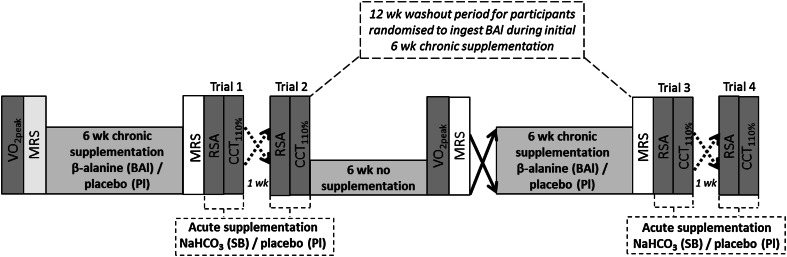
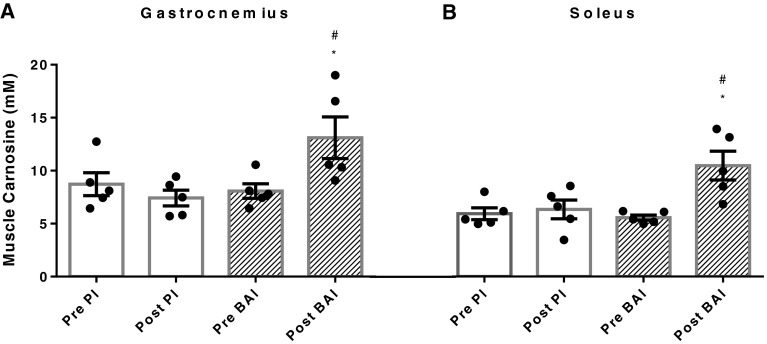
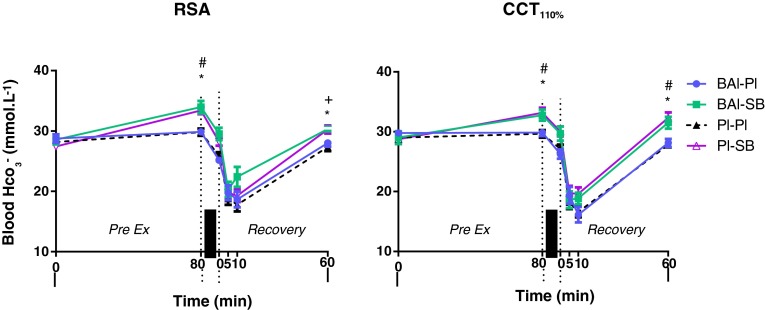
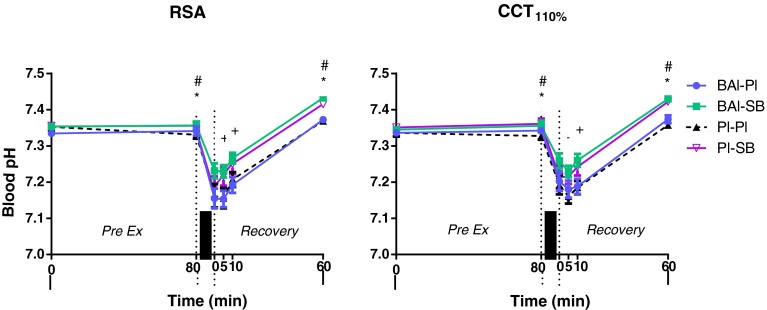
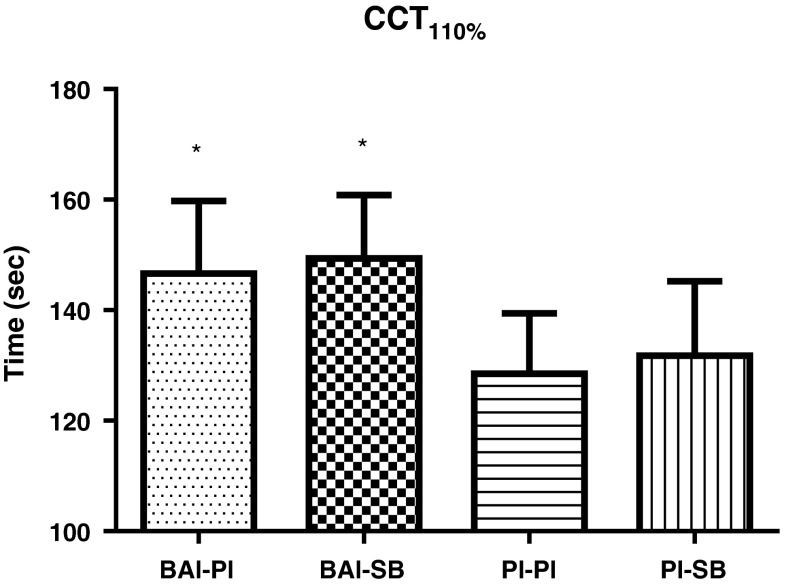
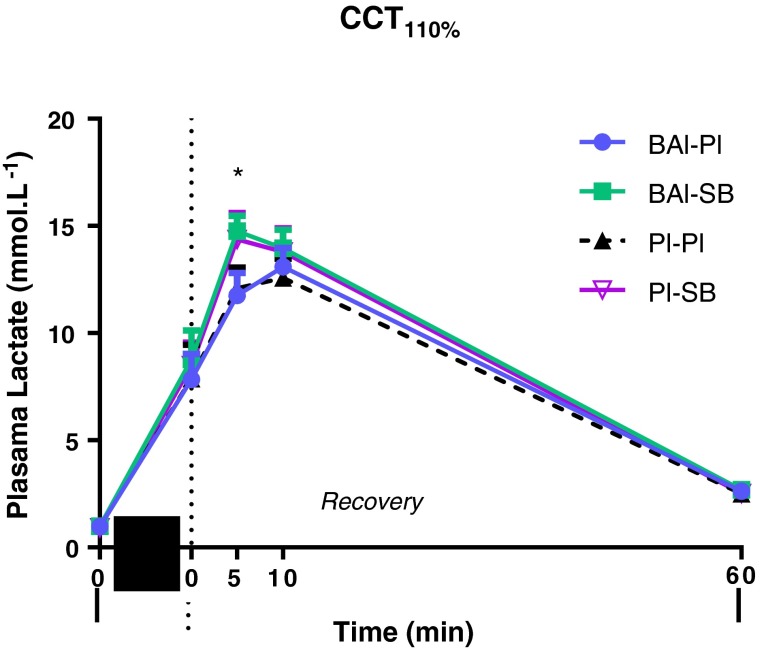
INTRODUCTION: β-alanine (BAl) and NaHCO3 (SB) ingestion may provide performance benefits by enhancing concentrations of their respective physiochemical buffer counterparts, muscle carnosine and blood bicarbonate, counteracting acidosis during intense exercise. This study examined the effect of BAl and SB co-supplementation as an ergogenic strategy during high-intensity exercise. METHODS: Eight healthy males ingested either BAl (4.8 g day(-1) for 4 weeks, increased to 6.4 g day(-1) for 2 weeks) or placebo (Pl) (CaCO3) for 6 weeks, in a crossover design (6-week washout between supplements). After each chronic supplementation period participants performed two trials, each consisting of two intense exercise tests performed over consecutive days. Trials were separated by 1 week and consisted of a repeated sprint ability (RSA) test and cycling capacity test at 110 % Wmax (CCT110 %). Placebo (Pl) or SB (300 mg kgbw(-1)) was ingested prior to exercise in a crossover design to creating four supplement conditions (BAl-Pl, BAl-SB, Pl-Pl, Pl-SB). RESULTS: Carnosine increased in the gastrocnemius (n = 5) (p = 0.03) and soleus (n = 5) (p = 0.02) following BAl supplementation, and Pl-SB and BAl-SB ingestion elevated blood HCO3 (-) concentrations (p < 0.01). Although buffering capacity was elevated following both BAl and SB ingestion, performance improvement was only observed with BAl-Pl and BAl-SB increasing time to exhaustion of the CCT110 % test 14 and 16 %, respectively, compared to Pl-Pl (p < 0.01). CONCLUSION: Supplementation of BAl and SB elevated buffering potential by increasing muscle carnosine and blood bicarbonate levels, respectively. BAl ingestion improved performance during the CCT110 %, with no aggregating effect of SB supplementation (p > 0.05). Performance was not different between treatments during the RSA test.
Overview
The claims and statistics of this paper haven’t been checked yet.
Free: it reads the open-access text and checks the first 5 claims that cite a source we can check. Create a free account to check every claim.
Integrity signals
Registry
Cites
Statistics
Figures
Verification
Claims the paper makes
The claims and statistics of this paper haven’t been checked yet.
Free: it reads the open-access text and checks the first 5 claims that cite a source we can check. Create a free account to check every claim.
Claims other papers make about this one
Each is checked against this paper’s own text: does it say what the citing paper says it does?
The cited source says what the claim attributes to it.
In the citing paper
“While buffering capacity was increased, performance was only improved when beta-alanine was provided.”
From ISSN exercise & sports nutrition review update: research & recommendations (2018) · cites this paper as [502]
Self-check
Percentages, sums and reported differences re-computed from the paper’s own numbers.
The self-check needs the paper’s full text.
Citations
Cites
Improved Method for Accurate and Efficient Quantification of MRS Data with Use of Prior Knowledge
Vanhamme, L., van den Boogaart, A., & Van Huffel, S. (1997) · Journal of Magnetic Resonance · doi:10.1006/jmre.1997.1244 · Cited by 1,627 · cited 1×
“Manual phasing was then applied before line fitting the spectra of each scan with an AMArES algorithm (jMr UI, version 4.0, build 113) (naressi et al. 2001; Vanhamme et al. 1997).”
InfluentialFabiato, A., & Fabiato, F. (1978) · The Journal of Physiology · doi:10.1113/jphysiol.1978.sp012231 · Cited by 1,090 · cited 1×
“…resulting from acidosis include direct influences on contraction within the muscle cell due to competition of the H+ with calcium ion (ca2+) (Fabiato and Fabiato 1978), inhibition of glycolytic enzymes (Sutton et al. 1981) and Pcr recovery (Harris et al. 1976), and its interference to the…”
Java-based graphical user interface for the MRUI quantitation package
Naressi, A., Couturier, C., Devos, J. M., Janssen, M., Mangeat, C., Beer, R. D., & Graveron-Demilly, D. (2001) · Magnetic Resonance Materials in Physics, Biology and Medicine · doi:10.1007/bf02668096 · Cited by 1,003 · cited 1×
“Manual phasing was then applied before line fitting the spectra of each scan with an AMArES algorithm (jMr UI, version 4.0, build 113) (naressi et al. 2001; Vanhamme et al. 1997).”
InfluentialHarris, R. C., Tallon, M. J., Dunnett, M., Boobis, L., Coakley, J., Kim, H. J., Fallowfield, J. L., Hill, C. A., Sale, C., & Wise, J. A. (2006) · Amino Acids · doi:10.1007/s00726-006-0299-9 · Cited by 534 · cited 2×
“…and blood bicarbonate (HcO3 −), which has an extracellular presence (Sale et al. 2010). carnosine (β-alanyl-l-histidine) is found in relatively high concentrations in human skeletal muscles at around 5–10 mmol kg−1 wet weight (ww) (Boldyrev and Severin 1990; Harris et al. 2006; Hill et al. 2007).”
The time course of phosphorylcreatine resynthesis during recovery of the quadriceps muscle in man
Harris, R. C., Edwards, R. H. T., Hultman, E., Nordesj�, L. O., Nylind, B., & Sahlin, K. (1976) · Pfl�gers Archiv European Journal of Physiology · doi:10.1007/bf00585149 · Cited by 526 · cited 1×
“…influences on contraction within the muscle cell due to competition of the H + with calcium ion (ca 2 ) (Fabiato and Fabiato 1978), inhibition of glycolytic enzymes (Sutton et al. 1981) and Pcr recovery (Harris et al. 1976), and its interference to the buffering process (Sahlin and Harris 2011).”
Hill, C. A., Harris, R. C., Kim, H. J., Harris, B. D., Sale, C., Boobis, L. H., Kim, C. K., & Wise, J. A. (2007) · Amino Acids · doi:10.1007/s00726-006-0364-4 · Cited by 445 · cited 8×
“Physiochemical buffers include muscle carnosine, which plays an immediate role due to its intracellular location, and blood bicarbonate (HcO 3 − ), which has an extracellular presence (Sale et al. 2010). carnosine ( β -alanyl- l -histidine) is found in relatively high concentrations in human skeletal muscles at around…”
InfluentialDerave, W., Özdemir, M. S., Harris, R. C., Pottier, A., Reyngoudt, H., Koppo, K., Wise, J. A., & Achten, E. (2007) · Journal of Applied Physiology · doi:10.1152/japplphysiol.00397.2007 · Cited by 324 · cited 11×
“Its synthesis is slow and can take several weeks to accumulate in the muscle, warranting the need for chronic supplementation of β -alanine (Baguet et al. 2009; Derave et al. 2007).”
InfluentialInduced Metabolic Alkalosis Affects Muscle Metabolism and Repeated-Sprint Ability
BISHOP, D., EDGE, J., DAVIS, C., & GOODMAN, C. (2004) · Medicine & Science in Sports & Exercise · doi:10.1249/01.mss.0000126392.20025.17 · Cited by 283 · cited 6×
“…pH gradient between the intracellular and extracellular milieu, consequently allowing for a greater efflux of H + out of the muscle cell (Bishop et al. 2004; Price et al. 2003). combined nutritional strategies which enhance muscle carnosine and blood HcO 3 − content, such as oral…”
InfluentialEffect of pH on Muscle Glycolysis during Exercise
Sutton, J. R., Jones, N. L., & Toews, C. J. (1981) · Clinical Science · doi:10.1042/cs0610331 · Cited by 260 · cited 1×
“…influences on contraction within the muscle cell due to competition of the H + with calcium ion (ca 2 ) (Fabiato and Fabiato 1978), inhibition of glycolytic enzymes (Sutton et al. 1981) and Pcr recovery (Harris et al. 1976), and its interference to the buffering process (Sahlin and Harris 2011).”
Effect of high-intensity intermittent training on lactate and H+ release from human skeletal muscle
Juel, C., Klarskov, C., Nielsen, J. J., Krustrup, P., Mohr, M., & Bangsbo, J. (2004) · American Journal of Physiology-Endocrinology and Metabolism · doi:10.1152/ajpendo.00303.2003 · Cited by 245 · cited 1×
“…influence of the acute acid load following intense exercise once intracellular buffering capacity is exceeded and H + diffuses into the bloodstream (Juel et al. 2004; Swank and robertson 1989), and may inevitably assist in postponing the potential effects of fatigue (Mcnaughton et al. 2008; Swank…”
Influential
Research works printed but not linked: 1
- Fitzsimons M Dawson B Ward D Wilkinson A Cycling and running tests of repeated sprint ability Aust J Sci Med Sport 1993 25 82 87
Cited by
ISSN exercise & sports nutrition review update: research & recommendations
Kerksick, C. M., Wilborn, C. D., Roberts, M. D., Smith-Ryan, A., Kleiner, S. M., Jäger, R., Collins, R., Cooke, M., Davis, J. N., Galvan, E., et al. (2018) · Journal of the International Society of Sports Nutrition · doi:10.1186/s12970-018-0242-y · Cited by 945
“[502] had eight healthy males supplement with either beta-alanine, sodium bicarbonate or their combination for 6 weeks in a crossover fashion before completing a repeated sprint ability test while cycling.”
MethodInternational society of sports nutrition position stand: Beta-Alanine
Trexler, E. T., Smith-Ryan, A. E., Stout, J. R., Hoffman, J. R., Wilborn, C. D., Sale, C., Kreider, R. B., Jäger, R., Earnest, C. P., Bannock, L., et al. (2015) · Journal of the International Society of Sports Nutrition · doi:10.1186/s12970-015-0090-y · Cited by 315
Saunders, B., Elliott-Sale, K., Artioli, G. G., Swinton, P. A., Dolan, E., Roschel, H., Sale, C., & Gualano, B. (2017) · British Journal of Sports Medicine · doi:10.1136/bjsports-2016-096396 · Cited by 302
“Any differences of opinion relating to study eligibility were resolved through discussion.”
BackgroundSwinton, P. A., Hemingway, B. S., Saunders, B., Gualano, B., & Dolan, E. (2018) · Frontiers in Nutrition · doi:10.3389/fnut.2018.00041 · Cited by 228
Lancha Junior, A. H., de Salles Painelli, V., Saunders, B., & Artioli, G. G. (2015) · Sports Medicine · doi:10.1007/s40279-015-0397-5 · Cited by 167
Grgic, J., Pedisic, Z., Saunders, B., Artioli, G. G., Schoenfeld, B. J., McKenna, M. J., Bishop, D. J., Kreider, R. B., Stout, J. R., Kalman, D. S., et al. (2021) · Journal of the International Society of Sports Nutrition · doi:10.1186/s12970-021-00458-w · Cited by 138
Beta-alanine supplementation, muscle carnosine and exercise performance
Blancquaert, L., Everaert, I., & Derave, W. (2015) · Current Opinion in Clinical Nutrition and Metabolic Care · doi:10.1097/mco.0000000000000127 · Cited by 106
“Volume 18 Number 1 January 2015 Beta-alanine, muscle carnosine and exercise Blancquaert et al. time trial [32], a further nonsignificant improvement in 100 and 200 m swim performance [22] and a nonsignificant but increased TTE in a CCT110% [33], all comparing combined supplementation with beta-alanine alone.”
ResultEffects of Histidine and β-alanine Supplementation on Human Muscle Carnosine Storage
BLANCQUAERT, L., EVERAERT, I., MISSINNE, M., BAGUET, A., STEGEN, S., VOLKAERT, A., PETROVIC, M., VERVAET, C., ACHTEN, E., DE MAEYER, M., et al. (2017) · Medicine & Science in Sports & Exercise · doi:10.1249/mss.0000000000001213 · Cited by 93
Heibel, A. B., Perim, P. H. L., Oliveira, L. F., McNaughton, L. R., & Saunders, B. (2018) · Frontiers in Nutrition · doi:10.3389/fnut.2018.00035 · Cited by 92
Twenty-four Weeks of β-Alanine Supplementation on Carnosine Content, Related Genes, and Exercise
SAUNDERS, B., DE SALLES PAINELLI, V., DE OLIVEIRA, L. F., DA EIRA SILVA, V., DA SILVA, R. P., RIANI, L., FRANCHI, M., GONÇALVES, L. D. S., HARRIS, R. C., ROSCHEL, H., et al. (2017) · Medicine & Science in Sports & Exercise · doi:10.1249/mss.0000000000001173 · Cited by 84
Effects of Dietary Supplements on Adaptations to Endurance Training
Rothschild, J. A., & Bishop, D. J. (2019) · Sports Medicine · doi:10.1007/s40279-019-01185-8 · Cited by 71
Froio de Araujo Dias, G., da Eira Silva, V., de Salles Painelli, V., Sale, C., Giannini Artioli, G., Gualano, B., & Saunders, B. (2015) · PLOS ONE · doi:10.1371/journal.pone.0143086 · Cited by 56
“Nonetheless, the CCT110% has been suggested to be a highly sensitive test to increases in buffering capacity since similar improvements were consistently shown following increases in muscle buffering capacity achieved via β-alanine supplementation in recreationally active participants [20, 21, 22]; importantly, exerci…”
Resultde Oliveira, L. F., Dolan, E., Swinton, P. A., Durkalec-Michalski, K., Artioli, G. G., McNaughton, L. R., & Saunders, B. (2022) · Sports Medicine · doi:10.1007/s40279-021-01575-x · Cited by 46
Co-ingestion of Nutritional Ergogenic Aids and High-Intensity Exercise Performance
Naderi, A., Earnest, C. P., Lowery, R. P., Wilson, J. M., & Willems, M. E. T. (2016) · Sports Medicine · doi:10.1007/s40279-016-0525-x · Cited by 53
“[54] examined the effects of 6 weeks of b-alanine supplementation (4.”
BackgroundRezende, N. S., Swinton, P. A., de Oliveira, L. F., da Silva, R. P., Silva, V. D. E., Nemezio, K., Yamaguchi, G. D. C., Artioli, G. G., Gualano, B., Saunders, B., et al. (2020) · Frontiers in Physiology · doi:10.3389/fphys.2020.00913 · Cited by 53
“…Baguet et al., 2009, 2010; del Favero et al., 2012; Stellingwerff et al., 2012; Stegen et al., 2013; Bex et al., 2014, 2015; Chung et al., 2014; Danaher et al., 2014; Gross et al., 2014; Kresta et al., 2014; Cochran et al., 2015; Blancquaert et al., 2017; Church et al., 2017; Saunders et al.,…”
The effect of β-alanine supplementation on cycling time trials of different length
Bellinger, P., & Minahan, C. (2016) · European Journal of Sport Science · doi:10.1080/17461391.2015.1120782 · Cited by 34
“This compares favourably with earlier work from Hill et al. (2007) who reported an improvement in cycling TTE of 11.8%, and has since been replicated in similarly untrained populations in the study of Sale et al. (2011) (+12.”
BackgroundResultInfluentialda Silva, R. P., de Oliveira, L. F., Saunders, B., Kratz, C. D. A., Painelli, V. D. S., Silva, V. D. E., Marins, J. C. B., Franchini, É., Gualano, B., & Artioli, G. G. (2018) · Amino Acids · doi:10.1007/s00726-018-2643-2 · Cited by 40
Black, M. I., JONES, A. M., Morgan, P. T., Bailey, S. J., Fulford, J., & Vanhatalo, A. (2018) · Frontiers in Physiology · doi:10.3389/fphys.2018.00111 · Cited by 31
“…BA supplementation results in increased carnosine content in muscles of the calf (Baguet et al., 2009, 2010; del Favero et al., 2012; Stegen et al., 2013, 2014; Bex et al., 2014; Danaher et al., 2014; Hoffman et al., 2015), thigh (Harris et al., 2006), and upper arm and shoulder (Bex et al., 2014).”
BackgroundFerreira, L. H. B., Smolarek, A. C., Chilibeck, P. D., Barros, M. P., McAnulty, S. R., Schoenfeld, B. J., Zandona, B. A., & Souza-Junior, T. P. (2019) · Nutrition · doi:10.1016/j.nut.2018.09.018 · Cited by 23
Effects of Four Weeks of β-Alanine Supplementation on Repeated Sprint Ability in Water Polo Players
Brisola, G. M. P., Artioli, G. G., Papoti, M., & Zagatto, A. M. (2016) · PLoS ONE · doi:10.1371/journal.pone.0167968 · Cited by 32
Brisola, G. M. P., & Zagatto, A. M. (2018) · The Journal of Strength and Conditioning Research · doi:10.1519/jsc.0000000000002925 · Cited by 35
“(37) did not find substantial additional effects in a supramaximal test on a cycle ergometer when cosupplementation was performed.”
BackgroundInfluentialLievens, E., Vossel, K. V., de Casteele, F. V., Krššák, M., Murdoch, J. B., Befroy, D. E., & Derave, W. (2021) · Journal of Applied Physiology · doi:10.1152/japplphysiol.00056.2021 · Cited by 21
Zagatto, A. M., Redkva, P. E., de Poli, R. A. B., Gonzalez, J. A. M., Brandani, J. Z., Penedo, T., & Bertuzzi, R. (2018) · European Journal of Sport Science · doi:10.1080/17461391.2018.1546338 · Cited by 19
Chen, H., Ma, X., Cao, L., Zhao, S., Zhao, C., Yin, S., & Hu, H. (2021) · Foods · doi:10.3390/foods10123120 · Cited by 19
Beta-Alanine Supplementation and Sport Climbing Performance
Sas-Nowosielski, K., Wyciślik, J., & Kaczka, P. (2021) · International Journal of Environmental Research and Public Health · doi:10.3390/ijerph18105370 · Cited by 33
“, by inhibiting glycolytic enzymes, interfering with cross-bridge formation between actin and myosin and releasing Ca2+ from the sarcoplasmic reticulum [4,5].”
BackgroundGilsanz, L., López‐Seoane, J., Sáiz, S. L. J., & Pareja-Galeano, H. (2021) · Critical Reviews in Food Science and Nutrition · doi:10.1080/10408398.2021.2012642 · Cited by 19
Nutritional Ergogenic Aids in Cycling: A Systematic Review
Valiño-Marques, A., Lamas, A., Miranda, J. M., Cepeda, A., & Regal, P. (2024) · Nutrients · doi:10.3390/nu16111768 · Cited by 21
Carr, A. J., McKay, A. K. A., Burke, L. M., Smith, E. S., Urwin, C. S., Convit, L., Jardine, W. T., Kelly, M. K., & Saunders, B. (2023) · Sports Medicine · doi:10.1007/s40279-023-01872-7 · Cited by 18
Esteves, G. P., Swinton, P. A., Sale, C., James, R. M., Artioli, G. G., Roschel, H., Gualano, B., Saunders, B., & Dolan, E. (2021) · International Journal of Sport Nutrition and Exercise Metabolism · doi:10.1123/ijsnem.2021-0038 · Cited by 14
“Possible sources of bias included a lack of information on specific randomization and concealment approaches (Domain 1; Danaher et al., 2014; Hill et al., 2007; Sale et al., 2011); nonreporting of adherence or compliance information (Domain 2; Danaher et al., 2014; Hill et al., 2007); and lack of…”
BackgroundMethodResultInfluentialVaranoske, A. N., Stout, J. R., & Hoffman, J. R. (2018) · Elsevier eBooks · doi:10.1016/b978-0-12-813922-6.00028-x · Cited by 17
pH buffering of single rat skeletal muscle fibers in the in vivo environment
Tanaka, Y., Inagaki, T., Poole, D. C., & Kano, Y. (2016) · American Journal of Physiology-Regulatory, Integrative and Comparative Physiology · doi:10.1152/ajpregu.00501.2015 · Cited by 7
The effect of β-alanine supplementation on high intensity cycling capacity in normoxia and hypoxia
Patel, K. A., de Oliveira, L. F., Sale, C., & James, R. M. (2021) · Journal of Sports Sciences · doi:10.1080/02640414.2020.1867416 · Cited by 10
“…was similar to that of previous studies that have shown increases of around 60% in intramuscular carnosine content (Harris et al., 2006) following BA supplementation and that this improves exercise capacity (Danaher et al., 2014; Hill et al., 2007; Sale et al., 2011; B. Saunders et al., 2017a).”
BackgroundMethodResultInfluentialCurran-Bowen, T., da Silva, A. G., Barreto, G., Buckley, J., & Saunders, B. (2024) · Biology of Sport · doi:10.5114/biolsport.2024.132997 · Cited by 12
“…improvement in 200 m swimming, Bellinger et al. [39] showed a +3.3% improve - ment in 4 min cycling performance, while both Sale et al. [38] and Danaher et al. [41] showed improvements of +16% in exercise ca - pacity during a high-intensity cycling capacity test performed to ex - haustion.”
BackgroundResultInfluentialZart, S., & Fröhlich, M. (2025) · Journal of the International Society of Sports Nutrition · doi:10.1080/15502783.2025.2524033 · Cited by 8
Lopes‐Silva, J. P., & Franchini, É. (2020) · Strength and conditioning journal · doi:10.1519/ssc.0000000000000603 · Cited by 11
“Moreover, there are several studies that reported on the coingestion of NaHCO3 and b-alanine on high-intensity intermittent exercise performance (3,6,15,41).”
BackgroundLino, R. D. S., Lagares, L. S., de Oliveira, C. V. C., Queiroz, C. O., Pinto, L. L. T., de Almeida, L. A. B., Bomfim, E. S., & dos Santos, C. P. C. (2021) · Physical Activity and Nutrition · doi:10.20463/pan.2021.0002 · Cited by 7
Saeedy, M., Bijeh, N., & Moazzami, M. (2016) · International Journal of Applied Exercise Physiology · Cited by 8
Adamczewski, J., Szymocha, M., Główka, N., Adrian, J., & Durkalec-Michalski, K. (2026) · International Journal of Sports Physiology and Performance · doi:10.1123/ijspp.2025-0447 · Cited by 4
Considerations for Carnosine Actions in Biology
Parmeggiani, B., Ferreira, B. K., Schuck, P. F., & Ferreira, G. C. (2026) · Neurochemical Research · doi:10.1007/s11064-026-04735-5 · Cited by 2
“Supplementation with β-alanine is associated with better pH buffering capacity in blood, increased blood lactate, and delayed time to exhaustion during a cycling capacity test [104].”
InfluentialMetabolismo de carnosina, suplementação de β-alanina e desempenho físico: uma atualização - PARTE I
Painelli, V. D. S., Freitas, P., Gualano, B., & Artioli, G. G. (2015) · LA Referencia (Red Federada de Repositorios Institucionales de Publicaciones Científicas) · Cited by 5
AbuMoh’d, M. F., Alsababha, W., Haddad, Y., Obeidat, G. M., & Telfah, Y. (2021) · Montenegrin Journal of Sports Science and Medicine · doi:10.26773/mjssm.210301 · Cited by 2
“Danaher et al. (2014) showed no differences in repeated sprint ability (RSA) test (5 repeats of 6 s maximal effort cycling bouts, separated by 24 s rest) between NaHCO3 (300 mg/kg), BA (4.8-6.4 g/day for 4 weeks) and placebo trials.”
MethodInfluentialLiang, W., Kong, D., Wang, Y., Yu, T., Chen, M., & Huang, W. (2026) · Frontiers in Nutrition · doi:10.3389/fnut.2026.1818755 · Cited by 4
de Oliveira, L. F. (2021) · Digital Library of Theses and Dissertations (Universidade de São Paulo) · doi:10.11606/t.39.2021.tde-18052021-172041
Gehlert, S., Khurshudyan, A., Weber, S., Widdershoven, J., & Schuylenbergh, R. V. (2025) · Frontiers in Sports and Active Living · doi:10.3389/fspor.2025.1546117
Eidiyan-Kakhki, M. M., Nikolaidis, P. Τ., Willems, M. E. T., Clemente, F. M., رجبی, ح., Amani-Shalamzari, S., Motamedi, P., Salehpour, M., & Samadi, H. (2026) · Sport Sciences for Health · doi:10.1007/s11332-026-01813-7
“%) appears to be largely influenced by the findings of Danaher et al. (2014).”
Influentialde Souza, E. B., de Souza, L., & Gomes, D. V. (2026) · Jornal de Investigação Médica · doi:10.29073/jim.v5i2.1009
Murasaki, J., Adamczewski, J., Dolan, E., Roschel, H., Artioli, G. G., Gualano, B., & Saunders, B. (2026) · The Journal of Nutritional Physiology · doi:10.1016/j.jnphys.2026.100049
Metadata
- Authors
- Danaher, J., Gerber, T., Wellard, R. M., & Stathis, C. G.
- Affiliations
- Victoria University (AU)
- Queensland University of Technology (AU)
- Corresponding author
- Stathis, Christos G.
- Venue
- European Journal of Applied Physiology
- Published
- 2014-05-16
- Volume
- 114
- Issue
- 8
- Pages
- 1715-1724
- ISSN
- 0020-9376 (ISSN-L)
- 1439-6319
- 1439-6327
- PMC
- PMC4097338
- OpenAlex
- W2147061555
- Cited by
- 47
- References
- 40
- Citations by year
- 2026: 6 · 2025: 2 · 2024: 2 · 2023: 1 · 2021: 11 · 2020: 2 · 2019: 1 · 2018: 9 · 2017: 1 · 2016: 6 · 2015: 5 · 2014: 1
- FWCI
- 2.88
- Type
- journal article
- Language
- en
- Open access
- hybrid
- doi.org
- Locations
- European Journal of Applied Physiology (publishedVersion, cc-by)
- Europe PMC (PubMed Central) (publishedVersion, cc-by)
- PubMed Central (publishedVersion, cc-by)
- PubMed (publishedVersion)
- QUT ePrints (Queensland University of Technology) (submittedVersion, cc-by)
- Victoria University Research Repository (Victoria University) (submittedVersion, other-oa)
- RMIT Research Repository (RMIT University Library) (submittedVersion)
- Figshare (submittedVersion)
- Faculty of Health; Institute of Health and Biomedical Innovation
- Funders
- Victoria University
- Topics
- Health Sciences › Medicine › Physiology (medical) › Biochemical effects in animals
- Health Sciences › Nursing › Nutrition and Dietetics › Muscle metabolism and nutrition
- Health Sciences › Medicine › Orthopedics and Sports Medicine › Sports Performance and Training
- Keywords
- beta-alanine, sodium bicarbonate, co-supplementation, ergogenic aids, muscle carnosine, blood bicarbonate, buffering capacity, exercise acidosis, high-intensity exercise, time to exhaustion, repeated sprint ability, cycling capacity, muscle fatigue
- MeSH terms
- Adult, Buffers, Carnosine, Double-Blind Method, Humans, Male, Oxygen Consumption, beta-Alanine, Exercise, Exercise Tolerance, Sodium Bicarbonate, Muscle, Skeletal, Cross-Over Studies, Dietary Supplements
About these checks
Registry, retraction, Cites and statistics results are computed, not judged, with one exception: a printed reference that no index lists is read once by a model before it counts as a citation error. Claims are extracted by a model and kept only when their quote appears verbatim in the text; each cited source is then checked, with a model’s help, for whether it says what the claim relies on. Those verdicts can be wrong — read the claim’s quote and the cited source before relying on one.
Statistics and arithmetic are recomputed, not judged.
Confidence bands are shown only for fields calibrated on our annotated test set. None is calibrated yet, so no band is shown.
What counts as a claim ›How we measure confidence ›How we check this ›
Are you an author, or do you see a problem with this page? Request a review
Data sources
Bibliographic data: Semantic Scholar, OpenAlex, Crossref.
Contains information from the Semantic Scholar Academic Graph Datasets, made available under the ODC Attribution License (ODC-BY 1.0).
Semantic Scholar’s data is described in: Kinney, R., et al. (2023). The Semantic Scholar Open Data Platform. arXiv:2301.10140.
