

Rate of force development: physiological and methodological considerations
Open accessThe DOI matches its Crossref record; 203 of the 204 references it cites were found in a registry or an index; 49 of the 274 sources its claims cite were checked for support.
Abstract
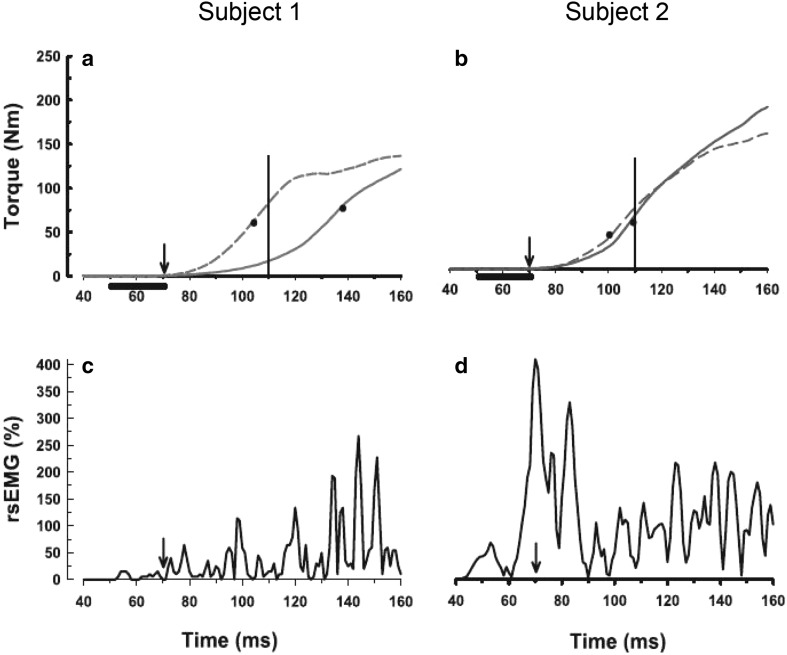
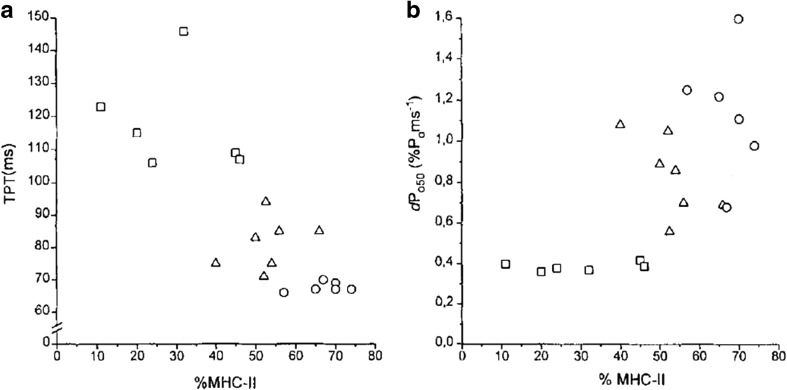
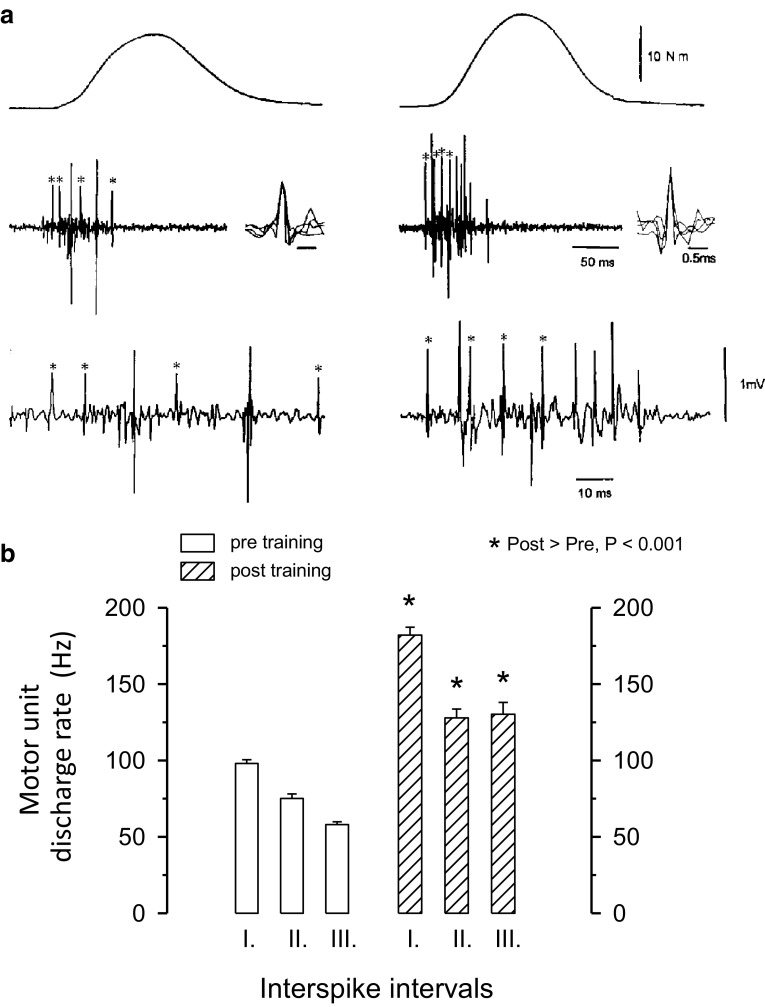
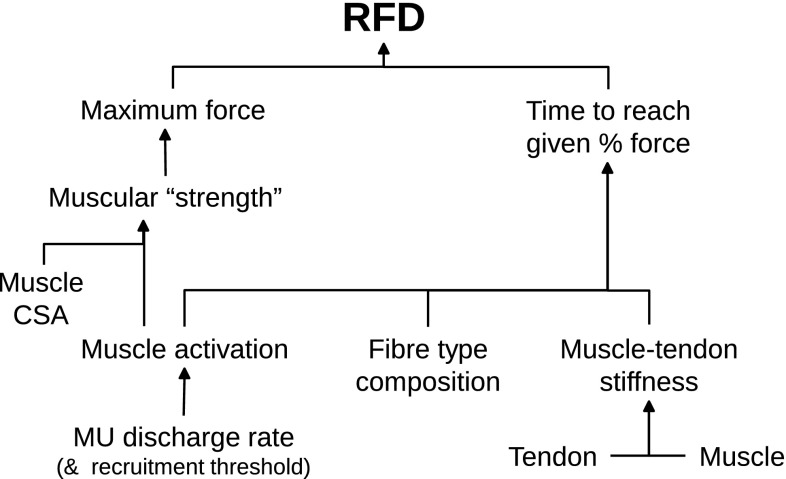
The evaluation of rate of force development during rapid contractions has recently become quite popular for characterising explosive strength of athletes, elderly individuals and patients. The main aims of this narrative review are to describe the neuromuscular determinants of rate of force development and to discuss various methodological considerations inherent to its evaluation for research and clinical purposes. Rate of force development (1) seems to be mainly determined by the capacity to produce maximal voluntary activation in the early phase of an explosive contraction (first 50-75 ms), particularly as a result of increased motor unit discharge rate; (2) can be improved by both explosive-type and heavy-resistance strength training in different subject populations, mainly through an improvement in rapid muscle activation; (3) is quite difficult to evaluate in a valid and reliable way. Therefore, we provide evidence-based practical recommendations for rational quantification of rate of force development in both laboratory and clinical settings.
Overview
CoChat Summary
TL;DR
This narrative review argues that early-phase rate of force development (RFD) is driven mainly by rapid neural activation, especially motor unit discharge rate in the first 50–75 ms. It also emphasizes that RFD is useful but methodologically difficult to measure reliably, so careful standardized procedures are essential.
Key findings
- RFD is “mainly determined” by maximal voluntary activation in the early phase of an explosive contraction, especially the first 50–75 ms, largely via increased motor unit discharge rate.
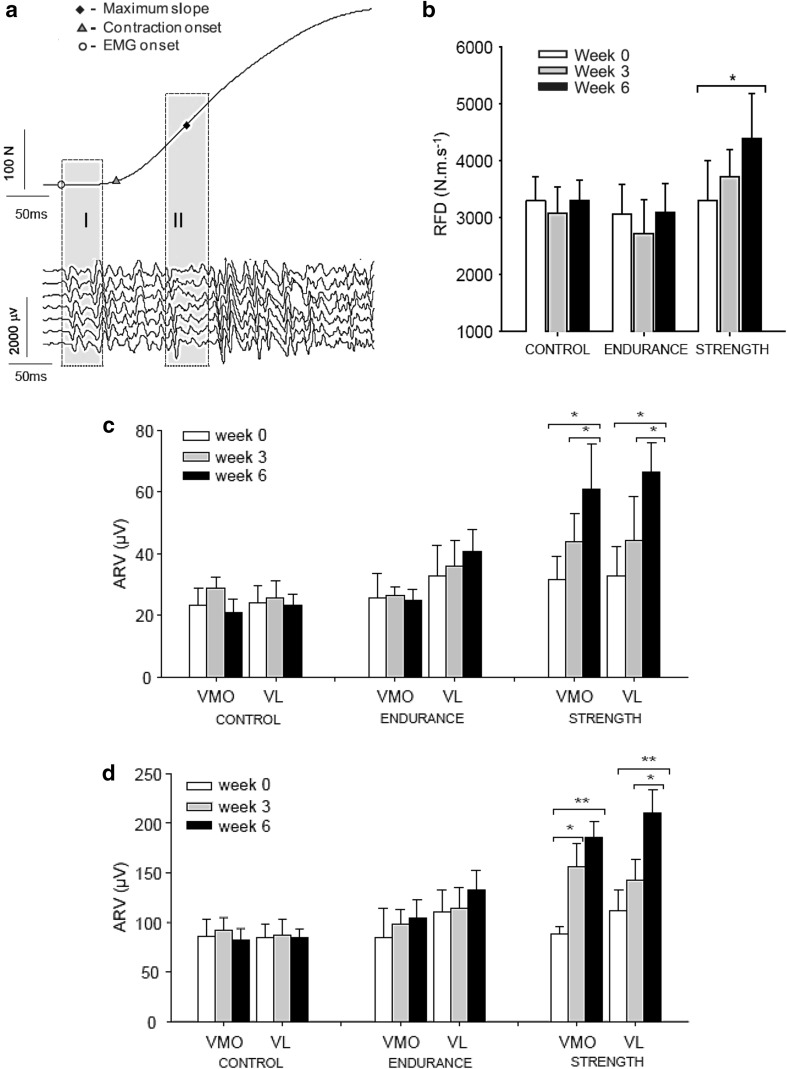
- Training can improve RFD through both explosive-type and heavy-resistance strength training, mainly by improving rapid muscle activation; one example given is 33% higher RFD after 6 weeks of lower-limb strength training, with 80–100% increases in EMG activity.
- In older adults, RFD and motor unit discharge rate are reduced: in one cited comparison, adults aged 71–84 years showed 48% slower RFD and 27% lower MU discharge rate than young adults (~20 years).
- The review reports reliability challenges: RFD is less reliable than MVC force, with within-subject CVs reported as 12.8–16.6% for force over 0–50 ms, 4.5–5.3% for 0–100 ms, and 4.5–5.1% for 0–150 ms.
Methods
- Narrative review of the physiological determinants of RFD and methodological issues in its assessment; no original sample was studied.
- The paper synthesizes prior experimental, training, aging, and modeling studies across young adults, older adults, athletes, and clinical populations as cited in the text.
- Main analysis is qualitative synthesis of literature, with practical recommendations for measuring isometric RFD and interpreting early- and late-phase force-time measures.
Limitations
- The paper states that RFD is “quite difficult to evaluate in a valid and reliable way,” especially in the early phase of contraction, and that methodological rigor is required.
- It also notes that the review is focused on isometric RFD; dynamic contractions are discussed only as an additional consideration, so the evidence base is narrower than all possible RFD contexts.
- Evident from the text: this is a narrative review, so conclusions are not based on a systematic meta-analysis or new primary data (not stated as a limitation by the authors, but evident from the article type).
Model-written summary. Check it against the paper before relying on it.
Integrity signals
Registry
Cites
Statistics
Figures
Verification
Claims the paper makes
41 Valid · 5 Not valid · 124 Not checked · 73 Own results and interpretations
The cited sources support only part of this claim — read each source’s verdict below.
In the paper
“Rate of force development (1) seems to be mainly determined by the capacity to produce maximal voluntary activation in the early phase of an explosive contraction (first 50–75 ms), particularly as a result of increased motor unit discharge rate;”
- Also stated in: § Neural determinants · boosted
“Together these experimental and simulated studies underscore the critical role of maximal MU discharge rate on the ability to rapidly develop force at the onset of a ballistic voluntary contraction.”
§ Rate of force development: physiological and methodological considerations > Abstract
What the sources say
- Partly supportedcites Desmedt and Godaux 1977 matched to “Ballistic contractions in man: characteristic recruitment pattern of single motor units of the tibialis anterior muscle.” (1977) sourceExperimental — accuracy not yet measured
Split into 2 atoms — 1 confirmed, 1 partially supported, 0 disputed, 0 misattributed, 0 unverifiable. Expand the claim to see per-atom verdicts.
- Partly supportedcites Van Cutsem et al. 1998 matched to “Changes in single motor unit behaviour contribute to the increase in contraction speed after dynamic training in humans” (1998) sourceExperimental — accuracy not yet measured
Split into 2 atoms — 0 confirmed, 2 partially supported, 0 disputed, 0 misattributed, 0 unverifiable. Expand the claim to see per-atom verdicts.
- Partly supportedcites Duchateau and Baudry 2014 matched to “Maximal discharge rate of motor units determines the maximal rate of force development during ballistic contractions in human” (2014) sourceExperimental — accuracy not yet measured
Split into 2 atoms — 1 confirmed, 1 partially supported, 0 disputed, 0 misattributed, 0 unverifiable. Expand the claim to see per-atom verdicts.
boostedstates a possible cause- Asserted: passes — The authors put it forward as true.
- Checkable: passes — It can be checked against evidence.
- Load-bearing: passes — The paper’s conclusions depend on it.
- Based: passes — The paper gives a reason why it holds.
- Also stated in: § Neural determinants · boosted
The sources with a verdict support this claim; the rest weren’t checked yet, have no full text we could read, or their verdicts aren’t rated yet.
In the paper
“potentially governed by different physiological mechanisms (see, e.g., Andersen and Aagaard 2006; Van Cutsem et al. 1998)”
§ Rate of force development: physiological and methodological considerations > Introduction
What the sources say
- Not checked — no full text of the sourcecites Andersen and Aagaard 2006 matched to “Influence of maximal muscle strength and intrinsic muscle contractile properties on contractile rate of force development” (2006) source
- Supportedcites Van Cutsem et al. 1998 matched to “Changes in single motor unit behaviour contribute to the increase in contraction speed after dynamic training in humans” (1998) source
The Results (page unavailable) report changes in both maximal voluntary contraction torque and the rate of tension development after dynamic training. The Discussion (page unavailable) links increased strength to greater EMG activity and links faster ballistic contractions specifically to earlier motor-unit activation and higher firing frequencies. This supports the hedged claim that the two measures may depend on different physiological mechanisms. (LLM, conf=0.86)
hedgedstates a possible cause- Asserted: passes — The authors put it forward as true.
- Checkable: passes — It can be checked against evidence.
- Load-bearing: passes — The paper’s conclusions depend on it.
- Based: passes — The paper gives a reason why it holds.
The cited sources support only part of this claim — read each source’s verdict below.
In the paper
“more sensitive to detect acute and chronic changes in neuromuscular function (see, e.g., Angelozzi et al. 2012; Crameri et al. 2007; Jenkins et al. 2014b; Penailillo et al. 2015)”
§ Rate of force development: physiological and methodological considerations > Introduction
What the sources say
- Could not verifycites Angelozzi et al. 2012 matched to “Rate of Force Development as an Adjunctive Outcome Measure for Return-to-Sport Decisions After Anterior Cruciate Ligament Reconstruction” (2012) sourceExperimental — accuracy not yet measured
Two searches of Angelozzi et al. (2012) returned no full-text snippets, so its support for the comparison could not be checked directly. A systematic review by Lomborg and colleagues says previous studies argued that rate of force development is more sensitive to acute or chronic neuromuscular adaptations than maximal force (score 0.506), but the retrieved passage does not identify Angelozzi et al. as one of those studies. The review is therefore not sufficient to confirm this attribution, and it is not evidence of misattribution. (LLM, conf=0.62)
- Partly supportedcites Crameri et al. 2007 matched to “Myofibre damage in human skeletal muscle: effects of electrical stimulation versus voluntary contraction” (2007) sourceExperimental — accuracy not yet measured
The Force data and Discussion report that rapid force characteristics declined more than maximal contraction strength after eccentric exercise, supporting greater sensitivity to acute changes in this setting. The paper does not establish that rate of force development is more sensitive to chronic changes in neuromuscular function. Page numbers were not supplied for these passages. (LLM, conf=0.88)
- Not checked — no full text of the sourcecites Jenkins et al. 2014b matched to “The Rate of Torque Development: A Unique, Non-invasive Indicator of Eccentric-induced Muscle Damage?” (2014) source
plainstates an association- Asserted: passes — The authors put it forward as true.
- Checkable: passes — It can be checked against evidence.
- Load-bearing: passes — The paper’s conclusions depend on it.
- Based: passes — The paper gives a reason why it holds.
- Could not verify
The cited sources support only part of this claim — read each source’s verdict below.
In the paper
“During such rapid actions, the activated MUs discharge only a few times (~1–6) (Van Cutsem and Duchateau 2005; Van Cutsem et al. 1998).”
§ Rate of force development: physiological and methodological considerations > Physiological considerations: the underlying mechanisms > Neural determinants
What the sources say
- Not checked — no full text of the sourcecites Van Cutsem and Duchateau 2005 matched to “Preceding muscle activity influences motor unit discharge and rate of torque development during ballistic contractions in humans” (2005) source
- Partly supportedcites Van Cutsem et al. 1998 matched to “Changes in single motor unit behaviour contribute to the increase in contraction speed after dynamic training in humans” (1998) sourceExperimental — accuracy not yet measured
The Results section says that few motor units fired more than four times before training during ballistic contractions, supporting the point that they discharge only a few times. It does not establish the stated approximate range of 1–6 discharges or apply that count to the post-training contractions. (LLM, conf=0.84)
plain- Asserted: passes — The authors put it forward as true.
- Checkable: passes — It can be checked against evidence.
- Load-bearing: passes — The paper’s conclusions depend on it.
- Based: passes — The paper gives a reason why it holds.
The cited sources support only part of this claim — read each source’s verdict below.
In the paper
“as compared to pure maximal voluntary contraction (MVC) strength, RFD seems to be (1) better related to most performances of both sport-specific and functional daily tasks (see, e.g., Maffiuletti et al. 2010; Tillin et al. 2013a)”
§ Rate of force development: physiological and methodological considerations > Introduction
What the sources say
- Partly supportedcites Maffiuletti et al. 2010 matched to “Asymmetry in Quadriceps Rate of Force Development as a Functional Outcome Measure in TKA” (2010) sourceExperimental — accuracy not yet measured
The Results and Discussion report that, in patients after total knee arthroplasty, quadriceps RFD asymmetry correlated with self-reported daily knee function whereas MVC strength asymmetry did not. The paper does not establish that RFD is better related to most task performances, or address sport-specific performance; the claim extends beyond its findings. (LLM, conf=0.88)
- Not checked — no full text of the sourcecites Tillin et al. 2013a matched to “Explosive force production during isometric squats correlates with athletic performance in rugby union players” (2013) source
hedgedstates an association- Asserted: passes — The authors put it forward as true.
- Checkable: passes — It can be checked against evidence.
- Load-bearing: passes — The paper’s conclusions depend on it.
- Based: passes — The paper gives a reason why it holds.
- Partly supported
176 more claims · 27 with their cited sources checked
Create a free account to see all 243 claims and every source verdict.
- It may state two separate claims as one. 55
- Probably not a substantial claim. 9
Claims other papers make about this one
Each is checked against this paper’s own text: does it say what the citing paper says it does?
The cited source says what the claim attributes to it.
In the citing paper
“Adaptations to HVPT may have been attenuated by a lack of task-speci fi c practice to maximise rate of force development. 108”
From High-velocity power training has similar effects to traditional resistance training for functional performance in older adults: a systematic review (2023) · cites this paper as [108]
In the citing paper
“Prior to MVC assessment, subjects will complete two submaximal warm-up contractions at approximately 50% and 80% of perceived maximal effort, separated by 30 s of rest, to minimise variability and enhance measurement accuracy [28].”
From Ageing, Sex Differences, and REDs Risk in Endurance Runners: An Integrated Cross-Sectional Study Protocol (2026) · cites this paper as [28]
In the citing paper
“it is known that improvement in RFD is determined by neuromuscular adaptations, muscle size and tendon stiffness [134] and isometric efforts of 1–5 s have been suggested to generate such neuromuscular adaptations [17].”
From Effect of Strength Training Programs in Middle- and Long-Distance Runners’ Economy at Different Running Speeds: A Systematic Review with Meta-analysis (2024) · cites this paper as [134]
Citations
Cites
Calcium's Role in Mechanotransduction during Muscle Development
Benavides Damm, T., & Egli, M. (2014) · Cellular Physiology and Biochemistry · doi:10.1159/000356667 · Cited by 14,502
Biomechanics and motor control of human movement
(1990) · Choice Reviews Online · doi:10.5860/choice.28-2135 · Cited by 8,451
Biomechanics and Motor Control of Human Movement
Winter, D. A. (2009) · Wiley eBooks · doi:10.1002/9780470549148 · Cited by 6,066
Fiber Types in Mammalian Skeletal Muscles
Schiaffino, S., & Reggiani, C. (2011) · Physiological Reviews · doi:10.1152/physrev.00031.2010 · Cited by 3,022 · cited 1×
“Finally, type II fibres have a 200– 300 % greater Na+ channel density, and therefore might be better able to conduct high rates of excitatory potentials resulting from high discharge rates (Schiaffino and Reggiani 2011).”
BackgroundData on the distribution of fibre types in thirty-six human muscles
Johnson, M. A., Polgar, J., Weightman, D., & Appleton, D. (1973) · Journal of the Neurological Sciences · doi:10.1016/0022-510x(73)90023-3 · Cited by 2,200 · cited 4×
“For example, vastus lateralis, vastus medialis and vastus intermedius contain ~50 % type I fibres (Johnson et al. 1973; Luden et al. 2008; Taylor et al. 1997) whilst soleus contains 75 % and gastrocnemius 45–75 % type I fibres (Dahmane et al. 2005; Edgerton et al. 1975; Johnson et al. 1973; Luden…”
BackgroundInfluentialDynamic properties of mammalian skeletal muscles.
Close, R. I. (1972) · Physiological Reviews · doi:10.1152/physrev.1972.52.1.129 · Cited by 1,890 · cited 1×
“…II fibres having a greater total Ca2+ release per action potential (Baylor and Hollingworth 1988) and faster time constants of Ca2+ currents (e.g., Close 1972), as well as fast myosin, troponin and tropomyosin isoforms (Schiaffino and Reggiani 1996) and thus faster cross-bridge cycling rates…”
BackgroundAagaard, P., Simonsen, E. B., Andersen, J. L., Magnusson, P., & Dyhre-Poulsen, P. (2002) · Journal of Applied Physiology · doi:10.1152/japplphysiol.00283.2002 · Cited by 1,844
Self-citationMolecular diversity of myofibrillar proteins: gene regulation and functional significance
Schiaffino, S., & Reggiani, C. (1996) · Physiological Reviews · doi:10.1152/physrev.1996.76.2.371 · Cited by 1,545
Folland, J. P., & Williams, A. G. (2007) · Sports Medicine · doi:10.2165/00007256-200737020-00004 · Cited by 1,347
Self-citationMechanisms of Anterior Cruciate Ligament Injury in Basketball: Video Analysis of 39 Cases
Krosshaug, T., Nakamae, A., Boden, B. P., Engebretsen, L., Smith, G., Slauterbeck, J. R., Hewett, T. E., & Bahr, R. (2007) · The American Journal of Sports Medicine · doi:10.1177/0363546506293899 · Cited by 1,212
Research works printed but not linked: 2
- Aagaard P Cardinale M Newton RU Nosaka K Neural adaptations to resistance exercise Strength and conditioning: biological principles and practical applications 2010 New York Wiley-Blackwell 105 124
- Andersen JL Bangsbo J Larsen HB Muscle fibre type characteristics of the runner Running & science in an interdisciplinary perspective 2001 Copenhagen Munksgaard Publishing 49 65
Cited by
Items 601–700 of 1,405
Meulemans, L., Deboutte, J., Seghers, J., Delecluse, C., & Roie, E. V. (2025) · Aging Clinical and Experimental Research · doi:10.1007/s40520-025-02965-1 · Cited by 12
Muscle power predicts frailty and other adverse events across different settings
Álvarez‐Bustos, A., Coelho-Junior, H. J., Carnicero, J. A. C., Hermosilla, I. M., Alfonso-López, B., Peinado, I., Checa‐López, M., & Rodríguez‐Mañas, L. (2025) · The journal of nutrition health & aging · doi:10.1016/j.jnha.2025.100555 · Cited by 9
Electrical stimulation paradigms on muscle quality and bone mineral density after spinal cord injury
Gorgey, A. S., Venigalla, S., Deitrich, J. N., Ballance, W. B., Carter, W., Lavis, T. D., & Adler, R. A. (2025) · Osteoporosis International · doi:10.1007/s00198-025-07482-5 · Cited by 9
Juneau, C. M., Diewald, S. N., Neville, J., Cronin, J. B., & Oranchuk, D. J. (2022) · Journal of Sport Rehabilitation · doi:10.1123/jsr.2022-0152 · Cited by 7
Martins, E. J., Mattiello‐Sverzut, A. C., Franco, C. S. B., de Lemos, T. W., & Aagaard, P. (2022) · Clinical Biomechanics · doi:10.1016/j.clinbiomech.2022.105861 · Cited by 8
Self-citationMechanisms underlying altered neuromuscular function in people with DPN
Corre, A. L., Caron, N., Turpin, N. A., & Dalleau, G. (2023) · European Journal of Applied Physiology · doi:10.1007/s00421-023-05150-2 · Cited by 10
Crotty, E. D., Furlong, L.-A. M., & Harrison, A. J. (2023) · PLoS ONE · doi:10.1371/journal.pone.0287431 · Cited by 8
Association between physical fitness tests and neuromuscular properties
Hirono, T., Okudaira, M., Takeda, R., Ueda, S., Nishikawa, T., Igawa, K., Kunugi, S., Yoshimura, A., & Watanabe, K. (2024) · European Journal of Applied Physiology · doi:10.1007/s00421-023-05394-y · Cited by 8
Graham, M. C., Thompson, K. L., Hawk, G. S., Fry, C. S., & Noehren, B. W. (2024) · The Journal of Strength and Conditioning Research · doi:10.1519/jsc.0000000000004743 · Cited by 9
Cruz, R. S. D. O., Tramontin, A. F., Oliveira, A. S., Caputo, F., Denadai, B. S., & Greco, C. C. (2024) · Scandinavian Journal of Medicine and Science in Sports · doi:10.1111/sms.14591 · Cited by 12
Oranchuk, D. J., Juneau, C. M., Diewald, S. N., Neville, J., & Cronin, J. B. (2024) · International Journal of Sports Physical Therapy · doi:10.26603/001c.92742 · Cited by 11
Kozinc, Ž., Smajla, D., & Šarabon, N. (2024) · International Biomechanics · doi:10.1080/23335432.2024.2341634 · Cited by 11
Moeskops, S., Oliver, J. L., Radnor, J. M., Haff, G. G., Myer, G. D., Ramachandran, A. K., Kember, L. S., Pedley, J. S., & Lloyd, R. S. (2024) · The Journal of Strength and Conditioning Research · doi:10.1519/jsc.0000000000004856 · Cited by 10
McNabb, K., Sánchez, M. B., Selfe, J., Reeves, N. D., & Callaghan, M. J. (2024) · PLoS ONE · doi:10.1371/journal.pone.0308956 · Cited by 11
Job, T. D. W., Cross, M. R., & Cronin, J. B. (2024) · Journal of Biomechanics · doi:10.1016/j.jbiomech.2024.112339 · Cited by 7
Iranpour, A. R., Hemmatinafar, M., Nemati, J., Salesi, M., Esmaeili, H., & Imanian, B. (2025) · PLoS ONE · doi:10.1371/journal.pone.0316477 · Cited by 24
Bertoli, J., Diefenthaeler, F., Detanico, D., Pupo, J. D., Vaz, M. A., & Freitas, C. D. L. R. (2019) · Sport Sciences for Health · doi:10.1007/s11332-019-00533-5 · Cited by 9
Cerqueira, M. S., Pereira, R., de Mesquita, G. N., Rocha, T. D. D. S., & Filho, A. G. D. M. (2019) · Motriz Revista de Educação Física · doi:10.1590/s1980-6574201900010009 · Cited by 7
Rodríguez-Zamora, L., Padial, P., Schoenfeld, B. J., & Feriche, B. (2019) · Frontiers in Sports and Active Living · doi:10.3389/fspor.2019.00052 · Cited by 10
Attenuated activation of knee extensor muscles during fast contractions in older men and women
Kwon, M., Senefeld, J. W., & Hunter, S. K. (2020) · European Journal of Applied Physiology · doi:10.1007/s00421-020-04451-0 · Cited by 11
Solheim, S. A., Mørkeberg, J., Juul, A., Freiesleben, S. Y., Upners, E. N., Dehnes, Y., & Nordsborg, N. B. (2020) · Frontiers in Physiology · doi:10.3389/fphys.2020.563620 · Cited by 8
Identification of Central and Stretch Reflex Contributions to Human Postural Control
Amiri, P., & Kearney, R. E. (2021) · IEEE Transactions on Neural Systems and Rehabilitation Engineering · doi:10.1109/tnsre.2021.3057785 · Cited by 7
Vieira, F. T., Porto, J. M., Martins, P. P., et al. (2021) · Journal of Biomechanics · doi:10.1016/j.jbiomech.2021.110753 · Cited by 7
da Silva, R. S., Cerqueira, M. S., Maciel, D. G., da Silva, S. T., de Figueiredo, M. C. C., Cardoso, D. C. R., Neto, S. B. D. N., Bezerra, C. F., Pereira, R., Vieira, W. H. D. B., et al. (2021) · Clinical Biomechanics · doi:10.1016/j.clinbiomech.2021.105527 · Cited by 10
Konrad, A., & Paternoster, F. K. (2022) · Applied Sciences · doi:10.3390/app12031596 · Cited by 8
Peres-Ueno, M. J., Capato, L. L., Porto, J. M., Adão, I. F., Maciel, J. G., Herrero, C. F. P. D. S., Nogueira‐Barbosa, M. H., de Paula, F. J. A., Ferrioli, E., & de Abreu, D. C. C. (2022) · Annals of Physical and Rehabilitation Medicine · doi:10.1016/j.rehab.2022.101680 · Cited by 9
Fortes, R. P., Machado, C. L. F., Baroni, B. M., et al. (2023) · Sport Sciences for Health · doi:10.1007/s11332-023-01046-y · Cited by 7
Sprint cycling rate of torque development associates with strength measurement in trained cyclists
Connolly, S., Peeling, P., Binnie, M. J., Goods, P. S. R., Latella, C., Taylor, J. L., Blazevich, A. J., Timmerman, W. P., & Abbiss, C. R. (2023) · European Journal of Applied Physiology · doi:10.1007/s00421-023-05143-1 · Cited by 8
Self-citationJuneau, C. M., Oranchuk, D. J., Cahill, M. J., Forster, J. W. D., Diewald, S. N., Cronin, J. B., & Neville, J. (2023) · Journal of Science in Sport and Exercise · doi:10.1007/s42978-022-00215-8 · Cited by 10
Henderson, Z. J., Wang, S., Cornish, S. M., & Scribbans, T. D. (2023) · Sports Biomechanics · doi:10.1080/14763141.2023.2269543 · Cited by 12
Laskin, G. R., Rentería, L. I., Muller‐Delp, J. M., Kim, J., Chase, P. B., Hwang, H. S., & Gordon, B. S. (2024) · The Journal of Physiology · doi:10.1113/jp286334 · Cited by 7
Torque-onset determination: Unintended consequences of the threshold method
Dotan, R., Jenkins, G., O’Brien, T. D., Hansen, S., & Falk, B. (2016) · Journal of Electromyography and Kinesiology · doi:10.1016/j.jelekin.2016.08.017 · Cited by 8
Brustio, P. R., Casale, R., Buttacchio, G., Calabrese, M., Bruzzone, M., Rainoldi, A., & Boccia, G. (2019) · Physiological Measurement · doi:10.1088/1361-6579/aaff24 · Cited by 8
Bilateral deficit in strength but not rapid force during maximal handgrip contractions
Carr, J. C., Bemben, M. G., Black, C. D., Ye, X., & DeFreitas, J. M. (2020) · European Journal of Sport Science · doi:10.1080/17461391.2020.1800104 · Cited by 9
Januševičius, D., Sniečkus, A., Mickevičius, M., Satkunskienė, D., Muanjai, P., & Kamandulis, S. (2021) · Baltic Journal of Sport and Health Sciences · doi:10.33607/bjshs.v4i119.1017 · Cited by 13
Silvey, K., Porter, J., Sacko, R. S., Hand, A. F., Terlizzi, B. M., Abrams, T. C., & Stodden, D. F. (2021) · Military Medicine · doi:10.1093/milmed/usab043 · Cited by 11
de Lima, L. C. R., Júnior, C. R. B., Assumpção, C. D. O., Bassan, N. D. M., Barreto, R. V., Cardozo, A. C., Greco, C. C., & Denadai, B. S. (2021) · Frontiers in Physiology · doi:10.3389/fphys.2021.769971 · Cited by 9
Spudić, D., Vodičar, J., & Hadžić, V. (2023) · Measurement in Physical Education and Exercise Science · doi:10.1080/1091367x.2023.2171796 · Cited by 9
Bois, A. M. D., Marcione, N. A., Powers, C. M., Flanagan, S. P., Schroeder, E. T., Castle, S. C., Moore, J. L., & Salem, G. J. (2021) · International Journal of Golf Science · Cited by 8
Force awakens: a new hope for athletic shoulder strength testing
Ashworth, B., & Cohen, D. D. (2018) · British Journal of Sports Medicine · doi:10.1136/bjsports-2018-099457 · Cited by 7
Leung, A., Kantak, S. S., Hammoud, S., Abraham, R., & Zarzycki, R. (2023) · Journal of Orthopaedic Research® · doi:10.1002/jor.25725 · Cited by 10
Association of the rate of torque development and joint angle with passive muscle stiffness
Ando, R. (2024) · European Journal of Applied Physiology · doi:10.1007/s00421-024-05483-6 · Cited by 6
Fortes, L. D. S., de Lima-Júnior, D. R. A. A., Boullosa, D. A., Roelands, B., & Ferreira, M. E. C. (2024) · Scandinavian Journal of Medicine and Science in Sports · doi:10.1111/sms.14717 · Cited by 7
Effects of a Short-Term Detraining Period on Neuromuscular Performance in Female Handball Players
García-Sánchez, C., Jiménez-Ormeño, E., Lominchar-Ramos, J. M., Giráldez‐Costas, V., McMahon, J. J., & Soriano, M. A. (2024) · The Journal of Strength and Conditioning Research · doi:10.1519/jsc.0000000000005008 · Cited by 10
Memain, G., Carling, C., Bouvet, J., Maillé, P., Tamalet, B., Fourcade, P., & Yiou, É. (2024) · Frontiers in Sports and Active Living · doi:10.3389/fspor.2024.1448401 · Cited by 10
Stavridis, I. S., Zisi, M., Arsoniadis, G. G., Terzis, G. D., Tsolakis, C. K., & Paradisis, G. P. (2025) · Applied Sciences · doi:10.3390/app15031089 · Cited by 9
Spudić, D., Ribič, A., Šarabon, N., & Pori, P. (2025) · Applied Sciences · doi:10.3390/app15094651 · Cited by 7
Zhao, Z., Ma, Z., Wu, C., Zheng, X., Liu, T., Deng, N., & Zhou, K. (2025) · Frontiers in Physiology · doi:10.3389/fphys.2025.1672353 · Cited by 10
Pimenta, R., & Pimenta, A. (2025) · Muscles · doi:10.3390/muscles4030036 · Cited by 8
Zhang, P., Chen, J., & Xing, T. (2025) · Frontiers in Physiology · doi:10.3389/fphys.2025.1674871 · Cited by 14
Giardullo, G., Lascio, G. D., Ceruso, R., et al. (2025) · Sci · doi:10.3390/sci7040151 · Cited by 6
Li, M. Q., Zhu, Y., & Peng, Y. (2026) · International Journal of Sports Physiology and Performance · doi:10.1123/ijspp.2025-0329 · Cited by 8
Cesanelli, L., Eimantas, N., Iovane, A., Messina, G., & Satkunskienė, D. (2022) · European Journal of Translational Myology · doi:10.4081/ejtm.2022.10378 · Cited by 6
Zaras, N. D., Methenitis, S. K., Stasinaki, A.-N. E., Spiliopoulou, P., Anousaki, E., Karampatsos, G. P., Hadjicharalambous, M., & Terzis, G. D. (2022) · Applied Sciences · doi:10.3390/app12168031 · Cited by 6
Muscle strength characteristics following megaprosthetic knee reconstruction for bone sarcoma
Johansen, M. L., Eriksrud, O., Thorkildsen, J., Norum, O.-J., Wisløff, T. F., Taksdal, I., & Nilsen, T. S. (2023) · Surgical Oncology · doi:10.1016/j.suronc.2023.101944 · Cited by 6
A 5-Year Analysis of Age, Stature and Armspan in Mixed Martial Arts
Kirk, C. (2023) · Research Quarterly for Exercise and Sport · doi:10.1080/02701367.2023.2252473 · Cited by 8
The combined deleterious effects of multiple sclerosis and ageing on neuromuscular function
Gaemelke, T., Jørgensen, M.-L. K., Riemenschneider, M., Dalgas, U., & Hvid, L. G. (2023) · Experimental Gerontology · doi:10.1016/j.exger.2023.112339 · Cited by 8
Rosa, G. B., Hetherington‐Rauth, M., Magalhães, J. P., Correia, I. R., Bernardino, A. V., & Sardinha, L. B. (2023) · Clinical Nutrition · doi:10.1016/j.clnu.2023.11.039 · Cited by 8
Qiu, J., Choi, C.-Y., Man, G. C. W., He, X. H., Yu, M., Cao, M., Wang, Q., Ng, J. P., Yung, P. S., & Ong, M. T. (2024) · Asia-Pacific Journal of Sports Medicine Arthroscopy Rehabilitation and Technology · doi:10.1016/j.asmart.2023.11.001 · Cited by 9
Gam, S., Petz, A., Bjerre, L. R., Bøgild, J., Nielsen, A. B., Sørensen, R. N., Kolind, M. I., Gram, B., Hansen, S., & Aagaard, P. (2024) · Clinical Physiology and Functional Imaging · doi:10.1111/cpf.12876 · Cited by 8
“In accordance with the literature (Maffiuletti et al., 2016; Rodríguez ‐ Rosell et al., 2018), the assessment of RTD (KE and KF) was found to be less reliable (lower ICC, higher CV) compared to peak torque.”
BackgroundResultSelf-citationJordan, C. M., Kim, S., & Glaviano, N. R. (2024) · Physiotherapy Theory and Practice · doi:10.1080/09593985.2024.2360578 · Cited by 11
Yeh, M., Yang, W., Hung, Y.-H., Liu, Y., Kung, J.-T., Ma, H., & Liu, C. (2024) · Sensors · doi:10.3390/s24113523 · Cited by 7
White, M. S., Graham, M. C., Janatova, T., Hawk, G. S., Thompson, K. L., & Noehren, B. W. (2024) · Sensors · doi:10.3390/s24134250 · Cited by 7
Hernández-Trujillo, J. A., Rivera, M. D. G., Romero‐Franco, N., & González-Hernández, J. M. (2024) · PeerJ · doi:10.7717/peerj.17819 · Cited by 8
Nagahara, R., Girard, O., & Messou, P.-A. (2024) · International Journal of Sports Science & Coaching · doi:10.1177/17479541241276476 · Cited by 12
Baxter, B. A., Baross, A., Ryan, D. J., & Kay, A. D. (2024) · Aging Clinical and Experimental Research · doi:10.1007/s40520-024-02828-1 · Cited by 8
Čurović, I., Grečić, D., Rhodes, D., Alexander, J., & Harper, D. J. (2024) · Sports · doi:10.3390/sports12120357 · Cited by 15
Gomes, M., Gonçalves, A. D., Pezarat‐Correia, P., & Mendonça, G. V. (2024) · Journal of Applied Physiology · doi:10.1152/japplphysiol.00680.2024 · Cited by 9
Cesanelli, L., Degens, H., Toper, C. R., Kamandulis, S., & Satkunskienė, D. (2025) · Journal of Applied Physiology · doi:10.1152/japplphysiol.00702.2024 · Cited by 8
Rate of torque development scaled to maximum torque available is velocity dependent
Tillin, N. A., Hessel, A. L., & Ang, S. X. T. (2020) · Journal of Biomechanics · doi:10.1016/j.jbiomech.2020.110144 · Cited by 7
Self-citationMaćkała, K., Rauter, S., Zawartka, M., Čoh, M., & Vodičar, J. (2021) · Symmetry · doi:10.3390/sym13040694 · Cited by 7
Quantification of central fatigue: a central debate
Place, N. (2021) · European Journal of Applied Physiology · doi:10.1007/s00421-021-04713-5 · Cited by 11
Gaspari, V., Bogdanis, G. C., Panidi, I., Γιαννακοπούλου, Γ., Terzis, G. D., Kotsala, H., Donti, A., & Donti, Ο. (2021) · Applied Sciences · doi:10.3390/app11115272 · Cited by 6
Porto, J. M., Júnior, R. C. F., Capato, L. L., Spilla, S. B., Nakaishi, A. P. M., Silva, E. B. E., Faccio, A. F. F., & de Abreu, D. C. C. (2021) · Journal of Aging and Physical Activity · doi:10.1123/japa.2020-0442 · Cited by 6
Assessment of ankle plantar flexor neuromuscular properties: A reliability study
Oskouei, S. T., Malliaras, P., Hill, K., Garofolini, A., Clark, R. A., & Perraton, L. G. (2021) · Journal of Electromyography and Kinesiology · doi:10.1016/j.jelekin.2021.102603 · Cited by 8
Ruas, C. V., Latella, C., TAYLOR, J. L., HAFF, G. G., & NOSAKA, K. (2021) · Medicine & Science in Sports & Exercise · doi:10.1249/mss.0000000000002797 · Cited by 7
Force-Time Curve Variable Outcomes Following a Simulated Tennis Match in Junior Players
Colomar, J., Corbi, F., & Baiget, E. (2022) · Journal of Sports Science and Medicine · doi:10.52082/jssm.2022.245 · Cited by 6
Rate of torque development as a discriminator of playing level in collegiate female soccer players.
Palmer, T. B., & Akehi, K. (2022) · PubMed Central · Cited by 13
Hooren, B. V., Kozinc, Ž., Smajla, D., & Šarabon, N. (2022) · JSAMS Plus · doi:10.1016/j.jsampl.2022.100006 · Cited by 6
Whole-body vibration reduces hamstrings neuromuscular function in uninjured individuals
Chaltron, C., Sherman, D. A., Pamukoff, D. N., et al. (2023) · Physical Therapy in Sport · doi:10.1016/j.ptsp.2023.01.004 · Cited by 6
Henríquez, M., Sabido, R., Barbado, D., Roldán, A., Elvira, J. L. L., Yanci, J., & Reina, R. (2023) · Frontiers in Physiology · doi:10.3389/fphys.2023.1121652 · Cited by 8
Bischof, K., Stafilidis, S., Bundschuh, L., Oesser, S., Baca, A., & König, D. (2023) · Frontiers in Nutrition · doi:10.3389/fnut.2023.1266056 · Cited by 13
Fatigue effects on the knee flexors neuromuscular parameters during repeated sprinting
Pimenta, R., Lopes, T., & Veloso, A. (2024) · BMC Sports Science Medicine and Rehabilitation · doi:10.1186/s13102-023-00789-y · Cited by 8
Josephson, M., & Knight, C. A. (2018) · Journal of Electromyography and Kinesiology · doi:10.1016/j.jelekin.2018.11.004 · Cited by 8
Motor unit properties of rapid force development during explosive contractions
Mota, J. A., Gerstner, G. R., & Giuliani, H. K. (2019) · The Journal of Physiology · doi:10.1113/jp277905 · Cited by 6
MECHANICAL LOWER LIMB MUSCLE FUNCTION AND ITS ASSOCIATION WITH PERFORMANCE IN ELITE TEAM GYMNASTS
Hansen, O. H., Hvid, L. G., Aagaard, P., & Jensen, K. (2019) · Science of Gymnastics Journal · doi:10.52165/sgj.11.2.163-174 · Cited by 9
Self-citationShimose, R., Shimizu, S., Onodera, A., Shibata, K., Ichinosawa, Y., 榎, 育., Tsunoda, S., Miura, H., Watanabe, H. A., & Matsunaga, A. (2019) · Journal of Biomechanics · doi:10.1016/j.jbiomech.2019.109345 · Cited by 9
Perry, S. K., Buddhadev, H. H., BRILLA, L. R., et al. (2019) · Open Access Journal of Sports Medicine · doi:10.2147/oajsm.s234289 · Cited by 6
Jones, E. J., Kennett, J. E., & Green, D. A. (2020) · Journal of Biomechanics · doi:10.1016/j.jbiomech.2020.110206 · Cited by 7
Marina, M., Torrado, P., Baudry, S., & Duchateau, J. (2021) · PLoS ONE · doi:10.1371/journal.pone.0246242 · Cited by 8
Self-citationCossich, V. R. A., Laett, C. T., Gavilão, U. F., Blazevich, A. J., & de Oliveira, C. G. (2021) · Journal of Electromyography and Kinesiology · doi:10.1016/j.jelekin.2021.102570 · Cited by 6
Self-citationThe effect of leg preference on mechanical efficiency during single-leg extension exercise
Venturelli, M., Tarperi, C., Milanese, C., Festa, L., Toniolo, L., Reggiani, C., & Schena, F. F. (2021) · Journal of Applied Physiology · doi:10.1152/japplphysiol.01002.2020 · Cited by 6
Buhmann, R., Trajano, G. S., Kerr, G., & SHIELD, A. J. (2021) · Journal of Sports Sciences · doi:10.1080/02640414.2021.2003981 · Cited by 6
Can handgrip strength measurements predict postural balance performance in older women?
Palmer, T. B., Maurya, P. S., Sisneros, K. P., & Palmer, B. M. (2023) · PubMed Central · Cited by 9
Measuring what matters in isometric multi-joint rate of force development
Drake, D., Kennedy, R. A., & Wallace, E. S. (2019) · Journal of Sports Sciences · doi:10.1080/02640414.2019.1654595 · Cited by 6
On the flash light response activities in the visual cortex of unanesthetized cats.
Hirota, N. (1965) · Institutional Repositories DataBase (IRDB) · Cited by 7
Yang, Y.-J., Chen, C., Pan, C.-H., Yen, S.-Y., & Cheng, C. (2024) · The Journal of Strength and Conditioning Research · doi:10.1519/jsc.0000000000004948 · Cited by 8
Fernández-Baeza, D., Ureña, G. D., & Gonzalez-Millán, C. (2024) · Bioengineering · doi:10.3390/bioengineering11121295 · Cited by 7
Sanders, G. J., Skodinski, S., Cabarkapa, D. V., et al. (2024) · The Journal of Strength and Conditioning Research · doi:10.1519/jsc.0000000000005030 · Cited by 5
Speedtsberg, M. B., Zebis, M. K., Andersen, L. L., Søndergaard, R., Hölmich, P., Aagaard, P., & Bencke, J. (2025) · Scandinavian Journal of Medicine and Science in Sports · doi:10.1111/sms.70036 · Cited by 5
Self-citation
Metadata
- Authors
- Maffiuletti, N. A., Aagaard, P., Blazevich, A. J., Folland, J., Tillin, N., & Duchateau, J.
- Affiliations
- Schulthess-Klinik (CH)
- University of Southern Denmark (DK)
- Edith Cowan University (AU)
- Loughborough University (GB)
- University of Roehampton (GB)
- Université Libre de Bruxelles (BE)
- Corresponding author
- Maffiuletti, Nicola A.
- Venue
- European Journal of Applied Physiology
- Published
- 2016-03-03
- Volume
- 116
- Issue
- 6
- Pages
- 1091-1116
- ISSN
- 0020-9376 (ISSN-L)
- 1439-6319
- 1439-6327
- PMC
- PMC4875063
- OpenAlex
- W2290888937
- Cited by
- 1,424
- References
- 204
- Citations by year
- 2026: 174 · 2025: 166 · 2024: 158 · 2023: 157 · 2022: 149 · 2021: 158 · 2020: 143 · 2019: 118 · 2018: 95 · 2017: 66 · 2016: 23
- FWCI
- 79.83
- Type
- journal article
- Language
- en
- Open access
- hybrid
- doi.org
- Locations
- European Journal of Applied Physiology (publishedVersion, cc-by)
- University of Southern Denmark Research Portal (University of Southern Denmark) (publishedVersion, other-oa)
- PubMed (publishedVersion)
- Europe PMC (PubMed Central) (submittedVersion, cc-by)
- PubMed Central (submittedVersion, cc-by)
- Australasian Journal of Paramedicine (submittedVersion)
- Dépôt institutionnel de l'Université libre de Bruxelles (Université Libre de Bruxelles) (submittedVersion, other-oa)
- Topics
- Health Sciences › Medicine › Orthopedics and Sports Medicine › Sports Performance and Training
- Health Sciences › Medicine › Orthopedics and Sports Medicine › Sports injuries and prevention
- Physical Sciences › Engineering › Biomedical Engineering › Muscle activation and electromyography studies
- Keywords
- rate of force development, explosive strength, maximal voluntary activation, motor unit discharge rate, resistance training, high-load resistance training, reliability and validity
- MeSH terms
- Animals, Electromyography, Exercise Test, Humans, Motor Neurons, Muscle Contraction, Synaptic Transmission, Neuromuscular Junction
About these checks
Registry, retraction, Cites and statistics results are computed, not judged, with one exception: a printed reference that no index lists is read once by a model before it counts as a citation error. Claims are extracted by a model and kept only when their quote appears verbatim in the text; each cited source is then checked, with a model’s help, for whether it says what the claim relies on. Those verdicts can be wrong — read the claim’s quote and the cited source before relying on one.
The claim verdicts this report counts are experimental: their accuracy is not yet measured.
A language model drew the claims from the paper on 2026-09-30, under version 3 of the claim definition (model deepseek-v4.1-flash, prompt extract-v3).
A second model labelled each claim on 2026-09-30 (model jev-1.13-20260917, definition revision gold-guideline-v0.2).
Cited sources are checked with a language model’s help (gpt-6-sol).
Statistics and arithmetic are recomputed, not judged.
Confidence bands are shown only for fields calibrated on our annotated test set. None is calibrated yet, so no band is shown.
What counts as a claim ›How we measure confidence ›How we check this ›
Are you an author, or do you see a problem with this page? Request a review
Data sources
Bibliographic data: Semantic Scholar, OpenAlex, Crossref.
Contains information from the Semantic Scholar Academic Graph Datasets, made available under the ODC Attribution License (ODC-BY 1.0).
Semantic Scholar’s data is described in: Kinney, R., et al. (2023). The Semantic Scholar Open Data Platform. arXiv:2301.10140.
