

Neurobiology of local and intercellular BDNF signaling
Open accessThe DOI matches its Crossref record; 176 of the 177 references it cites were found in a registry or an index.
Abstract
Brain-derived neurotrophic factor (BDNF) is a member of the neurotrophin family of secreted proteins. Signaling cascades induced by BDNF and its receptor, the receptor tyrosine kinase TrkB, link neuronal growth and differentiation with synaptic plasticity. For this reason, interference with BDNF signaling has emerged as a promising strategy for potential treatments in psychiatric and neurological disorders. In many brain circuits, synaptically released BDNF is essential for structural and functional long-term potentiation, two prototypical cellular models of learning and memory formation. Recent studies have revealed an unexpected complexity in the synaptic communication of mature BDNF and its precursor proBDNF, not only between local pre- and postsynaptic neuronal targets but also with participation of glial cells. Here, we consider recent findings on local actions of the BDNF family of ligands at the synapse and discuss converging lines of evidence which emerge from per se conflicting results.
Overview
The claims and statistics of this paper haven’t been checked yet.
Free: it reads the open-access text and checks the first 5 claims that cite a source we can check. Create a free account to check every claim.
Integrity signals
Registry
Cites
Statistics
Figures
Verification
Claims the paper makes
The claims and statistics of this paper haven’t been checked yet.
Free: it reads the open-access text and checks the first 5 claims that cite a source we can check. Create a free account to check every claim.
Claims other papers make about this one
Each is checked against this paper’s own text: does it say what the citing paper says it does?
The source backs part of the claim, not all of it — or backs it for a different population, condition or comparison.
In the citing paper
“Within microcircuits, TrkB signaling implements a refinement rule in which mature BDNF strengthens coactive synapses while precursor BDNF (proBDNF) weakens poorly correlated inputs, sharpening ensembles that encode shared activity patterns [105,110,111].”
From Synaptic Plasticity—Intrinsic Excitability and Antidepressant Discovery (2026) · cites this paper as [105]
Experimental — accuracy not yet measuredThe source backs part of the claim, not all of it — or backs it for a different population, condition or comparison.
In the citing paper
“The BDNF–TrkB axis functions as a master regulator that converts transient plasticity into stable synaptic reinforcement [105,106].”
From Synaptic Plasticity—Intrinsic Excitability and Antidepressant Discovery (2026) · cites this paper as [105]
Experimental — accuracy not yet measuredThe cited source says what the claim attributes to it.
In the citing paper
“At the level of individual spines, activity-dependent BDNF release activates TrkB in an autocrine loop that is essential for both structural and functional long-term potentiation [105,107,108].”
From Synaptic Plasticity—Intrinsic Excitability and Antidepressant Discovery (2026) · cites this paper as [105]
Self-check
Percentages, sums and reported differences re-computed from the paper’s own numbers.
The self-check needs the paper’s full text.
Citations
Cites
Cell Signaling by Receptor Tyrosine Kinases
Lemmon, M. A., & Schlessinger, J. (2010) · Cell · doi:10.1016/j.cell.2010.06.011 · Cited by 7,929
Domingos da Silveira da Luz, A. C., Pereira Dias, G., do Nascimento Bevilaqua, M. C., Cocks, G., Gardino, P. F., Thuret, S., & Nardi, A. E. (2013) · Neuropsychobiology · doi:10.1159/000353269 · Cited by 3,995
Egan, M. F., Kojima, M., Callicott, J. H., Goldberg, T. E., Kolachana, B. S., Bertolino, A., Zaitsev, E., Gold, B., Goldman, D., Dean, M., et al. (2003) · Cell · doi:10.1016/s0092-8674(03)00035-7 · Cited by 3,888 · cited 2×
“The Val66Met polymorphism does not exist in the mouse or other model organisms, and multiple s tudies are aimed at mimicking the funct ion of BDNF with the help of cellular models, genetic tools, or genetically engineered mouse models [26, 33, 34, 47, 64].”
BackgroundThe size and burden of mental disorders and other disorders of the brain in Europe 2010
Wittchen, H. U., Jacobi, F., Rehm, J., Gustavsson, A., Svensson, M., Jönsson, B., Olesen, J., Allgulander, C., Alonso, J., Faravelli, C., et al. (2011) · European Neuropsychopharmacology · doi:10.1016/j.euroneuro.2011.07.018 · Cited by 3,754
The Nerve Growth Factor 35 Years Later
Levi-Montalcini, R. (1987) · Science · doi:10.1126/science.3306916 · Cited by 3,125
Microglia promote learning-dependent synapse formation through brain-derived neurotrophic factor
Parkhurst, C. N., Yang, G., Ninan, I., Savas, J. N., Yates, J. R., Lafaille, J. J., Hempstead, B. L., Littman, D. R., & Gan, W.-B. (2013) · Cell · doi:10.1016/j.cell.2013.11.030 · Cited by 2,599 · cited 2×
“In line with this, microglial cells have been found to be another physiological source of BDNF [128, 154].”
BackgroundTrk Receptors: Roles in Neuronal Signal Transduction
Huang, E. J., & Reichardt, L. F. (2003) · Annual Review of Biochemistry · doi:10.1146/annurev.biochem.72.121801.161629 · Cited by 2,537 · cited 1×
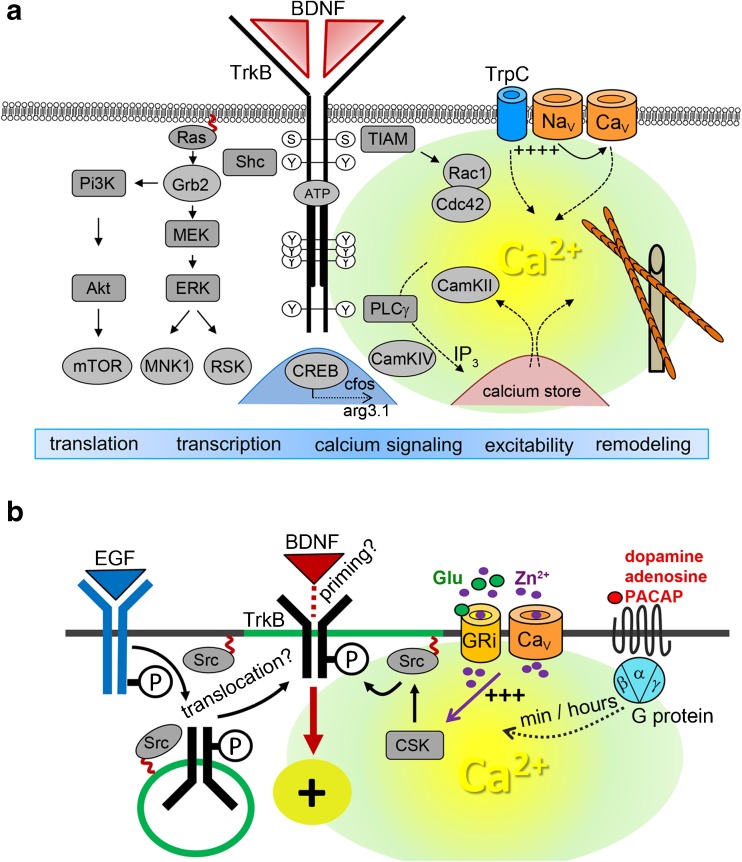
“Upon binding BDNF, TrkB dimerizes, activates an intrinsic kinase activity, undergoes autophosphorylation, and activates a complex set of intracellular signaling cascades [30, 65, 110, 123, 126] (Fig.”
BackgroundNeurotrophins and their receptors: A convergence point for many signalling pathways
Chao, M. V. (2003) · Nature Reviews Neuroscience · doi:10.1038/nrn1078 · Cited by 2,298 · cited 3×
“Upon binding BDNF, TrkB dimerizes, activates an intrinsic kinase activity, undergoes autophosphorylation, and activates a complex set of intracellular signaling cascades [30, 65, 110, 123, 126] (Fig.”
BackgroundNeurotrophin regulation of neural circuit development and function
Park, H., & Poo, M.-M. (2013) · Nature Reviews Neuroscience · doi:10.1038/nrn3379 · Cited by 2,060 · cited 10×
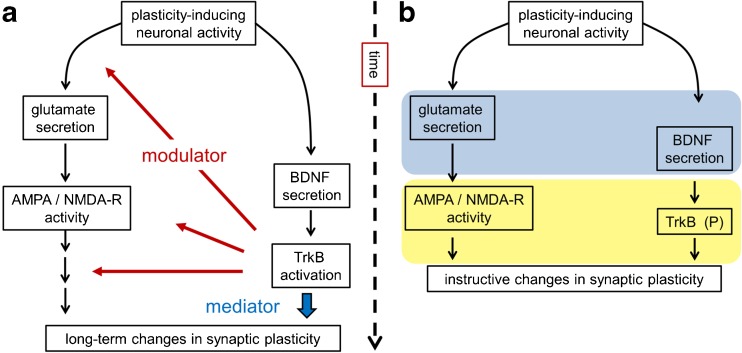
“BDNF as a mediator (according to Park and Poo [126]) can directly influence late effects in synaptic plasticity, for instance, local protein synthesis, spine remodeling, or gene transcription. b BDNF as an instructor of synaptic plasticity.”
BackgroundInfluentialNeurotrophins and Neuronal Plasticity
Thoenen, H. (1995) · Science · doi:10.1126/science.270.5236.593 · Cited by 1,927 · cited 2×
“The neurotrophin brain-derived neurotrophic factor (BDNF) [15, 151] and its signaling partners [21, 30, 110, 126] have emerged as key regulators of synaptic plasticity, a biological process describing the regulation of synaptic strength by neuronal activity.”
Background
Cited by
Items 101–200 of 369
Paolantoni, C., Ricciardi, S., Paolis, V. D., Okenwa, C., Catalanotto, C., Ciotti, M. T., Cattaneo, A., Cogoni, C., & Giorgi, C. (2018) · Frontiers in Molecular Neuroscience · doi:10.3389/fnmol.2018.00145 · Cited by 28
“…forms of LTP induction at glutamatergic synapses require rapid BDNF secretion to elicit both early and late phases in BDNF-dependent LTP (Kovalchuk et al., 2002; Aicardi et al., 2004; Blum and Konnerth, 2005; Edelmann et al., 2014; Panja and Bramham, 2014; Panja et al., 2014; Sasi et al., 2017).”
BackgroundHazalin, N. A. M. N., Liao, P. H., & Hassan, Z. (2020) · Behavioural Brain Research · doi:10.1016/j.bbr.2020.112781 · Cited by 28
Influence of BDNF genetic polymorphisms in the pathophysiology of aging-related diseases
Urbina-Varela, R., Soto-Espinoza, M. I., Vargas, R., Quiñones, L., & del Campo, A. (2020) · Aging and disease · doi:10.14336/ad.2020.0310 · Cited by 27
“This pathway is critical for the synthesis of cytoskeletal proteins, as well as for dendritic growth and its branching in hippocampal neurons [82].”
BackgroundGao, R., Ren, L., Zhou, Y., Wang, L., Xie, Y., Zhang, M., Liu, X., Ke, S., Wu, K., Zheng, J., et al. (2021) · Molecular and Cellular Endocrinology · doi:10.1016/j.mce.2021.111192 · Cited by 27
Lottering, B. J., & Lin, Y. (2021) · International Journal of Molecular Sciences · doi:10.3390/ijms22095028 · Cited by 27
Lactate Threshold Training Program on Patients with Multiple Sclerosis: A Multidisciplinary Approach
Amato, A., Ragonese, P., Ingoglia, S., Schiera, G., Schirò, G., Liegro, C. M. D., Salemi, G., Liegro, I. D., & Proia, P. (2021) · Nutrients · doi:10.3390/nu13124284 · Cited by 28
“BDNF is indeed a neurotrophin with a wide range of functions in the nervous system, among which are neuroprotection, the regulation of synaptogenesis and the control of complex cell-to-cell interactions involved in learning and memory [54,55].”
BackgroundBDNF-driven synaptic plasticity requires autocrine matrix metalloproteinase–9 activity
Legutko, D., Bijoch, Ł., Olszak, G., Kuźniewska, B., Kalita, K. B., Yasuda, R., Kaczmarek, L., & Michaluk, P. (2025) · Science Advances · doi:10.1126/sciadv.adx2369 · Cited by 29
Basavarajappa, B. S., & Subbanna, S. (2024) · Epigenomics · doi:10.2217/epi-2023-0428 · Cited by 26
Zhuang, T.-T., Pan, C., Chen, J., Han, F., Zhu, X.-L., Xu, H., & Lu, Y.-P. (2018) · Brain Research Bulletin · doi:10.1016/j.brainresbull.2018.09.006 · Cited by 26
BDNF and nicotine dependence: associations and potential mechanisms
Huang, Z., Wu, D., Qu, X., Li, M., Zou, J., & Tan, S. (2020) · Reviews in the Neurosciences · doi:10.1515/revneuro-2020-0044 · Cited by 27
“Ca2+ influx activated multiple downstream signaling cascades, retrograde targeting of BDNF, and up-regulation of neuronal activity (Sasi et al. 2017; Wong et al. 2015).”
BackgroundInfluentialCarlson, V. C. C., Ford, M. M., Carlson, T. L., Lomniczi, A., Grant, K. A., Ferguson, B. M., & Cervera‐Juanes, R. P. (2019) · Neuropsychopharmacology · doi:10.1038/s41386-018-0308-1 · Cited by 25
Wu, Z.-H., Fan, H., Gao, S., Jin, Y.-F., chen, C., Jiang, B., & Shen, J. G. (2022) · Frontiers in Pharmacology · doi:10.3389/fphar.2022.921553 · Cited by 25
“(B and D) Representative images of western blotting and corresponding analyses indicated that mice in the (CRS + oroxylin A)-treated and (CRS + paroxetine)-treated groups also had remarkably higher protein levels of BDNF, pTrkB and pCREB in the hippocampus than mice in the (CRS + vehicle)-treated group.”
BackgroundInfluentialNelson, M. L., Pfeifer, J. A., Hickey, J. P., Collins, A. E., & Kalisch, B. E. (2023) · Biology · doi:10.3390/biology12071042 · Cited by 25
Sharma, A., Muresanu, D. F., Ozkızılcık, A., Tian, Z. R., Lafuente, J. V., Manzhulo, I., Mössler, H., & Sharma, H. S. (2019) · Progress in brain research · doi:10.1016/bs.pbr.2019.03.002 · Cited by 24
Increased blood BDNF in healthy individuals with a family history of depression
Knorr, U., Soendergaard, M. G., Koefoed, P., Jørgensen, A., Faurholt‐Jepsen, M., Vinberg, M., & Kessing, L. V. (2017) · Psychiatry Research · doi:10.1016/j.psychres.2017.06.057 · Cited by 24
Peptides Derived from Growth Factors to Treat Alzheimer’s Disease
Gascon, S., Jann, J., Langlois-Blais, C., Plourde, M., Lavoie, C. L., & Faucheux, N. (2021) · International Journal of Molecular Sciences · doi:10.3390/ijms22116071 · Cited by 25
Prenatal Caffeine Damaged Learning and Memory in Rat Offspring Mediated by ARs/PKA/CREB/BDNF Pathway
LI, Y., ZHANG, W., SHI, R., SUN, M., ZHANG, L., LI, N., & XU, Z. (2018) · Physiological Research · doi:10.33549/physiolres.933906 · Cited by 23
“2016; Sasi et al. 2017; Messaoudi et al. 2002; Gruart et al. 2006; Whitlock et al. 2006).”
Ceylan, H. İ., Öztürk, M. E., Öztürk, D., Silva, A. F., Albayrak, M., Saygın, Ö., Eken, Ö., Clemente, F. M., & Nobarı, H. (2023) · Scientific Reports · doi:10.1038/s41598-023-34278-6 · Cited by 23
Antolasic, E. J., Jaehne, E. J., & van den Buuse, M. (2023) · Current Neuropharmacology · doi:10.2174/1570159x21666230724101321 · Cited by 23
“…processes required in long-term learning and memory [29-31], which could be involved in PTSD. Specifically, BDNF is secreted during the induction of long-term potentiation (LTP) and influences synaptic strength in a complex time-and brain region-dependent manner, as reviewed recently [32].”
BackgroundZhong, H., Xing, C., Zhou, M., Jia, Z., Liu, S., Zhu, S., Li, B., Yang, H., Ma, H., Wang, L., et al. (2023) · Acta Biochimica et Biophysica Sinica · doi:10.3724/abbs.2023238 · Cited by 23
“Representative immunofluorescence photomicrographs showed significant increases in the numbers and lengths of processes, which may involve BDNF and other neurotrophins, according to the recent literature [25–28].”
ResultHan, M., Zeng, D., Tan, W., Chen, X.-X., Bai, S.-Y., Wu, Q., Chen, Y., Wei, Z., Mei, Y., & Zeng, Y. (2024) · Neural Regeneration Research · doi:10.4103/nrr.nrr-d-23-01419 · Cited by 23
“…processes; promoting the formation of neurons, glia, and synapses; playing a neuroprotective role; and regulating short-term and long-term synaptic interactions that control key brain circuits related to emotional function (Foltran and Diaz, 2016; Sasi et al., 2017; Kowianski et al., 2018).”
Backgroundde Assis, G. G., Hoffman, J. R., Bojakowski, J., Murawska‐Ciałowicz, E., Cięszczyk, P., & Gasanov, E. V. (2021) · Frontiers in Molecular Neuroscience · doi:10.3389/fnmol.2021.638176 · Cited by 23
Piotrowicz, Z., Chalimoniuk, M., Płoszczyca, K., Czuba, M., & Langfort, J. (2020) · International Journal of Molecular Sciences · doi:10.3390/ijms21155569 · Cited by 24
“One reason which at least theoretically might be considered for the acute action of BDNF is its involvement in synaptic transmission [91].”
BackgroundBrain-derived Neurotrophic Factor and Its Applications through Nanosystem Delivery.
Xia, M., Zhao, T., Wang, X., Yang, L., Li, Y., Zheng, T., Li, J., Yu, F., Wei, Y., & Sun, P. (2021) · PubMed Central · doi:10.22037/ijpr.2021.115705.15484 · Cited by 22
Kim, J., Yang, J. H., Ryu, I. S., Sohn, S., Kim, S., & Choe, E. S. (2019) · International Journal of Molecular Sciences · doi:10.3390/ijms20122943 · Cited by 22
“In addition, phosphorylation at Tyr816 creates a binding site for PLCγ, and TrkB-PLCγ binding results in increases of Ca2+ release from the ER by activating IP3 [75].”
BackgroundInfluentialThorsdottir, D., Cruickshank, N. C., Einwag, Z., Hennig, G. W., & Erdös, B. (2019) · American Journal of Physiology-Heart and Circulatory Physiology · doi:10.1152/ajpheart.00478.2019 · Cited by 21
Chou, S.-M., Li, K., Huang, M., Chen, C., King, Y.-H. L., Li, G. G., Zhou, W., Teo, C. F., Jan, Y. N., Jan, L. Y., et al. (2021) · eLife · doi:10.7554/elife.58779 · Cited by 21
“BDNF is a sticky peptide with multiple positively charged residues, and therefore, BDNF has a limited range of diffusion upon release (Sasi et al., 2017).”
BackgroundZborowski, V. A., Heck, S. O., Marques, L. S., Bastos, N. K., & Nogueira, C. W. (2021) · Physiology & Behavior · doi:10.1016/j.physbeh.2021.113346 · Cited by 20
Zhang, D., Zhao, S., Zhang, Z., Xu, D., Lian, D., Wu, J., He, D., Sun, K., & Li, L. (2021) · Journal of Neuroinflammation · doi:10.1186/s12974-021-02294-w · Cited by 21
“Brain-derived neurotrophic factor (BDNF) is a key member of the neurotrophic family that is widely expressed in the CNS, which plays a critical role in the survival, development, and differentiation of neurons through activation of its high-affinity binding to tropomyosin-receptor kinase B (TrkB) [16, 17].”
BackgroundMohandas, K., Rishikesh, R., Balan, Y. M., Deepti, A., Hosseini, S., Körte, M., & Sasidharan, B. C. P. (2025) · Molecular Neurobiology · doi:10.1007/s12035-025-05238-0 · Cited by 19
“Phosphorylation of specific residues of TrkB (Tyr816) determines the activation of PLCγ, inducing intracellular Ca 2+ release and activation of calcium-dependent signaling, which represents the principal regulator of synaptic plasticity [100, 101].”
The neuroprotective effect of vitamin D in Parkinson's disease: association or causation
Hafiz, A. A. (2023) · Nutritional Neuroscience · doi:10.1080/1028415x.2023.2259680 · Cited by 19
“BDNF in fl u-ences both functional and structural aspects of synaptic transmission, enhancing activity-induced changes, which leads to increased e ffi ciency of signal transfer in particular NO, glutamate and GABA [135,136].”
BackgroundEnvisioning the role of inwardly rectifying potassium (Kir) channel in epilepsy
Akyüz, E., Köklü, B., Üner, A. K., Angelopoulou, E., & Paudel, Y. N. (2021) · Journal of Neuroscience Research · doi:10.1002/jnr.24985 · Cited by 20
de Assis, G. G., & Hoffman, J. R. (2022) · Brain Plasticity · doi:10.3233/bpl-210132 · Cited by 19
“The release system and signaling path340 ways of BDNF are key regulators of neuronal activity 341 and synaptic strength, while the activity-dependent 342 release of BDNF (regulated secretory pathway) is 343 important for synaptic communication and plasticity 344 [50].”
BackgroundWinham, C. L., Le, T., Jellison, E. R., Silver, A. C., Levesque, A. A., & Koob, A. O. (2019) · Neuroscience · doi:10.1016/j.neuroscience.2019.04.057 · Cited by 19
ProBDNF Dependence of LTD and Fear Extinction Learning in the Amygdala of Adult Mice
Ma, X., Vuyyuru, H., Munsch, T., Endres, T., Leßmann, V., & Meis, S. (2021) · Cerebral Cortex · doi:10.1093/cercor/bhab265 · Cited by 18
Zeng, F., Li, Y., Li, X., Gu, X., Cao, Y., Cheng, S., Tian, H., Mei, R., & Mei, X. (2024) · Neural Regeneration Research · doi:10.4103/nrr.nrr-d-24-00381 · Cited by 18
“…through a variety of neural mechanisms, such as promoting neuronal cell survival by inducing the production of anti-apoptotic factors, inhibiting oxidative stress by up-regulating superoxide dismutase production, and promoting neurogenesis and axon outgrowth (Cheng et al., 2017; Sasi et al., 2017).”
Kusuhara, M., Maruyama, K., Ishii, H., Masuda, Y., Sakurai, K., Tamai, E., & Urakami, K. (2019) · Integrative Cancer Therapies · doi:10.1177/1534735419845139 · Cited by 18
“Because BDGF gene expression is tightly regulated by epigenetic control in an activity-dependent and cell type-specific manner, BDGF is expected to be a key molecule in gene-environment interaction research.(33) An enriched environment induces BDNF mRNA expression in the hypothalamus.”
Poleksić, J., Aksić, M., Kapor, S., Aleksić, D., Stojković, T., Radovic, M., Djulejić, V., Marković, B., & Stamatakis, A. (2021) · Frontiers in Behavioral Neuroscience · doi:10.3389/fnbeh.2021.666547 · Cited by 18
Interplay Between Aging and Glial Cell Dysfunction: Implications for CNS Health
García‐Domínguez, M. (2025) · Life · doi:10.3390/life15101498 · Cited by 17
“Mechanistically, BDNF predominantly engages the TrkB receptor, triggering downstream signaling cascades (like PI3K/Akt, MAPK/ERK, and PLC γ pathways) that converge to regulate glial cell survival, metabolic activity, and homeostatic function [275].”
Takahashi, M., & Shelton, R. C. (2025) · Frontiers in Psychiatry · doi:10.3389/fpsyt.2025.1666599 · Cited by 18
“…under normal conditions, BDNF binds to TrkB receptors to activate pathways such as ERK and Akt, activating the mammalian target of rapamycin complex 1 (mTORC1), which drives synaptic protein synthesis, promoting dendritic spine and synapse formation, and maintaining synaptic structures (118).”
BDNF genotype Val66Met interacts with acute plasma BDNF levels to predict fear extinction and recall
Ney, L. J., Matthews, A. J., Nicholson, E., Zuj, D. V., Hsu, C. M. K., Steward, T., Graham, B. M., Harrison, B. J., Nichols, D. S., & Felmingham, K. L. (2021) · Behaviour Research and Therapy · doi:10.1016/j.brat.2021.103942 · Cited by 17
Meissner, S., Raos, B. J., & Svirskis, D. M. (2022) · European Journal of Pharmaceutics and Biopharmaceutics · doi:10.1016/j.ejpb.2022.10.021 · Cited by 17
van den Oord, E. J. C. G., Xie, L. Y., Zhao, M., Campbell, T. L., Turecki, G., Kähler, A. K., Dean, B., Mors, O. N., Hultman, C. M., Staunstrup, N. H., et al. (2023) · Molecular Psychiatry · doi:10.1038/s41380-023-02080-5 · Cited by 17
BDNF and Lactate as Modulators of Hippocampal CA3 Network Physiology
Griego, E., & Galván, E. J. (2023) · Cellular and Molecular Neurobiology · doi:10.1007/s10571-023-01425-6 · Cited by 18
“As we have learned through years of study, BDNF mediates neuronal plasticity not only via several molecular mechanisms but also with different temporal dynamics (Sasi et al. 2017).”
BackgroundLin, S., Chen, Z., Wu, Z., Fei, F., Xu, Z., Tong, Y., Sun, W., & Wang, P. (2023) · Neurochemical Research · doi:10.1007/s11064-023-04051-2 · Cited by 17
Cui, X., Fu, Z., Wang, M., Nan, X., & Zhang, B. (2018) · Neurological Research · doi:10.1080/01616412.2018.1447318 · Cited by 17
Zhang, W., Ge, M.-M., Zhang, L.-Q., Yuan, X., Han, S.-Y., Manyande, A., Tian, Y.-K., & Tian, X. (2022) · Neuroscience · doi:10.1016/j.neuroscience.2022.10.003 · Cited by 17
Brain-Derived Neurotrophic Factor in Pediatric Acquired Brain Injury and Recovery
Treble‐Barna, A., Petersen, B. A., Stec, Z., Conley, Y. P., Fink, E. L., & Kochanek, P. M. (2024) · Biomolecules · doi:10.3390/biom14020191 · Cited by 16
Bo, C., Liu, X., Liu, Y., Xu, L., & Huang, Q. (2025) · European journal of medical research · doi:10.1186/s40001-025-02424-7 · Cited by 16
“In neurons, BDNF binds both TrkB receptors and p75 receptors to mediate neuroplastic effects [13, 14], and cell apoptosis and survival, respectively [13, 15].”
Akbari, S., Hooshmandi, E., Bayat, M., Borhani‐Haghighi, A., Salehi, M. S., Pandamooz, S., Nejad, A. Y., & Haghani, M. (2021) · Brain Research · doi:10.1016/j.brainres.2021.147750 · Cited by 16
Cutuli, D., & Sampedro-Piquero, P. (2022) · Current Neuropharmacology · doi:10.2174/1570159x20666220624111855 · Cited by 16
Wang, C., Yang, S., Deng, J., Shi, L., Chang, J., Meng, J., Liu, W., Zeng, J., Xing, K., Wen, J., et al. (2023) · Drug Development Research · doi:10.1002/ddr.22038 · Cited by 16
“…(BDNF) is a member of the secreted protein neurotrophic factor family, and there is substantial evidence that BDNF is associated with neuronal maintenance, neuronal survival, plasticity, and neurotransmitter regulation (Lima Giacobbo et al., 2019; Martinowich et al., 2007; Sasi et al., 2017).”
BackgroundCrevier‐Sorbo, G., Rymar, V. V., Crevier-Sorbo, R., & Sadikot, A. F. (2020) · Acta Neuropathologica Communications · doi:10.1186/s40478-020-0878-0 · Cited by 16
MicroRNA-34a Acutely Regulates Synaptic Efficacy in the Adult Dentate Gyrus In Vivo
Berentsen, B., Patil, S. S., Rønnestad, K., Goff, K. M., Pajak, M., Simpson, T. I., Wibrand, K., & Bramham, C. R. (2019) · Molecular Neurobiology · doi:10.1007/s12035-019-01816-1 · Cited by 16
Kim, J., Seol, S., Kim, T., Lee, J., Koo, J. W., & Kang, H. J. (2024) · Experimental & Molecular Medicine · doi:10.1038/s12276-024-01156-8 · Cited by 15
Marcus, K., & Rabilloud, T. (2020) · Proteomes · doi:10.3390/proteomes8030023 · Cited by 15
Abnormal expression of post-synaptic proteins in prefrontal cortex of patients with schizophrenia
Matas, E., Deakin, J. F. W., & Toro, C. T. (2021) · Neuroscience Letters · doi:10.1016/j.neulet.2021.135629 · Cited by 15
TrkB Signaling Influences Gene Expression in Cortistatin-Expressing Interneurons
Maynard, K. R., Kardian, A., Hill, J. L., Mai, Y., Barry, B. K., Hallock, H. L., Jaffe, A. E., & Martinowich, K. (2020) · eNeuro · doi:10.1523/eneuro.0310-19.2019 · Cited by 15
“…transcripts for Gfap, Mal (T-cell differentiation protein), Slc25a18 (solute Carrier Family 25 Member 18) and Bdnf, genes enriched in astrocytes, oligodendrocytes, and excitatory neurons, respectively (SchaerenWiemers et al., 1995b; Zhou and Danbolt, 2014; Hol and Pekny, 2015; Sasi et al., 2017).”
BackgroundPatel, D. C., Thompson, E. G., & Sontheimer, H. W. (2022) · Frontiers in Cell and Developmental Biology · doi:10.3389/fcell.2022.961292 · Cited by 15
“Given its robust effects on neuronal development and differentiation, and synaptic plasticity, perturbations in the BDNF signaling has been reported in many neurological conditions including epilepsy (Park and Poo, 2013; Sasi et al., 2017).”
BackgroundInfluentialDorsch, S., Nicholson, V., Roman, E., Fanayan, E., & Chagpar, S. (2024) · Journal of physiotherapy · doi:10.1016/j.jphys.2024.08.007 · Cited by 14
Ahmed, M. A., & Kamel, E. O. (2020) · Basic & Clinical Pharmacology & Toxicology · doi:10.1111/bcpt.13457 · Cited by 14
Cai, C., Wang, L., Li, S., Lou, S.-C., Luo, J., Fu, D., & Chen, T. (2022) · Journal of Neuroscience · doi:10.1523/jneurosci.1989-21.2022 · Cited by 14
Huang, J., Li, Y., Zhang, S., Zou, Y., Zheng, Q., Lin, J., & Guo, L. (2022) · Food & Function · doi:10.1039/d2fo01847k · Cited by 14
Role of Neurotrophins in Orofacial Pain Modulation: A Review of the Latest Discoveries
Bonomini, F., Favero, G., Castrezzati, S., & Borsani, E. (2023) · International Journal of Molecular Sciences · doi:10.3390/ijms241512438 · Cited by 14
“Moreover, astrocytes [71] and microglial cells have been found to be another physiological source of neurotrophins [65,72,73].”
BackgroundNaV1.9 Potentiates Oxidized Phospholipid-Induced TRP Responses Only under Inflammatory Conditions
Martin, C., Stoffer, C., Mohammadi, M., Hugo, J., Leipold, E., Oehler, B., Rittner, H. L., & Blum, R. (2018) · Frontiers in Molecular Neuroscience · doi:10.3389/fnmol.2018.00007 · Cited by 14
“These signaling cascades are powerful enough to drive long-lasting excitability effects, translational changes, and growth effects, as already described for many types of neurons (Blum et al., 2002; Subramanian et al., 2012; Wetzel et al., 2013; Sasi et al., 2017).”
BackgroundSelf-citationInteractions of BDNF Val66Met Polymorphism and Menstrual Pain on Brain Complexity
Low, I., Kuo, P., Tsai, C.-L., Liu, Y.-H., Lin, M., Chao, H., Chen, Y., Hsieh, J., & Chen, L. (2018) · Frontiers in Neuroscience · doi:10.3389/fnins.2018.00826 · Cited by 14
“Nevertheless, we speculate a possible link between BDNF and complexity from several points based on the neurobiological functioning of BDNF (Sasi et al., 2017).”
BackgroundMartínez-Moreno, A., Rivera-Olvera, A., & Escobar, M. L. (2019) · Neurobiology of Learning and Memory · doi:10.1016/j.nlm.2019.107125 · Cited by 14
GABAB receptor intracellular signaling: novel pathways for depressive disorder treatment?
Korczak, M., Kurowski, P. N., Leśniak, A., Grönbladh, A., Filipowska, A., & Bujalska‐Zadrożny, M. (2020) · European Journal of Pharmacology · doi:10.1016/j.ejphar.2020.173531 · Cited by 14
Cui, F., Li, J., Li, K., Xie, Y.-G., & Zhao, X. (2021) · Journal of Anesthesia · doi:10.1007/s00540-021-02972-2 · Cited by 13
Arancibia-Opazo, S., Contreras-Riquelme, S., Sánchez, M., Cisternas-Olmedo, M., Vidal, R. L., Martín, A. J. M., & Sáez, M. (2023) · International Journal of Molecular Sciences · doi:10.3390/ijms241310848 · Cited by 13
“It participates in different neural functions such as the stress response [26], as a modulator of synaptic plasticity, and synaptic communication [27], among other processes.”
BackgroundEffects of Morphine and Maternal Care on Behaviors and Protein Expression of Male Offspring
Akbarabadi, A., Sadat‐Shirazi, M., Kabbaj, M., Zadeh‐Tehrani, S. N., Khalifeh, S., Pirri, F., & Zarrindast, M. (2021) · Neuroscience · doi:10.1016/j.neuroscience.2021.04.011 · Cited by 13
Schmidbauer, D., Fink, S., Rousset, F., Löwenheim, H., Senn, P., & Glueckert, R. (2023) · International Journal of Molecular Sciences · doi:10.3390/ijms24032013 · Cited by 13
“Moreover, the biochemical characteristics of BDNF prevent broader diffusion [80].”
BackgroundWang, N., Zhu, S., Chen, S., Zou, J., Zeng, P., & Tan, S. (2025) · Reviews in the Neurosciences · doi:10.1515/revneuro-2024-0147 · Cited by 12
Brain-Derived Neurotrophic Factor, a New Predictor of Coronary Artery Calcification
Jin, H. L., Ji, J.-J., Zhu, Y., Wang, X., Li, Y.-P., Shi, Q.-Y., & Chen, Y. (2021) · Clinical and Applied Thrombosis/Hemostasis · doi:10.1177/1076029621989813 · Cited by 12
“The exclusion criteria included the following: (1) malignant tumor (n 1⁄4 2), (2) pregnancy, (3) severe liver dysfunction, (4) severe hematological disorders, (5) a history of coronary artery bypass grafting, (6) allergy to the contrast agent, and (7) hemolysis of collected blood samples or poorly saved samples (n 1⁄4…”
BackgroundNella, K. T., Norton, B. M., Chang, H.-T., Heuer, R. A., Roque, C. B., & Matsuoka, A. J. (2022) · Acta Biomaterialia · doi:10.1016/j.actbio.2022.08.035 · Cited by 12
Hook, M. J. V. (2022) · Journal of Neurophysiology · doi:10.1152/jn.00540.2021 · Cited by 13
Advanced nanotherapies to promote neuroregeneration in the injured newborn brain
Arteaga, O., Mikrogeorgiou, A., Kannan, S., & Ferriero, D. M. (2019) · Advanced Drug Delivery Reviews · doi:10.1016/j.addr.2019.10.005 · Cited by 12
Spontaneous activity of astrocytes is a stochastic functional signal for memory consolidation
Losi, G., Vignoli, B., Granata, R., Lia, A., Zonta, M., Sansevero, G., Pischedda, F., Chiavegato, A., Santi, S., Zentilin, L., et al. (2025) · Proceedings of the National Academy of Sciences · doi:10.1073/pnas.2500511122 · Cited by 11
“At a molecular level, this functional coupling between neurons and astrocytes is orchestrated by BDNF trafficking ( 37 ).”
Self-citationGloor, Y. S., Matthey, A., Sobo, K., Mouterde, M., Kosek, E., Pickering, G. P., Poloni, E. S., Cedraschi, C., Ehret, G., & Desmeules, J. A. (2022) · Frontiers in Neuroscience · doi:10.3389/fnins.2022.807773 · Cited by 11
Linking Hypothermia and Altered Metabolism with TrkB Activation
Alitalo, O., González-Hernández, G., Rosenholm, M., Kohtala, P., Matsui, N., Müller, H. K., Theilmann, W., Klein, A. B., Kärkkäinen, O. K., Rozov, S. V., et al. (2023) · ACS Chemical Neuroscience · doi:10.1021/acschemneuro.3c00350 · Cited by 11
Lai, G., Malavolta, M., Marcozzi, S., Bigossi, G., Giuliani, M. E., Casoli, T., & Balietti, M. (2024) · Translational Psychiatry · doi:10.1038/s41398-024-02935-7 · Cited by 11
“In contrast to other components implicated in synapse function, BDNF stands out not only as a modulator but also as a pivotal mediator of synaptic plasticity and communication [19].”
BackgroundBailey, R. A., Gutierrez, A., Kyser, T. L., Hemmerle, A. M., Wendel, J. R. H., Seroogy, K. B., Vorhees, C. V., & Williams, M. T. (2019) · Neurotoxicity Research · doi:10.1007/s12640-018-9992-1 · Cited by 11
Yannai, S., Zonszain, J., Donyo, M., & Ast, G. (2019) · PLoS ONE · doi:10.1371/journal.pone.0211602 · Cited by 11
Treble‐Barna, A., Patronick, J., Uchani, S., Marousis, N. C., Zigler, C. K., Fink, E. L., Kochanek, P. M., Conley, Y. P., & Yeates, K. O. (2020) · Frontiers in Neurology · doi:10.3389/fneur.2020.00460 · Cited by 11
Neurotrophin and synaptogenesis
Jeanneteau, F. D., Arango-Lievano, M., & Chao, M. V. (2020) · Elsevier eBooks · doi:10.1016/b978-0-12-823672-7.00007-7 · Cited by 11
Adam, O., Psomiades, M., Rey, R., Mandairon, N., Suaud‐Chagny, M., Mondino, M., & Brunelin, J. (2021) · Brain Sciences · doi:10.3390/brainsci11050662 · Cited by 11
“BDNF is a neurotrophic factor involved in neuronal plasticity including neuronal growth, cortical excitability, and neuronal regeneration mechanisms [10].”
BackgroundNeurotoxic and cytoprotective mechanisms in the ischemic neocortex
Kalinichenko, S. G., Pushchin, I. I., & Matveeva, N. Y. (2023) · Journal of Chemical Neuroanatomy · doi:10.1016/j.jchemneu.2022.102230 · Cited by 10
Granitzer, S., Widhalm, R., Atteneder, S., Fernández, M. F., Mustieles, V., Zeisler, H., Hengstschläger, M., & Gundacker, C. (2023) · Exposure and Health · doi:10.1007/s12403-023-00565-w · Cited by 10
“The major functions of BDNF include developmental processes, regulation of neurogenesis, glio-genesis, synaptogenesis, and neuroprotection (Gonzalez et al. 2016; Sasi et al. 2017).”
El‐Saied, M. M., Afify, O. G. E., Raouf, E. R. A., Oraby, A., Hashish, A. F., & Zeidan, H. M. (2024) · International Journal of Developmental Neuroscience · doi:10.1002/jdn.10332 · Cited by 10
“Released BDNF is essential for structural and functional long-term potentiation in many brain circuits (Sasi et al., 2017).”
Kato, Y., Aoki, Y., Kiyose, C., & Fukui, K. (2022) · Molecules · doi:10.3390/molecules27072188 · Cited by 10
“In contrast, the binding between precursor-BDNF and lowaffinity nerve growth factor receptor (p75NTR) leads to apoptosis and is related to long-term depression [42,43].”
BackgroundZhang, X., Miao, H., Kang, D., Sun, D., & Kim, W. J. (2024) · bioRxiv (Cold Spring Harbor Laboratory) · doi:10.1101/2024.10.17.618859 · Cited by 10
Winias, S., Sarasati, A., Wicaksono, S., Ayuningtyas, N. F., Ernawati, D. S., & Radithia, D. (2023) · European Journal of Dentistry · doi:10.1055/s-0043-1761194 · Cited by 9
Sowndharya, S., & Rajan, K. E. (2024) · PLoS ONE · doi:10.1371/journal.pone.0294354 · Cited by 9
Faraji, J., & Metz, G. A. S. (2025) · Neuroprotection/Neuroprotection (Chichester, England. Print) · doi:10.1002/nep3.73 · Cited by 9
“…events that lead to the activation of transcription factors and the expression of genes such as c ‐ fos, cAMP response element ‐ binding (CREB) protein, synapsin, and activity ‐ regulated cytoskeleton ‐ associated (ARC) protein 54 – 56 involved in neuroprotection and synaptic plasticity.”
Sabaghi, A., Heirani, A., mahmodi, H., & Sabaghi, S. (2019) · Sport Sciences for Health · doi:10.1007/s11332-019-00586-6 · Cited by 9
Ulexite modulates the neurotoxicological outcomes of acetylferrocene‐exposed rainbow trout
Uçar, A., Özgeriş, F. B., Parlak, V., Yeltekin, A. Ç., Türkez, H., Alak, G., & Atamanalp, M. (2022) · Environmental and Molecular Mutagenesis · doi:10.1002/em.22498 · Cited by 9
“, 1996), it mediates more site-specific influences on neuronal morphology and synaptic function in the brain (Cacialli et al., 2018; Sasi et al., 2017).”
BackgroundTang, S., Liao, Y., Yang, M., & Yue, R. (2026) · Frontiers in Aging Neuroscience · doi:10.3389/fnagi.2026.1716291 · Cited by 8
“These pathways critically regulate neuronal survival, synaptic plasticity, and neurogenesis (Sasi et al., 2017).”
Wang, L., Bian, X., Liu, L., He, Q., Xu, J., Chen, X., Ye, H., Yang, J., & Jiang, L. (2024) · Frontiers in Endocrinology · doi:10.3389/fendo.2024.1324867 · Cited by 8
“Exercise can increase BDNF levels in the hippocampus of mice, thereby improving their performance in the Morris water maze test and learning-related behavioral tasks (24).”
BackgroundInvestigation of the relationship between neuroplasticity and grapheme-color synesthesia
Eckardt, N., Sinke, C., Bleich, S., Lichtinghagen, R., & Zedler, M. (2024) · Frontiers in Neuroscience · doi:10.3389/fnins.2024.1434309 · Cited by 10
The Psychological Impact of Amblyopia Treatment: A Systematic Literature Review
Haine, L. A., Taylor, I., & Vaughan, M. (2025) · British and Irish Orthoptic Journal · doi:10.22599/bioj.426 · Cited by 8
Metadata
- Authors
- Sasi, M., Vignoli, B., Canossa, M., & Blum, R.
- Affiliations
- University of Würzburg (DE)
- University of Trento (IT)
- Corresponding author
- Blum, Robert
- Venue
- Pflügers Archiv - European Journal of Physiology
- Published
- 2017-03-09
- Volume
- 469
- Issue
- 5-6
- Pages
- 593-610
- ISSN
- 0031-6768 (ISSN-L)
- 1432-2013
- PMC
- PMC5438432
- OpenAlex
- W2591947168
- Cited by
- 324
- References
- 177
- Citations by year
- 2026: 19 · 2025: 22 · 2024: 34 · 2023: 40 · 2022: 47 · 2021: 57 · 2020: 43 · 2019: 33 · 2018: 24 · 2017: 5
- FWCI
- 3.54
- Type
- journal article
- Language
- en
- Update notices
- correction (2017-03-30)
- Open access
- hybrid
- doi.org
- Locations
- Pflügers Archiv - European Journal of Physiology (publishedVersion, cc-by)
- Europe PMC (PubMed Central) (publishedVersion, other-oa)
- PubMed Central (publishedVersion, cc-by)
- PubMed (publishedVersion)
- Institutional Research Information System (Università degli Studi di Trento) (submittedVersion, cc-by)
- Funders
- Deutsche Forschungsgemeinschaft (BL567/3-2, TRR58, A10)
- Graduate School of Life Sciences Würzburg
- MURST (PRIN-2012-2015)
- Italian research council (EBRI-CNR 2015-2017)
- Lazio Innova (FILAS 2015 - 2017)
- Topics
- Life Sciences › Neuroscience › Cellular and Molecular Neuroscience › Nerve injury and regeneration
- Life Sciences › Neuroscience › Cellular and Molecular Neuroscience › Neuroscience and Neuropharmacology Research
- Life Sciences › Neuroscience › Developmental Neuroscience › Neurogenesis and neuroplasticity mechanisms
- Keywords
- brain-derived neurotrophic factor, BDNF signaling, TrkB receptor, proBDNF, synaptic plasticity, long-term potentiation, learning and memory, glial cells, intercellular communication, neurotrophins
- MeSH terms
- Animals, Anxiety Disorders, Humans, Synaptic Transmission, Synapses, Long-Term Potentiation, Brain-Derived Neurotrophic Factor, Receptor, trkB
About these checks
Registry, retraction, Cites and statistics results are computed, not judged, with one exception: a printed reference that no index lists is read once by a model before it counts as a citation error. Claims are extracted by a model and kept only when their quote appears verbatim in the text; each cited source is then checked, with a model’s help, for whether it says what the claim relies on. Those verdicts can be wrong — read the claim’s quote and the cited source before relying on one.
Statistics and arithmetic are recomputed, not judged.
Confidence bands are shown only for fields calibrated on our annotated test set. None is calibrated yet, so no band is shown.
What counts as a claim ›How we measure confidence ›How we check this ›
Are you an author, or do you see a problem with this page? Request a review
Data sources
Bibliographic data: Semantic Scholar, OpenAlex, Crossref.
Contains information from the Semantic Scholar Academic Graph Datasets, made available under the ODC Attribution License (ODC-BY 1.0).
Semantic Scholar’s data is described in: Kinney, R., et al. (2023). The Semantic Scholar Open Data Platform. arXiv:2301.10140.
