

Neurobiology of local and intercellular BDNF signaling
Open accessThe DOI matches its Crossref record; 176 of the 177 references it cites were found in a registry or an index.
Abstract
Brain-derived neurotrophic factor (BDNF) is a member of the neurotrophin family of secreted proteins. Signaling cascades induced by BDNF and its receptor, the receptor tyrosine kinase TrkB, link neuronal growth and differentiation with synaptic plasticity. For this reason, interference with BDNF signaling has emerged as a promising strategy for potential treatments in psychiatric and neurological disorders. In many brain circuits, synaptically released BDNF is essential for structural and functional long-term potentiation, two prototypical cellular models of learning and memory formation. Recent studies have revealed an unexpected complexity in the synaptic communication of mature BDNF and its precursor proBDNF, not only between local pre- and postsynaptic neuronal targets but also with participation of glial cells. Here, we consider recent findings on local actions of the BDNF family of ligands at the synapse and discuss converging lines of evidence which emerge from per se conflicting results.
Overview
The claims and statistics of this paper haven’t been checked yet.
Free: it reads the open-access text and checks the first 5 claims that cite a source we can check. Create a free account to check every claim.
Integrity signals
Registry
Cites
Statistics
Figures
Verification
Claims the paper makes
The claims and statistics of this paper haven’t been checked yet.
Free: it reads the open-access text and checks the first 5 claims that cite a source we can check. Create a free account to check every claim.
Claims other papers make about this one
Each is checked against this paper’s own text: does it say what the citing paper says it does?
The source backs part of the claim, not all of it — or backs it for a different population, condition or comparison.
In the citing paper
“Within microcircuits, TrkB signaling implements a refinement rule in which mature BDNF strengthens coactive synapses while precursor BDNF (proBDNF) weakens poorly correlated inputs, sharpening ensembles that encode shared activity patterns [105,110,111].”
From Synaptic Plasticity—Intrinsic Excitability and Antidepressant Discovery (2026) · cites this paper as [105]
Experimental — accuracy not yet measuredThe source backs part of the claim, not all of it — or backs it for a different population, condition or comparison.
In the citing paper
“The BDNF–TrkB axis functions as a master regulator that converts transient plasticity into stable synaptic reinforcement [105,106].”
From Synaptic Plasticity—Intrinsic Excitability and Antidepressant Discovery (2026) · cites this paper as [105]
Experimental — accuracy not yet measuredThe cited source says what the claim attributes to it.
In the citing paper
“At the level of individual spines, activity-dependent BDNF release activates TrkB in an autocrine loop that is essential for both structural and functional long-term potentiation [105,107,108].”
From Synaptic Plasticity—Intrinsic Excitability and Antidepressant Discovery (2026) · cites this paper as [105]
Self-check
Percentages, sums and reported differences re-computed from the paper’s own numbers.
The self-check needs the paper’s full text.
Citations
Cites
Cell Signaling by Receptor Tyrosine Kinases
Lemmon, M. A., & Schlessinger, J. (2010) · Cell · doi:10.1016/j.cell.2010.06.011 · Cited by 7,929
Domingos da Silveira da Luz, A. C., Pereira Dias, G., do Nascimento Bevilaqua, M. C., Cocks, G., Gardino, P. F., Thuret, S., & Nardi, A. E. (2013) · Neuropsychobiology · doi:10.1159/000353269 · Cited by 3,995
Egan, M. F., Kojima, M., Callicott, J. H., Goldberg, T. E., Kolachana, B. S., Bertolino, A., Zaitsev, E., Gold, B., Goldman, D., Dean, M., et al. (2003) · Cell · doi:10.1016/s0092-8674(03)00035-7 · Cited by 3,888 · cited 2×
“The Val66Met polymorphism does not exist in the mouse or other model organisms, and multiple s tudies are aimed at mimicking the funct ion of BDNF with the help of cellular models, genetic tools, or genetically engineered mouse models [26, 33, 34, 47, 64].”
BackgroundThe size and burden of mental disorders and other disorders of the brain in Europe 2010
Wittchen, H. U., Jacobi, F., Rehm, J., Gustavsson, A., Svensson, M., Jönsson, B., Olesen, J., Allgulander, C., Alonso, J., Faravelli, C., et al. (2011) · European Neuropsychopharmacology · doi:10.1016/j.euroneuro.2011.07.018 · Cited by 3,754
The Nerve Growth Factor 35 Years Later
Levi-Montalcini, R. (1987) · Science · doi:10.1126/science.3306916 · Cited by 3,125
Microglia promote learning-dependent synapse formation through brain-derived neurotrophic factor
Parkhurst, C. N., Yang, G., Ninan, I., Savas, J. N., Yates, J. R., Lafaille, J. J., Hempstead, B. L., Littman, D. R., & Gan, W.-B. (2013) · Cell · doi:10.1016/j.cell.2013.11.030 · Cited by 2,599 · cited 2×
“In line with this, microglial cells have been found to be another physiological source of BDNF [128, 154].”
BackgroundTrk Receptors: Roles in Neuronal Signal Transduction
Huang, E. J., & Reichardt, L. F. (2003) · Annual Review of Biochemistry · doi:10.1146/annurev.biochem.72.121801.161629 · Cited by 2,537 · cited 1×
“Upon binding BDNF, TrkB dimerizes, activates an intrinsic kinase activity, undergoes autophosphorylation, and activates a complex set of intracellular signaling cascades [30, 65, 110, 123, 126] (Fig.”
BackgroundNeurotrophins and their receptors: A convergence point for many signalling pathways
Chao, M. V. (2003) · Nature Reviews Neuroscience · doi:10.1038/nrn1078 · Cited by 2,298 · cited 3×
“Upon binding BDNF, TrkB dimerizes, activates an intrinsic kinase activity, undergoes autophosphorylation, and activates a complex set of intracellular signaling cascades [30, 65, 110, 123, 126] (Fig.”
BackgroundNeurotrophin regulation of neural circuit development and function
Park, H., & Poo, M.-M. (2013) · Nature Reviews Neuroscience · doi:10.1038/nrn3379 · Cited by 2,060 · cited 10×
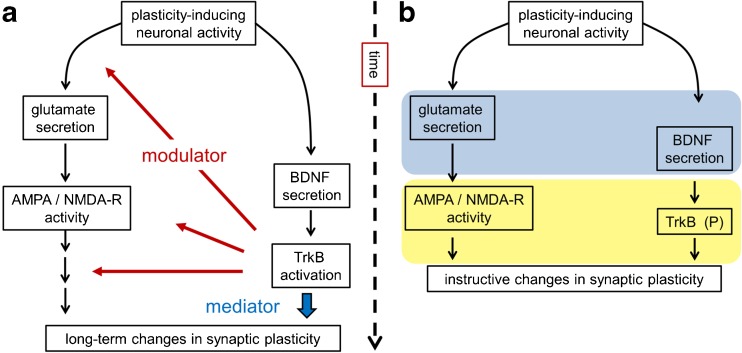
“BDNF as a mediator (according to Park and Poo [126]) can directly influence late effects in synaptic plasticity, for instance, local protein synthesis, spine remodeling, or gene transcription. b BDNF as an instructor of synaptic plasticity.”
BackgroundInfluentialNeurotrophins and Neuronal Plasticity
Thoenen, H. (1995) · Science · doi:10.1126/science.270.5236.593 · Cited by 1,927 · cited 2×
“The neurotrophin brain-derived neurotrophic factor (BDNF) [15, 151] and its signaling partners [21, 30, 110, 126] have emerged as key regulators of synaptic plasticity, a biological process describing the regulation of synaptic strength by neuronal activity.”
Background
Cited by
BDNF: A Key Factor with Multipotent Impact on Brain Signaling and Synaptic Plasticity
Kowiański, P., Lietzau, G., Czuba, E., Waśkow, M., Steliga, A., & Moryś, J. (2018) · Cellular and Molecular Neurobiology · doi:10.1007/s10571-017-0510-4 · Cited by 1,359
“…Department of Health Sciences, Pomeranian University of Slupsk, 64 Bohaterów Westerplatte Str., 76-200 Słupsk, Poland lasting synaptic interactions that influence mechanisms of memory and cognition (for review, see Foltran and Diaz 2016; Gonzalez et al. 2016; Park and Poo 2013; Sasi et al. 2017).”
BackgroundLactate and BDNF: Key Mediators of Exercise Induced Neuroplasticity?
Müller, P., Duderstadt, Y., Lessmann, V., & Müller, N. G. (2020) · Journal of Clinical Medicine · doi:10.3390/jcm9041136 · Cited by 241
“Because of the antagonistic effects of proBDNF/p75 signaling (mediating apoptosis, shrinkage of dendritic spines, and long-term depression [LTD] compared to mBDNF/TrkB signaling pathways, (supporting neuronal survival, synaptogenesis, growth of dendritic spines, and LTP) [26] the proportion of released proBDNF and mBD…”
BackgroundNeuroprotective strategies for retinal disease
Pardue, M. T., & Allen, R. S. (2018) · Progress in Retinal and Eye Research · doi:10.1016/j.preteyeres.2018.02.002 · Cited by 237
“the strengthening of synaptic transmission following activation of neuronal firing (long-term potentiation) (Leal et al., 2015; Sasi et al., 2017).”
de Pins, B., Cifuentes-Díaz, C., Thamila Farah, A., López-Molina, L., Montalban, E., Sancho-Balsells, A., López, A., Ginés, S., Delgado-García, J. M., Alberch, J., et al. (2019) · The Journal of Neuroscience · doi:10.1523/jneurosci.2121-18.2019 · Cited by 202
“However, although here we show that BDNF from astrocytes activates TrkB in neurons, we cannot rule out a collateral effect of BDNF on neighboring astrocytes or even microglia as previously described in the literature (Mizoguchi et al., 2011; Sasi et al., 2017), producing a more widespread effect than the one specifica…”
BackgroundUnderstanding stress: Insights from rodent models
Atrooz, F., Alkadhi, K. A., & Salim, S. (2021) · Current Research in Neurobiology · doi:10.1016/j.crneur.2021.100013 · Cited by 189
Ishii, T., Warabi, E., & Mann, G. E. (2019) · Free Radical Biology and Medicine · doi:10.1016/j.freeradbiomed.2018.09.002 · Cited by 177
Zarneshan, S. N., Fakhri, S., & Khan, H. (2022) · Pharmacological Research · doi:10.1016/j.phrs.2022.106099 · Cited by 172
Tolahunase, M. R., Sagar, R., Faiq, M., & Dada, R. (2018) · Restorative Neurology and Neuroscience · doi:10.3233/rnn-170810 · Cited by 167
Innovative Therapy for Alzheimer’s Disease-With Focus on Biodelivery of NGF
Mitra, S., Behbahani, H., & Eriksdotter, M. (2019) · Frontiers in Neuroscience · doi:10.3389/fnins.2019.00038 · Cited by 159
The Role of Altered BDNF/TrkB Signaling in Amyotrophic Lateral Sclerosis
Pradhan, J., Noakes, P. G., & Bellingham, M. C. (2019) · Frontiers in Cellular Neuroscience · doi:10.3389/fncel.2019.00368 · Cited by 147
“Exon five also serves as a ribosomal entry site, directing the start of translation and producing four isoforms of TrkB receptors in humans (Luberg et al., 2010; Sasi et al., 2017).”
BackgroundInfluentialThe Role of BDNF as a Biomarker in Cognitive and Sensory Neurodegeneration
Pisani, A., Paciello, F., VECCHIO, V. D., Malesci, R., Corso, E. D., Cantone, E., & Fetoni, A. R. (2023) · Journal of Personalized Medicine · doi:10.3390/jpm13040652 · Cited by 139
“This triggers the release of mBDNF and pro-BDNF [61,62].”
BackgroundSanaeifar, F., Pourranjbar, S., Pourranjbar, M., Ramezani, S., Mehr, S. R., Wadan, A. S., & Khazeifard, F. (2024) · Experimental Gerontology · doi:10.1016/j.exger.2024.112539 · Cited by 132
“BDNF's key activities include developmental processes, regulation of neuro-, glio-, and synaptogenesis, neuroprotection, and modulation of short-and long-lasting synaptic connections, all of which have a substantial impact on memory and cognition mechanisms (Sasi et al., 2017).”
BackgroundExercise-Induced Neuroprotection of the Nigrostriatal Dopamine System in Parkinson's Disease
Hou, L., Chen, W., Liu, X., Qiao, D., & Zhou, F.-M. (2017) · Frontiers in Aging Neuroscience · doi:10.3389/fnagi.2017.00358 · Cited by 128
“It is now established that NTFs are secreted proteins that are critical to the growth, development, maturation, maintenance, plasticity, and repair and regrowth of the peripheral and central nervous system neurons (Barde et al., 1982; Leibrock et al., 1989; Hou et al., 1996; Levi-Montalcini et al., 1996; Airaksinen an…”
BackgroundExercise Intensity and Recovery on Circulating Brain-derived Neurotrophic Factor
REYCRAFT, J. T., ISLAM, H., TOWNSEND, L. K., HAYWARD, G. C., HAZELL, T. J., & MACPHERSON, R. E. K. (2020) · Medicine & Science in Sports & Exercise · doi:10.1249/mss.0000000000002242 · Cited by 99
Leptin in depression: a potential therapeutic target
Ge, T., Fan, J., Yang, W., Cui, R., & Li, B. (2018) · Cell Death and Disease · doi:10.1038/s41419-018-1129-1 · Cited by 120
Deyama, S., Bang, E., Kato, T., Li, X.-Y., & Duman, R. S. (2019) · Biological Psychiatry · doi:10.1016/j.biopsych.2018.12.014 · Cited by 116
The emerging role of the BDNF-TrkB signaling pathway in the modulation of pain perception
Cappoli, N., Tabolacci, E., Aceto, P., & Russo, C. D. (2020) · Journal of Neuroimmunology · doi:10.1016/j.jneuroim.2020.577406 · Cited by 116
A BDNF-Mediated Push-Pull Plasticity Mechanism for Synaptic Clustering
Niculescu, D., Michaelsen-Preusse, K., Güner, Ü., van Dorland, R., Wierenga, C. J., & Lohmann, C. (2018) · Cell Reports · doi:10.1016/j.celrep.2018.07.073 · Cited by 111
Jang, M., Gould, E., Xu, J., Kim, E. J., & Kim, J. H. (2019) · eLife · doi:10.7554/elife.42156 · Cited by 97
“Due to the biochemical nature of BDNF, it is thought to act locally at the synapse with limited diffusion within the micrometer range (Horch and Katz, 2002; Sasi et al., 2017).”
BackgroundBlood biomarkers and treatment response in major depression
Mora, C., Zonca, V., Riva, M. A., & Cattaneo, A. (2018) · Expert Review of Molecular Diagnostics · doi:10.1080/14737159.2018.1470927 · Cited by 107
Sharma, S., Chawla, S., Kumar, P., Ahmad, R., & Verma, P. K. (2024) · Brain Research · doi:10.1016/j.brainres.2024.149123 · Cited by 111
Viel, T., Toricelli, M., Pereira, A. R., Souza Abrao, G., Malerba, H., Maia, J., & Buck, H. (2021) · Neural Regeneration Research · doi:10.4103/1673-5374.286952 · Cited by 102
“The participation of BDNF in neuroplasticity is particularly important in both structural changes and synaptic function (Sasi et al., 2017; Kowianski et al., 2018), where BDNF positively regulates the synthesis of proteins involved with synaptic changes (Leal et al., 2015).”
Falcicchia, C., Paolone, G., Emerich, D. F., Lovisari, F., Bell, W. J., Fradet, T., Wahlberg, L. U., & Simonato, M. (2018) · Molecular Therapy — Methods & Clinical Development · doi:10.1016/j.omtm.2018.03.001 · Cited by 100
“Molecular Therapy: Methods This is an open access article under the CC BY-NCinteractions that influence memory and cognition.(3) With specific reference to chronic epilepsy, electrophysiological experiments in a model of neocortical epileptogenesis support the notion that reduction in trophic support by BDNF may contr…”
BackgroundThe Molecular Effects of BDNF Synthesis on Skeletal Muscle: A Mini-Review
Rentería, I., García‐Suárez, P. C., Fry, A. C., Moncada‐Jiménez, J., Machado-Parra, J. P., Antunes, B. M., & Jiménez‐Maldonado, A. (2022) · Frontiers in Physiology · doi:10.3389/fphys.2022.934714 · Cited by 95
“This BDNF-TrkB interaction induces dimerization of TrkBs and generates autophosphorylation that releases a signal transduction pathway (Blum and Konnerth, 2005; Sasi et al., 2017).”
BackgroundMultifunctional roles of zinc in Alzheimer’s disease
Xie, Z., Wu, H., & Zhao, J. (2020) · NeuroToxicology · doi:10.1016/j.neuro.2020.07.003 · Cited by 89
Emili, M., Guidi, S., Uguagliati, B., Giacomini, A., Bartesaghi, R., & Stagni, F. (2020) · Critical Reviews in Food Science and Nutrition · doi:10.1080/10408398.2020.1810625 · Cited by 86
“BDNF-independent TrkB activation occurs via a mechanism known as trans-activation (see (Chao 2003; Sasi et al. 2017)).”
BackgroundLeschik, J., Lutz, B., & Gentile, A. (2021) · International Journal of Molecular Sciences · doi:10.3390/ijms22147339 · Cited by 83
Emergence of local and global synaptic organization on cortical dendrites
Kirchner, J. H., & Gjorgjieva, J. (2021) · Nature Communications · doi:10.1038/s41467-021-23557-3 · Cited by 81
Rauti, R., Cellot, G., D’Andrea, P., Colliva, A., Scaini, D., Tongiorgi, E., & Ballerini, L. (2020) · Molecular Brain · doi:10.1186/s13041-020-00582-9 · Cited by 78
Liu, J., Liu, B., Yuan, P., Cheng, L., Sun, H. B., Gui, J., Pan, Y., Huang, D., Chen, H., & Jiang, L. (2021) · Ecotoxicology and Environmental Safety · doi:10.1016/j.ecoenv.2021.112005 · Cited by 77
Lambuk, L., Lazaldin, M. A. M., Ahmad, S., Iezhitsa, I. N., Agarwal, R., Uskoković, V., & Mohamud, R. (2022) · Frontiers in Pharmacology · doi:10.3389/fphar.2022.875662 · Cited by 77
“Apart from neuronal survival, BNDF is widely accepted to play a critical role in synaptic plasticity and memory (Sasi et al., 2017).”
BackgroundGuerrera, C. S., Furneri, G., Grasso, M., Caruso, G., Castellano, S., Drago, F., Di Nuovo, S., & Caraci, F. (2020) · Frontiers in Psychology · doi:10.3389/fpsyg.2020.00857 · Cited by 58
“Since in the brain, neurons are a significant source of BDNF, whose synthesis occurs in regions fundamental for emotional and cognitive functions (Sasi et al., 2017), these preliminary evidence suggests that physical activity, when performed in combination with pharmacological antidepressant treatment, may improve aff…”
BackgroundLiu, J., Chen, Y., Yang, J., Song, X., Han, W., Xie, M., Cheng, L., Xie, L., Chen, H., & Jiang, L. (2019) · Brain and Behavior · doi:10.1002/brb3.1453 · Cited by 70
Pinho, R. A., Aguiar, A. S., & Radak, Z. O. (2019) · Antioxidants · doi:10.3390/antiox8110529 · Cited by 69
“However, the greatest extent of energy expenditure in the brain is consumed by action potential related events [32] and BDNF is also an active regulator of synaptic transmission [33].”
BackgroundPhysiological significance of elevated levels of lactate by exercise training in the brain and body
Lee, S., Choi, Y., Jeong, E., Park, J., Kim, J., Tanaka, M., & Choi, J. (2023) · Journal of Bioscience and Bioengineering · doi:10.1016/j.jbiosc.2022.12.001 · Cited by 67
Apigenin Ameliorates Scopolamine-Induced Cognitive Dysfunction and Neuronal Damage in Mice
Kim, Y., Kim, J.-H., He, M., Lee, A., & Cho, E. J. (2021) · Molecules · doi:10.3390/molecules26175192 · Cited by 68
“BDNF has a regulatory function of synaptic interactions that affect learning nd memory formation [65,66].”
BackgroundSingh, A., Singh, J., & Rattan, S. C. (2021) · Neurogastroenterology & Motility · doi:10.1111/nmo.14099 · Cited by 65
Murawska‐Ciałowicz, E., de Assis, G. G., Clemente, F. M., Feito, Y., Šťastný, P., Zuwała−Jagiełło, J., Bibrowicz, B., & Wolański, P. M. (2021) · Scientific Reports · doi:10.1038/s41598-021-88069-y · Cited by 67
Glud, M., Christiansen, T., Larsen, L. H., Richelsen, B., & Bruun, J. M. (2019) · Journal of Obesity · doi:10.1155/2019/4537274 · Cited by 66
de Assis, G. G., & Gasanov, E. V. (2019) · Frontiers in Neuroendocrinology · doi:10.1016/j.yfrne.2019.100784 · Cited by 64
Personalized assessment and management of non‐specific low back pain
Wirth, B., & Schweinhardt, P. (2023) · European Journal of Pain · doi:10.1002/ejp.2190 · Cited by 64
“BDNF is a key factor in regulating neuroplasticity (Kowianski et al., 2018; Sasi et al., 2017) and might be a potential biomedical target for personalized pain treatment (Cappoli et al., 2020) and to prevent pain chronicity (Baumbauer et al., 2020; Nijs et al., 2015).”
BackgroundThe road to ERK activation: Do neurons take alternate routes?
Zobon, N. T. M., & Blackwell, K. T. (2020) · Cellular Signalling · doi:10.1016/j.cellsig.2020.109541 · Cited by 61
“RTKs, such as TrkA, TrkB and EGFR, activate Ras family proteins through intermediate molecules.”
BackgroundInfluentialCyrino, L. A. R., de Lima, D. D., Ullmann, O. M., & Maia, T. P. (2021) · Frontiers in Behavioral Neuroscience · doi:10.3389/fnbeh.2021.609487 · Cited by 60
Leschik, J., Gentile, A., Cicek, C., Péron, S., Tevosian, M., Beer, A., Radyushkin, K., Bludau, A., Ebner, K., Neumann, I., et al. (2022) · Progress in Neurobiology · doi:10.1016/j.pneurobio.2022.102333 · Cited by 58
Diniz, C. R. A. F., Casarotto, P. C., Resstel, L., & Joca, S. R. L. (2018) · Neuroscience & Biobehavioral Reviews · doi:10.1016/j.neubiorev.2018.04.001 · Cited by 58
Zhang, J., Gao, T., Wang, Y., Wang, J., Guan, W., Wang, Y., Wang, C., Liu, J., & Jiang, B. (2019) · The International Journal of Neuropsychopharmacology · doi:10.1093/ijnp/pyz032 · Cited by 58
Chakrapani, S., Eskander, N., Santos, L. A. D. L., Omisore, B. A., & Mostafa, J. A. (2020) · Cureus · doi:10.7759/cureus.11396 · Cited by 58
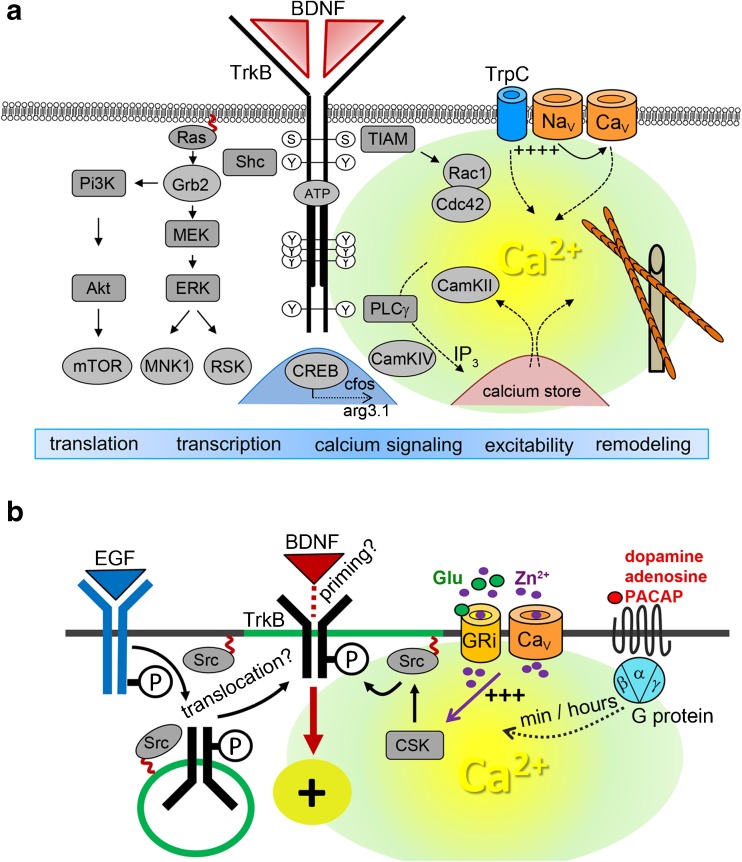
“This figure (adapted from Figure 3 of [39]) shows the pathways that are activated upon BDNF binding to the TrkB receptor.”
BackgroundMiller, K. M., Mercado, N. M., & Sortwell, C. E. (2021) · npj Parkinson's Disease · doi:10.1038/s41531-021-00179-6 · Cited by 55
The Paroxysmal Depolarization Shift: Reconsidering Its Role in Epilepsy, Epileptogenesis and Beyond
Kubista, H., Boehm, S., & Hoťka, M. (2019) · International Journal of Molecular Sciences · doi:10.3390/ijms20030577 · Cited by 54
“Brain-derived neurotrophic factor (BDNF), for example, is secreted in an activity-dependent manner at dendritic sites [79], has glutamate-like fast excitatory and slow modulatory effects on synaptic plasticity [80,81] and is known to play a role in neuronal synchronization [82–84].”
BackgroundWang, Y., Kang, X.-N., Cao, Y., Zheng, D., Lu, Y., Pang, C., Wang, Z., Cheng, B., & Peng, Y. W. (2019) · Brain Behavior and Immunity · doi:10.1016/j.bbi.2019.07.012 · Cited by 54
Cutuli, D., Landolfo, E., Petrosini, L., & Gelfo, F. (2021) · Journal of Alzheimer s Disease · doi:10.3233/jad-215193 · Cited by 54
Roles of Gasotransmitters in Synaptic Plasticity and Neuropsychiatric Conditions
Shefa, U., Kim, D., Kim, M., Jeong, N. Y., & Jung, J. (2018) · Neural Plasticity · doi:10.1155/2018/1824713 · Cited by 51
“Moreover, BDNF and neurotransmitter signaling cascades can work together in close temporal association to induce immediate and guided effects on synaptic plasticity [22].”
BackgroundGlial neuroimmune signaling in opioid reward
Zhang, H., Largent‐Milnes, T. M., & Vanderah, T. W. (2019) · Brain Research Bulletin · doi:10.1016/j.brainresbull.2019.11.012 · Cited by 50
“In some cases when the CNS is suffering from severe damage or infection, reactive astrocytes can induce the formation of glial scars, which limit the spread of inflammatory cells or infectious agents into healthy CNS areas (Sofroniew and Vinters, 2010).”
BackgroundInfluentialJin, T., Rehani, P., Ying, M., Huang, J., Liu, S., Roussos, P., & Wang, D. (2021) · Genome Medicine · doi:10.1186/s13073-021-00908-9 · Cited by 40
BDNF, GDNF, NGF and Klotho levels and neurocognitive functions in acute term of schizophrenia
Turkmen, B. A., Yazıcı, E., Güzel, D., Suda, M. A., & Yazıcı, A. B. (2021) · BMC Psychiatry · doi:10.1186/s12888-021-03578-4 · Cited by 48
“In one study conducted in this area, animal modelling with BDNF was performed, and it was shown that BDNF is involved in higher-level functions of the brain, such as perception and regulation of emotions, learning, memory and other neurocognitive functions [48].”
Szarowicz, C. A., Steece‐Collier, K., & Caulfield, M. E. (2022) · International Journal of Molecular Sciences · doi:10.3390/ijms23148011 · Cited by 47
Costa, R. O., Martins, L. F., Tahiri, E., & Duarte, C. B. (2022) · Wiley Interdisciplinary Reviews - RNA · doi:10.1002/wrna.1713 · Cited by 47
The Pleiotropic Potential of BDNF beyond Neurons: Implication for a Healthy Mind in a Healthy Body
Rosa, M. C. D., Zimbone, S., Saab, M. W., & Tomasello, M. F. (2021) · Life · doi:10.3390/life11111256 · Cited by 46
“For the crucial and physiological functions performed, the gene structure of BDNF is highly conserved throughout mammals and its transcription is tightly regulated and cell-type specific [1].”
BackgroundInfluentialRiolo, G., Ricci, C., Angelis, N. D., Marzocchi, C., Guerrera, G., Borsellino, G., Giannini, F., & Battistini, S. (2022) · Brain Sciences · doi:10.3390/brainsci12050617 · Cited by 45
“Instead, plasmin and various matrix metalloproteinases (MMP2, MMP3, MMP7 and MMP9) are responsible for extra-cellular processing of ProBDNF [14,15,18].”
BackgroundInfluentialSchiaffino, L., Bonafede, R., Scambi, I., Parrella, E., Pizzi, M., & Mariotti, R. (2018) · Scientific Reports · doi:10.1038/s41598-018-30659-4 · Cited by 42
Frazzini, V., Granzotto, A., Bomba, M., Massetti, N., Castelli, V., d’Aurora, M., Punzi, M., Iorio, M., Mosca, A., Delli Pizzi, S., et al. (2018) · Scientific Reports · doi:10.1038/s41598-018-28083-9 · Cited by 39
Neurotrophin signalling in amygdala-dependent cued fear learning
Meis, S., Endres, T., & Leßmann, V. (2020) · Cell and Tissue Research · doi:10.1007/s00441-020-03260-3 · Cited by 43
“Indeed, neural responses to the CS are enhanced in the LA in vivo and in vitro after fear learning (for review and references, see Schafe et al. 2001; Sigurdsson et al. 2007; Sah et al. 2008; Johansen et al. 2012).”
BackgroundDombert, B., Balk, S., Lüningschrör, P., Moradi, M., Sivadasan, R., Saal-Bauernschubert, L., & Jablonka, S. (2017) · Frontiers in Molecular Neuroscience · doi:10.3389/fnmol.2017.00346 · Cited by 43
“BDNF/trkB Induces Spontaneous Ca2+ Transients in Primary Motoneurons In the peripheral and central nervous system BDNF modulates cell survival, but above all synaptic function and neuronal morphology (Blum and Konnerth, 2005; Minichiello, 2009; Rauskolb et al., 2010; Park and Poo, 2013; Sasi et al., 2017).”
BackgroundLucini, C., Cacialli, P., & Palladino, A. (2018) · Neural Regeneration Research · doi:10.4103/1673-5374.233430 · Cited by 43
“BDNF acts as survival factor in the peripheral nervous system (Sendtner et al., 1992), whereas in the brain, it rather mediates region-specific effects on synaptic function and neuronal morphology (Sasi et al., 2017).”
BackgroundKaushik, M., Kaushik, P., & Parvez, S. (2022) · Ageing Research Reviews · doi:10.1016/j.arr.2022.101577 · Cited by 42
Mehterov, N. H., Minchev, D. S., Gevezova, M., Sarafian, V. S., & Maes, M. H. J. (2022) · Molecular Neurobiology · doi:10.1007/s12035-022-02889-1 · Cited by 42
Blanco, A. M., Bertucci, J. I., Hatef, A., & Unniappan, S. (2020) · Scientific Reports · doi:10.1038/s41598-020-67535-z · Cited by 40
Treble‐Barna, A., Heinsberg, L. W., Stec, Z., Breazeale, S., Davis, T. S., Kesbhat, A., Chattopadhyay, A., VonVille, H. M., Ketchum, A., Yeates, K. O., et al. (2022) · Neuroscience & Biobehavioral Reviews · doi:10.1016/j.neubiorev.2023.105078 · Cited by 39
Wei, X., Wang, L., Hua, J., Jin, X., Ji, F., Peng, K., Zhou, B., Yang, J., & Meng, X. (2021) · Journal of Neuroinflammation · doi:10.1186/s12974-021-02148-5 · Cited by 38
“FL also contributes to the nervous system development [45, 46], we detected the TrkB.”
BackgroundLi, J., Chen, J., Ma, N., Yan, D., Wang, Y., Zhao, X., Zhang, Y., & Zhang, C. (2019) · Behavioural Brain Research · doi:10.1016/j.bbr.2019.03.010 · Cited by 37
“It is well-known that mBDNF preferentially binds to the tropomyosin-related kinase B (TrkB) receptor, activating the downstream signaling cascades, leading to neuronal survival, differentiation, and positive regulation of learning and memory [17,18].”
Endothelial cells are an important source of BDNF in rat skeletal muscle
Cefis, M., Chaney, R., Quirié, A., Santini, C., Marie, C., Garnier, P. E., & Prigent‐Tessier, A. (2022) · Scientific Reports · doi:10.1038/s41598-021-03740-8 · Cited by 38
The role of serotonin neurotransmission in rapid antidepressant actions
Pehrson, A. L., Roberts, D., Khawaja, A., & McNair, R. (2022) · Psychopharmacology · doi:10.1007/s00213-022-06098-5 · Cited by 37
Stress, memory, and implications for major depression
de Sousa, G. M., Vargas, H. D. Q., Barbosa, F. F., & Coelho, N. L. G. (2021) · Behavioural Brain Research · doi:10.1016/j.bbr.2021.113410 · Cited by 36
Pagliusi, M., Franco, D., Cole, S. L., Morais‐Silva, G., Chandra, R., Fox, M. E., Iñiguez, S. D., Sartori, C. R., & Lobo, M. K. (2022) · Frontiers in Psychiatry · doi:10.3389/fpsyt.2022.854494 · Cited by 36
“The pro-plasticity effects of BDNF are triggered by the activation of the full-length BDNF receptor tyrosine kinase B (here called TrkB), initiating a specific intracellular signaling pathway (6, 9, 10).”
BackgroundNeurotrophins of the Fetal Brain and Placenta in Prenatal Hyperhomocysteinemia
Arutjunyan, A. V., Milyutina, Y. P., Shcherbitskaia, A. D., Kerkeshko, G. O., Zalozniaia, I. V., & Mikhel, A. V. (2020) · Biochemistry (Moscow) · doi:10.1134/s000629792002008x · Cited by 36
Ceylan, H. İ., Silva, A. F., Ramírez‐Campillo, R., & Murawska‐Ciałowicz, E. (2024) · Biology · doi:10.3390/biology13050323 · Cited by 35
“The impact of circulating BDNF encompasses developmental processes, the regulation of neuron and glial cell formation, the protection of neurons, and the modulation of synaptic connections that affect memory and cognition mechanisms [20–22].”
BackgroundSynaptic Microenvironment in Depressive Disorder: Insights from Synaptic Plasticity
Ren, F., & Guo, R. (2021) · Neuropsychiatric Disease and Treatment · doi:10.2147/ndt.s268012 · Cited by 36
Differential Regulation of the BDNF Gene in Cortical and Hippocampal Neurons
Esvald, E., Tuvikene, J., Moistus, A., Rannaste, K., Kõomägi, S., & Timmusk, T. (2022) · Journal of Neuroscience · doi:10.1523/jneurosci.2535-21.2022 · Cited by 34
Geng, X., Wu, H., Li, Z., Li, C., Chen, D., Zong, J., Liu, Z., Wei, S., & Peng, W. (2021) · Oxidative Medicine and Cellular Longevity · doi:10.1155/2021/1703981 · Cited by 33
Human Primary Astrocytes Differently Respond to Pro- and Anti-Inflammatory Stimuli
Szpakowski, P., Ksiazek-Winiarek, D. J., Turniak, M., Pacan, I., & Glabinski, A. R. (2022) · Biomedicines · doi:10.3390/biomedicines10081769 · Cited by 33
“Astrocytes are able to express BDNF and release it, as well as recycle and store this neurotrophin for use in an activity-dependent manner [76,77].”
BackgroundInherited Eye Diseases with Retinal Manifestations through the Eyes of Homeobox Genes
Markitantova, Y. V., & Simirskii, V. N. (2020) · International Journal of Molecular Sciences · doi:10.3390/ijms21051602 · Cited by 33
“, the strengthening of synaptic transmission after the activation of neuronal firing, in addition to promoting neuron survival [376,377].”
BackgroundWang, C. S., McCarthy, C. I., Guzikowski, N. J., Kavalali, E. T., & Monteggia, L. M. (2024) · Proceedings of the National Academy of Sciences · doi:10.1073/pnas.2303664121 · Cited by 32
“Downstream signaling pathways of TrkB activation overlap with pathways regulating VGCC activity, such as PLC - γ and PKC, suggesting a potential mechanism by which this could occur (1).”
Luca, P. D., Mele, M., Tanqueiro, S. R., Napoli, F., Butkevičiūtė, U., Souto, A. C., Costa, R. O., Schwarz, A. P., Drexel, M., Sebastião, A. M., et al. (2025) · Journal of Biomedical Science · doi:10.1186/s12929-025-01164-4 · Cited by 32
“Moreover, several pieces of evidence point to a fundamental role for endogenous BDNF in LTP of hippocampal glutamatergic synapses [34, 37, 52, 54].”
Exploring the relationship between metal exposure, BDNF, and behavior in adolescent males
Rodríguez‐Carrillo, A., Mustieles, V., D’Cruz, S. C., Legoff, L., Gil, F., Olmedo, P., Reina-Pérez, I., Mundo, A., Molina, M., Smagulova, F. O., et al. (2021) · International Journal of Hygiene and Environmental Health · doi:10.1016/j.ijheh.2021.113877 · Cited by 33
Role of BDNF in Neuroplasticity Associated with Alcohol Dependence
Peregud, D., Baronets, V. Y., Terebilina, N. N., & Gulyaeva, N. V. (2023) · Biochemistry (Moscow) · doi:10.1134/s0006297923030094 · Cited by 32
Gross, K. S., Alf, R. L., Polzin, T. R., & Frick, K. M. (2020) · Psychoneuroendocrinology · doi:10.1016/j.psyneuen.2020.105110 · Cited by 31
“…expression and activity are often studied after long-term ( > 24 hrs) E 2 exposure, however, evidence that E 2 can increase both mature BDNF (mBDNF) protein (Fortress et al., 2014) and TrkB activation (Kram ´ ar et al., 2013; Sato et al., 2007) on more rapid timescales has also been reported.”
InfluentialActivation of Three Major Signaling Pathways After Endurance Training and Spinal Cord Injury
Bimbová, K., Bačová, M., Kisucká, A., Gálik, J., Závacký, P., & Lukáčová, N. (2021) · Molecular Neurobiology · doi:10.1007/s12035-021-02628-y · Cited by 31
“Moreover, simultaneous triggering of PI3k and MAPK pathways could alter actin and microtubule dynamics and dendritic branching [7, 28].”
BackgroundChang, R., Zhu, S., Peng, J., Lang, Z., Zhou, X., Liao, H., Zou, J., Zeng, P. H., & Tan, S. (2023) · Translational Psychiatry · doi:10.1038/s41398-023-02647-4 · Cited by 31
Shcherbitskaia, A. D., Vasilev, D. S., Milyutina, Y. P., Tumanova, N. L., Zalozniaia, I. V., Kerkeshko, G. O., & Arutjunyan, A. V. (2020) · Neurotoxicity Research · doi:10.1007/s12640-020-00233-w · Cited by 31
Bhandari, A., SMITH, J., Zhang, K. Y., Jensen, A. A., Reid, L., Goeser, T., Fan, S., Ghate, D. A., & Hook, M. J. V. (2019) · Frontiers in Cellular Neuroscience · doi:10.3389/fncel.2019.00426 · Cited by 31
Tong, J., Zhang, J., Jin, Y., Liu, W., Wang, H., Huang, Y., Shi, D., Zhu, M., Zhu, N., Zhang, T., et al. (2021) · Brain Sciences · doi:10.3390/brainsci11060765 · Cited by 30
“cies and locations on MDD and the correlation between BDNF gene polymorphism [55], methylated BDNF gene [56], the BDNF-Tkrb signaling system and rTMS [57].”
BackgroundMolecular mechanisms of sex hormones in the development and progression of Alzheimer's disease
Radaghdam, S., Karamad, V., Nourazarian, A., Shademan, B., Khaki‐Khatibi, F., & Nikanfar, M. (2021) · Neuroscience Letters · doi:10.1016/j.neulet.2021.136221 · Cited by 30
Signaling Pathways Involved in the Neuroprotective Effect of Osthole: Evidence and Mechanisms
Singh, L., & Bhatti, R. (2023) · Molecular Neurobiology · doi:10.1007/s12035-023-03580-9 · Cited by 32
“Besides this, BDNF also regulates cognition, learning, and memory by modulating synaptic plasticity [19, 20].”
de Baumont, A., Bortoluzzi, A., de Aguiar, B. W., Scotton, E., Guimarães, L. S. P., Kapczinski, F. P., da Silva, C. T. B., & Manfro, G. G. (2019) · Journal of Psychiatric Research · doi:10.1016/j.jpsychires.2019.05.011 · Cited by 30
Anderzhanova, E., Hafner, K., Genewsky, A. J., Soliman, A., Pöhlmann, M. L., Schmidt, M. V., Blum, R., Wotjak, C. T., & Gassen, N. C. (2020) · Neurobiology of Stress · doi:10.1016/j.ynstr.2020.100239 · Cited by 29
Self-citationVignoli, B., Sansevero, G., Sasi, M., Rimondini, R., Blum, R., Bonaldo, V., Biasini, E., Santi, S., Berardi, N., Lu, B., et al. (2021) · Communications Biology · doi:10.1038/s42003-021-02678-x · Cited by 29
Self-citationHu, S.-Q., Zong, X., Liu, C., Yang, Z., Zhou, S., Ding, D., Hu, Y., Yang, H.-N., & Han, D. K. (2022) · Neural Regeneration Research · doi:10.4103/1673-5374.358609 · Cited by 29
“BDNF is a growth factor that is closely related to the induction of neuroplasticity (Sasi et al., 2017).”
Hajizadeh, M., Rezai, M., Mahmoodi, M., Kaeidi, A., Karimabad, M., & Khoshdel, A. (2018) · Asian Pacific Journal of Tropical Biomedicine · doi:10.4103/2221-1691.239426 · Cited by 29
“Moreover, BDNF disruption that can involve in many cognitive disorders such as schizophrenia, huntington, autism, depression, addiction and anxiety disorders has been studied[30,31].”
BackgroundInvolvement of the BDNF–TrkB–KCC2 pathway in neuropathic pain after brachial plexus avulsion
Zhao, S., Wang, F., Wang, L., Xu, Y., Lv, L., Duan, W., Bai, R., Meng, Z., & Shao, X. (2022) · Brain and Behavior · doi:10.1002/brb3.2464 · Cited by 28
Prada, J. P., Sasi, M., Martin, C., Jablonka, S., Dandekar, T., & Blum, R. (2018) · PLoS Computational Biology · doi:10.1371/journal.pcbi.1006054 · Cited by 31
Self-citation
Metadata
- Authors
- Sasi, M., Vignoli, B., Canossa, M., & Blum, R.
- Affiliations
- University of Würzburg (DE)
- University of Trento (IT)
- Corresponding author
- Blum, Robert
- Venue
- Pflügers Archiv - European Journal of Physiology
- Published
- 2017-03-09
- Volume
- 469
- Issue
- 5-6
- Pages
- 593-610
- ISSN
- 0031-6768 (ISSN-L)
- 1432-2013
- PMC
- PMC5438432
- OpenAlex
- W2591947168
- Cited by
- 324
- References
- 177
- Citations by year
- 2026: 19 · 2025: 22 · 2024: 34 · 2023: 40 · 2022: 47 · 2021: 57 · 2020: 43 · 2019: 33 · 2018: 24 · 2017: 5
- FWCI
- 3.54
- Type
- journal article
- Language
- en
- Update notices
- correction (2017-03-30)
- Open access
- hybrid
- doi.org
- Locations
- Pflügers Archiv - European Journal of Physiology (publishedVersion, cc-by)
- Europe PMC (PubMed Central) (publishedVersion, other-oa)
- PubMed Central (publishedVersion, cc-by)
- PubMed (publishedVersion)
- Institutional Research Information System (Università degli Studi di Trento) (submittedVersion, cc-by)
- Funders
- Deutsche Forschungsgemeinschaft (BL567/3-2, TRR58, A10)
- Graduate School of Life Sciences Würzburg
- MURST (PRIN-2012-2015)
- Italian research council (EBRI-CNR 2015-2017)
- Lazio Innova (FILAS 2015 - 2017)
- Topics
- Life Sciences › Neuroscience › Cellular and Molecular Neuroscience › Nerve injury and regeneration
- Life Sciences › Neuroscience › Cellular and Molecular Neuroscience › Neuroscience and Neuropharmacology Research
- Life Sciences › Neuroscience › Developmental Neuroscience › Neurogenesis and neuroplasticity mechanisms
- Keywords
- brain-derived neurotrophic factor, BDNF signaling, TrkB receptor, proBDNF, synaptic plasticity, long-term potentiation, learning and memory, glial cells, intercellular communication, neurotrophins
- MeSH terms
- Animals, Anxiety Disorders, Humans, Synaptic Transmission, Synapses, Long-Term Potentiation, Brain-Derived Neurotrophic Factor, Receptor, trkB
About these checks
Registry, retraction, Cites and statistics results are computed, not judged, with one exception: a printed reference that no index lists is read once by a model before it counts as a citation error. Claims are extracted by a model and kept only when their quote appears verbatim in the text; each cited source is then checked, with a model’s help, for whether it says what the claim relies on. Those verdicts can be wrong — read the claim’s quote and the cited source before relying on one.
Statistics and arithmetic are recomputed, not judged.
Confidence bands are shown only for fields calibrated on our annotated test set. None is calibrated yet, so no band is shown.
What counts as a claim ›How we measure confidence ›How we check this ›
Are you an author, or do you see a problem with this page? Request a review
Data sources
Bibliographic data: Semantic Scholar, OpenAlex, Crossref.
Contains information from the Semantic Scholar Academic Graph Datasets, made available under the ODC Attribution License (ODC-BY 1.0).
Semantic Scholar’s data is described in: Kinney, R., et al. (2023). The Semantic Scholar Open Data Platform. arXiv:2301.10140.
