

Neurobiology of local and intercellular BDNF signaling
Open accessThe DOI matches its Crossref record; 176 of the 177 references it cites were found in a registry or an index.
Abstract
Brain-derived neurotrophic factor (BDNF) is a member of the neurotrophin family of secreted proteins. Signaling cascades induced by BDNF and its receptor, the receptor tyrosine kinase TrkB, link neuronal growth and differentiation with synaptic plasticity. For this reason, interference with BDNF signaling has emerged as a promising strategy for potential treatments in psychiatric and neurological disorders. In many brain circuits, synaptically released BDNF is essential for structural and functional long-term potentiation, two prototypical cellular models of learning and memory formation. Recent studies have revealed an unexpected complexity in the synaptic communication of mature BDNF and its precursor proBDNF, not only between local pre- and postsynaptic neuronal targets but also with participation of glial cells. Here, we consider recent findings on local actions of the BDNF family of ligands at the synapse and discuss converging lines of evidence which emerge from per se conflicting results.
Overview
The claims and statistics of this paper haven’t been checked yet.
Free: it reads the open-access text and checks the first 5 claims that cite a source we can check. Create a free account to check every claim.
Integrity signals
Registry
Cites
Statistics
Figures
Verification
Claims the paper makes
The claims and statistics of this paper haven’t been checked yet.
Free: it reads the open-access text and checks the first 5 claims that cite a source we can check. Create a free account to check every claim.
Claims other papers make about this one
Each is checked against this paper’s own text: does it say what the citing paper says it does?
The source backs part of the claim, not all of it — or backs it for a different population, condition or comparison.
In the citing paper
“Within microcircuits, TrkB signaling implements a refinement rule in which mature BDNF strengthens coactive synapses while precursor BDNF (proBDNF) weakens poorly correlated inputs, sharpening ensembles that encode shared activity patterns [105,110,111].”
From Synaptic Plasticity—Intrinsic Excitability and Antidepressant Discovery (2026) · cites this paper as [105]
Experimental — accuracy not yet measuredThe source backs part of the claim, not all of it — or backs it for a different population, condition or comparison.
In the citing paper
“The BDNF–TrkB axis functions as a master regulator that converts transient plasticity into stable synaptic reinforcement [105,106].”
From Synaptic Plasticity—Intrinsic Excitability and Antidepressant Discovery (2026) · cites this paper as [105]
Experimental — accuracy not yet measuredThe cited source says what the claim attributes to it.
In the citing paper
“At the level of individual spines, activity-dependent BDNF release activates TrkB in an autocrine loop that is essential for both structural and functional long-term potentiation [105,107,108].”
From Synaptic Plasticity—Intrinsic Excitability and Antidepressant Discovery (2026) · cites this paper as [105]
Self-check
Percentages, sums and reported differences re-computed from the paper’s own numbers.
The self-check needs the paper’s full text.
Citations
Cites
Cell Signaling by Receptor Tyrosine Kinases
Lemmon, M. A., & Schlessinger, J. (2010) · Cell · doi:10.1016/j.cell.2010.06.011 · Cited by 7,929
Domingos da Silveira da Luz, A. C., Pereira Dias, G., do Nascimento Bevilaqua, M. C., Cocks, G., Gardino, P. F., Thuret, S., & Nardi, A. E. (2013) · Neuropsychobiology · doi:10.1159/000353269 · Cited by 3,995
Egan, M. F., Kojima, M., Callicott, J. H., Goldberg, T. E., Kolachana, B. S., Bertolino, A., Zaitsev, E., Gold, B., Goldman, D., Dean, M., et al. (2003) · Cell · doi:10.1016/s0092-8674(03)00035-7 · Cited by 3,888 · cited 2×
“The Val66Met polymorphism does not exist in the mouse or other model organisms, and multiple s tudies are aimed at mimicking the funct ion of BDNF with the help of cellular models, genetic tools, or genetically engineered mouse models [26, 33, 34, 47, 64].”
BackgroundThe size and burden of mental disorders and other disorders of the brain in Europe 2010
Wittchen, H. U., Jacobi, F., Rehm, J., Gustavsson, A., Svensson, M., Jönsson, B., Olesen, J., Allgulander, C., Alonso, J., Faravelli, C., et al. (2011) · European Neuropsychopharmacology · doi:10.1016/j.euroneuro.2011.07.018 · Cited by 3,754
The Nerve Growth Factor 35 Years Later
Levi-Montalcini, R. (1987) · Science · doi:10.1126/science.3306916 · Cited by 3,125
Microglia promote learning-dependent synapse formation through brain-derived neurotrophic factor
Parkhurst, C. N., Yang, G., Ninan, I., Savas, J. N., Yates, J. R., Lafaille, J. J., Hempstead, B. L., Littman, D. R., & Gan, W.-B. (2013) · Cell · doi:10.1016/j.cell.2013.11.030 · Cited by 2,599 · cited 2×
“In line with this, microglial cells have been found to be another physiological source of BDNF [128, 154].”
BackgroundTrk Receptors: Roles in Neuronal Signal Transduction
Huang, E. J., & Reichardt, L. F. (2003) · Annual Review of Biochemistry · doi:10.1146/annurev.biochem.72.121801.161629 · Cited by 2,537 · cited 1×
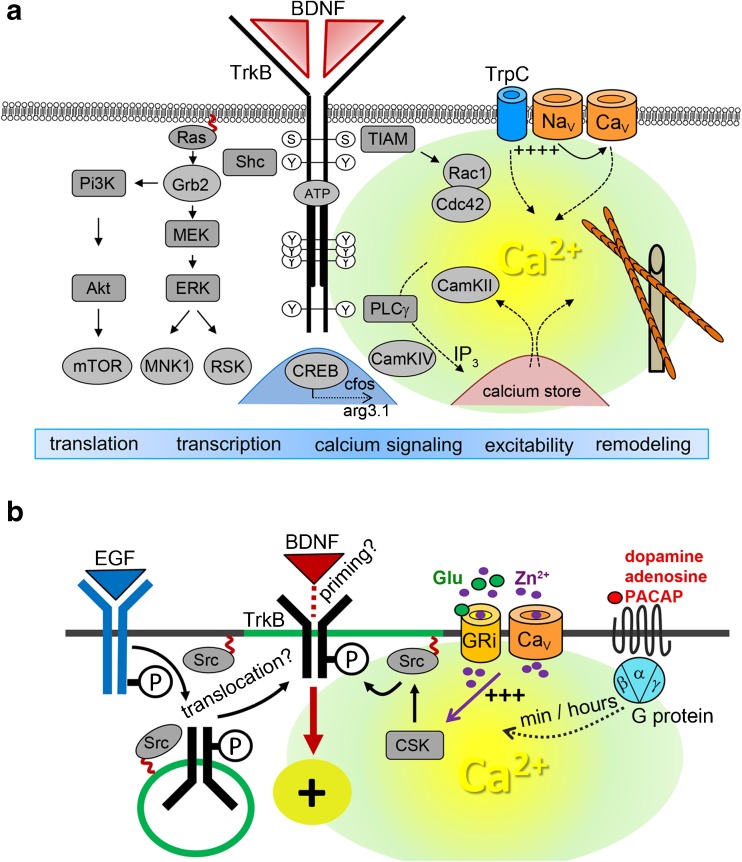
“Upon binding BDNF, TrkB dimerizes, activates an intrinsic kinase activity, undergoes autophosphorylation, and activates a complex set of intracellular signaling cascades [30, 65, 110, 123, 126] (Fig.”
BackgroundNeurotrophins and their receptors: A convergence point for many signalling pathways
Chao, M. V. (2003) · Nature Reviews Neuroscience · doi:10.1038/nrn1078 · Cited by 2,298 · cited 3×
“Upon binding BDNF, TrkB dimerizes, activates an intrinsic kinase activity, undergoes autophosphorylation, and activates a complex set of intracellular signaling cascades [30, 65, 110, 123, 126] (Fig.”
BackgroundNeurotrophin regulation of neural circuit development and function
Park, H., & Poo, M.-M. (2013) · Nature Reviews Neuroscience · doi:10.1038/nrn3379 · Cited by 2,060 · cited 10×
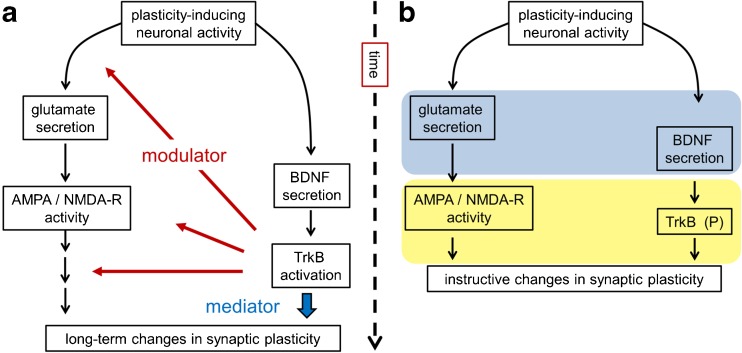
“BDNF as a mediator (according to Park and Poo [126]) can directly influence late effects in synaptic plasticity, for instance, local protein synthesis, spine remodeling, or gene transcription. b BDNF as an instructor of synaptic plasticity.”
BackgroundInfluentialNeurotrophins and Neuronal Plasticity
Thoenen, H. (1995) · Science · doi:10.1126/science.270.5236.593 · Cited by 1,927 · cited 2×
“The neurotrophin brain-derived neurotrophic factor (BDNF) [15, 151] and its signaling partners [21, 30, 110, 126] have emerged as key regulators of synaptic plasticity, a biological process describing the regulation of synaptic strength by neuronal activity.”
Background
Cited by
Items 201–300 of 369
BDNF Serum Levels are Associated With White Matter Microstructure in Schizophrenia - A Pilot Study
Hammans, C., Neugebauer, K., Kumar, V., Mevissen, L., Sternkopf, M. A., Novakovic, A. M., Wensing, T., Habel, U., Abel, T. G., & Nickl‐Jockschat, T. (2020) · Frontiers in Psychiatry · doi:10.3389/fpsyt.2020.00031 · Cited by 8
“Through TrkB activation, glutamate secretion and NMDA receptor function is modulated (14, 90).”
BackgroundZhang, Y., Zhang, T., Jia, J., Jin, C., & Li, Y. (2022) · Phytomedicine · doi:10.1016/j.phymed.2022.154224 · Cited by 8
Ge, J., Jiang, B., Shi, T.-S., Li, W., Chen, W., Zhu, B.-L., & Qin, Z. (2023) · The International Journal of Neuropsychopharmacology · doi:10.1093/ijnp/pyad052 · Cited by 8
“…(CREB) in the nucleus by combining tyrosine kinase B (TrkB) receptor on the cell membrane and then promoting the downstream mitogen-activated protein kinase-ex-tracellular regulated protein kinase (ERK) and phosphoinositide 3-kinase-protein kinase B (AKT) signaling pathways (Sasi et al., 2017).”
BackgroundPrimak, A. L., Дмитриевич, Б. К., Rubina, K. A., Станиславович, Д. С., Neyfeld, E. A., Illarionova, M. E., Semina, E. V., Sheleg, D., Va, T., & Karagyaur, M. N. (2024) · Frontiers in Molecular Neuroscience · doi:10.3389/fnmol.2024.1361764 · Cited by 8
“BDNF is also involved in neurogenesis, synaptogenesis, and stabilization of the inter-neuron connections in the brain (Segal et al., 1992; Freedman et al., 1994; Sasi et al., 2017; Ping et al., 2022).”
BackgroundNey, L. J., Felmingham, K. L., Nichols, D. S., & Matthews, A. J. (2020) · Neurobiology of Learning and Memory · doi:10.1016/j.nlm.2020.107308 · Cited by 8
Li, X., Yuan, L., Wang, J., Zhang, Z., Fu, S., Wang, S., & Li, X. (2021) · Folia Neuropathologica · doi:10.5114/fn.2021.105132 · Cited by 8
“Moreover, BDNF is a member of the neurotrophin family of secreted proteins [29] and Caspase-3 is a major mediator of activated apoptosis [35].”
BackgroundSong, S., Kong, X., Wang, B., & Sanchez‐Ramos, J. (2021) · Cannabis and Cannabinoid Research · doi:10.1089/can.2021.0053 · Cited by 8
“31 Hence it is possible that the enhanced recovery of hippocampal-dependent short-term working memory promoted by D 9 -THC was facilitated by amplification of BDNF expression in hippocampal–frontal cortical neural networks.”
Val66Met polymorphism is associated with decreased likelihood for pediatric headache and migraine
Koute, V., Michalopoulou, A., Siokas, V., Aloizou, A., Rikos, D., Bogdanos, D. P., Kontopoulos, E. E., Grivea, I. N., Syrogiannopoulos, G. A., Papadimitriou, A., et al. (2021) · Neurological Research · doi:10.1080/01616412.2021.1922181 · Cited by 9
“Several neurotrophic factors have been involved in nociception and pain processes, including brainderived neurotrophic factor (BDNF) [21].”
BackgroundGupta, R., Dittmeier, M., Wohlleben, G., Nickl, V., Bischler, T., Luzak, V., Wegat, V., Doll, D., Sodmann, A., Bady, E., et al. (2024) · Cancer Gene Therapy · doi:10.1038/s41417-024-00809-0 · Cited by 7
“In one recurrent sample (pat.14 (rec)), a strong anti-panTrk immunoreactivity appeared.”
InfluentialSelf-citationChen, W.-J., Zhu, B.-L., Qian, J.-J., Zhao, J., Zhang, F., Jiang, B., & Zhao, H. (2024) · Pharmacology Biochemistry and Behavior · doi:10.1016/j.pbb.2024.173820 · Cited by 7
Colín-Martínez, E., & Arias, C. (2024) · Reviews in the Neurosciences · doi:10.1515/revneuro-2024-0110 · Cited by 7
Perirhinal Cortex LTP Does Not Require Astrocyte BDNF-TrkB Signaling
Vignoli, B., & Canossa, M. (2022) · Cells · doi:10.3390/cells11091501 · Cited by 7
“Contextually, astrocytes express receptors for brain-derived neurotrophic factor (BDNF); however, their participation in the regulation of synaptic long-term potentiation (LTP) is a hotly debated topic [8,9].”
BackgroundSelf-citationDing, J., JIANG, C., Yang, L., & Wang, X. (2022) · Cellular and Molecular Biology · doi:10.14715/cmb/2022.68.1.10 · Cited by 7
“BDNF is a member of the neurotrophin family that has a high content in the hippocampus and cortex (43).”
BackgroundAntidepressants Promote and Prevent Cancers
Lavergne, F., & Jay, T. M. (2020) · Cancer Investigation · doi:10.1080/07357907.2020.1817481 · Cited by 8
Porfirio, G. D. B., Bardella, M. D. C., Oliani, M. M., & de Moraes, C. (2026) · Dementia & Neuropsychologia · doi:10.1590/1980-5764-dn-2025-0339 · Cited by 6
The beneficial role of the synthetic microneurotrophin BNN20 in a focal demyelination model
Kalafatakis, I., Patellis, A., Charalampopoulos, I., Gravanis, A., & Karagogeos, D. (2021) · Journal of Neuroscience Research · doi:10.1002/jnr.24809 · Cited by 6
“In order to ensure that TrkA and TrkB inhibitors specifically block TrkA and TrkB receptors, respectively, we used as positive controls NGF and BDNF. NGF specifically activates TrkA receptor (Minnone et al., 2017), while BDNF specifically activates TrkB receptor (Sasi et al., 2017).”
MethodMancusi, G., Miuli, A., Santorelli, M., Cavallotto, C., Susini, O., Pernaci, G., Výborová, E., Rosa, I., D’Onofrio, A. M., Camardese, G., et al. (2024) · Behavioural Brain Research · doi:10.1016/j.bbr.2024.115046 · Cited by 6
Satellite Glial Cells Bridge Sensory Neuron Crosstalk in Visceral Pain and Cross-Organ Sensitization
Qiao, L. Y. (2024) · Journal of Pharmacology and Experimental Therapeutics · doi:10.1124/jpet.123.002061 · Cited by 6
Sanchís-Soler, G., Tortosa‐Martínez, J., Manchado, C., & Cortell-Tormo, J. M. (2020) · International review of neurobiology · doi:10.1016/bs.irn.2020.01.002 · Cited by 7
Activation of TrkB signaling mitigates cerebellar anomalies caused by Rbm4-Bdnf deficiency
Tsai, Y.-Y., Shen, C.-L., Dhananjaya, D., Tsai, C., & Tarn, W. (2023) · Communications Biology · doi:10.1038/s42003-023-05294-z · Cited by 6
Tsuneki, H., Yoshida, H., Okamoto, K., Yamaguchi, M., Endo, K., Nakano, A., Tsuda, M., Toyooka, N., Wada, T., & Sasaoka, T. (2019) · European Journal of Pharmacology · doi:10.1016/j.ejphar.2019.02.003 · Cited by 6
Huang, Y., Wang, Y., Gao, Y., Liu, Q., Ye, F.-F., Guo, B., Wu, Y.-C., & Xue, L. (2020) · Nano LIFE · doi:10.1142/s1793984420400073 · Cited by 6
Jin, M., Zhou, Z., Zhang, L., Chen, Y., Liu, L., & Shen, H. (2022) · Biological Trace Element Research · doi:10.1007/s12011-022-03187-6 · Cited by 6
Misztal, T., Młotkowska, P., Marciniak, E., Barszcz, M., Osuch, B., Gajewska, A., & Misztal, A. (2025) · International Journal of Molecular Sciences · doi:10.3390/ijms26136190 · Cited by 5
“This peptide is particularly concentrated in hippocampal neurons, a key limbic structure responsible for long-term memory formation, spatial navigation, and emotional processing [13,14].”
Neuron and astrocyte specific 5mC and 5hmC signatures of BDNF’s receptor, TrkB
Wei, X., Browning, J. L., & Olsen, M. L. (2024) · Frontiers in Molecular Neuroscience · doi:10.3389/fnmol.2024.1463437 · Cited by 6
“TrkB.FL and TrkB.T1 share 100% sequence homology in the extracellular and membrane spanning domains and thus are thought to have equal affinity for BDNF in both human and mouse (Sasi et al., 2017).”
BackgroundChen, Y., Cai, L., & Xu, Y.-X. (2023) · Tropical Journal of Pharmaceutical Research · doi:10.4314/tjpr.v22i5.10 · Cited by 5
“Plasticity-enhancing effect of BDNF is induced via activation of tyrosine kinase B (TrkB) receptor which initiates specific intracellular signaling pathways [20].”
BackgroundAlmodóvar-Payá, C., Guardiola-Ripoll, M., Giralt‐López, M., Oscoz-Irurozqui, M., Canales-Rodríguez, E. J., Madre, M., Soler‐Vidal, J., Ramiro, N., Callado, L. F., Arias, B., et al. (2024) · Brain Structure and Function · doi:10.1007/s00429-024-02793-5 · Cited by 5
“The critical roles of these genes in neural development (Sasi et al. 2017; Yao et al. 2018) also support its inclusion in the pool of genetic factors influencing CSA, which is driven by regulatory ele - ments active during prenatal cortical development (Grasby et al. 2020).”
BackgroundHistone variant H2BE controls activity-dependent gene expression and homeostatic scaling
Feierman, E. R., Paranjapye, A., Sangree, A. K., Ahmad, R., Maroni, M. J., Qiu, Q., Choi, K., Fuccillo, M. V., Wu, H., & Korb, E. (2025) · Cell Reports · doi:10.1016/j.celrep.2025.116694 · Cited by 6
“17 Unlike other histone variants, which are typically induced by activity, 18–21 we observed a significant reduction in H2BE transcript levels with increasing time after BDNF treatment (Figure 1A).”
Santos, A. M. D. S., Gorman, A. M., Kelly, J. P., & Doyle, K. (2019) · Neuroscience Letters · doi:10.1016/j.neulet.2019.134606 · Cited by 6
“Through the TrkB receptor, BDNF activates signal transduction cascades leading to neural plasticity, neurogenesis, stress resistance, cell survival (57) and intercellular signalling (58).”
BackgroundLiu, X., Feng, S., Feng, Z., Ma, C., He, Y., Li, X., Ning, Y., Sun, Z., & Jia, H. (2022) · Journal of Integrative Neuroscience · doi:10.31083/j.jin2106164 · Cited by 5
“The interaction of BDNF and synaptic proteins could regulate synaptic functions, contributing to restoring cognitive impairments in the rodent model [14].”
BackgroundAkbari, S., Haghani, M., Ghobadi, M., Hooshmandi, E., Borhani‐Haghighi, A., Salehi, M. S., Pandamooz, S., Azarpira, N., Afshari, A., Zabihi, S., et al. (2023) · Stem Cells International · doi:10.1155/2023/3784843 · Cited by 5
“BDNF can enhance synaptic transmission [46] and synaptogenesis [47] improve BST, LTP [32], and synaptic interactions [48].”
BackgroundThe Causative and Curative Roles of Brain-Derived Neurotrophic Factor in Parkinson’s Disease
Hernández-Baltazar, D., Nadella, R., Llanderal, T. C., Puga-Olguín, A., Barrientos-Bonilla, A. A., Zavala-Flores, L. M., Villanueva-Olivo, A., Sánchez-García, A. D. C., Rovirosa-Hernández, M. D. J., & Rembao-Bojórquez, J. D. (2019) · IntechOpen eBooks · doi:10.5772/intechopen.81215 · Cited by 5
“At the brain level, BDNF is produced in the hippocampus, amygdala, stria terminalis, septum, nuclei of the solitary tract and cortex [8, 12], where it regulates the survival and differentiation of various neuronal populations, including sensory neurons, cerebellar neurons and spinal motor neurons.”
BackgroundSun, J., Jia, K., Sun, M., Zhang, X., Chen, J., Zhu, G., Li, C., Lian, B., Du, Z., Sun, H., et al. (2022) · Journal of Clinical Medicine · doi:10.3390/jcm11226824 · Cited by 6
Alcohol and Brain-Derived Neurotrophic Factor (BDNF)
Martín‐González, C., González‐Arnay, E., Fernández-Rodríguez, C. M., Rodríguez, A. G., & González‐Reimers, E. (2022) · Springer eBooks · doi:10.1007/978-3-030-92392-1_182 · Cited by 5
Ravenkamp, M., Tchoukalova, Y. D., Myers, C. E., Madsen, C. S., Shah, M. K., Zhang, N., Lal, D., & Lott, D. G. (2020) · Neuroscience Letters · doi:10.1016/j.neulet.2020.135025 · Cited by 5
Wang, H., Lyu, W., Sun, Y., Jia, X., Bi, J., Wei, R., Du, Z., Meng, F., He, J., Wang, S., et al. (2025) · Life Medicine · doi:10.1093/lifemedi/lnaf025 · Cited by 4
“Bdnf binding to Ntrk2 regulates neuron growth, survival, and synaptic plasticity, particularly by influencing learning and memory [52].”
Li, W.-Y., Shi, T.-S., Huang, J., Chen, Y., Guan, W., Jiang, B., & Wang, C. (2023) · The International Journal of Neuropsychopharmacology · doi:10.1093/ijnp/pyad017 · Cited by 4
“…in the central nervous system, activates nuclear cyclic adenosine monophosphate (cAMP)-response element binding protein by combining TrkB and then promoting the downstream mitogen-activated protein kinase (MAPK)/ERK and Phosphoinositide 3-kinase (PI3K)/AKT signaling pathways (Sasi et al., 2017).”
BackgroundCararo-Lopes, M. M., Sadovnik, R., Fu, A. Y., Suresh, S., Gandu, S. R., & Firestein, B. L. (2024) · Molecular Neurobiology · doi:10.1007/s12035-024-04171-y · Cited by 4
“Neurotrophins, including BDNF, are key regulators of neuronal maturation and dendrite branching [23, 45–47].”
BackgroundArta, R. K., Watanabe, Y., Egawa, J., Lemmon, V., & Someya, T. (2025) · Psychiatry and Clinical Neurosciences · doi:10.1111/pcn.13847 · Cited by 4
Biomarkers of the development and progression of diabetic polyneuropathy
Karakulova, Y. V., & Филимонова, Т. А. (2020) · S S Korsakov Journal of Neurology and Psychiatry · doi:10.17116/jnevro202012008170 · Cited by 4
Dastamooz, S., Boroujeni, S. T., & Sarahian, N. (2023) · Journal of Public Health in Africa · doi:10.4081/jphia.2023.2347 · Cited by 4
Abbasi, M., Gupta, V., Chitranshi, N., Moustardas, P., Ranjbaran, R., & Graham, S. L. (2023) · Aging and Disease · doi:10.14336/ad.2023.1012 · Cited by 4
“This might be at least in part due to the absence of a sufficient level of Trk receptor in response to exogenous NT supply [71].”
BackgroundSynaptic Tagging and Capture: Functional Implications and Molecular Mechanisms
Prodan, A., & Morris, R. (2024) · Springer eBooks · doi:10.1007/978-3-031-54864-2_1 · Cited by 4
Biomarkers for the Development and Progression of Diabetic Polyneuropathy
Karakulova, Y. V., & Филимонова, Т. А. (2021) · Neuroscience and Behavioral Physiology · doi:10.1007/s11055-021-01090-6 · Cited by 4
BDNF and Senile Cognitive Decline
Semenov, D. G., & Belyakov, A. V. (2022) · Neuroscience and Behavioral Physiology · doi:10.1007/s11055-022-01236-0 · Cited by 4
“This balance depends not only on the functional state of a neuron, but also on its type and stage of ontogeny [Sasi et al., 2017].”
BackgroundInfluentialAlcohol and Brain-Derived Neurotrophic Factor (BDNF)
Martín‐González, C., González‐Arnay, E., Fernández-Rodríguez, C. M., Rodríguez, A. G., & González‐Reimers, E. (2021) · Springer eBooks · doi:10.1007/978-3-030-67928-6_182-1 · Cited by 4
Postnatal neural crest stem cells from hair follicle interact with nerve tissue in vitro and in vivo
Kosykh, A. V., Beilin, A. K., Sukhinich, K. K., & Vorotelyak, E. A. (2018) · Tissue and Cell · doi:10.1016/j.tice.2018.08.005 · Cited by 4
Sarasati, A., Rezkita, F., Wibawa, K. G. P., Winias, S., Nugraha, A. P., Ridwаn, R. D., & Ramadhani, N. F. (2020) · Universitas Airlangga Repository (Universitas Airlangga) · Cited by 4
Coria-Lucero, C. D., Ledezma, C., Castro, A., Delgado, S. M., Anzulovich, A. C., & Navigatore-Fonzo, L. (2021) · Brain Research Bulletin · doi:10.1016/j.brainresbull.2021.01.014 · Cited by 4
Song, Y., Jiang, Y., Tian, H., Glessner, J., Hakonarson, H. H., & Chang, X. (2026) · Molecular Psychiatry · doi:10.1038/s41380-026-03591-7 · Cited by 3
Li, Y., Huang, Y. L., Cheng, X., He, Y., & Hu, X. Y. (2021) · Korean Journal of Physiology and Pharmacology · doi:10.4196/kjpp.2021.25.4.281 · Cited by 3
“Brain-derived neurotrophic factor (BDNF) belongs to the neurotrophin family of secreted proteins and it produces biological actions through tyrosine kinase B (TrkB) receptors [9].”
BackgroundLucarelli, M., Camuso, S., Pietro, C. D., Bruno, F., Rosa, P. L., Marazziti, D., Fiorenza, M. T., & Canterini, S. (2023) · Molecular Neurobiology · doi:10.1007/s12035-023-03435-3 · Cited by 3
Zhou, J.-J., Zhao, J., Gao, S., Gao, Y., chen, C., Ding, Y., Wu, Z.-H., & Chen, P.-J. (2025) · Frontiers in Pharmacology · doi:10.3389/fphar.2025.1587399 · Cited by 3
“Itwasfound that the usage of chiglitazar evidently antagonized the inhibitory effects of CUMS on hippocampal PPAR α , BDNF, pTrkB, pAKT, pERK1/2, and pCREB.”
InfluentialMasullo, M., Agbangla, N. F., & Arcone, R. (2025) · RIVISTA DI STUDI SULLA SOSTENIBILITA · doi:10.3280/riss2025oa19843 · Cited by 3
Kalinichenko, S. G., Korobtsov, A. V., Matveeva, N. Y., & Pushchin, I. I. (2022) · Journal of Chemical Neuroanatomy · doi:10.1016/j.jchemneu.2022.102122 · Cited by 3
Legumain Functions as a Transient TrkB Sheddase
Holzner, C., Böttinger, K., Blöchl, C., Huber, C. G., Dahms, S. O., Dall, E., & Brandstetter, H. (2023) · International Journal of Molecular Sciences · doi:10.3390/ijms24065394 · Cited by 3
“Based on our dynamics light scattering data and consistent with literature reports, we assume BDNF to be present as a dimer, Figure S4C [5,30,31].”
Zhang, J. C., Wang, J., Lin, J., Su, G., Shen, Y. L., Guo, Q., Cai, J. J., Liu, J. Y., Jia, K. X., & Fang, D. Z. (2023) · Diabetes Metabolic Syndrome and Obesity · doi:10.2147/dmso.s412983 · Cited by 3
The Pleiotropic Potential of BDNF beyond Neurons: Implication for a Healthy Mind in a Healthy Body
Rosa, M. C. D., Zimbone, S., Saab, M. W., & Tomasello, M. F. (2022) · Vide Leaf, Hyderabad eBooks · doi:10.37247/pabsc.1.22.35 · Cited by 3
Stuardo, N., Moya‐Alvarado, G., Ramírez, C., Schiavo, G., & Bronfman, F. C. (2020) · Journal of Visualized Experiments · doi:10.3791/61262 · Cited by 3
The Role of Brain-Derived Neurotrophic Factor (BDNF) in Depression: A Narrative Review
Varghese, T. P., Singh, R., & Chand, S. (2025) · The Open Biomarkers Journal · doi:10.2174/0118753183394103250623111239 · Cited by 2
Targeting neuroplasticity in old brain: restoring synapse with cognitive strategies
Kopalli, S. R., Kale, M. B., Yadav, A., Alshahrani, S., Mohammed, A., Oirdi, M. E., Farhan, M., Taksande, B. G., Upaganlawar, A. B., Umekar, M. J., et al. (2026) · Biogerontology · doi:10.1007/s10522-026-10408-1 · Cited by 2
Fang, G., Zhou, Y., Zhou, X., Zhou, H., Ge, Y.-Y., Luo, S., Chen, J., & Zhang, L. (2022) · Neuropharmacology · doi:10.1016/j.neuropharm.2022.108981 · Cited by 2
Karakulova, Y., & Филимонова, Т. А. (2022) · Biomarkers in disease · doi:10.1007/978-3-030-81303-1_60-1 · Cited by 2
Adonina, S. N., Bazhenova, E., & Базовкина, Д. В. (2024) · International Journal of Molecular Sciences · doi:10.3390/ijms25052469 · Cited by 2
“In its turn, BDNF is crucially involved in the regulation of neuro-, glio-, and synap-togenesis, neuroprotection [14,15], and in the response to stressful events [16,17].”
BackgroundKoob, G. F., Arends, M. A., McCracken, M. L., & Moal, M. L. (2023) · Elsevier eBooks · doi:10.1016/b978-0-12-816988-9.00001-1 · Cited by 2
BDNF-dependent signaling in the olfactory bulb modulates social recognition memory in mice
de Castro, C. M., Almeida‐Santos, A. F., Mansk, L. M. Z., Jaimes, L. F., Cammarota, M., & Pereira, G. S. (2024) · Neurobiology of Learning and Memory · doi:10.1016/j.nlm.2024.107891 · Cited by 2
Role of BDNF in neuroplasticity associated with alcohol dependence
Peregud, D., Baronets, V. Y., Terebilina, N. N., & Gulyaeva, N. V. (2023) · Biochemistry (Moscow) · doi:10.31857/s0320972523030090 · Cited by 2
BDNF induces its own release to mediate presynaptic plasticityPreprint
Berthoux, C., Nasrallah, K., Milner, T. A., & Castillo, P. E. (2021) · bioRxiv (Cold Spring Harbor Laboratory) · doi:10.1101/2021.12.30.474558 · Cited by 2
“Among these mechanisms, the brain-derived neurotrophic factor (BDNF) has been proposed as a key regulator of synaptic efficacy, neural connectivity, and experience-dependent plasticity (Edelmann et al., 2014; Lu et al., 2014; Park and Poo, 2013; Sasi et al., 2017).”
BackgroundZhang, W., Ge, M.-M., Zhang, L., Yuan, X., Han, S., Manyande, A., Tian, X., & Tian, X. (2022) · Authorea · doi:10.22541/au.170668988.82402333/v1 · Cited by 2
Myocardial Disorders in BDNF-Deficient Rats: Limited Recovery Post-Moderate Endurance Training
Grzelak, N., Kaczmarek, D., Poziemba, K., & Mrówczyński, W. (2024) · Diabetes Metabolic Syndrome and Obesity · doi:10.2147/dmso.s486807 · Cited by 1
HAP1 Promotes Spinal Cord Injury Recovery Through BDNF Signaling Modulation
Xiao, X., Yang, R., Wu, Y., Long, F., Zhao, H., & Pan, J. (2025) · Journal of Integrative Neuroscience · doi:10.31083/jin42984 · Cited by 1
“Following synthesis, BDNF undergoes axonal transport and is released in an activity-dependent manner [42,48,49].”
Pan, H., Zhang, L., Liang, Y., Wang, W. Q., Yu, C., Li, Y., Li, W., Liu, H. F., & Zhou, L. (2026) · Frontiers in Psychiatry · doi:10.3389/fpsyt.2026.1835592 · Cited by 1
Karakulova, Y., & Филимонова, Т. А. (2022) · Biomarkers in disease · doi:10.1007/978-3-031-08014-2_60 · Cited by 1
Ran, X., Li, L., Peng, M., Ruan, L.-H., Li, L., Wang, Y., Cao, J., & Yang, J. (2024) · Food Science and Human Wellness · doi:10.26599/fshw.2024.9250404 · Cited by 1
Zhou, J., Zhao, W., Fan, H., Zhou, S.-Y., Zhang, X., Xu, H., Jiang, B., Liu, W., Cui, Z., & Xu, D.-W. (2025) · The International Journal of Neuropsychopharmacology · doi:10.1093/ijnp/pyaf063 · Cited by 1
Głowacka, I., Ślot, M., Katra, M., Pal, A., Cegiełka, P., Cienkowski, K., Szczęsny, M., Zezawska, K., Adamczyk, A., & Sicińska, M. M. (2026) · Journal of Education Health and Sport · doi:10.12775/jehs.2026.90.70284 · Cited by 1
Mrówczyńska, L., & Mrówczyński, W. (2026) · International Journal of Molecular Sciences · doi:10.3390/ijms27135881 · Cited by 1
“…it serves as a fundamental biological mechanism for translating environmental input into permanent changes in neural network function, governing multiple aspects of an organism’s behavior including learning, memory, mood, motor coordination, and the long-term regulation of body homeostasis [43–46].”
Bergen, M. K. (2020) · USURJ University of Saskatchewan Undergraduate Research Journal · doi:10.32396/usurj.v6i2.460 · Cited by 1
“The BDNF/TrkB PLCγ signal cascade is initiated through the phosphorylation of a tyrosine at the carboxyterminal end of TrkB (Sasi et al., 2017).”
BackgroundBDNF and Neurodegeneration: The Rise of the Exercise as a Preventive Care
de Assis, G. G. (2020) · Biomedical Journal of Scientific & Technical Research · doi:10.26717/bjstr.2020.25.004265 · Cited by 1
“The very neuronal ability of functional regeneration which is based on the construction and strengthening of connections between neurons is compulsorily supported by BDNF in a vary of ways [10].”
BackgroundAmaya, L. J. D., & Restrepo-Castro, J. C. (2023) · IBRO Neuroscience Reports · doi:10.1016/j.ibneur.2023.03.005 · Cited by 1
Serebral Palsili Çocuklarda Tıbbi Beslenme Tedavisine Güncel Yaklaşım
TANRIVERDİ, I., & DEPBOYLU, G. Y. (2023) · doi:10.59287/sbgy.1051 · Cited by 1
Effects of 4-Hydroxybenzaldehydeon on Interactions With Neurovascular Unit-Related Cells
Yuan, Y., & Rong, D. (2024) · Acta Poloniae Pharmaceutica - Drug Research · doi:10.32383/appdr/185428 · Cited by 1
Majhi, S., & Singh, L. (2025) · Journal of Applied Pharmaceutical Sciences and Research · doi:10.31069/japsr.v8i1.04 · Cited by 1
Wiersma, A. M. (2017) · ERA: Education and Research Archive (University of Alberta) · doi:10.7939/r3v698s16 · Cited by 1
Constitutively active TrkB kinase signalling reduces actin filopodia dynamics and cell migrationPreprint
Gupta, R., Bauer, M., Wohlleben, G., Luzak, V., Wegat, V., Segebarth, D., Bady, E., Langlhofer, G., Wachter, B., Havlicek, S., et al. (2020) · bioRxiv (Cold Spring Harbor Laboratory) · doi:10.1101/2020.09.11.292565 · Cited by 1
Self-citationUguagliati, B. (2021) · AMS Dottorato Institutional Doctoral Theses Repository (University of Bologna) · doi:10.6092/unibo/amsdottorato/9537 · Cited by 1
Variantes genéticas do BDNF e transtornos alimentares: uma revisão sistemática
Vianna, T. D. M. (2022) · Digital Library of Theses and Dissertations (Universidade de São Paulo) · doi:10.11606/d.47.2022.tde-08092022-110823 · Cited by 1
Modulation of Adult Hippocampal Neurogenesis in ZnT3 Knockout Mice
Bihelek, N. (2019) · Libraries and Cultural Resources (University of Calgary) · doi:10.11575/prism/35712 · Cited by 1
Atasoy-Rodriguez, I. L., Johnson, K. W., Patel, K., Arain, H., Zaidi, S., Herold, K. F., Milner, T. A., Hemmings, H. C., & Platholi, J. (2026) · bioRxiv (Cold Spring Harbor Laboratory) · doi:10.64898/2026.01.02.697407 · Cited by 1
“The mechanisms governing compartment-specific localization and secretion of BDNF are unclear 19, 86, 87 .”
Synaptic Plasticity—Intrinsic Excitability and Antidepressant Discovery
Tanaka, M. (2026) · Biomedicines · doi:10.3390/biomedicines14061265
Arcego, D. M. (2017) · Americanae (AECID Library)
Role of TrkB-signaling in taste development and function.
Rios-Pilier, J. (2018) · ThinkIR: The University of Louisville's Institutional Repository (University of Louisville) · doi:10.18297/etd/3128
Spatiotemporal regulation of axonal growth and protein synthesis by BDNF in hippocampal neurons
Natera-Naranjo, O. (2018) · eScholarship (California Digital Library)
Church, D. D. (2018) · STARS (University of Central Florida)
Exploring the molecular mechanisms of Rett syndrome
Bosch, A. S. (2020) · Trinity's Access to Research Output (TARA) (Trinity College Dublin)
Ferreira, A. M. F., Coelho, A., & Duarte-Cruz, C. (2021) · Revista Dor · doi:10.24875/dor.m20000005
Evaluation and validation of deep learning strategies for bioimage analyses
Segebarth, D. (2021) · Online Publication Service of Würzburg University (Würzburg University) · doi:10.25972/opus-24372
Clinical and laboratory markers of early diagnosis of diabetic polyneuropathy
Karakulova, Y. V., Sosnin, D. Y., Филимонова, Т. А., & Некрасова, И. В. (2021) · Perm Medical Journal · doi:10.17816/pmj384121-128
Metadata
- Authors
- Sasi, M., Vignoli, B., Canossa, M., & Blum, R.
- Affiliations
- University of Würzburg (DE)
- University of Trento (IT)
- Corresponding author
- Blum, Robert
- Venue
- Pflügers Archiv - European Journal of Physiology
- Published
- 2017-03-09
- Volume
- 469
- Issue
- 5-6
- Pages
- 593-610
- ISSN
- 0031-6768 (ISSN-L)
- 1432-2013
- PMC
- PMC5438432
- OpenAlex
- W2591947168
- Cited by
- 324
- References
- 177
- Citations by year
- 2026: 19 · 2025: 22 · 2024: 34 · 2023: 40 · 2022: 47 · 2021: 57 · 2020: 43 · 2019: 33 · 2018: 24 · 2017: 5
- FWCI
- 3.54
- Type
- journal article
- Language
- en
- Update notices
- correction (2017-03-30)
- Open access
- hybrid
- doi.org
- Locations
- Pflügers Archiv - European Journal of Physiology (publishedVersion, cc-by)
- Europe PMC (PubMed Central) (publishedVersion, other-oa)
- PubMed Central (publishedVersion, cc-by)
- PubMed (publishedVersion)
- Institutional Research Information System (Università degli Studi di Trento) (submittedVersion, cc-by)
- Funders
- Deutsche Forschungsgemeinschaft (BL567/3-2, TRR58, A10)
- Graduate School of Life Sciences Würzburg
- MURST (PRIN-2012-2015)
- Italian research council (EBRI-CNR 2015-2017)
- Lazio Innova (FILAS 2015 - 2017)
- Topics
- Life Sciences › Neuroscience › Cellular and Molecular Neuroscience › Nerve injury and regeneration
- Life Sciences › Neuroscience › Cellular and Molecular Neuroscience › Neuroscience and Neuropharmacology Research
- Life Sciences › Neuroscience › Developmental Neuroscience › Neurogenesis and neuroplasticity mechanisms
- Keywords
- brain-derived neurotrophic factor, BDNF signaling, TrkB receptor, proBDNF, synaptic plasticity, long-term potentiation, learning and memory, glial cells, intercellular communication, neurotrophins
- MeSH terms
- Animals, Anxiety Disorders, Humans, Synaptic Transmission, Synapses, Long-Term Potentiation, Brain-Derived Neurotrophic Factor, Receptor, trkB
About these checks
Registry, retraction, Cites and statistics results are computed, not judged, with one exception: a printed reference that no index lists is read once by a model before it counts as a citation error. Claims are extracted by a model and kept only when their quote appears verbatim in the text; each cited source is then checked, with a model’s help, for whether it says what the claim relies on. Those verdicts can be wrong — read the claim’s quote and the cited source before relying on one.
Statistics and arithmetic are recomputed, not judged.
Confidence bands are shown only for fields calibrated on our annotated test set. None is calibrated yet, so no band is shown.
What counts as a claim ›How we measure confidence ›How we check this ›
Are you an author, or do you see a problem with this page? Request a review
Data sources
Bibliographic data: Semantic Scholar, OpenAlex, Crossref.
Contains information from the Semantic Scholar Academic Graph Datasets, made available under the ODC Attribution License (ODC-BY 1.0).
Semantic Scholar’s data is described in: Kinney, R., et al. (2023). The Semantic Scholar Open Data Platform. arXiv:2301.10140.
