

The DOI matches its Crossref record; 24 of the 24 references it cites were found in a registry or an index.
The role of tumor-associated macrophages in tumor immune evasion
Abstract
Background: Tumor growth is closely linked to the activities of various cells in the tumor microenvironment (TME), particularly immune cells. During tumor progression, circulating monocytes and macrophages are recruited, altering the TME and accelerating growth. These macrophages adjust their functions in response to signals from tumor and stromal cells. Tumor-associated macrophages (TAMs), similar to M2 macrophages, are key regulators in the TME. Methods: We review the origins, characteristics, and functions of TAMs within the TME. This analysis includes the mechanisms through which TAMs facilitate immune evasion and promote tumor metastasis. Additionally, we explore potential therapeutic strategies that target TAMs. Results: TAMs are instrumental in mediating tumor immune evasion and malignant behaviors. They release cytokines that inhibit effector immune cells and attract additional immunosuppressive cells to the TME. TAMs primarily target effector T cells, inducing exhaustion directly, influencing activity indirectly through cellular interactions, or suppressing through immune checkpoints. Additionally, TAMs are directly involved in tumor proliferation, angiogenesis, invasion, and metastasis. Summary: Developing innovative tumor-targeted therapies and immunotherapeutic strategies is currently a promising focus in oncology. Given the pivotal role of TAMs in immune evasion, several therapeutic approaches have been devised to target them. These include leveraging epigenetics, metabolic reprogramming, and cellular engineering to repolarize TAMs, inhibiting their recruitment and activity, and using TAMs as drug delivery vehicles. Although some of these strategies remain distant from clinical application, we believe that future therapies targeting TAMs will offer significant benefits to cancer patients.
Overview
The claims and statistics of this paper haven’t been checked yet.
Run the check — free, no account needed. It reads the open-access text and checks the sources it cites.
Integrity signals
Registry
Cites
Statistics
Figures
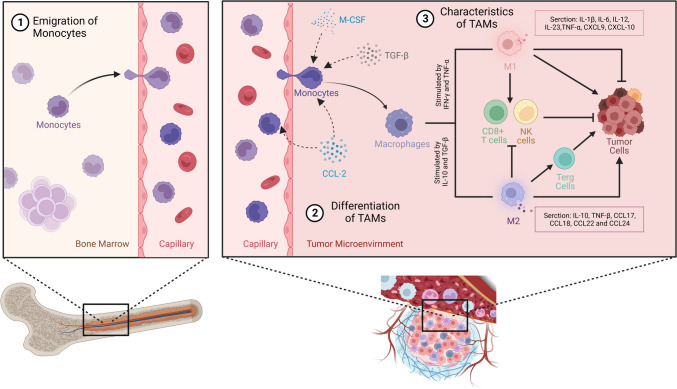
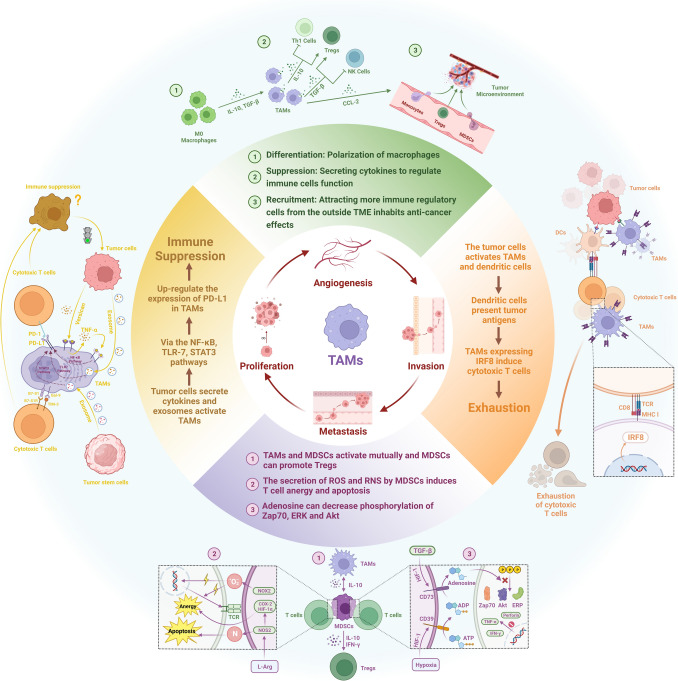
Verification
Claims the paper makes
The claims and statistics of this paper haven’t been checked yet.
Run the check — free, no account needed. It reads the open-access text and checks the sources it cites.
Claims other papers make about this one
Each is checked against this paper’s own text: does it say what the citing paper says it does?
In the citing paper
“TME of lung cancer exhibits strong immune evasion characteristics. Common features of the immunosuppressive environment in lung cancer include tumor-infiltrating immunosuppressive cells, such as regulatory T cells and myeloid-derived suppressor cells, as well as the overexpression of immune checkpoint molecules like PD-1/PD-L1.”
From Emerging role of exosomes in cancer therapy: progress and challenges (2025) · cites this paper as [92]
In the citing paper
“For instance, exosomes may be phagocytosed by immunosuppressive cells or rejected via the PD-1/PD-L1 pathway, reducing their activity and targeting efficacy at the tumor site.”
From Emerging role of exosomes in cancer therapy: progress and challenges (2025) · cites this paper as [92]
Self-check
Percentages, sums and reported differences re-computed from the paper’s own numbers.
The self-check needs the paper’s full text.
Citations
Cites
The biology , function , and biomedical applications of exosomes
Kalluri, R., & LeBleu, V. S. (2020) · Science · doi:10.1126/science.aau6977 · Cited by 10,770
Targeting HIF-1 for cancer therapy
Semenza, G. L. (2003) · Nature Reviews Cancer · doi:10.1038/nrc1187 · Cited by 6,717 · cited 1×
“HIF-1α is an important orchestrator in cellular responses to low oxygen levels, actively promoting the shift towards glycolytic energy production pathways (Semenza 2003).”
BackgroundMacrophage plasticity and polarization: in vivo veritas
Sica, A., & Mantovani, A. (2012) · Journal of Clinical Investigation · doi:10.1172/jci59643 · Cited by 6,335
Protective and pathogenic functions of macrophage subsets
Murray, P. J., & Wynn, T. A. (2011) · Nature Reviews Immunology · doi:10.1038/nri3073 · Cited by 5,269
Succinate is an inflammatory signal that induces IL-1β through HIF-1α
Tannahill, G. M., Curtis, A. M., Adamik, J., Palsson-McDermott, E. M., McGettrick, A. F., Goel, G., Frezza, C., Bernard, N. J., Kelly, B., Foley, N. H., et al. (2013) · Nature · doi:10.1038/nature11986 · Cited by 4,176
Otto Warburg's contributions to current concepts of cancer metabolism
Koppenol, W. H., Bounds, P. L., & Dang, C. V. (2011) · Nature Reviews Cancer · doi:10.1038/nrc3038 · Cited by 3,427
Functional Polarization of Tumour-Associated Macrophages by Tumour-Derived Lactic Acid
Colegio, O. R., Chu, N.-Q., Szabo, A. L., Chu, T., Rhebergen, A. M., Jairam, V., Cyrus, N., Brokowski, C. E., Eisenbarth, S. C., Phillips, G. M., et al. (2014) · Nature · doi:10.1038/nature13490 · Cited by 3,046
Metabolic reprogramming in macrophages and dendritic cells in innate immunity
Kelly, B., & O'Neill, L. A. (2015) · Cell Research · doi:10.1038/cr.2015.68 · Cited by 1,876
Macrophages and metabolism in the tumor microenvironment
Vitale, I., Manic, G., Coussens, L. M., Kroemer, G., & Galluzzi, L. (2019) · Cell Metabolism · doi:10.1016/j.cmet.2019.06.001 · Cited by 1,837 · cited 2×
“The second break occurs at the succinate dehydrogenase (SDH) step, further contributing to this metabolic reprogramming by promoting the stabilization and expression of HIF-1α (Tannahill et al. 2013; Vitale et al. 2019).”
BackgroundMacrophage Polarization States in the Tumor Microenvironment
Boutilier, A. J., & Elsawa, S. F. (2021) · International Journal of Molecular Sciences · doi:10.3390/ijms22136995 · Cited by 1,631
Research works printed but not linked: 220
- Afik R, Zigmond E, Vugman M, Klepfish M, Shimshoni E, Pasmanik-Chor M, Varol C (2016) Tumor macrophages are pivotal constructors of tumor collagenous matrix. J Exp Med 213(11):2315–2331. https://doi.org/10.1084/jem.20151193 · DOI
- Almatroodi SA, McDonald CF, Darby IA, Pouniotis DS (2016) Characterization of M1/M2 tumour-associated macrophages (TAMs) and Th1/Th2 cytokine profiles in patients with NSCLC. Cancer Microenviron 9(1):1–11. https://doi.org/10.1007/s12307-015-0174-x · DOI
- Amer HT, Stein U, El Tayebi HM (2022) The monocyte, a maestro in the Tumor Microenvironment (TME) of breast cancer. Cancers (Basel). https://doi.org/10.3390/cancers14215460 · DOI
- Arlauckas SP, Garren SB, Garris CS, Kohler RH, Oh J, Pittet MJ, Weissleder R (2018) Arg1 expression defines immunosuppressive subsets of tumor-associated macrophages. Theranostics 8(21):5842–5854. https://doi.org/10.7150/thno.26888 · DOI
- Becker JC, Andersen MH, Schrama D, Thor Straten P (2013) Immune-suppressive properties of the tumor microenvironment. Cancer Immunol Immunother 62(7):1137–1148. https://doi.org/10.1007/s00262-013-1434-6 · DOI
- Beury DW, Parker KH, Nyandjo M, Sinha P, Carter KA, Ostrand-Rosenberg S (2014) Cross-talk among myeloid-derived suppressor cells, macrophages, and tumor cells impacts the inflammatory milieu of solid tumors. J Leukoc Biol 96(6):1109–1118. https://doi.org/10.1189/jlb.3A0414-210R · DOI
- Bhattacharya S, Aggarwal A (2019) M2 macrophages and their role in rheumatic diseases. Rheumatol Int 39(5):769–780. https://doi.org/10.1007/s00296-018-4120-3 · DOI
- Bied M, Ho WW, Ginhoux F, Bleriot C (2023) Roles of macrophages in tumor development: a spatiotemporal perspective. Cell Mol Immunol 20(9):983–992. https://doi.org/10.1038/s41423-023-01061-6 · DOI
- Binnewies M, Pollack JL, Rudolph J, Dash S, Abushawish M, Lee T, Sriram V (2021) Targeting TREM2 on tumor-associated macrophages enhances immunotherapy. Cell Rep 37(3):109844. https://doi.org/10.1016/j.celrep.2021.109844 · DOI · Paper page
- Biswas SK, Mantovani A (2010) Macrophage plasticity and interaction with lymphocyte subsets: cancer as a paradigm. Nat Immunol 11(10):889–896. https://doi.org/10.1038/ni.1937 · DOI · Paper page
- Briana GN, Fengshen K, Ming L, Kristelle C, Mytrang D, Ruth AF, Ming OL (2020) IRF8 governs tumor-associated macrophage control of T cell exhaustion. bioRxiv. https://doi.org/10.1101/2020.03.12.989731 · DOI
- Calabrese LH, Caporali R, Blank CU, Kirk AD (2020) Modulating the wayward T cell: New horizons with immune checkpoint inhibitor treatments in autoimmunity, transplant, and cancer. J Autoimmun 115:102546. https://doi.org/10.1016/j.jaut.2020.102546 · DOI
- Cao X, Geng Q, Fan D, Wang Q, Wang X, Zhang M, Xiao C (2023) m(6)A methylation: a process reshaping the tumour immune microenvironment and regulating immune evasion. Mol Cancer 22(1):42. https://doi.org/10.1186/s12943-022-01704-8 · DOI
- Cassetta L, Pollard JW (2023) A timeline of tumour-associated macrophage biology. Nat Rev Cancer 23(4):238–257. https://doi.org/10.1038/s41568-022-00547-1 · DOI
- Cavnar MJ, Turcotte S, Katz SC, Kuk D, Gonen M, Shia J, DeMatteo RP (2017) Tumor-associated macrophage infiltration in colorectal cancer liver metastases is associated with better outcome. Ann Surg Oncol 24(7):1835–1842. https://doi.org/10.1245/s10434-017-5812-8 · DOI
- Chanmee T, Ontong P, Konno K, Itano N (2014) Tumor-associated macrophages as major players in the tumor microenvironment. Cancers (Basel) 6(3):1670–1690. https://doi.org/10.3390/cancers6031670 · DOI
- Chen Y, Zhang X (2017) Pivotal regulators of tissue homeostasis and cancer: macrophages. Exp Hematol Oncol 6:23. https://doi.org/10.1186/s40164-017-0083-4 · DOI
- Chen Y, Song Y, Du W, Gong L, Chang H, Zou Z (2019) Tumor-associated macrophages: an accomplice in solid tumor progression. J Biomed Sci 26(1):78. https://doi.org/10.1186/s12929-019-0568-z · DOI · Paper page
- Chen S, Saeed A, Liu Q, Jiang Q, Xu H, Xiao GG, Duo Y (2023) Macrophages in immunoregulation and therapeutics. Signal Transduct Target Ther 8(1):207. https://doi.org/10.1038/s41392-023-01452-1 · DOI
- Cheng C, Huang C, Ma TT, Bian EB, He Y, Zhang L, Li J (2014) SOCS1 hypermethylation mediated by DNMT1 is associated with lipopolysaccharide-induced inflammatory cytokines in macrophages. Toxicol Lett 225(3):488–497. https://doi.org/10.1016/j.toxlet.2013.12.023 · DOI
- Cheng N, Bai X, Shu Y, Ahmad O, Shen P (2021) Targeting tumor-associated macrophages as an antitumor strategy. Biochem Pharmacol 183:114354. https://doi.org/10.1016/j.bcp.2020.114354 · DOI
- Cheng K, Cai N, Zhu J, Yang X, Liang H, Zhang W (2022) Tumor-associated macrophages in liver cancer: from mechanisms to therapy. Cancer Commun (lond) 42(11):1112–1140. https://doi.org/10.1002/cac2.12345 · DOI
- Christofides A, Strauss L, Yeo A, Cao C, Charest A, Boussiotis VA (2022) The complex role of tumor-infiltrating macrophages. Nat Immunol 23(8):1148–1156. https://doi.org/10.1038/s41590-022-01267-2 · DOI
- Collins EJ, Cervantes-Silva MP, Timmons GA, O’Siorain JR, Curtis AM, Hurley JM (2021) Post-transcriptional circadian regulation in macrophages organizes temporally distinct immunometabolic states. Genome Res 31(2):171–185. https://doi.org/10.1101/gr.263814.120 · DOI
- Consonni FM, Bleve A, Totaro MG, Storto M, Kunderfranco P, Termanini A, Sica A (2021) Heme catabolism by tumor-associated macrophages controls metastasis formation. Nat Immunol 22(5):595–606. https://doi.org/10.1038/s41590-021-00921-5 · DOI
- Couper KN, Blount DG, Riley EM (2008) IL-10: the master regulator of immunity to infection. J Immunol 180(9):5771–5777. https://doi.org/10.4049/jimmunol.180.9.5771 · DOI
- Dallavalasa S, Beeraka NM, Basavaraju CG, Tulimilli SV, Sadhu SP, Rajesh K, Madhunapantula SV (2021) The role of tumor associated macrophages (TAMs) in cancer progression, chemoresistance, angiogenesis and metastasis - current status. Curr Med Chem 28(39):8203–8236. https://doi.org/10.2174/0929867328666210720143721 · DOI
- DeNardo DG, Ruffell B (2019) Macrophages as regulators of tumour immunity and immunotherapy. Nat Rev Immunol 19(6):369–382. https://doi.org/10.1038/s41577-019-0127-6 · DOI
- DeNardo DG, Brennan DJ, Rexhepaj E, Ruffell B, Shiao SL, Madden SF, Coussens LM (2011) Leukocyte complexity predicts breast cancer survival and functionally regulates response to chemotherapy. Cancer Discov 1(1):54–67. https://doi.org/10.1158/2159-8274.CD-10-0028 · DOI · Paper page
- Deng R, Lu J, Liu X, Peng XH, Wang J, Li XP (2020) PD-L1 expression is highly associated with tumor-associated macrophage infiltration in nasopharyngeal carcinoma. Cancer Manag Res 12:11585–11596. https://doi.org/10.2147/CMAR.S274913 · DOI
- Depil S, Duchateau P, Grupp SA, Mufti G, Poirot L (2020) ‘Off-the-shelf’ allogeneic CAR T cells: development and challenges. Nat Rev Drug Discov 19(3):185–199. https://doi.org/10.1038/s41573-019-0051-2 · DOI
- Doedens AL, Stockmann C, Rubinstein MP, Liao D, Zhang N, DeNardo DG, Johnson RS (2010) Macrophage expression of hypoxia-inducible factor-1 alpha suppresses T-cell function and promotes tumor progression. Cancer Res 70(19):7465–7475. https://doi.org/10.1158/0008-5472.CAN-10-1439 · DOI · Paper page
- Dong L, Chen C, Zhang Y, Guo P, Wang Z, Li J, Han D (2021) The loss of RNA N(6)-adenosine methyltransferase Mettl14 in tumor-associated macrophages promotes CD8(+) T cell dysfunction and tumor growth. Cancer Cell 39(7):945-957 e910. https://doi.org/10.1016/j.ccell.2021.04.016 · DOI
- Du J, Liao W, Liu W, Deb DK, He L, Hsu PJ, Li YC (2020) N(6)-adenosine methylation of Socs1 mRNA is required to sustain the negative feedback control of macrophage activation. Dev Cell 55(6):737-753 e737. https://doi.org/10.1016/j.devcel.2020.10.023 · DOI
- Duan Z, Luo Y (2021) Targeting macrophages in cancer immunotherapy. Signal Transduct Target Ther 6(1):127. https://doi.org/10.1038/s41392-021-00506-6 · DOI
- Duluc D, Delneste Y, Tan F, Moles MP, Grimaud L, Lenoir J, Jeannin P (2007) Tumor-associated leukemia inhibitory factor and IL-6 skew monocyte differentiation into tumor-associated macrophage-like cells. Blood 110(13):4319–4330. https://doi.org/10.1182/blood-2007-02-072587 · DOI
- Dungan LS, McGuinness NC, Boon L, Lynch MA, Mills KH (2014) Innate IFN-gamma promotes development of experimental autoimmune encephalomyelitis: a role for NK cells and M1 macrophages. Eur J Immunol 44(10):2903–2917. https://doi.org/10.1002/eji.201444612 · DOI
- Dwyer AR, Greenland EL, Pixley FJ (2017) Promotion of Tumor Invasion by Tumor-Associated Macrophages: The Role of CSF-1-Activated Phosphatidylinositol 3 Kinase and Src Family Kinase Motility Signaling. Cancers (Basel). https://doi.org/10.3390/cancers9060068 · DOI
- Ebeling S, Kowalczyk A, Perez-Vazquez D, Mattiola I (2023) Regulation of tumor angiogenesis by the crosstalk between innate immunity and endothelial cells. Front Oncol 13:1171794. https://doi.org/10.3389/fonc.2023.1171794 · DOI
- Edin S, Wikberg ML, Dahlin AM, Rutegard J, Oberg A, Oldenborg PA, Palmqvist R (2012) The distribution of macrophages with a M1 or M2 phenotype in relation to prognosis and the molecular characteristics of colorectal cancer. PLoS ONE 7(10):e47045. https://doi.org/10.1371/journal.pone.0047045 · DOI
- Egawa M, Mukai K, Yoshikawa S, Iki M, Mukaida N, Kawano Y, Karasuyama H (2013) Inflammatory monocytes recruited to allergic skin acquire an anti-inflammatory M2 phenotype via basophil-derived interleukin-4. Immunity 38(3):570–580. https://doi.org/10.1016/j.immuni.2012.11.014 · DOI
- Facciabene A, Motz GT, Coukos G (2012) T-regulatory cells: key players in tumor immune escape and angiogenesis. Cancer Res 72(9):2162–2171. https://doi.org/10.1158/0008-5472.CAN-11-3687 · DOI
- Fernandes TJ, Hodge JM, Singh PP, Eeles DG, Collier FM, Holten I, Quinn JM (2013) Cord blood-derived macrophage-lineage cells rapidly stimulate osteoblastic maturation in mesenchymal stem cells in a glycoprotein-130 dependent manner. PLoS One 8(9):e73266. https://doi.org/10.1371/journal.pone.0073266 · DOI
- Fu LQ, Du WL, Cai MH, Yao JY, Zhao YY, Mou XZ (2020) The roles of tumor-associated macrophages in tumor angiogenesis and metastasis. Cell Immunol 353:104119. https://doi.org/10.1016/j.cellimm.2020.104119 · DOI
- Gao J, Liang Y, Wang L (2022a) Shaping polarization of tumor-associated macrophages in cancer immunotherapy. Front Immunol 13:888713. https://doi.org/10.3389/fimmu.2022.888713 · DOI
- Gao R, Shi GP, Wang J (2022b) Functional diversities of regulatory T cells in the context of cancer immunotherapy. Front Immunol 13:833667. https://doi.org/10.3389/fimmu.2022.833667 · DOI
- Geiger R, Rieckmann JC, Wolf T, Basso C, Feng Y, Fuhrer T, Lanzavecchia A (2016) L-arginine modulates T cell metabolism and enhances survival and anti-tumor activity. Cell 167(3):829-842 e813. https://doi.org/10.1016/j.cell.2016.09.031 · DOI · Paper page
- Genin M, Clement F, Fattaccioli A, Raes M, Michiels C (2015) M1 and M2 macrophages derived from THP-1 cells differentially modulate the response of cancer cells to etoposide. BMC Cancer 15:577. https://doi.org/10.1186/s12885-015-1546-9 · DOI · Paper page
- Giussani M, Triulzi T, Sozzi G, Tagliabue E (2019) Tumor extracellular matrix remodeling: new perspectives as a circulating tool in the diagnosis and prognosis of solid tumors. Cells. https://doi.org/10.3390/cells8020081 · DOI
- Gonda TA, Fang J, Salas M, Do C, Hsu E, Zhukovskaya A, Tycko B (2020) A DNA hypomethylating drug alters the tumor microenvironment and improves the effectiveness of immune checkpoint inhibitors in a mouse model of pancreatic cancer. Cancer Res 80(21):4754–4767. https://doi.org/10.1158/0008-5472.CAN-20-0285 · DOI
- Gordon S, Pluddemann A (2017) Tissue macrophages: heterogeneity and functions. BMC Biol 15(1):53. https://doi.org/10.1186/s12915-017-0392-4 · DOI
- Goswami KK, Ghosh T, Ghosh S, Sarkar M, Bose A, Baral R (2017) Tumor promoting role of anti-tumor macrophages in tumor microenvironment. Cell Immunol 316:1–10. https://doi.org/10.1016/j.cellimm.2017.04.005 · DOI
- Gunaydin G (2021) CAFs interacting with TAMs in tumor microenvironment to enhance tumorigenesis and immune evasion. Front Oncol 11:668349. https://doi.org/10.3389/fonc.2021.668349 · DOI
- Hamilton JA, Cook AD, Tak PP (2016) Anti-colony-stimulating factor therapies for inflammatory and autoimmune diseases. Nat Rev Drug Discov 16(1):53–70. https://doi.org/10.1038/nrd.2016.231 · DOI
- Han S, Bao X, Zou Y, Wang L, Li Y, Yang L, Guo J (2023) d-lactate modulates M2 tumor-associated macrophages and remodels immunosuppressive tumor microenvironment for hepatocellular carcinoma. Sci Adv. https://doi.org/10.1126/sciadv.adg2697 · DOI
- Hao NB, Lu MH, Fan YH, Cao YL, Zhang ZR, Yang SM (2012) Macrophages in tumor microenvironments and the progression of tumors. Clin Dev Immunol. https://doi.org/10.1155/2012/948098 · DOI · Paper page
- Hao S, Meng J, Zhang Y, Liu J, Nie X, Wu F, Xu H (2017) Macrophage phenotypic mechanomodulation of enhancing bone regeneration by superparamagnetic scaffold upon magnetization. Biomaterials 140:16–25. https://doi.org/10.1016/j.biomaterials.2017.06.013 · DOI
- Hatziioannou A, Alissafi T, Verginis P (2017) Myeloid-derived suppressor cells and T regulatory cells in tumors: unraveling the dark side of the force. J Leukoc Biol 102(2):407–421. https://doi.org/10.1189/jlb.5VMR1116-493R · DOI
- Helft J, Bottcher J, Chakravarty P, Zelenay S, Huotari J, Schraml BU, Reis e Sousa C (2015) GM-CSF mouse bone marrow cultures comprise a heterogeneous population of CD11c(+)MHCII(+) macrophages and dendritic cells. Immunity 42(6):1197–1211. https://doi.org/10.1016/j.immuni.2015.05.018 · DOI
- Hiam-Galvez KJ, Allen BM, Spitzer MH (2021) Systemic immunity in cancer. Nat Rev Cancer 21(6):345–359. https://doi.org/10.1038/s41568-021-00347-z · DOI · Paper page
- Hibbs JB Jr, Taintor RR, Vavrin Z, Rachlin EM (1988) Nitric oxide: a cytotoxic activated macrophage effector molecule. Biochem Biophys Res Commun 157(1):87–94. https://doi.org/10.1016/s0006-291x(88)80015-9 · DOI
- Huang B, Pan PY, Li Q, Sato AI, Levy DE, Bromberg J, Chen SH (2006) Gr-1+CD115+ immature myeloid suppressor cells mediate the development of tumor-induced T regulatory cells and T-cell anergy in tumor-bearing host. Cancer Res 66(2):1123–1131. https://doi.org/10.1158/0008-5472.CAN-05-1299 · DOI · Paper page
- Huang SC, Everts B, Ivanova Y, O’Sullivan D, Nascimento M, Smith AM, Pearce EJ (2014) Cell-intrinsic lysosomal lipolysis is essential for alternative activation of macrophages. Nat Immunol 15(9):846–855. https://doi.org/10.1038/ni.2956 · DOI
- Ingersoll MA, Spanbroek R, Lottaz C, Gautier EL, Frankenberger M, Hoffmann R, Randolph GJ (2010) Comparison of gene expression profiles between human and mouse monocyte subsets. Blood 115(3):e10-19. https://doi.org/10.1182/blood-2009-07-235028 · DOI
- Jayaraman P, Parikh F, Lopez-Rivera E, Hailemichael Y, Clark A, Ma G, Sikora AG (2012) Tumor-expressed inducible nitric oxide synthase controls induction of functional myeloid-derived suppressor cells through modulation of vascular endothelial growth factor release. J Immunol 188(11):5365–5376. https://doi.org/10.4049/jimmunol.1103553 · DOI
- Jayasingam SD, Citartan M, Thang TH, Mat Zin AA, Ang KC, Ch’ng ES (2019) Evaluating the polarization of tumor-associated macrophages into M1 and M2 phenotypes in human cancer tissue: technicalities and challenges in routine clinical practice. Front Oncol 9:1512. https://doi.org/10.3389/fonc.2019.01512 · DOI
- Jeannin P, Paolini L, Adam C, Delneste Y (2018) The roles of CSFs on the functional polarization of tumor-associated macrophages. Febs j 285(4):680–699. https://doi.org/10.1111/febs.14343 · DOI
- Jha AK, Huang SC, Sergushichev A, Lampropoulou V, Ivanova Y, Loginicheva E, Artyomov MN (2015) Network integration of parallel metabolic and transcriptional data reveals metabolic modules that regulate macrophage polarization. Immunity 42(3):419–430. https://doi.org/10.1016/j.immuni.2015.02.005 · DOI · Paper page
- Kang SU, Cho SY, Jeong H, Han J, Chae HY, Yang H, Kwon MJ (2022) Matrix metalloproteinase 11 (MMP11) in macrophages promotes the migration of HER2-positive breast cancer cells and monocyte recruitment through CCL2-CCR2 signaling. Lab Invest 102(4):376–390. https://doi.org/10.1038/s41374-021-00699-y · DOI
- Kennel KB, Greten FR (2021) Immune cell - produced ROS and their impact on tumor growth and metastasis. Redox Biol 42:101891. https://doi.org/10.1016/j.redox.2021.101891 · DOI
- Kersten K, Hu KH, Combes AJ, Samad B, Harwin T, Ray A, Krummel MF (2022) Spatiotemporal co-dependency between macrophages and exhausted CD8(+) T cells in cancer. Cancer Cell 40(6):624-638 e629. https://doi.org/10.1016/j.ccell.2022.05.004 · DOI
- Klichinsky M, Ruella M, Shestova O, Lu XM, Best A, Zeeman M, Gill S (2020) Human chimeric antigen receptor macrophages for cancer immunotherapy. Nat Biotechnol 38(8):947–953. https://doi.org/10.1038/s41587-020-0462-y · DOI · Paper page
- Koru-Sengul T, Santander AM, Miao F, Sanchez LG, Jorda M, Gluck S, Torroella-Kouri M (2016) Breast cancers from black women exhibit higher numbers of immunosuppressive macrophages with proliferative activity and of crown-like structures associated with lower survival compared to non-black Latinas and Caucasians. Breast Cancer Res Treat 158(1):113–126. https://doi.org/10.1007/s10549-016-3847-3 · DOI
- Ku AW, Muhitch JB, Powers CA, Diehl M, Kim M, Fisher DT, Evans SS (2016) Tumor-induced MDSC act via remote control to inhibit L-selectin-dependent adaptive immunity in lymph nodes. Elife. https://doi.org/10.7554/eLife.17375 · DOI
- Kumar S, Ramesh A, Kulkarni A (2020) Targeting macrophages: a novel avenue for cancer drug discovery. Expert Opin Drug Discov 15(5):561–574. https://doi.org/10.1080/17460441.2020.1733525 · DOI
- Kumari N, Choi SH (2022) Tumor-associated macrophages in cancer: recent advancements in cancer nanoimmunotherapies. J Exp Clin Cancer Res 41(1):68. https://doi.org/10.1186/s13046-022-02272-x · DOI
- Kusmartsev S, Eruslanov E, Kubler H, Tseng T, Sakai Y, Su Z, Vieweg J (2008) Oxidative stress regulates expression of VEGFR1 in myeloid cells: link to tumor-induced immune suppression in renal cell carcinoma. J Immunol 181(1):346–353. https://doi.org/10.4049/jimmunol.181.1.346 · DOI
- La Fleur L, Boura VF, Alexeyenko A, Berglund A, Ponten V, Mattsson JSM, Botling J (2018) Expression of scavenger receptor MARCO defines a targetable tumor-associated macrophage subset in non-small cell lung cancer. Int J Cancer 143(7):1741–1752. https://doi.org/10.1002/ijc.31545 · DOI
- Lacey DC, Achuthan A, Fleetwood AJ, Dinh H, Roiniotis J, Scholz GM, Hamilton JA (2012) Defining GM-CSF- and macrophage-CSF-dependent macrophage responses by in vitro models. J Immunol 188(11):5752–5765. https://doi.org/10.4049/jimmunol.1103426 · DOI
- Lan C, Huang X, Lin S, Huang H, Cai Q, Wan T, Liu J (2013) Expression of M2-polarized macrophages is associated with poor prognosis for advanced epithelial ovarian cancer. Technol Cancer Res Treat 12(3):259–267. https://doi.org/10.7785/tcrt.2012.500312 · DOI
- Larionova I, Tuguzbaeva G, Ponomaryova A, Stakheyeva M, Cherdyntseva N, Pavlov V, Kzhyshkowska J (2020) Tumor-associated macrophages in human breast, colorectal, lung. Ovarian and Prostate Cancers Front Oncol 10:566511. https://doi.org/10.3389/fonc.2020.566511 · DOI
- Larionova I, Kazakova E, Gerashchenko T, Kzhyshkowska J (2021) New angiogenic regulators produced by TAMs: perspective for targeting tumor angiogenesis. Cancers (Basel). https://doi.org/10.3390/cancers13133253 · DOI
- Latour YL, Gobert AP, Wilson KT (2020) The role of polyamines in the regulation of macrophage polarization and function. Amino Acids 52(2):151–160. https://doi.org/10.1007/s00726-019-02719-0 · DOI
- Lei A, Yu H, Lu S, Lu H, Ding X, Tan T, Zhang J (2024) A second-generation M1-polarized CAR macrophage with antitumor efficacy. Nat Immunol 25(1):102–116. https://doi.org/10.1038/s41590-023-01687-8 · DOI
- Li L, Tian Y (2023) The role of metabolic reprogramming of tumor-associated macrophages in shaping the immunosuppressive tumor microenvironment. Biomed Pharmacother 161:114504. https://doi.org/10.1016/j.biopha.2023.114504 · DOI
- Li YL, Zhao H, Ren XB (2016) Relationship of VEGF/VEGFR with immune and cancer cells: staggering or forward? Cancer Biol Med 13(2):206–214. https://doi.org/10.20892/j.issn.2095-3941.2015.0070 · DOI
- Li Z, Maeda D, Yoshida M, Umakoshi M, Nanjo H, Shiraishi K, Goto A (2018) The intratumoral distribution influences the prognostic impact of CD68- and CD204-positive macrophages in non-small cell lung cancer. Lung Cancer 123:127–135. https://doi.org/10.1016/j.lungcan.2018.07.015 · DOI
- Li M, He L, Zhu J, Zhang P, Liang S (2022) Targeting tumor-associated macrophages for cancer treatment. Cell Biosci 12(1):85. https://doi.org/10.1186/s13578-022-00823-5 · DOI
- Lifsted T, Le Voyer T, Williams M, Muller W, Klein-Szanto A, Buetow KH, Hunter KW (1998) Identification of inbred mouse strains harboring genetic modifiers of mammary tumor age of onset and metastatic progression. Int J Cancer 77(4):640–644. https://doi.org/10.1002/(sici)1097-0215(19980812)77:4%3c640::aid-ijc26%3e3.0.co;2-8 · DOI
- Liguori M, Solinas G, Germano G, Mantovani A, Allavena P (2011) Tumor-associated macrophages as incessant builders and destroyers of the cancer stroma. Cancers (basel) 3(4):3740–3761. https://doi.org/10.3390/cancers3043740 · DOI
- Lin Y, Xu J, Lan H (2019) Tumor-associated macrophages in tumor metastasis: biological roles and clinical therapeutic applications. J Hematol Oncol 12(1):76. https://doi.org/10.1186/s13045-019-0760-3 · DOI · Paper page
- Lin P, Ji HH, Li YJ, Guo SD (2021) Macrophage Plasticity and Atherosclerosis Therapy. Front Mol Biosci 8:679797. https://doi.org/10.3389/fmolb.2021.679797 · DOI
- Linnemann C, Schildberg FA, Schurich A, Diehl L, Hegenbarth SI, Endl E, Knolle PA (2009) Adenosine regulates CD8 T-cell priming by inhibition of membrane-proximal T-cell receptor signalling. Immunology 128(1 Suppl):e728-737. https://doi.org/10.1111/j.1365-2567.2009.03075.x · DOI
- Lischer C, Bruns H (2023) Breaking barriers: NEK2 inhibition shines in multiple myeloma treatment. Cell Reports Medicine 4(10):101237. https://doi.org/10.1016/j.xcrm.2023.101237 · DOI
- Liu PS, Wang H, Li X, Chao T, Teav T, Christen S, Ho PC (2017) alpha-ketoglutarate orchestrates macrophage activation through metabolic and epigenetic reprogramming. Nat Immunol 18(9):985–994. https://doi.org/10.1038/ni.3796 · DOI · Paper page
- Liu J, Geng X, Hou J, Wu G (2021) New insights into M1/M2 macrophages: key modulators in cancer progression. Cancer Cell Int 21(1):389. https://doi.org/10.1186/s12935-021-02089-2 · DOI · Paper page
- Liu M, Liu L, Song Y, Li W, Xu L (2022) Targeting macrophages: a novel treatment strategy in solid tumors. J Transl Med 20(1):586. https://doi.org/10.1186/s12967-022-03813-w · DOI
- Long Y, Niu Y, Liang K, Du Y (2022) Mechanical communication in fibrosis progression. Trends Cell Biol 32(1):70–90. https://doi.org/10.1016/j.tcb.2021.10.002 · DOI · Paper page
- Lopez-Yrigoyen M, Cassetta L, Pollard JW (2021) Macrophage targeting in cancer. Ann N Y Acad Sci 1499(1):18–41. https://doi.org/10.1111/nyas.14377 · DOI
- Lu H, Clauser KR, Tam WL, Frose J, Ye X, Eaton EN, Weinberg RA (2014) A breast cancer stem cell niche supported by juxtacrine signalling from monocytes and macrophages. Nat Cell Biol 16(11):1105–1117. https://doi.org/10.1038/ncb3041 · DOI
- Lu G, Zhang R, Geng S, Peng L, Jayaraman P, Chen C, Xiong H (2015) Myeloid cell-derived inducible nitric oxide synthase suppresses M1 macrophage polarization. Nat Commun 6:6676. https://doi.org/10.1038/ncomms7676 · DOI
- Lubitz GS, Brody JD (2022) Not just neighbours: positive feedback between tumour-associated macrophages and exhausted T cells. Nat Rev Immunol 22(1):3. https://doi.org/10.1038/s41577-021-00660-6 · DOI
- Luen SJ, Savas P, Fox SB, Salgado R, Loi S (2017) Tumour-infiltrating lymphocytes and the emerging role of immunotherapy in breast cancer. Pathology 49(2):141–155. https://doi.org/10.1016/j.pathol.2016.10.010 · DOI
- Lundholm M, Hagglof C, Wikberg ML, Stattin P, Egevad L, Bergh A, Edin S (2015) Secreted factors from colorectal and prostate cancer cells skew the immune response in opposite directions. Sci Rep 5:15651. https://doi.org/10.1038/srep15651 · DOI
- Lv B, Wang Y, Ma D, Cheng W, Liu J, Yong T, Wang C (2022) Immunotherapy: reshape the tumor immune microenvironment. Front Immunol 13:844142. https://doi.org/10.3389/fimmu.2022.844142 · DOI
- Malfitano AM, Pisanti S, Napolitano F, Di Somma S, Martinelli R, Portella G (2020) Tumor-associated macrophage status in cancer treatment. Cancers (Basel). https://doi.org/10.3390/cancers12071987 · DOI
- Mantovani A, Marchesi F, Malesci A, Laghi L, Allavena P (2017) Tumour-associated macrophages as treatment targets in oncology. Nat Rev Clin Oncol 14(7):399–416. https://doi.org/10.1038/nrclinonc.2016.217 · DOI
- Martinez FO, Helming L, Milde R, Varin A, Melgert BN, Draijer C, Gordon S (2013) Genetic programs expressed in resting and IL-4 alternatively activated mouse and human macrophages: similarities and differences. Blood 121(9):e57-69. https://doi.org/10.1182/blood-2012-06-436212 · DOI
- Mehla K, Singh PK (2019) Metabolic regulation of macrophage polarization in cancer. Trends Cancer 5(12):822–834. https://doi.org/10.1016/j.trecan.2019.10.007 · DOI
- Mills CD, Kincaid K, Alt JM, Heilman MJ, Hill AM (2000) M-1/M-2 macrophages and the Th1/Th2 paradigm. J Immunol 164(12):6166–6173. https://doi.org/10.4049/jimmunol.164.12.6166 · DOI · Paper page
- Molon B, Ugel S, Del Pozzo F, Soldani C, Zilio S, Avella D, Viola A (2011) Chemokine nitration prevents intratumoral infiltration of antigen-specific T cells. J Exp Med 208(10):1949–1962. https://doi.org/10.1084/jem.20101956 · DOI
- Movahedi K, Laoui D, Gysemans C, Baeten M, Stange G, Van den Bossche J, Van Ginderachter JA (2010) Different tumor microenvironments contain functionally distinct subsets of macrophages derived from Ly6C(high) monocytes. Cancer Res 70(14):5728–5739. https://doi.org/10.1158/0008-5472.CAN-09-4672 · DOI
- Murray PJ, Allen JE, Biswas SK, Fisher EA, Gilroy DW, Goerdt S, Wynn TA (2014) Macrophage activation and polarization: nomenclature and experimental guidelines. Immunity 41(1):14–20. https://doi.org/10.1016/j.immuni.2014.06.008 · DOI · Paper page
- Nagaraj S, Gupta K, Pisarev V, Kinarsky L, Sherman S, Kang L, Gabrilovich DI (2007) Altered recognition of antigen is a mechanism of CD8+ T cell tolerance in cancer. Nat Med 13(7):828–835. https://doi.org/10.1038/nm1609 · DOI
- Ngambenjawong C, Gustafson HH, Pun SH (2017) Progress in tumor-associated macrophage (TAM)-targeted therapeutics. Adv Drug Deliv Rev 114:206–221. https://doi.org/10.1016/j.addr.2017.04.010 · DOI
- Niu Z, Shi Q, Zhang W, Shu Y, Yang N, Chen B, Shen P (2017) Caspase-1 cleaves PPARgamma for potentiating the pro-tumor action of TAMs. Nat Commun 8(1):766. https://doi.org/10.1038/s41467-017-00523-6 · DOI
- Nixon BG, Kuo F, Ji L, Liu M, Capistrano K, Do M, Li MO (2022) Tumor-associated macrophages expressing the transcription factor IRF8 promote T cell exhaustion in cancer. Immunity 55(11):2044-2058 e2045. https://doi.org/10.1016/j.immuni.2022.10.002 · DOI
- No JH, Moon JM, Kim K, Kim YB (2013) Prognostic significance of serum soluble CD163 level in patients with epithelial ovarian cancer. Gynecol Obstet Invest 75(4):263–267. https://doi.org/10.1159/000349892 · DOI
- Noman MZ, Janji B, Berchem G, Mami-Chouaib F, Chouaib S (2012) Hypoxia-induced autophagy: a new player in cancer immunotherapy? Autophagy 8(4):704–706. https://doi.org/10.4161/auto.19572 · DOI
- Nosho K, Shima K, Irahara N, Kure S, Baba Y, Kirkner GJ, Ogino S (2009) DNMT3B expression might contribute to CpG island methylator phenotype in colorectal cancer. Clin Cancer Res 15(11):3663–3671. https://doi.org/10.1158/1078-0432.CCR-08-2383 · DOI
- Obermajer N, Kalinski P (2012) Generation of myeloid-derived suppressor cells using prostaglandin E2. Transplant Res 1(1):15. https://doi.org/10.1186/2047-1440-1-15 · DOI
- O’Neill LA, Kishton RJ, Rathmell J (2016) A guide to immunometabolism for immunologists. Nat Rev Immunol 16(9):553–565. https://doi.org/10.1038/nri.2016.70 · DOI · Paper page
- Ostrand-Rosenberg S, Sinha P (2009) Myeloid-derived suppressor cells: linking inflammation and cancer. J Immunol 182(8):4499–4506. https://doi.org/10.4049/jimmunol.0802740 · DOI
- Palmieri EM, Menga A, Martin-Perez R, Quinto A, Riera-Domingo C, De Tullio G, Castegna A (2017) Pharmacologic or genetic targeting of glutamine synthetase skews macrophages toward an M1-like phenotype and inhibits tumor metastasis. Cell Rep 20(7):1654–1666. https://doi.org/10.1016/j.celrep.2017.07.054 · DOI
- Pan W, Zhu S, Qu K, Meeth K, Cheng J, He K, Lu J (2017) The DNA methylcytosine dioxygenase Tet2 sustains immunosuppressive function of tumor-infiltrating myeloid cells to promote melanoma progression. Immunity 47(2):284-297 e285. https://doi.org/10.1016/j.immuni.2017.07.020 · DOI
- Pan Y, Yu Y, Wang X, Zhang T (2020) Tumor-associated macrophages in tumor immunity. Front Immunol 11:583084. https://doi.org/10.3389/fimmu.2020.583084 · DOI
- Park JY, Pillinger MH, Abramson SB (2006) Prostaglandin E2 synthesis and secretion: the role of PGE2 synthases. Clin Immunol 119(3):229–240. https://doi.org/10.1016/j.clim.2006.01.016 · DOI · Paper page
- Pavlova NN, Zhu J, Thompson CB (2022) The hallmarks of cancer metabolism: Still emerging. Cell Metab 34(3):355–377. https://doi.org/10.1016/j.cmet.2022.01.007 · DOI · Paper page
- Penny HL, Sieow JL, Adriani G, Yeap WH, See Chi Ee P, San Luis B, Wong SC (2016) Warburg metabolism in tumor-conditioned macrophages promotes metastasis in human pancreatic ductal adenocarcinoma. Oncoimmunology 5(8):e1191731. https://doi.org/10.1080/2162402X.2016.1191731 · DOI
- Perez S, Rius-Perez S (2022) Macrophage polarization and reprogramming in acute inflammation: a redox perspective. Antioxidants (Basel). https://doi.org/10.3390/antiox11071394 · DOI · Paper page
- Petty AJ, Owen DH, Yang Y, Huang X (2021) Targeting tumor-associated macrophages in cancer immunotherapy. Cancers (Basel). https://doi.org/10.3390/cancers13215318 · DOI
- Pittet MJ, Michielin O, Migliorini D (2022) Clinical relevance of tumour-associated macrophages. Nat Rev Clin Oncol 19(6):402–421. https://doi.org/10.1038/s41571-022-00620-6 · DOI
- Pu Y, Ji Q (2022) Tumor-associated macrophages regulate PD-1/PD-L1 Immunosuppression. Front Immunol 13:874589. https://doi.org/10.3389/fimmu.2022.874589 · DOI
- Qian BZ, Pollard JW (2010) Macrophage diversity enhances tumor progression and metastasis. Cell 141(1):39–51. https://doi.org/10.1016/j.cell.2010.03.014 · DOI
- Raber PL, Thevenot P, Sierra R, Wyczechowska D, Halle D, Ramirez ME, Rodriguez PC (2014) Subpopulations of myeloid-derived suppressor cells impair T cell responses through independent nitric oxide-related pathways. Int J Cancer 134(12):2853–2864. https://doi.org/10.1002/ijc.28622 · DOI
- Raggi F, Pelassa S, Pierobon D, Penco F, Gattorno M, Novelli F, Bosco MC (2017) Regulation of human macrophage M1–M2 polarization balance by hypoxia and the triggering receptor expressed on myeloid cells-1. Front Immunol 8:1097. https://doi.org/10.3389/fimmu.2017.01097 · DOI
- Rakaee M, Busund LR, Jamaly S, Paulsen EE, Richardsen E, Andersen S, Kilvaer TK (2019) Prognostic value of macrophage phenotypes in resectable non-small cell lung cancer assessed by multiplex immunohistochemistry. Neoplasia 21(3):282–293. https://doi.org/10.1016/j.neo.2019.01.005 · DOI
- Rath M, Muller I, Kropf P, Closs EI, Munder M (2014) Metabolism via arginase or nitric oxide synthase: two competing arginine pathways in macrophages. Front Immunol 5:532. https://doi.org/10.3389/fimmu.2014.00532 · DOI
- Riabov V, Yin S, Song B, Avdic A, Schledzewski K, Ovsiy I, Kzhyshkowska J (2016) Stabilin-1 is expressed in human breast cancer and supports tumor growth in mammary adenocarcinoma mouse model. Oncotarget 7(21):31097–31110. https://doi.org/10.18632/oncotarget.8857 · DOI
- Rodriguez PC, Quiceno DG, Ochoa AC (2007) L-arginine availability regulates T-lymphocyte cell-cycle progression. Blood 109(4):1568–1573. https://doi.org/10.1182/blood-2006-06-031856 · DOI · Paper page
- Ruffell B, Chang-Strachan D, Chan V, Rosenbusch A, Ho CM, Pryer N, Coussens LM (2014) Macrophage IL-10 blocks CD8+ T cell-dependent responses to chemotherapy by suppressing IL-12 expression in intratumoral dendritic cells. Cancer Cell 26(5):623–637. https://doi.org/10.1016/j.ccell.2014.09.006 · DOI · Paper page
- Sadhukhan P, Seiwert TY (2023) The role of macrophages in the tumor microenvironment and tumor metabolism. Semin Immunopathol 45(2):187–201. https://doi.org/10.1007/s00281-023-00988-2 · DOI
- Saeidi V, Doudican N, Carucci JA (2023) Understanding the squamous cell carcinoma immune microenvironment. Front Immunol 14:1084873. https://doi.org/10.3389/fimmu.2023.1084873 · DOI
- Sangaletti S, Chiodoni C, Tripodo C, Colombo MP (2017) The good and bad of targeting cancer-associated extracellular matrix. Curr Opin Pharmacol 35:75–82. https://doi.org/10.1016/j.coph.2017.06.003 · DOI
- Santoni M, Massari F, Montironi R, Battelli N (2021) Manipulating macrophage polarization in cancer patients: from nanoparticles to human chimeric antigen receptor macrophages. Biochim Biophys Acta Rev Cancer 1876(1):188547. https://doi.org/10.1016/j.bbcan.2021.188547 · DOI
- Shabo I, Olsson H, Sun XF, Svanvik J (2009) Expression of the macrophage antigen CD163 in rectal cancer cells is associated with early local recurrence and reduced survival time. Int J Cancer 125(8):1826–1831. https://doi.org/10.1002/ijc.24506 · DOI
- Shi R, Zhao K, Wang T, Yuan J, Zhang D, Xiang W, Miao H (2022) 5-aza-2’-deoxycytidine potentiates anti-tumor immunity in colorectal peritoneal metastasis by modulating ABC A9-mediated cholesterol accumulation in macrophages. Theranostics 12(2):875–890. https://doi.org/10.7150/thno.66420 · DOI
- Shibutani M, Nakao S, Maeda K, Nagahara H, Kashiwagi S, Hirakawa K, Ohira M (2021) The impact of tumor-associated macrophages on chemoresistance via angiogenesis in colorectal cancer. Anticancer Res 41(9):4447–4453. https://doi.org/10.21873/anticanres.15253 · DOI
- Shikanai S, Yamada N, Yanagawa N, Sugai M, Osakabe M, Saito H, Sugai T (2023) Prognostic impact of tumor-associated macrophage-related markers in patients with adenocarcinoma of the lung. Ann Surg Oncol. https://doi.org/10.1245/s10434-023-13384-9 · DOI
- Sickert D, Aust DE, Langer S, Haupt I, Baretton GB, Dieter P (2005) Characterization of macrophage subpopulations in colon cancer using tissue microarrays. Histopathology 46(5):515–521. https://doi.org/10.1111/j.1365-2559.2005.02129.x · DOI
- Soliman H, Theret M, Scott W, Hill L, Underhill TM, Hinz B, Rossi FMV (2021) Multipotent stromal cells: One name, multiple identities. Cell Stem Cell 28(10):1690–1707. https://doi.org/10.1016/j.stem.2021.09.001 · DOI · Paper page
- Sousa S, Brion R, Lintunen M, Kronqvist P, Sandholm J, Monkkonen J, Maatta JA (2015) Human breast cancer cells educate macrophages toward the M2 activation status. Breast Cancer Res 17(1):101. https://doi.org/10.1186/s13058-015-0621-0 · DOI
- Spiller KL, Koh TJ (2017) Macrophage-based therapeutic strategies in regenerative medicine. Adv Drug Deliv Rev 122:74–83. https://doi.org/10.1016/j.addr.2017.05.010 · DOI
- Stone ML, Chiappinelli KB, Li H, Murphy LM, Travers ME, Topper MJ, Zahnow CA (2017) Epigenetic therapy activates type I interferon signaling in murine ovarian cancer to reduce immunosuppression and tumor burden. Proc Natl Acad Sci U S A 114(51):E10981–E10990. https://doi.org/10.1073/pnas.1712514114 · DOI
- Swierczynski J, Hebanowska A, Sledzinski T (2014) Role of abnormal lipid metabolism in development, progression, diagnosis and therapy of pancreatic cancer. World J Gastroenterol 20(9):2279–2303. https://doi.org/10.3748/wjg.v20.i9.2279 · DOI
- Swoboda DM, Sallman DA (2020) The promise of macrophage directed checkpoint inhibitors in myeloid malignancies. Best Pract Res Clin Haematol 33(4):101221. https://doi.org/10.1016/j.beha.2020.101221 · DOI
- Takayama H, Nonomura N, Nishimura K, Oka D, Shiba M, Nakai Y, Okuyama A (2009) Decreased immunostaining for macrophage scavenger receptor is associated with poor prognosis of prostate cancer. BJU Int 103(4):470–474. https://doi.org/10.1111/j.1464-410X.2008.08013.x · DOI
- Tang K, Ma J, Huang B (2022) Macrophages’ M1 or M2 by tumor microparticles: lysosome makes decision. Cell Mol Immunol 19(10):1196–1197. https://doi.org/10.1038/s41423-022-00892-z · DOI
- Tao H, Zhong X, Zeng A, Song L (2023) Unveiling the veil of lactate in tumor-associated macrophages: a successful strategy for immunometabolic therapy. Front Immunol 14:1208870. https://doi.org/10.3389/fimmu.2023.1208870 · DOI
- Tiainen S, Tumelius R, Rilla K, Hamalainen K, Tammi M, Tammi R, Auvinen P (2015) High numbers of macrophages, especially M2-like (CD163-positive), correlate with hyaluronan accumulation and poor outcome in breast cancer. Histopathology 66(6):873–883. https://doi.org/10.1111/his.12607 · DOI
- Tie Y, Tang F, Wei YQ, Wei XW (2022) Immunosuppressive cells in cancer: mechanisms and potential therapeutic targets. J Hematol Oncol 15(1):61. https://doi.org/10.1186/s13045-022-01282-8 · DOI · Paper page
- Tien FM, Lu HH, Lin SY, Tsai HC (2023) Epigenetic remodeling of the immune landscape in cancer: therapeutic hurdles and opportunities. J Biomed Sci 30(1):3. https://doi.org/10.1186/s12929-022-00893-0 · DOI
- T’Jonck W, Guilliams M, Bonnardel J (2018) Niche signals and transcription factors involved in tissue-resident macrophage development. Cell Immunol 330:43–53. https://doi.org/10.1016/j.cellimm.2018.02.005 · DOI
- Tong J, Wang X, Liu Y, Ren X, Wang A, Chen Z, Li HB (2021) Pooled CRISPR screening identifies m(6)A as a positive regulator of macrophage activation. Sci Adv. https://doi.org/10.1126/sciadv.abd4742 · DOI
- Tsai TL, Zhou TA, Hsieh YT, Wang JC, Cheng HK, Huang CH, Hsu CL (2022) Multiomics reveal the central role of pentose phosphate pathway in resident thymic macrophages to cope with efferocytosis-associated stress. Cell Rep 40(2):111065. https://doi.org/10.1016/j.celrep.2022.111065 · DOI
- Viola A, Munari F, Sanchez-Rodriguez R, Scolaro T, Castegna A (2019) The metabolic signature of macrophage responses. Front Immunol 10:1462. https://doi.org/10.3389/fimmu.2019.01462 · DOI · Paper page
- Wang H, Yung MMH, Ngan HYS, Chan KKL, Chan DW (2021) The impact of the tumor microenvironment on macrophage polarization in cancer metastatic progression. Int J Mol Sci. https://doi.org/10.3390/ijms22126560 · DOI
- Wang Y, Lin Q, Zhang H, Wang S, Cui J, Hu Y, Su J (2023) M2 macrophage-derived exosomes promote diabetic fracture healing by acting as an immunomodulator. Bioact Mater 28:273–283. https://doi.org/10.1016/j.bioactmat.2023.05.018 · DOI · Paper page
- Wang H, Wang X, Zhang X, Xu W (2024) The promising role of tumor-associated macrophages in the treatment of cancer. Drug Resist Updat 73:101041. https://doi.org/10.1016/j.drup.2023.101041 · DOI
- Wei Q, Qian Y, Yu J, Wong CC (2020) Metabolic rewiring in the promotion of cancer metastasis: mechanisms and therapeutic implications. Oncogene 39(39):6139–6156. https://doi.org/10.1038/s41388-020-01432-7 · DOI
- Weiss JM, Subleski JJ, Back T, Chen X, Watkins SK, Yagita H, Wiltrout RH (2014) Regulatory T cells and myeloid-derived suppressor cells in the tumor microenvironment undergo Fas-dependent cell death during IL-2/alphaCD40 therapy. J Immunol 192(12):5821–5829. https://doi.org/10.4049/jimmunol.1400404 · DOI
- Wen Y, Zhu Y, Zhang C, Yang X, Gao Y, Li M, Tang H (2022) Chronic inflammation, cancer development and immunotherapy. Front Pharmacol 13:1040163. https://doi.org/10.3389/fphar.2022.1040163 · DOI
- Wynn TA, Barron L (2010) Macrophages: master regulators of inflammation and fibrosis. Semin Liver Dis 30(3):245–257. https://doi.org/10.1055/s-0030-1255354 · DOI · Paper page
- Xia T, Fu S, Yang R, Yang K, Lei W, Yang Y, Zhang T (2023) Advances in the study of macrophage polarization in inflammatory immune skin diseases. J Inflamm (lond) 20(1):33. https://doi.org/10.1186/s12950-023-00360-z · DOI
- Xiao L, Wang Q, Peng H (2023) Tumor-associated macrophages: new insights on their metabolic regulation and their influence in cancer immunotherapy. Front Immunol 14:1157291. https://doi.org/10.3389/fimmu.2023.1157291 · DOI
- Xu B, Sun H, Song X, Liu Q, Jin W (2022a) Mapping the tumor microenvironment in TNBC and deep exploration for m1 macrophages-associated prognostic genes. Front Immunol 13:923481. https://doi.org/10.3389/fimmu.2022.923481 · DOI
- Xu Y, Wang X, Liu L, Wang J, Wu J, Sun C (2022b) Role of macrophages in tumor progression and therapy (Review). Int J Oncol. https://doi.org/10.3892/ijo.2022.5347 · DOI
- Xu Y, Zeng H, Jin K, Liu Z, Zhu Y, Xu L, Xu J (2022c) Immunosuppressive tumor-associated macrophages expressing interlukin-10 conferred poor prognosis and therapeutic vulnerability in patients with muscle-invasive bladder cancer. J Immunother Cancer. https://doi.org/10.1136/jitc-2021-003416 · DOI
- Xue VW, Chung JY, Cordoba CAG, Cheung AH, Kang W, Lam EW, Tang PM (2020) Transforming growth factor-beta: a multifunctional regulator of cancer immunity. Cancers (Basel). https://doi.org/10.3390/cancers12113099 · DOI
- Yan WL, Shen KY, Tien CY, Chen YA, Liu SJ (2017) Recent progress in GM-CSF-based cancer immunotherapy. Immunotherapy 9(4):347–360. https://doi.org/10.2217/imt-2016-0141 · DOI
- Yang X, Lay F, Han H, Jones PA (2010) Targeting DNA methylation for epigenetic therapy. Trends Pharmacol Sci 31(11):536–546. https://doi.org/10.1016/j.tips.2010.08.001 · DOI
- Yang X, Wang X, Liu D, Yu L, Xue B, Shi H (2014) Epigenetic regulation of macrophage polarization by DNA methyltransferase 3b. Mol Endocrinol 28(4):565–574. https://doi.org/10.1210/me.2013-1293 · DOI
- Yang L, Wang F, Wang L, Huang L, Wang J, Zhang B, Zhang Y (2015) CD163+ tumor-associated macrophage is a prognostic biomarker and is associated with therapeutic effect on malignant pleural effusion of lung cancer patients. Oncotarget 6(12):10592–10603. https://doi.org/10.18632/oncotarget.3547 · DOI
- Yang Q, Guo N, Zhou Y, Chen J, Wei Q, Han M (2020a) The role of tumor-associated macrophages (TAMs) in tumor progression and relevant advance in targeted therapy. Acta Pharm Sin B 10(11):2156–2170. https://doi.org/10.1016/j.apsb.2020.04.004 · DOI · Paper page
- Yang Y, Guo J, Huang L (2020b) Tackling TAMs for cancer immunotherapy: it’s nano time. Trends Pharmacol Sci 41(10):701–714. https://doi.org/10.1016/j.tips.2020.08.003 · DOI
- Yang B, Meng F, Zhang J, Chen K, Meng S, Cai K, Zhao Y, Dai L (2023a) Engineered drug delivery nanosystems for tumor microenvironment normalization therapy. Nano Today. 49:101766. https://doi.org/10.1016/j.nantod.2023.101766 · DOI
- Yang YL, Yang F, Huang ZQ, Li YY, Shi HY, Sun Q, Xu FH (2023b) T cells, NK cells, and tumor-associated macrophages in cancer immunotherapy and the current state of the art of drug delivery systems. Front Immunol 14:1199173. https://doi.org/10.3389/fimmu.2023.1199173 · DOI
- Yin M, Li X, Tan S, Zhou HJ, Ji W, Bellone S, Min W (2016) Tumor-associated macrophages drive spheroid formation during early transcoelomic metastasis of ovarian cancer. J Clin Invest 126(11):4157–4173. https://doi.org/10.1172/JCI87252 · DOI
- Yoshimura A (2024) Fibrosis: from mechanisms to novel treatments. Inflamm Regen 44(1):1. https://doi.org/10.1186/s41232-023-00314-1 · DOI
- Yu J, Xu Z, Guo J, Yang K, Zheng J, Sun X (2021) Tumor-associated macrophages (TAMs) depend on MMP1 for their cancer-promoting role. Cell Death Discov 7(1):343. https://doi.org/10.1038/s41420-021-00730-7 · DOI
- Yu H, Huang Y, Yang L (2022) Research progress in the use of mesenchymal stem cells and their derived exosomes in the treatment of osteoarthritis. Ageing Res Rev 80:101684. https://doi.org/10.1016/j.arr.2022.101684 · DOI
- Zeng J, Sun Z, Zeng F, Gu C, Chen X (2023a) M2 macrophage-derived exosome-encapsulated microneedles with mild photothermal therapy for accelerated diabetic wound healing. Mater Today Bio 20:100649. https://doi.org/10.1016/j.mtbio.2023.100649 · DOI
- Zeng W, Li F, Jin S, Ho PC, Liu PS, Xie X (2023b) Functional polarization of tumor-associated macrophages dictated by metabolic reprogramming. J Exp Clin Cancer Res 42(1):245. https://doi.org/10.1186/s13046-023-02832-9 · DOI
- Zhang BC, Gao J, Wang J, Rao ZG, Wang BC, Gao JF (2011) Tumor-associated macrophages infiltration is associated with peritumoral lymphangiogenesis and poor prognosis in lung adenocarcinoma. Med Oncol 28(4):1447–1452. https://doi.org/10.1007/s12032-010-9638-5 · DOI
- Zhang QW, Liu L, Gong CY, Shi HS, Zeng YH, Wang XZ, Wei YQ (2012) Prognostic significance of tumor-associated macrophages in solid tumor: a meta-analysis of the literature. PLoS ONE 7(12):e50946. https://doi.org/10.1371/journal.pone.0050946 · DOI
- Zhang M, He Y, Sun X, Li Q, Wang W, Zhao A, Di W (2014) A high M1/M2 ratio of tumor-associated macrophages is associated with extended survival in ovarian cancer patients. J Ovarian Res 7:19. https://doi.org/10.1186/1757-2215-7-19 · DOI
- Zhang X, Huang S, Guo J, Zhou L, You L, Zhang T, Zhao Y (2016) Insights into the distinct roles of MMP-11 in tumor biology and future therapeutics (Review). Int J Oncol 48(5):1783–1793. https://doi.org/10.3892/ijo.2016.3400 · DOI
- Zhang SY, Song XY, Li Y, Ye LL, Zhou Q, Yang WB (2020) Tumor-associated macrophages: A promising target for a cancer immunotherapeutic strategy. Pharmacol Res 161:105111. https://doi.org/10.1016/j.phrs.2020.105111 · DOI
- Zhang M, Pan X, Fujiwara K, Jurcak N, Muth S, Zhou J, Zheng L (2021) Pancreatic cancer cells render tumor-associated macrophages metabolically reprogrammed by a GARP and DNA methylation-mediated mechanism. Signal Transduct Target Ther 6(1):366. https://doi.org/10.1038/s41392-021-00769-z · DOI
- Zhang J, Wang S, Guo X, Lu Y, Liu X, Jiang M, You J (2022) Arginine supplementation targeting tumor-killing immune cells reconstructs the tumor microenvironment and enhances the antitumor immune response. ACS Nano 16(8):12964–12978. https://doi.org/10.1021/acsnano.2c05408 · DOI
200 of 220 shown
Cited by
Sorted by citations
Emerging role of exosomes in cancer therapy: progress and challenges
Li, J., Wang, J., & Chen, Z. (2025) · Molecular Cancer · doi:10.1186/s12943-024-02215-4 · Cited by 297
Metadata
- Authors
- Huang, R., Kang, T., & Chen, S.
- Venue
- Journal of Cancer Research and Clinical Oncology
- Published
- 2024-05-07
- Volume
- 150
- Issue
- 5
- ISSN
- 1432-1335
- PMC
- PMC11076352
- Cited by
- 230
- References
- 24
- Language
- en
- Funders
- National Natural Science Foundation of China (82074074, 82104447)
About these checks
Registry, retraction, Cites and statistics results are computed, not judged, with one exception: a printed reference that no index lists is read once by a model before it counts as a citation error. Claims are extracted by a model and kept only when their quote appears verbatim in the text; each cited source is then checked, with a model’s help, for whether it says what the claim relies on. Those verdicts can be wrong — read the claim’s quote and the cited source before relying on one.
Statistics and arithmetic are recomputed, not judged.
Confidence bands are shown only for fields calibrated on our annotated test set. None is calibrated yet, so no band is shown.
What counts as a claim ›How we measure confidence ›How we check this ›
Are you an author, or do you see a problem with this page? Request a review
