

Partners in crime: neutrophils and monocytes/macrophages in inflammation and disease
Open accessThe DOI matches its Crossref record; 158 of the 158 references it cites were found in a registry or an index.
Abstract
Neutrophils are becoming recognized as highly versatile and sophisticated cells that display de novo synthetic capacity and potentially prolonged lifespan. Emerging concepts such as neutrophil heterogeneity and plasticity have revealed that, under pathological conditions, neutrophils may differentiate into discrete subsets defined by distinct phenotypic and functional characteristics. Indeed, these newly described neutrophil subsets will undoubtedly add to the already complex interactions between neutrophils and other immune cell types for an effective immune response. The interactions between neutrophils and monocytes/macrophages enable the host to efficiently defend against and eliminate foreign pathogens. However, it is also becoming increasingly clear that these interactions can be detrimental to the host if not tightly regulated. In this review, we will explore the functional cooperation of neutrophil and monocytes/macrophages in homeostasis, during acute inflammation and in various disease settings. We will discuss this in the context of cardiovascular disease in the form of atherosclerosis, an autoimmune disease mainly occurring in the kidneys, as well as the unique intestinal immune response of the gut that does not conform to the norms of the typical immune system.
Overview
The claims and statistics of this paper haven’t been checked yet.
Free: it reads the open-access text and checks the first 5 claims that cite a source we can check. Create a free account to check every claim.
Integrity signals
Registry
Cites
Statistics
Figures
Verification
Claims the paper makes
The claims and statistics of this paper haven’t been checked yet.
Free: it reads the open-access text and checks the first 5 claims that cite a source we can check. Create a free account to check every claim.
Claims other papers make about this one
Each is checked against this paper’s own text: does it say what the citing paper says it does?
The source backs part of the claim, not all of it — or backs it for a different population, condition or comparison.
In the citing paper
“They secrete CXCL1, CXCL2, IL-1α, and CCL2 for neutrophil recruitment and G-CSF and GM-CSF for neutrophil maintenance [18].”
From Osteoimmunology of Fracture Healing. (2024) · cites this paper as [18]
Experimental — accuracy not yet measured
Self-check
Percentages, sums and reported differences re-computed from the paper’s own numbers.
The self-check needs the paper’s full text.
Citations
Cites
Apoptosis: A Review of Programmed Cell Death
Elmore, S. (2007) · Toxicologic Pathology · doi:10.1080/01926230701320337 · Cited by 13,853 · cited 1×
“Apoptosis, also known as programmed cell death, is a biological response that occurs following the resolution of inflammation (Elmore 2007).”
BackgroundInfluentialAlberts, B., Johnson, A., Lewis, J., Morgan, D., Raff, M., Roberts, K., & Walter, P. (2017) · W.W. Norton eBooks · doi:10.1201/9781315735368 · Cited by 6,365
Role of the microbiota in immunity and inflammation.
Belkaid, Y., & Hand, T. W. (2014) · Cell · doi:10.1016/j.cell.2014.03.011 · Cited by 5,385
O'Leary, D. H., Polak, J. F., Kronmal, R. A., Manolio, T. A., Burke, G. L., & Wolfson, S. K. (1999) · New England Journal of Medicine · doi:10.1056/nejm199901073400103 · Cited by 4,685
Macrophages in Tissue Repair, Regeneration, and Fibrosis
Wynn, T. A., & Vannella, K. M. (2016) · Immunity · doi:10.1016/j.immuni.2016.02.015 · Cited by 4,481 · cited 1×
“Pro-inflammatory macrophages express inducible nitric oxide synthase and CD40 and produce TNF-α and IL-6, whereas anti-inflammatory macrophages express arginase I and CD206 and produce transforming growth factor (TGF)-β and IL-10 to facilitate tissue repair (Liu et al. 2013; Wynn and Vannella 2016).”
BackgroundUnravelling the pathogenesis of inflammatory bowel disease
Xavier, R. J., & Podolsky, D. K. (2007) · Nature · doi:10.1038/nature06005 · Cited by 4,364 · cited 1×
“CD is characterized by widespread inflammation throughout the gastrointestinal tract whereas UC is confined to the large intestine, more specifically the mucosa (Xavier and Podolsky 2007).”
BackgroundPolarization of Tumor-Associated Neutrophil Phenotype by TGF-β: “N1” versus “N2” TAN
Fridlender, Z. G., Sun, J., Kim, S., Kapoor, V., Cheng, G., Ling, L., Worthen, G. S., & Albelda, S. M. (2009) · Cancer Cell · doi:10.1016/j.ccr.2009.06.017 · Cited by 3,371 · cited 2×
“of N2 neutrophils suggesting that this cytokine is important in inducing an immunosuppressive profile in neutrophils (Fridlender et al. 2009).”
Novel cell death program leads to neutrophil extracellular traps
Fuchs, T. A., Abed, U., Goosmann, C., Hurwitz, R., Schulze, I., Wahn, V., Weinrauch, Y., Brinkmann, V., & Zychlinsky, A. (2007) · The Journal of Cell Biology · doi:10.1083/jcb.200606027 · Cited by 3,197 · cited 1×
“2) (Fuchs et al. 2007; Nahrendorf and Swirski 2015).”
Fadok, V. A., Bratton, D. L., Konowal, A., Freed, P. W., Westcott, J. Y., & Henson, P. M. (1998) · Journal of Clinical Investigation · doi:10.1172/jci1112 · Cited by 3,166 · cited 8×
“TGF-β blockade resulted in the decrease of N2 neutrophils suggesting that this cytokine is important in inducing an immunosuppressive profile in neutrophils (Fridlender et al. 2009).”
BackgroundInfluentialDevelopment of Monocytes, Macrophages, and Dendritic Cells
Geissmann, F., Manz, M. G., Jung, S., Sieweke, M. H., Merad, M., & Ley, K. (2010) · Science · doi:10.1126/science.1178331 · Cited by 3,049 · cited 1×
“Monocytes also originate from the bone marrow but circulating monocytes can give rise to macrophages and dendritic cells (DC) (Geissmann et al. 2010).”
Background
Research works printed but not linked: 2
- Chertov O Ueda H LL X Tani K Murphy WJ Wang JM Howard OZ Sayers TJ Oppenheim JJ Identification of human neutrophil-derived cathepsin G and azurocidin/CAP37 as chemoattractants for mononuclear cells and neutrophils J Exp Med 1997 186 739 747 10.1084/jem.186.5.739 9271589 PMC2199011 · DOI · Paper page
- Janeway CJ Travers P Walport M Shlomchik M Immunobiology 2001 New York Garland
Cited by
Items 101–200 of 456
Hwang, S., Jo, M., Hong, J.-E., Park, C. O., Lee, C.-G., Yun, M., & Rhee, K. (2019) · International Journal of Molecular Sciences · doi:10.3390/ijms20184560 · Cited by 37
Rayasam, A., Faustino, J. V., Lecuyer, M., & Vexler, Z. S. (2020) · Journal of Neuroscience · doi:10.1523/jneurosci.2149-19.2020 · Cited by 33
“As we show in the PAM model, leukocytes rapidly accumulate in the CSF and can signal from the CP, CSF, and peripheral blood.”
BackgroundInfluentialRen, Y., Huo, Y., Li, W., He, M., Liu, S., Yang, J., Zhao, H., Xu, L., Guo, Y., Si, Y., et al. (2021) · Genome biology · doi:10.1186/s13059-021-02508-7 · Cited by 43
Prottay, A. A. S., Bappi, M. H., Akbor, M. S., Asha, A. I., Bhuia, M. S., Shafin, A. A., Mia, M. N., Mubarak, M. S., Lima, M. D. A., Coutinho, H. D. M., et al. (2023) · Pharmaceutical Science Advances · doi:10.1016/j.pscia.2023.100029 · Cited by 33
Pérez-Olivares, L., & Soehnlein, O. (2021) · Cells · doi:10.3390/cells10081985 · Cited by 34
PAM3 protects against DSS-induced colitis by altering the M2:M1 ratio
Horuluoglu, B., Kayraklioglu, N., Tross, D., & Klinman, D. M. (2020) · Scientific Reports · doi:10.1038/s41598-020-63143-z · Cited by 34
Redefining CRP in tissue injury and repair: more than an acute pro-inflammatory mediator
Potempa, M., Hart, P. C., Rajab, I. M., & Potempa, L. A. (2025) · Frontiers in Immunology · doi:10.3389/fimmu.2025.1564607 · Cited by 35
Genome-wide associations for immune traits in two maternal pig lines
Dauben, C. M., Pröll-Cornelissen, M. J., Heuß, E. M., Appel, A. K., Henne, H., Roth, K., Schellander, K., Tholen, E., & Große‐Brinkhaus, C. (2021) · BMC Genomics · doi:10.1186/s12864-021-07997-1 · Cited by 37
Impact of Impaired Cholesterol Homeostasis on Neutrophils in Atherosclerosis
Tucker, B., Ephraums, J., King, T. W., Abburi, K., Rye, K., & Cochran, B. J. (2023) · Arteriosclerosis Thrombosis and Vascular Biology · doi:10.1161/atvbaha.123.316246 · Cited by 32
Evaluation of nanoscale versus hybrid micro/nano surface topographies for endosseous implants
Shirazi, S., Huang, C.-C., Kang, M., Lu, Y., Leung, K. S., Pitol‐Palin, L., Gomes-Ferreira, P. H. S., Okamoto, R., Ravindran, S., & Cooper, L. F. (2023) · Acta Biomaterialia · doi:10.1016/j.actbio.2023.10.030 · Cited by 32
Myeloid Cell Hypoxia-Inducible Factors Promote Resolution of Inflammation in Experimental Colitis
Lin, N., Shay, J. E. S., Xie, H. J., Lee, D. S. M., Skuli, N., Tang, Q., Zhou, Z., Azzam, A., Meng, H., Wang, H., et al. (2018) · Frontiers in Immunology · doi:10.3389/fimmu.2018.02565 · Cited by 32
Atherosclerosis and Inflammatory Bowel Disease—Shared Pathogenesis and Implications for Treatment
Kamperidis, N., Kamperidis, V., Zegkos, T., Kostourou, I., Nikolaidou, O., Arebi, N., & Karvounis, H. I. (2020) · Angiology · doi:10.1177/0003319720974552 · Cited by 33
“This results in an uncontrolled secretion of pro-inflammatory mediators by T-helper cells 1 and 17 and macrophages(44,45) and a subsequent imbalance between pro-inflammatory cytotoxic T cells such as T-helper 1 and 17 and the natural peacekeepers, the regulatory T cells in the lamina propria.(10,46) T cell activation…”
BackgroundExogenous inter-α inhibitor proteins prevent cell death and improve ischemic stroke outcomes in mice
McCullough, L. D., Roy-O’Reilly, M. A., Lai, Y., Patrizz, A., Xu, Y., Lee, J., Holmes, A., Kraushaar, D. C., Chauhan, A., Sansing, L. H., et al. (2021) · Journal of Clinical Investigation · doi:10.1172/jci144898 · Cited by 31
“These infiltrated neutrophils are capable of inducing a second wave of inflammatory response by promoting recruitment of inflammatory monocytes (54).”
BackgroundPathogenic Mechanisms of Secondary Organic Aerosols
Déméautis, T., Delles, M., Tomaz, S., Monneret, G., Gléhen, O., Devouassoux, G., George, C., & Bentaher, A. (2022) · Chemical Research in Toxicology · doi:10.1021/acs.chemrestox.1c00353 · Cited by 32
Dynamic regulation and targeted interventions of macrophages in ischemia–reperfusion injury
Lu, P., Shen, R., Yang, J., Wu, L., & Wang, R. (2025) · Journal of Advanced Research · doi:10.1016/j.jare.2025.05.006 · Cited by 31
Almishri, W., Shaheen, A. A., Sharkey, K. A., & Swain, M. G. (2019) · Frontiers in Immunology · doi:10.3389/fimmu.2019.00803 · Cited by 31
“However, more recent experimental and clinical evidence has indicated that innate immunity plays a key role as an early driver of later adaptive immune responses, and the ultimate development of autoimmune disease (2, 3, 49).”
BackgroundSambucus nigra: A traditional medicine effective in reducing inflammation in mice
Santin, J. R., Benvenutti, L., Broering, M. F., Nunes, R., Goldoni, F. C., Patel, Y. B. K., de Souza, J. A., Kopp, M. A. T., de Souza, P., da Silva, R. D. C. V., et al. (2021) · Journal of Ethnopharmacology · doi:10.1016/j.jep.2021.114736 · Cited by 29
Recent Advancements in Molecular Therapeutics for Corneal Scar Treatment
Ghosh, A., Singh, V. K., Singh, V., Basu, S., & Pati, F. (2022) · Cells · doi:10.3390/cells11203310 · Cited by 27
Role of Tristetraprolin in the Resolution of Inflammation
Rappl, P., Brüne, B., & Schmid, T. (2021) · Biology · doi:10.3390/biology10010066 · Cited by 29
Hou, R., Wu, X., Wang, C., Fan, H., Zhang, Y., Wu, H., Wang, H., Ding, J., Jiang, H., & Xu, J. (2025) · International Journal of Oncology · doi:10.3892/ijo.2025.5734 · Cited by 26
“NETs induce mononuclear macrophages to secrete interleukins, such as IL‑1 β and IL‑6, and recruit progenitor cells of TANs, with activated neutrophils further releasing IL‑8, among other cytokines, to recruit macrophages (67).”
Inhalable neutrophil-mimicking nanoparticles for chronic obstructive pulmonary disease treatment
Yu, Q., Zhang, Q., Zhu, J., Pan, F., Zhang, H., Chen, L., Shen, J., Liu, Y., Ji, Z., Zhu, Y., et al. (2025) · Journal of Controlled Release · doi:10.1016/j.jconrel.2025.113648 · Cited by 27
Neutrophil Elastase Inhibitors Suppress Oxidative Stress in Lung during Liver Transplantation
Yao, W., Han, X., Yu, G., Guan, J., Wu, S., Chen, C., Li, H., & Hei, Z. (2019) · Oxidative Medicine and Cellular Longevity · doi:10.1155/2019/7323986 · Cited by 27
“Neutrophils are circulating peripheral blood leukocytes, which can be rapidly recruited not only to an infection site against various pathogens, but also to sites of injury and inflammation [8, 9].”
BackgroundThe contribution of the cardiomyocyte to tissue inflammation in cardiomyopathies
Ninh, V. K., & Brown, J. H. (2020) · Current Opinion in Physiology · doi:10.1016/j.cophys.2020.10.003 · Cited by 28
Bohaud, C., Johansen, M. D., Jørgensen, C., Kremer, L., Ipseiz, N., & Djouad, F. (2021) · Frontiers in Immunology · doi:10.3389/fimmu.2021.707856 · Cited by 30
“In the event of an injury or during pathogen invasion, tissue resident MФ are activated and assist the recruitment of neutrophils (36– 38) and monocyte-derived MФ (36, 39).”
BackgroundTargeting Macrophage Dysregulation for Viral Infections: Novel Targets for Immunomodulators
Reece, M. D., Taylor, R. R., Song, C., & Gavegnano, C. (2021) · Frontiers in Immunology · doi:10.3389/fimmu.2021.768695 · Cited by 28
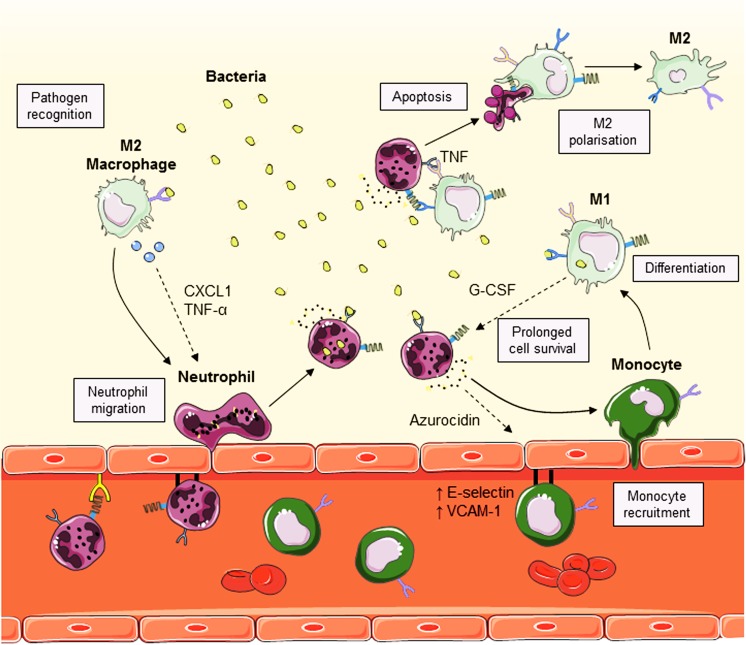
“org 2 resolution, pro-inflammatory macrophages bind to neutrophils via TNF, induce apoptosis, and clear the apoptotic neutrophils (6, 13).”
BackgroundUrbanowicz, T. K., Olasińska‐Wiśniewska, A., Michalak, M., Perek, B., Al-Imam, A., Rodzki, M., Witkowska, A., Straburzyńska‐Migaj, E., Bociański, M., Misterski, M., et al. (2022) · PLoS ONE · doi:10.1371/journal.pone.0276138 · Cited by 26
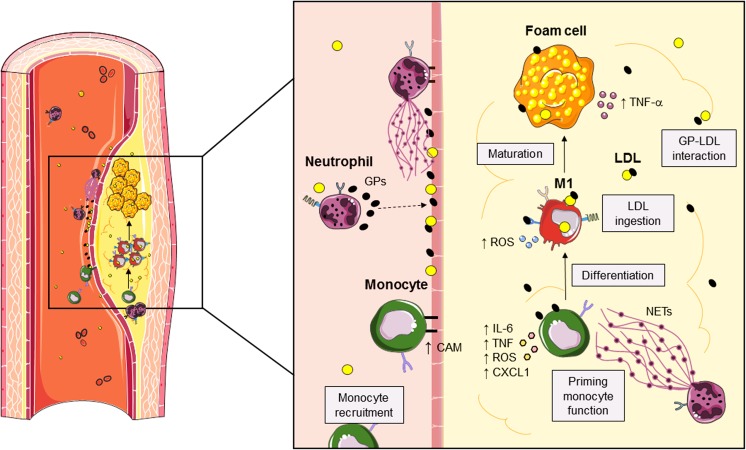
“The further modulation of monocytes/macrophages and foam cells at the site of lipids accumulation and regulated by neutrophils as these groups of cells interact in atherosclerotic plaques development [37].”
BackgroundThe double‐edged role of neutrophil heterogeneity in inflammatory diseases and cancers
Zhou, W., Cao, X., Xu, Q., Qu, J., & Sun, Y. (2023) · MedComm · doi:10.1002/mco2.325 · Cited by 28
Szandruk-Bender, M., Merwid‐Ląd, A., Wiatrak, B., Danielewski, M., Dzimira, S., Szkudlarek, D., Szczukowski, Ł., Świątek, P., & Szeląg, A. (2021) · Journal of Inflammation Research · doi:10.2147/jir.s330614 · Cited by 26
Yadav, S., Ganta, V. C., Varadarajan, S., Ong, V., Shi, Y., Das, A., Ash, D., Nagarkoti, S., McMenamin, M., Kelley, S., et al. (2024) · JCI Insight · doi:10.1172/jci.insight.177334 · Cited by 28
“This aligns with previous studies of atherosclerotic plaques, where increased neutrophils promote the differentiation of infiltrating monocytes into M1 macrophages (37, 38).”
Exploring Neutrophil Heterogeneity and Plasticity in Health and Disease
Gysemans, C. A., Beya, M., Pedace, E., & Mathieu, C. (2025) · Biomedicines · doi:10.3390/biomedicines13030597 · Cited by 25
“Beyond their role in pathogen defense, neutrophils modulate adaptive immunity, both directly and indirectly, through interactions with various immune cells, including T cells, B cells, dendritic cells, and monocytes [32–35].”
Zebrafish as a Vertebrate Model for Studying Nodavirus Infections
Lama, R., Pereiro, P., Figueras, A. J., & Novoa, B. (2022) · Frontiers in Immunology · doi:10.3389/fimmu.2022.863096 · Cited by 25
Elkoshi, Z. (2024) · Frontiers in Immunology · doi:10.3389/fimmu.2024.1371753 · Cited by 28
“During infection, neutrophils polarize macrophages toward the pro-in fl ammatory M1 phenotype (36).”
BackgroundWells, M. J., Mikesh, M., & Gordon, V. D. (2023) · Journal of Microscopy · doi:10.1111/jmi.13252 · Cited by 25
Fetit, R., McLaren, A. S., White, M., Mills, M. L., Falconer, J., Cortés-Lavaud, X., Gilroy, K. L., Lannagan, T. R. M., Ridgway, R. A., Nixon, C., et al. (2024) · Cancer Research Communications · doi:10.1158/2767-9764.crc-23-0319 · Cited by 24
“Neutrophils have been shown in these cancer types to influence outcomes, in both mice and humans (23).”
Cao, Q., Lin, Y., Yue, C., Wang, Y., Quan, F., Cui, X., Bi, R., Yang, Y., Yang, Y., Wang, C., et al. (2021) · European Journal of Pharmacology · doi:10.1016/j.ejphar.2021.174165 · Cited by 27
Ahmed, U., Graf, J. F., Daytz, A. E., Yaipen, O., Mughrabi, I. T., Jayaprakash, N., Cotero, V. E., Morton, C. A., Deutschman, C. S., Zanos, S. P., et al. (2022) · Frontiers in Immunology · doi:10.3389/fimmu.2022.892086 · Cited by 26
Secretomes of M1 and M2 macrophages decrease the release of neutrophil extracellular traps
Manda‐Handzlik, A., Cieloch, A., Kuźmicka, W., Mroczek, A., Stelmaszczyk‐Emmel, A., Demkow, U. A., & Wachowska, M. (2023) · Scientific Reports · doi:10.1038/s41598-023-42167-1 · Cited by 24
“Since neutrophils and macrophages have been shown to cooperate during an immune response 25 , we investigated whether NET release may be regulated by direct contact of neutrophils with macrophages or secretome released by polarized macrophages.”
Tumor-associated macrophages affect the treatment of lung cancer
Yu, Z., Zou, J., & Xu, F. (2024) · Heliyon · doi:10.1016/j.heliyon.2024.e29332 · Cited by 26
Atherosclerosis in HIV Patients: What Do We Know so Far?
Poznyak, A. V., Bezsonov, E. E., Borisov, E. E., Grechko, A. V., Kartuesov, A. G., & Orekhov, A. N. (2022) · International Journal of Molecular Sciences · doi:10.3390/ijms23052504 · Cited by 24
Lu, H., Xu, S., Liang, X., Dai, Y.-Y., Huang, Z., Ren, Y., Lin, J., & Liu, X. (2018) · Inflammation · doi:10.1007/s10753-018-0913-5 · Cited by 23
Karabağ, C., Jones, M. L., Peddie, C. J., Weston, A., Collinson, L., & Reyes‐Aldasoro, C. C. (2020) · PLoS ONE · doi:10.1371/journal.pone.0230605 · Cited by 25
Pathomechanism of oxidative stress in cardiovascularrenal remodeling and therapeutic strategies
Ravarotto, V., Bertoldi, G., Stefanelli, L. F., Nalesso, F., & Calò, L. A. (2022) · Kidney Research and Clinical Practice · doi:10.23876/j.krcp.22.069 · Cited by 22
“In the phase of atherosclerotic injury, macrophages are also recruited through specific signals transduced by the release of granules containing α-defensins, cathepsin G, and azurocidin from neutrophils [19].”
BackgroundHuang, C., Chen, Y., Cai, Y., Ding, H., Hong, J., You, S., Lin, Y., Hu, H., Chen, Y., Hu, X., et al. (2023) · BMC Immunology · doi:10.1186/s12865-023-00584-x · Cited by 23
Maimon, N., Zamir, Z. Z., Kalkar, P., Zeituni-Timor, O., Schif‐Zuck, S., Larisch, S., & Ariel, A. (2020) · APOPTOSIS · doi:10.1007/s10495-020-01615-3 · Cited by 23
Herta, T., Bhattacharyya, A., Rosołowski, M., Conrad, C., Gurtner, C., Gruber, A. D., Ahnert, P., Gutbier, B., Frey, D., Suttorp, N., et al. (2021) · Frontiers in Immunology · doi:10.3389/fimmu.2021.726135 · Cited by 22
New Pharmacological Tools to Target Leukocyte Trafficking in Lung Disease
Belchamber, K. B. R., Hughes, M., Spittle, D. A., Walker, E. M., & Sapey, E. (2021) · Frontiers in Immunology · doi:10.3389/fimmu.2021.704173 · Cited by 24
Biological Activities, Pharmacokinetics and Toxicity of Nootkatone: A Review
Sahu, B. D., Jha, A. K., Gairola, S., Kundu, S., Doye, P., Syed, A. M., Ram, C., Kulhari, U., Kumar, N., & Murty, U. S. (2022) · Mini-Reviews in Medicinal Chemistry · doi:10.2174/1389557522666220214092005 · Cited by 24
Li, S., Mai, Z., Gu, W., Ogbuehi, A. C., Acharya, A., Pelekos, G., Ning, W., Liu, X., Deng, Y., Li, H., et al. (2021) · Frontiers in Cell and Developmental Biology · doi:10.3389/fcell.2021.687245 · Cited by 26
“Both types of cells can work in a partnership to modulate tumor immunity, thus have been regarded as “partners in crime” (Kumar et al., 2018).”
BackgroundHan, J., Shi, Y., Willis, G. R., Imani, J., Kwon, M., Li, G., Ayaub, E. A., Ghanta, S., Ng, J., Hwang, N., et al. (2021) · FEBS Journal · doi:10.1111/febs.16154 · Cited by 22
Salerno-Gonçalves, R., Kayastha, D., Fasano, A., Levine, M. M., & Sztein, M. B. (2019) · PLoS neglected tropical diseases · doi:10.1371/journal.pntd.0007650 · Cited by 21
Song, Y., & Chung, J. (2023) · Current Issues in Molecular Biology · doi:10.3390/cimb45080416 · Cited by 20
Blum, C., Taskin, M. B., Shan, J., Schilling, T., Schlegelmilch, K., Teßmar, J., & Gröll, J. (2021) · Small · doi:10.1002/smll.202007551 · Cited by 20
Programming Factors of Neonatal Intestinal Dysbiosis as a Cause of Disease
Jovandarić, M. Z., Dugalić, S., Babić, S., Babović, I. R., Milićević, S., Mihajlovic, D., Culjic, M., Zivanovic, T., Trklja, A., Marković, B., et al. (2023) · International Journal of Molecular Sciences · doi:10.3390/ijms24065723 · Cited by 22
CXCL17 is a proinflammatory chemokine and promotes neutrophil trafficking
Lowry, E., Chellappa, R. C., Penaranda, B., Sawant, K. V., Wakamiya, M., Garofalo, R., & Rajarathnam, K. (2024) · Journal of Leukocyte Biology · doi:10.1093/jleuko/qiae028 · Cited by 20
Kopiasz, Ł., Dziendzikowska, K., & Gromadzka-Ostrowska, J. (2022) · International Journal of Molecular Sciences · doi:10.3390/ijms23031406 · Cited by 20
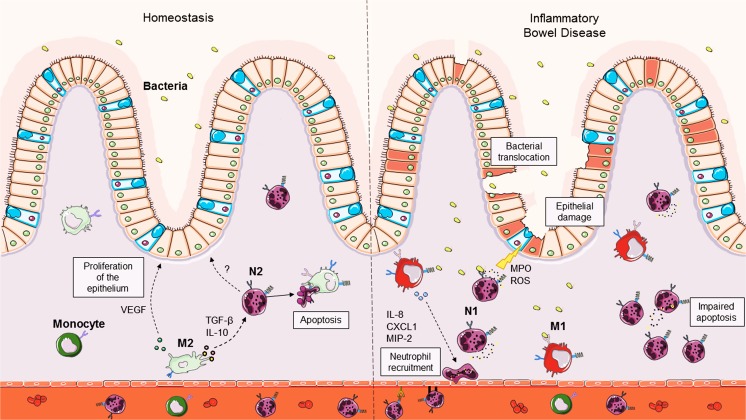
“Therefore, the function of neutrophils may result from changes in the inflammatory environment in the colon, which depend on the colitis model used and the stage of development of induced inflammation [43].”
BackgroundInfluentialGheorghe, D. N., Camen, A., Popescu, D. M., Şincar, C. D., Pitru, A. R., Ionele, C. M., Nicolae, F. M., Danilescu, C. M., Roman, A., & Florescu, C. (2022) · Journal of Personalized Medicine · doi:10.3390/jpm12030341 · Cited by 24
Kilgore, P. B., Sha, J., Andersson, J. A., Леонидович, М. В., & Chopra, A. K. (2021) · npj Vaccines · doi:10.1038/s41541-020-00275-3 · Cited by 20
Morris, J. L., Letson, H. L., McEwen, P. J. C., Biroš, E., Dlaska, C. E., Hazratwala, K., Wilkinson, M., & Dobson, G. P. (2021) · Translational Medicine Communications · doi:10.1186/s41231-021-00084-3 · Cited by 19
“The transient increase in granulocytes and monocytes observed in all animals at 4 h and day 1 postoperative (Table 1) is consistent with the systemic inflammatory response to anesthesia and surgical trauma [8, 10, 12, 16, 28, 29].”
BackgroundHan, B. H., Jang, S. H., Jang, Y. J., Na, S. W., Yoon, J. J., Moon, H. G., Kim, S. Y., Seo, C., Lee, H. S., Lee, Y. M., et al. (2023) · Biomedicine & Pharmacotherapy · doi:10.1016/j.biopha.2023.114637 · Cited by 19
Koh, Y., Chang, Y., Lin, W., Leung, S.-Y., Chen, W. J., Wu, S.-H., Wei, Y., Gung, C.-L., Chou, Y.-C., & Pan, M. (2024) · ACS Omega · doi:10.1021/acsomega.3c07529 · Cited by 21
Trevissón‐Redondo, B., Vallejo, R., Sevillano, D., González, N., Losa‐Iglesias, M. E., López‐López, D., & Alou, L. (2021) · International Wound Journal · doi:10.1111/iwj.13636 · Cited by 19
“On the other hand, the presence of neutrophils and to a lesser extent monocytes as the main microbicidal effectors may aid in preventing or controlling infection at the site of injury.(22,25,33) It has been demonstrated that WBCs also enhance PRP growth factor concentrations through their own release of growth factors…”
BackgroundEmerging Concepts in Defective Macrophage Phagocytosis in Cystic Fibrosis
Jaganathan, D., Bruscia, E. M., & Kopp, B. T. (2022) · International Journal of Molecular Sciences · doi:10.3390/ijms23147750 · Cited by 20
“is encountered, alveolar macrophages mount an immune response to release cytokines and chemokines and recruit neutrophils and monocyte-derived macrophages (MDMs) that drive inflammation [9].”
BackgroundAdiponectin as a potential therapeutic target for the treatment of restenosis
di Li, T., & Zeng, Z. H. (2018) · Biomedicine & Pharmacotherapy · doi:10.1016/j.biopha.2018.03.003 · Cited by 19
Mert, T., Sahin, M. A., Şahın, E., & Yaman, S. (2019) · Inflammopharmacology · doi:10.1007/s10787-019-00563-y · Cited by 19
Topography-based implants for bone regeneration: Design, biological mechanism, and therapeutics
Guo, W., Yang, Z., Liu, F., Song, J., Yang, W., Li, Y., Hu, W., & Wang, K. (2025) · Materials Today Bio · doi:10.1016/j.mtbio.2025.102066 · Cited by 23
“Moreover, neutrophils release reactive oxygen species, which contribute to the regulation of the immune response [79,80].”
Zhang, Y., Yu, S., Liu, J., Liu, Y., Luo, J., & Liu, Y. (2023) · Food & Function · doi:10.1039/d3fo01253k · Cited by 19
The oral microbiome in the context of systemic disease
Leonov, G. E., Varaeva, Y. R., Николаевна, Л. Е., & Starodubova, A. V. (2023) · Voprosy Pitaniya · doi:10.33029/0042-8833-2023-92-4-6-19 · Cited by 20
Holloman, B. L., Wilson, K. M., Cannon, A. S., Nagarkatti, M., & Nagarkatti, P. S. (2024) · Frontiers in Immunology · doi:10.3389/fimmu.2024.1330373 · Cited by 19
Nuti, E., Rossello, A., Cuffaro, D., Camodeca, C., Bael, J. V., van der Maat, D., Martens, E., Fiten, P., Pereira, R. V. S., Ugarte-Berzal, E., et al. (2020) · Cells · doi:10.3390/cells9071634 · Cited by 20
Li, Z., Li, T., Zhang, C., Ni, J., Ji, Y., Sun, A., Peng, D., Wu, W., Xi, L., & Li, K. (2021) · Analytical Chemistry · doi:10.1021/acs.analchem.1c00690 · Cited by 18
Lee, K. H., Dong, J.-J., Kim, S., Kim, D., Hyun, J. H., Chae, M.-H., Lee, B. S., & Song, Y. G. (2022) · Diagnostics · doi:10.3390/diagnostics12010102 · Cited by 20
Athanasiadis, V., Chatzimitakos, T. G., Κωτσού, Κ., Kalompatsios, D., Bozinou, E., & Lalas, S. I. (2024) · Biomass · doi:10.3390/biomass4010003 · Cited by 19
Role of bone marrow-derived macrophages (BMDMs) in neurovascular interactions during stroke
Srivastava, A., Srivastava, P., & Verma, R. (2019) · Neurochemistry International · doi:10.1016/j.neuint.2019.104480 · Cited by 17
Torres‐Ruesta, A., Teo, T., Chan, Y., Rénia, L., & Ng, L. F. P. (2019) · Immunological Reviews · doi:10.1111/imr.12825 · Cited by 20
Okawa, M., Sakoda, M., Ohta, S., Hasegawa, K., Yatomi, Y., & Ito, T. (2020) · Biomacromolecules · doi:10.1021/acs.biomac.0c00390 · Cited by 17
Activation of Human Monocytes by Colloidal Aluminum Salts
Vrieling, H., Kooijman, S., de Ridder, J. W., Thies‐Weesie, D. M. E., Soema, P. C., Jiskoot, W., van Riet, E., Heck, A. J. R., Philipse, A. P., Kersten, G. F. A., et al. (2019) · Journal of Pharmaceutical Sciences · doi:10.1016/j.xphs.2019.08.014 · Cited by 17
Preclinical bioassay of a novel antibacterial mesh for the repair of abdominal hernia defects
Kohler, B., Martínez, S. B., García‐Moreno, F., Rodríguez, M., Pascual, G., & Bellón, J. M. (2019) · Surgery · doi:10.1016/j.surg.2019.10.010 · Cited by 17
Aizik, G., Waiskopf, N., Agbaria, M., Ben-David-Naim, M., Nordling‐David, M. M., Jbara-Agbaria, D., Banin, U., & Golomb, G. (2019) · Journal of Controlled Release · doi:10.1016/j.jconrel.2019.12.009 · Cited by 18
Xenogeneic mesenchymal stem cell transplantation for mandibular defect regeneration
Tee, B. C., & Sun, Z. (2020) · Xenotransplantation · doi:10.1111/xen.12625 · Cited by 17
Preclinical performance testing of medical devices with antimicrobial effects
Wang, H., Chediak, J. A., Belmont, P. J., Saylor, D. M., & Phillips, K. S. (2023) · Nature Reviews Bioengineering · doi:10.1038/s44222-023-00060-6 · Cited by 17
Kaihena, M., UKRATALO, A. M., Killay, A., & Kaliky, N. A. P. S. B. (2024) · Jurnal Penelitian Pendidikan IPA · doi:10.29303/jppipa.v10i1.5947 · Cited by 17
The role and therapeutic potential of macrophages in the pathogenesis of diabetic cardiomyopathy
Zhang, S., Zhu, X., Chen, Y., Wen, Z., Shi, P., & Ni, Q. (2024) · Frontiers in Immunology · doi:10.3389/fimmu.2024.1393392 · Cited by 17
“In sites of chronic in fl ammation in diabetic patients, monocytes/macrophages are excessively recruited, playing an indispensable role in DCM (8).”
BackgroundMartínez, S. M. L., Valentín, E., Varela-Hernández, J. J., Álvarez-Zavala, M., Sánchez-Reyes, K., Ramos‐Solano, M., Cabrera-Silva, R. I., Ramirez-Anguiano, V. M., Lomelí-Martínez, M. A., Martínez-Salazar, S. Y., et al. (2019) · Frontiers in Immunology · doi:10.3389/fimmu.2019.01465 · Cited by 17
Zhao, D., Shan, K., Xie, Y., Zhang, G., An, Q., Yu, X., Zhou, G., & Li, C. (2022) · npj Biofilms and Microbiomes · doi:10.1038/s41522-022-00319-7 · Cited by 16
Cook, K., Xue, W., Symonds, P., Daniels, I., Gijon, M., Boocock, D. J., Coveney, C., Miles, A. K., Shah, S., Atabani, S., et al. (2021) · Journal for ImmunoTherapy of Cancer · doi:10.1136/jitc-2020-001910 · Cited by 20
Mitochondria at the Heart of Sepsis: Mechanisms, Metabolism, and Sex Differences
Yap, J. Q., Nikouee, A., Lau, J. E., Walsh, G., & Zang, Q. S. (2025) · International Journal of Molecular Sciences · doi:10.3390/ijms26094211 · Cited by 16
“Among these, neutrophils and macrophages have been shown to play dominant roles in clearing bacterial pathogens [24].”
Huang, J., Wang, B., Tao, S., Hu, Y., Wang, N., Zhang, Q., Cheng, G., 张巧云, Wang, C., Cheng, X., et al. (2022) · Frontiers in Immunology · doi:10.3389/fimmu.2022.928312 · Cited by 15
“, bactericidal proteins, cytokines, and reactive oxygen species), aggravating the inflammatory response (19, 20).”
BackgroundMultifaceted roles of neutrophils in cardiac disease
Morrissey, S. M., Kirkland, L. G., Phillips, T. K., Levit, R. D., Hopke, A. R., & Jensen, B. C. (2025) · Journal of Leukocyte Biology · doi:10.1093/jleuko/qiaf017 · Cited by 14
Taylor, S., Whitfield, M., Barratt, J., & Didangelos, A. (2020) · The Journal of Immunology · doi:10.4049/jimmunol.2000448 · Cited by 15
“Generally, proteolytic enzymes and metalloproteinases are commonly expressed and secreted by monocytes and other inflammatory cells (especially phagocytes) during pathological tissue remodelling in inflammatory and autoimmune diseases (44, 45) including IgAN (32, 33).”
BackgroundLoss of CX3CR1 augments neutrophil infiltration into cochlear tissues after acoustic overstimulation
Zhang, C., Frye, M. D., Riordan, J., Sharma, A., Manohar, S., Salvi, R., Sun, W., & Hu, B. (2021) · Journal of Neuroscience Research · doi:10.1002/jnr.24925 · Cited by 17
“Regardless of the pathological impact, monocytes/macrophages have essential roles in regulating neutrophil recruitment (Finsterbusch et al., 2016; Prame Kumar et al., 2018; Soehnlein et al., 2009).”
BackgroundWessely‐Szponder, J., Michalska, J., Szponder, T., Żylińska, B., Tarczyńska, M., & Szubstarski, M. (2020) · Journal of Comparative Pathology · doi:10.1016/j.jcpa.2019.12.007 · Cited by 14
Exploring the relationships between amphibian (Xenopus laevis) myeloid cell subsets
Yaparla, A., Koubourli, D. V., Popović, M., & Grayfer, L. (2020) · Developmental & Comparative Immunology · doi:10.1016/j.dci.2020.103798 · Cited by 15
Woo, S.-J., Chae, C.-H., & Lim, J.-W. (2022) · Annals of Occupational and Environmental Medicine · doi:10.35371/aoem.2022.34.e35 · Cited by 14
Muscle Stem Cell Microenvironment and Functions in Muscle Regeneration
Li, W., Chen, M., & Zhang, L. (2025) · Biomolecules · doi:10.3390/biom15060765 · Cited by 15
The Possible Role of Neutrophils in the Induction of Osteoclastogenesis
Moonen, C. G. J., de Vries, T. J., Rijkschroeff, P., Poubelle, P. E., Nicu, E. A., & Loos, B. G. (2019) · Journal of Immunology Research · doi:10.1155/2019/8672604 · Cited by 13
Yang, L., Jiménez, J. A., Earley, A. M., Hamlin, V., Kwon, V., Dixon, C. T., & Shiau, C. E. (2020) · eLife · doi:10.7554/elife.58191 · Cited by 14
Xu, J., Wang, D., Ma, H., Zhai, X., Huo, Y., Ren, Y., Li, W., Chang, L., Lu, D., Guo, Y., et al. (2022) · Blood Science · doi:10.1097/bs9.0000000000000122 · Cited by 13
Muñoz‐Callejas, A., González‐Sánchez, E., Silván, J., Antonio, E. S., Rafael, G.-T., Ramos-Manzano, A., Sánchez-Abad, I., González‐Álvaro, I., García-Pérez, J., Tomero, E., et al. (2023) · International Journal of Molecular Sciences · doi:10.3390/ijms24076144 · Cited by 13
Pichardo, A. H., Wilm, B., Liptrott, N. J., & Murray, P. A. (2023) · Stem Cells International · doi:10.1155/2023/7397819 · Cited by 14
Metadata
- Authors
- Prame Kumar, K., Nicholls, A. J., & Wong, C. H. Y.
- Affiliations
- Monash Medical Centre (AU)
- Corresponding author
- Wong, Connie H. Y.
- Venue
- Cell and Tissue Research
- Published
- 2018-01-31
- Volume
- 371
- Issue
- 3
- Pages
- 551-565
- ISSN
- 0302-766X (ISSN-L)
- 1432-0878
- PMC
- PMC5820413
- OpenAlex
- W2791016534
- Cited by
- 417
- References
- 158
- Citations by year
- 2026: 21 · 2025: 58 · 2024: 40 · 2023: 60 · 2022: 53 · 2021: 83 · 2020: 54 · 2019: 39 · 2018: 9
- FWCI
- 4.96
- Type
- journal article
- Language
- en
- Open access
- hybrid
- doi.org
- Licence
- cc-by
- creativecommons.org/licenses/by/4.0 (tdm)
- Locations
- Cell and Tissue Research (publishedVersion, cc-by)
- PubMed Central (publishedVersion, cc-by)
- Monash University Research Portal (Monash University) (publishedVersion, other-oa)
- PubMed (publishedVersion)
- Funders
- National Health and Medical Research Council (APP1104036)
- National Heart Foundation of Australia (100863)
- Topics
- Life Sciences › Immunology and Microbiology › Immunology › Neutrophil, Myeloperoxidase and Oxidative Mechanisms
- Life Sciences › Immunology and Microbiology › Immunology › Immune cells in cancer
- Life Sciences › Immunology and Microbiology › Immunology › Inflammation biomarkers and pathways
- Keywords
- neutrophils, monocytes, macrophages, neutrophil heterogeneity, neutrophil plasticity, neutrophil subsets, neutrophil-macrophage interaction, acute inflammation, atherosclerosis, cardiovascular disease, lupus nephritis, autoimmune disease, intestinal immunity, gut immune response, host defense
- MeSH terms
- Animals, Disease, Humans, Inflammation, Macrophages, Monocytes, Neutrophils, Organ Specificity
About these checks
Registry, retraction, Cites and statistics results are computed, not judged, with one exception: a printed reference that no index lists is read once by a model before it counts as a citation error. Claims are extracted by a model and kept only when their quote appears verbatim in the text; each cited source is then checked, with a model’s help, for whether it says what the claim relies on. Those verdicts can be wrong — read the claim’s quote and the cited source before relying on one.
Statistics and arithmetic are recomputed, not judged.
Confidence bands are shown only for fields calibrated on our annotated test set. None is calibrated yet, so no band is shown.
What counts as a claim ›How we measure confidence ›How we check this ›
Are you an author, or do you see a problem with this page? Request a review
Data sources
Bibliographic data: Semantic Scholar, OpenAlex, Crossref.
Contains information from the Semantic Scholar Academic Graph Datasets, made available under the ODC Attribution License (ODC-BY 1.0).
Semantic Scholar’s data is described in: Kinney, R., et al. (2023). The Semantic Scholar Open Data Platform. arXiv:2301.10140.
