

Taurine and inflammatory diseases
Open accessThe DOI matches its Crossref record; 107 of the 107 references it cites were found in a registry or an index.
Abstract
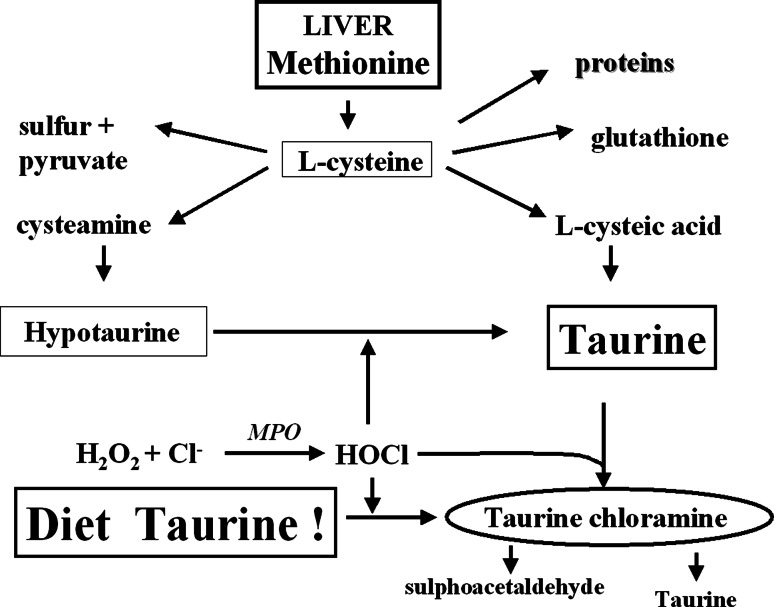
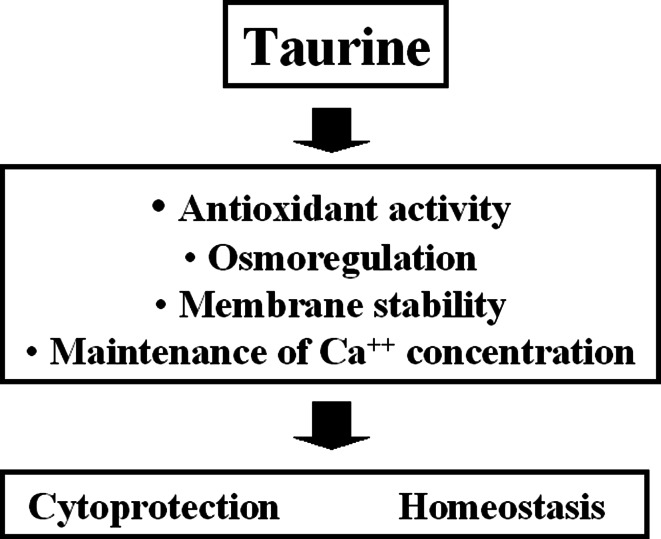
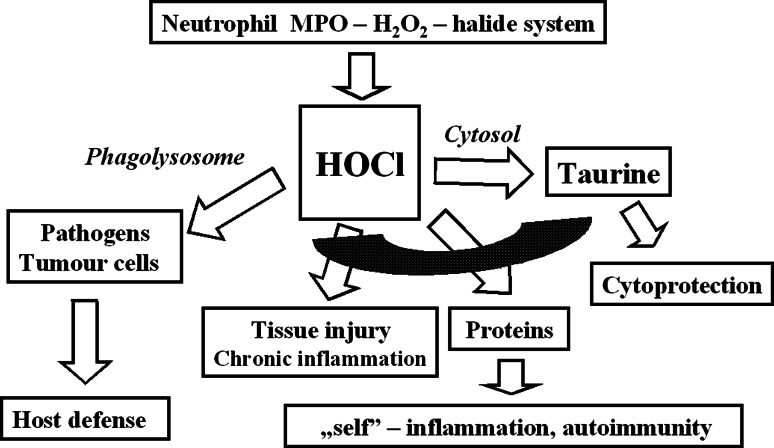
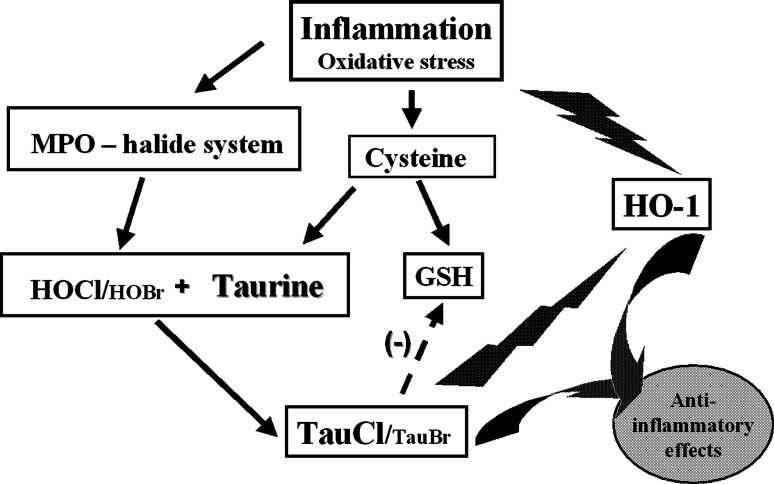
Taurine (2-aminoethanesulfonic acid) is the most abundant free amino acid in humans and plays an important role in several essential biological processes such as bile acid conjugation, maintenance of calcium homeostasis, osmoregulation and membrane stabilization. Moreover, attenuation of apoptosis and its antioxidant activity seem to be crucial for the cytoprotective effects of taurine. Although these properties are not tissue specific, taurine reaches particularly high concentrations in tissues exposed to elevated levels of oxidants (e.g., inflammatory cells). It suggests that taurine may play an important role in inflammation associated with oxidative stress. Indeed, at the site of inflammation, taurine is known to react with and detoxify hypochlorous acid generated by the neutrophil myeloperoxidase (MPO)-halide system. This reaction results in the formation of less toxic taurine chloramine (TauCl). Both haloamines, TauCl and taurine bromamine (TauBr), the product of taurine reaction with hypobromous acid (HOBr), exert antimicrobial and anti-inflammatory properties. In contrast to a well-documented regulatory role of taurine and taurine haloamines (TauCl, TauBr) in acute inflammation, their role in the pathogenesis of inflammatory diseases is not clear. This review summarizes our current knowledge concerning the role of taurine, TauCl and TauBr in the pathogenesis of inflammatory diseases initiated or propagated by MPO-derived oxidants. The aim of this paper is to show links between inflammation, neutrophils, MPO, oxidative stress and taurine. We will discuss the possible contribution of taurine and taurine haloamines to the pathogenesis of inflammatory diseases, especially in the best studied example of rheumatoid arthritis.
Overview
The claims and statistics of this paper haven’t been checked yet.
Free: it reads the open-access text and checks the first 5 claims that cite a source we can check. Create a free account to check every claim.
Integrity signals
Registry
Cites
Statistics
Figures
Verification
Claims the paper makes
The claims and statistics of this paper haven’t been checked yet.
Free: it reads the open-access text and checks the first 5 claims that cite a source we can check. Create a free account to check every claim.
Claims other papers make about this one
Each is checked against this paper’s own text: does it say what the citing paper says it does?
The cited source says what the claim attributes to it.
In the citing paper
“Strikingly, neutrophils represent a large reservoir of free taurine compromising approximately 50% of the cellular amino acid/amino acid-derivative pool thought to be involved in direct chemical protection against cytotoxic consequences of the respiratory burst associated with microbicidal HOCl formation (114).”
From Hypochlorous Acid: From Innate Immune Factor and Environmental Toxicant to Chemopreventive Agent Targeting Solar UV-Induced Skin Cancer (2022) · cites this paper as [114]
Self-check
Percentages, sums and reported differences re-computed from the paper’s own numbers.
The self-check needs the paper’s full text.
Citations
Cites
Bacterial Biofilms: A Common Cause of Persistent Infections
Costerton, J. W., Stewart, P. S., & Greenberg, E. P. (1999) · Science · doi:10.1126/science.284.5418.1318 · Cited by 12,167 · cited 2×
“Recently, there has been a tremendous interest in the role of biofilms in chronic infectious diseases and in the resistance of biofilms to antibiotics, disinfectants and phagocytosis (Costeron et al. 1991).”
BackgroundTissue Destruction by Neutrophils
Epstein, F. H., & Weiss, S. J. (1989) · New England Journal of Medicine · doi:10.1056/nejm198902093200606 · Cited by 3,950 · cited 9×
“On the other hand, overproduction of these oxidants and insufficient neutralization by antioxidants may lead to the development of oxidative stress and chronic inflammation (Smith 1994; Weiss 1988).”
BackgroundInfluentialTissue Destruction by Neutrophils
(1989) · New England Journal of Medicine · doi:10.1056/nejm198908033210513 · Cited by 3,631
Biofilm formation as microbial development
O'Toole, G., Kaplan, H. B., & Kolter, R. (2000) · Annual Review of Microbiology · doi:10.1146/annurev.micro.54.1.49 · Cited by 3,571 · cited 1×
“As microbial biofilms are the most common mode of growth of bacteria and fungi in nature (O’Toole et al. 2000), it is reasonable to study whether TauCl and TauBr are able to kill bacteria hidden in a biofilm or destroy a protective exopolymeric matrix of growing biofilms.”
BackgroundGregersen, P. K., Silver, J., & Winchester, R. J. (1987) · Arthritis & Rheumatism · doi:10.1002/art.1780301102 · Cited by 2,599 · cited 2×
“, Porphyromonas gingivalis infection) are generally accepted as participating in disease development, while repeated activation of innate immunity and deregulated adaptive immunity are thought to contribute to inflammation chronicity and self-tolerance breakdown (Gregersen et al. 1987; Detert et al. 2010; Gierut et al…”
BackgroundPhysiological actions of taurine
Huxtable, R. J. (1992) · Physiological Reviews · doi:10.1152/physrev.1992.72.1.101 · Cited by 2,595 · cited 1×
“Taurine tissue distribution is characterized by low concentrations of taurine in the plasma and extracellular fluids (ranging from 10 to 100 lM) and high intracellular concentrations of taurine reaching up to 50 mM, depending on the cell type (Huxtable 1992; Learn et al. 1990).”
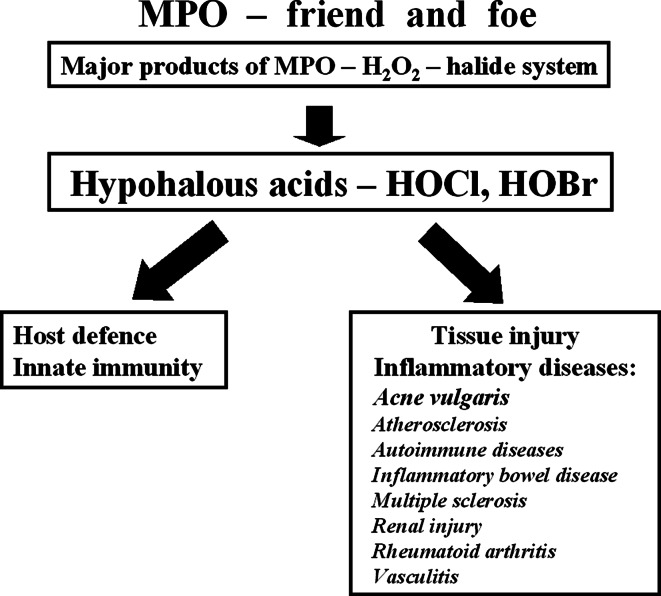
BackgroundMyeloperoxidase: friend and foe
Klebanoff, S. J. (2005) · Journal of Leukocyte Biology · doi:10.1189/jlb.1204697 · Cited by 2,282 · cited 2×
“It suggests that taurine may play an important role in inflammation associated with oxidative stress.”
BackgroundFibroblast‐like synoviocytes: key effector cells in rheumatoid arthritis
Bartok, B., & Firestein, G. S. (2010) · Immunological Reviews · doi:10.1111/j.0105-2896.2009.00859.x · Cited by 1,906 · cited 2×
“age to the articular cartilage and subchondral bone (Firestein 2009; Bartok and Firestein 2010).”
BackgroundIL-1 pathways in inflammation and human diseases
Gabay, C., Lamacchia, C., & Palmer, G. (2010) · Nature Reviews Rheumatology · doi:10.1038/nrrheum.2010.4 · Cited by 897 · cited 1×
“The biological activity of IL-1b is counteracted by IL-1Ra, but for successful blockade a large molecular excess (100-fold to 1,000-fold) of IL-1Ra is required (Gabay et al. 2010).”
BackgroundMyeloperoxidase-Halide-Hydrogen Peroxide Antibacterial System
Klebanoff, S. J. (1968) · Journal of Bacteriology · doi:10.1128/jb.95.6.2131-2138.1968 · Cited by 815 · cited 4×
“In neutrophil phagolysosomes, myeloperoxidase (MPO) uses H2O2 to convert chloride ion to HOCl, or bromide ion to HOBr (Klebanoff 1968; Thomas 1979; Henderson et al. 2001)”
BackgroundInfluential
Research works printed but not linked: 2
- Marcinkiewicz J, Kontny E (2012) Taurine, taurine derivatives and immune system. In: A El Idrissi, W L’Amoreaux (eds) Taurine in health and disease, Transworld Research Network Chapter 6, 2011: 000–000 ISBN:978-81-7895-520-9
- Marcinkiewicz J Grabowska A Bereta J Stelmaszyńska T Taurine chloramine a product of activated neutrophils, inhibits in vitro the release of tumor necrosis factor in activated RAW 264.7 cells J Leukoc Biol 1995 54 119 7499964
Cited by
Items 201–300 of 581
Yu, Y.-R., Liu, X., Zhang, J., Ji, C., & Qi, Y. (2013) · Parasitology Research · doi:10.1007/s00436-013-3525-x · Cited by 21
Ommati, M. M., Mobasheri, A., Ma, Y., Xu, D., Tang, Z., Manthari, R. K., Abdoli, N., Azarpira, N., Lu, Y., Sadeghian, I., et al. (2022) · Naunyn-Schmiedeberg s Archives of Pharmacology · doi:10.1007/s00210-022-02291-7 · Cited by 20
Al-Zahrani, M. H., Balgoon, M. J., El-Sawi, N. M., Alshubaily, F. A., Jambi, E. J., Khojah, S. M., Baljoon, R. S., Alkhattabi, N. A., Baz, L. A., Alharbi, A. A., et al. (2023) · Frontiers in Molecular Biosciences · doi:10.3389/fmolb.2023.1172403 · Cited by 20
“Additionally, taurine proved its efficacy in cellular protection against protective cells against the cytotoxicity associated with oxidative stress acting as an anti-inflammatory (Marcinkiewicz and Kontny, 2014).”
BackgroundZhou, X., Zhang, H., Li, S., Jiang, Y., Kang, L., Deng, J., Yang, C., Zhao, X., Zhao, J., Jiang, L., et al. (2023) · Frontiers in Veterinary Science · doi:10.3389/fvets.2023.1231996 · Cited by 20
“Taurine is considered as a cell-protective molecule because it can maintain normal electron transport chain function, preserve glutathione stores, enhance membrane stability, regulate lipid metabolism, strengthen antioxidant responses, alleviate inflammation, and modulate cellular calcium homeostasis (51, 52).”
BackgroundHoffman, S., Liang, D., Hood, R. B., Tan, Y., Terrell, M. L., Marder, M. E., Barton, H., Pearson, M. A., Walker, D. I., Barr, D. B., et al. (2023) · Environmental Health Perspectives · doi:10.1289/ehp12657 · Cited by 20
N ‐chlorotaurine, a potent weapon against multiresistant bacteria
Anich, C., Orth‐Höller, D., Lackner, M., & Nagl, M. (2021) · Journal of Applied Microbiology · doi:10.1111/jam.15052 · Cited by 20
“1984), and it is involved in the defence against microbes as well as in termination of inflammation (Marcinkiewicz and Kontny 2014).”
BackgroundCambeiro-Pérez, N., Hidalgo-Cantabrana, C., Moro‐García, M. A., Alonso‐Arias, R., Simal‐Gándara, J., Sánchez, B., & Martínez‐Carballo, E. (2018) · Frontiers in Microbiology · doi:10.3389/fmicb.2018.02701 · Cited by 20
“In the same way, it has been suggested a role for taurine in inflammation following oxidative stress by reacting with hypochlorous acid generated by neutrophils rendering taurine chloramine (TauCl) and taurine bromamine (TauBr) (Marcinkiewicz and Kontny, 2014).”
BackgroundHusain, N., & Mahmood, R. (2019) · Amino Acids · doi:10.1007/s00726-019-02807-1 · Cited by 20
Song, W., Zhang, Z., Jiang, Y., Cao, Y., Zhang, B., Wang, Y., Shi, H., & Zhu, L. (2022) · Reproductive Biology and Endocrinology · doi:10.1186/s12958-022-00914-5 · Cited by 21
“Besides, taurine, one of the sulphur-containing amino-acids, has been suggested to work as important antioxidant to protect cells from oxidative stress [44].”
BackgroundOmmati, M. M., Rezaei, H., Retana‐Márquez, S., Tian, W., Zhao, J., Rouhani, A., Sabouri, S., Ghaderi, F., Niknahad, A. M., Najibi, A., et al. (2023) · Life Sciences · doi:10.1016/j.lfs.2023.122284 · Cited by 19
Emerging Role of Chinese Herbal Medicines in the Treatment of Pancreatic Fibrosis
Liu, C., Li, S., Zhang, Q., Guo, F., Tong, M., Martinez, M. F. Y. M., Wang, H. H., Zhao, Y., & Shang, D. (2019) · The American Journal of Chinese Medicine · doi:10.1142/s0192415x1950037x · Cited by 19
Al-Mshhdani, B. A., Grounds, M. D., Arthur, P. G., & Terrill, J. R. (2021) · Antioxidants · doi:10.3390/antiox10081241 · Cited by 19
“scavenge taurine via the formation of taurine chloramine, a molecule that has additional anti-inflammatory properties (reviewed in [86]).”
BackgroundRizzo, C., Camarda, F., Donzella, D., Barbera, L. L., & Guggino, G. (2022) · Cells · doi:10.3390/cells11030549 · Cited by 19
“In this regard, the reduction of taurine, an amino-acid that participates in membrane stabilisation and controls oxidative stress and immune system hyperactivation, corroborates the importance of aberrant metabolic pathways in AS development [32].”
BackgroundHepatoprotective Effects of Taurine Against Cadmium-Induced Liver Injury in Female Mice
Zheng, J., Qiu, G., Zhou, Y., Ma, K., & Cui, S. (2022) · Biological Trace Element Research · doi:10.1007/s12011-022-03252-0 · Cited by 19
Wang, X., Zhu, X., Li, X., Li, Z., Mao, Y. Q., Zhang, S., Liu, X., Liu, X., Liu, Y., Cao, F., et al. (2022) · Food & Function · doi:10.1039/d2fo02595g · Cited by 18
(Chemical) Roles of HOCl in Rheumatic Diseases
Leopold, J., & Schiller, J. (2024) · Antioxidants · doi:10.3390/antiox13080921 · Cited by 18
Zhang, H., Li, N., Shi, F., Yuan, F., Huang, S., Sun, N., & Deng, C. (2024) · Analytical Chemistry · doi:10.1021/acs.analchem.4c04386 · Cited by 18
Kim, S. H., Yum, H.-W., Kim, S. H., Kim, W., Kim, S., Kim, C., Kim, K., Suh, Y., & Surh, Y. (2021) · Antioxidants · doi:10.3390/antiox10030479 · Cited by 20
“The health beneficial effects of taurine have been generally attributable to its antioxidant and anti-inflammatory effects [8,15,16].”
BackgroundPloner, C., Rauchenwald, T., Connolly, C. E., Jöhrer, K., Rainer, J., Seifarth, C., Hermann, M., Nagl, M., Lobenwein, S., Wilflingseder, D., et al. (2021) · Stem Cell Research & Therapy · doi:10.1186/s13287-021-02336-3 · Cited by 18
“NCT is known to antagonize the inflammatory response of neutrophils and macrophages [39, 40] and has been therefore tested in clinical trials for the treatment of inflammatory diseases and wound healing deficiencies [41].”
BackgroundBai, X., Yang, T., Putz, A. M., Wang, Z., Li, C., Fortin, F., Harding, J. C. S., Dyck, M. K., Canada, P., Dekkers, J. C. M., et al. (2021) · BMC Genomics · doi:10.1186/s12864-021-07835-4 · Cited by 18
The neuroprotective roles of Dietary Micronutrients on Parkinson’s disease: a review
Rahimmi, A., Tozandehjani, S., Daraei, M., & Khademerfan, M. (2022) · Molecular Biology Reports · doi:10.1007/s11033-022-07345-w · Cited by 18
Zhu, R., Wu, X., Zhao, X.-Y., Qu, Z.-H., Quan, Y., Lu, M., Liu, Z.-Y., & Wu, L. (2022) · Fish & Shellfish Immunology · doi:10.1016/j.fsi.2022.08.063 · Cited by 18
Metabolomics of head and neck cancer in biofluids: an integrative systematic review
Chuchueva, N., Carta, F., Nguyen, H. N., Luevano, J., Lewis, I. A., Ríos-Castillo, I., Fanos, V., King, E. V., Swistushkin, V., Reshetov, I. V., et al. (2023) · Metabolomics · doi:10.1007/s11306-023-02038-2 · Cited by 18
Schmidlin, P. R., Fujioka‐Kobayashi, M., Mueller, H.-D., Sculean, A., Lussi, A., & Miron, R. J. (2016) · Clinical Oral Investigations · doi:10.1007/s00784-016-1950-9 · Cited by 18
Research progress and perspective in metabolism and metabolomics of psoriasis
Lian, N., Shi, L., Hao, Z., & Chen, M. (2020) · Chinese Medical Journal · doi:10.1097/cm9.0000000000001242 · Cited by 18
Contribution of termites to development of zinc anomaly in Kalahari sand.
Watson, J. P. (1970) · Cited by 18
Yang, J., Zhou, Y., Du, A., Zhang, Z., Wang, B., Tian, Y., Liu, H., Cai, L., Pang, F., Li, Y., et al. (2025) · npj Biofilms and Microbiomes · doi:10.1038/s41522-025-00791-x · Cited by 17
Active role of amino acid metabolism in early diagnosis and treatment of diabetic kidney disease
Li, C., Gao, L., Lv, C., Li, Z., Fan, S., Liu, X., Rong, X., Huang, Y., & Liu, J. (2023) · Frontiers in Nutrition · doi:10.3389/fnut.2023.1239838 · Cited by 17
“As a result, less toxic taurine chloramine (TauCl), a more stable and less toxic anti-inflammatory mediator, is created (25).”
BackgroundLuo, J., Luo, M., Kaminga, A. C., Wei, J., Dai, W., Peng, Y., Zhao, K., Duan, Y., Xiao, X., Ouyang, S., et al. (2024) · Microbiology Spectrum · doi:10.1128/spectrum.05230-22 · Cited by 17
“Indeed, compelling data have shown that taurine is an effective anti-inflammatory and anti-oxidant (55, 56).”
BackgroundYang, J., Zhu, B., Zhang, J., Liang, S. H., Shen, S., & Ran, C. (2024) · Angewandte Chemie International Edition · doi:10.1002/anie.202409896 · Cited by 17
Huang, Z., Yu, Y.-P., He, X.-R., Chen, Y.-B., Xiang, X., Li, H.-Z., Cai, Z.-H., Zhang, J.-Y., Wu, D.-Z., Zhu, G.-Z., et al. (2025) · Journal of sport and health science/Journal of Sport and Health Science · doi:10.1016/j.jshs.2025.101077 · Cited by 17
Bou, R., Cofrades, S., & Jiménez-Colmenero, F. (2016) · Elsevier eBooks · doi:10.1016/b978-0-12-802309-9.00010-8 · Cited by 17
Taurine Alleviates Sympathetic Innervation by Inhibiting NLRP3 Inflammasome in Postinfarcted Rats
Lee, C.-C., Chen, W., Chen, S., & Lee, T. (2021) · Journal of Cardiovascular Pharmacology · doi:10.1097/fjc.0000000000001005 · Cited by 17
Kim, S. H., Zhong, X., Kim, W., Kim, K., Suh, Y., Kim, C., Joe, Y., Chung, H., Cha, Y., & Surh, Y. (2018) · The FASEB Journal · doi:10.1096/fj.201700817r · Cited by 17
“TauCl has been shown to exert cytoprotective and anti-inflammatory effects through HO-1 upregulation (14, 43).”
BackgroundZuo, L., Zhou, L., Xu, T., Li, Z., Liu, L., Shi, Y., Kang, J., Gao, G., Du, S., Sun, Z., et al. (2018) · Frontiers in Pharmacology · doi:10.3389/fphar.2018.00300 · Cited by 17
“Taurine is regarded as a kind of abundant free amino acid in mammals and plays an extremely important role in some essential biological processes such as maintenance of calcium homeostasis, bile acid conjugation and membrane stabilization (Marcinkiewicz and Kontny, 2014).”
BackgroundTaurine improves glucose tolerance in STZ-induced insulin-deficient diabetic mice
Nakatsuru, Y., Murase‐Mishiba, Y., Bessho, M., Terasaki, J., Hanafusa, T., & Imagawa, A. (2018) · Diabetology International · doi:10.1007/s13340-018-0353-3 · Cited by 17
Slami, M., Bahrekazemi, M., Bahram, S., & Javadian, S. R. (2021) · Aquaculture Nutrition · doi:10.1111/anu.13362 · Cited by 17
Taurine and Epidermal Growth Factor Belong to the Signature of First-Episode Psychosis
Koido, K., Innos, J., Haring, L., Zilmer, M., Ottas, A., & Vasar, E. (2016) · Frontiers in Neuroscience · doi:10.3389/fnins.2016.00331 · Cited by 17
“…and cysteine metabolism, and it is the most abundant free amino acid in humans and plays an important role in several essential biological processes such as bile acid conjugation, maintenance of calcium homeostasis, osmoregulation, and membrane stabilization (Marcinkiewicz and Kontny, 2014).”
BackgroundAbdominal obesity in COPD is associated with specific metabolic and functional phenotypes
Cruthirds, C. L., Deutz, N. E. P., Mizubuti, Y., Harrykissoon, R., Zachria, A. J., & ENGELEN, M. P. K. J. (2022) · Nutrition & Metabolism · doi:10.1186/s12986-022-00714-z · Cited by 16
“The elevated WBP of taurine seen in all COPD patients and highest values in AO-COPD further the link between taurine metabolism and inflammatory diseases [43].”
BackgroundSun, X., Wei, Z., Su, Y., Fang, R., Fan, Y., Zeng, D., Ding, Q., Miao, Y., Liu, J., & Sun, Q. (2025) · Carbohydrate Polymers · doi:10.1016/j.carbpol.2025.123368 · Cited by 16
Hoang, N. K., Maegawa, E., Murakami, S., Schaffer, S. W., & Ito, T. (2022) · Metabolites · doi:10.3390/metabo12040349 · Cited by 16
“Taurine is present in immune system cells, such as macrophages and neutrophils, at levels as high as 35 mM [9].”
BackgroundArshad, H. M., Siokis, A., Franke, R., Habib, A., Alfonso, J. C. L., Poliakova, Y., Lücke, E., Michaelis, K., Brönstrup, M., Meyer‐Hermann, M., et al. (2022) · Cells · doi:10.3390/cells11152283 · Cited by 16
Ichikawa, S., Abe, R., Fujimoto, H., Higashi, K., Zang, L., Nakayama, H., Matsuoka, I., & Shimada, Y. (2023) · Frontiers in Microbiology · doi:10.3389/fmicb.2023.1079187 · Cited by 16
“It possesses many biological functions, including osmoregulation, membrane stability, intracellular calcium metabolism, anti-oxidation, and anti-inflammation in various tissues (Marcinkiewicz and Kontny, 2014; Menzie et al., 2014).”
BackgroundMadbouly, N. A., Azmy, A., Salama, A., & Elamir, A. M. (2021) · The Journal of Antibiotics · doi:10.1038/s41429-021-00441-2 · Cited by 16
Whalen, W., Büyüközkan, M., Moore, B. B., Moon, J., Cruz, C. S. D., Martínez, F. J., Choi, A. M. K., Krumsiek, J., Stout-Delgado, H. W., & Cho, S. J. (2021) · Thorax · doi:10.1136/thoraxjnl-2021-217315 · Cited by 16
Cho, K. S., Neog, M. K., Kim, J. Y., Yang, H.-I., & Kim, K. S. (2019) · Advances in experimental medicine and biology · doi:10.1007/978-981-13-8023-5_3 · Cited by 15
Mughal, S., Sabater-Arcis, M., Artero, R. D., Ramón‐Azcón, J., & Fernández‐Costa, J. M. (2024) · Disease Models & Mechanisms · doi:10.1242/dmm.050540 · Cited by 15
“The anti-inflammatory potential of taurine has been demonstrated previously (Marcinkiewicz and Kontny, 2014; Qaradakhi et al., 2020; Schaffer and Kim, 2018; Terrill et al., 2020).”
Salivary Biomarkers for the Diagnosis of Sjögren’s Syndrome: A Review of the Last Decade
Lis, V. E., Skutnik-Radziszewska, A., Zalewska, E., & Zalewska, A. (2025) · Biomedicines · doi:10.3390/biomedicines13112664 · Cited by 15
“These metabolites are products of bioenergetic pathways related to anaerobic glycolysis and oxidative stress [34,35].”
Protection of Taurine Against Arsenic-Induced DNA Damage of Mice Kidneys
Zheng, Y., Qu, H., Wang, D., Li, S., Zhang, C., & Piao, F. (2017) · Advances in experimental medicine and biology · doi:10.1007/978-94-024-1079-2_73 · Cited by 15
A Novel, Easy Assay Method for Human Cysteine Sulfinic Acid Decarboxylase
Tramonti, A., Contestabile, R., Florio, R., Nardella, C., Barile, A., & di Salvo, M. L. (2021) · Life · doi:10.3390/life11050438 · Cited by 16
“In fact, not only does it conjugate bile acids [3], but it also plays a role as antioxidant [4,5], osmoregulator [6], and membrane stabilizer [7].”
BackgroundKhalaf, H. A., Elsamanoudy, A. Z., El‐khair, S. M. A., Hassan, F. E., Mohie, P. M., & Ghoneim, F. M. (2022) · Histochemistry and Cell Biology · doi:10.1007/s00418-022-02111-2 · Cited by 15
“2016), epilepsy (Oja and Saransaari 2013), and inflammatory diseases such as arthritis (Marcinkiewicz and Kontny 2014).”
Backgroundkotb, R. R., Afifi, A. M., El-Houseini, M. E., Ezz-Elarab, M., Basalious, E. B., Omran, M. M., & Abdellateif, M. S. (2023) · Discover Oncology · doi:10.1007/s12672-023-00785-1 · Cited by 15
Li, M., Wang, Z., Fu, S., Sun, N., Li, W., Xu, Y., Han, X., Zhang, J., & Miao, J. (2023) · International Immunopharmacology · doi:10.1016/j.intimp.2023.111028 · Cited by 15
Kyriakopoulos, A. M., Logotheti, S., Marcinkiewicz, J., & Nagl, M. (2016) · International Journal of Medical and Pharmaceutical Case Reports · doi:10.9734/ijmpcr/2016/25476 · Cited by 15
“Due to their clinically demonstrated high tolerability and safety, broad-spectrum microbicidal/antiinflammatory activity, absence of systemic side effects and drug interferences, and lack of resistance development, they have drawn increasing attention as possible advantageous alternatives, especially in cases where co…”
BackgroundSelf-citationMass spectrometry-based metabolomics to identify taurine-modified metabolites in heart
Ito, T., Okazaki, K., Nakajima, D., Shibata, D., Murakami, S., & Schaffer, S. W. (2017) · Amino Acids · doi:10.1007/s00726-017-2498-y · Cited by 15
Terriente-Palacios, C., Diaz, I., & Castellari, M. (2018) · Journal of Chromatography A · doi:10.1016/j.chroma.2018.12.058 · Cited by 15
Arunasri, K., Mahesh, M., Prashanthi, G. S., Jayasudha, R., Chakravarthy, S. K., Tyagi, M., Pappuru, R. R., & Shivaji, S. (2020) · Microorganisms · doi:10.3390/microorganisms8050751 · Cited by 15
Taurine attenuates the damage of lupus nephritis mouse via inactivation of the NF-κB pathway
Luo, H., Geng, C.-J., Miao, S.-M., Wang, L., & Li, Q. (2021) · Annals of Palliative Medicine · doi:10.21037/apm-20-2087 · Cited by 15
“In addition, metabolic diseases, such as diabetes (19-21), and inflammatory diseases, such as arthritis (22), can also benefit from the therapeutic effects of taurine.”
BackgroundAbstracts from the 20th International Symposium on Signal Transduction at the Blood-Brain Barriers
Małecki, A., Skipor-Lahuta, J., Toborek, M. J., Abbott, N. J., Antonetti, D. A., Su, E. J., Lawrence, D. A., Atış, M., Akcan, U., Yılmaz, C. U., et al. (2017) · Fluids and Barriers of the CNS · doi:10.1186/s12987-017-0071-4 · Cited by 15
Plasma Metabolome Alterations Discriminate between COVID-19 and Non-COVID-19 Pneumonia
More, T. H., Mozafari, B., Märtens, A., Herr, C., Lepper, P. M., Danziger, G., Volk, T. J., Hörsch, S. I., Krawczyk, M. J., Guenther, K., et al. (2022) · Metabolites · doi:10.3390/metabo12111058 · Cited by 14
“In humans, leucocytes have been described to have the highest levels of taurine [42], where it acts as an antioxidant affecting immune function [43].”
Identification of Salivary Metabolic Signatures Associated with Primary Sjögren’s Disease
Alt‐Holland, A., Huang, X., Mendez, T., Singh, M., Papas, A., Cimmino, J., Bairos, T., Tzavaras, E., Foley, E., Pagni, S. E., et al. (2023) · Molecules · doi:10.3390/molecules28155891 · Cited by 14
“High concentrations of taurine are detected in tissues exposed to chronic inflammatory and oxidative stress [55].”
BackgroundRapi, H. S., Soh, N. ‘. C., Azam, N. S. M., Maulidiani, M., Assaw, S., Haron, M. N., Ali, A. M., Idris, I., & Ismail, W. I. W. (2020) · Evidence-based Complementary and Alternative Medicine · doi:10.1155/2020/1408926 · Cited by 14
Mahdavi, A. M., & Javadivala, Z. (2021) · Amino Acids · doi:10.1007/s00726-021-02988-8 · Cited by 14
Antimicrobial efficacy of chlorine agents against selected oral pathogens
Almhöjd, U., Lehrkinder, A., Roos‐Jansåker, A., & Lingström, P. (2023) · Clinical Oral Investigations · doi:10.1007/s00784-023-05190-0 · Cited by 14
“On the other hand, CHX overcame the efficacy of the oxidative H2O2, which was suspected of being a potent antimicrobial agent after reaction with amines and sulphur components from bacterial cells [17, 47, 50], but this was not observed.”
BackgroundChondroprotective Effects of Taurine in Primary Cultures of Human Articular Chondrocytes
Liu, Q., Lu, Z., Wu, H., & Zheng, L. X. (2015) · The Tohoku Journal of Experimental Medicine · doi:10.1620/tjem.235.201 · Cited by 14
“1998), acts as an antioxidant and protects against toxicity of various substances (Marcinkiewicz and Kontny 2014).”
Geiszler, P. C., Ugun‐Klusek, A., Lawler, K., Pardon, M., Ding, Y., Bai, L., Daykin, C. A., Auer, D. P., & Bedford, L. (2018) · Scientific Reports · doi:10.1038/s41598-018-23155-2 · Cited by 14
Taurine protects against knee osteoarthritis development in experimental rat models
Bian, Y., Zhang, M., & Wang, K. (2018) · The Knee · doi:10.1016/j.knee.2018.03.004 · Cited by 14
Oliveira, V. D. S., de Almeida, A. S., Albuquerque, I. D. S., Duarte, F. Í. C., Queiroz, B. C. S. H., Converti, A., & de Lima, Á. A. N. (2020) · Pharmaceutics · doi:10.3390/pharmaceutics12100933 · Cited by 14
“Taurine is an amino acid that participates in numerous physiological reactions and can exert a cytoprotective effect against lesions of the stomach mucosa [56] thanks to its antioxidant activity [57].”
BackgroundAging-related markers in rat urine revealed by dynamic metabolic profiling using machine learning
Shi, D., Tan, Q., Ruan, J., Tian, Z., Wang, X., Liu, J., Liu, X., Liu, Z.-P., Zhang, Y., Sun, C., et al. (2021) · Aging · doi:10.18632/aging.203046 · Cited by 14
Thiotaurine: From Chemical and Biological Properties to Role in H2S Signaling
Conrado, A. B., Capuozzò, E., Mosca, L., Francioso, A., & Fontana, M. (2019) · Advances in experimental medicine and biology · doi:10.1007/978-981-13-8023-5_66 · Cited by 13
Chen, H., Luo, J., Chen, S., Qi, Y., Zhou, T., Tian, X., & Ding, F. (2022) · Spectrochimica Acta Part A Molecular and Biomolecular Spectroscopy · doi:10.1016/j.saa.2022.120915 · Cited by 13
Xie, K., Sun, Y., Li, X., Yang, S., Wang, M., Zhang, Y., Wang, Q., Wu, K., Kong, D., Guo, T., et al. (2024) · European Archives of Psychiatry and Clinical Neuroscience · doi:10.1007/s00406-024-01922-9 · Cited by 13
“Pathways involved in both inflammation and oxidative stress in this study are TCA cycle [86, 87] and metabolism of taurine and hypotaurine [88, 89].”
Can Genetic Programming Perform Explainable Machine Learning for Bioinformatics?
Hu, T. (2020) · Genetic and evolutionary computation · doi:10.1007/978-3-030-39958-0_4 · Cited by 13
Terrill, J. R., Webb, S. M., Arthur, P. G., & Hackett, M. J. (2020) · The Analyst · doi:10.1039/d0an00642d · Cited by 13
Yang, Y., Qian, J., Li, B., Lu, M., Le, G., & Xie, Y. (2021) · Foods · doi:10.3390/foods10102439 · Cited by 13
“Taurine is a free sulfur-containing β-amino acid and plays an important role in the pathogenesis of inflammatory diseases [56].”
BackgroundModifications of IL-6 by Hypochlorous Acids: Effects on Receptor Binding
Robins, L. I., Keim, E. K., Robins, D. B., Edgar, J. S., Meschke, J. S., Gafken, P. R., & Williams, J. F. (2021) · ACS Omega · doi:10.1021/acsomega.1c05297 · Cited by 12
A novel microwave microfluidic sensor for purity detection of Medicines’ raw materials
Jafari, F., & Malekshahi, M. R. (2024) · AEU - International Journal of Electronics and Communications · doi:10.1016/j.aeue.2024.155541 · Cited by 12
Exploring machine learning for untargeted metabolomics using molecular fingerprints
Sirocchi, C., Biancucci, F., Donati, M., Bogliolo, A., Magnani, M., Menotta, M., & Montagna, S. (2024) · Computer Methods and Programs in Biomedicine · doi:10.1016/j.cmpb.2024.108163 · Cited by 12
Reduced Taurine Serum Levels in Inflammatory Bowel Disease
Frascatani, R., Mattogno, A., Iannucci, A., Marafini, I., & Monteleone, G. (2024) · Nutrients · doi:10.3390/nu16111593 · Cited by 12
“Consistently, the supplementation of taurine has been shown to attenuate tissue-damaging immunoinflammatory reactions, while taurine deficiency leads to immune activation in several organs [6,7].”
BackgroundKyriakopoulos, A. M., Grapsa, E., Marcinkiewicz, J., & Nagl, M. (2019) · The International Journal of Lower Extremity Wounds · doi:10.1177/1534734619834746 · Cited by 12
Self-citationBarnett, J. D., Jin, J., Penet, M., Kobayashi, H., & Bhujwalla, Z. M. (2022) · Cancers · doi:10.3390/cancers14153578 · Cited by 12
“Elevated taurine is associated with inflammation and increased oxidant concentrations [43,44].”
BackgroundPutative Role of Taurine as Neurotransmitter During Perinatal Cortical Development
Kilb, W. (2017) · Advances in experimental medicine and biology · doi:10.1007/978-94-024-1079-2_25 · Cited by 12
Schwarz, N., Knutti, N., Rose, M., Neugebauer, S., Geiger, J., Jahns, R., Klopp, N., Illig, T., Mathay, C., Betsou, F., et al. (2019) · Biopreservation and Biobanking · doi:10.1089/bio.2019.0004 · Cited by 12
Wang, J., Wu, Y., Zeng, F., Huang, S., & Wu, S. (2017) · Faraday Discussions · doi:10.1039/c6fd00118a · Cited by 12
Wu, J., Ji, K., Kang, G., Zhang, M., Wang, J., Wang, L., Gao, M., Jia, X., Lu, X., Wang, Y., et al. (2025) · Pharmacological Research · doi:10.1016/j.phrs.2025.107642 · Cited by 11
Arsalan, H. M., Mumtaz, H., & Laganà, A. S. (2025) · Advances in clinical chemistry · doi:10.1016/bs.acc.2025.01.004 · Cited by 11
Wang, Q., Lv, H., Ding, F., Jin, Z., Liu, Y., Sun, X., Ye, L., Xu, W., Mu, C., Shen, J., et al. (2021) · Sensors and Actuators B Chemical · doi:10.1016/j.snb.2021.130346 · Cited by 11
Marcinkiewicz, J., Nagl, M., Kyriakopoulos, A. M., Walczewska, M., Skóra, M., & Skalska, P. (2022) · Advances in experimental medicine and biology · doi:10.1007/978-3-030-93337-1_8 · Cited by 11
Self-citationJun, N., Yi‐Ting, C., Yu‐Ting, G., Cheng‐Fa, Z., Li, L., Rong, S., Xiao‐yan, Y., Xiao, W., & Xu, Y. (2023) · Food Science & Nutrition · doi:10.1002/fsn3.3335 · Cited by 11
“Pipecolic acid, Azelaic acid, 1,2,3- Trihydroxybenzene, and Taurine have anti- inflammatory activity (Letavic et al., 2002; Marcinkiewicz & Kontny, 2014; Mastrofrancesco et al., 2010; Sharma et al., 2014).”
BackgroundKang, M. C., Deutz, N. E. P., Kirschner, S. K., & ENGELEN, M. P. K. J. (2024) · Clinical Nutrition · doi:10.1016/j.clnu.2024.10.015 · Cited by 11
Studies on the Function of Taurine: Review
Yoon, J. A., Shin, K.-O., & Choi, K.-S. (2015) · The Korean Journal of Food And Nutrition · doi:10.9799/ksfan.2015.28.5.880 · Cited by 11
Yang, Q., Wang, Z., Cui, Y., Sun, R.-Y., Liang, W., Wang, L.-J., Wang, W., Lv, Q., & Hu, J. (2019) · Advances in experimental medicine and biology · doi:10.1007/978-981-13-8023-5_86 · Cited by 11
Exposure to N-chlorotaurine induces oxidative stress responses in Aspergillus fumigatus
Sheehan, G., Nagl, M., & Kavanagh, K. A. (2018) · Journal of Medical Microbiology · doi:10.1099/jmm.0.000900 · Cited by 11
“Bronchial exudates from CF patients display chloramine concentrations of 118±25 μM [23], indicating a high level of NCT present extracellularly in vivo, which is continually replenished by activated neutrophilic and eosinophilic granulocytes, monocytes and, in small amounts, probably macrophages [24, 25].”
BackgroundBromamine T (BAT) Exerts Stronger Anti-Cancer Properties than Taurine (Tau)
Baliou, S., Goulielmaki, M., Ιωάννου, Π., Cheimonidi, C., Trougakos, I. P., Nagl, M., Kyriakopoulos, A. M., & Zoumpourlis, V. C. (2021) · Cancers · doi:10.3390/cancers13020182 · Cited by 11
“In activated neutrophils, Tau fulfills its cytoprotective properties through its reaction with hypobromous acid (HOBr), generating TauNHBr during inflammation [42].”
BackgroundInfluentialKim, C., & Kang, I. S. (2015) · Advances in experimental medicine and biology · doi:10.1007/978-3-319-15126-7_9 · Cited by 11
Francisco, E. D. S., Mendes-da-Silva, R. F., de Castro, C. B. L., Soares, G. D. S. F., & Guedes, R. C. A. (2019) · Frontiers in Neuroscience · doi:10.3389/fnins.2019.00981 · Cited by 11
“, 2015), promotes an anxiolytic-like behavioral profile (Murakami and Furuse, 2010; Francisco and Guedes, 2015), acts as an antioxidant and anti-inflammatory molecule (Oliveira et al., 2010; Marcinkiewicz and Kontny, 2014) and rescues hippocampal long-term potentiation (LTP) from ammonia-induced impairment (Chepkova e…”
BackgroundLi, B., Liu, J., He, C., Deng, Z., Zhou, X., & Peng, R. (2024) · Journal of Inflammation Research · doi:10.2147/jir.s493892 · Cited by 10
Wang, Z., Zhou, L., Zheng, Y., Zhong, X., Huang, R., Sun, W., Wang, S., & Li, W. (2025) · Journal of Translational Medicine · doi:10.1186/s12967-025-07089-8 · Cited by 10
“Non-targeted metabolomics identified taurine as one of the most significantly downregulated microbiota-derived metabolites in CSD mice [48, 49].”
Zizmare, L., Mehling, R., González-Menéndez, I., Lonati, C., Quintanilla‐Martínez, L., Pichler, B. J., Kneilling, M., & Trautwein, C. (2022) · Communications Biology · doi:10.1038/s42003-022-04179-x · Cited by 10
Hrydina, T. L., Khoma, R. Y., Ennan, A. A., Федчук, А. С., & Hruzevskyi, О. А. (2019) · Zaporozhye Medical Journal · doi:10.14739/2310-1210.2019.2.161502 · Cited by 10
Metadata
- Authors
- Marcinkiewicz, J., & Kontny, E.
- Affiliations
- Jagiellonian University (PL)
- National Institute of Geriatrics, Rheumatology and Rehabilitation (PL)
- Corresponding author
- Marcinkiewicz, Janusz
- Venue
- Amino Acids
- Published
- 2012-07-19
- Volume
- 46
- Issue
- 1
- Pages
- 7-20
- ISSN
- 0939-4451 (ISSN-L)
- 1438-2199
- PMC
- PMC3894431
- OpenAlex
- W1968690534
- Cited by
- 531
- References
- 106
- Citations by year
- 2026: 35 · 2025: 46 · 2024: 46 · 2023: 36 · 2022: 64 · 2021: 64 · 2020: 48 · 2019: 35 · 2018: 47 · 2017: 36 · 2016: 26 · 2015: 25 · 2014: 8 · 2013: 12 · 2012: 2
- FWCI
- 1.38
- Type
- journal article
- Language
- en
- Open access
- hybrid
- doi.org
- Licence
- cc-by
- Locations
- Amino Acids (publishedVersion, cc-by)
- Europe PMC (PubMed Central) (publishedVersion, cc-by)
- PubMed Central (publishedVersion, cc-by)
- PubMed (publishedVersion)
- Homo Politicus (Academy of Humanities and Economics in Lodz) (submittedVersion, cc-by-nc-nd)
- Homo Politicus (Academy of Humanities and Economics in Lodz) (submittedVersion)
- Jagiellonian University Repository (Jagiellonian University) (submittedVersion, cc-by-nc-nd)
- Funders
- Uniwersytet Jagielloński Collegium Medicum (K/ZDS/001008)
- Topics
- Life Sciences › Biochemistry, Genetics and Molecular Biology › Cell Biology › Aldose Reductase and Taurine
- Life Sciences › Immunology and Microbiology › Immunology › Neutrophil, Myeloperoxidase and Oxidative Mechanisms
- Health Sciences › Medicine › Biochemistry (medical) › Antioxidant Activity and Oxidative Stress
- Keywords
- taurine, taurine chloramine, inflammatory diseases, rheumatoid arthritis, myeloperoxidase, neutrophils, oxidative stress, hypochlorous acid, hypobromous acid, antimicrobial activity, anti-inflammatory activity, apoptosis, antioxidant activity, pathogenesis
- MeSH terms
- Animals, Anti-Infective Agents, Arthritis, Rheumatoid, Bile Acids and Salts, Calcium, Humans, Inflammation, Peroxidase, Taurine, Apoptosis, Osmoregulation
About these checks
Registry, retraction, Cites and statistics results are computed, not judged, with one exception: a printed reference that no index lists is read once by a model before it counts as a citation error. Claims are extracted by a model and kept only when their quote appears verbatim in the text; each cited source is then checked, with a model’s help, for whether it says what the claim relies on. Those verdicts can be wrong — read the claim’s quote and the cited source before relying on one.
Statistics and arithmetic are recomputed, not judged.
Confidence bands are shown only for fields calibrated on our annotated test set. None is calibrated yet, so no band is shown.
What counts as a claim ›How we measure confidence ›How we check this ›
Are you an author, or do you see a problem with this page? Request a review
Data sources
Bibliographic data: Semantic Scholar, OpenAlex, Crossref.
Contains information from the Semantic Scholar Academic Graph Datasets, made available under the ODC Attribution License (ODC-BY 1.0).
Semantic Scholar’s data is described in: Kinney, R., et al. (2023). The Semantic Scholar Open Data Platform. arXiv:2301.10140.
