

Taurine and inflammatory diseases
Open accessThe DOI matches its Crossref record; 107 of the 107 references it cites were found in a registry or an index.
Abstract
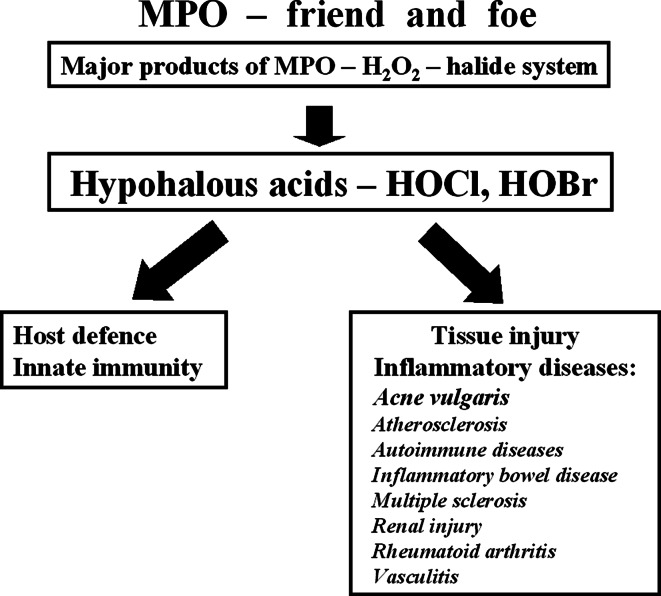
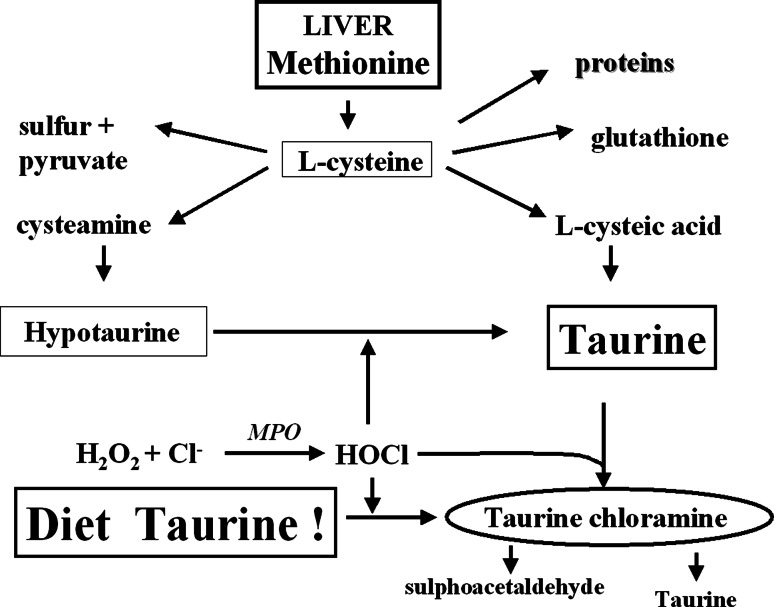
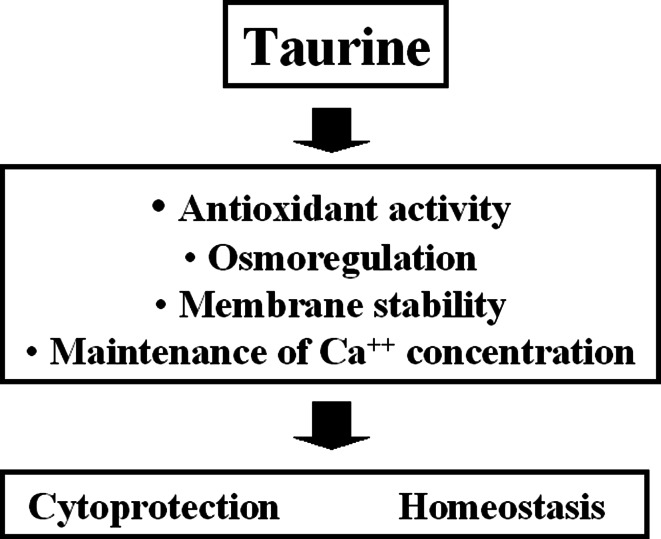
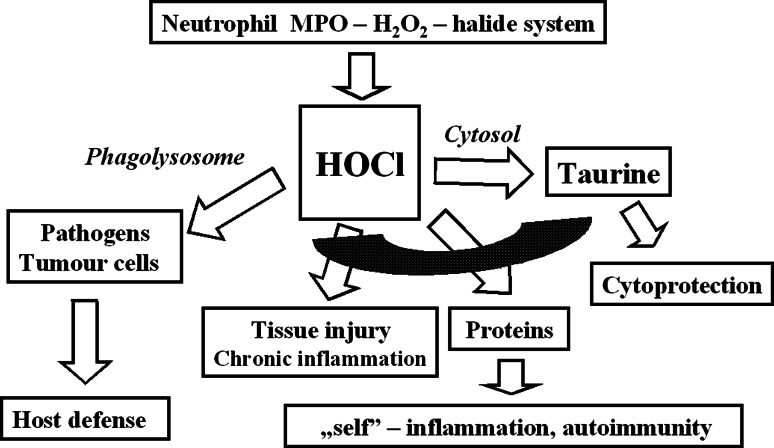
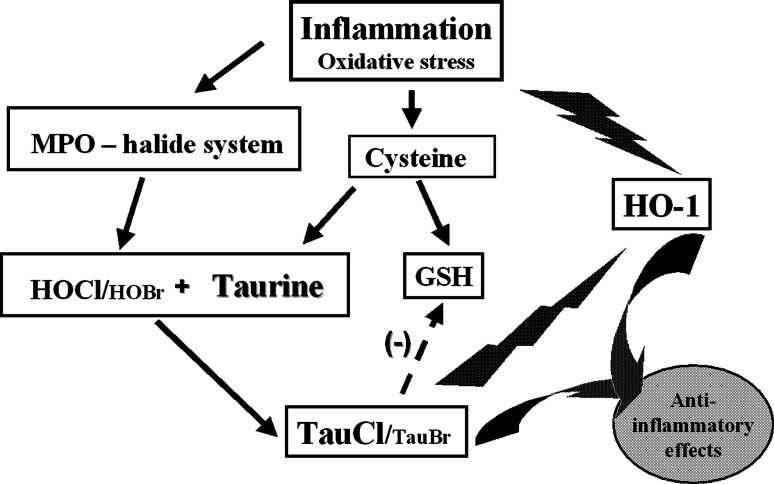
Taurine (2-aminoethanesulfonic acid) is the most abundant free amino acid in humans and plays an important role in several essential biological processes such as bile acid conjugation, maintenance of calcium homeostasis, osmoregulation and membrane stabilization. Moreover, attenuation of apoptosis and its antioxidant activity seem to be crucial for the cytoprotective effects of taurine. Although these properties are not tissue specific, taurine reaches particularly high concentrations in tissues exposed to elevated levels of oxidants (e.g., inflammatory cells). It suggests that taurine may play an important role in inflammation associated with oxidative stress. Indeed, at the site of inflammation, taurine is known to react with and detoxify hypochlorous acid generated by the neutrophil myeloperoxidase (MPO)-halide system. This reaction results in the formation of less toxic taurine chloramine (TauCl). Both haloamines, TauCl and taurine bromamine (TauBr), the product of taurine reaction with hypobromous acid (HOBr), exert antimicrobial and anti-inflammatory properties. In contrast to a well-documented regulatory role of taurine and taurine haloamines (TauCl, TauBr) in acute inflammation, their role in the pathogenesis of inflammatory diseases is not clear. This review summarizes our current knowledge concerning the role of taurine, TauCl and TauBr in the pathogenesis of inflammatory diseases initiated or propagated by MPO-derived oxidants. The aim of this paper is to show links between inflammation, neutrophils, MPO, oxidative stress and taurine. We will discuss the possible contribution of taurine and taurine haloamines to the pathogenesis of inflammatory diseases, especially in the best studied example of rheumatoid arthritis.
Overview
The claims and statistics of this paper haven’t been checked yet.
Free: it reads the open-access text and checks the first 5 claims that cite a source we can check. Create a free account to check every claim.
Integrity signals
Registry
Cites
Statistics
Figures
Verification
Claims the paper makes
The claims and statistics of this paper haven’t been checked yet.
Free: it reads the open-access text and checks the first 5 claims that cite a source we can check. Create a free account to check every claim.
Claims other papers make about this one
Each is checked against this paper’s own text: does it say what the citing paper says it does?
The cited source says what the claim attributes to it.
In the citing paper
“Strikingly, neutrophils represent a large reservoir of free taurine compromising approximately 50% of the cellular amino acid/amino acid-derivative pool thought to be involved in direct chemical protection against cytotoxic consequences of the respiratory burst associated with microbicidal HOCl formation (114).”
From Hypochlorous Acid: From Innate Immune Factor and Environmental Toxicant to Chemopreventive Agent Targeting Solar UV-Induced Skin Cancer (2022) · cites this paper as [114]
Self-check
Percentages, sums and reported differences re-computed from the paper’s own numbers.
The self-check needs the paper’s full text.
Citations
Cites
Bacterial Biofilms: A Common Cause of Persistent Infections
Costerton, J. W., Stewart, P. S., & Greenberg, E. P. (1999) · Science · doi:10.1126/science.284.5418.1318 · Cited by 12,167 · cited 2×
“Recently, there has been a tremendous interest in the role of biofilms in chronic infectious diseases and in the resistance of biofilms to antibiotics, disinfectants and phagocytosis (Costeron et al. 1991).”
BackgroundTissue Destruction by Neutrophils
Epstein, F. H., & Weiss, S. J. (1989) · New England Journal of Medicine · doi:10.1056/nejm198902093200606 · Cited by 3,950 · cited 9×
“On the other hand, overproduction of these oxidants and insufficient neutralization by antioxidants may lead to the development of oxidative stress and chronic inflammation (Smith 1994; Weiss 1988).”
BackgroundInfluentialTissue Destruction by Neutrophils
(1989) · New England Journal of Medicine · doi:10.1056/nejm198908033210513 · Cited by 3,631
Biofilm formation as microbial development
O'Toole, G., Kaplan, H. B., & Kolter, R. (2000) · Annual Review of Microbiology · doi:10.1146/annurev.micro.54.1.49 · Cited by 3,571 · cited 1×
“As microbial biofilms are the most common mode of growth of bacteria and fungi in nature (O’Toole et al. 2000), it is reasonable to study whether TauCl and TauBr are able to kill bacteria hidden in a biofilm or destroy a protective exopolymeric matrix of growing biofilms.”
BackgroundGregersen, P. K., Silver, J., & Winchester, R. J. (1987) · Arthritis & Rheumatism · doi:10.1002/art.1780301102 · Cited by 2,599 · cited 2×
“, Porphyromonas gingivalis infection) are generally accepted as participating in disease development, while repeated activation of innate immunity and deregulated adaptive immunity are thought to contribute to inflammation chronicity and self-tolerance breakdown (Gregersen et al. 1987; Detert et al. 2010; Gierut et al…”
BackgroundPhysiological actions of taurine
Huxtable, R. J. (1992) · Physiological Reviews · doi:10.1152/physrev.1992.72.1.101 · Cited by 2,595 · cited 1×
“Taurine tissue distribution is characterized by low concentrations of taurine in the plasma and extracellular fluids (ranging from 10 to 100 lM) and high intracellular concentrations of taurine reaching up to 50 mM, depending on the cell type (Huxtable 1992; Learn et al. 1990).”
BackgroundMyeloperoxidase: friend and foe
Klebanoff, S. J. (2005) · Journal of Leukocyte Biology · doi:10.1189/jlb.1204697 · Cited by 2,282 · cited 2×
“It suggests that taurine may play an important role in inflammation associated with oxidative stress.”
BackgroundFibroblast‐like synoviocytes: key effector cells in rheumatoid arthritis
Bartok, B., & Firestein, G. S. (2010) · Immunological Reviews · doi:10.1111/j.0105-2896.2009.00859.x · Cited by 1,906 · cited 2×
“age to the articular cartilage and subchondral bone (Firestein 2009; Bartok and Firestein 2010).”
BackgroundIL-1 pathways in inflammation and human diseases
Gabay, C., Lamacchia, C., & Palmer, G. (2010) · Nature Reviews Rheumatology · doi:10.1038/nrrheum.2010.4 · Cited by 897 · cited 1×
“The biological activity of IL-1b is counteracted by IL-1Ra, but for successful blockade a large molecular excess (100-fold to 1,000-fold) of IL-1Ra is required (Gabay et al. 2010).”
BackgroundMyeloperoxidase-Halide-Hydrogen Peroxide Antibacterial System
Klebanoff, S. J. (1968) · Journal of Bacteriology · doi:10.1128/jb.95.6.2131-2138.1968 · Cited by 815 · cited 4×
“In neutrophil phagolysosomes, myeloperoxidase (MPO) uses H2O2 to convert chloride ion to HOCl, or bromide ion to HOBr (Klebanoff 1968; Thomas 1979; Henderson et al. 2001)”
BackgroundInfluential
Research works printed but not linked: 2
- Marcinkiewicz J, Kontny E (2012) Taurine, taurine derivatives and immune system. In: A El Idrissi, W L’Amoreaux (eds) Taurine in health and disease, Transworld Research Network Chapter 6, 2011: 000–000 ISBN:978-81-7895-520-9
- Marcinkiewicz J Grabowska A Bereta J Stelmaszyńska T Taurine chloramine a product of activated neutrophils, inhibits in vitro the release of tumor necrosis factor in activated RAW 264.7 cells J Leukoc Biol 1995 54 119 7499964
Cited by
Items 401–500 of 581
Li, L., Zhao, S., Xu, L., Su, Y., & Ding, L. (2020) · Journal of Separation Science · doi:10.1002/jssc.201901322 · Cited by 4
Machine Learning Strategies to Distinguish Oral Cancer from Periodontitis Using Salivary Metabolites
Romm, E. L., Li, J., Kouznetsova, V. L., & Tsigelny, I. F. (2020) · Advances in intelligent systems and computing · doi:10.1007/978-3-030-55190-2_38 · Cited by 4
Park, J., Roy, V. C., Han, J., & Chun, B. (2023) · Journal of Applied Phycology · doi:10.1007/s10811-023-02999-w · Cited by 4
“Taurine is a vital amino acid that plays an essential role in maintaining several physiological functions in the human body (Marcinkiewicz and Kontny 2014).”
Taurine modulates host cell responses to Helicobacter pylori VacA toxin
Westland, M. D., Schrimpe‐Rutledge, A. C., Codreanu, S. G., Sherrod, S. D., MCLEAN, J. A. J., McClain, M. S., & Cover, T. L. (2024) · Infection and Immunity · doi:10.1128/iai.00224-24 · Cited by 4
“Taurine contributes to numerous intracellular processes, including roles in protection against osmotic stress (46–48) and oxidative stress (49, 50) and regulation of fatty acid β-oxidation (51).”
BackgroundRole of gut microbial-derived metabolites and other select agents on adipocyte browning
Nayak, A., Panda, S. S., Dwivedi, I., Meena, S., & Aich, P. (2024) · Biochemical and Biophysical Research Communications · doi:10.1016/j.bbrc.2024.150518 · Cited by 4
Untargeted Salivary Metabolomics and Proteomics: Paving the Way for Early Detection of Periodontitis
Amato, M., Polizzi, A., Blasi, A., Grippaudo, C., & Isola, G. (2025) · Applied Sciences · doi:10.3390/app15126642 · Cited by 4
Chen, X., Hou, X., Yang, M., Wang, J., Yin, J., Han, H., Wang, J., & Wang, C.-H. (2021) · Aquaculture Reports · doi:10.1016/j.aqrep.2021.100650 · Cited by 4
Mogal, M. R., Sompa, S. A., Junayed, A., Mahmod, M. R., Abedin, M. Z., & Sikder, M. A. (2022) · Biochemistry and Biophysics Reports · doi:10.1016/j.bbrep.2022.101219 · Cited by 4
“In humans, taurine and taurine derivatives are considered possible medicines against infectious and chronic inflammatory diseases [38].”
BackgroundNMR-based metabolomic analysis for the effects of moxibustion on imiquimod-induced psoriatic mice
Huang, F., Zhang, T., Li, B., Wang, S., Xu, C. Q., Huang, C., & Lin, D. (2022) · Journal of Ethnopharmacology · doi:10.1016/j.jep.2022.115626 · Cited by 4
Bellmann‐Weiler, R., Maass, V., Arnitz, R., Weiß, G., Maass, M., & Nagl, M. (2018) · Journal of Medical Microbiology · doi:10.1099/jmm.0.000815 · Cited by 4
Taurine supplement makes animals live longer — what it means for people is unclear
Valero, M. V. (2023) · Nature · doi:10.1038/d41586-023-01910-4 · Cited by 4
Yang, Y., Yang, H., Tian, X., Jian, W., Muzaffar, N., Le, G., Xie, Y., Peng, L., & Xu, Y. (2024) · Journal of Functional Foods · doi:10.1016/j.jff.2024.106612 · Cited by 3
Deutz, N. E. P., Have, G. A. M. T., Nghiem, P. P., Mackey, M. L., Rice, S. A., Thaden, J. J., Horner, M. B. W., & ENGELEN, M. P. K. J. (2025) · Clinical Nutrition · doi:10.1016/j.clnu.2025.07.026 · Cited by 3
“Taurine levels are high in tissues exposed to elevated levels of oxidants like inflammatory cells, suggesting a role in innate immunity [21].”
Yang, J., Wang, H. S., Fan, X., Wang, J., Zhao, J., & Xu, Q. (2025) · Aquaculture Nutrition · doi:10.1155/anu/9641984 · Cited by 3
Facchinetti, R., Valenza, M., Ciarla, C., Steardo, L., Serviddio, G., Palombelli, G., Verkhratsky, A., Steardo, L., Canese, R., Cassano, T., et al. (2026) · Biomedicine & Pharmacotherapy · doi:10.1016/j.biopha.2025.118965 · Cited by 3
Wozniczka, C. M., & Weaver, D. F. (2026) · NeuroSci · doi:10.3390/neurosci7010013 · Cited by 4
“Taurine plays many roles in the CNS, including cryoprotection, bile acid conjugation, calcium balance, osmoregulation, and membrane stabilization [229,230,234].”
Taurine suppresses gastric intestinal metaplasia in patient-derived organoids and Atp4a -/- mice
Liu, K., Zhang, X., Li, F.-Z., Zheng, P.-Y., & Mi, Y. (2026) · World Journal of Gastrointestinal Oncology · doi:10.4251/wjgo.v18.i2.114161 · Cited by 3
Valeri, E., Loupakis, F., Pasqualetti, G., Paccosi, E., Proietti‐De‐Santis, L., & Filippi, S. (2026) · Frontiers in Nutrition · doi:10.3389/fnut.2026.1773486 · Cited by 3
Ali, E., Hassan, ِ., Helal, M., Mohamed, D., & Elnabi, M. H. (2022) · Egyptian Society of Clinical Toxicology Journal · doi:10.21608/esctj.2022.172320.1016 · Cited by 3
Lee, S., Shin, J. Y., Kwon, O. S., Jun, S., & Kang, N. G. (2024) · Current Issues in Molecular Biology · doi:10.3390/cimb46080512 · Cited by 3
Li, X., Jiang, N., Li, Q., Zheng, K., Zhang, Y., Sang, X., Feng, Y., Chen, R., & Chen, Q. (2024) · Parasites & Vectors · doi:10.1186/s13071-024-06585-y · Cited by 3
Zheng, X., Yin, J., Zhao, L., Qian, Y., & Xu, J. Y. (2025) · Journal of Asthma · doi:10.1080/02770903.2025.2478504 · Cited by 3
“If these bacteria are present within cells that express tRNA ligase or if they influence the expression of this enzyme, there could be a correlation between the presence of Parachlamydiales and changes in the hypotaurine to taurine ratio (48,49).”
Lee, W., Han, E. J., Oh, S. J., Shin, E.-J., Han, H.-J., Jung, K., Heo, S., Kim, E.-A. L., Kim, K., Kwak, I., et al. (2019) · Advances in experimental medicine and biology · doi:10.1007/978-981-13-8023-5_54 · Cited by 3
Effect of Taurine on Viability and Proliferation of Murine Melanoma B16F10 Cells
Kim, Y.-S., Cheong, S. H., Hwang, J.-W., Lodhi, G., Lee, K., Choi, D., Song, H., Lee, S., Park, D.-J., Ahn, C., et al. (2015) · Advances in experimental medicine and biology · doi:10.1007/978-3-319-15126-7_15 · Cited by 3
Hafiludin, H., Andayani, S., Kartikaningsih, H., Firdaus, M., & Mojiono, M. (2021) · IOP Conference Series Earth and Environmental Science · doi:10.1088/1755-1315/744/1/012021 · Cited by 3
“Since first discovered, taurine has been extensively researched particularly regarding to its essential role in modulating lipid metabolism [8], preventing cardiac disease [9], acting as an antioxidant and its association in inflammation control [10], building immunity to prevent and cure diabetes [11].”
BackgroundKim, H. J., Kang, I. S., & Kim, C. (2022) · Advances in experimental medicine and biology · doi:10.1007/978-3-030-93337-1_5 · Cited by 3
Role of Dietary Supplements in Stress Amelioration of Teleost Fishes
Chakravarty, S., Prakash, S., & Kumar, S. (2022) · Springer eBooks · doi:10.1007/978-981-19-5500-6_19 · Cited by 3
Biocenosis of the vagina. Norm. Disruption. Restoration
Radzinskiy, V. E., Savicheva, A. M., Vorob'ev, S., Владимировна, С. Е., Shalepo, K. V., Budilovskaya, O. V., Husnutdinova, T., Krysanova, A. А., Guschin, A. E., Raevskaya, O., et al. (2023) · Publishing Center RIOR eBooks · doi:10.29039/978-5-907218-72-7 · Cited by 5
Liu, F., Liang, L., Luo, Z., Zhang, G., Zuo, F., & Wang, L. (2024) · Frontiers in Veterinary Science · doi:10.3389/fvets.2024.1393276 · Cited by 3
“It is involved in many biological processes, including anti-inflammatory, antioxidant activities, bile acid binding, membrane stabilization, osmoregulation, regulation of cellular calcium flux, and immunomodulation (17, 18).”
BackgroundSynthesis of N-Chloroamino Acids and Their Biological Activities in LPS Stimulated RAW 264.7 Cells
Kwon, Y. M., Kim, R. I., Kang, I. S., & Kim, C. (2017) · Advances in experimental medicine and biology · doi:10.1007/978-94-024-1079-2_53 · Cited by 3
THE EFFECT OF TAURINE ON METHOTREXATE INDUCED HEPATORENAL TOXICITY IN RATS.
Awad, M. (2018) · International Journal of Advanced Research · doi:10.21474/ijar01/6618 · Cited by 3
“Dietary cysteine, methionine and their metabolism in the liver are the main sources of taurine in the body (Marcinkiewicz and Kontny, 2014).”
BackgroundCheong, S. H., Hwang, J.-W., Lee, S., Kim, Y.-S., Sim, E.-J., Kim, E., You, B.-I., Lee, S., Park, D.-J., Ahn, C., et al. (2015) · Advances in experimental medicine and biology · doi:10.1007/978-3-319-15126-7_66 · Cited by 3
Muench, F., Retel, J. S., Jeuthe, S., h-Icí, D. O., van Rossum, B., Wassilew, K., Schmerler, P., Kühne, T., Berger, F. F., Oschkinat, H., et al. (2015) · NMR in Biomedicine · doi:10.1002/nbm.3415 · Cited by 3
“Various effects have been discussed for Tau, including a protective action against myocardial infarction by reducing calcium overload in myocytes (9) and anti-inflammatory effects (10).”
BackgroundTaurine and Oxidative Stress in HIV
Burini, R. C., Borges‐Santos, M. D., Moreto, F., & Yu, Y. M. (2017) · Elsevier eBooks · doi:10.1016/b978-0-12-809853-0.00015-8 · Cited by 3
Samandari, A., Sanjideh, F., Faramarzi, M., Banitalebi, E., & Ghahfarrokhi, M. M. (2021) · Research Square · doi:10.21203/rs.3.rs-382891/v1 · Cited by 3
Inorganic Polyphosphate Relieves Ulcerative Colitis by Modulating the Gut Microbiota and Metabolites
Wang, Z., Zhao, J., He, S., Li, R., Wang, X., Yan, C., Zhao, J., & Wei, W. (2025) · ACS Applied Bio Materials · doi:10.1021/acsabm.5c01160 · Cited by 2
Clinical implications of taurine in breast cancer
Chen, S., & Chen, L. (2025) · Biochemistry and Biophysics Reports · doi:10.1016/j.bbrep.2025.102315 · Cited by 2
“These derivatives protect phagocytic cells from self-oxidative injury [52, 53] (Fig.”
Serum metabolomics identifies novel prognostic biomarkers in amanita poisoning
Zhu, D., Zhong, J., Liu, Y., Zhang, S., & Zou, L. (2025) · Frontiers in Pharmacology · doi:10.3389/fphar.2025.1716911 · Cited by 2
Inhalation of N-Chlorotaurine Is an Effective Treatment of Aspergillus fumigatus Pneumonia in Mice
Speth, C., Rambach, G., Windisch, A., Falbesoner, N., Schatz, C., Schäfer, G., & Nagl, M. (2025) · Journal of Innate Immunity · doi:10.1159/000550140 · Cited by 2
“Furthermore, based on NCT’s known anti-inflammatory properties, for instance in arthritis, colitis, pneumonia, skin inflammation, and damage by immune-suppression [2, 16–19,”
Taurine is a natural suppressor of urea cycle via targeting ASL
Rao, K., Zheng, K., Sun, Y., & He, J. (2026) · Cell Death Discovery · doi:10.1038/s41420-026-02959-6 · Cited by 2
Wang, K., Ma, C.-H., Khoramjoo, M., Kung, J. Y., & Oudit, G. Y. (2026) · BMC Infectious Diseases · doi:10.1186/s12879-026-13009-y · Cited by 2
“Release of taurine chloramine from neutrophil apoptosis suppresses the overproduction of proinflammatory cytokines, including IL-1β, TNF-α, IL-6, and IL-8 [73].”
Zhou, J., Dai, D., Fu, Y., Zhang, H., Qi, G., & Wang, J. (2026) · Journal of Animal Science and Biotechnology/Journal of animal science and biotechnology · doi:10.1186/s40104-026-01377-z · Cited by 2
“In this context, the elevation of circulating taurine-conjugated bile acids and taurine may be relevant to inflammatory regulation [45, 46], however, mechanistic signaling pathways were not directly tested in this study.”
Fermented fish products and health aspects
Sharma, B. R., Ali, A. M. M., & Bavisetty, S. C. B. (2022) · Elsevier eBooks · doi:10.1016/b978-0-323-89875-1.00002-x · Cited by 2
Activity of N-Chlorotaurine against Periodontal Pathogens
Kowalczyk, K., Coraça-Huber, D. C., Wille-Kollmar, W., Berktold, M., & Nagl, M. (2024) · International Journal of Molecular Sciences · doi:10.3390/ijms25158357 · Cited by 2
Dorostghoal, M., Dayer, M. R., & Biabi, N. (2024) · Gene Cell and Tissue · doi:10.5812/gct-155560 · Cited by 2
“It also exhibits antioxidant, anti-inflammatory, hepatoprotective, antidiabetic, antimicrobial, and antitumor properties (15, 16).”
Shirzad-Yazdi, N., Shorafa, E., Abootalebi, S. N., Heidari, R., Hojabri, K., Doostfatemeh, M., Masjedi, F., Vazin, A., & Shafiekhani, M. (2025) · Frontiers in Pediatrics · doi:10.3389/fped.2024.1490247 · Cited by 2
Parikh, M. C., Patel, S. N., Shen, Y., & Lau‐Cam, C. A. (2015) · Advances in experimental medicine and biology · doi:10.1007/978-3-319-15126-7_25 · Cited by 2
The Effect of Taurine Intake among Korean College Students: Serum Biochemistry and Blood Hematology
Choi, W.-S., & Lee, J. (2018) · Korean Journal of Clinical Laboratory Science · doi:10.15324/kjcls.2018.50.3.236 · Cited by 2
“Ito 등[14]과 Marcinkiewicz 와 Kontny[16]는 타 우린이 백혈구에 고농도로 가지고 있어 염소화 산화제를 제거 하는 역할을 하며 monocyte, lymphocyte 백분율, segmented neutrophil 백분율, eosinophil을 포함한 PLT 및 모든 백혈구 가 고농도로 가지고 있어 혈액의 독성 산화제로부터 백혈구를 보호하고 염증을 억제하는데 중요 역할을 한다고 보고 한 내용 과 유사한 결과를 보였다.”
Lee, W., Han, E. J., Shin, E.-J., Han, H.-J., Ahn, G., & Cha, S. (2019) · Advances in experimental medicine and biology · doi:10.1007/978-981-13-8023-5_62 · Cited by 2
Doba, S., & Бузлама, А. В. (2021) · Research Journal of Pharmacy and Technology · doi:10.52711/0974-360x.2021.00754 · Cited by 2
Rana, K., Chongtham, N., Bisht, M. S., Patial, A., & Attri, S. V. (2021) · Asian Journal of Pharmaceutical and Clinical Research · doi:10.22159/ajpcr.2021.v14i10.42606 · Cited by 2
“Taurine is linked with growth and functions of retina, skeletal, cardiovascular muscle, and central nervous system with plentiful protective bioactive functions [36] and has antioxidant, antimicrobial, and anti-inflammatory properties [9,10].”
BackgroundExamination of Taurine Chloramine and Taurine on LPS-Induced Acute Pulmonary Inflammatory in Mice
Nguyen, K. H., Murakami, S., Schaffer, S. W., & Ito, T. (2022) · Advances in experimental medicine and biology · doi:10.1007/978-3-030-93337-1_2 · Cited by 2
Phytomolecules and Metabolomics of Immunomodulation: Recent Trends and Advances
Mediani, A., Kamal, N., Pantami, H. A., Saleh, M. S. M., Al‐Mekhlafi, N. A., Ismail, N. H., & Abas, F. (2022) · Springer eBooks · doi:10.1007/978-981-16-8117-2_5 · Cited by 2
Amino acids: Specific functions
Wu, G. (2022) · Elsevier eBooks · doi:10.1016/b978-0-12-821848-8.00049-4 · Cited by 2
Sun, Y., Dai, S., Tao, J., Li, Y., He, Z., Liu, Q., Zhao, J., Deng, Y., Kang, J., Zhang, X., et al. (2021) · Aging · doi:10.18632/aging.202587 · Cited by 2
The effect of amino acids on the bladder cycle: a concise review
Çakıcı, Ö. U., & Dinçer, S. (2021) · Amino Acids · doi:10.1007/s00726-021-03113-5 · Cited by 1
Lü, C., Gao, Z., Zhang, S., Du, K., Xu, D., Dong, W., Zhang, Y., & Lei, X. (2024) · PeerJ · doi:10.7717/peerj.18506 · Cited by 1
Szafrański, S. P., Joshi, A., Steglich, M., Yang, I., Qu, T., Behrens, W., Muthukumarasamy, U., Melidis, D. P., Schaefer-Dreyer, P., Grischke, J., et al. (2026) · mSystems · doi:10.1128/msystems.00754-25 · Cited by 2
“Taurine, a ubiquitous sulfonate metabolite, accumulates in inflammatory lesions (84, 85).”
Koko, V., Nguyen, V., Avedissian, S. N., Son, D., Trinh, V., Tran, K., Do, D. H., Tran, T. M., Hoang, L., Wang, Z., et al. (2025) · Infectious Diseases and Therapy · doi:10.1007/s40121-025-01245-9 · Cited by 1
Wang, M., Mu, Q., Jiang, Y., Jing, Y., Zhao, Y., & Han, X. (2025) · Mediators of Inflammation · doi:10.1155/mi/6610564 · Cited by 1
Moore, J. A., Cousins, A. L., Taylor, R., Griffiths, A. R., & Young, H. A. (2026) · Foods · doi:10.3390/foods15040634 · Cited by 1
“While TAU is not incorporated into proteins, it has physiological significance due to anti-inflammatory properties [18] and its role in regulating blood pressure [19] and insulin sensitivity [20].”
Impaired taurine transport contributes to bronchopulmonary dysplasia: a systems biology analysis
Jing, X., Wang, Y., Roethle, M. F., Jia, S., Teng, M., Konduri, G. G., Hessner, M. J., Pritchard, K. A., Day, B. W., Jin, Y., et al. (2026) · American Journal of Respiratory Cell and Molecular Biology · doi:10.1093/ajrcmb/aanag033 · Cited by 1
Mahmoud, S. M., Abdel-Kareem, R. H., Saadawy, S. F., Mahboub, H. H. H., Abdelfattah, A., & soliman, A. H. M. (2026) · Tissue and Cell · doi:10.1016/j.tice.2026.103570 · Cited by 1
Maternal diet shapes neonatal microbiome ontogenesis and neurometabolic resilience
Kadyan, S., Park, G., Khalili, L., Patoine, C., Mayonu, M., Wang, B., Salazar, G., Yamashiro, Y., & Nagpal, R. (2026) · Gut Microbes · doi:10.1080/19490976.2026.2684074 · Cited by 2
“72 Our brain metabolomics data revealed that both PUFA groups had higher serine, a metabolite essential for neuronal differentiation and survival.”
Lewis, H., Perret, M. J., Xu, Y., Ribeiro, R. S. A., Corrêa, R. D. S., Mafort, T. T., Santos, A. P., Rufino, R., Rodrigues, L. S., & Borah, K. (2026) · Frontiers in Medicine · doi:10.3389/fmed.2026.1793040 · Cited by 1
Taurine and Metabolic Diseases: Molecular Mechanisms and Therapeutic Implications
Ma, X., Rao, Z., & Zheng, L. (2026) · Food Frontiers · doi:10.1002/fft2.70354 · Cited by 1
Cernei, N., Heger, Z., Veselý, Š., Zítka, O., Adam, V., & Kizek, R. (2014) · Klinická biochemie a metabolismus · doi:10.61568/kbm.2014.032 · Cited by 1
Kumar, B. P., Azeemuddin, M. M., Rao, R. P., Rafiq, M., Ashok, B. K., Thippeswamy, A. H. M., Jagadeesh, M., Verma, P., Anturlikar, S. D., Azher, M., et al. (2017) · Journal of Food Biochemistry · doi:10.1111/jfbc.12486 · Cited by 1
Acute effect of single introduction of taurine: specific or nonspecific?
Шейбак, В. М., Pauliukavets, A. Y., Дорошенко, Е. М., & Olekhnovich, E. A. (2019) · Vestnik of Vitebsk State Medical University · doi:10.22263/2312-4156.2019.2.37 · Cited by 1
Hepatoprotective Activity of a Taurine-Rich Water Soluble Extract from Octopus vulgaris Meat
Lee, W., Han, E. J., Park, E., Shin, E.-J., Han, H.-J., Jung, K., Heo, S., Kim, E.-A. L., Kim, K., Kwak, I., et al. (2019) · Advances in experimental medicine and biology · doi:10.1007/978-981-13-8023-5_60 · Cited by 1
Clostridioides difficile: Sometimes It Pays To Be Difficult
Jenior, M. L., & Papin, J. A. (2020) · Cell Host & Microbe · doi:10.1016/j.chom.2020.08.010 · Cited by 1
Glick, N. R., & Fischer, M. H. (2017) · Nutrition and Metabolic Insights · doi:10.1177/1178638817716457 · Cited by 1
Distinct Metabolite Profile in Pemphigus Vulgaris
Boch, K., Sharma, A., Folberth, J., Zillikens, D., Schmidt, E., Bieber, K., Schwaninger, M., Ludwig, R. J., & Dempfle, A. (2022) · Journal of Investigative Dermatology · doi:10.1016/j.jid.2022.04.031 · Cited by 1
Serum Amino Acid Profile in Chronic Sinusitis
Atila, N. E., & Atila, A. (2022) · Clinical and Experimental Health Sciences · doi:10.33808/clinexphealthsci.916590 · Cited by 1
Protective Effect of Taurine Against Bisphenol A -Induced Hepatotoxicity in Albino Rats
Allah, E. M. A., Hilal, M., Mohamed, D. S., Hassan, A. O., & Said, A. M. (2022) · The Egyptian Journal of Hospital Medicine · doi:10.21608/ejhm.2022.268121 · Cited by 1
“The previous result could be explained by, taurine has been shown to protect cells against the cytotoxic effects of inflammation associated with oxidative stress and to provide anti-inflammatory effects((26)).”
BackgroundThe preventive effect of Taurine in early stage of colon chemical carcinogenesis
Chin, C. M., Jornada, D. H., Chiba, D. E., Scarim, C. B., de Andrade, C. R., & Gabriel, E. A. (2021) · International Journal of Complementary & Alternative Medicine · doi:10.15406/ijcam.2021.14.00568 · Cited by 1
TAURİN TEDAVİSİNİN DENEYSEL MİYOZİT OLUŞTURULMUŞ RATLAR ÜZERİNDEKİ YARARLI ETKİLERİ
Koca, N. T., & Celik, T. O. (2023) · Kırıkkale Üniversitesi Tıp Fakültesi Dergisi · doi:10.24938/kutfd.1385018 · Cited by 1
Tuttle, T. D. (2025) · Elsevier eBooks · doi:10.1016/b978-0-443-13803-4.00007-0 · Cited by 1
N-chlorotaurine does not alter structural tendon properties: a comparative biomechanical study
Runer, A., Schneider, F., Wawer, K., Gruber, K., Arora, R. R., Nagl, M., & Schmoelz, W. (2025) · Archives of Orthopaedic and Trauma Surgery · doi:10.1007/s00402-025-05851-7 · Cited by 1
Autuoro, B. (2018) · Open Archive Toulouse Archive Ouverte (University of Toulouse) · Cited by 1
Bacteria detect neutrophils via a system that responds to hypochlorous acid and flowPreprint
Foik, I. P., Kasallis, S. J., Shu, R., Abbondante, S., Marshall, M. E., Urban, L. A., Duong, L., Huang, A. P., Pearlman, E. M., Downing, T. L., et al. (2022) · bioRxiv (Cold Spring Harbor Laboratory) · doi:10.1101/2022.02.01.478687 · Cited by 1
Hou, L., Che, Y., Sun, F., & Wang, Q. (2021) · Amino Acids · doi:10.1007/s00726-021-02944-6 · Cited by 1
Bacteria detect neutrophils via a system that responds to hypochlorous acid and flowPreprint
Foik, I. P., Kasallis, S. J., Shu, R., Abbondante, S., Marshall, M. E., Urban, L. A., Duong, L., Huang, A. P., Pearlman, E. M., Downing, T. L., et al. (2026) · eLife · doi:10.7554/elife.107784 · Cited by 1
Al-Shalan, H. A. M. (2022) · Murdoch University Research Portal · Cited by 1
Kim, S. Y., You, J. S., Lee, Y. J., Chang, K. J., Cho, H. J., & Kim, S. H. (2015) · Advances in experimental medicine and biology · doi:10.1007/978-3-319-15126-7_68
Figueiredo-Rinhel, A. S. G. (2016) · Digital Library of Theses and Dissertations (Universidade de São Paulo) · doi:10.11606/t.60.2016.tde-17112015-151553
Taurine and vascular tone modulation
Roşca, A. E., Voiculescu, S. E., Popescu, B. O., & Zăgrean, A. (2015) · Journal of Translational Medicine and Research · doi:10.21614/jtmr-20-4-56
“Thus, it has been shown that taurine can prevent atherosclerosis development by ameliorating lipid profile (5), lowering homocysteine plasmatic concentration (6), reducing intima inflammation and oxidative stress (7,8), decreasing endothelial dysfunction, modulating vascular reactivity and inhibiting vascular muscle c…”
BackgroundBicalutamida: um contributo para a investigação do processo de cristalização e de co-cristalização
Rodrigues, A. L. F. (2016) · Portuguese National Funding Agency for Science, Research and Technology (RCAAP Project by FCT)
El-Gohari, K., Bahei-Eldin, I. A., Habib, E. K., Saad, S., Rady, H. Y., & Said, A. M. A. (2017) · The Egyptian Journal of Anatomy · doi:10.21608/ejana.2017.5711
Molecular Structure Changes Of Rat’s Retina After Sodium Iodate Injection and The Effect Of Taurine
gohary, M. I. E., Aly, E. M., & Malash, A. E. (2018) · Egyptian Journal of Biomedical Engineering and Biophysics · doi:10.21608/ejbbe.2018.3898.1019
Aksun, S., Yürekli, B. Ş., Dönmez, K., Çakır, H., Girgin, S., Damar, E., Kestellı, M., Aksun, M., & Yurekli, I. I. (2019) · Journal of Cardio-Vascular-Thoracic Anaesthesia and Intensive Care Society · doi:10.5222/gkdad.2019.97659
Драчук, В. М., ЗАМОРСКИЙ, И. И., & Горошко, А. М. (2018) · Electronic archive of the library (Vitebsk State Medical University)
Al-Mshhdani, B. A. (2021) · UWA Profiles and Research Repository (University of Western Australia) · doi:10.26182/x6kn-cr56
Smolobochkin, А. V., Yakhshilikova, L. J., Gazizov, A. S., Вагапова, Л. И., Burilov, A. R., & Pudovik, M. A. (2020) · Chemistry of Heterocyclic Compounds · doi:10.1007/s10593-020-02746-w
The biosynthesis reaction of hypotaurine to taurine.
Grove, R. Q. (2018) · SHAREOK (University of Oklahoma; Oklahoma State University; Central Oklahoma University)
Host response in tuberculosis and BCG vaccination
Koeken, V. A. C. M. (2021) · Radboud Repository (Radboud University)
EVALUATION OF TAURINE’S NEUROPROTECTIVE EFFECTS ON SH-SY5Y CELLS UNDER OXIDATIVE STRESSPreprint
Rossato, R. C., Granato, A. E. C., Pinto, J. C., Moraes, C. D. G. D. O., Salles, G. N., & Soares, C. P. (2021) · bioRxiv (Cold Spring Harbor Laboratory) · doi:10.1101/2021.04.26.441504
Quantitative 1 H NMR analyses of immunometabolic modulation in human macrophages
Fuchs, A. L. (2019) · Montana State University ScholarWorks (Montana State University)
Lee, K. N. (2019) · Universiti Putra Malaysia Institutional Repository (Universiti Putra Malaysia)
Metadata
- Authors
- Marcinkiewicz, J., & Kontny, E.
- Affiliations
- Jagiellonian University (PL)
- National Institute of Geriatrics, Rheumatology and Rehabilitation (PL)
- Corresponding author
- Marcinkiewicz, Janusz
- Venue
- Amino Acids
- Published
- 2012-07-19
- Volume
- 46
- Issue
- 1
- Pages
- 7-20
- ISSN
- 0939-4451 (ISSN-L)
- 1438-2199
- PMC
- PMC3894431
- OpenAlex
- W1968690534
- Cited by
- 531
- References
- 106
- Citations by year
- 2026: 35 · 2025: 46 · 2024: 46 · 2023: 36 · 2022: 64 · 2021: 64 · 2020: 48 · 2019: 35 · 2018: 47 · 2017: 36 · 2016: 26 · 2015: 25 · 2014: 8 · 2013: 12 · 2012: 2
- FWCI
- 1.38
- Type
- journal article
- Language
- en
- Open access
- hybrid
- doi.org
- Licence
- cc-by
- Locations
- Amino Acids (publishedVersion, cc-by)
- Europe PMC (PubMed Central) (publishedVersion, cc-by)
- PubMed Central (publishedVersion, cc-by)
- PubMed (publishedVersion)
- Homo Politicus (Academy of Humanities and Economics in Lodz) (submittedVersion, cc-by-nc-nd)
- Homo Politicus (Academy of Humanities and Economics in Lodz) (submittedVersion)
- Jagiellonian University Repository (Jagiellonian University) (submittedVersion, cc-by-nc-nd)
- Funders
- Uniwersytet Jagielloński Collegium Medicum (K/ZDS/001008)
- Topics
- Life Sciences › Biochemistry, Genetics and Molecular Biology › Cell Biology › Aldose Reductase and Taurine
- Life Sciences › Immunology and Microbiology › Immunology › Neutrophil, Myeloperoxidase and Oxidative Mechanisms
- Health Sciences › Medicine › Biochemistry (medical) › Antioxidant Activity and Oxidative Stress
- Keywords
- taurine, taurine chloramine, inflammatory diseases, rheumatoid arthritis, myeloperoxidase, neutrophils, oxidative stress, hypochlorous acid, hypobromous acid, antimicrobial activity, anti-inflammatory activity, apoptosis, antioxidant activity, pathogenesis
- MeSH terms
- Animals, Anti-Infective Agents, Arthritis, Rheumatoid, Bile Acids and Salts, Calcium, Humans, Inflammation, Peroxidase, Taurine, Apoptosis, Osmoregulation
About these checks
Registry, retraction, Cites and statistics results are computed, not judged, with one exception: a printed reference that no index lists is read once by a model before it counts as a citation error. Claims are extracted by a model and kept only when their quote appears verbatim in the text; each cited source is then checked, with a model’s help, for whether it says what the claim relies on. Those verdicts can be wrong — read the claim’s quote and the cited source before relying on one.
Statistics and arithmetic are recomputed, not judged.
Confidence bands are shown only for fields calibrated on our annotated test set. None is calibrated yet, so no band is shown.
What counts as a claim ›How we measure confidence ›How we check this ›
Are you an author, or do you see a problem with this page? Request a review
Data sources
Bibliographic data: Semantic Scholar, OpenAlex, Crossref.
Contains information from the Semantic Scholar Academic Graph Datasets, made available under the ODC Attribution License (ODC-BY 1.0).
Semantic Scholar’s data is described in: Kinney, R., et al. (2023). The Semantic Scholar Open Data Platform. arXiv:2301.10140.
