

Taurine and inflammatory diseases
Open accessThe DOI matches its Crossref record; 107 of the 107 references it cites were found in a registry or an index.
Abstract
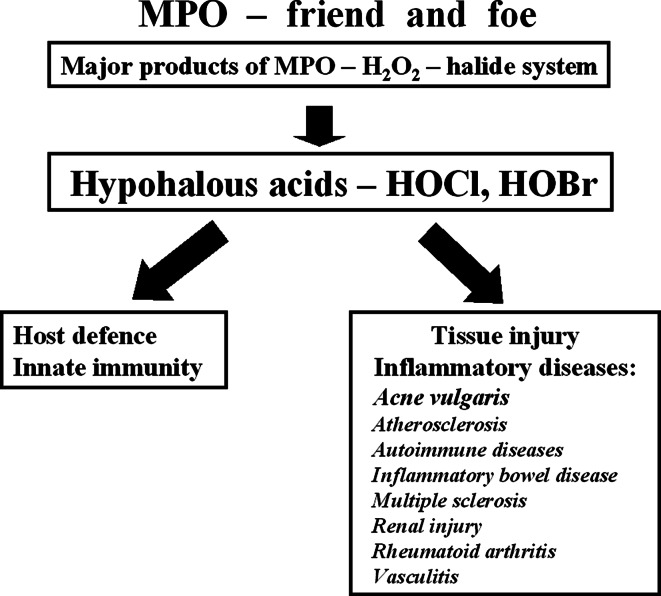
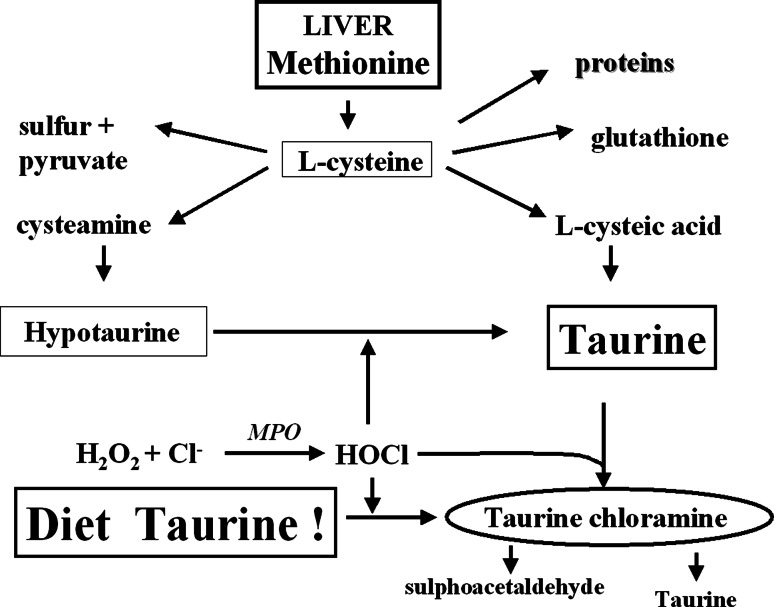
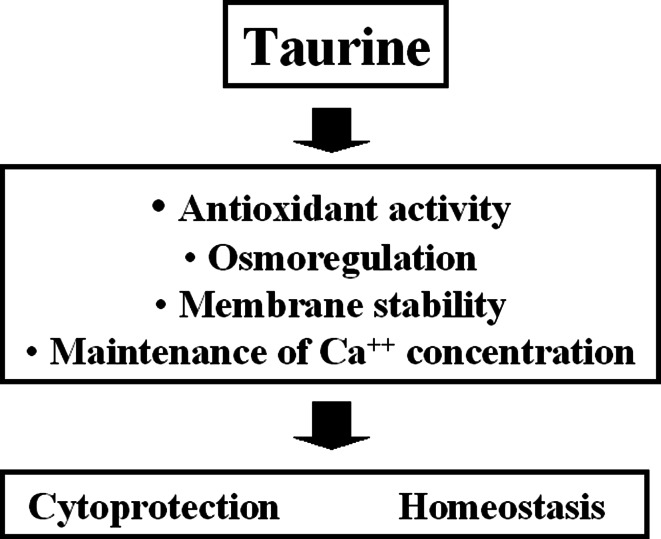
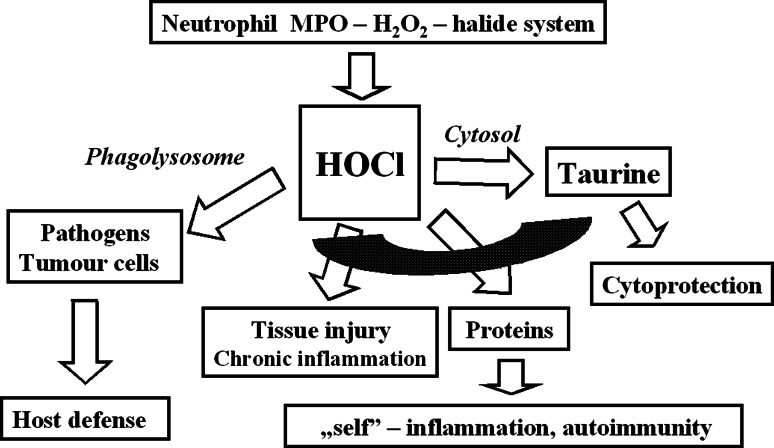
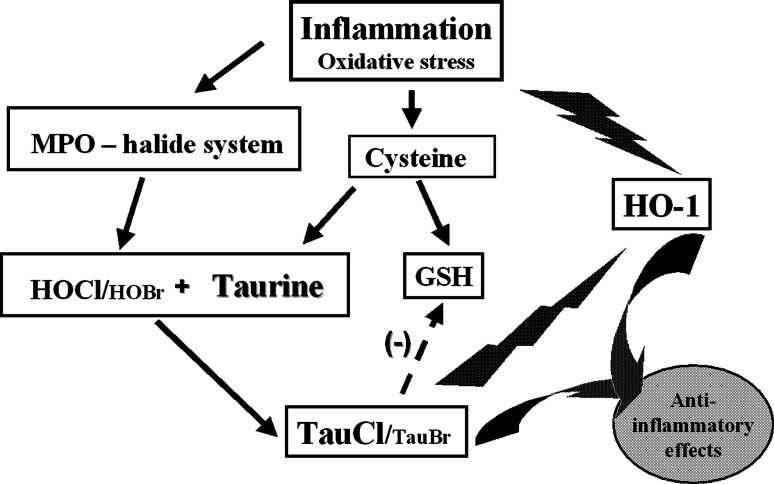
Taurine (2-aminoethanesulfonic acid) is the most abundant free amino acid in humans and plays an important role in several essential biological processes such as bile acid conjugation, maintenance of calcium homeostasis, osmoregulation and membrane stabilization. Moreover, attenuation of apoptosis and its antioxidant activity seem to be crucial for the cytoprotective effects of taurine. Although these properties are not tissue specific, taurine reaches particularly high concentrations in tissues exposed to elevated levels of oxidants (e.g., inflammatory cells). It suggests that taurine may play an important role in inflammation associated with oxidative stress. Indeed, at the site of inflammation, taurine is known to react with and detoxify hypochlorous acid generated by the neutrophil myeloperoxidase (MPO)-halide system. This reaction results in the formation of less toxic taurine chloramine (TauCl). Both haloamines, TauCl and taurine bromamine (TauBr), the product of taurine reaction with hypobromous acid (HOBr), exert antimicrobial and anti-inflammatory properties. In contrast to a well-documented regulatory role of taurine and taurine haloamines (TauCl, TauBr) in acute inflammation, their role in the pathogenesis of inflammatory diseases is not clear. This review summarizes our current knowledge concerning the role of taurine, TauCl and TauBr in the pathogenesis of inflammatory diseases initiated or propagated by MPO-derived oxidants. The aim of this paper is to show links between inflammation, neutrophils, MPO, oxidative stress and taurine. We will discuss the possible contribution of taurine and taurine haloamines to the pathogenesis of inflammatory diseases, especially in the best studied example of rheumatoid arthritis.
Overview
The claims and statistics of this paper haven’t been checked yet.
Free: it reads the open-access text and checks the first 5 claims that cite a source we can check. Create a free account to check every claim.
Integrity signals
Registry
Cites
Statistics
Figures
Verification
Claims the paper makes
The claims and statistics of this paper haven’t been checked yet.
Free: it reads the open-access text and checks the first 5 claims that cite a source we can check. Create a free account to check every claim.
Claims other papers make about this one
Each is checked against this paper’s own text: does it say what the citing paper says it does?
The cited source says what the claim attributes to it.
In the citing paper
“Strikingly, neutrophils represent a large reservoir of free taurine compromising approximately 50% of the cellular amino acid/amino acid-derivative pool thought to be involved in direct chemical protection against cytotoxic consequences of the respiratory burst associated with microbicidal HOCl formation (114).”
From Hypochlorous Acid: From Innate Immune Factor and Environmental Toxicant to Chemopreventive Agent Targeting Solar UV-Induced Skin Cancer (2022) · cites this paper as [114]
Self-check
Percentages, sums and reported differences re-computed from the paper’s own numbers.
The self-check needs the paper’s full text.
Citations
Cites
Bacterial Biofilms: A Common Cause of Persistent Infections
Costerton, J. W., Stewart, P. S., & Greenberg, E. P. (1999) · Science · doi:10.1126/science.284.5418.1318 · Cited by 12,167 · cited 2×
“Recently, there has been a tremendous interest in the role of biofilms in chronic infectious diseases and in the resistance of biofilms to antibiotics, disinfectants and phagocytosis (Costeron et al. 1991).”
BackgroundTissue Destruction by Neutrophils
Epstein, F. H., & Weiss, S. J. (1989) · New England Journal of Medicine · doi:10.1056/nejm198902093200606 · Cited by 3,950 · cited 9×
“On the other hand, overproduction of these oxidants and insufficient neutralization by antioxidants may lead to the development of oxidative stress and chronic inflammation (Smith 1994; Weiss 1988).”
BackgroundInfluentialTissue Destruction by Neutrophils
(1989) · New England Journal of Medicine · doi:10.1056/nejm198908033210513 · Cited by 3,631
Biofilm formation as microbial development
O'Toole, G., Kaplan, H. B., & Kolter, R. (2000) · Annual Review of Microbiology · doi:10.1146/annurev.micro.54.1.49 · Cited by 3,571 · cited 1×
“As microbial biofilms are the most common mode of growth of bacteria and fungi in nature (O’Toole et al. 2000), it is reasonable to study whether TauCl and TauBr are able to kill bacteria hidden in a biofilm or destroy a protective exopolymeric matrix of growing biofilms.”
BackgroundGregersen, P. K., Silver, J., & Winchester, R. J. (1987) · Arthritis & Rheumatism · doi:10.1002/art.1780301102 · Cited by 2,599 · cited 2×
“, Porphyromonas gingivalis infection) are generally accepted as participating in disease development, while repeated activation of innate immunity and deregulated adaptive immunity are thought to contribute to inflammation chronicity and self-tolerance breakdown (Gregersen et al. 1987; Detert et al. 2010; Gierut et al…”
BackgroundPhysiological actions of taurine
Huxtable, R. J. (1992) · Physiological Reviews · doi:10.1152/physrev.1992.72.1.101 · Cited by 2,595 · cited 1×
“Taurine tissue distribution is characterized by low concentrations of taurine in the plasma and extracellular fluids (ranging from 10 to 100 lM) and high intracellular concentrations of taurine reaching up to 50 mM, depending on the cell type (Huxtable 1992; Learn et al. 1990).”
BackgroundMyeloperoxidase: friend and foe
Klebanoff, S. J. (2005) · Journal of Leukocyte Biology · doi:10.1189/jlb.1204697 · Cited by 2,282 · cited 2×
“It suggests that taurine may play an important role in inflammation associated with oxidative stress.”
BackgroundFibroblast‐like synoviocytes: key effector cells in rheumatoid arthritis
Bartok, B., & Firestein, G. S. (2010) · Immunological Reviews · doi:10.1111/j.0105-2896.2009.00859.x · Cited by 1,906 · cited 2×
“age to the articular cartilage and subchondral bone (Firestein 2009; Bartok and Firestein 2010).”
BackgroundIL-1 pathways in inflammation and human diseases
Gabay, C., Lamacchia, C., & Palmer, G. (2010) · Nature Reviews Rheumatology · doi:10.1038/nrrheum.2010.4 · Cited by 897 · cited 1×
“The biological activity of IL-1b is counteracted by IL-1Ra, but for successful blockade a large molecular excess (100-fold to 1,000-fold) of IL-1Ra is required (Gabay et al. 2010).”
BackgroundMyeloperoxidase-Halide-Hydrogen Peroxide Antibacterial System
Klebanoff, S. J. (1968) · Journal of Bacteriology · doi:10.1128/jb.95.6.2131-2138.1968 · Cited by 815 · cited 4×
“In neutrophil phagolysosomes, myeloperoxidase (MPO) uses H2O2 to convert chloride ion to HOCl, or bromide ion to HOBr (Klebanoff 1968; Thomas 1979; Henderson et al. 2001)”
BackgroundInfluential
Research works printed but not linked: 2
- Marcinkiewicz J, Kontny E (2012) Taurine, taurine derivatives and immune system. In: A El Idrissi, W L’Amoreaux (eds) Taurine in health and disease, Transworld Research Network Chapter 6, 2011: 000–000 ISBN:978-81-7895-520-9
- Marcinkiewicz J Grabowska A Bereta J Stelmaszyńska T Taurine chloramine a product of activated neutrophils, inhibits in vitro the release of tumor necrosis factor in activated RAW 264.7 cells J Leukoc Biol 1995 54 119 7499964
Cited by
Review: taurine: a "very essential" amino acid.
Ripps, H., & Shen, W. (2012) · PubMed Central · Cited by 791
Effects and Mechanisms of Taurine as a Therapeutic Agent
Schaffer, S., & Kim, H. W. (2018) · Biomolecules & Therapeutics · doi:10.4062/biomolther.2017.251 · Cited by 414
“The product of the reaction between taurine and hypochlorous acid, taurine chloramine, also interferes with the inflammatory process (Kim and Cha, 2014; Marcinkiewicz and Kontny 2014).”
BackgroundProtective role of taurine against oxidative stress (Review)
Baliou, S., Adamaki, M., Ioannou, P., Pappa, A., Panayiotidis, M., Spandidos, D., Christodoulou, I., Kyriakopoulos, A., & Zoumpourlis, V. (2021) · Molecular Medicine Reports · doi:10.3892/mmr.2021.12242 · Cited by 343
“In the same context, the indirect anti‑oxidant capacity of taurine is manifested through the formation of taurine derivatives (N‑bromotaurine or N‑chlorotaurine), which have been produced from the reaction of taurine with either hypo‑ bromous acid (HOBr) or hypochlorous acid (HOCl) (26).”
The Role of Myeloperoxidase in Biomolecule Modification, Chronic Inflammation, and Disease
Davies, M. J., & Hawkins, C. L. (2020) · Antioxidants & Redox Signaling · doi:10.1089/ars.2020.8030 · Cited by 332
Scedosporium and Lomentospora: an updated overview of underrated opportunists
Ramirez-Garcia, A., Pellon, A., Rementeria, A., Buldain, I., Barreto-Bergter, E., Rollin-Pinheiro, R., de Meirelles, J. V., Xisto, M. I. D. S., Ranque, S., Havlicek, V., et al. (2018) · Medical Mycology · doi:10.1093/mmy/myx113 · Cited by 264
Taurine: the appeal of a safe amino acid for skeletal muscle disorders
De Luca, A., Pierno, S., & Camerino, D. C. (2015) · Journal of Translational Medicine · doi:10.1186/s12967-015-0610-1 · Cited by 253
“Taurine and human skeletal muscle Taurine has limited use in clinical settings although human use has been considered for specific diseases such as non-insulin dependent diabetes and related disorders, to treat alcohol withdrawal, congestive heart failure and arrhythmias, rheumatoid arthritis and other chronic inflamm…”
BackgroundTargeting Microglial α-Synuclein/TLRs/NF-kappaB/NLRP3 Inflammasome Axis in Parkinson’s Disease
Li, Y., Xia, Y., Yin, S., Wan, F., Hu, J., Kou, L., Sun, Y., Wu, J., Zhou, Q., Huang, J., et al. (2021) · Frontiers in Immunology · doi:10.3389/fimmu.2021.719807 · Cited by 230
Cao, T., Zhang, W., Wang, Q., Wang, C., Ma, W., Zhang, C., Ge, M., Tian, M., Yu, J., Jiao, A., et al. (2024) · Cell · doi:10.1016/j.cell.2024.03.011 · Cited by 227
Lowe, A. D., Bawazeer, S., Watson, D. G., McGill, S., Burchmore, R. J. S., Pomeroy, P. P., & Kennedy, M. W. (2017) · Scientific Reports · doi:10.1038/s41598-017-16187-7 · Cited by 225
Combined Signature of the Fecal Microbiome and Metabolome in Patients with Gout
Shao, T., Shao, L., Li, H., Xie, Z., He, Z., & Wen, C. (2017) · Frontiers in Microbiology · doi:10.3389/fmicb.2017.00268 · Cited by 215
“The gout-enriched taurine in gout patients can be absorbed and metabolized into bile acids and taurine haloamines in the intestine, which both play significant roles in inflammation (Marcinkiewicz and Kontny, 2014).”
BackgroundKang, H. K., Lee, H. H., Seo, C. H., & Park, Y. (2019) · Marine Drugs · doi:10.3390/md17060350 · Cited by 199
“Taurine has cytoprotective and immunomodulatory effects and is enriched in immune cells including lymphocytes, monocytes, and neutrophils [35].”
BackgroundMethodInfluentialKim, C., & Cha, Y.-N. (2014) · Amino Acids · doi:10.1007/s00726-013-1545-6 · Cited by 190
Surai, P. F., Earle-Payne, K., & Kidd, M. T. (2021) · Antioxidants · doi:10.3390/antiox10121876 · Cited by 179
“However, it seems likely that Tau’s interactions with the expression of transcription factors, including Nrf2 and NF-κB, and the improvement of adaptability to various stresses via vitagene activation deserve more attention.”
BackgroundInfluentialA 12‐month pilot study outcomes of vagus nerve stimulation in Crohn's disease
Sinniger, V., Pellissier, S., Fauvelle, F., Trocmé, C., Hoffmann, D., Vercueil, L., Cracowski, J., David, O., & Bonaz, B. (2020) · Neurogastroenterology & Motility · doi:10.1111/nmo.13911 · Cited by 179
Taurine: A Regulator of Cellular Redox Homeostasis and Skeletal Muscle Function
Seidel, U., Huebbe, P., & Rimbach, G. (2019) · Molecular Nutrition & Food Research · doi:10.1002/mnfr.201800569 · Cited by 176
He, X., Chen, H., Xu, C., Fan, J., Xu, W., Li, Y., Deng, H., & Shen, J. (2020) · Journal of Hazardous Materials · doi:10.1016/j.jhazmat.2020.122029 · Cited by 174
Che, Y., Hou, L., Sun, F., Zhang, C., Liu, X., Piao, F., Zhang, D., Li, H., & Wang, Q. (2018) · Cell Death & Disease · doi:10.1038/s41419-018-0468-2 · Cited by 152
Role of taurine in the pathogenesis of obesity
Murakami, S. (2015) · Molecular Nutrition & Food Research · doi:10.1002/mnfr.201500067 · Cited by 170
“[50] Marcinkiewicz, J.”
BackgroundPhysiological and molecular biochemical mechanisms of bile formation
Reshetnyak, V. I. (2013) · World Journal of Gastroenterology · doi:10.3748/wjg.v19.i42.7341 · Cited by 168
Andrés, C. M. C., Pérez de la Lastra, J. M., Juan, C. A., Plou, F. J., & Pérez-Lebeña, E. (2022) · International Journal of Molecular Sciences · doi:10.3390/ijms231810735 · Cited by 166
“sesses antimicrobial and anti-inflammatory activity [90].”
BackgroundThe Anti-Inflammatory Effect of Taurine on Cardiovascular Disease
Qaradakhi, T., Gadanec, L. K., McSweeney, K. R., Abraham, J. R., Apostolopoulos, V., & Zulli, A. (2020) · Nutrients · doi:10.3390/nu12092847 · Cited by 161
“HOCl acts as an endogenously produced antibacterial [165,166], antifungal [167], antiparasitic [118], and antiviral agent [118].”
BackgroundProteomic and metabolomic profiling of urine uncovers immune responses in patients with COVID-19
Bi, X., Liu, W., Ding, X., Liang, S., Zheng, Y., Zhu, X., Quan, S., Yi, X., Xiang, N., Du, J., et al. (2022) · Cell Reports · doi:10.1016/j.celrep.2021.110271 · Cited by 158
“Taurine and hypotaurine have antioxidant effects that can protect immune cells from oxidative stress damage (Learn et al., 1990; Marcinkiewicz and Kontny, 2014).”
BackgroundSong, B., Li, P., Yan, S., Liu, Y., Gao, M., Lv, H., Lv, Z., & Guo, Y. (2022) · Frontiers in Immunology · doi:10.3389/fimmu.2022.781934 · Cited by 155
“Taurine is a sulfur-containing amino acid in animals that has biological effects such as improving immune function, antioxidation, and lowering blood sugar (57, 58).”
BackgroundMilner, J. J., Rebeles, J., Dhungana, S., Stewart, D. A., Sumner, S. C. J., Meyers, M. H., Mancuso, P., & Beck, M. A. (2015) · The Journal of Immunology · doi:10.4049/jimmunol.1402295 · Cited by 136
“Detection of taurine has been reported to be increased under conditions of oxidative stress (63).”
BackgroundOne- and two-electron oxidation of thiols: mechanisms, kinetics and biological fates
Trujillo, M., Alvarez, B., & Radi, R. (2016) · Free Radical Research · doi:10.3109/10715762.2015.1089988 · Cited by 142
Huang, Z., Aweya, J. J., Zhu, C., Tran, N. T., Hong, Y.-J., Li, S., Yao, D., & Zhang, Y. (2020) · Frontiers in Immunology · doi:10.3389/fimmu.2020.574721 · Cited by 135
Spatial differentiation of metabolism in prostate cancer tissue by MALDI-TOF MSI
Andersen, M. K., Høiem, T. S., Claes, B. S. R., Balluff, B., Martin‐Lorenzo, M., Richardsen, E. H., Krossa, S., Bertilsson, H., Heeren, R. M. A., Rye, M. B., et al. (2021) · Cancer & Metabolism · doi:10.1186/s40170-021-00242-z · Cited by 132
“Noteworthy, the antioxidant taurine, reported to have elevated levels at inflammatory sites [36], was increased in stroma according to our supervised analysis (Fig.”
Reddivari, L., Veeramachaneni, D. N. R., Walters, W. A., Lozupone, C., Palmer, J. S., Hewage, M. K. K., Bhatnagar, R. S., Amir, A., Kennett, M. J., Knight, R. D., et al. (2017) · mSystems · doi:10.1128/msystems.00093-17 · Cited by 126
“Taurine has been shown to protect tissues from oxidative stress associated with various inflammatory diseases (50).”
Davies, M. J. (2021) · Pharmacology & Therapeutics · doi:10.1016/j.pharmthera.2020.107685 · Cited by 119
Fingolimod modulates multiple neuroinflammatory markers in a mouse model of Alzheimer’s disease
Aytan, N., Choi, J.-K., Carreras, I., Brinkmann, V., Kowall, N. W., Jenkins, B. G., & Dedeoglu, A. (2016) · Scientific Reports · doi:10.1038/srep24939 · Cited by 113
Social defeat models in animal science: What we have learned from rodent models
Toyoda, A. (2017) · Animal Science Journal · doi:10.1111/asj.12809 · Cited by 115
“Although the mechanisms whereby liver taurine and GES levels are increased by social defeat stress are unclear, the anti-inflammatory actions of taurine and its derivatives may be important for liver function under stressful conditions (Marcinkiewicz & Kontny 2014).”
BackgroundSignificance of taurine transporter (TauT) in homeostasis and its layers of regulation (Review)
Baliou, S., Kyriakopoulos, A. M., Goulielmaki, M., Panayiotidis, M. I., Spandidos, D. A., & Zoumpourlis, V. (2020) · Molecular Medicine Reports · doi:10.3892/mmr.2020.11321 · Cited by 113
“Taurine biosynthesis is high during prenatal life and declines during adulthood with the lowest concentrations emerging normally in the elderly and also in certain pathologic conditions (trauma, sepsis) (13).”
N -Chloramines, a Promising Class of Well-Tolerated Topical Anti-Infectives
Gottardi, W., Debabov, D. V., & Nagl, M. (2013) · Antimicrobial Agents and Chemotherapy · doi:10.1128/aac.02132-12 · Cited by 109
Bushman, F. D., Conrad, M. A., Ren, Y., Zhao, C., Gu, C., Petucci, C. J., Kim, M., Abbas, A. A., Downes, K. J., Devas, N., et al. (2020) · Cell Host & Microbe · doi:10.1016/j.chom.2020.07.020 · Cited by 108
A multi-omics based anti-inflammatory immune signature characterizes long COVID-19 syndrome
Kovarik, J. J., Bileck, A., Hagn, G., Meier, S. M., Frey, T., Kaempf, A., Hollenstein, M., Shoumariyeh, T., Skos, L., Reiter, B., et al. (2022) · iScience · doi:10.1016/j.isci.2022.105717 · Cited by 106
“triglyceride [mg/dL] 58 [36-166] 115 [49-353] 77 [48-159]”
Salivary biomarkers in the diagnosis of breast cancer: A review
Mascarenhas, E. C. P., Assad, D. X., Chardin, H., Gozal, D., Canto, G. D. L., Acevedo, A. C., & Guerra, E. N. S. (2016) · Critical Reviews in Oncology/Hematology · doi:10.1016/j.critrevonc.2016.12.009 · Cited by 103
Role of ROS Production and Turnover in the Antioxidant Activity of Taurine
Shimada, K., Jong, C. J., Takahashi, K., & Schaffer, S. W. (2015) · Advances in experimental medicine and biology · doi:10.1007/978-3-319-15126-7_47 · Cited by 101
Adamko, D. J., Nair, P. K., Mayers, I., Tsuyuki, R. T., Regush, S., & Rowe, B. H. (2015) · Journal of Allergy and Clinical Immunology · doi:10.1016/j.jaci.2015.05.022 · Cited by 99
Mitochondria: Potential Targets for Osteoarthritis
Mao, X., Fu, P., Wang, L., & Xiang, C. (2020) · Frontiers in Medicine · doi:10.3389/fmed.2020.581402 · Cited by 98
Chronic ethanol ingestion induces oxidative kidney injury through taurine-inhibitable inflammation
Latchoumycandane, C., Nagy, L. E., & McIntyre, T. M. (2014) · Free Radical Biology and Medicine · doi:10.1016/j.freeradbiomed.2014.01.001 · Cited by 96
“Instead, the main [25] antiinflammatory action of taurine results from its abundance and the availability of its primary amine function.”
InfluentialIto, T., Schaffer, S. W., & Azuma, J. (2013) · Amino Acids · doi:10.1007/s00726-013-1507-z · Cited by 93
“First, taurine is a scavenger of hypochlorous acid, which is mainly secreted by neutrophils and is a highly toxic oxidant (Marcinkiewicz and Kontny 2012).”
BackgroundHepatoprotective effects of curcumin and taurine against bisphenol A-induced liver injury in rats
Uzunhisarcıklı, M., & Aslantürk, A. (2019) · Environmental Science and Pollution Research · doi:10.1007/s11356-019-06615-8 · Cited by 93
Bai, J., Zhu, Y. G., & Dong, Y. (2017) · Journal of Functional Foods · doi:10.1016/j.jff.2017.12.050 · Cited by 91
Andersen, M., Rise, K., Giskeødegård, G. F., Richardsen, E. H., Bertilsson, H., Størkersen, Ø., Bathen, T. F., Rye, M. B., & Tessem, M. (2018) · Scientific Reports · doi:10.1038/s41598-018-32549-1 · Cited by 90
Chupel, M. U., Minuzzi, L. G., Furtado, G., Santos, M. L., Hogervorst, E., Filaire, E., & Teixeira, A. M. (2018) · Applied Physiology, Nutrition, and Metabolism · doi:10.1139/apnm-2017-0775 · Cited by 77
“Nutritional therapy, such as supplementation with taurine, can also decrease inflammation in several pathological conditions (Marcinkiewicz and Kontny 2014).”
BackgroundMaleki, V., Mahdavi, R., Hajizadeh‐Sharafabad, F., & Alizadeh, M. (2020) · Diabetology & Metabolic Syndrome · doi:10.1186/s13098-020-0518-7 · Cited by 87
Role of Mitochondria and Endoplasmic Reticulum in Taurine-Deficiency-Mediated Apoptosis
Jong, C. J., Ito, T., Prentice, H. M., Wu, J., & Schaffer, S. W. (2017) · Nutrients · doi:10.3390/nu9080795 · Cited by 87
“However, through the myeloperoxidase reaction, taurine also reduces the levels of the neutrophil-generated ROS, hypochlorous acid [8].”
BackgroundAntioxidant and anti‐inflammatory peptide fraction from oyster soft tissue by enzymatic hydrolysis
Qian, B., Zhao, X., Ye, Y., & Tian, C. (2020) · Food Science & Nutrition · doi:10.1002/fsn3.1710 · Cited by 86
Taurine as an Essential Neuromodulator during Perinatal Cortical Development
Kilb, W., & Fukuda, A. (2017) · Frontiers in Cellular Neuroscience · doi:10.3389/fncel.2017.00328 · Cited by 84
“It modulates inflammation (Marcinkiewicz and Kontny, 2014) and has been shown to reduce apoptosis in a variety of tissues, including the CNS (Taranukhin et al., 2008; Ramos-Mandujano et al., 2014).”
BackgroundThe Emerging Role of Vitamin B6 in Inflammation and Carcinogenesis
Bird, R. P. (2018) · Advances in food and nutrition research · doi:10.1016/bs.afnr.2017.11.004 · Cited by 83
“Taurine, an antioxidant and antiinflammatory amino acid, is impli- cated in obesity, energy, and lipid metabolism affecting central nervous system, adipose tissue, liver, and skeletal muscles (Kim & Cha, 2014; Marcinkiewicz & Kontny, 2014; Murakami, 2015; Ueki & Stipanuk, 2009).”
BackgroundMaiocchi, S. L., Ku, J., Thai, T., Chan, E., Rees, M. D., & Thomas, S. R. (2020) · Pharmacology & Therapeutics · doi:10.1016/j.pharmthera.2020.107711 · Cited by 82
Đorđević, Đ., Capikova, J., Dordević, S., Tremlová, B., Gajdács, M., & Kushkevych, I. V. (2023) · Heliyon · doi:10.1016/j.heliyon.2023.e15452 · Cited by 79
The NAD+ Salvage Pathway Supports PHGDH-Driven Serine Biosynthesis
Murphy, J. P., Giacomantonio, M., Paulo, J. A., Everley, R. A., Kennedy, B. E., Pathak, G. P., Clements, D. R., Kim, Y., Dai, C., Sharif, T., et al. (2018) · Cell Reports · doi:10.1016/j.celrep.2018.07.086 · Cited by 81
“These data and roles for taurine in counteracting oxidative stress (Marcinkiewicz and Kontny, 2014) suggest that it may comprise a part of the known stress-protective functions of the SBP.”
BackgroundTaurine modulates the stress response in zebrafish
Mezzomo, N. J., Fontana, B. D., Müller, T. E., Duarte, T., de Quadros, V. A., Canzian, J., Pompermaier, A., Soares, S. M., Koakoski, G., Loro, V. L., et al. (2019) · Hormones and Behavior · doi:10.1016/j.yhbeh.2019.02.006 · Cited by 79
“, 2013) and inflammation (Marcinkiewicz and Kontny, 2014) and hence acts as an”
Liu, Y., Li, F., Zhang, L., Wu, J., Wang, Y., & Yu, H. H. (2017) · Molecular Medicine Reports · doi:10.3892/mmr.2017.7414 · Cited by 76
“Taurine is changed into taurine chloramine (TauCl) in vivo , which inhibits secretion of pro-inflammatory cytokines including IL-6, IL-1 β , TNF-α and IL-8 (18,19).”
Endoplasmic reticulum stress responses in anticancer immunity
Hwang, S., Chang, S., Rodríguez, P. C., & Cubillos‐Ruiz, J. R. (2025) · Nature reviews. Cancer · doi:10.1038/s41568-025-00836-5 · Cited by 79
“Taurine has critical roles in antioxidant defences, calcium homeostasis, osmoregulation and immune modulation, making it crucial for diverse physiological processes 23 .”
Zheng, J., Zhang, J., Zhou, Y., Zhang, D., Guo, H., Li, B., & Cui, S. (2024) · Journal of Agricultural and Food Chemistry · doi:10.1021/acs.jafc.4c00662 · Cited by 73
Ben‐Azu, B., Adebayo, O. G., Jarikre, T. A., Oyovwi, M. O., Edje, K. E., Omogbiya, I. A., Eduviere, A. T., Moke, E. G., Chijioke, B. S., Odili, O. S., et al. (2022) · Metabolic Brain Disease · doi:10.1007/s11011-022-01075-5 · Cited by 69
“2004), anti-inflammatory (Marcinkiewicz and Kontny 2014) properties, and is plays key role in the regulation of neurochemical homeostasis (Bulley and Shen 2010).”
BackgroundVicente-Muñoz, S., Morcillo, I., Puchades‐Carrasco, L., Payá, V., Pellicer, A., & Pineda‐Lucena, A. (2015) · Fertility and Sterility · doi:10.1016/j.fertnstert.2015.07.1149 · Cited by 69
Muqaku, B., Pils, D., Mader, J. C., Aust, S., Mangold, A., Muqaku, L., Slany, A., Favero, G. D., & Gerner, C. (2020) · Cancers · doi:10.3390/cancers12020505 · Cited by 68
“Actually, neutrophils are known to contain very high concentrations of intracellular taurine [42].”
BackgroundHan, H., Zhang, J., Chen, Y., Shen, M., Yan, E., Wei, C., Yu, C., Zhang, L., & Wang, T. (2020) · Journal of Animal Science · doi:10.1093/jas/skaa311 · Cited by 68
Terrill, J. R., Duong, M. N., Turner, R., Guiner, C. L., Boyatzis, A. E., Kettle, A. J., Grounds, M. D., & Arthur, P. G. (2016) · Redox Biology · doi:10.1016/j.redox.2016.08.016 · Cited by 67
“Taurine chloramine also exerts anti-inflammatory effects such as inhibiting the production of pro-inflammatory cytokines and nitric oxide (NO), and appears to inhibit NF-κB activation by the oxidation of IκB-α [41,99].”
BackgroundInfluentialClinical significance of taurine
Schaffer, S. W., Ito, T., & Azuma, J. (2013) · Amino Acids · doi:10.1007/s00726-013-1632-8 · Cited by 66
Cheleschi, S., Palma, A. D., Pascarelli, N. A., Giordano, N. G., Galeazzi, M., Tenti, S., & Fioravanti, A. (2017) · International Journal of Molecular Sciences · doi:10.3390/ijms18122660 · Cited by 66
“Various agents, such as taurine and ascorbic acid, have been used as potent anti-oxidant substances with highly effective properties attenuating free radical toxicity [13,14].”
BackgroundHu, Y., Yang, G., Li, Z., Hu, Y., Zhong, L., Zhou, Q., & Peng, M. (2018) · Aquaculture Research · doi:10.1111/are.13665 · Cited by 63
Wen, C., Guo, Q., Wang, W., Duan, Y., Zhang, L., Li, J., He, S., Chen, W., & Li, F. (2020) · Frontiers in Physiology · doi:10.3389/fphys.2020.00449 · Cited by 63
Kouznetsova, V. L., Li, J., Romm, E. L., & Tsigelny, I. F. (2020) · Oral Diseases · doi:10.1111/odi.13591 · Cited by 63
Ginguay, A., Bandt, J. P. D., & Cynober, L. (2016) · Current Opinion in Clinical Nutrition & Metabolic Care · doi:10.1097/mco.0000000000000255 · Cited by 61
Leppik, L., Kriisa, K., Koido, K., Koch, K., Kajalaid, K., Haring, L., Vasar, E., & Zilmer, M. (2018) · Frontiers in Psychiatry · doi:10.3389/fpsyt.2018.00155 · Cited by 61
“Thus, taurine in tightly related metabolism of Met and Cys, abundantly presented in free form in body and plays an important role in essential biological processes such as membrane stabilization, bile acid conjugation, maintenance of calcium homeostasis and osmoregulation [47].”
BackgroundVidot, H., Cvejic, E., Carey, S., Strasser, S. I., McCaughan, G. W., Allman-Farinelli, M. A., & Shackel, N. A. (2018) · Alimentary Pharmacology & Therapeutics · doi:10.1111/apt.14950 · Cited by 61
“Taurine has multiple physiological roles including antioxidant activity, osmoregulation, immunomodulation, cholic acid production, membrane stabilisation, and intracellular calcium homoeostasis.(17,31) Animal studies have demonstrated that taurine is essential to maintain muscle performance and the excitation‐contract…”
BackgroundUrine metabolomics in neonates with late-onset sepsis in a case-control study
Sarafidis, K., Chatziioannou, A. C., Thomaidou, A., Gika, H., Mikros, E., Benaki, D. C., Diamanti, E., Agakidis, C., Raikos, Ν., Drossou, V., et al. (2017) · Scientific Reports · doi:10.1038/srep45506 · Cited by 60
Effects of splenectomy on skin inflammation and psoriasis-like phenotype of imiquimod-treated mice
Shinno-Hashimoto, H., Eguchi, A., Sakamoto, A., Wan, X., Hashimoto, Y., Fujita, Y., Mori, C., Hatano, M., Matsue, H., & Hashimoto, K. (2022) · Scientific Reports · doi:10.1038/s41598-022-18900-7 · Cited by 59
Surai, P. F., Kochish, I. I., & Kidd, M. T. (2019) · Animal Feed Science and Technology · doi:10.1016/j.anifeedsci.2019.114339 · Cited by 58
The metabolomics of psoriatic disease
Yan, D., Afifi, L., Jeon, C., Trivedi, M. K., Chang, H. W., Lee, K. M., & Liao, W. J. (2017) · Psoriasis Targets and Therapy · doi:10.2147/ptt.s118348 · Cited by 57
“in inflammatory lesions and tissues exposed to oxidative stress.(51,52) A decrease in urocanic acid was observed in psori-”
Metabolomics in endometriosis: challenges and perspectives for future studies
Ortiz, C. N., Torres-Reverón, A., & Appleyard, C. B. (2021) · Reproduction and Fertility · doi:10.1530/raf-20-0047 · Cited by 57
“On the other hand, taurine acts as an antioxidant and has been found to be elevated in sites with high oxidative stress (reviewed by Marcinkiewicz & Kontny 2014).”
BackgroundProtein and amino acid supplementation in older humans
Fukagawa, N. K. (2013) · Amino Acids · doi:10.1007/s00726-013-1480-6 · Cited by 56
“2010), several therapeutic benefits have been proposed for disorders ranging from diabetes mellitus to cardiovascular diseases, retinal degeneration, and skeletal muscle dysfunction (Ripps and Shen 2012; Wojcik et al. 2010; Shao and Hathcock 2008; Imae et al. 2012; Menzie et al. 2012; Abebe and Mozaffari 2011; Marcink…”
InfluentialAl-Asmari, A., Al-Zahrani, A., Khan, A., Al-Shahrani, H., & Amri, M. A. A. (2015) · Human & Experimental Toxicology · doi:10.1177/0960327115573597 · Cited by 56
“It is also used in the prevention and treatment of infectious as well as in inflammatory disorders.(17) Tau has antioxidant, antiinflammatory, hepatorenal protective, antidiabetic, antimicrobial and antitumorigenic potential.”
BackgroundMethodZhang, Y., Wei, Z., Yang, M., Liu, D., Pan, M., Wu, C., Zhang, W., & Mai, K. (2020) · Fish & Shellfish Immunology · doi:10.1016/j.fsi.2020.11.029 · Cited by 58
Plasma metabolomic profiles and immune responses of piglets after weaning and challenge with E. coli
Sugiharto, S., Hedemann, M. S., & Lauridsen, C. (2014) · Journal of Animal Science and Biotechnology/Journal of animal science and biotechnology · doi:10.1186/2049-1891-5-17 · Cited by 55
“In this study, the increased plasma levels of taurine paralleled the increases in the total WBC concentration.”
BackgroundInfluentialFuchs, A. L., Schiller, S. M., Keegan, W. J., Ammons, M. C. B., Eilers, B. J., Tripet, B., & Copié, V. (2019) · Metabolites · doi:10.3390/metabo9110248 · Cited by 56
“Similar to reduced glutathione (GSH), taurine exhibits cytoprotective effects by neutralizing toxic oxidative species and attenuating excessive oxidative stress responses [55,58].”
BackgroundLi, X., Zhang, Y., Li, B., Yang, H., Cui, J., Li, X., Zhang, X., Sun, H., Meng, Q., Wu, S., et al. (2020) · Environment International · doi:10.1016/j.envint.2020.105487 · Cited by 55
Yu, C., Mei, X., Zheng, Y., & Xu, D. (2014) · European Journal of Pharmacology · doi:10.1016/j.ejphar.2014.07.014 · Cited by 54
Latchoumycandane, C., Nagy, L. E., & McIntyre, T. M. (2015) · Free Radical Biology and Medicine · doi:10.1016/j.freeradbiomed.2015.05.020 · Cited by 54
“Taurine and halogenated taurine, however, have multiple and diverse activities that preclude identifying myeloperoxidase as the central, causal insult in oxidative [35] and inflammatory [36] diseases.”
BackgroundGrove, R. Q., & Karpowicz, S. J. (2017) · Free Radical Biology and Medicine · doi:10.1016/j.freeradbiomed.2017.04.342 · Cited by 54
“idant and has been tested for antioxidant properties in a number of studies [4,5].”
BackgroundTaurine supplementation abates cirrhosis-associated locomotor dysfunction
Heidari, R., Jamshidzadeh, A., Ghanbarinejad, V., Ommati, M. M., & Niknahad, H. (2018) · Clinical and Experimental Hepatology · doi:10.5114/ceh.2018.75956 · Cited by 54
“On the other hand, the anti-inflammatory effect of TAU has been mentioned in several investigations [97-100].”
BackgroundDietary sulfur amino acid modulations of taurine biosynthesis in juvenile turbot (Psetta maxima)
Wang, Q., He, G., Wang, X., Mai, K., Xu, W., & Zhou, H. (2013) · Aquaculture · doi:10.1016/j.aquaculture.2013.12.014 · Cited by 53
Plasma metabolome predicts trained immunity responses after antituberculosis BCG vaccination
Koeken, V. A. C. M., Qi, C., Mourits, V. P., de Bree, L. C. J., Moorlag, S. J. C. F. M., Sonawane, V., Lemmers, H., Dijkstra, H., Joosten, L. A. B., van Laarhoven, A., et al. (2022) · PLoS Biology · doi:10.1371/journal.pbio.3001765 · Cited by 54
“Interestingly, taurine has been reported to have anti-inflammatory effects by inhibition of cytokine production [23,24] and is present in high concentrations in phagocytes, especially in neutrophils, where it has both anti-inflammatory and antioxidant functions [25,26].”
BackgroundHouerbi, N., Kim, J., Overbey, E. G., Batra, R., Schweickart, A., Pătraș, L., Lucotti, S., Ryon, K. A., Najjar, D., Meydan, C., et al. (2024) · Nature Communications · doi:10.1038/s41467-024-48841-w · Cited by 52
Hou, L., Che, Y., Sun, F., & Wang, Q. (2018) · Amino Acids · doi:10.1007/s00726-018-2547-1 · Cited by 52
“2014; Marcinkiewicz and Kontny 2014).”
Li, C., Wang, J., Song, K., Meng, J., Xu, F., Li, L., & Zhang, G. (2018) · BMC Genomics · doi:10.1186/s12864-018-4996-z · Cited by 52
Baliou, S., Kyriakopoulos, A. M., Spandidos, D. A., & Zoumpourlis, V. (2020) · International Journal of Oncology · doi:10.3892/ijo.2020.5100 · Cited by 53
“In particular, 8-week old male rats were treated with either DOX alone or taurine alone or taurine plus DOX within 28 days and it was shown that taurine abrogated the DOX‑induced testicular side‑effects, by reducing oxidative stress (reduced GSH, increased GSSG and elevated MDA levels), by increasing activity of antio…”
InfluentialMersman, B. A., Zaidi, W., Syed, N. I., & Xu, F. (2020) · Frontiers in Synaptic Neuroscience · doi:10.3389/fnsyn.2020.00029 · Cited by 52
“, 1998), and functions as a modulator of inflammation (Marcinkiewicz and Kontny, 2014).”
BackgroundBeneficial Effects of Taurine on Metabolic Parameters in Animals and Humans
Bae, M., Ahmed, K., & Yim, J. (2022) · Journal of Obesity & Metabolic Syndrome · doi:10.7570/jomes21088 · Cited by 52
Ahmadian, M., Roshan, V. D., Aslani, E., & Stannard, S. R. (2017) · Therapeutic Advances in Cardiovascular Disease · doi:10.1177/1753944717711138 · Cited by 52
Schröter, J., & Schiller, J. (2016) · Oxidative Medicine and Cellular Longevity · doi:10.1155/2016/8386362 · Cited by 51
“has been comprehensively discussed by Marcinkiewicz and Kontny [56].”
MethodCuppen, B. V. J., Fu, J., van Wietmarschen, H., Harms, A. C., Koval, S., Marijnissen, A. C. A., Peeters, J. J. W., Bijlsma, J. W. J., Tekstra, J., van Laar, J. M., et al. (2016) · PLoS ONE · doi:10.1371/journal.pone.0163087 · Cited by 52
Chang, C.-Y., Shen, C.-Y., Kang, C.-K., Sher, Y., Sheu, W. H., Chang, C., & Lee, T. (2014) · Toxicology and Applied Pharmacology · doi:10.1016/j.taap.2014.06.029 · Cited by 51
“…and xenobiotics, antioxidation, osmoregulation,membrane stabilization and themodulation of calcium signaling, as well as in participating in the development of skeletal muscle, retinal tissue and the central nervous system (Bouckenooghe et al., 2006; Huxtable, 1992; Marcinkiewicz and Kontny, 2012).”
BackgroundShao, T., He, Z., Xie, Z., Li, H., Wang, M.-J., & Wen, C. (2016) · Metabolomics · doi:10.1007/s11306-016-1000-2 · Cited by 51
“Taurine is the most abundant free amino acid in humans and plays a significant role in several essential biological processes, such as inflammation, osmoregulation and membrane stabilization (Marcinkiewicz and Kontny 2014).”
BackgroundChanges in Neutrophil Metabolism upon Activation and Aging
Richer, B. C., Salei, N., Laskay, T., & Seeger, K. (2018) · Inflammation · doi:10.1007/s10753-017-0725-z · Cited by 49
Serum amino acid metabolic profiles of ankylosing spondylitis by targeted metabolomics analysis
Zhou, Y., Zhang, X., Chen, R., Han, S., Liu, Y., Liu, X., Gao, M. L., Yang, C., Lu, D., Sun, B., et al. (2020) · Clinical Rheumatology · doi:10.1007/s10067-020-04974-z · Cited by 49
“Especially, taurine has an important function on some biological processes, such as participating in maintenance of membrane stabilization, the regulation of osmotic pressure and calcium homeostasis, also relevant to oxidative stress and inflammation [35].”
Background
Metadata
- Authors
- Marcinkiewicz, J., & Kontny, E.
- Affiliations
- Jagiellonian University (PL)
- National Institute of Geriatrics, Rheumatology and Rehabilitation (PL)
- Corresponding author
- Marcinkiewicz, Janusz
- Venue
- Amino Acids
- Published
- 2012-07-19
- Volume
- 46
- Issue
- 1
- Pages
- 7-20
- ISSN
- 0939-4451 (ISSN-L)
- 1438-2199
- PMC
- PMC3894431
- OpenAlex
- W1968690534
- Cited by
- 531
- References
- 106
- Citations by year
- 2026: 35 · 2025: 46 · 2024: 46 · 2023: 36 · 2022: 64 · 2021: 64 · 2020: 48 · 2019: 35 · 2018: 47 · 2017: 36 · 2016: 26 · 2015: 25 · 2014: 8 · 2013: 12 · 2012: 2
- FWCI
- 1.38
- Type
- journal article
- Language
- en
- Open access
- hybrid
- doi.org
- Licence
- cc-by
- Locations
- Amino Acids (publishedVersion, cc-by)
- Europe PMC (PubMed Central) (publishedVersion, cc-by)
- PubMed Central (publishedVersion, cc-by)
- PubMed (publishedVersion)
- Homo Politicus (Academy of Humanities and Economics in Lodz) (submittedVersion, cc-by-nc-nd)
- Homo Politicus (Academy of Humanities and Economics in Lodz) (submittedVersion)
- Jagiellonian University Repository (Jagiellonian University) (submittedVersion, cc-by-nc-nd)
- Funders
- Uniwersytet Jagielloński Collegium Medicum (K/ZDS/001008)
- Topics
- Life Sciences › Biochemistry, Genetics and Molecular Biology › Cell Biology › Aldose Reductase and Taurine
- Life Sciences › Immunology and Microbiology › Immunology › Neutrophil, Myeloperoxidase and Oxidative Mechanisms
- Health Sciences › Medicine › Biochemistry (medical) › Antioxidant Activity and Oxidative Stress
- Keywords
- taurine, taurine chloramine, inflammatory diseases, rheumatoid arthritis, myeloperoxidase, neutrophils, oxidative stress, hypochlorous acid, hypobromous acid, antimicrobial activity, anti-inflammatory activity, apoptosis, antioxidant activity, pathogenesis
- MeSH terms
- Animals, Anti-Infective Agents, Arthritis, Rheumatoid, Bile Acids and Salts, Calcium, Humans, Inflammation, Peroxidase, Taurine, Apoptosis, Osmoregulation
About these checks
Registry, retraction, Cites and statistics results are computed, not judged, with one exception: a printed reference that no index lists is read once by a model before it counts as a citation error. Claims are extracted by a model and kept only when their quote appears verbatim in the text; each cited source is then checked, with a model’s help, for whether it says what the claim relies on. Those verdicts can be wrong — read the claim’s quote and the cited source before relying on one.
Statistics and arithmetic are recomputed, not judged.
Confidence bands are shown only for fields calibrated on our annotated test set. None is calibrated yet, so no band is shown.
What counts as a claim ›How we measure confidence ›How we check this ›
Are you an author, or do you see a problem with this page? Request a review
Data sources
Bibliographic data: Semantic Scholar, OpenAlex, Crossref.
Contains information from the Semantic Scholar Academic Graph Datasets, made available under the ODC Attribution License (ODC-BY 1.0).
Semantic Scholar’s data is described in: Kinney, R., et al. (2023). The Semantic Scholar Open Data Platform. arXiv:2301.10140.
