

Additive effects of beta-alanine and sodium bicarbonate on upper-body intermittent performance
Open accessThe DOI matches its Crossref record; 42 of the 42 references it cites were found in a registry or an index.
Abstract
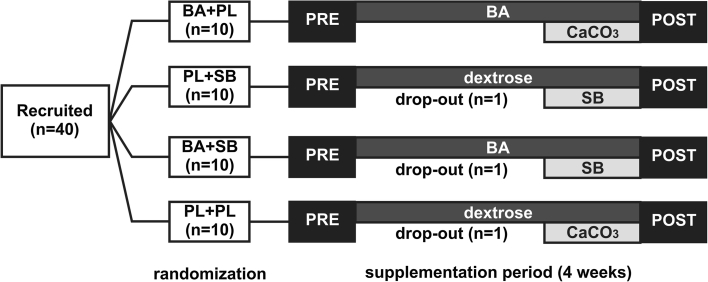
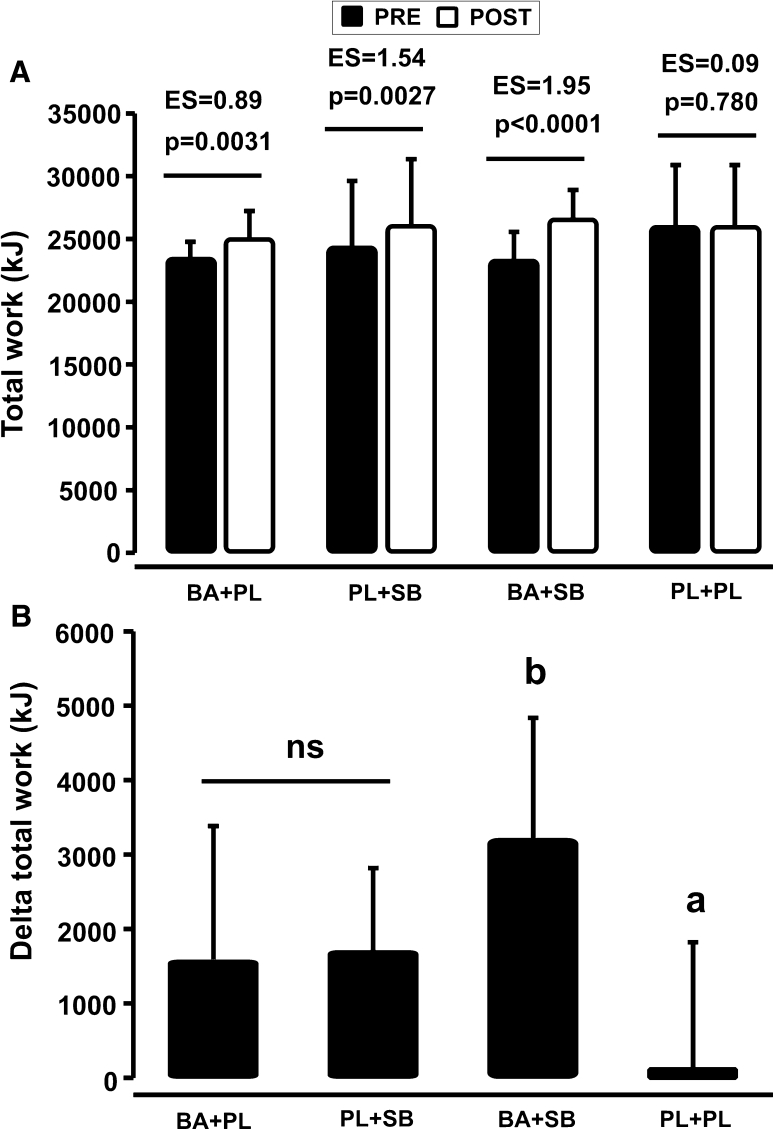
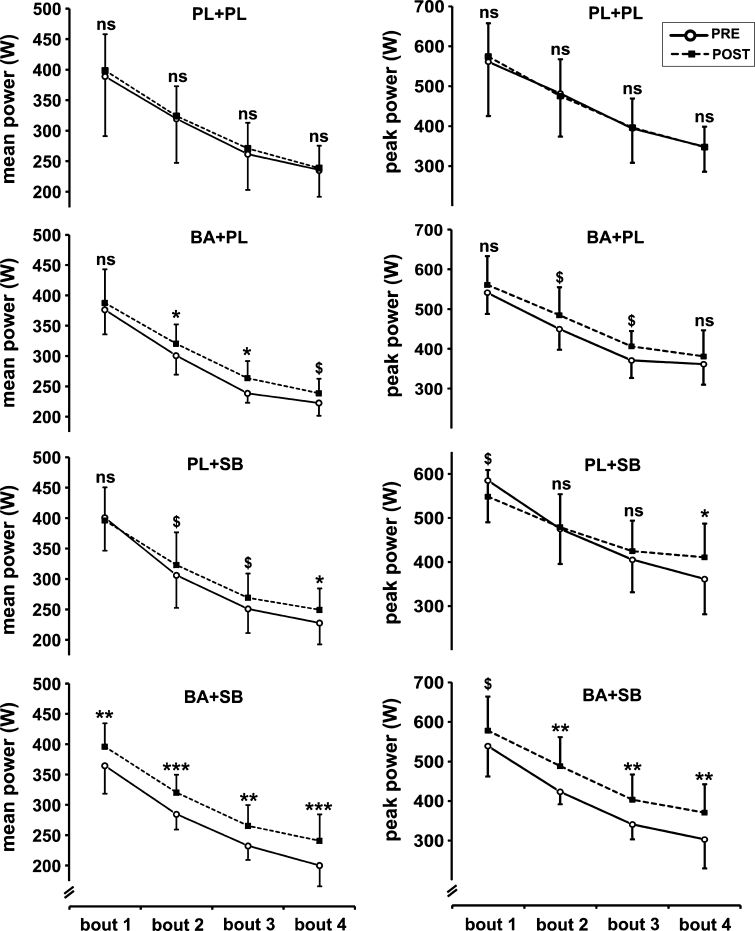
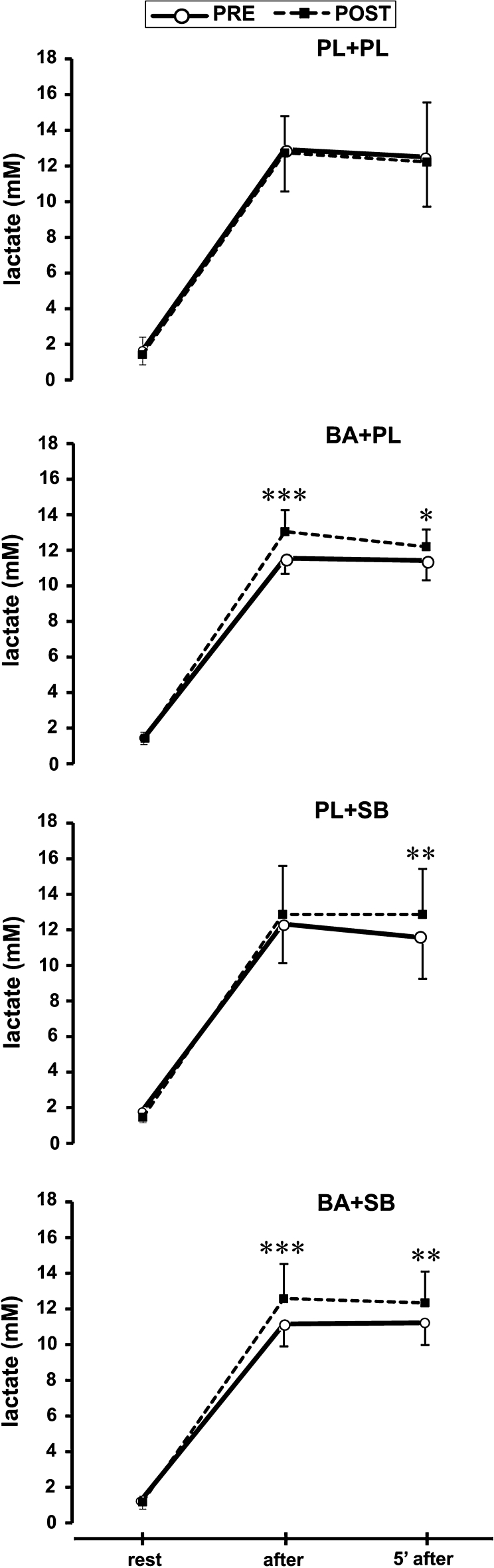
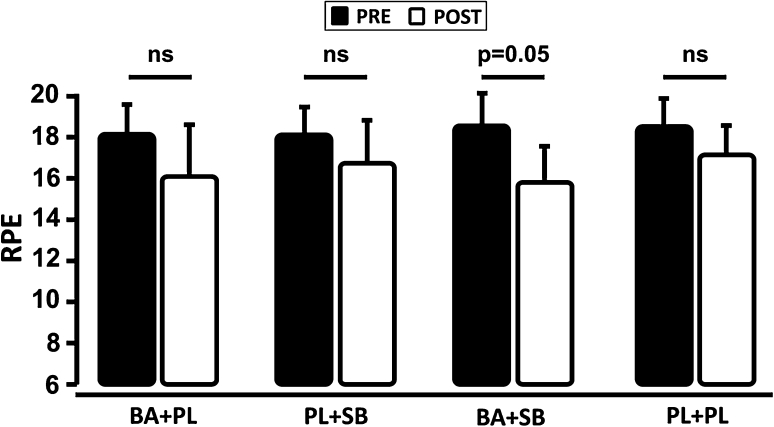
We examined the isolated and combined effects of beta-alanine (BA) and sodium bicarbonate (SB) on high-intensity intermittent upper-body performance in judo and jiu-jitsu competitors. 37 athletes were assigned to one of four groups: (1) placebo (PL)+PL; (2) BA+PL; (3) PL+SB or (4) BA+SB. BA or dextrose (placebo) (6.4 g day⁻¹) was ingested for 4 weeks and 500 mg kg⁻¹ BM of SB or calcium carbonate (placebo) was ingested for 7 days during the 4th week. Before and after 4 weeks of supplementation, the athletes completed four 30-s upper-body Wingate tests, separated by 3 min. Blood lactate was determined at rest, immediately after and 5 min after the 4th exercise bout, with perceived exertion reported immediately after the 4th bout. BA and SB alone increased the total work done in +7 and 8 %, respectively. The co-ingestion resulted in an additive effect (+14 %, p < 0.05 vs. BA and SB alone). BA alone significantly improved mean power in the 2nd and 3rd bouts and tended to improve the 4th bout. SB alone significantly improved mean power in the 4th bout and tended to improve in the 2nd and 3rd bouts. BA+SB enhanced mean power in all four bouts. PL+PL did not elicit any alteration on mean and peak power. Post-exercise blood lactate increased with all treatments except with PL+PL. Only BA+SB resulted in lower ratings of perceived exertion (p = 0.05). Chronic BA and SB supplementation alone equally enhanced high-intensity intermittent upper-body performance in well-trained athletes. Combined BA and SB promoted a clear additive ergogenic effect.
Overview
The claims and statistics of this paper haven’t been checked yet.
Free: it reads the open-access text and checks the first 5 claims that cite a source we can check. Create a free account to check every claim.
Integrity signals
Registry
Cites
Statistics
Figures
Verification
Claims the paper makes
The claims and statistics of this paper haven’t been checked yet.
Free: it reads the open-access text and checks the first 5 claims that cite a source we can check. Create a free account to check every claim.
Claims other papers make about this one
Each is checked against this paper’s own text: does it say what the citing paper says it does?
The source backs part of the claim, not all of it — or backs it for a different population, condition or comparison.
In the citing paper
“Alternatively, Tobias and associates [501] also reported a significant improvement in upper-body power production in trained martial arts athletes after ingesting either beta-alanine or sodium bicarbonate, but noted a distinct synergistic improvement in upper-body power and performance when beta-alanine and sodium bicarbonate were ingested together.”
From ISSN exercise & sports nutrition review update: research & recommendations (2018) · cites this paper as [501]
Experimental — accuracy not yet measured
Self-check
Percentages, sums and reported differences re-computed from the paper’s own numbers.
The self-check needs the paper’s full text.
Citations
Cites
Psychophysical bases of perceived exertion
BORG, G. A. V. (1982) · Medicine & Science in Sports & Exercise · doi:10.1249/00005768-198205000-00012 · Cited by 16,580 · cited 1×
“Ratings of perceived exertion were also collected immediately after the fourth bout, using a 6–20 Borg scale (Borg 1982).”
MethodMaking Meaningful Inferences About Magnitudes
Batterham, A. M., & Hopkins, W. G. (2006) · International Journal of Sports Physiology and Performance · doi:10.1123/ijspp.1.1.50 · Cited by 2,183 · cited 1×
“Cohen’s effect size (Cohen 1988) and magnitudebased inference analysis (Batterham and Hopkins 2006) were also calculated for total work done, the main outcome measure in this study.”
MethodFabiato, A., & Fabiato, F. (1978) · The Journal of Physiology · doi:10.1113/jphysiol.1978.sp012231 · Cited by 1,090 · cited 1×
“Intramuscular H? accumulation impairs energy transfer (Sutton et al. 1981), calcium handling (Donaldson et al. 1978) and cross-bridge cycling (Fabiato and Fabiato 1978), thus limiting performance during highintensity exercise.”
BackgroundThe creatine kinase system and pleiotropic effects of creatine
Wallimann, T., Tokarska-Schlattner, M., & Schlattner, U. (2011) · Amino Acids · doi:10.1007/s00726-011-0877-3 · Cited by 797 · cited 3×
“During the exercise performed at intensities exceeding the capacity of aerobic metabolism to resynthesize ATP (Wallimann et al. 2011), hydrogen cations (H?) are produced with most buffered by physicochemical means or exported into the circulation.”
BackgroundPhysiological Profiles of Elite Judo Athletes
Franchini, E., Del Vecchio, F. B., Matsushigue, K. A., & Artioli, G. G. (2011) · Sports Medicine · doi:10.2165/11538580-000000000-00000 · Cited by 575 · cited 1×
“Knowingly, the glycolytic anaerobic demand of judo and jiu-jitsu is very pronounced (Franchini et al. 2011), likely inducing a high muscle buffering capacity as an adaptation to training.”
BackgroundSelf-citationHarris, R. C., Tallon, M. J., Dunnett, M., Boobis, L., Coakley, J., Kim, H. J., Fallowfield, J. L., Hill, C. A., Sale, C., & Wise, J. A. (2006) · Amino Acids · doi:10.1007/s00726-006-0299-9 · Cited by 534 · cited 3×
“Likewise, beta-alanine (BA) supplementation increases intramuscular carnosine levels, and subsequently increases intracellular H buffering (Harris et al. 2006).”
BackgroundInfluentialSelf-citationBlood and muscle pH after maximal exercise in man
Hermansen, L., & Osnes, J. B. (1972) · Journal of Applied Physiology · doi:10.1152/jappl.1972.32.3.304 · Cited by 338 · cited 4×
“than continuous supra-maximal exercises (Hermansen and Osnes 1972; Belfry et al. 2012).”
BackgroundInfluentialDerave, W., Özdemir, M. S., Harris, R. C., Pottier, A., Reyngoudt, H., Koppo, K., Wise, J. A., & Achten, E. (2007) · Journal of Applied Physiology · doi:10.1152/japplphysiol.00397.2007 · Cited by 324 · cited 5×
“…(Hobson et al. 2012), but only four studies have assessed the effects of BA supplementation on high-intensity intermittent exercise performance (Derave et al. 2007; Donovan et al. 2012; Saunders et al. 2012; Smith-Ryan et al. 2012), a model of exercise that is likely to be most sensitive in…”
BackgroundInfluentialSelf-citationEffects of β-alanine supplementation on exercise performance: a meta-analysis
Hobson, R. M., Saunders, B., Ball, G., Harris, R. C., & Sale, C. (2012) · Amino Acids · doi:10.1007/s00726-011-1200-z · Cited by 303 · cited 1×
“Despite some conflicting results, a recent meta-analysis concluded that BA is effective in improving exercise capacity (Hobson et al. 2012), but only four studies have assessed the effects of BA supplementation on high-intensity intermittent exercise performance (Derave et al. 2007; Donovan et al.…”
ResultSelf-citationBolitho Donaldson, S. K., Hermansen, L., & Bolles, L. (1978) · Pfl�gers Archiv European Journal of Physiology · doi:10.1007/bf00585248 · Cited by 277 · cited 2×
“Intramuscular H? accumulation impairs energy transfer (Sutton et al. 1981), calcium handling (Donaldson et al. 1978) and cross-bridge cycling (Fabiato and Fabiato 1978), thus limiting performance during highintensity exercise.”
BackgroundEffects of Acute Alkalosis and Acidosis on Performance: A Meta-Analysis
Carr, A. J., Hopkins, W. G., & Gore, C. J. (2011) · Sports Medicine · doi:10.2165/11591440-000000000-00000 · Cited by 277 · cited 2×
“…either via acute or chronic sodium bicarbonate (SB) ingestion, improves high-intensity exercise performance and capacity (Requena et al. 2005; Carr et al. 2011), which has been shown to be ergogenic in different sports, such as swimming (Lindh et al. 2008), judo (Artioli et al. 2007) and…”
BackgroundEffect of pH on Muscle Glycolysis during Exercise
Sutton, J. R., Jones, N. L., & Toews, C. J. (1981) · Clinical Science · doi:10.1042/cs0610331 · Cited by 260 · cited 3×
“Intramuscular H? accumulation impairs energy transfer (Sutton et al. 1981), calcium handling (Donaldson et al. 1978) and cross-bridge cycling (Fabiato and Fabiato 1978), thus limiting performance during highintensity exercise.”
BackgroundEffect of beta-alanine supplementation on muscle carnosine concentrations and exercise performance
Sale, C., Saunders, B., & Harris, R. C. (2010) · Amino Acids · doi:10.1007/s00726-009-0443-4 · Cited by 238 · cited 3×
“However, all human studies using 1.6–6.4 g day-1 of BA for 4 weeks or longer have so far reported increases of [40 % in muscle carnosine (for a review, see Sale et al. 2010).”
BackgroundInfluentialSelf-citationRole of β-Alanine Supplementation on Muscle Carnosine and Exercise Performance
ARTIOLI, G. G., GUALANO, B., SMITH, A., STOUT, J., & LANCHA, A. H. (2010) · Medicine & Science in Sports & Exercise · doi:10.1249/mss.0b013e3181c74e38 · Cited by 224
Self-citationMainwood, G. W., & Worsley‐Brown, P. (1975) · The Journal of Physiology · doi:10.1113/jphysiol.1975.sp011040 · Cited by 213 · cited 1×
“The proposed mechanisms underlying such a response include higher lactate production caused by less inhibited glycolytic enzymes (Sutton et al. 1981) and higher lactate efflux caused by augmented MCT1 activity (Mainwood and Worsley-Brown 1975).”
BackgroundAcid-Base Balance during Repeated Bouts of Exercise: Influence of HCO3
Costill, D., Verstappen, F., Kuipers, H., Janssen, E., & Fink, W. (1984) · International Journal of Sports Medicine · doi:10.1055/s-2008-1025910 · Cited by 187 · cited 2×
“Nonetheless, the H? concentration may increase 10-fold, measured as a decrease in pH from *7.1 to *6.3 (Costill et al. 1984).”
BackgroundInfluentialStout, J. R., Cramer, J. T., Zoeller, R. F., Torok, D., Costa, P., Hoffman, J. R., Harris, R. C., & O’Kroy, J. (2007) · Amino Acids · doi:10.1007/s00726-006-0474-z · Cited by 186
Self-citationImportant role of muscle carnosine in rowing performance
Baguet, A., Bourgois, J., Vanhee, L., Achten, E., & Derave, W. (2010) · Journal of Applied Physiology · doi:10.1152/japplphysiol.00141.2010 · Cited by 182 · cited 3×
“2007; Baguet et al. 2010; Jagim et al. 2012; Sale et al. 2011; Saunders et al. 2012).”
BackgroundErgogenic Effects of Sodium Bicarbonate
McNaughton, L. R., Siegler, J., & Midgley, A. (2008) · Current Sports Medicine Reports · doi:10.1249/jsr.0b013e31817ef530 · Cited by 167 · cited 2×
“Increased post-exercise blood lactate concentration has been consistently reported after SB ingestion (McNaughton et al. 2008), which is in accordance with our data.”
BackgroundResultEffect of slow-release β-alanine tablets on absorption kinetics and paresthesia
Décombaz, J., Beaumont, M., Vuichoud, J., Bouisset, F., & Stellingwerff, T. (2011) · Amino Acids · doi:10.1007/s00726-011-1169-7 · Cited by 150
β-Alanine Improves Sprint Performance in Endurance Cycling
VAN THIENEN, R., VAN PROEYEN, K., EYNDE, B. V., PUYPE, J., LEFERE, T., & HESPEL, P. (2009) · Medicine & Science in Sports & Exercise · doi:10.1249/mss.0b013e31818db708 · Cited by 132
Sodium bicarbonate and sodium citrate: ergogenic aids?
Requena, B., Zabala, M., Padial, P., & Feriche, B. (2005) · The Journal of Strength and Conditioning Research · doi:10.1519/13733.1 · Cited by 129 · cited 2×
“gations have shown that increased extracellular buffering capacity, achieved either via acute or chronic sodium bicarbonate (SB) ingestion, improves high-intensity exercise performance and capacity (Requena et al. 2005; Carr et al. 2011), which has been shown to be ergogenic in different sports, such as swimming (Lind…”
BackgroundDoes Sodium-Bicarbonate Ingestion Improve Simulated Judo Performance?
Artioli, G. G., Gualano, B., Coelho, D. F., Benatti, F. B., Gailey, A. W., & Lancha, A. H. (2007) · International Journal of Sport Nutrition and Exercise Metabolism · doi:10.1123/ijsnem.17.2.206 · Cited by 116 · cited 3×
“…sodium bicarbonate (SB) ingestion, improves high-intensity exercise performance and capacity (Requena et al. 2005; Carr et al. 2011), which has been shown to be ergogenic in different sports, such as swimming (Lindh et al. 2008), judo (Artioli et al. 2007) and boxing (Siegler and Hirscher 2010).”
BackgroundSelf-citationSodium Bicarbonate Improves Swimming Performance
Lindh, A., Peyrebrune, M., Ingham, S., Bailey, D., & Folland, J. (2008) · International Journal of Sports Medicine · doi:10.1055/s-2007-989228 · Cited by 109 · cited 2×
“…sodium bicarbonate (SB) ingestion, improves high-intensity exercise performance and capacity (Requena et al. 2005; Carr et al. 2011), which has been shown to be ergogenic in different sports, such as swimming (Lindh et al. 2008), judo (Artioli et al. 2007) and boxing (Siegler and Hirscher 2010).”
BackgroundEffect of β-Alanine Plus Sodium Bicarbonate on High-Intensity Cycling Capacity
SALE, C., SAUNDERS, B., HUDSON, S., WISE, J. A., HARRIS, R. C., & SUNDERLAND, C. D. (2011) · Medicine & Science in Sports & Exercise · doi:10.1249/mss.0b013e3182188501 · Cited by 103 · cited 11×
“Similarly, the two currently available studies on the combined effects of BA and SB have also used continuous exercise to assess performance (Sale et al. 2011; Bellinger et al. 2012), which may partially explain the lack of significant effects.”
BackgroundResultInfluentialSelf-citationEffects of chronic bicarbonate ingestion on the performance of high-intensity work
McNaughton, L., Backx, K., Palmer, G., & Strange, N. (1999) · European Journal of Applied Physiology and Occupational Physiology · doi:10.1007/s004210050600 · Cited by 103 · cited 1×
“Furthermore, there is evidence showing that the same SB supplementation protocol used in this investigation results in a significant increase in blood bicarbonate concentration and pH (McNaughton et al. 1999).”
BackgroundStout, J. R., Graves, B. S., Smith, A. E., Hartman, M. J., Cramer, J. T., Beck, T. W., & Harris, R. C. (2008) · Journal of the International Society of Sports Nutrition · doi:10.1186/1550-2783-5-21 · Cited by 103
Self-citationMuscle Fatigue: The Cellular Aspects
Fitts, R. H. (1996) · The American Journal of Sports Medicine · doi:10.1177/036354659602406s03 · Cited by 97 · cited 1×
“Muscle acidosis is a major cause of fatigue in high-intensity exercise (Fitts 1996).”
BackgroundFactors Associated with Wrist Pain in the Young Gymnast
DiFiori, J. P., Puffer, J. C., Mandelbaum, B. R., & Mar, S. (1996) · The American Journal of Sports Medicine · doi:10.1177/036354659602400103 · Cited by 92
Sodium Bicarbonate Ingestion and Boxing Performance
Siegler, J. C., & Hirscher, K. (2010) · Journal of Strength and Conditioning Research · doi:10.1519/jsc.0b013e3181a392b2 · Cited by 90 · cited 2×
“…sodium bicarbonate (SB) ingestion, improves high-intensity exercise performance and capacity (Requena et al. 2005; Carr et al. 2011), which has been shown to be ergogenic in different sports, such as swimming (Lindh et al. 2008), judo (Artioli et al. 2007) and boxing (Siegler and Hirscher 2010).”
BackgroundEffect of Combined β-Alanine and SodiumBicarbonate Supplementation on Cycling Performance
BELLINGER, P. M., HOWE, S. T., SHING, C. M., & FELL, J. W. (2012) · Medicine & Science in Sports & Exercise · doi:10.1249/mss.0b013e31824cc08d · Cited by 74 · cited 11×
“Similarly, the two currently available studies on the combined effects of BA and SB have also used continuous exercise to assess performance (Sale et al. 2011; Bellinger et al. 2012), which may partially explain the lack of significant effects.”
BackgroundResultInfluentialThe Effect of β-Alanine Supplementation on Power Performance During Repeated Sprint Activity
Sweeney, K. M., Wright, G. A., Glenn Brice, A., & Doberstein, S. T. (2010) · Journal of Strength and Conditioning Research · doi:10.1519/jsc.0b013e3181c63bd5 · Cited by 73 · cited 2×
“Since then, an increasing number of studies have examined the potential ergogenic effects of BA across a range of exercise (Stout et al. 2007, 2008; Sweeney et al. 2010; Sale et al. 2011; Jagim et al. 2012; Smith-Ryan et al. 2012) and sport-specific (Derave et al.”
BackgroundSaunders, B., Sale, C., Harris, R. C., & Sunderland, C. D. (2012) · Amino Acids · doi:10.1007/s00726-012-1268-0 · Cited by 56 · cited 4×
“To our knowledge, however, only four studies have examined the effects of BA supplementation on high-intensity intermittent performance thus far (Derave et al. 2007; Donovan et al. 2012; Saunders et al. 2012; Smith-Ryan et al. 2012), with conflicting results being observed.”
BackgroundInfluentialSelf-citationAcid-base balance and subjective feelings of fatigue during physical exercise
Poulus, A. J., Docter, H. J., & Westra, H. G. (1974) · European Journal of Applied Physiology · doi:10.1007/bf00421148 · Cited by 42 · cited 2×
“circulatory and psychochemical, changes that occur during exercise (Poulus et al. 1974).”
BackgroundEffects of Beta-Alanine Supplementation on Sprint Endurance
Jagim, A. R., Wright, G. A., Brice, A. G., & Doberstein, S. T. (2013) · Journal of Strength and Conditioning Research · doi:10.1519/jsc.0b013e318256bedc · Cited by 39
High-Velocity Intermittent Running: Effects of Beta-alanine Supplementation
Smith-Ryan, A. E., Fukuda, D. H., Stout, J. R., & Kendall, K. L. (2012) · Journal of Strength and Conditioning Research · doi:10.1519/jsc.0b013e318267922b · Cited by 33 · cited 3×
“…the potential ergogenic effects of BA across a range of exercise (Stout et al. 2007, 2008; Sweeney et al. 2010; Sale et al. 2011; Jagim et al. 2012; Smith-Ryan et al. 2012) and sport-specific (Derave et al. 2007; Baguet et al. 2010; Van Thienen et al. 2009; Bellinger et al. 2012; Saunders et al.…”
Backgroundβ-Alanine Improves Punch Force and Frequency in Amateur Boxers During a Simulated Contest
Donovan, T. F., Ballam, T., Morton, J. P., & Close, G. L. (2012) · International Journal of Sport Nutrition and Exercise Metabolism · doi:10.1123/ijsnem.22.5.331 · Cited by 30 · cited 2×
“…but only four studies have assessed the effects of BA supplementation on high-intensity intermittent exercise performance (Derave et al. 2007; Donovan et al. 2012; Saunders et al. 2012; Smith-Ryan et al. 2012), a model of exercise that is likely to be most sensitive in detecting the…”
BackgroundThe Effects Of Rapid Weight Loss Upon High-Intensity Performance In Judo Competitors
Artioli, G. G., Franchini, É., Iglesias, R. T., Gualano, B., Kashiwagura, D. B., Fuchs, M., Solis, M. Y., Takesian, M., & Lancha, A. H. (2010) · Medicine & Science in Sports & Exercise · doi:10.1249/01.mss.0000384497.49519.49 · Cited by 28 · cited 2×
“…performance (i.e. total work done) by 8 %, corroborating the previously reported beneficial effects of SB on intermittent exercise performance and confirming that chronic supplementation elicits performance improvements that are similar to those shown with acute ingestion (Artioli et al. 2010).”
BackgroundSelf-citationBelfry, G. R., Raymer, G. H., Marsh, G. D., Paterson, D. H., Thompson, R. T., & Thomas, S. G. (2012) · Journal of Applied Physiology · doi:10.1152/japplphysiol.01059.2011 · Cited by 27 · cited 6×
“Knowingly, intermittent supra-maximal exercise promotes a considerably greater intramuscular acidosis than continuous high-intensity exercise (Hermansen and Osnes 1972; Belfry et al. 2012), probably because the former is more reliant on glycolytic ATP resynthesis (Belfry et al. 2012).”
BackgroundInfluentialEffect of induced alkalosis on physical work capacity during arm and leg exercise
ROBERTSON, R. J., FALKEL, J. E., DRASH, A. L., SWANK, A. M., METZ, K. F., SPUNGEN, S. A., & LEBOEUF, J. R. (1987) · Ergonomics · doi:10.1080/00140138708969674 · Cited by 24 · cited 3×
“blood H concentration (Robertson et al. 1987).”
BackgroundInfluentialSale, C., Saunders, B., Hudson, S., Sunderland, C. D., Wise, J. A., & Harris, R. C. (2010) · Medicine & Science in Sports & Exercise · doi:10.1249/01.mss.0000385979.12373.d1 · Cited by 19 · cited 3×
“However, all human studies using 1.6–6.4 g day-1 of BA for 4 weeks or longer have so far reported increases of [40 % in muscle carnosine (for a review, see Sale et al. 2010).”
BackgroundResultInfluentialSelf-citationEffect of Beta-Alanine Supplementation on Sprint Endurance
Jagim, A. R., WRIGHT, G. A., BRICE, G. A., & Doberstein, S. T. (2011) · The Journal of Strength and Conditioning Research · doi:10.1097/01.jsc.0000395713.68999.b8 · Cited by 3
Research works printed but not linked: 1
- Cohen J Statistical power analysis for the behavioral ciences 1988 2 Hillsdale Lawrence Erlbaum Associates 567
Cited by
ISSN exercise & sports nutrition review update: research & recommendations
Kerksick, C. M., Wilborn, C. D., Roberts, M. D., Smith-Ryan, A., Kleiner, S. M., Jäger, R., Collins, R., Cooke, M., Davis, J. N., Galvan, E., et al. (2018) · Journal of the International Society of Sports Nutrition · doi:10.1186/s12970-018-0242-y · Cited by 945
International society of sports nutrition position stand: Beta-Alanine
Trexler, E. T., Smith-Ryan, A. E., Stout, J. R., Hoffman, J. R., Wilborn, C. D., Sale, C., Kreider, R. B., Jäger, R., Earnest, C. P., Bannock, L., et al. (2015) · Journal of the International Society of Sports Nutrition · doi:10.1186/s12970-015-0090-y · Cited by 315
“However, the only study to indicate a statistically significant synergistic effect of beta-alanine and SB [82]”
BackgroundSelf-citationSaunders, B., Elliott-Sale, K., Artioli, G. G., Swinton, P. A., Dolan, E., Roschel, H., Sale, C., & Gualano, B. (2017) · British Journal of Sports Medicine · doi:10.1136/bjsports-2016-096396 · Cited by 302
Self-citationLancha Junior, A. H., de Salles Painelli, V., Saunders, B., & Artioli, G. G. (2015) · Sports Medicine · doi:10.1007/s40279-015-0397-5 · Cited by 167
“Studies using multiple bouts of highintensity exercise have consistently shown performance improvements in excess of 8 % [57, 87, 88].”
BackgroundInfluentialSelf-citationEffects of beetroot juice supplementation on intermittent high-intensity exercise efforts
Domínguez, R., Maté-Muñoz, J. L., Cuenca, E., García-Fernández, P., Mata-Ordoñez, F., Lozano-Estevan, M. C., Veiga-Herreros, P., da Silva, S. F., & Garnacho-Castaño, M. V. (2018) · Journal of the International Society of Sports Nutrition · doi:10.1186/s12970-017-0204-9 · Cited by 164
“The combined effect of these supplements is greater than the impact of each supplement on its own [91].”
Background
Metadata
- Authors
- Tobias, G., Benatti, F. B., de Salles Painelli, V., Roschel, H., Gualano, B., Sale, C., Harris, R. C., Lancha, A. H., & Artioli, G. G.
- Affiliations
- Universidade de São Paulo (BR)
- Nottingham Trent University (GB)
- Venue
- Amino Acids
- Published
- 2013-04-18
- Volume
- 45
- Issue
- 2
- Pages
- 309-317
- ISSN
- 0939-4451 (ISSN-L)
- 1438-2199
- PMC
- PMC3714561
- OpenAlex
- W2100040297
- Cited by
- 129
- References
- 42
- Citations by year
- 2026: 12 · 2025: 2 · 2024: 6 · 2023: 4 · 2022: 13 · 2021: 14 · 2020: 7 · 2019: 10 · 2018: 21 · 2017: 6 · 2016: 12 · 2015: 8 · 2014: 10 · 2013: 4
- FWCI
- 7.89
- Type
- journal article
- Language
- en
- Open access
- hybrid
- doi.org
- Locations
- Amino Acids (publishedVersion, cc-by)
- Europe PMC (PubMed Central) (publishedVersion, cc-by)
- PubMed Central (publishedVersion, cc-by)
- PubMed (publishedVersion)
- Nottingham Trent University's Institutional Repository (Nottingham Trent Repository) (acceptedVersion)
- Funders
- Fundação de Amparo à Pesquisa do Estado de São Paulo (10/11221-0, 2011/17059-2)
- Topics
- Health Sciences › Medicine › Physiology (medical) › Biochemical effects in animals
- Health Sciences › Medicine › Orthopedics and Sports Medicine › Sports Performance and Training
- Health Sciences › Nursing › Nutrition and Dietetics › Muscle metabolism and nutrition
- Keywords
- beta-alanine, sodium bicarbonate, ergogenic aids, high-intensity intermittent exercise, judo, jiu-jitsu, blood lactate, perceived exertion, Wingate test, muscle power
- MeSH terms
- Acidosis, Adult, Calcium Carbonate, Double-Blind Method, Exercise Test, Physical Exertion, Humans, Male, Motor Skills, Muscle Tonus, beta-Alanine, Martial Arts, Sodium Bicarbonate, Muscle Fatigue, Lactic Acid, Dietary Supplements, Upper Extremity, Athletic Performance, Young Adult, Athletes
About these checks
Registry, retraction, Cites and statistics results are computed, not judged, with one exception: a printed reference that no index lists is read once by a model before it counts as a citation error. Claims are extracted by a model and kept only when their quote appears verbatim in the text; each cited source is then checked, with a model’s help, for whether it says what the claim relies on. Those verdicts can be wrong — read the claim’s quote and the cited source before relying on one.
Statistics and arithmetic are recomputed, not judged.
Confidence bands are shown only for fields calibrated on our annotated test set. None is calibrated yet, so no band is shown.
What counts as a claim ›How we measure confidence ›How we check this ›
Are you an author, or do you see a problem with this page? Request a review
Data sources
Bibliographic data: Semantic Scholar, OpenAlex, Crossref.
Contains information from the Semantic Scholar Academic Graph Datasets, made available under the ODC Attribution License (ODC-BY 1.0).
Semantic Scholar’s data is described in: Kinney, R., et al. (2023). The Semantic Scholar Open Data Platform. arXiv:2301.10140.
