

Brain structural deficits and working memory fMRI dysfunction in young adults who were diagnosed with ADHD in adolescence
Open accessThe DOI matches its Crossref record; 51 of the 51 references it cites were found in a registry or an index.
Abstract
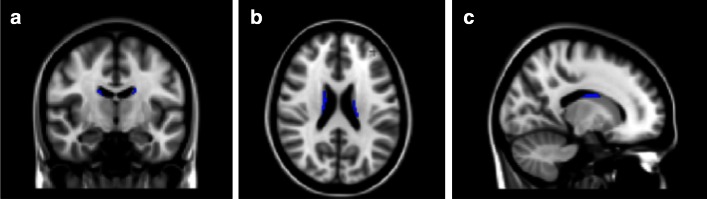
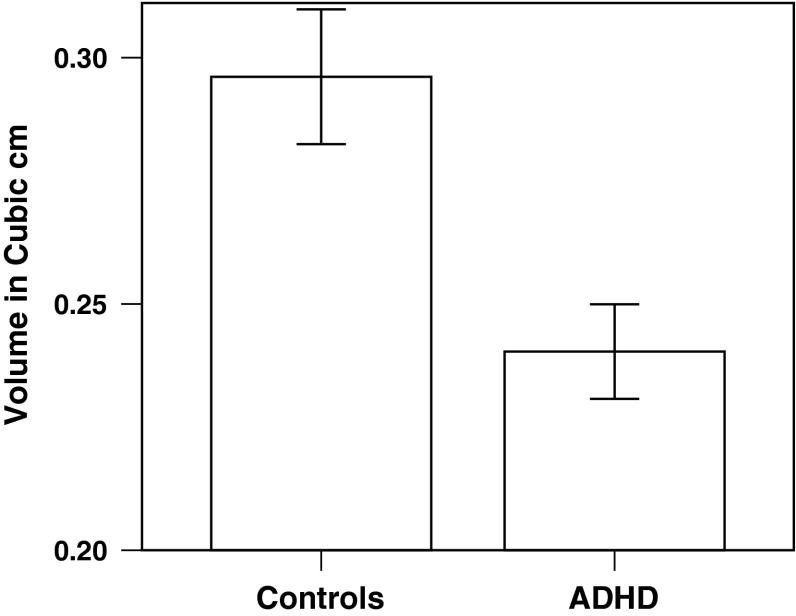
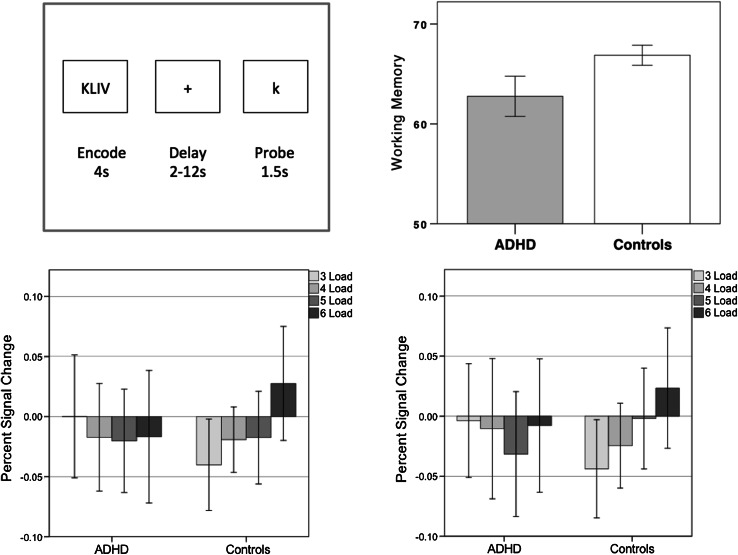
When adolescents with ADHD enter adulthood, some no longer meet disorder diagnostic criteria but it is unknown if biological and cognitive abnorma lities persist. We tested the hypothesis that people diagnosed with ADHD during adolescence present residual brain abnormalities both in brain structure and in working memory brain function. 83 young adults (aged 20-24 years) from the Northern Finland 1986 Birth Cohort were classified as diagnosed with ADHD in adolescence (adolescence ADHD, n = 49) or a control group (n = 34). Only one patient had received medication for ADHD. T1-weighted brain scans were acquired and processed in a voxel-based analysis using permutation-based statistics. A sub-sample of both groups (ADHD, n = 21; controls n = 23) also performed a Sternberg working memory task whilst acquiring fMRI data. Areas of structural difference were used as a region of interest to evaluate the implications that structural abnormalities found in the ADHD group might have on working memory function. There was lower grey matter volume bilaterally in adolescence ADHD participants in the caudate (p < 0.05 FWE corrected across the whole brain) at age 20-24. Working memory was poorer in adolescence ADHD participants, with associated failure to show normal load-dependent caudate activation. Young adults diagnosed with ADHD in adolescence have structural and functional deficits in the caudate associated with abnormal working memory function. These findings are not secondary to stimulant treatment, and emphasise the importance of taking a wider perspective on ADHD outcomes than simply whether or not a particular patient meets diagnostic criteria at any given point in time.
Overview
The claims and statistics of this paper haven’t been checked yet.
Free: it reads the open-access text and checks the first 5 claims that cite a source we can check. Create a free account to check every claim.
Integrity signals
Registry
Cites
Statistics
Figures
Verification
Claims the paper makes
The claims and statistics of this paper haven’t been checked yet.
Free: it reads the open-access text and checks the first 5 claims that cite a source we can check. Create a free account to check every claim.
Claims other papers make about this one
Each is checked against this paper’s own text: does it say what the citing paper says it does?
The source backs part of the claim, not all of it — or backs it for a different population, condition or comparison.
In the citing paper
“Working memory task-based functional magnetic resonance imaging (fMRI) and positron emission tomography (PET) studies demonstrated that both children and adults with ADHD, predominantly inattentive and combined presentations, had reduced brain activities in working memory processing related brain regions, including prefrontal cortex (PFC) and caudate (Fassbender et al., 2011; Roman-Urrestarazu et”
From A Review of Heterogeneity in Attention Deficit/Hyperactivity Disorder (ADHD) (2019) · cites this paper as Roman-Urrestarazu et al., 2016
Experimental — accuracy not yet measured
Self-check
Percentages, sums and reported differences re-computed from the paper’s own numbers.
The self-check needs the paper’s full text.
Citations
Cites
Advances in functional and structural MR image analysis and implementation as FSL
Smith, S. M., Jenkinson, M., Woolrich, M. W., Beckmann, C. F., Behrens, T. E. J., Johansen-Berg, H., Bannister, P. R., De Luca, M., Drobnjak, I., Flitney, D. E., et al. (2004) · NeuroImage · doi:10.1016/j.neuroimage.2004.07.051 · Cited by 13,630 · cited 1×
“FSL’s FMRI expert analysis tool (FEAT) [34] was used to perform individual preprocessing and statistical analysis of each participant’s individual FMRI scan.”
MethodJenkinson, M., Bannister, P., Brady, M., & Smith, S. (2002) · NeuroImage · doi:10.1006/nimg.2002.1132 · Cited by 11,888
Fast robust automated brain extraction
Smith, S. M. (2002) · Human Brain Mapping · doi:10.1002/hbm.10062 · Cited by 10,496
KAUFMAN, J., BIRMAHER, B., BRENT, D., RAO, U., FLYNN, C., MORECI, P., WILLIAMSON, D., & RYAN, N. (1997) · Journal of the American Academy of Child & Adolescent Psychiatry · doi:10.1097/00004583-199707000-00021 · Cited by 10,148 · cited 1×
“Among the 6622 respondents to the survey, a subset of 457 possible cases and general population controls were identified based on their questionnaire scores, and these adolescents were evaluated for ADHD during 2002–2003 in a clinical evaluation, including a structured interview (Schedule for Affective Disorders and S…”
MethodVoxel-Based Morphometry—The Methods
Ashburner, J., & Friston, K. J. (2000) · NeuroImage · doi:10.1006/nimg.2000.0582 · Cited by 8,676
A global optimisation method for robust affine registration of brain images
Jenkinson, M., & Smith, S. (2001) · Medical Image Analysis · doi:10.1016/s1361-8415(01)00036-6 · Cited by 6,872 · cited 1×
“Structural data were analysed with FSL-VBM, a voxel-based morphometry style pipeline analysis [32–40].”
MethodSMITH, S., & NICHOLS, T. (2009) · NeuroImage · doi:10.1016/j.neuroimage.2008.03.061 · Cited by 5,250 · cited 1×
“For the between-group comparisons, between-group statistics were performed using a permutation-based inference tool for nonparametric statistical thresholding in FSL’s randomise Monte Carlo permutation toolkit using 5000 permutations [41], with age at scan, handedness and sex as covariates.”
MethodA Voxel-Based Morphometric Study of Ageing in 465 Normal Adult Human Brains
Good, C. D., Johnsrude, I. S., Ashburner, J., Henson, R. N. A., Friston, K. J., & Frackowiak, R. S. J. (2001) · NeuroImage · doi:10.1006/nimg.2001.0786 · Cited by 4,561
High-speed scanning in human memory
Sternberg, S. (1966) · Science · doi:10.1126/science.153.3736.652 · Cited by 3,576
Bayesian analysis of neuroimaging data in FSL
Woolrich, M. W., Jbabdi, S., Patenaude, B., Chappell, M., Makni, S., Behrens, T., Beckmann, C., Jenkinson, M., & Smith, S. M. (2009) · NeuroImage · doi:10.1016/j.neuroimage.2008.10.055 · Cited by 2,385
Cited by
Live fast, die young? A review on the developmental trajectories of ADHD across the lifespan
Franke, B., Michelini, G., Asherson, P., Banaschewski, T., Bilbow, A., Buitelaar, J. K., Cormand, B., Faraone, S. V., Ginsberg, Y., Haavik, J., et al. (2018) · European Neuropsychopharmacology · doi:10.1016/j.euroneuro.2018.08.001 · Cited by 643
A Review of Heterogeneity in Attention Deficit/Hyperactivity Disorder (ADHD)
Luo, Y., Weibman, D., Halperin, J. M., & Li, X. (2019) · Frontiers in Human Neuroscience · doi:10.3389/fnhum.2019.00042 · Cited by 394
“…demonstrated that both children and adults with ADHD, predominantly inattentive and combined presentations, had reduced brain activities in working memory processing related brain regions, including prefrontal cortex (PFC) and caudate (Fassbender et al., 2011; Roman-Urrestarazu et al., 2016).”
BackgroundDopamine, Immunity, and Disease
Channer, B., Matt, S. M., Nickoloff-Bybel, E. A., Pappa, V., Agarwal, Y., Wickman, J., & Gaskill, P. J. (2023) · Pharmacological Reviews · doi:10.1124/pharmrev.122.000618 · Cited by 308
Neuroinflammation as a risk factor for attention deficit hyperactivity disorder
Dunn, G. A., Nigg, J. T., & Sullivan, E. L. (2019) · Pharmacology Biochemistry and Behavior · doi:10.1016/j.pbb.2019.05.005 · Cited by 299
“Structural magnetic resonance imaging (sMRI) studies indicate reduced volumes in the caudate, putamen, and globus pallidus of individuals with ADHD (Chen et al., 2018; Ellison-Wright et al., 2008; Frodl and Skokauskas, 2012; Roman-Urrestarazu et al., 2016).”
BackgroundLukito, S., Norman, L., Carlisi, C., Radua, J., Hart, H., Simonoff, E., & Rubia, K. (2020) · Psychological Medicine · doi:10.1017/s0033291720000574 · Cited by 248
Mind wandering perspective on attention-deficit/hyperactivity disorder
Bozhilova, N. S., Michelini, G., Kuntsi, J., & Asherson, P. (2018) · Neuroscience & Biobehavioral Reviews · doi:10.1016/j.neubiorev.2018.07.010 · Cited by 182
“diagnosed with ADHD in adolescence compared to controls have also been observed regardless of whether they still met an ADHD diagnosis (Roman-Urrestarazu et al., 2016).”
How the motor system integrates with working memory
Marvel, C. L., Morgan, O. P., & Kronemer, S. I. (2019) · Neuroscience & Biobehavioral Reviews · doi:10.1016/j.neubiorev.2019.04.017 · Cited by 152
Yu, M., Gao, X., Niu, X., Zhang, M., Yang, Z., Han, S., Cheng, J., & Zhang, Y. (2023) · Frontiers in Psychiatry · doi:10.3389/fpsyt.2022.1070142 · Cited by 124
McGrath, L. M., & Stoodley, C. J. (2019) · Journal of Neurodevelopmental Disorders · doi:10.1186/s11689-019-9287-8 · Cited by 94
Puiu, A. A., Wudarczyk, O. A., Goerlich, K. S., Votinov, M., Herpertz‐Dahlmann, B., Turetsky, B. I., & Konrad, K. (2018) · Neuroscience & Biobehavioral Reviews · doi:10.1016/j.neubiorev.2018.04.016 · Cited by 97
Michelini, G., Jurgiel, J., Bakolis, I., Cheung, C. H. M., Asherson, P., Loo, S. K., Kuntsi, J., & Mohammad-Rezazadeh, I. (2019) · Translational Psychiatry · doi:10.1038/s41398-019-0469-7 · Cited by 57
Gao, X., Zhang, M., Yang, Z., Wen, M., Huang, H., Zheng, R., Wang, W., Wei, Y., Cheng, J., Han, S., et al. (2021) · Frontiers in Psychiatry · doi:10.3389/fpsyt.2021.679437 · Cited by 67
Reading performance in children with ADHD: an eye-tracking study
Caldani, S., Acquaviva, É., Moscoso, A., Peyre, H., Delorme, R., & Bucci, M. P. (2022) · Annals of Dyslexia · doi:10.1007/s11881-022-00269-x · Cited by 47
LaCount, P. A., Hartung, C. M., Vasko, J. M., Serrano, J. W., Wright, H. A., & Smith, D. T. (2022) · Mental health and physical activity · doi:10.1016/j.mhpa.2022.100443 · Cited by 45
Cunff, A. L., Dommett, E. J., & Giampietro, V. (2023) · European Journal of Neuroscience · doi:10.1111/ejn.16201 · Cited by 48
Duan, K., Jiang, W., Rootes-Murdy, K., Schoenmacker, G., Vásquez, A. A., Buitelaar, J. K., Hoogman, M., Oosterlaan, J., Hoekstra, P. J., Heslenfeld, D. J., et al. (2021) · Translational Psychiatry · doi:10.1038/s41398-021-01301-1 · Cited by 42
Dessel, J. V., Sonuga-Barke, E. J. S., Moerkerke, M., der Oord, S. V., Lemiere, J., Morsink, S., & Danckaerts, M. (2019) · The World Journal of Biological Psychiatry · doi:10.1080/15622975.2019.1585946 · Cited by 40
Neural basis of working memory in ADHD: Load versus complexity
Mukherjee, P., Hartanto, T. A., Iosif, A., Dixon, J. F., Hinshaw, S. P., Pakyürek, M., van den Bos, W., Guyer, A. E., McClure, S. M., Schweitzer, J. B., et al. (2021) · NeuroImage Clinical · doi:10.1016/j.nicl.2021.102662 · Cited by 29
Human Genomic Signatures of Brain Oscillations During Memory Encoding
Berto, S., Wang, G.-Z., Germi, J., Lega, B. C., & Konopka, G. (2017) · Cerebral Cortex · doi:10.1093/cercor/bhx083 · Cited by 30
Wu, Z.-M., Bralten, J., Li, A., Cao, Q., Cao, X., Sun, L., Liu, L., Yang, L., Mennes, M., Zang, Y., et al. (2017) · Journal of Psychopharmacology · doi:10.1177/0269881117715607 · Cited by 25
Adult ADHD: it is old and new at the same time – what is it?
Custodio, R. J. P., Hengstler, J. G., Cheong, J. H., Kim, H. J., Wascher, E., & Getzmann, S. (2023) · Reviews in the Neurosciences · doi:10.1515/revneuro-2023-0071 · Cited by 25
Liloia, D., Crocetta, A., Cauda, F., Duca, S., Costa, T., & Manuello, J. (2022) · Brain Sciences · doi:10.3390/brainsci12101367 · Cited by 17
Neuroteratology and Animal Modeling of Brain Disorders
Archer, T., & Kostrzewa, R. M. (2015) · Current topics in behavioral neurosciences · doi:10.1007/7854_2015_434 · Cited by 15
Psychiatric research in the Northern Finland Birth Cohort 1986 – a systematic review
Miettunen, J., Haapea, M., Björnholm, L., Huhtaniska, S., Juola, T., Kinnunen, L., Lehtiniemi, H., Lieslehto, J., Rautio, N., & Nordström, T. (2019) · International Journal of Circumpolar Health · doi:10.1080/22423982.2019.1571382 · Cited by 14
“and had structural and functional deficits in caudate associated with abnormal working memory function compared to healthy controls [7].”
BackgroundSelf-citationLi, Y., Chen, J., Zheng, X., Liu, J., Peng, C., Liao, Y., & Liu, Y. (2022) · Journal of Psychiatric Research · doi:10.1016/j.jpsychires.2022.07.064 · Cited by 10
Hong, Y. N., Hwang, H., Hong, J. S., & Han, D. H. (2024) · Journal of Psychiatric Research · doi:10.1016/j.jpsychires.2024.03.021 · Cited by 9
Moreno‐Alcázar, A., Ramos‐Quiroga, J. A., Ribasés, M., Sánchez‐Mora, C., Palomar, G., Bosch, R., Salavert, J., Fortea, L., Monté, G. C., Canales-Rodríguez, E. J., et al. (2021) · Scientific Reports · doi:10.1038/s41598-021-81915-z · Cited by 7
Roshannia, S., Maleki-Karamolah, S., Akhlaghi, Z., & Kordestani-Moghadam, P. (2021) · International Clinical Neuroscience Journal · doi:10.34172/icnj.2021.14 · Cited by 8
Xie, H., Cao, Y., Long, X., Xiao, H., Wang, X., Qiu, C., & Jia, Z. (2022) · Journal of Psychiatric Research · doi:10.1016/j.jpsychires.2022.09.015 · Cited by 6
Basu, S., Phogat, R., Banerjee, B., & Parmananda, P. (2024) · Journal of Indian Association for Child and Adolescent Mental Health · doi:10.1177/09731342241252533 · Cited by 4
“28,29 Recent research has highlighted the role of brainwaves in the pathology of ADHD symptoms.”
ADHD: A Neurodevelopmental Disorder
Pallanti, S., & Salerno, L. (2020) · Springer eBooks · doi:10.1007/978-3-030-39051-8_2 · Cited by 4
Psychosocially supporting the teenager with ADHD
Hart, T., Eccles, G., Bird, D., & Wickes, S. (2017) · Independent Nurse · doi:10.12968/indn.2017.8.21
Kelleher, R. (2018) · NC Digital Online Collection of Knowledge and Scholarship (The University of North Carolina at Greensboro)
ADHD and Executive Functioning: A Meta-Analytic Study on Shifting and Cognitive Flexibility
Hinojosa, R. H. (2019) · OakTrust (Texas A&M University Libraries) · Cited by 1
Gonzalez, R. (2017) · UND Scholarly Commons (University of North Dakota)
Zolli, N. (2020) · PsyArXiv (OSF Preprints) · doi:10.31234/osf.io/sh79f
Williams, B. (2021) · University of Canterbury Research Repository (University of Canterbury) · doi:10.26021/11134
Nankoo, A. (2020) · UWA Profiles and Research Repository (University of Western Australia) · doi:10.26182/cr5t-xz97
Im, D. S. (2026) · Journal of Psychiatry and Neuroscience · doi:10.1139/jpn-2025-0167
Liloia, D. (n.d.) · Institutional Research Information System University of Turin (University of Turin)
Metadata
- Authors
- Roman-Urrestarazu, A., Lindholm, P., Moilanen, I., Kiviniemi, V., Miettunen, J., Jääskeläinen, E., Mäki, P., Hurtig, T., Ebeling, H., Barnett, J. H., Nikkinen, J., Suckling, J., Jones, P. B., Veijola, J., & Murray, G. K.
- Affiliations
- Oulu University Hospital (FI)
- University of Cambridge (GB)
- Corresponding author
- Murray, Graham K.
- ORCID
- Venue
- European Child & Adolescent Psychiatry
- Published
- 2015-08-26
- Volume
- 25
- Issue
- 5
- Pages
- 529-538
- ISSN
- 1018-8827 (ISSN-L)
- 1435-165X
- PMC
- PMC4854937
- OpenAlex
- W1888481038
- Cited by
- 35
- References
- 51
- Citations by year
- 2026: 1 · 2024: 2 · 2023: 3 · 2022: 6 · 2021: 5 · 2020: 3 · 2019: 7 · 2018: 4 · 2017: 3 · 2015: 1
- FWCI
- 2.17
- Type
- journal article
- Language
- en
- Open access
- hybrid
- doi.org
- Locations
- European Child & Adolescent Psychiatry (publishedVersion, cc-by)
- PubMed Central (publishedVersion, cc-by)
- PubMed (publishedVersion)
- Apollo (University of Cambridge) (submittedVersion, cc-by)
- Funders
- Suomen Lääketieteen Säätiö
- National Alliance for Research on Schizophrenia and Depression
- Wellcome Trust (G1000183, 093875)
- University of Cambridge
- Signe ja Ane Gyllenbergin Säätiö
- Medical Research Council (G0701911, G1000183)
- Comisión Nacional de Investigación Científica y Tecnológica
- Topics
- Health Sciences › Medicine › Psychiatry and Mental health › Attention Deficit Hyperactivity Disorder
- Life Sciences › Neuroscience › Cognitive Neuroscience › Neural and Behavioral Psychology Studies
- Social Sciences › Psychology › Neuropsychology and Physiological Psychology › Developmental and Educational Neuropsychology
- Keywords
- attention deficit hyperactivity disorder, adolescence, young adults, working memory, caudate nucleus, gray matter volume, brain structure, stimulant medication
- MeSH terms
- Adolescent, Attention Deficit Disorder with Hyperactivity, Brain, Female, Finland, Humans, Magnetic Resonance Imaging, Male, Memory Disorders, Memory, Short-Term, Photic Stimulation, Psychomotor Performance, Cohort Studies, Young Adult
About these checks
Registry, retraction, Cites and statistics results are computed, not judged, with one exception: a printed reference that no index lists is read once by a model before it counts as a citation error. Claims are extracted by a model and kept only when their quote appears verbatim in the text; each cited source is then checked, with a model’s help, for whether it says what the claim relies on. Those verdicts can be wrong — read the claim’s quote and the cited source before relying on one.
Statistics and arithmetic are recomputed, not judged.
Confidence bands are shown only for fields calibrated on our annotated test set. None is calibrated yet, so no band is shown.
What counts as a claim ›How we measure confidence ›How we check this ›
Are you an author, or do you see a problem with this page? Request a review
Data sources
Bibliographic data: Semantic Scholar, OpenAlex, Crossref.
Contains information from the Semantic Scholar Academic Graph Datasets, made available under the ODC Attribution License (ODC-BY 1.0).
Semantic Scholar’s data is described in: Kinney, R., et al. (2023). The Semantic Scholar Open Data Platform. arXiv:2301.10140.
