

Brain structural deficits and working memory fMRI dysfunction in young adults who were diagnosed with ADHD in adolescence
Open accessThe DOI matches its Crossref record; 51 of the 51 references it cites were found in a registry or an index.
Abstract
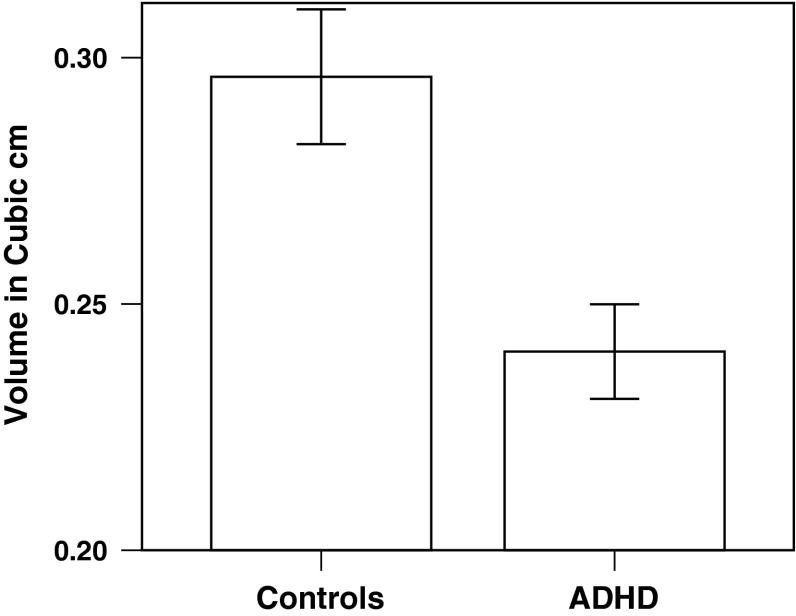
When adolescents with ADHD enter adulthood, some no longer meet disorder diagnostic criteria but it is unknown if biological and cognitive abnorma lities persist. We tested the hypothesis that people diagnosed with ADHD during adolescence present residual brain abnormalities both in brain structure and in working memory brain function. 83 young adults (aged 20-24 years) from the Northern Finland 1986 Birth Cohort were classified as diagnosed with ADHD in adolescence (adolescence ADHD, n = 49) or a control group (n = 34). Only one patient had received medication for ADHD. T1-weighted brain scans were acquired and processed in a voxel-based analysis using permutation-based statistics. A sub-sample of both groups (ADHD, n = 21; controls n = 23) also performed a Sternberg working memory task whilst acquiring fMRI data. Areas of structural difference were used as a region of interest to evaluate the implications that structural abnormalities found in the ADHD group might have on working memory function. There was lower grey matter volume bilaterally in adolescence ADHD participants in the caudate (p < 0.05 FWE corrected across the whole brain) at age 20-24. Working memory was poorer in adolescence ADHD participants, with associated failure to show normal load-dependent caudate activation. Young adults diagnosed with ADHD in adolescence have structural and functional deficits in the caudate associated with abnormal working memory function. These findings are not secondary to stimulant treatment, and emphasise the importance of taking a wider perspective on ADHD outcomes than simply whether or not a particular patient meets diagnostic criteria at any given point in time.
Overview
The claims and statistics of this paper haven’t been checked yet.
Free: it reads the open-access text and checks the first 5 claims that cite a source we can check. Create a free account to check every claim.
Integrity signals
Registry
Cites
Statistics
Figures


Verification
Claims the paper makes
The claims and statistics of this paper haven’t been checked yet.
Free: it reads the open-access text and checks the first 5 claims that cite a source we can check. Create a free account to check every claim.
Claims other papers make about this one
Each is checked against this paper’s own text: does it say what the citing paper says it does?
The source backs part of the claim, not all of it — or backs it for a different population, condition or comparison.
In the citing paper
“Working memory task-based functional magnetic resonance imaging (fMRI) and positron emission tomography (PET) studies demonstrated that both children and adults with ADHD, predominantly inattentive and combined presentations, had reduced brain activities in working memory processing related brain regions, including prefrontal cortex (PFC) and caudate (Fassbender et al., 2011; Roman-Urrestarazu et”
From A Review of Heterogeneity in Attention Deficit/Hyperactivity Disorder (ADHD) (2019) · cites this paper as Roman-Urrestarazu et al., 2016
Experimental — accuracy not yet measured
Self-check
Percentages, sums and reported differences re-computed from the paper’s own numbers.
The self-check needs the paper’s full text.
Citations
Cites
Advances in functional and structural MR image analysis and implementation as FSL
Smith, S. M., Jenkinson, M., Woolrich, M. W., Beckmann, C. F., Behrens, T. E. J., Johansen-Berg, H., Bannister, P. R., De Luca, M., Drobnjak, I., Flitney, D. E., et al. (2004) · NeuroImage · doi:10.1016/j.neuroimage.2004.07.051 · Cited by 13,630 · cited 1×
“FSL’s FMRI expert analysis tool (FEAT) [34] was used to perform individual preprocessing and statistical analysis of each participant’s individual FMRI scan.”
MethodJenkinson, M., Bannister, P., Brady, M., & Smith, S. (2002) · NeuroImage · doi:10.1006/nimg.2002.1132 · Cited by 11,888
Fast robust automated brain extraction
Smith, S. M. (2002) · Human Brain Mapping · doi:10.1002/hbm.10062 · Cited by 10,496
KAUFMAN, J., BIRMAHER, B., BRENT, D., RAO, U., FLYNN, C., MORECI, P., WILLIAMSON, D., & RYAN, N. (1997) · Journal of the American Academy of Child & Adolescent Psychiatry · doi:10.1097/00004583-199707000-00021 · Cited by 10,148 · cited 1×
“Among the 6622 respondents to the survey, a subset of 457 possible cases and general population controls were identified based on their questionnaire scores, and these adolescents were evaluated for ADHD during 2002–2003 in a clinical evaluation, including a structured interview (Schedule for Affective Disorders and S…”
MethodVoxel-Based Morphometry—The Methods
Ashburner, J., & Friston, K. J. (2000) · NeuroImage · doi:10.1006/nimg.2000.0582 · Cited by 8,676
A global optimisation method for robust affine registration of brain images
Jenkinson, M., & Smith, S. (2001) · Medical Image Analysis · doi:10.1016/s1361-8415(01)00036-6 · Cited by 6,872 · cited 1×
“Structural data were analysed with FSL-VBM, a voxel-based morphometry style pipeline analysis [32–40].”
MethodSMITH, S., & NICHOLS, T. (2009) · NeuroImage · doi:10.1016/j.neuroimage.2008.03.061 · Cited by 5,250 · cited 1×
“For the between-group comparisons, between-group statistics were performed using a permutation-based inference tool for nonparametric statistical thresholding in FSL’s randomise Monte Carlo permutation toolkit using 5000 permutations [41], with age at scan, handedness and sex as covariates.”
MethodA Voxel-Based Morphometric Study of Ageing in 465 Normal Adult Human Brains
Good, C. D., Johnsrude, I. S., Ashburner, J., Henson, R. N. A., Friston, K. J., & Frackowiak, R. S. J. (2001) · NeuroImage · doi:10.1006/nimg.2001.0786 · Cited by 4,561
High-speed scanning in human memory
Sternberg, S. (1966) · Science · doi:10.1126/science.153.3736.652 · Cited by 3,576
Bayesian analysis of neuroimaging data in FSL
Woolrich, M. W., Jbabdi, S., Patenaude, B., Chappell, M., Makni, S., Behrens, T., Beckmann, C., Jenkinson, M., & Smith, S. M. (2009) · NeuroImage · doi:10.1016/j.neuroimage.2008.10.055 · Cited by 2,385
FARAONE, S. V., BIEDERMAN, J., & MICK, E. (2006) · Psychological Medicine · doi:10.1017/s003329170500471x · Cited by 2,267 · cited 1×
“The percentage of patients who continued to meet DSM-IV diagnostic criteria in our study is similar to the meta-analysis of Faraone and colleagues [47], but smaller than some clinical follow-up samples (e.”
ResultMultilevel linear modelling for FMRI group analysis using Bayesian inference
Woolrich, M. W., Behrens, T. E. J., Beckmann, C. F., Jenkinson, M., & Smith, S. M. (2004) · NeuroImage · doi:10.1016/j.neuroimage.2003.12.023 · Cited by 1,728 · cited 1×
“Functional analyses were performed using the “Analysis Group at the Oxford Centre for Functional MRI of the Brain” (FMRIB) software library (FSL) tools [34, 35, 44–46].”
MethodBiederman, J. (2000) · American Journal of Psychiatry · doi:10.1176/appi.ajp.157.5.816 · Cited by 1,498 · cited 1×
“Attention deficit/hyperactivity disorder (ADHD) [1–4] was initially thought to abate in adolescence but increasing evidence indicates that ADHD frequently persists through to adulthood [3, 4].”
BackgroundGeneral multilevel linear modeling for group analysis in FMRI
Beckmann, C. F., Jenkinson, M., & Smith, S. M. (2003) · NeuroImage · doi:10.1016/s1053-8119(03)00435-x · Cited by 1,476
Characterizing cognition in ADHD: beyond executive dysfunction
Castellanos, F. X., Sonuga-Barke, E. J. S., Milham, M. P., & Tannock, R. (2006) · Trends in Cognitive Sciences · doi:10.1016/j.tics.2006.01.011 · Cited by 1,170 · cited 1×
“1 3 Although the precise neural and pathophysiological substrates of ADHD remain unknown, there is evidence that indicates abnormalities in fronto-striatal and limbic pathways [8–16].”
BackgroundADHD Comorbidity Findings From the MTA Study: Comparing Comorbid Subgroups
JENSEN, P. S., HINSHAW, S. P., KRAEMER, H. C., LENORA, N., NEWCORN, J. H., ABIKOFF, H. B., MARCH, J. S., ARNOLD, L. E., CANTWELL, D. P., CONNERS, C. K., et al. (2001) · Journal of the American Academy of Child & Adolescent Psychiatry · doi:10.1097/00004583-200102000-00009 · Cited by 974 · cited 1×
“It is because of its associated morbidity and disability across the lifespan that ADHD has come to be a major clinical and public health concern [7].”
BackgroundMeta-analysis of structural imaging findings in attention-deficit/hyperactivity disorder
Valera, E. M., Faraone, S. V., Murray, K. E., & Seidman, L. J. (2007) · Biological Psychiatry · doi:10.1016/j.biopsych.2006.06.011 · Cited by 891
Large-scale brain systems in ADHD: beyond the prefrontal–striatal model
Castellanos, F. X., & Proal, E. (2012) · Trends in Cognitive Sciences · doi:10.1016/j.tics.2011.11.007 · Cited by 831 · cited 1×
“1 3 Although the precise neural and pathophysiological substrates of ADHD remain unknown, there is evidence that indicates abnormalities in fronto-striatal and limbic pathways [8–16].”
BackgroundAnatomically related grey and white matter abnormalities in adolescent-onset schizophrenia
Douaud, G., Smith, S., Jenkinson, M., Behrens, T., Johansen-Berg, H., Vickers, J., James, S., Voets, N., Watkins, K., Matthews, P. M., et al. (2007) · Brain · doi:10.1093/brain/awm184 · Cited by 771 · cited 1×
“Structural data were analysed with FSL-VBM, a voxel-based morphometry style pipeline analysis [32–40].”
MethodThe neural correlates of attention deficit hyperactivity disorder: an ALE meta‐analysis
Dickstein, S. G., Bannon, K., Xavier Castellanos, F., & Milham, M. P. (2006) · Journal of Child Psychology and Psychiatry · doi:10.1111/j.1469-7610.2006.01671.x · Cited by 745 · cited 1×
“However, inconsistency in the existing research evidence, combined with the concern that most evidence is potentially confounded by the effects of medication, means that the pathology of the disorder remains uncertain [8, 14, 17].”
BackgroundAttention-deficit/hyperactivity disorder in adults: an overview
Faraone, S. V., Biederman, J., Spencer, T., Wilens, T., Seidman, L. J., Mick, E., & Doyle, A. E. (2000) · Biological Psychiatry · doi:10.1016/s0006-3223(00)00889-1 · Cited by 679
Structural Brain Imaging of Attention-Deficit/Hyperactivity Disorder
Seidman, L. J., Valera, E. M., & Makris, N. (2005) · Biological Psychiatry · doi:10.1016/j.biopsych.2004.11.019 · Cited by 676 · cited 1×
“1 3 Although the precise neural and pathophysiological substrates of ADHD remain unknown, there is evidence that indicates abnormalities in fronto-striatal and limbic pathways [8–16].”
BackgroundFrodl, T., & Skokauskas, N. (2012) · Acta Psychiatrica Scandinavica · doi:10.1111/j.1600-0447.2011.01786.x · Cited by 530 · cited 2×
“However, inconsistency in the existing research evidence, combined with the concern that most evidence is potentially confounded by the effects of medication, means that the pathology of the disorder remains uncertain [8, 14, 17].”
BackgroundHow persistent is ADHD? A controlled 10-year follow-up study of boys with ADHD
Biederman, J., Petty, C. R., Evans, M., Small, J., & Faraone, S. V. (2010) · Psychiatry Research · doi:10.1016/j.psychres.2009.12.010 · Cited by 496 · cited 1×
“Relevant and important follow-up outcomes include whether or not individuals continue to meet diagnostic criteria for ADHD, the number and severity of ADHD symptoms they retain, the presence of comorbid psychiatric illness, social and occupational outcomes, and neurological and neuropsychological outcomes, including b…”
BackgroundNeuropsychological functioning in people with ADHD across the lifespan
Seidman, L. J. (2006) · Clinical Psychology Review · doi:10.1016/j.cpr.2006.01.004 · Cited by 469 · cited 1×
“Attention deficit/hyperactivity disorder (ADHD) [1–4] was initially thought to abate in adolescence but increasing evidence indicates that ADHD frequently persists through to adulthood [3, 4].”
BackgroundQuantitative Brain Magnetic Resonance Imaging in Girls With Attention-Deficit/Hyperactivity Disorder
Castellanos, F. X., Giedd, J. N., Berquin, P. C., Walter, J. M., Sharp, W., Tran, T., Vaituzis, A. C., Blumenthal, J. D., Nelson, J., Bastain, T. M., et al. (2001) · Archives of General Psychiatry · doi:10.1001/archpsyc.58.3.289 · Cited by 442 · cited 3×
“1 3 Although the precise neural and pathophysiological substrates of ADHD remain unknown, there is evidence that indicates abnormalities in fronto-striatal and limbic pathways [8–16].”
BackgroundResultAttention-deficit/hyperactivity disorder: a life-span perspective.
Biederman, J. (1998) · PubMed · Cited by 356
Booth, J. R., Burman, D. D., Meyer, J. R., Lei, Z., Trommer, B. L., Davenport, N. D., Li, W., Parrish, T. B., Gitelman, D. R., & Marsel Mesulam, M. (2005) · Journal of Child Psychology and Psychiatry · doi:10.1111/j.1469-7610.2004.00337.x · Cited by 333
Levy, R., Friedman, H. R., Davachi, L., & Goldman-Rakic, P. S. (1997) · The Journal of Neuroscience · doi:10.1523/jneurosci.17-10-03870.1997 · Cited by 279 · cited 1×
“The caudate has long been implicated in a working memory network that supplies support functions related to the prefrontal cortex [50, 51].”
BackgroundStriatal contributions to working memory: a functional magnetic resonance imaging study in humans
Lewis, S. J. G., Dove, A., Robbins, T. W., Barker, R. A., & Owen, A. M. (2004) · European Journal of Neuroscience · doi:10.1111/j.1460-9568.2004.03108.x · Cited by 272 · cited 1×
“The caudate has long been implicated in a working memory network that supplies support functions related to the prefrontal cortex [50, 51].”
BackgroundStructural brain change in Attention Deficit Hyperactivity Disorder identified by meta-analysis
Ellison-Wright, I., Ellison-Wright, Z., & Bullmore, E. (2008) · BMC Psychiatry · doi:10.1186/1471-244x-8-51 · Cited by 269
Basal Ganglia Volumes in Children With Attention-Deficit Hyperactivity Disorder
Aylward, E. H., Reiss, A. L., Reader, M. J., Singer, H. S., Brown, J. E., & Denckla, M. B. (1996) · Journal of Child Neurology · doi:10.1177/088307389601100210 · Cited by 256 · cited 1×
“While some groups have established a decrease in caudate volume in children with ADHD [8, 11] other groups have, contrary to this, found higher caudate volumes which have been linked to exposure to medication [49].”
ResultBrieber, S., Neufang, S., Bruning, N., Kamp‐Becker, I., Remschmidt, H., Herpertz‐Dahlmann, B., Fink, G. R., & Konrad, K. (2007) · Journal of Child Psychology and Psychiatry · doi:10.1111/j.1469-7610.2007.01799.x · Cited by 253 · cited 1×
“1 3 Although the precise neural and pathophysiological substrates of ADHD remain unknown, there is evidence that indicates abnormalities in fronto-striatal and limbic pathways [8–16].”
BackgroundKim, D. I., Manoach, D. S., Mathalon, D. H., Turner, J. A., Mannell, M., Brown, G. G., Ford, J. M., Gollub, R. L., White, T., Wible, C., et al. (2009) · Human Brain Mapping · doi:10.1002/hbm.20807 · Cited by 231 · cited 1×
“We applied an accuracy rate that required an accuracy rate of at least 75 % correct trials [43], so any person with an accuracy score below 54 (out of a possible 72) was excluded from the fMRI analyses.”
MethodProal, E. (2011) · Archives of General Psychiatry · doi:10.1001/archgenpsychiatry.2011.117 · Cited by 207 · cited 2×
“Our study confirms evidence of grey matter volume deficits found in the caudate of adults who were diagnosed with ADHD during in childhood or adolescence [18].”
BackgroundResultDoes Childhood Executive Function Predict Adolescent Functional Outcomes in Girls with ADHD?
Miller, M., & Hinshaw, S. P. (2010) · Journal of Abnormal Child Psychology · doi:10.1007/s10802-009-9369-2 · Cited by 188 · cited 1×
“Whilst a number of studies have examined prognosis in terms of psychiatric symptoms’ outcomes, far fewer studies have examined outcomes in terms of brain structure and function, in spite of the possibility that such measures may relate closely to social and occupational success [17, 22, 23].”
BackgroundAdolescent clinical outcomes for young people with attention-deficit hyperactivity disorder
Langley, K., Fowler, T., Ford, T., Thapar, A. K., van den Bree, M., Harold, G., Owen, M. J., O'Donovan, M. C., & Thapar, A. (2010) · British Journal of Psychiatry · doi:10.1192/bjp.bp.109.066274 · Cited by 186
Mataro, M., Garcia-Sanchez, C., Junque, C., Estevez-Gonzalez, A., & Pujol, J. (1997) · Archives of Neurology · doi:10.1001/archneur.1997.00550200027006 · Cited by 185 · cited 1×
“While some groups have established a decrease in caudate volume in children with ADHD [8, 11] other groups have, contrary to this, found higher caudate volumes which have been linked to exposure to medication [49].”
ResultSMALLEY, S. L., McGOUGH, J. J., MOILANEN, I. K., LOO, S. K., TAANILA, A., EBELING, H., HURTIG, T., KAAKINEN, M., HUMPHREY, L. A., McCRACKEN, J. T., et al. (2007) · Journal of the American Academy of Child & Adolescent Psychiatry · doi:10.1097/chi.0b013e3181573137 · Cited by 170 · cited 2×
“Among the 6622 respondents to the survey, a subset of 457 possible cases and general population controls were identified based on their questionnaire scores, and these adolescents were evaluated for ADHD during 2002–2003 in a clinical evaluation, including a structured interview (Schedule for Affective Disorders and S…”
MethodSelf-citationVance, A., Silk, T. J., Casey, M., Rinehart, N. J., Bradshaw, J. L., Bellgrove, M. A., & Cunnington, R. (2007) · Molecular Psychiatry · doi:10.1038/sj.mp.4001999 · Cited by 165 · cited 1×
“Specific caudate abnormalities have previously been found in visual working memory in children with ADHD [52] and our results extend these to show abnormalities in verbal working memory in adults diagnosed with ADHD in adolescence.”
ResultBiederman, J., Mick, E., Bostic, J. Q., Prince, J., Daly, J., Wilens, T. E., Spencer, T., Garcia-Jetton, J., Russell, R., Wozniak, J., et al. (1998) · The Journal of Clinical Psychiatry · doi:10.4088/jcp.v59n1111 · Cited by 163
ADHD Symptoms and Subtypes: Relationship Between Childhood and Adolescent Symptoms
Hurtig, T. M., Ebeling, H. E., Taanila, A. M., Miettunen, J., Smalley, S. L., McGough, J. J., Loo, S. K., Järvelin, M., & Moilanen, I. K. (2007) · Journal of the American Academy of Child & Adolescent Psychiatry · doi:10.1097/chi.0b013e318157517a · Cited by 163 · cited 1×
“The NFBC86 adolescence ADHD sample, from which our sample is drawn, was diagnosed in a general population screening procedure, with less than one-third having the “combined” subtype at age 16 [26], and is likely to be a slightly healthier group than those enrolled in many other studies who tend to be comprised mainly…”
BackgroundSelf-citationEcological and individual predictors of birthweight in a northern Finland birth cohort 1986
Järvelin, M., Elliott, P., Kleinschmidt, I., Martuzzi, M., Grundy, C., Hartikainen, A., & Rantakallio, P. (1997) · Paediatric and Perinatal Epidemiology · doi:10.1111/j.1365-3016.1997.tb00007.x · Cited by 138
Cortese, S., Imperati, D., Zhou, J., Proal, E., Klein, R. G., Mannuzza, S., Ramos-Olazagasti, M. A., Milham, M. P., Kelly, C., & Castellanos, F. X. (2013) · Biological Psychiatry · doi:10.1016/j.biopsych.2013.02.025 · Cited by 127 · cited 1×
“The emphasis in the current report is not whether participants diagnosed with ADHD in adolescence continue to meet diagnostic criteria or not, but rather whether or not brain structure and function are normal or not in adulthood [18, 19].”
BackgroundBabinski, D. E., Pelham, W. E., Molina, B. S. G., Gnagy, E. M., Waschbusch, D. A., Yu, J., MacLean, M. G., Wymbs, B. T., Sibley, M. H., Biswas, A., et al. (2011) · Journal of Attention Disorders · doi:10.1177/1087054710361586 · Cited by 120 · cited 1×
“Whilst a number of studies have examined prognosis in terms of psychiatric symptoms’ outcomes, far fewer studies have examined outcomes in terms of brain structure and function, in spite of the possibility that such measures may relate closely to social and occupational success [17, 22, 23].”
BackgroundLUBKE, G. H., MUTHÉN, B., MOILANEN, I. K., McGOUGH, J. J., LOO, S. K., SWANSON, J. M., YANG, M. H., TAANILA, A., HURTIG, T., JÄRVELIN, M.-R., et al. (2007) · Journal of the American Academy of Child & Adolescent Psychiatry · doi:10.1097/chi.0b013e31815750dd · Cited by 102 · cited 2×
“Among the 6622 respondents to the survey, a subset of 457 possible cases and general population controls were identified based on their questionnaire scores, and these adolescents were evaluated for ADHD during 2002–2003 in a clinical evaluation, including a structured interview (Schedule for Affective Disorders and S…”
MethodSelf-citationIs ADHD a valid diagnosis in adults? Yes
Asherson, P., Adamou, M., Bolea, B., Muller, U., Morua, S. D., Pitts, M., Thome, J., & Young, S. (2010) · BMJ · doi:10.1136/bmj.c549 · Cited by 89
Executive Functioning Among Finnish Adolescents With Attention-Deficit/Hyperactivity Disorder
LOO, S. K., HUMPHREY, L. A., TAPIO, T., MOILANEN, I. K., McGOUGH, J. J., McCRACKEN, J. T., YANG, M. H., DANG, J., TAANILA, A., EBELING, H., et al. (2007) · Journal of the American Academy of Child & Adolescent Psychiatry · doi:10.1097/chi.0b013e3181575014 · Cited by 67 · cited 2×
“Among the 6622 respondents to the survey, a subset of 457 possible cases and general population controls were identified based on their questionnaire scores, and these adolescents were evaluated for ADHD during 2002–2003 in a clinical evaluation, including a structured interview (Schedule for Affective Disorders and S…”
MethodSelf-citationMulligan, R. C., Knopik, V. S., Sweet, L. H., Fischer, M., Seidenberg, M., & Rao, S. M. (2011) · Psychiatry Research: Neuroimaging · doi:10.1016/j.pscychresns.2011.02.003 · Cited by 50 · cited 1×
“The sample size of 83 participants (49 with an adolescence diagnosis of ADHD) is modest by the standards of epidemiology and some other research methods; however, a previous study with a smaller sample size (12 patients and 12 controls) was able to demonstrate that medicated patients with ADHD in childhood that persis…”
ResultAlderson, R. M., Hudec, K. L., Patros, C. H. G., & Kasper, L. J. (2013) · Journal of Abnormal Psychology · doi:10.1037/a0031742 · Cited by 48 · cited 1×
“Adults with ADHD have a variety of neurocognitive deficits of which working memory is one of the more significant, and has been proposed to be a core feature of the disorder [21].”
BackgroundVeijola, J. M., Mäki, P. H., Jääskeläinen, E., Koivukangas, J., Moilanen, I. K., Taanila, A. M., Nordström, T., Hurtig, T. M., Kiviniemi, V. J., Mukkala, S., et al. (2012) · Early Intervention in Psychiatry · doi:10.1111/j.1751-7893.2012.00360.x · Cited by 35 · cited 1×
“We have previously published details of how adolescents with ADHD were identified within the birth cohort in a general population-based approach [24–28], and we summarise the details here.”
MethodSelf-citation
Cited by
Live fast, die young? A review on the developmental trajectories of ADHD across the lifespan
Franke, B., Michelini, G., Asherson, P., Banaschewski, T., Bilbow, A., Buitelaar, J. K., Cormand, B., Faraone, S. V., Ginsberg, Y., Haavik, J., et al. (2018) · European Neuropsychopharmacology · doi:10.1016/j.euroneuro.2018.08.001 · Cited by 643
A Review of Heterogeneity in Attention Deficit/Hyperactivity Disorder (ADHD)
Luo, Y., Weibman, D., Halperin, J. M., & Li, X. (2019) · Frontiers in Human Neuroscience · doi:10.3389/fnhum.2019.00042 · Cited by 394
“…demonstrated that both children and adults with ADHD, predominantly inattentive and combined presentations, had reduced brain activities in working memory processing related brain regions, including prefrontal cortex (PFC) and caudate (Fassbender et al., 2011; Roman-Urrestarazu et al., 2016).”
BackgroundDopamine, Immunity, and Disease
Channer, B., Matt, S. M., Nickoloff-Bybel, E. A., Pappa, V., Agarwal, Y., Wickman, J., & Gaskill, P. J. (2023) · Pharmacological Reviews · doi:10.1124/pharmrev.122.000618 · Cited by 308
Neuroinflammation as a risk factor for attention deficit hyperactivity disorder
Dunn, G. A., Nigg, J. T., & Sullivan, E. L. (2019) · Pharmacology Biochemistry and Behavior · doi:10.1016/j.pbb.2019.05.005 · Cited by 299
“Structural magnetic resonance imaging (sMRI) studies indicate reduced volumes in the caudate, putamen, and globus pallidus of individuals with ADHD (Chen et al., 2018; Ellison-Wright et al., 2008; Frodl and Skokauskas, 2012; Roman-Urrestarazu et al., 2016).”
BackgroundLukito, S., Norman, L., Carlisi, C., Radua, J., Hart, H., Simonoff, E., & Rubia, K. (2020) · Psychological Medicine · doi:10.1017/s0033291720000574 · Cited by 248
Metadata
- Authors
- Roman-Urrestarazu, A., Lindholm, P., Moilanen, I., Kiviniemi, V., Miettunen, J., Jääskeläinen, E., Mäki, P., Hurtig, T., Ebeling, H., Barnett, J. H., Nikkinen, J., Suckling, J., Jones, P. B., Veijola, J., & Murray, G. K.
- Affiliations
- Oulu University Hospital (FI)
- University of Cambridge (GB)
- Corresponding author
- Murray, Graham K.
- ORCID
- Venue
- European Child & Adolescent Psychiatry
- Published
- 2015-08-26
- Volume
- 25
- Issue
- 5
- Pages
- 529-538
- ISSN
- 1018-8827 (ISSN-L)
- 1435-165X
- PMC
- PMC4854937
- OpenAlex
- W1888481038
- Cited by
- 35
- References
- 51
- Citations by year
- 2026: 1 · 2024: 2 · 2023: 3 · 2022: 6 · 2021: 5 · 2020: 3 · 2019: 7 · 2018: 4 · 2017: 3 · 2015: 1
- FWCI
- 2.17
- Type
- journal article
- Language
- en
- Open access
- hybrid
- doi.org
- Locations
- European Child & Adolescent Psychiatry (publishedVersion, cc-by)
- PubMed Central (publishedVersion, cc-by)
- PubMed (publishedVersion)
- Apollo (University of Cambridge) (submittedVersion, cc-by)
- Funders
- Suomen Lääketieteen Säätiö
- National Alliance for Research on Schizophrenia and Depression
- Wellcome Trust (G1000183, 093875)
- University of Cambridge
- Signe ja Ane Gyllenbergin Säätiö
- Medical Research Council (G0701911, G1000183)
- Comisión Nacional de Investigación Científica y Tecnológica
- Topics
- Health Sciences › Medicine › Psychiatry and Mental health › Attention Deficit Hyperactivity Disorder
- Life Sciences › Neuroscience › Cognitive Neuroscience › Neural and Behavioral Psychology Studies
- Social Sciences › Psychology › Neuropsychology and Physiological Psychology › Developmental and Educational Neuropsychology
- Keywords
- attention deficit hyperactivity disorder, adolescence, young adults, working memory, caudate nucleus, gray matter volume, brain structure, stimulant medication
- MeSH terms
- Adolescent, Attention Deficit Disorder with Hyperactivity, Brain, Female, Finland, Humans, Magnetic Resonance Imaging, Male, Memory Disorders, Memory, Short-Term, Photic Stimulation, Psychomotor Performance, Cohort Studies, Young Adult
About these checks
Registry, retraction, Cites and statistics results are computed, not judged, with one exception: a printed reference that no index lists is read once by a model before it counts as a citation error. Claims are extracted by a model and kept only when their quote appears verbatim in the text; each cited source is then checked, with a model’s help, for whether it says what the claim relies on. Those verdicts can be wrong — read the claim’s quote and the cited source before relying on one.
Statistics and arithmetic are recomputed, not judged.
Confidence bands are shown only for fields calibrated on our annotated test set. None is calibrated yet, so no band is shown.
What counts as a claim ›How we measure confidence ›How we check this ›
Are you an author, or do you see a problem with this page? Request a review
Data sources
Bibliographic data: Semantic Scholar, OpenAlex, Crossref.
Contains information from the Semantic Scholar Academic Graph Datasets, made available under the ODC Attribution License (ODC-BY 1.0).
Semantic Scholar’s data is described in: Kinney, R., et al. (2023). The Semantic Scholar Open Data Platform. arXiv:2301.10140.
