

Circular economy strategies for combating climate change and other environmental issues
Open accessThe DOI matches its Crossref record; 162 of the 162 references it cites were found in a registry or an index.
Abstract
Global industrialization and excessive dependence on nonrenewable energy sources have led to an increase in solid waste and climate change, calling for strategies to implement a circular economy in all sectors to reduce carbon emissions by 45% by 2030, and to achieve carbon neutrality by 2050. Here we review circular economy strategies with focus on waste management, climate change, energy, air and water quality, land use, industry, food production, life cycle assessment, and cost-effective routes. We observed that increasing the use of bio-based materials is a challenge in terms of land use and land cover. Carbon removal technologies are actually prohibitively expensive, ranging from 100 to 1200 dollars per ton of carbon dioxide. Politically, only few companies worldwide have set climate change goals. While circular economy strategies can be implemented in various sectors such as industry, waste, energy, buildings, and transportation, life cycle assessment is required to optimize new systems. Overall, we provide a theoretical foundation for a sustainable industrial, agricultural, and commercial future by constructing cost-effective routes to a circular economy.
Overview
The claims and statistics of this paper haven’t been checked yet.
Free: it reads the open-access text and checks the first 5 claims that cite a source we can check. Create a free account to check every claim.
Integrity signals
Registry
Cites
Statistics
Figures
Verification
Claims the paper makes
The claims and statistics of this paper haven’t been checked yet.
Free: it reads the open-access text and checks the first 5 claims that cite a source we can check. Create a free account to check every claim.
Claims other papers make about this one
Each is checked against this paper’s own text: does it say what the citing paper says it does?
The source backs part of the claim, not all of it — or backs it for a different population, condition or comparison.
In the citing paper
“Biogas produced from biological waste supports the ideals of a circular economy by offering sustainable illumination without imposing any additional environmental impact [172].”
From Anaerobic digestion of agricultural waste for biogas production and sustainable bioenergy recovery: a review (2024) · cites this paper as [172]
Experimental — accuracy not yet measuredThe cited source says what the claim attributes to it.
In the citing paper
“Bioenergy can efficiently mitigate greenhouse gas emissions [108,172].”
From Anaerobic digestion of agricultural waste for biogas production and sustainable bioenergy recovery: a review (2024) · cites this paper as [172]
Self-check
Percentages, sums and reported differences re-computed from the paper’s own numbers.
The self-check needs the paper’s full text.
Citations
Cites
1 retracted
Khan, S. A. R., Razzaq, A., Yu, Z., & Miller, S. (2021) · Business Strategy and the Environment · doi:10.1002/bse.2853 · Cited by 404 · cited 1×
“Circular economy strategies reduce carbon emissions and provide a profitable business model for the industry with improved quality, efficiency, and working conditions via a traceable carbon footprint throughout the product's life cycle (Khan et al. 2021).”
BackgroundRetractedGhisellini, P., Cialani, C., & Ulgiati, S. (2016) · Journal of Cleaner Production · doi:10.1016/j.jclepro.2015.09.007 · Cited by 6,536
Circular economy: The concept and its limitations
Korhonen, J., Honkasalo, A., & Seppälä, J. (2018) · Ecological Economics · doi:10.1016/j.ecolecon.2017.06.041 · Cited by 3,961
World agriculture towards 2030/2050: the 2012 revision
Alexandratos, N., Bruinsma, J., Alexandratos, N., & Bruinsma, J. (2012) · RePEc: Research Papers in Economics · doi:10.22004/ag.econ.288998 · Cited by 3,093 · cited 1×
“Agriculture accounts for 70% of the world’s freshwater consumption and is the largest consumer of freshwater resources (Alexandratos and Bruinsma 2012; Dubois 2011).”
BackgroundSolid waste management challenges for cities in developing countries
Guerrero, L. A., Maas, G., & Hogland, W. (2013) · Waste Management · doi:10.1016/j.wasman.2012.09.008 · Cited by 2,008
Solid waste issue: sources, composition, disposal, recycling, and valorization
Abdel-Shafy, H. I., & Mansour, M. S. M. (2018) · Egyptian Journal of Petroleum · doi:10.1016/j.ejpe.2018.07.003 · Cited by 1,686 · cited 1×
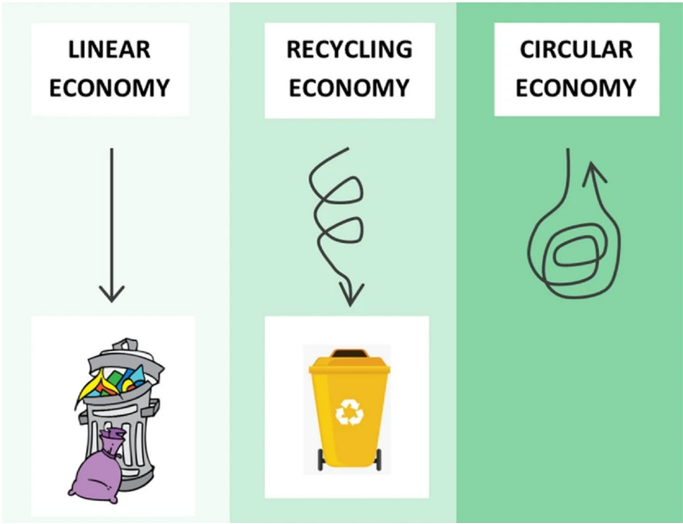
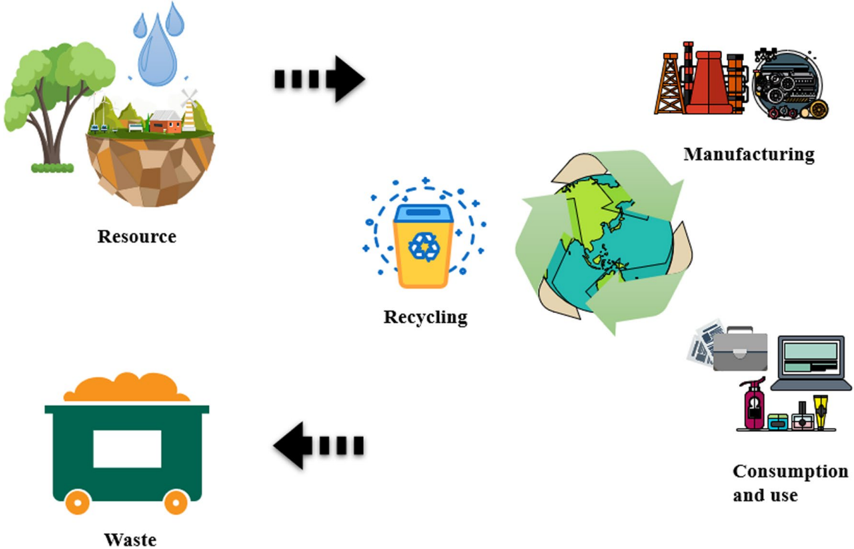
“There are currently five primary aspects of recycling solid waste into circulating materials (Abdel-Shafy and Mansour 2018; Chen et al.”
BackgroundStrategies to achieve a carbon neutral society: a review
Chen, L., Msigwa, G., Yang, M., Osman, A. I., Fawzy, S., Rooney, D. W., & Yap, P.-S. (2022) · Environmental Chemistry Letters · doi:10.1007/s10311-022-01435-8 · Cited by 1,326
Self-citationHydrogen production, storage, utilisation and environmental impacts: a review
Osman, A. I., Mehta, N., Elgarahy, A. M., Hefny, M., Al-Hinai, A., Al-Muhtaseb, A. H., & Rooney, D. W. (2022) · Environmental Chemistry Letters · doi:10.1007/s10311-021-01322-8 · Cited by 1,048
Self-citationRecent advances in carbon capture storage and utilisation technologies: a review
Osman, A. I., Hefny, M., Abdel Maksoud, M. I. A., Elgarahy, A. M., & Rooney, D. W. (2021) · Environmental Chemistry Letters · doi:10.1007/s10311-020-01133-3 · Cited by 862
Self-citationMunicipal solid waste (MSW) as a renewable source of energy: Current and future practices in China
Cheng, H., & Hu, Y. (2010) · Bioresource Technology · doi:10.1016/j.biortech.2010.01.040 · Cited by 783 · cited 1×
“Global governments are under immense pressure to reduce waste generation by implementing various sustainable approaches to effective waste management due to the massive quantity of waste (Cheng and Hu 2010).”
Background
Research works printed but not linked: 4
- 46. Deivanayaki M, Antony I (2012) Alternative vegetable nutrient source for microbial growth. Int J Biosci (IJB) 2:47-51. https:// www. cabdi rect. org/ cabdi rect/ abstr act/ 20123 199022
- 78. Kibert CJ (2016) Sustainable construction: green building design and delivery. Wiley. https:// lccn. loc. gov/ 20150 44564
- 146. Tijani I, Jamal P, Alam M, Mirghani M (2012) Optimization of cassava peel medium to an enriched animal feed by the white rot fungi Panus tigrinus M609RQY. Int Food Res J 19:427-432. http:// ifrj. upm. edu. my/ 19% 20(02)% 202012/ (7) IFRJ-2012% 20Par veen
- 163. Yakkan E, Uysalman T, Atagür M, Sever K, Seydibeyoğlu MÖ (2018) Nanocellulose-polypropylene nanocomposites enhanced with coupling agent. J Bartin Fac for 20:491-502. https:// doi. org/ 10. 24011/ barofd. 455202 · doi:10.24011/barofd.455202
Cited by
Items 101–200 of 835
Kahia, M., & Omri, A. (2024) · Journal of Open Innovation Technology Market and Complexity · doi:10.1016/j.joitmc.2024.100366 · Cited by 37
Approaches and perspectives on the transition to the circular economy in the European Union
Georgescu, L., Bărbuță‐Mișu, N., Antohi, V. M., Forțea, C., & Zlati, M. L. (2025) · Frontiers in Environmental Science · doi:10.3389/fenvs.2025.1533776 · Cited by 44
Naz, R., & Tahir, M. D. (2025) · Energy & Fuels · doi:10.1021/acs.energyfuels.5c00175 · Cited by 36
From waste to worth: advances in energy recovery technologies for solid waste management
Abedin, T., Pasupuleti, J., Paw, J. K. S., Tak, Y. C., Islam, M. R., Basher, M. K., & Nur‐E‐Alam, M. (2025) · Clean Technologies and Environmental Policy · doi:10.1007/s10098-025-03204-x · Cited by 55
“For instance, the study (Yang, et al. 2022) provides evidence that a circular economy will play a substantial role in dealing with climate change through reduced waste, sustainable consumption, and energy efficiency.”
Mandal, R. R., Bashir, Z., Mandal, J. R., & Raj, D. (2024) · Environmental Monitoring and Assessment · doi:10.1007/s10661-024-12680-5 · Cited by 33
“The sustainable use of biological resources for remediation associates with global attempts to combat climate change by promoting eco-friendly and energy-saving solutions (Yang et al., 2023).”
Assessing consumer knowledge, attitudes, and adoption of circular economy practices in Colombia
Hincapié, L. J. H., Leyes, M., Loeber-Vizcaíno, G. E., Pérez, E. A. C., Romero-Perdomo, F., & González‐Curbelo, M. Á. (2024) · Sustainable Production and Consumption · doi:10.1016/j.spc.2024.02.030 · Cited by 44
Yaqub, Z. T., Oboirien, B. O., & Leion, H. (2024) · Renewable Energy · doi:10.1016/j.renene.2024.120298 · Cited by 37
Wang, Y., He, Y., & Gao, X. (2025) · Sustainability · doi:10.3390/su17051801 · Cited by 38
Environmental impacts of biomass energy: A life cycle assessment perspective for circular economy
Akhlisah, Z. N., Ong, H. C., Lee, H. V., & Tan, Y. H. (2025) · Renewable and Sustainable Energy Reviews · doi:10.1016/j.rser.2025.116363 · Cited by 43
Ocean plastic pollution: a human and biodiversity loop
Ayassamy, P. (2025) · Environmental Geochemistry and Health · doi:10.1007/s10653-025-02373-4 · Cited by 36
“Moreover, transforming waste into circulating materials brings about significant social and environmental benefits that can enhance communities across different geographical regions (Yang et al., 2023).”
Kiskira, K., Plakantonaki, S., Gerolimos, N., Kalkanis, Κ., Sfyroera, E., Coelho, F., & Priniotakis, G. (2026) · Clean Technologies · doi:10.3390/cleantechnol8010005 · Cited by 40
“Unlike the linear ‘take–make–dispose’ model, CE aims to regenerate materials and energy across closed-loop systems, minimizing waste and environmental impacts while maintaining product value [28,29].”
Mozhiarasi, V., Natarajan, T. S., & Dhamodharan, K. (2022) · Environmental Research · doi:10.1016/j.envres.2022.115094 · Cited by 31
Sabrin, R., Shahjalal, M., Bachu, H. A. E., Habib, M. M. L., Jerin, T., & Billah, A. H. M. M. (2024) · Journal of Building Engineering · doi:10.1016/j.jobe.2024.108765 · Cited by 37
Edirisinghe, L. G. L. M., de Alwis, A. A. P., & Wijayasundara, M. (2024) · Environmental Challenges · doi:10.1016/j.envc.2024.100985 · Cited by 43
Olonisakin, K., Rodriguez‐Uribe, A., Wang, T., Mohanty, A. K., Thimmanagari, M., & Misra, M. (2025) · Composites Part B Engineering · doi:10.1016/j.compositesb.2025.112375 · Cited by 31
Iqbal, A., Yasar, A., Tabinda, A. B., Haider, R., Sultan, I. A., Kedwaii, A. A., Chaudhary, M. M., Sheikh, M. M., & Nizami, A. (2023) · Sustainability · doi:10.3390/su15076281 · Cited by 43
Liu, J. (2023) · Journal of Cleaner Production · doi:10.1016/j.jclepro.2023.139763 · Cited by 37
Akomea-Frimpong, I., Dzagli, J. R. A. D., Eluerkeh, K., Bonsu, F. B., Opoku-Brafi, S., Gyimah, S., Asuming, N. A. S., Atibila, D. W., & Kukah, A. S. K. (2023) · Engineering Construction & Architectural Management · doi:10.1108/ecam-01-2023-0016 · Cited by 53
Nwankwo, T. C., Ejairu, E., Awonuga, K. F., Usman, F. O., & Nwankwo, E. E. (2024) · International Journal of Science and Research Archive · doi:10.30574/ijsra.2024.11.1.0314 · Cited by 34
Drofenik, J., Seljak, T., & Pintarič, Z. N. (2025) · Journal of Cleaner Production · doi:10.1016/j.jclepro.2025.144902 · Cited by 30
Vasileiadou, A. (2025) · Discover Applied Sciences · doi:10.1007/s42452-025-06907-4 · Cited by 33
Saidi, A., Khawaja, R. E., & Boffito, D. C. (2023) · ACS Engineering Au · doi:10.1021/acsengineeringau.3c00046 · Cited by 35
Sheik, A. G., Krishna, S. B. N., Patnaik, R., Rao, A. S., Bux, F., & Kumari, S. (2024) · Environmental Research · doi:10.1016/j.envres.2024.119133 · Cited by 31
Cost-Benefit Analysis of Enzymatic Hydrolysis Alternatives for Food Waste Management
Ghinea, C., Comăniţă, E.-D., Țâbuleac, R.-M., Oprea, P. S., Coșbuc, E. D., & Gavrilescu, M. C. (2025) · Foods · doi:10.3390/foods14030488 · Cited by 33
Prata, C., Zalambani, C., Rossi, F., Rossello, S., Cerchiara, T., Cappadone, C., & Malucelli, E. (2025) · Nutrients · doi:10.3390/nu17030583 · Cited by 37
“Grape pomace, also known as grape marc or wine pomace, is a significant and degrad‑ able by‑product of the winemaking process, representing about 20–25% of the total grape weight used in wine production [8,15].”
Circular economy and waste management: transforming waste into resources for a sustainable future
Khan, I. A., Haq, F., Kiran, M. C., & Aziz, T. (2025) · International Journal of Environmental Science and Technology · doi:10.1007/s13762-025-06750-5 · Cited by 29
“By evaluating and addressing environmental impacts at each stage, from raw material extraction to disposal, companies can implement strategies to reduce pollution, conserve resources, and minimize waste (Yang et al. 2023).”
Varjani, S., Vyas, S., Su, J., Siddiqui, M. A., Qin, Z., Miao, Y., Liu, Z., Ethiraj, S., Mou, J., & Lin, C. S. K. (2024) · Environmental Pollution · doi:10.1016/j.envpol.2024.123387 · Cited by 35
Qazanfarzadeh, Z., Masek, A., Chakraborty, S., & Kumaravel, V. (2024) · Industrial Crops and Products · doi:10.1016/j.indcrop.2024.119226 · Cited by 28
Wilson, D. C., Paul, J., Ramola, A., & Filho, C. S. (2024) · Waste Management & Research The Journal for a Sustainable Circular Economy · doi:10.1177/0734242x241262717 · Cited by 36
Tabish, M., Khan, S. A. R., Yu, Z., & Tanveer, M. (2024) · Environmental Science and Pollution Research · doi:10.1007/s11356-024-35329-9 · Cited by 33
Mohsin, A. K. M., Gerschberger, M., Plasch, M., Ahmed, S. F., Rahman, A., & Rashed, M. (2024) · Journal of Environmental Management · doi:10.1016/j.jenvman.2024.123109 · Cited by 28
Bergougui, B. (2025) · Land · doi:10.3390/land14061216 · Cited by 30
Adsorption Kinetics of Cadmium and Lead by Biochars in Single- and Bisolute Brackish Water Systems
Rafiq, S., Wongrod, S., & Vinitnantharat, S. (2023) · ACS Omega · doi:10.1021/acsomega.3c03335 · Cited by 31
Ha, J., Mu, Y., Masud, M. M., Akhtar, R., Saif, A. N. M., Islam, K. M. A., & Hafiz, N. (2024) · Humanities and Social Sciences Communications · doi:10.1057/s41599-024-03092-4 · Cited by 35
AI-driven digital circular economy with material and energy sustainability for industry 4.0
Zhou, Y. (2025) · Energy and AI · doi:10.1016/j.egyai.2025.100508 · Cited by 43
Chowdhury, H., & Asiabanpour, B. (2024) · Journal of Cleaner Production · doi:10.1016/j.jclepro.2024.143256 · Cited by 33
Ren, Q., Li, J., & Albrecht, J. (2024) · Business Strategy and the Environment · doi:10.1002/bse.4019 · Cited by 28
Lefèvre, J. (2023) · Economic Systems Research · doi:10.1080/09535314.2023.2266559 · Cited by 43
“One such area is the circular economy, a crucial sustainability policy field that complements climate policy by aiming at greater circularity and resource efficiency in industrial processes (e.g. recycling, material efficiency, reuse) (Gallego-Schmid et al., 2020; Yang et al.,2023).”
Le, T. T., Tran, P. Q., & Dhar, B. K. (2024) · Journal of Cleaner Production · doi:10.1016/j.jclepro.2024.144387 · Cited by 35
Aphicidal Activity and Phytotoxicity of Citrus sinensis Essential-Oil-Based Nano-Insecticide
Laudani, F., Campolo, O., Caridi, R., Latella, I., Modafferi, A., Palmeri, V., Sorgonà, A., Zoccali, P., & Giunti, G. (2022) · Insects · doi:10.3390/insects13121150 · Cited by 25
“On the basis of the 4R approach (reduce, reuse, recycle, and recover), circular agriculture aims to reduce external inputs by using in-house resources to improve the whole sustainability of the agroindustry and agroecosystems [9,10].”
BackgroundHuang, H., Heng, Y., Yu, Z., Zhang, X., Zhu, X., Fang, Z. M., Li, J., & Guo, X. (2024) · Journal of Colloid and Interface Science · doi:10.1016/j.jcis.2024.05.125 · Cited by 24
Microalgal bioengineering: A futuristic tool for carbon capture
Ugya, A. Y., Sheng, Y., Chen, H., & Wang, Q. (2024) · Results in Engineering · doi:10.1016/j.rineng.2024.102990 · Cited by 30
Soni, N., Yadav, M., Malarvannan, M., Sharma, D., & Paul, D. (2025) · Journal of Chromatography B · doi:10.1016/j.jchromb.2025.124543 · Cited by 25
Economic development and climate change: Achieving a sustainable balance
Glavina, A., Mišić, K., Baleta, J., Jin, W., & Mikulčić, H. (2025) · Cleaner Engineering and Technology · doi:10.1016/j.clet.2025.100939 · Cited by 37
Jan, H. A., Osman, A. I., Šurina, I., Saleh, J., Kumar, R., & Al-Fatesh, A. S. (2023) · Biofuels · doi:10.1080/17597269.2023.2277989 · Cited by 26
“Currently, most countries aim to achieve net zero carbon emissions by 2050–2070, but only 55% of countries worldwide have stated clear goals for enhanced reductions in carbon emissions by 2030 [6].”
BackgroundSelf-citationLiberto, E. A. D., & Dintcheva, N. T. (2024) · Polymers · doi:10.3390/polym16050568 · Cited by 23
“Countries worldwide have made efforts to mitigate climate change by setting emission reduction standards or by using advanced technologies to limit greenhouse gas emissions [1,2].”
BackgroundBuilding circular economy theories: A practical‐oriented perspective and a way forward
Mignacca, B., Filippelli, S., Strazzullo, S., Tiburzi, L., Urbinati, A., & Kirchherr, J. (2025) · Journal of Industrial Ecology · doi:10.1111/jiec.13622 · Cited by 31
Recent scenario of e-waste recycling: chemical engineering
Bhattacharjee, J., De, A., Kamila, B., & Mandal, A. (2025) · International Journal of Chemical Reactor Engineering · doi:10.1515/ijcre-2024-0058 · Cited by 27
Ahmad, S., Javed, U., Sharma, C. B., & Siddiqui, M. S. (2025) · Green Technologies and Sustainability · doi:10.1016/j.grets.2025.100224 · Cited by 56
Bhutani, M., Gaur, S. S., Shams, R., Dash, K. K., Shaikh, A. M., & Kovács, B. (2025) · Future Foods · doi:10.1016/j.fufo.2025.100710 · Cited by 28
Advances in Emerging MBene‐Based Materials for Electrocatalysis
Zheng, Z., Cui, Z., Peng, W., & Liu, J. (2025) · Advanced Functional Materials · doi:10.1002/adfm.202513341 · Cited by 25
Filho, W. L., Frizzo, K., Eustachio, J. H. P. P., Tsani, S., & Özuyar, P. G. (2023) · Sustainable Development · doi:10.1002/sd.2796 · Cited by 29
Ecofriendly reactive printing of cellulosic fabric with sustainable novel techniques
Majeed, H., & Iftikhar, T. (2024) · Cellulose · doi:10.1007/s10570-024-06008-2 · Cited by 22
“The urgency to transition from a linear economy to a circular one is undeniable, necessitating a profound transformation of our manufacturing practices towards sustainability (Yang et al. 2023a).”
Dash, M., Dubey, A. K., Choudhary, T., Liu, Y., Nanda, H. S., & Pati, S. (2025) · Chemical Engineering Journal · doi:10.1016/j.cej.2025.160324 · Cited by 25
Acosta‐Santoyo, G., Treviño-Reséndez, J. D. J., Robles, I., Godínez, L. A., & García‐Espinoza, J. D. (2023) · Chemosphere · doi:10.1016/j.chemosphere.2023.140573 · Cited by 29
Bionanotechnology: A Paradigm for Advancing Environmental Sustainability
Prajapati, D., Jabborova, D., Saharan, B. S., Singh, N. A., Patani, A., Singh, S., & Joshi, C. (2024) · Indian Journal of Microbiology · doi:10.1007/s12088-024-01389-1 · Cited by 30
“International agreements and federal rules also have a significant impact on how organizational initiatives for a more sustainable future are developed [3–6].”
Valorization of corn cob waste for furfural production: A circular economy approach
Ariyanti, D., Rimantho, D., Leonardus, M., Ardyani, T., Lisnawati, L., Fiviyanti, S., Sarwana, W., Hanifah, Y., Agustian, E., Meliana, Y., et al. (2025) · Biomass and Bioenergy · doi:10.1016/j.biombioe.2025.107665 · Cited by 29
Current Status and Reflections on Ocean CO2 Sequestration: A Review
Zhang, S., Jiang, S., Li, H., Li, P., Zhong, X., Chen, C., Tu, G., Liu, X., & Xu, Z. (2025) · Energies · doi:10.3390/en18040942 · Cited by 22
Uddin, M. A., Shahabuddin, M. S., Jameel, M., Rahman, M., Hosen, M. A., Alanazi, F., AbdelMongy, M., & El-kady, M. S. (2025) · Energy and Buildings · doi:10.1016/j.enbuild.2025.115831 · Cited by 37
Ding, Y., Deng, L., Liu, X.-X., Wang, L., Meng, Y., Ouyang, M., Chen, F., Huang, Z., & Kuang, T. (2025) · Chemical Engineering Journal · doi:10.1016/j.cej.2025.164101 · Cited by 21
Revisiting the Circular Economy Paradox: A Triple Bottom Line Perspective
Serrano, M. F., & Salesa, A. (2025) · Sustainable Development · doi:10.1002/sd.3539 · Cited by 27
Mishra, A., & Shankar, S. (2025) · The Science of The Total Environment · doi:10.1016/j.scitotenv.2025.180093 · Cited by 27
Nia, S. B., & Shafei, B. (2025) · Cleaner and Responsible Consumption · doi:10.1016/j.clrc.2025.100310 · Cited by 35
Venkataraman, S., & Sundramoorthy, A. K. (2026) · RSC Advances · doi:10.1039/d5ra08357e · Cited by 23
Vukelić, I., Milošević, S., Đurđević, D., Racić, G., & Tot, V. (2023) · Energy Sustainability and Society · doi:10.1186/s13705-023-00413-4 · Cited by 21
“…resource scarcity, global climate change, environmental degradation and increasing demand for food, the circular economy represents a promising strategy to support sustainable, restorative, and regenerative agriculture [16] with increased energy efficiency and reduced impact on climate change [17].”
BackgroundPotortì, A. G., Messina, L., Licata, P., Gugliandolo, E., Santini, A., & Bella, G. D. (2024) · Sustainability · doi:10.3390/su16020706 · Cited by 28
Holistic benefits of plant-based foods for sustainable agrifood systems
Boukid, F. (2024) · Current Opinion in Food Science · doi:10.1016/j.cofs.2024.101184 · Cited by 27
Climate Change Adaptation: New Vistas for Management Research
Benischke, M. H., D’Ippolito, B., Sharma, G., & Wickert, C. M. J. (2025) · Journal of Management Studies · doi:10.1111/joms.13193 · Cited by 30
Gomes, S., & Lopes, J. M. (2023) · Business Strategy & Development · doi:10.1002/bsd2.327 · Cited by 32
Chin, M. Y., Lee, C. T., & Woon, K. S. (2023) · Industrial & Engineering Chemistry Research · doi:10.1021/acs.iecr.3c02225 · Cited by 21
Upcycling technologies for food waste management: safety, limitations, and current trends
Isaac-Bamgboye, F. J., Onyeaka, H., Isaac-Bamgboye, I. T., Chukwugozie, D. C., & Afolayan, M. (2025) · Green Chemistry Letters and Reviews · doi:10.1080/17518253.2025.2533894 · Cited by 86
“…upcycling by assessing if it is more beneficial to reduce waste through process improvement than generating a lot of waste for upcy-cling later (56) Consumer acceptability of the upcycled products is another important factors that need to be considered, especially for upcycled food…”
A bibliometric analysis on renewable energy's public health benefits
Şenyapar, H. N. D. (2023) · Journal of Energy Systems · doi:10.30521/jes.1252122 · Cited by 28
Dada, M. A., Majemite, M. T., Obaigbena, A., Oliha, J. S., & Biu, P. W. (2024) · International Journal of Science and Research Archive · doi:10.30574/ijsra.2024.11.1.0031 · Cited by 19
Solangi, Y. A., Alyamani, R., & Almakhles, D. J. (2025) · Journal of Environmental Management · doi:10.1016/j.jenvman.2025.124124 · Cited by 24
Ajayeoba, T. A., & Ijabadeniyi, O. A. (2025) · SSRN Electronic Journal · doi:10.2139/ssrn.5119686 · Cited by 32
Chen, Y. (2024) · Ocean & Coastal Management · doi:10.1016/j.ocecoaman.2024.107108 · Cited by 22
Opportunities for circular economy in waste reuse: Insights from social media data mining
Badran, S., Massoud, M. A., Stephan, R., Elbassuoni, S., Chalak, A., & Abiad, M. G. (2024) · Resources Conservation and Recycling · doi:10.1016/j.resconrec.2024.108100 · Cited by 22
Spada, E., Carlucci, D., Cembalo, L., Chinnici, G., D’Amico, M., Falcone, G., Giannoccaro, G., Gulısano, G., Iofrıda, N., Stempfle, S., et al. (2025) · Business Strategy and the Environment · doi:10.1002/bse.4121 · Cited by 32
A new circular economy conception for sustainable product design
Klose, S. A., & Fröhling, M. (2025) · Journal of Industrial Ecology · doi:10.1111/jiec.13620 · Cited by 23
“Regardingtheenvironmental pillar,thereisincreasingevidencethatCEcanbeeffective intackling environmental challenges (Hailemariam & Erdiaw-Kwasie, 2023; Yang et al., 2023).”
Entrepreneurship and Sustainability: Analyzing the impact of Green Startups on Economic Development
Sharma, S. N., & Subba, R. (2025) · Innovation and Green Development · doi:10.1016/j.igd.2025.100280 · Cited by 50
Developing a Tool for Calculating the Carbon Footprint in SMEs
Eleftheriadis, I. M., & Anagnostopoulou, E. G. (2024) · Sustainability · doi:10.3390/su16051905 · Cited by 30
Zaman, M., Sheraz, M., Qin, Q., & Mumtaz, M. Z. (2025) · Sustainable Development · doi:10.1002/sd.3420 · Cited by 24
Pfeffer, D., Reike, D., & Bening, C. R. (2025) · Environmental Innovation and Societal Transitions · doi:10.1016/j.eist.2025.100982 · Cited by 24
Amudjie, J., Chan, A. P. C., Darko, A., Debrah, C., & Agyekum, K. (2025) · Automation in Construction · doi:10.1016/j.autcon.2025.106250 · Cited by 21
Feasibility study of value-added production from onion peel agricultural wastes for circular economy
Hsueh, C., Roxas, T. J. R., Chan, Y.-H., Juan, C.-N., Tayo, L. L., Chen, Y., Wu, Y.-C., Hua, K.-F., Tsai, P., Sun, S.-Y., et al. (2023) · Journal of the Taiwan Institute of Chemical Engineers · doi:10.1016/j.jtice.2023.104851 · Cited by 17
Cappelletti, F., & Germani, M. (2023) · International Journal of Production Research · doi:10.1080/00207543.2023.2243527 · Cited by 20
“…of these initiatives on the typical product of the cluster (Daddi, Nucci, and Iraldo 2017); the present study relies on the potentialities of LCA, as it is replicable and returns objective effects of waste-to-treasure life cycle development strategies on the environment (M. Yang et al. 2023).”
Sufyan, F., Ali, M., Khan, S., & Hossain, N. (2023) · Sustainability · doi:10.3390/su151914417 · Cited by 18
Herrador, M. (2024) · Journal of Cleaner Production · doi:10.1016/j.jclepro.2024.140778 · Cited by 17
Li, G., Luo, T., Liu, R., Song, C., Zhao, C., Wu, S., & Liu, Z. (2024) · Processes · doi:10.3390/pr12020402 · Cited by 23
“…understanding of the applications and potentials of integrating CDR technology and AI in energy system optimization. developing advanced AI models and optimization algorithms specifically tailored for CDR technology, including addressing model uncertainties and improving data collection…”
MethodA Blockchain-based carbon emission security accounting scheme
He, Y., Wang, S., Zhou, Z., Xiao, K., Xie, A., & Wu, B. L. (2024) · Computer Networks · doi:10.1016/j.comnet.2024.110304 · Cited by 17
Climate Change and Entrepreneurship: A Review and Research Agenda
Karadayı, T., Yazıcı, S., & Ömür, G. A. (2024) · Global Business and Organizational Excellence · doi:10.1002/joe.22281 · Cited by 24
Ramos, E., Rabiee, M., Tarei, P. K., Chavez, M., & Coles, P. S. (2024) · Production Planning & Control · doi:10.1080/09537287.2024.2370988 · Cited by 20
“‘Laws and policies of waste management’ (CE1), ‘Knowledge and experience to understand structures’ (RE3), and ‘Trust among all the actors’ (RE2) drivers underline the necessity for expertise in navigating complex supply chain structures and the significance of developing cooperative relationships along the agri-food s…”
InfluentialCho, E. J., Lee, W.-H., Lee, Y. G., Ta, Q. V., Kim, H. Y., & Bae, H. (2025) · Food Chemistry X · doi:10.1016/j.fochx.2025.102606 · Cited by 20
“Reducing greenhouse-gas emissions, addressing environmental pollution, mitigating fossil-resource depletion, and optimizing waste management are critical global challenges (Shiferaw et al., 2023; Yang et al., 2023).”
Rasu, K., Shanmugam, V., & Davim, J. P. (2025) · Journal of Composites Science · doi:10.3390/jcs9070357 · Cited by 16
Santos, L. H. M. L. M., Rodríguez‐Mozaz, S., & Buttiglieri, G. (2025) · Environmental Chemistry Letters · doi:10.1007/s10311-025-01878-9 · Cited by 34
“It is estimated that worldwide agriculture consumes about 70% of the available water [1, 2].”
Ijimdiya, S. J., Kumarasamy, M., Adu, J. T., & Pandi, D. (2026) · Sustainability · doi:10.3390/su18041946 · Cited by 24
Kai, L., Liu, X., Xie, X., Liu, R., Li, T., & Shah, S. P. (2023) · Construction and Building Materials · doi:10.1016/j.conbuildmat.2023.133375 · Cited by 17
Önden, İ., Pamucar, D. S., Deveci, M., As, Y., Birol, B., & Yıldız, F. Ş. (2023) · Expert Systems with Applications · doi:10.1016/j.eswa.2023.121827 · Cited by 16
Singh, P., Dhanorkar, M. N., & Sharma, S. (2023) · Resources Conservation and Recycling · doi:10.1016/j.resconrec.2023.107385 · Cited by 19
Circular Economy and Tourism: A Bibliometric Journey Through Scholarly Discourse
Kabil, M., Rahmat, A. F., Hegedűs, M., Galovics, B., & Dávid, L. D. (2024) · Journal of Circular Economy · doi:10.55845/hgwo7144 · Cited by 42
“For example, minimizing the bulk of garbage, noise and water pollution (Giurea et al., 2022; Nocca et al., 2023; Rodríguez et al., 2020; Yang et al., 2023), promoting recycling and reuse, and decreasing the use of once-used plastics (Raab et al., 2023), implementing resource-saving strategies…”
Background
Metadata
- Authors
- Yang, M., Chen, L., Wang, J., Msigwa, G., Osman, A. I., Fawzy, S., Rooney, D. W., & Yap, P.-S.
- Affiliations
- Xi’an Jiaotong-Liverpool University (CN)
- Queen's University Belfast (GB)
- Corresponding author
- Osman, Ahmed I.
- Yap, Pow-Seng
- ORCID
- Venue
- Environmental Chemistry Letters
- Published
- 2022-09-06
- Volume
- 21
- Issue
- 1
- Pages
- 55-80
- ISSN
- 1610-3653 (ISSN-L)
- 1610-3661
- OpenAlex
- W4294733719
- Cited by
- 835
- References
- 162
- Citations by year
- 2026: 197 · 2025: 329 · 2024: 208 · 2023: 94 · 2022: 7
- FWCI
- 119.14
- Type
- journal article
- Language
- en
- Open access
- hybrid
- doi.org
- Licence
- cc-by
- creativecommons.org/licenses/by/4.0 (tdm)
- creativecommons.org/licenses/by/4.0 (vor)
- Locations
- Environmental Chemistry Letters (publishedVersion, cc-by)
- Research Portal (Queen's University Belfast) (submittedVersion, cc-by)
- Funders
- SEUPB (Bryden Centre project (Project ID VA5048))
- Topics
- Social Sciences › Business, Management and Accounting › Strategy and Management › Sustainable Supply Chain Management
- Physical Sciences › Engineering › Industrial and Manufacturing Engineering › Sustainable Industrial Ecology
- Physical Sciences › Engineering › Building and Construction › Sustainable Design and Development
- Keywords
- circular economy, climate change mitigation, carbon emission reduction, carbon neutrality, solid waste management, bio-based materials, land use and land cover, life cycle assessment, energy efficiency, air and water quality, food production, sustainable industry
About these checks
Registry, retraction, Cites and statistics results are computed, not judged, with one exception: a printed reference that no index lists is read once by a model before it counts as a citation error. Claims are extracted by a model and kept only when their quote appears verbatim in the text; each cited source is then checked, with a model’s help, for whether it says what the claim relies on. Those verdicts can be wrong — read the claim’s quote and the cited source before relying on one.
Statistics and arithmetic are recomputed, not judged.
Confidence bands are shown only for fields calibrated on our annotated test set. None is calibrated yet, so no band is shown.
What counts as a claim ›How we measure confidence ›How we check this ›
Are you an author, or do you see a problem with this page? Request a review
Data sources
Bibliographic data: Semantic Scholar, OpenAlex, Crossref.
Contains information from the Semantic Scholar Academic Graph Datasets, made available under the ODC Attribution License (ODC-BY 1.0).
Semantic Scholar’s data is described in: Kinney, R., et al. (2023). The Semantic Scholar Open Data Platform. arXiv:2301.10140.
