

Circular economy strategies for combating climate change and other environmental issues
Open accessThe DOI matches its Crossref record; 162 of the 162 references it cites were found in a registry or an index.
Abstract
Global industrialization and excessive dependence on nonrenewable energy sources have led to an increase in solid waste and climate change, calling for strategies to implement a circular economy in all sectors to reduce carbon emissions by 45% by 2030, and to achieve carbon neutrality by 2050. Here we review circular economy strategies with focus on waste management, climate change, energy, air and water quality, land use, industry, food production, life cycle assessment, and cost-effective routes. We observed that increasing the use of bio-based materials is a challenge in terms of land use and land cover. Carbon removal technologies are actually prohibitively expensive, ranging from 100 to 1200 dollars per ton of carbon dioxide. Politically, only few companies worldwide have set climate change goals. While circular economy strategies can be implemented in various sectors such as industry, waste, energy, buildings, and transportation, life cycle assessment is required to optimize new systems. Overall, we provide a theoretical foundation for a sustainable industrial, agricultural, and commercial future by constructing cost-effective routes to a circular economy.
Overview
The claims and statistics of this paper haven’t been checked yet.
Free: it reads the open-access text and checks the first 5 claims that cite a source we can check. Create a free account to check every claim.
Integrity signals
Registry
Cites
Statistics
Figures
Verification
Claims the paper makes
The claims and statistics of this paper haven’t been checked yet.
Free: it reads the open-access text and checks the first 5 claims that cite a source we can check. Create a free account to check every claim.
Claims other papers make about this one
Each is checked against this paper’s own text: does it say what the citing paper says it does?
The source backs part of the claim, not all of it — or backs it for a different population, condition or comparison.
In the citing paper
“Biogas produced from biological waste supports the ideals of a circular economy by offering sustainable illumination without imposing any additional environmental impact [172].”
From Anaerobic digestion of agricultural waste for biogas production and sustainable bioenergy recovery: a review (2024) · cites this paper as [172]
Experimental — accuracy not yet measuredThe cited source says what the claim attributes to it.
In the citing paper
“Bioenergy can efficiently mitigate greenhouse gas emissions [108,172].”
From Anaerobic digestion of agricultural waste for biogas production and sustainable bioenergy recovery: a review (2024) · cites this paper as [172]
Self-check
Percentages, sums and reported differences re-computed from the paper’s own numbers.
The self-check needs the paper’s full text.
Citations
Cites
1 retracted
Khan, S. A. R., Razzaq, A., Yu, Z., & Miller, S. (2021) · Business Strategy and the Environment · doi:10.1002/bse.2853 · Cited by 404 · cited 1×
“Circular economy strategies reduce carbon emissions and provide a profitable business model for the industry with improved quality, efficiency, and working conditions via a traceable carbon footprint throughout the product's life cycle (Khan et al. 2021).”
BackgroundRetractedGhisellini, P., Cialani, C., & Ulgiati, S. (2016) · Journal of Cleaner Production · doi:10.1016/j.jclepro.2015.09.007 · Cited by 6,536
Circular economy: The concept and its limitations
Korhonen, J., Honkasalo, A., & Seppälä, J. (2018) · Ecological Economics · doi:10.1016/j.ecolecon.2017.06.041 · Cited by 3,961
World agriculture towards 2030/2050: the 2012 revision
Alexandratos, N., Bruinsma, J., Alexandratos, N., & Bruinsma, J. (2012) · RePEc: Research Papers in Economics · doi:10.22004/ag.econ.288998 · Cited by 3,093 · cited 1×
“Agriculture accounts for 70% of the world’s freshwater consumption and is the largest consumer of freshwater resources (Alexandratos and Bruinsma 2012; Dubois 2011).”
BackgroundSolid waste management challenges for cities in developing countries
Guerrero, L. A., Maas, G., & Hogland, W. (2013) · Waste Management · doi:10.1016/j.wasman.2012.09.008 · Cited by 2,008
Solid waste issue: sources, composition, disposal, recycling, and valorization
Abdel-Shafy, H. I., & Mansour, M. S. M. (2018) · Egyptian Journal of Petroleum · doi:10.1016/j.ejpe.2018.07.003 · Cited by 1,686 · cited 1×
“There are currently five primary aspects of recycling solid waste into circulating materials (Abdel-Shafy and Mansour 2018; Chen et al.”
BackgroundStrategies to achieve a carbon neutral society: a review
Chen, L., Msigwa, G., Yang, M., Osman, A. I., Fawzy, S., Rooney, D. W., & Yap, P.-S. (2022) · Environmental Chemistry Letters · doi:10.1007/s10311-022-01435-8 · Cited by 1,326
Self-citationHydrogen production, storage, utilisation and environmental impacts: a review
Osman, A. I., Mehta, N., Elgarahy, A. M., Hefny, M., Al-Hinai, A., Al-Muhtaseb, A. H., & Rooney, D. W. (2022) · Environmental Chemistry Letters · doi:10.1007/s10311-021-01322-8 · Cited by 1,048
Self-citationRecent advances in carbon capture storage and utilisation technologies: a review
Osman, A. I., Hefny, M., Abdel Maksoud, M. I. A., Elgarahy, A. M., & Rooney, D. W. (2021) · Environmental Chemistry Letters · doi:10.1007/s10311-020-01133-3 · Cited by 862
Self-citationMunicipal solid waste (MSW) as a renewable source of energy: Current and future practices in China
Cheng, H., & Hu, Y. (2010) · Bioresource Technology · doi:10.1016/j.biortech.2010.01.040 · Cited by 783 · cited 1×
“Global governments are under immense pressure to reduce waste generation by implementing various sustainable approaches to effective waste management due to the massive quantity of waste (Cheng and Hu 2010).”
BackgroundConversion of biomass to biofuels and life cycle assessment: a review
Osman, A. I., Mehta, N., Elgarahy, A. M., Al-Hinai, A., Al-Muhtaseb, A. H., & Rooney, D. W. (2021) · Environmental Chemistry Letters · doi:10.1007/s10311-021-01273-0 · Cited by 761
Self-citationDantas, T. E. T., de-Souza, E. D., Destro, I. R., Hammes, G., Rodriguez, C. M. T., & Soares, S. R. (2021) · Sustainable Production and Consumption · doi:10.1016/j.spc.2020.10.005 · Cited by 685
Designing business models in circular economy: A systematic literature review and research agenda
Centobelli, P., Cerchione, R., Chiaroni, D., Del Vecchio, P., & Urbinati, A. (2020) · Business Strategy and the Environment · doi:10.1002/bse.2466 · Cited by 672 · cited 1×
“In a circular economy model, natural resource consumption would continue to decline (Centobelli et al. 2020).”
BackgroundTransition towards Circular Economy in the Food System
Jurgilevich, A., Birge, T., Kentala-Lehtonen, J., Korhonen-Kurki, K., Pietikäinen, J., Saikku, L., & Schösler, H. (2016) · Sustainability · doi:10.3390/su8010069 · Cited by 607 · cited 2×
“Reducing meat consumption is one of the critical opportunities for the circular economy in the food consumption system (Jurgilevich et al. 2016), mainly because meat production has a more significant impact on the environment than vegetarian food.”
BackgroundMinimizing the increasing solid waste through zero waste strategy
Song, Q., Li, J., & Zeng, X. (2015) · Journal of Cleaner Production · doi:10.1016/j.jclepro.2014.08.027 · Cited by 581 · cited 1×
“However, researchers have proposed zero-waste strategies to reduce the growing amount of solid waste (Bartl 2011; Phillips et al. 2011; Song et al. 2015).”
BackgroundMechanisms Underlying the Cholesterol-Lowering Properties of Soluble Dietary Fibre Polysaccharides
Gunness, P., & Gidley, M. J. (2010) · Food & Function · doi:10.1039/c0fo00080a · Cited by 527 · cited 1×
“Dietary fiber from orange peel positively affects human health by lowering blood lipid and glucose levels, reducing the risk of cardiovascular disease, and boosting intestinal immunity (Gunness and Gidley 2010).”
BackgroundSharma, H. B., Vanapalli, K. R., Samal, B., Cheela, V. R. S., Dubey, B. K., & Bhattacharya, J. (2021) · Science of The Total Environment · doi:10.1016/j.scitotenv.2021.149605 · Cited by 520
Osman, A. I., Fawzy, S., Farghali, M., El-Azazy, M., Elgarahy, A. M., Fahim, R. A., Maksoud, M. I. A. A., Ajlan, A. A., Yousry, M., Saleem, Y., et al. (2022) · Environmental Chemistry Letters · doi:10.1007/s10311-022-01424-x · Cited by 515
Self-citationComparing linear and circular supply chains: A case study from the construction industry
Nasir, M. H. A., Genovese, A., Acquaye, A. A., Koh, S. C. L., & Yamoah, F. (2017) · International Journal of Production Economics · doi:10.1016/j.ijpe.2016.06.008 · Cited by 503
Intelligent Packaging in the Food Sector: A Brief Overview
Müller, P., & Schmid, M. (2019) · Foods · doi:10.3390/foods8010016 · Cited by 471 · cited 1×
“For instance, the standard conditions for storage should be clearly stated on food packaging in the event of poor storage management (Müller and Schmid 2019).”
BackgroundSalvaging building materials in a circular economy: a BIM-based whole-life performance estimator
Akanbi, L. A., Oyedele, L. O., Akinade, O. O., Ajayi, A. O., Davila Delgado, M., Bilal, M., & Bello, S. A. (2018) · Resources, Conservation and Recycling · doi:10.1016/j.resconrec.2017.10.026 · Cited by 468
Priefer, C., Jörissen, J., & Bräutigam, K.-R. (2016) · Resources, Conservation and Recycling · doi:10.1016/j.resconrec.2016.03.004 · Cited by 434 · cited 2×
“There are numerous causes of food waste in the home, including impulse purchases, excessive purchases, insufficient quantities of favorite foods, a lack of food preparation skills, poor storage management, and an inability to repurpose leftovers (Priefer et al. 2016).”
BackgroundBarriers to smart waste management for a circular economy in China
Zhang, A., Venkatesh, V. G., Liu, Y., Wan, M., Qu, T., & Huisingh, D. (2019) · Journal of Cleaner Production · doi:10.1016/j.jclepro.2019.118198 · Cited by 432 · cited 1×
“Reducing greenhouse gas emissions, addressing resource depletion and environmental pollution, and optimizing waste management have become global hot topics (Dantas et al. 2021; Sadhukhan et al. 2020; Zhang et al. 2019).”
BackgroundA systematic review for measuring circular economy: The 61 indicators
De Pascale, A., Arbolino, R., Szopik-Depczyńska, K., Limosani, M., & Ioppolo, G. (2021) · Journal of Cleaner Production · doi:10.1016/j.jclepro.2020.124942 · Cited by 414
Water reuse from a circular economy perspective and potential risks from an unregulated approach
Voulvoulis, N. (2018) · Current Opinion in Environmental Science & Health · doi:10.1016/j.coesh.2018.01.005 · Cited by 411 · cited 1×
“Adopting a circular economy strategy can create significant synergies with reused water as an alternative water supply, and the circular economy strategy should ensure that water reuse is safe and that the applicable water quality standards are applied (Voulvoulis 2018).”
BackgroundA circular economy approach to plastic waste
Payne, J., McKeown, P., & Jones, M. D. (2019) · Polymer Degradation and Stability · doi:10.1016/j.polymdegradstab.2019.05.014 · Cited by 385 · cited 1×
“A new plastics economy based on the core principles of the circular economy can improve the socio-economic performance of the entire supply chain and significantly reduce plastic waste and the negative environmental impacts associated with plastic waste in industrial production processes (Payne et al. 2019).”
BackgroundMunicipal solid waste management in China: a comparative analysis
Mian, M. M., Zeng, X., Nasry, A. A. N. B., & Al-Hamadani, S. M. Z. F. (2017) · Journal of Material Cycles and Waste Management · doi:10.1007/s10163-016-0509-9 · Cited by 364
Scheepens, A. E., Vogtländer, J. G., & Brezet, J. C. (2016) · Journal of Cleaner Production · doi:10.1016/j.jclepro.2015.05.075 · Cited by 363
Consumers’ Perspective on Circular Economy Strategy for Reducing Food Waste
Borrello, M., Caracciolo, F., Lombardi, A., Pascucci, S., & Cembalo, L. (2017) · Sustainability · doi:10.3390/su9010141 · Cited by 356
de Boer, J., Schösler, H., & Aiking, H. (2014) · Appetite · doi:10.1016/j.appet.2014.02.002 · Cited by 355
Cellulose nanomaterial reinforced polymer nanocomposites
Dufresne, A. (2017) · Current Opinion in Colloid & Interface Science · doi:10.1016/j.cocis.2017.01.004 · Cited by 349 · cited 1×
“2018), and the barrier properties were also improved to some extent (Dufresne 2017; Plackett et al.”
BackgroundThe anaerobic digestion process of biogas production from food waste: Prospects and constraints
Pramanik, S. K., Suja, F. B., Zain, S. M., & Pramanik, B. K. (2019) · Bioresource Technology Reports · doi:10.1016/j.biteb.2019.100310 · Cited by 347
Li, J., Xiao, F., Zhang, L., & Amirkhanian, S. N. (2019) · Journal of Cleaner Production · doi:10.1016/j.jclepro.2019.06.061 · Cited by 339
Circular economy model framework in the European water and wastewater sector
Smol, M., Adam, C., & Preisner, M. (2020) · Journal of Material Cycles and Waste Management · doi:10.1007/s10163-019-00960-z · Cited by 332 · cited 1×
“Water recovery and recycling is an approach to water resource management based on a circular economy (Smol et al. 2020).”
BackgroundMunicipal solid waste: Generation, composition and GHG emissions in Bangalore, India
Ramachandra, T. V., Bharath, H. A., Kulkarni, G., & Han, S. S. (2018) · Renewable and Sustainable Energy Reviews · doi:10.1016/j.rser.2017.09.085 · Cited by 322 · cited 1×
“5 gram per day, while the per capita generation of organic waste is 74 ± 35 gram per person per day (Ramachandra et al. 2018).”
BackgroundRe-Thinking Mining Waste through an Integrative Approach Led by Circular Economy Aspirations
Tayebi-Khorami, M., Edraki, M., Corder, G., & Golev, A. (2019) · Minerals · doi:10.3390/min9050286 · Cited by 322 · cited 1×
“Circular economy strategies enable the mining industry and managers to participate in the entire life cycle of a project, including the final residual waste and promote the use of natural cycles in the metallurgical industry of metals and conversion of the environment and, most importantly, the development of adaptive…”
BackgroundBilal, M., Khan, K. I. A., Thaheem, M. J., & Nasir, A. R. (2020) · Journal of Cleaner Production · doi:10.1016/j.jclepro.2020.123250 · Cited by 286
Using life cycle assessment to achieve a circular economy
Peña, C., Civit, B., Gallego-Schmid, A., Druckman, A., Pires, A. C., Weidema, B., Mieras, E., Wang, F., Fava, J., Canals, L. M. I., et al. (2021) · The International Journal of Life Cycle Assessment · doi:10.1007/s11367-020-01856-z · Cited by 280 · cited 2×
“The conceptual model of the circular economy is utilized globally and in numerous research fields (Peña et al. 2021).”
BackgroundMethodEnergy systems for climate change mitigation: A systematic review
Kang, J.-N., Wei, Y.-M., Liu, L.-C., Han, R., Yu, B.-Y., & Wang, J.-W. (2020) · Applied Energy · doi:10.1016/j.apenergy.2020.114602 · Cited by 276
Self-citationChen, L., Wang, L., Cho, D.-W., Tsang, D. C. W., Tong, L., Zhou, Y., Yang, J., Hu, Q., & Poon, C. S. (2019) · Journal of Cleaner Production · doi:10.1016/j.jclepro.2019.03.057 · Cited by 274
Self-citationBiomass production for bioenergy using marginal lands
Mehmood, M. A., Ibrahim, M., Rashid, U., Nawaz, M., Ali, S., Hussain, A., & Gull, M. (2017) · Sustainable Production and Consumption · doi:10.1016/j.spc.2016.08.003 · Cited by 266 · cited 1×
“At the same time, energy crops grown on marginal land also allow cellulosic biomass without competing with food crops and help reclaim marginal land, significantly reducing greenhouse gases without posing any risk to food security (Mehmood et al. 2017).”
BackgroundAlhawari, O., Awan, U., Bhutta, M. K. S., & Ülkü, M. A. (2021) · Sustainability · doi:10.3390/su13020859 · Cited by 262 · cited 1×
“It is becoming increasingly apparent that structural optimization of sustainable development measures cannot be accomplished without circular economy strategies (Alhawari et al. 2021).”
BackgroundCircular Economy and Sustainability: the Past, the Present and the Future Directions
Nikolaou, I. E., Jones, N., & Stefanakis, A. (2021) · Circular Economy and Sustainability · doi:10.1007/s43615-021-00030-3 · Cited by 260
Technology, cost, a performance of waste-to-energy incineration industry in China
Xin-gang, Z., Gui-wu, J., Ang, L., & Yun, L. (2016) · Renewable and Sustainable Energy Reviews · doi:10.1016/j.rser.2015.10.137 · Cited by 252 · cited 1×
“2017), which causes not only waste of garbage resources but also causes three-quarters of China’s waste (Xin-Gang et al. 2016).”
BackgroundDurán-Romero, G., López, A. M., Beliaeva, T., Ferasso, M., Garonne, C., & Jones, P. (2020) · Technological Forecasting and Social Change · doi:10.1016/j.techfore.2020.120246 · Cited by 252
Water footprints of nations: Water use by people as a function of their consumption pattern
Hoekstra, A. Y., & Chapagain, A. K. (2006) · Integrated Assessment of Water Resources and Global Change · doi:10.1007/978-1-4020-5591-1_3 · Cited by 246
Exploring the influence of industry 4.0 technologies on the circular economy
Laskurain-Iturbe, I., Arana-Landín, G., Landeta-Manzano, B., & Uriarte-Gallastegi, N. (2021) · Journal of Cleaner Production · doi:10.1016/j.jclepro.2021.128944 · Cited by 245
AgroCycle – developing a circular economy in agriculture
Toop, T. A., Ward, S., Oldfield, T., Hull, M., Kirby, M. E., & Theodorou, M. K. (2017) · Energy Procedia · doi:10.1016/j.egypro.2017.07.269 · Cited by 239
Qasim, U., Osman, A. I., Al-Muhtaseb, A. H., Farrell, C., Al-Abri, M., Ali, M., Vo, D.-V. N., Jamil, F., & Rooney, D. W. (2021) · Environmental Chemistry Letters · doi:10.1007/s10311-020-01090-x · Cited by 235 · cited 2×
“2018), and the barrier properties were also improved to some extent (Dufresne 2017; Plackett et al. 2010; Qasim et al. 2021).”
BackgroundMethodSelf-citationCircular Economy Concept in the Context of Economic Development in EU Countries
Sverko Grdic, Z., Krstinic Nizic, M., & Rudan, E. (2020) · Sustainability · doi:10.3390/su12073060 · Cited by 228
Industrial biochar systems for atmospheric carbon removal: a review
Fawzy, S., Osman, A. I., Yang, H., Doran, J., & Rooney, D. W. (2021) · Environmental Chemistry Letters · doi:10.1007/s10311-021-01210-1 · Cited by 220
Self-citationTransition from waste management to circular economy: the European Union roadmap
Chioatto, E., & Sospiro, P. (2023) · Environment, Development and Sustainability · doi:10.1007/s10668-021-02050-3 · Cited by 219 · cited 1×
“The growing volume and complexity of waste pose a significant threat to the environment and public health (Chioatto and Sospiro 2022; Kurniawan et al.”
BackgroundHonic, M., Kovacic, I., & Rechberger, H. (2019) · Journal of Cleaner Production · doi:10.1016/j.jclepro.2019.01.212 · Cited by 212 · cited 1×
“1 3 Issuing material passports for construction waste materials, which also contain much important information about construction materials stored on the internet or in the cloud, will facilitate the flow or exchange of construction waste and promote a more cost-efficient circular economy in the construction sector (H…”
BackgroundWang, L., Xu, H., Yuan, F., Fan, R., & Gao, Y. (2015) · Food Chemistry · doi:10.1016/j.foodchem.2015.03.112 · Cited by 211 · cited 1×
“Several studies have utilized soluble dietary fiber prepared from orange peel (Khanpit et al. 2022; TejadaOrtigoza et al. 2018; Wang et al. 2015).”
BackgroundTechno-economic evaluation of biogas production from food waste via anaerobic digestion
Al-Wahaibi, A., Osman, A. I., Al-Muhtaseb, A. H., Alqaisi, O., Baawain, M., Fawzy, S., & Rooney, D. W. (2020) · Scientific Reports · doi:10.1038/s41598-020-72897-5 · Cited by 211
Self-citationZhu, Y., Zhang, Y., Luo, D., Chong, Z., Li, E., & Kong, X. (2021) · Environment, Development and Sustainability · doi:10.1007/s10668-020-00959-9 · Cited by 202
Kurniawan, T. A., Liang, X., O’Callaghan, E., Goh, H., Othman, M. H. D., Avtar, R., & Kusworo, T. D. (2022) · Sustainability · doi:10.3390/su14042374 · Cited by 200
Advancing circular economy performance indicators and their application in Spanish companies
Rincón-Moreno, J., Ormazábal, M., Alvarez, M. J., & Jaca, C. (2020) · Journal of Cleaner Production · doi:10.1016/j.jclepro.2020.123605 · Cited by 198 · cited 1×
“The application of the circular economy is primarily concerned with preventing the consumption of resources and optimizing the structure of the energy and material cycle at its various levels: enterprises and consumers at the micro-level, economic agents integrated in a symbiotic manner at the meso level, and cities,…”
BackgroundA Circular Economy Life Cycle Assessment (CE-LCA) model for building components
van Stijn, A., Malabi Eberhardt, L. C., Wouterszoon Jansen, B., & Meijer, A. (2021) · Resources, Conservation and Recycling · doi:10.1016/j.resconrec.2021.105683 · Cited by 193
Dong, L., Zhang, H., Fujita, T., Ohnishi, S., Li, H., Fujii, M., & Dong, H. (2013) · Journal of Cleaner Production · doi:10.1016/j.jclepro.2013.06.048 · Cited by 191
The economy as a circular flow
Leontief, W. (1991) · Structural Change and Economic Dynamics · doi:10.1016/0954-349x(91)90012-h · Cited by 184 · cited 2×
“In addition, in 1991, researchers analyzed the approach to economic recycling (Leontief 1991).”
BackgroundBiobased Products and Life Cycle Assessment in the Context of Circular Economy and Sustainability
Dahiya, S., Katakojwala, R., Ramakrishna, S., & Mohan, S. V. (2020) · Materials Circular Economy · doi:10.1007/s42824-020-00007-x · Cited by 184
Feasibility, sustainability and circular economy concepts in water reuse
Sgroi, M., Vagliasindi, F. G. A., & Roccaro, P. (2018) · Current Opinion in Environmental Science & Health · doi:10.1016/j.coesh.2018.01.004 · Cited by 183
Chojnacka, K., Witek-Krowiak, A., Moustakas, K., Skrzypczak, D., Mikula, K., & Loizidou, M. (2020) · Renewable and Sustainable Energy Reviews · doi:10.1016/j.rser.2020.109959 · Cited by 182
Challenges and Opportunities in Transforming a City into a “Zero Waste City”
Zaman, A. U., & Lehmann, S. (2011) · Challenges · doi:10.3390/challe2040073 · Cited by 181
Niero, M., & Olsen, S. I. (2016) · Resources, Conservation and Recycling · doi:10.1016/j.resconrec.2016.06.023 · Cited by 176
Eberhardt, L. C. M., van Stijn, A., Rasmussen, F. N., Birkved, M., & Birgisdóttir, H. (2020) · Sustainability · doi:10.3390/su12229579 · Cited by 175
Soil and land management in a circular economy
Breure, A. M., Lijzen, J. P. A., & Maring, L. (2017) · The Science of The Total Environment · doi:10.1016/j.scitotenv.2017.12.137 · Cited by 174
Ezeudu, O. B., & Ezeudu, T. S. (2019) · Recycling · doi:10.3390/recycling4040042 · Cited by 173 · cited 1×
“Circular economy strategies positively impact solid waste management and have been implemented successfully and comprehensively in some developed regions, where policy has also been developed (Ezeudu and Ezeudu 2019).”
BackgroundChiappetta Jabbour, C. J., De Camargo Fiorini, P., Wong, C. W. Y., Jugend, D., Lopes De Sousa Jabbour, A. B., Roman Pais Seles, B. M., Paula Pinheiro, M. A., & Ribeiro da Silva, H. M. (2020) · Resources Policy · doi:10.1016/j.resourpol.2020.101596 · Cited by 173
The role of reducing food waste for resilient food systems
Bajželj, B., Quested, T. E., Röös, E., & Swannell, R. P. J. (2020) · Ecosystem Services · doi:10.1016/j.ecoser.2020.101140 · Cited by 169
Circular economy for clean energy transitions: A new opportunity under the COVID-19 pandemic
Su, C., & Urban, F. (2021) · Applied Energy · doi:10.1016/j.apenergy.2021.116666 · Cited by 169 · cited 3×
“In Meili town in China, the transformation to clean energy by using circular economy strategies like using excess industrial heat in symbiosis with other industries, electrifying transportation and reusing batteries positively impacts tackling climate change (Su and Urban 2021).”
BackgroundOsman, A. I., Blewitt, J., Abu-Dahrieh, J. K., Farrell, C., Al-Muhtaseb, A. H., Harrison, J., & Rooney, D. W. (2019) · Environmental Science and Pollution Research · doi:10.1007/s11356-019-06594-w · Cited by 156
Self-citationCircular economy framework for automobiles: Closing energy and material loops
Esteva, L. C. A., Kasliwal, A., Kinzler, M. S., Kim, H. C., & Keoleian, G. A. (2020) · Journal of Industrial Ecology · doi:10.1111/jiec.13088 · Cited by 156
From waste to sustainable materials management: Three case studies of the transition journey
Silva, A., Rosano, M., Stocker, L., & Gorissen, L. (2017) · Waste Management · doi:10.1016/j.wasman.2016.11.038 · Cited by 152 · cited 1×
“The rising volume of solid waste has caused a shortage of landfill space (Li et al. 2019; Silva et al. 2017).”
BackgroundYannopoulos, S. I., Giannopoulou, I., & Kaiafa-Saropoulou, M. (2019) · Water · doi:10.3390/w11102168 · Cited by 152
Joensuu, T., Leino, R., Heinonen, J. T., & Saari, A. (2021) · Sustainable Cities and Society · doi:10.1016/j.scs.2021.103499 · Cited by 151 · cited 1×
“The results revealed that in two 50 years of service life, the single-use wooden structure would achieve 13% emissions savings, and design for disassembly structure would achieve 16% emissions savings compared to the business as usual structure (Joensuu et al. 2022).”
BackgroundSadhukhan, J., Dugmore, T. I. J., Matharu, A., Martinez-Hernandez, E., Aburto, J., Rahman, P. K. S. M., & Lynch, J. (2020) · Sustainability · doi:10.3390/su12051976 · Cited by 147
Towards health-promoting and environmentally friendly regional diets – a Nordic example
Bere, E., & Brug, J. (2009) · Public Health Nutrition · doi:10.1017/s1368980008001985 · Cited by 136 · cited 1×
“For example, the “Nordic Diet” is a way of eating that embodies the concept of a circular economy, placing as little emphasis as possible on meat from industrially farmed animals imported from other countries and highlighting locally produced terrestrial and aquatic foods (Bere and Brug 2009).”
BackgroundA circular economy approach to green energy: Wind turbine, waste, and material recovery
Hao, S., Kuah, A. T. H., Rudd, C. D., Wong, K. H., Lai, N. Y. G., Mao, J., & Liu, X. (2020) · Science of The Total Environment · doi:10.1016/j.scitotenv.2019.135054 · Cited by 129
Potentially toxic elements in solid waste streams: Fate and management approaches
Xiong, X., Liu, X., Yu, I. K. M., Wang, L., Zhou, J., Sun, X., Rinklebe, J., Shaheen, S. M., Ok, Y. S., Lin, Z., et al. (2019) · Environmental Pollution · doi:10.1016/j.envpol.2019.07.012 · Cited by 127
Identification of key assessment indicators of the zero waste management systems
Zaman, A. U. (2014) · Ecological Indicators · doi:10.1016/j.ecolind.2013.09.024 · Cited by 124 · cited 2×
“1 3 resource's life cycle to ensure that all products are recycled and that no waste is sent to landfills, incineration, or other traditional disposal methods, allowing waste to be recycled and reused (Zaman 2014; Zaman and Lehmann 2011).”
BackgroundAdami, L., & Schiavon, M. (2021) · Sustainability · doi:10.3390/su13020925 · Cited by 124 · cited 1×
“There are many concepts of circular economy, dating back as far as 1966 (Adami and Schiavon 2021).”
BackgroundA circular economy approach is needed for electric vehicles
Richter, J. L. (2022) · Nature Electronics · doi:10.1038/s41928-021-00711-9 · Cited by 122 · cited 1×
“Circular economy strategies, such as reusing, repairing, and refurbishing, are essential for achieving optimal resource utilization (Richter 2022).”
Backgroundde Sadeleer, I., Brattebø, H., & Callewaert, P. (2020) · Resources Conservation and Recycling · doi:10.1016/j.resconrec.2020.104908 · Cited by 121
Diaz-Elsayed, N., Rezaei, N., Ndiaye, A., & Zhang, Q. (2020) · Journal of Cleaner Production · doi:10.1016/j.jclepro.2020.121598 · Cited by 120
Carpenter, A., Lozano, R., Sammalisto, K., & Astner, L. (2018) · Marine Pollution Bulletin · doi:10.1016/j.marpolbul.2018.01.065 · Cited by 117 · cited 1×
“The expansion of Gavle port required the removal of 4 million cubic meters of dredged sediments, of which 1 million cubic meters would be contaminated by heavy metals (Carpenter et al. 2018).”
BackgroundStrazza, C., Magrassi, F., Gallo, M., & Borghi, A. D. (2015) · Sustainable Production and Consumption · doi:10.1016/j.spc.2015.06.004 · Cited by 116 · cited 3×
“In Meili town in China, the transformation to clean energy by using circular economy strategies like using excess industrial heat in symbiosis with other industries, electrifying transportation and reusing batteries positively impacts tackling climate change (Su and Urban 2021).”
BackgroundPahunang, R. R., Buonerba, A., Senatore, V., Oliva, G., Ouda, M., Zarra, T., Muñoz, R., Puig, S., Ballesteros, F., Li, C., et al. (2021) · The Science of The Total Environment · doi:10.1016/j.scitotenv.2021.148479 · Cited by 115 · cited 1×
“Biochar production from sludge, constructed wetlands, and microbial electrochemical processes are among the technologies examined (Pahunang et al. 2021).”
BackgroundMeglin, R., Kytzia, S., & Habert, G. (2021) · Journal of Industrial Ecology · doi:10.1111/jiec.13205 · Cited by 112
Artificial Intelligence-Driven Circular Economy as a Key Enabler for Sustainable Energy Management
Jose, R., Panigrahi, S., Patil, R. A., Fernando, Y., & Ramakrishna, S. (2020) · Materials Circular Economy · doi:10.1007/s42824-020-00009-9 · Cited by 111 · cited 1×
“Applying circular economy strategies and digital technologies related to artificial intelligence can improve energy efficiency and facilitate carbon trading to help countries meet their climate change mitigation objectives (Jose et al. 2020).”
BackgroundBuilding materials in a circular economy: The case of wood waste as CO2-sink in bio concrete
Caldas, L. R., Saraiva, A. B., Lucena, A. F. P., Da Gloria, M. Y., Santos, A. S., & Filho, R. D. T. (2021) · Resources, Conservation and Recycling · doi:10.1016/j.resconrec.2020.105346 · Cited by 110
Food loss and waste in the context of the circular economy: a systematic review
Oliveira, M. M. D., Lago, A., & Dal’ Magro, G. P. (2021) · Journal of Cleaner Production · doi:10.1016/j.jclepro.2021.126284 · Cited by 109
Bressanelli, G., Perona, M., & Saccani, N. (2017) · Procedia CIRP · doi:10.1016/j.procir.2017.03.065 · Cited by 107 · cited 1×
“The washing machine industry can be transformed into a circular economy through ways like sharing among households, designing for disassembly and reassembling, and using technologies of the internet of things and big data (Bressanelli et al. 2017).”
BackgroundWiprächtiger, M., Haupt, M., Heeren, N., Waser, E., & Hellweg, S. (2019) · Resources Conservation and Recycling · doi:10.1016/j.resconrec.2019.104631 · Cited by 105
Mostert, C., Sameer, H., Glanz, D., & Bringezu, S. (2021) · Resources Conservation and Recycling · doi:10.1016/j.resconrec.2021.105767 · Cited by 104 · cited 1×
“A life cycle assessment study was performed on a case study of a Town Hall building in the German city of Korbach that was demolished and rebuilt using recycled building materials (Mostert et al. 2021).”
MethodChristis, M., Athanassiadis, A., & Vercalsteren, A. (2019) · Journal of Cleaner Production · doi:10.1016/j.jclepro.2019.01.180 · Cited by 103
Sánchez, J. Á. A., Muñoz, J. F. V., García-Arca, D., & Felices, B. L. (2020) · Agronomy · doi:10.3390/agronomy10101499 · Cited by 103
The Key Strategies to Implement Circular Economy in Building Projects—A Case Study of Taiwan
Tserng, H. P., Chou, C.-M., & Chang, Y. (2021) · Sustainability · doi:10.3390/su13020754 · Cited by 103
Gavahian, M., Chu, Y., & Mousavi Khaneghah, A. (2019) · International Journal of Food Science & Technology · doi:10.1111/ijfs.13987 · Cited by 99
Atabaki, M. S., Mohammadi, M. N. S., & Naderi, B. (2020) · Computers & Industrial Engineering · doi:10.1016/j.cie.2020.106520 · Cited by 97
Plackett, D., Anturi, H., Hedenqvist, M. S., Ankerfors, M., Gällstedt, M., Lindström, T., & Siró, I. (2010) · Journal of Applied Polymer Science · doi:10.1002/app.32254 · Cited by 96 · cited 1×
“2018), and the barrier properties were also improved to some extent (Dufresne 2017; Plackett et al. 2010; Qasim et al. 2021).”
BackgroundPadmanabhan, S., Giridharan, K., Stalin, B., Kumaran, S., Kavimani, V., Nagaprasad, N., Tesfaye Jule, L., & Krishnaraj, R. (2022) · Scientific Reports · doi:10.1038/s41598-022-09148-2 · Cited by 96
Osman, A. I., O'Connor, E., McSpadden, G., Abu‐Dahrieh, J. K., Farrell, C., Al‐Muhtaseb, A. H., Harrison, J., & Rooney, D. W. (2020) · Journal of Chemical Technology & Biotechnology · doi:10.1002/jctb.6220 · Cited by 94
Self-citationThe Circular Economy and Organic Fraction of Municipal Solid Waste Recycling Strategies
Rolewicz-Kalińska, A., Lelicińska-Serafin, K., & Manczarski, P. (2020) · Energies · doi:10.3390/en13174366 · Cited by 93
Moore, B., Verfuerth, C., Miñas, A. M., Tipping, C., Mander, S. L., Lorenzoni, I., Hoolohan, C., Jordan, A., & Whitmarsh, L. E. (2021) · Wiley Interdisciplinary Reviews Climate Change · doi:10.1002/wcc.738 · Cited by 93 · cited 1×
“Creating social awareness, implementing climate-friendly policies, implementing sustainable urban planning, shifting from a linear to a circular economy, facilitating resilience in agriculture, promoting clean transportation, and conducting climate research are additional measures taken to meet the climate change obje…”
BackgroundEssential Oils as Reagents in Green Chemistry
Li, Y., Fabiano‐Tixier, A., & Chemat, F. (2014) · Springer briefs in molecular science · doi:10.1007/978-3-319-08449-7 · Cited by 92 · cited 1×
“1 3 of citrus fruits is typically discarded during processing (Li et al. 2014).”
BackgroundMapping and testing circular economy product-level indicators: A critical review
Jerome, A., Helander, H., Ljunggren, M., & Janssen, M. (2022) · Resources, Conservation and Recycling · doi:10.1016/j.resconrec.2021.106080 · Cited by 91 · cited 1×
“Furthermore, the need for a larger area to cultivate bio-based materials places pressure on land use concerns (Jerome et al. 2022).”
BackgroundSustainable Urban Environments
van Bueren, E., Visscher, H. J., Itard, L., & van Bohemen, H. D. (2011) · Springer eBooks · doi:10.1007/978-94-007-1294-2 · Cited by 90
Towards Sustainable Management of Solid Waste in Egypt
Ibrahim, M. I. M., & Mohamed, N. A. E. M. (2016) · Procedia Environmental Sciences · doi:10.1016/j.proenv.2016.04.030 · Cited by 89
Rossi, J., Bianchini, A., & Guarnieri, P. (2020) · Sustainability · doi:10.3390/su12177147 · Cited by 89 · cited 1×
“Visualizing existing innovative business models based on the circular economy improves the monitoring of circular efficiency and enables a more thorough and effective evaluation of materials, products, and assets in industrial production (Rossi et al. 2020).”
BackgroundShen, K.-W., Li, L., & Wang, J. (2019) · Technological and Economic Development of Economy · doi:10.3846/tede.2019.11249 · Cited by 87 · cited 1×
“As a new economic development model, circular economy need to restructure and modernize the economic system under the laws governing material circulation and energy flow in the natural ecological system (Shen et al. 2020).”
BackgroundSelf-citationRenewable energy generation from livestock waste for a sustainable circular economy in Bangladesh
Islam, K., Sarker, T., Hesary, F. T., Atri, A. C., & Alam, M. S. (2021) · Renewable and Sustainable Energy Reviews · doi:10.1016/j.rser.2020.110695 · Cited by 86
Aceleanu, M. I., Șerban, A. C., Suciu, M.-C., & Biţoiu, T. I. (2019) · IEEE Access · doi:10.1109/access.2019.2928999 · Cited by 85 · cited 1×
“In the European Union, strategies to achieve a circular waste economy, such as increasing the recycling of municipal wastes by 65% and recycling all plastic packaging by 2030, are implemented (Aceleanu et al. 2019).”
BackgroundBIM competencies for delivering waste-efficient building projects in a circular economy
Ganiyu, S. A., Oyedele, L. O., Akinade, O., Owolabi, H., Akanbi, L., & Gbadamosi, A. (2020) · Developments in the Built Environment · doi:10.1016/j.dibe.2020.100036 · Cited by 83
Niero, M., Jensen, C. L., Fratini, C. F., Dorland, J., Jørgensen, M. S., & Georg, S. (2021) · Journal of Industrial Ecology · doi:10.1111/jiec.13134 · Cited by 82
Opportunities for expanding the use of wastewaters for irrigation of olives
Salcedo, F. P., Grattan, S. R., Ben‐Gal, A., & Vivaldi, G. A. (2020) · Agricultural Water Management · doi:10.1016/j.agwat.2020.106333 · Cited by 81 · cited 1×
“In the context of the water cycle, municipal, agricultural, and industrial wastewater can be used for agricultural irrigation after undergoing multiple stages of filtration and nontoxic treatment (Pedrero et al. 2020).”
BackgroundPhillips, P. S., Tudor, T. L., Bird, H., & Bates, M. P. (2010) · Resources Conservation and Recycling · doi:10.1016/j.resconrec.2010.10.006 · Cited by 79
Aleisa, E., Alsulaili, A. D., & Almuzaini, Y. (2021) · Waste Management · doi:10.1016/j.wasman.2021.08.035 · Cited by 79
Back to plastic pollution in COVID times
Gorrasi, G., Sorrentino, A., & Lichtfouse, É. (2020) · Environmental Chemistry Letters · doi:10.1007/s10311-020-01129-z · Cited by 77
Wang, N., Guo, Z., Meng, F., Wang, H., Yin, J., & Liu, Y. (2019) · Journal of Cleaner Production · doi:10.1016/j.jclepro.2019.05.064 · Cited by 76
Abad‐Segura, E., Batlles‐delaFuente, A., González-Zamar, M.-D., & Ureña, L. J. B. (2021) · Sustainability · doi:10.3390/su13137182 · Cited by 76
The Mechanism of Household Waste Sorting Behaviour—A Study of Jiaxing, China
Liu, Q., Xu, Q., Shen, X., Chen, B., & Esfahani, S. S. (2022) · International Journal of Environmental Research and Public Health · doi:10.3390/ijerph19042447 · Cited by 76
Franco‐Vega, A., Ramírez‐Corona, N., Palou, E., & López‐Malo, A. (2015) · Journal of Food Engineering · doi:10.1016/j.jfoodeng.2015.09.025 · Cited by 75
Kaur, G., Luo, L., Chen, G., & Wong, J. W. C. (2019) · Bioresource Technology · doi:10.1016/j.biortech.2019.121698 · Cited by 75 · cited 1×
“Methane combustion for electricity reduces the use of coal in thermal power generation, thereby reducing carbon dioxide emissions, and the use of compost on land can also contribute to carbon sequestration in organic waste (Kaur et al. 2019; Pramanik et al. 2019).”
BackgroundAlmagtome, A. H. H., Al-Yasiri, A. J., Ali, R. S., Kadhim, H. L., & Bekheet, H. N. (2020) · International Journal of Mathematical Engineering and Management Sciences · doi:10.33889/ijmems.2020.5.6.079 · Cited by 75 · cited 1×
“1 3 resource consumption and environmental pollution while preserving economic resources for as long as possible (Almagtome et al. 2020; Atabaki et al. 2020).”
BackgroundSustainability issues of ultrasonic wool dyeing with grape pomace colourant
Baaka, N., Haddar, W., Ticha, M. B., de Amorim, M. T. P., & Mhenni, M. F. (2017) · Natural Product Research · doi:10.1080/14786419.2017.1285303 · Cited by 73
Wang, D. D., & Sueyoshi, T. (2018) · Renewable and Sustainable Energy Reviews · doi:10.1016/j.rser.2018.06.024 · Cited by 72 · cited 1×
“%) firms adopted climate change targets (Wang and Sueyoshi 2018).”
Research progress of chlorination roasting of heavy metals in solid waste
Ge, J., Xiao, Y., Kuang, J., & Liu, X. (2022) · Surfaces and Interfaces · doi:10.1016/j.surfin.2022.101744 · Cited by 64
Tejada-Ortigoza, V. A., García-Amezquita, L. E., Serna-Saldivar, S. O., Martín‐Belloso, O., & Welti‐Chanes, J. (2017) · Food and Bioprocess Technology · doi:10.1007/s11947-017-1998-9 · Cited by 63
Aguilar‐Hernández, G. A., Sigüenza-Sánchez, C. P., Donati, F., Merciai, S., Schmidt, J. H., Rodrigues, J. F. D., & Tukker, A. (2019) · Resources Conservation and Recycling · doi:10.1016/j.resconrec.2019.104452 · Cited by 62
Fidélis, T., Cardoso, A. S., Riazi, F., Miranda, A. C., Abrantes, J., Teles, F., & Roebeling, P. C. (2021) · Journal of Cleaner Production · doi:10.1016/j.jclepro.2020.125685 · Cited by 58
Monsiváis-Alonso, R., Mansouri, S. S., & Román‐Martínez, A. (2020) · Chemical Engineering and Processing - Process Intensification · doi:10.1016/j.cep.2020.108171 · Cited by 57
Reusability analytics tool for end-of-life assessment of building materials in a circular economy
Akanbi, L., Oyedele, L., Davila Delgado, J. M., Bilal, M., Akinade, O., Ajayi, A., & Mohammed-Yakub, N. (2019) · World Journal of Science, Technology and Sustainable Development · doi:10.1108/wjstsd-05-2018-0041 · Cited by 56
THE APPLICATION OF LIFE CYCLE ASSESSMENT IN CIRCULAR ECONOMY
Szita, K. T. (2017) · Hungarian Agricultural Engineering · doi:10.17676/hae.2017.31.5 · Cited by 52 · cited 1×
“It is based on the principle that waste from one system can be used as an input in another, thereby increasing resource use efficiency and reducing environmental impact (Tóth Szita 2017).”
BackgroundCircular Economy in the Triple Helix of Innovation Systems
Anttonen, M., Lammi, M., Mykkänen, J., & Repo, P. (2018) · Sustainability · doi:10.3390/su10082646 · Cited by 51
Physicochemical Characterization and Kinetic Modeling Concerning Combustion of Waste Berry Pomace
Osman, A. I., Young, T. J., Farrell, C., Harrison, J., Al-Muhtaseb, A. H., & Rooney, D. W. (2020) · ACS Sustainable Chemistry & Engineering · doi:10.1021/acssuschemeng.0c07390 · Cited by 51
Self-citationLu, T., & Halog, A. (2020) · International Journal of Sustainable Development & World Ecology · doi:10.1080/13504509.2020.1734984 · Cited by 49
Bouaita, R., Derbal, K., Pánico, A., Iasimone, F., Pontoni, L., Fabbricino, M., & Pirozzi, F. (2022) · Biomass and Bioenergy · doi:10.1016/j.biombioe.2022.106421 · Cited by 48
Assessing the Carbon Footprint of Biochar from Willow Grown on Marginal Lands in Finland
Leppäkoski, L., Marttila, M. P., Uusitalo, V., Levänen, J., Halonen, V., & Mikkilä, M. H. (2021) · Sustainability · doi:10.3390/su131810097 · Cited by 47
Fan, Y., Qiao, Q., & Lin, F. (2016) · Journal of Cleaner Production · doi:10.1016/j.jclepro.2016.11.149 · Cited by 45
Fragkos, P. F. (2022) · AIMS energy · doi:10.3934/energy.2022011 · Cited by 44 · cited 1×
“Energy and materials circularity acts such as using scrap steel, recycling and reusing plastics, papers and cement can reduce energy consumption and dependence on expensive technologies like carbon capture (Fragkos 2022).”
BackgroundConnecting circular economy and energy industry: A techno-economic study for the Åland Islands
Kiviranta, K., Thomasson, T., Hirvonen, J., & Tähtinen, M. (2020) · Applied Energy · doi:10.1016/j.apenergy.2020.115883 · Cited by 42
Recycling within the Chemical Industry: The Circular Economy Era
Cucciniello, R., & Cespi, D. (2018) · Recycling · doi:10.3390/recycling3020022 · Cited by 40 · cited 2×
“By increasing overall system efficiency and promoting greener, safer industries, circular economy strategies help reduce waste (Cucciniello and Cespi 2018).”
BackgroundCombined ultrasound-ozone treatment for reutilization of primary effluent—a preliminary study
Rossi, G., Mainardis, M., Aneggi, E., Weavers, L. K., & Goi, D. (2020) · Environmental Science and Pollution Research · doi:10.1007/s11356-020-10467-y · Cited by 39
Cortés, A., Esteve-Llorens, X., González-García, S., Moreira, M. T., & Feijoo, G. (2021) · Science of The Total Environment · doi:10.1016/j.scitotenv.2021.148249 · Cited by 38
Comparing the Climate Change Actions, Targets and Performance of UK and US Retailers
Sullivan, R., & Gouldson, A. (2014) · Corporate Social Responsibility and Environmental Management · doi:10.1002/csr.1364 · Cited by 36
Serrano, T., Aparcana, S., Bakhtiari, F., & Laurent, A. (2021) · Journal of Industrial Ecology · doi:10.1111/jiec.13178 · Cited by 36
Werede, E., Jabasingh, S. A., Demsash, H. D., Jaya, N., & Tesfay, G. G. (2021) · Biomass Conversion and Biorefinery · doi:10.1007/s13399-021-01550-6 · Cited by 35
Khanpit, V. V., Tajane, S. P., & Mandavgane, S. A. (2022) · Biomass Conversion and Biorefinery · doi:10.1007/s13399-022-02481-6 · Cited by 35
Barriers towards achieving a zero waste society
Bartl, A. (2011) · Waste Management · doi:10.1016/j.wasman.2011.09.013 · Cited by 33 · cited 1×
“However, researchers have proposed zero-waste strategies to reduce the growing amount of solid waste (Bartl 2011; Phillips et al.”
BackgroundAboudaou, M., Ferhat, M., Hazzit, M., Ariño, A. A., & Djenane, D. (2019) · Journal of Food Measurement & Characterization · doi:10.1007/s11694-019-00239-9 · Cited by 28 · cited 1×
“Several studies have reported orange peel essential oil extraction (Aboudaou et al. 2019; Ciriminna et al. 2018; Franco-Vega et al. 2016).”
BackgroundCOP26 and beyond: long-term climate strategies are key to safeguard health and equity
Wyns, A., & Beagley, J. (2021) · The Lancet Planetary Health · doi:10.1016/s2542-5196(21)00294-1 · Cited by 27 · cited 2×
“2022; Wyns and Beagley 2021).”
BackgroundA Quantitative Study on the Benefit of Various Waste Classifications
Zhang, J., Zhang, Z., Zhang, J., Fan, G., & Wu, D. (2021) · Advances in Civil Engineering · doi:10.1155/2021/6660927 · Cited by 23 · cited 1×
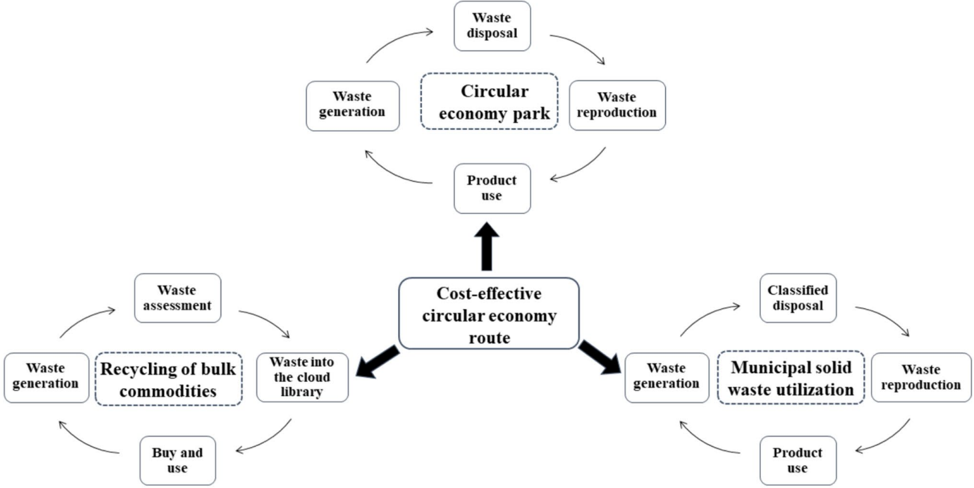
“Municipal solid waste classification will undoubtedly increase waste reproduction efficiency and prevent more garbage from being directly landfilled (Zhang et al. 2021).”
BackgroundThe Circular Model in Disposal with Municipal Waste. A Case Study of Slovakia
Pavolová, H., Lacko, R., Hajduová, Z., Šimková, Z., & Rovňák, M. (2020) · International Journal of Environmental Research and Public Health · doi:10.3390/ijerph17061839 · Cited by 19
Patil, S., Konde, K. S., & Behera, S. (2022) · Sugar Tech · doi:10.1007/s12355-022-01130-6 · Cited by 16
Sustainable demanufacturing model for promoting circular economy in the rail industry
Phuluwa, H. S., Daniyan, I. A., & Mpofu, K. (2020) · Procedia CIRP · doi:10.1016/j.procir.2020.02.117 · Cited by 12
Fragrant bioethanol: A valued bioproduct from orange juice and essential oil extraction
Ciriminna, R., Scurria, A., Danzì, C., Timpanaro, G., Stefano, V. A. D., Avellone, G., & Pagliaro, M. (2018) · Sustainable Chemistry and Pharmacy · doi:10.1016/j.scp.2018.05.002 · Cited by 9
CARBON FOOTPRINT OF WASTE MANAGEMENT IN ROMANIA IN THE CONTEXT OF CIRCULAR ECONOMY
Berechet, M., Mirel, I., Staniloiu, C., & Fischer, K. (2019) · Environmental Engineering and Management Journal · doi:10.30638/eemj.2019.123 · Cited by 8
The Climate Mitigation Challenge-Where Do We Stand?
Princiotta, F. T. (2021) · Journal of the Air & Waste Management Association · doi:10.1080/10962247.2021.1948458 · Cited by 8 · cited 2×
“1 3 3–30 dollars per ton of carbon dioxide, and is commercially ready for implementation, can be used to meet the carbon emissions targets (Princiotta 2021).”
BackgroundLife cycle assessment benchmarks for Danish office buildings
Rasmussen, F. N., & Birgisdóttir, H. (2018) · VBN Forskningsportal (Aalborg Universitet) · doi:10.1201/9781315228914 · Cited by 6
Grounds and Challenges for Implementing a Circular Economy in the European Road Transport Sector
Paradowska, M. (2017) · Springer proceedings in business and economics · doi:10.1007/978-3-319-51427-7_21 · Cited by 3 · cited 1×
“Another circular economy strategy to combat climate change for road transport is for vehicle manufacturers to ensure that 85% of the weight of their vehicles is reusable or recyclable (Paradowska 2017).”
Background
Research works printed but not linked: 4
- 46. Deivanayaki M, Antony I (2012) Alternative vegetable nutrient source for microbial growth. Int J Biosci (IJB) 2:47-51. https:// www. cabdi rect. org/ cabdi rect/ abstr act/ 20123 199022
- 78. Kibert CJ (2016) Sustainable construction: green building design and delivery. Wiley. https:// lccn. loc. gov/ 20150 44564
- 146. Tijani I, Jamal P, Alam M, Mirghani M (2012) Optimization of cassava peel medium to an enriched animal feed by the white rot fungi Panus tigrinus M609RQY. Int Food Res J 19:427-432. http:// ifrj. upm. edu. my/ 19% 20(02)% 202012/ (7) IFRJ-2012% 20Par veen
- 163. Yakkan E, Uysalman T, Atagür M, Sever K, Seydibeyoğlu MÖ (2018) Nanocellulose-polypropylene nanocomposites enhanced with coupling agent. J Bartin Fac for 20:491-502. https:// doi. org/ 10. 24011/ barofd. 455202 · doi:10.24011/barofd.455202
Cited by
Cost, environmental impact, and resilience of renewable energy under a changing climate: a review
Osman, A. I., Chen, L., Yang, M., Msigwa, G., Farghali, M., Fawzy, S., Rooney, D. W., & Yap, P.-S. (2023) · Environmental Chemistry Letters · doi:10.1007/s10311-022-01532-8 · Cited by 1,048
“1 3 Thus, renewable energy will become the primary energy source with the lowest cost, especially when combined with the fossil fuel crisis and net-zero emission initiatives (Yang et al., 2022).”
BackgroundSelf-citationMicroplastic sources, formation, toxicity and remediation: a review
Osman, A. I., Hosny, M., Eltaweil, A. S., Omar, S., Elgarahy, A. M., Farghali, M., Yap, P.-S., Wu, Y.-S., Nagandran, S., Batumalaie, K., et al. (2023) · Environmental Chemistry Letters · doi:10.1007/s10311-023-01593-3 · Cited by 816
Self-citationArtificial intelligence for waste management in smart cities: a review
Fang, B., Yu, J., Chen, Z., Osman, A. I., Farghali, M., Ihara, I., Hamza, E. H., Rooney, D. W., & Yap, P.-S. (2023) · Environmental Chemistry Letters · doi:10.1007/s10311-023-01604-3 · Cited by 629
“It can also cause severe consequences through soil pollution, water bodies, and the atmosphere (Yang et al. 2022a).”
BackgroundSelf-citationRETRACTED ARTICLE: Artificial intelligence-based solutions for climate change: a review
Chen, L., Chen, Z., Zhang, Y., Liu, Y., Osman, A. I., Farghali, M., Hua, J., Al-Fatesh, A., Ihara, I., Rooney, D. W., et al. (2023) · Environmental Chemistry Letters · doi:10.1007/s10311-023-01617-y · Cited by 385
“Carbon sequestration and storage are pivotal elements of cli‑ mate change mitigation strategies (Liu et al. 2022b; Osman et al. 2022; Yang et al. 2022, 2023).”
Self-citationRetractedGreen construction for low-carbon cities: a review
Chen, L., Huang, L., Hua, J., Chen, Z., Wei, L., Osman, A. I., Fawzy, S., Rooney, D. W., Dong, L., & Yap, P.-S. (2023) · Environmental Chemistry Letters · doi:10.1007/s10311-022-01544-4 · Cited by 358
“…Panel on Climate Change affirms that limiting climate change to 1.5 degrees, committing to peak carbon dioxide emissions by 2030, and aiming for carbon neutrality by 2060 are all essential to achieving these goals (Intergovernmental Panel on Climate Change 2022; Yang et al. 2022a).”
BackgroundInfluentialSelf-citation
Metadata
- Authors
- Yang, M., Chen, L., Wang, J., Msigwa, G., Osman, A. I., Fawzy, S., Rooney, D. W., & Yap, P.-S.
- Affiliations
- Xi’an Jiaotong-Liverpool University (CN)
- Queen's University Belfast (GB)
- Corresponding author
- Osman, Ahmed I.
- Yap, Pow-Seng
- ORCID
- Venue
- Environmental Chemistry Letters
- Published
- 2022-09-06
- Volume
- 21
- Issue
- 1
- Pages
- 55-80
- ISSN
- 1610-3653 (ISSN-L)
- 1610-3661
- OpenAlex
- W4294733719
- Cited by
- 835
- References
- 162
- Citations by year
- 2026: 197 · 2025: 329 · 2024: 208 · 2023: 94 · 2022: 7
- FWCI
- 119.14
- Type
- journal article
- Language
- en
- Open access
- hybrid
- doi.org
- Licence
- cc-by
- creativecommons.org/licenses/by/4.0 (tdm)
- creativecommons.org/licenses/by/4.0 (vor)
- Locations
- Environmental Chemistry Letters (publishedVersion, cc-by)
- Research Portal (Queen's University Belfast) (submittedVersion, cc-by)
- Funders
- SEUPB (Bryden Centre project (Project ID VA5048))
- Topics
- Social Sciences › Business, Management and Accounting › Strategy and Management › Sustainable Supply Chain Management
- Physical Sciences › Engineering › Industrial and Manufacturing Engineering › Sustainable Industrial Ecology
- Physical Sciences › Engineering › Building and Construction › Sustainable Design and Development
- Keywords
- circular economy, climate change mitigation, carbon emission reduction, carbon neutrality, solid waste management, bio-based materials, land use and land cover, life cycle assessment, energy efficiency, air and water quality, food production, sustainable industry
About these checks
Registry, retraction, Cites and statistics results are computed, not judged, with one exception: a printed reference that no index lists is read once by a model before it counts as a citation error. Claims are extracted by a model and kept only when their quote appears verbatim in the text; each cited source is then checked, with a model’s help, for whether it says what the claim relies on. Those verdicts can be wrong — read the claim’s quote and the cited source before relying on one.
Statistics and arithmetic are recomputed, not judged.
Confidence bands are shown only for fields calibrated on our annotated test set. None is calibrated yet, so no band is shown.
What counts as a claim ›How we measure confidence ›How we check this ›
Are you an author, or do you see a problem with this page? Request a review
Data sources
Bibliographic data: Semantic Scholar, OpenAlex, Crossref.
Contains information from the Semantic Scholar Academic Graph Datasets, made available under the ODC Attribution License (ODC-BY 1.0).
Semantic Scholar’s data is described in: Kinney, R., et al. (2023). The Semantic Scholar Open Data Platform. arXiv:2301.10140.
