

Phase 1 study of the MDM2 inhibitor AMG 232 in patients with advanced P53 wild-type solid tumors or multiple myeloma
Open accessThe DOI matches its Crossref record; 37 of the 37 references it cites were found in a registry or an index.
Abstract
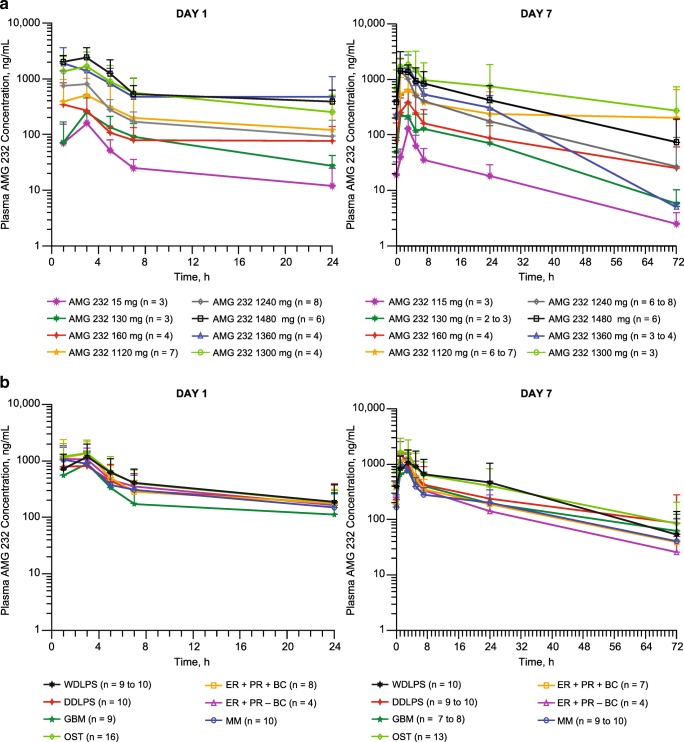
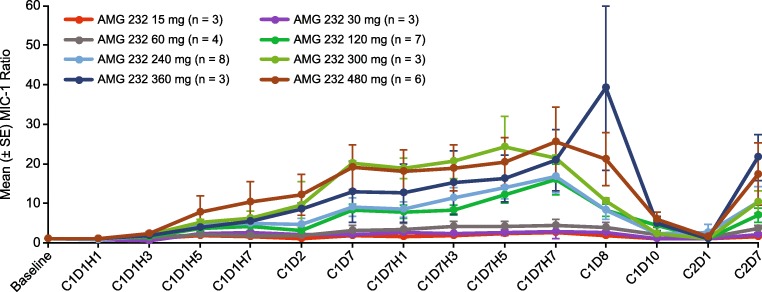
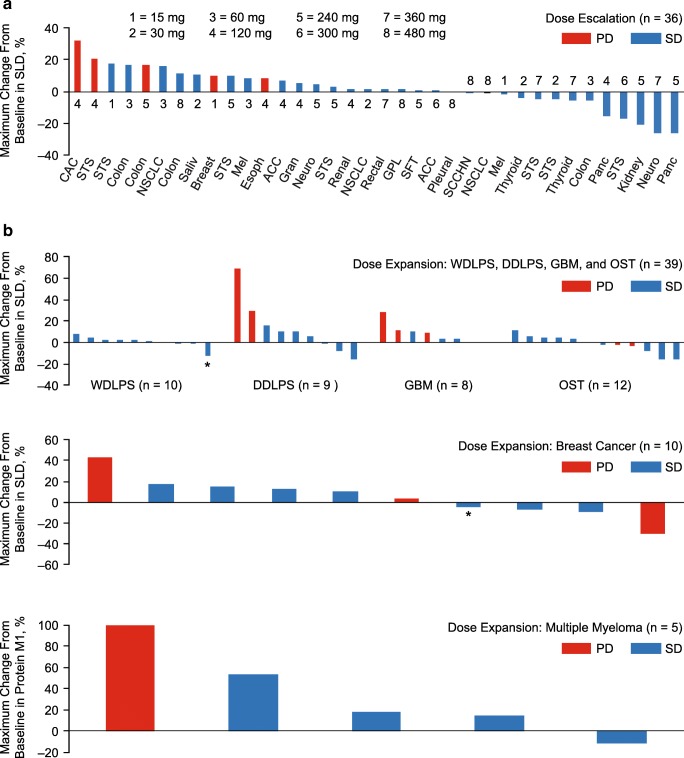
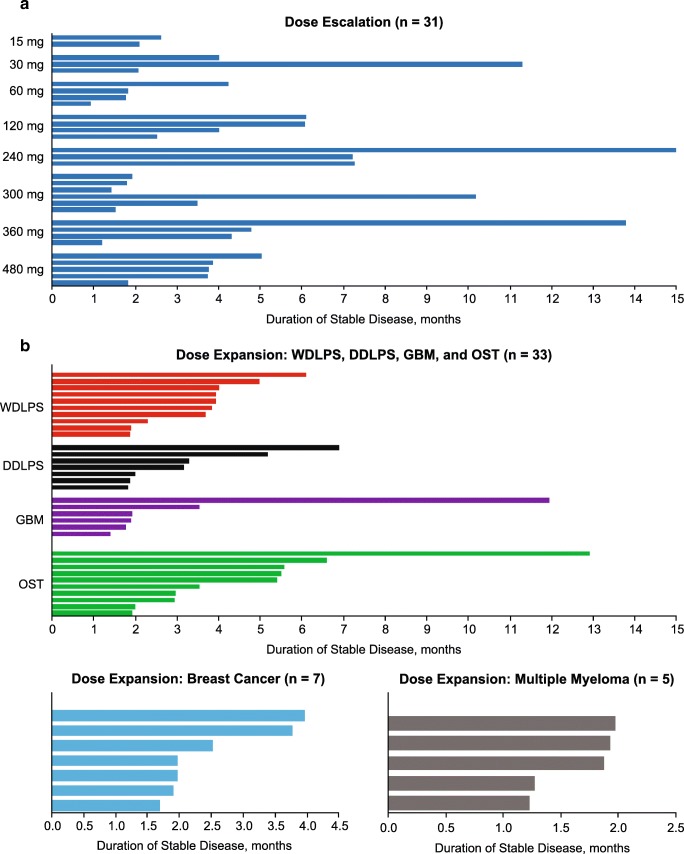
Summary: Background This open-label, first-in-human, phase 1 study evaluated AMG 232, an oral selective MDM2 inhibitor in patients with TP53 wild-type (P53WT), advanced solid tumors or multiple myeloma (MM). Methods In the dose escalation ( n = 39), patients with P53WT refractory solid tumors enrolled to receive once-daily AMG 232 (15, 30, 60, 120, 240, 480, and 960 mg) for seven days every 3 weeks (Q3W). In the dose expansion ( n = 68), patients with MDM2 -amplified (well-differentiated and de-differentiated liposarcomas [WDLPS and DDLPS], glioblastoma multiforme [GBM], or other solid tumors [OST]), MDM2-overexpressing ER+ breast cancer (BC), or MM received AMG 232 at the maximum tolerated dose (MTD). Safety, pharmacokinetics, pharmacodynamics, and efficacy were assessed. Results AMG 232 had acceptable safety up to up to 240 mg. Three patients had dose-limiting toxicities of thrombocytopenia ( n = 2) and neutropenia ( n = 1). Due to these and other delayed cytopenias, AMG 232 240 mg Q3W was determined as the highest tolerable dose assessed in the dose expansion. Adverse events were typically mild/moderate and included diarrhea, nausea, vomiting, fatigue, decreased appetite, and anemia. AMG 232 plasma concentrations increased dose proportionally. Increases in serum macrophage inhibitor cytokine-1 from baseline were generally dose dependent, indicating p53 pathway activation. Per local review, there were no responses. Stable disease (durability in months) was observed in patients with WDLPS (3.9), OST (3.3), DDLPS (2.0), GBM (1.8), and BC (1.4–2.0). Conclusions In patients with P53WT advanced solid tumors or MM, AMG 232 showed acceptable safety and dose-proportional pharmacokinetics, and stable disease was observed.
Overview
The claims and statistics of this paper haven’t been checked yet.
Free: it reads the open-access text and checks the first 5 claims that cite a source we can check. Create a free account to check every claim.
Integrity signals
Registry
Cites
Statistics
Figures
Verification
Claims the paper makes
The claims and statistics of this paper haven’t been checked yet.
Free: it reads the open-access text and checks the first 5 claims that cite a source we can check. Create a free account to check every claim.
Claims other papers make about this one
Each is checked against this paper’s own text: does it say what the citing paper says it does?
The source backs part of the claim, not all of it — or backs it for a different population, condition or comparison.
In the citing paper
“Most notably, the half-life of navtemadlin in mice was measured as 1.68 hours but is much longer in humans at 14.3 hours (12).”
From Preclinical Modeling of Navtemadlin Pharmacokinetics, Pharmacodynamics, and Efficacy in IDH–Wild-type Glioblastoma (2025) · cites this paper as [12]
Experimental — accuracy not yet measuredThe source backs part of the claim, not all of it — or backs it for a different population, condition or comparison.
In the citing paper
“The first-in-human phase I trial of navtemadlin (NCT01723020) defined a recommended phase II dose of 240 mg daily (12).”
From Preclinical Modeling of Navtemadlin Pharmacokinetics, Pharmacodynamics, and Efficacy in IDH–Wild-type Glioblastoma (2025) · cites this paper as [12]
Experimental — accuracy not yet measuredThe check wasn’t confident either way, so it gives no verdict — never disputed.
In the citing paper
“Navtemadlin is a potent small-molecule inhibitor of MDM2”
From Preclinical Modeling of Navtemadlin Pharmacokinetics, Pharmacodynamics, and Efficacy in IDH–Wild-type Glioblastoma (2025) · cites this paper as [12]
Experimental — accuracy not yet measuredThe check wasn’t confident either way, so it gives no verdict — never disputed.
In the citing paper
“Navtemadlin (KRT-232) is a potent small-molecule MDM2 inhibitor, which has completed first-in-human studies (12)”
From Preclinical Modeling of Navtemadlin Pharmacokinetics, Pharmacodynamics, and Efficacy in IDH–Wild-type Glioblastoma (2025) · cites this paper as [12]
Experimental — accuracy not yet measuredIn the citing paper
“In a phase I trial, AMG232 showed good safety and pharmacokinetic parameters in patients with p53 WT advanced solid tumor or multiple myeloma and could control the progression of the disease [64].”
From Targeting p53–MDM2 interaction by small-molecule inhibitors: learning from MDM2 inhibitors in clinical trials (2022) · cites this paper as [64]
Self-check
Percentages, sums and reported differences re-computed from the paper’s own numbers.
The self-check needs the paper’s full text.
Citations
Cites
New response evaluation criteria in solid tumours: revised RECIST guideline (version 1.1)
Eisenhauer, E. A., Therasse, P., Bogaerts, J., Schwartz, L. H., Sargent, D., Ford, R., Dancey, J., Arbuck, S., Gwyther, S., Mooney, M., et al. (2009) · European Journal of Cancer · doi:10.1016/j.ejca.2008.10.026 · Cited by 29,534
p53, the cellular gatekeeper for growth and division
Levine, A. J. (1997) · Cell · doi:10.1016/s0092-8674(00)81871-1 · Cited by 7,693
International Myeloma Working Group updated criteria for the diagnosis of multiple myeloma
Rajkumar, S. V., Dimopoulos, M. A., Palumbo, A., Blade, J., Merlini, G., Mateos, M.-V., Kumar, S., Hillengass, J., Kastritis, E., Richardson, P., et al. (2014) · The Lancet Oncology · doi:10.1016/s1470-2045(14)70442-5 · Cited by 4,978
Response criteria for phase II studies of supratentorial malignant glioma.
Macdonald, D. R., Cascino, T. L., Schold, S. C., & Cairncross, J. G. (1990) · Journal of Clinical Oncology · doi:10.1200/jco.1990.8.7.1277 · Cited by 2,409
The first 30 years of p53: growing ever more complex.
Levine, A. J., & Oren, M. (2009) · Nature Reviews Cancer · doi:10.1038/nrc2723 · Cited by 1,967
Moll, U. M., & Petrenko, O. (2003) · PubMed · Cited by 1,140
Binh, M. B. N., Sastre-Garau, X., Guillou, L., Pinieux, G. D., Terrier, P., Lagacé, R., Aurias, A., Hostein, I., & Coindre, J. M. (2005) · American Journal of Surgical Pathology · doi:10.1097/01.pas.0000170343.09562.39 · Cited by 639
Ray-Coquard, I., Blay, J.-Y., Italiano, A., Le Cesne, A., Penel, N., Zhi, J., Heil, F., Rueger, R., Graves, B., Ding, M., et al. (2012) · The Lancet Oncology · doi:10.1016/s1470-2045(12)70474-6 · Cited by 571
Self-citationResults of the Phase I trial of RG7112, a small-molecule MDM2 antagonist in leukemia
Andreeff, M., Kelly, K. R., Yee, K., Assouline, S., Strair, R., Popplewell, L., Bowen, D., Martinelli, G., Drummond, M. W., Vyas, P., et al. (2016) · Clinical Cancer Research · doi:10.1158/1078-0432.ccr-15-0481 · Cited by 352
Sun, D., Li, Z., Rew, Y., Gribble, M., Bartberger, M. D., Beck, H. P., Canon, J., Chen, A., Chen, X., Chow, D., et al. (2014) · Journal of Medicinal Chemistry · doi:10.1021/jm401753e · Cited by 290
Cited by
Glioma targeted therapy: insight into future of molecular approaches
Yang, K., Wu, Z., Zhang, H., Zhang, N., Wu, W., Wang, Z., Dai, Z., Zhang, X., Zhang, L., Peng, Y., et al. (2022) · Molecular Cancer · doi:10.1186/s12943-022-01513-z · Cited by 704
“The MDM2 inhibitor AMG 232 suppressed tumor progression in the course of the trial (NCT01723020) [107].”
BackgroundMDM2 inhibition: an important step forward in cancer therapy
Konopleva, M., Martinelli, G., Daver, N., Papayannidis, C., Wei, A., Higgins, B., Ott, M., Mascarenhas, J., & Andreeff, M. (2020) · Leukemia · doi:10.1038/s41375-020-0949-z · Cited by 376
“The most common treatment-related AEs in the dose-escalation and dose-expansion phases included diarrhea, nausea, vomiting, fatigue, decreased appetite, neutropenia, and thrombocytopenia [45].”
BackgroundUbiquitination and deubiquitination in cancer: from mechanisms to novel therapeutic approaches
Liu, F., Chen, J., Li, K., Li, H., Zhu, Y., Zhai, Y., Lu, B., Fan, Y., Liu, Z., Chen, X., et al. (2024) · Molecular Cancer · doi:10.1186/s12943-024-02046-3 · Cited by 326
“AMG232 has also been studied in clinical trials [241].”
BackgroundRole of p53 in breast cancer progression: An insight into p53 targeted therapy
Marvalim, C., Datta, A., & Lee, S. C. (2023) · Theranostics · doi:10.7150/thno.81847 · Cited by 225
Zhu, H., Gao, H., Ji, Y., Zhou, Q., Du, Z., Tian, L., Jiang, Y., Yao, K., & Zhou, Z. (2022) · Journal of Hematology & Oncology · doi:10.1186/s13045-022-01314-3 · Cited by 223
“In a phase I trial, AMG232 showed good safety and pharmacokinetic parameters in patients with p53 WT advanced solid tumor or multiple myeloma and could control the progression of the disease [64].”
BackgroundThe roles of E3 ubiquitin ligases in cancer progression and targeted therapy
Sampson, C., Wang, Q., Otkur, W., Zhao, H., Lu, Y., Liu, X., & Piao, H. (2023) · Clinical and Translational Medicine · doi:10.1002/ctm2.1204 · Cited by 182
MDM2 Inhibitors for Cancer Therapy: The Past, Present, and Future
Wang, W., Albadari, N. G., Du, Y., Fowler, J. F., Sang, H. T., Xian, W., McKeon, F., Li, W., Zhou, J., & Zhang, R. (2024) · Pharmacological Reviews · doi:10.1124/pharmrev.123.001026 · Cited by 173
“Another phase I dose-expansion trial of AMG232 used alone in advanced p53WT solid tumors or multiple myeloma (NCT01723020) indicated that the MTD was 240 mg when the drug was given every 3 weeks (Gluck et al., 2020).”
BackgroundSaleh, M. N., Patel, M. R., Bauer, T. M., Goel, S., Falchook, G. S., Shapiro, G. I., Chung, K. Y., Infante, J. R., Conry, R. M., Rabinowits, G., et al. (2021) · Clinical Cancer Research · doi:10.1158/1078-0432.ccr-21-0715 · Cited by 159
CDKN2A loss-of-function predicts immunotherapy resistance in non-small cell lung cancer
Gutiontov, S. I., Turchan, W. T., Spurr, L. F., Rouhani, S. J., Chervin, C. S., Steinhardt, G., Lager, A. M., Wanjari, P., Malik, R., Connell, P. P., et al. (2021) · Scientific Reports · doi:10.1038/s41598-021-99524-1 · Cited by 116
Gounder, M. M., Bauer, T. M., Schwartz, G. K., Weise, A. M., LoRusso, P., Kumar, P., Tao, B., Hong, Y., Patel, P., Lu, Y., et al. (2023) · Journal of Clinical Oncology · doi:10.1200/jco.22.01285 · Cited by 99
“Notably, several other MDM2 inhibitors in development have also explored intermittent dosing regimens.(18,23,24) Biomarker data confirmed that milademetan reactivated p53 at clinically relevant doses across all schedules, with elevated serum GDF15 levels, a biomarker for p53 reactivation,(25) together with increased t…”
BackgroundSelf-citationThe ubiquitin–proteasome system in breast cancer
Han, D., Wang, L., Jiang, S., & Yang, Q. (2023) · Trends in Molecular Medicine · doi:10.1016/j.molmed.2023.05.006 · Cited by 115
Signaling pathways in brain tumors and therapeutic interventions
Li, S., Wang, C., Chen, J., Lan, Y., Zhang, W., Kang, Z., Zheng, Y., Zhang, R., Yu, J., & Li, W. (2023) · Signal Transduction and Targeted Therapy · doi:10.1038/s41392-022-01260-z · Cited by 110
Erba, H. P., Becker, P. S., Shami, P. J., Grunwald, M. R., Flesher, D. L., Zhu, M., Rasmussen, E., Henary, H. A., Anderson, A. A., & Wang, E. S. (2019) · Blood Advances · doi:10.1182/bloodadvances.2019030916 · Cited by 98
Self-citationTargeting the Ubiquitin-Proteasome System for Cancer Therapeutics by Small-Molecule Inhibitors
LaPlante, G., & Zhang, W. (2021) · Cancers · doi:10.3390/cancers13123079 · Cited by 92
Targeting Biomolecular Condensation and Protein Aggregation against Cancer
Silva, J. L., Foguel, D., Ferreira, V. F., Vieira, T. C. R. G., Marques, M. A., Ferretti, G. D. S., Outeiro, T. F., Cordeiro, Y., & de Oliveira, G. A. P. (2023) · Chemical Reviews · doi:10.1021/acs.chemrev.3c00131 · Cited by 89
Hároníková, L., Bonczek, O., Zatloukalová, P., Kokas, F. Z., Kucerikova, M., Coates, P. J., Fåhræus, R., & Vojtěšek, B. (2021) · Cellular & Molecular Biology Letters · doi:10.1186/s11658-021-00293-6 · Cited by 76
“AMG-232 showed clinical activity as monotherapy [49] and in combination with trametinib (MEK inhibitor)”
BackgroundTargeting the MDM2-p53 pathway in dedifferentiated liposarcoma
Traweek, R. S., Cope, B. M., Roland, C. L., Keung, E. Z.-Y., Nassif, E. F., & Erstad, D. J. (2022) · Frontiers in Oncology · doi:10.3389/fonc.2022.1006959 · Cited by 66
de Weger, V. A., de Jonge, M., Langenberg, M. H. G., Schellens, J. H. M., Lolkema, M., Varga, A., Demers, B., Thomas, K., Hsu, K., Tuffal, G., et al. (2019) · British Journal of Cancer · doi:10.1038/s41416-018-0355-8 · Cited by 62
Recent advances on the intervention sites targeting USP7-MDM2-p53 in cancer therapy
Harakandi, C., Nininahazwe, L., Xu, H., Liu, B., He, C., Zheng, Y., & Zhang, H. (2021) · Bioorganic Chemistry · doi:10.1016/j.bioorg.2021.105273 · Cited by 60
Meta-Analysis of Hematological Biomarkers as Reliable Indicators of Soft Tissue Sarcoma Prognosis
Li, L., Bai, Z.-H., Zhang, L., Zhang, Y., Lu, X., Zhang, Y., Liu, Y.-K., Wen, J., & Li, J. (2020) · Frontiers in Oncology · doi:10.3389/fonc.2020.00030 · Cited by 57
“Unfortunately, a meta-analysis shows that the MDM2 gene has a very limited role in prognosis (42, 43).”
BackgroundMDM2-p53 in liposarcoma: The need for targeted therapies with novel mechanisms of action
Somaiah, N., & Tap, W. D. (2023) · Cancer Treatment Reviews · doi:10.1016/j.ctrv.2023.102668 · Cited by 53
Koyama, T., Shimizu, T., Kojima, Y., Sudo, K., Okuma, H. S., Shimoi, T., Ichikawa, H., Kohsaka, S., Sadachi, R., Hirakawa, A., et al. (2023) · Cancer Discovery · doi:10.1158/2159-8290.cd-23-0419 · Cited by 50
Recent advances in the understanding and management of liposarcoma
Haddox, C. L., & Riedel, R. F. (2021) · Faculty Reviews · doi:10.12703/r/10-1 · Cited by 47
Anticancer Mechanism of Flavonoids on High-Grade Adult-Type Diffuse Gliomas
Wong, S. C., Kamarudin, M. N. A., & Naidu, R. (2023) · Nutrients · doi:10.3390/nu15040797 · Cited by 47
Peeken, J. C., Neumann, J., Asadpour, R., Leonhardt, Y., Moreira, J. R., Hippe, D. S., Klymenko, O., Foreman, S. C., von Schacky, C. E., Spraker, M. B., et al. (2021) · Cancers · doi:10.3390/cancers13081929 · Cited by 42
“Other molecular targeted agents, such as the MDM-2 inhibitor AMG 232 (NRG DT001 trial, NCT03217266) or trabectedin (TRASTS trial, NCT02275286), are given as a supplement to neoadjuvant RT [56,57].”
BackgroundUnravelling the Anticancer Mechanisms of Traditional Herbal Medicines with Metabolomics
Oyenihi, O. R., Oyenihi, A. B., Erhabor, J. O., Matsabisa, M. G., & Oguntibeju, O. O. (2021) · Molecules · doi:10.3390/molecules26216541 · Cited by 43
“AMG-232 Phase I clinical trial Blocks MDM2-p53 interaction [65]”
BackgroundVerstovsek, S., Al-Ali, H. K., Mascarenhas, J., Perkins, A., Vannucchi, A. M., Mohan, S. R., Scott, B. L., Woszczyk, D., Koschmieder, S., García-Delgado, R., et al. (2022) · Future Oncology · doi:10.2217/fon-2022-0901 · Cited by 41
A first-in-human phase I study of a novel MDM2/p53 inhibitor alrizomadlin in advanced solid tumors
Zhang, X., Wen, X., Peng, R., Pan, Q., Weng, D., Ma, Y., Zhang, Y., Yang, J., Men, L., Wang, H., et al. (2024) · ESMO Open · doi:10.1016/j.esmoop.2024.103636 · Cited by 41
“21,25,34,35 Tumor shrinkage after long-term treatment with these drugs has been seen in clinical trials.”
BackgroundMDM2/X inhibitors as radiosensitizers for glioblastoma targeted therapy
Miles, X., Vandevoorde, C., Hunter, A., & Bolcaen, J. (2021) · Frontiers in Oncology · doi:10.3389/fonc.2021.703442 · Cited by 40
“However, it has been observed that AMG232 inhibition is more specific and highly regulated compared to RG7112 and its effect on GSCs was more potent (26, 148).”
BackgroundEstablished and Experimental Systemic Treatment Options for Advanced Liposarcoma
Schöffski, P. (2022) · Oncology Research and Treatment · doi:10.1159/000524939 · Cited by 39
Temaj, G., Chichiarelli, S., Telkoparan‐Akillilar, P., Saha, S., Nuhii, N., Hadžiselimović, R., & Saso, L. (2024) · Biochemical Pharmacology · doi:10.1016/j.bcp.2024.116332 · Cited by 38
Cassinelli, G., Pasquali, S., & Lanzi, C. (2022) · Frontiers in Oncology · doi:10.3389/fonc.2022.965261 · Cited by 35
“MDM2 inhibitors evaluated in phase I/II trials showed disease stabilization inWDLPS and DDLPS (Table 2) (60, 61).”
BackgroundDiscovery of MK-4688 : an Efficient Inhibitor of the HDM2–p53 Protein–Protein Interaction
Reutershan, M. H., Machacek, M. R., Altman, M. D., Bogen, S. L., Cai, M., Cammarano, C., Chen, D., Christopher, M., Cryan, J. G., Daublain, P., et al. (2021) · Journal of Medicinal Chemistry · doi:10.1021/acs.jmedchem.1c01524 · Cited by 31
MDM2-p53 Interaction Inhibitors: The Current State-of-Art and Updated Patent Review (2010-Present)
Rusiecki, R., Witkowski, J., & Jaszczewska‐Adamczak, J. A. (2019) · Recent Patents on Anti-Cancer Drug Discovery · doi:10.2174/1574892814666191022163540 · Cited by 30
Structure and function of MDM2 and MDM4 in health and disease
Zhu, I. Y., Lloyd, A., Critchley, W. R., Saikia, Q., Jade, D., Divan, A., Zeqiraj, E., Harrison, M. A., Brown, C. J., & Ponnambalam, S. (2025) · Biochemical Journal · doi:10.1042/bcj20240757 · Cited by 29
“The first clinical trial of navtemadlin showed good pharmacokinetics profiles with 66% of the solid tumor patients achieving stable disease [141].”
Driver Mutations in Pancreatic Cancer and Opportunities for Targeted Therapy
Olaoba, O. T., Adelusi, T. I., Yang, M. J., Maidens, T., Kimchi, E. T., Staveley-O’Carroll, K. F., & Li, G. (2024) · Cancers · doi:10.3390/cancers16101808 · Cited by 31
“When AMG-232 and KRT-232 were administered in separate phase 1 trials in patients with advanced solid tumors, no cardiac safety concern was noted in patients treated with KRT-232 [104], TRAEs were mild, and stable disease was achieved in AMG-232 treated patients [105].”
BackgroundMurumägi, A., Ungureanu, D., Khan, S. A., Arjama, M., Välimäki, K. E., Ianevski, A., Ianevski, P., Bergström, R., Dini, A., Kanerva, A., et al. (2022) · British Journal of Cancer · doi:10.1038/s41416-022-02067-z · Cited by 29
“AMG-232 has shown encouraging results in phase 1 study in TP53 wild-type solid tumours [46], and it had the highest sensitivity in LGSOC PDCs among all MDM2 inhibitors (Fig.”
ResultStrategies for p53 Activation and Targeted Inhibitors of the p53-Mdm2/MdmX Interaction
Huang, Y., Wang, L., Zhou, Y., Bai, J., Li, N., Su, Z., & Cheng, X. (2025) · Cells · doi:10.3390/cells14080583 · Cited by 27
“In a Phase Cells 2025 , 14 , 583 9 of 18 I trial by Gluck W L et al., AMG232 exhibited good safety and pharmacokinetic profiles in patients with advanced wtp53 solid tumors or multiple myeloma, showing anti-tumor activity [70].”
Lu, L., Jifu, C., Xia, J., & Wang, J. (2024) · Biomedicine & Pharmacotherapy · doi:10.1016/j.biopha.2024.116753 · Cited by 27
Portman, N., Chen, J., & Lim, E. (2021) · Frontiers in Oncology · doi:10.3389/fonc.2021.777867 · Cited by 24
“AMG-232 (KRT-232) is another oral selective MDM2 inhibitor trialled in phase 1 setting in relapsed/refractory AML, multiple myeloma and advanced solid tumours (89, 95).”
BackgroundThe ubiquitin-proteasome system in the regulation of tumor dormancy and recurrence
Alhasan, B. A., Morozov, A. V., Guzhova, I. V., & Margulis, B. A. (2024) · Biochimica et Biophysica Acta (BBA) - Reviews on Cancer · doi:10.1016/j.bbcan.2024.189119 · Cited by 23
Novel Therapeutics in Soft Tissue Sarcoma
Mavroeidis, L., Napolitano, A., Huang, P. H., & Jones, R. L. (2024) · Cancers · doi:10.3390/cancers17010010 · Cited by 23
“Examples are AMG232 [57], SAR405838 [58], and MK8242 [59] in the context of early-phase clinical trials and RG7112 in an exploratory proof-of-mechanism study in patients with WDLPS and DDLPS [60].”
Zhang, X., Zhang, R., Chen, H., Wang, L., Ren, C., Pataer, A., Wu, S., Meng, Q. H., Ha, M. J., Morris, J. S., et al. (2020) · PubMed Central · Cited by 23
Guerreiro, N., Jullion, A., Ferretti, S., Fabre, C., & Meille, C. (2021) · The AAPS Journal · doi:10.1208/s12248-020-00551-z · Cited by 24
Dumbrava, E. E. I., Stinchcombe, T. E., Gounder, M. M., Cote, G. M., Hanna, G. J., Sumrall, B. T., Wise-Draper, T. M., Kanaan, M. N., Duffy, S. M., Sumey, C. J., et al. (2025) · Clinical Cancer Research · doi:10.1158/1078-0432.ccr-25-0762 · Cited by 22
“Previous clinical trials of MDM2 inhibitors have utilized a low-dose, continuously administered strategy and have experienced high rates of drug interruption due to on-target, drug exposure–dependent cytopenias (16–19).”
Self-citationCheng, J., Yan, Z., Jiang, K., Liu, C., Xu, D., Lyu, X., Hu, X., Zhang, S., Zhou, Y., Li, J., et al. (2023) · Journal of Medicinal Chemistry · doi:10.1021/acs.jmedchem.3c01815 · Cited by 22
Recent Advances in the Applications of Small Molecules in the Treatment of Multiple Myeloma
Abramson, H. N. (2023) · International Journal of Molecular Sciences · doi:10.3390/ijms24032645 · Cited by 21
Clavero, A. L., Boqvist, P. L., Ingelshed, K., Bosdotter, C., Sedimbi, S. K., Jiang, L., Wermeling, F., Vojtěšek, B., Lane, D. P., & Kannan, P. (2023) · Scientific Reports · doi:10.1038/s41598-023-31484-0 · Cited by 22
Darabi, S., Xiu, J., Samec, T., Kesari, S., Carrillo, J., Aulakh, S., Walsh, K. M., Sengupta, S., Sumrall, A. L., Spetzler, D. B., et al. (2023) · Medical Oncology · doi:10.1007/s12032-023-02071-0 · Cited by 21
Ludwig, M. P., Galbraith, M. D., Eduthan, N. P., Hill, A. A., Clay, M. R., Tellez, C. M., Wilky, B. A., ELIAS, A. D., Espinosa, J. M., & Sullivan, K. D. (2023) · Cancer Research · doi:10.1158/0008-5472.can-22-3173 · Cited by 20
“MDM2 inhibitors in the clinic has been cytopenia (15, 54, 55); it will be critical to assess the impact of any new combinatorial strategies involving MDM2 inhibitors on this toxicity.”
BackgroundSmall-Molecule Approaches to Target Transcription Factors
Cui, H., Stilgenbauer, M., & Koehler, A. N. (2024) · Annual Review of Cancer Biology · doi:10.1146/annurev-cancerbio-062722-012209 · Cited by 20
Lessons learned from 20 years of preclinical testing in pediatric cancers
Smith, M. A., Houghton, P. J., Lock, R. B., Maris, J. M., Gorlick, R. G., Kurmasheva, R. T., Li, X., Teicher, B. A., Chuang, J. H., Cruz, F. S. D., et al. (2024) · Pharmacology & Therapeutics · doi:10.1016/j.pharmthera.2024.108742 · Cited by 20
Rendo, V., Lee, E. Q., Bossi, C., Khuu, N., Rudek, M. A., Pal, S., Azazmeh, N., Rashid, R., Lin, J.-R., Cusick, M., et al. (2025) · Science Translational Medicine · doi:10.1126/scitranslmed.adn6274 · Cited by 19
“With the development of more potent and blood-brain barrier– penetrant MDM2 inhibitors, new clinical trials are evaluating mono-therapy and combination approaches to treat TP53 wild-type and MDM2 - amplified solid tumors ( 6 – 8 ).”
Where We Stand With Precision Therapeutics in Myeloma: Prosperity, Promises, and Pipedreams
Pan, D., & Richter, J. R. (2022) · Frontiers in Oncology · doi:10.3389/fonc.2021.819127 · Cited by 19
Gollner, A., Rudolph, D., Weyer-Czernilofsky, U., Baumgartinger, R., Jung, P., Weinstabl, H., Ramharter, J., Grempler, R., Quant, J., Rinnenthal, J., et al. (2024) · Molecular Cancer Therapeutics · doi:10.1158/1535-7163.mct-23-0783 · Cited by 18
“…investigations indicated that MDM2–p53 antagonists showed preliminary signs of antitumor efficacy; however, treatment was associated with thrombocytopenia and neutropenia (14–16), likely resulting from inhibition of mega-karyopoiesis and megakaryocyte differentiation upon p53 activation (17).”
E3 Ubiquitin Ligases: Structures, Biological Functions, Diseases, and Therapy
Wang, H., Peng, J., Li, H., Lan, Y., Guo, J., Qiu, Q., & Huang, X. (2025) · MedComm · doi:10.1002/mco2.70528 · Cited by 17
Gastrointestinal cancer: molecular pathogenesis and targeted therapy
Jin, Y., He, X., & Wu, Y. (2025) · Molecular Biomedicine · doi:10.1186/s43556-025-00361-9 · Cited by 15
“Here, potent inhibitors of the MDM2-p53 interaction, such as navtemadlin (AMG-232), are being tested in clinical trials and have demonstrated molecular and clinical responses in patients with TP53 wild-type solid tumors, validating the approach of liberating p53 from its negative regulator [171].”
Novel Targeted Therapeutics in Acute Myeloid Leukemia: an Embarrassment of Riches
Grieselhuber, N. R., & Mims, A. S. (2021) · Current Hematologic Malignancy Reports · doi:10.1007/s11899-021-00621-9 · Cited by 16
Moschos, S. J., Sandhu, S. K., Lewis, K. D., Sullivan, R. J., Puzanov, I. J., Johnson, D. B., Henary, H. A., Wong, H. L., Upreti, V. V., Long, G. V., et al. (2022) · Investigational New Drugs · doi:10.1007/s10637-022-01253-3 · Cited by 16
“Based on AMG 232 half-life estimates reported previously [18], AMG 232 drug levels were deemed steady-state on cycle 1, day 7, and cycle 2, day 7.”
BackgroundSelf-citationRomani, A., Zauli, E., Zauli, G., Al-Mesfer, S., Al-Swailem, S. A., & Voltan, R. (2022) · Frontiers in Oncology · doi:10.3389/fonc.2022.1000677 · Cited by 16
“Other MDM2-targeting molecules that have entered phase I clinical trials for solid tumors or hematological malignancies include ALRN-6924 (35), milademetan (36), AMG-232 (37, 38), CGM097 (39), APG-115 (40) and BI-907828 (41, 42).”
BackgroundMDM2 inhibition is associated with the emergence of TP53-altered clonal hematopoiesis
Khanna, V., Eslami, G., Reyes, R., Diep, R. T., Fernandez‐Pol, S., Stehr, H., Suarez, C. J., Pinto, H. A., Ford, J. M., Zhang, T. Y., et al. (2025) · npj Precision Oncology · doi:10.1038/s41698-025-00823-x · Cited by 15
Ghotaslou, A., Samii, A., Boustani, H., Ghalesardi, O. K., & Shahidi, M. (2022) · Reports of Biochemistry and Molecular Biology · doi:10.52547/rbmb.11.1.111 · Cited by 15
The MDM2 Inhibitor Navtemadlin Arrests Mouse Melanoma Growth In Vivo and Potentiates Radiotherapy
Ingelshed, K., Spiegelberg, D., Kannan, P., Påvénius, L., Hacheney, J., Jiang, L., Eisinger, S., Lianoudaki, D., Lama, D., Castillo, F. A., et al. (2022) · Cancer Research Communications · doi:10.1158/2767-9764.crc-22-0053 · Cited by 15
“The main side effect reported from clinical trials evaluating Navtemadlin, has been gastrointestinal symptoms and Neutropenia (44, 45).”
BackgroundMelanoma: Pathogenesis and Targeted Therapy
Fu, Y., Liu, J., Mo, Z., Wang, B., Deng, Y., & Jiang, Y. (2026) · MedComm · doi:10.1002/mco2.70566 · Cited by 15
“AMG 232 showed a mild/moderate AEs in solid tumors and multiple myeloma in the study of NCT01723020, and an acceptable safety in acute myeloid leukemia when combined with or without trametinib in the study of NCT02016729 [ 280, 281 ].”
Taylor, A., Lee, D., Allard, M., Poland, B., & Greg Slatter, J. (2021) · Clinical Pharmacology in Drug Development · doi:10.1002/cpdd.903 · Cited by 12
Challenges and hope: latest research trends in the clinical treatment and prognosis of liposarcoma
Liu, H., Wang, X., Wang, X., Qiu, F., & Zhou, B. (2025) · Frontiers in Pharmacology · doi:10.3389/fphar.2025.1529755 · Cited by 14
Extended molecular profiling in mesenchymal tumors: a consensus paper from the Italian Sarcoma Group
D’Ambrosio, L., Sbaraglia, M., Merlini, A., Rabino, M., Grignani, G., Appolloni, V., Badalamenti, G., Baldi, G. G., Bellan, E., Benelli, M., et al. (2025) · Critical Reviews in Oncology/Hematology · doi:10.1016/j.critrevonc.2025.104960 · Cited by 12
State of the Art of Pharmacological Activators of p53 in Ocular Malignancies
Casciano, F., Zauli, E., Busin, M., Caruso, L., Al-Mesfer, S., Al-Swailem, S. A., Zauli, G., & Yu, A. C. (2023) · Cancers · doi:10.3390/cancers15143593 · Cited by 11
Reactivating apoptotic pathways in cancer: A review of novel therapeutic approaches
Mantri, S., & Doshi, G. (2025) · European Journal of Pharmacology · doi:10.1016/j.ejphar.2025.177965 · Cited by 10
The cross talk of ubiquitination and chemotherapy tolerance in colorectal cancer
Rong, Z., Zheng, K., Chen, J., & Jin, X. (2024) · Journal of Cancer Research and Clinical Oncology · doi:10.1007/s00432-024-05659-9 · Cited by 11
Chemotherapy Resistance in Cancer: Mechanism and Roadmap to Evade Exploring Apoptosis
Halder, K. (2024) · International Journal of Advancement in Life Sciences Research · doi:10.31632/ijalsr.2024.v07i02.003 · Cited by 9
The SWIB/MDM2 motif of UBE4B activates the p53 pathway
Wu, H. H., Leng, S., Abuetabh, Y., Sergi, C. M., Eisenstat, D. D., & Leng, R. P. (2023) · Molecular Therapy — Nucleic Acids · doi:10.1016/j.omtn.2023.02.002 · Cited by 9
Precision Therapy for Mesothelioma: Feasibility and New Opportunities
Dulloo, S., Bzura, A., & Fennell, D. A. (2021) · Cancers · doi:10.3390/cancers13102347 · Cited by 9
“Phase 1 clinical study has investigated AMG 232, a selective MDM2 inhibitor that restores p53 tumour suppression by blocking the MDM2– p53 interaction with picomolar affinity [57] appears to be safe and could provide a strategy to target CDKN2A deleted MPMs, which harbour wild-type p53.”
BackgroundMDM2 inhibitors in sarcomas: results and next steps
Tortorelli, I., Napolitano, A., Zhou, Y., Huang, P. H., & Jones, R. L. (2025) · Current Opinion in Oncology · doi:10.1097/cco.0000000000001146 · Cited by 8
Zhou, Z., Zalutsky, M. R., & Chitneni, S. K. (2022) · Bioorganic & Medicinal Chemistry Letters · doi:10.1016/j.bmcl.2022.128725 · Cited by 8
The p53 Protein Family in the Response of Tumor Cells to Ionizing Radiation: Problem Development
Kuchur, O. A., Kuzmina, D. O., Dukhinova, M., & Shtil, A. A. (2021) · Acta Naturae · doi:10.32607/actanaturae.11247 · Cited by 8
Mutational analysis and protein profiling predict drug sensitivity in multiple myeloma cell lines
Giliberto, M., Santana, L. M., Holien, T., Misund, K., Nakken, S., Vodák, D., Hovig, E. J., Meza‐Zepeda, L. A., Coward, E., Waage, A., et al. (2022) · Frontiers in Oncology · doi:10.3389/fonc.2022.1040730 · Cited by 8
Chen, J., Yang, R., Yu, H., Wu, H., Wu, N., Wang, S. H., Yin, X., Shi, X., & Wang, H. (2024) · Journal of Materials Chemistry B · doi:10.1039/d3tb02966b · Cited by 8
Epstein Barr virus–positive B-cell lymphoma is highly vulnerable to MDM2 inhibitors in vivo
Zhang, X., Zhang, R., Ren, C., Xu, Y., Wu, S., Meng, C., Pataer, A., Song, X., Zhang, J., Yao, Y., et al. (2022) · Blood Advances · doi:10.1182/bloodadvances.2021006156 · Cited by 8
“Clinical studies revealed that navtemadlin had acceptable pharmacokinetics, on-target effects, and promising clinical activity warranting further investigation.(47,49) Several studies have also demonstrated that MDM2 is a targetable vulnerability in patients with TP53-wt chronic lymphocytic leukemia and B-cell and T-c…”
BackgroundQiao, K., Wu, L., Yang, L., Liu, M., Jiang, C., Chen, Y., Zhang, Z., Yu, J., Wei, D., & Xu, Y. (2026) · Experimental Hematology and Oncology · doi:10.1186/s40164-026-00754-8 · Cited by 7
“…toxicities in normal tissues and immune cells; for example, MDM2 inhibitors such as AMG 232 (KRT-232) have shown dose-limiting cytopenias in clinical studies [173], and milademetan required intermittent dosing to mitigate on-target hematologic toxicities while maintaining activity [174].”
Shroff, R. T., & Bachini, M. (2024) · Future Oncology · doi:10.1080/14796694.2024.2340959 · Cited by 7
McCubrey, J. A., Follo, M. Y., Ratti, S., Martelli, A. M., Manzoli, L., Augello, G., Cervello, M., & Cocco, L. (2024) · Advances in Biological Regulation · doi:10.1016/j.jbior.2024.101073 · Cited by 7
Targeting cell cycle regulators: A new paradigm in cancer therapeutics
Mishra, N., SONI, A., KUMARI, M., Singh, G., Sharma, S. K., & Singh, S. K. (2024) · Biocell · doi:10.32604/biocell.2024.056503 · Cited by 7
Cosgrove, C. M., Zamarin, D., Conejo-Garcia, J. R., Hacker, K., Vargas, R., Konstantinopoulos, P. A., Mahdi, H., Gaillard, S. L., Markovina, S. T., Kohn, E. C., et al. (2025) · JNCI Journal of the National Cancer Institute · doi:10.1093/jnci/djaf089 · Cited by 7
Bridging the Gap: the role of MDM2 inhibition in overcoming treatment resistance in breast cancer
Grazia, G., Conti, C., Nucera, S., Stella, S., Massimino, M., Giuliano, M., Schettini, F., Vigneri, P. G., & Martorana, F. (2025) · Critical Reviews in Oncology/Hematology · doi:10.1016/j.critrevonc.2025.104834 · Cited by 7
Wang, W., Alley, A., Sun, N., Tadesse, M., Wang, X., & Zhang, R. (2025) · Frontiers in Pharmacology · doi:10.3389/fphar.2025.1663766 · Cited by 7
Zhou, Z., Zalutsky, M. R., & Chitneni, S. K. (2021) · Molecular Pharmaceutics · doi:10.1021/acs.molpharmaceut.1c00531 · Cited by 7
First and further-line multidisciplinary treatment of retroperitoneal sarcomas
D’Ambrosio, L., van Houdt, W. J., Stelmes, J., & Gronchi, A. (2022) · Current Opinion in Oncology · doi:10.1097/cco.0000000000000851 · Cited by 7
Novel pharmacotherapies for the treatment of liposarcoma: a comprehensive update
Lee, T. Y., & von Mehren, M. (2024) · Expert Opinion on Pharmacotherapy · doi:10.1080/14656566.2024.2427333 · Cited by 6
“There were no responses, but SD was reported in patients with WDLPS (3.9 months) and DDLPS (2.0 months) [31].”
InfluentialAffinity-based protein profiling of MDM2 inhibitor Navtemadlin
Date, A., Wall, A., Zhang, P., Houghton, J. W., Lu, J., Thomas, A., Kovačič, T., Wilson, A. J., Tate, E. W., & Barnard, A. (2025) · Chemical Science · doi:10.1039/d5sc00120j · Cited by 6
Schöffski, P., Sanfilippo, R. G., Martín‐Broto, J., Kawai, A., Desai, J., LoRusso, P. M., Maki, R. G., Jones, R. L., Blay, J., Smrke, A., et al. (2026) · Clinical Cancer Research · doi:10.1158/1078-0432.ccr-26-0509 · Cited by 6
“Several phase I trials have investigated MDM2–p53 inhibitors previously, but with limited or no success (11–15).”
Self-citationVachhani, P. J., Yacoub, A., Rampal, R. K., Bradley, T., Harrison, C. N., Jain, T., Kuykendall, A. T., Palandri, F., Mascarenhas, J. O., Al‐Ali, H. K., et al. (2026) · Future Oncology · doi:10.1080/14796694.2026.2638989 · Cited by 5
“A first-in-human phase I study confirmed navtemadlin’s dose-dependent pharmacokinetics/pharmacodynamics, safety, and antitumor activity in TP53 WT malignancies [40].”
The Rocky Road from Preclinical Findings to Successful Targeted Therapy in Pleural Mesothelioma
Paajanen, J., Bueno, R., & Rienzo, A. D. (2022) · International Journal of Molecular Sciences · doi:10.3390/ijms232113422 · Cited by 5
“A phase I clinical study investigated selective MDM2 inhibitor in multiple advanced wild-type p53 tumors, including a single PM(NCT01723020) [59].”
BackgroundAdvances in research on potential inhibitors of multiple myeloma
Tang, G., Huang, S., Luo, J., Wu, Y., Zheng, S., Tong, R., Zhong, L., & Shi, J. (2023) · European Journal of Medicinal Chemistry · doi:10.1016/j.ejmech.2023.115875 · Cited by 5
Wong, S. L., Krejsa, C. M., Lee, D., Harris, A. L., Simard, É., Wang, X., Allard, M., Podoll, T., O’Reilly, T. E., & Slatter, J. G. (2022) · Clinical Pharmacology in Drug Development · doi:10.1002/cpdd.1070 · Cited by 5
Chitneni, S. K., Zhou, Z., Watts, B. E., & Zalutsky, M. R. (2021) · Pharmaceuticals · doi:10.3390/ph14040358 · Cited by 5
“These studies demonstrated the ability of MDM2 inhibitors to activate the p53 pathway in tumor cells [13,16,17].”
BackgroundProteasome Based Molecular Strategies Against Improper Cellular Proliferation
Dubey, A. R., Kinger, S., Jagtap, Y. A., Patwa, S. M., Kumar, P., Singh, S., Kumar, A., Kumar, A., & Mishra, A. (2021) · Cellular Physiology and Biochemistry · doi:10.33594/000000439 · Cited by 6
The role of immunotherapy sensitizers and novel immunotherapy modalities in the treatment of cancer
Correia, G. S. D. C., Zhao, Y., Manochakian, R., & Lou, Y. (2024) · Frontiers in Oncology · doi:10.3389/fonc.2024.1336546 · Cited by 4
Basha, N. J., & Mohan, R. M. (2024) · ChemistrySelect · doi:10.1002/slct.202304525 · Cited by 4
E3 ubiquitin ligases in nasopharyngeal carcinoma and implications for therapies
Zhou, Z., Zheng, K., Zhou, S., Yang, Y., Chen, J., & Jin, X. (2023) · Journal of Molecular Medicine · doi:10.1007/s00109-023-02376-7 · Cited by 4
Metadata
- Authors
- Gluck, W. L., Gounder, M. M., Frank, R., Eskens, F., Blay, J. Y., Cassier, P. A., Soria, J.-C., Chawla, S., de Weger, V., Wagner, A. J., Siegel, D., De Vos, F., Rasmussen, E., & Henary, H. A.
- Affiliations
- Prisma Health (US)
- Memorial Sloan Kettering Cancer Center (US)
- Norwalk Hospital (US)
- Erasmus MC Cancer Institute (NL)
- Centre Léon Bérard (FR)
- Université Paris-Sud (FR)
- Sarcoma Oncology Center (US)
- Harvard University (US)
- Hackensack University Medical Center (US)
- Amgen (United States) (US)
- Corresponding author
- Gluck, W. Larry
- ORCID
- Venue
- Investigational New Drugs
- Published
- 2019-07-29
- Volume
- 38
- Issue
- 3
- Pages
- 831-843
- ISSN
- 0167-6997 (ISSN-L)
- 1573-0646
- PMC
- PMC7211202
- OpenAlex
- W2965547724
- Cited by
- 127
- References
- 37
- Citations by year
- 2026: 9 · 2025: 22 · 2024: 26 · 2023: 20 · 2022: 19 · 2021: 25 · 2020: 3 · 2019: 2
- FWCI
- 5.11
- Type
- journal article
- Language
- en
- Open access
- hybrid
- doi.org
- Licence
- cc-by
- creativecommons.org/licenses/by/4.0 (tdm)
- creativecommons.org/licenses/by/4.0 (vor)
- Locations
- Investigational New Drugs (publishedVersion, cc-by)
- PubMed Central (publishedVersion, cc-by)
- PubMed (publishedVersion)
- EUR Research Repository (Erasmus University Rotterdam) (publishedVersion, other-oa)
- EUR Research Repository (Erasmus University Rotterdam) (submittedVersion, other-oa)
- RePub (Erasmus University Rotterdam) (submittedVersion, other-oa)
- Utrecht University Repository (Utrecht University) (submittedVersion, other-oa)
- Funders
- Amgen
- Topics
- Health Sciences › Medicine › Oncology › Cancer-related Molecular Pathways
- Life Sciences › Biochemistry, Genetics and Molecular Biology › Molecular Biology › PI3K/AKT/mTOR signaling in cancer
- Life Sciences › Biochemistry, Genetics and Molecular Biology › Cancer Research › Cancer Mechanisms and Therapy
- Keywords
- MDM2 inhibitors, wild-type p53, multiple myeloma, advanced solid tumors, liposarcoma, glioblastoma, estrogen receptor-positive breast cancer, MDM2 amplification, MDM2 overexpression, thrombocytopenia, neutropenia, dose-limiting toxicity, pharmacokinetics, pharmacodynamics, maximum tolerated dose
- MeSH terms
- Acetates, Adult, Aged, Aged, 80 and over, Dose-Response Relationship, Drug, Female, Humans, Male, Middle Aged, Multiple Myeloma, Piperidones, Tumor Suppressor Protein p53, Maximum Tolerated Dose, Proto-Oncogene Proteins c-mdm2
About these checks
Registry, retraction, Cites and statistics results are computed, not judged, with one exception: a printed reference that no index lists is read once by a model before it counts as a citation error. Claims are extracted by a model and kept only when their quote appears verbatim in the text; each cited source is then checked, with a model’s help, for whether it says what the claim relies on. Those verdicts can be wrong — read the claim’s quote and the cited source before relying on one.
Statistics and arithmetic are recomputed, not judged.
Confidence bands are shown only for fields calibrated on our annotated test set. None is calibrated yet, so no band is shown.
What counts as a claim ›How we measure confidence ›How we check this ›
Are you an author, or do you see a problem with this page? Request a review
Data sources
Bibliographic data: Semantic Scholar, OpenAlex, Crossref.
Contains information from the Semantic Scholar Academic Graph Datasets, made available under the ODC Attribution License (ODC-BY 1.0).
Semantic Scholar’s data is described in: Kinney, R., et al. (2023). The Semantic Scholar Open Data Platform. arXiv:2301.10140.
