

The DOI matches its Crossref record; 2 of the 2 references it cites were found in a registry or an index.
Transformation and digital literacy: Systematic literature mapping
Open accessAbstract
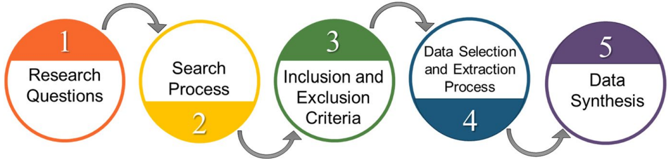
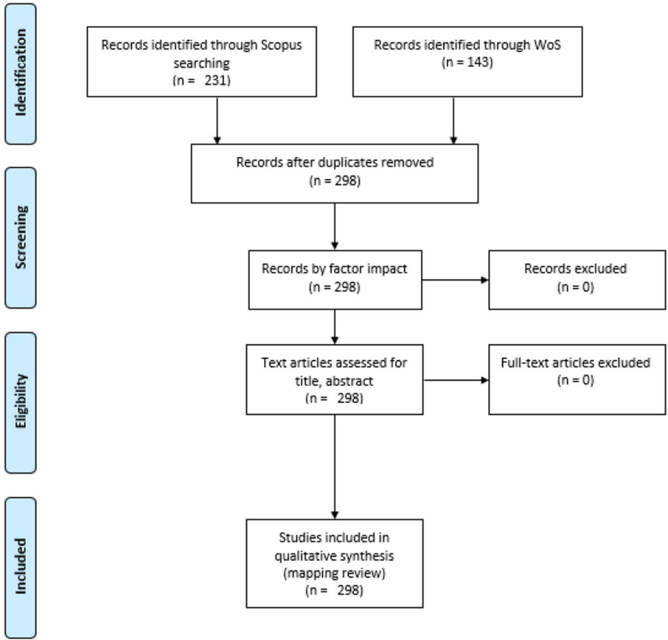
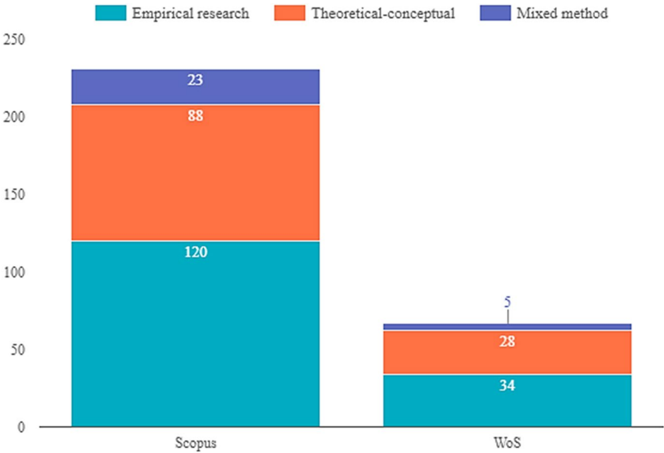
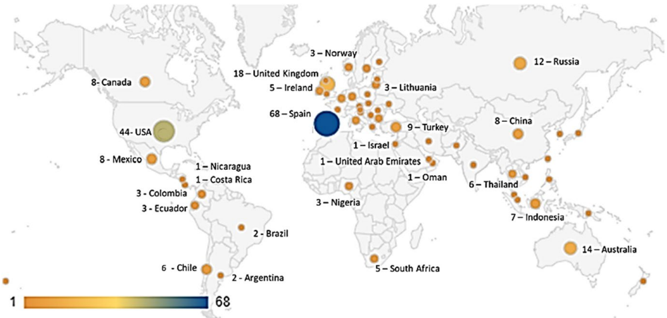
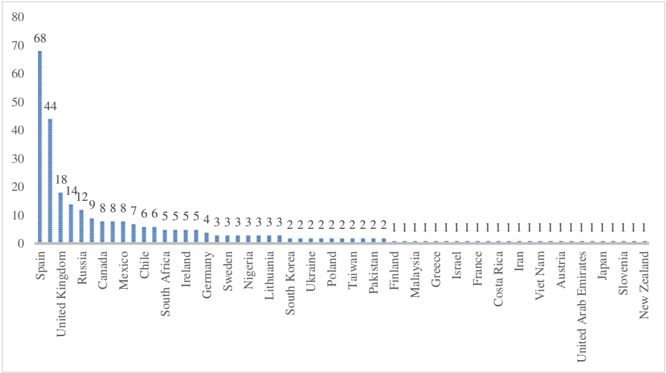
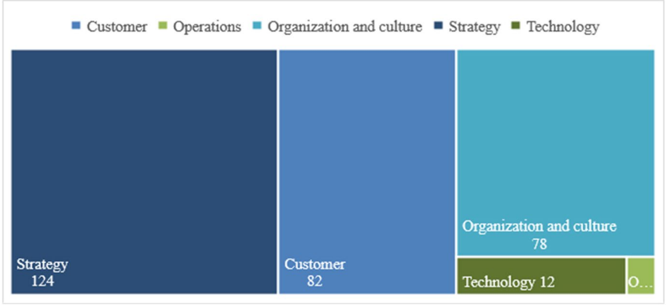
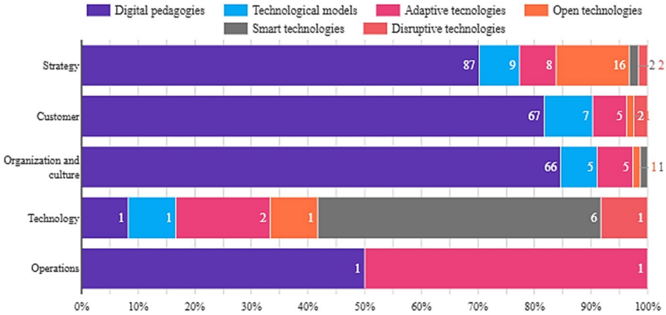
The advancements of technology have allowed digital transformation to reach all productive sectors, including the education sector and its members. This transformation is linked to emerging technologies, the digitalization of processes and resources, and the demand for users to upgrade to the latest technological updates. This research aims to analyze digital transformation and media literacy publications that impact higher education. Its purpose is to identify the types of research and topics they address and explore the scope of digital transformation in higher education institutions. The systematic mapping method was used to analyze 298 articles published in two databases, Scopus and Web of Science (WoS). Inclusion and exclusion criteria were applied to select the articles that could be included in this research. The results show that the largest proportion of articles were found in Scopus, and used both qualitative and quantitative empirical research methods, followed by theoretical-conceptual methods and, to a lesser extent, mixed methods. Likewise, the publications originated in five continents, and the Journal of Adolescent and Adult Literacy had the largest number of publications, with 14. Forty-two percent of the studies were classified in the strategy category, with the most mentioned topic being digital pedagogies. This research provides a perspective on digital transformation studies in higher education institutions and their internalization approaches. This research may be of value to trainers, students, decision-makers, and researchers interested in transformation, educommunication, and educational innovation.
Overview
The claims and statistics of this paper haven’t been checked yet.
Run the check — free, no account needed. It reads the open-access text and checks the sources it cites.
Integrity signals
Registry
Cites
Statistics
Figures
Verification
Claims the paper makes
The claims and statistics of this paper haven’t been checked yet.
Run the check — free, no account needed. It reads the open-access text and checks the sources it cites.
Claims other papers make about this one
Each is checked against this paper’s own text: does it say what the citing paper says it does?
In the citing paper
“Digital literacy (DL) has become a new core skill in work, learning, and communication (Farias-Gaytan et al. 2022; Pangrazio and Sefton-Green, 2021; Porat et al. 2018).”
From The causal relationship between digital literacy and students’ academic achievement: a meta-analysis (2025) · cites this paper as Farias-Gaytan et al. 2022
Self-check
Percentages, sums and reported differences re-computed from the paper’s own numbers.
The self-check needs the paper’s full text.
Citations
Cites
Digital transformation of business models-best practice, enablers, and roadmap
SCHALLMO, D., WILLIAMS, C. A., & BOARDMAN, L. (2017) · International Journal of Innovation Management · doi:10.1142/s136391961740014x · Cited by 655
KRAUS, S., BREM, A., SCHUESSLER, M., SCHUESSLER, F., & NIEMAND, T. (2017) · International Journal of Innovation Management · doi:10.1142/s1363919617500050 · Cited by 114
Research works printed but not linked: 47
- Amhag, L., Hellström, L., & Stigmar, M. (2019). Teacher educators’ use of digital tools and needs for digital competence in higher education. Journal of Digital Learning in Teacher Education, 35(4), 203–220. https://doi.org/10.1080/21532974.2019.1646169 · DOI
- Appel, S. (2019). Geospatial information literacy instruction: frameworks, competency, and threshold concepts. Journal of Map & Geography Libraries, 15(2–3), 134–151. https://doi.org/10.1080/15420353.2020.1760175 · DOI
- Bates, C. C., Klein, A., Schubert, B., McGee, L., Anderson, N., Dorn, L., & McClure, E. (2017). E-Books and E-Book Apps: Considerations for beginning readers. Reading Teacher, 70(4), 401–411. https://doi.org/10.1002/trtr.1543 · DOI
- Blau, I., Shamir-inbal, T., & Avdiel, O. (2020). How does the pedagogical design of a technology-enhanced, collaborative academic course promote digital literacies, self-regulation, and perceived learning of students? The Internet and Higher Education, 45(December 2019), 100722. https://doi.org/10.1016/j.iheduc.2019.100722 · DOI
- Bond, M., Marín, V. I., Dolch, C., Bedenlier, S., & Zawacki-Richter, O. (2018). Digital transformation in German higher education: Student and teacher perceptions and usage of digital media. International Journal of Educational Technology in Higher Education, 15(1), 1–20. https://doi.org/10.1186/s41239-018-0130-1 · DOI · Paper page
- Bucea-Manea-Ţoniş, R., Bucea-Manea-Ţoniş, R., Simion, V. E., Ilic, D., Braicu, C., & Manea, N. (2020). Sustainability in higher education: The relationship between work-life balance and XR e-learning facilities. Sustainability (switzerland), 12(14), 1–19. https://doi.org/10.3390/su12145872 · DOI
- Colás-Bravo, P., Conde-Jiménez, J., & Reyes-de Cózar, S. (2017). Competencias digitales del alumnado no universitario. RELATEC Revista Latinoamericana de Tecnología Educativa, 16(1), 7–20. https://doi.org/10.17398/1695-288x.16.1.7 · DOI
- Creswell, J. W. (2014). Research design. Qualitative, quantitative, and mixed methods approaches. In Acta Universitatis Agriculturae et Silviculturae Mendelianae Brunensis (4th ed., Vol. 53, Issue 9). SAGE Publications, Inc.
- Cronin, C. (2017). Openness and praxis: Exploring the use of open educational practices in higher education. International Review of Research in Open and Distance Learning, 18(5), 15–34. https://doi.org/10.19173/irrodl.v18i5.3096 · DOI
- Da Silva, S. A. A., & Cardoso, A. M. P. (2020). Information literacy a systematic literature review. Revista Digital De Biblioteconomia e Ciencia Da Informacao, 18.https://doi.org/10.20396/RDBCI.V18I0.8660680. · DOI
- Fucili, E., Masi, A., & Terranova, D. (2020). El uso de herramientas virtuales en la enseñanza de la historia en la universidad The use of virtual tools in the teaching of history at the university. Virtualidad, Educación y Ciencia, 20(1), 182–191. · DOI
- García-Peñalvo, F. J. (2017). Mapeos sistemáticos de literatura, revisiones sistemáticas de literatura y benchmarking de programas formativos. Grupo GRIAL, 34(2011), 2011–2014. https://doi.org/10.5281/zenodo.399302 · DOI
- González-Pérez, L. I., Ramírez-Montoya, M. S., & García-Peñalvo, F. J. (2019). Innovación educativa en estudios sobre el desarrollo y uso de la tecnología: un mapeo sistemático. In M. S. Ramírez Montoya & J. R. Valenzuela González (Eds.), Innovación educativa: tendencias globales de investigación e implicaciones prácticas (Primera, pp. 137–160). Ediciones OCTAEDRO, S. L. https://octaedro.com/libro/innovacion-educativa-tendencias-globales-de-investigacion-e-implicaciones-practicas/.
- Guillén-Gámez, F. D., Mayorga-Fernández, M. J., & Alvarez-Garcia, F. J. (2020). A study on the actual use of digital competence in the practicum of education degree. Technology, Knowledge and Learning, 25(3), 667–684. https://doi.org/10.1007/s10758-018-9390-z · DOI
- Jackson, N. C. (2019). Managing for competency with innovation change in higher education: Examining the pitfalls and pivots of digital transformation. Business Horizons, 62(6), 761–772. https://doi.org/10.1016/j.bushor.2019.08.002 · DOI
- Juergens, C. (2020). Trustworthy COVID-19 mapping: Geospatial data literacy aspects of choropleth maps. KN - Journal of Cartography and Geographic Information, 70(4), 155–161. https://doi.org/10.1007/s42489-020-00057-w · DOI
- Khan, S. A., & Bhatti, R. (2017). Digital competencies for developing and managing digital libraries: An investigation from university librarians in Pakistan. Electronic Library, 35(3), 573–597. https://doi.org/10.1108/EL-06-2016-0133 · DOI
- Khitskov, E. A., Veretekhina, S. V., Medvedeva, A. V., Mnatsakanyan, O. L., Shmakova, E. G., & Kotenev, A. (2017). Digital transformation of society: Problems entering in the digital economy. Eurasian Journal of Analytical Chemistry, 12(5), 855–873. https://doi.org/10.12973/ejac.2017.00216a · DOI
- Kitchenham, B. A., & Charters, S. (2007). Guidelines for performing systematic literature reviews in software engineering. Version 2.3. In IEEJ Transactions on Industry Applications (Vol. 126, Issue 5). https://doi.org/10.1541/ieejias.126.589 · DOI
- Koc, M., & Barut, E. (2016). Development and validation of New Media Literacy Scale (NMLS) for university students. Computers in Human Behavior, 63, 834–843. https://doi.org/10.1016/j.chb.2016.06.035 · DOI
- Liu, Z. J., Tretyakova, N., Fedorov, V., & Kharakhordina, M. (2020). Digital literacy and digital didactics as the basis for new learning models’ development. International Journal of Emerging Technologies in Learning, 15(14), 4–18. https://doi.org/10.3991/ijet.v15i14.14669 · DOI
- MacLure, K., & Stewart, D. (2018). A qualitative case study of e-health and digital literacy experiences of pharmacy staff. Research in Social and Administrative Pharmacy, 14(6), 555–563. https://doi.org/10.1016/j.sapharm.2017.07.001 · DOI · Paper page
- MendietaBaltodano, CdeM. (2016). Integración en el contexto de la educación superior pública de Nicaragua: El nuevo modelo educativo de la UNAN-Managua. Edmetic, 5(2), 29. https://doi.org/10.21071/edmetic.v5i2.5775 · DOI
- Miralles-Martínez, P., Gómez-Carrasco, C. J., Arias, V. B., & Fontal-Merillas, O. (2019). Digital resources and didactic methodology in the initial training of history teachers. Comunicar, 27(61), 41–51. https://doi.org/10.3916/C61-2019-04 · DOI
- Moher, D., Liberati, A., Tetzlaff, J., Altman, D. G., & Prisma Group. (2009). Preferred reporting items for systematic reviews and meta-analyses: the PRISMA statement. PLoS Medicine, 6(7), 97. · DOI · Paper page
- Mongeon, P., & Paul-Hus, A. (2016). The journal coverage of Web of Science and Scopus: A comparative analysis. Scientometrics, 106(1), 213–228. https://doi.org/10.1007/s11192-015-1765-5 · DOI · Paper page
- Munoz-Repiso, A., & del Pozo, M. (2016). Analysis of the digital competences of graduates of university degrees to be a teacher. Revista Latinoamericana de Tecnologia Educativa-RELATEC, 15(2), 155–168. https://doi.org/10.17398/1695-288X.15.2.155 · DOI
- Murray, M. C., & Pérez, J. (2015). Informing and performing: A study comparing adaptive learning to traditional learning. Informing Science, 18(1), 111–125. https://doi.org/10.28945/2165 · DOI · Paper page
- Önger, S., & Çetin, T. (2018). An investigation into digital literacy views of social studies preservice teachers in the context of authentic learning. Review of International Geographical Education Online, 8(1), 109–124.
- Osmundsen, K. (2020). Competencies for Digital Transformation: Insights from the Norwegian Energy Sector. Proceedings of the 53rd Hawaii International Conference on System Sciences, January. https://doi.org/10.24251/hicss.2020.529 · DOI
- Pihir, I., Tomičić-Pupek, K., & Furjan, M. T. (2019). Digital transformation playground - literature review and framework of concepts. Journal of Information and Organizational Sciences, 43(1), 33–48. https://doi.org/10.31341/jios.43.1.3 · DOI
- Poncette, A.-S., Spies, C., Mosch, L., Schieler, M., Weber-Carstens, S., Krampe, H., & Balzer, F. (2019). Clinical requirements of future patient monitoring in the intensive care unit: Qualitative study. JMIR Medical Informatics, 7(2), e13064. https://doi.org/10.2196/13064 · DOI · Paper page
- Ramírez-Montoya, M.-S., & Lugo-Ocando, J. (2020). Revisión sistemática de métodos mixtos en el marco de la innovación educativa. Comunicar, 28(65), 9–20. https://doi.org/10.3916/C65-2020-01 · DOI
- Reyna, J., & Meier, P. (2018). Using the Learner-Generated Digital Media (LGDM) framework in tertiary science education: A pilot study. Education Sciences, 8(3). https://doi.org/10.3390/educsci8030106 · DOI
- Salmieri, L. (2019). The rhetoric of digitalization in Italian educational policies: Situating reception among digitally skilled teachers. Italian Journal of Sociology of Education, 11(1), 162–183. https://doi.org/10.14658/pupj-ijse-2019-1-8 · DOI
- Sánchez, A. C., Romero, C. S., & Hernández, J. F. C. (2017). New techno-pedagogical models: Digital competence in university students. Revista Electronica de Investigacion Educativa, 19(1), 1–9. https://doi.org/10.24320/redie.2017.19.1.1148 · DOI
- Sjöberg, J., & Lilja, P. (2019). University teachers’ ambivalence about the digital transformation of higher education. International Journal of Learning, Teaching and Educational Research, 18(13), 133–149. https://doi.org/10.26803/ijlter.18.13.7 · DOI
- Suwana, F., & Lily. (2017). Empowering Indonesian women through building digital media literacy. Kasetsart Journal of Social Sciences, 38(3), 212–217. https://doi.org/10.1016/j.kjss.2016.10.004 · DOI
- Ting, Y. L. (2015). Tapping into students’ digital literacy and designing negotiated learning to promote learner autonomy. Internet and Higher Education, 26, 25–32. https://doi.org/10.1016/j.iheduc.2015.04.004 · DOI
- Tømte, C., Enochsson, A. B., Buskqvist, U., & Kårstein, A. (2015). Educating online student teachers to master professional digital competence: The TPACK-framework goes online. Computers and Education, 84, 26–35. https://doi.org/10.1016/j.compedu.2015.01.005 · DOI
- Torres-Coronas, T., & Vidal-Blasco, M. A. (2015). Percepción de estudiantes y empleadores sobre el desarrollo de competencias digitales en la educación superior. Revista De Educacion, 367, 63–89. https://doi.org/10.4438/1988-592X-RE-2015-367-283 · DOI
- Vasilev, V., Kazan, F. U., Gapsalamov, A., Kazan, F. U., Akhmetshin, E., Bochkareva, T. N., Yumashev, A. V., & Anisimova, T. I. (2020). Digitalization peculiarities of organizations: A case study. Entrepreneurship and Sustainability Issues, 7(4), 3173–3190. https://doi.org/10.9770/jesi.2020.7.4(39) · DOI
- Vial, G. (2019). Understanding digital transformation: A review and a research agenda. Journal of Strategic Information Systems, 28(2), 118–144. https://doi.org/10.1016/j.jsis.2019.01.003 · DOI · Paper page
- Villarreal-Villa, S., García-Guliany, J., Hernández-Palma, H., & Steffens-Sanabria, E. (2019). Teacher competences and transformations in education in the digital age. Formacion Universitaria, 12(6), 3–14. https://doi.org/10.4067/S0718-50062019000600003 · DOI
- Wang, L., Feng, P., & Chen, J. (2017). Pre-service teachers’ development of digital literacies: A case study in a Wiki-based collaborative writing context. International Journal of Computer-Assisted Language Learning and Teaching, 7(3), 21–29. https://doi.org/10.4018/IJCALLT.2017070102 · DOI
- Wanotayapitak, S., Saraubon, K., & Nilsook, P. (2019). Process design of cooperative education management system by cloud-based blockchain E-Portfolio. International Journal of Online and Biomedical Engineering, 15(8), 4–17. https://doi.org/10.3991/ijoe.v15i08.10374 · DOI
- Xiao, J. (2020). Digital transformation in higher education: Critiquing the five-year development plans (2016–2020) of 75 Chinese universities. Distance Education, 40(4), 515–533. https://doi.org/10.1080/01587919.2019.1680272 · DOI
Cited by
The causal relationship between digital literacy and students’ academic achievement: a meta-analysis
Li, F., Cheng, L., Wang, X., Shen, L., Ma, Y., & Islam, A. Y. M. A. (2025) · Humanities and Social Sciences Communications · doi:10.1057/s41599-025-04399-6 · Cited by 38
Metadata
- Authors
- Farias-Gaytan, S., Aguaded, I., & Ramirez-Montoya, M.-S.
- Affiliations
- Tecnológico de Monterrey (MX)
- Corresponding author
- Farias-Gaytan, Silvia
- Venue
- Education and Information Technologies
- Published
- 2021-07-15
- Volume
- 27
- Issue
- 2
- Pages
- 1417-1437
- ISSN
- 1360-2357 (ISSN-L)
- 1573-7608
- OpenAlex
- W3186225330
- Cited by
- 119
- References
- 2
- Citations by year
- 2026: 26 · 2025: 22 · 2024: 24 · 2023: 36 · 2022: 11
- FWCI
- 16.03
- Type
- journal article
- Language
- en
- Open access
- hybrid
- doi.org
- Locations
- Education and Information Technologies (publishedVersion, cc-by)
- Repositorio Institucional de la Universidad de Huelva (Universidad de Huelva) (submittedVersion, cc-by-nc-nd)
- Hispana (submittedVersion, cc-by-nc-nd)
- Topics
- Social Sciences › Education › Digital Transformation of Higher Education
- Social Sciences › Education › Digital literacy in education
- Social Sciences › Education › Educational Innovations and Technology
- Keywords
- digital transformation, digital literacy, media literacy, higher education institutions, digital pedagogy, educational innovation, educommunication
About these checks
Registry, retraction, Cites and statistics results are computed, not judged, with one exception: a printed reference that no index lists is read once by a model before it counts as a citation error. Claims are extracted by a model and kept only when their quote appears verbatim in the text; each cited source is then checked, with a model’s help, for whether it says what the claim relies on. Those verdicts can be wrong — read the claim’s quote and the cited source before relying on one.
Statistics and arithmetic are recomputed, not judged.
Confidence bands are shown only for fields calibrated on our annotated test set. None is calibrated yet, so no band is shown.
What counts as a claim ›How we measure confidence ›How we check this ›
Are you an author, or do you see a problem with this page? Request a review
Data sources
Bibliographic data: Semantic Scholar, OpenAlex, Crossref.
Contains information from the Semantic Scholar Academic Graph Datasets, made available under the ODC Attribution License (ODC-BY 1.0).
Semantic Scholar’s data is described in: Kinney, R., et al. (2023). The Semantic Scholar Open Data Platform. arXiv:2301.10140.
