

The Role of Direct Strategy Instruction and Indirect Activation of Self-Regulated Learning—Evidence from Classroom Observation Studies
Open accessThe DOI matches its Crossref record; 165 of the 170 references it cites were found in a registry or an index.
Abstract
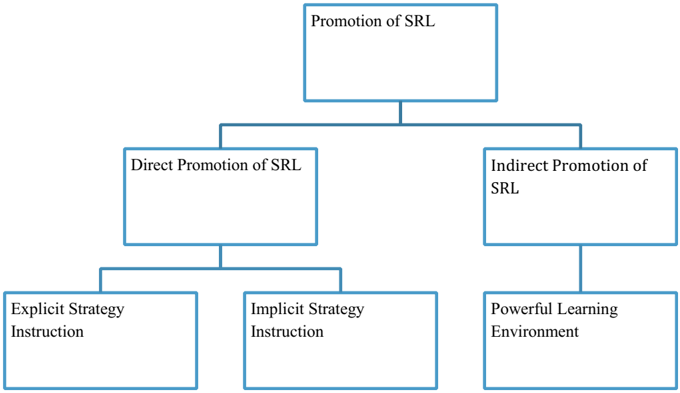
Despite the consensus about the importance of self-regulated learning for academic as well as for lifelong learning, it is still poorly understood as to how teachers can most effectively support their students in enacting self-regulated learning. This article provides a framework about how self-regulated learning can be activated directly through strategy instruction and indirectly by creating a learning environment that allows students to regulate their learning. In examining teachers’ instructional attempts for SRL, we systematically review the literature on classroom observation studies that have assessed how teachers support their students’ SRL. The results of the 17 retrieved studies show that in most classrooms, only little direct strategy instruction took place. Nevertheless, some teachers provided their students with learning environments that require and thus foster self-regulated learning indirectly. Based on a review of classroom observation studies, this article stresses the significance of (1) instructing SRL strategies explicitly so that students develop metacognitive knowledge and skills to integrate the application of these strategies successfully into their learning process, and (2) the necessity of complementing classroom observation research with data gathered from student and teacher self-report in order to obtain a comprehensive view of the effectiveness of teacher approaches to support SRL. Finally, we discuss ten cornerstones for future directions for research about supporting SRL.
Overview
The claims and statistics of this paper haven’t been checked yet.
Free: it reads the open-access text and checks the first 5 claims that cite a source we can check. Create a free account to check every claim.
Integrity signals
Registry
Cites
Statistics
Figures
Verification
Claims the paper makes
The claims and statistics of this paper haven’t been checked yet.
Free: it reads the open-access text and checks the first 5 claims that cite a source we can check. Create a free account to check every claim.
Claims other papers make about this one
Each is checked against this paper’s own text: does it say what the citing paper says it does?
The cited source says what the claim attributes to it.
In the citing paper
“Modeling of effective selfregulated learning by teachers is known to stimulate students' self-regulated learning skills (Dignath & Veenman, 2021), and this may apply to self-regulation towards desirable difficulties just as well.”
From Worth the Effort: the Start and Stick to Desirable Difficulties (S2D2) Framework (2023) · cites this paper as Dignath & Veenman, 2021
Self-check
Percentages, sums and reported differences re-computed from the paper’s own numbers.
The self-check needs the paper’s full text.
Citations
Cites
(1985) · Medical Entomology and Zoology · Cited by 19,180
Handbook of research on teaching
Wittrock, M. C. (1986) · Bibliothèque et Archives nationales du Québec (Québec government) · Cited by 10,625
Becoming a Self-Regulated Learner: An Overview
Zimmerman, B. J. (2002) · Theory Into Practice · doi:10.1207/s15430421tip4102_2 · Cited by 10,197 · cited 5×
“The students of the observed teachers might already have entered the level of self-control (Zimmerman 2002) that allow them to gradually take over the responsibility for their learning and to deliberately practice the use of learning strategies that they have acquired in lessons earlier than those…”
BackgroundResultInfluentialKirschner, P. A., Sweller, J., & Clark, R. E. (2006) · Educational Psychologist · doi:10.1207/s15326985ep4102_1 · Cited by 7,776 · cited 2×
“Complex learning environments that contain much information, but only minimal structure or guidance, will be detrimental for learning since they increase cognitive load (Kirschner et al. 2006).”
BackgroundZimmerman, B. J. (2000) · Handbook of Self-Regulation · doi:10.1016/b978-012109890-2/50031-7 · Cited by 6,069 · cited 4×
“In the same vein, Zimmerman (2000, 2002)) describes four levels of self-regulation that teachers use in order to support students’ development of SRL: (1) At the observation level, teachers control the pacing of the learning by demonstrating and verbalizing regulatory actions and thoughts.”
BackgroundMethodInfluentialThe general causality orientations scale: Self-determination in personality
Deci, E. L., & Ryan, R. M. (1985) · Journal of Research in Personality · doi:10.1016/0092-6566(85)90023-6 · Cited by 5,079
Handbook of educational psychology
(1997) · Choice Reviews Online · doi:10.5860/choice.34-3084 · Cited by 4,825
Self-Regulated Learning and Academic Achievement: An Overview
Zimmerman, B. J. (1990) · Educational Psychologist · doi:10.1207/s15326985ep2501_2 · Cited by 3,687
Feedback and Self-Regulated Learning: A Theoretical Synthesis
Butler, D. L., & Winne, P. H. (1995) · Review of Educational Research · doi:10.3102/00346543065003245 · Cited by 3,334
A Review of Self-regulated Learning: Six Models and Four Directions for Research
Panadero, E. (2017) · Frontiers in Psychology · doi:10.3389/fpsyg.2017.00422 · Cited by 2,915 · cited 1×
“We included recent literature published in the last three decades, as the most cited models of SRL have been published since the year 1990 (see Panadero 2017).”
Background
Research works printed but not linked: 4
- Brown, A.L., Bransford, J.D., Ferrara, R.A., & Campione, J.C. (1983). Learning, remembering, and understand- ing In J.H. Flavell & E.H. Markman (Eds.), Handbook of child psychology: cognitive development (Vol. 3). New York: Wiley
- Hiebert, J. (2003). Teaching mathematics in seven countries: Results from the TIMSS 1999 video study. DIaNe Publishing.
- Veenman, M. V. J., Haan, N., & Dignath, C. (2009). An observation scale for assessing teachers' implicit and explicit use of metacognition in classroom settings. Paper presented at the 13th Biennial Conference for Research on Learning and Instruction, EARLI. Amsterdam.
- Veenman, M. V. J. (2018). Final report talent education-metacognition. Leiden: SCOL.
Cited by
Ng, D. T. K., Tan, C. W., & Leung, J. K. L. (2024) · British Journal of Educational Technology · doi:10.1111/bjet.13454 · Cited by 362
Azevedo, R., Bouchet, F., Duffy, M., Harley, J., Taub, M., Trevors, G., Cloude, E., Dever, D., Wiedbusch, M., Wortha, F., et al. (2022) · Frontiers in Psychology · doi:10.3389/fpsyg.2022.813632 · Cited by 225
“Seventh, training teachers to learn and use SRL in their classrooms is key in fostering their students’ SRL (Kramarski, 2018; Callan and Shim, 2019; Dignath and Veenman, 2020; Kramarski and Heaysman, 2021) and must remain a major thrust of research and education in our field.”
BackgroundKarlen, Y., Hirt, C. N., Jud, J., Rosenthal, A., & Eberli, T. D. (2023) · Teaching and Teacher Education · doi:10.1016/j.tate.2023.104055 · Cited by 231
How educational chatbots support self-regulated learning? A systematic review of the literature
Guan, R., Raković, M., Chen, G., & Gašević, D. (2025) · Education and Information Technologies · doi:10.1007/s10639-024-12881-y · Cited by 105
On the promise of personalized learning for educational equity
Dumont, H., & Ready, D. D. (2023) · npj Science of Learning · doi:10.1038/s41539-023-00174-x · Cited by 175
AI and personalized learning: bridging the gap with modern educational goalsPreprint
Laak, K.-J., & Aru, J. (2024) · arXiv (Cornell University) · doi:10.48550/arxiv.2404.02798 · Cited by 171
Pan, M., Lai, C., & Guo, K. (2024) · The Internet and Higher Education · doi:10.1016/j.iheduc.2024.100991 · Cited by 158
Anyichie, A. C., & Butler, D. L. (2023) · Frontiers in Education · doi:10.3389/feduc.2023.1041946 · Cited by 134
Kramarski, B., & Heaysman, O. (2021) · Educational Psychologist · doi:10.1080/00461520.2021.1985502 · Cited by 121
Domain-specific self-regulated learning interventions for elementary school students
Lee, M., Lee, S. Y., Kim, J., & Lee, H. J. (2023) · Learning and Instruction · doi:10.1016/j.learninstruc.2023.101810 · Cited by 122
Anyichie, A. C., Butler, D. L., Perry, N. E., & Nashon, S. M. (2023) · Frontline Learning Research · doi:10.14786/flr.v11i1.1115 · Cited by 124
Mejeh, M., Sarbach, L., & Hascher, T. (2024) · Education and Information Technologies · doi:10.1007/s10639-024-12510-8 · Cited by 118
Metacognition and Self-Regulated Learning
Winne, P. H., & Azevedo, R. (2022) · Cambridge University Press eBooks · doi:10.1017/9781108888295.007 · Cited by 112
Brod, G., Kucirkova, N. I., Shepherd, J., Jolles, D., & Molenaar, I. (2023) · Educational Psychology Review · doi:10.1007/s10648-023-09749-x · Cited by 112
Worth the Effort: the Start and Stick to Desirable Difficulties (S2D2) Framework
de Bruin, A. B. H., Biwer, F., Hui, L., Onan, E., David, L., & Wiradhany, W. (2023) · Educational Psychology Review · doi:10.1007/s10648-023-09766-w · Cited by 109
Unlocking academic success: the impact of time management on college students’ study engagement
Fu, Y., Wang, Q., Wang, X., Zhong, H., Chen, J., Fei, H., Yao, Y., Xiao, Y., Li, W., & Li, N. (2025) · BMC Psychology · doi:10.1186/s40359-025-02619-x · Cited by 114
David, L., Biwer, F., Crutzen, R., & de Bruin, A. B. H. (2024) · Higher Education · doi:10.1007/s10734-024-01199-w · Cited by 107
Self-Regulated Learning Interventions for Pre-service Teachers: a Systematic Review
Fernández-Ortube, A., Panadero, E., & Dignath, C. (2024) · Educational Psychology Review · doi:10.1007/s10648-024-09919-5 · Cited by 105
Self-citationDignath, C. (2021) · Metacognition and Learning · doi:10.1007/s11409-021-09271-x · Cited by 87
Self-citationZohar, A., & Ben-Ari, G. (2022) · Metacognition and Learning · doi:10.1007/s11409-022-09310-1 · Cited by 84
Prasse, D., Webb, M., Deschênes, M., Parent, S., Aeschlimann, F., Goda, Y., Yamada, M., & Raynault, A. (2024) · Technology Knowledge and Learning · doi:10.1007/s10758-024-09772-z · Cited by 85
Held, T., & Mejeh, M. (2024) · Heliyon · doi:10.1016/j.heliyon.2024.e29526 · Cited by 84
Almayez, M., Al-khresheh, M. H., AL-Qadri, A. H., Alkhateeb, I. A., & Alomaim, T. I. (2025) · Acta Psychologica · doi:10.1016/j.actpsy.2025.104796 · Cited by 81
de Ruig, N. J., de Jong, P. F., & Zee, M. (2023) · Educational Psychology Review · doi:10.1007/s10648-023-09795-5 · Cited by 82
Vosniadou, S., Bodner, E., Stephenson, H., Jeffries, D., Lawson, M. J., Darmawan, I. N., Kang, S. H. K., Graham, L. E., & Dignath, C. (2024) · Metacognition and Learning · doi:10.1007/s11409-024-09374-1 · Cited by 75
Self-citationArianto, F., & Hanif, M. (2024) · Journal of Pedagogical Research · doi:10.33902/jpr.202428575 · Cited by 71
Mejeh, M., & Held, T. (2022) · Vocations and Learning · doi:10.1007/s12186-022-09298-4 · Cited by 73
Jud, J., Hirt, C. N., Rosenthal, A., & Karlen, Y. (2023) · Teaching and Teacher Education · doi:10.1016/j.tate.2023.104093 · Cited by 67
Self-Regulated Resource Management in Emergency Remote Higher Education: Status Quo and Predictors
Naujoks-Schober, N., Bedenlier, S., Gläser‐Zikuda, M., Kammerl, R., Kopp, B., Ziegler, A., & Händel, M. (2021) · Frontiers in Psychology · doi:10.3389/fpsyg.2021.672741 · Cited by 62
Michalsky, T. (2024) · Heliyon · doi:10.1016/j.heliyon.2024.e24280 · Cited by 64
Solving the Self-regulated Learning Problem: Exploring the Performance of ChatGPT in Mathematics
Li, P., Lee, H.-Y., Cheng, Y., Starčič, A. I., & Huang, Y. (2023) · Lecture notes in computer science · doi:10.1007/978-3-031-40113-8_8 · Cited by 59
Stebner, F., Schuster, C., Weber, X.-L., Greiff, S., Leutner, D., & Wirth, J. (2022) · Metacognition and Learning · doi:10.1007/s11409-022-09322-x · Cited by 57
“Research on combined direct and indirect strategy training provides initial indications for a successful strengthening of the transfer of metacognitive skills (Dignath & Veenman, 2020; Schuster et al., 2018).”
BackgroundTeachers as creative agents: How self-beliefs and self-regulation drive teachers’ creative activity
Zielińska, A., Lebuda, I., Gop, A., & Karwowski, M. (2024) · Contemporary Educational Psychology · doi:10.1016/j.cedpsych.2024.102267 · Cited by 58
Greene, J. A. (2021) · Metacognition and Learning · doi:10.1007/s11409-021-09283-7 · Cited by 56
Linde, I., Sarva, E., & Daniela, L. (2023) · Sustainability · doi:10.3390/su15129408 · Cited by 52
Exploring Human Interaction in Online Self-Regulated Learning Through Danmaku Comments
Zhu, Y., Lin, X. Y., Kim, J., Al‐Adwan, A. S., & Li, N. (2025) · International Journal of Human-Computer Interaction · doi:10.1080/10447318.2025.2480826 · Cited by 52
Chen, S., Sermeno, R., Hodge, K., Murphy, S., Agenbroad, A., Schweitzer, A. M., Tsao, L. L., & Roe, A. J. (2024) · Education Sciences · doi:10.3390/educsci14060565 · Cited by 50
Sins, P. H. M., de Leeuw, R. R., de Brouwer, J., & Vrieling, E. (2023) · Metacognition and Learning · doi:10.1007/s11409-023-09368-5 · Cited by 52
Wu, X.-Y., Radloff, J., Yeter, I. H., Wang, L., & Chiu, T. K. F. (2025) · Interactive Learning Environments · doi:10.1080/10494820.2025.2563086 · Cited by 48
La enseñanza de la autorregulación en aulas de educación primaria
Ronqui, V., Sánchez, M. F., & Trías, D. (2021) · Cuadernos de Investigación Educativa · doi:10.18861/cied.2021.12.2.3055 · Cited by 48
Classroom observations: How do teachers teach learning strategies?
Granström, M., Kikas, E., & Eisenschmidt, E. (2023) · Frontiers in Education · doi:10.3389/feduc.2023.1119519 · Cited by 50
Maimaiti, G., & Hew, K. F. (2025) · Computers & Education · doi:10.1016/j.compedu.2025.105278 · Cited by 45
Landini, F. (2023) · Revista Mexicana de Investigación Educativa · Cited by 48
Δημητρίου, Α., Spanoudis, G. C., Christou, C., Greiff, S., Makris, N., Vainikainen, M., Golino, H. F., & Gonida, E. Ν. (2023) · Psychological Review · doi:10.1037/rev0000399 · Cited by 45
Mathematical attitudes transformation when introducing GeoGebra in the secondary classroom
Romero, I., & López, M. D. M. G. (2023) · Education and Information Technologies · doi:10.1007/s10639-023-12085-w · Cited by 43
Guo, C., Chen, X., & Chen, J. (2025) · Behavioral Sciences · doi:10.3390/bs15060753 · Cited by 43
Dignath, C., & Sprenger, L. (2020) · Frontiers in Education · doi:10.3389/feduc.2020.585683 · Cited by 43
Self-citationWang, J., Zhou, H., Chen, S., Tong, H., & Yang, Y. (2024) · System · doi:10.1016/j.system.2024.103313 · Cited by 41
The effects of meta-creative pedagogy on elementary school students’ creative thinking
Paz-Baruch, N., Grovas, G., & Mevarech, Z. R. (2025) · Metacognition and Learning · doi:10.1007/s11409-025-09412-6 · Cited by 42
Self-regulated learning and reflection: a tool for teachers and students
Arvatz, A., Peretz, R., & Dori, Y. J. (2025) · Metacognition and Learning · doi:10.1007/s11409-025-09415-3 · Cited by 42
Magnusson, C. G., Luoto, J. M., & Blikstad‐Balas, M. (2023) · Teaching and Teacher Education · doi:10.1016/j.tate.2023.104274 · Cited by 40
Using an extended ICAP-based coding guide as a framework for the analysis of classroom observations
Vosniadou, S., Lawson, M. J., Bodner, E., Stephenson, H., Jeffries, D., & Darmawan, I. G. N. (2023) · Teaching and Teacher Education · doi:10.1016/j.tate.2023.104133 · Cited by 40
Fahrni, D. D. D., Iten, G. H., Prasse, D., & Hascher, T. (2025) · Teaching and Teacher Education · doi:10.1016/j.tate.2025.105150 · Cited by 39
Michalsky, T. (2021) · Frontiers in Psychology · doi:10.3389/fpsyg.2021.630197 · Cited by 39
The effect of a distributed metacognitive strategy intervention on reading comprehension
Urban, M., Urban, K., & Nietfeld, J. L. (2023) · Metacognition and Learning · doi:10.1007/s11409-023-09334-1 · Cited by 39
Öztürk, M., Yüce, E., & Türker, P. M. (2025) · Technology Knowledge and Learning · doi:10.1007/s10758-024-09812-8 · Cited by 39
Sáez-Delgado, F., López-Angulo, Y., Mella-Norambuena, J., & Casanova, D. (2022) · Formación universitaria · doi:10.4067/s0718-50062022000100095 · Cited by 38
Qiu, X., Zhang, T., & Dong, S. (2023) · System · doi:10.1016/j.system.2023.103188 · Cited by 37
Jud, J., Karlen, Y., & Hirt, C. N. (2024) · Metacognition and Learning · doi:10.1007/s11409-024-09393-y · Cited by 38
Schuster, C., Stebner, F., Geukes, S., Jansen, M., Leutner, D., & Wirth, J. (2022) · Learning and Instruction · doi:10.1016/j.learninstruc.2022.101708 · Cited by 39
Breitwieser, J., Nobbe, L., Biedermann, D., & Brod, G. (2023) · Computers & Education · doi:10.1016/j.compedu.2023.104879 · Cited by 36
Mänty, K., Kinnunen, S., Rinta-Homi, O., & Koivuniemi, M. (2022) · Frontiers in Education · doi:10.3389/feduc.2022.865161 · Cited by 37
Leveraging opportunities for self-regulated learning in smart learning environments
Adler, I., Warren, S., Norris, C. A., & Soloway, E. M. (2025) · Smart Learning Environments · doi:10.1186/s40561-024-00359-w · Cited by 35
Self-regulated learning in secondary school: Students’ self-feedback in a peer observation programme
Torres, A. C., Duarte, M., Pinto, D., & Mouraz, A. (2024) · Studies In Educational Evaluation · doi:10.1016/j.stueduc.2024.101407 · Cited by 37
Bellibaş, M. Ş., Polatcan, M., & Alzouebi, K. (2025) · Educational Management Administration & Leadership · doi:10.1177/17411432241305702 · Cited by 34
Brataas, G., & Jenset, I. S. (2023) · Teaching and Teacher Education · doi:10.1016/j.tate.2023.104206 · Cited by 34
Schwerter, J., Stang‐Rabrig, J., Kleinkorres, R., Bleher, J., Doebler, P., & McElvany, N. (2024) · European Journal of Psychology of Education · doi:10.1007/s10212-024-00877-8 · Cited by 34
Association between psychological need satisfaction and online self-regulated learning
Hidayatullah, A., & Csíkos, C. (2023) · Asia Pacific Education Review · doi:10.1007/s12564-023-09910-9 · Cited by 34
“Because I'm Bad at the Game!” A Microanalytic Study of Self Regulated Learning in League of Legends
Kleinman, E., Gayle, C., & El‐Nasr, M. S. (2021) · Frontiers in Psychology · doi:10.3389/fpsyg.2021.780234 · Cited by 33
Torrington, J., Bower, M., & Burns, E. C. (2023) · British Journal of Educational Technology · doi:10.1111/bjet.13338 · Cited by 33
Morssink-Santing, V. E., van der Zee, S., Klaver, L. T., de Brouwer, J., & Sins, P. H. M. (2024) · Studies In Educational Evaluation · doi:10.1016/j.stueduc.2024.101380 · Cited by 32
Fono, D., & Zohar, A. (2024) · Professional Development in Education · doi:10.1080/19415257.2024.2409779 · Cited by 31
Preservice Teachers’ Online Self-Regulated Learning: Does Digital Readiness Matter?
Fuchs, K., Pösse, L., Bedenlier, S., Gläser‐Zikuda, M., Kammerl, R., Kopp, B., Ziegler, A., & Händel, M. (2022) · Education Sciences · doi:10.3390/educsci12040272 · Cited by 32
Pinochet-Quiroz, P., Lepe-Martínez, N. F., Gálvez-Gamboa, F. A., Ramos-Galarza, C., Valle, M. D., & Acosta-Rodas, P. (2022) · Estudios sobre Educación · doi:10.15581/004.43.005 · Cited by 30
A Comparison of Study Behaviors and Metacognitive Evaluation Used by Biology Students
Ewell, S. N., Driessen, E. P., Grogan, W., Johnston, Q., Ferdous, S., Mehari, Y., Peart, A., Seibenhener, M. L., & Ballen, C. J. (2023) · CBE—Life Sciences Education · doi:10.1187/cbe.22-11-0225 · Cited by 30
What self-regulation strategies do elementary students utilize while learning online?
Torrington, J., Bower, M., & Burns, E. C. (2022) · Education and Information Technologies · doi:10.1007/s10639-022-11244-9 · Cited by 31
Pre-service teachers’ ways of understanding, observing, and supporting self-regulated learning
Latva‐aho, J., Näykki, P., Pyykkönen, S., Laitinen‐Väänänen, S., Hirsto, L., & Veermans, M. (2024) · Teaching and Teacher Education · doi:10.1016/j.tate.2024.104719 · Cited by 30
Zhang, Y., & Li, C. (2025) · International Journal of Educational Research · doi:10.1016/j.ijer.2025.102553 · Cited by 29
Kersna, L., Laak, K.-J., Lepp, L., & Pedaste, M. (2025) · Education Sciences · doi:10.3390/educsci15010060 · Cited by 29
Wirth, J., Weber-Reuter, X.-L., Schuster, C., Fleischer, J., Leutner, D., & Stebner, F. (2025) · Educational Psychology Review · doi:10.1007/s10648-024-09983-x · Cited by 30
Dülger, M., van Leeuwen, A., Janssen, J. J. H. M., & Kester, L. (2025) · Education and Information Technologies · doi:10.1007/s10639-025-13389-9 · Cited by 27
Bildung und Resilienz. Gutachten
Anders, Y., Hannover, B., Jungbauer-Gans, M., Köller, O., Lenzen, D., McElvany, N., Seidel, T., Tippelt, R., Wilbers, K., & Woessmann, L. (2022) · Waxmann Verlag GmbH eBooks · doi:10.31244/9783830995500 · Cited by 27
Heaysman, O., & Kramarski, B. (2022) · International Journal of Educational Research · doi:10.1016/j.ijer.2022.102074 · Cited by 28
Balažinec, M., Radanović, I., & Bulić, M. (2024) · Education Sciences · doi:10.3390/educsci14060669 · Cited by 28
Paavilainen, T., López‐Pernas, S., Väisänen, S., Kontkanen, S., & Hirsto, L. (2024) · Technology Knowledge and Learning · doi:10.1007/s10758-024-09808-4 · Cited by 26
Helm, C., & Huber, S. G. (2022) · Frontiers in Education · doi:10.3389/feduc.2022.743770 · Cited by 26
Setiawan, I. (2024) · Pakistan Journal of Life and Social Sciences (PJLSS) · doi:10.57239/pjlss-2025-23.1.0031 · Cited by 25
Sáez-Delgado, F., Lobos, K., López Angulo, Y., Mella Norambuena, J., & Pinochet-Quiroz, P. (2023) · Revista Mexicana de Investigación Educativa · Cited by 27
Gjerde, V., Paulsen, V. H., Holst, B., & Kolstø, S. D. (2022) · Physical Review Physics Education Research · doi:10.1103/physrevphyseducres.18.010136 · Cited by 24
Heaysman, O., & Kramarski, B. (2022) · Instructional Science · doi:10.1007/s11251-022-09598-1 · Cited by 24
Händel, M., & Dresel, M. (2022) · Learning and Individual Differences · doi:10.1016/j.lindif.2022.102229 · Cited by 25
Teachers’ perceptions of their self-regulated learning practices in elementary school classrooms
Greenquist-Marlett, S., Bol, L., & Hill, C. (2025) · Frontiers in Education · doi:10.3389/feduc.2024.1464350 · Cited by 23
Zahari, M., Marini, A., Safitri, D., Dewiyani, L., & Muawanah, U. (2025) · Social Sciences & Humanities Open · doi:10.1016/j.ssaho.2025.101286 · Cited by 24
Instructional design for effective classroom Pedagogy of teaching
Mallillin, L. L. D., Mallillin, J. B., Ampongan, Y. D., Lipayon, I. C., Mejica, M. M., & Burabo, J. Z. (2023) · Eureka Journal of Educational Research · doi:10.56773/ejer.v1i2.6 · Cited by 23
Abidin, Z., Qusairi, A., Hanifansyah, N., & Mubarak, F. (2025) · TARBIYA Journal of Education in Muslim Society · doi:10.15408/tjems.v12i1.45642 · Cited by 22
Abel, R., de Bruin, A. B. H., Onan, E., & Roelle, J. (2024) · Educational Psychology Review · doi:10.1007/s10648-024-09902-0 · Cited by 22
Learning to Evaluate (Mis)information in an Online Game: Strategies Matter!
Barzilai, S., & Stadtler, M. (2024) · Computers & Education · doi:10.1016/j.compedu.2024.105210 · Cited by 23
Hirt, C. N., Eberli, T. D., Jud, J., Rosenthal, A., & Karlen, Y. (2025) · Teaching and Teacher Education · doi:10.1016/j.tate.2025.104977 · Cited by 23
Ridgley, L. M., Rubenstein, L. D., & Callan, G. L. (2021) · Gifted Child Quarterly · doi:10.1177/00169862211025452 · Cited by 22
Marten, P. L., & Stadtler, M. (2024) · Computers in Human Behavior · doi:10.1016/j.chb.2024.108548 · Cited by 22
Metadata
- Authors
- Dignath, C., & Veenman, M. V. J.
- Affiliations
- DIPF | Leibniz Institute for Research and Information in Education (DE)
- Corresponding author
- Dignath, Charlotte
- ORCID
- Dignath, Charlotte
- Venue
- Educational Psychology Review
- Published
- 2020-07-15
- Volume
- 33
- Issue
- 2
- Pages
- 489-533
- ISSN
- 1040-726X (ISSN-L)
- 1573-336X
- OpenAlex
- W3043401174
- Cited by
- 403
- References
- 170
- Citations by year
- 2026: 110 · 2025: 99 · 2024: 81 · 2023: 68 · 2022: 28 · 2021: 15 · 2020: 2
- FWCI
- 42.61
- Type
- journal article
- Language
- en
- Open access
- hybrid
- doi.org
- Licence
- cc-by
- creativecommons.org/licenses/by/4.0 (tdm)
- creativecommons.org/licenses/by/4.0 (vor)
- Locations
- Educational Psychology Review (publishedVersion, cc-by)
- Pedocs (German Institute for International Educational Research) (publishedVersion, cc-by)
- peDOCS (cc-by)
- Funders
- DIPF | Leibniz-Institut für Bildungsforschung und Bildungsinformation
- Topics
- Social Sciences › Psychology › Developmental and Educational Psychology › Innovative Teaching and Learning Methods
- Social Sciences › Psychology › Developmental and Educational Psychology › Educational Strategies and Epistemologies
- Social Sciences › Psychology › Experimental and Cognitive Psychology › Visual and Cognitive Learning Processes
- Keywords
- student self-regulation, strategy instruction, metacognition, teacher support, learning environment, classroom observation, metacognitive knowledge, student self-report, teacher self-report
About these checks
Registry, retraction, Cites and statistics results are computed, not judged, with one exception: a printed reference that no index lists is read once by a model before it counts as a citation error. Claims are extracted by a model and kept only when their quote appears verbatim in the text; each cited source is then checked, with a model’s help, for whether it says what the claim relies on. Those verdicts can be wrong — read the claim’s quote and the cited source before relying on one.
Statistics and arithmetic are recomputed, not judged.
Confidence bands are shown only for fields calibrated on our annotated test set. None is calibrated yet, so no band is shown.
What counts as a claim ›How we measure confidence ›How we check this ›
Are you an author, or do you see a problem with this page? Request a review
Data sources
Bibliographic data: Semantic Scholar, OpenAlex, Crossref.
Contains information from the Semantic Scholar Academic Graph Datasets, made available under the ODC Attribution License (ODC-BY 1.0).
Semantic Scholar’s data is described in: Kinney, R., et al. (2023). The Semantic Scholar Open Data Platform. arXiv:2301.10140.
