

The Role of Direct Strategy Instruction and Indirect Activation of Self-Regulated Learning—Evidence from Classroom Observation Studies
Open accessThe DOI matches its Crossref record; 165 of the 170 references it cites were found in a registry or an index.
Abstract
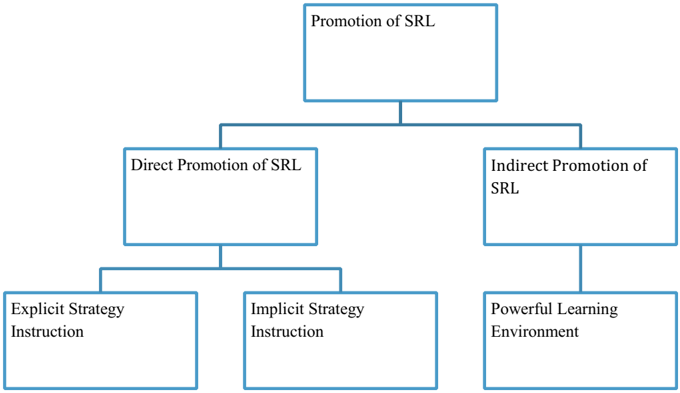
Despite the consensus about the importance of self-regulated learning for academic as well as for lifelong learning, it is still poorly understood as to how teachers can most effectively support their students in enacting self-regulated learning. This article provides a framework about how self-regulated learning can be activated directly through strategy instruction and indirectly by creating a learning environment that allows students to regulate their learning. In examining teachers’ instructional attempts for SRL, we systematically review the literature on classroom observation studies that have assessed how teachers support their students’ SRL. The results of the 17 retrieved studies show that in most classrooms, only little direct strategy instruction took place. Nevertheless, some teachers provided their students with learning environments that require and thus foster self-regulated learning indirectly. Based on a review of classroom observation studies, this article stresses the significance of (1) instructing SRL strategies explicitly so that students develop metacognitive knowledge and skills to integrate the application of these strategies successfully into their learning process, and (2) the necessity of complementing classroom observation research with data gathered from student and teacher self-report in order to obtain a comprehensive view of the effectiveness of teacher approaches to support SRL. Finally, we discuss ten cornerstones for future directions for research about supporting SRL.
Overview
The claims and statistics of this paper haven’t been checked yet.
Free: it reads the open-access text and checks the first 5 claims that cite a source we can check. Create a free account to check every claim.
Integrity signals
Registry
Cites
Statistics
Figures
Verification
Claims the paper makes
The claims and statistics of this paper haven’t been checked yet.
Free: it reads the open-access text and checks the first 5 claims that cite a source we can check. Create a free account to check every claim.
Claims other papers make about this one
Each is checked against this paper’s own text: does it say what the citing paper says it does?
The cited source says what the claim attributes to it.
In the citing paper
“Modeling of effective selfregulated learning by teachers is known to stimulate students' self-regulated learning skills (Dignath & Veenman, 2021), and this may apply to self-regulation towards desirable difficulties just as well.”
From Worth the Effort: the Start and Stick to Desirable Difficulties (S2D2) Framework (2023) · cites this paper as Dignath & Veenman, 2021
Self-check
Percentages, sums and reported differences re-computed from the paper’s own numbers.
The self-check needs the paper’s full text.
Citations
Cites
(1985) · Medical Entomology and Zoology · Cited by 19,180
Handbook of research on teaching
Wittrock, M. C. (1986) · Bibliothèque et Archives nationales du Québec (Québec government) · Cited by 10,625
Becoming a Self-Regulated Learner: An Overview
Zimmerman, B. J. (2002) · Theory Into Practice · doi:10.1207/s15430421tip4102_2 · Cited by 10,197 · cited 5×
“The students of the observed teachers might already have entered the level of self-control (Zimmerman 2002) that allow them to gradually take over the responsibility for their learning and to deliberately practice the use of learning strategies that they have acquired in lessons earlier than those…”
BackgroundResultInfluentialKirschner, P. A., Sweller, J., & Clark, R. E. (2006) · Educational Psychologist · doi:10.1207/s15326985ep4102_1 · Cited by 7,776 · cited 2×
“Complex learning environments that contain much information, but only minimal structure or guidance, will be detrimental for learning since they increase cognitive load (Kirschner et al. 2006).”
BackgroundZimmerman, B. J. (2000) · Handbook of Self-Regulation · doi:10.1016/b978-012109890-2/50031-7 · Cited by 6,069 · cited 4×
“In the same vein, Zimmerman (2000, 2002)) describes four levels of self-regulation that teachers use in order to support students’ development of SRL: (1) At the observation level, teachers control the pacing of the learning by demonstrating and verbalizing regulatory actions and thoughts.”
BackgroundMethodInfluentialThe general causality orientations scale: Self-determination in personality
Deci, E. L., & Ryan, R. M. (1985) · Journal of Research in Personality · doi:10.1016/0092-6566(85)90023-6 · Cited by 5,079
Handbook of educational psychology
(1997) · Choice Reviews Online · doi:10.5860/choice.34-3084 · Cited by 4,825
Self-Regulated Learning and Academic Achievement: An Overview
Zimmerman, B. J. (1990) · Educational Psychologist · doi:10.1207/s15326985ep2501_2 · Cited by 3,687
Feedback and Self-Regulated Learning: A Theoretical Synthesis
Butler, D. L., & Winne, P. H. (1995) · Review of Educational Research · doi:10.3102/00346543065003245 · Cited by 3,334
A Review of Self-regulated Learning: Six Models and Four Directions for Research
Panadero, E. (2017) · Frontiers in Psychology · doi:10.3389/fpsyg.2017.00422 · Cited by 2,915 · cited 1×
“We included recent literature published in the last three decades, as the most cited models of SRL have been published since the year 1990 (see Panadero 2017).”
Background
Research works printed but not linked: 4
- Brown, A.L., Bransford, J.D., Ferrara, R.A., & Campione, J.C. (1983). Learning, remembering, and understand- ing In J.H. Flavell & E.H. Markman (Eds.), Handbook of child psychology: cognitive development (Vol. 3). New York: Wiley
- Hiebert, J. (2003). Teaching mathematics in seven countries: Results from the TIMSS 1999 video study. DIaNe Publishing.
- Veenman, M. V. J., Haan, N., & Dignath, C. (2009). An observation scale for assessing teachers' implicit and explicit use of metacognition in classroom settings. Paper presented at the 13th Biennial Conference for Research on Learning and Instruction, EARLI. Amsterdam.
- Veenman, M. V. J. (2018). Final report talent education-metacognition. Leiden: SCOL.
Cited by
Items 101–200 of 654
Hirt, C. N., Jud, J., Rosenthal, A., & Karlen, Y. (2022) · Frontline Learning Research · doi:10.14786/flr.v10i2.1113 · Cited by 22
Dignath, C., & Mevarech, Z. R. (2021) · Metacognition and Learning · doi:10.1007/s11409-021-09285-5 · Cited by 22
Self-citationMalone, K. L. (2023) · Science Education · doi:10.1002/sce.21805 · Cited by 20
Yang, Y. P., & Song, Y. (2024) · Computer Assisted Language Learning · doi:10.1080/09588221.2024.2342868 · Cited by 20
Technology-enhanced self-regulated second language learning interventions: A systematic review
Pan, M., Lai, C., & Guo, K. (2025) · System · doi:10.1016/j.system.2025.103675 · Cited by 22
Stephenson, H., Lawson, M. J., Nguyen-Khoa, L.-A., Kang, S. H. K., Vosniadou, S., Murdoch, C., Graham, L. E., & White, E. (2024) · Frontiers in Education · doi:10.3389/feduc.2024.1451314 · Cited by 19
Fahrni, D. D. D., Hascher, T., & Prasse, D. (2025) · Learning in Context · doi:10.1016/j.lecon.2025.100007 · Cited by 19
Analysis Effectiveness of Implementation Assessment as Learning on Metacognitive Skills
Daniar, A. V., Herdyastuti, N., & Lutfi, A. (2023) · IJORER International Journal of Recent Educational Research · doi:10.46245/ijorer.v4i6.392 · Cited by 19
Ponomariovienė, J., & Jakavonytė-Staškuvienė, D. (2024) · Education Sciences · doi:10.3390/educsci14040368 · Cited by 20
Mejeh, M., & Sarbach, L. (2024) · Technology Knowledge and Learning · doi:10.1007/s10758-024-09788-5 · Cited by 20
Nudging Autonomous Learning Behavior: Three Field Experiments
Weijers, R. J., de Koning, B. B., Vermetten, Y., & PAAS, F. G. W. C. (2023) · Education Sciences · doi:10.3390/educsci13010049 · Cited by 19
Rosenthal, A., Hirt, C. N., Eberli, T. D., Jud, J., & Karlen, Y. (2023) · Unterrichtswissenschaft · doi:10.1007/s42010-023-00189-8 · Cited by 18
Lau, K., & Qian, Q. (2024) · Reading and Writing · doi:10.1007/s11145-024-10516-9 · Cited by 19
de Ruig, N. J., Zee, M., & de Jong, P. F. (2024) · Frontiers in Education · doi:10.3389/feduc.2024.1392907 · Cited by 18
Mejeh, M., & Grieder, C. (2025) · International Journal for Research in Vocational Education and Training · doi:10.13152/ijrvet.12.2.3 · Cited by 18
Assessing students' metacognitive strategies in e-learning and their role in academic performance
Amien, M., & Hidayatullah, A. (2023) · Jurnal Inovasi Teknologi Pendidikan · doi:10.21831/jitp.v10i2.60949 · Cited by 18
Herrero-Hernández, A., Trujillo-Vargas, J. J., González-García, C., Pérez-Martínez, J., Fuentes, A. C., Ausín-Villaverde, V., & Palencia, J. L. D. (2023) · Revista Mexicana de Investigación Educativa · doi:10.5281/zenodo.17099535 · Cited by 18
Fütterer, T., Bardach, L., Kuhn, J., Keller, S. D., & Gerjets, P. (2026) · Educational Psychology Review · doi:10.1007/s10648-026-10133-8 · Cited by 17
Anthonysamy, L., Wut, T. M., & Lim, O. W. (2025) · Social Sciences & Humanities Open · doi:10.1016/j.ssaho.2025.102021 · Cited by 17
Does the Jigsaw method improve motivation and self-regulation in vocational high schools?
Riant, M., de Place, A., Bressoux, P., Batruch, A., Bouet, M., Bressan, M., Brown, G., Butera, F., Cepeda, C., Cherbonnier, A., et al. (2024) · Contemporary Educational Psychology · doi:10.1016/j.cedpsych.2024.102278 · Cited by 19
Metacognitive Engagement in AI-Supported Learning: Frameworks, Challenges, and Transformations
Tezer, M. (2025) · Education and human development · doi:10.5772/intechopen.1012658 · Cited by 17
The Role of Self-Regulated Learning on Students' English Achievement
Nadhif, A., & Rohmatika, I. (2020) · Cendekia Jurnal Kependidikan dan Kemasyarakatan · doi:10.21154/cendekia.v18i2.1799 · Cited by 17
Integrating effective learning strategies in basic physics lectures: A thematic analysis
Gjerde, V., Holst, B., & Kolstø, S. D. (2021) · Physical Review Physics Education Research · doi:10.1103/physrevphyseducres.17.010124 · Cited by 17
:null (2023) · Waxmann Verlag GmbH eBooks · doi:10.31244/9783830997429 · Cited by 18
Panadero, E., Fernández-Ortube, A., Zamorano, D., Pinedo, L., Sánchez‐Iglesias, I., & Barrenetxea-Mínguez, L. (2025) · Learning and Individual Differences · doi:10.1016/j.lindif.2025.102808 · Cited by 17
Adler, I., & Shani, Y. (2025) · Teaching and Teacher Education · doi:10.1016/j.tate.2025.105268 · Cited by 18
Zheng, S., Liu, H., & Yao, M. (2022) · Child Indicators Research · doi:10.1007/s12187-022-10002-0 · Cited by 18
Visualization and metacognitive scaffolding in learning from animations
Deibl, I., Zumbach, J., & Fleischer, T. (2023) · Social Sciences & Humanities Open · doi:10.1016/j.ssaho.2023.100601 · Cited by 17
Xu, J., & Zhou, S. (2024) · Language Teaching Research · doi:10.1177/13621688241304875 · Cited by 16
Brunner, S. N., Bäuerlein, K., Conti, M., & Karlen, Y. (2025) · Learning and Individual Differences · doi:10.1016/j.lindif.2025.102656 · Cited by 16
Ronqui, V., Trías, D., & Martínez, J. A. H. (2024) · European Journal of Psychology of Education · doi:10.1007/s10212-024-00830-9 · Cited by 15
Analisis tingkat self regulated learning peserta didik di Sekolah Dasar Indonesia Bangkok
Chumdari, C., Atmojo, I. R. W., Matsuri, M., Adi, F. P., Ardiansyah, R., & Saputri, D. Y. (2025) · Jurnal Pendidikan Dasar · doi:10.20961/jpd.v12i2.94880 · Cited by 15
Exploring Metacognitive Strategies to Support Young Learners in Developing Their Learner Autonomy
Suharto, P. P., Damayanti, I. L., & Lengkanawati, N. S. (2025) · International Journal of Language Education · doi:10.26858/ijole.v1i2.74998 · Cited by 15
Cognition, métacognition, éducation : l’approche intégrative de l’Atelier d’Apprentissage
Hessels-Schlatter, C., Hessels, M. G. P., & Brandon, S. (2021) · Raisons éducatives · doi:10.3917/raised.025.0289 · Cited by 15
DeJaeghere, J., Duong, B.-H., & Dao, V. (2023) · Educational Research for Policy and Practice · doi:10.1007/s10671-023-09330-x · Cited by 15
Shum, A., Fryer, L. K., Vermunt, J. D. H. M., Ajisuksmo, C. R. P., Cano, F., Donche, V., Law, D. C. S., Fernández, M., Petegem, P. V., & Ji, Y. (2023) · Higher Education · doi:10.1007/s10734-023-01062-4 · Cited by 16
Zhao, J., Liu, E., & Sofeia, N. (2024) · Current Psychology · doi:10.1007/s12144-024-06455-x · Cited by 14
Barz, N., Benick, M., Dörrenbächer‐Ulrich, L., & Perels, F. (2024) · Frontiers in Education · doi:10.3389/feduc.2024.1445182 · Cited by 14
Portraying Young Learners’ Language Learning Strategies: A Case Study from EFL Teachers’ Voices
Marsevani, M., Slikker, G. M., Pratiwi, T. L., & Nugraha, H. (2024) · IJELTAL (Indonesian Journal of English Language Teaching and Applied Linguistics) · doi:10.21093/ijeltal.v9i2.1806 · Cited by 14
Mehmood, W., Gondal, S., Faiz, M. S., & Khurshid, A. (2025) · The Critical Review of Social Sciences Studies · doi:10.59075/vk7et188 · Cited by 14
Granström, M., & Kikas, E. (2023) · Eesti Haridusteaduste Ajakiri = Estonian Journal of Education · doi:10.12697/eha.2023.11.2.05 · Cited by 14
Dumitru, C., Dumitru, G., & Deaconu, M.-B. (2022) · Cogent Education · doi:10.1080/2331186x.2022.2107298 · Cited by 14
Dröse, J., Ahlemeyer, L., & Prediger, S. (2025) · ZDM · doi:10.1007/s11858-025-01662-7 · Cited by 14
Adaptive metacognitive prompting in young learners and the role of prior performance
Pape, R., & Thomas, J. (2025) · International Journal of Child-Computer Interaction · doi:10.1016/j.ijcci.2025.100740 · Cited by 13
Verma, V. (2025) · Journal of Interdisciplinary Studies in Education · doi:10.32674/tvdrc668 · Cited by 13
Supporting self-regulated learning in primary education: insights from a Montessori classroom
Kersna, L., Lepp, L., Pedaste, M., & Laak, K.-J. (2025) · Frontiers in Education · doi:10.3389/feduc.2025.1594556 · Cited by 13
Ponomariovienė, J., Jakavonytė-Staškuvienė, D., & Torterat, F. (2025) · Journal of Education Culture and Society · doi:10.15503/jecs2025.3.383.414 · Cited by 15
Fernandez, L., Vega, M. G. A., & Wahyuningsih, E. N. (2025) · Journal of Academic Biology and Biology Education · doi:10.37251/jouabe.v2i1.2107 · Cited by 13
Self-Regulated Learning Diary Interventions and the Implications for Health Professions Education
Hajiabadi, Z. Z., Gandomkar, R., Ashrafifard, H., & Sandars, J. E. (2023) · Education Research International · doi:10.1155/2023/6783878 · Cited by 13
Fischer, A., & Dignath, C. (2023) · Unterrichtswissenschaft · doi:10.1007/s42010-023-00191-0 · Cited by 13
Self-citationEffect of project-based learning: learners’ conceptualization and achievement in science education
Twahirwa, J. N., Ntivuguruzwa, C., Twizeyimana, E., & Shyiramunda, T. (2021) · African Journal of Educational Studies in Mathematics and Sciences · doi:10.4314/ajesms.v17i1.2 · Cited by 13
Kubik, V., Frey, I.-G., & Gaschler, R. (2021) · Psychology Learning & Teaching · doi:10.1177/14757257211036566 · Cited by 14
Asnawi, A., Sinaga, Y. K., Herman, H., Sianturi, B. K., Kartolo, R., & Tannuary, A. (2025) · Journal of Languages and Language Teaching · doi:10.33394/jollt.v13i1.13362 · Cited by 12
Retention effects of instruction in self-regulation strategies in blended learning environments
Eggers, J. H., Oostdam, R., Voogt, J. M., & Zijlstra, B. J. H. (2025) · Studies In Educational Evaluation · doi:10.1016/j.stueduc.2025.101527 · Cited by 12
Ramos, A., & Verschueren, K. (2023) · Journal of School Psychology · doi:10.1016/j.jsp.2023.101268 · Cited by 12
Seban, P., & Urban, K. (2024) · Journal of Pedagogy / Pedagogický casopis · doi:10.2478/jped-2024-0002 · Cited by 13
de Queiroz, D. U., López‐Íñiguez, G., & Foletto, C. (2024) · Research Studies in Music Education · doi:10.1177/1321103x241264943 · Cited by 12
:null (2025) · Beltz Juventa eBooks · doi:10.3262/978-3-7799-9323-0 · Cited by 12
Iglesias, M. F. O., Redondo, R. F., & Torrance, M. (2023) · Revista Española de Pedagogía · doi:10.22550/rep81-2-2023-02 · Cited by 11
How task difficulty and academic self-efficacy impact retrieval practice guidance
Liao, C., & Zhang, J. (2023) · Frontiers in Psychology · doi:10.3389/fpsyg.2023.1260084 · Cited by 12
Development and validation of a self‐regulated learning teaching scale for preschool teachers
Bai, B., & Li, J. (2024) · European Journal of Education · doi:10.1111/ejed.12613 · Cited by 11
Ortega-Ruipérez, B., Pereles, A., & Alcalde, M. L. (2024) · Journal of Information Technology Education Innovations in Practice · doi:10.28945/5305 · Cited by 11
Muhammadpour, M., Zafarghandi, A. M., & Tahriri, A. (2024) · Journal of Psycholinguistic Research · doi:10.1007/s10936-024-10102-8 · Cited by 11
Self-Testing and Follow-Through of Learning Strategies Supports Student Success
Hazlett, Z. S., Jimenez, P. C., & Knight, J. (2025) · CBE—Life Sciences Education · doi:10.1187/cbe.24-04-0128 · Cited by 11
Cultivating children’s online self-regulated learning: the role of parental mediation and support
Wang, J., Chen, S., & Bai, B. (2025) · Education and Information Technologies · doi:10.1007/s10639-025-13555-z · Cited by 12
Sagita, M., Sagita, E. S., & Syafari, N. (2025) · Journal of Pedagogy and Education Science · doi:10.56741/iistr.jpes.001082 · Cited by 11
Ning, Y., Seah, W. T., Chen, J., Liu, J., & Tan, P. (2026) · Computers & Education · doi:10.1016/j.compedu.2026.105572 · Cited by 11
Beyond Anxiety: Linguistic Calmness and the Emergence of Arabic Speech Flow
Syaheed, S. M., & Salam, A. A. (2025) · Farasyah: Journal of Linguistics and Language Education · doi:10.68299/79946j59 · Cited by 11
The evaluation of an educational game to promote pre-service teachers’ self-regulated learning
Barz, N., Benick, M., Dörrenbächer‐Ulrich, L., & Perels, F. (2024) · Entertainment Computing · doi:10.1016/j.entcom.2024.100836 · Cited by 11
WULANDARI, T., Primanisa, R., AKHMANSYAH, M., Sunarto, S., Arafah, A. L. A., & Shabira, Q. (2024) · LEARNING Jurnal Inovasi Penelitian Pendidikan dan Pembelajaran · doi:10.51878/learning.v4i4.3623 · Cited by 11
Ilma, S., Adhani, A., & Sarira, N. T. (2023) · Biosfer · doi:10.21009/biosferjpb.33888 · Cited by 11
Dragnić-Cindrić, D., Lobczowski, N. G., Greene, J. A., & Murphy, P. K. (2023) · Cognition and Instruction · doi:10.1080/07370008.2023.2266847 · Cited by 11
Sari, A. S., Widiati, U., Zen, E. L., & Suharyadi, S. (2026) · Journal of Research on English and Language Learning (J-REaLL) · doi:10.33474/j-reall.v7i1.24739 · Cited by 10
Santurio, J. I. M. (2025) · Revista Fuentes · doi:10.12795/revistafuentes.2025.25958 · Cited by 10
Seban, P., Šikl, R., & Urban, K. (2025) · Education Inquiry · doi:10.1080/20004508.2025.2522529 · Cited by 9
Arvatz, A., Hadas, B., Waitzman, R., & Dori, Y. J. (2025) · Instructional Science · doi:10.1007/s11251-025-09719-6 · Cited by 9
Baissane, O., & Zaid, H. (2025) · Journal of Interdisciplinary Studies in Education · doi:10.32674/kmf9bx98 · Cited by 9
Sáez-Delgado, F., Mella-Norambuena, J., Bizama, M., & Gatica, J. (2024) · Revista Española de Pedagogía · doi:10.22550/0034-9461.4057 · Cited by 9
Acuña, F., Moscoso, J. N., & Díaz, C. M. (2023) · Revista Mexicana de Investigación Educativa · Cited by 9
Biwer, F., Taban, G., & de Bruin, A. B. H. (2025) · European Journal of Engineering Education · doi:10.1080/03043797.2025.2458117 · Cited by 9
Amir, A. (2025) · Frontiers in Education · doi:10.3389/feduc.2024.1406205 · Cited by 9
Teacher- and student-related factors supporting primary school students' self-regulated learning
Matulaitienė, J., Kaminskienè, L., Monkevičienė, O., & Lehtinen, E. (2025) · Frontiers in Education · doi:10.3389/feduc.2025.1503867 · Cited by 11
Lau, K. (2022) · Frontiers in Education · doi:10.3389/feduc.2022.948650 · Cited by 9
Backers, L., Smedt, F. D., & Keer, H. V. (2023) · Unterrichtswissenschaft · doi:10.1007/s42010-023-00190-1 · Cited by 8
Ramírez-Medina, R., Zapata-Peña, J., Aguilar-Chuquizuta, D., & Bastidas-Muñoz, E. M. (2026) · International Journal of Computational Innovations Intelligent Systems and AI · doi:10.64439/cisai.v2i1.32 · Cited by 9
Amir, A. (2026) · Education Sciences · doi:10.3390/educsci16020318 · Cited by 8
Zhang, Q., & Liang, Y. (2026) · Education and Information Technologies · doi:10.1007/s10639-026-14038-5 · Cited by 11
Strategies to promote self-regulated learning for online diverse students
Kim, Y., & Yeboah, A. K. (2024) · Distance Education · doi:10.1080/01587919.2024.2358855 · Cited by 8
Sa’dijah, C., Anwar, L., Hidayah, I. R., Abdullah, A. H., & Cahyowati, E. T. D. (2024) · AIP conference proceedings · doi:10.1063/5.0234944 · Cited by 8
Self-regulated cognitive strategies and ICT to enhance EFL speaking skills
Trujillo, J. E. R., & Román, P. A. R. (2024) · Ibero-American Journal of Education & Society Research · doi:10.56183/iberoeds.v4i2.702 · Cited by 8
Fukuda, M., & Manalo, E. (2022) · Research in Mathematics Education · doi:10.1080/14794802.2022.2154825 · Cited by 8
Zhang, W., & Li, Y. (2023) · Oxford Review of Education · doi:10.1080/03054985.2023.2174092 · Cited by 8
Uchida, N., Mizuno, Y., & Uesaka, Y. (2023) · The Japanese Journal of Educational Psychology · doi:10.5926/jjep.71.145 · Cited by 8
Are Activation Teaching Methods Really Effective?
Gabrhelová, G., & Čepelová, S. (2022) · HighTech and Innovation Journal · doi:10.28991/hij-2022-03-04-06 · Cited by 8
Sins, P. H. M., Klaver, L. T., de Brouwer, J., Eysink, T. H. S., & van Dijk, A. M. (2025) · Psychology in the Schools · doi:10.1002/pits.70065 · Cited by 8
Dan, Q., & Bai, B. (2025) · European Journal of Psychology of Education · doi:10.1007/s10212-025-01021-w · Cited by 7
Self-Regulation Skills in The Learning Climate of Traditional Muslim Schools in Indonesia
Mukni’ah, M., & Fawait, A. (2024) · IJORER International Journal of Recent Educational Research · doi:10.46245/ijorer.v5i2.574 · Cited by 7
Ewell, S. N., Harvey, A., Clark, A. D., Maloney, M. E., Stevison, L. S., & Ballen, C. J. (2024) · Journal of Research in Science Teaching · doi:10.1002/tea.21996 · Cited by 7
Lin, Y., Wang, W., & Lai, Z.-L. (2025) · Education and Information Technologies · doi:10.1007/s10639-025-13470-3 · Cited by 7
Jiang, L., Zhang, B., Tang, X., Wu, L., & Li, H. (2025) · Interactive Learning Environments · doi:10.1080/10494820.2025.2523402 · Cited by 8
Metadata
- Authors
- Dignath, C., & Veenman, M. V. J.
- Affiliations
- DIPF | Leibniz Institute for Research and Information in Education (DE)
- Corresponding author
- Dignath, Charlotte
- ORCID
- Dignath, Charlotte
- Venue
- Educational Psychology Review
- Published
- 2020-07-15
- Volume
- 33
- Issue
- 2
- Pages
- 489-533
- ISSN
- 1040-726X (ISSN-L)
- 1573-336X
- OpenAlex
- W3043401174
- Cited by
- 403
- References
- 170
- Citations by year
- 2026: 110 · 2025: 99 · 2024: 81 · 2023: 68 · 2022: 28 · 2021: 15 · 2020: 2
- FWCI
- 42.61
- Type
- journal article
- Language
- en
- Open access
- hybrid
- doi.org
- Licence
- cc-by
- creativecommons.org/licenses/by/4.0 (tdm)
- creativecommons.org/licenses/by/4.0 (vor)
- Locations
- Educational Psychology Review (publishedVersion, cc-by)
- Pedocs (German Institute for International Educational Research) (publishedVersion, cc-by)
- peDOCS (cc-by)
- Funders
- DIPF | Leibniz-Institut für Bildungsforschung und Bildungsinformation
- Topics
- Social Sciences › Psychology › Developmental and Educational Psychology › Innovative Teaching and Learning Methods
- Social Sciences › Psychology › Developmental and Educational Psychology › Educational Strategies and Epistemologies
- Social Sciences › Psychology › Experimental and Cognitive Psychology › Visual and Cognitive Learning Processes
- Keywords
- student self-regulation, strategy instruction, metacognition, teacher support, learning environment, classroom observation, metacognitive knowledge, student self-report, teacher self-report
About these checks
Registry, retraction, Cites and statistics results are computed, not judged, with one exception: a printed reference that no index lists is read once by a model before it counts as a citation error. Claims are extracted by a model and kept only when their quote appears verbatim in the text; each cited source is then checked, with a model’s help, for whether it says what the claim relies on. Those verdicts can be wrong — read the claim’s quote and the cited source before relying on one.
Statistics and arithmetic are recomputed, not judged.
Confidence bands are shown only for fields calibrated on our annotated test set. None is calibrated yet, so no band is shown.
What counts as a claim ›How we measure confidence ›How we check this ›
Are you an author, or do you see a problem with this page? Request a review
Data sources
Bibliographic data: Semantic Scholar, OpenAlex, Crossref.
Contains information from the Semantic Scholar Academic Graph Datasets, made available under the ODC Attribution License (ODC-BY 1.0).
Semantic Scholar’s data is described in: Kinney, R., et al. (2023). The Semantic Scholar Open Data Platform. arXiv:2301.10140.
