

The Role of Direct Strategy Instruction and Indirect Activation of Self-Regulated Learning—Evidence from Classroom Observation Studies
Open accessThe DOI matches its Crossref record; 165 of the 170 references it cites were found in a registry or an index.
Abstract
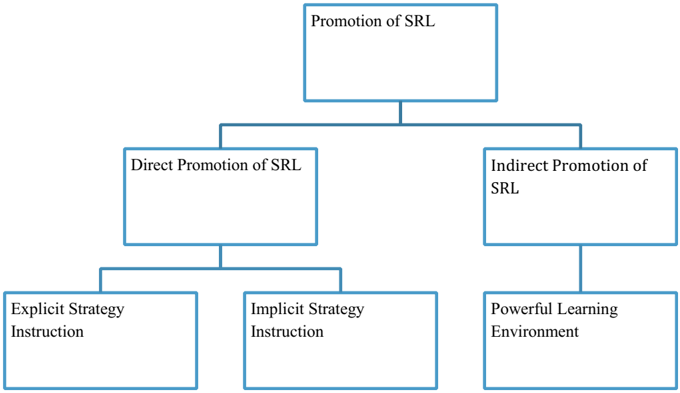
Despite the consensus about the importance of self-regulated learning for academic as well as for lifelong learning, it is still poorly understood as to how teachers can most effectively support their students in enacting self-regulated learning. This article provides a framework about how self-regulated learning can be activated directly through strategy instruction and indirectly by creating a learning environment that allows students to regulate their learning. In examining teachers’ instructional attempts for SRL, we systematically review the literature on classroom observation studies that have assessed how teachers support their students’ SRL. The results of the 17 retrieved studies show that in most classrooms, only little direct strategy instruction took place. Nevertheless, some teachers provided their students with learning environments that require and thus foster self-regulated learning indirectly. Based on a review of classroom observation studies, this article stresses the significance of (1) instructing SRL strategies explicitly so that students develop metacognitive knowledge and skills to integrate the application of these strategies successfully into their learning process, and (2) the necessity of complementing classroom observation research with data gathered from student and teacher self-report in order to obtain a comprehensive view of the effectiveness of teacher approaches to support SRL. Finally, we discuss ten cornerstones for future directions for research about supporting SRL.
Overview
The claims and statistics of this paper haven’t been checked yet.
Free: it reads the open-access text and checks the first 5 claims that cite a source we can check. Create a free account to check every claim.
Integrity signals
Registry
Cites
Statistics
Figures
Verification
Claims the paper makes
The claims and statistics of this paper haven’t been checked yet.
Free: it reads the open-access text and checks the first 5 claims that cite a source we can check. Create a free account to check every claim.
Claims other papers make about this one
Each is checked against this paper’s own text: does it say what the citing paper says it does?
The cited source says what the claim attributes to it.
In the citing paper
“Modeling of effective selfregulated learning by teachers is known to stimulate students' self-regulated learning skills (Dignath & Veenman, 2021), and this may apply to self-regulation towards desirable difficulties just as well.”
From Worth the Effort: the Start and Stick to Desirable Difficulties (S2D2) Framework (2023) · cites this paper as Dignath & Veenman, 2021
Self-check
Percentages, sums and reported differences re-computed from the paper’s own numbers.
The self-check needs the paper’s full text.
Citations
Cites
(1985) · Medical Entomology and Zoology · Cited by 19,180
Handbook of research on teaching
Wittrock, M. C. (1986) · Bibliothèque et Archives nationales du Québec (Québec government) · Cited by 10,625
Becoming a Self-Regulated Learner: An Overview
Zimmerman, B. J. (2002) · Theory Into Practice · doi:10.1207/s15430421tip4102_2 · Cited by 10,197 · cited 5×
“The students of the observed teachers might already have entered the level of self-control (Zimmerman 2002) that allow them to gradually take over the responsibility for their learning and to deliberately practice the use of learning strategies that they have acquired in lessons earlier than those…”
BackgroundResultInfluentialKirschner, P. A., Sweller, J., & Clark, R. E. (2006) · Educational Psychologist · doi:10.1207/s15326985ep4102_1 · Cited by 7,776 · cited 2×
“Complex learning environments that contain much information, but only minimal structure or guidance, will be detrimental for learning since they increase cognitive load (Kirschner et al. 2006).”
BackgroundZimmerman, B. J. (2000) · Handbook of Self-Regulation · doi:10.1016/b978-012109890-2/50031-7 · Cited by 6,069 · cited 4×
“In the same vein, Zimmerman (2000, 2002)) describes four levels of self-regulation that teachers use in order to support students’ development of SRL: (1) At the observation level, teachers control the pacing of the learning by demonstrating and verbalizing regulatory actions and thoughts.”
BackgroundMethodInfluentialThe general causality orientations scale: Self-determination in personality
Deci, E. L., & Ryan, R. M. (1985) · Journal of Research in Personality · doi:10.1016/0092-6566(85)90023-6 · Cited by 5,079
Handbook of educational psychology
(1997) · Choice Reviews Online · doi:10.5860/choice.34-3084 · Cited by 4,825
Self-Regulated Learning and Academic Achievement: An Overview
Zimmerman, B. J. (1990) · Educational Psychologist · doi:10.1207/s15326985ep2501_2 · Cited by 3,687
Feedback and Self-Regulated Learning: A Theoretical Synthesis
Butler, D. L., & Winne, P. H. (1995) · Review of Educational Research · doi:10.3102/00346543065003245 · Cited by 3,334
A Review of Self-regulated Learning: Six Models and Four Directions for Research
Panadero, E. (2017) · Frontiers in Psychology · doi:10.3389/fpsyg.2017.00422 · Cited by 2,915 · cited 1×
“We included recent literature published in the last three decades, as the most cited models of SRL have been published since the year 1990 (see Panadero 2017).”
Background
Research works printed but not linked: 4
- Brown, A.L., Bransford, J.D., Ferrara, R.A., & Campione, J.C. (1983). Learning, remembering, and understand- ing In J.H. Flavell & E.H. Markman (Eds.), Handbook of child psychology: cognitive development (Vol. 3). New York: Wiley
- Hiebert, J. (2003). Teaching mathematics in seven countries: Results from the TIMSS 1999 video study. DIaNe Publishing.
- Veenman, M. V. J., Haan, N., & Dignath, C. (2009). An observation scale for assessing teachers' implicit and explicit use of metacognition in classroom settings. Paper presented at the 13th Biennial Conference for Research on Learning and Instruction, EARLI. Amsterdam.
- Veenman, M. V. J. (2018). Final report talent education-metacognition. Leiden: SCOL.
Cited by
Items 501–600 of 654
Students' Experiences in Navigating Cognitive Overload During Blended Learning Transitions
Musyadad, F., Naiheli, S., & Jusniani, N. (2026) · Journal of Educational Analytics · doi:10.55927/jeda.v5i1.594
Umma, S. A. D. A., 1ALI, B. A., & Mamman, U. M. A. R. (2026) · Federal University Gusau Faculty of Education Journal · doi:10.64348/zije.2026318
Zamfara International Journal of Education (ZIJE) VOLUME 6 NUMBER 2
Sodangi, E.-I.-C.-C. D. U., Suleiman, A. E. P. B., Haruna, P. E. P. A. S., Abdullahi, A. P. E. D. Y. A., Shaibu, E. P. A., Bagudo, E. P. A. A., Lukman, E. D. S. A., Lawal, E. D. N. I., & Editorial Board: Yahaya Abdulkadir Ulama Secretary (2026) · Federal University Gusau Faculty of Education Journal · doi:10.64348/zije.2026338
Reynoso, E. B. Y. (2025) · Communities in DSpace (Pontifical Catholic University of Peru)
Written plans and the challenges of self-regulation in vector calculus
Craig, T. S., Kula, F., & Pehlivan, L. (2025) · University of Twente Research Information
(2022) · Directory of Open access Books (OAPEN Foundation)
Horlenko, K., Kaminskienė, L., Kajamies, A., & Lehtinen, E. (2026) · Learning Culture and Social Interaction · doi:10.1016/j.lcsi.2026.100994
Promoting metacognition in early childhood education as a lever to reduce SES-related inequalities?
Maximino-Pinheiro, M. (2025) · HAL
Constructivist Teaching Approach and Academic Performance of Grade 7 Students
Rigucira, M., & Cruz, J. (2026) · International Journal For Multidisciplinary Research · doi:10.36948/ijfmr.2026.v08i02.72254
Tvedt, M. S., & Vestad, L. (2026) · Scandinavian Journal of Educational Research · doi:10.1080/00313831.2026.2648987
Msaddek, M. (2026) · European Journal of English Language Teaching · doi:10.46827/ejel.v11i1.6516
Наукові записки Національного університету "Острозька академія". Серія "Психологія". Вип.18
(2025) · Digital Repository of Ostroh Academy (Ostroh Academy)
Andre, L., Sins, P. H. M., Peeters, J., Keer, H. V., & Lombaerts, K. (2026) · Ghent University Academic Bibliography (Ghent University)
メタ認知支援の有効性認知に関する研究—教職課程の学生を対象とした予備的検討—
Okada, R. (2022) · Institutional Repositories DataBase (IRDB)
Gullo, G., Gentile, A., Imai-Matsumura, K., Yamamoto, N., & Alesi, M. (2026) · European Journal of Psychology of Education · doi:10.1007/s10212-026-01123-z
Maslani, Mardhiyyah, '., Syahruramadhan, Mafaizah, S., Fatimatuzzahro, S., & Akbar, P. A. (2025) · Jurnal Dakwah dan Komunikasi · doi:10.29240/jdk.v10i2.15263
Richter, L. F., Müller, S., & Seibert, J. (2026) · Journal of Chemical Education · doi:10.1021/acs.jchemed.5c00778
Alva, G. R. C. (2024) · LA Referencia (Red Federada de Repositorios Institucionales de Publicaciones Científicas)
Cori, P. A. M. (2025) · LA Referencia (Red Federada de Repositorios Institucionales de Publicaciones Científicas)
Adlakha, V., Arledge, M., McCay, P., Reeves, K., Babatunde, F., & Ewell, S. N. (2026) · Journal of Microbiology and Biology Education · doi:10.1128/jmbe.00338-25
Metacognitive Factors Influencing Training Retention Among Multidisciplinary Medical Staff
Warnathong, C., & Diteeyont, W. (2026) · Human Behavior, Development and Society · doi:10.62370/hbds.v27i1.281431
The Use of Gamified Learning Modules in Teaching Geometry
Ulan, M. L., & Escala, E. C. (2026) · Psychology and Education A Multidisciplinary Journal · doi:10.70838/pemj.550810
Lan, N. T. H., Ánh, P. N., Ha, N. T. H., & Toan, T. V. (2026) · International journal of physics & mathematics · doi:10.21744/ijpm.v9n1.2479
Rampeng, Sujariati, & Wanci, R. (2026) · Voices of English Language Education Society · doi:10.29408/veles.v10i1.32291
Helmon, A., Sennen, E., & Jediut, M. (2026) · International Conference on Education, Humanities, Health and Agriculture (ICEHHA) · doi:10.4108/eai.11-12-2025.2363110
Strategies to Strengthen Self-Regulation in EFL Primary School Classrooms
Gutiérrez, M. J. M., & Granados, I. J. R. (2026) · Ciencia Latina Revista Científica Multidisciplinar · doi:10.37811/cl_rcm.v10i2.23818
Samoregulacija učenja – značenje, važnost i uloga nastavnika u njenom poticanju
Nikčević-Milković, A. (2024) · БАЊАЛУЧКИ НОВЕМБАРСКИ СУСРЕТИ · doi:10.7251/flzb2324289n
Bismonte, M. C. (2026) · International Journal of Sustainability and Advanced Integrated Research · doi:10.65339/ijsair.v2.i2.492
Mejeh, M., & Fromm, Y. M. (2026) · Learning and Instruction · doi:10.1016/j.learninstruc.2026.102394
Display of Scientific Argumentative Skills in a Metacognitive Inquiry Driven Classroom
Diego, L. P. S., & Chua, E. N. (2026) · International Journal of Research Publications · doi:10.47119/ijrp1001971520269081
Nirmala, D. C., Baharudin, B., & Kurniati, M. (2024) · Journal of Academic Biology and Biology Education · doi:10.37251/jouabe.v1i2.3102
Fitriani, D., Sarkity, D., & Nevrita, N. (2026) · Jurnal Kiprah Pendidikan · doi:10.33578/kpd.v5i2.p150-161
Yuenyang, S., Thongpanit, P., & Jantharajit, N. (2026) · Higher Education Studies · doi:10.5539/hes.v16n3p171
Debriifing kui õppeotstarbelise mängu hindamisvahend MTÜ Ettevõtlusküla mängude näitel
Soots, K. (2026) · DSpace repository (University of Tartu)
Aewpradit, O., Tanunchaibutra, P., & Kuroda, A. (2026) · Journal of Education and Learning · doi:10.5539/jel.v15n5p400
Beliefs and practices of Primary Education teachers about self-regulated learning
Ronqui, V., Trías, D., Martínez, J. A. H., & Eiroa, C. (2025) · Biblos-e Archivo (Universidad Autónoma de Madrid) · doi:10.16888/interd.2025.42.1.15
Wang, X., & Hasim, Z. (2026) · International Journal of Instruction · doi:10.29333/iji.2026.1933a
Impact of self-regulated learning on students’ English reading achievement and reading behaviour
Zou, F., & Xu, H. (2026) · The Journal of Educational Research · doi:10.1080/00220671.2026.2685649
Demır, Ö., & YILMAZ, S. B. (2026) · journal for the education of the gifted · doi:10.1177/01623532261459124
Kortam, N., & NasrAldeen, K. (2026) · Education Sciences · doi:10.3390/educsci16071002
Cross-Subject Predictive Validity for Learning Outcomes of Delayed Start Behavior
Gutterman, J., Gurung, A., Branstetter, L., Koedinger, K. R., & Aleven, V. A. W. M. M. (2026) · Lecture notes in computer science · doi:10.1007/978-3-032-29763-1_32
Федик, А. (2026) · Вісник Національного університету оборони України · doi:10.33099/2617-6858-26-21-3-119-131
Schröpel, C., Herrmann‐Werner, A., Wietek, T. F., Wittenberg, T., Herpertz, S. C., Schüttpelz‐Brauns, K., Heinzmann, A., Boeckers, T. M., Zipfel, S., & Erschens, R. S. (2026) · Medical Education Online · doi:10.1080/10872981.2026.2694212
Selbstregulation im Kontext der Schulpsychologie
Dignath, C. (2026) · Springer eBooks · doi:10.1007/978-3-658-26545-8_56-1
Self-citationMaharani, R., Marsigit, M., Wijaya, A., Hariyanto, H., Hadiprasetyo, K., & Wardani, K. (2026) · Discover Education · doi:10.1007/s44217-026-01855-6
Anwariani, A. R., Sadieda, L. U., & Reny, R. (2026) · Media Pendidikan Matematika · doi:10.33394/mpm.v14i1.17779
Wang, J., & Zhentao, Z. (2026) · Learning and Motivation · doi:10.1016/j.lmot.2026.102309
How does online deep learning occur among college students? An empirical investigation based on CoI
Huang, Q., & He, R. (2026) · Humanities and Social Sciences Communications · doi:10.1057/s41599-026-08183-y
Karlidag, S., & Çakır, N. K. (2026) · Journal of Baltic Science Education · doi:10.33225/jbse/26.25.489
Solovyova, T. A., & Koshechkina, T. V. (2026) · Psychological-Educational Studies · doi:10.17759/psyedu.2026180202
Sugiyanto, S. (2026) · Jurnal Psikologi Terapan dan Pendidikan · doi:10.26555/jptp.v8i1.31963
., S., Tegeh, I. M., Warpala, I. W. S., & Sudatha, I. G. W. (2026) · Architecture Image Studies · doi:10.62754/ais.v7i1.1404
Iseseisva õppimise päev 3.–5. klassi õpilaste eneseregulatsiooni toetajana
Laasma, M., & Siimsen, K. (2026) · DSpace repository (University of Tartu)
Teacher Resilience in a BANI World: The Interplay of Metacognitive Skills and Self- Efficacy Beliefs
Madina, A.-M., & Palea, D.-G. (2026) · International conference KNOWLEDGE-BASED ORGANIZATION · doi:10.2478/kbo-2026-0051
Rudiyanto, E., Harapan, E., & Eddy, S. (2026) · Jurnal Konseling dan Pendidikan · doi:10.29210/1219300
The role of intelligence in the development of metacognitive knowledge
Theobald, M., Schneider, W., & Preckel, F. (2026) · Learning and Individual Differences · doi:10.1016/j.lindif.2026.102972
Silva, R., Rodrigues, M. M. M., Oliveira, C., GARCEZ, A. P. B., & Franco, M. (2026) · European Journal of Education · doi:10.1111/ejed.70783
Moch, M. A., & Abo-Moch, W. (2026) · International Journal of Educational Research · doi:10.1016/j.ijer.2026.103072
Pentinio, R. A., & Villahermosa, R. (2026) · Aloysian Interdisciplinary Journal of Social Sciences, Education, and Allied Fields · doi:10.5281/zenodo.21529235
Nguyen, C. Y., Nguy, L.-A. T., Le, H. H., & Nguyen, T. H. C. (2026) · International Journal of Distance Education Technologies · doi:10.4018/ijdet.417371
Panadero, E., Broadbent, J., Espasa, A., & Guasch, T. (2026) · Journal for the Study of Education and Development Infancia y Aprendizaje · doi:10.1177/02103702261440872
Management of Differentiated Curriculum: Foundations and Implementing Strategies
Bocoș, M. D., & Mara, D. (2026) · Advances in Social Science, Education and Humanities Research/Advances in social science, education and humanities research · doi:10.2991/978-2-38476-599-7_23
Sofinila, M. F. A., Parlan, P., & Muntholib, M. (2026) · Indonesian Journal of Science and Mathematics Education · doi:10.24042/519zq447
Chirinos, R. A. G. (2026) · Journal of Intelligent Decision Making and Information Science · doi:10.59543/jidmis.v3.1043
Ritonga, B. S. B., Syahputri, C., Pangaribuan, E. R., & Maulana, M. I. (2026) · Sakaguru. · doi:10.70211/sakaguru.v3i1.649
Transformer-Enhanced YOLO11 and Vision–Language Model for Intelligent Classroom Behavior Monitoring
Zhu, S., Fang, Q., Zheng, R., & Zhu, D. Z. (2026) · IEEE Access · doi:10.1109/access.2026.3718693
Chiou, C. (2026) · SSRN Electronic Journal · doi:10.2139/ssrn.7228213
Using a Difficulty Perception Classification System to Enhance Students' Learning Outcomes
Lai, C.-H. (2026) · Applied Cognitive Psychology · doi:10.1002/acp.70270
Taneja, S., & Khatreja, K. (2026) · Asian Journal of Interdisciplinary Research · doi:10.54392/ajir2639
Opettajien ja huoltajien näkemyksiä oppilaan itsesäätelyn tukemisesta kodin ja koulun yhteistyössä
Jussila, S., & Jätyri-Saharinen, S. (2026) · Jyväskylä University Digital Archive (University of Jyväskylä)
Härkki, T., Koskela, T., & Rönkkö, M. (2026) · Learning Culture and Social Interaction · doi:10.1016/j.lcsi.2026.101049
Institutionalizing Leadership Up-Skilling in U.S. Higher Education InstitutionsPreprint
Chin, G. (2026) · SSRN Electronic Journal · doi:10.2139/ssrn.7268240
Kalkan, Ö. K., & Toprak, E. (2026) · International Journal of Assessment Tools in Education · doi:10.21449/ijate.1862191
Zayed, W., Abubaker, B., Rihan, S., Hassen, Z., & Bali, N. (2026) · Physical Education of Students · doi:10.15561/20755279.2026.0503
Sephiri, K. B., & Rambuda, A. M. (2026) · Frontiers in Education · doi:10.3389/feduc.2026.1830243
Jianxun, W., Samsudin, S., & Hidayat, R. (2026) · Scientific Reports · doi:10.1038/s41598-026-62868-7
Structuring Student–AI Interaction in STEM Learning: The READ Framework
Hamza, U., Jones, T., & Wilson-Kennedy, Z. S. (2026) · Advances in computational intelligence and robotics book series · doi:10.4018/979-8-3373-7902-9.ch008
Romero, M. L., & Bolalin, R. (2026) · International Journal of Education, Research, and Innovation Perspectives · doi:10.5281/zenodo.22029541
Bergmann, A., & Knippels, M. P. J. (2026) · Journal of Biological Education · doi:10.1080/00219266.2026.2719536
Fenty, N. S., & Park, J. (2026) · Advances in computational intelligence and robotics book series · doi:10.4018/979-8-2600-3840-6.ch008
Yetkin, R. (2026) · European Journal of Education · doi:10.1111/ejed.70850
Abdulayeva, A., & Жанатбекова, Н. (2026) · International Conference on Education and Training Technologies (ICETT) · doi:10.1109/icett70124.2026.11665844
Metacognitive learning experiences in Wushu among physical education university students in China
Bao, L. (2025) · Universiti Putra Malaysia Institutional Repository (Universiti Putra Malaysia)
Identifying and enhancing children’s metacognitive monitoring and control skills
Oudman, S., & van Loon, M. H. (2026) · Theory Into Practice · doi:10.1080/00405841.2026.2714727
Bremers, E. K., Clark, N., Halmo, S. M., Reece, B., Aina, T., Carter, R. J., Nafea, G., & Stanton, J. D. (2026) · CBE—Life Sciences Education · doi:10.1187/cbe.25-11-0241
Adoption of Extended Reality in Higher Education and Its Impact on Students’ Competency Mastery
Lopulalan, P. M., Ananto, P., Astuty, H. S., & Sapan, Y. (2026) · Journal of Educational Analytics · doi:10.55927/jeda.v5i2.25
Marom, K., Alimah, S., Marianti, A., Ellianawati, E., & Widiyatmoko, A. (2026) · Unnes Science Education Journal · doi:10.15294/usej.v15i2.45370
Suti, S., Kurniawan, E., Subali, B., & Widiarti, N. (2026) · El Midad · doi:10.20414/elmidad.v18i2.14792
Karim, M. B., Rusijono, Kristanto, A., & Arianto, F. (2026) · Multidisciplinary Science Journal · doi:10.31893/multiscience.2027180
Faith, L., & Reid, S. (2026) · Canadian Journal of Science Mathematics and Technology Education · doi:10.1007/s42330-026-00510-4
Abidin, Z., Aiyub, A., & Ulya, K. (2026) · International Journal of Educational Narratives · doi:10.70177/ijen.v4i4.4299
Sarfaty, L., Ben‐Eliyahu, A., & Sharabany, R. (2026) · Learning and Instruction · doi:10.1016/j.learninstruc.2026.102437 · Cited by 1
Hartley, K. (2026) · Springer eBooks · doi:10.1007/978-3-032-24819-0_9
Shah, S. A., Salahuddin, B., Bibi, S., Rehman, A., Sheikh, S., & Rahim, N. (2026) · Aposta · doi:10.23900/ra.v24i116.1998
Ontwikkeling van interventies voor zelfregulerend leren in de klas: ervaringen van lerarenteams
Godderis, B.-J., & Sins, P. H. M. (2026) · Tijdschrift OnderwijsPraktijk Studies · doi:10.54657/tops.25832
КУЛЬТУРА ТРУДА И САМОПРОВЕРКА В ПРЕДМЕТНО-ПРАКТИЧЕСКОЙ ДЕЯТЕЛЬНОСТИ МЛАДШИХ ШКОЛЬНИКОВ
Савина, Н. Г. (2026) · Вестник Южно-Уральского государственного гуманитарно-педагогического университета · doi:10.25588/cspu.2026.192.2.009
Harputra, Y., Tambunan, E. E., & Ramadhani, Y. R. (2026) · Voices of English Language Education Society · doi:10.29408/veles.v10i2.34176
Musyadad, F., Kassymova, G. K., Evitasari, A. D., & Buaga, G. F. (2026) · EduStream Jurnal Pendidikan Dasar · doi:10.26740/eds.v10n1.p149-158
Metadata
- Authors
- Dignath, C., & Veenman, M. V. J.
- Affiliations
- DIPF | Leibniz Institute for Research and Information in Education (DE)
- Corresponding author
- Dignath, Charlotte
- ORCID
- Dignath, Charlotte
- Venue
- Educational Psychology Review
- Published
- 2020-07-15
- Volume
- 33
- Issue
- 2
- Pages
- 489-533
- ISSN
- 1040-726X (ISSN-L)
- 1573-336X
- OpenAlex
- W3043401174
- Cited by
- 403
- References
- 170
- Citations by year
- 2026: 110 · 2025: 99 · 2024: 81 · 2023: 68 · 2022: 28 · 2021: 15 · 2020: 2
- FWCI
- 42.61
- Type
- journal article
- Language
- en
- Open access
- hybrid
- doi.org
- Licence
- cc-by
- creativecommons.org/licenses/by/4.0 (tdm)
- creativecommons.org/licenses/by/4.0 (vor)
- Locations
- Educational Psychology Review (publishedVersion, cc-by)
- Pedocs (German Institute for International Educational Research) (publishedVersion, cc-by)
- peDOCS (cc-by)
- Funders
- DIPF | Leibniz-Institut für Bildungsforschung und Bildungsinformation
- Topics
- Social Sciences › Psychology › Developmental and Educational Psychology › Innovative Teaching and Learning Methods
- Social Sciences › Psychology › Developmental and Educational Psychology › Educational Strategies and Epistemologies
- Social Sciences › Psychology › Experimental and Cognitive Psychology › Visual and Cognitive Learning Processes
- Keywords
- student self-regulation, strategy instruction, metacognition, teacher support, learning environment, classroom observation, metacognitive knowledge, student self-report, teacher self-report
About these checks
Registry, retraction, Cites and statistics results are computed, not judged, with one exception: a printed reference that no index lists is read once by a model before it counts as a citation error. Claims are extracted by a model and kept only when their quote appears verbatim in the text; each cited source is then checked, with a model’s help, for whether it says what the claim relies on. Those verdicts can be wrong — read the claim’s quote and the cited source before relying on one.
Statistics and arithmetic are recomputed, not judged.
Confidence bands are shown only for fields calibrated on our annotated test set. None is calibrated yet, so no band is shown.
What counts as a claim ›How we measure confidence ›How we check this ›
Are you an author, or do you see a problem with this page? Request a review
Data sources
Bibliographic data: Semantic Scholar, OpenAlex, Crossref.
Contains information from the Semantic Scholar Academic Graph Datasets, made available under the ODC Attribution License (ODC-BY 1.0).
Semantic Scholar’s data is described in: Kinney, R., et al. (2023). The Semantic Scholar Open Data Platform. arXiv:2301.10140.
