

The Role of Direct Strategy Instruction and Indirect Activation of Self-Regulated Learning—Evidence from Classroom Observation Studies
Open accessThe DOI matches its Crossref record; 165 of the 170 references it cites were found in a registry or an index.
Abstract
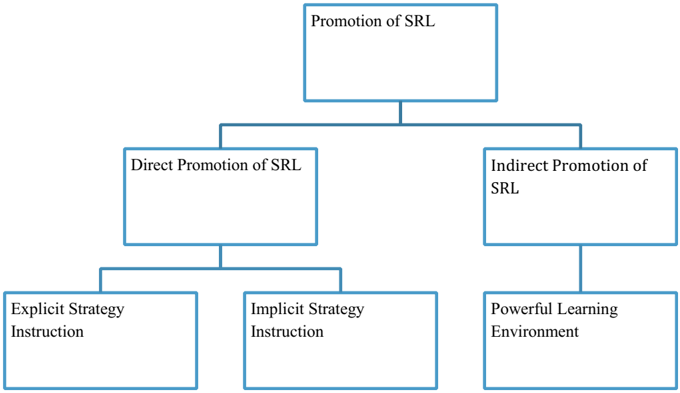
Despite the consensus about the importance of self-regulated learning for academic as well as for lifelong learning, it is still poorly understood as to how teachers can most effectively support their students in enacting self-regulated learning. This article provides a framework about how self-regulated learning can be activated directly through strategy instruction and indirectly by creating a learning environment that allows students to regulate their learning. In examining teachers’ instructional attempts for SRL, we systematically review the literature on classroom observation studies that have assessed how teachers support their students’ SRL. The results of the 17 retrieved studies show that in most classrooms, only little direct strategy instruction took place. Nevertheless, some teachers provided their students with learning environments that require and thus foster self-regulated learning indirectly. Based on a review of classroom observation studies, this article stresses the significance of (1) instructing SRL strategies explicitly so that students develop metacognitive knowledge and skills to integrate the application of these strategies successfully into their learning process, and (2) the necessity of complementing classroom observation research with data gathered from student and teacher self-report in order to obtain a comprehensive view of the effectiveness of teacher approaches to support SRL. Finally, we discuss ten cornerstones for future directions for research about supporting SRL.
Overview
The claims and statistics of this paper haven’t been checked yet.
Free: it reads the open-access text and checks the first 5 claims that cite a source we can check. Create a free account to check every claim.
Integrity signals
Registry
Cites
Statistics
Figures
Verification
Claims the paper makes
The claims and statistics of this paper haven’t been checked yet.
Free: it reads the open-access text and checks the first 5 claims that cite a source we can check. Create a free account to check every claim.
Claims other papers make about this one
Each is checked against this paper’s own text: does it say what the citing paper says it does?
The cited source says what the claim attributes to it.
In the citing paper
“Modeling of effective selfregulated learning by teachers is known to stimulate students' self-regulated learning skills (Dignath & Veenman, 2021), and this may apply to self-regulation towards desirable difficulties just as well.”
From Worth the Effort: the Start and Stick to Desirable Difficulties (S2D2) Framework (2023) · cites this paper as Dignath & Veenman, 2021
Self-check
Percentages, sums and reported differences re-computed from the paper’s own numbers.
The self-check needs the paper’s full text.
Citations
Cites
(1985) · Medical Entomology and Zoology · Cited by 19,180
Handbook of research on teaching
Wittrock, M. C. (1986) · Bibliothèque et Archives nationales du Québec (Québec government) · Cited by 10,625
Becoming a Self-Regulated Learner: An Overview
Zimmerman, B. J. (2002) · Theory Into Practice · doi:10.1207/s15430421tip4102_2 · Cited by 10,197 · cited 5×
“The students of the observed teachers might already have entered the level of self-control (Zimmerman 2002) that allow them to gradually take over the responsibility for their learning and to deliberately practice the use of learning strategies that they have acquired in lessons earlier than those…”
BackgroundResultInfluentialKirschner, P. A., Sweller, J., & Clark, R. E. (2006) · Educational Psychologist · doi:10.1207/s15326985ep4102_1 · Cited by 7,776 · cited 2×
“Complex learning environments that contain much information, but only minimal structure or guidance, will be detrimental for learning since they increase cognitive load (Kirschner et al. 2006).”
BackgroundZimmerman, B. J. (2000) · Handbook of Self-Regulation · doi:10.1016/b978-012109890-2/50031-7 · Cited by 6,069 · cited 4×
“In the same vein, Zimmerman (2000, 2002)) describes four levels of self-regulation that teachers use in order to support students’ development of SRL: (1) At the observation level, teachers control the pacing of the learning by demonstrating and verbalizing regulatory actions and thoughts.”
BackgroundMethodInfluentialThe general causality orientations scale: Self-determination in personality
Deci, E. L., & Ryan, R. M. (1985) · Journal of Research in Personality · doi:10.1016/0092-6566(85)90023-6 · Cited by 5,079
Handbook of educational psychology
(1997) · Choice Reviews Online · doi:10.5860/choice.34-3084 · Cited by 4,825
Self-Regulated Learning and Academic Achievement: An Overview
Zimmerman, B. J. (1990) · Educational Psychologist · doi:10.1207/s15326985ep2501_2 · Cited by 3,687
Feedback and Self-Regulated Learning: A Theoretical Synthesis
Butler, D. L., & Winne, P. H. (1995) · Review of Educational Research · doi:10.3102/00346543065003245 · Cited by 3,334
A Review of Self-regulated Learning: Six Models and Four Directions for Research
Panadero, E. (2017) · Frontiers in Psychology · doi:10.3389/fpsyg.2017.00422 · Cited by 2,915 · cited 1×
“We included recent literature published in the last three decades, as the most cited models of SRL have been published since the year 1990 (see Panadero 2017).”
Background
Research works printed but not linked: 4
- Brown, A.L., Bransford, J.D., Ferrara, R.A., & Campione, J.C. (1983). Learning, remembering, and understand- ing In J.H. Flavell & E.H. Markman (Eds.), Handbook of child psychology: cognitive development (Vol. 3). New York: Wiley
- Hiebert, J. (2003). Teaching mathematics in seven countries: Results from the TIMSS 1999 video study. DIaNe Publishing.
- Veenman, M. V. J., Haan, N., & Dignath, C. (2009). An observation scale for assessing teachers' implicit and explicit use of metacognition in classroom settings. Paper presented at the 13th Biennial Conference for Research on Learning and Instruction, EARLI. Amsterdam.
- Veenman, M. V. J. (2018). Final report talent education-metacognition. Leiden: SCOL.
Cited by
Items 301–400 of 654
Trisnowati, E., Wiyanto, Subali, B., & Sulhadi (2026) · International Journal of Education and Teaching Zone · doi:10.57092/ijetz.v5i1.773 · Cited by 2
Sok, C., Mok, S., Som, S., Hor, M., & Em, S. (2026) · Journal of General Education and Humanities · doi:10.58421/gehu.v5i2.866 · Cited by 2
Knowledge types of pre- and in-service chemistry teachers – a self-regulated learning perspective
Hadas, B., Herscovitz, O., & Dori, Y. J. (2026) · International Journal of Science Education · doi:10.1080/09500693.2025.2608223 · Cited by 2
Lanio, A. R., Odja, A. H., Amali, L. M. K., Latjompoh, M., Fathan, S., & Ali, R. R. (2026) · SOSIOEDUKASI JURNAL ILMIAH ILMU PENDIDIKAN DAN SOSIAL · doi:10.36526/sosioedukasi.v14i4.7184 · Cited by 2
Ratniyom, J., Boonphadung, S., Intaraprasit, M., & Chumkaeo, P. (2026) · Chemistry Teacher International · doi:10.1515/cti-2025-0097 · Cited by 2
Aulia, R., Nazilla, S., Ghifari, M., Susanto, M. S., & Prasetiya, A. (2026) · Bustanul Ulum Journal of Islamic Education · doi:10.62448/bujie.v4i1.573 · Cited by 2
Zhao, Y., Zhang, M., & Dong, J. (2026) · Teaching and Teacher Education · doi:10.1016/j.tate.2026.105608 · Cited by 2
Franco, C., Amutio, A., Trigueros, R., Aguilar-Parra, J. M., & Sánchez-Sánchez, L. C. (2026) · Revista de Psicodidáctica · doi:10.1016/j.psicod.2026.500186 · Cited by 2
Relyea, J. E., Davis, D. S., Khalil, H., Dobis, C., Fu, X., Lewis, B., & Huang, B. (2026) · Contemporary Educational Psychology · doi:10.1016/j.cedpsych.2026.102471 · Cited by 2
Katsantonis, I. (2026) · Behavioral Sciences · doi:10.3390/bs16061029 · Cited by 2
Chirinos, R. A. G. (2026) · Journal of Intelligent Decision Making and Information Science · doi:10.59543/jidmis.v3.1042 · Cited by 2
Azevedo, R. (2026) · Theory Into Practice · doi:10.1080/00405841.2026.2714714 · Cited by 2
Amalina, N., & Hamat, W. H. L. W. (2026) · Global Perspectives in Education Journal · doi:10.64008/gpej.v2i2.65 · Cited by 2
Designing a Digital Learning Environment to Support Self-Regulated Learning
Bergander, N., Riemer, N., & Hermanns, J. (2026) · Journal of Chemical Education · doi:10.1021/acs.jchemed.5c01164 · Cited by 2
TUBAL, J. P., & Acledan, M. Y. (2023) · International Journal of Humanities Social Sciences and Education · doi:10.20431/2349-0381.1011009 · Cited by 2
Yakin, A., Alfaridli, M. A., & Lestari, Y. D. (2024) · PROCEEDING OF INTERNATIONAL CONFERENCE ON EDUCATION, SOCIETY AND HUMANITY · Cited by 2
Zepeda, C. D. (2023) · Human Arenas · doi:10.1007/s42087-023-00384-0 · Cited by 2
Learning accumulation from unfamiliar environments: informal focus groups
Gololo, S. S., & Seeletse, S. M. (2024) · International Journal of Business Ecosystem and Strategy (2687-2293) · doi:10.36096/ijbes.v6i2.483 · Cited by 2
Mokoena, M. (2024) · ELE Reviews English Language Education Reviews · doi:10.22515/elereviews.v4i1.8726 · Cited by 2
Adi, F. P., Atmojo, I. R. W., Matsuri, M., Chumdari, C., Ardiansyah, R., & Saputri, D. Y. (2024) · Mimbar Sekolah Dasar · doi:10.53400/mimbar-sd.v11i4.78850 · Cited by 2
Students’ Perceptions of Lecture Feedback in Learning Writing at The University of Mataram
Sukreni, N. M. M., Arifuddin, A., Zamzam, A., & Waluyo, U. (2024) · Journal of Education Research · doi:10.37985/jer.v5i4.1915 · Cited by 2
Bernardo, A. B., Cervero, A., Galve-González, C., & Herrero, E. T. (2025) · Innovations in Education and Teaching International · doi:10.1080/14703297.2025.2507743 · Cited by 2
Ismail, H., Jasin, H. A., Asbah, A., Edi, E., Lukman, L., & Ariyani, E. (2025) · Arus Jurnal Psikologi dan Pendidikan. · doi:10.57250/ajpp.v4i2.1319 · Cited by 2
Automating Classroom Observation: AI-Enabled Behavior Monitoring for Adaptive Educational Management
Zhu, S., Fang, Q., Zheng, R., & Zhu, D. Z. (2025) · International Conference on Artificial Intelligence and Future Education (AIFE) · doi:10.1145/3785987.3786101 · Cited by 2
Riquelme, R. D. A., Valle, M. D., López-Angulo, Y., Sanhueza-Campos, C., & Contreras-Soto, Y. (2022) · Social Sciences · doi:10.3390/socsci11070315 · Cited by 2
Gestión del aprendizaje autónomo en los espacios virtuales
Montenegro, J. M. C., Sialer, J. I. N. G., Flores, M. D. R. S., Jurupe, K. D. M. P., & Torres, L. R. R. (2023) · Revista de Climatología · doi:10.59427/rcli/2023/v23cs.443-448 · Cited by 2
Sobre la innovación educativa en la enseñanza de la química en las universidades españolas
Pardo, J. Q. (2024) · Anales de química · doi:10.62534/rseq.aq.1977 · Cited by 2
Manual para la elaboración de laboratorios virtuales autorregulados
Manzanares, M. C. S., Sánchez, R. M., Val, E. M., Txopitea, M., & Sánchez, G. M. (2024) · Universidad de Burgos eBooks · doi:10.36443/9788418465871 · Cited by 2
MÉTODOS DE MEDICIÓN E INTERVENCIÓN EN APRENDIZAJE AUTORREGULADO. EVOLUCIÓN Y ACTUALIDAD
Arellano, M. A. R. (2023) · CONTEXTOS DE EDUCACION · doi:10.5281/zenodo.8180214 · Cited by 2
INTERACCIONES DE HABLA: Continuidad y cambio en la clase en línea de emergencia
Thibaut-Paez, P., & Calderón López, M. (2023) · Revista Mexicana de Investigación Educativa · Cited by 2
Yanyang, T., Ying, H., & Hossain, S. (2025) · Research Square · doi:10.21203/rs.3.rs-7226732/v1 · Cited by 2
Stewart, R. (2025) · ScholarWorks (Walden University) · Cited by 4
Teaching and Promoting Independent Use of Reading Strategies in the Middle Schools
Uyar, Y., & Özbay, M. (2023) · Education Quarterly Reviews · doi:10.31014/aior.1993.06.01.724 · Cited by 1
영어읽기전략 동영상 교재 사용이 중학생들의 영어읽기전략과 독해력에 미치는 영향
이, 경., 김, 수., & 임, 옥. (2023) · Modern English Education · doi:10.18095/meeso.2023.24.1.186 · Cited by 1
Hva kjennetegner samtaler av høy kvalitet i lærerutdanningen?
Jenset, I. S. (2024) · Norsk pedagogisk tidsskrift · doi:10.18261/npt.108.1.4 · Cited by 1
ENHANCING EFL STUDENTS’ RECOUNT TEXTS BY EMPLOYING METACOGNITIVE LEARNING STRATEGIES (MLS)
Dhillon, B. P. S., Musthafa, B., & Wirza, Y. (2024) · English Review Journal of English Education · doi:10.25134/erjee.v12i1.9206 · Cited by 1
Pillay, P. (2024) · Interdisciplinary Journal of Rural and Community Studies · doi:10.38140/ijrcs-2024.vol6.18 · Cited by 1
Fitrinaldi, F., Suharyanto, S., Rachmi, R., Nevrita, N., Kumalasari, T., & Irawan, D. (2024) · SHS Web of Conferences · doi:10.1051/shsconf/202420505001 · Cited by 1
Cañada, R. (2025) · Psychology and Education A Multidisciplinary Journal · doi:10.70838/pemj.330407 · Cited by 1
Experiences of Teachers in School Administrator and Instructional Support: Management Plan
Cuizon, C. (2025) · Psychology and Education A Multidisciplinary Journal · doi:10.70838/pemj.340407 · Cited by 1
Ajamsaru, R. H., Saputro, I. E., & Lestari, L. (2025) · Jurnal Riset dan Inovasi Pembelajaran · doi:10.51574/jrip.v5i1.2961 · Cited by 1
Tsai, C.-R., & Hong, J. (2025) · International Journal of Technology and Design Education · doi:10.1007/s10798-025-09985-y · Cited by 1
Rieser, S., & Decristan, J. (2025) · Zeitschrift für Erziehungswissenschaft · doi:10.1007/s11618-025-01313-3 · Cited by 1
Cahyono, B. T., Ridhani, J., Qodr, T. S., Khan, N., & Ali, W. (2024) · Journal of Environment and Sustainability Education · doi:10.62672/joease.v3i1.61 · Cited by 1
Kapuza, A., & Andriasian, L. (2025) · Open Learning The Journal of Open Distance and e-Learning · doi:10.1080/02680513.2025.2545925 · Cited by 1
Bergander, N., & Melle, I. (2025) · Chemistry Teacher International · doi:10.1515/cti-2025-0011 · Cited by 1
Tinenti, Y. R., Dasna, I. W., Habiddin, H., & Moreira, I. X. (2025) · Salud Ciencia y Tecnología · doi:10.56294/saludcyt20252261 · Cited by 1
CANTIK Economic Learning Model as a Stimulator of Students' Reactive Behavior
Setiaji, C. A., Rinawati, A., Rahmawati, L., & Ibrahim, N. (2025) · JURNAL IQRA · doi:10.25217/ji.v10i3.6626 · Cited by 1
Lawson, M. J., Vosniadou, S., Stephenson, H., McFarlane, L. R., Loke, J., Robinson, T., Cullen, B., Rogers, J., Nancarrow, S., Andrews, B., et al. (2025) · Behavioral Sciences · doi:10.3390/bs15121644 · Cited by 1
Australian Students’ Perceptions of Their Teachers’ Self-Regulated Learning Strategy Instruction
Murdoch, C., Kang, S. H. K., White, E., & Graham, L. E. (2025) · Behavioral Sciences · doi:10.3390/bs15121643 · Cited by 1
Roberts, G. J., Roberts, G., Capin, P., Fall, A., Vedder, B. C., Handy, A., & Jestice, M. (2025) · Exceptional Children · doi:10.1177/00144029251396747 · Cited by 1
Pournarani, R., Movahed, E., Faryabi, R., & Nasiri, N. (2025) · Journal of Medical Education Development · doi:10.61882/edcj.18.4.83 · Cited by 1
Panadero, E., & Broadbent, J. (2025) · Journal for the Study of Education and Development Infancia y Aprendizaje · doi:10.1177/02103702251398409 · Cited by 1
Юрьевна, Ф. Т., & Kosareva, S. A. (2025) · Russian Journal of Education and Psychology · doi:10.12731/2658-4034-2025-16-5-939 · Cited by 1
Dimensionen des Politischen in der internationalen deutschsprachigen Lesedidaktik und Leseförderung
Becker-Mrotzek, M., Wolters-Gerwin, J., Pohlmann, B., Vaccaro, E., Wild, J., Schmidt, C., Dube, J., Gediga, G., Ferencik-Lehmkuhl, D., Jost, J., et al. (2025) · Sprachlich-literarisches Lernen und Deutschdidaktik. Bände · doi:10.46586/slld.459 · Cited by 1
Role of Explicit Instruction in the Nordic Context
Klette, K., Tengberg, M., Magnusson, C. G., Sigurjónsson, J. Ö., & Selling, A. J. V. (2026) · Springer eBooks · doi:10.1007/978-3-032-06893-4_8 · Cited by 1
Kusumo, F. W., Santoso, A. B., & Sasmito, L. F. (2025) · Elementary School Jurnal Pendidikan dan Pembelajaran ke-SD-an · doi:10.31316/esjurnal.v13i1.4612 · Cited by 1
Dirgantoro, K. P. S., Martadiputra, B. A. P., & Jupri, A. (2026) · Multidisciplinary Reviews · doi:10.31893/multirev.2026382 · Cited by 1
Artificial Intelligence Usage and Determinants of Student Academic Achievement
Prasetyoningrum, I. D., Fajar, M., & Ratnawati, D. P. (2026) · PEDAGOGIA Jurnal Pendidikan · doi:10.21070/pedagogia.v15i1.2097 · Cited by 1
Heaysman, O., & Kramarski, B. (2026) · Instructional Science · doi:10.1007/s11251-026-09787-2 · Cited by 1
Student voices in inclusive education in the digital age: Contemporary pedagogical approaches
Simos, C., Papadakou, M., & Stratouris, I. (2026) · Open Access Research Journal of Science and Technology · doi:10.53022/oarjst.2026.16.2.0036 · Cited by 1
Context shapes the use of self-regulated learning strategies
Li, J., & Tullis, J. G. (2026) · Metacognition and Learning · doi:10.1007/s11409-026-09464-2 · Cited by 1
Justo, C. F., Amutio, A., Trigueros, R., Aguilar-Parra, J. M., & Sánchez-Sánchez, L. C. (2026) · Revista de Psicodidáctica (English ed ) · doi:10.1016/j.psicoe.2026.500186 · Cited by 2
Elevenlabs Text-To-Speech and Arabic Listening Achievement in Pesantren
Sunarko, A., Solehudin, M., & Sakinah, N. (2026) · An-Nabighoh Jurnal Pendidikan dan Pembelajaran Bahasa Arab · doi:10.32332/an-nabighoh.v28i1.1-20 · Cited by 1
Chen, J., Lin, C., Liao, Y., & Wu, A. (2026) · System · doi:10.1016/j.system.2026.104044 · Cited by 1
Wu, X.-Y., Zheng, Y., & Fan, D. (2026) · International Journal of Applied Linguistics · doi:10.1111/ijal.70205 · Cited by 1
Williams, A. E., & Denaro, K. (2026) · CBE—Life Sciences Education · doi:10.1187/cbe.25-04-0074 · Cited by 1
Maximino-Pinheiro, M., Brunet, L.-A., Schneider, E., & Borst, G. (2026) · Learning and Individual Differences · doi:10.1016/j.lindif.2026.102926 · Cited by 1
Estrategias metacognitivas y aprendizaje significativo en estudiantes de educación básica
Macias, M. E. G., Alvarado, M. N. V., González, E. G. L., Choez, T. D. S., Lamilla, D. I. L., & Franco, M. V. O. (2026) · Revista Latinoamericana de Calidad Educativa. · doi:10.70625/rlce/729 · Cited by 1
Li, Z., Litz, D., & Gromik, N. (2026) · Education Sciences · doi:10.3390/educsci16060828 · Cited by 1
Ahyar, A., Abidin, Y., Yuniarti, Y., Sutini, A., & Ergashevna, B. K. (2026) · DWIJA CENDEKIA Jurnal Riset Pedagogik · doi:10.20961/jdc.v10i1.116187 · Cited by 1
Strengthening teachers’ dual role in self-regulated learning during diagnostic reasoning supervision
Isbej, L., Waterval, D. G. J., Fuentes‐Cimma, J., Riquelme, A. J., & de Bruin, A. B. H. (2026) · Medical Teacher · doi:10.1080/0142159x.2026.2684561 · Cited by 1
Li, J., Zhu, H., Xiang, Y., & Huang, L. (2026) · Behavioral Sciences · doi:10.3390/bs16060979 · Cited by 1
Azevedo, R., Wiedbusch, M. D., Azari, E., Belga, J., & LaViola, J. J. (2026) · Lecture notes in computer science · doi:10.1007/978-3-032-30015-7_10 · Cited by 1
Syarifah, M., Suarmika, P. E., Hidayat, N., Muslihati, M., & Faizah, S. (2026) · Journal of General Education and Humanities · doi:10.58421/gehu.v5i3.1608 · Cited by 1
Geier, G. F., Ebner, M., & Burgsteiner, H. (2026) · Lecture notes in computer science · doi:10.1007/978-3-032-30784-2_12 · Cited by 1
Baguko, S. B., & Taye, B. A. (2026) · Pedagogical Research · doi:10.29333/pr/19014 · Cited by 1
Anwar, S., Zarkasyi, A. S., Huwaida, J., & Asrori, A. (2026) · Progresiva Jurnal Pemikiran dan Pendidikan Islam · doi:10.22219/progresiva.v15i01.43981 · Cited by 1
Rosenthal, A., Hirt, C. N., Eberli, T. D., Jud, J., & Karlen, Y. (2026) · Metacognition and Learning · doi:10.1007/s11409-026-09488-8 · Cited by 1
A comparative analysis of the student mentoring system in secondary education
Risdiyanto, R., Hernawan, A. H., Johan, R. C., & Fadlilah, F. A. (2026) · Inovasi Kurikulum · doi:10.64014/jik.v23i2.269 · Cited by 1
From theory to action: Supporting self-regulated learning in the classroom
Dignath, C., Karlen, Y., Schuster, C., & Stebner, F. (2026) · Theory Into Practice · doi:10.1080/00405841.2026.2714717 · Cited by 1
Self-citationWang, J., Wu, C., & Peng, S. (2026) · Frontiers in Psychology · doi:10.3389/fpsyg.2026.1901333 · Cited by 1
Conceptualising student assessment literacy: an integrative framework of its elements and dimensions
Guo, H., & Miao, H. (2026) · Assessment in Education Principles Policy and Practice · doi:10.1080/0969594x.2026.2730117 · Cited by 1
Li, Y., & Yang, B. (2026) · Teaching and Teacher Education · doi:10.1016/j.tate.2026.105830 · Cited by 1
Pedrosa, D., Silva, A. P. L., Dominguez, C., Silva, H., & Morais, E. (2026) · Education Sciences · doi:10.3390/educsci16101638 · Cited by 3
Karim, A., Ambarwati, L., & Aziz, T. A. (2023) · Mathline Jurnal Matematika dan Pendidikan Matematika · doi:10.31943/mathline.v8i3.485 · Cited by 1
Forthmann, B., & Ehlert, M. (2023) · Physics of Life Reviews · doi:10.1016/j.plrev.2023.10.035 · Cited by 1
Self-Regulated Learning Strategies on Academic Writing: Differences Between Genders
Murtiningsih, S. R., & Laili, R. I. N. (2023) · E3S Web of Conferences · doi:10.1051/e3sconf/202344005007 · Cited by 1
Sanders, S., McFall, A., & Jolivette, K. (2023) · Beyond Behavior · doi:10.1177/10742956231218165 · Cited by 1
Hugerth, M. W., & Nouri, J. (2024) · Studia paedagogica · doi:10.5817/sp2023-3-4 · Cited by 1
Roters, B. (2024) · Informationen Deutsch als Fremdsprache · doi:10.1515/infodaf-2024-0064 · Cited by 1
Manual para la elaboración de laboratorios virtuales autorregulados
Manzanares, M. C. S., Sánchez, R. M., Val, E. M., Txopitea, M., & Sánchez, G. M. (2024) · Universidad de Burgos eBooks · doi:10.36443/9788418465888 · Cited by 1
Sutika, I. M., Pujani, N. M., Suma, K., & Sudewa, P. H. (2024) · Jurnal Edutech Undiksha · doi:10.23887/jeu.v12i2.91742 · Cited by 1
Uchida, N., Mizuno, Y., & Uesaka, Y. (2025) · The Japanese Journal of Educational Psychology · doi:10.5926/jjep.73.42 · Cited by 1
Bildungsleistung durch Verbindlichkeit
e.V., V. –. V. D. B. W. (2025) · Waxmann Verlag GmbH eBooks · doi:10.31244/9783818850005 · Cited by 1
Cognitive and Social Drivers of Success: Evaluating the Open High School Program
(2025) · International Journal of Open-access Interdisciplinary and New Educational Discoveries of ETCOR Educational Research Center (iJOINED ETCOR) · doi:10.63498/etcor456 · Cited by 1
Bello, J. D. (2025) · Scholars Crossing (Liberty University) · Cited by 1
Balogh, E., & Balla, Á. T. (2026) · Acta Universitatis Sapientiae Philologica · doi:10.47745/ausp-2025-0015 · Cited by 1
Teaching Strategies and Technologies for Learning Enhancement
Newint-Gori, J., Taddeo, G., & S., M. (2023) · Institutional Research Information System University of Turin (University of Turin) · Cited by 1
Supporting young learners' self-regulated learning in computer-based learning environments
Pape, R. (2025) · Publication Server of the Catholic University Eichstätt-Ingolstadt (Catholic University of Eichstätt-Ingolstadt) · doi:10.17904/ku.opus-968 · Cited by 1
Metadata
- Authors
- Dignath, C., & Veenman, M. V. J.
- Affiliations
- DIPF | Leibniz Institute for Research and Information in Education (DE)
- Corresponding author
- Dignath, Charlotte
- ORCID
- Dignath, Charlotte
- Venue
- Educational Psychology Review
- Published
- 2020-07-15
- Volume
- 33
- Issue
- 2
- Pages
- 489-533
- ISSN
- 1040-726X (ISSN-L)
- 1573-336X
- OpenAlex
- W3043401174
- Cited by
- 403
- References
- 170
- Citations by year
- 2026: 110 · 2025: 99 · 2024: 81 · 2023: 68 · 2022: 28 · 2021: 15 · 2020: 2
- FWCI
- 42.61
- Type
- journal article
- Language
- en
- Open access
- hybrid
- doi.org
- Licence
- cc-by
- creativecommons.org/licenses/by/4.0 (tdm)
- creativecommons.org/licenses/by/4.0 (vor)
- Locations
- Educational Psychology Review (publishedVersion, cc-by)
- Pedocs (German Institute for International Educational Research) (publishedVersion, cc-by)
- peDOCS (cc-by)
- Funders
- DIPF | Leibniz-Institut für Bildungsforschung und Bildungsinformation
- Topics
- Social Sciences › Psychology › Developmental and Educational Psychology › Innovative Teaching and Learning Methods
- Social Sciences › Psychology › Developmental and Educational Psychology › Educational Strategies and Epistemologies
- Social Sciences › Psychology › Experimental and Cognitive Psychology › Visual and Cognitive Learning Processes
- Keywords
- student self-regulation, strategy instruction, metacognition, teacher support, learning environment, classroom observation, metacognitive knowledge, student self-report, teacher self-report
About these checks
Registry, retraction, Cites and statistics results are computed, not judged, with one exception: a printed reference that no index lists is read once by a model before it counts as a citation error. Claims are extracted by a model and kept only when their quote appears verbatim in the text; each cited source is then checked, with a model’s help, for whether it says what the claim relies on. Those verdicts can be wrong — read the claim’s quote and the cited source before relying on one.
Statistics and arithmetic are recomputed, not judged.
Confidence bands are shown only for fields calibrated on our annotated test set. None is calibrated yet, so no band is shown.
What counts as a claim ›How we measure confidence ›How we check this ›
Are you an author, or do you see a problem with this page? Request a review
Data sources
Bibliographic data: Semantic Scholar, OpenAlex, Crossref.
Contains information from the Semantic Scholar Academic Graph Datasets, made available under the ODC Attribution License (ODC-BY 1.0).
Semantic Scholar’s data is described in: Kinney, R., et al. (2023). The Semantic Scholar Open Data Platform. arXiv:2301.10140.
