

The Role of Direct Strategy Instruction and Indirect Activation of Self-Regulated Learning—Evidence from Classroom Observation Studies
Open accessThe DOI matches its Crossref record; 165 of the 170 references it cites were found in a registry or an index.
Abstract
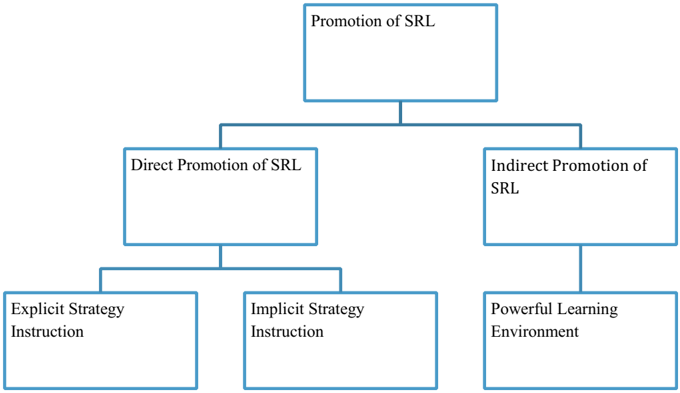
Despite the consensus about the importance of self-regulated learning for academic as well as for lifelong learning, it is still poorly understood as to how teachers can most effectively support their students in enacting self-regulated learning. This article provides a framework about how self-regulated learning can be activated directly through strategy instruction and indirectly by creating a learning environment that allows students to regulate their learning. In examining teachers’ instructional attempts for SRL, we systematically review the literature on classroom observation studies that have assessed how teachers support their students’ SRL. The results of the 17 retrieved studies show that in most classrooms, only little direct strategy instruction took place. Nevertheless, some teachers provided their students with learning environments that require and thus foster self-regulated learning indirectly. Based on a review of classroom observation studies, this article stresses the significance of (1) instructing SRL strategies explicitly so that students develop metacognitive knowledge and skills to integrate the application of these strategies successfully into their learning process, and (2) the necessity of complementing classroom observation research with data gathered from student and teacher self-report in order to obtain a comprehensive view of the effectiveness of teacher approaches to support SRL. Finally, we discuss ten cornerstones for future directions for research about supporting SRL.
Overview
The claims and statistics of this paper haven’t been checked yet.
Free: it reads the open-access text and checks the first 5 claims that cite a source we can check. Create a free account to check every claim.
Integrity signals
Registry
Cites
Statistics
Figures
Verification
Claims the paper makes
The claims and statistics of this paper haven’t been checked yet.
Free: it reads the open-access text and checks the first 5 claims that cite a source we can check. Create a free account to check every claim.
Claims other papers make about this one
Each is checked against this paper’s own text: does it say what the citing paper says it does?
The cited source says what the claim attributes to it.
In the citing paper
“Modeling of effective selfregulated learning by teachers is known to stimulate students' self-regulated learning skills (Dignath & Veenman, 2021), and this may apply to self-regulation towards desirable difficulties just as well.”
From Worth the Effort: the Start and Stick to Desirable Difficulties (S2D2) Framework (2023) · cites this paper as Dignath & Veenman, 2021
Self-check
Percentages, sums and reported differences re-computed from the paper’s own numbers.
The self-check needs the paper’s full text.
Citations
Cites
(1985) · Medical Entomology and Zoology · Cited by 19,180
Handbook of research on teaching
Wittrock, M. C. (1986) · Bibliothèque et Archives nationales du Québec (Québec government) · Cited by 10,625
Becoming a Self-Regulated Learner: An Overview
Zimmerman, B. J. (2002) · Theory Into Practice · doi:10.1207/s15430421tip4102_2 · Cited by 10,197 · cited 5×
“The students of the observed teachers might already have entered the level of self-control (Zimmerman 2002) that allow them to gradually take over the responsibility for their learning and to deliberately practice the use of learning strategies that they have acquired in lessons earlier than those…”
BackgroundResultInfluentialKirschner, P. A., Sweller, J., & Clark, R. E. (2006) · Educational Psychologist · doi:10.1207/s15326985ep4102_1 · Cited by 7,776 · cited 2×
“Complex learning environments that contain much information, but only minimal structure or guidance, will be detrimental for learning since they increase cognitive load (Kirschner et al. 2006).”
BackgroundZimmerman, B. J. (2000) · Handbook of Self-Regulation · doi:10.1016/b978-012109890-2/50031-7 · Cited by 6,069 · cited 4×
“In the same vein, Zimmerman (2000, 2002)) describes four levels of self-regulation that teachers use in order to support students’ development of SRL: (1) At the observation level, teachers control the pacing of the learning by demonstrating and verbalizing regulatory actions and thoughts.”
BackgroundMethodInfluentialThe general causality orientations scale: Self-determination in personality
Deci, E. L., & Ryan, R. M. (1985) · Journal of Research in Personality · doi:10.1016/0092-6566(85)90023-6 · Cited by 5,079
Handbook of educational psychology
(1997) · Choice Reviews Online · doi:10.5860/choice.34-3084 · Cited by 4,825
Self-Regulated Learning and Academic Achievement: An Overview
Zimmerman, B. J. (1990) · Educational Psychologist · doi:10.1207/s15326985ep2501_2 · Cited by 3,687
Feedback and Self-Regulated Learning: A Theoretical Synthesis
Butler, D. L., & Winne, P. H. (1995) · Review of Educational Research · doi:10.3102/00346543065003245 · Cited by 3,334
A Review of Self-regulated Learning: Six Models and Four Directions for Research
Panadero, E. (2017) · Frontiers in Psychology · doi:10.3389/fpsyg.2017.00422 · Cited by 2,915 · cited 1×
“We included recent literature published in the last three decades, as the most cited models of SRL have been published since the year 1990 (see Panadero 2017).”
Background
Research works printed but not linked: 4
- Brown, A.L., Bransford, J.D., Ferrara, R.A., & Campione, J.C. (1983). Learning, remembering, and understand- ing In J.H. Flavell & E.H. Markman (Eds.), Handbook of child psychology: cognitive development (Vol. 3). New York: Wiley
- Hiebert, J. (2003). Teaching mathematics in seven countries: Results from the TIMSS 1999 video study. DIaNe Publishing.
- Veenman, M. V. J., Haan, N., & Dignath, C. (2009). An observation scale for assessing teachers' implicit and explicit use of metacognition in classroom settings. Paper presented at the 13th Biennial Conference for Research on Learning and Instruction, EARLI. Amsterdam.
- Veenman, M. V. J. (2018). Final report talent education-metacognition. Leiden: SCOL.
Cited by
Items 201–300 of 654
Lee, M., Hong, J. K., Son, J.-I., & Jang, Y. (2025) · Contemporary Educational Psychology · doi:10.1016/j.cedpsych.2025.102423 · Cited by 8
Philippakos, Z. A. T., & MacArthur, C. A. (2023) · Advances in educational technologies and instructional design book series · doi:10.4018/978-1-6684-8262-9.ch009 · Cited by 7
Horlenko, K., Kaminskienè, L., & Lehtinen, E. (2024) · Frontline Learning Research · doi:10.14786/flr.v12i2.1417 · Cited by 7
Requena, M. (2024) · Interdisciplinaria Revista de Psicología y Ciencias Afines · doi:10.16888/interd.2024.41.1.6 · Cited by 7
Yan, Z., Yu, L., Sun, Z., Jiang, Q., & Zhao, S. (2024) · Frontiers in Psychology · doi:10.3389/fpsyg.2024.1463287 · Cited by 7
Marten, P. L., Aßmann, S., Baumgarten-Kelm, C., & Stadtler, M. (2025) · Learning and Individual Differences · doi:10.1016/j.lindif.2025.102685 · Cited by 7
Teacher professional development for assessment for learning
Wolterinck-Broekhuis, C. H. D. (2022) · doi:10.3990/1.9789036554664 · Cited by 8
Angeles, J., Naparan, G. B., Celesio, G., & Ecot, R. (2024) · SSRN Electronic Journal · doi:10.2139/ssrn.4740016 · Cited by 7
Mäkipää, T., & Salo, O.-P. (2023) · AFinLA-teema · doi:10.30660/afinla.125030 · Cited by 6
Hatlevik, I. K. R., Jakhelln, R. E., & Jorde, D. (2024) · Routledge eBooks · doi:10.4324/9781032693798 · Cited by 6
Beyond Magic: Fostering Literacy Resilience in Diverse Classrooms through Home-Based Approaches
Eliyahu‐Levi, D. (2024) · Behavioral Sciences · doi:10.3390/bs14090834 · Cited by 6
Monitoring Metacognitive Strategies Use During Interaction Collaborative Groups
Manzanares, M. C. S., Martin, C., González-Díez, I., Eguizábal, J. A. J., Rodríguez, A. C., Varela, C., Almeida, L. S., & Saiz, R. V. (2024) · Education Sciences · doi:10.3390/educsci14111205 · Cited by 6
Backers, L., & Keer, H. V. (2025) · Behavioral Sciences · doi:10.3390/bs15121627 · Cited by 6
Xiao, F., Wang, C., & Jiang, J. (2026) · Sustainability · doi:10.3390/su18062791 · Cited by 6
A Systematic Review of Teachers’ Knowledge of Self-Regulated Learning and its Assessment
Karlen, Y., & Dignath, C. (2026) · Educational Psychology Review · doi:10.1007/s10648-026-10171-2 · Cited by 6
Self-citationSpeaking Arabic as an Introverted Learner: A Psycholinguistic Study of Oral Communication Strategies
Huda, S., bin Najmuddin, A. H., & Nizar, M. (2025) · Farasyah: Journal of Linguistics and Language Education · doi:10.68299/g6regn37 · Cited by 6
Schmellentin, C. (2023) · Didaktik Deutsch · doi:10.21248/dideu.667 · Cited by 7
Gálvez-Gamboa, F. A., Pinochet-Quiroz, P., Lepe-Martínez, N. F., & Lolic, H. C. (2024) · Revista Ecuatoriana de Neurologia · doi:10.46997/revecuatneurol33100047 · Cited by 6
Schulze, C., Herrmann, A., Lange‐Schubert, K., & Saalbach, H. (2025) · Zeitschrift für Grundschulforschung · doi:10.1007/s42278-025-00245-5 · Cited by 6
Scaffolding Self-Regulation in an Online English Language Course: Utility of Contract Learning
Mohammadi, S., & Zandi, H. (2023) · Teaching English as a Second or Foreign Language--TESL-EJ · doi:10.55593/ej.26104a11 · Cited by 6
Mokhtar, A. M. F., Moreljwab, M. H., Idress, E. A., Balola, H. H. A., Tia, M. M. G., Osman, A. M. A., Alharbi, M. F., Jarelnape, A. A., & Fadlalmola, H. A. (2023) · Nursing and Health · doi:10.13189/nh.2023.080102 · Cited by 7
LA DIRECCIÓN DE TESIS DESDE LA PERCEPCIÓN DE LAS Y LOS DOCTORANDOS: Aportes al avance investigativo
Zanotto González, M. M., González, M. L. G., & Guardado, M. D. S. R. (2023) · Revista Mexicana de Investigación Educativa · Cited by 6
Editorial: Fostering self-regulated learning
Šašić, S. Š., Heaysman, O., & Otto, B. (2025) · Frontiers in Psychology · doi:10.3389/fpsyg.2025.1681074 · Cited by 6
Deep Learning Self-Regulation Strategies of Indonesian Learners of English as a Foreign Language
Asti Wahyuni, B., Maneba, S., & Syafitri, N. (2025) · PANYONARA Journal of English Education · doi:10.19105/panyonara.v7i2.20622 · Cited by 5
Goal‐Setting and Self‐Explanation in Elementary Programming: A Self‐Regulated Learning Study
Chen, M., & Feng, C. (2025) · Journal of Computer Assisted Learning · doi:10.1002/jcal.70177 · Cited by 5
Investigating Teaching Quality through Video Capture: Equity and Quality in Nordic Classrooms
Klette, K., Magnusson, C. G., & Sigurjónsson, J. Ö. (2026) · Springer eBooks · doi:10.1007/978-3-032-06893-4 · Cited by 6
Fan, E., Bower, M., & Siemon, J. (2026) · Learning and Instruction · doi:10.1016/j.learninstruc.2026.102325 · Cited by 5
Prasetyo, T., Rasmitadila, R., & Amalia, R. (2025) · International Journal of Elementary Education · doi:10.23887/ijee.v9i4.102117 · Cited by 5
Owusu, E., Arthur, Y. D., Banson, G. M., & Ackon, J. (2026) · Frontiers in Education · doi:10.3389/feduc.2026.1876300 · Cited by 5
Zeeb, H., Bürgermeister, A., Saalbach, H., Renkl, A., & Glogger‐Frey, I. (2023) · Unterrichtswissenschaft · doi:10.1007/s42010-023-00184-z · Cited by 5
The Effect of Teaching Strategies on Students’ Self-Esteem
Khan, S. A., Kiran, S., & Moin, M. (2024) · Research Journal for Societal Issues · doi:10.56976/rjsi.v6i2.253 · Cited by 5
Linde, I., Hačatrjana, L., & Daniela, L. (2024) · Human, Technologies and Quality of Education · doi:10.22364/htqe.2024.02 · Cited by 5
Mejeh, M., Stampfli, B., & Hascher, T. (2024) · Frontline Learning Research · doi:10.14786/flr.v12i4.1387 · Cited by 5
Investigating Teachers’ Strategies in Teaching Reading Comprehension
Sianturi, B. K., Herman, H., Sinaga, Y. K., Sinurat, B., & Tannuary, A. (2024) · International Journal of Learning Development and Innovation · doi:10.47134/ijldi.v1i2.40 · Cited by 5
Torrington, J., Bower, M., & Burns, E. C. (2023) · Education and Information Technologies · doi:10.1007/s10639-023-12352-w · Cited by 5
Apprentissage autorégulé. Formation, pratiques et conceptions des enseignants
Cartier, S. C., Berger, J., & Fagnant, A. (2024) · doi:10.33055/alphil.00579 · Cited by 5
Ortega-Ruipérez, B., & Asencio, E. N. (2024) · Bordón. Revista de pedagogía · doi:10.13042/bordon.2024.99978 · Cited by 5
Ebbes, R., Zee, M., Jansen, B. R. J., Koomen, H. M. Y., & Schuitema, J. A. (2025) · Teaching and Teacher Education · doi:10.1016/j.tate.2025.105287 · Cited by 5
EVALUAR EL PENSAMIENTO SOCIAL: Desarrollo de un instrumento de evaluación de desempeño en el aula
Abricot, N., Etchegaray, M. V. S., Zúñiga, C. G., Castañeda, L. V., & Miranda, P. (2023) · Revista Mexicana de Investigación Educativa · Cited by 5
Saso, S., Oka, M., Uesaka, Y., & Usami, S. (2024) · PsyArXiv (OSF Preprints) · doi:10.31234/osf.io/hk5y2 · Cited by 5
Peters, N., Prediger, S., & Weiss, J. (2025) · Education Sciences · doi:10.3390/educsci15020238 · Cited by 4
PENERAPAN KETERAMPILAN METAKOGNITIF UNTUK MENINGKATKAN KESADARAN BELAJAR SISWA SEKOLAH DASAR
Andayani, N. D., Nusantara, T., Pristiani, R., Anggraini, A. E., & Faizah, S. U. (2025) · JP2M (Jurnal Pendidikan dan Pembelajaran Matematika) · doi:10.29100/jp2m.v11i2.7796 · Cited by 4
Zhou, K., Cheung, W. C., Chen, X., Yeung, P., & Lin, C. (2025) · Reading and Writing · doi:10.1007/s11145-025-10691-3 · Cited by 4
Skopeliti, I., Kyriakopoulou, N., & Androutsopoulou, A. (2025) · Behavioral Sciences · doi:10.3390/bs15121623 · Cited by 4
Ponomariovienė, J., & Jakavonytė-Staškuvienė, D. (2025) · Computers in the Schools · doi:10.1080/07380569.2025.2595947 · Cited by 4
Kusmaharti, D., Yustitia, V., Faizah, H., Rohimah, S. M., & Faridah, L. (2025) · Tadris Jurnal Keguruan dan Ilmu Tarbiyah · doi:10.24042/tadris.v10i1.28226 · Cited by 4
Ranieri, M., & Gaggioli, C. (2025) · Florence Research (University of Florence) · Cited by 4
Bridging Classroom and Home Learning: A Seamless Learning Framework for Elementary Students
Rindaningsih, I., Kurniawan, M. I., & Ismail, W. O. A. S. B. W. (2025) · Profesi Pendidikan Dasar · doi:10.23917/ppd.v12i2.9896 · Cited by 4
Online PBL and Critical Thinking: Effects of Self-Regulated Learning Levels in Computer Science
Saif, A., & Aldowah, H. A. (2025) · Journal of Information Technology Education Research · doi:10.28945/5642 · Cited by 4
Huangfu, Q., Deng, T., Guo, Y., Li, Y., Feng, R., & Wang, Z. (2026) · British Journal of Educational Technology · doi:10.1111/bjet.70046 · Cited by 4
Paavilainen, T., López‐Pernas, S., Väisänen, S., Kontkanen, S., & Hirsto, L. (2026) · Smart Learning Environments · doi:10.1186/s40561-026-00453-1 · Cited by 4
Wang, C.-Y., & Huang, M.-Y. (2026) · Medical Education Online · doi:10.1080/10872981.2026.2662714 · Cited by 4
Sun, H. (2026) · Frontiers in Psychology · doi:10.3389/fpsyg.2026.1919875 · Cited by 4
A systematic review on the development of self-regulated learning
Dignath, C., van Berk, B., & Vosniadou, S. (2026) · Learning and Instruction · doi:10.1016/j.learninstruc.2026.102433 · Cited by 5
Self-citationEgo Depletion Hampers Logical Reasoning and Monitoring Accuracy: An Experimental Study
Hao, T., Wang, Z., Dai, S., & Ren, Y. (2023) · The Journal of Experimental Education · doi:10.1080/00220973.2023.2248469 · Cited by 4
Analysis of the subjective quality of choice of term paper topic selection in humanities
Kozhukhova, I. V., & Batina, E. V. (2024) · Perspectives of science and education · doi:10.32744/pse.2024.3.9 · Cited by 4
Trauernicht, M., & Lazarides, R. (2024) · Zeitschrift für Erziehungswissenschaft · doi:10.1007/s11618-024-01259-y · Cited by 4
Ilabaca-Faúndez, A., Sáez-Delgado, F., Sánchez-Rosas, J., & Peñuelas, S. A. P. (2025) · Revista Latinoamericana de Psicología · doi:10.14349/rlp.2025.v57.3 · Cited by 5
Arabic Proverbs as a Pedagogical Tool to Enhance Arabic Speaking Skills among University Students
Agil, A. A., & Mahmudah, M. (2025) · Al-Ta rib Jurnal Ilmiah Program Studi Pendidikan Bahasa Arab IAIN Palangka Raya · doi:10.23971/altarib.v13i2.10603 · Cited by 4
Maximino-Pinheiro, M., Rémeau, M., Stanc, L. L., Barone, C., & Borst, G. (2026) · Metacognition and Learning · doi:10.1007/s11409-025-09452-y · Cited by 4
Video-based SRL program for teachers and students
Assi, A., & Cohen, A. (2023) · International Conference on Education Technology and Computer · doi:10.1145/3629296.3629323 · Cited by 5
Bujosa-Quetglas, G., Tirado-Ramos, M. Á., & Conti, J. V. (2024) · Journal of Sport and Health Research · doi:10.58727/jshr.105456 · Cited by 4
ASSESSING THE IMPACT OF DIFFERENTIATED INSTRUCTION ON ENHANCING STUDENTS’ SPEAKING PROFICIENCY
Nurelviani, D., & Prastyo, Y. D. (2024) · Journal of International Multidisciplinary Research · doi:10.62668/jimr.v3i02.1270 · Cited by 4
Köller, O., Thiel, F., van Ackeren, I., Anders, Y., Creß, U., Diehl, C., Kleickmann, T., Krelle, M., Lütje-Klose, B., Prediger, S., et al. (2025) · Pedocs (German Institute for International Educational Research) · doi:10.25656/01:32815 · Cited by 5
Rohaeni, N., Satori, D., Komariah, A., Nurdin, D., & Fadhli, R. (2022) · Cypriot Journal of Educational Sciences · doi:10.18844/cjes.v17i6.7499 · Cited by 4
A Bibliometric Analysis of Research on Self-Regulated Learning: From the Beginning To 2021
Çobanoğlu, R., BÜYÜKKIDIK, S., & Kumlu, G. D. Y. (2023) · Kuramsal Eğitimbilim · doi:10.30831/akukeg.1225513 · Cited by 4
Oudman, S. (2023) · Utrecht University Repository (Utrecht University) · doi:10.33540/1729 · Cited by 4
Klein, S., Mor, M., & Zion, M. (2024) · Journal of Biological Education · doi:10.1080/00219266.2024.2386254 · Cited by 3
Poulou, M. S., Reddy, L. A., Dudek, C. M., & Lekwa, A. J. (2024) · European Journal of Psychology and Educational Research · doi:10.12973/ejper.7.4.207 · Cited by 3
Cheng, E. C. K., Mendoza, N. B., & Yan, Z. (2025) · European Journal of Education · doi:10.1111/ejed.70303 · Cited by 3
Ren, S., Greene, J. A., Bernacki, M. L., & Ding, L. (2025) · Learning and Individual Differences · doi:10.1016/j.lindif.2025.102843 · Cited by 3
When Professions Meet GenAI: Patterns of Self-Regulated Learning
Amzalag, M. (2026) · Education Sciences · doi:10.3390/educsci16030416 · Cited by 3
Norma, J., Eisenschmidt, E., & Kikas, E. (2026) · Teaching and Teacher Education · doi:10.1016/j.tate.2026.105518 · Cited by 3
Allemand, M., Roberts, B. W., & Trautwein, U. (2026) · Educational Psychology Review · doi:10.1007/s10648-026-10127-6 · Cited by 3
AI as Scaffold or Shortcut? Metacognitive Regulation in Graduate Students’ Educational App Design
Almajdoub, Z., Fidalgo, P., Hashem, R., & Alramamneh, Y. (2026) · Education Sciences · doi:10.3390/educsci16081198 · Cited by 3
Fauzah, N. (2025) · Al-Muhawaroh Jurnal Pendidikan Bahasa Arab · doi:10.38073/almuhawaroh.v2i1.3622 · Cited by 3
Developing Interactive Instructional Modules for Core Principles of English Language Teaching
Fachruddin, A. T. C. (2022) · ELS Journal on Interdisciplinary Studies in Humanities · doi:10.34050/elsjish.v5i3.22113 · Cited by 3
Singha, S., Rema, M. K., & Thomas, L. (2023) · Advances in educational marketing, administration, and leadership book series · doi:10.4018/978-1-6684-8332-9.ch003 · Cited by 3
Experts’ adaptation of apt epistemic performance: The role of practical knowledge
Deekens, V. M., Cartiff, B. M., & Greene, J. A. (2024) · Journal of the Learning Sciences · doi:10.1080/10508406.2024.2338937 · Cited by 3
The art of classroom observation: The Case of Quirino State University and Can Tho University
Pacursa, L. B., Alip, E. P., Do, T. P. T., & Trinh, C. T. (2024) · CTU Journal of Innovation and Sustainable Development · doi:10.22144/ctujoisd.2024.296 · Cited by 3
Chen, S., Geesa, R. L., Song, H. S., & Izci, B. (2024) · Early Childhood Education Journal · doi:10.1007/s10643-024-01808-4 · Cited by 3
SELF-REGULATED LEARNING PROFILES OF STUDENTS IN ONLINE LEARNING
Satianugraha, H. (2024) · Indonesian Journal of Learning and Instruction · doi:10.25134/ijli.v7i2.10963 · Cited by 3
Evaluation of Class Management in the Learning Process at Primary Educational Institutions
Mubarok, R., Juliana, J., & Kalsum, U. (2025) · Journal of Educational Research and Practice. · doi:10.70376/jerp.v3i1.349 · Cited by 3
Metadig: an application for self-regulated learning in distance education
Ortega-Ruipérez, B. (2025) · Edutec Revista Electrónica de Tecnología Educativa · doi:10.21556/edutec.2025.91.3517 · Cited by 3
Vosniadou, S., Stephenson, H., Lawson, M. J., & Jeffries, D. (2025) · Behavioral Sciences · doi:10.3390/bs15111512 · Cited by 3
Self-regulated learning profile of students with auditory learning style in mathematics lessons
Mursidik, E. M., Nusantara, T., As’ari, A. R., & Muksar, M. (2024) · Premiere Educandum Jurnal Pendidikan Dasar dan Pembelajaran · doi:10.25273/pe.v14i1.18306 · Cited by 3
Tanjung, P., Lubis, W., Ikhlas, M., Simbolon, T., Gulo, F., Harahap, K., Munthe, A., & Sembiring, E. (2025) · Universal Journal of Educational Research · doi:10.64637/632410 · Cited by 3
Mobile Serious Game using Augmented Reality for Increasing Quality of Learning
Rifai, A., Kusumawati, T. I. J., & Purnomo, M. H. (2021) · International Conference on New Media Studies (CONMEDIA) · doi:10.1109/conmedia53104.2021.9617176 · Cited by 3
Bruns, A. K., Henriksson, I., Nordström, T., & Carlsson, R. (2024) · Campbell Systematic Reviews · doi:10.1002/cl2.1389 · Cited by 3
Intervenção em estratégias de aprendizagem: Uma proposta de formação de professores em serviço
dos Santos, D. A., & Alliprandini, P. M. Z. (2024) · Revista Portuguesa de Educação · doi:10.21814/rpe.31405 · Cited by 3
Ciraso Calí, A. (2023) · Dipòsit Digital de Documents de la UAB (Universitat Autònoma de Barcelona) · Cited by 3
Robles, N. E. G., Hernández, L. G. J., & Meza, S. R. H. (2025) · Revista de Estilos de Aprendizaje · doi:10.55777/rea.v18i35.6783 · Cited by 2
Linguistic Barriers in English Education: A Case of Harmonized Language Proficiencies
Makena, B. (2025) · World Journal of English Language · doi:10.5430/wjel.v15n6p425 · Cited by 2
An observational study of the 8Ps learning model in grade 12 differential calculus instruction
Omoniyi, A. A., Johnston, S. J., & Jita, L. C. (2025) · Journal of Education and e-Learning Research · doi:10.20448/jeelr.v12i3.6941 · Cited by 2
Xu, B., & Zheng, L. (2025) · Advances in computational intelligence and robotics book series · doi:10.4018/979-8-3373-7508-3.ch009 · Cited by 2
Schenk, L., de Meijer, L. A. L., & Severiens, S. E. (2025) · Mentoring & Tutoring Partnership in Learning · doi:10.1080/13611267.2025.2575964 · Cited by 2
Baharun, S., Arisandi, Y., Husein, A. F., & Salsabil, A. H. (2025) · An-Nabighoh Jurnal Pendidikan dan Pembelajaran Bahasa Arab · doi:10.32332/an-nabighoh.v27i2.343-362 · Cited by 2
de Queiroz, D. U., Foletto, C., & Pedro, L. F. M. G. (2026) · Psychology of Music · doi:10.1177/03057356251406890 · Cited by 2
Graduate attributes in the age of AI: suggestions for purposeful uses of ChatGPT in higher education
Comerio, G. (2026) · International Journal of Information and Learning Technology · doi:10.1108/ijilt-11-2024-0268 · Cited by 2
Liang, J.-C., Huang, M. C., & Yiin, S. (2026) · Journal of Nursing Education · doi:10.3928/01484834-20260112-05 · Cited by 2
Metadata
- Authors
- Dignath, C., & Veenman, M. V. J.
- Affiliations
- DIPF | Leibniz Institute for Research and Information in Education (DE)
- Corresponding author
- Dignath, Charlotte
- ORCID
- Dignath, Charlotte
- Venue
- Educational Psychology Review
- Published
- 2020-07-15
- Volume
- 33
- Issue
- 2
- Pages
- 489-533
- ISSN
- 1040-726X (ISSN-L)
- 1573-336X
- OpenAlex
- W3043401174
- Cited by
- 403
- References
- 170
- Citations by year
- 2026: 110 · 2025: 99 · 2024: 81 · 2023: 68 · 2022: 28 · 2021: 15 · 2020: 2
- FWCI
- 42.61
- Type
- journal article
- Language
- en
- Open access
- hybrid
- doi.org
- Licence
- cc-by
- creativecommons.org/licenses/by/4.0 (tdm)
- creativecommons.org/licenses/by/4.0 (vor)
- Locations
- Educational Psychology Review (publishedVersion, cc-by)
- Pedocs (German Institute for International Educational Research) (publishedVersion, cc-by)
- peDOCS (cc-by)
- Funders
- DIPF | Leibniz-Institut für Bildungsforschung und Bildungsinformation
- Topics
- Social Sciences › Psychology › Developmental and Educational Psychology › Innovative Teaching and Learning Methods
- Social Sciences › Psychology › Developmental and Educational Psychology › Educational Strategies and Epistemologies
- Social Sciences › Psychology › Experimental and Cognitive Psychology › Visual and Cognitive Learning Processes
- Keywords
- student self-regulation, strategy instruction, metacognition, teacher support, learning environment, classroom observation, metacognitive knowledge, student self-report, teacher self-report
About these checks
Registry, retraction, Cites and statistics results are computed, not judged, with one exception: a printed reference that no index lists is read once by a model before it counts as a citation error. Claims are extracted by a model and kept only when their quote appears verbatim in the text; each cited source is then checked, with a model’s help, for whether it says what the claim relies on. Those verdicts can be wrong — read the claim’s quote and the cited source before relying on one.
Statistics and arithmetic are recomputed, not judged.
Confidence bands are shown only for fields calibrated on our annotated test set. None is calibrated yet, so no band is shown.
What counts as a claim ›How we measure confidence ›How we check this ›
Are you an author, or do you see a problem with this page? Request a review
Data sources
Bibliographic data: Semantic Scholar, OpenAlex, Crossref.
Contains information from the Semantic Scholar Academic Graph Datasets, made available under the ODC Attribution License (ODC-BY 1.0).
Semantic Scholar’s data is described in: Kinney, R., et al. (2023). The Semantic Scholar Open Data Platform. arXiv:2301.10140.
