

Learning-by-Teaching Without Audience Presence or Interaction: When and Why Does it Work?
Open accessThe DOI matches its Crossref record; 122 of the 122 references it cites were found in a registry or an index.
Abstract
Teaching the contents of study materials by providing explanations to fellow students can be a beneficial instructional activity. A learning-by-teaching effect can also occur when students provide explanations to a real, remote, or even fictitious audience that cannot be interacted with. It is unclear, however, which underlying mechanisms drive learning by non-interactive teaching effects and why several recent studies did not replicate this effect. This literature review aims to shed light on when and why learning by non-interactive teaching works. First, we review the empirical literature to comment on the different mechanisms that have been proposed to explain why learning by non-interactive teaching may be effective. Second, we discuss the available evidence regarding potential boundary conditions of the non-interactive teaching effect. We then synthesize the available empirical evidence on processes and boundary conditions to provide a preliminary theoretical model of when and why non-interactive teaching is effective. Finally, based on our model of learning by non-interactive teaching, we outline several promising directions for future research and recommendations for educational practice.
Overview
The claims and statistics of this paper haven’t been checked yet.
Free: it reads the open-access text and checks the first 5 claims that cite a source we can check. Create a free account to check every claim.
Integrity signals
Registry
Cites
Statistics
Figures
Verification
Claims the paper makes
The claims and statistics of this paper haven’t been checked yet.
Free: it reads the open-access text and checks the first 5 claims that cite a source we can check. Create a free account to check every claim.
Claims other papers make about this one
Each is checked against this paper’s own text: does it say what the citing paper says it does?
The source backs part of the claim, not all of it — or backs it for a different population, condition or comparison.
In the citing paper
“In addition to emphasizing the value of the learning content, prompting students to elaborate on it-especially through generative strategies such as explaininghas been shown to be a highly effective cognitive learning strategy (Donker et al., 2014 ; Fiorella & Mayer, 2015; Lachner et al., 2022).”
From Enhancing School Students' Self-Regulated Learning through Generative AI Support: A Randomized Controlled Trial (2026) · cites this paper as Lachner et al., 2022
Experimental — accuracy not yet measured
Self-check
Percentages, sums and reported differences re-computed from the paper’s own numbers.
The self-check needs the paper’s full text.
Citations
Cites
The relation of strength of stimulus to rapidity of habit formation
Yerkes, R. M., & Dodson, J. D. (1908) · Journal of Comparative Neurology and Psychology · doi:10.1002/cne.920180503 · Cited by 6,911
Clark, H. H., & Brennan, S. E. (1991) · Perspectives on socially shared cognition. · doi:10.1037/10096-006 · Cited by 4,555
Cooperative Learning: Theory, Research and Practice
Slavin, R. E. (1983) · Cited by 3,757
The social psychology of telecommunications
Gray, G. R. H. (1977) · Telecommunications Policy · doi:10.1016/0308-5961(77)90016-7 · Cited by 3,461
Stress signalling pathways that impair prefrontal cortex structure and function
Arnsten, A. F. T. (2009) · Nature Reviews Neuroscience · doi:10.1038/nrn2648 · Cited by 3,299 · cited 2×
“Regarding the effect arousal has on complex learning, there is research showing that relative to low and high levels of arousal, a moderate arousal level enhances various determinants of learning, such as memory consolidation, attention, and working memory capacity (Arnsten, 2009; Sharot & Phelps, 2004).”
BackgroundDeci, E. L., & Ryan, R. M. (2012) · Handbook of Theories of Social Psychology: Volume 1 · doi:10.4135/9781446249215.n21 · Cited by 3,161
Reconsidering Research on Learning from Media
Clark, R. E. (1983) · Review of Educational Research · doi:10.3102/00346543053004445 · Cited by 2,715 · cited 2×
“Such designs would allow to test whether findings of non-interactive teaching may arouse by the activity itself or, for example, simply because of a kind of novelty effect (Clark, 1983).”
BackgroundThe power of testing memory: Basic research and implications for educational practice
Roediger, H. L., & Karpicke, J. D. (2006) · Perspectives on Psychological Science · doi:10.1111/j.1745-6916.2006.00012.x · Cited by 2,037
Kalyuga, S., Ayres, P., Chandler, P., & Sweller, J. (2003) · Educational Psychologist · doi:10.1207/s15326985ep3801_4 · Cited by 1,927
Regulation of cognitive processes through perceived self-efficacy.
Bandura, A. (1989) · Developmental Psychology · doi:10.1037/0012-1649.25.5.729 · Cited by 1,900 · cited 1×
“Such ability beliefs are based on past experiences (e.g., self-concept, Marsh, 1990) and anticipated future experiences (e.g., self-efficacy, Bandura, 1989) and have been shown to be closely related to 594 Educational Psychology Review (2022) 34:575–607 1 3 learning gains (e.g., Caprara et al.,…”
Background
Research works printed but not linked: 2
- 4. Anderson, J. R. (1985). A series of books in psychology. Cognitive psychology and its implications (2 nd ed.). W H Freeman/Times Books/ Henry Holt & Co.
- 59. Klein, P. D., Haug, K. N., & Bildfell, A. (2018). Best practices in writing to learn. In S. Graham, C. A. MacArthur, & M. Hebert (Eds.), Best practices in writing instruction (3 rd ed.; pp. 162-184). The Guilford Press.
Cited by
Making Sense of Generative Learning
Fiorella, L. (2023) · Educational Psychology Review · doi:10.1007/s10648-023-09769-7 · Cited by 135
“For example, some studies have found that prompts to explain or elaborate during retrieval are more effective than taking free recall tests (Jacob et al., 2020; Lachner et al., 2021b).”
BackgroundRibosa, J., & Durán, D. (2022) · Educational Research Review · doi:10.1016/j.edurev.2022.100475 · Cited by 106
Skulmowski, A. (2024) · Educational Psychology Review · doi:10.1007/s10648-024-09869-y · Cited by 112
Learning by teaching with ChatGPT : The effect of teachable ChatGPT agent on programming education
Chen, A., Wei, Y., Le, H., & Zhang, Y. (2025) · British Journal of Educational Technology · doi:10.1111/bjet.70001 · Cited by 87
Xing, W., Song, Y., Li, C., Liu, Z., Zhu, W., & Oh, H. (2025) · British Journal of Educational Technology · doi:10.1111/bjet.13586 · Cited by 50
Froese, L., & Roelle, J. (2023) · Metacognition and Learning · doi:10.1007/s11409-023-09347-w · Cited by 50
“self-explaining (e.g., Wylie & Chi, 2014), or learning by teaching (e.g., Lachner et al., 2022).”
BackgroundHow to support self-assessment through standards in dissimilar-solution-tasks
Froese, L., & Roelle, J. (2024) · Learning and Instruction · doi:10.1016/j.learninstruc.2024.101998 · Cited by 49
Roelle, J., Endres, T., Abel, R., Obergassel, N., Nückles, M., & Renkl, A. (2023) · Educational Psychology Review · doi:10.1007/s10648-023-09810-9 · Cited by 33
“…tasks , such as journal writing (see Nückles et al., 2020), self-explaining worked examples (see Roelle & Renkl, 2020), learning by teaching (see Lachner et al., 2022), or adjunct questions (i.e., questions typically provided while or after learners read textbook material, see Hamaker, 1986),…”
Self-citationRoelle, J., Schweppe, J., Endres, T., Lachner, A., von Aufschnaiter, C., Renkl, A., Eitel, A., Leutner, D., Rummer, R., Scheiter, K., et al. (2022) · Zeitschrift für Entwicklungspsychologie und Pädagogische Psychologie · doi:10.1026/0049-8637/a000261 · Cited by 48
Self-citationFung, C. H., Poon, K., & Ng, S.-P. (2022) · Eurasia Journal of Mathematics Science and Technology Education · doi:10.29333/ejmste/12728 · Cited by 37
Learning by teaching in immersive virtual reality – Absorption tendency increases learning outcomes
Chiquet, S., Martarelli, C., Weibel, D., & Mast, F. W. (2022) · Learning and Instruction · doi:10.1016/j.learninstruc.2022.101716 · Cited by 41
Sepp, S., Wong, M., Hoogerheide, V., & Castro-Alonso, J. C. (2022) · Journal of Computer Assisted Learning · doi:10.1111/jcal.12715 · Cited by 29
Self-citationRichter, J., Lachner, A., Jacob, L., Bilgenroth, F., & Scheiter, K. (2022) · Journal of Computer Assisted Learning · doi:10.1111/jcal.12673 · Cited by 30
Self-citationThere Are Multiple Paths to Personalized Education, and They Should Be Combined
Brod, G. (2024) · Current Directions in Psychological Science · doi:10.1177/09637214241242459 · Cited by 25
“If successful, the learners thereby automatically adapt the task to their needs and effectively integrate the learning material with their existing knowledge (Fiorella, 2023; Lachner et al., 2022).”
BackgroundThe Retrieval Practice Hypothesis in Research on Learning by Teaching: Current Status and Challenges
Kobayashi, K. (2022) · Frontiers in Psychology · doi:10.3389/fpsyg.2022.842668 · Cited by 22
It's better when I see it: Students benefit more from open‐book than closed‐book teaching
Sibley, L., Fiorella, L., & Lachner, A. (2022) · Applied Cognitive Psychology · doi:10.1002/acp.4017 · Cited by 23
Self-citationPollock, M., Schmulian, A., & Coetzee, S. A. (2023) · Journal of Accounting Education · doi:10.1016/j.jaccedu.2023.100873 · Cited by 22
Jurkowski, S., & Abramczyk, A. (2024) · Journal of Education for Teaching International Research and Pedagogy · doi:10.1080/02607476.2024.2327062 · Cited by 21
Students creating videos for learning by teaching from their scientific curiosity
Ribosa, J., & Durán, D. (2022) · Research in Science & Technological Education · doi:10.1080/02635143.2022.2116419 · Cited by 23
“More specifically, it has been referred to as an indirect or non-interactive way of teaching (Kobayashi 2019; Lachner et al. 2021).”
BackgroundRibosa, J., & Durán, D. (2022) · International Journal of Educational Research · doi:10.1016/j.ijer.2022.102128 · Cited by 22
Enhancing the Peer-Feedback Process Through Instructional Support: A Meta-Analysis
Hornstein, J., Keller, M. V., Greisel, M., Dresel, M., & Kollar, I. (2025) · Educational Psychology Review · doi:10.1007/s10648-025-10017-3 · Cited by 18
“In addition, when justifying their feedback, students evaluate their peer’s initial task solutions and may provide subject-matter-related explanations, which all represent important learning activities in their own right (e.g., Bisra et al., 2018; Lachner et al., 2022).”
Froese, L., & Roelle, J. (2022) · Metacognition and Learning · doi:10.1007/s11409-022-09293-z · Cited by 21
“…activity and as part of learning tasks that trigger various generative activities such as learning by teaching (e.g., Hoogerheide et al., 2019; Lachner et al., 2021), journal writing (e.g., Berthold et al., 2007; Nückles et al., 2020), or self-explaining (e.g., Bisra et al., 2018; Wylie &…”
Fütterer, T., Bardach, L., Kuhn, J., Keller, S. D., & Gerjets, P. (2026) · Educational Psychology Review · doi:10.1007/s10648-026-10133-8 · Cited by 17
Effects of explaining a science lesson to others or to oneself: A cognitive neuroscience approach
Zhu, W., Wang, F., Mayer, R. E., & Liu, T. (2024) · Learning and Instruction · doi:10.1016/j.learninstruc.2024.101897 · Cited by 17
Pi, Z., Guo, X., Liu, C., & Yang, J. (2023) · Active Learning in Higher Education · doi:10.1177/14697874231212260 · Cited by 17
“Most existing studies have been conducted in the context of explaining to a peer (Lachner et al., 2021; Pi, Zhang, Shi, et al., 2022), and although explaining to a teacher is common (Xia et al., 2022), few studies have compared the effects of explaining to a teacher with explaining to a peer.”
InfluentialInteractive Learning Effects of Preparing to Teach and Teaching: a Meta-Analytic Approach
Kobayashi, K. (2024) · Educational Psychology Review · doi:10.1007/s10648-024-09871-4 · Cited by 17
“In meta-analyses conducted by Lachner et al. (2021), non-interactive teaching (i.e., teaching without tutor-tutee interaction) after studying with or without teaching expectancy relative to merely studying without teaching expectancy had a small effect on the acquisition of conceptual knowledge, g…”
InfluentialDoes technology-based non-interactive teaching enhance students’ learning in the classroom?
Sibley, L., Russ, H., Ahmad, G., Baumgärtner, B., Bräutigam, D., Brümmer, S., Bussmann, H., Erb, N., Evans, L., Fischer, S., et al. (2024) · Computers and Education Open · doi:10.1016/j.caeo.2024.100233 · Cited by 17
Self-citationCheng, M., Wang, F., & Mayer, R. E. (2023) · Journal of Computer Assisted Learning · doi:10.1111/jcal.12823 · Cited by 16
Franke, U., Backfisch, I., Scherzinger, L., Tolou, A., Thyssen, C., Brahm, T., Rudolf, I., & Lachner, A. (2024) · Educational Technology Research and Development · doi:10.1007/s11423-024-10403-8 · Cited by 16
“Previous research has shown that, in particular, the use of formative feedback in the context of authentic experiences may boost preservice teachers’ technology integration (Lachner et al., 2021a; Tondeur et al., 2012).”
InfluentialSelf-citationMaksum, A., Marini, A., Kurnianti, E. M., Chen, Y., Safitri, D., Dewiyani, L., Zahari, M., Julia, V., Saputro, R. H., Muharrani, N. P., et al. (2025) · Social Sciences & Humanities Open · doi:10.1016/j.ssaho.2025.101795 · Cited by 14
Listanto, V., Arlinwibowo, J., Permatasari, A. D., Iftitah, K. N., & Anwas, O. M. (2025) · The International Review of Research in Open and Distributed Learning · doi:10.19173/irrodl.v26i3.8468 · Cited by 12
Learning by creating teaching materials: Conceptual problems and potential solutions
Kobayashi, K. (2023) · Frontiers in Psychology · doi:10.3389/fpsyg.2023.1095285 · Cited by 14
Pi, Z., Dong, J., Wang, J., Li, X., & Zhao, X. (2025) · International Journal of STEM Education · doi:10.1186/s40594-025-00539-1 · Cited by 11
“Previous studies have shown that the characteristics of learning materials (e.g., the complexity and the type of knowledge) moderates the effect of modality on instructional explanations varies, varying outcomes depending on the specific learning materials used (Lachner et al., 2022).”
InfluentialZhang, Y., Liu, C., Xing, Y., Pi, Z., & Yang, J. (2023) · British Journal of Educational Technology · doi:10.1111/bjet.13423 · Cited by 13
Adaptation of quizzing in learning psychology concepts
Obergassel, N., Heitmann, S., Grund, A., Fries, S., Berthold, K., & Roelle, J. (2024) · Learning and Instruction · doi:10.1016/j.learninstruc.2024.102028 · Cited by 12
The Effect of Learning by Teaching on Soft-Skill Improvement Among Undergraduate Students
Kasim, U., Muslem, A., & Mustafa, F. (2022) · European Journal of Educational Research · doi:10.12973/eu-jer.11.3.1337 · Cited by 9
“Previous research studies reviewed by Lachner et al. (2021) also show that the teaching activity is significant to make the teaching technique work, although its effect depends on the preparation of teaching.”
Russ, H., Sibley, L., Flegr, S., Kühn, J., Hoogerheide, V., Scheiter, K., & Lachner, A. (2025) · Learning and Individual Differences · doi:10.1016/j.lindif.2025.102687 · Cited by 9
Self-citationŞimşek, A. C., Anders, G., Göth, J., Specht, L., & Huff, M. (2025) · Computers and Education Artificial Intelligence · doi:10.1016/j.caeai.2025.100512 · Cited by 8
Adlakha, V., Shinde, V. V., & Varma‐Nelson, P. (2026) · Chemistry Education Research and Practice · doi:10.1039/d5rp00206k · Cited by 7
Jomegi, M., Niknami, M., Sabouri, M. S., & Bijani, M. (2024) · Frontiers in Sustainable Food Systems · doi:10.3389/fsufs.2024.1399663 · Cited by 7
Versatile video assignment improves undergraduates’ learning and confidence
Cardace, A., Hefferon, K. L., Levina, A., Angert, E. R., Buckley, D. H., Miller, W., Sanfilippo, L., Silva, T., & Aslan, C. (2024) · Active Learning in Higher Education · doi:10.1177/14697874241287208 · Cited by 7
“Further explicating the conditions for effective LBT activities, a recent synthesis of empirical studies posits that particular design features, such as oral rather than written delivery, make non-interactive teaching tasks more effective for learners (Lachner et al., 2022).”
Lim, S. W. H., Wong, S. S. H., & Visessuvanapoom, P. (2024) · The Journal of Experimental Education · doi:10.1080/00220973.2024.2364625 · Cited by 6
“Interestingly, though, extant studies have often observed no benefit of writing instructional explanations over restudying (Hoogerheide et al., 2016) or self-explaining (Lachner et al., 2021) or retrieval practice (Jacob et al., 2021; Lachner et al., 2021).”
Influentialvon Amelunxen, B., Kirk, S., Hind, J., Illibauer, J., Krall, C., Lessing, S., Noyelle, A., Murphy, P. M. J., & Sterz, F. R. (2023) · BMC Medical Education · doi:10.1186/s12909-023-04476-x · Cited by 7
Pollock, M., Coetzee, S. A., & Schmulian, A. (2023) · Education Sciences · doi:10.3390/educsci13111134 · Cited by 8
Lachner, A., Sibley, L., & Wagner, S. (2024) · Educational Psychology Review · doi:10.1007/s10648-024-09876-z · Cited by 6
“To localize the generic design principles of the SQD-model, Lachner et al. (2021) employed a comprehensive approach that was centered around the formation of five small-scale design teams.”
InfluentialSelf-citationMuthalib, S. A. A., Napitupulu, N. D., Muslimin, M., Pasaribu, M., & Werdhiana, I. K. (2024) · Jurnal Penelitian Pendidikan IPA · doi:10.29303/jppipa.v10i11.8562 · Cited by 5
THE ROLE OF THE EDUCATOR IN IMPROVING THE LEARNING PROCESS THROUGH THE PAULO FREIRE PROBLEM METHOD
Nurjannah, L. M. A. (2022) · Jurnal Pendidikan dan Pengajaran Guru Sekolah Dasar (JPPGuseda) · doi:10.55215/jppguseda.v5i2.5977 · Cited by 5
The Powerful Teacher: A Power Hypothesis for the Benefits of Learning-by-Teaching
Wong, S. S. H., & Lim, S. W. H. (2026) · Educational Psychology Review · doi:10.1007/s10648-025-10097-1 · Cited by 5
“Whereas several theoretical accounts have been put forth, each of these accounts has also been contested (Lachner et al., 2022).”
InfluentialEffective Learning Through a Remote Lab Kit in an Undergraduate Invertebrate Biology Course
Zarate, D., Sheahan, K., & Li, J. (2024) · The journal of college science teaching · doi:10.1080/0047231x.2024.2316391 · Cited by 3
Cai, Z., Wei, S., Han, A., & Peppler, K. (2025) · ACM International Conference on Interaction Design and Children (IDC) · doi:10.1145/3713043.3728859 · Cited by 6
Gao, H., Evans, T., & Fergusson, A. (2025) · International Journal of Mathematical Education in Science and Technology · doi:10.1080/0020739x.2025.2556867 · Cited by 5
“The social presence hypothesis (Short et al., 1976) further builds upon generative processing by incorporating interpersonal dimensions, proposing that the depth and quality of explanation significantly depend on the perceived audience (Lachner et al., 2022).”
Waldeyer, J., Hoogerheide, V., & Roelle, J. (2025) · Computers & Education · doi:10.1016/j.compedu.2025.105394 · Cited by 3
Self-citationChang, L., Cai, S., & Chen, J. (2026) · Conservation Letters · doi:10.1111/con4.70023 · Cited by 2
Şimşek, A. C., Merkt, M., Sondermann, C., & Huff, M. (2026) · Humanities and Social Sciences Communications · doi:10.1057/s41599-026-06917-6 · Cited by 3
Examining Pre-Service Teachers' Experiences in the Learning by Teaching Process
Ekici, M., Özen, S. O., Sümer, M., ÖZGÜR, A., & Mazman, S. G. (2023) · Ege Eğitim Dergisi · doi:10.12984/egeefd.1095321 · Cited by 2
The Students’ Perception of the Teacher’s Facilitation in Online Group Work
Kristianto, I. I. (2023) · Jo-ELT (Journal of English Language Teaching) Fakultas Pendidikan Bahasa & Seni Prodi Pendidikan Bahasa Inggris IKIP · doi:10.33394/jo-elt.v10i1.7163 · Cited by 2
Retrieval Practice Versus Elaborative Encoding: A Systematic and Meta-analytic Review
Gonçalves, A. D. O., Muniz, B. F. B., & Jaeger, A. (2025) · Educational Psychology Review · doi:10.1007/s10648-025-10076-6 · Cited by 1
Investigating the impact of explanation type and peer relationship closeness on multimedia learning
Yu, Q., Liu, C., Pi, Z., & Yang, J. (2025) · Educational Technology Research and Development · doi:10.1007/s11423-025-10497-8 · Cited by 2
“However, many studies examining the effectiveness of writing explanations for fictitious or imagined peers have shown mixed findings (Lachner et al., 2021a, 2021b).”
InfluentialCareer Path Workshop Bagi Siswa/i SMA Temasek Independent School Kota Bandung
Alberto, G., Agung, C. P., Debby, T., & Kartawidjaja, J. (2025) · Jurnal Atma Inovasia · doi:10.24002/jai.v5i2.10221 · Cited by 1
Writing or speaking? The role of the production medium in the effectiveness of learning journals
Luft, F., Miyamoto, A., & Nückles, M. (2025) · Learning and Instruction · doi:10.1016/j.learninstruc.2025.102250 · Cited by 1
Hu, M., Guo, R., Li, H., & Li, C. (2026) · Computers & Education · doi:10.1016/j.compedu.2026.105642 · Cited by 1
Williams, A. E., & Denaro, K. (2026) · CBE—Life Sciences Education · doi:10.1187/cbe.25-04-0074 · Cited by 1
“In addition to incorporating the retrieval benefits of “from memory,” the act of organizing knowledge and reframing it to explain or “learn by teach-ing” has been shown to improve test scores—particularly if students teach earlier on in the learning process and speak aloud (Lachner et al. , 2022).”
Expert Assessment of Android based E-Handout on Animal Tissues Structure and Function Materials
Angraini, R., Widiana, R., & Sari, L. Y. (2022) · Journal Of Biology Education Research (JBER) · doi:10.55215/jber.v3i2.5957 · Cited by 1
Can learning by non-interactive teaching promote learning?
Meixia, C., Ziyi, K., 冷晓雪, 张洋, & 王福兴 (2023) · Advances in Psychological Science · doi:10.3724/sp.j.1042.2023.00769 · Cited by 2
Persson, P. O. Å. (2025) · Nordic Journal of STEM Education · doi:10.5324/njsteme.v9i1.5817 · Cited by 2
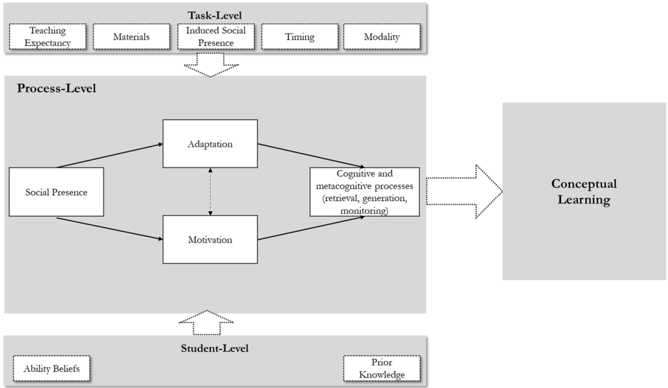
“In addition to the “social presence view”, Lachner et al. (2022) discuss the “generative processing view” of learning-by-teaching which posits that “students primarily learn from the cognitive and metacognitive learning processes that occur during the reconstruction of information”.”
Influential“To Teach is to Learn Twice”: Using Social Robots as Tutees in Inclusive Education
Cersosimo, R. (2025) · Studies in computational intelligence · doi:10.1007/978-3-031-82915-4_10 · Cited by 1
de Jonge, T. H. S., Kegelaar, T., & Esquivel, F. F. (2025) · Journal of Computer Assisted Learning · doi:10.1111/jcal.70085 · Cited by 1
The Effectiveness Of Gallery Walk Method In English Language Learning For Health Science Students
Putri, N. W., & Krissandi, A. D. S. (2026) · ALINEA Jurnal Bahasa Sastra dan Pengajarannya · doi:10.58218/alinea.v6i1.2567 · Cited by 1
“This phenomenon — "learning by teaching" — involves the selection, elaboration, and organization of key information from instructional materials, as well as the integration of new knowledge with prior knowledge (Lachner et al., 2022; Fiorella & Mayer, 2023).”
Learning by Teaching in the Wild: Domain, Grades, and School Track MatterPreprint
Sibley, L., Russ, H., & Lachner, A. (2023) · PsyArXiv (OSF Preprints) · doi:10.31234/osf.io/d293m · Cited by 1
Self-citationAn Inside Analysis of Non-Native English Materials at Tertiary Level
Loan, T. T. T. (2024) · International Journal on Studies in English Language and Literature · doi:10.20431/2347-3134.1210003
Üben aus Sicht der Lernpsychologie: Wie kann Üben das nachhaltige Lernen fördern?
Roelle, J., & Richter, T. (2025) · Unterrichtswissenschaft · doi:10.1007/s42010-025-00227-7
Keller, S., Markwalder, U., Endres, T., & Praetorius, A. (2025) · Unterrichtswissenschaft · doi:10.1007/s42010-025-00229-5
Xu, K. D., Guo, X., Zhang, X., Zhang, Y., Pi, Z., & Yang, J. (2025) · Journal of Computer Assisted Learning · doi:10.1111/jcal.70080 · Cited by 1
Kakihana, S., Ito, T., & Fukutomi, T. (2025) · The Japanese Journal of Educational Psychology · doi:10.5926/jjep.73.93 · Cited by 1
Piloting a Research Roundtable for Occupational Therapy Students
Wu, R., Tom, D., & Shea, C. (2025) · Occupational Therapy In Health Care · doi:10.1080/07380577.2025.2576252
The Effect of the Articulation Learning Model on Students’ Mathematics Achievement
Bayumi, N., Mulyono, D., & Fauziah, A. (2025) · Jurnal Inovasi Matematika · doi:10.35438/inomatika.v7i2.550
Optimizing the effects of standards on self-assessment accuracy in tasks with many solutions
Froese, L. (2024) · Dokumentenrepositorium der RUB (Ruhr University Bochum) · doi:10.13154/294-12581
ANALYSIS OF PRE-SERVICE TEACHER EDUCATION MANAGEMENT IN IMPROVING TEACHER QUALITY IN GHANA
Gorni, R. L. (2024) · Repository at Universitas Pendidikan Indonesia (Universitas Pendidikan Indonesia)
Ribosa, J. (2023) · Dipòsit Digital de Documents de la UAB (Universitat Autònoma de Barcelona)
Juwarni, J., Milla, H., & Hartati, M. S. (2025) · Socio-economic and Humanistic Aspects for Township and Industry. · doi:10.59535/sehati.v3i4.601
“In carrying out their duties as teachers also help students in achieving educational goals by delivering learning materials effectively so that students grow critical thinking and are able to solve problems to guide and direct and develop their potential and talents as well as social skills [3].”
Flipped by Students: Student-Created Videos for an Undergraduate Mathematics Course
Krapf, R., Busch, H., Heldt, V. K., & Mundt, J.-N. (2026) · PRIMUS · doi:10.1080/10511970.2026.2719493
Learning by Creating Teaching Materials: Seven Decisions Teachers Need to Make
Ribosa, J., Durán, D., & Topping, K. J. (2026) · Springer eBooks · doi:10.1007/978-981-95-5997-8_18
Grießhammer, M., Schörner, R., Graf, L., & Masuch, M. (2026) · SeGAH ... IEEE ... International Conference on Serious Games and Applications for Health/IEEE International Conference on Serious Games and Applications for Health · doi:10.1109/segah69272.2026.11653342
“In a meta-review, [14] reported that delivering a lecture to four non-interactive individuals is less efficient than teaching a single non-interactive person, as comparable learning outcomes were achieved at the cost of increased cognitive effort.”
Shi, Y., Bidin, R. B. H., & Mamat, R. B. (2026) · WSEAS TRANSACTIONS ON BUSINESS AND ECONOMICS · doi:10.37394/23207.2026.23.39
Moteshareie, E., Rostampour, F., Abdoli, B., & Cabral, D. A. R. (2026) · Perceptual and Motor Skills · doi:10.1177/00315125261459021
The effects of written languaging: to whom should learners write?
Ishikawa, M., & Suzuki, W. (2026) · Language Awareness · doi:10.1080/09658416.2026.2682202
Identifying Multi-Level Interaction Patterns Based on Learner Avatar in the Educational Metaverse
Han, Z., Xue, X., Dang, Z., & Wu, S. (2026) · Lecture notes in computer science · doi:10.1007/978-981-92-3761-6_30
Beyond metacognition: Strategy selection as strategic calculus in self-regulated learning
Liu, S., Yang, C., & Shanks, D. R. (2026) · The Psychology of learning and motivation/The psychology of learning and motivation · doi:10.1016/bs.plm.2026.06.001
FlipCard Storyteller: A Platform for Learning Robotics by Teaching
Fronza, I., Iaccarino, G., Corral, L., Parida, S. S., & Mehboob, A. (2026) · Communications in computer and information science · doi:10.1007/978-3-032-21997-8_15
Zheng, M., Tian, H., Rao, X., Tan, H., Li, S., & Zhang, M. (2026) · NeuroImage · doi:10.1016/j.neuroimage.2026.122208
Russ, H., Endres, T., Sibley, L., Flegr, S., Kühn, J., Hoogerheide, V., Scheiter, K., & Lachner, A. (2026) · Learning and Instruction · doi:10.1016/j.learninstruc.2026.102462 · Cited by 1
Self-citationHow Does Social Presence Affect Non-Interactive Teaching When the Audience Is a Familiar Peer?
Cheng, M., Qiao, P., Yin, X., & Wang, F. (2026) · Active Learning in Higher Education · doi:10.1177/14697874261493885
Владимировна, Б. М. (2026) · Территория новых возможностей. Вестник Владивостокского государственного университета экономики и сервиса
Bernavskaya, M. (2026) · Территория новых возможностей. Вестник Владивостокского государственного университета экономики и сервиса · doi:10.63973/2949-1258/2026-3/139-151 · Cited by 1
Rodrigues, G. A., & Caixeta, M. E. (2026) · Research Society and Development · doi:10.33448/rsd-v15i11.51966
Què aprenen els docents quan ensenyen? Percepcions d’un estudi exploratori internacional
Baltzersen, R. K., Duran, D., de la Iglesia, B., & Ribosa, J. (2026) · Revista catalana de pedagogia
Metadata
- Authors
- Lachner, A., Hoogerheide, V., van Gog, T., & Renkl, A.
- Affiliations
- University of Tübingen (DE)
- Utrecht University (NL)
- University of Freiburg (DE)
- Corresponding author
- Lachner, Andreas
- Hoogerheide, Vincent
- Venue
- Educational Psychology Review
- Published
- 2021-11-03
- Volume
- 34
- Issue
- 2
- Pages
- 575-607
- ISSN
- 1040-726X (ISSN-L)
- 1573-336X
- OpenAlex
- W3210001535
- Cited by
- 77
- References
- 122
- Citations by year
- 2026: 15 · 2025: 21 · 2024: 14 · 2023: 13 · 2022: 14
- FWCI
- 9.90
- Type
- journal article
- Language
- en
- Open access
- hybrid
- doi.org
- Licence
- cc-by
- creativecommons.org/licenses/by/4.0 (tdm)
- creativecommons.org/licenses/by/4.0 (vor)
- Locations
- Educational Psychology Review (publishedVersion, cc-by)
- Utrecht University Repository (Utrecht University) (submittedVersion, other-oa)
- Funders
- Eberhard Karls Universität Tübingen
- Topics
- Social Sciences › Psychology › Experimental and Cognitive Psychology › Visual and Cognitive Learning Processes
- Social Sciences › Psychology › Developmental and Educational Psychology › Innovative Teaching and Learning Methods
- Social Sciences › Education › Innovative Teaching Methods
- Keywords
- learning by teaching, boundary conditions, metacognition, self-explanation
About these checks
Registry, retraction, Cites and statistics results are computed, not judged, with one exception: a printed reference that no index lists is read once by a model before it counts as a citation error. Claims are extracted by a model and kept only when their quote appears verbatim in the text; each cited source is then checked, with a model’s help, for whether it says what the claim relies on. Those verdicts can be wrong — read the claim’s quote and the cited source before relying on one.
Statistics and arithmetic are recomputed, not judged.
Confidence bands are shown only for fields calibrated on our annotated test set. None is calibrated yet, so no band is shown.
What counts as a claim ›How we measure confidence ›How we check this ›
Are you an author, or do you see a problem with this page? Request a review
Data sources
Bibliographic data: Semantic Scholar, OpenAlex, Crossref.
Contains information from the Semantic Scholar Academic Graph Datasets, made available under the ODC Attribution License (ODC-BY 1.0).
Semantic Scholar’s data is described in: Kinney, R., et al. (2023). The Semantic Scholar Open Data Platform. arXiv:2301.10140.
